

The DOI matches its Crossref record; 74 of the 74 references it cites were found in a registry or an index.
Novel Alzheimer risk genes determine the microglia response to amyloid-β but not to TAU pathology
Open accessPublished version of a preprint
Abstract
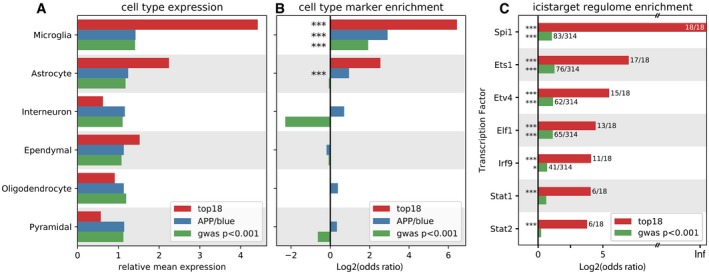
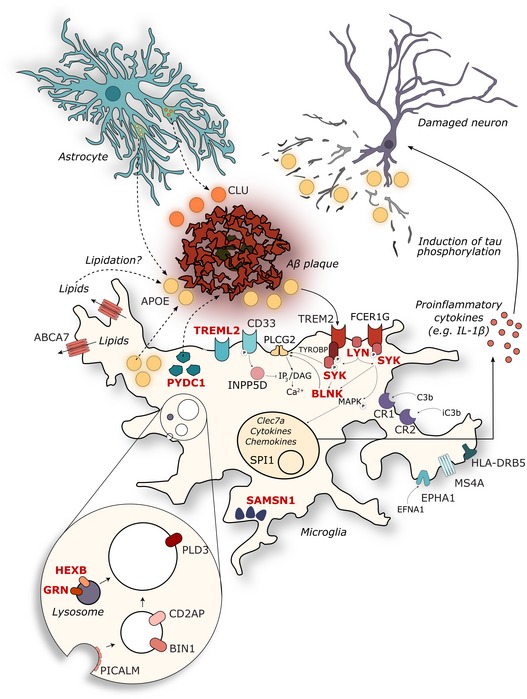
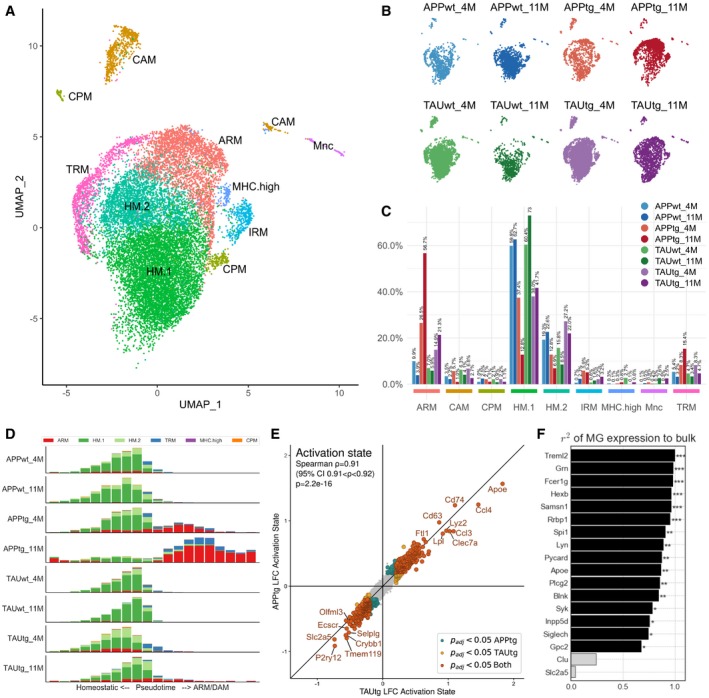
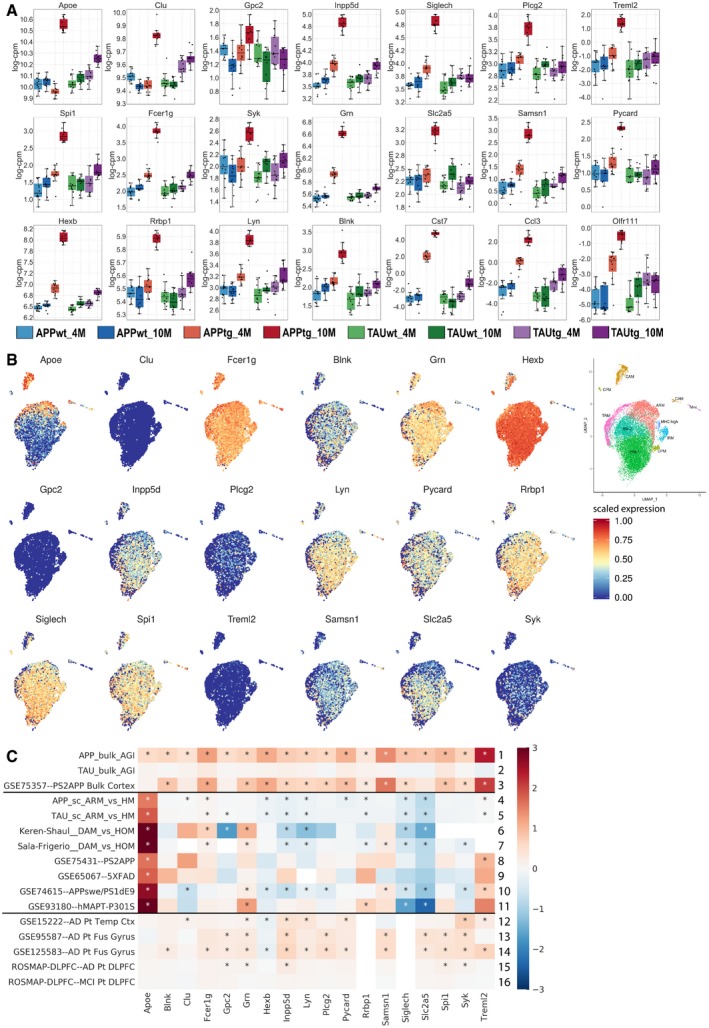
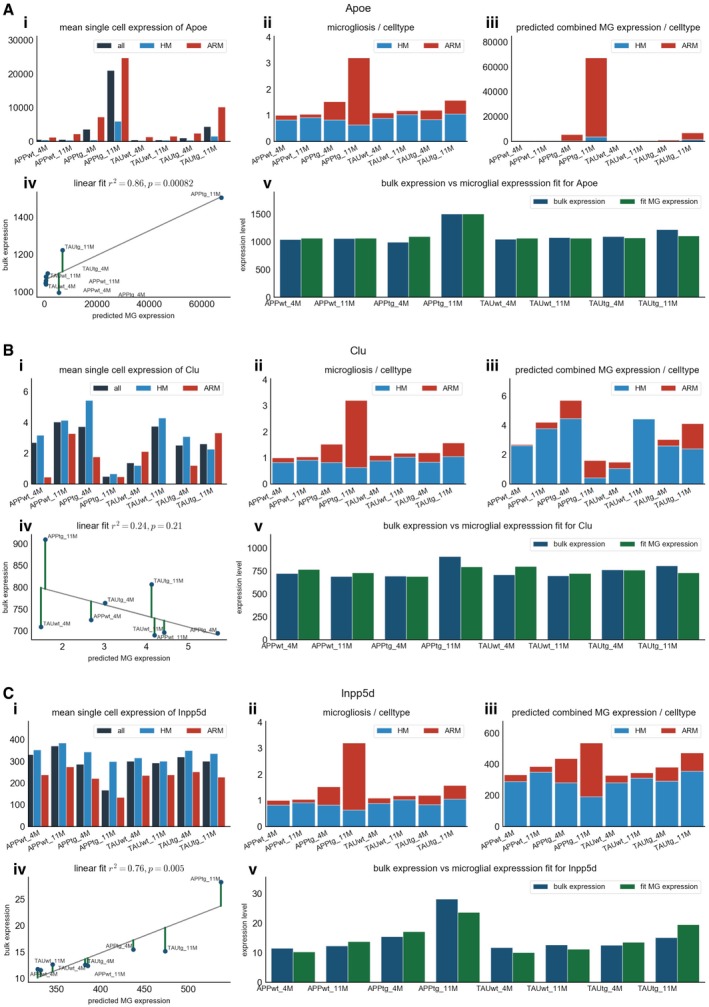
Polygenic risk scores have identified that genetic variants without genome‐wide significance still add to the genetic risk of developing Alzheimer's disease (AD). Whether and how subthreshold risk loci translate into relevant disease pathways is unknown. We investigate here the involvement of AD risk variants in the transcriptional responses of two mouse models: APPswe/PS1 L166P and Thy‐TAU22. A unique gene expression module, highly enriched for AD risk genes, is specifically responsive to Aβ but not TAU pathology. We identify in this module 7 established AD risk genes ( APOE , CLU , INPP5D , CD33, PLCG2 , SPI1, and FCER1G ) and 11 AD GWAS genes below the genome‐wide significance threshold ( GPC2, TREML2, SYK, GRN, SLC2A5, SAMSN1, PYDC1, HEXB, RRBP1, LYN, and BLNK), that become significantly upregulated when exposed to Aβ. Single microglia sequencing confirms that Aβ, not TAU, pathology induces marked transcriptional changes in microglia, including increased proportions of activated microglia. We conclude that genetic risk of AD functionally translates into different microglia pathway responses to Aβ pathology, placing AD genetic risk downstream of the amyloid pathway but upstream of TAU pathology.
Overview
The claims and statistics of this paper haven’t been checked yet.
Run the check — free, no account needed. It reads the open-access text and checks the sources it cites.
Integrity signals
Registry
Cites
Statistics
Figures
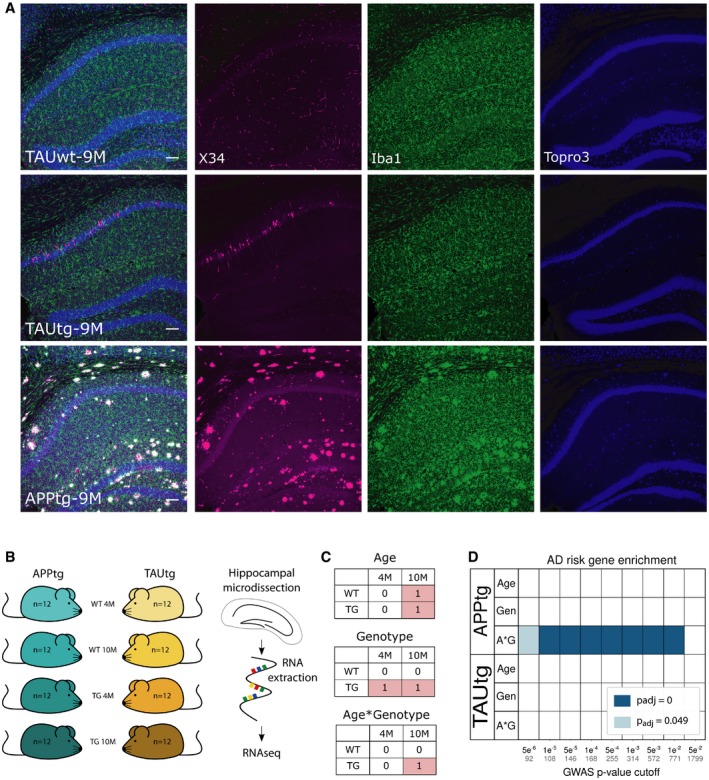
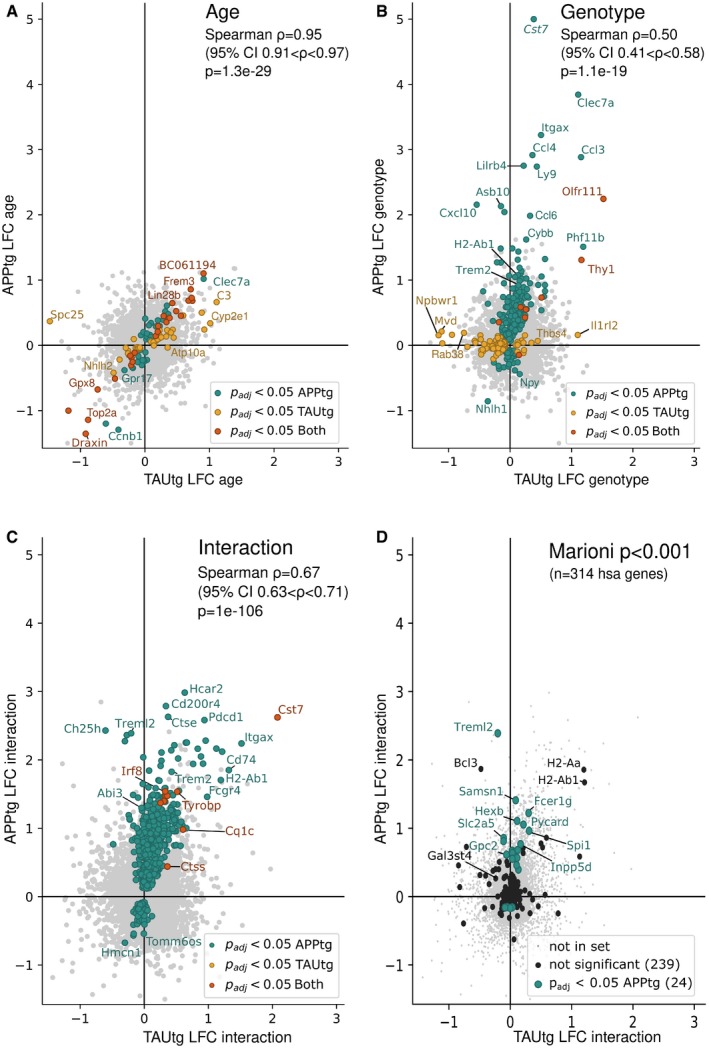
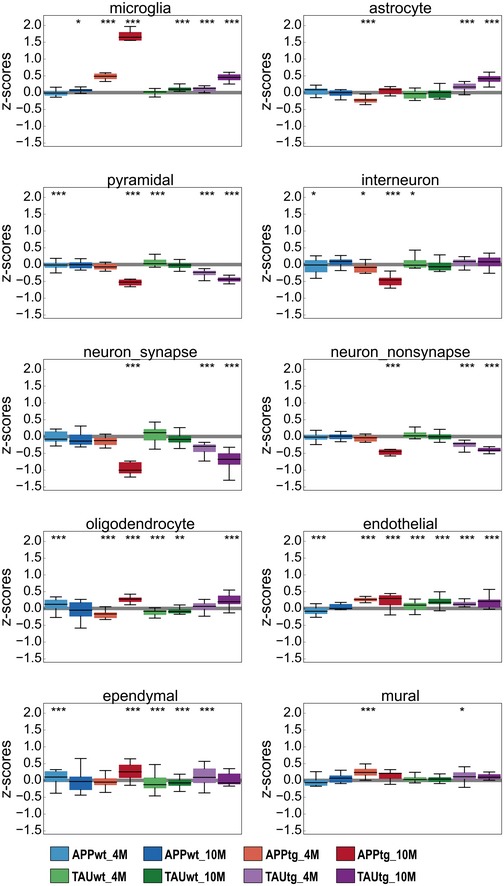
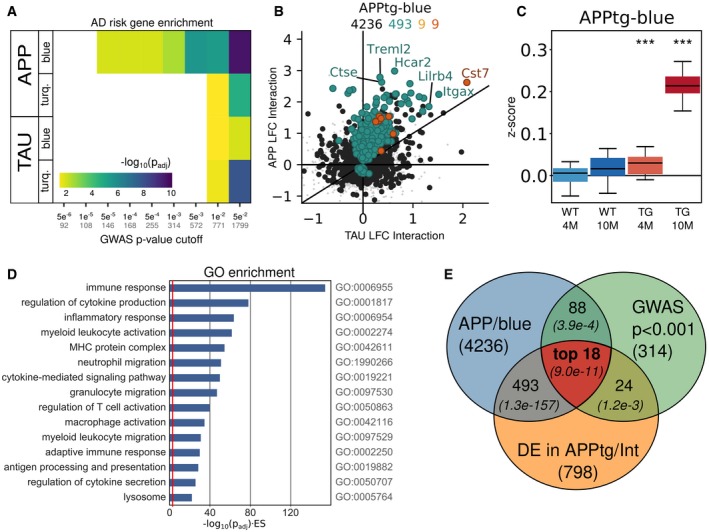
Verification
Claims the paper makes
The claims and statistics of this paper haven’t been checked yet.
Run the check — free, no account needed. It reads the open-access text and checks the sources it cites.
Claims other papers make about this one
Each is checked against this paper’s own text: does it say what the citing paper says it does?
The source backs part of the claim, not all of it — or backs it for a different population, condition or comparison.
In the citing paper
“Sierskma et al. identified 18 genes that both overlapped with AD GWAS datasets and were maintained between young and old APP transgenic mice, which were predominantly expressed by microglia and appear to be regulated by Spi150.”
From Modest changes in Spi1 dosage reveal the potential for altered microglial function as seen in Alzheimer’s disease (2021) · cites this paper as [50]
Experimental — accuracy not yet measuredThe cited source says what the claim attributes to it.
In the citing paper
“which is enriched with AD risk genes and is a microglial response to amyloid rather than tau pathology.”
From Spatial Transcriptomics and In Situ Sequencing to Study Alzheimer’s Disease (2020) · cites this paper as Sierksma et al., 2020
The cited source says what the claim attributes to it.
In the citing paper
“Sierskma et al. identified 18 genes that both overlapped with AD GWAS datasets and were maintained between young and old APP transgenic mice, which were predominantly expressed by microglia and appear to be regulated by Spi150.”
From Modest changes in Spi1 dosage reveal the potential for altered microglial function as seen in Alzheimer’s disease (2021) · cites this paper as [50]
The cited source says what the claim attributes to it.
In the citing paper
“Furthermore, recent scRNA-seq studies identified marked transcriptional changes in microglia in response to Aβ (52).”
From Deletion of Abi3 gene locus exacerbates neuropathological features of Alzheimer’s disease in a mouse model of Aβ amyloidosis (2021) · cites this paper as [52]
The cited source says what the claim attributes to it.
In the citing paper
“Several studies have shown that this hypothesis-generating, unbiased readout can be used to investigate Aβ accumulation (Sierksma et al., 2020), region-specific expression of tau (Castanho et al., 2020), and activated immune response (Kang et al., 2018).”
From Network analysis identifies strain-dependent response to tau and tau seeding-associated genes (2023) · cites this paper as Sierksma et al., 2020
The cited source says what the claim attributes to it.
In the citing paper
“Single microglia sequencing of two different mouse models of AD, one displaying either Aβ or tau pathology, further confirmed the expression of AD risk genes, including PLCG2 gene, and also confirmed that more microglia adopt an activated phenotype when facing Aβ than tau pathology (166).”
From The role of PLCγ2 in immunological disorders, cancer, and neurodegeneration (2021) · cites this paper as [166]
The cited source says what the claim attributes to it.
In the citing paper
“Computational models place TREM2 and other effectors in the pathway – including Syk and BLNK – in a module associated with microglia responses to Aβ [91].”
From TREM2/PLCγ2 signalling in immune cells: function, structural insight, and potential therapeutic modulation (2021) · cites this paper as [91]
The check wasn’t confident either way, so it gives no verdict — never disputed.
In the citing paper
“Interestingly, PlxnB1/B2 and Sema4D levels have been shown to be upregulated in aged thy-TAU22 mice by bulk RNAseq analysis (Sierksma, Lu et al. 2020) and in PlxnB1 in human GRN-FTD astrocytes (Gerrits, Giannini et al. 2022) (Figure S8E).”
From SORLA up-regulation suppresses pathological effects in aged tauopathy mouse brain (2026) · cites this paper as Sierksma, Lu et al. 2020
Experimental — accuracy not yet measuredIn the citing paper
“which is an oligodendroglial response in the amyloid- but not the tau-model.”
From Spatial Transcriptomics and In Situ Sequencing to Study Alzheimer’s Disease (2020) · cites this paper as Sierksma et al., 2020
Self-check
Percentages, sums and reported differences re-computed from the paper’s own numbers.
The self-check needs the paper’s full text.
Citations
Cites
Subramanian, A., Tamayo, P., Mootha, V. K., Mukherjee, S., Ebert, B. L., Gillette, M. A., Paulovich, A., Pomeroy, S. L., Golub, T. R., Lander, E. S., et al. (2005) · Proceedings of the National Academy of Sciences · doi:10.1073/pnas.0506580102 · Cited by 53,625
limma powers differential expression analyses for RNA-sequencing and microarray studies
Ritchie, M. E., Phipson, B., Wu, D., Hu, Y., Law, C. W., Shi, W., & Smyth, G. K. (2015) · Nucleic Acids Research · doi:10.1093/nar/gkv007 · Cited by 40,458
Systematic and integrative analysis of large gene lists using DAVID bioinformatics resources
Huang, D. W., Sherman, B. T., & Lempicki, R. A. (2009) · Nature Protocols · doi:10.1038/nprot.2008.211 · Cited by 35,890
WGCNA: an R package for weighted correlation network analysis
Langfelder, P., & Horvath, S. (2008) · BMC Bioinformatics · doi:10.1186/1471-2105-9-559 · Cited by 27,252
featureCounts: an efficient general purpose program for assigning sequence reads to genomic features
Liao, Y., Smyth, G. K., & Shi, W. (2014) · Bioinformatics · doi:10.1093/bioinformatics/btt656 · Cited by 27,219
Comprehensive Integration of Single-Cell Data
Stuart, T., Butler, A., Hoffman, P., Hafemeister, C., Papalexi, E., Mauck, W. M., Hao, Y., Stoeckius, M., Smibert, P., & Satija, R. (2019) · Cell · doi:10.1016/j.cell.2019.05.031 · Cited by 15,453
Huang, D. W., Sherman, B. T., & Lempicki, R. A. (2009) · Nucleic Acids Research · doi:10.1093/nar/gkn923 · Cited by 14,108
Integrating single-cell transcriptomic data across different conditions, technologies, and species
Butler, A., Hoffman, P., Smibert, P., Papalexi, E., & Satija, R. (2018) · Nature Biotechnology · doi:10.1038/nbt.4096 · Cited by 13,174
TopHat: discovering splice junctions with RNA-Seq
Trapnell, C., Pachter, L. S., & Salzberg, S. L. (2009) · Bioinformatics · doi:10.1093/bioinformatics/btp120 · Cited by 11,682
The control of the false discovery rate in multiple testing under dependency
Benjamini, Y., & Yekutieli, D. (2001) · The Annals of Statistics · doi:10.1214/aos/1013699998 · Cited by 10,490
Mootha, V. K., Lindgren, C. M., Eriksson, K.-F., Subramanian, A., Sihag, S., Lehar, J., Puigserver, P., Carlsson, E., Ridderstråle, M., Laurila, E., et al. (2003) · Nature Genetics · doi:10.1038/ng1180 · Cited by 10,197
SCANPY: large-scale single-cell gene expression data analysis
Wolf, F. A., Angerer, P., & Theis, F. J. (2018) · Genome Biology · doi:10.1186/s13059-017-1382-0 · Cited by 8,881
A General Framework for Weighted Gene Co-Expression Network Analysis
Zhang, B., & Horvath, S. (2005) · Statistical Applications in Genetics and Molecular Biology · doi:10.2202/1544-6115.1128 · Cited by 5,684
A Unique Microglia Type Associated with Restricting Development of Alzheimer’s Disease
Keren-Shaul, H., Spinrad, A., Weiner, A., Matcovitch-Natan, O., Dvir-Szternfeld, R., Ulland, T. K., David, E., Baruch, K., Lara-Astaiso, D., Toth, B., et al. (2017) · Cell · doi:10.1016/j.cell.2017.05.018 · Cited by 5,493
Common polygenic variation contributes to risk of schizophrenia and bipolar disorder
The International Schizophrenia Consortium (2009) · Nature · doi:10.1038/nature08185 · Cited by 4,821
GOrilla: a tool for discovery and visualization of enriched GO terms in ranked gene lists
Eden, E., Navon, R., Steinfeld, I., Lipson, D., & Yakhini, Z. (2009) · BMC Bioinformatics · doi:10.1186/1471-2105-10-48 · Cited by 3,356
Cell types in the mouse cortex and hippocampus revealed by single-cell RNA-seq
Zeisel, A., Muñoz-Manchado, A. B., Codeluppi, S., Lönnerberg, P., La Manno, G., Juréus, A., Marques, S., Munguba, H., He, L., Betsholtz, C., et al. (2015) · Science · doi:10.1126/science.aaa1934 · Cited by 3,124
Krasemann, S., Madore, C., Cialic, R., Baufeld, C., Calcagno, N., El Fatimy, R., Beckers, L., O’Loughlin, E., Xu, Y., Fanek, Z., et al. (2017) · Immunity · doi:10.1016/j.immuni.2017.08.008 · Cited by 2,979
Fcγ receptors as regulators of immune responses
Nimmerjahn, F., & Ravetch, J. V. (2008) · Nature Reviews Immunology · doi:10.1038/nri2206 · Cited by 2,947
Zerbino, D. R., Achuthan, P., Akanni, W., Amode, M. R., Barrell, D., Bhai, J., Billis, K., Cummins, C., Gall, A., Girón, C. G., et al. (2018) · Nucleic Acids Research · doi:10.1093/nar/gkx1098 · Cited by 2,605
Identification of a unique TGF-β–dependent molecular and functional signature in microglia
Butovsky, O., Jedrychowski, M. P., Moore, C. S., Cialic, R., Lanser, A. J., Gabriely, G., Koeglsperger, T., Dake, B., Wu, P. M., Doykan, C. E., et al. (2014) · Nature Neuroscience · doi:10.1038/nn.3599 · Cited by 2,543
Synapse Loss and Microglial Activation Precede Tangles in a P301S Tauopathy Mouse Model
Yoshiyama, Y., Higuchi, M., Zhang, B., Huang, S.-M., Iwata, N., Saido, T. C., Maeda, J., Suhara, T., Trojanowski, J. Q., & Lee, V. M.-Y. (2007) · Neuron · doi:10.1016/j.neuron.2007.01.010 · Cited by 2,208
The Cellular Phase of Alzheimer’s Disease
De Strooper, B., & Karran, E. (2016) · Cell · doi:10.1016/j.cell.2015.12.056 · Cited by 1,990
Defining clusters from a hierarchical cluster tree: the Dynamic Tree Cut package for R
Langfelder, P., Zhang, B., & Horvath, S. (2008) · Bioinformatics · doi:10.1093/bioinformatics/btm563 · Cited by 1,892
Role of Genes and Environments for Explaining Alzheimer Disease
Gatz, M., Reynolds, C. A., Fratiglioni, L., Johansson, B., Mortimer, J. A., Berg, S., Fiske, A., & Pedersen, N. L. (2006) · Archives of General Psychiatry · doi:10.1001/archpsyc.63.2.168 · Cited by 1,798
Integrated Systems Approach Identifies Genetic Nodes and Networks in Late-Onset Alzheimer’s Disease
Zhang, B., Gaiteri, C., Bodea, L.-G., Wang, Z., McElwee, J., Podtelezhnikov, A. A., Zhang, C., Xie, T., Tran, L., Dobrin, R., et al. (2013) · Cell · doi:10.1016/j.cell.2013.03.030 · Cited by 1,657
NLRP3 inflammasome activation drives tau pathology
Ising, C., Venegas, C., Zhang, S., Scheiblich, H., Schmidt, S. V., Vieira-Saecker, A., Schwartz, S., Albasset, S., McManus, R. M., Tejera, D., et al. (2019) · Nature · doi:10.1038/s41586-019-1769-z · Cited by 1,487
Self-citationDisease-Associated Microglia: A Universal Immune Sensor of Neurodegeneration
Deczkowska, A., Keren-Shaul, H., Weiner, A., Colonna, M., Schwartz, M., & Amit, I. (2018) · Cell · doi:10.1016/j.cell.2018.05.003 · Cited by 1,474
ApoE4 markedly exacerbates tau-mediated neurodegeneration in a mouse model of tauopathy
Initiative, A. D. N., Shi, Y., Yamada, K., Liddelow, S. A., Smith, S. T., Zhao, L., Luo, W., Tsai, R. M., Spina, S., Grinberg, L. T., et al. (2017) · Nature · doi:10.1038/nature24016 · Cited by 1,220
Aβ42‐driven cerebral amyloidosis in transgenic mice reveals early and robust pathology
Radde, R., Bolmont, T., Kaeser, S. A., Coomaraswamy, J., Lindau, D., Stoltze, L., Calhoun, M. E., Jäggi, F., Wolburg, H., Gengler, S., et al. (2006) · The EMBO Reports · doi:10.1038/sj.embor.7400784 · Cited by 986
Microglia-derived ASC specks cross-seed amyloid-β in Alzheimer’s disease
Venegas, C., Kumar, S., Franklin, B. S., Dierkes, T., Brinkschulte, R., Tejera, D., Vieira-Saecker, A., Schwartz, S., Santarelli, F., Kummer, M. P., et al. (2017) · Nature · doi:10.1038/nature25158 · Cited by 983
Sala Frigerio, C., Wolfs, L., Fattorelli, N., Thrupp, N., Voytyuk, I., Schmidt, I., Mancuso, R., Chen, W.-T., Woodbury, M. E., Srivastava, G., et al. (2019) · Cell Reports · doi:10.1016/j.celrep.2019.03.099 · Cited by 926 · cited 6×
“…microglia, cycling and proliferating microglia, homeostatic microglia, interferon-response microglia, and transitioning response microglia from Sala Frigerio et al (2019); cytokine response microglia from Mancuso et al (2019a); and neutrophil–monocytes and macrophages from Friedman et al (2018);…”
BackgroundMethodInfluentialSelf-citationAllen, B., Ingram, E., Takao, M., Smith, M. J., Jakes, R., Virdee, K., Yoshida, H., Holzer, M., Craxton, M., Emson, P. C., et al. (2002) · Journal of Neuroscience · doi:10.1523/jneurosci.22-21-09340.2002 · Cited by 763
Friedman, B. A., Srinivasan, K., Ayalon, G., Meilandt, W. J., Lin, H., Huntley, M. A., Cao, Y., Lee, S.-H., Haddick, P. C. G., Ngu, H., et al. (2018) · Cell Reports · doi:10.1016/j.celrep.2017.12.066 · Cited by 662
Kipps, T. J., Stevenson, F. K., Wu, C. J., Croce, C. M., Packham, G., Wierda, W. G., O'Brien, S. M., Gribben, J. G., & Rai, K. (2017) · Nature Reviews Disease Primers · doi:10.1038/nrdp.2016.96 · Cited by 590
Conserved epigenomic signals in mice and humans reveal immune basis of Alzheimer's disease
Gjoneska, E., Pfenning, A. R., Mathys, H., Quon, G., Kundaje, A., Tsai, L.-H., & Kellis, M. (2015) · Nature · doi:10.1038/nature14252 · Cited by 576
GWAS on family history of Alzheimer’s disease
Marioni, R. E., Harris, S. E., Zhang, Q., McRae, A. F., Hagenaars, S. P., Hill, W. D., Davies, G., Ritchie, C. W., Gale, C. R., Starr, J. M., et al. (2018) · Translational Psychiatry · doi:10.1038/s41398-018-0150-6 · Cited by 564
Late onset Alzheimer’s disease genetics implicates microglial pathways in disease risk
Efthymiou, A. G., & Goate, A. M. (2017) · Molecular Neurodegeneration · doi:10.1186/s13024-017-0184-x · Cited by 562
Microglia drive APOE-dependent neurodegeneration in a tauopathy mouse model
Shi, Y., Manis, M., Long, J., Wang, K., Sullivan, P. M., Remolina Serrano, J., Hoyle, R., & Holtzman, D. M. (2019) · Journal of Experimental Medicine · doi:10.1084/jem.20190980 · Cited by 448
Schindowski, K., Bretteville, A., Leroy, K., Bégard, S., Brion, J., Hamdane, M., & Buée, L. (2006) · American Journal Of Pathology · doi:10.2353/ajpath.2006.060002 · Cited by 438
Self-citationAlzheimer’s Patient Microglia Exhibit Enhanced Aging and Unique Transcriptional Activation
Srinivasan, K., Friedman, B. A., Etxeberria, A., Huntley, M. A., van der Brug, M. P., Foreman, O., Paw, J. S., Modrusan, Z., Beach, T. G., Serrano, G. E., et al. (2020) · Cell Reports · doi:10.1016/j.celrep.2020.107843 · Cited by 427
A common haplotype lowers PU.1 expression in myeloid cells and delays onset of Alzheimer's disease
The International Genomics of Alzheimer's Project, Huang, K.-L., Initiative, T. A. D. N., Marcora, E., Pimenova, A. A., Di Narzo, A. F., Kapoor, M., Jin, S. C., Harari, O., Bertelsen, S., et al. (2017) · Nature Neuroscience · doi:10.1038/nn.4587 · Cited by 423
Common polygenic variation enhances risk prediction for Alzheimer’s disease
Escott-Price, V., Sims, R., Bannister, C., Harold, D., Vronskaya, M., Majounie, E., Badarinarayan, N., GERAD/PERADES, consortia, I., Morgan, K., et al. (2015) · Brain · doi:10.1093/brain/awv268 · Cited by 414
Efficient Test and Visualization of Multi-Set Intersections
Wang, M., Zhao, Y., & Zhang, B. (2015) · Scientific Reports · doi:10.1038/srep16923 · Cited by 395
Chételat, G., Joie, R. L., Villain, N., Perrotin, A., Sayette, V. D. L., Eustache, F., & Vandenberghe, R. R. (2013) · NeuroImage Clinical · doi:10.1016/j.nicl.2013.02.006 · Cited by 363
Moore, J. H., & Williams, S. M. (2005) · BioEssays · doi:10.1002/bies.20236 · Cited by 341
Progranulin deficiency promotes neuroinflammation and neuron loss following toxin-induced injury
Martens, L. H., Zhang, J., Barmada, S. J., Zhou, P., Kamiya, S., Sun, B., Min, S.-W., Gan, L., Finkbeiner, S. M., Huang, E. J., et al. (2012) · Journal of Clinical Investigation · doi:10.1172/jci63113 · Cited by 318
Microglial TREM2/DAP12 signaling: a double-edged sword in neural diseases
Konishi, H., & Kiyama, H. (2018) · Frontiers in Cellular Neuroscience · doi:10.3389/fncel.2018.00206 · Cited by 300
ApoE facilitates the microglial response to amyloid plaque pathology
Ulrich, J. D., Ulland, T. K., Mahan, T. E., Nyström, S., Nilsson, K. P., Song, W. M., Zhou, Y., Reinartz, M., Choi, S., Jiang, H., et al. (2018) · Journal of Experimental Medicine · doi:10.1084/jem.20171265 · Cited by 297
Stem-cell-derived human microglia transplanted in mouse brain to study human disease
Mancuso, R., Van Den Daele, J., Fattorelli, N., Wolfs, L., Balusu, S., Burton, O., Liston, A., Sierksma, A., Fourne, Y., Poovathingal, S., et al. (2019) · Nature Neuroscience · doi:10.1038/s41593-019-0525-x · Cited by 295
Self-citationMatarin, M., Salih, D. A., Yasvoina, M., Cummings, D. M., Guelfi, S., Liu, W., Nahaboo Solim, M. A., Moens, T. G., Paublete, R. M., Ali, S. S., et al. (2015) · Cell Reports · doi:10.1016/j.celrep.2014.12.041 · Cited by 290
Styren, S. D., Hamilton, R. L., Styren, G. C., & Klunk, W. E. (2000) · Journal of Histochemistry & Cytochemistry · doi:10.1177/002215540004800906 · Cited by 279
CSF1R inhibitor JNJ-40346527 attenuates microglial proliferation and neurodegeneration in P301S mice
Mancuso, R., Fryatt, G., Cleal, M., Obst, J., Pipi, E., Monzón-Sandoval, J., Ribe, E., Winchester, L., Webber, C., Nevado, A., et al. (2019) · Brain · doi:10.1093/brain/awz241 · Cited by 235
Self-citationMoore, J. H. (2004) · Nature Genetics · doi:10.1038/ng0105-13 · Cited by 230
i-cisTarget 2015 update: generalized cis-regulatory enrichment analysis in human, mouse and fly
Imrichová, H., Hulselmans, G., Kalender Atak, Z., Potier, D., & Aerts, S. (2015) · Nucleic Acids Research · doi:10.1093/nar/gkv395 · Cited by 202
Understanding Alzheimer Disease at the Interface between Genetics and Transcriptomics
Verheijen, J., & Sleegers, K. (2018) · Trends in Genetics · doi:10.1016/j.tig.2018.02.007 · Cited by 192
Polygenic risk score analysis of pathologically confirmed Alzheimer disease
Escott‐Price, V., Myers, A., Huentelman, M. J., & Hardy, J. (2017) · Annals of Neurology · doi:10.1002/ana.24999 · Cited by 183
Zahs, K. R., & Ashe, K. H. (2010) · Trends in Neurosciences · doi:10.1016/j.tins.2010.05.004 · Cited by 179
SCORPIUS improves trajectory inference and identifies novel modules in dendritic cell developmentPreprint
Cannoodt, R., Saelens, W., Sichien, D., Tavernier, S. J., Janssens, S., Guilliams, M., Lambrecht, B. N., Preter, K. D., & Saeys, Y. (2016) · bioRxiv (Cold Spring Harbor Laboratory) · doi:10.1101/079509 · Cited by 160
SynaptomeDB: an ontology-based knowledgebase for synaptic genes
Pirooznia, M., Wang, T., Avramopoulos, D., Valle, D., Thomas, G., Huganir, R. L., Goes, F. S., Potash, J. B., & Zandi, P. P. (2012) · Bioinformatics · doi:10.1093/bioinformatics/bts040 · Cited by 125
Deregulation of neuronal miRNAs induced by amyloid-β or TAU pathology
Sierksma, A., Lu, A., Salta, E., Vanden Eynden, E., Callaerts-Vegh, Z., D’Hooge, R., Blum, D., Buée, L., Fiers, M., & De Strooper, B. (2018) · Molecular Neurodegeneration · doi:10.1186/s13024-018-0285-1 · Cited by 120
Self-citationProkop, S., Miller, K. R., Labra, S. R., Pitkin, R. M., Hoxha, K., Narasimhan, S., Changolkar, L., Rosenbloom, A., Lee, V. M.-Y., & Trojanowski, J. Q. (2019) · Acta Neuropathologica · doi:10.1007/s00401-019-02048-2 · Cited by 119
Genetic variability in response to amyloid beta deposition influences Alzheimer’s disease risk
Salih, D. A., Bayram, S., Guelfi, S., Reynolds, R. H., Shoai, M., Ryten, M., Brenton, J. W., Zhang, D., Matarin, M., Botia, J. A., et al. (2019) · Brain Communications · doi:10.1093/braincomms/fcz022 · Cited by 110
Zheng, H., Liu, C.-C., Atagi, Y., Chen, X.-F., Jia, L., Yang, L., He, W., Zhang, X., Kang, S. S., Rosenberry, T. L., et al. (2016) · Neurobiology of Aging · doi:10.1016/j.neurobiolaging.2016.03.004 · Cited by 110
Early behavioural markers of disease in P301S tau transgenic mice
Scattoni, M. L., Gasparini, L., Alleva, E., Goedert, M., Calamandrei, G., & Spillantini, M. G. (2009) · Behavioural Brain Research · doi:10.1016/j.bbr.2009.12.002 · Cited by 98
180-kD ribosome receptor is essential for both ribosome binding and protein translocation.
Savitz, A. J., & Meyer, D. I. (1993) · The Journal of Cell Biology · doi:10.1083/jcb.120.4.853 · Cited by 88
Systems genetics: From GWAS to disease pathways
van der Sijde, M. R., Ng, A., & Fu, J. (2014) · Biochimica et Biophysica Acta (BBA) - Molecular Basis of Disease · doi:10.1016/j.bbadis.2014.04.025 · Cited by 83
A comprehensive profile of ChIP-Seq-based PU.1/Spi1 target genes in microglia.
Satoh, J.-I., Asahina, N., Kitano, S., & Kino, Y. (2014) · Gene Regulation and Systems Biology · doi:10.4137/grsb.s19711 · Cited by 74
Paris, D., Ait-Ghezala, G., Bachmeier, C., Laco, G., Beaulieu-Abdelahad, D., Lin, Y., Jin, C., Crawford, F., & Mullan, M. (2014) · Journal of Biological Chemistry · doi:10.1074/jbc.m114.608091 · Cited by 73
Wirz, K. T. S., Bossers, K., Stargardt, A., Kamphuis, W., Swaab, D. F., Hol, E. M., & Verhaagen, J. (2013) · Neurobiology of Aging · doi:10.1016/j.neurobiolaging.2012.11.008 · Cited by 65
Identification of hippocampus‐related candidate genes for Alzheimer's disease
Taguchi, K., Yamagata, H. D., Zhong, W., Kamino, K., Akatsu, H., Hata, R., Yamamoto, T., Kosaka, K., Takeda, M., Kondo, I., et al. (2005) · Annals of Neurology · doi:10.1002/ana.20433 · Cited by 47
Lo, A. C., Iscru, E., Blum, D. L., Tesseur, I. C., Callaerts‐Vegh, Z., Buée, L., Strooper, B. D., Balschun, D., & D’Hooge, R. (2013) · Journal of Alzheimer s Disease · doi:10.3233/jad-122296 · Cited by 39
Self-citationAlzheimer’s patient brain myeloid cells exhibit enhanced aging and unique transcriptional activationPreprint
Srinivasan, K., Friedman, B. A., Etxeberría, A., et al. (2019) · bioRxiv (Cold Spring Harbor Laboratory) · doi:10.1101/610345 · Cited by 34
Genetic variability in response to Aβ deposition influences Alzheimer’s riskPreprint
Salih, D. A. M., Bayram, S., Guelfi, M. S., Reynolds, R. H., Shoai, M., Ryten, M., Brenton, J., Zhang, D., Matarín, M., Botía, J. A., et al. (2018) · bioRxiv (Cold Spring Harbor Laboratory) · doi:10.1101/437657 · Cited by 13
Cited by
Sorted by citations
Scheltens, P., De Strooper, B., Kivipelto, M., Holstege, H., Chételat, G., Teunissen, C. E., Cummings, J., & van der Flier, W. M. (2021) · The Lancet · doi:10.1016/s0140-6736(20)32205-4 · Cited by 5,465
The Amyloid-β Pathway in Alzheimer’s Disease
Hampel, H., Hardy, J., Blennow, K., Chen, C., Perry, G., Kim, S. H., Villemagne, V. L., Aisen, P., Vendruscolo, M., Iwatsubo, T., et al. (2021) · Molecular Psychiatry · doi:10.1038/s41380-021-01249-0 · Cited by 1,952
Synergy between amyloid-β and tau in Alzheimer’s disease
Busche, M. A., & Hyman, B. T. (2020) · Nature Neuroscience · doi:10.1038/s41593-020-0687-6 · Cited by 1,242
Spatial Transcriptomics and In Situ Sequencing to Study Alzheimer’s Disease
Chen, W.-T., Lu, A., Craessaerts, K., Pavie, B., Sala Frigerio, C., Corthout, N., Qian, X., Laláková, J., Kühnemund, M., Voytyuk, I., et al. (2020) · Cell · doi:10.1016/j.cell.2020.06.038 · Cited by 949
Self-citationNeuroinflammation in Alzheimer disease
Heneka, M. T., van der Flier, W. M., Jessen, F., Hoozemanns, J., Thal, D. R., Boche, D., Brosseron, F., Teunissen, C., Zetterberg, H., Jacobs, A. H., et al. (2025) · Nature Reviews Immunology · doi:10.1038/s41577-024-01104-7 · Cited by 638
Self-citation
Metadata
- Authors
- Sierksma, A., Lu, A., Mancuso, R., Fattorelli, N., Thrupp, N., Salta, E., Zoco, J., Blum, D., Buée, L., De Strooper, B., & Fiers, M.
- Affiliations
- VIB-KU Leuven Center for Brain & Disease Research (BE)
- Inserm (FR)
- Corresponding author
- Fiers, Mark
- ORCID
- Venue
- EMBO Molecular Medicine
- Published
- 2020-01-17
- Volume
- 12
- Issue
- 3
- Pages
- e10606-e10606
- ISSN
- 1757-4676 (ISSN-L)
- 1757-4684
- PMC
- PMC7059012
- OpenAlex
- W3000035810
- Cited by
- 291
- References
- 74
- Citations by year
- 2026: 21 · 2025: 43 · 2024: 37 · 2023: 48 · 2022: 58 · 2021: 54 · 2020: 28
- FWCI
- 28.26
- Type
- journal article
- Language
- en
- Open access
- gold
- doi.org
- Locations
- EMBO Molecular Medicine (publishedVersion, other-oa)
- bioRxiv (Cold Spring Harbor Laboratory) (acceptedVersion)
- PubMed Central (publishedVersion, cc-by)
- PubMed (publishedVersion)
- Lirias (KU Leuven) (acceptedVersion)
- Lirias (submittedVersion, other-oa)
- Lirias (KU Leuven) (submittedVersion, other-oa)
- HAL (submittedVersion, other-oa)
- DOAJ (DOAJ: Directory of Open Access Journals) (submittedVersion, cc-by-sa)
- UCL Discovery (University College London) (submittedVersion)
- Funders
- Leuven Universitair Fonds
- Alzheimer Research Foundation (P16017)
- Fonds voor Wetenschappelijk Onderzoek (1139520N, 12A5316N, G0C9219N)
- Alzheimer's Association (AARF‐16‐442853)
- KU Leuven
- Vlaams Instituut voor Biotechnologie
- Vlaamse Overheid
- Vlaams Initiatief voor Netwerken voor Dementie Onderzoek
- Geneeskundige Stichting Koningin Elisabeth
- Bax‐Vanluffelen Chair for Alzheimer's Disease
- Agence National Recherche (ANR‐16‐COEN‐0007)
- UK Research and Innovation|MRC|Medical Research Foundation
- Alzheimer Society
- Alzheimer Research UK
- Topics
- Life Sciences › Neuroscience › Cellular and Molecular Neuroscience › Alzheimer's disease research and treatments
- Life Sciences › Neuroscience › Neurology › Neuroinflammation and Neurodegeneration Mechanisms
- Health Sciences › Medicine › Psychiatry and Mental health › Dementia and Cognitive Impairment Research
- Keywords
- Alzheimer's disease, Alzheimer's disease risk genes, microglia, amyloid-beta, tau pathology, polygenic risk score, single-cell RNA sequencing, microglial activation, apolipoprotein E, clusterin, CD33, PLCγ2, PU.1, FCER1G, Syk, GPC2
- MeSH terms
- Alzheimer Disease, Animals, Disease Models, Animal, Hippocampus, Male, Mice, Transgenic, Amyloid beta-Peptides, tau Proteins, Microglia, Mice, Gene Regulatory Networks
About these checks
Registry, retraction, Cites and statistics results are computed, not judged, with one exception: a printed reference that no index lists is read once by a model before it counts as a citation error. Claims are extracted by a model and kept only when their quote appears verbatim in the text; each cited source is then checked, with a model’s help, for whether it says what the claim relies on. Those verdicts can be wrong — read the claim’s quote and the cited source before relying on one.
Statistics and arithmetic are recomputed, not judged.
Confidence bands are shown only for fields calibrated on our annotated test set. None is calibrated yet, so no band is shown.
What counts as a claim ›How we measure confidence ›How we check this ›
Are you an author, or do you see a problem with this page? Request a review
