

The DOI matches its Crossref record; 74 of the 74 references it cites were found in a registry or an index.
Novel Alzheimer risk genes determine the microglia response to amyloid-β but not to TAU pathology
Open accessPublished version of a preprint
Abstract
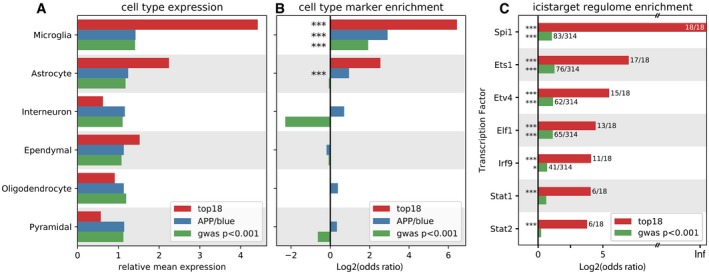
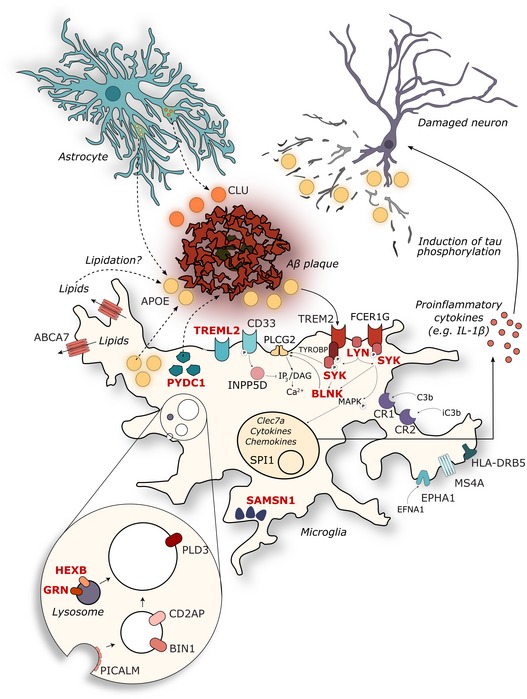
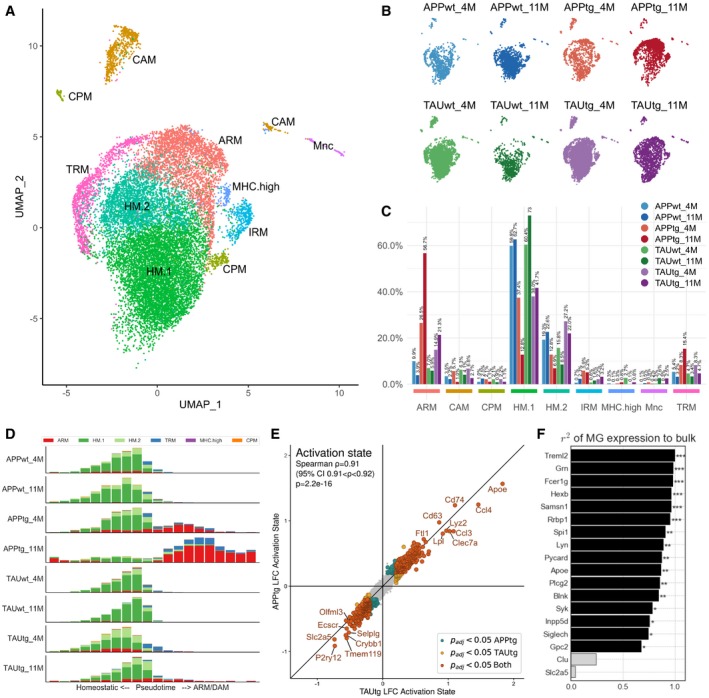
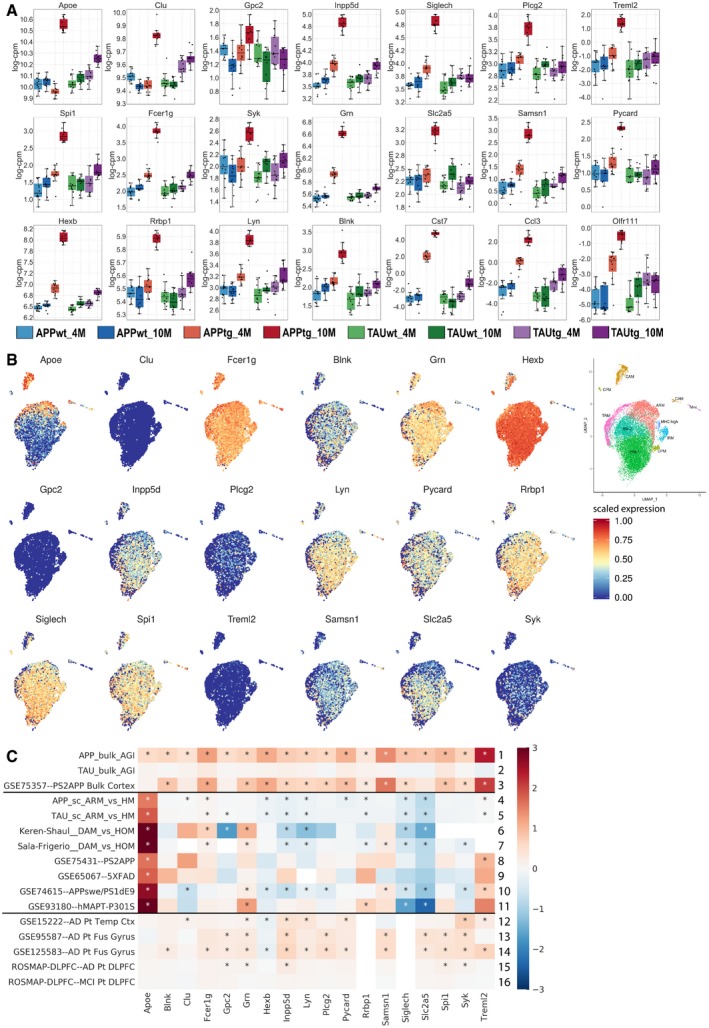
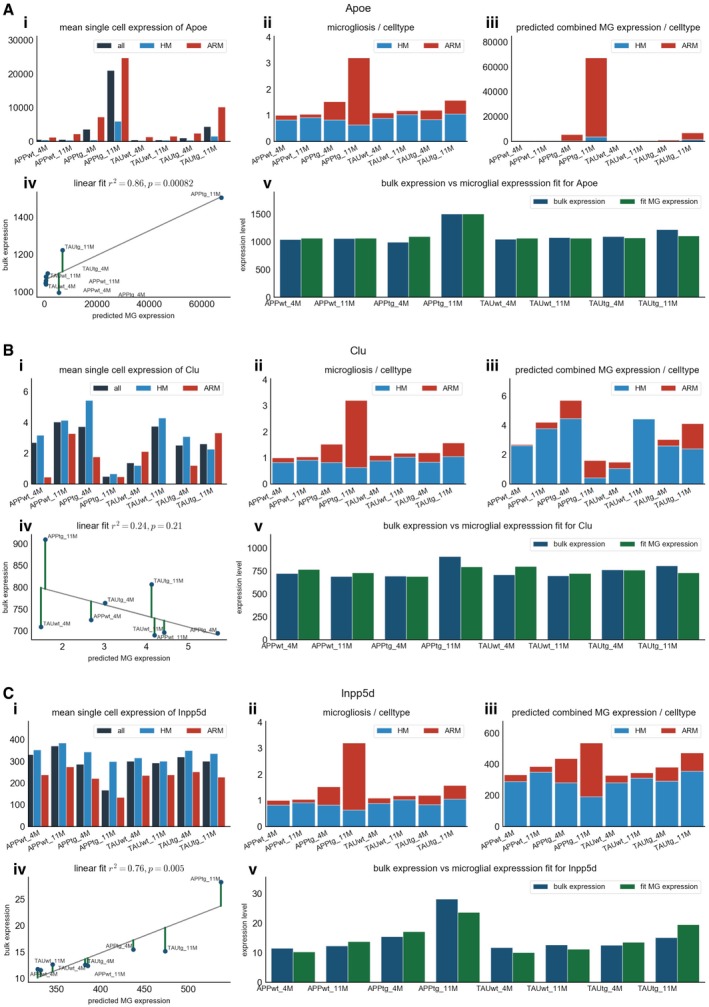
Polygenic risk scores have identified that genetic variants without genome‐wide significance still add to the genetic risk of developing Alzheimer's disease (AD). Whether and how subthreshold risk loci translate into relevant disease pathways is unknown. We investigate here the involvement of AD risk variants in the transcriptional responses of two mouse models: APPswe/PS1 L166P and Thy‐TAU22. A unique gene expression module, highly enriched for AD risk genes, is specifically responsive to Aβ but not TAU pathology. We identify in this module 7 established AD risk genes ( APOE , CLU , INPP5D , CD33, PLCG2 , SPI1, and FCER1G ) and 11 AD GWAS genes below the genome‐wide significance threshold ( GPC2, TREML2, SYK, GRN, SLC2A5, SAMSN1, PYDC1, HEXB, RRBP1, LYN, and BLNK), that become significantly upregulated when exposed to Aβ. Single microglia sequencing confirms that Aβ, not TAU, pathology induces marked transcriptional changes in microglia, including increased proportions of activated microglia. We conclude that genetic risk of AD functionally translates into different microglia pathway responses to Aβ pathology, placing AD genetic risk downstream of the amyloid pathway but upstream of TAU pathology.
Overview
The claims and statistics of this paper haven’t been checked yet.
Run the check — free, no account needed. It reads the open-access text and checks the sources it cites.
Integrity signals
Registry
Cites
Statistics
Figures
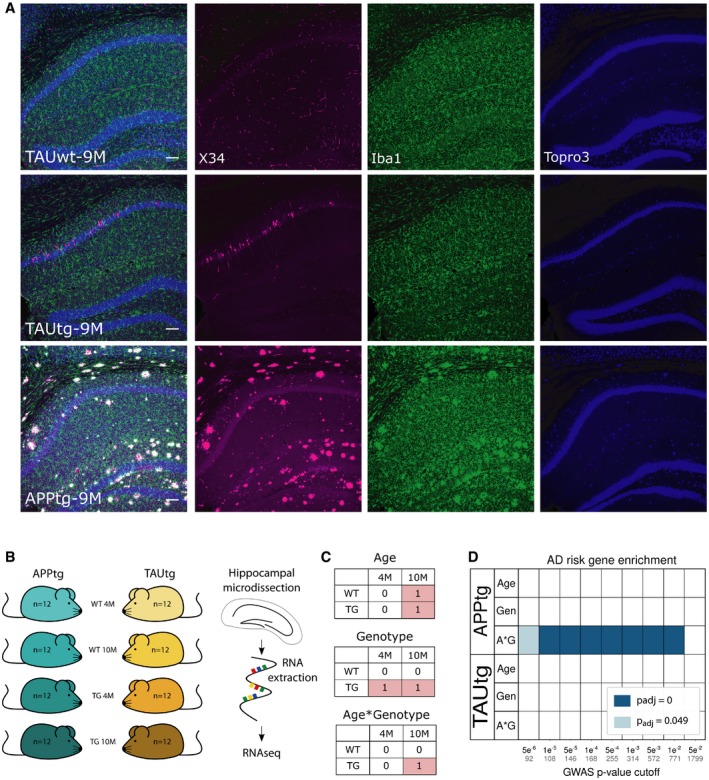
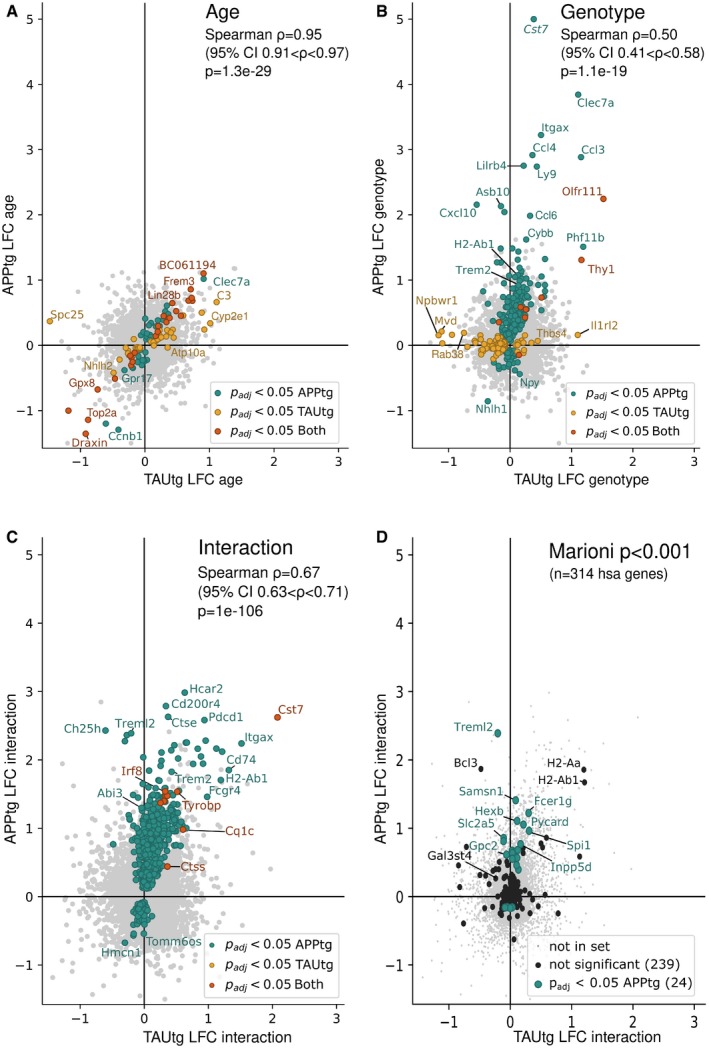
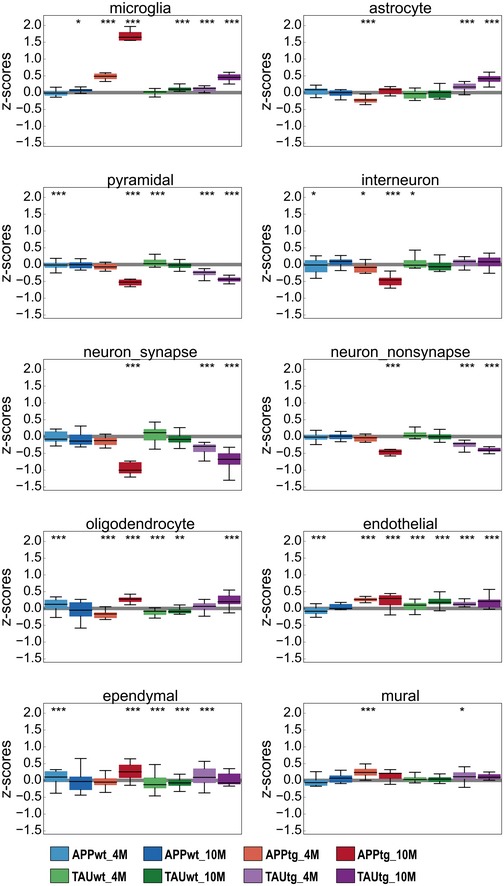
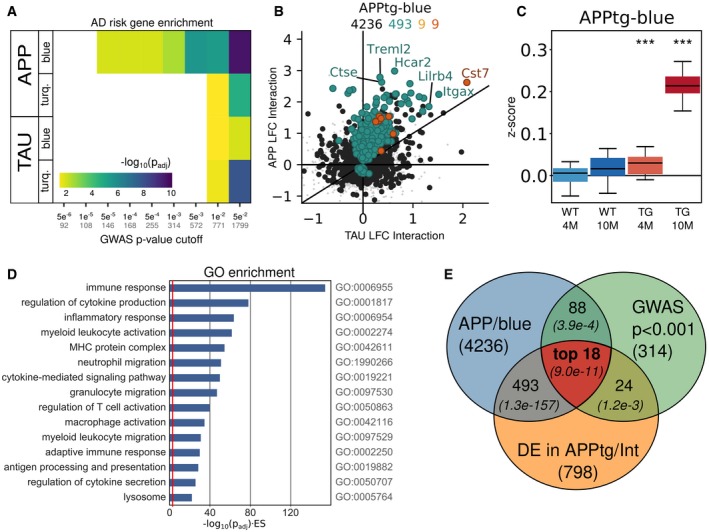
Verification
Claims the paper makes
The claims and statistics of this paper haven’t been checked yet.
Run the check — free, no account needed. It reads the open-access text and checks the sources it cites.
Claims other papers make about this one
Each is checked against this paper’s own text: does it say what the citing paper says it does?
The source backs part of the claim, not all of it — or backs it for a different population, condition or comparison.
In the citing paper
“Sierskma et al. identified 18 genes that both overlapped with AD GWAS datasets and were maintained between young and old APP transgenic mice, which were predominantly expressed by microglia and appear to be regulated by Spi150.”
From Modest changes in Spi1 dosage reveal the potential for altered microglial function as seen in Alzheimer’s disease (2021) · cites this paper as [50]
Experimental — accuracy not yet measuredThe cited source says what the claim attributes to it.
In the citing paper
“which is enriched with AD risk genes and is a microglial response to amyloid rather than tau pathology.”
From Spatial Transcriptomics and In Situ Sequencing to Study Alzheimer’s Disease (2020) · cites this paper as Sierksma et al., 2020
The cited source says what the claim attributes to it.
In the citing paper
“Sierskma et al. identified 18 genes that both overlapped with AD GWAS datasets and were maintained between young and old APP transgenic mice, which were predominantly expressed by microglia and appear to be regulated by Spi150.”
From Modest changes in Spi1 dosage reveal the potential for altered microglial function as seen in Alzheimer’s disease (2021) · cites this paper as [50]
The cited source says what the claim attributes to it.
In the citing paper
“Furthermore, recent scRNA-seq studies identified marked transcriptional changes in microglia in response to Aβ (52).”
From Deletion of Abi3 gene locus exacerbates neuropathological features of Alzheimer’s disease in a mouse model of Aβ amyloidosis (2021) · cites this paper as [52]
The cited source says what the claim attributes to it.
In the citing paper
“Several studies have shown that this hypothesis-generating, unbiased readout can be used to investigate Aβ accumulation (Sierksma et al., 2020), region-specific expression of tau (Castanho et al., 2020), and activated immune response (Kang et al., 2018).”
From Network analysis identifies strain-dependent response to tau and tau seeding-associated genes (2023) · cites this paper as Sierksma et al., 2020
The cited source says what the claim attributes to it.
In the citing paper
“Single microglia sequencing of two different mouse models of AD, one displaying either Aβ or tau pathology, further confirmed the expression of AD risk genes, including PLCG2 gene, and also confirmed that more microglia adopt an activated phenotype when facing Aβ than tau pathology (166).”
From The role of PLCγ2 in immunological disorders, cancer, and neurodegeneration (2021) · cites this paper as [166]
The cited source says what the claim attributes to it.
In the citing paper
“Computational models place TREM2 and other effectors in the pathway – including Syk and BLNK – in a module associated with microglia responses to Aβ [91].”
From TREM2/PLCγ2 signalling in immune cells: function, structural insight, and potential therapeutic modulation (2021) · cites this paper as [91]
The check wasn’t confident either way, so it gives no verdict — never disputed.
In the citing paper
“Interestingly, PlxnB1/B2 and Sema4D levels have been shown to be upregulated in aged thy-TAU22 mice by bulk RNAseq analysis (Sierksma, Lu et al. 2020) and in PlxnB1 in human GRN-FTD astrocytes (Gerrits, Giannini et al. 2022) (Figure S8E).”
From SORLA up-regulation suppresses pathological effects in aged tauopathy mouse brain (2026) · cites this paper as Sierksma, Lu et al. 2020
Experimental — accuracy not yet measuredIn the citing paper
“which is an oligodendroglial response in the amyloid- but not the tau-model.”
From Spatial Transcriptomics and In Situ Sequencing to Study Alzheimer’s Disease (2020) · cites this paper as Sierksma et al., 2020
Self-check
Percentages, sums and reported differences re-computed from the paper’s own numbers.
The self-check needs the paper’s full text.
Citations
Cites
Subramanian, A., Tamayo, P., Mootha, V. K., Mukherjee, S., Ebert, B. L., Gillette, M. A., Paulovich, A., Pomeroy, S. L., Golub, T. R., Lander, E. S., et al. (2005) · Proceedings of the National Academy of Sciences · doi:10.1073/pnas.0506580102 · Cited by 53,625
limma powers differential expression analyses for RNA-sequencing and microarray studies
Ritchie, M. E., Phipson, B., Wu, D., Hu, Y., Law, C. W., Shi, W., & Smyth, G. K. (2015) · Nucleic Acids Research · doi:10.1093/nar/gkv007 · Cited by 40,458
Systematic and integrative analysis of large gene lists using DAVID bioinformatics resources
Huang, D. W., Sherman, B. T., & Lempicki, R. A. (2009) · Nature Protocols · doi:10.1038/nprot.2008.211 · Cited by 35,890
WGCNA: an R package for weighted correlation network analysis
Langfelder, P., & Horvath, S. (2008) · BMC Bioinformatics · doi:10.1186/1471-2105-9-559 · Cited by 27,252
featureCounts: an efficient general purpose program for assigning sequence reads to genomic features
Liao, Y., Smyth, G. K., & Shi, W. (2014) · Bioinformatics · doi:10.1093/bioinformatics/btt656 · Cited by 27,219
Comprehensive Integration of Single-Cell Data
Stuart, T., Butler, A., Hoffman, P., Hafemeister, C., Papalexi, E., Mauck, W. M., Hao, Y., Stoeckius, M., Smibert, P., & Satija, R. (2019) · Cell · doi:10.1016/j.cell.2019.05.031 · Cited by 15,453
Huang, D. W., Sherman, B. T., & Lempicki, R. A. (2009) · Nucleic Acids Research · doi:10.1093/nar/gkn923 · Cited by 14,108
Integrating single-cell transcriptomic data across different conditions, technologies, and species
Butler, A., Hoffman, P., Smibert, P., Papalexi, E., & Satija, R. (2018) · Nature Biotechnology · doi:10.1038/nbt.4096 · Cited by 13,174
TopHat: discovering splice junctions with RNA-Seq
Trapnell, C., Pachter, L. S., & Salzberg, S. L. (2009) · Bioinformatics · doi:10.1093/bioinformatics/btp120 · Cited by 11,682
The control of the false discovery rate in multiple testing under dependency
Benjamini, Y., & Yekutieli, D. (2001) · The Annals of Statistics · doi:10.1214/aos/1013699998 · Cited by 10,490
Cited by
Sorted by citations
Scheltens, P., De Strooper, B., Kivipelto, M., Holstege, H., Chételat, G., Teunissen, C. E., Cummings, J., & van der Flier, W. M. (2021) · The Lancet · doi:10.1016/s0140-6736(20)32205-4 · Cited by 5,465
The Amyloid-β Pathway in Alzheimer’s Disease
Hampel, H., Hardy, J., Blennow, K., Chen, C., Perry, G., Kim, S. H., Villemagne, V. L., Aisen, P., Vendruscolo, M., Iwatsubo, T., et al. (2021) · Molecular Psychiatry · doi:10.1038/s41380-021-01249-0 · Cited by 1,952
Synergy between amyloid-β and tau in Alzheimer’s disease
Busche, M. A., & Hyman, B. T. (2020) · Nature Neuroscience · doi:10.1038/s41593-020-0687-6 · Cited by 1,242
Spatial Transcriptomics and In Situ Sequencing to Study Alzheimer’s Disease
Chen, W.-T., Lu, A., Craessaerts, K., Pavie, B., Sala Frigerio, C., Corthout, N., Qian, X., Laláková, J., Kühnemund, M., Voytyuk, I., et al. (2020) · Cell · doi:10.1016/j.cell.2020.06.038 · Cited by 949
Self-citationNeuroinflammation in Alzheimer disease
Heneka, M. T., van der Flier, W. M., Jessen, F., Hoozemanns, J., Thal, D. R., Boche, D., Brosseron, F., Teunissen, C., Zetterberg, H., Jacobs, A. H., et al. (2025) · Nature Reviews Immunology · doi:10.1038/s41577-024-01104-7 · Cited by 638
Self-citationDistinct amyloid-β and tau-associated microglia profiles in Alzheimer’s disease
Gerrits, E., Brouwer, N., Kooistra, S. M., Woodbury, M. E., Vermeiren, Y., Lambourne, M., Mulder, J., Kummer, M., Möller, T., Biber, K., et al. (2021) · Acta Neuropathologica · doi:10.1007/s00401-021-02263-w · Cited by 441
The Impact of Systemic Inflammation on Alzheimer’s Disease Pathology
Xie, J., Van Hoecke, L., & Vandenbroucke, R. E. (2022) · Frontiers in Immunology · doi:10.3389/fimmu.2021.796867 · Cited by 324
Microglia facilitate loss of perineuronal nets in the Alzheimer's disease brain
Crapser, J. D., Spangenberg, E. E., Barahona, R. A., Arreola, M. A., Hohsfield, L. A., & Green, K. N. (2020) · EBioMedicine · doi:10.1016/j.ebiom.2020.102919 · Cited by 280
Molecular signatures underlying neurofibrillary tangle susceptibility in Alzheimer’s disease
Otero-Garcia, M., Mahajani, S. U., Wakhloo, D., Tang, W., Xue, Y.-Q., Morabito, S., Pan, J., Oberhauser, J., Madira, A. E., Shakouri, T., et al. (2022) · Neuron · doi:10.1016/j.neuron.2022.06.021 · Cited by 262
Cellular senescence and Alzheimer disease: the egg and the chicken scenario
Saez-Atienzar, S., & Masliah, E. (2020) · Nature Reviews Neuroscience · doi:10.1038/s41583-020-0325-z · Cited by 257
Moonen, S., Koper, M. J., Schoor, E. V., Schaeverbeke, J. M., Vandenberghe, R. R., Arnim, C. A. F. V., Tousseyn, T., Strooper, B. D., & Thal, D. R. (2022) · Acta Neuropathologica · doi:10.1007/s00401-022-02528-y · Cited by 268
MEG3 activates necroptosis in human neuron xenografts modeling Alzheimer’s disease
Balusu, S., Horré, K., Thrupp, N., Craessaerts, K., Snellinx, A., Serneels, L., T’Syen, D., Chrysidou, I., Arranz, A. M., Sierksma, A. S. R., et al. (2023) · Science · doi:10.1126/science.abp9556 · Cited by 246
Self-citationJiwaji, Z., Tiwari, S. S., Avilés-Reyes, R. X., Hooley, M., Hampton, D., Torvell, M., Johnson, D. A., McQueen, J., Baxter, P., Sabari-Sankar, K., et al. (2022) · Nature Communications · doi:10.1038/s41467-021-27702-w · Cited by 223
Early Alzheimer’s disease pathology in human cortex involves transient cell states
Gazestani, V., Kamath, T., Nadaf, N. M., Dougalis, A., Burris, S. J., Rooney, B., Junkkari, A., Vanderburg, C., Pelkonen, A., Gomez-Budia, M., et al. (2023) · Cell · doi:10.1016/j.cell.2023.08.005 · Cited by 209
Diverse human astrocyte and microglial transcriptional responses to Alzheimer’s pathology
Smith, A. M., Davey, K., Tsartsalis, S., Khozoie, C., Fancy, N., Tang, S. S., Liaptsi, E., Weinert, M., McGarry, A., Muirhead, R. C. J., et al. (2022) · Acta Neuropathologica · doi:10.1007/s00401-021-02372-6 · Cited by 209
“1 3 associated with both pathological proteins, a 3–4-fold greater number of genes were uniquely differentially expressed with amyloid-beta relative to pTau, mirroring observations with microglia in preclinical transgenic models overexpressing the two proteins [55].”
ResultThe role of innate immune genes in Alzheimer's disease
Griciuc, A., & Tanzi, R. E. (2021) · Current Opinion in Neurology · doi:10.1097/wco.0000000000000911 · Cited by 192
Understanding Alzheimer Disease at the Interface between Genetics and Transcriptomics
Verheijen, J., & Sleegers, K. (2018) · Trends in Genetics · doi:10.1016/j.tig.2018.02.007 · Cited by 192
Boeck, A. D., Ahn, B. Y., D’Mello, C., Lun, X. Q., Menon, S. V., Alshehri, M. M., Szulzewsky, F., Shen, Y., Khan, L., Dang, N. H., et al. (2020) · Nature Communications · doi:10.1038/s41467-020-18569-4 · Cited by 191
Da Mesquita, S., Herz, J., Wall, M., Dykstra, T., de Lima, K. A., Norris, G. T., Dabhi, N., Kennedy, T., Baker, W., & Kipnis, J. (2021) · Science Advances · doi:10.1126/sciadv.abe4601 · Cited by 172
Alzheimer's Disease Puzzle: Delving into Pathogenesis Hypotheses
(2024) · aging and disease · doi:10.14336/ad.2023.0608 · Cited by 183
Chen, Y.-A., Lu, C.-H., Ke, C.-C., Chiu, S.-J., Jeng, F.-S., Chang, C.-W., Yang, B.-H., & Liu, R.-S. (2021) · Biomedicines · doi:10.3390/biomedicines9060594 · Cited by 167
A multi-pronged human microglia response to Alzheimer’s disease Aβ pathology
Mancuso, R., Fattorelli, N., Martinez-Muriana, A., Davis, E., Wolfs, L., Van Den Daele, J., Geric, I., Preman, P., Serneels, L., Poovathingal, S., et al. (2022) · doi:10.1101/2022.07.07.499139 · Cited by 169
Self-citationHarris, S. S., Wolf, F., De Strooper, B., & Busche, M. A. (2020) · Neuron · doi:10.1016/j.neuron.2020.06.005 · Cited by 161
Translating genetic risk of Alzheimer’s disease into mechanistic insight and drug targets
Sierksma, A. S. R., Escott‐Price, V., & Strooper, B. D. (2020) · Science · doi:10.1126/science.abb8575 · Cited by 153
Self-citationMicroglial activation states and their implications for Alzheimer's Disease
Valiukas, Z., Tangalakis, K., Apostolopoulos, V., & Feehan, J. (2025) · The Journal of Prevention of Alzheimer s Disease · doi:10.1016/j.tjpad.2024.100013 · Cited by 167
The promise of microRNA-based therapies in Alzheimer’s disease: challenges and perspectives
Walgrave, H., Zhou, L., Strooper, B. D., & Salta, E. (2021) · Molecular Neurodegeneration · doi:10.1186/s13024-021-00496-7 · Cited by 137
Self-citationShi, Q., Chang, C., Saliba, A., & Bhat, M. A. (2022) · Journal of Neuroscience · doi:10.1523/jneurosci.2427-21.2022 · Cited by 139
Li, Y., Lei, Z., Ritzel, R. M., He, J., Li, H., Choi, H., Lipinski, M. M., & Wu, J. (2022) · Theranostics · doi:10.7150/thno.72713 · Cited by 131
Diversity of transcriptomic microglial phenotypes in aging and Alzheimer's disease
Boche, D., & Gordon, M. N. (2021) · Alzheimer s & Dementia · doi:10.1002/alz.12389 · Cited by 122
Penke, B., Szűcs, M., & Bogár, F. (2020) · Molecules · doi:10.3390/molecules25071659 · Cited by 119
The role of PLCγ2 in immunological disorders, cancer, and neurodegeneration
Jackson, J. T., Mulazzani, E., Nutt, S. L., & Masters, S. L. (2021) · Journal of Biological Chemistry · doi:10.1016/j.jbc.2021.100905 · Cited by 113
“Human genetic data were further corroborated by using well-studied animal models of AD (165, 166).”
BackgroundMethodGenetic variability in response to amyloid beta deposition influences Alzheimer’s disease risk
Salih, D. A., Bayram, S., Guelfi, S., Reynolds, R. H., Shoai, M., Ryten, M., Brenton, J. W., Zhang, D., Matarin, M., Botia, J. A., et al. (2019) · Brain Communications · doi:10.1093/braincomms/fcz022 · Cited by 110
The microbiota–microglia axis in central nervous system disorders
Mossad, O., & Erny, D. (2020) · Brain Pathology · doi:10.1111/bpa.12908 · Cited by 98
Alzheimer’s Disease and Inflammaging
Kosyreva, A., Sentyabreva, A., Tsvetkov, I., & Makarova, O. (2022) · Brain Sciences · doi:10.3390/brainsci12091237 · Cited by 98
Microglia heterogeneity, modeling and cell-state annotation in development and neurodegeneration
Fumagalli, L., Nazlie Mohebiany, A., Premereur, J., Polanco Miquel, P., Bijnens, B., Van de Walle, P., Fattorelli, N., & Mancuso, R. (2025) · Nature Neuroscience · doi:10.1038/s41593-025-01931-4 · Cited by 90
Self-citationGenomics of Alzheimer’s disease implicates the innate and adaptive immune systems
Li, Y., Laws, S. M., Miles, L. A., Wiley, J. S., Huang, X., Masters, C. L., & Gu, B. J. (2021) · Cellular and Molecular Life Sciences · doi:10.1007/s00018-021-03986-5 · Cited by 96
White matter microglia heterogeneity in the CNS
Amor, S., McNamara, N. B., Gerrits, E., Marzin, M. C., Kooistra, S. M., Miron, V. E., & Nutma, E. (2022) · Acta Neuropathologica · doi:10.1007/s00401-021-02389-x · Cited by 89
Phospholipase C families: Common themes and versatility in physiology and pathology
Katan, M., & Cockcroft, S. (2020) · Progress in Lipid Research · doi:10.1016/j.plipres.2020.101065 · Cited by 89
Step by step: towards a better understanding of the genetic architecture of Alzheimer’s disease
Lambert, J.-C., Ramirez, A., Grenier-Boley, B., & Bellenguez, C. (2023) · Molecular Psychiatry · doi:10.1038/s41380-023-02076-1 · Cited by 87
Noteworthy perspectives on microglia in neuropsychiatric disorders
Zhu, H., Guan, A., Liu, J., Li, P., Zhang, Z., & Wang, S. (2023) · Journal of Neuroinflammation · doi:10.1186/s12974-023-02901-y · Cited by 91
Benítez, D. P., Jiang, S., Wood, J. I., Wang, R., Hall, C. M., Peerboom, C., Wong, N. S. M., Stringer, K. M., Vitanova, K. S., Smith, V. C., et al. (2021) · Molecular Neurodegeneration · doi:10.1186/s13024-021-00457-0 · Cited by 81
Lee, S.-H., Rezzonico, M. G., Friedman, B. A., Huntley, M. H., Meilandt, W. J., Pandey, S., Chen, Y.-J. J., Easton, A. E., Modrusan, Z. D., Hansen, D. V., et al. (2021) · Cell Reports · doi:10.1016/j.celrep.2021.110158 · Cited by 82
Becker, L. M., Chen, S.-H., Rodor, J., de Rooij, L. P. M. H., Baker, A. H., & Carmeliet, P. (2022) · Cardiovascular Research · doi:10.1093/cvr/cvac018 · Cited by 81
Hole, K. L., & Williams, R. J. (2020) · Brain Plasticity · doi:10.3233/bpl-200098 · Cited by 81
Integrative genomics approach identifies conserved transcriptomic networks in Alzheimer’s disease
Morabito, S., Miyoshi, E., Michael, N., & Swarup, V. (2020) · Human Molecular Genetics · doi:10.1093/hmg/ddaa182 · Cited by 74
Lodder, C., Scheyltjens, I., Stancu, I., Lucena, P. B., de Ravé, M. G., Vanherle, S., Vanmierlo, T., Cremers, N., Vanrusselt, H., Brône, B., et al. (2021) · Acta Neuropathologica Communications · doi:10.1186/s40478-021-01204-8 · Cited by 71
Xue, F., & Du, H. (2021) · Cells · doi:10.3390/cells10020321 · Cited by 73
Yang, H. S., Onos, K. D., Choi, K., Keezer, K. J., Skelly, D. A., Carter, G. W., & Howell, G. R. (2021) · Cell Reports · doi:10.1016/j.celrep.2021.108739 · Cited by 69
Xie, J., Gorlé, N., Vandendriessche, C., Imschoot, G. V., Wonterghem, E. V., Cauwenberghe, C. V., Parthoens, E., Hamme, E. V., Lippens, S., Hoecke, L. V., et al. (2021) · Acta Neuropathologica Communications · doi:10.1186/s40478-021-01253-z · Cited by 69
Miedema, A., Gerrits, E., Brouwer, N., Jiang, Q., Kracht, L., Meijer, M., Nutma, E., Peferoen-Baert, R., Pijnacker, A. T. E., Wesseling, E. M., et al. (2022) · Acta Neuropathologica Communications · doi:10.1186/s40478-021-01306-3 · Cited by 65
Magno, L., Bunney, T. D., Mead, E., Svensson, F., & Bictash, M. N. (2021) · Molecular Neurodegeneration · doi:10.1186/s13024-021-00436-5 · Cited by 64
Kim, D. W., Tu, K. J., Wei, A., Lau, A., Gonzalez-Gil, A., Cao, T., Braunstein, K. E., Ling, J. P., Troncoso, J. C., Wong, P. C., et al. (2022) · Molecular Neurodegeneration · doi:10.1186/s13024-022-00589-x · Cited by 71
Portugal, C. C., Almeida, T. O., Socodato, R., & Relvas, J. B. (2021) · FEBS Journal · doi:10.1111/febs.16197 · Cited by 66
Microglia Heterogeneity in Alzheimer’s Disease: Insights From Single-Cell Technologies
Wang, H. (2021) · Frontiers in Synaptic Neuroscience · doi:10.3389/fnsyn.2021.773590 · Cited by 62
Ashrafizadeh, M., Najafi, M., Kaviyani, N., Mohammadinejad, R., Farkhondeh, T., & Samarghandian, S. (2021) · Inflammation · doi:10.1007/s10753-021-01428-9 · Cited by 66
RetractedHamilton, L. K., Moquin‐Beaudry, G., Mangahas, C. L., Pratesi, F., Aubin, M., Aumont, A., Joppé, S. E., Légiot, A., Vachon, A., Plourde, M., et al. (2022) · Nature Communications · doi:10.1038/s41467-022-29506-y · Cited by 66
Dhandapani, R., Neri, M., Bernhard, M., Brzak, I., Schweizer, T., Rudin, S., Joller, S., Berth, R., Kernen, J., Neuhaus, A., et al. (2022) · Cell Reports · doi:10.1016/j.celrep.2022.110883 · Cited by 60
Chiarini, A., Gui, L., Viviani, C., Armato, U., & Prà, I. D. (2023) · Biomedicines · doi:10.3390/biomedicines11040999 · Cited by 62
Immunotherapy-related cognitive impairment after CAR T cell therapy in mice
Geraghty, A. C., Acosta-Alvarez, L., Rotiroti, M. C., Dutton, S., O’Dea, M. R., Kim, W., Trivedi, V., Mancusi, R. A., Shamardani, K., Malacon, K. E., et al. (2025) · Cell · doi:10.1016/j.cell.2025.03.041 · Cited by 64
Karahan, H., Smith, D. C., Kim, B., Dabin, L. C., Al-Amin, M. M., Wijeratne, H. R. S., Pennington, T., Viana di Prisco, G., McCord, B., Lin, P. B.-C., et al. (2021) · Science Advances · doi:10.1126/sciadv.abe3954 · Cited by 53
Ghosh, S., Durgvanshi, S., Agarwal, S., Raghunath, M., & Sinha, J. K. (2020) · Current Neuropharmacology · doi:10.2174/1570159x18666200429011823 · Cited by 57
Neurodegeneration cell per cell
Balusu, S., Praschberger, R., Lauwers, E., Strooper, B. D., & Verstreken, P. (2023) · Neuron · doi:10.1016/j.neuron.2023.01.016 · Cited by 53
Wang, S.-Y., Fu, X., Duan, R., Wei, B., Cao, H., Yan, E., Chen, S., Zhang, Y.-D., & Jiang, T. (2022) · Neural Regeneration Research · doi:10.4103/1673-5374.346468 · Cited by 53
Alzheimer’s disease-related transcriptional sex differences in myeloid cells
Coales, I., Tsartsalis, S., Fancy, N., Weinert, M., Clode, D., Owen, D., & Matthews, P. M. (2022) · Journal of Neuroinflammation · doi:10.1186/s12974-022-02604-w · Cited by 49
Identification of distinct and age‐dependent p16High microglia subtypes
Talma, N., Gerrits, E., Wang, B., Eggen, B. J. L., & Demaria, M. (2021) · Aging Cell · doi:10.1111/acel.13450 · Cited by 46
Jones, R. E., Andrews, R., Holmans, P., Hill, M., & Taylor, P. R. (2021) · Scientific Reports · doi:10.1038/s41598-021-94324-z · Cited by 39
“Previous work has identified that Spi1 is able to influence multiple gene networks in microglia [5,7,31] and has been proposed to be central to a network of AD risk genes that are conserved between species [39].”
BackgroundRedefining Microglial Identity in Health and Disease at Single-Cell Resolution
Provenzano, F., Pérez, M. J., & Deleidi, M. (2021) · Trends in Molecular Medicine · doi:10.1016/j.molmed.2020.09.001 · Cited by 45
Rejdak, K., Sienkiewicz‐Jarosz, H., Bieńkowski, P., & Álvarez, A. (2023) · Medicinal Research Reviews · doi:10.1002/med.21960 · Cited by 44
Gao, C., Shen, X., Tan, Y., & Chen, S. (2022) · Journal of Neuroinflammation · doi:10.1186/s12974-022-02580-1 · Cited by 48
Takata, K., Ginhoux, F., & Shimohama, S. (2021) · Biochemical Pharmacology · doi:10.1016/j.bcp.2021.114754 · Cited by 40
Zhou, Y., Xu, J., Hou, Y., Bekris, L., Leverenz, J. B., Pieper, A. A., Cummings, J., & Cheng, F. (2022) · Alzheimer's & Dementia: Translational Research & Clinical Interventions · doi:10.1002/trc2.12350 · Cited by 39
Chen, Y., Hong, T., Chen, F., Sun, Y., Wang, Y., & Cui, L. (2021) · Frontiers in Aging Neuroscience · doi:10.3389/fnagi.2021.631827 · Cited by 40
Challenge accepted: uncovering the role of rare genetic variants in Alzheimer’s disease
Khani, M., Gibbons, E., Bras, J., & Guerreiro, R. (2022) · Molecular Neurodegeneration · doi:10.1186/s13024-021-00505-9 · Cited by 39
Emerging genetic complexity and rare genetic variants in neurodegenerative brain diseases
Perrone, F., Cacace, R., van der Zee, J., & Broeckhoven, C. V. (2021) · Genome Medicine · doi:10.1186/s13073-021-00878-y · Cited by 38
Alzheimer’s Disease: A Systems View Provides a Unifying Explanation of Its Development
Grobler, C., van Tongeren, M., Gettemans, J., Kell, D. B., & Pretorius, E. (2022) · Journal of Alzheimer s Disease · doi:10.3233/jad-220720 · Cited by 45
Huang, Y., Guimarães, T. R., Todd, N., Ferguson, C., Weiss, K. M., Stauffer, F., McDermott, B., Hurtle, B. T., Saito, T., Saido, T. C., et al. (2022) · Proceedings of the National Academy of Sciences · doi:10.1073/pnas.2204828119 · Cited by 37
New Pathways Identify Novel Drug Targets for the Prevention and Treatment of Alzheimer’s Disease
Penke, B., Szűcs, M., & Bogár, F. (2023) · International Journal of Molecular Sciences · doi:10.3390/ijms24065383 · Cited by 39
Duan, J., Huang, Z., Qin, S., Li, B., Zhang, Z., Liu, R., Wang, K., Nice, E. C., Jiang, J., & Huang, C. (2024) · Journal of Extracellular Vesicles · doi:10.1002/jev2.12468 · Cited by 39
Allende, M. L., Zhu, H., Kono, M., Hoachlander-Hobby, L. E., Huso, V. L., & Proia, R. L. (2021) · Cellular Signalling · doi:10.1016/j.cellsig.2020.109879 · Cited by 37
Zhao, K., Liu, J., Sun, T., Zeng, L., Li, Z., Li, Z., & Liu, R. (2024) · Brain Behavior and Immunity · doi:10.1016/j.bbi.2024.02.016 · Cited by 42
Hyperexcitability and seizures in the THY-Tau22 mouse model of tauopathy
Gómez‐Murcia, V., Sandau, U. S., Ferry, B., Parrot, S., Laurent, C., Basquin, M., Buée, L., Boison, D., & Blum, D. L. (2020) · Neurobiology of Aging · doi:10.1016/j.neurobiolaging.2020.06.004 · Cited by 36
Self-citationCX3CL1 Pathway as a Molecular Target for Treatment Strategies in Alzheimer’s Disease
Bivona, G., Iemmolo, M., & Ghersi, G. (2023) · International Journal of Molecular Sciences · doi:10.3390/ijms24098230 · Cited by 35
Cerebrovascular Anomalies: Perspectives From Immunology and Cerebrospinal Fluid Flow
Rustenhoven, J., Tanumihardja, C., & Kipnis, J. (2021) · Circulation Research · doi:10.1161/circresaha.121.318173 · Cited by 38
Garcia, G., Fernandes, A., Stein, F., & Brites, D. (2022) · Frontiers in Pharmacology · doi:10.3389/fphar.2022.833066 · Cited by 32
The Alzheimer's Disease Gene SORL1 Regulates Lysosome Function in Human Microglia
Mishra, S., Morshed, N., Sidhu, S. B., Kinoshita, C., Stevens, B., Jayadev, S., & Young, J. E. (2025) · Glia · doi:10.1002/glia.70009 · Cited by 31
Role of TET1-mediated epigenetic modulation in Alzheimer's disease
Armstrong, M. J., Jin, Y., Vattathil, S., Huang, Y., Schroeder, J. P., Bennet, D. A., Qin, Z. S., Wingo, T. S., & Jin, P. (2023) · Neurobiology of Disease · doi:10.1016/j.nbd.2023.106257 · Cited by 32
Karaahmet, B., Le, L., Mendes, M. S., Majewska, A. K., & O’Banion, M. K. (2022) · Journal of Neuroinflammation · doi:10.1186/s12974-022-02532-9 · Cited by 29
Microglial Activation Modulated by P2X4R in Ischemia and Repercussions in Alzheimer’s Disease
Castillo, C., Sáez-Orellana, F., Godoy, P. A., & Fuentealba, J. (2022) · Frontiers in Physiology · doi:10.3389/fphys.2022.814999 · Cited by 28
St‐Pierre, M., VanderZwaag, J., Loewen, S. M., & Tremblay, M. (2022) · Frontiers in Cellular Neuroscience · doi:10.3389/fncel.2022.932572 · Cited by 27
St‐Pierre, M., Carrier, M., Ibáñez, F. G., Khakpour, M., Wallman, M., Parent, M., & Tremblay, M. (2023) · Journal of Neuroinflammation · doi:10.1186/s12974-023-02752-7 · Cited by 28
Advanced patient-specific microglia cell models for pre-clinical studies in Alzheimer’s disease
Cuní‐López, C., Stewart, R., Oikari, L. E., Nguyen, T. H., Roberts, T. L., Sun, Y., Guo, C. C., Lupton, M. K., White, A. R., & Quek, H. (2024) · Journal of Neuroinflammation · doi:10.1186/s12974-024-03037-3 · Cited by 28
Altered Metabolism and DAM-signatures in Female Brains and Microglia with Aging
Cleland, N. R. W., Potter, G. J., Buck, C., Quang, D., Oldham, D., Neal, M., Saviola, A., Niemeyer, C. S., Dobrinskikh, E., & Bruce, K. D. (2024) · Brain Research · doi:10.1016/j.brainres.2024.148772 · Cited by 26
How the gut microbiota impacts neurodegenerative diseases by modulating CNS immune cells
Schaible, P., Henschel, J., & Erny, D. (2025) · Journal of Neuroinflammation · doi:10.1186/s12974-025-03371-0 · Cited by 32
Immune dysfunction in Alzheimer disease
Butovsky, O., Rosenzweig, N., Kleemann, K. L., Jorfi, M., Kuchroo, V. K., Tanzi, R. E., & Weiner, H. L. (2025) · Nature reviews. Neuroscience · doi:10.1038/s41583-025-00997-0 · Cited by 41
Zhang, Z., Wu, H., Peng, Q., Xie, Z., Chen, F., Ma, Y., Zhang, Y., Zhou, Y. C., Yang, J., Cheng Ann, C. H. E. N., et al. (2021) · Frontiers in Immunology · doi:10.3389/fimmu.2021.730300 · Cited by 26
Wu, D., Bi, X., & Chow, H. (2024) · Journal of Neuroinflammation · doi:10.1186/s12974-023-02987-4 · Cited by 31
Moon, H.-J., Haroutunian, V., & Zhao, L. (2022) · Neurobiology of Disease · doi:10.1016/j.nbd.2022.105631 · Cited by 25
Sun, Y., Zhu, J., Yang, Y., Zhang, Z., Zhong, H., Zeng, G., Zhou, D., Nowakowski, R. S., Long, J., Wu, C., et al. (2023) · Translational Psychiatry · doi:10.1038/s41398-023-02695-w · Cited by 25
S100A8 ‐enriched microglia populate the brain of tau‐seeded and accelerated aging mice
Gruel, R., Bijnens, B., Daele, J. V. D., Thys, S., Willems, R., Wuyts, D., Dam, D. V., Verstraelen, P., Verboven, R., Roels, J., et al. (2024) · Aging Cell · doi:10.1111/acel.14120 · Cited by 24
Self-citationHemonnot-Girard, A.-L., Meersseman, C., Pastore, M., Garcia, V., Linck, N., Rey, C., Chebbi, A., Jeanneteau, F., Ginsberg, S. D., Lachuer, J., et al. (2022) · Journal of Neuroinflammation · doi:10.1186/s12974-022-02581-0 · Cited by 24
Metadata
- Authors
- Sierksma, A., Lu, A., Mancuso, R., Fattorelli, N., Thrupp, N., Salta, E., Zoco, J., Blum, D., Buée, L., De Strooper, B., & Fiers, M.
- Affiliations
- VIB-KU Leuven Center for Brain & Disease Research (BE)
- Inserm (FR)
- Corresponding author
- Fiers, Mark
- ORCID
- Venue
- EMBO Molecular Medicine
- Published
- 2020-01-17
- Volume
- 12
- Issue
- 3
- Pages
- e10606-e10606
- ISSN
- 1757-4676 (ISSN-L)
- 1757-4684
- PMC
- PMC7059012
- OpenAlex
- W3000035810
- Cited by
- 291
- References
- 74
- Citations by year
- 2026: 21 · 2025: 43 · 2024: 37 · 2023: 48 · 2022: 58 · 2021: 54 · 2020: 28
- FWCI
- 28.26
- Type
- journal article
- Language
- en
- Open access
- gold
- doi.org
- Locations
- EMBO Molecular Medicine (publishedVersion, other-oa)
- bioRxiv (Cold Spring Harbor Laboratory) (acceptedVersion)
- PubMed Central (publishedVersion, cc-by)
- PubMed (publishedVersion)
- Lirias (KU Leuven) (acceptedVersion)
- Lirias (submittedVersion, other-oa)
- Lirias (KU Leuven) (submittedVersion, other-oa)
- HAL (submittedVersion, other-oa)
- DOAJ (DOAJ: Directory of Open Access Journals) (submittedVersion, cc-by-sa)
- UCL Discovery (University College London) (submittedVersion)
- Funders
- Leuven Universitair Fonds
- Alzheimer Research Foundation (P16017)
- Fonds voor Wetenschappelijk Onderzoek (1139520N, 12A5316N, G0C9219N)
- Alzheimer's Association (AARF‐16‐442853)
- KU Leuven
- Vlaams Instituut voor Biotechnologie
- Vlaamse Overheid
- Vlaams Initiatief voor Netwerken voor Dementie Onderzoek
- Geneeskundige Stichting Koningin Elisabeth
- Bax‐Vanluffelen Chair for Alzheimer's Disease
- Agence National Recherche (ANR‐16‐COEN‐0007)
- UK Research and Innovation|MRC|Medical Research Foundation
- Alzheimer Society
- Alzheimer Research UK
- Topics
- Life Sciences › Neuroscience › Cellular and Molecular Neuroscience › Alzheimer's disease research and treatments
- Life Sciences › Neuroscience › Neurology › Neuroinflammation and Neurodegeneration Mechanisms
- Health Sciences › Medicine › Psychiatry and Mental health › Dementia and Cognitive Impairment Research
- Keywords
- Alzheimer's disease, Alzheimer's disease risk genes, microglia, amyloid-beta, tau pathology, polygenic risk score, single-cell RNA sequencing, microglial activation, apolipoprotein E, clusterin, CD33, PLCγ2, PU.1, FCER1G, Syk, GPC2
- MeSH terms
- Alzheimer Disease, Animals, Disease Models, Animal, Hippocampus, Male, Mice, Transgenic, Amyloid beta-Peptides, tau Proteins, Microglia, Mice, Gene Regulatory Networks
About these checks
Registry, retraction, Cites and statistics results are computed, not judged, with one exception: a printed reference that no index lists is read once by a model before it counts as a citation error. Claims are extracted by a model and kept only when their quote appears verbatim in the text; each cited source is then checked, with a model’s help, for whether it says what the claim relies on. Those verdicts can be wrong — read the claim’s quote and the cited source before relying on one.
Statistics and arithmetic are recomputed, not judged.
Confidence bands are shown only for fields calibrated on our annotated test set. None is calibrated yet, so no band is shown.
What counts as a claim ›How we measure confidence ›How we check this ›
Are you an author, or do you see a problem with this page? Request a review
