

The DOI matches its Crossref record; 8 of the 8 references it cites were found in a registry or an index; none of the 18 sources its claims cite is checked for support yet.
Delay or avoidance of medical care because of COVID-19–related concerns—United States, June 2020.
Open accessAbstract
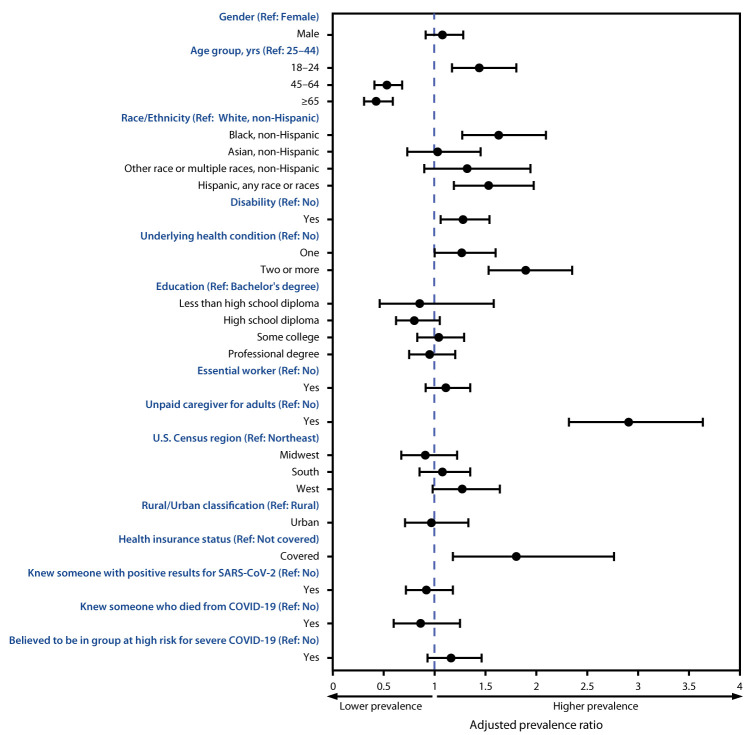
versus those without disabilities (aPR = 1.3). Given this widespread reporting of medical care avoidance because of COVID-19 concerns, especially among persons at increased risk for severe COVID-19, urgent efforts are warranted to ensure delivery of services that, if deferred, could result in patient harm. Even during the COVID-19 pandemic, persons experiencing a medical emergency should seek and be provided care without delay (3).
Overview
AI snapshot
Written from the paper’s full text.
TL;DR
In a nationwide web-based survey conducted June 24–30, 2020, 40.9% of U.S. adults reported delaying or avoiding medical care because of COVID-19 concerns, including 12.0% for urgent or emergency care and 31.5% for routine care. Avoidance was higher among unpaid caregivers for adults, persons with multiple underlying medical conditions, Black and Hispanic adults, young adults, and persons with disabilities.
Key findings
- Overall, 40.9% of 4,975 respondents reported delaying or avoiding any medical care because of COVID-19 concerns; 12.0% avoided urgent or emergency care and 31.5% avoided routine care.
- Adjusted prevalence ratios for urgent or emergency care avoidance were significantly higher among unpaid caregivers for adults versus noncaregivers (aPR = 2.9), persons with two or more selected underlying medical conditions versus none (aPR = 1.9), insured versus uninsured persons (aPR = 1.8), non-Hispanic Black adults (aPR = 1.6) and Hispanic adults (aPR = 1.5) versus non-Hispanic White adults, adults aged 18–24 versus 25–44 years (aPR = 1.5), and persons with disabilities versus without (aPR = 1.3).
- Groups with urgent or emergency care avoidance exceeding 20% and any care avoidance exceeding 50% included adults aged 18–24 years (30.9%; 57.2%), unpaid caregivers for adults (29.8%; 64.3%), Hispanic adults (24.6%; 55.5%), persons with disabilities (22.8%; 60.3%), persons with two or more selected underlying medical conditions (22.7%; 54.7%), and students (22.7%; 50.3%).
- In adjusted models for any care avoidance, unpaid caregiver status (aPR = 1.64), having health insurance (aPR = 1.61), disability (aPR = 1.33), believing oneself to be at high risk for severe COVID-19 (aPR = 1.33), and having two or more underlying conditions (aPR = 1.31) were significantly associated with greater avoidance.
Methods
- A web-based survey was administered by Qualtrics, LLC, during June 24–30, 2020, to a nationwide sample of U.S. adults aged ≥18 years; 5,412 (54.7%) of 9,896 eligible adults completed surveys, and 4,975 (91.9%) provided complete data for this analysis.
- Quota sampling and survey weighting were used to improve representativeness of the U.S. population by gender, age, and race/ethnicity.
- Delay or avoidance was assessed for emergency, urgent, and routine medical care; urgent and emergency responses were combined for analysis. Multivariable Poisson regression models with robust standard errors estimated adjusted prevalence ratios, 95% CIs, and p-values (α = 0.05).
Limitations
- Stated in the paper: self-reported data are subject to recall, response, and social desirability biases; the survey did not assess reasons for avoidance, baseline care-seeking patterns, or timing/duration of avoidance; perceptions of whether a condition was life-threatening might vary; and the web-based survey might not be fully representative for income, educational attainment, and access to technology.
- Evident from the text: the cross-sectional design cannot establish temporality or causality between COVID-19 concerns and care delay/avoidance.
- Evident from the text: urgent and emergency care responses were combined because respondents might interpret “life-threatening” differently, limiting separate estimates for emergency versus urgent care.
Model-written summary. Check it against the paper before relying on it.
Integrity signals
Registry
Cites
Statistics
Figures
Verification
Claims the paper makes
28 Own result · 11 Not checked yet · 11 Own method · 7 Own interpretation · 3 No basis given
A result the paper reports from its own data — it cites no other source for it, so there is none to check. The quote shows it is in the paper.
In the paper
“Overall, an estimated 40.9% of U.S. adults have avoided medical care during the pandemic because of concerns about COVID-19, including 12.0% who avoided urgent or emergency care and 31.5% who avoided routine care.”
- Also stated in: § Delay or Avoidance of Medical Care Because of COVID-19–Related Concerns — United States, June 2020 · plain
“As of June 30, 2020, among 4,975 U.S. adult respondents, 40.9% reported having delayed or avoided any medical care, including urgent or emergency care (12.0%) and routine care (31.5%), because of concerns about COVID-19 (Table 1).”
plain- Asserted: passes — The authors put it forward as true.
- Checkable: passes — It can be checked against evidence.
- Load-bearing: passes — The paper’s conclusions depend on it.
- Based: passes — The paper gives a reason why it holds.
- Rests on an assumption: The weighted survey sample is representative of the U.S. adult population.
- Rests on an assumption: Respondents' self-reported delay or avoidance of medical care accurately reflects their actual medical care behavior.
- Rests on an assumption: Respondents correctly attribute their delay or avoidance to COVID-19 concerns.
- Also stated in: § Delay or Avoidance of Medical Care Because of COVID-19–Related Concerns — United States, June 2020 · plain
A result the paper reports from its own data — it cites no other source for it, so there is none to check. The quote shows it is in the paper.
In the paper
“unpaid caregivers for adults* versus noncaregivers (adjusted prevalence ratio [aPR] = 2.9)”
- Also stated in: § Delay or Avoidance of Medical Care Because of COVID-19–Related Concerns — United States, June 2020 · plain
“unpaid caregivers for adults versus noncaregivers (2.9; 2.3–3.6)”
plaincorrelational- Asserted: passes — The authors put it forward as true.
- Checkable: passes — It can be checked against evidence.
- Load-bearing: passes — The paper’s conclusions depend on it.
- Based: passes — The paper gives a reason why it holds.
- Also stated in: § Delay or Avoidance of Medical Care Because of COVID-19–Related Concerns — United States, June 2020 · plain
A result the paper reports from its own data — it cites no other source for it, so there is none to check. The quote shows it is in the paper.
In the paper
“non-Hispanic Black (Black) adults (aPR = 1.6)”
- Also stated in: § Delay or Avoidance of Medical Care Because of COVID-19–Related Concerns — United States, June 2020 · plain
“Black adults (1.6; 1.3–2.1)”
plaincorrelational- Asserted: passes — The authors put it forward as true.
- Checkable: passes — It can be checked against evidence.
- Load-bearing: passes — The paper’s conclusions depend on it.
- Based: passes — The paper gives a reason why it holds.
- Also stated in: § Delay or Avoidance of Medical Care Because of COVID-19–Related Concerns — United States, June 2020 · plain
A result the paper reports from its own data — it cites no other source for it, so there is none to check. The quote shows it is in the paper.
In the paper
“persons with health insurance versus those without health insurance (aPR = 1.8)”
- Also stated in: § Delay or Avoidance of Medical Care Because of COVID-19–Related Concerns — United States, June 2020 · plain
“persons with health insurance versus those without health insurance (1.8; 1.2–2.8)”
plaincorrelational- Asserted: passes — The authors put it forward as true.
- Checkable: passes — It can be checked against evidence.
- Load-bearing: passes — The paper’s conclusions depend on it.
- Based: passes — The paper gives a reason why it holds.
- Also stated in: § Delay or Avoidance of Medical Care Because of COVID-19–Related Concerns — United States, June 2020 · plain
A result the paper reports from its own data — it cites no other source for it, so there is none to check. The quote shows it is in the paper.
In the paper
“Overall, an estimated 40.9% of U.S. adults have avoided medical care during the pandemic because of concerns about COVID-19, including 12.0% who avoided urgent or emergency care and 31.5% who avoided routine care.”
- Also stated in: § Delay or Avoidance of Medical Care Because of COVID-19–Related Concerns — United States, June 2020 · plain
“As of June 30, 2020, among 4,975 U.S. adult respondents, 40.9% reported having delayed or avoided any medical care, including urgent or emergency care (12.0%) and routine care (31.5%), because of concerns about COVID-19 (Table 1).”
plain- Asserted: passes — The authors put it forward as true.
- Checkable: passes — It can be checked against evidence.
- Load-bearing: passes — The paper’s conclusions depend on it.
- Based: passes — The paper gives a reason why it holds.
- Rests on an assumption: The weighted survey sample is representative of the U.S. adult population.
- Rests on an assumption: Respondents' self-reported delay or avoidance of medical care accurately reflects their actual medical care behavior.
- Rests on an assumption: Respondents correctly attribute their delay or avoidance to COVID-19 concerns.
- Also stated in: § Delay or Avoidance of Medical Care Because of COVID-19–Related Concerns — United States, June 2020 · plain
A result the paper reports from its own data — it cites no other source for it, so there is none to check. The quote shows it is in the paper.
In the paper
“persons with two or more selected underlying medical conditions† versus those without those conditions (aPR = 1.9)”
- Also stated in: § Delay or Avoidance of Medical Care Because of COVID-19–Related Concerns — United States, June 2020 · plain
“persons with two or more selected underlying medical conditions versus those without those conditions (1.9; 1.5–2.4)”
plaincorrelational- Asserted: passes — The authors put it forward as true.
- Checkable: passes — It can be checked against evidence.
- Load-bearing: passes — The paper’s conclusions depend on it.
- Based: passes — The paper gives a reason why it holds.
- Also stated in: § Delay or Avoidance of Medical Care Because of COVID-19–Related Concerns — United States, June 2020 · plain
A result the paper reports from its own data — it cites no other source for it, so there is none to check. The quote shows it is in the paper.
In the paper
“Overall, an estimated 40.9% of U.S. adults have avoided medical care during the pandemic because of concerns about COVID-19, including 12.0% who avoided urgent or emergency care and 31.5% who avoided routine care.”
- Also stated in: § Delay or Avoidance of Medical Care Because of COVID-19–Related Concerns — United States, June 2020 · plain
“As of June 30, 2020, among 4,975 U.S. adult respondents, 40.9% reported having delayed or avoided any medical care, including urgent or emergency care (12.0%) and routine care (31.5%), because of concerns about COVID-19 (Table 1).”
plain- Asserted: passes — The authors put it forward as true.
- Checkable: passes — It can be checked against evidence.
- Load-bearing: passes — The paper’s conclusions depend on it.
- Based: passes — The paper gives a reason why it holds.
- Rests on an assumption: The weighted survey sample is representative of the U.S. adult population.
- Rests on an assumption: Respondents' self-reported delay or avoidance of medical care accurately reflects their actual medical care behavior.
- Rests on an assumption: Respondents correctly attribute their delay or avoidance to COVID-19 concerns.
- Also stated in: § Delay or Avoidance of Medical Care Because of COVID-19–Related Concerns — United States, June 2020 · plain
A result the paper reports from its own data — it cites no other source for it, so there is none to check. The quote shows it is in the paper.
In the paper
“persons with disabilities (22.8%; 60.3%)”
plain- Asserted: passes — The authors put it forward as true.
- Checkable: passes — It can be checked against evidence.
- Load-bearing: unclear — It is unclear whether the paper’s conclusions depend on it.
- Based: passes — The paper gives a reason why it holds.
- Rests on an assumption: The weighted survey sample is representative of the U.S. adult population.
- Rests on an assumption: Respondents' self-reported delay or avoidance of medical care accurately reflects their actual medical care behavior.
- Rests on an assumption: Respondents correctly attribute their delay or avoidance to COVID-19 concerns.
A result the paper reports from its own data — it cites no other source for it, so there is none to check. The quote shows it is in the paper.
In the paper
“persons with disabilities§ versus those without disabilities (aPR = 1.3)”
- Also stated in: § Delay or Avoidance of Medical Care Because of COVID-19–Related Concerns — United States, June 2020 · plain
“persons with disabilities versus those without disabilities (1.3; 1.1–1.5)”
plaincorrelational- Asserted: passes — The authors put it forward as true.
- Checkable: passes — It can be checked against evidence.
- Load-bearing: passes — The paper’s conclusions depend on it.
- Based: passes — The paper gives a reason why it holds.
- Also stated in: § Delay or Avoidance of Medical Care Because of COVID-19–Related Concerns — United States, June 2020 · plain
The paper states this without a source or data behind it here, so there is nothing to check it against. The quote shows it is in the paper.
In the paper
“Avoidance of both urgent or emergency and routine medical care because of COVID-19 concerns was highly prevalent among unpaid caregivers for adults, respondents with two or more underlying medical conditions, and persons with disabilities.”
§ Delay or Avoidance of Medical Care Because of COVID-19–Related Concerns — United States, June 2020 > Discussion
plaincorrelational- Asserted: passes — The authors put it forward as true.
- Checkable: passes — It can be checked against evidence.
- Load-bearing: passes — The paper’s conclusions depend on it.
- Based: passes — The paper gives a reason why it holds.
- It may state two separate claims as one. 8
- Probably not a substantial claim. 18
A result the paper reports from its own data — it cites no other source for it, so there is none to check. The quote shows it is in the paper.
In the paper
“Avoidance of urgent or emergency care was more prevalent among unpaid caregivers for adults, persons with underlying medical conditions, Black adults, Hispanic adults, young adults, and persons with disabilities.”
§ Delay or Avoidance of Medical Care Because of COVID-19–Related Concerns — United States, June 2020 > Discussion > What is added by this report?
plaincorrelational- Asserted: passes — The authors put it forward as true.
- Checkable: passes — It can be checked against evidence.
- Load-bearing: passes — The paper’s conclusions depend on it.
- Based: passes — The paper gives a reason why it holds.
It may state two separate claims as one.
In the paper
“However, medical care delay or avoidance might increase morbidity and mortality risk associated with treatable and preventable health conditions and might contribute to reported excess deaths directly or indirectly related to COVID-19 (2).”
What the sources say
- Not checked yetcites [2] CDC, National Center for Health Statistics. Excess deaths associated with COVID-19. Atlanta, GA: US Department of Health and Human Services, CDC, National Center for Health Statistics; 2020. https://www.cdc.gov/nchs/nvss/vsrr/covid19/excess_deaths.htm
hedgedconditional- Asserted: passes — The authors put it forward as true.
- Checkable: passes — It can be checked against evidence.
- Load-bearing: passes — The paper’s conclusions depend on it.
- Based: passes — The paper gives a reason why it holds.
It may state two separate claims as one.
What the paper did — it cites no source for this, so there is none to check. The quote shows it is in the paper.
In the paper
“Third, the survey did not assess baseline patterns of care-seeking or timing or duration of care avoidance.”
§ Delay or Avoidance of Medical Care Because of COVID-19–Related Concerns — United States, June 2020 > Discussion
plain- Asserted: passes — The authors put it forward as true.
- Checkable: passes — It can be checked against evidence.
- Load-bearing: fails — The paper’s conclusions may not depend on it.
- Based: passes — The paper gives a reason why it holds.
Probably not a substantial claim. The paper’s conclusions may not depend on it.
What the paper did — it cites no source for this, so there is none to check. The quote shows it is in the paper.
In the paper
“Second, the survey did not assess reasons for COVID-19–associated care avoidance, such as adherence to public health recommendations; closure of health care provider facilities; reduced availability of public transportation; fear of exposure to infection with SARS-CoV-2; or availability, accessibility, and acceptance or recognition of telemedicine as a means of providing care in lieu of in-person”
§ Delay or Avoidance of Medical Care Because of COVID-19–Related Concerns — United States, June 2020 > Discussion
plain- Asserted: passes — The authors put it forward as true.
- Checkable: passes — It can be checked against evidence.
- Load-bearing: fails — The paper’s conclusions may not depend on it.
- Based: passes — The paper gives a reason why it holds.
Probably not a substantial claim. The paper’s conclusions may not depend on it.
What the paper did — it cites no source for this, so there is none to check. The quote shows it is in the paper.
In the paper
“Comparisons within all these subgroups were evaluated using multivariable Poisson regression models§§§ with robust standard errors to estimate prevalence ratios adjusted for all covariates, 95% confidence intervals, and p-values to evaluate statistical significance (α = 0.05)”
plain- Asserted: passes — The authors put it forward as true.
- Checkable: passes — It can be checked against evidence.
- Load-bearing: passes — The paper’s conclusions depend on it.
- Based: passes — The paper gives a reason why it holds.
Probably not a substantial claim.
In the paper
“Increased prevalences of reported urgent or emergency care avoidance among Black adults and Hispanic adults compared with White adults are especially concerning given increased COVID-19-associated mortality among Black adults and Hispanic adults (8).”
§ Delay or Avoidance of Medical Care Because of COVID-19–Related Concerns — United States, June 2020 > Discussion
What the sources say
- Not checked yetcites [8] Wortham, 2020, Characteristics of persons who died with COVID-19—United States, February 12–May 18, 2020., MMWR Morb Mortal Wkly Rep source
plaincorrelational- Asserted: passes — The authors put it forward as true.
- Checkable: passes — It can be checked against evidence.
- Load-bearing: fails — The paper’s conclusions may not depend on it.
- Based: passes — The paper gives a reason why it holds.
Probably not a substantial claim. The paper’s conclusions may not depend on it.
A conclusion the paper draws from its own results — it cites no other source for it, so there is none to check. The quote shows it is in the paper.
In the paper
“Medical services for persons with disabilities might also be disrupted because of reduced availability of accessible transportation, reduced communication in accessible formats, perceptions of SARS-CoV-2 exposure risk, and specialized needs that are difficult to address with routine telehealth delivery during the pandemic response.”
§ Delay or Avoidance of Medical Care Because of COVID-19–Related Concerns — United States, June 2020 > Discussion
hedgedconditional- Asserted: passes — The authors put it forward as true.
- Checkable: fails — It may be too vague to check against evidence.
- Load-bearing: fails — The paper’s conclusions may not depend on it.
- Based: fails — The paper may give no reason why it holds.
Probably not a substantial claim. It may be too vague to check against evidence. The paper’s conclusions may not depend on it. The paper may give no reason why it holds.
What the paper did — it cites no source for this, so there is none to check. The quote shows it is in the paper.
In the paper
“Finally, although quota sampling methods and survey weighting were employed to improve cohort representativeness, this web-based survey might not be fully representative of the U.S. population for income, educational attainment, and access to technology.”
§ Delay or Avoidance of Medical Care Because of COVID-19–Related Concerns — United States, June 2020 > Discussion
plaindirect- Asserted: passes — The authors put it forward as true.
- Checkable: passes — It can be checked against evidence.
- Load-bearing: fails — The paper’s conclusions may not depend on it.
- Based: passes — The paper gives a reason why it holds.
Probably not a substantial claim. The paper’s conclusions may not depend on it.
What the paper did — it cites no source for this, so there is none to check. The quote shows it is in the paper.
In the paper
“Given the potential for variation in interpretation of whether conditions were life-threatening, responses for urgent and emergency care delay or avoidance were combined for analysis.”
plain- Asserted: passes — The authors put it forward as true.
- Checkable: passes — It can be checked against evidence.
- Load-bearing: passes — The paper’s conclusions depend on it.
- Based: passes — The paper gives a reason why it holds.
Probably not a substantial claim.
In the paper
“and that excess deaths directly or indirectly related to COVID-19 have increased in 2020 versus prior years (2).”
§ Delay or Avoidance of Medical Care Because of COVID-19–Related Concerns — United States, June 2020 > Discussion
What the sources say
- Not checked yetcites [2] CDC, National Center for Health Statistics. Excess deaths associated with COVID-19. Atlanta, GA: US Department of Health and Human Services, CDC, National Center for Health Statistics; 2020. https://www.cdc.gov/nchs/nvss/vsrr/covid19/excess_deaths.htm
plaindirect- Asserted: passes — The authors put it forward as true.
- Checkable: passes — It can be checked against evidence.
- Load-bearing: fails — The paper’s conclusions may not depend on it.
- Based: passes — The paper gives a reason why it holds.
Probably not a substantial claim. The paper’s conclusions may not depend on it.
In the paper
“In the United States, the age-adjusted COVID-19 hospitalization rates are approximately five times higher among Black persons and four times higher among Hispanic persons than are those among White persons (9).”
§ Delay or Avoidance of Medical Care Because of COVID-19–Related Concerns — United States, June 2020 > Discussion
What the sources say
- Not checked yetcites [9] CDC. Coronavirus disease 2019 (COVID-19): health equity considerations and racial and ethnic minority groups. Atlanta, GA: US Department of Health and Human Services, CDC; 2020. https://www.cdc.gov/coronavirus/2019-ncov/need-extra-precautions/racial-ethnic-minorities.html
hedgedcorrelational- Asserted: passes — The authors put it forward as true.
- Checkable: passes — It can be checked against evidence.
- Load-bearing: fails — The paper’s conclusions may not depend on it.
- Based: passes — The paper gives a reason why it holds.
Probably not a substantial claim. The paper’s conclusions may not depend on it. It may state two separate claims as one.
None of the sources cited for this claim have been checked yet.
In the paper
“These findings align with recent reports that hospital admissions, overall emergency department (ED) visits, and the number of ED visits for heart attack, stroke, and hyperglycemic crisis have declined since the start of the pandemic (3–5), and that excess deaths directly or indirectly related to COVID-19 have increased in 2020 versus prior years (2).”
§ Delay or Avoidance of Medical Care Because of COVID-19–Related Concerns — United States, June 2020 > Discussion
What the sources say
- Not checked yetcites [3] Lange, 2020, Potential indirect effects of the COVID-19 pandemic on use of emergency departments for acute life-threatening conditions—United States, January–May 2020., MMWR Morb Mortal Wkly Rep source
- Not checked yetcites [4] Oseran SA, Nash D, Kim C, Changes in hospital admissions for urgent conditions during COVID-19 pandemic. Am J Manag Care 2020. Epub July 8, 2020. https://www.ajmc.com/view/changes-in-hospital-admissions-for-urgent-conditions-during-covid19-pandemic
- Not checked yetcites [5] Hartnett, 2020, Impact of the COVID-19 pandemic on emergency department visits—United States, January 1, 2019–May 30, 2020., MMWR Morb Mortal Wkly Rep source
- Not checked yetcites [2] CDC, National Center for Health Statistics. Excess deaths associated with COVID-19. Atlanta, GA: US Department of Health and Human Services, CDC, National Center for Health Statistics; 2020. https://www.cdc.gov/nchs/nvss/vsrr/covid19/excess_deaths.htm
plaincorrelational- Asserted: passes — The authors put it forward as true.
- Checkable: passes — It can be checked against evidence.
- Load-bearing: unclear — It is unclear whether the paper’s conclusions depend on it.
- Based: passes — The paper gives a reason why it holds.
It may state two separate claims as one.
A conclusion the paper draws from its own results — it cites no other source for it, so there is none to check. The quote shows it is in the paper.
In the paper
“For persons with disabilities, accessing medical services might be challenging because of disruptions in essential support services, which can result in adverse health outcomes.”
§ Delay or Avoidance of Medical Care Because of COVID-19–Related Concerns — United States, June 2020 > Discussion
hedgedconditional- Asserted: passes — The authors put it forward as true.
- Checkable: fails — It may be too vague to check against evidence.
- Load-bearing: fails — The paper’s conclusions may not depend on it.
- Based: fails — The paper may give no reason why it holds.
Probably not a substantial claim. It may be too vague to check against evidence. The paper’s conclusions may not depend on it. The paper may give no reason why it holds. It may state two separate claims as one.
A conclusion the paper draws from its own results — it cites no other source for it, so there is none to check. The quote shows it is in the paper.
In the paper
“However, if routine care avoidance were to be sustained, adults could miss opportunities for management of chronic conditions, receipt of routine vaccinations, or early detection of new conditions, which might worsen outcomes.”
§ Delay or Avoidance of Medical Care Because of COVID-19–Related Concerns — United States, June 2020 > Discussion
hedgedconditional- Asserted: passes — The authors put it forward as true.
- Checkable: unclear — It is unclear whether it could be checked against evidence.
- Load-bearing: passes — The paper’s conclusions depend on it.
- Based: passes — The paper gives a reason why it holds.
It may state two separate claims as one.
- Rests on an assumption: Delayed or avoided medical care can increase morbidity and mortality associated with both chronic and acute health conditions.
None of the sources cited for this claim have been checked yet.
In the paper
“These findings align with recent reports that hospital admissions, overall emergency department (ED) visits, and the number of ED visits for heart attack, stroke, and hyperglycemic crisis have declined since the start of the pandemic (3–5)”
§ Delay or Avoidance of Medical Care Because of COVID-19–Related Concerns — United States, June 2020 > Discussion
What the sources say
- Not checked yetcites [3] Lange, 2020, Potential indirect effects of the COVID-19 pandemic on use of emergency departments for acute life-threatening conditions—United States, January–May 2020., MMWR Morb Mortal Wkly Rep source
- Not checked yetcites [4] Oseran SA, Nash D, Kim C, Changes in hospital admissions for urgent conditions during COVID-19 pandemic. Am J Manag Care 2020. Epub July 8, 2020. https://www.ajmc.com/view/changes-in-hospital-admissions-for-urgent-conditions-during-covid19-pandemic
- Not checked yetcites [5] Hartnett, 2020, Impact of the COVID-19 pandemic on emergency department visits—United States, January 1, 2019–May 30, 2020., MMWR Morb Mortal Wkly Rep source
plain- Asserted: passes — The authors put it forward as true.
- Checkable: passes — It can be checked against evidence.
- Load-bearing: fails — The paper’s conclusions may not depend on it.
- Based: passes — The paper gives a reason why it holds.
Probably not a substantial claim. The paper’s conclusions may not depend on it. It may state two separate claims as one.
A conclusion the paper draws from its own results — it cites no other source for it, so there is none to check. The quote shows it is in the paper.
In the paper
“Moreover, persons at increased risk for severe COVID-19 might have avoided health care facilities because of perceived or actual increased risk of exposure to SARS-CoV-2, particularly at the onset of the pandemic.”
§ Delay or Avoidance of Medical Care Because of COVID-19–Related Concerns — United States, June 2020 > Discussion
hedgedconditional- Asserted: passes — The authors put it forward as true.
- Checkable: passes — It can be checked against evidence.
- Load-bearing: fails — The paper’s conclusions may not depend on it.
- Based: passes — The paper gives a reason why it holds.
Probably not a substantial claim. The paper’s conclusions may not depend on it.
A conclusion the paper draws from its own results — it cites no other source for it, so there is none to check. The quote shows it is in the paper.
In the paper
“The higher prevalence of medical care delay or avoidance among respondents with health insurance versus those without insurance might reflect differences in medical care-seeking behaviors.”
§ Delay or Avoidance of Medical Care Because of COVID-19–Related Concerns — United States, June 2020 > Discussion
hedgedconditional- Asserted: passes — The authors put it forward as true.
- Checkable: passes — It can be checked against evidence.
- Load-bearing: fails — The paper’s conclusions may not depend on it.
- Based: passes — The paper gives a reason why it holds.
Probably not a substantial claim. The paper’s conclusions may not depend on it.
What the paper did — it cites no source for this, so there is none to check. The quote shows it is in the paper.
In the paper
“Fourth, perceptions of whether a condition was life-threatening might vary among respondents.”
§ Delay or Avoidance of Medical Care Because of COVID-19–Related Concerns — United States, June 2020 > Discussion
hedged- Asserted: passes — The authors put it forward as true.
- Checkable: fails — It may be too vague to check against evidence.
- Load-bearing: fails — The paper’s conclusions may not depend on it.
- Based: fails — The paper may give no reason why it holds.
Probably not a substantial claim. It may be too vague to check against evidence. The paper’s conclusions may not depend on it. The paper may give no reason why it holds.
What the paper did — it cites no source for this, so there is none to check. The quote shows it is in the paper.
In the paper
“First, self-reported data are subject to recall, response, and social desirability biases.”
§ Delay or Avoidance of Medical Care Because of COVID-19–Related Concerns — United States, June 2020 > Discussion
plain- Asserted: passes — The authors put it forward as true.
- Checkable: passes — It can be checked against evidence.
- Load-bearing: fails — The paper’s conclusions may not depend on it.
- Based: passes — The paper gives a reason why it holds.
Probably not a substantial claim. The paper’s conclusions may not depend on it.
What the paper did — it cites no source for this, so there is none to check. The quote shows it is in the paper.
In the paper
“Among the 5,412 participants, 4,975 (91.9%) provided complete data for all variables in this analysis.”
plainn = 5,412- Asserted: passes — The authors put it forward as true.
- Checkable: passes — It can be checked against evidence.
- Load-bearing: fails — The paper’s conclusions may not depend on it.
- Based: passes — The paper gives a reason why it holds.
Probably not a substantial claim. The paper’s conclusions may not depend on it.
A conclusion the paper draws from its own results — it cites no other source for it, so there is none to check. The quote shows it is in the paper.
In the paper
“For caregivers who reported caring for adults at increased risk for severe COVID-19, concern about exposure of care recipients might contribute to care avoidance.”
§ Delay or Avoidance of Medical Care Because of COVID-19–Related Concerns — United States, June 2020 > Discussion
hedgedconditional- Asserted: passes — The authors put it forward as true.
- Checkable: passes — It can be checked against evidence.
- Load-bearing: fails — The paper’s conclusions may not depend on it.
- Based: passes — The paper gives a reason why it holds.
Probably not a substantial claim. The paper’s conclusions may not depend on it.
In the paper
“Persons with underlying medical conditions that increase their risk for severe COVID-19 (6) are more likely to require care to monitor and treat these conditions, potentially contributing to their more frequent report of avoidance.”
§ Delay or Avoidance of Medical Care Because of COVID-19–Related Concerns — United States, June 2020 > Discussion
What the sources say
- Not checked yetcites [6] Stokes, 2020, Coronavirus disease 2019 case surveillance—United States, January 22–May 30, 2020., MMWR Morb Mortal Wkly Rep source
hedgedconditional- Asserted: passes — The authors put it forward as true.
- Checkable: passes — It can be checked against evidence.
- Load-bearing: unclear — It is unclear whether the paper’s conclusions depend on it.
- Based: passes — The paper gives a reason why it holds.
It may state two separate claims as one.
- Rests on an assumption: Persons with underlying medical conditions that increase their risk for severe COVID-19 are more likely to require care to monitor and treat these conditions.
What the paper did — it cites no source for this, so there is none to check. The quote shows it is in the paper.
In the paper
“a total of 5,412 (54.7%) of 9,896 eligible adults¶ completed web-based COVID-19 Outbreak Public Evaluation Initiative surveys”
plainn = 5,412- Asserted: passes — The authors put it forward as true.
- Checkable: passes — It can be checked against evidence.
- Load-bearing: fails — The paper’s conclusions may not depend on it.
- Based: passes — The paper gives a reason why it holds.
Probably not a substantial claim. The paper’s conclusions may not depend on it.
- Rests on an assumption: Survey respondents who completed the survey are not systematically different from eligible nonrespondents in ways that affect the prevalence estimates.
The paper relies on this without support.
The weighted survey sample is representative of the U.S. adult population.
“a nationwide representative sample of U.S. adults aged ≥18 years”
“Quota sampling and survey weighting¶¶ were employed to improve cohort representativeness of the U.S. population by gender, age, and race/ethnicity.”
The paper relies on this without support.
Respondents' self-reported delay or avoidance of medical care accurately reflects their actual medical care behavior.
““Have you delayed or avoided medical care due to concerns related to COVID-19?””
“40.9% reported having delayed or avoided any medical care”
The paper relies on this without support.
Respondents correctly attribute their delay or avoidance to COVID-19 concerns.
“because of concerns about COVID-19”
““Have you delayed or avoided medical care due to concerns related to COVID-19?””
The paper relies on this without support.
Selected underlying medical conditions (obesity, diabetes, high blood pressure, cardiovascular disease, and any type of cancer) increase the risk for severe COVID-19.
“Selected underlying medical conditions known to increase the risk for severe COVID-19 included in this analysis were obesity, diabetes, high blood pressure, cardiovascular disease, and any type of cancer.”
The paper relies on this without support.
Survey respondents who completed the survey are not systematically different from eligible nonrespondents in ways that affect the prevalence estimates.
“a total of 5,412 (54.7%) of 9,896 eligible adults¶ completed web-based COVID-19 Outbreak Public Evaluation Initiative surveys”
The paper relies on this without support.
Delayed or avoided medical care can increase morbidity and mortality associated with both chronic and acute health conditions.
“Delayed or avoided medical care might increase morbidity and mortality associated with both chronic and acute health conditions.”
The paper relies on this without support.
Health care facilities are implementing important safety precautions to reduce the risk of SARS-CoV-2 infection among patients and personnel.
“However, health care facilities are implementing important safety precautions to reduce the risk of SARS-CoV-2 infection among patients and personnel.”
The paper relies on this without support.
Persons with underlying medical conditions that increase their risk for severe COVID-19 are more likely to require care to monitor and treat these conditions.
“Persons with underlying medical conditions that increase their risk for severe COVID-19 (6) are more likely to require care to monitor and treat these conditions, potentially contributing to their more frequent report of avoidance.”
Citations
Cites
Coronavirus disease 2019 case surveillance—United States, January 22–May 30, 2020.
Stokes, E. K., Zambrano, L. D., Anderson, K. N., Marder, E. P., Raz, K. M., El Burai Felix, S., Tie, Y., & Fullerton, K. E. (2020) · MMWR Morbidity and Mortality Weekly Report · doi:10.15585/mmwr.mm6924e2 · Cited by 1,538 · cited 1×
“Persons with underlying medical conditions that increase their risk for severe COVID-19 (6) are more likely to require care to monitor and treat these conditions, potentially contributing to their more frequent report of avoidance.”
BackgroundHartnett, K. P., Kite-Powell, A., DeVies, J., Coletta, M. A., Boehmer, T. K., Adjemian, J., Gundlapalli, A. V., & Practice, N. S. S. P. C. O. (2020) · MMWR Morbidity and Mortality Weekly Report · doi:10.15585/mmwr.mm6923e1 · Cited by 1,139
Santoli, J. M., Lindley, M. C., DeSilva, M. B., Kharbanda, E. O., Daley, M. F., Galloway, L., Gee, J., Glover, M., Herring, B., Kang, Y., et al. (2020) · MMWR. Morbidity and Mortality Weekly Report · doi:10.15585/mmwr.mm6919e2 · Cited by 701 · cited 1×
“Temporary disruptions in routine and nonemergency medical care access and delivery have been observed during periods of considerable community transmission of SARS-CoV-2, the virus that causes coronavirus disease 2019 (COVID-19) (1).”
BackgroundExcess deaths from COVID-19 and other causes, March–April 2020.
Woolf, S. H., Chapman, D. A., Sabo, R. T., Weinberger, D. M., & Hill, L. (2020) · JAMA · doi:10.1001/jama.2020.11787 · Cited by 541 · cited 1×
“In a recent study, states with large numbers of COVID-19–associated deaths also experienced large proportional increases in deaths from other underlying causes, including diabetes and cardiovascular disease (7).”
BackgroundLange, S. J., Ritchey, M. D., Goodman, A. B., Dias, T., Twentyman, E., Fuld, J., Schieve, L. A., Imperatore, G., Benoit, S. R., Kite-Powell, A., et al. (2020) · MMWR Morbidity and Mortality Weekly Report · doi:10.15585/mmwr.mm6925e2 · Cited by 367
Characteristics of persons who died with COVID-19—United States, February 12–May 18, 2020.
Wortham, J. M., Lee, J. T., Althomsons, S., Latash, J., Davidson, A., Guerra, K., Murray, K., McGibbon, E., Pichardo, C., Toro, B., et al. (2020) · MMWR Morbidity and Mortality Weekly Report · doi:10.15585/mmwr.mm6928e1 · Cited by 241 · cited 1×
“Increased prevalences of reported urgent or emergency care avoidance among Black adults and Hispanic adults compared with White adults are especially concerning given increased COVID-19-associated mortality among Black adults and Hispanic adults (8).”
BackgroundThe uninsured do not use the emergency department more—they use other care less.
Zhou, R. A., Baicker, K., Taubman, S., & Finkelstein, A. N. (2017) · Health Affairs · doi:10.1377/hlthaff.2017.0218 · Cited by 112 · cited 1×
“Before the pandemic, persons without insurance sought medical care much less frequently than did those with insurance (10), resulting in fewer opportunities for medical care delay or avoidance.”
BackgroundChanges in Hospital Admissions for Urgent Conditions During COVID-19 Pandemic
Oseran, A. S. (2020) · The American Journal of Managed Care · doi:10.37765/ajmc.2020.43837 · Cited by 91
Cited by
Sorted by citations
Ensuring trust in COVID-19 data
(2021) · doi:10.1097/md.0000000000026972 · Cited by 4,745
Koonin, L. M., Hoots, B., Tsang, C. A., Leroy, Z. C., Farris, K., Jolly, B., Antall, P., McCabe, B. K., Zelis, C. B. R., Tong, I., et al. (2020) · MMWR Morbidity and Mortality Weekly Report · doi:10.15585/mmwr.mm6943a3 · Cited by 1,048
Economic Costs of Diabetes in the U.S. in 2022
(2023) · doi:10.2337/dci23-0085 · Cited by 808
Flor, L. S., Friedman, J., Spencer, C. N., Cagney, J., Arrieta, A., Herbert, M. E., Stein, C., Mullany, E. C., Hon, J., Patwardhan, V., et al. (2022) · The Lancet · doi:10.1016/s0140-6736(22)00008-3 · Cited by 364
Race, Ethnicity, and Age Trends in Persons Who Died from COVID-19 — United States, May–August 2020
Gold, J. A. W., Rossen, L. M., Ahmad, F. B., Sutton, P. D., Li, Z., Salvatore, P. P., Coyle, J. P., DeCuir, J., Baack, B. N., Durant, T. M., et al. (2020) · MMWR Morbidity and Mortality Weekly Report · doi:10.15585/mmwr.mm6942e1 · Cited by 336
Surveillance of Vaccination Coverage Among Adult Populations —United States, 2018
Lu, P.-J., Hung, M.-C., Srivastav, A., Grohskopf, L. A., Kobayashi, M., Harris, A. M., Dooling, K. L., Markowitz, L. E., Rodríguez-Lainz, A., & Williams, W. W. (2021) · MMWR Surveillance Summaries · doi:10.15585/mmwr.ss7003a1 · Cited by 361
Trends in Cardiovascular Disease Mortality Rates and Excess Deaths, 2010–2022
Woodruff, R. C., Tong, X., Khan, S. S., Shah, N. S., Jackson, S. L., Loustalot, F. V., & Vaughan, A. S. (2023) · American Journal of Preventive Medicine · doi:10.1016/j.amepre.2023.11.009 · Cited by 272
COVID-19 and Chronic Disease: The Impact Now and in the Future
Hacker, K. A., Briss, P. A., Richardson, L. C., Wright, J. S., & Petersen, R. (2021) · Preventing Chronic Disease · doi:10.5888/pcd18.210086 · Cited by 242
Townsend, R., Chmielewska, B., Barratt, I., Kalafat, E., van der Meulen, J., Gurol‐Urganci, I., O’Brien, P., Morris, E., Draycott, T. J., Thangaratinam, S., et al. (2021) · EClinicalMedicine · doi:10.1016/j.eclinm.2021.100947 · Cited by 206
“Women ’ s health-care-seeking behaviour has changed; women have reported being less willing to attend hospital due to fear of contracting COVID-19 [13,14].”
Impact of the COVID-19 Pandemic on Cardiovascular Health in 2020
Roth, G. A., Vaduganathan, M., & Mensah, G. A. (2022) · Journal of the American College of Cardiology · doi:10.1016/j.jacc.2022.06.008 · Cited by 221
“Taken together, these results could reflect either decreases in CVD event rates or increased difficulty for patients accessing health care during the early pandemic because of patient or health system choices.(24)”
ResultPatel Murthy, B., Zell, E., Kirtland, K., Jones-Jack, N., Harris, L., Sprague, C., Schultz, J., Le, Q., Bramer, C. A., Kuramoto, S., et al. (2021) · MMWR. Morbidity and Mortality Weekly Report · doi:10.15585/mmwr.mm7023a2 · Cited by 192
Blood Pressure Control Among US Adults, 2009 to 2012 Through 2017 to 2020
Muntner, P., Miles, M. A., Jaeger, B. C., Hannon, L., Hardy, S. T., Ostchega, Y., Wozniak, G. D., & Schwartz, J. E. (2022) · Hypertension · doi:10.1161/hypertensionaha.122.19222 · Cited by 186
Jassat, W., Mudara, C., Ozougwu, L., Tempia, S., Blumberg, L. H., Davies, M., Pillay, Y. G., Carter, T., Morewane, R., Wolmarans, M., et al. (2021) · The Lancet Global Health · doi:10.1016/s2214-109x(21)00289-8 · Cited by 197
Trends in US Outpatient Antibiotic Prescriptions During the Coronavirus Disease 2019 Pandemic
King, L., Lovegrove, M. C., Shehab, N., Tsay, S. V., Budnitz, D. S., Geller, A. I., Lind, J. N., Roberts, R. M., Hicks, L. A., & Kabbani, S. (2020) · Clinical Infectious Diseases · doi:10.1093/cid/ciaa1896 · Cited by 161
Changes in Cancer Screening in the US During the COVID-19 Pandemic
Fedewa, S. A., Star, J., Bandi, P., et al. (2022) · JAMA Network Open · doi:10.1001/jamanetworkopen.2022.15490 · Cited by 174
Christie, A., Brooks, J. T., Hicks, L. A., Sauber‐Schatz, E. K., Yoder, J. S., Honein, M. A., & CDC COVID-19 Response Team (2021) · MMWR Morbidity and Mortality Weekly Report · doi:10.15585/mmwr.mm7030e2 · Cited by 161
Rise in Blood Pressure Observed Among US Adults During the COVID-19 Pandemic
Laffin, L. J., Kaufman, H. W., Chen, Z., Niles, J. K., Arellano, A. R., Bare, L. A., & Hazen, S. L. (2021) · Circulation · doi:10.1161/circulationaha.121.057075 · Cited by 154
Medical admissions among adolescents with eating disorders during the COVID-19 pandemic.
Otto, A. K., Jary, J. M., Sturza, J., Miller, C. A., Prohaska, N., Bravender, T., & Van Huysse, J. (2021) · PEDIATRICS · doi:10.1542/peds.2021-052201 · Cited by 156
“The COVID-19 pandemic has also been associated with delayed care for non–COVID-19 conditions.(13,14) In many settings, in-person clinical care has been significantly disrupted and/or limited as a result of measures enacted to reduce the risk”
BackgroundSplinter, M. J., Velek, P., Ikram, M. K., Kieboom, B. C. T., Peeters, R. P., Bindels, P., Ikram, M. A., Wolters, F. J., Leening, M. J. G., de Schepper, E. I. T., et al. (2021) · PLoS Medicine · doi:10.1371/journal.pmed.1003854 · Cited by 142
Alkureishi, M. A., Choo, Z.-Y., Rahman, A., Ho, K., Benning-Shorb, J., Lenti, G., Velázquez Sánchez, I., Zhu, M., Shah, S. D., & Lee, W. W. (2021) · JMIR Human Factors · doi:10.2196/33364 · Cited by 143
Long COVID and Health Inequities: The Role of Primary Care
Berger, Z. D., Jesus, V. V. A. D., Assoumou, S. A., & Greenhalgh, T. (2021) · Milbank Quarterly · doi:10.1111/1468-0009.12505 · Cited by 133
Fifty Years of Trust Research in Health Care: A Synthetic Review
Taylor, L. A., Nong, P., & Platt, J. E. (2023) · Milbank Quarterly · doi:10.1111/1468-0009.12598 · Cited by 143
The race to a COVID-19 vaccine: opportunities and challenges in development and distribution
Burgos, R. M., Badowski, M. E., Drwiega, E. N., Ghassemi, S., Griffith, N., Herald, F., Johnson, M., Smith, R. O., & Michienzi, S. M. (2021) · Drugs in Context · doi:10.7573/dic.2020-12-2 · Cited by 125
Trends in US Ambulatory Care Patterns During the COVID-19 Pandemic, 2019-2021
Mafi, J. N., Craff, M., Vangala, S., Pu, T., Skinner, D., Tabatabai-Yazdi, C., Nelson, A., Reid, R., Agniel, D., Tseng, C.-H., et al. (2022) · JAMA · doi:10.1001/jama.2021.24294 · Cited by 120
Wadhera, R. K., Figueroa, J. F., Rodríguez, F., Liu, M., Tian, W., Kazi, D. S., Song, Y., Yeh, R. W., & Maddox, K. E. J. (2021) · Circulation · doi:10.1161/circulationaha.121.054378 · Cited by 118
Pagaoa, M. A., Grey, J. A., Torrone, E., et al. (2021) · Sexually Transmitted Diseases · doi:10.1097/olq.0000000000001506 · Cited by 115
“As reflected in the lower number of chlamydia cases diagnosed at private physicians/HMOs, the decrease in STD screenings and limited services to symptomatic cases may continue to disproportionately affect detection of chlamydia cases, as most cases are identified from asymptomatic screening and routine preventive care…”
BackgroundCantor, J., Sood, N., Bravata, D. M., Pera, M. F., & Whaley, C. (2022) · Journal of Health Economics · doi:10.1016/j.jhealeco.2022.102581 · Cited by 111
Lu, P., Kong, D., & Shelley, M. (2021) · Journal of Aging and Health · doi:10.1177/08982643211002084 · Cited by 104
Stephenson, E., Butt, D. A., Gronsbell, J. L., et al. (2021) · PLoS ONE · doi:10.1371/journal.pone.0255992 · Cited by 109
“We found that periodic health visits ceased almost entirely with the onset of the COVID-19 pandemic, which is consistent with other reports of physicians limiting and patients avoiding seeking preventive care [39, 40].”
ResultChevinsky, J., Tao, G., Lavery, A. M., Kukielka, E. A., Click, E. S., Malec, D. J., Kompaniyets, L., Bruce, B. B., Yusuf, H. R., Goodman, A. B., et al. (2021) · Clinical Infectious Diseases · doi:10.1093/cid/ciab338 · Cited by 103
The impact of relaxation of methadone take-home protocols on treatment outcomes in the COVID-19 era
Amram, O., Amiri, S., Panwala, V., et al. (2021) · The American Journal of Drug and Alcohol Abuse · doi:10.1080/00952990.2021.1979991 · Cited by 106
Currie, J., Schnell, M. K., Schwandt, H., & Zhang, J. (2021) · JAMA Network Open · doi:10.1001/jamanetworkopen.2021.6147 · Cited by 99
Nath, B., Williams, B., Jeffery, M. M., O’Connell, R. T., Goldstein, R. L., Sinsky, C. A., & Melnick, E. R. (2021) · JAMA Network Open · doi:10.1001/jamanetworkopen.2021.31490 · Cited by 100
HIV Testing Before and During the COVID-19 Pandemic — United States, 2019–2020
DiNenno, E. A., Delaney, K. P., Pitasi, M. A., et al. (2022) · MMWR Morbidity and Mortality Weekly Report · doi:10.15585/mmwr.mm7125a2 · Cited by 98
“During 2020–2021, the COVID-19 pandemic disrupted health care delivery, including HIV testing in part because many persons avoided services to comply with COVID-19 risk mitigation efforts (2).”
BackgroundGertz, A., Pollack, C. C., Schultheiss, M. D., & Brownstein, J. S. (2022) · Preventive Medicine Reports · doi:10.1016/j.pmedr.2022.101882 · Cited by 95
Acosta, N., Bautista, M. A., Hollman, J., McCalder, J., Beaudet, A. B., Man, L. L. H., Waddell, B. J. M., Chen, J., Li, C., Kuzma, D., et al. (2021) · Water Research · doi:10.1016/j.watres.2021.117369 · Cited by 94
Ismail, H., Marshall, V. D., Patel, M. R., Tariq, M., & Mohammad, R. A. (2021) · Journal of the American Pharmacists Association · doi:10.1016/j.japh.2021.11.013 · Cited by 89
Comparison of Pregnancy and Birth Outcomes Before vs During the COVID-19 Pandemic
Molina, R. L., Tsai, T. C., Dai, D., Soto, M. J., Rosenthal, N. A., Orav, E. J., & Figueroa, J. F. (2022) · JAMA Network Open · doi:10.1001/jamanetworkopen.2022.26531 · Cited by 87
Decreases in Hepatitis C Testing and Treatment During the COVID-19 Pandemic
Kaufman, H. W., Bull–Otterson, L., Meyer, W. A., Huang, X., Doshani, M., Thompson, W., Osinubi, A., Khan, M. A., Harris, A. M., Gupta, N., et al. (2021) · American Journal of Preventive Medicine · doi:10.1016/j.amepre.2021.03.011 · Cited by 88
“During 2020, the coronavirus disease 2019 (COVID19) pandemic has impacted the practice of medicine.(12,13) CDC released guidance on delaying nonessential procedures and postponing routine clinical visits as part of initial mitigation strategies for the COVID-19 pandemic.”
Yingst, J. M., Krebs, N. M., Bordner, C. R., Hobkirk, A. L., Allen, S. I., & Foulds, J. (2021) · International Journal of Environmental Research and Public Health · doi:10.3390/ijerph18041795 · Cited by 76
Arnault, L., Jusot, F., & Renaud, T. (2021) · European Journal of Ageing · doi:10.1007/s10433-021-00645-3 · Cited by 80
Dang, A. T., Thakker, R. A., Li, S., Hommel, E. L., Mehta, H. B., & Goodwin, J. S. (2022) · JAMA Network Open · doi:10.1001/jamanetworkopen.2022.1754 · Cited by 78
Mogharab, V., Ostovar, M., Ruszkowski, J., Hussain, S. Z. M., Shrestha, R., Yaqoob, Ú., Aryanpoor, P., Nikkhoo, A. M., Heidari, P., Jahromi, A. R., et al. (2022) · Globalization and Health · doi:10.1186/s12992-022-00836-2 · Cited by 82
“Another report has approximated that 41% of individuals in the United States have postponed or avoided medical care, including urgent (12%) or non-urgent care (32%) [12].”
BackgroundMicrobiome Analysis for Wastewater Surveillance during COVID-19
Brumfield, K. D., Leddy, M. B., Usmani, M., Cotruvo, J. A., Tien, C.-T., Dorsey, S., Graubics, K., Fanelli, B. C., Zhou, I., Registe, N., et al. (2022) · mBio · doi:10.1128/mbio.00591-22 · Cited by 83
Lee, H., & Singh, G. K. (2021) · Annals of Epidemiology · doi:10.1016/j.annepidem.2021.07.014 · Cited by 85
Ghoshal, S., Rigney, G. H., Cheng, D., Brumit, R., Gee, M. S., Hodin, R. A., Lillemoe, K. D., Levine, W. C., & Succi, M. D. (2022) · JAMA Network Open · doi:10.1001/jamanetworkopen.2022.27443 · Cited by 82
Long-term health-related quality of life concerns related to the COVID-19 pandemic: a call to action
Bryson, W. J. (2020) · Quality of Life Research · doi:10.1007/s11136-020-02677-1 · Cited by 75
“adult population and, again, may have deleterious effects on health and HRQoL even among those without COVID-19 infections [8].”
BackgroundSelf-collection of capillary blood using Tasso-SST devices for Anti-SARS-CoV-2 IgG antibody testing
Hendelman, T., Chaudhary, A., LeClair, A. C., van Leuven, K., Chee, J., Fink, S. L., Welch, E. J., Berthier, E., Quist, B. A., Wald, A., et al. (2021) · PLoS ONE · doi:10.1371/journal.pone.0255841 · Cited by 76
Gotanda, H., Liyanage-Don, N. A., Moran, A. E., Krousel-Wood, M. A., Green, J. B., Zhang, Y., & Nuckols, T. K. (2022) · Hypertension · doi:10.1161/hypertensionaha.122.19861 · Cited by 73
The Great Unequalizer: Initial Health Effects of COVID-19 in the United States
Alsan, M. M., Chandra, A., & Simon, K. I. (2021) · The Journal of Economic Perspectives · doi:10.1257/jep.35.3.25 · Cited by 72
Socio-economic and ethnic health inequalities in COVID-19 outcomes across OECD countries
Berchet, C., Bijlholt, J., & Ando, M. (2023) · OECD health working papers · doi:10.1787/6c2a96c9-en · Cited by 84
Ikeda, T., Igarashi, A., Odani, S., Murakami, M., & Tabuchi, T. (2021) · Applied Research in Quality of Life · doi:10.1007/s11482-021-09918-6 · Cited by 73
Tuberculosis — United States, 2020
Deutsch-Feldman, M., Pratt, R. H., Price, S. F., et al. (2021) · MMWR Morbidity and Mortality Weekly Report · doi:10.15585/mmwr.mm7012a1 · Cited by 72
Okoro, C. A., Strine, T. W., McKnight-Eily, L. R., Verlenden, J., & Hollis, N. D. (2021) · Disability and health journal · doi:10.1016/j.dhjo.2021.101110 · Cited by 75
Nab, M., Vehmendahl, R. V., Somers, I., Schoon, Y., & Hesselink, G. (2021) · BMC Emergency Medicine · doi:10.1186/s12873-021-00449-9 · Cited by 72
Jiskrova, G. K., Bobák, M., Pikhart, H., & Ksinan, A. J. (2021) · Journal of Epidemiology & Community Health · doi:10.1136/jech-2021-216715 · Cited by 69
Coronavirus Disease 2019 (COVID-19) Pandemic and Pregnancy Outcomes in a U.S. Population
Son, M., Gallagher, K., Lo, J. Y., Lindgren, E., Burris, H. H., Dysart, K., Greenspan, J. S., Culhane, J. F., & Handley, S. C. (2021) · Obstetrics and Gynecology · doi:10.1097/aog.0000000000004547 · Cited by 73
Jone, P.-N., John, A., Oster, M. E., Allen, K., Tremoulet, A. H., Saarel, E. V., Lambert, L. M., Miyamoto, S. D., & de Ferranti, S. D. (2022) · Circulation · doi:10.1161/cir.0000000000001064 · Cited by 87
Reitzle, L., Schmidt, C., Färber, F., Huebl, L., Wieler, L. H., Ziese, T., & Heidemann, C. (2021) · International Journal of Environmental Research and Public Health · doi:10.3390/ijerph18147661 · Cited by 66
“On the other hand findings suggest that a reduced demand for patients’ care may have additionally led to decreased utilization of health care services [26] as some people postponed and avoided routine care and even urgent care because of concerns of COVID-19 [27].”
BackgroundDeath Toll of COVID-19 on Asian Americans: Disparities Revealed
Yan, B. W., Hwang, A., Ng, F., Chu, J. N., Tsoh, J. Y., & Nguyen, T. T. (2021) · Journal of General Internal Medicine · doi:10.1007/s11606-021-07003-0 · Cited by 68
Fisher, A., Roberts, A., McKinlay, A. R., Fancourt, D. E., & Burton, A. (2021) · BMC Public Health · doi:10.1186/s12889-021-11751-3 · Cited by 71
COVID-19 and antimicrobial stewardship: lessons learned, best practices, and future implications
Pierce, J. W., & Stevens, M. (2021) · International Journal of Infectious Diseases · doi:10.1016/j.ijid.2021.10.001 · Cited by 68
Factors Associated with the Patient’s Decision to Avoid Healthcare during the COVID-19 Pandemic
Soares, P., Leite, A., Esteves, S., Gama, A. F., Laires, P. A., Moniz, M., Pedro, A. R., Mendes-Santos, C., Goes, A. R., Nunes, C., et al. (2021) · International Journal of Environmental Research and Public Health · doi:10.3390/ijerph182413239 · Cited by 56
Papautsky, E. L., Rice, D. R., Ghoneima, H., McKowen, A. L. W., Anderson, N., Wootton, A. R., & Veldhuis, C. B. (2021) · Journal of Medical Internet Research · doi:10.2196/25446 · Cited by 70
“In June 2020, under dynamic circumstances, researchers found that 32% and 12% of adults deliberately delayed or avoided routine care and emergency care, respectively [19].”
BackgroundHandberry, M., Bull–Otterson, L., Dai, M., Mann, N. C., Chaney, E., Ratto, J., Horiuchi, K., Siza, C. R., Kulkarni, A., Gundlapalli, A. V., et al. (2021) · Clinical Infectious Diseases · doi:10.1093/cid/ciab373 · Cited by 66
Sansone, A., Mollaioli, D., Limoncin, E., Ciocca, G., Bắc, N. H., Thắng, N. C., Hou, G., Yuan, J., Zitzmann, M., Giraldi, A. G. E., et al. (2021) · Sexual Medicine Reviews · doi:10.1016/j.sxmr.2021.11.001 · Cited by 72
“Other long-term complications of COVID-19 As for many other chronic diseases, long COVID has important socio-economic consequences [174], resulting in, among the others, delayed medical care [175], xenophobia [176], and impaired”
Teoh, S. E., Masuda, Y., Tan, D. J. H., Liu, N., Morrison, L. J., Ong, M. E. H., Blewer, A. L., & Ho, A. F. W. (2021) · Annals of Intensive Care · doi:10.1186/s13613-021-00957-8 · Cited by 69
“In addition, independent of the reluctance to seek help, patients with severe acute illness may have deteriorated due to reduced access to emergency health services, such as emergency department overcrowding and delayed ambulance response time [17, 19, 52].”
BackgroundHorwitz, L. I., Thaweethai, T., Brosnahan, S. B., Cicek, M. S., Fitzgerald, M. L., Goldman, J. D., Hess, R., Hodder, S., Jacoby, V. L., Jordan, M. R., et al. (2023) · PLoS ONE · doi:10.1371/journal.pone.0286297 · Cited by 72
Kelly, E. L., Cunningham, A., Sifri, R., Pando, O., Smith, K. R., & Arenson, C. A. (2022) · The Annals of Family Medicine · doi:10.1370/afm.2775 · Cited by 61
Anderson, K. N., Radhakrishnan, L., Lane, R. I., Sheppard, M., DeVies, J., Azondékon, R., Smith, A. R., Bitsko, R. H., Hartnett, K. P., Lopes-Cardozo, B., et al. (2022) · JAMA Psychiatry · doi:10.1001/jamapsychiatry.2022.0164 · Cited by 62
The impact of COVID-19 on individual oral health: a scoping review
Dickson‐Swift, V., Kangutkar, T., Knevel, R. J. M., & Down, S. (2022) · BMC Oral Health · doi:10.1186/s12903-022-02463-0 · Cited by 69
Czeisler, M. É., Howard, M. E., & Rajaratnam, S. M. W. (2021) · American Journal of Health Promotion · doi:10.1177/0890117120983982b · Cited by 68
Self-citationWorld Trade Center Health Program — United States, 2012−2020
Azofeifa, A., Martin, G. R., Santiago‐Colón, A., Reissman, D. B., & Howard, J. (2021) · MMWR Surveillance Summaries · doi:10.15585/mmwr.ss7004a1 · Cited by 63
Zhong, S., Huisingh-Scheetz, M. J., & Huang, E. S. (2022) · Journal of the American Geriatrics Society · doi:10.1111/jgs.17805 · Cited by 65
“In these studies, racial/ethnic minorities, unpaid caregivers, and those with health insurance, disabilities, younger age, or chronic health conditions were more likely to delay care during the pandemic.(7) While multiple studies have documented delays in medical care, key questions remain unanswered.”
BackgroundCOVID-19 Vaccine Hesitancy Among Community-Dwelling Older Adults: The Role of Information Sources
Bhagianadh, D., & Arora, K. (2021) · Journal of Applied Gerontology · doi:10.1177/07334648211037507 · Cited by 64
Taha, A. R., Shehadeh, M., Alshehhi, A., Altamimi, T., Housser, E., Simsekler, M. C. E., Alfalasi, B., Memari, S. A., Hosani, F. I. A., Zaabi, Y. A., et al. (2022) · PLoS ONE · doi:10.1371/journal.pone.0264436 · Cited by 57
“Since the start of the COVID-19 pandemic, there has been a trend of patients either delaying or avoiding seeking non-COVID related medical care due to concerns related to the COVID19 virus, with this finding found to be more common in those with disabilities and those with two or more underlying conditions [44].”
BackgroundRates of Routine Cancer Screening and Diagnosis Before vs After the COVID-19 Pandemic
Oakes, A. H., Boyce, K., Patton, C., et al. (2022) · JAMA Oncology · doi:10.1001/jamaoncol.2022.5481 · Cited by 64
Estrela, M., Silva, T. M., Gomes, E. R., Piñeiro‐Lamas, M., Figueiras, A., Roque, F., & Herdeiro, M. T. (2021) · Journal of Epidemiology & Community Health · doi:10.1136/jech-2021-216732 · Cited by 65
Makaroff, K. E., Shergill, J., Lauzon, M., Khalil, C., Ahluwalia, S. C., Spiegel, B. M. R., & Almario, C. V. (2022) · Clinical Gastroenterology and Hepatology · doi:10.1016/j.cgh.2022.07.012 · Cited by 62
The COVID-19 Pandemic Strikes Again and Again and Again
Myers, L. C., & Liu, V. X. (2022) · JAMA Network Open · doi:10.1001/jamanetworkopen.2022.1760 · Cited by 60
Schuster, N. A., de Breij, S., Schaap, L. S., van Schoor, N. M., Peters, M. J. L., de Jongh, R. T., Huisman, M. A., & Hoogendijk, E. O. (2021) · European Geriatric Medicine · doi:10.1007/s41999-021-00514-3 · Cited by 54
Hassanein, M., Hussein, Z. B., Shaltout, I., Seman, W. J. W., Tong, C. V., Noor, N. M., Büyükbeşe, M. A., Eltoony, L. F., Shaker, G., Alamoudi, R. M., et al. (2021) · Diabetes Research and Clinical Practice · doi:10.1016/j.diabres.2021.108674 · Cited by 60
Kitano, T., Brown, K. A., Daneman, N., MacFadden, D. R., Langford, B. J., Leung, V., So, M., Leung, E., Burrows, L. L., Manuel, D. G., et al. (2021) · Open Forum Infectious Diseases · doi:10.1093/ofid/ofab533 · Cited by 50
“The pandemic may have also affected patients’ behavior for seeking health care, and certain patient subgroups faced more substantial barriers to accessing in-person or virtual care than other groups [7].”
BackgroundFactors associated with delaying medical care: cross-sectional study of Nebraska adults
Ratnapradipa, K. L., Jadhav, S., Kabayundo, J., Wang, H., & Smith, L. C. (2023) · BMC Health Services Research · doi:10.1186/s12913-023-09140-0 · Cited by 56
“Patt D, Gordan L, Diaz M, Okon T, Grady L, Harmison M, et al. Impact of COVID-19 on cancer care: how the pandemic is delaying cancer diagnosis and treatment for American seniors.”
BackgroundInfluentialDefining medical deserts—an international consensus-building exercise
Brînzac, M. G., Kuhlmann, E., Dussault, G., Ungureanu, M., Cherecheș, R. M., & Baba, C. O. (2023) · European Journal of Public Health · doi:10.1093/eurpub/ckad107 · Cited by 57
Reduced pediatric urgent asthma utilization and exacerbations during the COVID‐19 pandemic
Hurst, J. H., Zhao, C., Fitzpatrick, N. S., et al. (2021) · Pediatric Pulmonology · doi:10.1002/ppul.25578 · Cited by 55
Hashish, E. A. A., & Atalla, A. D. G. (2023) · SAGE Open Nursing · doi:10.1177/23779608231160463 · Cited by 64
Cassell, K., Zipfel, C. M., Bansal, S., & Weinberger, D. M. (2022) · Nature Communications · doi:10.1038/s41467-022-33686-y · Cited by 55
“the pandemic period include: (1) changes in the underlying population covered by the insurance payers included in our analysis or changes in which hospitals (or types of hospitals that) are within the insurance service areas, (2) diagnoses that are a direct result of a prior SARS-CoV2 infection, and (3) mechanisms tha…”
Causes and costs of global COVID-19 vaccine inequity
Ferranna, M. (2023) · Seminars in Immunopathology · doi:10.1007/s00281-023-00998-0 · Cited by 59
“…the overtaxing of healthcare systems [5, 6], the disruption of routine immunization and medical testing [7], delays in treatments [8], and reduced willingness to seek care out of fear of infection or pandemic-related negative income shocks (e.g., unemployment and health insurance loss) [9].”
BackgroundStrika, Z., Petković, K., Likić, R., & Batenburg, R. S. (2024) · Postgraduate Medical Journal · doi:10.1093/postmj/qgae122 · Cited by 63
Mental Disorders Associated with COVID-19 Related Unemployment
Yao, R., & Wu, W. (2021) · Applied Research in Quality of Life · doi:10.1007/s11482-021-09950-6 · Cited by 53
“Limited access to medical care is another consequence of the measures used to contain the spread of the COVID-19 virus (Andrade et al. 2020; Czeisler et al. 2020).”
BackgroundGale, R., Eberlein, S. A., Fuller, G., Khalil, C., Almario, C. V., & Spiegel, B. M. R. (2021) · JAMA Network Open · doi:10.1001/jamanetworkopen.2021.20940 · Cited by 45
Patient Perceptions of SARS-CoV-2 Exposure Risk and Association With Continuity of Ophthalmic Care
Lindeke-Myers, A. T., Zhao, P. Y., Meyer, B. I., Liu, E. A., Levine, D. A., Bennett, O. M., Ji, S., Newman-Casey, P. A., Rao, R. C., & Jain, N. (2021) · JAMA Ophthalmology · doi:10.1001/jamaophthalmol.2021.0114 · Cited by 50
Macchi, Z. A., Ayele, R., Dini, M., Lamira, J., Katz, M., Pantilat, S. Z., Jones, J., & Kluger, B. M. (2021) · Palliative Medicine · doi:10.1177/02692163211017383 · Cited by 49
Fedewa, S. A., Cotter, M. M., Wehling, K. A., et al. (2021) · Cancer · doi:10.1002/cncr.33859 · Cited by 50
“INTRODUCTION The emergence of the coronavirus disease 2019 (COVID- 19) pandemic in the United States in the first quarter of 2020 caused delays in health care procedures, including cancer screening.(1,2) Recent reports have noted steep drops in breast cancer screening utilization at the start of the COVID- 19 pandemic.”
BackgroundTang, M. J., & Reddy, A. S. (2022) · Cancers · doi:10.3390/cancers14081884 · Cited by 49
“adults surveyed reported having delayed or avoided seeking medical care during the pandemic because of fears of the infectious spread of the virus [21,22].”
BackgroundEffect of COVID-19 on asthma exacerbation
Salciccioli, J. D., She, L., Tulchinsky, A., Rockhold, F. W., Cardet, J. C., & Israel, E. (2021) · The Journal of Allergy and Clinical Immunology In Practice · doi:10.1016/j.jaip.2021.04.038 · Cited by 49
Grundstein, M. J., Fisher, C., Titmuss, M., & Cioppa-Mosca, J. (2021) · Physical Therapy · doi:10.1093/ptj/pzab145 · Cited by 48
Stone, M., Germanio, C. D., Wright, D. J., Sulaeman, H., Dave, H., Fink, R. V., Notari, E. P., Green, V., Strauss, D., Kessler, D., et al. (2021) · Clinical Infectious Diseases · doi:10.1093/cid/ciab537 · Cited by 45
Czeisler, M. É., Drane, A., Winnay, S. S., Capodilupo, E. R., Czeisler, C. A., Rajaratnam, S. M. W., & Howard, M. E. (2020) · Journal of Affective Disorders · doi:10.1016/j.jad.2021.08.130 · Cited by 55
Self-citation
Metadata
- Authors
- Czeisler, M. É., Marynak, K., Clarke, K. E. N., Salah, Z., Shakya, I., Thierry, J. M., Ali, N., McMillan, H., Wiley, J. F., Weaver, M. D., Czeisler, C. A., Rajaratnam, S. M. W., & Howard, M. E.
- Affiliations
- Brigham and Women's Hospital (US)
- Corresponding author
- Czeisler, Mark É.
- ORCID
- Venue
- MMWR. Morbidity and Mortality Weekly Report
- Published
- 2020-09-11
- Volume
- 69
- Issue
- 36
- Pages
- 1250-1257
- ISSN
- 0149-2195 (ISSN-L)
- 1545-861X
- PMC
- PMC7499838
- OpenAlex
- W3081553985
- Semantic Scholar
- 26adc3936e3a469aea50c096d625acca6166d56d
- Cited by
- 1,516
- References
- 7
- Citations by year
- 2026: 95 · 2025: 133 · 2024: 209 · 2023: 346 · 2022: 402 · 2021: 304 · 2020: 24
- FWCI
- 97.16
- Type
- journal article
- Language
- en
- Open access
- diamond
- doi.org
- Locations
- MMWR Morbidity and Mortality Weekly Report (publishedVersion)
- PubMed Central (publishedVersion, cc-by)
- PubMed (publishedVersion)
- Monash University Research Portal (Monash University) (submittedVersion, other-oa)
- Minerva Access (University of Melbourne) (submittedVersion, cc-by)
- Funders
- Brigham and Women's Hospital
- US-UK Fulbright Commission
- Fulbright Australia
- Monash University
- Kinghorn Foundation
- Centers for Disease Control and Prevention
- Office of Rural Health
- Topics
- Health Sciences › Medicine › Oncology › COVID-19 and healthcare impacts
- Social Sciences › Psychology › Clinical Psychology › COVID-19 and Mental Health
- Social Sciences › Health › Vaccine Coverage and Hesitancy
- Keywords
- COVID-19 pandemic, delayed care, health care utilization, severe COVID-19 risk, disability, emergency care, pandemic impact on healthcare
- MeSH terms
- COVID-19, Adolescent, Adult, Aged, Female, Humans, Male, Middle Aged, Pneumonia, Viral, United States, Treatment Refusal, Coronavirus Infections, Young Adult, Pandemics, Time-to-Treatment
About these checks
Registry, retraction, Cites and statistics results are computed, not judged, with one exception: a printed reference that no index lists is read once by a model before it counts as a citation error. Claims are extracted by a model and kept only when their quote appears verbatim in the text; each cited source is then checked, with a model’s help, for whether it says what the claim relies on. Those verdicts can be wrong — read the claim’s quote and the cited source before relying on one.
A language model drew the claims from the paper on 2026-10-08, under version 3 of the claim definition (model deepseek-v4.1-flash, prompt extract-v3).
A second model labelled each claim on 2026-10-08 (model jev-1.13-20260917, definition revision gold-guideline-v0.2).
Statistics and arithmetic are recomputed, not judged.
Confidence bands are shown only for fields calibrated on our annotated test set. None is calibrated yet, so no band is shown.
What counts as a claim ›How we measure confidence ›How we check this ›
Are you an author, or do you see a problem with this page? Request a review
