

Voluntary wheel running: patterns and physiological effects in mice
Open accessThe DOI matches its Crossref record; 50 of the 50 references it cites were found in a registry or an index.
Abstract
Exercise can prevent and improve the pathophysiology of diseases and promote healthy aging. Thus, understanding the mechanisms that regulate the beneficial effects of exercise may lead to the development of new strategies to enhance quality of life and to counteract chronic diseases. Voluntary wheel running is an interesting model to study the effects of exercise in mice. Compared to forced treadmill exercise, voluntary wheel running presents several advantages such as: 1) running pattern is similar to natural running behavior of mice; 2) it is performed under non-stressed conditions, according to the rhythmicity of the animal; 3) it does not require direct interference from the researcher, and can be easily applied in long-term studies. Mice run spontaneously when given access to running wheels, for a total distance of ∼4 to 20 km per day and a total activity time of ∼3 to 7 hours a day. Hence, voluntary wheel running can result in robust endurance-like adaptation in skeletal and cardiac muscles and protect from sarcopenia. However, due to the lack of control over exercise parameters in voluntary exercise models, it is important for the researcher to understand the patterns and variability of wheel running in mice, as well as the factors that can affect voluntary running activity. Overall, voluntary wheel running in mice is a very interesting approach to study the chronic adaptation to exercise, analyze the effects of exercise, and test exercise capacity in different experimental models.
Overview
The claims and statistics of this paper haven’t been checked yet.
Free: it reads the open-access text and checks the first 5 claims that cite a source we can check. Create a free account to check every claim.
Integrity signals
Registry
Cites
Statistics
Figures
Verification
Claims the paper makes
The claims and statistics of this paper haven’t been checked yet.
Free: it reads the open-access text and checks the first 5 claims that cite a source we can check. Create a free account to check every claim.
Claims other papers make about this one
Each is checked against this paper’s own text: does it say what the citing paper says it does?
In the citing paper
“Unlike the voluntary running model, in which mice can run 20 km per day (51), our treadmill model’s exercise volume is 10-20 times less than this.”
Self-check
Percentages, sums and reported differences re-computed from the paper’s own numbers.
The self-check needs the paper’s full text.
Citations
Cites
Murray, D. D., Suzuki, K., Law, M., Trebicka, J., Neuhaus, J., Wentworth, D., Johnson, M., Vjecha, M. J., Kelleher, A. D., Emery, S., et al. (2015) · PLOS ONE · doi:10.1371/journal.pone.0139981 · Cited by 2,740
Running enhances spatial pattern separation in mice
Creer, D. J., Romberg, C., Saksida, L. M., van Praag, H., & Bussey, T. J. (2010) · Proceedings of the National Academy of Sciences · doi:10.1073/pnas.0911725107 · Cited by 553 · cited 4×
“When mice are 22–24 months old (roughly corresponding to 70 years in humans), distance run per day is reduced by B50% compared to B10-month-old mice or by B75% compared to young animals (B2–4 months old) (11,15).”
BackgroundMethodInfluentialExercise Promotes Healthy Aging of Skeletal Muscle
Cartee, G. D., Hepple, R. T., Bamman, M. M., & Zierath, J. R. (2016) · Cell Metabolism · doi:10.1016/j.cmet.2016.05.007 · Cited by 483 · cited 2×
“1590/1414-431X20187830 Brazilian Journal of Medical and Biological Research (2019) 52(1): e7830, http://dx.”
BackgroundGarland, T., Schutz, H., Chappell, M. A., Keeney, B. K., Meek, T. H., Copes, L. E., Acosta, W., Drenowatz, C., Maciel, R. C., van Dijk, G., et al. (2011) · Journal of Experimental Biology · doi:10.1242/jeb.048397 · Cited by 444
Cardiac and skeletal muscle adaptations to voluntary wheel running in the mouse
Allen, D. L., Harrison, B. C., Maass, A., Bell, M. L., Byrnes, W. C., & Leinwand, L. A. (2001) · Journal of Applied Physiology · doi:10.1152/jappl.2001.90.5.1900 · Cited by 376 · cited 9×
“Most studies use in-chamber upright wheels with a diameter of B12 to 13 cm (10,15,17,22,23).”
BackgroundInfluentialStranahan, A. M., Lee, K., Martin, B., Maudsley, S., Golden, E., Cutler, R. G., & Mattson, M. P. (2009) · Hippocampus · doi:10.1002/hipo.20577 · Cited by 331 · cited 1×
“When combined with voluntary wheel running, caloric restriction did not alter total running distance in healthy C57BL/6J mice (although it severely improved voluntary running in db/db mice, a model of diabetic dyslipidemia) (47).”
BackgroundLerman, I., Harrison, B. C., Freeman, K., Hewett, T. E., Allen, D. L., Robbins, J., & Leinwand, L. A. (2002) · Journal of Applied Physiology · doi:10.1152/japplphysiol.01045.2001 · Cited by 271 · cited 3×
“In a study analyzing different inbred mouse strains, it was observed that C57BL/6J mice run significantly more and at a higher average speed, compared to six other strains (14).”
BackgroundVoluntary and forced exercise differentially alters the gut microbiome in C57BL/6J mice
Allen, J. M., Berg Miller, M. E., Pence, B. D., Whitlock, K., Nehra, V., Gaskins, H. R., White, B. A., Fryer, J. D., & Woods, J. A. (2015) · Journal of Applied Physiology · doi:10.1152/japplphysiol.01077.2014 · Cited by 266 · cited 1×
“For example, the gut microbiota is altered differently by voluntary or forced exercise (48): while voluntary exercise improved a mouse”
BackgroundAcosta-Rodríguez, V. A., de Groot, M. H. M., Rijo-Ferreira, F., Green, C. B., & Takahashi, J. S. (2017) · Cell Metabolism · doi:10.1016/j.cmet.2017.06.007 · Cited by 251
Genetic influence on daily wheel running activity level
Lightfoot, J. T., Turner, M. J., Daves, M., Vordermark, A., & Kleeberger, S. R. (2004) · Physiological Genomics · doi:10.1152/physiolgenomics.00125.2004 · Cited by 245 · cited 4×
“Voluntary wheel running activity in mice is significantly affected by genetic background (14,18).”
BackgroundInfluential
Cited by
Items 101–194 of 194
Voluntary exercise increases striatal dopamine release and improves motor performance in aging mice
Bastioli, G., Mancini, M., Patel, J. C., Gamallo‐Lana, B., Arnold, J. C., Mar, A. C., & Rice, M. E. (2025) · npj Parkinson's Disease · doi:10.1038/s41531-025-01213-7 · Cited by 6
Time-restricted feeding extends healthspan in both sexes and lifespan in male C57BL/6 J mice
Iiams, S. E., Skinner, N. J., Wight‐Carter, M., Acosta-Rodríguez, V. A., Green, C. B., & Takahashi, J. S. (2026) · Nature Aging · doi:10.1038/s43587-026-01129-8 · Cited by 11
Physiological Properties of Platelets in Dutch Calves during the Dairy Phase
Vorobyeva, N. V. (2022) · Journal Of Biochemical Technology · doi:10.51847/juew8ima1i · Cited by 4
Biose, I. J., Chastain, W. H., Solch-Ottaiano, R. J., Grayson, V. S., Wang, H., Banerjee, S., & Bix, G. J. (2024) · Annals of Neurosciences · doi:10.1177/09727531231192759 · Cited by 6
“…that exercise results in increased BDNF, which helps improve overall brain function as well as slow the progression of diagnosed cognitive impairments by enlarging hippocampal and gray matter volumes, 75–78 suggesting that exercise can ameliorate the impacts of VaD on brain structure and function.”
BackgroundBales, K. L., Karesh, A. M., Hogan, K., Chacko, A. S., Douglas, G. L., Feola, A., Nickerson, J. M., Pybus, A. F., Wood, L. B., Boatright, J. H., et al. (2024) · Scientific Reports · doi:10.1038/s41598-024-57027-9 · Cited by 4
Klein, D., Yépez, M. F. G., & Martini, R. (2024) · Journal of the Peripheral Nervous System · doi:10.1111/jns.12669 · Cited by 4
“37 In conclusion, while the preclinical potential of gene and molecular therapies or inflammation-targeted interventions is promising, further research is needed to optimize treatment strategies and understand their long-term effects in CMT. 2 Apart from its profound impact on general well-being…”
Voluntary exercise influences metastatic organotropism in a murine colorectal cancer model
Wijler, L. A., Raats, D., Verheem, A., den Otter, A. M., Rundqvist, H., van Dijk, M., May, A. M., & Kranenburg, O. (2021) · JCSM Rapid Communications · doi:10.1002/rco2.51 · Cited by 6
“In previously published animal models, not all exercise interventions led to significant changes in body mass, and if reported, decreases in body mass were modest.(37,38) The”
Nocturnal and Diurnal Behavior Assessed by the “Work-for-Food” Protocol in Small Rodents
van Rosmalen, L., Riede, S. J., Pilorz, V., Adage, T., Scheurink, A. J. W., van der Vinne, V., & Hut, R. A. (2022) · Neuromethods · doi:10.1007/978-1-0716-2577-4_9 · Cited by 4
Glasenapp, A., Bankstahl, J. P., Bähre, H., Glage, S., & Bankstahl, M. (2023) · bioRxiv (Cold Spring Harbor Laboratory) · doi:10.1101/2023.06.03.543582 · Cited by 4
“Voluntary wheel running activity has been suggested as a potential measure of pain in mice, 705 because it is a natural behavior that is shown voluntarily when mice are provided access to a 706 running wheel and can be easily monitored, objectively measured and quantified (22).”
BackgroundMethodInfluentialThe Rho GTPase Rac1 mediates exercise training adaptationsPreprint
Raun, S. H., Henríquez‐Olguín, C., Frank, E., Knudsen, J. R., Ali, M. S., Andersen, N. R., Møller, L. L. V., Davey, J. R., Qian, H., Coelho, A., et al. (2023) · bioRxiv (Cold Spring Harbor Laboratory) · doi:10.1101/2023.10.08.561442 · Cited by 4
Tayfur, P., Palabıyık, O., Meric, B., Taştekin, E., & Vardar, S. A. (2025) · European Journal of Nutrition · doi:10.1007/s00394-025-03613-0 · Cited by 4
“Rodents exposed to a voluntary pattern of physical activity using running wheels generally perform exercise for long periods of time, traveling long distances at any time of the day [11].”
Glasenapp, A., Bankstahl, J. P., Bähre, H., Hauser, J., Parmar, A. R., Kozlov, A. V., Glage, S., Palme, R., & Bankstahl, M. (2025) · Scientific Reports · doi:10.1038/s41598-025-25180-4 · Cited by 3
“Running time (h:min:sec), running distance (km), average velocity (km/h) and maximum velocity (km/h) were recorded as previously described 52–54 by bike computers (Sigma BC 16.16 STS, SIGMA-ELEKTRO GmbH, Germany).”
InfluentialFukada, S., Kubo, A., Yamada, T., & Akimoto, T. (2026) · Skeletal Muscle · doi:10.1186/s13395-026-00412-x · Cited by 4
“This voluntary activity induces aerobic and endurance adaptations, including improved oxidative capacity in skeletal muscle, and is widely used as a rodent model of moderate-intensity endurance exercise in humans [49].”
Mee-inta, O., Chiang, Y.-Y., Tsai, S., Yang, T., Zhao, Z., Wang, T.-F., Wu, H.-Y., Hsiung, C.-W., Liao, P.-C., Lee, H., et al. (2026) · Acta Neuropathologica Communications · doi:10.1186/s40478-025-02218-2 · Cited by 4
“This exercise model was chosen for its non-stressful nature and suitability for long-term studies [16].”
Integral Analysis of Circadian Rhythms
Vicente-Martínez, J., González-Romero, P., Pagán, P., Martínez-Nicolás, A., Madrid, J. A., Rol, M. A., & Bonmatí‐Carrión, M. (2023) · Springer eBooks · doi:10.1007/978-3-031-32729-2_9 · Cited by 4
Gamble, M. C., Miracle, S. A., Williams, B. R., & Logan, R. W. (2023) · Pharmacology Biochemistry and Behavior · doi:10.1016/j.pbb.2024.173791 · Cited by 4
Walser, M., Karlsson, L., Motalleb, R., Isgaard, J., Kuhn, H. G., Svensson, J., & Åberg, N. D. (2024) · Scientific Reports · doi:10.1038/s41598-024-77489-1 · Cited by 3
“…for this study, we aimed to achieve a high capacity for voluntary running to capture an exercise-induced upregulation of neuronal Hbb. Total voluntary running distance has been reported to decline by approximately 45% in mice around 10 months old compared to younger mice aged 5 to 14 weeks 57 .”
BackgroundBellar, A., Kumar, A., Chandramohan, K., Mishra, S. K., Alchirazi, M. A., Astaf’ev, A. A., Kannan, P., Attaway, A. H., Kondratov, R. V., Jaramillo, T. C., et al. (2025) · Journal of Cachexia Sarcopenia and Muscle · doi:10.1002/jcsm.70031 · Cited by 4
Diverse styles of running-wheel behavior in antelope ground squirrels
Refinetti, R. (2020) · Behavioural Processes · doi:10.1016/j.beproc.2020.104149 · Cited by 3
Cunha, M. P., Machado, D. G., Mancini, G., Glaser, V., Martins, R. D. P., Bem, A. F. D., Latini, A., Dafré, A. L., & Rodrigues, A. L. S. (2020) · Pharmacology Biochemistry and Behavior · doi:10.1016/j.pbb.2020.173018 · Cited by 3
Sakurai, T., Fukutomi, T., Yamamoto, S., Nozaki, E., & Kizaki, T. (2021) · International Journal of Molecular Sciences · doi:10.3390/ijms221910391 · Cited by 3
“Compared to forced running exercise on a treadmill, voluntary wheel running has the advantage that it can be performed under non-stress conditions and is similar to the natural running behavior of mice [33].”
BackgroundMao, X., Grigsby, K. B., Kelty, T. J., Kerr, N. R., Childs, T. E., & Booth, F. W. (2022) · Neuroscience · doi:10.1016/j.neuroscience.2022.11.008 · Cited by 2
Kitase, Y., Vallejo, J. A., Dallas, S. L., Xie, Y., Dallas, M., Tiede-Lewis, L. M., Moore, D., Meljanac, A., Kumar, C., Zhao, C., et al. (2022) · Aging · doi:10.18632/aging.204390 · Cited by 4
“This type of exercise is also more easily applied to long-term exercise studies due to less intervention by researchers [97].”
Dariushnejad, H., Roshanravan, N., Pirzeh, L., Cheraghi, M., & Ghorbanzadeh, V. (2023) · Journal of Diabetes & Metabolic Disorders · doi:10.1007/s40200-023-01198-1 · Cited by 5
“Alternatively, voluntary wheel running in animals is an interesting model nonstressed laboratory environment, which represents interval training in humans [22].”
BackgroundInterplay between Learning and Voluntary Wheel Running in Male C57BL/6NCrl Mice
Niiranen, L., Stenbäck, V., Tulppo, M. P., Herzig, K., & Mäkelä, K. A. (2023) · International Journal of Molecular Sciences · doi:10.3390/ijms24054259 · Cited by 3
Voluntary wheel running promotes lymphangiogenesis in slow-twitch muscle in young mice
Tamura, Y., Kawashima, T., Kodama, A., Ji, R., Itoh, Y., Agata, N., & Kawakami, K. (2025) · Frontiers in Physiology · doi:10.3389/fphys.2025.1654445 · Cited by 2
Sun, S., Qin, M. H., Cao, Q., Zhang, Q., Guo, X., Wang, H., Gao, Y., Wu, Y., Li, R., Jia, X., et al. (2025) · Ecotoxicology and Environmental Safety · doi:10.1016/j.ecoenv.2025.119202 · Cited by 3
Wang, Y., Yan, W., Yao, L., Liu, W., Yin, Z., Xiao, L., & Niu, J. (2026) · Journal of Translational Medicine · doi:10.1186/s12967-026-08101-5 · Cited by 3
“On the other hand, voluntary exercise, which requires no external motivation and more closely resembles natu-ral activity patterns, is particularly suitable for long-term studies [132].”
A flurothyl-induced seizure does not disrupt hippocampal memory reconsolidation in C57BL/6 J mice
Binder, M. S., Pranske, Z. J., Kim, A. D., Hodges, S. L., Narvaiz, D. A., Womble, P. D., & Lugo, J. N. (2022) · Epilepsy Research · doi:10.1016/j.eplepsyres.2022.106867 · Cited by 2
Skurnack, A. M. E., Lane, S. P., Garman, L., Burke, A. L., Williams, W. R., & Budda, M. L. (2024) · Journal of the American Association for Laboratory Animal Science · doi:10.30802/aalas-jaalas-24-040 · Cited by 2
Zhou, W., Zhou, J., Lu, Q., Wang, L., Liang, Y., Ye, X., Zhang, Z., Yang, J., Zhao, W., Li, X., et al. (2025) · Journal of Sleep Research · doi:10.1111/jsr.70023 · Cited by 2
“Furthermore, sustained engagement in wheel running has been shown to induce changes in key organs involved in exercise, such as skeletal muscle (LaBarge et al. 2016), cardiac tissue (Konhilas et al. 2004) and adipose tissue (Manzanares et al. 2019).”
InfluentialHockey, B. L., Braun, J. L., Vandenboom, R., LeBlanc, P. J., MacPherson, R. E. K., & Fajardo, V. A. (2025) · Advanced Exercise and Health Science · doi:10.1016/j.aehs.2025.06.001 · Cited by 3
Central extended amygdala neurons in the development of activity-based anorexiaPreprint
Schnapp, W. I., Kim, J., Wang, Y., Timilsena, S., Fang, C., & Cai, H. (2022) · bioRxiv (Cold Spring Harbor Laboratory) · doi:10.1101/2022.11.10.515977 · Cited by 2
Janowski, A. J., Berardi, G., Hayashi, K., Plumb, A. N., Lesnak, J. B., Khataei, T., Martin, B., Benson, C. J., & Sluka, K. A. (2024) · Research Square · doi:10.21203/rs.3.rs-4365992/v1 · Cited by 2
“Speci�cally, we show voluntary wheel running, females ran greater distance and total time than males, consistent with prior studies [22, 43, 44].”
BackgroundMethodResultInfluentialKim, J., Ahn, A., Ying, J. Y., Pollens-Voigt, J., & Ludlow, A. T. (2024) · GeroScience · doi:10.1007/s11357-024-01319-5 · Cited by 1
“It is documented that running behavior declines with age in mice [41, 42].”
DiGirolamo, R. (2024) · WikiJournal of Science · doi:10.15347/wjs/2024.005 · Cited by 3
“[36][37] However no such study exists in leopard geckos thus physiological benefits, if any, of voluntary exercise in leopard gecko is a topic for further investigation.”
BackgroundHolst, C. M., Esperon‐Abril, I., Juhl, F. B., Jakobsgaard, J. E., Kristiansen, J. B., Vissing, K., & Stevnsner, T. (2025) · Experimental Physiology · doi:10.1113/ep092815 · Cited by 1
“Moreover, the activity pattern of voluntary running in small rodents has been observed to be intermittent in nature, which could imply relatively high intensity intervals of running (Manzanares et al., 2018).”
Bei, Y., Zhong, D., Lu, J., Qiu, Y., Bowen, T. S., Chen, N., Dun, Y., Gao, F., Huang, Y., Li, G., et al. (2025) · Journal of sport and health science/Journal of Sport and Health Science · doi:10.1016/j.jshs.2025.101103 · Cited by 2
Bæch‐Laursen, C., Ucin, J. V., Galsgaard, K. D., Llana, J., Kissow, H., Rehfeld, J. F., Holst, J. J., Pedersen, B. K., & Sanchís, P. (2026) · EBioMedicine · doi:10.1016/j.ebiom.2026.106152 · Cited by 3
“84 Factors such as wheel design, sex, strain, diet, and age can influence running pattern, and therefore study outcomes.”
Voluntary wheel running modulates murine gut microbiome during hyperammonemic stress
Bellar, A., Sangwan, N., Miller, A., Kumar, A., Jaramillo, T., Mishra, S., Kannan, P., Attaway, A., Mishra, L., Welch, N., et al. (2026) · Microbiology Spectrum · doi:10.1128/spectrum.03194-25 · Cited by 1
“This model allows animals to run during their natural nocturnal cycle without external stressors (14, 17).”
Grigsby, K. B., Usmani, Z., Anderson, J. Q., & Ozburn, A. R. (2024) · Frontiers in Behavioral Neuroscience · doi:10.3389/fnbeh.2023.1321349 · Cited by 1
A novel small‐animal locomotor activity recording device for biological clock research
Wu, Y., Ming, Z., Yin, J., Ou, W., Zhuang, Y., Zhang, N., Lin, S., & Zhu, Y. (2024) · Animal Models and Experimental Medicine · doi:10.1002/ame2.12381
“16 In addition, running-wheel activity is noninvasive monitoring, which meets animal ethics requirements.”
Leslie, E., Bosc, L. V. G., Specht, J. W., McKenna, Z. J., Gridley, R., Luna, V., Jones, D. T., Lantz, B. J., Moriwaki, M., Hsiao, Y., et al. (2024) · Medicine & Science in Sports & Exercise · doi:10.1249/mss.0000000000003479 · Cited by 2
“Overall, the volume of running wheel activity during pregnancy was similar to previous research with C57BL/6J mice (33,36,45).”
Webber, J. S., & Oosthuizen, M. K. (2025) · Physiology & Behavior · doi:10.1016/j.physbeh.2025.114818 · Cited by 1
A Simple and Inexpensive Running Wheel Model for Progressive Resistance Training in Mice
Koopmans, P. J., & Zwetsloot, K. A. (2022) · Journal of Visualized Experiments · doi:10.3791/63933 · Cited by 1
Geron, E. (2022) · bioRxiv (Cold Spring Harbor Laboratory) · doi:10.1101/2022.03.15.484426 · Cited by 1
Carratalá‐Ros, C. (2020) · Tesis Doctorals en Xarxa (Consorci de Serveis Universitaris de Catalunya) · doi:10.6035/14109.2020.368729
Buss, L. A. (2020) · Otago University Research Archive (University of Otago)
Yegaaneh, F., Naghibi, S., Vatandoust, M., & Banaadkouki, A. Z. (2022) · مجله علمی پزشکی جندی شاپور · doi:10.32598/jsmj.20.6.2525
Capel, M., Miller, P., & Hayter, A. (2021) · Clinical Psychology Forum · doi:10.53841/bpscpf.2021.1.347.43
Huber, P., Ausk, B. J., Tukei, K. L., Bain, S. D., Gross, T. S., & Srinivasan, S. (2023) · Frontiers in Bioengineering and Biotechnology · doi:10.3389/fbioe.2023.1206008
“Voluntary wheel running (VWR) provides a low stress means of exploring how activity in fl uences rodent physiological systems (Manzanares et al., 2018; Guo et al., 2020).”
BackgroundLee, H., Jisang, L., Kim, H. J., & Kwon, O. (2023) · Journal of Functional Foods · doi:10.1016/j.jff.2023.105803 · Cited by 1
Kerr, N. R. (2023) · MOspace Institutional Repository (University of Missouri) · doi:10.32469/10355/97056
Voluntary wheel running is a non-invasive test to measure physical performance in aging mice
Keely, A., Pettan-Brewer, C., & Ladiges, W. (2023) · Aging Pathobiology and Therapeutics · doi:10.31491/apt.2023.12.126
Rahmi, U., Goenawan, H., Sylviana, N., Setiawan, S., & Ray, H. R. D. (2023) · Journal of Law and Sustainable Development · doi:10.55908/sdgs.v11i10.1074
Mee-inta, O., Chiang, Y.-Y., Zhao, Z., Wang, T.-F., Lee, H., Huang, C., Wu, P., & Kuo, Y. (2024) · Research Square · doi:10.21203/rs.3.rs-4234881/v1
자발적 운동이 miRNA 조절 항우울 반응에 미치는 효과*
한, 예., 김, 태., & 조, 준. (2024) · 한국체육학회지 · doi:10.23949/kjpe.2024.3.63.2.3 · Cited by 1
Rattling the Cage: Behaviour and Resource Use of Mice in Laboratory and Pet CagesPreprint
Gygax, M., Fortes, M. S., Voelkl, B., Würbel, H., & Novak, J. (2024) · SSRN Electronic Journal · doi:10.2139/ssrn.4882459
Advancements in Inflammation Parallels Myopenia in Winnie Mice Model of Spontaneous Chronic ColitisPreprint
Sharma, S., Debruin, D. A., Devereaux, J., Nurgali, K., Hayes, A., & Duque, G. (2024) · bioRxiv (Cold Spring Harbor Laboratory) · doi:10.1101/2024.11.20.624215
NELSON, C. F., WYATT, C. R., Johnson, E. C., Todd, W. D., & Schmitt, E. E. (2025) · Medicine & Science in Sports & Exercise · doi:10.1249/mss.0000000000003643
“Very few data sets exist on long-term wheel running in C57Bl6/J mice (28,29); therefore, this study adds to the literature outlining how much these animals use a voluntary running wheel over the course of a year.”
Tozkir, J., Fırat, N., Göncü, E., Ersoy, O., Tayfur, P., & Palabıyık, O. (2025) · Turkish Journal of Immunology · doi:10.4274/tji.galenos.2024.93063
Lee, C.-M. J., Nguyen, J., Pope, B., Imami, A. S., Ryan, V. W. G., Sahay, S., Mathis, V., Pulvender, P., Eby, H., Arvay, T. O., et al. (2025) · PLoS ONE · doi:10.1371/journal.pone.0321596 · Cited by 1
“Voluntary exercise behavior of rodents, modeled by voluntary wheel running (VWR), is a well-established analogous model to study human exercise behavior and its heterogeneity [21].”
Increased locomotor activity does not mitigate the effects of advanced maternal age in a mouse model
Nieto, M. E. O., Hercus, J. C., Williams, K., Rubio, D. A. S., Spreeuw, C. D. M., Keum, C., & Christians, J. K. (2025) · Placenta · doi:10.1016/j.placenta.2025.05.007
Can we run away from the metabolic side effects of antipsychotics?
Akcan, M., & Wright, D. C. (2025) · Translational Exercise Biomedicine · doi:10.1515/teb-2025-0016
Shiba, A., Tandari, R., Foppen, E., Yi, C., Mul, J. D., Stenvers, D. J., & Kalsbeek, A. (2025) · International Journal of Molecular Sciences · doi:10.3390/ijms26157658
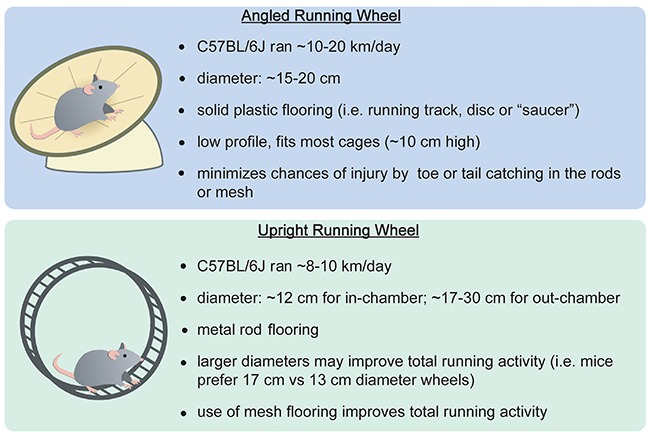
“Running distances differ depending on the type of running wheel, for instance, the average running distance for an angled wheel is 10–20 km/day, while for an upright running wheel, it is 8–10 km/day in mice [29].”
Volitional and forced running ability in mice lacking intact primary motor cortex
Abo, R., Ishikawa, M., Shinohara, R., Michikawa, T., & Imayoshi, I. (2025) · Frontiers in Neural Circuits · doi:10.1101/2025.05.14.653913
Su, Z., & Xiang, L. (2025) · Frontiers in Molecular Neuroscience · doi:10.3389/fnmol.2025.1639114 · Cited by 1
Additional file 1 of Physical activity reduces anxiety and regulates brain fatty acid synthesis
Liśkiewicz, A., Przybyła, M., Wojakowska, A., Marczak, Ł., Bogus, K., Nowacka-Chmielewska, M. M., Liśkiewicz, D., Małecki, A., Barski, J., Lewin‐Kowalik, J., et al. (2020) · Figshare · doi:10.6084/m9.figshare.12150798
Smolinsky, A. N., Castro, A. A., Garland, T., & Middleton, K. M. (2026) · The Anatomical Record · doi:10.1002/ar.70133 · Cited by 2
Granger, K., Liu, K., Joseph, T., Adler, A., Matthews, I., Leon, J., Baker, C., Kim, M., Wang, H., Han, X., et al. (2026) · bioRxiv (Cold Spring Harbor Laboratory) · doi:10.64898/2026.01.23.700915 · Cited by 1
Jiang, C., Lampman, W., Base, J., Pineiro, L., Chen, K., Salvatier-Alvarez, E., Qian, A., Barakat, Z., Hernandez, A., Peters, J., et al. (2026) · Physiology & Behavior · doi:10.1016/j.physbeh.2026.115247
Nieckarz, Z., Szczepaniec, K., Lasko, P., & Zoladz, J. A. (2026) · Journal of Experimental Biology · doi:10.1242/jeb.251780
Florea, R., Hestehave, S., Nwankwo, O., Andreoli, L., Wright, A., & Géranton, S. M. (2026) · Osteoarthritis and Cartilage · doi:10.64898/2026.02.27.708530
“…ran by mice given access to wheel are much greater than those covered in forced treadmill exercise, forced treadmill paradigms usually impose a sustained pace higher than the speed mice would voluntarily select, representing a more continuous physiological and mechanical load on the limbs [39–41].”
Li, J. (2026) · International Conference on Tangible, Embedded, and Embodied Interaction (TEI) · doi:10.1145/3731459.3779140
Quilgars, C. (2021) · theses.fr (ABES) · doi:10.70675/4b84b239z423bz46aaza3eaz54db476be688
Munoz, C., Canal, C., Vizueta, J., & Sanchís, P. (2026) · Molecular Metabolism · doi:10.1016/j.molmet.2026.102359
“…running limits precise control over exercise volume, intensity and timing, it closely resembles interval training and active lifestyle in humans [93] and induces similar adaptations comparable to treadmill training regarding body composition changes without introducing a stress response [94,95].”
Hugues, N. (2023) · theses.fr (ABES) · doi:10.70675/3c52cc4bze9dfz499cza28az42945d38cbd6
Laplante, A., & Bergdahl, A. (2026) · Journal of Experimental Pharmacology · doi:10.2147/jep.s598396
Dindar, O., Aydın, M. A., Taştekin, E., Palabıyık, O., Korkmaz, S., & Vardar, S. A. (2026) · Marmara medical journal · doi:10.5472/marumj.1954066
Muscat, S. N., Lecaj, E., Sparks, N., Kollar, A., Kroening, E., Buckley, M. R., & Nichols, A. E. C. (2026) · bioRxiv (Cold Spring Harbor Laboratory) · doi:10.64898/2026.05.28.722285
“VWR also recapitulates normal running behavior in mice and does not interfere with their nocturnal activity (35).”
Voluntary wheel exercise reduces pain behavior by modulating neuroinflammation in neuropathic pain
Zhu, Y., Xu, W., & Zhang, J. (2026) · Frontiers in Molecular Neuroscience · doi:10.3389/fnmol.2026.1832751
“Unlike forced exercise models that may use aversive stimuli, VWR allows voluntary locomotion under relatively low-stress conditions (Goh and Ladiges, 2015; Manzanares et al., 2018).”
Voluntary wheel running decreases intraepidermal nerve fibers in healthy mice
Eid, S., Hayes, J. M., Carter, A., Lentz, W., Koubek, E. J., & Feldman, E. L. (2026) · PAIN Reports · doi:10.1097/pr9.0000000000001454
Methods for measuring neural activity during voluntary wheel running
Letsinger, A. C., Ochoa, B. N., Wu, J. J., Tang, K. U., Youngstrom, D. E., Wang, S., Bridge, M. F., Cui, G., & Yakel, J. L. (2026) · Journal of Neuroscience Methods · doi:10.1016/j.jneumeth.2026.110839
“Rodent voluntary wheel running can be used as a translational assay for studying the biological mechanisms of physical activity behavior including motivation, affect, memory, and cognition (Greenwood and Fleshner, 2019; Manzanares et al., 2019; Richter et al., 2014; Sherwin, 1998).”
Heterochronic bone marrow transplantation alters behavioral measures in middle-aged mice
Nakazawa, S., Yokogawa, K., Ogawa, R., Hizawa, K., Sashida, G., Sasaki, T., & Arimura, N. (2026) · Discover Neuroscience · doi:10.1186/s13064-026-00296-z
“Previous studies have suggested that voluntary running behavior can be influenced by multiple experimental and biological variables, including mouse strain, sex, activity fragmentation, and circadian activity patterns [30].”
Asiabani, P. H., Ghasemnian, A., Asl, A. K., & Wong, A. (2026) · European Journal of Applied Physiology · doi:10.1007/s00421-026-06318-2
Voluntary Exercise Modulates Cuprizone-Induced Hepatic and Cardiac Toxicity in Mice
Birsen, İ., Ülker, S. N., Kencebay, C., Erdoğan, K., Kantar, D., Derin, N., & izgüt-Uysal, V. N. (2026) · Bratislavské lekárske listy/Bratislava medical journal · doi:10.1007/s44411-026-00744-6
“Exercise group (EX) received daily CMC-Ca via gavage for 6 weeks and allowed to exercise voluntarily on a running wheel within their cage [ 19–21 ].”
Janowski, A. J., Hayashi, K., Plumb, A. N., Lesnak, J. B., Smith, A. F., Rasmussen, L., Gross, E., Post, A. A., Berardi, G., Klein, M. E., et al. (2026) · Scientific Reports · doi:10.1038/s41598-026-62864-x
“Because mice run primarily during the night cycle 41 , only the 12-h night cycle period was used in analysis.”
Ziobro, P., Malone, C. A., Batter, S., Xu, L., Xu, S., Loginov, A., & Tschida, K. (2026) · PLoS ONE · doi:10.1371/journal.pone.0353843
“…behavior could be reversed by a 2-week period of running wheel removal (Experiment 2b), and tested whether a 2-week period of running wheel access in adulthood could recapitulate the effects of 5 weeks of running wheel access throughout adolescence on female adult social behaviors (Experiment…”
Yu, J., Cao, M., Ma, S., Fan, X., Tang, L., & Sun, L. (2026) · Endocrine · doi:10.1007/s12020-026-04730-4
“During the 4-week intervention, mice in the VWR group ran an average of 8 ± 2 km/day, which falls within the normal physiological range for C57BL/6J mice [18].”
Joris, V., Marchand, D., Metzinger, T., Dumas, L., Esfahani, H., Féron, O., Horman, S., & Dessy, C. (2026) · Frontiers in Physiology · doi:10.3389/fphys.2026.1833828
Moghadasi, M., Abdollahi, S., Edalatmanesh, M. A., Motl, R. W., Najafi, P., & Salehi, O. (2026) · Neurological Research · doi:10.1080/01616412.2026.2721323
Vape Aerosol Exposure Decreases Voluntary Exercise in MicePreprint
Dawood, D., Savko, C., Mikhail, S., Bose, P., Wright, M. K., Esquer, C., Bailey, B., Phillips, J. A., & Sussman, M. A. (2026) · bioRxiv (Cold Spring Harbor Laboratory) · doi:10.64898/2026.10.12.758346
“Distances covered per evening are remarkable with averages of approximately 3 to 12 miles (Manzanares et al. 2018).”
Assessing Aerobic Capacity in Rat and Mouse Models: A Critical Narrative Review
YILMAZ, D. A., & Özyener, F. (2026) · Journal of Experimental Zoology Part A Ecological and Integrative Physiology · doi:10.1002/jez.70142
Metadata
- Authors
- Manzanares, G., Brito-da-Silva, G., & Gandra, P. G.
- Affiliations
- Universidade Estadual de Campinas (UNICAMP) (BR)
- ORCID
- Gandra, P.G.
- Venue
- Brazilian Journal of Medical and Biological Research
- Publisher
- FapUNIFESP (SciELO)
- Published
- 2019
- Volume
- 52
- Issue
- 1
- Pages
- e7830-e7830
- ISSN
- 0100-879X (ISSN-L)
- 1414-431X
- PMC
- PMC6301263
- OpenAlex
- W2905321820
- Cited by
- 194
- References
- 50
- Citations by year
- 2026: 29 · 2025: 28 · 2024: 30 · 2023: 35 · 2022: 28 · 2021: 15 · 2020: 25 · 2019: 4
- FWCI
- 15.10
- Type
- journal article
- Language
- en
- Open access
- gold
- doi.org
- Licence
- cc-by
- creativecommons.org/licenses/by/4.0/ (vor)
- creativecommons.org/licenses/by/4.0/ (am)
- creativecommons.org/licenses/by/4.0/ (tdm)
- Locations
- Brazilian Journal of Medical and Biological Research (publishedVersion, cc-by)
- Europe PMC (PubMed Central) (publishedVersion, cc-by)
- PubMed Central (publishedVersion, cc-by)
- PubMed (publishedVersion)
- Americanae (AECID Library) (publishedVersion, other-oa)
- LA Referencia (Red Federada de Repositorios Institucionales de Publicaciones Científicas) (publishedVersion, other-oa)
- Americanae (AECID Library) (submittedVersion, cc-by-nc)
- DOAJ (DOAJ: Directory of Open Access Journals) (submittedVersion, cc-by-sa)
- Funders
- Conselho Nacional de Desenvolvimento Científico e Tecnológico
- Topics
- Health Sciences › Medicine › Physiology (medical) › Cardiovascular and exercise physiology
- Health Sciences › Medicine › Public Health, Environmental and Occupational Health › Physical Activity and Health
- Health Sciences › Medicine › Physiology (medical) › Exercise and Physiological Responses
- Keywords
- voluntary wheel running, mice, exercise physiology, running pattern, exercise capacity, skeletal muscle, myocardium, sarcopenia, exercise parameters
- MeSH terms
- Animals, Female, Male, Motor Activity, Oxygen Consumption, Physical Conditioning, Animal, Running, Muscle, Skeletal, Mice
About these checks
Registry, retraction, Cites and statistics results are computed, not judged, with one exception: a printed reference that no index lists is read once by a model before it counts as a citation error. Claims are extracted by a model and kept only when their quote appears verbatim in the text; each cited source is then checked, with a model’s help, for whether it says what the claim relies on. Those verdicts can be wrong — read the claim’s quote and the cited source before relying on one.
Statistics and arithmetic are recomputed, not judged.
Confidence bands are shown only for fields calibrated on our annotated test set. None is calibrated yet, so no band is shown.
What counts as a claim ›How we measure confidence ›How we check this ›
Are you an author, or do you see a problem with this page? Request a review
Data sources
Bibliographic data: Semantic Scholar, OpenAlex, Crossref.
Contains information from the Semantic Scholar Academic Graph Datasets, made available under the ODC Attribution License (ODC-BY 1.0).
Semantic Scholar’s data is described in: Kinney, R., et al. (2023). The Semantic Scholar Open Data Platform. arXiv:2301.10140.
