

Long-term potentiation and long-term depression: a clinical perspective
Open accessThe DOI matches its Crossref record; 167 of the 171 references it cites were found in a registry or an index.
Abstract
Long-term potentiation and long-term depression are enduring changes in synaptic strength, induced by specific patterns of synaptic activity, that have received much attention as cellular models of information storage in the central nervous system. Work in a number of brain regions, from the spinal cord to the cerebral cortex, and in many animal species, ranging from invertebrates to humans, has demonstrated a reliable capacity for chemical synapses to undergo lasting changes in efficacy in response to a variety of induction protocols. In addition to their physiological relevance, long-term potentiation and depression may have important clinical applications. A growing insight into the molecular mechanisms underlying these processes, and technological advances in non-invasive manipulation of brain activity, now puts us at the threshold of harnessing long-term potentiation and depression and other forms of synaptic, cellular and circuit plasticity to manipulate synaptic strength in the human nervous system. Drugs may be used to erase or treat pathological synaptic states and non-invasive stimulation devices may be used to artificially induce synaptic plasticity to ameliorate conditions arising from disrupted synaptic drive. These approaches hold promise for the treatment of a variety of neurological conditions, including neuropathic pain, epilepsy, depression, amblyopia, tinnitus and stroke.
Overview
The claims and statistics of this paper haven’t been checked yet.
Free: it reads the open-access text and checks the first 5 claims that cite a source we can check. Create a free account to check every claim.
Integrity signals
Registry
Cites
Statistics
Figures
Verification
Claims the paper makes
The claims and statistics of this paper haven’t been checked yet.
Free: it reads the open-access text and checks the first 5 claims that cite a source we can check. Create a free account to check every claim.
Claims other papers make about this one
Each is checked against this paper’s own text: does it say what the citing paper says it does?
The cited source says what the claim attributes to it.
In the citing paper
“Beside neurogenesis, it is also rather well-established that LTP can be induced in the human CNS with similar molecular mechanisms than those observed in rodent models (Bliss and Cooke 2011).”
From Neurotrophic factors and neuroplasticity pathways in the pathophysiology and treatment of depression (2018) · cites this paper as Bliss and Cooke 2011
Self-check
Percentages, sums and reported differences re-computed from the paper’s own numbers.
The self-check needs the paper’s full text.
Citations
Cites
Hebb, D. O. (2005) · doi:10.4324/9781410612403 · Cited by 9,825
Glutamate neurotoxicity and diseases of the nervous system
CHOI, D. (1988) · Neuron · doi:10.1016/0896-6273(88)90162-6 · Cited by 7,972
Bliss, T. V. P., & Gardner‐Medwin, A. R. (1973) · The Journal of Physiology · doi:10.1113/jphysiol.1973.sp010274 · Cited by 7,437 · cited 1×
“Experiments in intact animals allow for assessment of the longevity of LTP in the hippocampus using chronically implanted recording and stimulating electrodes.(17) Under these conditions, and using multiple induction tetani, LTP has been observed to last for a year in rats.”
MethodSelf-citationindicated, N. A. (1950) · Journal of Consulting Psychology · doi:10.1037/h0049612 · Cited by 6,923
Bi, G.-Q., & Poo, M.-M. (1998) · The Journal of Neuroscience · doi:10.1523/jneurosci.18-24-10464.1998 · Cited by 4,744 · cited 11×
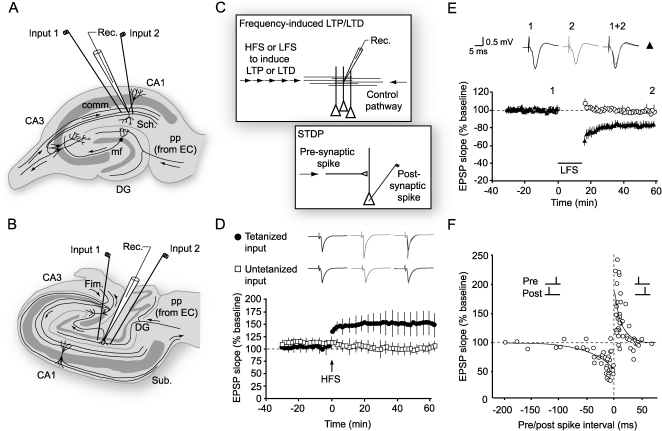
“Repeated activation of a presynaptic spike followed by post-synaptic spike, within a brief time window of approximately 50 ms, leads to LTP, while the reverse order leads to LTD.21,22 The transverse slice allows for easy placement of stimulating electrodes in clearly defined afferent fibre populations because the dend…”
BackgroundInfluentialMagnesium gates glutamate-activated channels in mouse central neurones
Nowak, L., Bregestovski, P., Ascher, P., Herbet, A., & Prochiantz, A. (1984) · Nature · doi:10.1038/307462a0 · Cited by 4,043 · cited 2×
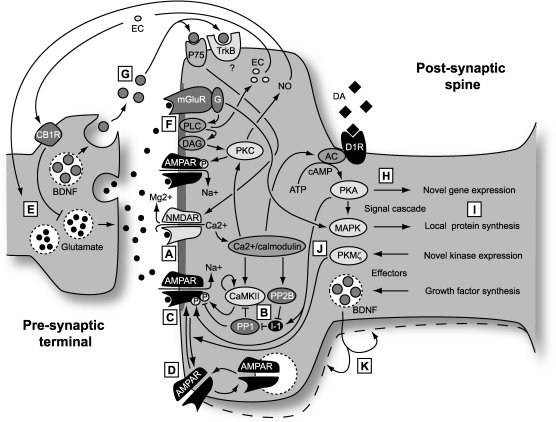
“It is now known that coincidence detection is accomplished through the NMDA receptor (NMDAR), a voltage-dependent subtype of glutamate receptor that allows permeation of calcium and other cations only when two criteria are satisfied: neurotransmitter is bound following release of glutamate from the presynaptic termina…”
BackgroundInfluentialRegulation of Synaptic Efficacy by Coincidence of Postsynaptic APs and EPSPs
Markram, H., Lübke, J., Frotscher, M., & Sakmann, B. (1997) · Science · doi:10.1126/science.275.5297.213 · Cited by 3,832 · cited 11×
“Repeated activation of a presynaptic spike followed by post-synaptic spike, within a brief time window of approximately 50 ms, leads to LTP, while the reverse order leads to LTD.21,22 The transverse slice allows for easy placement of stimulating electrodes in clearly defined afferent fibre populations because the dend…”
BackgroundInfluentialThe period of susceptibility to the physiological effects of unilateral eye closure in kittens
Hubel, D. H., & Wiesel, T. N. (1970) · The Journal of Physiology · doi:10.1113/jphysiol.1970.sp009022 · Cited by 3,030
Synaptic Plasticity and Memory: An Evaluation of the Hypothesis
Martin, S. J., Grimwood, P. D., & Morris, R. G. M. (2000) · Annual Review of Neuroscience · doi:10.1146/annurev.neuro.23.1.649 · Cited by 2,794 · cited 1×
“learning and memory, as most neuroscientists believe, has not yet been definitively resolved.(5,6) However, at the”
BackgroundNeurodegenerative Disorders: Parkinson's Disease and Huntington's Disease
Hague, S., Klaffke, S., & Bandmann, O. (2006) · IMPERIAL COLLEGE PRESS eBooks · doi:10.1142/9781860948961_0007 · Cited by 2,766
Research works printed but not linked: 1
- Heynen A Bear MF Abraham WC Low-frequency stimulation of the Schaffer collaterals produces homosynaptic LTD in area CA1 of the adult rat hippocampus in vivo Soc Neurosci Abstr 1995
Cited by
Items 101–200 of 444
Receive, Retain and Retrieve: Psychological and Neurobiological Perspectives on Memory Retrieval
Savarimuthu, A., & Ponniah, R. J. (2023) · Integrative Psychological and Behavioral Science · doi:10.1007/s12124-023-09752-5 · Cited by 25
“The opposite process of long-term potentiation is long-term depression which reduces the strength between the neurons to be connected (Bliss & Cooke, 2011).”
MicroRNAs and synapse turnover in Alzheimer’s disease
Dalal, S., Ramirez-Gomez, J., Sharma, B., Devara, D., & Kumar, S. (2024) · Ageing Research Reviews · doi:10.1016/j.arr.2024.102377 · Cited by 27
Murphy, R. J., Godfrey, K., Shaw, A. D., Muthukumaraswamy, S. D., & Sumner, R. L. (2024) · BMC Neuroscience · doi:10.1186/s12868-024-00844-5 · Cited by 26
“Further to this, visual LTP demonstrated with the current paradigm has previously been correlated to visual memory performance [23], suggesting a relationship with higher-level learning and memory functions [30].”
BackgroundAbraha, B., Chaves, A. R. D. A., Kelly, L. P., Wallack, E. M., Wadden, K. P., McCarthy, J., & Ploughman, M. (2018) · Frontiers in Physiology · doi:10.3389/fphys.2018.00827 · Cited by 24
“These are critical processes for improving the acquisition of new skills, learning, and memory, and therefore have important implications in clinical populations such as stroke (Bliss and Cooke, 2011; Zeiler and Krakauer, 2013).”
BackgroundRygvold, T. W., Hatlestad‐Hall, C., Elvsåshagen, T., Moberget, T., & Andersson, S. (2020) · European Journal of Neuroscience · doi:10.1111/ejn.14964 · Cited by 24
“Bliss and Cooke (2011) refer to animal studies demonstrating that if an action potential is repeatedly evoked before pre-synaptic stimulation, a depression of synaptic strength will follow given that the interval is brief enough.”
BackgroundA Rationally and Computationally Designed Fluorescent Biosensor for d -Serine
Vongsouthi, V., Whitfield, J. H., Unichenko, P., Mitchell, J. A., Breithausen, B., Khersonsky, O., Kremers, L., Janovjak, H., Monai, H., Hirase, H., et al. (2021) · ACS Sensors · doi:10.1021/acssensors.1c01803 · Cited by 24
Glutamatergic metabolites are associated with visual plasticity in humans
Wijtenburg, S. A., West, J., Korenic, S. A., Kuhney, F. S., Gaston, F. E., Chen, H., Roberts, M., Kochunov, P., Hong, L. E., & Rowland, L. M. (2017) · Neuroscience Letters · doi:10.1016/j.neulet.2017.02.020 · Cited by 24
“LTP-like visual plasticity was observed, similar to previous animal and human studies [1, 10, 21].”
Alterations of the glutamatergic system in diabetes mellitus
Hristov, M., Nankova, A., & Andreeva-Gateva, P. A. (2023) · Metabolic Brain Disease · doi:10.1007/s11011-023-01299-z · Cited by 23
Inorganic Halide Perovskite Quantum Dots for Memristors
Cho, H. M., & Jang, H. W. (2025) · Electronic Materials Letters · doi:10.1007/s13391-025-00560-0 · Cited by 23
Kühn, M., Maier, J. G., Wolf, E., Mainberger, F., Feige, B., Maywald, S., Bredl, A., Michel, M., Sendelbach, N., Normann, C., et al. (2020) · Journal of Affective Disorders · doi:10.1016/j.jad.2020.08.052 · Cited by 23
Hamilton, H., Roach, B. J., Çavuş, I., Teyler, T. J., Clapp, W. C., Ford, J. M., Tarakci, E., Krystal, J. H., & Mathalon, D. H. (2020) · Frontiers in Psychiatry · doi:10.3389/fpsyt.2020.590567 · Cited by 23
RetractedLee, D.-H., Park, H., & Cho, W.-J. (2023) · Polymers · doi:10.3390/polym15040896 · Cited by 23
“important mechanism for learning and memory functions in the human brain [40,41].”
BackgroundImplications of Transcranial Magnetic Stimulation as a Treatment Modality for Tinnitus
Denton, A. J., Finberg, A., Ashman, P. E., Bencie, N. B., Scaglione, T., Kuzbyt, B., Telischi, F. F., Mittal, R., & Eshraghi, A. A. (2021) · Journal of Clinical Medicine · doi:10.3390/jcm10225422 · Cited by 22
“LTP leads to the amplification of certain neuronal connections, while LTD weakens such connections [27].”
BackgroundRibeiro, D. E., Casarotto, P. C., Staquini, L., Pinto e Silva, M. A., Biojone, C., Wegener, G., & Joca, S. (2019) · PeerJ · doi:10.7717/peerj.7834 · Cited by 21
Toward Closed-Loop Electrical Stimulation of Neuronal Systems: A Review
Tanskanen, J. M. A., Ahtiainen, A., & Hyttinen, J. (2020) · Bioelectricity · doi:10.1089/bioe.2020.0028 · Cited by 21
Gupta, J., Gulati, S., Singh, U. P., Kumar, A., Jauhari, P., Chakrabarty, B., Pandey, R. M., Bhatia, R., Jain, S., & Srivastava, A. K. (2023) · Neurorehabilitation and neural repair · doi:10.1177/15459683231174222 · Cited by 20
Synaptic roles of cyclin-dependent kinase 5 & its implications in epilepsy
Dixit, A. B., Banerjee, J., Tripathi, M., Sarkar, C., & Chandra, P. S. (2017) · The Indian Journal of Medical Research · doi:10.4103/ijmr.ijmr_1249_14 · Cited by 20
Feldmann, L. K., Prieult, F. L., Felzen, V., Thal, S. C., Engelhard, K., Behl, C., & Mittmann, T. (2019) · International Journal of Molecular Sciences · doi:10.3390/ijms20123048 · Cited by 20
“Expression of l-LTP is based on activity-induced calcium influx through N-methyl-d-aspartic acid (NMDA) receptors [16,17] and activation of protein synthesis processes [18].”
BackgroundMohandas, K., Rishikesh, R., Balan, Y. M., Deepti, A., Hosseini, S., Körte, M., & Sasidharan, B. C. P. (2025) · Molecular Neurobiology · doi:10.1007/s12035-025-05238-0 · Cited by 19
“On the other hand, LTD is the gradual weakening of synaptic connections, which helps refine neural circuits by removing less relevant connections [19, 20].”
Halawa, I., Reichert, K., Aberra, A. S., Sommer, M., Peterchev, A. V., & Paulus, W. (2021) · Frontiers in Neuroscience · doi:10.3389/fnins.2021.773792 · Cited by 19
The Anaphase Promoting Complex/Cyclosome (APC/C): A Versatile E3 Ubiquitin Ligase
Curtis, N. L., & Bolaños-García, V. M. (2019) · Sub-cellular biochemistry/Subcellular biochemistry · doi:10.1007/978-3-030-28151-9_18 · Cited by 19
The role of PTEN signaling in synaptic function: Implications in autism spectrum disorder
Nagy, G. S., Kawamoto, E. M., & Bridi, J. C. (2021) · Neuroscience Letters · doi:10.1016/j.neulet.2021.136015 · Cited by 19
Lindsey, A., Ellison, R. L., Herrold, A. A., Aaronson, A. L., Kletzel, S., Stika, M. M., Guernon, A., & Pape, T. (2022) · Journal of Neuropsychiatry · doi:10.1176/appi.neuropsych.21090227 · Cited by 18
Suematsu, N., Vazquez, A. L., & Kozai, T. D. Y. (2024) · Journal of Neural Engineering · doi:10.1088/1741-2552/ad3853 · Cited by 18
“…also induce another type of modulation, such as synaptic fatigue that reduces transmitter release probability [73], Ca 2 + depletion in the extracellular space [74], potassium accumulation in the intracellular space [75], and synaptic plasticity that diminishes long-term transmission efficacy [76].”
BackgroundKopalli, S. R., Behl, T., Kyada, A., Rekha, M. M., Kundlas, M., Rani, P., Nathiya, D., Naidu, K. S., Gulati, M., Bhise, M. R., et al. (2025) · Neuroscience · doi:10.1016/j.neuroscience.2025.02.007 · Cited by 19
Jaberzadeh, S., & Zoghi, M. (2022) · Frontiers in Neuroergonomics · doi:10.3389/fnrgo.2022.841911 · Cited by 19
“LTP is a process by which synaptic connections between neurons become stronger with frequent activation (Bliss and Cooke, 2011).”
BackgroundNeuromodulatory Interventions for Traumatic Brain Injury
Pape, T., Herrold, A. A., Guernon, A., Aaronson, A. L., & Rosenow, J. M. (2020) · Journal of Head Trauma Rehabilitation · doi:10.1097/htr.0000000000000643 · Cited by 18
Ion Channels and Electroosmosis in Porous Geopolymers: A Novel Category of Low‐Cost Memristors
Shakib, M. A., Gao, Z., Candamano, S., & Lamuta, C. (2023) · Advanced Functional Materials · doi:10.1002/adfm.202306535 · Cited by 17
Hayes, C. A., Wilson, D., Leon, M. A. D., Mustapha, M. J., Morales, S., Odden, M. C., & Ashpole, N. M. (2024) · Frontiers in Neuroendocrinology · doi:10.1016/j.yfrne.2024.101161 · Cited by 17
Emerging biophysical techniques for probing synaptic transmission in neurodegenerative disorders
Kale, M. B., Wankhede, N. L., Bishoyi, A. K., Ballal, S., Kalia, R., Arya, R., Kumar, S., Khalid, M., Gulati, M., Umare, M. D., et al. (2024) · Neuroscience · doi:10.1016/j.neuroscience.2024.11.055 · Cited by 18
Saccenti, D., Lauro, L. J. R., Crespi, S. A., Moro, A. S., Vergallito, A., Grgič, R. G., Pretti, N., Lamanna, J., & Ferro, M. (2024) · Neural Plasticity · doi:10.1155/np/7853199 · Cited by 18
A Computational Model of Deep-Brain Stimulation for Acquired Dystonia in Children
Sanger, T. D. (2018) · Frontiers in Computational Neuroscience · doi:10.3389/fncom.2018.00077 · Cited by 17
“Frequencies above 10Hz may have the ability to cause LTP in downstream structures (Bliss and Cooke, 2011).”
BackgroundEffects of enhanced environment and induced depression on cuprizone mouse model of demyelination
Mohamed, A. S., Al‐Kafaji, G., Almahroos, A., Al-Mosawi, Z. M., Alalwan, H. F., Abdulla, R., Alammadi, F., Almubarak, A., Al-Mahrezi, A., & Kamal, A. (2019) · Experimental and Therapeutic Medicine · doi:10.3892/etm.2019.7654 · Cited by 17
The synaptic lipidome in health and disease
Vallés, A. S., & Barrantes, F. J. (2022) · Biochimica et Biophysica Acta (BBA) - Biomembranes · doi:10.1016/j.bbamem.2022.184033 · Cited by 17
Kos, J. A., Langiu, M., Hellyer, S. D., & Gregory, K. J. (2024) · ACS Pharmacology & Translational Science · doi:10.1021/acsptsci.4c00213 · Cited by 16
Cutuli, D., & Sampedro-Piquero, P. (2022) · Current Neuropharmacology · doi:10.2174/1570159x20666220624111855 · Cited by 16
Li, Y. B., Chen, T. P., Ju, X., & Salim, T. (2022) · Nanoscale · doi:10.1039/d2nr02136f · Cited by 16
Effects of percutaneous neuromodulation in neuromusculoskeletal pathologies: A systematic review
Fidalgo-Martin, I., Ramos-Álvarez, J. J., Murias-Lozano, R., & Rodríguez‐López, E. S. (2022) · Medicine · doi:10.1097/md.0000000000031016 · Cited by 17
“Finally, the last hypothesis has observed mechanisms of synaptic plasticity.[14,34,35] Paying attention to the mechanism of release of endogenous opioids, they found out that low frequencies (2–5 Hz) activate small-diameter motor fibers.”
BackgroundDo group I metabotropic glutamate receptors mediate LTD?
Jones, O. D. (2016) · Neurobiology of Learning and Memory · doi:10.1016/j.nlm.2016.08.010 · Cited by 17
Ito, W., Fusco, B., & Morozov, A. (2020) · Neurophotonics · doi:10.1117/1.nph.7.1.015007 · Cited by 16
“3 With optogenetic stimulation, this simple approach proved successful in several circuits ex vivo and in vivo .”
Grande, M., Lattanzio, L., Buard, I., McKendrick, A. M., Chan, Y. M., & Pelak, V. S. (2021) · Frontiers in Neurology · doi:10.3389/fneur.2021.724081 · Cited by 15
Chaves, A. R. D. A., Kenny, H. M., Snow, N. J., Pretty, R. W., & Ploughman, M. (2021) · Brain Research · doi:10.1016/j.brainres.2021.147687 · Cited by 15
SUMOylation and Major Depressive Disorder
Jeoung, S.-W., Park, H.-S., Ryoo, Z. Y., Cho, D., Lee, H., & Ryu, H. (2022) · International Journal of Molecular Sciences · doi:10.3390/ijms23148023 · Cited by 15
“LTP is defined as a long-term increase in synaptic strength and functionality caused by certain patterns of synaptic activity, such as increased postsynaptic α-amino-3hydroxy-5-methyl-4-isoxazolepropionic acid receptors (AMPARs), whereas LTD is defined as a long-term decrease in synaptic strength and function [2].”
BackgroundThakkar, B., Peterson, C. L., & Acevedo, E. O. (2024) · Journal of Integrative Neuroscience · doi:10.31083/j.jin2303054 · Cited by 15
“In addition, the neuroplasticity induced changes in the cortical circuits outlast the period of stimulation, a characteristic of long-term potentiation (LTP) and long-term depression (LTD) [27,79,80].”
Shah, M., Suresh, S., Paddick, J., Mellow, M. L., Rees, A., Berryman, C. F., Stanton, T. R., & Smith, A. E. (2024) · Clinical Neurophysiology · doi:10.1016/j.clinph.2024.03.002 · Cited by 16
“LTP and LTD lead to lasting changes in the human central nervous system (Bliss & Cooke, 2011) and can be induced via high and low frequency NBS, respectively.”
BackgroundTakhor, N. H., & Phan, C. (2025) · Inflammopharmacology · doi:10.1007/s10787-025-01746-6 · Cited by 14
“The overstimulation and suppression of cholinergic, dopaminergic (Major and Jarquin-Valdivia 2018) and glutamatergic activities (Bliss and Cooke 2011) affect synaptogenesis, neurogenesis, and neuronal survival (Chakraborty et al. 2023).”
Rapid ATF4 Depletion Resets Synaptic Responsiveness after cLTP
Amar, F., Corona, C., Husson, J., Liu, J., Shelanski, M. L., & Greene, L. A. (2021) · eNeuro · doi:10.1523/eneuro.0239-20.2021 · Cited by 14
“…avoidance of saturation and promotion of additional rounds of plasticity (Moser et al., 1998), providing synaptic scaling (Turrigiano, 2008), and forestalling excessive excitatory activity that could lead to seizures (Bliss and Cooke, 2011) or even neuronal damage (McEachern and Shaw, 1999).”
BackgroundGupta, S., Khan, J., & Ghosh, S. (2023) · Life Sciences · doi:10.1016/j.lfs.2023.122358 · Cited by 14
Nanoscale Sub-Compartmentalization of the Dendritic Spine Compartment
Vallés, A. S., & Barrantes, F. J. (2021) · Biomolecules · doi:10.3390/biom11111697 · Cited by 14
“The so-called long-term potentiation (LTP) and long-term depression (LTD), two mechanisms that have been thoroughly studied in the mammalian hippocampus, are induced by recent patterns of activity that strengthen or depress synapse activity, respectively [22] (Figure 1).”
BackgroundRevistas científicas eletrônicas: discussão em sete momentos
Garcia, J. C. R. (2011) · Ciência da Informação · doi:10.1590/s0100-19652011000100009 · Cited by 14
Cadmium inhibits calcium activity in hippocampal CA1 neurons of freely moving mice
Matsushita, M. T., & Xia, Z. (2024) · Toxicological Sciences · doi:10.1093/toxsci/kfae048 · Cited by 13
Sumner, R. L., Spriggs, M. J., & Shaw, A. D. (2021) · PLoS Computational Biology · doi:10.1371/journal.pcbi.1008414 · Cited by 13
Anselmo, A., Lucifora, C., Rusconi, P., Martino, G., Craparo, G., Salehinejad, M. A., & Vicario, C. M. (2022) · Current Psychology · doi:10.1007/s12144-022-03210-y · Cited by 13
“…activity (Kronberg et al., 2017; Ziemann, 2017) by acting on synap tic plast icity (Fritsch et al., 2010; Kronberg et al., 2017; Nitsche et al., 2012) via longterm poten tiati on (LTP) and long-term depression (LTD) (Bliss & Cooke, 2011; Monte-Silva et al., 2013; Nitsche et al., 2003) mechanisms.”
BackgroundPromthep, K., Nopparat, C., Mukda, S., Pannengpetch, S., Wisomka, P., Chantadul, V., Phanchana, M., & Panmanee, J. (2022) · NeuroToxicology · doi:10.1016/j.neuro.2022.08.015 · Cited by 13
Lv, J., Shen, X., Shen, X.-Y., Zhao, S., Xu, R., Yan, Q., Lu, J., Zhu, D., Zhao, Y., Dong, J., et al. (2023) · Phytotherapy Research · doi:10.1002/ptr.7945 · Cited by 13
“3.4.1 | NPLC0393 ameliorated LTP impairment in 3 (cid:1) Tg-AD mice by targeting PPM1A LTP of synaptic transmission is a common experimental approach that is widely used to assess synaptic plasticity and cognition-related mechanisms in mice (Bliss & Cooke, 2011).”
InfluentialCortical Depression and Potentiation: Basic Mechanisms for Phantom Pain
Zhuo, M. (2012) · Experimental Neurobiology · doi:10.5607/en.2012.21.4.129 · Cited by 13
Shi, W., Fu, Y., Shi, T., & Zhou, W. (2022) · Frontiers in Synaptic Neuroscience · doi:10.3389/fnsyn.2022.851015 · Cited by 12
Natarajan, C., Cook, C., Ramaswamy, K., & Krishnan, B. (2023) · International Journal of Molecular Sciences · doi:10.3390/ijms24043372 · Cited by 12
Early-life metabolic dysfunction impairs cognition and mitochondrial function in mice
Vilela, W. R., Bellozi, P. M. Q., Picolo, V. L., Cavadas, B. N., Marques, K. V. S., Pereira, L. T. G., Guirao, A. R. D. Y., Amato, A. A., Magalhães, K. G., Mortari, M. R., et al. (2023) · The Journal of Nutritional Biochemistry · doi:10.1016/j.jnutbio.2023.109352 · Cited by 12
Molecular Mechanisms in Synaptic Plasticity
Mayadevi, M., Archana, G. M., Prabhu, R., & Omkumar, R. V. (2012) · InTech eBooks · doi:10.5772/36928
“LTD relies on both pre and postsynaptic expression mechanisms although the maintenance mechanism is not fully understood (Bliss and Cooke, 2011).”
BackgroundCordeiro, J. G., Somerlik, K. H., Cordeiro, K. K., Aertsen, A., Araújo, J. C., & Schulze‐Bonhage, A. (2013) · Epilepsy Research · doi:10.1016/j.eplepsyres.2013.08.014 · Cited by 12
“Electrical stimulation may induce synaptic plasticity in the form of short-term and long-term depression (Christie et al., 1994; Zucker and Regehr, 2002; Bliss and Cooke, 2011).”
InfluentialKafri, M., Zaltsberg, N., & Dickstein, R. (2014) · Somatosensory & Motor Research · doi:10.3109/08990220.2014.937413 · Cited by 12
Tan, B., Babür, E., Koşar, B., Varol, S., Dursun, N., & Süer, C. (2019) · Brain Research · doi:10.1016/j.brainres.2019.146314 · Cited by 12
“LTD, working together with LTP, has been proposed as the cellular substrate of information processing and memory formation (Bliss and Cooke, 2011).”
BackgroundPsychophysiology of emotional responding in PTSD
Innocente, B. P., Weingast, L. T., George, R., & Norrholm, S. D. (2020) · Elsevier eBooks · doi:10.1016/b978-0-12-816022-0.00009-0 · Cited by 11
Brain-Based Learning Method: Opportunities and Challenges
Reddy, K. J., Hunjan, U. G., & Jha, P. (2021) · Springer eBooks · doi:10.1007/978-3-030-72400-9_15 · Cited by 11
Convolutional Neural Networks with Hebbian-Based Rules in Online Transfer Learning
Aguilar-Canto, F. J. (2020) · Lecture notes in computer science · doi:10.1007/978-3-030-60884-2_3 · Cited by 11
Convento, S., Russo, C., Zigiotto, L., & Bolognini, N. (2016) · European Psychologist · doi:10.1027/1016-9040/a000238 · Cited by 11
Reyes-García, S. Z., de Almeida, A.-C. G., Ortiz‐Villatoro, N. N., Scorza, F. A., Cavalheiro, É. A., & Scorza, C. A. (2018) · Frontiers in Neural Circuits · doi:10.3389/fncir.2018.00081 · Cited by 10
“Since then, long-lasting types of synaptic plasticity discriminated as Hebbian plasticity (when presynaptic activity is strictly followed by postsynaptic activity), comprising, among others, long-term potentiation (LTP), have been largely investigated as attractive cellular mechanisms underlying some forms of learning…”
BackgroundWang, Y., Gu, C., & Ewing, A. G. (2022) · Angewandte Chemie · doi:10.1002/ange.202200716 · Cited by 10
Principles and Advancements of Microelectrode Arrays in Brain-Machine Interfaces
Seyedkhani, S. A., Mohammadpour, R., & zad, A. I. (2024) · Biomedical engineering · doi:10.5772/intechopen.113875 · Cited by 10
Svejgaard, B., Modrau, B., Hernández-Gloria, J. J., Wested, C. L., Dosen, S. S., Stevenson, A. J. T., & Mrachacz‐Kersting, N. (2024) · Journal of Neurophysiology · doi:10.1152/jn.00452.2024 · Cited by 9
From Fat to Brain: Adiponectin as a Mediator of Neuroplasticity in Depression
Genini, P., D’Aprile, I., Petrillo, G., Benedetto, M. G. D., Begni, V., Cattane, N., & Cattaneo, A. (2025) · Biomolecules · doi:10.3390/biom15121642 · Cited by 9
“…LTP and long-term depression (LTD) are also fundamental for hippocampal function, particularly in enabling memory formation, learning, and the integration of newly generated neurons into existing circuits [43] and in supporting the adaptive integration of new neurons into existing circuits [44,45].”
Memristor Synapse—A Device-Level Critical Review
Chandrasekaran, S., Chang, Y., & Simanjuntak, F. M. (2026) · Nanomaterials · doi:10.3390/nano16030179 · Cited by 9
“Postsynaptic neurons contain AMPA receptors, which influence Ca 2+ influx, leading to synaptic plasticity [87,88].”
Kang, H., 邵天瑞, Shi, Y., Wang, S., Xiong, H., Jin, X., & Ren, J. (2026) · Frontiers in Neuroscience · doi:10.3389/fnins.2026.1814098 · Cited by 9
“It is primarily manifested as bidirectional changes in synaptic strength, most notably long-term potentiation (LTP) and long-term depression (LTD) (Malenka and Bear, 2004; Bliss and Cooke, 2011).”
Keynes & Aidley's Nerve and Muscle
Huang, C. L.-H. (2020) · Cambridge University Press eBooks · doi:10.1017/9781108860789 · Cited by 10
Optical Bio-Inspired Synaptic Devices
Li, P., Wang, K., Jiang, S., He, G., Zhang, H., Cheng, S., Li, Q., Zhu, Y., Fu, C., Wei, H., et al. (2024) · Nanomaterials · doi:10.3390/nano14191573 · Cited by 9
Neuromodulation as a therapeutic approach for post-traumatic stress disorder: the evidence to date
Manocchio, F., Enepekides, J., Nestor, S. M., Giacobbe, P., Rabin, J. S., Burke, M. J., Lanctôt, K. L., Goubran, M., Meng, Y., Lipsman, N., et al. (2024) · Expert Review of Neurotherapeutics · doi:10.1080/14737175.2024.2442658 · Cited by 10
“LTD pertains to the reduction of synaptic strength and cortical excitability typically induced by low-frequency stimulation [129].”
Synaptic plasticity emulation by natural biomaterial honey-CNT-based memristors
Templin, Z., Tanim, M. M. H., & Zhao, F. (2023) · Applied Physics Letters · doi:10.1063/5.0174426 · Cited by 9
Distinctive gene expression profile in women with history of postpartum depression
Landsman, A., Aidelman, R., Smith, Y., Boyko, M., & Greenberger, C. (2016) · Genomics · doi:10.1016/j.ygeno.2016.10.005 · Cited by 9
Neuroadaptation in neurodegenerative diseases: compensatory mechanisms and therapeutic approaches
Kopalli, S. R., Behl, T., Baldaniya, L. H., Ballal, S., Joshi, K. K., Arya, R., Chaturvedi, B., Chauhan, A. S., Verma, R. K., Patel, M., et al. (2025) · Progress in Neuro-Psychopharmacology and Biological Psychiatry · doi:10.1016/j.pnpbp.2025.111375 · Cited by 8
Virginia, D. F. (2021) · Archives in Neurology & Neuroscience · doi:10.33552/ann.2021.11.000775 · Cited by 8
Rodríguez-Durán, L. F., López-Ibarra, D. L., Herrera-Xithe, G., Bermúdez‐Rattoni, F., Osorio‐Gómez, D., & Escobar, M. L. (2023) · Neurobiology of Learning and Memory · doi:10.1016/j.nlm.2023.107845 · Cited by 8
Alkhayat, D. S., Khawaji, Z. Y., Sunyur, A. M., Sanyour, O. A., & Badawi, A. S. (2024) · Cureus · doi:10.7759/cureus.51787 · Cited by 8
“On the other hand, LTD is the reversal with a notable reduction of synaptic connection efficacy after a long stimulus [26-28].”
BackgroundAssessment of expression of RELN signaling pathway in multiple sclerosis patients
Talebian, S., Gharesouran, J., Ghafouri‐Fard, S., Esfahani, B. S., Arsang‐Jang, S., Omrani, M. D., Taheri, M. N., & Rezazadeh, M. (2019) · Immunobiology · doi:10.1016/j.imbio.2019.02.007 · Cited by 8
Transcriptomic characterization elucidates a signaling network that controls antler growth
Yao, B., Zhang, M., Liu, M., Liu, Y., Hu, Y., & Zhao, Y. (2018) · Genome · doi:10.1139/gen-2017-0241 · Cited by 8
Kim, H. (2025) · Electronic Materials Letters · doi:10.1007/s13391-025-00593-5 · Cited by 7
“Short-term potentiation (STP) and short-term depression (STD) refer to temporary increases or decreases in synaptic activity induced by single pulses, which return to baseline as residual ions or trapped charges dissipate [38, 49, 50].”
Varsha, K. K., Yang, X., Cannon, A. S., Yin, Z., Nagarkatti, M., & Nagarkatti, P. S. (2024) · Frontiers in Immunology · doi:10.3389/fimmu.2024.1355315 · Cited by 7
Low-dimensional behavior of a Kuramoto model with inertia and Hebbian learning
Ruangkriengsin, T., & Porter, M. A. (2023) · Chaos An Interdisciplinary Journal of Nonlinear Science · doi:10.1063/5.0092378 · Cited by 7
Cramp Training Induces a Long-Lasting Increase of the Cramp Threshold Frequency in Healthy Subjects
Behringer, M., Spieth, V., Montag, J. C. K., Willwacher, S., McCourt, M. L., & Mester, J. (2016) · Neuromodulation Technology at the Neural Interface · doi:10.1111/ner.12525 · Cited by 7
“It is well known that electrical stimulation of peripheral nerves can trigger long term synaptic adaptations that alter the responsiveness of spinal circuitries (30), including the long term synaptic depression (LTD) and the long term synaptic potentiation (LTP).”
BackgroundNeuroplasticity as a transformational tool for improving managerial approaches
Tomlinson, L. S. (2021) · Cited by 6
Adenosine and Cortical Plasticity
Martínez‐Gallego, I., & Moreno, A. R. (2024) · The Neuroscientist · doi:10.1177/10738584241236773 · Cited by 6
“In this way, plasticity has been studied in cortical areas and in the hippocampus via “classic” protocols of high and low frequency that induce LTP and LTD, respectively (Bliss and Cooke 2011).”
Pandarangga, P., Doan, P. T. K., Tearle, R. G., Low, W. Y., Ren, Y. X., Nguyen, H. T. H., Dharmayanti, N. L. P. I., & Hemmatzadeh, F. (2024) · Pathogens · doi:10.3390/pathogens13080638 · Cited by 6
“However, for LTP, TMM is expressed after AMPAR dephosphorylation by protein phosphatase-1 (PP1) [85].”
BackgroundYu, Z., Zeng, T., Han, Z., Ye, K., Zeng, Y., Kong, C., Fang, B., Zhang, X., Geng, L., Lv, W., et al. (2025) · ACS Applied Nano Materials · doi:10.1021/acsanm.4c06195 · Cited by 6
Scaled-down ionic liquid-functionalized geopolymer memristors
Ahmadipour, M., Shakib, M. A., Gao, Z., Sarles, S. A., Lamuta, C., & Montazami, R. (2025) · Materials Horizons · doi:10.1039/d5mh00231a · Cited by 6
Herrera, B. M. (2020) · Revista Iberoamericana de Ciencias de la Actividad Física y el Deporte · doi:10.24310/riccafd.2020.v9i1.8303 · Cited by 6
Lee, D.-H., Park, H., & Cho, W.-J. (2023) · Molecules · doi:10.3390/molecules28135174 · Cited by 6
Vilela, W. R., Ramalho, L. S., Bechara, L. R. G., Cabral‐Costa, J. V., Serna, J. D. C., Kowaltowski, A. J., Xavier, G. F., Ferreira, J. C. B., & Bem, A. F. D. (2024) · Journal of Bioenergetics and Biomembranes · doi:10.1007/s10863-024-10005-2 · Cited by 6
“…require synaptic plasticity, whereby receptors and intracellular signaling pathways are involved in orchestrating structural and functional neuronal changes, ultimately inducing and sustaining long-term potentiation (LTP), which is involved in the basis of memory formation (Bliss and Cooke 2011).”
Effect of Vojta Therapy on Balance and Walking of Community Dwelling Chronic Stroke Patients
Tayati, W., Chompunuch, N., & Wongphaet, P. (2020) · ASEAN Journal of Rehabilitation Medicine · Cited by 6
Jones, L. K. (2017) · Wiley eBooks · doi:10.1002/9781119375487.ch1 · Cited by 6
Rapid assessment of corticospinal excitability using transcranial magnetic stimulation
van de Ruit, & Laurens, M. (2016) · University of Birmingham Institutional Research Archive (University of Birmingham) · Cited by 6
Metadata
- Authors
- Bliss, T. V. P., & Cooke, S. F.
- Venue
- Clinics
- Publisher
- Elsevier BV
- Published
- 2011-01
- Volume
- 66
- Pages
- 3-17
- ISSN
- 1807-5932 (ISSN-L)
- PMC
- PMC3118435
- OpenAlex
- W2149900811
- Semantic Scholar
- 3f55637a5a4c2d949d80d95f8acb1dc061f7780c
- Cited by
- 333
- References
- 171
- Citations by year
- 2026: 13 · 2025: 39 · 2024: 37 · 2023: 36 · 2022: 35 · 2021: 33 · 2020: 26 · 2019: 25 · 2018: 21 · 2017: 10 · 2016: 19 · 2015: 12 · 2014: 10 · 2013: 9 · 2012: 7
- Type
- journal article
- Language
- en
- Open access
- gold
- doi.org
- Licence
- cc-by-nc
- www.elsevier.com/tdm/userlicense/1.0/ (tdm)
- www.elsevier.com/legal/tdmrep-license (tdm)
- creativecommons.org/licenses/by-nc/3.0/ (vor, 191 d)
- Locations
- Clinics (publishedVersion, cc-by-nc)
- PubMed Central (publishedVersion, cc-by-nc)
- PubMed (publishedVersion)
- LA Referencia (Red Federada de Repositorios Institucionales de Publicaciones Científicas) (publishedVersion, other-oa)
- LA Referencia (Red Federada de Repositorios Institucionales de Publicaciones Científicas) (submittedVersion, cc-by)
- Americanae (AECID Library) (submittedVersion, cc-by-nc)
- DOAJ (DOAJ: Directory of Open Access Journals) (submittedVersion, cc-by-sa)
- Topics
- Life Sciences › Neuroscience › Cellular and Molecular Neuroscience › Neuroscience and Neuropharmacology Research
- Life Sciences › Neuroscience › Cognitive Neuroscience › Memory and Neural Mechanisms
- Life Sciences › Neuroscience › Cognitive Neuroscience › Neural dynamics and brain function
- Keywords
- long-term potentiation, long-term depression, synaptic plasticity, synaptic efficacy, information storage, non-invasive brain stimulation, neuropathic pain, epilepsy, depression, amblyopia, tinnitus, stroke
- MeSH terms
- Animals, Central Nervous System Diseases, Electric Stimulation, Humans, Photic Stimulation, Long-Term Potentiation, Long-Term Synaptic Depression
About these checks
Registry, retraction, Cites and statistics results are computed, not judged, with one exception: a printed reference that no index lists is read once by a model before it counts as a citation error. Claims are extracted by a model and kept only when their quote appears verbatim in the text; each cited source is then checked, with a model’s help, for whether it says what the claim relies on. Those verdicts can be wrong — read the claim’s quote and the cited source before relying on one.
Statistics and arithmetic are recomputed, not judged.
Confidence bands are shown only for fields calibrated on our annotated test set. None is calibrated yet, so no band is shown.
What counts as a claim ›How we measure confidence ›How we check this ›
Are you an author, or do you see a problem with this page? Request a review
Data sources
Bibliographic data: Semantic Scholar, OpenAlex, Crossref.
Contains information from the Semantic Scholar Academic Graph Datasets, made available under the ODC Attribution License (ODC-BY 1.0).
Semantic Scholar’s data is described in: Kinney, R., et al. (2023). The Semantic Scholar Open Data Platform. arXiv:2301.10140.
