

The DOI matches its Crossref record; 58 of the 58 references it cites were found in a registry or an index.
New hallmarks of ageing: a 2022 Copenhagen ageing meeting summary
Open accessAbstract
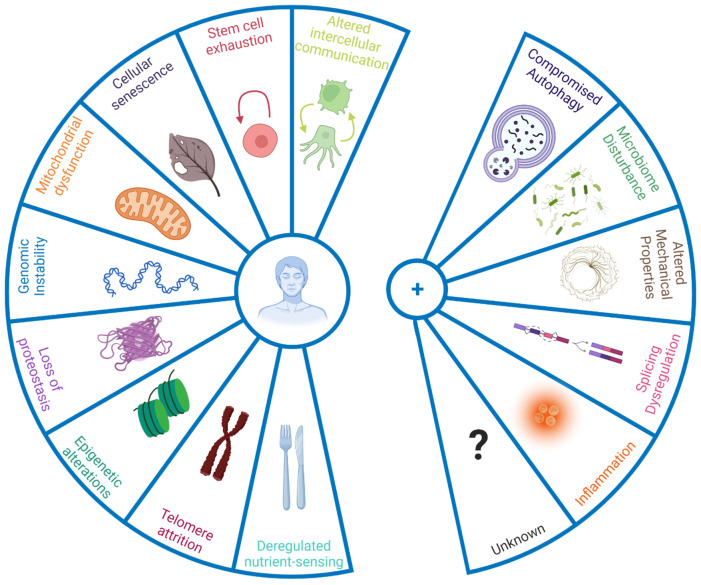
Genomic instability, telomere attrition, epigenetic alterations, mitochondrial dysfunction, loss of proteostasis, deregulated nutrient-sensing, cellular senescence, stem cell exhaustion, and altered intercellular communication were the original nine hallmarks of ageing proposed by López-Otín and colleagues in 2013. The proposal of these hallmarks of ageing has been instrumental in guiding and pushing forward research on the biology of ageing. In the nearly past 10 years, our in-depth exploration on ageing research has enabled us to formulate new hallmarks of ageing which are compromised autophagy, microbiome disturbance, altered mechanical properties, splicing dysregulation, and inflammation, among other emerging ones. Amalgamation of the 'old' and 'new' hallmarks of ageing may provide a more comprehensive explanation of ageing and age-related diseases, shedding light on interventional and therapeutic studies to achieve healthy, happy, and productive lives in the elderly.
Overview
The claims and statistics of this paper haven’t been checked yet.
Run the check — free, no account needed. It reads the open-access text and checks the sources it cites.
Integrity signals
Registry
Cites
Statistics
Figures
Verification
Claims the paper makes
The claims and statistics of this paper haven’t been checked yet.
Run the check — free, no account needed. It reads the open-access text and checks the sources it cites.
Claims other papers make about this one
Each is checked against this paper’s own text: does it say what the citing paper says it does?
The source backs part of the claim, not all of it — or backs it for a different population, condition or comparison.
In the citing paper
“Maintenance of organizational spatial compartmentalization is a hallmark of organismal health, while aging is associated with a decline in this capacity.56”
From Spatial transcriptomic landscape unveils immunoglobin-associated senescence as a hallmark of aging (2024) · cites this paper as [56]
Experimental — accuracy not yet measuredThe cited source says what the claim attributes to it.
In the citing paper
“The accumulation of senescent cells contributes to tissue and organismal aging and is a well-known aging hallmark.56”
From Spatial transcriptomic landscape unveils immunoglobin-associated senescence as a hallmark of aging (2024) · cites this paper as [56]
Self-check
Percentages, sums and reported differences re-computed from the paper’s own numbers.
The self-check needs the paper’s full text.
Citations
Cites
López-Otín, C., Blasco, M. A., Partridge, L., Serrano, M., & Kroemer, G. (2013) · Cell · doi:10.1016/j.cell.2013.05.039 · Cited by 14,982
Pleiotropy, natural selection, and the evolution of senescence.
Williams, G. C. (1957) · Evolution · doi:10.1111/j.1558-5646.1957.tb02911.x · Cited by 4,279 · cited 1×
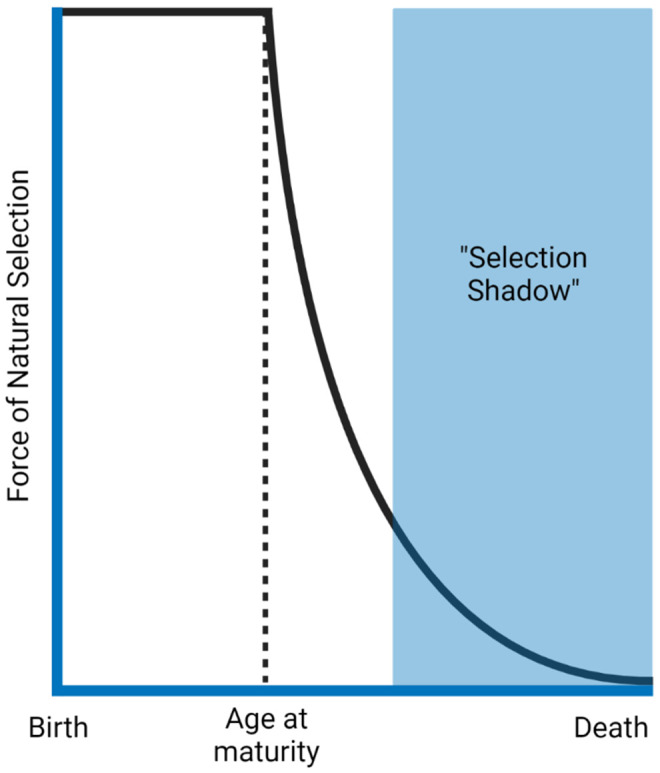
“Secondly, he highlighted the antagonistic pleiotropy hypothesis [30], which outlines that genes leading to harmful effects in old age might not be selected against due to an advantage in early life.”
BackgroundRapamycin fed late in life extends lifespan in genetically heterogeneous mice
Harrison, D. E., Strong, R., Sharp, Z. D., Nelson, J. F., Astle, C. M., Flurkey, K., Nadon, N. L., Wilkinson, J. E., Frenkel, K., Carter, C. S., et al. (2009) · Nature · doi:10.1038/nature08221 · Cited by 3,766 · cited 1×
“Finally, mTOR inhibition also alleviated markers of genomic instability and telomere attrition in senescent cells, demonstrating the value of mTOR inhibitors as geroprotectors, consistent with numerous findings from preclinical model organisms [36]; new studies in dogs (DogAgeing Project) and Humans (PEARL Trial) will…”
BackgroundInflammageing: chronic inflammation in ageing, cardiovascular disease, and frailty
Ferrucci, L., & Fabbri, E. (2018) · Nature Reviews Cardiology · doi:10.1038/s41569-018-0064-2 · Cited by 3,690
Clearance of p16Ink4a-positive senescent cells delays ageing-associated disorders
Baker, D. J., Wijshake, T., Tchkonia, T., LeBrasseur, N. K., Childs, B. G., van de Sluis, B., Kirkland, J. L., & van Deursen, J. M. (2011) · Nature · doi:10.1038/nature10600 · Cited by 3,670
Inflammaging: a new immune–metabolic viewpoint for age-related diseases
Franceschi, C., Garagnani, P., Parini, P., Giuliani, C., & Santoro, A. (2018) · Nature Reviews Endocrinology · doi:10.1038/s41574-018-0059-4 · Cited by 3,586
The role of senescent cells in ageing
van Deursen, J. M. (2014) · Nature · doi:10.1038/nature13193 · Cited by 2,623
Senolytics improve physical function and increase lifespan in old age
Xu, M., Pirtskhalava, T., Farr, J. N., Weigand, B. M., Palmer, A. K., Weivoda, M. M., Inman, C. L., Ogrodnik, M. B., Hachfeld, C. M., Fraser, D. G., et al. (2018) · Nature Medicine · doi:10.1038/s41591-018-0092-9 · Cited by 2,287
An Essential Role for Senescent Cells in Optimal Wound Healing through Secretion of PDGF-AA
Demaria, M., Ohtani, N., Youssef, S. A., Rodier, F., Toussaint, W., Mitchell, J. R., Laberge, R.-M., Vijg, J., Van Steeg, H., Dollé, M. E. T., et al. (2014) · Developmental Cell · doi:10.1016/j.devcel.2014.11.012 · Cited by 2,045
NAD+ metabolism and its roles in cellular processes during ageing
Covarrubias, A. J., Perrone, R., Grozio, A., & Verdin, E. (2021) · Nature Reviews Molecular Cell Biology · doi:10.1038/s41580-020-00313-x · Cited by 1,617
Self-citationBaar, M. P., Brandt, R. M. C., Putavet, D. A., Klein, J. D. D., Derks, K. W. J., Bourgeois, B. R. M., Stryeck, S., Rijksen, Y., van Willigenburg, H., Feijtel, D. A., et al. (2017) · Cell · doi:10.1016/j.cell.2017.02.031 · Cited by 1,454
The coming of age of chaperone-mediated autophagy
Kaushik, S., & Cuervo, A. M. (2018) · Nature Reviews Molecular Cell Biology · doi:10.1038/s41580-018-0001-6 · Cited by 1,407
Autophagy in healthy aging and disease
Aman, Y., Schmauck-Medina, T., Hansen, M., Morimoto, R. I., Simon, A. K., Bjedov, I., Palikaras, K., Simonsen, A., Johansen, T., Tavernarakis, N., et al. (2021) · Nature Aging · doi:10.1038/s43587-021-00098-4 · Cited by 1,313
Self-citationSenolytics in idiopathic pulmonary fibrosis: Results from a first-in-human, open-label, pilot study
Justice, J. N., Nambiar, A. M., Tchkonia, T., LeBrasseur, N. K., Pascual, R., Hashmi, S. K., Prata, L., Masternak, M. M., Kritchevsky, S. B., Musi, N., et al. (2019) · EBioMedicine · doi:10.1016/j.ebiom.2018.12.052 · Cited by 1,261
NAD+ Intermediates: The Biology and Therapeutic Potential of NMN and NR
Yoshino, J., Baur, J. A., & Imai, S.-I. (2018) · Cell Metabolism · doi:10.1016/j.cmet.2017.11.002 · Cited by 1,061
Kirkwood, T. B. L. (2002) · Mechanisms of Ageing and Development · doi:10.1016/s0047-6374(01)00419-5 · Cited by 801 · cited 1×
“The theory of the disposable soma [29] describes that an organism has limited resources, which it has to allocate strategically.”
BackgroundSelf-citationNAD+ in Brain Aging and Neurodegenerative Disorders
Lautrup, S., Sinclair, D. A., Mattson, M. P., & Fang, E. F. (2019) · Cell Metabolism · doi:10.1016/j.cmet.2019.09.001 · Cited by 790
Self-citationDefective Mitophagy in XPA via PARP-1 Hyperactivation and NAD+/SIRT1 Reduction
Fang, E. F., Scheibye-Knudsen, M., Brace, L. E., Kassahun, H., SenGupta, T., Nilsen, H., Mitchell, J. R., Croteau, D. L., & Bohr, V. A. (2014) · Cell · doi:10.1016/j.cell.2014.03.026 · Cited by 711
Self-citationGut microbiome pattern reflects healthy ageing and predicts survival in humans
Wilmanski, T., Diener, C., Rappaport, N., Patwardhan, S., Wiedrick, J., Lapidus, J., Earls, J. C., Zimmer, A., Glusman, G., Robinson, M., et al. (2021) · Nature Metabolism · doi:10.1038/s42255-021-00348-0 · Cited by 675
Disruption of the beclin 1–BCL2 autophagy regulatory complex promotes longevity in mice
Fernández, Á. F., Sebti, S., Wei, Y., Zou, Z., Shi, M., McMillan, K. L., He, C., Ting, T., Liu, Y., Chiang, W.-C., et al. (2018) · Nature · doi:10.1038/s41586-018-0162-7 · Cited by 630
Lou, G., Palikaras, K., Lautrup, S., Scheibye‐Knudsen, M., Tavernarakis, N., & Fang, E. F. (2019) · Trends in Molecular Medicine · doi:10.1016/j.molmed.2019.07.002 · Cited by 455
Self-citationSenescent cells promote tissue NAD+ decline during ageing via the activation of CD38+ macrophages
Covarrubias, A. J., Kale, A., Perrone, R., Lopez-Dominguez, J. A., Pisco, A. O., Kasler, H. G., Schmidt, M. S., Heckenbach, I., Kwok, R., Wiley, C. D., et al. (2020) · Nature Metabolism · doi:10.1038/s42255-020-00305-3 · Cited by 420
Self-citationCapell, B. C., Erdos, M. R., Madigan, J. P., Fiordalisi, J. J., Varga, R., Conneely, K. N., Gordon, L. B., Der, C. J., Cox, A. D., & Collins, F. S. (2005) · Proceedings of the National Academy of Sciences · doi:10.1073/pnas.0506001102 · Cited by 395
Mitophagy in neurodegeneration and aging
Fivenson, E. M., Lautrup, S., Sun, N., Scheibye-Knudsen, M., Stevnsner, T., Nilsen, H., Bohr, V. A., & Fang, E. F. (2017) · Neurochemistry International · doi:10.1016/j.neuint.2017.02.007 · Cited by 364
Self-citationVizioli, M. G., Liu, T., Miller, K. N., Robertson, N. A., Gilroy, K., Lagnado, A. B., Perez-Garcia, A., Kiourtis, C., Dasgupta, N., Lei, X., et al. (2020) · Genes & Development · doi:10.1101/gad.331272.119 · Cited by 359
Xie, C., Zhuang, X., Niu, Z., Ai, R., Lautrup, S., Zheng, S., Jiang, Y., Han, R., Gupta, T. S., Cao, S., et al. (2022) · Nature Biomedical Engineering · doi:10.1038/s41551-021-00819-5 · Cited by 349
Self-citationProtecting the mitochondrial powerhouse
Scheibye‐Knudsen, M., Fang, E. F., Croteau, D. L., Wilson, D. M., & Bohr, V. A. (2014) · Trends in Cell Biology · doi:10.1016/j.tcb.2014.11.002 · Cited by 337
Self-citationTargeted and Persistent 8-Oxoguanine Base Damage at Telomeres Promotes Telomere Loss and Crisis
Fouquerel, E., Barnes, R. P., Uttam, S., Watkins, S. C., Bruchez, M. P., & Opresko, P. L. (2019) · Molecular Cell · doi:10.1016/j.molcel.2019.04.024 · Cited by 275
Self-citationSpatial confinement downsizes the inflammatory response of macrophages
Jain, N., & Vogel, V. (2018) · Nature Materials · doi:10.1038/s41563-018-0190-6 · Cited by 271
Ageing: from inflammation to cancer
Leonardi, G. C., Accardi, G., Monastero, R., Nicoletti, F., & Libra, M. (2018) · Immunity & Ageing · doi:10.1186/s12979-017-0112-5 · Cited by 241
Gordon, L. B., Shappell, H. M., Massaro, J., D’Agostino, R. B., Brazier, J. F., Campbell, S. E., Kleinman, M. E., & Kieran, M. W. (2018) · JAMA · doi:10.1001/jama.2018.3264 · Cited by 223
Autophagy in aging and longevity
Wong, S. Q., Kumar, A. V., Mills, J., & Lapierre, L. R. (2019) · Human Genetics · doi:10.1007/s00439-019-02031-7 · Cited by 210
The cross talk between microbiota and the immune system: metabolites take center stage
Shapiro, H., Thaiss, C. A., Levy, M., & Elinav, E. (2014) · Current Opinion in Immunology · doi:10.1016/j.coi.2014.07.003 · Cited by 189
Mitochondrial Potentiation Ameliorates Age-Related Heterogeneity in Hematopoietic Stem Cell Function
Mansell, E., Sigurðsson, V., Deltcheva, E. M., Brown, J., James, C. T., Miharada, K., Soneji, S., Larsson, J. T., & Enver, T. (2020) · Cell stem cell · doi:10.1016/j.stem.2020.09.018 · Cited by 187
Self-citationTelomeric 8-oxo-guanine drives rapid premature senescence in the absence of telomere shortening
Barnes, R. P., Rosa, M. D., Thosar, S. A., Detwiler, A. C., Roginskaya, V. Y., Houten, B. V., Bruchez, M. P., Stewart-Ornstein, J., & Opresko, P. L. (2022) · Nature Structural & Molecular Biology · doi:10.1038/s41594-022-00790-y · Cited by 142
Self-citationThe hoverfly and the wasp: A critique of the hallmarks of aging as a paradigm
Gems, D., & de Magalhães, J. P. (2021) · Ageing Research Reviews · doi:10.1016/j.arr.2021.101407 · Cited by 134
Diabetes mellitus correlates with increased biological age as indicated by clinical biomarkers
Bahour, N., Cortez, B., Pan, H., Shah, H., Doria, A., & Aguayo-Mazzucato, C. (2022) · GeroScience · doi:10.1007/s11357-021-00469-0 · Cited by 121
Alsaleh, G., Panse, I., Swadling, L., Zhang, H., Richter, F. C., Meyer, A., Lord, J., Barnes, E., Klenerman, P., Green, C., et al. (2020) · eLife · doi:10.7554/elife.57950 · Cited by 120
Reversal of phenotypes of cellular senescence by pan-mTOR inhibition
Walters, H. E., Deneka-Hannemann, S., & Cox, L. S. (2016) · Aging · doi:10.18632/aging.100872 · Cited by 113
Self-citationChanges in splicing factor expression are associated with advancing age in man
Holly, A. C., Melzer, D. R., Pilling, L. C., Fellows, A. D., Tanaka, T., Ferrucci, L., & Harries, L. W. (2013) · Mechanisms of Ageing and Development · doi:10.1016/j.mad.2013.05.006 · Cited by 111
Sapey, E., Patel, J. M., Greenwood, H. L., Walton, G., Grudzinska, F. S., Parekh, D., Mahida, R. Y., Dancer, R. C. A., Lugg, S. T., Howells, P., et al. (2019) · American Journal of Respiratory and Critical Care Medicine · doi:10.1164/rccm.201812-2328oc · Cited by 96
Latorre, E., Birar, V. C., Sheerin, A. N. P., Jeynes, J. C. C., Hooper, A., Dawe, H. R., Melzer, D. R., Cox, L. S., Faragher, R., Ostler, E. L., et al. (2017) · BMC Cell Biology · doi:10.1186/s12860-017-0147-7 · Cited by 96
Self-citationAlternative polyadenylation of mRNA and its role in cancer
Yuan, F., Hankey, W., Wagner, E. J., Li, W., & Wang, Q. (2019) · Genes & Diseases · doi:10.1016/j.gendis.2019.10.011 · Cited by 94
Biological mechanisms of aging predict age-related disease co-occurrence in patients
Fraser, H. C., Kuan, V., Johnen, R., Zwierzyna, M., Hingorani, A. D., Beyer, A., & Partridge, L. (2022) · Aging Cell · doi:10.1111/acel.13524 · Cited by 90
Immunomodulatory Role of Urolithin A on Metabolic Diseases
Toney, A. M., Fox, D., Chaidez, V., Ramer‐Tait, A. E., & Chung, S. (2021) · Biomedicines · doi:10.3390/biomedicines9020192 · Cited by 82
Short-term NAD+ supplementation prevents hearing loss in mouse models of Cockayne syndrome
Okur, M. N., Mao, B., Kimura, R., Haraczy, S. J., Fitzgerald, T. S., Edwards‐Hollingsworth, K., Tian, J. Y., Osmani, W. A., Croteau, D. L., Kelley, M. W., et al. (2020) · npj Aging and Mechanisms of Disease · doi:10.1038/s41514-019-0040-z · Cited by 51
Self-citationWalters, H., & Cox, L. S. (2021) · Oxidative Medicine and Cellular Longevity · doi:10.1155/2021/6697861 · Cited by 51
Self-citationShen, T., Li, H., Song, Y., Li, L., Lin, J., Wei, G., & Ni, T. (2019) · Aging · doi:10.18632/aging.101836 · Cited by 48
Mohaissen, T., Proniewski, B., Targosz‐Korecka, M., Bar, A., Kij, A., Bułat, K., Wajda, A., Blat, A., Matyjaszczyk‐Gwarda, K., Grosicki, M., et al. (2021) · Cardiovascular Research · doi:10.1093/cvr/cvab306 · Cited by 42
Higher physiological vulnerability to hypoxic exposure with advancing age in the human brain
Vestergaard, M. B., Jensen, M. L., Arngrim, N., Lindberg, U., & Larsson, H. B. W. (2018) · Journal of Cerebral Blood Flow & Metabolism · doi:10.1177/0271678x18818291 · Cited by 38
Self-citationTivey, H. S. E., Brook, A. J. C., Rokicki, M., Kipling, D., & Davis, T. (2012) · Biogerontology · doi:10.1007/s10522-012-9407-2 · Cited by 37
Soendenbroe, C., Dahl, C. L., Meulengracht, C., Tamáš, M., Svensson, R. B., Schjerling, P., Kjaer, M., Andersen, J. L., & Mackey, A. L. (2022) · The Journal of Physiology · doi:10.1113/jp282677 · Cited by 36
Self-citationBar, A., Skórka, T., Jasiński, K., Sternak, M., Bartel, Ż., Tyrankiewicz, U., & Chłopicki, S. (2016) · NMR in Biomedicine · doi:10.1002/nbm.3567 · Cited by 30
Paccosi, E., Costanzo, F., Costantino, M., Balzerano, A., Monteonofrio, L., Soddu, S., Prantera, G., Brancorsini, S., Egly, J., & Proietti‐De‐Santis, L. (2020) · Proceedings of the National Academy of Sciences · doi:10.1073/pnas.2006543117 · Cited by 24
Self-citationDefective transcription of ATF3 responsive genes, a marker for Cockayne Syndrome
Epanchintsev, A., Rauschendorf, M., Costanzo, F., Calmels, N., Obringer, C., Sarasin, A. R., Coin, F., Laugel, V., & Egly, J. (2020) · Scientific Reports · doi:10.1038/s41598-020-57999-4 · Cited by 23
Self-citationSenolytics and the compression of late-life mortality
Kowald, A., & Kirkwood, T. B. L. (2021) · Experimental Gerontology · doi:10.1016/j.exger.2021.111588 · Cited by 22
Self-citationCao, S., Aman, Y., Fang, E. F., & Tencomnao, T. (2022) · Molecular Neurobiology · doi:10.1007/s12035-022-02904-5 · Cited by 21
Self-citationVestergaard, M. B., Lindberg, U., Knudsen, M. H., Urdanibia-Centelles, O., Bakhtiari, A., Mortensen, E. L., Osler, M., Fagerlund, B., Benedek, K., Lauritzen, M., et al. (2022) · GeroScience · doi:10.1007/s11357-022-00596-2 · Cited by 17
Self-citation
Research works printed but not linked: 1
- Flat, 2011, The Evolution of Aging., Nature Education Knowledge, 3
Cited by
Sorted by citations
Chronic inflammation and the hallmarks of aging
Baechle, J. J., Chen, N., Makhijani, P., Winer, S., Furman, D., & Winer, D. A. (2023) · Molecular Metabolism · doi:10.1016/j.molmet.2023.101755 · Cited by 471
“[415] Schmauck-Medina T, Molière A, Lautrup S, Zhang J, Chlopicki S, Madsen HB,”
Sayer, A. A., Cooper, R., Arai, H., Cawthon, P. M., Essomba, M.-J. N., Fielding, R. A., Grounds, M. D., Witham, M. D., & Cruz-Jentoft, A. J. (2024) · Nature Reviews Disease Primers · doi:10.1038/s41572-024-00550-w · Cited by 426
Mitophagy curtails cytosolic mtDNA-dependent activation of cGAS/STING inflammation during aging
Jiménez‐Loygorri, J. I., Villarejo‐Zori, B., Viedma-Poyatos, Á., Zapata‐Muñoz, J., Benítez‐Fernández, R., Frutos-Lisón, M. D., Tomás-Barberán, F. A., Espı́n, J. C., Área-Gómez, E., Gómez-Durán, A., et al. (2024) · Nature Communications · doi:10.1038/s41467-024-45044-1 · Cited by 394
“Major: The authors show that that the age-associated increase in mitophagy is driven by the PINK1/Parkin pathway by looking into the levels of p-Ub (S65).”
InfluentialMa, Z., Zuo, T., Frey, N., & Rangrez, A. Y. (2024) · Signal Transduction and Targeted Therapy · doi:10.1038/s41392-024-01946-6 · Cited by 322
Aging Hallmarks and Progression and Age-Related Diseases: A Landscape View of Research Advancement
Tenchov, R., Sasso, J. M., Wang, X., & Zhou, Q. A. (2024) · ACS Chemical Neuroscience · doi:10.1021/acschemneuro.3c00531 · Cited by 276
Metadata
- Authors
- Schmauck-Medina, T., Molière, A., Lautrup, S., Zhang, J., Chlopicki, S., Madsen, H. B., Cao, S., Soendenbroe, C., Mansell, E., Vestergaard, M. B., Li, Z., Shiloh, Y., Opresko, P. L., Egly, J.-M., Kirkwood, T., Verdin, E., Bohr, V. A., Cox, L. S., Stevnsner, T., Rasmussen, L. J., & Fang, E. F.
- Affiliations
- Department of Clinical Molecular Biology, University of Oslo and Akershus University Hospital, Lørenskog 1478, Norway
- University of Oslo (NO)
- Jagiellonian Centre for Experimental Therapeutics (JCET), Jagiellonian University, Krakow 30-348, Poland
- University of Copenhagen (DK)
- Bispebjerg Hospital (DK)
- Lund University (SE)
- Copenhagen University Hospital (DK)
- Tel Aviv University (IL)
- University of Pittsburgh (US)
- Centre National de la Recherche Scientifique (FR)
- Buck Institute for Research on Aging (US)
- University of Oxford (GB)
- Aarhus University (DK)
- Corresponding author
- Stevnsner, Tinna
- Rasmussen, Lene Juel
- Fang, Evandro F.
- ORCID
- Molière, Adrian
- Lautrup, Sofie
- Zhang, Jianying
- Madsen, Helena Borland
- Cao, Shuqin
- Soendenbroe, Casper
- Mansell, Els
- Vestergaard, Mark Bitsch
- Li, Zhiquan
- Shiloh, Yosef
- Opresko, Patricia L.
- Egly, Jean-Marc
- Kirkwood, Thomas
- Verdin, Eric
- Bohr, Vilhelm A.
- Cox, Lynne S.
- Stevnsner, Tinna
- Rasmussen, Lene Juel
- Fang, Evandro F.
- Venue
- Aging
- Publisher
- Impact Journals, LLC
- Published
- 2022-08-29
- Volume
- 14
- Issue
- 16
- Pages
- 6829-6839
- ISSN
- 1945-4589 (ISSN-L)
- PMC
- PMC9467401
- OpenAlex
- W4293462467
- Cited by
- 319
- References
- 58
- Citations by year
- 2026: 42 · 2025: 67 · 2024: 100 · 2023: 102 · 2022: 8
- FWCI
- 23.38
- Type
- journal article
- Language
- en
- Open access
- hybrid
- doi.org
- Licence
- cc-by
- Locations
- Aging (publishedVersion, cc-by)
- PubMed Central (publishedVersion, cc-by)
- PubMed (publishedVersion)
- Research at the University of Copenhagen (University of Copenhagen) (publishedVersion, cc-by)
- Jagiellonian University Repository (Jagiellonian University) (submittedVersion, cc-by-nc-nd)
- HAL (submittedVersion, other-oa)
- Lund University Publications (Lund University) (submittedVersion)
- NORA - Norwegian Open Research Archives (submittedVersion, cc-by)
- Newcastle University ePrints (Newcastle Univesity) (cc-by)
- Funders
- Lundbeckfonden (R347-2020-2176)
- Novo Nordisk
- Biotechnology and Biological Sciences Research Council (BB/W01825X/1)
- Topics
- Life Sciences › Biochemistry, Genetics and Molecular Biology › Aging › Genetics, Aging, and Longevity in Model Organisms
- Life Sciences › Biochemistry, Genetics and Molecular Biology › Cell Biology › Telomeres, Telomerase, and Senescence
- Life Sciences › Biochemistry, Genetics and Molecular Biology › Cell Biology › Autophagy in Disease and Therapy
- Keywords
- hallmarks of aging, aging, autophagy, microbiome, mechanical properties, splicing dysregulation, inflammation, age-related diseases, cellular senescence, stem cell exhaustion, intercellular communication, proteostasis, nutrient sensing, telomere shortening, epigenetic modifications, mitochondrial dysfunction, genomic instability
- MeSH terms
- Aged, Aging, Humans, Telomere, Cellular Senescence, Genomic Instability, Epigenesis, Genetic
About these checks
Registry, retraction, Cites and statistics results are computed, not judged, with one exception: a printed reference that no index lists is read once by a model before it counts as a citation error. Claims are extracted by a model and kept only when their quote appears verbatim in the text; each cited source is then checked, with a model’s help, for whether it says what the claim relies on. Those verdicts can be wrong — read the claim’s quote and the cited source before relying on one.
Statistics and arithmetic are recomputed, not judged.
Confidence bands are shown only for fields calibrated on our annotated test set. None is calibrated yet, so no band is shown.
What counts as a claim ›How we measure confidence ›How we check this ›
Are you an author, or do you see a problem with this page? Request a review
