

How Multilingual is Multilingual BERT?
Open accessThe DOI matches its Crossref record; 19 of the 19 references it cites were found in a registry or an index.
Abstract
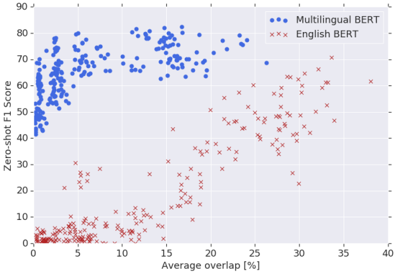
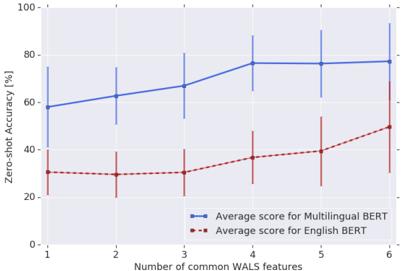
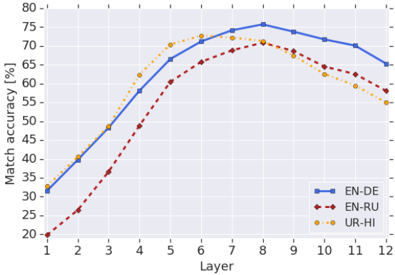
In this paper, we show that Multilingual BERT (M-BERT), released by Devlin et al. (2019) as a single language model pre-trained from monolingual corpora in 104 languages, is surprisingly good at zero-shot cross-lingual model transfer, in which task-specific annotations in one language are used to fine-tune the model for evaluation in another language.To understand why, we present a large number of probing experiments, showing that transfer is possible even to languages in different scripts, that transfer works best between typologically similar languages, that monolingual corpora can train models for code-switching, and that the model can find translation pairs.From these results, we can conclude that M-BERT does create multilingual representations, but that these representations exhibit systematic deficiencies affecting certain language pairs.
Overview
The claims and statistics of this paper haven’t been checked yet.
Free: it reads the open-access text and checks the first 5 claims that cite a source we can check. Create a free account to check every claim.
Integrity signals
Registry
Cites
Statistics
Figures
Verification
Claims the paper makes
The claims and statistics of this paper haven’t been checked yet.
Free: it reads the open-access text and checks the first 5 claims that cite a source we can check. Create a free account to check every claim.
Claims other papers make about this one
Each is checked against this paper’s own text: does it say what the citing paper says it does?
In the citing paper
“Reif et al. [128] explored the geometry of internal representations in BERT and find some evidence: 1) linguistic features seem to be represented in separate semantic and syntactic subspaces;”
From Pre-trained models for natural language processing: A survey (2020) · cites this paper as [128]
In the citing paper
“2) attention matrices contain grammatical representations;”
From Pre-trained models for natural language processing: A survey (2020) · cites this paper as [128]
In the citing paper
“3) BERT distinguishes word senses at a very fine level.”
From Pre-trained models for natural language processing: A survey (2020) · cites this paper as [128]
In the citing paper
“Experiments using and analyzing multilingual foundation models have shown that there is indeed a surprising amount of transfer between and parallel encoding of the different languages in multilingual foundation models [Wu and Dredze 2019; Choenni and Shutova 2020; Pires et al. 2019; Libovickỳ et al. 2019; Chi et al. 2020; Papadimitriou et al. 2021; Cao et al. 2019].”
From On the Opportunities and Risks of Foundation Models (2021) · cites this paper as Pires et al. 2019
Self-check
Percentages, sums and reported differences re-computed from the paper’s own numbers.
The self-check needs the paper’s full text.
Citations
Cites
BERT: Pre-training of Deep Bidirectional Transformers for Language Understanding
Devlin, J., Chang, M.-W., Lee, K., & Toutanova, K. (2018) · arXiv · doi:10.48550/arxiv.1810.04805 · Cited by 73,173 · cited 6×
“Deep, contextualized language models provide powerful, general-purpose linguistic representations that have enabled significant advances among a wide range of natural language processing tasks (Peters et al., 2018b; Devlin et al., 2019).”
BackgroundMethodInfluentialBERT: Pre-training of Deep Bidirectional Transformers for Language Understanding
Devlin, J., Chang, M.-W., Lee, K., & Toutanova, K. (2019) · Proceedings of the 2019 Conference of the North American Chapter of the Association for Computational Linguistics: Human Language Technologies, Volume 1 (Long and Short Papers) · doi:10.18653/v1/n19-1423 · Cited by 54,325 · cited 6×
“Deep, contextualized language models provide powerful, general-purpose linguistic representations that have enabled significant advances among a wide range of natural language processing tasks (Peters et al., 2018b; Devlin et al., 2019).”
BackgroundMethodInfluentialDeep Contextualized Word Representations
Peters, M., Neumann, M., Iyyer, M., Gardner, M., Clark, C., Lee, K., & Zettlemoyer, L. (2018) · Proceedings of the 2018 Conference of the North American Chapter of the Association for Computational Linguistics: Human Language Technologies, Volume 1 (Long Papers) · doi:10.18653/v1/n18-1202 · Cited by 11,983 · cited 13×
“However, cross-script transfer is less accurate for other pairs, such as English and Japanese, indicating that M-B ERT ’s multilingual representation is not able to generalize equally well in all cases.”
BackgroundInfluentialNeural Architectures for Named Entity Recognition
Lample, G., Ballesteros, M., Subramanian, S., Kawakami, K., & Dyer, C. (2016) · Proceedings of the 2016 Conference of the North American Chapter of the Association for Computational Linguistics: Human Language Technologies · doi:10.18653/v1/n16-1030 · Cited by 4,401
Introduction to the CoNLL-2003 Shared Task: Language-Independent Named Entity Recognition
Tjong Kim Sang, E. F., & De Meulder, F. (2003) · Proceedings of the seventh conference on Natural language learning at HLT-NAACL 2003 - · doi:10.3115/1119176.1119195 · Cited by 2,788
Cross-lingual Language Model Pretraining
Lample, G., & Conneau, A. (2019) · arXiv · doi:10.48550/arxiv.1901.07291 · Cited by 1,586
Introduction to the CoNLL-2002 Shared Task: Language-Independent Named Entity Recognition
Sang, E. T. K. (2002) · arXiv (Cornell University) · doi:10.48550/arxiv.cs/0209010 · Cited by 1,560 · cited 1×
“We perform NER experiments on two datasets: the publicly available CoNLL-2002 and -2003 sets, containing Dutch, Spanish, English, and German (Tjong Kim Sang, 2002; Sang and Meulder, 2003); and an in-house dataset with 16 languages, 2 using the same CoNLL categories.”
MethodBERT Rediscovers the Classical NLP Pipeline
Tenney, I., Das, D., & Pavlick, E. (2019) · Proceedings of the 57th Annual Meeting of the Association for Computational Linguistics · doi:10.18653/v1/p19-1452 · Cited by 1,307 · cited 1×
“Previous work on model probing has shown that these representations are able to encode, among other things, syntactic and named entity information, but they have heretofore focused on what models trained on English capture about English (Peters et al., 2018a; Tenney et al., 2019b,a).”
BackgroundUniversal Dependencies v1: A Multilingual Treebank Collection
Nivre, J., de Marneffe, M.-C., Ginter, F., Goldberg, Y., Hajič, J., Manning, C. D., McDonald, R., Petrov, S., Pyysalo, S., Silveira, N., et al. (2016) · Language Resources and Evaluation Conference (LREC) · doi:10.63317/2hnj7od8afy8 · Cited by 1,028 · cited 1×
“We perform POS experiments using Universal De-pendencies (UD) (Nivre et al., 2016) data for 41 languages.”
MethodMassively Multilingual Sentence Embeddings for Zero-Shot Cross-Lingual Transfer and Beyond
Artetxe, M., & Schwenk, H. (2019) · Transactions of the Association for Computational Linguistics · doi:10.1162/tacl_a_00288 · Cited by 791 · cited 1×
“will likely require the model to incorporate an explicit multilingual training objective, such as that used by Lample and Conneau (2019) or Artetxe and Schwenk (2018).”
Method
Research works printed but not linked: 1
- Matthew E. Peters, Mark Neumann, Mohit Iyyer, Matt Gardner, Christopher Clark, Kenton Lee, and Luke Zettlemoyer. 2018b. Deep contextualized word rep- resentations. In Proceedings of NAACL.
Cited by
Unsupervised Cross-lingual Representation Learning at Scale
Conneau, A., Khandelwal, K., Goyal, N., Chaudhary, V., Wenzek, G., Guzmán, F., Grave, E., Ott, M., Zettlemoyer, L., & Stoyanov, V. (2020) · Proceedings of the 58th Annual Meeting of the Association for Computational Linguistics · doi:10.18653/v1/2020.acl-main.747 · Cited by 5,637
CodeBERT: A Pre-Trained Model for Programming and Natural Languages
Feng, Z., Guo, D., Tang, D., Duan, N., Feng, X., Gong, M., Shou, L., Qin, B., Liu, T., Jiang, D., et al. (2020) · Findings of the Association for Computational Linguistics: EMNLP 2020 · doi:10.18653/v1/2020.findings-emnlp.139 · Cited by 2,824
On the Opportunities and Risks of Foundation Models
Bommasani, R., Hudson, D. A., Adeli, E., Altman, R., Arora, S., von Arx, S., Bernstein, M. S., Bohg, J., Bosselut, A., Brunskill, E., et al. (2021) · arXiv · doi:10.48550/arxiv.2108.07258 · Cited by 2,676
Multilingual Denoising Pre-training for Neural Machine Translation
Liu, Y., Gu, J., Goyal, N., Li, X., Edunov, S., Ghazvininejad, M., Lewis, M., & Zettlemoyer, L. (2020) · Transactions of the Association for Computational Linguistics · doi:10.1162/tacl_a_00343 · Cited by 1,527
“Similar phenomena have also been reported in other multilingual pre-training approachesin other NLP applications (Pires et al., 2019; Wang et al., 2019; Artetxe et al., 2019).”
ResultPre-trained models for natural language processing: A survey
Qiu, X., Sun, T., Xu, Y., Shao, Y., Dai, N., & Huang, X. (2020) · Science China Technological Sciences · doi:10.1007/s11431-020-1647-3 · Cited by 1,591
“Even so, mBERT performs cross-lingual generalization surprisingly well [140].”
BackgroundA primer in BERTology: What we know about how BERT works
Rogers, A., Kovaleva, O., & Rumshisky, A. (2020) · Transactions of the Association for Computational Linguistics · doi:10.1162/tacl_a_00349 · Cited by 1,552
“Languages with a lot of data were subsampled, and some were super-sampled using exponential smoothing. mBERT performs surprisingly well in zero-shot transfer on many tasks (Wu and Dredze, 2019; Pires et al., 2019), although not in language generation (R¨onnqvist et al., 2019).”
BackgroundMethodInfluentialCLIPScore: A Reference-free Evaluation Metric for Image Captioning
Hessel, J., Holtzman, A., Forbes, M., Le Bras, R., & Choi, Y. (2021) · Proceedings of the 2021 Conference on Empirical Methods in Natural Language Processing · doi:10.18653/v1/2021.emnlp-main.595 · Cited by 1,232
CamemBERT: a Tasty French Language Model
Martin, L., Muller, B., Ortiz Suárez, P. J., Dupont, Y., Romary, L., de la Clergerie, É., Seddah, D., & Sagot, B. (2020) · Proceedings of the 58th Annual Meeting of the Association for Computational Linguistics · doi:10.18653/v1/2020.acl-main.645 · Cited by 754
COMET: A Neural Framework for MT Evaluation
Rei, R., Stewart, C., Farinha, A. C., & Lavie, A. (2020) · Proceedings of the 2020 Conference on Empirical Methods in Natural Language Processing (EMNLP) · doi:10.18653/v1/2020.emnlp-main.213 · Cited by 617
Pre-trained models: Past, present and future
Han, X., Zhang, Z., Ding, N., Gu, Y., Liu, X., Huo, Y., Qiu, J., Yao, Y., Zhang, A., Zhang, L., et al. (2021) · AI Open · doi:10.1016/j.aiopen.2021.08.002 · Cited by 994
(2024) · doi:10.1109/access.2024.3365742 · Cited by 934
“Multilingual models like mBERT [149] and cross-lingual models like XLM-R [150] have facilitated language understanding across diverse linguistic contexts.”
BackgroundRasmy, L., Xiang, Y., Xie, Z., Tao, C., & Zhi, D. (2021) · npj Digital Medicine · doi:10.1038/s41746-021-00455-y · Cited by 886
The State and Fate of Linguistic Diversity and Inclusion in the NLP World
Joshi, P., Santy, S., Budhiraja, A., Bali, K., & Choudhury, M. (2020) · Proceedings of the 58th Annual Meeting of the Association for Computational Linguistics · doi:10.18653/v1/2020.acl-main.560 · Cited by 766
An introduction to Deep Learning in Natural Language Processing: Models, techniques, and tools
Lauriola, I., Lavelli, A., & Aiolli, F. (2022) · Neurocomputing · doi:10.1016/j.neucom.2021.05.103 · Cited by 691
Beto, Bentz, Becas: The Surprising Cross-Lingual Effectiveness of BERT
Wu, S., & Dredze, M. (2019) · Proceedings of the 2019 Conference on Empirical Methods in Natural Language Processing and the 9th International Joint Conference on Natural Language Processing (EMNLP-IJCNLP) · doi:10.18653/v1/d19-1077 · Cited by 558
“Parallel to our work, Pires et al. (2019) shows mBERT has good zero-shot cross-lingual transfer performance on NER and POS tagging.”
BackgroundResultA Survey on Aspect-Based Sentiment Analysis: Tasks, Methods, and Challenges
Zhang, W., Li, X., Deng, Y., Bing, L., & Lam, W. (2023) · IEEE Transactions on Knowledge and Data Engineering · doi:10.1109/tkde.2022.3230975 · Cited by 567
MAD-X: An Adapter-Based Framework for Multi-Task Cross-Lingual Transfer
Pfeiffer, J., Vulić, I., Gurevych, I., & Ruder, S. (2020) · Proceedings of the 2020 Conference on Empirical Methods in Natural Language Processing (EMNLP) · doi:10.18653/v1/2020.emnlp-main.617 · Cited by 437
Kakwani, D., Kunchukuttan, A., Golla, S., N.C., G., Bhattacharyya, A., Khapra, M. M., & Kumar, P. (2020) · Findings of the Association for Computational Linguistics: EMNLP 2020 · doi:10.18653/v1/2020.findings-emnlp.445 · Cited by 446
“Our models are compared with two of the best performing multilingual models: mBERT (Pires et al., 2019) and XLM-R base model (Ruder et al., 2019).”
MethodSpanish Pre-trained BERT Model and Evaluation Data
Cañete, J., Chaperon, G., Fuentes, R., Ho, J.-H., Kang, H., & Pérez, J. E. P. (2023) · arXiv (Cornell University) · doi:10.48550/arxiv.2308.02976 · Cited by 329
Multilingual is not enough: BERT for Finnish
Virtanen, A., Kanerva, J., Ilo, R., Luoma, J., Luotolahti, J., Salakoski, T., Ginter, F., & Pyysalo, S. (2019) · arXiv (Cornell University) · doi:10.48550/arxiv.1912.07076 · Cited by 104
“While M-BERT has been shown to have a remarkable ability to generalize across languages (Pires et al., 2019), several studies have also demonstrated that mono-lingual BERT models, where available, can notably outperform M-BERT.”
ResultXTREME: A Massively Multilingual Multi-task Benchmark for Evaluating Cross-lingual Generalization
Hu, J., Ruder, S., Siddhant, A., Neubig, G., Fırat, O., & Johnson, M. (2020) · arXiv (Cornell University) · doi:10.48550/arxiv.2003.11080 · Cited by 278
“…2018; Peters et al., 2018; Devlin et al., 2019), multilingual extensions of pretrained encoders have recently been shown to be effective for learning deep cross-lingual representations (Eriguchi et al., 2018; Pires et al., 2019; Wu & Dredze, 2019; Lample & Conneau, 2019; Siddhant et al., 2019).”
BackgroundA Survey of Multilingual Neural Machine Translation
Dabre, R., Chu, C., & Kunchukuttan, A. (2021) · ACM Computing Surveys · doi:10.1145/3406095 · Cited by 294
“Learning cross-lingual embeddings, used for lexical transfer, is difficult for distant languages [114, 137].”
BackgroundInfoXLM: An Information-Theoretic Framework for Cross-Lingual Language Model Pre-Training
Chi, Z., Dong, L., Wei, F., Yang, N., Singhal, S., Wang, W., Song, X., Mao, X.-L., Huang, H., & Zhou, M. (2021) · Proceedings of the 2021 Conference of the North American Chapter of the Association for Computational Linguistics: Human Language Technologies · doi:10.18653/v1/2021.naacl-main.280 · Cited by 249
Translation between Molecules and Natural Language
Edwards, C., Lai, T., Ros, K., Honke, G., Cho, K., & Ji, H. (2022) · Proceedings of the 2022 Conference on Empirical Methods in Natural Language Processing · doi:10.18653/v1/2022.emnlp-main.26 · Cited by 165
Cross-Lingual Ability of Multilingual BERT: An Empirical Study
Karthikeyan, K., Wang, Z., Mayhew, S., & Roth, D. (2019) · arXiv (Cornell University) · doi:10.48550/arxiv.1912.07840 · Cited by 148
“Previous work (Pires et al., 2019) hypothesizes that M-BERT generalizes across languages because these shared word-pieces force the other word-pieces to be mapped to the same shared space.”
BackgroundResultInfluentialPretrained Transformers for Text Ranking: BERT and Beyond
Lin, J., Nogueira, R. F., & Yates, A. (2021) · Synthesis lectures on human language technologies · doi:10.2200/s01123ed1v01y202108hlt053 · Cited by 452
Between words and characters: A Brief History of Open-Vocabulary Modeling and Tokenization in NLPPreprint
Mielke, S. J., Alyafeai, Z., Salesky, E., Raffel, C., Dey, M., Gallé, M., Raja, A., Si, C., Lee, W. Y., Sagot, B., et al. (2021) · arXiv (Cornell University) · doi:10.48550/arxiv.2112.10508 · Cited by 390
“In these models the sharing of learned representations is hypothesized to help transfer between languages by Pires et al. (2019), though Wu and Dredze (2019) provide inclonclusive results for this claim.”
BackgroundAre All Languages Created Equal in Multilingual BERT?
Wu, S., & Dredze, M. (2020) · Proceedings of the 5th Workshop on Representation Learning for NLP · doi:10.18653/v1/2020.repl4nlp-1.16 · Cited by 234
RobBERT: a Dutch RoBERTa-based Language Model
Delobelle, P., Winters, T., & Berendt, B. (2020) · Findings of the Association for Computational Linguistics: EMNLP 2020 · doi:10.18653/v1/2020.findings-emnlp.292 · Cited by 235
Low-resource Languages: A Review of Past Work and Future ChallengesPreprint
Magueresse, A., Carles, V., & Heetderks, E. (2020) · arXiv (Cornell University) · doi:10.48550/arxiv.2006.07264 · Cited by 311
“Another multilingual embedding-based model architecture uses multilingual BERT to perform accurate zero-shot cross-lingual model transfer (Pires et al., 2019).”
MethodParticipatory Research for Low-resourced Machine Translation: A Case Study in African Languages
Nekoto, W., Marivate, V., Matsila, T., Fasubaa, T., Fagbohungbe, T., Akinola, S. O., Muhammad, S., Kabongo Kabenamualu, S., Osei, S., Sackey, F., et al. (2020) · Findings of the Association for Computational Linguistics: EMNLP 2020 · doi:10.18653/v1/2020.findings-emnlp.195 · Cited by 182
Should ChatGPT be biased? Challenges and risks of bias in large language models
Ferrara, E. (2023) · First Monday · doi:10.5210/fm.v28i11.13346 · Cited by 282
“[49, 50, 51, 52, 29] Temporal Biases The training data for these models are typically restricted to limited time periods, or have temporal cutoffs, which may cause the model to be biased when reporting on current events, trends, and opinions.”
BackgroundShould ChatGPT be Biased? Challenges and Risks of Bias in Large Language Models
Ferrara, E. (2023) · arXiv · doi:10.48550/arxiv.2304.03738 · Cited by 282
“[49, 50, 51, 52, 29] Temporal Biases The training data for these models are typically restricted to limited time periods, or have temporal cutoffs, which may cause the model to be biased when reporting on current events, trends, and opinions.”
BackgroundFrom Zero to Hero: On the Limitations of Zero-Shot Language Transfer with Multilingual Transformers
Lauscher, A., Ravishankar, V., Vulić, I., & Glavaš, G. (2020) · Proceedings of the 2020 Conference on Empirical Methods in Natural Language Processing (EMNLP) · doi:10.18653/v1/2020.emnlp-main.363 · Cited by 236
“The latter have de facto become the default language transfer paradigm, with multiple studies reporting their un-paralleled transfer performance (Pires et al., 2019; Wu and Dredze, 2019; R¨onnqvist et al., 2019; Karthikeyan et al., 2020; Wu et al., 2020).”
BackgroundA Survey of Text Representation and Embedding Techniques in NLP
Patil, R., Boit, S., Gudivada, V., & Nandigam, J. (2023) · IEEE Access · doi:10.1109/access.2023.3266377 · Cited by 214
“The paper [59] highlights how the transfer is possible even to languages in different scripts and that transfer works best between typologically similar languages.”
BackgroundEmerging Cross-lingual Structure in Pretrained Language Models
Conneau, A., Wu, S., Li, H., Zettlemoyer, L., & Stoyanov, V. (2020) · Proceedings of the 58th Annual Meeting of the Association for Computational Linguistics · doi:10.18653/v1/2020.acl-main.536 · Cited by 196
CodeBERT: A Pre-Trained Model for Programming and Natural Languages
Feng, Z., Guo, D., Tang, D., Duan, N., Feng, X., Gong, M., Shou, L., Qin, B., Liu, T., Jiang, D., et al. (2020) · arXiv · doi:10.48550/arxiv.2002.08155 · Cited by 243
“Training is conducted in a setting similar to that of multilingual BERT (Pires et al., 2019), in which case one pre-trained model is learned for 6 programming languages with no explicit markers used to denote the input programming language.”
MethodYang, L., Chen, H., Li, Z., Ding, X., & Wu, X. (2023) · arXiv · doi:10.48550/arxiv.2306.11489 · Cited by 239
“knowledge contained in the multilingual PLM mBERT [148].”
Yang, L., Chen, H., Li, Z., Ding, X., & Wu, X. (2024) · IEEE Transactions on Knowledge and Data Engineering · doi:10.1109/tkde.2024.3360454 · Cited by 238
“Kassner et al. [143] translated two established benchmarks into 53 languages to investigate the knowledge contained in the multilingual PLM mBERT [144].”
BackgroundEfficient Large Scale Language Modeling with Mixtures of Experts
Artetxe, M., Bhosale, S., Goyal, N., Mihaylov, T., Ott, M., Shleifer, S., Lin, X. V., Du, J., Iyer, S., Pasunuru, R., et al. (2022) · Proceedings of the 2022 Conference on Empirical Methods in Natural Language Processing · doi:10.18653/v1/2022.emnlp-main.804 · Cited by 78
Efficient Large Scale Language Modeling with Mixtures of Experts
Artetxe, M., Bhosale, S., Goyal, N., Mihaylov, T., Ott, M., Shleifer, S., Lin, X. V., Du, J., Iyer, S., Pasunuru, R., et al. (2021) · arXiv · doi:10.48550/arxiv.2112.10684 · Cited by 223
Dense Text Retrieval Based on Pretrained Language Models: A Survey
Zhao, W. X., Liu, J., Ren, R., & Wen, J.-R. (2024) · ACM Transactions on Information Systems · doi:10.1145/3637870 · Cited by 211
“, mBERT [323]), and achieves performance improvement in a number of languages.”
BackgroundFitzGerald, J., Hench, C., Peris, C., Mackie, S., Rottmann, K., Sanchez, A., Nash, A., Urbach, L., Kakarala, V., Singh, R., et al. (2023) · Proceedings of the conference - Association for Computational Linguistics. Meeting · doi:10.18653/v1/2023.acl-long.235 · Cited by 369
Automated Concatenation of Embeddings for Structured Prediction
Wang, X., Jiang, Y., Bach, N., Wang, T., Huang, Z., Huang, F., & Tu, K. (2021) · Proceedings of the 59th Annual Meeting of the Association for Computational Linguistics and the 11th International Joint Conference on Natural Language Processing (Volume 1: Long Papers) · doi:10.18653/v1/2021.acl-long.206 · Cited by 144
“Pires et al. (2019) and Wu and Dredze (2019) showed that Multilingual BERT (M-BERT) could learn a good multilingual representation effectively with strong cross-lingual zero-shot transfer performance in various tasks.”
BackgroundCanine: Pre-training an Efficient Tokenization-Free Encoder for Language Representation
Clark, J. H., Garrette, D., Turc, I., & Wieting, J. (2022) · Transactions of the Association for Computational Linguistics · doi:10.1162/tacl_a_00448 · Cited by 140
“It may also be evidence that C ANINE exhibits cross-script transfer abilities analogous to those in mB ERT (Pires et al., 2019).”
BackgroundSelf-citationHow Good is Your Tokenizer? On the Monolingual Performance of Multilingual Language Models
Rust, P., Pfeiffer, J., Vulić, I., Ruder, S., & Gurevych, I. (2021) · Proceedings of the 59th Annual Meeting of the Association for Computational Linguistics and the 11th International Joint Conference on Natural Language Processing (Volume 1: Long Papers) · doi:10.18653/v1/2021.acl-long.243 · Cited by 202
“…limitations, finding that the multilingual models work surprisingly well for cross-lingual tasks, despite the fact that they do not rely on any direct cross-lingual supervision (e.g., parallel or comparable data, translation dictionaries) (Pires et al., 2019; Wu and Dredze, 2019; K et al., 2020).”
BackgroundNeural entity linking: A survey of models based on deep learning
Sevgili, Ö., Shelmanov, A., Arkhipov, M., Panchenko, A., & Biemann, C. (2022) · Semantic Web · doi:10.3233/sw-222986 · Cited by 286
“[191] and mBERT [141] to build a massively multilingual EL model for more than 100 languages.”
BackgroundDeep learning and multilingual sentiment analysis on social media data: An overview
Agüero-Torales, M. M., Abreu, J. I., & López-Herrera, A. G. (2021) · Applied Soft Computing · doi:10.1016/j.asoc.2021.107373 · Cited by 197
Fake news detection: A survey of graph neural network methods
Phan, H. T., Nguyên, N. T., & Hwang, D. (2023) · Applied Soft Computing · doi:10.1016/j.asoc.2023.110235 · Cited by 213
“The image component employed VGG-16 with five CNN stacks [208] to represent images.”
MethodPatent claim generation by fine-tuning OpenAI GPT-2
Lee, J.-S., & Hsiang, J. (2020) · World Patent Information · doi:10.1016/j.wpi.2020.101983 · Cited by 174
Multilingual Offensive Language Identification with Cross-lingual Embeddings
Ranasinghe, T., & Zampieri, M. (2020) · Conference on Empirical Methods in Natural Language Processing (EMNLP) · doi:10.18653/v1/2020.emnlp-main.470 · Cited by 221
Few-shot Learning with Multilingual Generative Language Models
Lin, X. V., Mihaylov, T., Artetxe, M., Wang, T., Chen, S., Simig, D., Ott, M., Goyal, N., Bhosale, S., Du, J., et al. (2022) · Proceedings of the 2022 Conference on Empirical Methods in Natural Language Processing · doi:10.18653/v1/2022.emnlp-main.616 · Cited by 118
“…facilitate cross-lingual transfer, including sub-word tokenizers which enabled efficient, shared vocabulary learning across languages (Kudo and Richard-son, 2018), joint training for efficient knowledge transfer across languages (Pires et al., 2019; Jiang et al., 2020; Kassner et al., 2021), etc.”
BackgroundAn Effective BERT-Based Pipeline for Twitter Sentiment Analysis: A Case Study in Italian
Pota, M., Ventura, M., Catelli, R., & Esposito, M. (2020) · Sensors · doi:10.3390/s21010133 · Cited by 196
“Magnini et al. [82] used multilingual BERT, obtaining results that are not competitive with the state-of-the-art: according to Pires et al. [83], multilingual BERT is able to perform multilingual adaptation but deeper fine-tuning is needed when the task is more related to semantics.”
MethodGLUECoS: An Evaluation Benchmark for Code-Switched NLP
Khanuja, S., Dandapat, S., Srinivasan, A., Sitaram, S., & Choudhury, M. (2020) · Proceedings of the conference - Association for Computational Linguistics. Meeting · doi:10.18653/v1/2020.acl-main.329 · Cited by 257
SemEval-2020 Task 9: Overview of Sentiment Analysis of Code-Mixed Tweets
Patwa, P., Aguilar, G., Kar, S., Pandey, S., Pykl, S., Gambäck, B., Chakraborty, T., Solorio, T., & Das, A. (2020) · International Workshop on Semantic Evaluation (SemEval) · doi:10.18653/v1/2020.semeval-1.100 · Cited by 232
Multilingual Alignment of Contextual Word RepresentationsPreprint
Cao, S., Kitaev, N., & Klein, D. (2020) · arXiv (Cornell University) · doi:10.48550/arxiv.2002.03518 · Cited by 176
“Pires et al. (2019) present a series of probing experiments to better understand multilingual BERT, and they find that transfer is possible even between dissimilar languages, but that it works better between languages that are typologically similar.”
BackgroundResultA survey on multilingual large language models: corpora, alignment, and bias
Xu, Y., Hu, L., Zhao, J., Qiu, Z., Xu, K., Ye, Y., & Gu, H. (2025) · Frontiers of Computer Science · doi:10.1007/s11704-024-40579-4 · Cited by 225
Wang, Z.-R., Tsvetkov, Y., Fırat, O., & Cao, Y. J. (2020) · arXiv (Cornell University) · doi:10.48550/arxiv.2010.05874 · Cited by 170
“Follow-up work study the cross-lingual ability of these models and what contributes to it (Pires et al., 2019; Wu & Dredze, 2019; Wu et al., 2019; Artetxe et al., 2019; Kudugunta et al., 2019; Karthikeyan et al., 2020), the limitation of such training paradigm (Arivazhagan et al.”
BackgroundInfluentialEnd-to-End Slot Alignment and Recognition for Cross-Lingual NLU
Xu, W., Haider, B. A., & Mansour, S. (2020) · Conference on Empirical Methods in Natural Language Processing (EMNLP) · doi:10.18653/v1/2020.emnlp-main.410 · Cited by 187
A taxonomy and review of generalization research in NLP
Hupkes, D., Giulianelli, M., Dankers, V., Artetxe, M., Elazar, Y., Pimentel, T., Christodoulopoulos, C., Lasri, K., Saphra, N., Sinclair, A., et al. (2023) · Nature Machine Intelligence · doi:10.1038/s42256-023-00729-y · Cited by 247
Finding Universal Grammatical Relations in Multilingual BERT
Chi, E. A., Hewitt, J., & Manning, C. D. (2020) · Proceedings of the 58th Annual Meeting of the Association for Computational Linguistics · doi:10.18653/v1/2020.acl-main.493 · Cited by 127
Global evidence of expressed sentiment alterations during the COVID-19 pandemic
Wang, J., Fan, Y., Palacios, J., Chai, Y., Guetta-Jeanrenaud, N., Obradovich, N., Zhou, C., & Zheng, S. (2022) · Nature Human Behaviour · doi:10.1038/s41562-022-01312-y · Cited by 133
The value of text for small business default prediction: A Deep Learning approach
Stevenson, M., Mues, C., & Bravo, C. (2021) · European Journal of Operational Research · doi:10.1016/j.ejor.2021.03.008 · Cited by 160
Multi-class sentiment analysis of urdu text using multilingual BERT
Khan, L., Amjad, A., Ashraf, N., & Chang, H.-T. (2022) · Scientific Reports · doi:10.1038/s41598-022-09381-9 · Cited by 149
Playing with Words at the National Library of Sweden -- Making a Swedish BERTPreprint
Malmsten, M., Börjeson, L., & Haffenden, C. (2020) · arXiv (Cornell University) · doi:10.48550/arxiv.2007.01658 · Cited by 128
ALLaM: Large Language Models for Arabic and English
Bari, M. S., Alnumay, Y., Alzahrani, N. A., Alotaibi, N. M., Alyahya, H. A., Alrashed, S., Mirza, F., Alsubaie, S., Alahmed, H. A., Alabduljabbar, G., et al. (2025) · International Conference on Learning Representations · doi:10.48550/arxiv.2407.15390 · Cited by 185
“Pires et al. (2019) additionally identified structural similarity (e.g., word order) as another crucial factor for successful cross-lingual transfer.”
BackgroundRethinking embedding coupling in pre-trained language modelsPreprint
Chung, H. W., Févry, T., Tsai, H., Johnson, M., & Ruder, S. (2020) · arXiv (Cornell University) · doi:10.48550/arxiv.2010.12821 · Cited by 163
“The sharp drop in performance after layer 8 at Eout = 128 is in line with previous results on cross-lingual retrieval (Pires et al., 2019; Hu et al., 2020) and is partially mitigated by an increased Eout.”
BackgroundResultInfluentialMüller, B., Anastasopoulos, A., Sagot, B., & Seddah, D. (2021) · Conference of the North American Chapter of the Association for Computational Linguistics: Human Language Technologies (NAACL-HLT) · doi:10.18653/v1/2021.naacl-main.38 · Cited by 234
Automatic Classification of Sexism in Social Networks: An Empirical Study on Twitter Data
Rodriguez-Sanchez, F., Carrillo-de-Albornoz, J., & Plaza, L. (2020) · IEEE Access · doi:10.1109/access.2020.3042604 · Cited by 111
“Since its publication, many positive experimental results have been published in different tasks [68], [69].”
BackgroundRethinking search: making domain experts out of dilettantes
Metzler, D., Tay, Y., Bahri, D., & Najork, M. (2021) · ACM SIGIR Forum · doi:10.1145/3476415.3476428 · Cited by 112
“Early work has shown that this is already possible, given the success of multilingual T5 [Xue et al., 2020] and other multilingual pre-trained models [Pires et al., 2019].”
BackgroundHate speech and offensive language detection in Dravidian languages using deep ensemble framework
Roy, P. K., Bhawal, S., & Subalalitha, C. N. (2022) · Computer Speech & Language · doi:10.1016/j.csl.2022.101386 · Cited by 141
On Negative Interference in Multilingual Models: Findings and A Meta-Learning Treatment
Wang, Z., Lipton, Z. C., & Tsvetkov, Y. (2020) · Conference on Empirical Methods in Natural Language Processing (EMNLP) · doi:10.18653/v1/2020.emnlp-main.359 · Cited by 205
Lifting the Curse of Multilinguality by Pre-training Modular Transformers
Pfeiffer, J., Goyal, N., Lin, X., Li, X., Cross, J., Riedel, S., & Artetxe, M. (2022) · Conference of the North American Chapter of the Association for Computational Linguistics: Human Language Technologies (NAACL-HLT) · doi:10.18653/v1/2022.naacl-main.255 · Cited by 222
UNKs Everywhere: Adapting Multilingual Language Models to New Scripts
Pfeiffer, J., Vulić, I., Gurevych, I., & Ruder, S. (2021) · Conference on Empirical Methods in Natural Language Processing (EMNLP) · doi:10.18653/v1/2021.emnlp-main.800 · Cited by 179
“Recent language models (Devlin et al., 2019; Conneau et al., 2020), based on Transformer architectures (Vaswani et al., 2017) and pretrained on massive amounts of multilingual data, have recently surpassed (static) cross-lingual word embedding spaces (Ruder et al., 2019; Glavaš et al., 2019) as the state-of-the-art p…”
BackgroundLearned Embeddings from Deep Learning to Visualize and Predict Protein Sets
Dallago, C., Schütze, K., Heinzinger, M., Olenyi, T., Littmann, M., Lu, A. X., Yang, K. K., Min, S., Yoon, S., Morton, J. T., et al. (2021) · Current Protocols · doi:10.1002/cpz1.113 · Cited by 104
Bangla-BERT: Transformer-Based Efficient Model for Transfer Learning and Language Understanding
Kowsher, M., Sami, A. A., Prottasha, N. J., Arefin, M. S., Dhar, P. K., & Koshiba, T. (2022) · IEEE Access · doi:10.1109/access.2022.3197662 · Cited by 106
“As in 2019, [22], [23] demonstrated the effectiveness of mBERT by experimenting with it on various natural language processing tasks.”
BackgroundZhong, T., Yang, Z., Liu, Z., Zhang, R., You, W., Liu, Y., Sun, H., Pan, Y., Li, Y., Zhou, Y., et al. (2024) · arXiv (Cornell University) · doi:10.48550/arxiv.2412.04497 · Cited by 131
“Multilingual Transformers exhibit a sparse, modular organization: a compact multilingual core carries language-agnostic structure and meaning, while language-/family-specific regions capture orthography, morphology, and idiosyncratic constructions [41, 111, 128].”
Offensive, aggressive, and hate speech analysis: From data-centric to human-centered approach
Kocoń, J., Figas, A., Gruza, M., Puchalska, D., Kajdanowicz, T., & Kazienko, P. (2021) · Information Processing & Management · doi:10.1016/j.ipm.2021.102643 · Cited by 103
FQuAD: French Question Answering Dataset
d’Hoffschmidt, M., Belblidia, W., Heinrich, Q., Brendlé, T., & Vidal, M. (2020) · Findings of the Association for Computational Linguistics: EMNLP (Findings of EMNLP) · doi:10.18653/v1/2020.findings-emnlp.107 · Cited by 146
Cross-Lingual BERT Transformation for Zero-Shot Dependency Parsing
Wang, Y., Che, W., Guo, J., Liu, Y., & Liu, T. (2019) · Conference on Empirical Methods in Natural Language Processing (EMNLP) · doi:10.18653/v1/d19-1575 · Cited by 101
“Similar observations have also been identified in other works (Pires et al., 2019; Wu and Dredze, 2019).”
ResultScarlini, B., Pasini, T., & Navigli, R. (2020) · Conference on Empirical Methods in Natural Language Processing (EMNLP) · doi:10.18653/v1/2020.emnlp-main.285 · Cited by 141
UDapter: Language Adaptation for Truly Universal Dependency Parsing
Üstün, A., Bisazza, A., Bouma, G., & van Noord, G. (2020) · Proceedings of the 2020 Conference on Empirical Methods in Natural Language Processing (EMNLP) · doi:10.18653/v1/2020.emnlp-main.180 · Cited by 87
Abstractive text summarization: State of the art, challenges, and improvements
Shakil, H., Farooq, A., & Kalita, J. K. (2024) · Neurocomputing · doi:10.1016/j.neucom.2024.128255 · Cited by 133
“The future of summarization for low-resource languages will likely involve cross-lingual pre-trained models, such as multilingual BERT [210], and few-shot learning techniques that maximize limited data [211].”
Biomedical Named Entity Recognition with Multilingual BERT
Hakala, K., & Pyysalo, S. (2019) · Proceedings of The 5th Workshop on BioNLP Open Shared Tasks · doi:10.18653/v1/d19-5709 · Cited by 96
“Thus we conduct our experiments with the multilingual BERT model (Pires et al., 2019) trained on a Wikipedia corpus, covering 104 languages.”
BackgroundMethodA Primer on Pretrained Multilingual Language Models
Doddapaneni, S., Ramesh, G., Khapra, M. M., Kunchukuttan, A., & Kumar, P. (2025) · ACM Computing Surveys · doi:10.1145/3727339 · Cited by 108
No Rumours Please! A Multi-Indic-Lingual Approach for COVID Fake-Tweet Detection
Kar, D., Bhardwaj, M., Samanta, S., & Azad, A. P. (2021) · 2021 Grace Hopper Celebration India (GHCI) · doi:10.1109/ghci50508.2021.9514012 · Cited by 77
Manias, G., Mavrogiorgou, A., Kiourtis, A., Symvoulidis, C., & Kyriazis, D. (2023) · Neural Computing and Applications · doi:10.1007/s00521-023-08629-3 · Cited by 113
“More specifically, advances in multilingual language models such as multilingual BERT (mBERT) [20] and XLM-RoBERTa [21] which are trained on huge corpus in over 100 languages indicate promising approaches and solutions for the implementation of multilingual applications.”
BackgroundAbusive Bangla comments detection on Facebook using transformer-based deep learning models
Aurpa, T. T., Sadik, R., & Ahmed, M. S. (2022) · Social Network Analysis and Mining · doi:10.1007/s13278-021-00852-x · Cited by 91
“Language Similarity On average, languages with similarities have similarities in POS tagging Pires et al. (2019).”
BackgroundMethodCeasing hate with MoH: Hate Speech Detection in Hindi–English code-switched language
Sharma, A., Kabra, A., & Jain, M. (2021) · Information Processing & Management · doi:10.1016/j.ipm.2021.102760 · Cited by 90
Being-H0.5: Scaling Human-Centric Robot Learning for Cross-Embodiment GeneralizationPreprint
Luo, H., Wang, Y., Zhang, W., Zheng, S., Xi, Z., Xu, C., Xu, H., Yuan, H., Zhang, C., Wang, Y., et al. (2026) · arXiv (Cornell University) · doi:10.48550/arxiv.2601.12993 · Cited by 99
CHEAT: A Large-Scale Dataset for Detecting CHatGPT-writtEn AbsTracts
Yu, P., Chen, J., Feng, X., & Xia, Z. (2025) · IEEE Transactions on Big Data · doi:10.1109/tbdata.2025.3536929 · Cited by 42
MIRACL : A Multilingual Retrieval Dataset Covering 18 Diverse Languages
Zhang, X., Thakur, N., Ogundepo, O., Kamalloo, E., Alfonso-Hermelo, D., Li, X., Liu, Q., Rezagholizadeh, M., & Lin, J. (2023) · Transactions of the Association for Computational Linguistics · doi:10.1162/tacl_a_00595 · Cited by 282
From static to dynamic word representations: a survey
Wang, Y., Hou, Y., Che, W., & Liu, T. (2020) · International Journal of Machine Learning and Cybernetics · doi:10.1007/s13042-020-01069-8 · Cited by 103
“In the category of on-line methods, Mulcaire et al. [81] based their model on ELMo [87] and proposed a polyglot contextual representation model by capturing character-level information from multilingual data.”
MethodEntity Linking in 100 Languages
Botha, J. A., Shan, Z., & Gillick, D. (2020) · Conference on Empirical Methods in Natural Language Processing (EMNLP) · doi:10.18653/v1/2020.emnlp-main.630 · Cited by 85
Multilingual Offensive Language Identification for Low-resource Languages
Ranasinghe, T., & Zampieri, M. (2021) · ACM Transactions on Asian and Low-Resource Language Information Processing · doi:10.1145/3457610 · Cited by 114
“Even though, there were several multilingual models like BERT-m [13] there were many speculations about its ability to represent all the languages [34] and although BERT-m model showed some cross-lingual characteristics it has not been trained on crosslingual data [20].”
On cross-lingual retrieval with multilingual text encoders
Litschko, R., Vulić, I., Ponzetto, S. P., & Glavaš, G. (2022) · Information Retrieval · doi:10.1007/s10791-022-09406-x · Cited by 104
A Survey on the Use of Large Language Models (LLMs) in Fake News
Papageorgiou, E., Chronis, C., Varlamis, I., & Himeur, Y. (2024) · Future Internet · doi:10.3390/fi16080298 · Cited by 114
“It has a 12-layer transformer architecture and comes in several variants: BERT-Base Multilingual Cased (104 languages, 110 M parameters), BERT-Base Multilingual Uncased (102 languages, 110M parameters), and BERT-Base Chinese (110 M parameters) [51].”
RussianSuperGLUE: A Russian Language Understanding Evaluation Benchmark
Shavrina, T., Fenogenova, A., Anton, E., Shevelev, D., Artemova, E., Malykh, V., Mikhailov, V., Tikhonova, M., Chertok, A. V., & Evlampiev, A. (2020) · Conference on Empirical Methods in Natural Language Processing (EMNLP) · doi:10.18653/v1/2020.emnlp-main.381 · Cited by 133
“The capabilities of MultiBERT for zero-shot cross-lingual tasks have been recently studied by (Pires et al., 2019).”
BackgroundGarcía-Díaz, J. A., Jiménez-Zafra, S. M., Cumbreras, M. Á. G., & Valencia‐García, R. (2022) · Complex & Intelligent Systems · doi:10.1007/s40747-022-00693-x · Cited by 89
MasakhaNER 2.0: Africa-centric Transfer Learning for Named Entity Recognition
Adelani, D. I., Neubig, G., Ruder, S., Rijhwani, S., Beukman, M., Palen-Michel, C., Lignos, C., Alabi, J. O., Muhammad, S. H., Nabende, P., et al. (2022) · Conference on Empirical Methods in Natural Language Processing (EMNLP) · doi:10.18653/v1/2022.emnlp-main.298 · Cited by 219
Metadata
- Authors
- Pires, T., Schlinger, E., & Garrette, D.
- Affiliations
- Google (United States) (US)
- Venue
- Proceedings of the 57th Annual Meeting of the Association for Computational Linguistics
- Published
- 2019
- Pages
- 4996-5001
- ISSN
- 0736-587X (ISSN-L)
- OpenAlex
- W2952638691
- Cited by
- 1,351
- References
- 19
- Citations by year
- 2026: 133 · 2025: 174 · 2024: 132 · 2023: 245 · 2022: 221 · 2021: 247 · 2020: 176 · 2019: 23
- FWCI
- 63.81
- Type
- conference paper
- Language
- en
- Open access
- hybrid
- doi.org
- Licence
- cc-by
- Locations
- Proceedings of the conference - Association for Computational Linguistics. Meeting (publishedVersion, cc-by)
- arXiv (Cornell University) (submittedVersion)
- arXiv (Cornell University)
- Topics
- Physical Sciences › Computer Science › Artificial Intelligence › Topic Modeling
- Physical Sciences › Computer Science › Artificial Intelligence › Natural Language Processing Techniques
- Physical Sciences › Computer Science › Artificial Intelligence › Domain Adaptation and Few-Shot Learning
- Keywords
- multilingual BERT, zero-shot cross-lingual transfer, multilingual representations, typological similarity, code-switching, language model pretraining
About these checks
Registry, retraction, Cites and statistics results are computed, not judged, with one exception: a printed reference that no index lists is read once by a model before it counts as a citation error. Claims are extracted by a model and kept only when their quote appears verbatim in the text; each cited source is then checked, with a model’s help, for whether it says what the claim relies on. Those verdicts can be wrong — read the claim’s quote and the cited source before relying on one.
Statistics and arithmetic are recomputed, not judged.
Confidence bands are shown only for fields calibrated on our annotated test set. None is calibrated yet, so no band is shown.
What counts as a claim ›How we measure confidence ›How we check this ›
Are you an author, or do you see a problem with this page? Request a review
Data sources
Bibliographic data: Semantic Scholar, OpenAlex, Crossref.
Contains information from the Semantic Scholar Academic Graph Datasets, made available under the ODC Attribution License (ODC-BY 1.0).
Semantic Scholar’s data is described in: Kinney, R., et al. (2023). The Semantic Scholar Open Data Platform. arXiv:2301.10140.
