

Latent Retrieval for Weakly Supervised Open Domain Question Answering
Open accessThe DOI matches its Crossref record; 34 of the 34 references it cites were found in a registry or an index.
Abstract
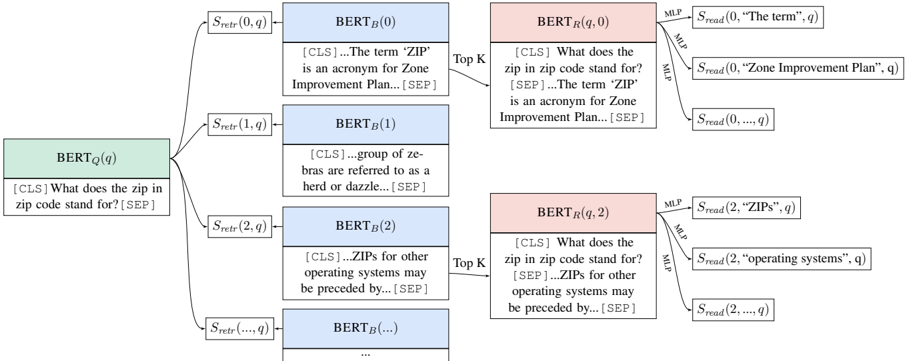
Recent work on open domain question answering (QA) assumes strong supervision of the supporting evidence and/or assumes a blackbox information retrieval (IR) system to retrieve evidence candidates.We argue that both are suboptimal, since gold evidence is not always available, and QA is fundamentally different from IR.We show for the first time that it is possible to jointly learn the retriever and reader from question-answer string pairs and without any IR system.In this setting, evidence retrieval from all of Wikipedia is treated as a latent variable.Since this is impractical to learn from scratch, we pre-train the retriever with an Inverse Cloze Task.We evaluate on open versions of five QA datasets.On datasets where the questioner already knows the answer, a traditional IR system such as BM25 is sufficient.On datasets where a user is genuinely seeking an answer, we show that learned retrieval is crucial, outperforming BM25 by up to 19 points in exact match.
Overview
The claims and statistics of this paper haven’t been checked yet.
Free: it reads the open-access text and checks the first 5 claims that cite a source we can check. Create a free account to check every claim.
Integrity signals
Registry
Cites
Statistics
Figures
Verification
Claims the paper makes
The claims and statistics of this paper haven’t been checked yet.
Free: it reads the open-access text and checks the first 5 claims that cite a source we can check. Create a free account to check every claim.
Claims other papers make about this one
Each is checked against this paper’s own text: does it say what the citing paper says it does?
The source backs part of the claim, not all of it — or backs it for a different population, condition or comparison.
In the citing paper
“Pretrained models with a differentiable access mechanism to explicit non-parametric memory have so far been only investigated for extractive downstream tasks.”
From Retrieval-Augmented Generation for Knowledge-Intensive NLP Tasks (2020) · cites this paper as [31]
Experimental — accuracy not yet measuredThe source backs part of the claim, not all of it — or backs it for a different population, condition or comparison.
In the citing paper
“The standard solution to these issues is to rely on Retrieval Augmented Generation (RAG) (Lee et al., 2019;Lewis et al., 2020;Guu et al., 2020).”
From RAGAs: Automated Evaluation of Retrieval Augmented Generation (2024) · cites this paper as Lee et al., 2019
Experimental — accuracy not yet measuredThe source backs part of the claim, not all of it — or backs it for a different population, condition or comparison.
In the citing paper
“Dense retrieval methods have thus never be shown to outperform TF-IDF/BM25 for opendomain QA before ORQA (Lee et al., 2019)”
From Dense passage retrieval for open-domain question answering (2020) · cites this paper as Lee et al., 2019
Experimental — accuracy not yet measuredThe cited source says what the claim attributes to it.
In the citing paper
“We instantiate this task with data from NaturalQuestions-Open (Lee et al., 2019;Kwiatkowski et al., 2019), which contains historical queries issued to the Google search engine, coupled with human-annotated answers extracted from Wikipedia.”
From Lost in the Middle: How Language Models Use Long Contexts (2024) · cites this paper as Lee et al., 2019
The cited source says what the claim attributes to it.
In the citing paper
“REALM [20] and ORQA [31], two recently introduced models that combine masked language models [8] with a differentiable retriever, have shown promising results, but have only explored open-domain extractive question answering.”
From Retrieval-Augmented Generation for Knowledge-Intensive NLP Tasks (2020) · cites this paper as [31]
8 more claims about this paper
Create a free account to see every claim other papers make about this one.
Self-check
Percentages, sums and reported differences re-computed from the paper’s own numbers.
The self-check needs the paper’s full text.
Citations
Cites
BERT: Pre-training of Deep Bidirectional Transformers for Language Understanding
Devlin, J., Chang, M.-W., Lee, K., & Toutanova, K. (2018) · arXiv · doi:10.48550/arxiv.1810.04805 · Cited by 73,173 · cited 3×
“Following recent advances in transfer learning, all scoring components are derived from BERT (Devlin et al., 2018), a bidirectional transformer that has been pre-trained on unsupervised language-modeling data.”
BackgroundMethodSelf-citationBERT: Pre-training of Deep Bidirectional Transformers for Language Understanding
Devlin, J., Chang, M.-W., Lee, K., & Toutanova, K. (2019) · Proceedings of the 2019 Conference of the North American Chapter of the Association for Computational Linguistics: Human Language Technologies, Volume 1 (Long and Short Papers) · doi:10.18653/v1/n19-1423 · Cited by 54,325 · cited 3×
“Following recent advances in transfer learning, all scoring components are derived from BERT (Devlin et al., 2018), a bidirectional transformer that has been pre-trained on unsupervised language-modeling data.”
BackgroundMethodSelf-citationEfficient Estimation of Word Representations in Vector Space
Mikolov, T., Chen, K., Corrado, G., & Dean, J. (2013) · arXiv · doi:10.48550/arxiv.1301.3781 · Cited by 26,568 · cited 1×
“ICT can be considered a generalization of the skip-gram objective (Mikolov et al., 2013), with a coarser granularity, deep architecture, and in-batch negative sampling from Logeswaran and Lee (2018).”
BackgroundDeep Contextualized Word Representations
Peters, M., Neumann, M., Iyyer, M., Gardner, M., Clark, C., Lee, K., & Zettlemoyer, L. (2018) · Proceedings of the 2018 Conference of the North American Chapter of the Association for Computational Linguistics: Human Language Technologies, Volume 1 (Long Papers) · doi:10.18653/v1/n18-1202 · Cited by 11,983 · cited 2×
“, 2003),4 and (2) ELMO (small), a context-dependent bidirectional LSTM (Peters et al., 2018).”
BackgroundMethodSelf-citationSQuAD: 100,000+ Questions for Machine Comprehension of Text
Rajpurkar, P., Zhang, J., Lopyrev, K., & Liang, P. (2016) · Proceedings of the 2016 Conference on Empirical Methods in Natural Language Processing · doi:10.18653/v1/d16-1264 · Cited by 6,208 · cited 8×
“In the strongly supervised setting popularized by DrQA (Chen et al., 2017), they also assume a reading comprehension model trained on question-answer-evidence triples, such as SQuAD (Rajpurkar et al., 2016).”
BackgroundMethodResultInfluentialThe probabilistic relevance framework: BM25 and beyond
Robertson, S., & Zaragoza, H. (2009) · Foundations and Trends® in Information Retrieval · doi:10.1561/1500000019 · Cited by 3,374
“Cloze Procedure”: A New Tool for Measuring Readability
Taylor, W. L. (1953) · Journalism Quarterly · doi:10.1177/107769905303000401 · Cited by 2,332 · cited 1×
“In the standard Cloze task (Taylor, 1953), the goal is to predict masked-out text based on its context.”
BackgroundNatural Questions: A benchmark for question answering research
Kwiatkowski, T., Palomaki, J., Redfield, O., Collins, M., Parikh, A., Alberti, C., Epstein, D., Polosukhin, I., Devlin, J., Lee, K., et al. (2019) · Transactions of the Association for Computational Linguistics · doi:10.1162/tacl_a_00276 · Cited by 2,069 · cited 3×
“Natural Questions contains question from aggregated queries to Google Search (Kwiatkowski et al., 2019).”
BackgroundSelf-citationTriviaQA: A Large Scale Distantly Supervised Challenge Dataset for Reading Comprehension
Joshi, M., Choi, E., Weld, D., & Zettlemoyer, L. (2017) · Proceedings of the 55th Annual Meeting of the Association for Computational Linguistics (Volume 1: Long Papers) · doi:10.18653/v1/p17-1147 · Cited by 1,690 · cited 8×
“TriviaQA is a collection of trivia questionanswer pairs that were scraped from the web (Joshi et al., 2017).”
BackgroundMethodInfluentialTriviaQA: A Large Scale Distantly Supervised Challenge Dataset for Reading Comprehension
Joshi, M., Choi, E., Weld, D. S., & Zettlemoyer, L. (2017) · arXiv · doi:10.48550/arxiv.1705.03551 · Cited by 1,650 · cited 8×
“TriviaQA is a collection of trivia questionanswer pairs that were scraped from the web (Joshi et al., 2017).”
BackgroundMethodInfluential
Research works printed but not linked: 5
- Yoshua Bengio, Réjean Ducharme, Pascal Vincent, and Christian Jauvin. 2003. A neural probabilistic lan- guage model. Journal of machine learning research, 3(Feb):1137-1155.
- Danqi Chen, Adam Fisch, Jason Weston, and Antoine Bordes. 2017. Reading wikipedia to answer open- domain questions. In Proceedings of the 55th An- nual Meeting of the Association for Computational Linguistics (Volume 1: Long Papers), volume 1, pages 1870-1879.
- Rajarshi Das, Shehzaad Dhuliawala, Manzil Zaheer, and Andrew McCallum. 2019. Multi-step retriever- reader interaction for scalable open-domain question answering. In International Conference on Learn- ing Representations.
- Matthew E. Peters, Mark Neumann, Mohit Iyyer, Matt Gardner, Christopher Clark, Kenton Lee, and Luke Zettlemoyer. 2018. Deep contextualized word rep- resentations. In Proc. of NAACL.
- Shuohang Wang, Mo Yu, Xiaoxiao Guo, Zhiguo Wang, Tim Klinger, Wei Zhang, Shiyu Chang, Gerry Tesauro, Bowen Zhou, and Jing Jiang. 2018. R 3: Reinforced ranker-reader for open-domain question answering. In Thirty-Second AAAI Conference on Artificial Intelligence.
Cited by
Items 601–700 of 849
Investigating the role of Named Entity Recognition in Question Answering Models
Nadapana, V., & Bindu, K. H. (2022) · IEEE Global Conference for Advancement in Technology (GCAT) · doi:10.1109/gcat55367.2022.9972157 · Cited by 3
“The examples of ODQA models are: DRQA [12], ORQA [9], DPR [6], BERT-SERINI [10], Golden Retriever [8], DS-QA [13], T5 [4], GPT-2 [11]”
MethodLibVQ: A Toolkit for Optimizing Vector Quantization and Efficient Neural Retrieval
Li, C., Liu, Z., Xiao, S., Shao, Y., Lian, D., & Cao, Z. (2023) · International ACM SIGIR Conference on Research and Development in Information Retrieval (SIGIR) · doi:10.1145/3539618.3591799 · Cited by 3
“Neural information retrieval, especially dense retrieval, is critical to many real-world applications, such as web search, question answering, and recommender systems [2, 5, 10].”
BackgroundDua, D., Strubell, E., Singh, S., & Verga, P. (2023) · Proceedings of the conference - Association for Computational Linguistics. Meeting · doi:10.18653/v1/2023.acl-long.807 · Cited by 11
Hybrid and Collaborative Passage Reranking
Zhang, Z., Zhou, W., Shi, J., & Li, H. (2023) · Findings of the Association for Computational Linguistics: ACL (Findings of ACL) · doi:10.18653/v1/2023.findings-acl.880 · Cited by 9
“Intuitively, for a specific query, a set of passages relevant to the query tend to describe the same entities, events and relations (Lee et al., 2019), while irrelevant ones outside of this set involve multifarious objects.”
BackgroundCORE: Cooperative Training of Retriever-Reranker for Effective Dialogue Response Selection
Tao, C., Feng, J., Shen, T., Liu, C., Li, J., Geng, X., & Jiang, D. (2023) · Proceedings of the conference - Association for Computational Linguistics. Meeting · doi:10.18653/v1/2023.acl-long.174 · Cited by 3
“…Retrieval (DR) has been widely used for Ad-hoc retrieval (Zhan et al., 2020; Chang et al., 2020; Luan et al., 2021) and open-domain question answering (Lee et al., 2019; Karpukhin et al., 2020; Xiong et al., 2020) because it is as fast as traditional methods and can achieve impressive performance.”
MethodM3: A Multi-View Fusion and Multi-Decoding Network for Multi-Document Reading Comprehension
Wen, L., Wang, H.-F., Luo, Y.-W., & Wang, X.-L. (2022) · Conference on Empirical Methods in Natural Language Processing · doi:10.18653/v1/2022.emnlp-main.94 · Cited by 5
“Depending on the difference of decoding approaches, recent works on multi-document reading comprehension could be mainly divided into two categories: extractive approaches (Lee et al., 2019; Karpukhin et al., 2020; Guu et al., 2020) and generative approaches (Lewis et al.”
InfluentialCross-document Event Coreference Search: Task, Dataset and Modeling
Eirew, A., Caciularu, A., & Dagan, I. (2022) · Conference on Empirical Methods in Natural Language Processing (EMNLP) · doi:10.18653/v1/2022.emnlp-main.58 · Cited by 17
Passage-Mask: A Learnable Regularization Strategy for Retriever-Reader Models
Zhang, S., Gong, C., & Liu, X. (2022) · Conference on Empirical Methods in Natural Language Processing (EMNLP) · doi:10.18653/v1/2022.emnlp-main.260 · Cited by 7
Analyzing Modular Approaches for Visual Question Decomposition
Khandelwal, A., Pavlick, E., & Sun, C. (2023) · Conference on Empirical Methods in Natural Language Processing (EMNLP) · doi:10.18653/v1/2023.emnlp-main.157 · Cited by 6
Cross-Modal Dense Passage Retrieval for Outside Knowledge Visual Question Answering
Reichman, B., & Heck, L. P. (2023) · IEEE International Conference on Computer Vision Workshops · doi:10.1109/iccvw60793.2023.00304 · Cited by 11
“The model receives a sentence and has to match it to its greater context [16].”
BackgroundMethodInteractive Question Answering for Multimodal Lifelog Retrieval
Tran, L.-D., Zhou, L., Nguyen, B. T., & Gurrin, C. G. (2024) · Lecture notes in computer science · doi:10.1007/978-3-031-56435-2_6 · Cited by 10
NORMY: Non-Uniform History Modeling for Open Retrieval Conversational Question Answering
Rashid, M. S., Meem, J. A., & Hristidis, V. (2024) · IEEE International Conference on Semantic Computing (ICSC) · doi:10.1109/icsc59802.2024.00022 · Cited by 5
“Although dense retriever approaches like ORQA [25] and DPR [26] which use encodings of documents using ALBERT [27], have shown to provide better results, they require training data for fine-tuning.”
MethodCombining Argumentation Structure and Language Model for Generating Natural Argumentative Dialogue
Mitsuda, K., Higashinaka, R., & Saito, K. (2022) · Conference of the Asia-Pacific Chapter of the Association for Computational Linguistics and the International Joint Conference on Natural Language Processing (AACL-IJCNLP) · doi:10.18653/v1/2022.aacl-short.9 · Cited by 5
“Retrieval-based generation has been applied to a wide range of tasks, such as question answering (Lee et al., 2019; Izacard and Grave, 2020), dialogue modeling (Weston et al., 2018; Roller et al., 2020), and story generation (Xu et al., 2020) in addition to argumentation generation.”
BackgroundData-Driven In-Crisis Community Identification for Disaster Response and Management
Tao, Y., Jiang, R., Coltey, E., Yang, C., Song, X., Shibasaki, R., Shyu, M., & Chen, S. (2021) · IEEE International Conference on Collaboration and Internet Computing (CIC) · doi:10.1109/cic52973.2021.00021 · Cited by 3
“In addition to two-stage approaches, end-to-end models [34], [40], [41] have been proposed to directly extract answers for the given question.”
BackgroundAn in-depth analysis of passage-level label transfer for contextual document ranking
Rudra, K., Fernando, Z. T., & Anand, A. (2023) · Information Retrieval · doi:10.1007/s10791-023-09430-5 · Cited by 4
Instance-based Transfer Learning for Multilingual Deep RetrievalPreprint
Arnold, A. O., & Cohen, W. W. (2019) · arXiv (Cornell University) · doi:10.48550/arxiv.1911.06111 · Cited by 3
Technical Question Answering across Tasks and DomainsPreprint
Yu, W., Wu, L., Deng, Y., Zeng, Q., Mahindru, R., Güven, S., & Jiang, M. (2020) · arXiv (Cornell University) · doi:10.48550/arxiv.2010.09780 · Cited by 3
“It can be statistical-based (e.g., BM25) (Yang et al., 2019) or neural-based that can be jointly optimized with snippet prediction (Karpukhin et al., 2020; Lee et al., 2019).”
BackgroundInfluentialRobust Retrieval Augmented Generation for Zero-shot Slot FillingPreprint
Glass, M., Rossiello, G., Chowdhury, M. F. M., & Gliozzo, A. (2021) · arXiv (Cornell University) · doi:10.48550/arxiv.2108.13934 · Cited by 6
Bridging Today and the Future of Humanity: AI Safety in 2024 and BeyondPreprint
Han, S. (2025) · Qeios · doi:10.32388/zhm9uq · Cited by 5
To Code, or Not To Code? Exploring Impact of Code in Pre-training
Aryabumi, V., Su, Y., Ma, R., Morisot, A., Zhang, I., Locatelli, A., Fadaee, M., Üstün, A., & Hooker, S. (2024) · arXiv · doi:10.48550/arxiv.2408.10914 · Cited by 3
1-PAGER: One Pass Answer Generation and Evidence Retrieval
Jain, P., Soares, L. B., & Kwiatkowski, T. (2023) · arXiv · doi:10.48550/arxiv.2310.16568 · Cited by 3
BrowseComp: A Simple Yet Challenging Benchmark for Browsing Agents
Wei, J., Sun, Z., Papay, S., McKinney, S., Han, J., Fulford, I., Chung, H. W., Passos, A. T., Fedus, W., & Glaese, A. (2025) · arXiv · doi:10.48550/arxiv.2504.12516 · Cited by 835
“…could be easily found by a human within ten minutes of searching (Joshi et al., 2017; Yang et al., 2018; Thorne et al., 2018; Dinan et al., 2019; Lee et al., 2019; Fan et al., 2019; Petroni et al., 2021; Yao et al., 2022; Mialon et al., 2023), BrowseComp focuses on the ability to retrieve…”
Contrastive Learning and Feature Space Tactics: A Dual Approach to Strengthen Backdoor Attacks
Fu, H., Liu, M., & Li, R. (2025) · IEEE Transactions on Information Forensics and Security · doi:10.1109/tifs.2025.3587194 · Cited by 2
On the Scaling of Robustness and Effectiveness in Dense Retrieval
Liu, Y.-A., Zhang, R., Guo, J., de Rijke, M., Fan, Y., & Cheng, X. (2025) · International ACM SIGIR Conference on Research and Development in Information Retrieval (SIGIR) · doi:10.1145/3726302.3730049 · Cited by 5
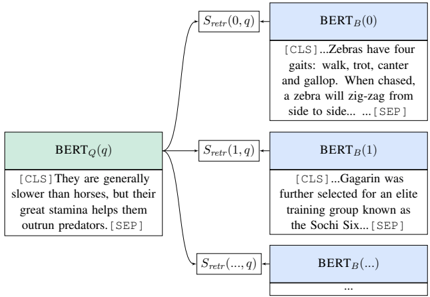
“(i) Inverse Cloze Task (ICT) [20] extracts key sentences from passages as the pseudo-query for the passage.”
Ding, Y., Lyu, H., Cao, Y., Song, W., Tian, L., & Liu, S. (2025) · Chinese Journal of Electronics · doi:10.23919/cje.2025.00.042 · Cited by 4
Nawaz, A., Ahmed, M., Khan, H. U., Daud, A. Y., Alshemaimri, B. K., & Iqbal, T. (2025) · Scientific Reports · doi:10.1038/s41598-025-26671-0 · Cited by 3
“Before the concept of NLP, the researchers used a series of notable QA, which was considered the most advanced work at the time, and the most advanced models were retriever-reader QA models 9,18,19 .”
LURE-RAG: Lightweight Utility-Driven Reranking for Efficient RAG
Chandra, M., Ganguly, D., & Ounis, I. (2026) · Lecture notes in computer science · doi:10.1007/978-3-032-21289-4_36 · Cited by 7
SpaceQA: Answering Questions about the Design of Space Missions and Space Craft Concepts
García-Silva, A., Berrío, C., Gómez-Pérez, J. M., Martinez-Heras, J. A., Donati, A., & Roma, I. (2022) · International ACM SIGIR Conference on Research and Development in Information Retrieval (SIGIR) · doi:10.1145/3477495.3531697 · Cited by 8
“Open-domain QA has evolved rapidly in the last few years based on recent advances in the combination of IR and reading comprehension [8, 22, 31] and even end-to-end approaches [13, 19, 27, 29].”
BackgroundHierarchical Representations in Dense Passage Retrieval for Question-Answering
Ennen, P., Freddi, F., Lin, C.-J., Kung, P.-N., Wang, R., Yang, C., Shiu, D.-S., & Bernacchia, A. (2023) · Fact Extraction and VERification Workshop (FEVER) · doi:10.18653/v1/2023.fever-1.2 · Cited by 5
“Closed-book QA Models NQ WebQ T5-base (Roberts et al., 2020) 25.7 28.2 T5-large (Roberts et al., 2020) 27.3 29.5 T5-XXL (Roberts et al., 2020) 32.8 35.6 GPT-3 (Brown et al., 2020) 29.9 41.5 Open-book QA Models NQ WebQ BM25+BERT (Lee et al., 2019) 26.5 21.3 QRQA (Lee et al., 2019) 33.3 30.1 DPR (Karpukhin et al., 2020)…”
BackgroundInfluentialMultimodal Information Retrieval
Luo, M., Gokhale, T., Varshney, N., Yang, Y., & Baral, C. R. (2024) · Synthesis lectures on computer vision · doi:10.1007/978-3-031-57816-8_3 · Cited by 4
VAULT: VAriable Unified Long Text Representation for Machine Reading Comprehension
Wen, H., Ferritto, A., Ji, H., Florian, R., & Sil, A. (2021) · doi:10.18653/v1/2021.acl-short.131 · Cited by 3
“…high lexical overlap between the question and the answer context which can happen frequently if the question is created after the user sees the paragraph (Rajpurkar et al., 2016, 2018; Yang et al., 2018; Chakravarti et al., 2020; Karpukhin et al., 2020; Lee et al., 2019; Murdock et al., 2018).”
BackgroundDetecting Frozen Phrases in Open-Domain Question Answering
Yadegari, M., Kamalloo, E., & Rafiei, D. (2022) · International ACM SIGIR Conference on Research and Development in Information Retrieval (SIGIR) · doi:10.1145/3477495.3531793 · Cited by 4
“More recently, dense retrieval models [15, 16, 19, 33, 43] and retrieval-augmented models [10, 21] have become popular.”
BackgroundMethodDown and Across: Introducing Crossword-Solving as a New NLP Benchmark
Kulshreshtha, S., Kovaleva, O., Shivagunde, N., & Rumshisky, A. (2022) · Proceedings of the conference - Association for Computational Linguistics. Meeting · doi:10.18653/v1/2022.acl-long.189 · Cited by 8
Hung, C.-C., Green, T., Litschko, R., Tsereteli, T., Takeshita, S., Bombieri, M., Glavaš, G., & Ponzetto, S. P. (2022) · doi:10.18653/v1/2022.mia-1.8 · Cited by 2
Exploring Retriever-Reader Approaches in Question-Answering on Scientific Documents
Nguyen, D.-H., Le, N.-K., & Nguyen, L.-M. (2022) · Communications in computer and information science · doi:10.1007/978-981-19-8234-7_30 · Cited by 3
A Hybrid Text Generation-Based Query Expansion Method for Open-Domain Question Answering
Zhu, W., Zhang, X., Zhai, Q., & Liu, C. (2023) · Future Internet · doi:10.3390/fi15050180 · Cited by 6
Limitations of Open-Domain Question Answering Benchmarks for Document-level Reasoning
Kamalloo, E., Clarke, C. L. A., & Rafiei, D. (2023) · International ACM SIGIR Conference on Research and Development in Information Retrieval (SIGIR) · doi:10.1145/3539618.3592011 · Cited by 7
“, Natural Questions-open [33], TriviaQA [26], and WebQuestions [5].”
BackgroundMethodInfluentialOpen-Domain Long-Form Question–Answering Using Transformer-Based Pipeline
Dash, A., Awachar, M., Patel, A. M., & Rudra, B. (2023) · SN Computer Science · doi:10.1007/s42979-023-02039-x · Cited by 4
“[29] introduced Open Retrieval Question–Answering system (ORQA), an open-domain question–answering system in which no separate retrieval system is used, and the retriever and the reader are jointly trained using only question–answer pairs, after pre-training the retriever with an Inverse Cloze Task.”
MethodBridging the Training-Inference Gap for Dense Phrase Retrieval
Kim, G., Lee, J., Oğuz, B., Xiong, W., Zhang, Y., Mehdad, Y., & Wang, W. Y. (2022) · Findings of the Association for Computational Linguistics: EMNLP (Findings of EMNLP) · doi:10.18653/v1/2022.findings-emnlp.272 · Cited by 2
Lexicon-Enhanced Self-Supervised Training for Multilingual Dense Retrieval
Ren, H., Shou, L., Pei, J., Wu, N., Gong, M., & Jiang, D. (2022) · Findings of the Association for Computational Linguistics: EMNLP (Findings of EMNLP) · doi:10.18653/v1/2022.findings-emnlp.31 · Cited by 5
Neural Ranking with Weak Supervision for Open-Domain Question Answering : A Survey
Shen, X.-Y., Vakulenko, S., Tredici, M. D., Barlacchi, G., Byrne, B., & de Gispert, A. (2023) · Findings · doi:10.18653/v1/2023.findings-eacl.129 · Cited by 6
“…assuming the remaining documents having negligibly small contributions to the likelihood: This has been a popular choice in end-to-end training of text generation models (Lee et al., 2019; Shen et al., 2019b; Guu et al., 2020; Lewis et al., 2020; Shuster et al., 2021; Ferguson et al., 2022).”
BackgroundMethodBoosting Domain-Specific Question Answering Through Weakly Supervised Self-Training
Wang, M., Cao, J., Kong, Q., & Luo, Y. (2023) · IEEE International Conference on Intelligence and Security Informatics (ISI) · doi:10.1109/isi58743.2023.10297258 · Cited by 2
“However, most of existing question answering systems are proposed for open-domain applications [2]–[4], it is of urgent need to design domain-specific methods for security-related scenarios.”
BackgroundUnderstanding Visitors’ Curiosity in a Science Centre with Deep Question Processing Network
Xu, Z., Howarth, A., Briggs, N. L., & Cristianini, N. (2023) · International Journal of Artificial Intelligence in Education · doi:10.1007/s40593-023-00377-8 · Cited by 3
“The model we used, Bidirectional encoder representations from Transformers (BERT) (Devlin et al., 2018), and its modified models had leading performance in classification (McCreery et al., 2020; Sun et al., 2019) and question answering (Lee et al., 2019; Guu et al., 2020; Karpukhin et al., 2020).”
SimStock : Representation Model for Stock Similarities
Hwang, Y., Lee, J., Kim, D., Noh, S., Hong, J., & Lee, Y. (2023) · ACM International Conference on AI in Finance (ICAIF) · doi:10.1145/3604237.3626888 · Cited by 4
“Despite the recent successes of SSL in areas like images[7][18][38] and natural language[21][27][28][29], there has been relatively less focus on SSL for time series data with non-stationary characteristics, such as stock data.”
BackgroundMethodA General-Purpose Multilingual Document Encoder
Litschko, O. G. R., Litschko, R., & Glavaš, G. (2023) · Workshop on Multilingual Representation Learning (MRL) · doi:10.18653/v1/2023.mrl-1.4 · Cited by 3
NAIL: Lexical Retrieval Indices with Efficient Non-Autoregressive Decoders
Soares, L. B., Gillick, D., Cole, J. R., & Kwiatkowski, T. (2023) · Conference on Empirical Methods in Natural Language Processing (EMNLP) · doi:10.18653/v1/2023.emnlp-main.156 · Cited by 5
Single- and Multi-Hop BERT Question Classifier for Open-Domain Question Answering (SiMQC)
Sayyad, F. Z., & Bohlouli, M. (2023) · doi:10.1109/icee59167.2023.10334827 · Cited by 2
“For the first time, Open Retrieval Question Answering system (ORQA) [15] showed that dense retrieval methods can outperform TF-IDF for open-domain QA [14].”
MethodGenerative Question Answering Systems over Knowledge Graphs and Tex
Neural Networks and Deep Learning Lab, M., Turganbay, R., Surkov, V., Evseev, D., & Drobyshevskiy, M. (2023) · Computational Linguistics and Intellectual Technologies · doi:10.28995/2075-7182-2023-22-1112-1126 · Cited by 4
ChronoGrapher: Event-Centric Knowledge Graph Construction via Informed Graph Traversal
Blin, I., Tiddi, I., van Trijp, R., & ten Teije, A. (2025) · Semantic Web · doi:10.1177/22104968251377247 · Cited by 4
“Systems such as ORQA (Lee et al., 2019) or REALM (Guu et al., 2020) learn the retriever and the reader jointly, whereas systems like DrQA (Chen et al., 2017) have a fixed document retrieval component.”
QuAVA: A privacy-aware architecture for conversational desktop Content Retrieval systems
Malamas, N., Symeonidis, A. L., & Theocharis, J. B. (2026) · Computer Speech & Language · doi:10.1016/j.csl.2026.101950 · Cited by 2
Self-Consistency Falls Short! The Adverse Effects of Positional Bias on Long-Context Problems
Byerly, A., & Khashabi, D. (2026) · Transactions of the Association for Computational Linguistics · doi:10.1162/tacl.a.625 · Cited by 12
“For our position bias investigation (§5), we utilize NQ-Open (Kwiatkowski et al., 2019; Lee et al., 2019), comprising 2,655 real user queries paired with paragraph-length answers from Wikipedia.”
Optimizing Test-Time Query Representations for Dense Retrieval
Sung, M., Park, J., Kang, J., Chen, D., & Lee, J. (2023) · Findings of the Association for Computational Linguistics: ACL (Findings of ACL) · doi:10.18653/v1/2023.findings-acl.354 · Cited by 16
“By overcoming the term mismatch problem, dense retrieval has been shown to be more effective than sparse retrieval in open-domain question answering (QA) (Lee et al., 2019; Karpukhin et al., 2020; Lee et al., 2021a) and information retrieval (Khattab and Zaharia, 2020; Xiong et al., 2020).”
BackgroundMethodInfluentialMoQA: Benchmarking Multi-Type Open-Domain Question Answering
Yen, H., Gao, T., Lee, J., & Chen, D. (2023) · DialDoc Workshop on Document-grounded Dialogue and Conversational Question Answering (DialDoc) · doi:10.18653/v1/2023.dialdoc-1.2 · Cited by 6
“It is exactly the same as Lee et al. (2019), followed by most open-domain QA research.”
BackgroundMethodInfluentialAnswer Retrieval for Math Questions Using Structural and Dense Retrieval
Zhong, W., Xie, Y., & Lin, J. (2023) · Lecture notes in computer science · doi:10.1007/978-3-031-42448-9_18 · Cited by 2
Boot and Switch: Alternating Distillation for Zero-Shot Dense Retrieval
Jiang, F., Xu, Q., Drummond, T. W., & Cohn, T. (2023) · Findings of the Association for Computational Linguistics: EMNLP (Findings of EMNLP) · doi:10.18653/v1/2023.findings-emnlp.65 · Cited by 8
Relevance-assisted Generation for Robust Zero-shot Retrieval
Kim, J., Kim, M., Park, J., & Hwang, S.-W. (2023) · Conference on Empirical Methods in Natural Language Processing (EMNLP) · doi:10.18653/v1/2023.emnlp-industry.67 · Cited by 4
LeSSE—A Semantic Search Engine Applied to Portuguese Consumer Law
Cordeiro, N. P., Dias, J., & Santos, P. A. (2023) · Lecture notes in computer science · doi:10.1007/978-3-031-49011-8_10 · Cited by 2
Neural Retriever and Go Beyond: A Thesis Proposal
Luo, M. (2022) · Conference of the North American Chapter of the Association for Computational Linguistics: Student Research Workshop (NAACL SRW) · doi:10.18653/v1/2022.naacl-srw.8 · Cited by 2
GazBy: Gaze-Based BERT Model to Incorporate Human Attention in Neural Information Retrieval
Dong, S., Goldstein, J., & Yang, G. H. (2022) · ACM SIGIR International Conference on Theory of Information Retrieval (ICTIR) · doi:10.1145/3539813.3545129 · Cited by 6
“The embedding vectors can be either dense or sparse, which correspond to the recently popular dense retrievers (e.g., DPR[31], SBERT [55], Condenser [16], ICT [36], RocketQA [52], ANCE [69], and RepBERT[75]) and sparse retrievers (e.g. SparTerm [2], SPLADE [15], and EPIC [39]).”
I3: I ntent- I ntrospective Retrieval Conditioned on I nstructions
Pan, K., Li, J., Wang, W., Fei, H., Song, H., Ji, W., Lin, J., Liu, X., Chua, T., & Tang, S. (2024) · International ACM SIGIR Conference on Research and Development in Information Retrieval (SIGIR) · doi:10.1145/3626772.3657745 · Cited by 19
“Dense retrieval [16, 17, 20, 50, 51] is widely adopted in information retrieval that demonstrates strong advantages over sparse retrieval methods [36].”
BackgroundRole of Attentive History Selection in Conversational Information SeekingPreprint
Gupta, S., & Sharma, N. (2021) · arXiv (Cornell University) · doi:10.48550/arxiv.2102.03749 · Cited by 4
Yang, J., Liu, Z., Jin, B., Lian, J., Lian, D., Soni, A., Kang, E. Y., Wang, Y., Sun, G., & Xie, X. (2021) · arXiv (Cornell University) · doi:10.48550/arxiv.2104.10925 · Cited by 3
“B), can be much more accurate [11, 15], where the input sequences may fully attend to each other during the encoding process.”
BackgroundMethodRepresentation Decoupling for Open-Domain Passage Retrieval.Preprint
Wu, B., Zhang, Z., Wang, J., & Zhao, H. (2021) · arXiv (Cornell University) · Cited by 2
Naser, M. Z. (2026) · Language Resources and Evaluation · doi:10.1007/s10579-026-09938-4 · Cited by 3
AcTracer: Active Testing of Large Language Model via Multi-Stage Sampling
Huang, Y., Song, J., Hu, Q., Juefei-Xu, F., & Ma, L. (2024) · arXiv · doi:10.48550/arxiv.2408.03573 · Cited by 2
“We select TriviaQA ([61]) and NQ-open ([62]) as two question-answering datasets designed to evaluate the World Knowledge of LLM. • Mathematical Reasoning.”
Berges, V.-P., Oğuz, B., Haziza, D., Yih, W.-T., Zettlemoyer, L., & Ghosh, G. (2024) · arXiv · doi:10.48550/arxiv.2412.09764 · Cited by 46
“A tested way of ensuring more factuality is through retrieval augmented generation (Lewis et al., 2021; Karpukhin et al., 2020; Lee et al., 2019; Guu et al., 2020; Khandelwal et al., 2020).”
Unsupervised Dense Retrieval Training with Web Anchors
Xie, Y., Liu, X., & Xiong, C. (2023) · International ACM SIGIR Conference on Research and Development in Information Retrieval (SIGIR) · doi:10.1145/3539618.3592080 · Cited by 7
“Dense retrieval matches queries and documents in the embedding space [15, 16, 26], which can capture the semantic meaning of the text and handle more complex queries compared to traditional sparse retrieval methods [23].”
BackgroundRetrieving Chinese Questions and Answers Based on Deep-Learning Algorithm
Wang, H., Li, J., & Wang, J. (2023) · Mathematics · doi:10.3390/math11183843 · Cited by 1
“In contrast to traditional machine reading comprehension (MRC) tasks [3], where given a question, the system provides answers from a single passage or document, Open-QA requires searching for the answer within a collection of documents or the entire web.”
BackgroundIn-Context Learning for Scalable and Online Hallucination Detection in RAGS
Albanese, N. C. (2024) · doi:10.5121/csit.2024.140703 · Cited by 1
“To address these shortcomings, Retrieval Augmented Generation (RAG) techniques have emerged [5, 6, 7].”
Local Explanations and Self-Explanations for Assessing Faithfulness in black-box LLMs
Fragkathoulas, C., & Chlapanis, O. S. (2024) · Hellenic Conference on Artificial Intelligence · doi:10.1145/3688671.3688775 · Cited by 6
Tan, T., Qian, Y., Lv, A., Lin, H., Wu, S., Wang, Y., Wang, F., Wu, J., Lu, X., & Yan, R. (2025) · International World Wide Web Conference (WWW) · doi:10.1145/3696410.3714795 · Cited by 3
Welcome to the Team: Chat Agents for Machine Learning Project Management Support
Reiche, M., & Leidner, J. L. (2025) · Lecture notes in networks and systems · doi:10.1007/978-3-032-00071-2_28 · Cited by 1
Heterogeneous data-driven resolution generation for software systems via large language models
Liu, W., Sun, D., Yang, H., Wang, Y., & Huang, W. (2025) · Information Processing & Management · doi:10.1016/j.ipm.2025.104376 · Cited by 1
Domain-Adapted Embeddings Model Using Contrastive Learning for Drilling Text Data
Pacis, F. J., Alyaev, S., & Wiktorski, T. (2025) · Frontiers of artificial intelligence, ethics and multidisciplinary applications. · doi:10.1007/978-981-96-7945-4_30 · Cited by 1
Hattori, K., Korikawa, T., Takasaki, C., & Mortya, T. (2025) · IEICE Transactions on Communications · doi:10.23919/transcom.2025wwp0004 · Cited by 1
Retrieval-Augmented Generation With Large Language Models: A Comprehensive Comparative
Laila, D. A., Al-Na’amneh, Q., Aljawarneh, M. M., Dhifallah, W., & Maabreh, K. S. (2026) · IGI Global eBooks · doi:10.4018/979-8-3373-5017-2.ch003 · Cited by 1
Comparison of Chunking Techniques Across Diverse Document Types in NLP Retrieval Tasks
Jaiswal, S., Bisht, P., Kansara, K., & Datta, M. S. (2025) · International Conference on Responsible, Generative and Explainable AI (ResGenXAI) · doi:10.1109/resgenxai64788.2025.11344045 · Cited by 1
“Lee et al. [4] employed sentence-aligned chunks for better context retention in ORQA.”
Sub-Table Rescorer for Table Question Answering
Kojima, A. (2024) · Language Resources and Evaluation Conference (LREC) · doi:10.63317/5kp3kzmnsdei · Cited by 4
“STR was trained by fine-tuning BERT encoders (Karpukhin et al., 2020) trained using the Natural Questions dataset (Kwiatkowski et al., 2019; Lee et al., 2019 For the training of STR, we used the Transformer learning schedule (Vaswani et al., 2017).”
MethodbnContextQA: Benchmarking Long-Context Question Answering and Challenges in Bangla
Ahmad, A., Adiba, L., Rasul, N., Laskar, M. T. R., & Ahmed, S. (2025) · Workshop on Bangla Language Processing (BLP) · doi:10.18653/v1/2025.banglalp-1.29 · Cited by 2
“Liu et al. (2023) evaluated positional sensitivity using two tasks: • Multi-document question answering : Models received multiple documents with only one containing the correct answer, using the NaturalQuestions-Open (NQ-Open) dataset (Lee et al., 2019).”
Cross-Sensory Brain Passage Retrieval: Scaling Beyond Visual to Audio
McGuire, N., & Moshfeghi, Y. (2026) · Lecture notes in computer science · doi:10.1007/978-3-032-21289-4_31 · Cited by 1
“To generate query-document pairs from these naturalistic reading datasets, we adapt the inverse cloze task (ICT) framework [24,5] following the implementation detailed in [31].”
Yang, W., & Xia, S. (2026) · doi:10.1145/3774906.3802783 · Cited by 3
“We use Python 3.10.12 for the DVFS monitoring and controlling, leveraging sysfs [28] for system metrics and frequency control.”
InfluentialOn the Use of Electroencephalography in Query Performance Prediction
Tenedios, I., McGuire, N., & Moshfeghi, Y. (2026) · ACM Transactions on Information Systems · doi:10.1145/3816244 · Cited by 1
“…is precisely what neural retrieval pre-training methods exploit when treating text spans as implicit queries for their surrounding context [17, 54], and recent empirical work has demonstrated that reading-elicited EEG signals can be directly mapped to passage representations in a shared…”
Wang, F., Shirmohammadi, S., & Hsu, C.-H. (2026) · IEEE International Symposium on Artificial Intelligence for Instrumentation and Measurement (AI4IM) · doi:10.1109/ai4im69129.2026.11558238 · Cited by 1
“Restrictions apply. ural Questions dataset [14], commonly referred to as NQ-Open.”
LACONIC: Dense-Level Effectiveness for Scalable Sparse Retrieval via a Two-Phase Training Curriculum
Xu, Z., Zhuang, S., Zhang, X., Ma, X., Tian, Y., Mehta, M., Lin, J., & Srikumar, V. (2026) · International ACM SIGIR Conference on Research and Development in Information Retrieval (SIGIR) · doi:10.1145/3805712.3809869 · Cited by 9
Iterative Reasoning over Knowledge Graph
Xu, L., & Yao, J. (2021) · Lecture notes in computer science · doi:10.1007/978-3-030-73194-6_14 · Cited by 1
Few-shot Unified Question Answering: Tuning Models or Prompts?
Bansal, S., Yavuz, S., Pang, B., Bhat, M., & Zhou, Y. (2023) · Findings of the Association for Computational Linguistics: EMNLP (Findings of EMNLP) · doi:10.18653/v1/2023.findings-emnlp.550 · Cited by 3
A Novel Method of Translation Memory to Improve Machine Translation
Yue, P., Niu, Y., Tao, M., Zheng, W., Li, Y., & Shi, X. (2024) · Lecture notes in electrical engineering · doi:10.1007/978-981-99-9243-0_15 · Cited by 1
Location Aware Modular Biencoder for Tourism Question Answering
Li, H., Tomko, M., & Baldwin, T. (2023) · doi:10.18653/v1/2023.findings-ijcnlp.9 · Cited by 6
AI-Driven Multi-PDF Chatbot: Integrating LangChain and GPT-3 for Enhanced Data Processing
Korat, A. S. (2024) · Journal of Artificial Intelligence & Cloud Computing · doi:10.47363/jaicc/2024(3)380 · Cited by 1
Reddy, A., & Arumugam, S. S. (2024) · International Conference on Computing, Communication and Networking Technologies (ICCCNT) · doi:10.1109/icccnt61001.2024.10724432 · Cited by 1
“The sample size was determined by utilizing information from previous research conducted by [10] on Clinicalc.com.”
MethodKoo, S., Kim, J., Park, C., & Lim, H. (2024) · Findings of the Association for Computational Linguistics: EMNLP (Findings of EMNLP) · doi:10.18653/v1/2024.findings-emnlp.6 · Cited by 5
“…actively and directly drawing out the parametric knowledge of LLMs. Conversely, there has been an emergence of research incorporating non-parametric knowledge to target knowledge-based generation in performing knowledge-intensive tasks (Guu et al., 2020; Karpukhin et al., 2020; Lee et al., 2019).”
DOGR: Leveraging Document-Oriented Contrastive Learning in Generative Retrieval
Lu, P., Dong, X., Zhou, Y., Cheng, L., Yuan, C., & Mo, L. (2025) · Proceedings of the AAAI Conference on Artificial Intelligence · doi:10.1609/aaai.v39i23.34654 · Cited by 4
Geodesic Flow Kernels for Semi-Supervised Learning on Mixed-Variable Tabular Dataset
Hwang, Y., & Lee, Y. (2025) · Proceedings of the AAAI Conference on Artificial Intelligence · doi:10.1609/aaai.v39i17.33928 · Cited by 2
“…techniques have been actively studied in computer vision (Chen et al. 2020; Jing and Tian 2020; Zhai et al. 2019) and natural language processing (Lee, Chang, and Toutanova 2019; Qiu et al. 2020; Ruder and Plank 2018; Song et al. 2020), but not much research has been conducted for tabular data.”
MEQA - A Multi-modal Interactive Enterprise Query Answering System using Multi-Agent LLM
Singh, S., Gupta, Y., & Chowdhury, S. R. (2024) · Joint International Conference on Data Science & Management of Data (CODS-COMAD) · doi:10.1145/3703323.3704277 · Cited by 4
Pre-Training Methods for Question Reranking
Campese, S., Lauriola, I., & Moschitti, A. (2024) · Conference of the European Chapter of the Association for Computational Linguistics · doi:10.18653/v1/2024.eacl-short.41 · Cited by 4
Zhang, Y. (2025) · Applied and Computational Engineering · doi:10.54254/2755-2721/2025.tj24496 · Cited by 5
Zhou, Y., Zhu, J. H., Qian, S., Zhao, Z., Wang, X., Liu, X., Li, M., Xu, P., Ai, W., & Huang, F. (2025) · Findings of the Association for Computational Linguistics: EMNLP (Findings of EMNLP) · doi:10.18653/v1/2025.findings-emnlp.74 · Cited by 11
Complementary Evidence Identification in Open-Domain Question Answering
Mou, X., Yu, M., Chang, S., Feng, Y., Zhang, L., & Su, H. (2021) · Conference of the European Chapter of the Association for Computational Linguistics · doi:10.18653/v1/2021.eacl-main.234 · Cited by 3
Metadata
- Authors
- Lee, K., Chang, M.-W., & Toutanova, K.
- Affiliations
- Google (United States) (US)
- Venue
- Proceedings of the 57th Annual Meeting of the Association for Computational Linguistics
- Published
- 2019
- Pages
- 6086-6096
- ISSN
- 0736-587X (ISSN-L)
- OpenAlex
- W2947497897
- Cited by
- 771
- References
- 30
- Citations by year
- 2026: 36 · 2025: 67 · 2024: 70 · 2023: 159 · 2022: 134 · 2021: 194 · 2020: 101 · 2019: 10
- FWCI
- 41.99
- Type
- conference paper
- Language
- en
- Open access
- hybrid
- doi.org
- Licence
- cc-by
- Locations
- Proceedings of the conference - Association for Computational Linguistics. Meeting (publishedVersion, cc-by)
- arXiv (Cornell University) (submittedVersion)
- arXiv (Cornell University)
- Topics
- Physical Sciences › Computer Science › Artificial Intelligence › Topic Modeling
- Physical Sciences › Computer Science › Information Systems › Information Retrieval and Search Behavior
- Physical Sciences › Computer Science › Computer Vision and Pattern Recognition › Multimodal Machine Learning Applications
- Keywords
- open-domain question answering, weakly supervised learning, evidence retrieval
About these checks
Registry, retraction, Cites and statistics results are computed, not judged, with one exception: a printed reference that no index lists is read once by a model before it counts as a citation error. Claims are extracted by a model and kept only when their quote appears verbatim in the text; each cited source is then checked, with a model’s help, for whether it says what the claim relies on. Those verdicts can be wrong — read the claim’s quote and the cited source before relying on one.
Statistics and arithmetic are recomputed, not judged.
Confidence bands are shown only for fields calibrated on our annotated test set. None is calibrated yet, so no band is shown.
What counts as a claim ›How we measure confidence ›How we check this ›
Are you an author, or do you see a problem with this page? Request a review
Data sources
Bibliographic data: Semantic Scholar, OpenAlex, Crossref.
Contains information from the Semantic Scholar Academic Graph Datasets, made available under the ODC Attribution License (ODC-BY 1.0).
Semantic Scholar’s data is described in: Kinney, R., et al. (2023). The Semantic Scholar Open Data Platform. arXiv:2301.10140.
