

Latent Retrieval for Weakly Supervised Open Domain Question Answering
Open accessThe DOI matches its Crossref record; 34 of the 34 references it cites were found in a registry or an index.
Abstract
Recent work on open domain question answering (QA) assumes strong supervision of the supporting evidence and/or assumes a blackbox information retrieval (IR) system to retrieve evidence candidates.We argue that both are suboptimal, since gold evidence is not always available, and QA is fundamentally different from IR.We show for the first time that it is possible to jointly learn the retriever and reader from question-answer string pairs and without any IR system.In this setting, evidence retrieval from all of Wikipedia is treated as a latent variable.Since this is impractical to learn from scratch, we pre-train the retriever with an Inverse Cloze Task.We evaluate on open versions of five QA datasets.On datasets where the questioner already knows the answer, a traditional IR system such as BM25 is sufficient.On datasets where a user is genuinely seeking an answer, we show that learned retrieval is crucial, outperforming BM25 by up to 19 points in exact match.
Overview
The claims and statistics of this paper haven’t been checked yet.
Free: it reads the open-access text and checks the first 5 claims that cite a source we can check. Create a free account to check every claim.
Integrity signals
Registry
Cites
Statistics
Figures
Verification
Claims the paper makes
The claims and statistics of this paper haven’t been checked yet.
Free: it reads the open-access text and checks the first 5 claims that cite a source we can check. Create a free account to check every claim.
Claims other papers make about this one
Each is checked against this paper’s own text: does it say what the citing paper says it does?
The source backs part of the claim, not all of it — or backs it for a different population, condition or comparison.
In the citing paper
“Pretrained models with a differentiable access mechanism to explicit non-parametric memory have so far been only investigated for extractive downstream tasks.”
From Retrieval-Augmented Generation for Knowledge-Intensive NLP Tasks (2020) · cites this paper as [31]
Experimental — accuracy not yet measuredThe source backs part of the claim, not all of it — or backs it for a different population, condition or comparison.
In the citing paper
“The standard solution to these issues is to rely on Retrieval Augmented Generation (RAG) (Lee et al., 2019;Lewis et al., 2020;Guu et al., 2020).”
From RAGAs: Automated Evaluation of Retrieval Augmented Generation (2024) · cites this paper as Lee et al., 2019
Experimental — accuracy not yet measuredThe source backs part of the claim, not all of it — or backs it for a different population, condition or comparison.
In the citing paper
“Dense retrieval methods have thus never be shown to outperform TF-IDF/BM25 for opendomain QA before ORQA (Lee et al., 2019)”
From Dense passage retrieval for open-domain question answering (2020) · cites this paper as Lee et al., 2019
Experimental — accuracy not yet measuredThe cited source says what the claim attributes to it.
In the citing paper
“We instantiate this task with data from NaturalQuestions-Open (Lee et al., 2019;Kwiatkowski et al., 2019), which contains historical queries issued to the Google search engine, coupled with human-annotated answers extracted from Wikipedia.”
From Lost in the Middle: How Language Models Use Long Contexts (2024) · cites this paper as Lee et al., 2019
The cited source says what the claim attributes to it.
In the citing paper
“REALM [20] and ORQA [31], two recently introduced models that combine masked language models [8] with a differentiable retriever, have shown promising results, but have only explored open-domain extractive question answering.”
From Retrieval-Augmented Generation for Knowledge-Intensive NLP Tasks (2020) · cites this paper as [31]
8 more claims about this paper
Create a free account to see every claim other papers make about this one.
Self-check
Percentages, sums and reported differences re-computed from the paper’s own numbers.
The self-check needs the paper’s full text.
Citations
Cites
BERT: Pre-training of Deep Bidirectional Transformers for Language Understanding
Devlin, J., Chang, M.-W., Lee, K., & Toutanova, K. (2018) · arXiv · doi:10.48550/arxiv.1810.04805 · Cited by 73,173 · cited 3×
“Following recent advances in transfer learning, all scoring components are derived from BERT (Devlin et al., 2018), a bidirectional transformer that has been pre-trained on unsupervised language-modeling data.”
BackgroundMethodSelf-citationBERT: Pre-training of Deep Bidirectional Transformers for Language Understanding
Devlin, J., Chang, M.-W., Lee, K., & Toutanova, K. (2019) · Proceedings of the 2019 Conference of the North American Chapter of the Association for Computational Linguistics: Human Language Technologies, Volume 1 (Long and Short Papers) · doi:10.18653/v1/n19-1423 · Cited by 54,325 · cited 3×
“Following recent advances in transfer learning, all scoring components are derived from BERT (Devlin et al., 2018), a bidirectional transformer that has been pre-trained on unsupervised language-modeling data.”
BackgroundMethodSelf-citationEfficient Estimation of Word Representations in Vector Space
Mikolov, T., Chen, K., Corrado, G., & Dean, J. (2013) · arXiv · doi:10.48550/arxiv.1301.3781 · Cited by 26,568 · cited 1×
“ICT can be considered a generalization of the skip-gram objective (Mikolov et al., 2013), with a coarser granularity, deep architecture, and in-batch negative sampling from Logeswaran and Lee (2018).”
BackgroundDeep Contextualized Word Representations
Peters, M., Neumann, M., Iyyer, M., Gardner, M., Clark, C., Lee, K., & Zettlemoyer, L. (2018) · Proceedings of the 2018 Conference of the North American Chapter of the Association for Computational Linguistics: Human Language Technologies, Volume 1 (Long Papers) · doi:10.18653/v1/n18-1202 · Cited by 11,983 · cited 2×
“, 2003),4 and (2) ELMO (small), a context-dependent bidirectional LSTM (Peters et al., 2018).”
BackgroundMethodSelf-citationSQuAD: 100,000+ Questions for Machine Comprehension of Text
Rajpurkar, P., Zhang, J., Lopyrev, K., & Liang, P. (2016) · Proceedings of the 2016 Conference on Empirical Methods in Natural Language Processing · doi:10.18653/v1/d16-1264 · Cited by 6,208 · cited 8×
“In the strongly supervised setting popularized by DrQA (Chen et al., 2017), they also assume a reading comprehension model trained on question-answer-evidence triples, such as SQuAD (Rajpurkar et al., 2016).”
BackgroundMethodResultInfluentialThe probabilistic relevance framework: BM25 and beyond
Robertson, S., & Zaragoza, H. (2009) · Foundations and Trends® in Information Retrieval · doi:10.1561/1500000019 · Cited by 3,374
“Cloze Procedure”: A New Tool for Measuring Readability
Taylor, W. L. (1953) · Journalism Quarterly · doi:10.1177/107769905303000401 · Cited by 2,332 · cited 1×
“In the standard Cloze task (Taylor, 1953), the goal is to predict masked-out text based on its context.”
BackgroundNatural Questions: A benchmark for question answering research
Kwiatkowski, T., Palomaki, J., Redfield, O., Collins, M., Parikh, A., Alberti, C., Epstein, D., Polosukhin, I., Devlin, J., Lee, K., et al. (2019) · Transactions of the Association for Computational Linguistics · doi:10.1162/tacl_a_00276 · Cited by 2,069 · cited 3×
“Natural Questions contains question from aggregated queries to Google Search (Kwiatkowski et al., 2019).”
BackgroundSelf-citationTriviaQA: A Large Scale Distantly Supervised Challenge Dataset for Reading Comprehension
Joshi, M., Choi, E., Weld, D., & Zettlemoyer, L. (2017) · Proceedings of the 55th Annual Meeting of the Association for Computational Linguistics (Volume 1: Long Papers) · doi:10.18653/v1/p17-1147 · Cited by 1,690 · cited 8×
“TriviaQA is a collection of trivia questionanswer pairs that were scraped from the web (Joshi et al., 2017).”
BackgroundMethodInfluentialTriviaQA: A Large Scale Distantly Supervised Challenge Dataset for Reading Comprehension
Joshi, M., Choi, E., Weld, D. S., & Zettlemoyer, L. (2017) · arXiv · doi:10.48550/arxiv.1705.03551 · Cited by 1,650 · cited 8×
“TriviaQA is a collection of trivia questionanswer pairs that were scraped from the web (Joshi et al., 2017).”
BackgroundMethodInfluential
Research works printed but not linked: 5
- Yoshua Bengio, Réjean Ducharme, Pascal Vincent, and Christian Jauvin. 2003. A neural probabilistic lan- guage model. Journal of machine learning research, 3(Feb):1137-1155.
- Danqi Chen, Adam Fisch, Jason Weston, and Antoine Bordes. 2017. Reading wikipedia to answer open- domain questions. In Proceedings of the 55th An- nual Meeting of the Association for Computational Linguistics (Volume 1: Long Papers), volume 1, pages 1870-1879.
- Rajarshi Das, Shehzaad Dhuliawala, Manzil Zaheer, and Andrew McCallum. 2019. Multi-step retriever- reader interaction for scalable open-domain question answering. In International Conference on Learn- ing Representations.
- Matthew E. Peters, Mark Neumann, Mohit Iyyer, Matt Gardner, Christopher Clark, Kenton Lee, and Luke Zettlemoyer. 2018. Deep contextualized word rep- resentations. In Proc. of NAACL.
- Shuohang Wang, Mo Yu, Xiaoxiao Guo, Zhiguo Wang, Tim Klinger, Wei Zhang, Shiyu Chang, Gerry Tesauro, Bowen Zhou, and Jing Jiang. 2018. R 3: Reinforced ranker-reader for open-domain question answering. In Thirty-Second AAAI Conference on Artificial Intelligence.
Cited by
Items 301–400 of 849
Answering Ambiguous Questions through Generative Evidence Fusion and Round-Trip Prediction
Gao, Y., Zhu, H., Ng, P., dos Santos, C. N., Wang, Z., Nan, F., Zhang, D., Nallapati, R. M., Arnold, A. O., & Xiang, B. (2021) · doi:10.18653/v1/2021.acl-long.253 · Cited by 36
Retrieval-guided Counterfactual Generation for QA
Paranjape, B., Lamm, M., & Tenney, I. (2022) · Proceedings of the conference - Association for Computational Linguistics. Meeting · doi:10.18653/v1/2022.acl-long.117 · Cited by 48
Li, M., Lin, S.-C., Oğuz, B., Ghoshal, A., Lin, J., Mehdad, Y., Yih, W.-T., & Chen, X. (2023) · Proceedings of the conference - Association for Computational Linguistics. Meeting · doi:10.18653/v1/2023.acl-long.663 · Cited by 53
StreamingQA: A Benchmark for Adaptation to New Knowledge over Time in Question Answering Models
Liška, A., Kočiský, T., Gribovskaya, E., Terzi, T., Sezener, E., Agrawal, D., d'Autume, C. D. M., Scholtes, T., Zaheer, M., Young, S., et al. (2022) · arXiv · doi:10.48550/arxiv.2205.11388 · Cited by 19
Selectively Answering Ambiguous Questions
Cole, J. R., Zhang, M. J. Q., Gillick, D., Eisenschlos, J. M., Dhingra, B., & Eisenstein, J. (2023) · arXiv · doi:10.48550/arxiv.2305.14613 · Cited by 19
“We explore this setting using two datasets: TriviaQA (Joshi et al., 2017) and NQ-Open (Kwiatkowski et al., 2019; Lee et al., 2019) because they are widely used for few-shot question answering.”
MethodCheng, H., Chang, M.-W., Lee, K., & Toutanova, K. (2020) · Proceedings of the conference - Association for Computational Linguistics. Meeting · doi:10.18653/v1/2020.acl-main.501 · Cited by 23
Self-citationLi, H., Zhuang, S., Mourad, A., Ma, X., Lin, J., & Zuccon, G. (2022) · Lecture notes in computer science · doi:10.1007/978-3-030-99736-6_40 · Cited by 42
CREPE: Open-Domain Question Answering with False Presuppositions
Yu, X., Min, S., Zettlemoyer, L., & Hajishirzi, H. (2023) · Proceedings of the conference - Association for Computational Linguistics. Meeting · doi:10.18653/v1/2023.acl-long.583 · Cited by 92
Explicit Query Rewriting for Conversational Dense Retrieval
Qian, H., & Dou, Z. (2022) · Conference on Empirical Methods in Natural Language Processing (EMNLP) · doi:10.18653/v1/2022.emnlp-main.311 · Cited by 49
“The second group of methods are on the top of dense retrieval models (Lee et al., 2019; Karpukhin et al., 2020; Luan et al., 2021; Xiong et al., 2020; Yu et al., 2021; Lin et al., 2021b).”
MethodDistant Supervision for Multi-Stage Fine-Tuning in Retrieval-Based Question Answering
Xie, Y., Yang, W., Tan, L., Xiong, K., Yuan, N. J., Huai, B., Li, M., & Lin, J. (2020) · International World Wide Web Conference (WWW) · doi:10.1145/3366423.3380060 · Cited by 27
“Furthermore, our techniques should be applicable to other neural models as well, including improvements to the basic BERTserini model architecture proposed by other researchers [1, 7, 8, 13, 20, 26].”
MethodCross-Domain Retrieval in the Legal and Patent Domains: A Reproducibility Study
Althammer, S., Hofstätter, S., & Hanbury, A. (2021) · Lecture notes in computer science · doi:10.1007/978-3-030-72240-1_1 · Cited by 27
Pre-trained Language Model-based Retrieval and Ranking for Web Search
Zou, L., Lu, W., Liu, Y., Cai, H., Chu, X., Ma, D., Shi, D., Sun, Y., Cheng, Z., Gu, S., et al. (2022) · ACM Transactions on the Web · doi:10.1145/3568681 · Cited by 24
“Diferent from conventional retrieval with term matching, semantic retrieval computes the relevance score � (·, ·) in a learned embedding space [9, 41, 49, 60, 95], using similarity metrics (e.”
MethodEnd-to-End QA on COVID-19: Domain Adaptation with Synthetic TrainingPreprint
Reddy, R. G., Iyer, B., Sultan, M. A., Zhang, R., Sil, A., Castelli, V., Florian, R., & Roukos, S. (2020) · arXiv (Cornell University) · doi:10.48550/arxiv.2012.01414 · Cited by 23
B-PROP: Bootstrapped Pre-training with Representative Words Prediction for Ad-hoc RetrievalPreprint
Ma, X., Guo, J., Zhang, R., Fan, Y., Li, Y., & Cheng, X. (2021) · arXiv (Cornell University) · doi:10.48550/arxiv.2104.09791 · Cited by 20
Cross-Thought for Sentence Encoder Pre-training
Wang, S., Fang, Y., Sun, S., Gan, Z., Cheng, Y., Liu, J., & Jiang, J. (2020) · Conference on Empirical Methods in Natural Language Processing (EMNLP) · doi:10.18653/v1/2020.emnlp-main.30 · Cited by 21
TegTok: Augmenting Text Generation via Task-specific and Open-world Knowledge
Tan, C.-H., Gu, J.-C., Tao, C., Ling, Z.-H., Xu, C., Hu, H., Geng, X., & Jiang, D. (2022) · Findings of the Association for Computational Linguistics: ACL 2022 · doi:10.18653/v1/2022.findings-acl.125 · Cited by 11
A Linguistic Study on Relevance Modeling in Information Retrieval
Fan, Y., Guo, J., Ma, X., Zhang, R., Lan, Y., & Cheng, X. (2021) · International World Wide Web Conference (WWW) · doi:10.1145/3442381.3450009 · Cited by 26
“Recently, deep learning methods have significantly improved the answer ranking tasks, and become a mainstream method in this task [22, 27, 55].”
Chen, J., & Yang, D. (2021) · Proceedings of the AAAI Conference on Artificial Intelligence · doi:10.1609/aaai.v35i14.17498 · Cited by 31
What’s in a Name? Answer Equivalence For Open-Domain Question Answering
Si, C., Zhao, C., & Boyd-Graber, J. L. (2021) · Conference on Empirical Methods in Natural Language Processing (EMNLP) · doi:10.18653/v1/2021.emnlp-main.757 · Cited by 35
Extreme Zero-Shot Learning for Extreme Text Classification
Xiong, Y., Chang, W.-C., Hsieh, C., Yu, H., & Dhillon, I. S. (2022) · Conference of the North American Chapter of the Association for Computational Linguistics: Human Language Technologies (NAACL-HLT) · doi:10.18653/v1/2022.naacl-main.399 · Cited by 28
Evaluating Embedding APIs for Information Retrieval
Kamalloo, E., Zhang, X., Ogundepo, O., Thakur, N., Alfonso-Hermelo, D., Rezagholizadeh, M., & Lin, J. (2023) · Proceedings of the conference - Association for Computational Linguistics. Meeting · doi:10.18653/v1/2023.acl-industry.50 · Cited by 37
Re-Examining Calibration: The Case of Question Answering
Si, C., Zhao, C., Min, S., & Boyd-Graber, J. L. (2022) · Findings of the Association for Computational Linguistics: EMNLP (Findings of EMNLP) · doi:10.18653/v1/2022.findings-emnlp.204 · Cited by 52
Predictive Chemistry Augmented with Text Retrieval
Qian, Y., Li, Z., Tu, Z., Coley, C. W., & Barzilay, R. (2023) · Conference on Empirical Methods in Natural Language Processing (EMNLP) · doi:10.18653/v1/2023.emnlp-main.784 · Cited by 35
“Earlier works on open-domain question answering adopted standalone retrievers to identify supporting paragraphs for the given questions (Chen et al., 2017; Lee et al., 2019; Karpukhin et al., 2020).”
BackgroundMethodSalient Phrase Aware Dense Retrieval: Can a Dense Retriever Imitate a Sparse One?Preprint
Chen, X., Lakhotia, K., Oğuz, B., Gupta, A., Lewis, P., Peshterliev, S., Mehdad, Y., Gupta, S., & Yih, W.-T. (2021) · arXiv (Cornell University) · doi:10.48550/arxiv.2110.06918 · Cited by 51
Complex QA and language models hybrid architectures, SurveyPreprint
Daull, X., Bellot, P., Bruno, E., Martin, V., & Murisasco, É. (2023) · arXiv (Cornell University) · doi:10.48550/arxiv.2302.09051 · Cited by 44
Li, Z., Sharma, P., Lù, X. H., Cheung, J., & Reddy, S. (2022) · Findings · doi:10.18653/v1/2022.findings-acl.75 · Cited by 37
“Whilst there are different variants of QA tasks, this paper focuses primarily on retrieval-based QA (RQA; Chen et al. 2017; Lee et al. 2019).”
MethodHybrid Hierarchical Retrieval for Open-Domain Question Answering
Arivazhagan, M. G., Liu, L., Qi, P., Chen, X., Wang, W. Y., & Huang, Z. (2023) · Findings of the Association for Computational Linguistics: ACL (Findings of ACL) · doi:10.18653/v1/2023.findings-acl.679 · Cited by 56
“More recent work showed that neural retrievers can generate effective dense representations for retrieval when trained on ODQA (Lee et al., 2019; Karpukhin et al., 2020; Liu et al., 2021).”
BackgroundDual-Feedback Knowledge Retrieval for Task-Oriented Dialogue Systems
Shi, T., Li, L., Lin, Z., Yang, T., Quan, X., & Wang, Q. (2023) · Conference on Empirical Methods in Natural Language Processing (EMNLP) · doi:10.18653/v1/2023.emnlp-main.405 · Cited by 33
Pretrained Transformers for Text Ranking: BERT and Beyond
Yates, A., Nogueira, R. F., & Lin, J. (2021) · International ACM SIGIR Conference on Research and Development in Information Retrieval (SIGIR) · doi:10.1145/3404835.3462812 · Cited by 28
Narrative Question Answering with Cutting-Edge Open-Domain QA Techniques: A Comprehensive Study
Mou, X., Yang, C., Yu, M., Yao, B., Guo, X., Potdar, S., & Su, H. (2021) · Transactions of the Association for Computational Linguistics · doi:10.1162/tacl_a_00411 · Cited by 34
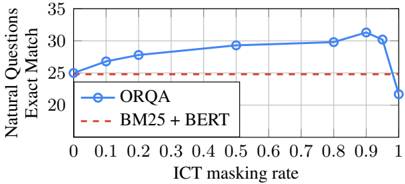
“The ICT unsupervised training brings significant improvement over BM25.”
InfluentialProgressively Optimized Bi-Granular Document Representation for Scalable Embedding Based Retrieval
Xiao, S., Liu, Z., Han, W., Zhang, J., Shao, Y., Lian, D., Li, C., Sun, H., Deng, D., Zhang, L., et al. (2022) · International World Wide Web Conference (WWW) · doi:10.1145/3485447.3511957 · Cited by 20
“Such models leverage large-scale transformers as backbones and get fully pretrained with massive corpus, which achieves strong expressiveness, and contributes to numerous downstream tasks, such as document retrieval [5, 24, 41] and question answering [15, 23, 26].”
BackgroundModel Editing Harms General Abilities of Large Language Models: Regularization to the Rescue
Gu, J.-C., Xu, H.-X., Ma, J.-Y., Lu, P., Ling, Z.-H., Chang, K.-W., & Peng, N. (2024) · arXiv · doi:10.48550/arxiv.2401.04700 · Cited by 16
Prompt-Guided Retrieval Augmentation for Non-Knowledge-Intensive Tasks
Guo, Z., Cheng, S., Wang, Y., Li, P., & Liu, Y. (2023) · Findings of the Association for Computational Linguistics: ACL (Findings of ACL) · doi:10.18653/v1/2023.findings-acl.693 · Cited by 43
Towards Robust QA Evaluation via Open LLMs
Kamalloo, E., Upadhyay, S., & Lin, J. (2024) · Proceedings of the 47th International ACM SIGIR Conference on Research and Development in Information Retrieval · doi:10.1145/3626772.3657675 · Cited by 15
Xu, S., Chen, M., & Chen, S. (2024) · Lecture notes in computer science · doi:10.1007/978-981-97-5678-0_34 · Cited by 23
On the Importance of Adaptive Data Collection for Extremely Imbalanced Pairwise Tasks
Mussmann, S., Jia, R., & Liang, P. (2020) · Findings of the Association for Computational Linguistics: EMNLP (Findings of EMNLP) · doi:10.18653/v1/2020.findings-emnlp.305 · Cited by 20
Search-engine-augmented dialogue response generation with cheaply supervised query production
Wang, A., Song, L., Liu, Q., Mi, H., Wang, L., Tu, Z., Su, J., & Yu, D. (2023) · Artificial Intelligence · doi:10.1016/j.artint.2023.103874 · Cited by 18
“This gives rise to approaches that can retrieve and select information from a knowledge source for response generation [13, 14, 15].”
BackgroundRetrieval Augmentation for Commonsense Reasoning: A Unified Approach
Yu, W., Zhu, C., Zhang, Z., Wang, S., Zhang, Z., Fang, Y., & Jiang, M. (2022) · Conference on Empirical Methods in Natural Language Processing (EMNLP) · doi:10.18653/v1/2022.emnlp-main.294 · Cited by 46
Kedia, A., Zaidi, M. A., & Lee, H. (2022) · Proceedings of the 2022 Conference on Empirical Methods in Natural Language Processing · doi:10.18653/v1/2022.emnlp-main.285 · Cited by 14
CCQA: A New Web-Scale Question Answering Dataset for Model Pre-Training
Huber, P., Aghajanyan, A., Oğuz, B., Okhonko, D., Yih, S., Gupta, S., & Chen, X. (2022) · Findings of the Association for Computational Linguistics: NAACL · doi:10.18653/v1/2022.findings-naacl.184 · Cited by 20
Listwise Generative Retrieval Models via a Sequential Learning Process
Tang, Y., Zhang, R., Guo, J., de Rijke, M., Chen, W., & Cheng, X. (2024) · ACM Transactions on Information Systems · doi:10.1145/3653712 · Cited by 37
“To bridge the gap between general pre-trained language models and downstream retrieval tasks, some studies [54, 66–68”
ResultHarnessing Multi-Role Capabilities of Large Language Models for Open-Domain Question Answering
Sun, H., Liu, Y., Wu, C., Yan, H., Tai, C., Gao, X., Shang, S., & Yan, R. (2024) · International World Wide Web Conference (WWW) · doi:10.1145/3589334.3645670 · Cited by 27
“Dense retrieval using language models such as ORQA [20], DPR [18], RocketQA [35], ColBertQA [19], and ART [41] becomes dominant.”
Progressively Pretrained Dense Corpus Index for Open-Domain Question Answering
Xiong, W., Wang, H., & Wang, W. Y. (2021) · Conference of the European Chapter of the Association for Computational Linguistics · doi:10.18653/v1/2021.eacl-main.244 · Cited by 20
Hu, X., Yu, S., Xiong, C., Liu, Z., Liu, Z., & Yu, G. (2022) · International ACM SIGIR Conference on Research and Development in Information Retrieval (SIGIR) · doi:10.1145/3477495.3531786 · Cited by 20
“, question answering [5, 9, 21] and fact verification [13].”
BackgroundTable Retrieval May Not Necessitate Table-specific Model Design
Wang, Z., Jiang, Z., Nyberg, E., & Neubig, G. (2022) · doi:10.18653/v1/2022.suki-1.5 · Cited by 32
Soft-Labeled Contrastive Pre-Training for Function-Level Code Representation
Li, X., Guo, D., Gong, Y., Lin, Y., Shen, Y., Qiu, X., Jiang, D., Chen, W., & Duan, N. (2022) · Findings of the Association for Computational Linguistics: EMNLP (Findings of EMNLP) · doi:10.18653/v1/2022.findings-emnlp.9 · Cited by 27
Mixed-modality Representation Learning and Pre-training for Joint Table-and-Text Retrieval in OpenQA
Huang, J., Zhong, W., Liu, Q., Gong, M., Jiang, D., & Duan, N. (2022) · Findings of the Association for Computational Linguistics: EMNLP (Findings of EMNLP) · doi:10.18653/v1/2022.findings-emnlp.303 · Cited by 30
Dibia, V. C. (2020) · Conference on Empirical Methods in Natural Language Processing: System Demonstrations (EMNLP) · doi:10.18653/v1/2020.emnlp-demos.3 · Cited by 19
Open-Retrieval Conversational Machine ReadingPreprint
Gao, Y., Li, J., Wu, C.-S., Lyu, M. R.-T., & King, I. (2021) · arXiv (Cornell University) · doi:10.48550/arxiv.2102.08633 · Cited by 17
“…factoid questions through a two-stage retriever-reader approach [20]– [22]: a retriever module retrieves dozens of question-relevant passages from a large collection of passages using BM25 [23] or dense representations [24], then a reader module finds the answer from the retrieved rule texts.”
BackgroundReasoning Over Virtual Knowledge Bases With Open Predicate Relations
Sun, H., Verga, P., Dhingra, B., Salakhutdinov, R., & Cohen, W. W. (2021) · arXiv · doi:10.48550/arxiv.2102.07043 · Cited by 14
“Other approaches propose to retrieve embedded passages which are then passed to an LM to reason over (Karpukhin et al., 2020; Lewis et al., 2020; Guu et al., 2020; Lee et al., 2019).”
BackgroundAttention-guided Generative Models for Extractive Question AnsweringPreprint
Xu, P., Liang, D., Huang, Z., & Xiang, B. (2021) · arXiv (Cornell University) · doi:10.48550/arxiv.2110.06393 · Cited by 25
“Various works have been proposed to improve either or both retrieval and reader models (Wang et al., 2019; Karpukhin et al., 2020; Lee et al., 2019; Khattab et al., 2020; Lewis et al., 2020a; Min et al., 2019; Izacard and Grave, 2021, 2020a) under this framework.”
MethodMATE: Multi-view Attention for Table Transformer EfficiencyPreprint
Eisenschlos, J. M., Gor, M., Müller, T., & Cohen, W. W. (2021) · arXiv (Cornell University) · doi:10.48550/arxiv.2109.04312 · Cited by 32
“To apply sparse transformers to the HYBRIDQA task, we propose POINTR, a two stage framework in a somewhat similar fashion to open domain QA pipelines (Chen et al., 2017; Lee et al., 2019).”
BackgroundMethodInfluentialLitSearch: A Retrieval Benchmark for Scientific Literature Search
Ajith, A., Xia, M., Chevalier, A., Goyal, T., Chen, D., & Gao, T. (2024) · arXiv · doi:10.48550/arxiv.2407.18940 · Cited by 13
“Note that the maximum context length of the tested models is 2,048 (GritLM) and the average length of their training data is even shorter—for example, the commonly used MS-MARCO (Nguyen et al., 2017) and NaturalQues-tions (Lee et al., 2019) have an average document length of 56 and 79.”
BackgroundMethodHyperlink-induced Pre-training for Passage Retrieval in Open-domain Question Answering
Zhou, J., Li, X., Shang, L., Luo, L., Zhan, K., Hu, E., Zhang, X., Jiang, H., Cao, Z., Yu, F., et al. (2022) · Proceedings of the conference - Association for Computational Linguistics. Meeting · doi:10.18653/v1/2022.acl-long.493 · Cited by 34
Visual Explanation for Open-Domain Question Answering With BERT
Shao, Z., Sun, S., Zhao, Y., Wang, S., Wei, Z., Gui, T., Turkay, Ç., & Chen, S. (2023) · IEEE Transactions on Visualization and Computer Graphics · doi:10.1109/tvcg.2023.3243676 · Cited by 13
“Several studies [32], [41] have focused on enabling the modern neural Retriever to have a greater retrieval ability with a speed that is close to that of traditional IR systems.”
BackgroundMethodSoft Prompt Decoding for Multilingual Dense Retrieval
Huang, Z., Zeng, H., Zamani, H., & Allan, J. (2023) · International ACM SIGIR Conference on Research and Development in Information Retrieval (SIGIR) · doi:10.1145/3539618.3591769 · Cited by 20
“Dense retrieval based on a bi-encoder architecture is proposed to overcome the sparse retrieval bottleneck [28, 32, 43].”
BackgroundEnd-to-end Knowledge Retrieval with Multi-modal Queries
Luo, M., Fang, Z., Gokhale, T., Yang, Y., & Baral, C. R. (2023) · Proceedings of the conference - Association for Computational Linguistics. Meeting · doi:10.18653/v1/2023.acl-long.478 · Cited by 40
Bouyamourn, A. Z. A. (2023) · Conference on Empirical Methods in Natural Language Processing (EMNLP) · doi:10.18653/v1/2023.emnlp-main.192 · Cited by 33
Tu, Z., Yang, W., Fu, Z., Xie, Y., Tan, L., Xiong, K., Li, M., & Lin, J. (2020) · ACM SIGIR International Conference on Theory of Information Retrieval (ICTIR) · doi:10.1145/3409256.3409818 · Cited by 22
Building a Question Answering System for the Manufacturing Domain
Xingguang, L., Zhenbo, C., Shen, Z., Haoxin, Z., Hangcheng, M., Xu, X., & Xiao, G. (2022) · IEEE Access · doi:10.1109/access.2022.3191678 · Cited by 14
Combo of Thinking and Observing for Outside-Knowledge VQA
Si, Q., Mo, Y., Lin, Z., Ji, H., & Wang, W. (2023) · Proceedings of the conference - Association for Computational Linguistics. Meeting · doi:10.18653/v1/2023.acl-long.614 · Cited by 32
MASTER: Multi-task Pre-trained Bottlenecked Masked Autoencoders Are Better Dense Retrievers
Zhou, K., Liu, X., Gong, Y., Zhao, W. X., Jiang, D., Duan, N., & Wen, J.-R. (2023) · Lecture notes in computer science · doi:10.1007/978-3-031-43415-0_37 · Cited by 19
Learning a Cost-Effective Annotation Policy for Question Answering
Kratzwald, B., Feuerriegel, S., & Sun, H. (2020) · Conference on Empirical Methods in Natural Language Processing (EMNLP) · doi:10.18653/v1/2020.emnlp-main.246 · Cited by 13
RECONSIDER: Re-Ranking using Span-Focused Cross-Attention for Open Domain Question AnsweringPreprint
Iyer, S. V., Min, S., Mehdad, Y., & Yih, W.-T. (2020) · arXiv (Cornell University) · doi:10.48550/arxiv.2010.10757 · Cited by 16
“3 ORQA (Lee et al., 2019) 33.”
MethodInfluentialStudying Strategically: Learning to Mask for Closed-book QAPreprint
Ye, Q., Li, B. Z., Wang, S., Bolte, B., Ma, H., Yih, W.-T., Ren, X., & Khabsa, M. (2020) · arXiv (Cornell University) · doi:10.48550/arxiv.2012.15856 · Cited by 17
Less is More: Pre-train a Strong Text Encoder for Dense Retrieval Using a Weak DecoderPreprint
Lu, S., He, D., Xiong, C., Ke, G., Malik, W., Dou, Z., Bennett, P., Liu, T., & Overwijk, A. (2021) · arXiv (Cornell University) · doi:10.48550/arxiv.2102.09206 · Cited by 28
“Many applications of pre-trained language models can be categorized into two groups: sequence(s) labeling and sequence matching (Devlin et al., 2018; Lee et al., 2019).”
InfluentialSemantic Answer Similarity for Evaluating Question Answering ModelsPreprint
Risch, J., Möller, T., Gutsch, J., & Pietsch, M. (2021) · arXiv (Cornell University) · doi:10.48550/arxiv.2108.06130 · Cited by 51
“The original Natural Questions dataset (NQ) (Kwiatkowski et al., 2019) was meant for reading comprehension but Lee et al. (2019) adapted the dataset for open-domain QA and it has been released under the name NQ-open.”
MethodOptimizing Retrieval-augmented Reader Models via Token Elimination
Berchansky, M., Izsak, P., Caciularu, A., Dagan, I., & Wasserblat, M. (2023) · Conference on Empirical Methods in Natural Language Processing (EMNLP) · doi:10.18653/v1/2023.emnlp-main.93 · Cited by 23
Retrieve What You Need: A Mutual Learning Framework for Open-domain Question Answering
Wang, D., Huang, Q., Jackson, M., & Gao, J. (2024) · Transactions of the Association for Computational Linguistics · doi:10.1162/tacl_a_00646 · Cited by 26
Efficient Multimodal Selection for Retrieval in Knowledge-Based Visual Question Answering
Luo, L., Lai, H., Pan, Y., & Yin, J. P. (2025) · IEEE Transactions on Circuits and Systems for Video Technology · doi:10.1109/tcsvt.2025.3527032 · Cited by 12
“For the first stage, retrievers [11], [22], [23] usually adopt a biencoder structure and use fast vector search.”
Weakly-Supervised Open-Retrieval Conversational Question Answering
Qu, C., Liu, Y., Chen, C., Croft, W. B., Krishna, K., & Iyyer, M. (2021) · Lecture notes in computer science · doi:10.1007/978-3-030-72113-8_35 · Cited by 13
Wang, J., Jatowt, A., & Yoshikawa, M. (2021) · International ACM SIGIR Conference on Research and Development in Information Retrieval (SIGIR) · doi:10.1145/3404835.3462885 · Cited by 19
“We then choose DrQA [7] for comparison, which is one of the most popular QA systems and is often used as a baseline in QA researches [25, 29, 47, 48].”
MethodHow Do We Answer Complex Questions: Discourse Structure of Long-form Answers
Xu, F., Li, J. J., & Choi, E. (2022) · Proceedings of the conference - Association for Computational Linguistics. Meeting · doi:10.18653/v1/2022.acl-long.249 · Cited by 28
Structural Contrastive Representation Learning for Zero-shot Multi-label Text Classification
Zhang, T., Xu, Z., Medini, T., & Shrivastava, A. (2022) · Findings of the Association for Computational Linguistics: EMNLP (Findings of EMNLP) · doi:10.18653/v1/2022.findings-emnlp.362 · Cited by 12
“Xu et al. (2022) propose to iteratively train the query encoder and document encoder using training pairs constructed with the Inverse Cloze Task (Lee et al., 2019) and dropout (Srivastava et al., 2014), and expand the set of negative instances with a cache queue.”
BackgroundMethodInfluentialPilault, J., Garcia, X., Bražinskas, A., & Fırat, O. (2023) · International Joint Conference on Natural Language Processing and Conference of the Asia-Pacific Chapter of the Association for Computational Linguistics (IJCNLP-AACL) · doi:10.18653/v1/2023.ijcnlp-main.31 · Cited by 31
Talk to Papers: Bringing Neural Question Answering to Academic Search
Zhao, T., & Lee, K. (2020) · Annual Meeting of the Association for Computational Linguistics: System Demonstrations (ACL Demo) · doi:10.18653/v1/2020.acl-demos.5 · Cited by 13
Self-citationFew-Shot Text Ranking with Meta Adapted Synthetic Weak Supervision
Sun, S. Y., Qian, Y., Liu, Z., Xiong, C., Zhang, K., Bao, J., Liu, Z., & Bennett, P. N. (2021) · doi:10.18653/v1/2021.acl-long.390 · Cited by 24
“They have been extensively employed in ad-hoc text retrieval (Xiong et al., 2017b; Dai et al., 2018; Nogueira and Cho, 2019; Xiong et al., 2021) and later natural language processing (NLP) tasks (Lee et al., 2019; Liu et al., 2020; Qu et al., 2020).”
MethodTowards Robust Neural Retrieval Models with Synthetic Pre-TrainingPreprint
Reddy, R. G., Yadav, V., Sultan, M. A., Franz, M., Castelli, V., Ji, H., & Sil, A. (2021) · arXiv (Cornell University) · doi:10.48550/arxiv.2104.07800 · Cited by 19
“DPR has also been shown to outperform other neural methods that employ sophisticated IR-specific pre-training schemes such as the Inverse Cloze Task (Lee et al., 2019) or latent learning of the retriever during MLM pre-training (Guu et al., 2020).”
BackgroundMethodMore Than Reading Comprehension: A Survey on Datasets and Metrics of Textual Question AnsweringPreprint
Bai, Y., & Wang, D. Z. (2021) · arXiv (Cornell University) · doi:10.48550/arxiv.2109.12264 · Cited by 22
“, R3[24], ORQA[23], REALM[56], DPR[57], RAG[58], GPT3[6], T5[59], etc.”
BackgroundMethodInfluentialDual-Feedback Knowledge Retrieval for Task-Oriented Dialogue Systems
Shi, T., Li, L., Lin, Z., Yang, T., Quan, X., & Wang, Q. (2023) · arXiv · doi:10.48550/arxiv.2310.14528 · Cited by 12
“ICT (Lee et al., 2019) introduces the inverse cloze task for unsupervised pre-training of dense retrievers.”
Xu, P., Patwary, M., Shoeybi, M., Puri, R., Fung, P., Anandkumar, A., & Catanzaro, B. (2020) · arXiv · doi:10.48550/arxiv.2010.00840 · Cited by 12
“several works have shown that inclusion of learned mechanisms for explicit or implicit knowledge can lead to the state-of-the-art results in Question Answering (Guu et al., 2020; Karpukhin et al., 2020; Lee et al., 2019; Lewis et al., 2020) and dialogue”
BackgroundA Unified Encoder-Decoder Framework with Entity Memory
Zhang, Z., Yu, W., Zhu, C., & Jiang, M. (2022) · Conference on Empirical Methods in Natural Language Processing (EMNLP) · doi:10.18653/v1/2022.emnlp-main.43 · Cited by 15
Srivastava, A., & Memon, A. (2024) · IEEE Access · doi:10.1109/access.2024.3446854 · Cited by 9
“A total of 14,042 ambiguous questions were sourced from NQ-Open [39].”
MethodInfluentialFinQAPT: Empowering Financial Decisions with End-to-End LLM-driven Question Answering Pipeline
Singh, K., Kaur, S., & Smiley, C. (2024) · ACM International Conference on AI in Finance (ICAIF) · doi:10.1145/3677052.3698682 · Cited by 27
“Open-domain question answering has seen signi fi cant progress with methods like DrQA [5], R3 [28], and OpenBookQA [10, 11, 14, 16].”
RETTA: Retrieval-enhanced test-time adaptation for zero-shot video captioning
Ma, Y., Qing, L., Li, G., Qi, Y., Beheshti, A., Sheng, Q. Z., & Huang, Q. (2025) · Pattern Recognition · doi:10.1016/j.patcog.2025.112170 · Cited by 28
“ORQA [33] pre-trains the re-triever with an unsupervised inverse cloze task and learns to retrieve evidence from an open corpus.”
RA-BLIP: Multimodal Adaptive Retrieval-Augmented Bootstrapping Language-Image Pre-Training
Ding, M., Ma, Y., Qin, P., Wu, J., Li, Y., & Nie, L. (2025) · IEEE Transactions on Multimedia · doi:10.1109/tmm.2025.3599070 · Cited by 26
“Pioneering methods like ORQA [3] have employed inverse cloze tasks for retriever pre-training, showcasing their efficacy on open-ended question answering datasets.”
Retrieval-Augmented Transformer-XL for Close-Domain Dialog Generation
Bonetta, G., Cancelliere, R., Liu, D., & Vozila, P. (2021) · Proceedings of the ... International Florida Artificial Intelligence Research Society Conference · doi:10.32473/flairs.v34i1.128369 · Cited by 19
“In (Guu et al. 2020; Lee, Chang, and Toutanova 2019) a generative model is augmented with a neural retriever trained to pick informative text paragraphs; (Khandelwal et al. 2020) propose to enhance a language model (LM) through a nearest neighbor search in suitable text collections.”
Learning to Generate Questions by Learning to Recover Answer-containing Sentences
Back, S., Kedia, A., Chinthakindi, S. C., Lee, H., & Choo, J. (2021) · Findings of the Association for Computational Linguistics: ACL (Findings of ACL) · doi:10.18653/v1/2021.findings-acl.132 · Cited by 19
“Lee et al. (2019b) suggested a pre-training method for information retrieval called Inverse Cloze Task.”
MethodInfluentialSlot Filling for Biomedical Information Extraction
Papanikolaou, Y., Staib, M., Grace, J., & Bennett, F. (2022) · Workshop on Biomedical Language Processing (BioNLP) · doi:10.18653/v1/2022.bionlp-1.7 · Cited by 15
Augmenting Document Representations for Dense Retrieval with Interpolation and Perturbation
Jeong, S., Baek, J., Cho, S., Hwang, S. J., & Park, J. (2022) · Proceedings of the conference - Association for Computational Linguistics. Meeting · doi:10.18653/v1/2022.acl-short.48 · Cited by 12
Disentangled Retrieval and Reasoning for Implicit Question Answering
Liu, Q., Geng, X., Wang, Y., Cambria, E., & Jiang, D. (2022) · IEEE Transactions on Neural Networks and Learning Systems · doi:10.1109/tnnls.2022.3220933 · Cited by 17
“To further improve retrieval performance, dense retrieval methods [18, 19, 20, 21] are widely explored to encode text as dense vectors and retrieve evidence pieces of which vectors are closest to the question vector.”
MethodKim, N., Htut, P. M., Bowman, S. R., & Petty, J. (2023) · Proceedings of the conference - Association for Computational Linguistics. Meeting · doi:10.18653/v1/2023.acl-long.472 · Cited by 71
OPERA: Harmonizing Task-Oriented Dialogs and Information Seeking Experience
Li, M., Peng, B., Gao, J., & Zhang, Z. (2024) · ACM Transactions on the Web · doi:10.1145/3623381 · Cited by 17
“To overcome the recall ceiling of untrainable retrievers, later works start exploring the use of dense representations for the retriever component [26, 29, 30].”
Modeling Context in Answer Sentence Selection Systems on a Latency Budget
Han, R., Soldaini, L., & Moschitti, A. (2021) · Conference of the European Chapter of the Association for Computational Linguistics · doi:10.18653/v1/2021.eacl-main.261 · Cited by 14
Boosting Search Engines with Interactive Agents
Adolphs, L., Börschinger, B., Buck, C., Huebscher, M. C., Ciaramita, M., Espeholt, L., Hofmann, T., Kilcher, Y., Rothe, S., Sessa, P. G., et al. (2022) · Transactions on machine learning research · doi:10.3929/ethz-b-000591593 · Cited by 24
Salient Span Masking for Temporal Understanding
Cole, J. R., Chaudhary, A., Dhingra, B., & Talukdar, P. P. (2023) · Conference of the European Chapter of the Association for Computational Linguistics · doi:10.18653/v1/2023.eacl-main.222 · Cited by 25
Neural Knowledge Bank for Pretrained Transformers
Dai, D., Jiang, W., Dong, Q., Lyu, Y., & Sui, Z. (2023) · Lecture notes in computer science · doi:10.1007/978-3-031-44696-2_60 · Cited by 27
Qi, P., Lee, H., Sido, O. T., & Manning, C. D. (2020) · arXiv (Cornell University) · Cited by 11
RAGBench: Explainable Benchmark for Retrieval-Augmented Generation Systems
Friel, R., Belyi, M., & Sanyal, A. (2024) · arXiv · doi:10.48550/arxiv.2407.11005 · Cited by 11
Metadata
- Authors
- Lee, K., Chang, M.-W., & Toutanova, K.
- Affiliations
- Google (United States) (US)
- Venue
- Proceedings of the 57th Annual Meeting of the Association for Computational Linguistics
- Published
- 2019
- Pages
- 6086-6096
- ISSN
- 0736-587X (ISSN-L)
- OpenAlex
- W2947497897
- Cited by
- 771
- References
- 30
- Citations by year
- 2026: 36 · 2025: 67 · 2024: 70 · 2023: 159 · 2022: 134 · 2021: 194 · 2020: 101 · 2019: 10
- FWCI
- 41.99
- Type
- conference paper
- Language
- en
- Open access
- hybrid
- doi.org
- Licence
- cc-by
- Locations
- Proceedings of the conference - Association for Computational Linguistics. Meeting (publishedVersion, cc-by)
- arXiv (Cornell University) (submittedVersion)
- arXiv (Cornell University)
- Topics
- Physical Sciences › Computer Science › Artificial Intelligence › Topic Modeling
- Physical Sciences › Computer Science › Information Systems › Information Retrieval and Search Behavior
- Physical Sciences › Computer Science › Computer Vision and Pattern Recognition › Multimodal Machine Learning Applications
- Keywords
- open-domain question answering, weakly supervised learning, evidence retrieval
About these checks
Registry, retraction, Cites and statistics results are computed, not judged, with one exception: a printed reference that no index lists is read once by a model before it counts as a citation error. Claims are extracted by a model and kept only when their quote appears verbatim in the text; each cited source is then checked, with a model’s help, for whether it says what the claim relies on. Those verdicts can be wrong — read the claim’s quote and the cited source before relying on one.
Statistics and arithmetic are recomputed, not judged.
Confidence bands are shown only for fields calibrated on our annotated test set. None is calibrated yet, so no band is shown.
What counts as a claim ›How we measure confidence ›How we check this ›
Are you an author, or do you see a problem with this page? Request a review
Data sources
Bibliographic data: Semantic Scholar, OpenAlex, Crossref.
Contains information from the Semantic Scholar Academic Graph Datasets, made available under the ODC Attribution License (ODC-BY 1.0).
Semantic Scholar’s data is described in: Kinney, R., et al. (2023). The Semantic Scholar Open Data Platform. arXiv:2301.10140.
