

The DOI matches its Crossref record; 135 of the 135 references it cites were found in a registry or an index.
Metabolic reprogramming in triple-negative breast cancer
Open accessAbstract
Since triple-negative breast cancer (TNBC) was first defined over a decade ago, increasing studies have focused on its genetic and molecular characteristics. Patients diagnosed with TNBC, compared to those diagnosed with other breast cancer subtypes, have relatively poor outcomes due to high tumor aggressiveness and lack of targeted treatment. Metabolic reprogramming, an emerging hallmark of cancer, is hijacked by TNBC to fulfill bioenergetic and biosynthetic demands; maintain the redox balance; and further promote oncogenic signaling, cell proliferation, and metastasis. Understanding the mechanisms of metabolic remodeling may guide the design of metabolic strategies for the effective intervention of TNBC. Here, we review the metabolic reprogramming of glycolysis, oxidative phosphorylation, amino acid metabolism, lipid metabolism, and other branched pathways in TNBC and explore opportunities for new biomarkers, imaging modalities, and metabolically targeted therapies.
Overview
The claims and statistics of this paper haven’t been checked yet.
Run the check — free, no account needed. It reads the open-access text and checks the sources it cites.
Integrity signals
Registry
Cites
Statistics
Figures
Verification
Claims the paper makes
The claims and statistics of this paper haven’t been checked yet.
Run the check — free, no account needed. It reads the open-access text and checks the sources it cites.
Claims other papers make about this one
Each is checked against this paper’s own text: does it say what the citing paper says it does?
In the citing paper
“The modulation of cancer-specific metabolic adaptations weakens the malignant cells and widens the therapeutic window for effective treatment of TNBC patients (Lanning et al., 2017; Wang et al., 2020).”
From An Arthropod Hormone, Ecdysterone, Inhibits the Growth of Breast Cancer Cells via Different Mechanisms (2020) · cites this paper as Wang et al., 2020
Self-check
Percentages, sums and reported differences re-computed from the paper’s own numbers.
The self-check needs the paper’s full text.
Citations
Cites
1 retracted
Samanta, D., Park, Y., Andrabi, S. A., Shelton, L. M., Gilkes, D. M., & Semenza, G. L. (2016) · Cancer Research · doi:10.1158/0008-5472.can-16-0530 · Cited by 242 · cited 1×
“This metabolic reprogramming maintains the level of NADPH to counter hypoxia-or chemotherapy-induced ROS stress and plays a role in BCSC enrichment and lung metastasis 53,54 .”
BackgroundRetractedNishimura, R., Osako, T., Nishiyama, Y., Tashima, R., Nakano, M., Fujisue, M., Toyozumi, Y., & Arima, N. (2013) · Oncology · doi:10.1159/000353099 · Cited by 13,239
The emerging hallmarks of cancer metabolism
Pavlova, N. N., & Thompson, C. B. (2016) · Cell Metabolism · doi:10.1016/j.cmet.2015.12.006 · Cited by 5,926 · cited 1×
“…despite the availability of adequate oxygen (known as aerobic glycolysis or the Warburg effect), thereby maintaining high levels of glycolytic intermediates for biosynthetic requirements, while decreasing the production of reactive oxygen species (ROS) from oxidative phosphorylation (OXPHOS) 6 .”
BackgroundRegulation of cancer cell metabolism
Cairns, R. A., Harris, I. S., & Mak, T. W. (2011) · Nature Reviews Cancer · doi:10.1038/nrc2981 · Cited by 4,744 · cited 2×
“Under normoxic conditions, HIF-1 α is hydroxylated by the proline hydroxylase domain (PHD2; also known as EglN1) in an oxygen-and α -ketoglutarate ( α -KG)- dependent manner, which results in its ubiquitination and subsequent degradation 15 .”
BackgroundFoulkes, W. D., Smith, I. E., & Reis-Filho, J. S. (2010) · New England Journal of Medicine · doi:10.1056/nejmra1001389 · Cited by 4,719
Goldhirsch, A., Wood, W. C., Coates, A. S., Gelber, R. D., Thurlimann, B. J. K., & Senn, H.-J. (2011) · Annals of Oncology · doi:10.1093/annonc/mdr304 · Cited by 3,836
Metabolic Reprogramming: A Cancer Hallmark Even Warburg Did Not Anticipate
Ward, P. S., & Thompson, C. B. (2012) · Cancer Cell · doi:10.1016/j.ccr.2012.02.014 · Cited by 3,233 · cited 1×
“This rewired metabolic network depends on the dysregulation of many key enzymes, such as pyruvate kinase muscle isozyme M2 (PKM2), which redirects glycolytic intermediates into the anabolic pathway 7 .”
BackgroundLiedtke, C., Mazouni, C., Hess, K. R., André, F., Tordai, A., Mejia, J. A., Symmans, W. F., Gonzalez-Angulo, A. M., Hennessy, B., Green, M., et al. (2008) · Journal of Clinical Oncology · doi:10.1200/jco.2007.14.4147 · Cited by 2,892 · cited 1×
“Nevertheless, chemotherapy currently remains the mainstay of systemic treatment due to the lack of effective targeted therapy such as anti-HER2 and anti-ER 5 .”
BackgroundEMT, CSCs, and drug resistance: the mechanistic link and clinical implications
Shibue, T., & Weinberg, R. A. (2017) · Nature Reviews Clinical Oncology · doi:10.1038/nrclinonc.2017.44 · Cited by 2,539 · cited 1×
“EMT confers TNBC with cancer stem cell (CSC)-like characteristics, including elevated metastatic potential and enhanced resistance to chemotherapy 4 .”
BackgroundFrom Krebs to clinic: glutamine metabolism to cancer therapy
Altman, B. J., Stine, Z. E., & Dang, C. V. (2016) · Nature Reviews Cancer · doi:10.1038/nrc.2016.71 · Cited by 2,119
Functional genomics reveal that the serine synthesis pathway is essential in breast cancer
Possemato, R., Marks, K. M., Shaul, Y. D., Pacold, M. E., Kim, D., Birsoy, K., Sethumadhavan, S., Woo, H.-K., Jang, H. G., Jha, A. K., et al. (2011) · Nature · doi:10.1038/nature10350 · Cited by 1,683
Mitochondrial ROS in cancer: initiators, amplifiers or an Achilles' heel?
Sabharwal, S. S., & Schumacker, P. T. (2014) · Nature reviews. Cancer · doi:10.1038/nrc3803 · Cited by 1,681 · cited 1×
“Although OXPHOS generates more ATP than glycolysis does, when oxygen availability is compromised, electrons can escape from the electron transport chain, and they can be captured by O 2 , causing excessive ROS (such as superoxide and hydrogen peroxide) and ROS-mediated DNA damage 90,91 .”
BackgroundLehmann, B. D., Jovanović, B., Chen, X., Estrada, M. V., Johnson, K. N., Shyr, Y., Moses, H. L., Sanders, M. E., & Pietenpol, J. A. (2016) · PLoS ONE · doi:10.1371/journal.pone.0157368 · Cited by 1,494 · cited 1×
“In addition, TNBC itself is a heterogeneous disease that can be classified into four distinct molecular subtypes according to gene expression profiling, with each subtype displaying a differential response to chemotherapy 135 .”
BackgroundHIF-1: upstream and downstream of cancer metabolism
Semenza, G. L. (2009) · Current Opinion in Genetics & Development · doi:10.1016/j.gde.2009.10.009 · Cited by 1,437 · cited 1×
“HIF-1 α also inactivates the pyruvate dehydrogenase complex and attenuates the entry of pyruvate into the tricarboxylic acid (TCA) cycle, thereby reinforcing the glycolytic phenotype and decreasing OXPHOS 15,17 .”
BackgroundIshimoto, T., Nagano, O., Yae, T., Tamada, M., Motohara, T., Oshima, H., Oshima, M., Ikeda, T., Asaba, R., Yagi, H., et al. (2011) · Cancer Cell · doi:10.1016/j.ccr.2011.01.038 · Cited by 1,192
Phosphoglycerate dehydrogenase diverts glycolytic flux and contributes to oncogenesis
Locasale, J. W., Grassian, A. R., Melman, T., Lyssiotis, C. A., Mattaini, K. R., Bass, A. J., Heffron, G., Metallo, C. M., Muranen, T., Sharfi, H., et al. (2011) · Nature Genetics · doi:10.1038/ng.890 · Cited by 1,120
Antitumor activity of the glutaminase inhibitor CB-839 in triple-negative breast cancer
Gross, M. I., Demo, S. D., Dennison, J. B., Chen, L., Chernov-Rogan, T., Goyal, B., Janes, J. R., Laidig, G. J., Lewis, E. R., Li, J., et al. (2014) · Molecular Cancer Therapeutics · doi:10.1158/1535-7163.mct-13-0870 · Cited by 1,068 · cited 1×
“…is CB-839, a potent, selective, and orally bioavailable inhibitor of GLS. CB-839 has an antiproliferative effect on TNBC cells both in vitro and in xenograft models, accompanied by marked decreases in glutaminolytic flux, oxygen consumption, and levels of GSH and TCA cycle intermediates 122 .”
BackgroundMolecular Classification and Molecular Forecasting of Breast Cancer: Ready for Clinical Application?
Brenton, J. D., Carey, L., Ahmed, A. A., & Caldas, C. (2005) · Journal of Clinical Oncology · doi:10.1200/jco.2005.03.3845 · Cited by 973 · cited 2×
“The high risk of metastasis in these patients may be associated with epithelial-mesenchymal transition (EMT), which is induced by several transcriptional factors such as Snail1, Smad2, and Twist1/2.”
BackgroundFerritins: A family of molecules for iron storage, antioxidation and more
Arosio, P., Ingrassia, R., & Cavadini, P. (2009) · Biochimica et Biophysica Acta (BBA) - General Subjects · doi:10.1016/j.bbagen.2008.09.004 · Cited by 886 · cited 1×
“Some TNBC cell lines show aberrantly increased heavy subunits of ferritin in the nucleus, where it can act as a GSH-independent anti-oxidative system, protecting the DNA from damage by oxidizing Fe 2+ to Fe 3+ to mitigate ROS stress after exposure to UV 99,100 .”
BackgroundLoss of FBP1 by Snail-Mediated Repression Provides Metabolic Advantages in Basal-like Breast Cancer
Dong, C., Yuan, T., Wu, Y., Wang, Y., Fan, T. W. ‐., Miriyala, S., Lin, Y., Yao, J., Shi, J., Kang, T., et al. (2013) · Cancer Cell · doi:10.1016/j.ccr.2013.01.022 · Cited by 821 · cited 2×
“FBP1 also enhances OXPHOS by activating mitochondrial electron transporter complex I through the upregulation of the mitochondrial transcription factor B1M (TFB1M), which is essential for complex I protein translation 93 .”
BackgroundLee, K., Giltnane, J. M., Balko, J. M., Schwarz, L. J., Zotano, Á. G., Hutchinson, K. E., Nixon, M. J., Estrada, M. V., Sanchez, V. M., Sanders, M. E., et al. (2017) · Cell Metabolism · doi:10.1016/j.cmet.2017.09.009 · Cited by 652 · cited 5×
“In turn, chemotherapy induces the enrichment of BCSCs in TNBC by upregulating xCT in a HIF-1-dependent manner to facilitate the synthesis of GSH and activate the gene encoding the pluripotency factor, Nanog 41 .”
BackgroundInfluentialASCT2/SLC1A5 controls glutamine uptake and tumour growth in triple-negative basal-like breast cancer
van Geldermalsen, M., Wang, Q., Nagarajah, R., Marshall, A. D., Thoeng, A., Gao, D., Ritchie, W., Feng, Y., Bailey, C. G., Deng, N., et al. (2015) · Oncogene · doi:10.1038/onc.2015.381 · Cited by 581
Timmerman, L. A., Holton, T., Yuneva, M., Louie, R. J., Padró, M., Daemen, A., Hu, M., Chan, D. A., Ethier, S. P., van ‘t Veer, L. J., et al. (2013) · Cancer Cell · doi:10.1016/j.ccr.2013.08.020 · Cited by 573
The LINK-A lncRNA activates normoxic HIF1α signalling in triple-negative breast cancer
Lin, A., Li, C., Xing, Z., Hu, Q., Liang, K., Han, L., Wang, C., Hawke, D. H., Wang, S., Zhang, Y., et al. (2016) · Nature Cell Biology · doi:10.1038/ncb3295 · Cited by 568
Asparagine bioavailability governs metastasis in a model of breast cancer
Knott, S., Wagenblast, E., Khan, S., Kim, S. Y., Soto, M., Wagner, M., Turgeon, M., Fish, L., Erard, N., Gable, A. L., et al. (2018) · Nature · doi:10.1038/nature25465 · Cited by 539
Fructose-1,6-bisphosphatase opposes renal carcinoma progression
Li, B., Qiu, B., Lee, D. S. M., Walton, Z. E., Ochocki, J. D., Mathew, L. K., Mancuso, A., Gade, T. P. F., Keith, B., Nissim, I., et al. (2014) · Nature · doi:10.1038/nature13557 · Cited by 535 · cited 1×
“Mechanistically, FBP1 suppresses HIF-1 α activity by directly binding to its inhibitory domain, thus acting as a transcriptional corepressor in the nucleus to repress the transcription of HIF-1 α target glycolysis-related genes, including GLUT1, LDHA, and PDK1 94 .”
BackgroundInhibition of fatty acid oxidation as a therapy for MYC-overexpressing triple-negative breast cancer
Camarda, R., Zhou, A. Y., Kohnz, R. A., Balakrishnan, S., Mahieu, C. I., Anderton, B. N., Eyob, H., Kajimura, S., Tward, A. D., Krings, G., et al. (2016) · Nature Medicine · doi:10.1038/nm.4055 · Cited by 528 · cited 4×
“Etomoxir (ETX), as a clinically tested, specific inhibitor of the enzyme CPT1 involved in FAO, causes ATP depletion and energetic stress, retarding tumor growth in a xenograft model 74 .”
BackgroundInfluentialZaugg, K., Yao, Y., Reilly, P. T., Kannan, K., Kiarash, R., Mason, J. M., Huang, P., Sawyer, S. K., Fuerth, B. J., Faubert, B., et al. (2011) · Genes & Development · doi:10.1101/gad.1987211 · Cited by 504
Metabolic recycling of ammonia via glutamate dehydrogenase supports breast cancer biomass
Spinelli, J. B., Yoon, H., Ringel, A. E., Jeanfavre, S., Clish, C. B., & Haigis, M. C. (2017) · Science · doi:10.1126/science.aam9305 · Cited by 468 · cited 1×
“Through this metabolic recycling of ammonia, elevated glutamate levels enable the synthesis of other amino acids, such as aspartate and proline 36 .”
BackgroundLi, W., Tanikawa, T., Kryczek, I., Xia, H., Li, G., Wu, K., Wei, S., Zhao, L., Vatan, L., Wen, B., et al. (2018) · Cell Metabolism · doi:10.1016/j.cmet.2018.04.022 · Cited by 451 · cited 1×
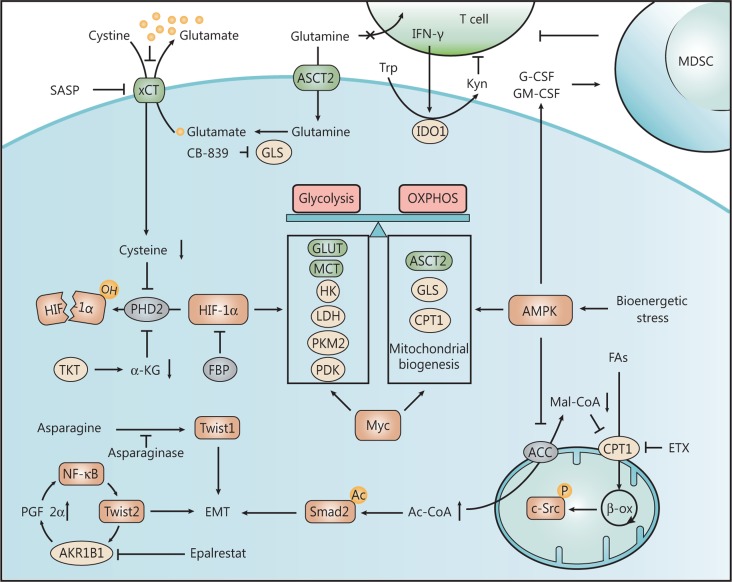
“In addition, a high rate of aerobic glycolysis in TNBC increases the secretion of G-CSF and GM-CSF through the AMPK-ULK1-autophagy pathway, which promotes myeloid-derived suppressor cells (MDSCs) development and an immunosuppressive microenvironment 24 ( Figure 2 ).”
BackgroundMethionine is a metabolic dependency of tumor-initiating cells
Wang, Z., Yip, L. Y., Lee, J. H. J., Wu, Z., Chew, H. Y., Chong, P. K. W., Teo, C. C., Ang, H. Y.-K., Peh, K. L. E., Yuan, J. X., et al. (2019) · Nature Medicine · doi:10.1038/s41591-019-0423-5 · Cited by 431 · cited 1×
“Additionally, many tumor and stem cells depend on the biosynthesis of the universal methyl-donor S-adenosylmethionine (SAM) from exogenous methionine by methionine adenosyltransferase 2 α (MAT2A) to maintain their epigenome 126,127 .”
BackgroundTargeting Breast Cancer Stem Cell State Equilibrium through Modulation of Redox Signaling
Luo, M., Li, S., Brooks, M. D., Jiagge, E. M., Zhu, Y., Buschhaus, J. M., Conley, S. J., Fath, M. A., Davis, A., Gheordunescu, E., et al. (2018) · Cell Metabolism · doi:10.1016/j.cmet.2018.06.006 · Cited by 362 · cited 3×
“Therefore, dual targeting of glycolysis and mitochondrial bioenergetics or antioxidant pathways decreases cellular bioenergetics and increases the death of breast cancer cells 102,111 .”
BackgroundAdaptation of Energy Metabolism in Breast Cancer Brain Metastases
Chen, E. I., Hewel, J. A., Krueger, J. S., Tiraby, C., Weber, M. R., Kralli, A., Becker, K., Yates, J. R., & Felding‐Habermann, B. (2007) · Cancer Research · doi:10.1158/0008-5472.can-06-3137 · Cited by 359 · cited 1×
“Epithelial-like BCSCs exhibit elevated OXPHOS coupled with the upregulation of GSH metabolism and anti-oxidant defense 102 , which is also observed in “energetic” cancer stem cells (e-CSCs) and TNBC brain or lung metastases 103-106 .”
BackgroundElucidating cancer metabolic plasticity by coupling gene regulation with metabolic pathways
Jia, D., Lu, M., Jung, K. H., Park, J. H., Yu, L., Onuchic, J. N., Kaipparettu, B. A., & Levine, H. (2019) · Proceedings of the National Academy of Sciences · doi:10.1073/pnas.1816391116 · Cited by 345 · cited 2×
“Indeed, they can also transit to an epithelial-like state to rely on OXPHOS 102 or stably maintain a hybrid metabolic phenotype with a high activity of both glycolysis and OXPHOS 110 .”
BackgroundMitophagy defects arising from BNip3 loss promote mammary tumor progression to metastasis
Chourasia, A. H., Tracy, K., Frankenberger, C. A., Boland, M. L., Sharifi, M. N., Drake, L. E., Sachleben, J. R., Asara, J. M., Locasale, J. W., Karczmar, G. S., et al. (2015) · EMBO Reports · doi:10.15252/embr.201540759 · Cited by 344 · cited 1×
“A similar mechanism is observed in TNBC cells with mitophagy defect 96 .”
Park, J. H., Vithayathil, S. A., Kumar, S., Sung, P., Dobrolecki, L. E., Putluri, V., Bhat, V. B., Bhowmik, S. K., Gupta, V. K., Arora, K., et al. (2016) · Cell Reports · doi:10.1016/j.celrep.2016.02.004 · Cited by 316 · cited 2×
“As FAO activates oncogenic Src and its target genes, as discussed previously, ETX also reverses the Src-regulated gene pattern and abolishes the metastasis potential of TNBC 76 .”
BackgroundEcheverria, G. V., Ge, Z., Seth, S., Zhang, X., Jeter-Jones, S. L., Zhou, X., Cai, S., Tu, Y., McCoy, A., Peoples, M. D., et al. (2019) · Science Translational Medicine · doi:10.1126/scitranslmed.aav0936 · Cited by 307 · cited 1×
“Similarly, after chemotherapy, the residual tumors are highly sensitive to the inhibitor of OXPHOS, suggesting increased dependence on OXPHOS 107 .”
BackgroundMeng-Shian, C., Wang, S., Hsu, C., Yin, P., Yeh, T.-S., Lee, H., & Tseng, L. (2017) · Oncotarget · doi:10.18632/oncotarget.23055 · Cited by 306
Gluconeogenesis in Cancer: Function and Regulation of PEPCK, FBPase, and G6Pase
Wang, Z., & Dong, C. (2018) · Trends in cancer · doi:10.1016/j.trecan.2018.11.003 · Cited by 300 · cited 3×
“Ubiquitous loss of FBP1 in TNBC is required for the maintenance of aerobic glycolysis and the CSC phenotype 91,93 .”
BackgroundD'Amato, N. C., Rogers, T. J., Gordon, M. A., Greene, L. I., Cochrane, D. R., Spoelstra, N. S., Nemkov, T. G., D'Alessandro, A., Hansen, K. C., & Richer, J. K. (2015) · Cancer Research · doi:10.1158/0008-5472.can-15-2011 · Cited by 294 · cited 1×
“Mechanistically, the increased kynurenine generated by TDO2 activates the aryl hydrocarbon receptor (AhR), an endogenous kynurenine receptor, thus facilitating the proliferation, invasion, and metastatic capacity of TNBC 58,59 .”
BackgroundCassago, A., Ferreira, A. P. S., Ferreira, I. M., Fornezari, C., Gomes, E. R. M., Greene, K. S., Pereira, H. M., Garratt, R. C., Dias, S. M. G., & Ambrosio, A. L. B. (2012) · Proceedings of the National Academy of Sciences · doi:10.1073/pnas.1112495109 · Cited by 291 · cited 1×
“Compared with other breast cancer subtypes, TNBC is more glutamine dependent and susceptible to glutaminolysis-targeting therapeutics because of the overexpression of GLS 30,31 , which is associated with high-grade metastatic breast cancer 32 .”
BackgroundDifferential Glutamate Metabolism in Proliferating and Quiescent Mammary Epithelial Cells
Coloff, J. L., Murphy, J. P., Braun, C. R., Harris, I. S., Shelton, L. M., Kami, K., Gygi, S. P., Selfors, L. M., & Brugge, J. S. (2016) · Cell Metabolism · doi:10.1016/j.cmet.2016.03.016 · Cited by 288 · cited 1×
“Consistently, among the four major breast cancer subtypes, the most proliferative basal breast tumors express high levels of GPT2 and PSAT1, whereas they express relatively low levels of GLUD1/2 35 .”
BackgroundLipoprotein lipase links dietary fat to solid tumor cell proliferation
Kuemmerle, N. B., Rysman, E., Lombardo, P. S., Flanagan, A. J., Lipe, B. C., Wells, W. A., Pettus, J. R., Froehlich, H. M., Memoli, V. A., Morganelli, P. M., et al. (2011) · Molecular Cancer Therapeutics · doi:10.1158/1535-7163.mct-10-0802 · Cited by 286 · cited 1×
“TNBC exhibits enhanced lipid uptake by secreting lipoprotein lipase (LPL, which hydrolyzes the triglycerides in lipoproteins into fatty acids) and expressing CD36 (the channel for cellular fatty acid uptake) 83 .”
BackgroundGarcía, M. R., Steinbauer, B., Srivastava, K., Singhal, M., Mattijssen, F., Maida, A., Christian, S., Hess‐Stumpp, H., Augustin, H. G., Müller‐Decker, K., et al. (2017) · Cell Metabolism · doi:10.1016/j.cmet.2017.09.018 · Cited by 281
A metabolic prosurvival role for PML in breast cancer
Carracedo, A., Weiss, D., Leliaert, A. K., Bhasin, M., de Boer, V. C. J., Laurent, G., Adams, A. C., Sundvall, M., Song, S. J., Ito, K., et al. (2012) · Journal of Clinical Investigation · doi:10.1172/jci62129 · Cited by 277 · cited 1×
“…receptor gamma coactivator 1-alpha (PGC1-α ), the master regulator of mitochondria biogenesis and respiration 74 , which activates FAO to promote energy homeostasis and cell viability, especially under attachment loss or metabolic stress, thus promoting the metastasis of TNBC 77 .”
BackgroundKung, H.-N., Marks, J. R., & Chi, J.-T. (2011) · PLoS Genetics · doi:10.1371/journal.pgen.1002229 · Cited by 277 · cited 1×
“Luminal cells can rescue basal cells in co-culture without glutamine, indicating possible glutamine symbiosis within breast ducts 37 .”
BackgroundLu, H., Samanta, D., Xiang, L., Zhang, H., Hu, H., Chen, I., Bullen, J. W., & Semenza, G. L. (2015) · Proceedings of the National Academy of Sciences · doi:10.1073/pnas.1513433112 · Cited by 270 · cited 1×
“In turn, chemotherapy induces the enrichment of BCSCs in TNBC by upregulating xCT in a HIF-1-dependent manner to facilitate the synthesis of GSH and activate the gene encoding the pluripotency factor, Nanog 41 .”
BackgroundLim, S., Li, C., Xia, W., Lee, H., Chang, S.-S., Shen, J., Hsu, J. L., Raftery, D., Djukovic, D., Gu, H., et al. (2016) · Cancer Research · doi:10.1158/0008-5472.can-15-2478 · Cited by 270 · cited 3×
“Combining the glycolytic inhibitor 2-deoxy-D-glucose with the EGFR inhibitor gefitinib effectively suppresses TNBC cell proliferation 14 .”
BackgroundEnhanced serine production by bone metastatic breast cancer cells stimulates osteoclastogenesis
Pollari, S., Käkönen, S.-M., Edgren, H., Wolf, M., Kohonen, P., Sara, H., Guise, T., Nees, M., & Kallioniemi, O. (2011) · Breast Cancer Research and Treatment · doi:10.1007/s10549-010-0848-5 · Cited by 269 · cited 1×
“The overexpression of PHGDH and PSAT1 is significantly associated with poor clinical outcome and malignant phenotypic features of breast cancer 55 .”
BackgroundIncreased NOS2 predicts poor survival in estrogen receptor-negative breast cancer patients
Glynn, S. A., Boersma, B. J., Dorsey, T. H., Yi, M., Yfantis, H. G., Ridnour, L. A., Martin, D. N., Switzer, C. H., Hudson, R. S., Wink, D. A., et al. (2010) · Journal of Clinical Investigation · doi:10.1172/jci42059 · Cited by 254 · cited 1×
“The NO signaling also triggers upregulation of the stem cell marker CD44 and other proteins that are characteristic of BLBC, potentiating EMT, chemoresistance, and invasion capacity 63-66 .”
BackgroundMetabolic enzyme PFKFB4 activates transcriptional coactivator SRC-3 to drive breast cancer
Dasgupta, S., Rajapakshe, K., Zhu, B., Nikolai, B. C., Yi, P., Putluri, N., Choi, J. M., Jung, S. Y., Coarfa, C., Westbrook, T. F., et al. (2018) · Nature · doi:10.1038/s41586-018-0018-1 · Cited by 252 · cited 1×
“…oncogenic steroid receptor coactivator-3 (Src-3) and enhances its transcriptional activity, which leads to the upregulation of transketolase (TKT), a major enzyme that mediates the non-oxidative pentose phosphate pathway (PPP), thus shunting glycolytic flux into the PPP for purine synthesis 22 .”
BackgroundWitkiewicz, A. K., Whitaker-Menezes, D., Dasgupta, A., Philp, N. J., Lin, Z., Gandara, R., Sneddon, S., Martinez-Outschoorn, U. E., Sotgia, F., & Lisanti, M. P. (2012) · Cell Cycle · doi:10.4161/cc.11.6.19530 · Cited by 239
Metabolic Reprogramming in Breast Cancer and Its Therapeutic Implications
Gandhi, N. S., & Das, G. M. (2019) · Cells · doi:10.3390/cells8020089 · Cited by 237 · cited 1×
“The tumor microenvironment and the different cells in this microenvironment are often modified by the dysregulated metabolism of tumor cells to further facilitate tumor growth in a symbiotic manner 131-133 .”
BackgroundParacrine Induction of HIF by Glutamate in Breast Cancer: EglN1 Senses Cysteine
Briggs, K. J., Koivunen, P., Cao, S., Backus, K. M., Olenchock, B. A., Patel, H., Zhang, Q. H., Signoretti, S., Gerfen, G. J., Richardson, A. L., et al. (2016) · Cell · doi:10.1016/j.cell.2016.05.042 · Cited by 228 · cited 1×
“Subsequently, the depletion of intracellular cysteine disables PHD2, which hydroxylates HIF-1 α for degradation, thus leading to the induction of HIF-1 α signaling and triple-negative breast carcinogenesis 44 ( Figure 2 ).”
BackgroundMicrobiome—Microbial Metabolome—Cancer Cell Interactions in Breast Cancer—Familiar, but Unexplored
Mikó, E., Kovàcs, T., Sebő, É., Tóth, J., Csonka, T., Ujlaki, G., Sipos, A., Szabó, J., Méhes, G., & Bai, P. (2019) · Cells · doi:10.3390/cells8040293 · Cited by 228 · cited 1×
“Dysbiosis of the microbiome and microbial metabolome also plays a role in breast cancer metabolism and progression 134 .”
BackgroundIncreased sugar uptake promotes oncogenesis via EPAC/RAP1 and O-GlcNAc pathways
Onodera, Y., Nam, J., & Bissell, M. J. (2013) · Journal of Clinical Investigation · doi:10.1172/jci63146 · Cited by 213 · cited 1×
“In contrast, decreasing glucose uptake in breast cancer cells suppresses these oncogenic pathways and promotes the formation of organized structures 20 .”
BackgroundMetabolic reprogramming in triple-negative breast cancer through Myc suppression of TXNIP
Shen, L., O’Shea, J. M., Kaadige, M. R., Cunha, S., Wilde, B. R., Cohen, A. L., Welm, A. L., & Ayer, D. E. (2015) · Proceedings of the National Academy of Sciences · doi:10.1073/pnas.1501555112 · Cited by 212 · cited 1×
“…genes, including LDH-A, pyruvate dehydrogenase kinase (PDK), and glutaminase (GLS) 18 ( Figure 2 ). c-Myc also represses the level of thioredoxin-interacting protein, a potent negative regulator of glucose uptake and glycolytic gene expression, to further activate aerobic glycolysis 19 .”
BackgroundWright, H. J., Hou, J., Xu, B., Cortez, M., Potma, E. O., Tromberg, B. J., & Razorenova, O. V. (2017) · Proceedings of the National Academy of Sciences · doi:10.1073/pnas.1703791114 · Cited by 211
Role of ferritin alterations in human breast cancer cells
Shpyleva, S., Tryndyak, V., Kovalchuk, O., Starlard‐Davenport, A., Chekhun, V. F., Beland, F. A., & Pogribny, I. P. (2010) · Breast Cancer Research and Treatment · doi:10.1007/s10549-010-0849-4 · Cited by 205 · cited 1×
“Some TNBC cell lines show aberrantly increased heavy subunits of ferritin in the nucleus, where it can act as a GSH-independent anti-oxidative system, protecting the DNA from damage by oxidizing Fe 2+ to Fe 3+ to mitigate ROS stress after exposure to UV 99,100 .”
BackgroundBrown, K. K., Spinelli, J. B., Asara, J. M., & Toker, A. (2017) · Cancer Discovery · doi:10.1158/2159-8290.cd-16-0611 · Cited by 198 · cited 2×
“Exposure to doxorubicin likely stimulates pyrimidine synthesis by regulating the post-translational modification of CAD and its activity, whereas inhibiting DHODH sensitizes TNBC cells to doxorubicin and significantly induces the regression of TNBC xenografts 115 .”
BackgroundAn Integrated Genomic Screen Identifies LDHB as an Essential Gene for Triple-Negative Breast Cancer
McCleland, M. L., Adler, A. S., Shang, Y., Hunsaker, T., Truong, T., Peterson, D., Torres, E., Li, L., Haley, B., Stéphan, J.-P., et al. (2012) · Cancer Research · doi:10.1158/0008-5472.can-12-1098 · Cited by 195 · cited 2×
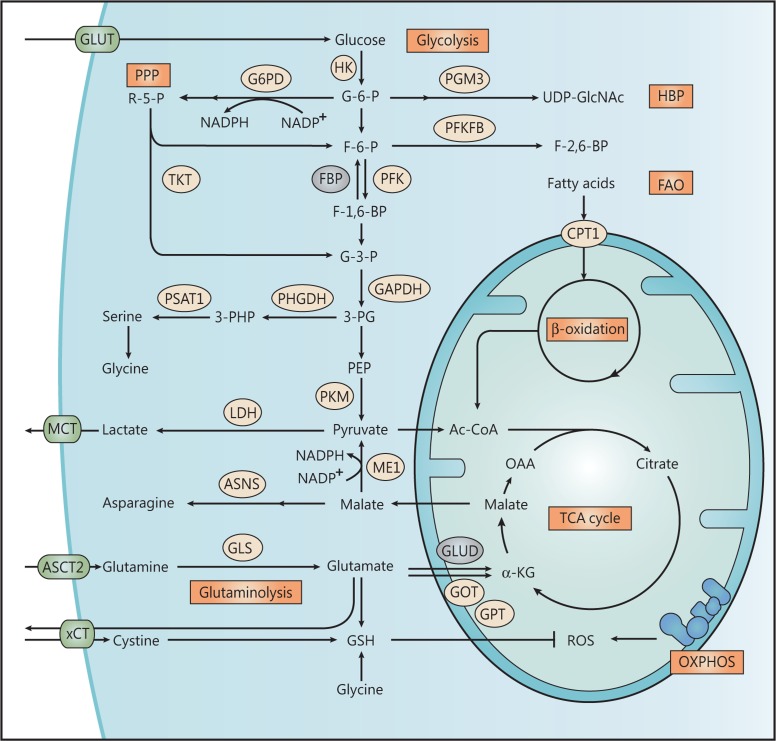
“Enzymes that are upregulated in TNBC are shown as light-yellow ovals, and enzymes downregulated in TNBC are shown as gray ovals. tumor microenvironment 9,11 .”
BackgroundHasegawa, M., Takahashi, H., Rajabi, H. N., Alam, M., Suzuki, Y., Li, Y., Tagde, A., Maeda, T., Hiraki, M., Sukhatme, V. P., et al. (2016) · Oncotarget · doi:10.18632/oncotarget.7598 · Cited by 189 · cited 1×
“Meanwhile, mucin 1 (MUC1), a transmembrane glycoprotein that is aberrantly overexpressed in TNBC, binds directly to the intracellular domain of CD44v and further promotes the stability of xCT 43 .”
BackgroundLampa, M., Arlt, H., He, T., Ospina, B., Reeves, J., Zhang, B., Murtie, J. C., Deng, G., Barberis, C., Hoffmann, D., et al. (2017) · PLoS ONE · doi:10.1371/journal.pone.0185092 · Cited by 172 · cited 12×
“Compared with other breast cancer subtypes, TNBC is more glutamine dependent and susceptible to glutaminolysis-targeting therapeutics because of the overexpression of GLS 30,31 , which is associated with high-grade metastatic breast cancer 32 .”
BackgroundInfluentialAntalis, C. J., Arnold, T. S., Rasool, T., Lee, B., Buhman, K. K., & Siddiqui, R. A. (2009) · Breast Cancer Research and Treatment · doi:10.1007/s10549-009-0594-8 · Cited by 169 · cited 1×
“Meanwhile, elevated activity of low-density lipoprotein (LDL), caveolin-1, and cholesterol acyltransferase 1 (ACAT1) in TNBC is associated with greater uptake and utilization of cholesterol 87 .”
BackgroundMetabolic characterization of triple negative breast cancer
Cao, M. D., Lamichhane, S., Lundgren, S., Bofin, A. M., Fjøsne, H. E., Giskeødegård, G. F., & Bathen, T. F. (2014) · BMC Cancer · doi:10.1186/1471-2407-14-941 · Cited by 165 · cited 1×
“Metabolomics analysis also reveals a low level of glutamine and a high level of glutamate in TNBC, indicating enhanced glutaminolysis 29 .”
BackgroundAssociation of FABP5 Expression With Poor Survival in Triple-Negative Breast Cancer
Liu, R., Graham, K., Glubrecht, D. D., Germain, D. R., Mackey, J. R., & Godbout, R. (2011) · American Journal Of Pathology · doi:10.1016/j.ajpath.2010.11.075 · Cited by 163 · cited 1×
“They promote cell proliferation by enhancing fatty acid uptake and activating the retinoic acid pathway 84,85 .”
BackgroundWu, X., Li, X., Fu, Q., Cao, Q., Chen, X., Wang, M., Yu, J. Z., Long, J., Yao, J., Liu, H., et al. (2017) · The Journal of Experimental Medicine · doi:10.1084/jem.20160903 · Cited by 157 · cited 2×
“…1 member B1 (AKR1B1) is activated in TNBC by Twist2, an inducer of EMT, and the accumulation of its major metabolite PGF2 α , in turn, activates NF-κ B signaling to upregulate Twist2 expression, which eventually forms a positive feedback loop to enhance the CSC properties in TNBC 88 ( Figure 2 ).”
BackgroundPHD3 Loss in Cancer Enables Metabolic Reliance on Fatty Acid Oxidation via Deactivation of ACC2
German, N. J., Yoon, H., Yusuf, R. Z., Murphy, J. P., Finley, L. W. S., Laurent, G., Haas, W., Satterstrom, F. K., Guarnerio, J., Zaganjor, E., et al. (2016) · Molecular Cell · doi:10.1016/j.molcel.2016.08.014 · Cited by 156 · cited 14×
“Myc-overexpressing TNBC shows upregulated CPT activity and increased bioenergetic reliance on FAO through targeted metabolomics analysis 74 .”
BackgroundInfluentialGSTP1 Is a Driver of Triple-Negative Breast Cancer Cell Metabolism and Pathogenicity
Louie, S. M., Grossman, E. A., Crawford, L. A., Ding, L., Camarda, R., Huffman, T. R., Miyamoto, D. K., Goga, A., Weerapana, E., & Nomura, D. K. (2016) · Cell chemical biology · doi:10.1016/j.chembiol.2016.03.017 · Cited by 149 · cited 1×
“This energy reduction ultimately blocks oncogenic signaling through the activation of AMPK and the inhibition of mTOR signaling 21 .”
BackgroundRB1 deficiency in triple-negative breast cancer induces mitochondrial protein translation
Jones, R. A., Robinson, T., Liu, J. C., Shrestha, M., Voisin, V., Ju, Y., Chung, P. E. D., Pellecchia, G., Fell, V. L., Bae, S., et al. (2016) · Journal of Clinical Investigation · doi:10.1172/jci81568 · Cited by 148 · cited 1×
“In addition, loss of the tumor-suppressor retinoblastoma gene ( RB1 ) in TNBC induces mitochondrial protein translation, OXPHOS, and anabolic metabolism, thus equipping cancer cells to utilize scant oxygen levels and migrate away from the hypoxic area 108,109 .”
BackgroundZacksenhaus, E., Shrestha, M., Liu, J. C., Vorobieva, I., Chung, P. E. D., Ju, Y., Nir, U., & Jiang, Z. (2017) · Trends in cancer · doi:10.1016/j.trecan.2017.09.002 · Cited by 143 · cited 1×
“In addition, loss of the tumor-suppressor retinoblastoma gene ( RB1 ) in TNBC induces mitochondrial protein translation, OXPHOS, and anabolic metabolism, thus equipping cancer cells to utilize scant oxygen levels and migrate away from the hypoxic area 108,109 .”
BackgroundSwitzer, C. H., Glynn, S. A., Cheng, R. Y.-S., Ridnour, L. A., Green, J. E., Ambs, S., & Wink, D. A. (2012) · Molecular Cancer Research · doi:10.1158/1541-7786.mcr-12-0124 · Cited by 141
Ansari, R. E., Craze, M. L., Miligy, I. M., Diez, M., Nolan, C. C., Ellis, I. O., Rakha, E. A., & Green, A. R. (2018) · Breast Cancer Research · doi:10.1186/s13058-018-0946-6 · Cited by 140
Mathur, D., Stratikopoulos, E., Ozturk, S., Steinbach, N., Pegno, S., Schoenfeld, S., Yong, R., Murty, V. V., Asara, J. M., Cantley, L. C., et al. (2017) · Cancer Discovery · doi:10.1158/2159-8290.cd-16-0612 · Cited by 139 · cited 2×
“Moreover, leflunomide induces the depletion of nucleotides and the accumulation of DNA damage during replication, leading to synthetic lethality in TNBC cells with the loss of PTEN, which is vital for DNA repair activity 116 .”
BackgroundTseng, C.-W., Kuo, W., Chan, S., Chan, H., Chang, K., & Wang, L. (2018) · Cancer Research · doi:10.1158/0008-5472.can-17-2906 · Cited by 131
Lanzardo, S., Conti, L., Rooke, R., Ruiu, R., Accart, N., Bolli, E., Arigoni, M., Macagno, M., Barrera, G., Pizzimenti, S., et al. (2015) · Cancer Research · doi:10.1158/0008-5472.can-15-1208 · Cited by 130 · cited 2×
“Silencing of xCT impairs tumorsphere formation and the redox balance in breast cancer stem cells (BCSCs) 31,40 .”
BackgroundGautam, J., Banskota, S., Regmi, S. C., Ahn, S., Jeon, Y. H., Jeong, H., Kim, S. J., Nam, T. G., Jeong, B., & Kim, J. (2016) · Molecular Cancer · doi:10.1186/s12943-016-0559-6 · Cited by 128
Witkiewicz, A. K., Dasgupta, A., Sammons, S., Er, O. S., Potoczek, M., Guiles, F., Sotgia, F., Brody, J. R., Mitchell, E. P., & Lisanti, M. P. (2010) · Cancer Biology & Therapy · doi:10.4161/cbt.10.2.11983 · Cited by 127 · cited 1×
“The tumor microenvironment and the different cells in this microenvironment are often modified by the dysregulated metabolism of tumor cells to further facilitate tumor growth in a symbiotic manner 131-133 .”
BackgroundPalaskas, N. J., Larson, S. M., Schultz, N. D., Komisopoulou, E., Wong, J., Rohle, D., Campos, C., Yannuzzi, N. A., Osborne, J. R., Linkov, I., et al. (2011) · Cancer Research · doi:10.1158/0008-5472.can-10-4633 · Cited by 126 · cited 12×
“Compared with other breast cancer subtypes, TNBC is more glutamine dependent and susceptible to glutaminolysis-targeting therapeutics because of the overexpression of GLS 30,31 , which is associated with high-grade metastatic breast cancer 32 .”
BackgroundInfluentialMetabotropic glutamate receptor-1: a potential therapeutic target for the treatment of breast cancer
Speyer, C. L., Smith, J. S., Banda, M., DeVries, J. A., Mekani, T., & Gorski, D. H. (2011) · Breast Cancer Research and Treatment · doi:10.1007/s10549-011-1624-x · Cited by 122
Hickok, J. R., Vasudevan, D., Antholine, W. E., & Thomas, D. D. (2013) · Journal of Biological Chemistry · doi:10.1074/jbc.m112.432294 · Cited by 120 · cited 1×
“In addition, NO can directly inhibit the catalytic activity of the demethylase KDM3A; thereby, it alters cellular histone methylation patterns 67 , leading to changes in the expression levels of numerous oncogenes such as Ets-1 68 .”
BackgroundDoyen, J., Trastour, C., Ettore, F., Peyrottes, I., Toussant, N., Gal, J., Ilc, K., Roux, D., Parks, S. K., Ferrero, J.-M., et al. (2014) · Biochemical and Biophysical Research Communications · doi:10.1016/j.bbrc.2014.07.050 · Cited by 116 · cited 1×
“Enzymes that are upregulated in TNBC are shown as light-yellow ovals, and enzymes downregulated in TNBC are shown as gray ovals. tumor microenvironment 9,11 .”
BackgroundStrekalova, E., Malin, D., Good, D. M., & Cryns, V. L. (2015) · Clinical Cancer Research · doi:10.1158/1078-0432.ccr-14-2792 · Cited by 107 · cited 2×
“The depletion of either methionine or glutamine can increase the cell surface expression of pro-apoptotic TNF-related apoptosis-inducing ligand receptor-2 (TRAIL-R2) and sensitize TNBC cells to TRAIL-induced apoptosis 71,72 .”
BackgroundTargeting lactate transport suppressesin vivobreast tumour growth
Morais-Santos, F., Granja, S., Miranda‐Gonçalves, V., Moreira, A. H. J., Queirós, S., Vilaça, J. L., Schmitt, F. C., Longatto‐Filho, A., Paredes, J., Baltazar, F., et al. (2015) · Oncotarget · doi:10.18632/oncotarget.3910 · Cited by 105 · cited 1×
“Disruption of lactate transport impairs tumor growth in vitro and in vivo , accompanied by reduced tumor aggressiveness 12 .”
BackgroundWahdan-Alaswad, R. S., Cochrane, D. R., Spoelstra, N. S., Howe, E. N., Edgerton, S. M., Anderson, S. M., Thor, A. D., & Richer, J. K. (2014) · Hormones and Cancer · doi:10.1007/s12672-014-0188-8 · Cited by 104 · cited 1×
“Nevertheless, blocking FASN and lipogenesis by metformin or EGCG also induces antitumor effects on TNBC 81,82 , suggesting an intricate role of FAS in cancer cells.”
BackgroundCaloric restriction augments radiation efficacy in breast cancer
Saleh, A. D., Simone, B. A., Palazzo, J., Savage, J. E., Sano, Y., Dan, T., Jin, L., Champ, C. E., Zhao, S., Lim, M. K., et al. (2013) · Cell Cycle · doi:10.4161/cc.25016 · Cited by 103 · cited 1×
“Other dietary modifications, such as caloric restriction, also cause tumor regression in combination with radiation 130 .”
Dong, T., Liu, Z., Xuan, Q., Wang, Z., Ma, W., & Zhang, Q. (2017) · Scientific Reports · doi:10.1038/s41598-017-06378-7 · Cited by 101 · cited 1×
“Either tumoral LDH-A or LDH-B is closely associated with poor clinical outcomes in patients with TNBC 9,10 .”
BackgroundZhou, R., Pantel, A. R., Li, S., Lieberman, B. P., Plöessl, K., Choi, H., Blankemeyer, E. R., Lee, H. S., Kung, H. F., Mach, R. H., et al. (2017) · Cancer Research · doi:10.1158/0008-5472.can-16-1945 · Cited by 99
Glutaminase isoenzymes in the metabolic therapy of cancer
Matés, J. M., Campos-Sandoval, J. A., & Márquez, J. (2018) · Biochimica et Biophysica Acta (BBA) - Reviews on Cancer · doi:10.1016/j.bbcan.2018.07.007 · Cited by 99 · cited 1×
“Several small-molecule inhibitors of GLS, such as CB-839, BPTES, and compound 968 33 normoxic condition, HIF-1 α is hydroxylated and subsequently degraded by PHD2 in an α -KG- and cysteine-dependent manner.”
BackgroundPrognostic relevance of glycosylation-associated genes in breast cancer
Milde‐Langosch, K., Karn, T., Schmidt, M., zu Eulenburg, C., Oliveira‐Ferrer, L., Wirtz, R. M., Schumacher, U., Witzel, I., Schütze, D., & Müller, V. (2014) · Breast Cancer Research and Treatment · doi:10.1007/s10549-014-2949-z · Cited by 98 · cited 1×
“Dysregulation of protein glycosylation, resulting from an increased flux of the hexosamine biosynthetic pathway (HBP), contributes to breast tumor progression or metastasis 113 .”
BackgroundMethionine deprivation suppresses triple-negative breast cancer metastasisin vitroandin vivo
Jeon, H., Kim, J. H., Lee, E., Jang, Y. J., Kwon, J. Y., Kwon, J. Y., Kim, S., Kim, S., Park, J. H. Y., Kim, J.-E., et al. (2016) · Oncotarget · doi:10.18632/oncotarget.11615 · Cited by 98 · cited 2×
“…methionine, and glutamine metabolism are also essential for modulating the metastasis, stemness, and apoptosis of TNBC. Dietary restriction or otherwise inhibiting the synthesis of these amino acids has tumor-suppressing effects, which is discussed later in the section of clinical practice 70-73 .”
BackgroundGarrido, P., Shalaby, A. M., Walsh, E. M., Keane, N., Webber, M., Keane, M., Sullivan, F. J., Kerin, M. J., Callagy, G. M., Ryan, A. E., et al. (2017) · Oncotarget · doi:10.18632/oncotarget.19631 · Cited by 93
O’Neill, S., Porter, R. K., McNamee, N., Martinez, V. G., & O’Driscoll, L. (2019) · Scientific Reports · doi:10.1038/s41598-019-39789-9 · Cited by 93 · cited 1×
“…from OXPHOS to glycolysis, and glycolytic inhibitor can indeed significantly suppress the aggressiveness and CSC phenotype of TNBC cells 101 , it is noteworthy that inhibition of glycolysis also promotes the transition of BCSC in TNBC from a quiescent, mesenchymal-like state…”
BackgroundThewes, V., Simon, R., Hlevnjak, M., Schlotter, M., Schroeter, P., Schmidt, K. V., Wu, Y., Anzeneder, T., Wang, W., Windisch, P. Y., et al. (2017) · Oncogene · doi:10.1038/onc.2017.32 · Cited by 90
Preclinical Evaluation of Fatty Acid Synthase and EGFR Inhibition in Triple-Negative Breast Cancer
Giró‐Perafita, A., Palomeras, S., Lum, D. H., Blancafort, A., Viñas, G., Oliveras, G., Pérez-Bueno, F., Sarrats, A., Welm, A. L., & Puig, T. (2016) · Clinical Cancer Research · doi:10.1158/1078-0432.ccr-15-3133 · Cited by 88
Ricciardiello, F., Votta, G., Palorini, R., Raccagni, I., Brunelli, L., Paiotta, A., Tinelli, F., D’Orazio, G., Valtorta, S., GIOIA, L. D., et al. (2018) · Cell Death and Disease · doi:10.1038/s41419-018-0405-4 · Cited by 88 · cited 2×
“A novel inhibitor of the HBP enzyme PGM3, FR054, reduces both N-and O-glycosylation levels to regulate cell adhesion and migration, impairing tumor growth in vivo 114 .”
BackgroundLoss of GLUT4 Induces Metabolic Reprogramming and Impairs Viability of Breast Cancer Cells
Garrido, P., Osorio, F. G., Morán, J., Cabello, E., Alonso, A., Freije, J. M. P., & González, C. (2014) · Journal of Cellular Physiology · doi:10.1002/jcp.24698 · Cited by 87 · cited 1×
“Knocking down GLUT4 diminishes glucose uptake and lactate release, thus normalizing the metabolism of cancer by reallocating the glycolytic flux to OXPHOS, which leads to compromised cell proliferation and viability under hypoxia 8 .”
BackgroundCystine addiction of triple-negative breast cancer associated with EMT augmented death signaling
Tang, X., Ding, C.-K., Wu, J., Sjol, J., Wardell, S. E., Spasojević, I., George, D. J., McDonnell, D. P., Hsu, D. S., Chang, J. T., et al. (2016) · Oncogene · doi:10.1038/onc.2016.394 · Cited by 86 · cited 1×
“…starvation induces mitochondrial fragmentation and ROS production, leading to necroptosis and ferroptosis in BLBC cells via the tumor necrosis factor alpha (TNF α ) and MEKK4-p38-Noxa pathways, while luminal-type breast cancer, without activation of these pathways, is cystine independent 48,49 .”
BackgroundS-adenosylmethionine biosynthesis is a targetable metabolic vulnerability of cancer stem cells
Strekalova, E., Malin, D., Weisenhorn, E., Russell, J. D., Hoelper, D., Jain, A. Y., Coon, J. J., Lewis, P. W., & Cryns, V. L. (2019) · Breast Cancer Research and Treatment · doi:10.1007/s10549-019-05146-7 · Cited by 85 · cited 1×
“Limiting dietary methionine induces MAT2A expression in TNBC as an adaptive response; therefore, the combination of methionine restriction and the MAT2A inhibitor cycloleucine has a synergistic antitumor effect 128 .”
BackgroundHuang, Q., Stalnecker, C. A., Zhang, C., McDermott, L. A., Iyer, P. C., O’Neill, J., Reimer, S., Cerione, R. A., & Katt, W. P. (2018) · Journal of Biological Chemistry · doi:10.1074/jbc.m117.810101 · Cited by 83 · cited 1×
“Other combination therapies, such as the combination of GLS inhibition and bevacizumab (an anti-angiogenesis monoclonal antibody that targets VEGF), also exhibit antitumor effects on TNBC 124 .”
BackgroundAvanzato, D., Pupo, E., Ducano, N., Isella, C., Bertalot, G., Luise, C., Pece, S., Bruna, A., Rueda, O. M., Caldas, C., et al. (2018) · Cancer Research · doi:10.1158/0008-5472.can-17-3018 · Cited by 82 · cited 1×
“The EGFR signaling, frequently active in TNBC, triggers the expression of hexokinase 2 (HK2) and stabilizes GLUT1 on the cell membrane 13 , whereas it reduces the activity of PKM2 14 , thus causing an accumulation of the glycolytic intermediate, fructose-1,6-bisphosphate (F-1,6-BP).”
BackgroundMetabolic changes associated with methionine stress sensitivity in MDA-MB-468 breast cancer cells
Borrego, S. L., Fahrmann, J. F., Datta, R., Stringari, C., Grapov, D., Zeller, M. D., Chen, Y., Wang, P., Baldi, P., Gratton, E., et al. (2016) · Cancer & Metabolism · doi:10.1186/s40170-016-0148-6 · Cited by 77 · cited 1×
“Additionally, many tumor and stem cells depend on the biosynthesis of the universal methyl-donor S-adenosylmethionine (SAM) from exogenous methionine by methionine adenosyltransferase 2 α (MAT2A) to maintain their epigenome 126,127 .”
BackgroundSerine Synthesis Helps Hypoxic Cancer Stem Cells Regulate Redox
Samanta, D., & Semenza, G. L. (2016) · Cancer Research · doi:10.1158/0008-5472.can-16-1730 · Cited by 76 · cited 1×
“Phosphoglycerate dehydrogenase (PHGDH), as a key enzyme in the first step of serine synthesis, is overexpressed in both TNBC and BLBC, in part, because of copy number amplification 50,51 .”
BackgroundHong, S.-P., Cw, P., Kim, S. W., Nam, Y. J., Yu, J. H., Shin, J. H., Yun, C. H., Im, S., Kim, K.-T., Sung, Y. C., et al. (2015) · Oncogene · doi:10.1038/onc.2015.415 · Cited by 74 · cited 2×
“PFKFB4 phosphorylates oncogenic steroid receptor coactivator-3 (Src-3) and enhances its transcriptional activity, which leads to the upregulation of transketolase (TKT), a major enzyme that mediates the non-oxidative pentose phosphate pathway (PPP), thus shunting glycolytic flux into the PPP for purine synthesis 22 .”
BackgroundCao, Q., Chen, X., Wu, X., Liao, R., Huang, P., Tan, Y., Wang, L., Ren, G., Huang, J., & Dong, C. (2018) · The Journal of Experimental Medicine · doi:10.1084/jem.20172048 · Cited by 73
He, J., Zhang, F., Tay, L. W. R., Boroda, S., Nian, W., Levental, K. R., Levental, I., Harris, T. E., Chang, J. T., & Du, G. (2017) · The FASEB Journal · doi:10.1096/fj.201601353r · Cited by 72
Humbert, O., Riedinger, J., Charon‐Barra, C., Berriolo-Riedinger, A., Desmoulins, I., Lorgis, V., Kanoun, S., Coutant, C., Fumoleau, P., Cochet, A., et al. (2015) · Clinical Cancer Research · doi:10.1158/1078-0432.ccr-15-0384 · Cited by 69 · cited 1×
“Because of the significantly higher uptake of glucose and the glucose analogue 18F-fluorodeoxyglucose (18F-FDG), 18F-FDG PET/CT is used for early determination of TNBC sensitivity to neo-adjuvant chemotherapy and for prediction of recurrence after surgery 118,119 .”
BackgroundLiu, R., Graham, K., Glubrecht, D. D., Lai, R. L., Mackey, J. R., & Godbout, R. (2012) · The Journal of Pathology · doi:10.1002/path.4001 · Cited by 69
Rogers, T. J., Christenson, J. L., Greene, L. I., O’Neill, K. I., Williams, M. M., Gordon, M. A., Nemkov, T. G., D’Alessandro, A., Degala, G. D., Shin, J., et al. (2018) · Molecular Cancer Research · doi:10.1158/1541-7786.mcr-18-0246 · Cited by 68 · cited 1×
“Mechanistically, the increased kynurenine generated by TDO2 activates the aryl hydrocarbon receptor (AhR), an endogenous kynurenine receptor, thus facilitating the proliferation, invasion, and metastatic capacity of TNBC 58,59 .”
BackgroundWang, Z., Shi, X., Li, Y., Fan, J., Zeng, X. L., Xian, Z., Wang, Z., Sun, Y., Wang, S., Song, P., et al. (2014) · Cell Death and Disease · doi:10.1038/cddis.2014.503 · Cited by 67 · cited 1×
“The depletion of arginine by recombinant human arginase (rhArg) leads to TNBC cell apoptosis via ROS and induces adaptive autophagy, whereas blocking autophagic flux by autophagy-targeting drugs potentiates the cytotoxicity of rhArg 129 .”
BackgroundVasudevan, D., Hickok, J. R., Bovee, R. C., Pham, V., Mantell, L. L., Bahroos, N., Kanabar, P. N., Cao, X.-J., Maienschein‐Cline, M., Garcia, B. A., et al. (2015) · Cancer Research · doi:10.1158/0008-5472.can-15-1582 · Cited by 67 · cited 1×
“In addition, NO can directly inhibit the catalytic activity of the demethylase KDM3A; thereby, it alters cellular histone methylation patterns 67 , leading to changes in the expression levels of numerous oncogenes such as Ets-1 68 .”
BackgroundDeciphering metabolic rewiring in breast cancer subtypes
Ogrodzinski, M. P., Bernard, J. J., & Lunt, S. Y. (2017) · Translational research · doi:10.1016/j.trsl.2017.07.004 · Cited by 67 · cited 2×
“In contrast, fatty acid synthesis (FAS) and lipogenic enzymes are downregulated in TNBC compared with the HER2 subtype [upregulating ATP citrate lyase (ACLY) and fatty acid synthase (FASN) to accelerate FAS] 25,74 .”
BackgroundSpeyer, C. L., Hachem, A. H., Assi, A. A., Johnson, J. S., DeVries, J. A., & Gorski, D. H. (2014) · PLoS ONE · doi:10.1371/journal.pone.0088830 · Cited by 66 · cited 1×
“These tumor-promoting effects can be blocked by riluzole, a Food and Drug Administration (FDA)-approved drug for the treatment of amyotrophic lateral sclerosis 45-47 .”
BackgroundBolli, E., O’Rourke, J. P., Conti, L., Lanzardo, S., Rolih, V., Christen, J. M., Barutello, G., Forni, M., Pericle, F., & Cavallo, F. (2017) · OncoImmunology · doi:10.1080/2162402x.2017.1408746 · Cited by 66 · cited 1×
“However, because the antibody titers achieved upon using the DNA vaccine are low, a virus-like-particle (VLP; AX09-0M6) immunotherapy has been developed, which elicits a stronger antibody response against xCT to decrease BCSC growth and prevent self-renewal 125 .”
BackgroundFiorillo, M., Sotgia, F., & Lisanti, M. P. (2019) · Frontiers in Oncology · doi:10.3389/fonc.2018.00677 · Cited by 64
Chen, X., Cao, Q., Liao, R., Wu, X., Xun, S., Huang, J., & Dong, C. (2018) · Theranostics · doi:10.7150/thno.29407 · Cited by 61
ME1 promotes basal-like breast cancer progression and associates with poor prognosis
Liao, R., Ren, G., Liu, H., Chen, X., Cao, Q., Wu, X., Li, J., & Dong, C. (2018) · Scientific Reports · doi:10.1038/s41598-018-35106-y · Cited by 59 · cited 1×
“We found that malic enzyme 1 (ME1), a cytosolic NADP-dependent enzyme that decarboxylates malate to pyruvate with NADPH generation, is dramatically upregulated in BLBC, where it serves as part of an important NADPH-supplying pathway 97 ( Figure 1 ).”
BackgroundRepression of phosphoglycerate dehydrogenase sensitizes triple-negative breast cancer to doxorubicin
Zhang, X., & Bai, W. (2016) · Cancer Chemotherapy and Pharmacology · doi:10.1007/s00280-016-3117-4 · Cited by 54 · cited 1×
“This metabolic reprogramming maintains the level of NADPH to counter hypoxia-or chemotherapy-induced ROS stress and plays a role in BCSC enrichment and lung metastasis 53,54 .”
BackgroundWalsh, E. M., Keane, M., Wink, D. A., Callagy, G. M., & Glynn, S. A. (2016) · Critical Reviews™ in Oncogenesis · doi:10.1615/critrevoncog.2017021307 · Cited by 54 · cited 1×
“The NO signaling also triggers upregulation of the stem cell marker CD44 and other proteins that are characteristic of BLBC, potentiating EMT, chemoresistance, and invasion capacity 63-66 .”
BackgroundIriondo, O., Rábano, M., Domenici, G., Carlevaris, O., López-Ruiz, J. A., Zabalza, I., Berra, E., & Vivanco, M. D. (2015) · Oncotarget · doi:10.18632/oncotarget.5564 · Cited by 52
Bhardwaj, A., Singh, H., Trinidad, C., Albarracin, C. T., Hunt, K. K., & Bedrosian, I. (2018) · Breast Cancer Research · doi:10.1186/s13058-018-1074-z · Cited by 51 · cited 1×
“Additionally, cholesterol biosynthesis is enhanced through the upregulation of HMG-CoA reductase (HMGCR) and HMG-CoA synthase 1 (HMGCS1), key enzymes in the mevalonate pathway 86 .”
BackgroundArgininosuccinate lyase is a potential therapeutic target in breast cancer
Huang, H.-L., Chen, W.-C., Hsu, H., Cho, C.-Y., Hung, Y.-H., Wang, C., & Lai, M.-D. (2015) · Oncology Reports · doi:10.3892/or.2015.4280 · Cited by 49 · cited 1×
“Silencing of argininosuccinate lyase (ASL), an enzyme responsible for the production of arginine, also delays the G2/M transition of TNBC cell line 62 .”
BackgroundLucantoni, F., Dussmann, H., & Prehn, J. H. M. (2018) · Frontiers in Cell and Developmental Biology · doi:10.3389/fcell.2018.00113 · Cited by 47 · cited 1×
“Therefore, dual targeting of glycolysis and mitochondrial bioenergetics or antioxidant pathways decreases cellular bioenergetics and increases the death of breast cancer cells 102,111 .”
BackgroundHong, R., Zhang, W., Xia, X., Zhang, K., Wang, Y., Wu, M., Fan, J., Li, J., Xia, W., Xu, F., et al. (2019) · Molecular Oncology · doi:10.1002/1878-0261.12466 · Cited by 45 · cited 1×
“BRCA1 protein transcriptionally represses GOT2 expression, but this repression mechanism is impaired due to the frequently observed BRCA1 deficiency in TNBC 3,38 .”
BackgroundRoçi, I., Watrous, J. D., Lagerborg, K. A., Lafranchi, L., Lindqvist, A., Jain, M., & Nilsson, R. (2019) · Cell Reports · doi:10.1016/j.celrep.2019.01.059 · Cited by 44
Noonepalle, S. K. R., Gu, F., Lee, E.-J., Choi, J.-H., Han, Q., Kim, J., Ouzounova, M., Shull, A. Y., Pei, L., Hsu, P.-Y., et al. (2017) · Cancer Immunology Research · doi:10.1158/2326-6066.cir-16-0182 · Cited by 38 · cited 1×
“For example, in response to T cell-derived interferon (IFN)- γ , TNBC exhibits highly inducible expression of IDO1 to counteract immune cells 57 ( Figure 2 ).”
BackgroundKim, J. Y., Heo, S., Choi, S. K., Song, I. H., Park, I. A., Kim, Y., Park, H. S., Park, S. Y., Bang, W. S., Gong, G., et al. (2017) · Archiv für Pathologische Anatomie und Physiologie und für Klinische Medicin · doi:10.1007/s00428-017-2083-5 · Cited by 36 · cited 1×
“…of tumor-infiltrating lymphocytes (TILs), suggesting a metabolic competition between cancer cells and TILs in the tumor microenvironment, where active consumption of intercellular glutamine by GLS-overexpressing TNBC cells deprives TILs of glutamine and hinders their proliferation 34 ( Figure 2 ).”
BackgroundMauro-Lizcano, M., & López‐Rivas, A. (2018) · Cell Death and Disease · doi:10.1038/s41419-018-0263-0 · Cited by 33 · cited 1×
“The depletion of either methionine or glutamine can increase the cell surface expression of pro-apoptotic TNF-related apoptosis-inducing ligand receptor-2 (TRAIL-R2) and sensitize TNBC cells to TRAIL-induced apoptosis 71,72 .”
BackgroundZhou, R., Bagga, P., Nath, K., Hariharan, H., Mankoff, D. A., & Reddy, R. D. (2018) · Cancer Research · doi:10.1158/0008-5472.can-17-3988 · Cited by 27 · cited 1×
“Similar to MRS, these methods enable the observation of altered levels of glutamine or glutamate upon GLS inhibition, indicating their feasibility to non-invasively detect the early therapeutic response of TNBC to GLS inhibitors 120,121 .”
ResultHallmarks of the cancer cell of origin: Comparisons with “energetic” cancer stem cells (e-CSCs)
Sotgia, F., Fiorillo, M., & Lisanti, M. P. (2019) · Aging · doi:10.18632/aging.101822 · Cited by 26 · cited 1×
“Epithelial-like BCSCs exhibit elevated OXPHOS coupled with the upregulation of GSH metabolism and anti-oxidant defense 102 , which is also observed in “energetic” cancer stem cells (e-CSCs) and TNBC brain or lung metastases 103-106 .”
BackgroundMetabotropic glutamate receptor-1 regulates inflammation in triple negative breast cancer
Sexton, R. E., Hachem, A. H., Assi, A. A., Bukhsh, M. A., Gorski, D. H., & Speyer, C. L. (2018) · Scientific Reports · doi:10.1038/s41598-018-34502-8 · Cited by 25 · cited 1×
“These tumor-promoting effects can be blocked by riluzole, a Food and Drug Administration (FDA)-approved drug for the treatment of amyotrophic lateral sclerosis 45-47 .”
BackgroundErbaş, H., Bal, O., & Çakır, E. (2015) · Balkan Medical Journal · doi:10.5152/balkanmedj.2015.15611 · Cited by 20 · cited 1×
“Rosuvastatin may impede breast cancer development because it inhibits arginase enzymatic activity and reduces the levels of ornithine and polyamine 61 .”
BackgroundKim, Y., Kim, Y. J., Paeng, J. C., Cheon, G. J., Lee, D. S., Chung, J.-K., & Kang, K. W. (2017) · European Journal of Nuclear Medicine and Molecular Imaging · doi:10.1007/s00259-017-3748-7 · Cited by 20
Untargeted and stable isotope-assisted metabolomic analysis of MDA-MB-231 cells under hypoxia
Yang, J., Cheng, J., Sun, B. H., Li, H., Wu, S., Dong, F., & Yan, X. (2018) · Metabolomics · doi:10.1007/s11306-018-1338-8 · Cited by 19 · cited 1×
“Consistently, metabolomics analysis of TNBC cell lines cultured under hypoxia shows that these cells have increased glucose uptake and higher glycolytic rate, while the conversion rate of glucose into the TCA cycle for OXPHOS is decreased 92 .”
BackgroundRaccagni, I., Belloli, S., Valtorta, S., Stefano, A., Presotto, L., Pascali, C., Bogni, A., Tortoreto, M., Zaffaroni, N., Daidone, M. G., et al. (2018) · PLoS ONE · doi:10.1371/journal.pone.0197754 · Cited by 16 · cited 2×
“Neo-adjuvant chemotherapy based on anthracyclines and taxanes is increasingly used prior to surgery to reduce the size of unresectable TNBC. Traditionally, the response to chemotherapy is assessed by tumor volume, which represents a post-treatment event 117 .”
Background
Cited by
Sorted by citations
Glucose Metabolism and Glucose Transporters in Breast Cancer
Shin, E., & Koo, J. S. (2021) · Frontiers in Cell and Developmental Biology · doi:10.3389/fcell.2021.728759 · Cited by 172
LOX-1 and cancer: an indissoluble liaison
Murdocca, M., Masi, C. D., Pucci, S., Mango, R., Novelli, G., Natale, C. D., & Sangiuolo, F. C. (2021) · Cancer Gene Therapy · doi:10.1038/s41417-020-00279-0 · Cited by 121
Sabit, H., Adel, A., Abdelfattah, M. M., Ramadan, R. M., Nazih, M., Abdel-Ghany, S. E., El-Hashash, A. H. K., & Arneth, B. (2025) · Cancer Letters · doi:10.1016/j.canlet.2025.217865 · Cited by 110
He, L., Wick, N., Germans, S. K., & Peng, Y. S. (2021) · Cancers · doi:10.3390/cancers13246209 · Cited by 89
Immature natural killer cells promote progression of triple-negative breast cancer
Thacker, G., Henry, S., Nandi, A., Debnath, R., Singh, S., Nayak, A., Susnik, B., Boone, M., Zhang, Q. H., Kesmodel, S. B., et al. (2023) · Science Translational Medicine · doi:10.1126/scitranslmed.abl4414 · Cited by 88
Metadata
- Authors
- Wang, Z., Jiang, Q., & Dong, C.
- Affiliations
- Second Affiliated Hospital of Zhejiang University (CN)
- Zhejiang University (CN)
- Corresponding author
- Dong, Chenfang
- Venue
- Cancer Biology and Medicine
- Publisher
- China Anti-cancer Association
- Published
- 2020
- Volume
- 17
- Issue
- 1
- Pages
- 44-59
- ISSN
- 2095-3941 (ISSN-L)
- PMC
- PMC7142847
- OpenAlex
- W3020548503
- Cited by
- 248
- References
- 135
- Citations by year
- 2026: 61 · 2025: 63 · 2024: 46 · 2023: 31 · 2022: 20 · 2021: 18 · 2020: 8
- FWCI
- 6.58
- Type
- journal article
- Language
- en
- Open access
- gold
- doi.org
- Licence
- cc-by
- Locations
- Cancer Biology and Medicine (publishedVersion, cc-by)
- PubMed Central (publishedVersion, cc-by)
- PubMed (publishedVersion)
- DOAJ (DOAJ: Directory of Open Access Journals) (submittedVersion, cc-by-sa)
- Topics
- Life Sciences › Biochemistry, Genetics and Molecular Biology › Cancer Research › Cancer, Hypoxia, and Metabolism
- Life Sciences › Biochemistry, Genetics and Molecular Biology › Cancer Research › Cancer, Lipids, and Metabolism
- Life Sciences › Biochemistry, Genetics and Molecular Biology › Molecular Biology › Metabolism, Diabetes, and Cancer
- Keywords
- triple-negative breast cancer, metabolic reprogramming, glycolysis, oxidative phosphorylation, amino acid metabolism, lipid metabolism, redox homeostasis, oncogenic signaling, metastasis, metabolic biomarkers, metabolic imaging
- MeSH terms
- Warburg Effect, Oncologic, Amino Acids, Antineoplastic Agents, Female, Humans, Oxidative Phosphorylation, Biomarkers, Tumor, Lipid Metabolism, Molecular Targeted Therapy, Triple Negative Breast Neoplasms
About these checks
Registry, retraction, Cites and statistics results are computed, not judged, with one exception: a printed reference that no index lists is read once by a model before it counts as a citation error. Claims are extracted by a model and kept only when their quote appears verbatim in the text; each cited source is then checked, with a model’s help, for whether it says what the claim relies on. Those verdicts can be wrong — read the claim’s quote and the cited source before relying on one.
Statistics and arithmetic are recomputed, not judged.
Confidence bands are shown only for fields calibrated on our annotated test set. None is calibrated yet, so no band is shown.
What counts as a claim ›How we measure confidence ›How we check this ›
Are you an author, or do you see a problem with this page? Request a review
