

The DOI matches its Crossref record; 75 of the 76 references it cites were found in a registry or an index.
Fibroblasts and myofibroblasts in wound healing
Open accessAbstract
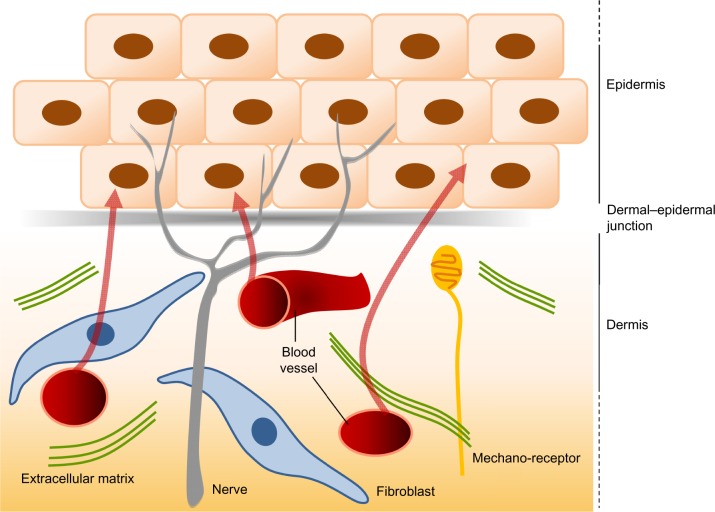
(Myo)fibroblasts are key players for maintaining skin homeostasis and for orchestrating physiological tissue repair. (Myo)fibroblasts are embedded in a sophisticated extracellular matrix (ECM) that they secrete, and a complex and interactive dialogue exists between (myo)fibroblasts and their microenvironment. In addition to the secretion of the ECM, (myo)fibroblasts, by secreting matrix metalloproteinases and tissue inhibitors of metalloproteinases, are able to remodel this ECM. (Myo)fibroblasts and their microenvironment form an evolving network during tissue repair, with reciprocal actions leading to cell differentiation, proliferation, quiescence, or apoptosis, and actions on growth factor bioavailability by binding, sequestration, and activation. In addition, the (myo)fibroblast phenotype is regulated by mechanical stresses to which they are subjected and thus by mechanical signaling. In pathological situations (excessive scarring or fibrosis), or during aging, this dialogue between the (myo)fibroblasts and their microenvironment may be altered or disrupted, leading to repair defects or to injuries with damaged and/or cosmetic skin alterations such as wrinkle development. The intimate dialogue between the (myo)fibroblasts and their microenvironment therefore represents a fascinating domain that must be better understood in order not only to characterize new therapeutic targets and drugs able to prevent or treat pathological developments but also to interfere with skin alterations observed during normal aging or premature aging induced by a deleterious environment.
Overview
The claims and statistics of this paper haven’t been checked yet.
Run the check — free, no account needed. It reads the open-access text and checks the sources it cites.
Integrity signals
Registry
Cites
Statistics
Figures
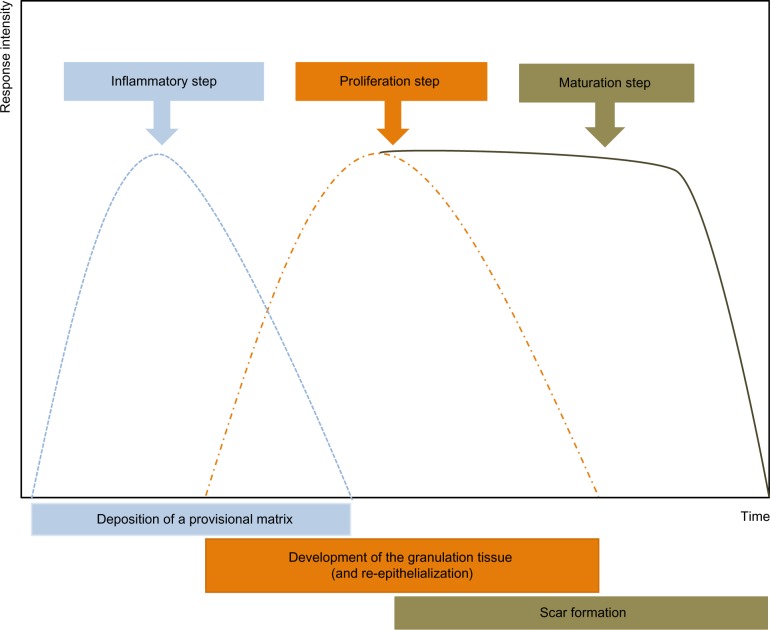
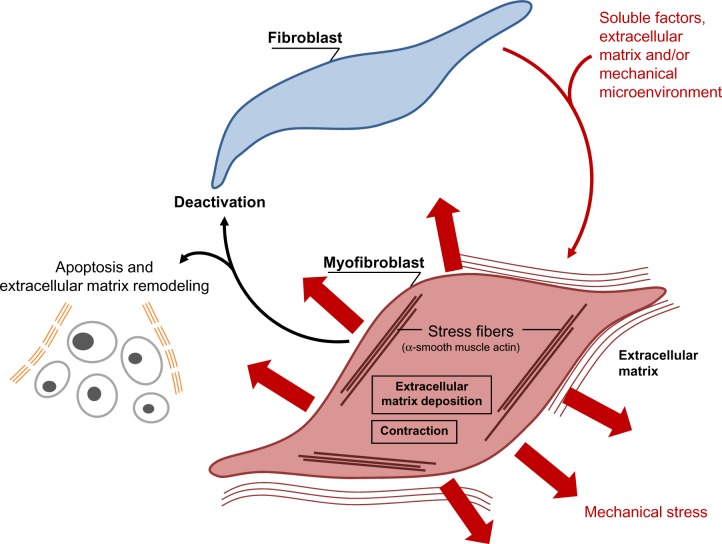
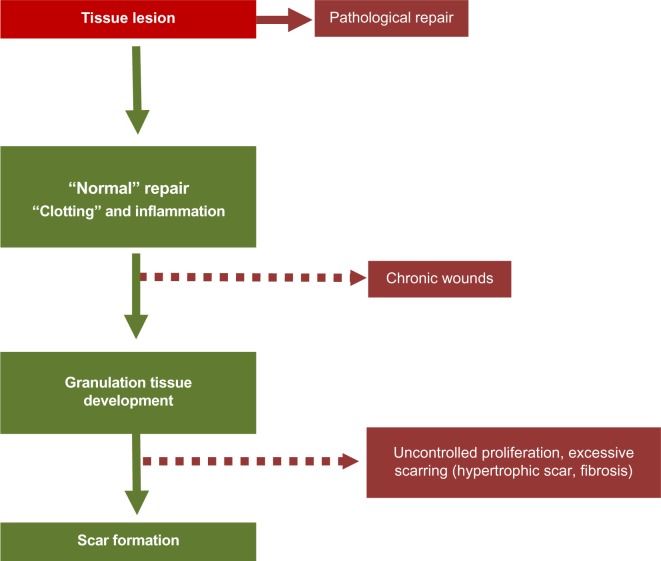
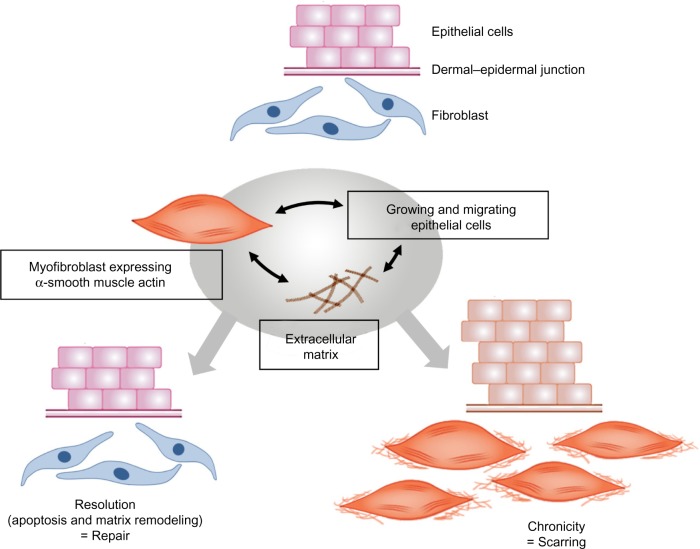
Verification
Claims the paper makes
The claims and statistics of this paper haven’t been checked yet.
Run the check — free, no account needed. It reads the open-access text and checks the sources it cites.
Claims other papers make about this one
Each is checked against this paper’s own text: does it say what the citing paper says it does?
In the citing paper
“In addition to contraction of wound beds and generation of collagen, myofibroblasts contribute to remodeling by release of MMPs that degrade collagen laid down during granulation tissue formation [96, 97].”
From Immunology of Wound Healing (2018) · cites this paper as [96]
Self-check
Percentages, sums and reported differences re-computed from the paper’s own numbers.
The self-check needs the paper’s full text.
Citations
Cites
Multilineage potential of adult human mesenchymal stem cells
Pittenger, M. F., Mackay, A. M., Beck, S. C., Jaiswal, R. K., Douglas, R., Mosca, J. D., Moorman, M. A., Simonetti, D. W., Craig, S., & Marshak, D. R. (1999) · Science · doi:10.1126/science.284.5411.143 · Cited by 21,052
Singer, A. J., & Clark, R. A. F. (1999) · New England Journal of Medicine · doi:10.1056/nejm199909023411006 · Cited by 6,106
Visse, R., & Nagase, H. (2003) · Circulation Research · doi:10.1161/01.res.0000070112.80711.3d · Cited by 4,575
Kalluri, R., & Zeisberg, M. (2006) · Nature Reviews Cancer · doi:10.1038/nrc1877 · Cited by 4,538
Myofibroblasts and mechano-regulation of connective tissue remodelling
Tomasek, J. J., Gabbiani, G., Hinz, B., Chaponnier, C., & Brown, R. A. (2002) · Nature Reviews Molecular Cell Biology · doi:10.1038/nrm809 · Cited by 4,290
Effects of substrate stiffness on cell morphology, cytoskeletal structure, and adhesion
Yeung, T., Georges, P. C., Flanagan, L. A., Marg, B., Ortiz, M., Funaki, M., Zahir, N., Ming, W., Weaver, V., & Janmey, P. A. (2005) · Cell Motility and the Cytoskeleton · doi:10.1002/cm.20041 · Cited by 2,325
TGF-β signaling and the fibrotic response
Leask, A., & Abraham, D. J. (2004) · The FASEB Journal · doi:10.1096/fj.03-1273rev · Cited by 2,319
Endothelial/Pericyte Interactions
Armulik, A., Abramsson, A., & Betsholtz, C. (2005) · Circulation Research · doi:10.1161/01.res.0000182903.16652.d7 · Cited by 2,048
Formation and function of the myofibroblast during tissue repair
Hinz, B. (2007) · Journal of Investigative Dermatology · doi:10.1038/sj.jid.5700613 · Cited by 1,658
Presence of modified fibroblasts in granulation tissue and their possible role in wound contraction
Gabbiani, G., Ryan, G. B., & Majno, G. (1971) · Experientia · doi:10.1007/bf02147594 · Cited by 1,485
Myofibroblast contraction activates latent TGF-β1 from the extracellular matrix
Wipff, P.-J., Rifkin, D. B., Meister, J.-J., & Hinz, B. (2007) · The Journal of Cell Biology · doi:10.1083/jcb.200704042 · Cited by 1,346
Distinct fibroblast lineages determine dermal architecture in skin development and repair
Driskell, R. R., Lichtenberger, B. M., Hoste, E., Kretzschmar, K., Simons, B. D., Charalambous, M., Ferron, S. R., Herault, Y., Pavlovic, G., Ferguson-Smith, A. C., et al. (2013) · Nature · doi:10.1038/nature12783 · Cited by 1,291
Recent Developments in Myofibroblast Biology
Hinz, B., Phan, S. H., Thannickal, V. J., Prunotto, M., Desmoulière, A., Varga, J., De Wever, O., Mareel, M., & Gabbiani, G. (2012) · The American Journal of Pathology · doi:10.1016/j.ajpath.2012.02.004 · Cited by 1,193
Desmoulière, A., Redard, M., Darby, I. A., & Gabbiani, G. (1995) · Europe PMC (PubMed Central) · Cited by 1,185
Self-citationDarby, I. A., Skalli, O., & Gabbiani, G. (1990) · PubMed · Cited by 1,180
Self-citationHypoxia promotes fibrogenesis in vivo via HIF-1 stimulation of epithelial-to-mesenchymal transition
Higgins, D. F., Kimura, K., Bernhardt, W. M., Shrimanker, N., Akai, Y., Hohenstein, B., Saito, Y., Johnson, R. S., Kretzler, M., Cohen, C. D., et al. (2007) · Journal of Clinical Investigation · doi:10.1172/jci30487 · Cited by 976
Peripheral Blood Fibrocytes: Differentiation Pathway and Migration to Wound Sites
Abe, R., Donnelly, S. C., Peng, T., Bucala, R., & Metz, C. N. (2001) · The Journal of Immunology · doi:10.4049/jimmunol.166.12.7556 · Cited by 967
Serini, G., Bochaton-Piallat, M.-L., Ropraz, P., Geinoz, A., Borsi, L., Zardi, L., & Gabbiani, G. (1998) · The Journal of Cell Biology · doi:10.1083/jcb.142.3.873 · Cited by 847
Stromal myofibroblasts are drivers of invasive cancer growth
De Wever, O., Demetter, P., Mareel, M., & Bracke, M. (2008) · International Journal of Cancer · doi:10.1002/ijc.23925 · Cited by 722
The myofibroblast: Paradigm for a mechanically active cell
Hinz, B. (2009) · Journal of Biomechanics · doi:10.1016/j.jbiomech.2009.09.020 · Cited by 717
Focal adhesion size controls tension-dependent recruitment of α-smooth muscle actin to stress fibers
Goffin, J. M., Pittet, P., Csúcs, G., Lussi, J. W., Meister, J.-J., & Hinz, B. (2006) · The Journal of Cell Biology · doi:10.1083/jcb.200506179 · Cited by 703
Neuronal Control of Skin Function: The Skin as a Neuroimmunoendocrine Organ
Roosterman, D., Goerge, T., Schneider, S. W., Bunnett, N. W., & Steinhoff, M. S. (2006) · Physiological Reviews · doi:10.1152/physrev.00026.2005 · Cited by 693
Hinz, B., Mastrangelo, D., Iselin, C. E., Chaponnier, C., & Gabbiani, G. (2001) · American Journal Of Pathology · doi:10.1016/s0002-9440(10)61776-2 · Cited by 638
Fibroblast Differentiation in Wound Healing and Fibrosis
Darby, I. A., & Hewitson, T. D. (2007) · International review of cytology · doi:10.1016/s0074-7696(07)57004-x · Cited by 625
Self-citationFibroblast heterogeneity: more than skin deep
Sorrell, J. M., & Caplan, A. I. (2004) · Journal of Cell Science · doi:10.1242/jcs.01005 · Cited by 553
The stroma reaction myofibroblast: a key player in the control of tumor cell behavior
Desmoulière, A., Guyot, C., & Gabbiani, G. (2004) · The International Journal of Developmental Biology · doi:10.1387/ijdb.041802ad · Cited by 551
Integrins and the activation of latent transforming growth factor β1 – An intimate relationship
Wipff, P., & Hinz, B. (2008) · European Journal of Cell Biology · doi:10.1016/j.ejcb.2008.01.012 · Cited by 532
Mechanical load initiates hypertrophic scar formation through decreased cellular apoptosis
Aarabi, S., Bhatt, K. A., Shi, Y., Paterno, J., Chang, E. I.-F., Loh, S. A., Holmes, J. W., Longaker, M. T., Yee, H. T., & Gurtner, G. C. (2007) · The FASEB Journal · doi:10.1096/fj.07-8218com · Cited by 522
Integrin αVβ6-mediated activation of latent TGF-β requires the latent TGF-β binding protein-1
Annes, J. P., Chen, Y., Munger, J. S., & Rifkin, D. B. (2004) · The Journal of Cell Biology · doi:10.1083/jcb.200312172 · Cited by 500
Jinnin, M., Ihn, H., & Tamaki, K. (2005) · Molecular Pharmacology · doi:10.1124/mol.105.017483 · Cited by 446
Kim, K. K., Wei, Y., Szekeres, C. K., Kugler, M. C., Wolters, P. J., Hill, M. L., Frank, J. A., Brumwell, A. N., Wheeler, S. E., Kreidberg, J. A., et al. (2008) · Journal of Clinical Investigation · doi:10.1172/jci36940 · Cited by 399
Distler, J. H. W., Jüngel, A., Huber, L. C., Schulze‐Horsel, U., Zwerina, J., Gay, R. E., Michel, B. A., Hauser, T., Schett, G., Gay, S., et al. (2007) · Arthritis & Rheumatism · doi:10.1002/art.22314 · Cited by 383
Desmoulière, A., Darby, I. A., & Gabbiani, G. (2003) · Laboratory Investigation · doi:10.1097/01.lab.0000101911.53973.90 · Cited by 364
Self-citationPotential cellular and molecular causes of hypertrophic scar formation
van der Veer, W. M., Bloemen, M. C. T., Ulrich, M. M. W., Molema, G., van Zuijlen, P. P. M., Middelkoop, E., & Niessen, F. B. (2008) · Burns · doi:10.1016/j.burns.2008.06.020 · Cited by 362
Iyer, S. N., Gurujeyalakshmi, G., & Giri, S. N. (1999) · PubMed · Cited by 358
Stromal Myofibroblasts Predict Disease Recurrence for Colorectal Cancer
辻野, 督., Seshimo, I., Yamamoto, H., Ngan, C. Y., Ezumi, K., Takemasa, I., Ikeda, M., Sekimoto, M., Matsuura∥, N., & Monden, M. (2007) · Clinical Cancer Research · doi:10.1158/1078-0432.ccr-06-2191 · Cited by 353
Dugina, V. B., Fontao, L., Chaponnier, C., Vasiliev, J. M., & Gabbiani, G. (2001) · Journal of Cell Science · doi:10.1242/jcs.114.18.3285 · Cited by 309
Puthawala, K., Hadjiangelis, N., Jacoby, S. C., Bayongan, E., Zhao, Z., Yang, Z., Devitt, M. L., Horan, G. S., Weinreb, P. H., Lukashev, M. E., et al. (2008) · American Journal of Respiratory and Critical Care Medicine · doi:10.1164/rccm.200706-806oc · Cited by 272
Mechanical force regulation of myofibroblast differentiation in cardiac fibroblasts
Wang, J., Chen, H., Seth, A. K., & McCulloch, C. A. (2003) · American Journal of Physiology-Heart and Circulatory Physiology · doi:10.1152/ajpheart.00387.2003 · Cited by 269
Hair follicle dermal cells differentiate into adipogenic and osteogenic lineages
Jahoda, C. A. B., Whitehouse, C. J., Reynolds, A. J., & Hole, N. (2003) · Experimental Dermatology · doi:10.1111/j.0906-6705.2003.00161.x · Cited by 267
The Single-Molecule Mechanics of the Latent TGF-β1 Complex
Buscemi, L., Ramonet, D., Klingberg, F., Formey, A., Smith-Clerc, J., Meister, J.-J., & Hinz, B. (2011) · Current Biology · doi:10.1016/j.cub.2011.11.037 · Cited by 266
Mine, S., Fortunel, N. O., Pageon, H., & Asselineau, D. (2008) · PLoS ONE · doi:10.1371/journal.pone.0004066 · Cited by 266
Cell-matrix and cell-cell contacts of myofibroblasts: role in connective tissue remodeling
Gabbiani, G., & Hinz, B. (2003) · Thrombosis and Haemostasis · doi:10.1160/th03-05-0328 · Cited by 260
Modulation of Fibroblast Morphology and Adhesion during Collagen Matrix Remodeling
Tamaríz, E., & Grinnell, F. (2002) · Molecular Biology of the Cell · doi:10.1091/mbc.e02-05-0291 · Cited by 253
Smoothelin, a novel cytoskeletal protein specific for smooth muscle cells.
van der Loop, F. T. L., Schaart, G., Timmer, E. D. J., Ramaekers, F. C. S., & van Eys, G. J. J. M. (1996) · The Journal of Cell Biology · doi:10.1083/jcb.134.2.401 · Cited by 251
Hair follicle dermal sheath cells: unsung participants in wound healing
Jahoda, C. A. B., & Reynolds, A. J. (2001) · The Lancet · doi:10.1016/s0140-6736(01)06532-1 · Cited by 248
Direkze, N. C., Forbes, S. J., Brittan, M., Hunt, T., Jeffery, R. E., Preston, S. L., Poulsom, R., Hodivala‐Dilke, K., Alison, M. R., & Wright, N. A. (2003) · Stem Cells · doi:10.1634/stemcells.21-5-514 · Cited by 246
Myofibroblast development is characterized by specific cell-cell adherens junctions
Hinz, B., Pittet, P., Smith-Clerc, J., Chaponnier, C., & Meister, J.-J. (2004) · Molecular Biology of the Cell · doi:10.1091/mbc.e04-05-0386 · Cited by 231
Rajkumar, V. S., Shiwen, X., Boström, M., Leoni, P., Muddle, J. R., Ivarsson, M., Gerdin, B., Denton, C. P., Bou–Gharios, G., Black, C. M., et al. (2006) · American Journal Of Pathology · doi:10.2353/ajpath.2006.060196 · Cited by 199
Sandbo, N. K., & Dulin, N. O. (2011) · Translational research · doi:10.1016/j.trsl.2011.05.004 · Cited by 185
Grinnell, F., Ho, C.-H., Lin, Y., & Skuta, G. (1999) · Journal of Biological Chemistry · doi:10.1074/jbc.274.2.918 · Cited by 178
Asano, Y., Ihn, H., Yamane, K., Jinnin, M., & Tamaki, K. (2006) · The American Journal of Pathology · doi:10.2353/ajpath.2006.041306 · Cited by 175
Fibrosis: recent advances in myofibroblast biology and new therapeutic perspectives
Hinz, B., & Gabbiani, G. (2010) · F1000 Biology Reports · doi:10.3410/b2-78 · Cited by 175
Identification of fibrocytes in postburn hypertrophic scar
Yang, L., Scott, P. G., Dodd, C. M., Medina, A., Jiao, H., Shankowsky, H. A., Ghahary, A., & Tredget, E. E. (2005) · Wound Repair and Regeneration · doi:10.1111/j.1067-1927.2005.130407.x · Cited by 165
Kulasekaran, P., Scavone, C. A., Rogers, D. S., Arenberg, D. A., Thannickal, V. J., & Horowitz, J. C. (2009) · American Journal of Respiratory Cell and Molecular Biology · doi:10.1165/rcmb.2008-0447oc · Cited by 153
Carracedo, S., Lü, N., Popova, S. N., Jonsson, R., Eckes, B., & Gullberg, D. (2010) · Journal of Biological Chemistry · doi:10.1074/jbc.m109.078766 · Cited by 147
Basu, R. K., Hubchak, S. C., Hayashida, T., Runyan, C. E., Schumacker, P. T., & Schnaper, H. W. (2011) · American Journal of Physiology-Renal Physiology · doi:10.1152/ajprenal.00335.2010 · Cited by 146
Fibroblast differentiation of bone marrow‐derived cells during wound repair
Opalenik, S. R., & Davidson, J. M. (2005) · The FASEB Journal · doi:10.1096/fj.04-2978fje · Cited by 138
Epithelial–mesenchymal transition in the skin
Nakamura, M., & TOKURA, Y. (2010) · Journal of Dermatological Science · doi:10.1016/j.jdermsci.2010.11.015 · Cited by 134
Hao, H., Gabbiani, G., Camenzind, E., Bacchetta, M., Virmani, R., & Bochaton‐Piallat, M. (2005) · Arteriosclerosis Thrombosis and Vascular Biology · doi:10.1161/01.atv.0000199393.74656.4c · Cited by 131
Regulation of myofibroblast activities: Calcium pulls some strings behind the scene
Castella, L. F., Gabbiani, G., McCulloch, C. A., & Hinz, B. (2010) · Experimental Cell Research · doi:10.1016/j.yexcr.2010.04.033 · Cited by 124
Zhou, Y., Hagood, J. S., Lu, B., Merryman, W. D., & Murphy-Ullrich, J. E. (2010) · Journal of Biological Chemistry · doi:10.1074/jbc.m110.126227 · Cited by 119
Benzonana, G., Skalli, O., & Gabbiani, G. (1988) · Cell Motility and the Cytoskeleton · doi:10.1002/cm.970110405 · Cited by 100
Hypoxia Impairs Skin Myofibroblast Differentiation and Function
Modarressi, A., Pietramaggiori, G., Godbout, C., Vigato, E., Pittet, B., & Hinz, B. (2010) · Journal of Investigative Dermatology · doi:10.1038/jid.2010.224 · Cited by 93
Therapeutic Approaches to the Regulation of Wound Angiogenesis
Wietecha, M. S., & DiPietro, L. A. (2013) · Advances in Wound Care · doi:10.1089/wound.2011.0348 · Cited by 79
Role of neurotrophins on dermal fibroblast survival and differentiation
Palazzo, E., Marconi, A., Truzzi, F., Dallaglio, K., Petrachi, T., Humbert, P. G., Schnebert, S., Perrier, É., Dumas, M., & Pincelli, C. (2011) · Journal of Cellular Physiology · doi:10.1002/jcp.22811 · Cited by 79
Eyden, B. P. (2007) · PubMed · Cited by 77
Higashiyama, R., Nakao, S., Shibusawa, Y., Ishikawa, O., Moro, T., Mikami, K., Fukumitsu, H., Ueda, Y., Minakawa, K., Tabata, Y., et al. (2010) · Journal of Investigative Dermatology · doi:10.1038/jid.2010.314 · Cited by 72
Chan, M. W. C., Chaudary, F., Lee, W., Copeland, J. W. R., & McCulloch, C. A. (2010) · Journal of Biological Chemistry · doi:10.1074/jbc.m109.075218 · Cited by 60
Sampson, N., Berger, P., & Zenzmaier, C. (2014) · BioMed Research International · doi:10.1155/2014/131737 · Cited by 55
Louneva, N., Huaman, G., Fertala, J., & Jiménez, S. A. (2006) · Arthritis & Rheumatism · doi:10.1002/art.21723 · Cited by 49
Eyden, B. (2005) · PubMed · Cited by 48
Serini, G., Bochaton-piallat, M.-L., Ropraz, P., Geinoz, A., Borsi, L., Zardi, L., & Gabbiani, G. (1998) · Cited by 28
S iah2‐deficient mice show impaired skin wound repair
Musyoka, J. N., Liu, M. C. P., Pouniotis, D. S., Wong, C. S. F., Bowtell, D. D. L., Little, P. J., Getachew, R., Möller, A., & Darby, I. A. (2013) · Wound Repair and Regeneration · doi:10.1111/wrr.12045 · Cited by 7
Self-citationHao, H., Gabbiani, G., Camenzind, E., Bacchetta, M. D., Virmani, R., & Bochaton‐Piallat, M. (2006) · Vascular Pharmacology · doi:10.1016/j.vph.2006.08.294 · Cited by 3
Cited by
Sorted by citations
The biology and function of fibroblasts in cancer
Kalluri, R. (2016) · Nature Reviews Cancer · doi:10.1038/nrc.2016.73 · Cited by 4,366
Wound Healing: A Cellular Perspective
Rodrigues, M., Kosaric, N., Bonham, C. A., & Gurtner, G. C. (2018) · Physiological Reviews · doi:10.1152/physrev.00067.2017 · Cited by 3,211
Wound healing: cellular mechanisms and pathological outcomes
Wilkinson, H. N., & Hardman, M. J. (2020) · Open Biology · doi:10.1098/rsob.200223 · Cited by 1,975
Ellis, S., Lin, E. J., & Tartar, D. (2018) · Current Dermatology Reports · doi:10.1007/s13671-018-0234-9 · Cited by 625
Innovative Treatment Strategies to Accelerate Wound Healing: Trajectory and Recent Advancements
Kolimi, P., Narala, S., Nyavanandi, D., Youssef, A. A. A., & Dudhipala, N. R. (2022) · Cells · doi:10.3390/cells11152439 · Cited by 658
Metadata
- Authors
- Desmouliere, A., Darby, I. A., Laverdet, B., & Bonté, F.
- Affiliations
- RMIT University (AU)
- Université de Limoges (FR)
- LVMH (France) (FR)
- Venue
- Clinical, Cosmetic and Investigational Dermatology
- Publisher
- Informa UK Limited
- Published
- 2014-11
- Volume
- 7
- Pages
- 301
- ISSN
- 1178-7015 (ISSN-L)
- PMC
- PMC4226391
- OpenAlex
- W2023805473
- Cited by
- 1,039
- References
- 76
- Citations by year
- 2026: 43 · 2025: 98 · 2024: 103 · 2023: 115 · 2022: 121 · 2021: 123 · 2020: 117 · 2019: 108 · 2018: 91 · 2017: 61 · 2016: 37 · 2015: 21
- FWCI
- 4.89
- Type
- journal article
- Language
- en
- Open access
- gold
- doi.org
- Licence
- Locations
- Clinical Cosmetic and Investigational Dermatology (publishedVersion, cc-by-nc)
- Europe PMC (PubMed Central) (publishedVersion, cc-by-nc)
- PubMed Central (publishedVersion, cc-by-nc)
- PubMed (publishedVersion)
- RMIT Research Repository (RMIT University Library) (submittedVersion)
- Dove Medical Press (Taylor and Francis Group) (submittedVersion, cc-by-nc)
- Figshare (submittedVersion)
- Topics
- Health Sciences › Medicine › Surgery › Wound Healing and Treatments
- Health Sciences › Medicine › Dermatology › Dermatologic Treatments and Research
- Health Sciences › Medicine › Hepatology › Liver physiology and pathology
- Keywords
- fibroblasts, myofibroblasts, wound healing, skin homeostasis, extracellular matrix, matrix metalloproteinases, tissue inhibitors of metalloproteinases, extracellular matrix remodeling, growth factor bioavailability, mechanical signaling, fibrosis, scar formation, skin aging, wrinkle formation, cell-microenvironment interactions
About these checks
Registry, retraction, Cites and statistics results are computed, not judged, with one exception: a printed reference that no index lists is read once by a model before it counts as a citation error. Claims are extracted by a model and kept only when their quote appears verbatim in the text; each cited source is then checked, with a model’s help, for whether it says what the claim relies on. Those verdicts can be wrong — read the claim’s quote and the cited source before relying on one.
Statistics and arithmetic are recomputed, not judged.
Confidence bands are shown only for fields calibrated on our annotated test set. None is calibrated yet, so no band is shown.
What counts as a claim ›How we measure confidence ›How we check this ›
Are you an author, or do you see a problem with this page? Request a review
