

Management of the Low Cardiac Output Syndrome Following Surgery for Congenital Heart Disease
Open accessThe DOI matches its Crossref record; 34 of the 35 references it cites were found in a registry or an index; 7 of the 46 sources its claims cite were checked for support.
Abstract
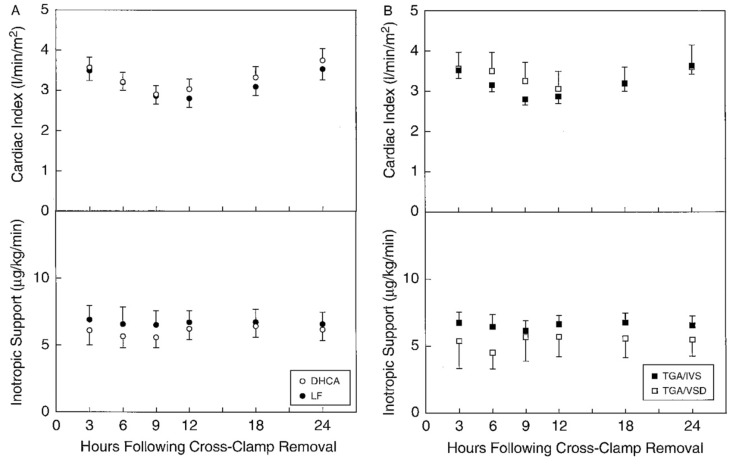
The purpose of this review is to discuss the management of the low cardiac output syndrome (LCOS) following surgery for congenital heart disease. The LCOS is a well-recognized, frequent post-operative complication with an accepted collection of hemodynamic and physiologic aberrations. Approximately 25% of children experience a decrease in cardiac index of less than 2 L/min/m2 within 6-18 hours after cardiac surgery. Post-operative strategies that may be used to manage patients as risk for or in a state of low cardiac output include the use of hemodynamic monitoring, enabling a timely and accurate assessment of cardiovascular function and tissue oxygenation; optimization of ventricular loading conditions; the judicious use of inotropic agents; an appreciation of and the utilization of positive pressure ventilation for circulatory support; and, in some circumstances, mechanical circulatory support. All interventions and strategies should culminate in improving the relationship between oxygen supply and demand, ensuring adequate tissue oxygenation.
Overview
CoChat Summary
TL;DR
This narrative review summarizes the management of low cardiac output syndrome (LCOS) after congenital heart disease surgery, emphasizing early recognition and a stepwise approach to preload optimization, inotropic/afterload therapy, positive pressure ventilation, and mechanical circulatory support. It reports that approximately 25% of children develop a cardiac index below 2 L/min/m² within 6–18 hours postoperatively.
Key findings
- LCOS is a frequent postoperative complication: about 25% of children have a decrease in cardiac index to less than 2 L/min/m² within 6–18 hours after cardiac surgery, with most nadirs occurring in that window.
- Management strategies include hemodynamic monitoring, optimization of ventricular loading conditions, judicious inotropic agents, positive pressure ventilation for circulatory support, and mechanical circulatory support when medical therapy fails.
- In a double-blind, placebo-controlled trial of infants after pediatric cardiac surgery, high-dose milrinone (0.75 mcg/kg/min) was associated with a 64% relative risk reduction of LCOS in the first 36 hours compared with placebo, low, or moderate doses.
- Progressive LCOS is the cause of 36% of postoperative extracorporeal life support (ECLS) cannulations, and survival of pediatric patients receiving ECLS after cardiac surgery is approximately 41–49%.
Methods
- Narrative review of the management of LCOS following surgery for congenital heart disease.
- No systematic search strategy, inclusion criteria, or primary data collection are stated; the paper synthesizes existing literature and cites clinical studies, trials, and reviews.
- Main analysis is a narrative synthesis of pathophysiology, monitoring, and therapeutic options, including preload optimization, inotropes, afterload reduction, vasopressors, glucocorticoids, positive pressure ventilation, and mechanical circulatory support.
Limitations
- The paper does not include a limitations section.
- Evident from the text: this is a narrative review without a stated systematic search or formal evidence-grading process.
- Evident from the text: no stringent diagnostic criteria for LCOS exist, and some cited evidence comes from adult or animal studies (e.g., vasopressin rationale from adult septic shock, positive pressure ventilation mechanisms from dog studies), which may limit direct applicability to pediatric cardiac surgery patients.
Model-written summary. Check it against the paper before relying on it.
Integrity signals
Registry
Cites
Statistics
Figures
Verification
Claims the paper makes
5 Valid · 0 Not valid · 17 Not checked · 23 Own results and interpretations
The cited sources support only part of this claim — read each source’s verdict below.
In the paper
“The exposure of the patient’s blood elements to the foreign surface of the bypass circuit induces a systemic inflammatory response, leading to capillary leak, edema formation, and myocardial diastolic and systolic dysfunction [3-6].”
§ Management of the Low Cardiac Output Syndrome Following Surgery for Congenital Heart Disease > PATHOPHYSIOLOGY AND CAUSES
What the sources say
- Not checked — no full text of the sourcecites [3] Asimakopoulos G. Taylor K.M. Effects of cardiopulmonary bypass on leukocyte and endothelial adhesion molecules. Ann. Thorac. Surg. 1998 66 6 2135 2144 10.1016/S0003-4975(98)00727-9 9930520 source
- Not checked — no full text of the sourcecites [4] Nagashima M Imai Y Seo K Effect of hemofiltrated whole blood pump priming on hemodynamics and respiratory function after the arterial switch operation in neonates. ann Thorac Surg 2000 70 1901 1906 11156092 source
- Partly supportedcites [5] Davies M.J. Nguyen K. Gaynor J.W. Elliott M.J. Modified ultrafiltration improves left ventricular systolic function in infants after cardiopulmonary bypass. J. Thorac. Cardiovasc. Surg. 1998 115 2 361 369 10.1016/S0022-5223(98)70280-6 9475531 sourceExperimental — accuracy not yet measured
The introductory passage (page unavailable) links pediatric cardiopulmonary bypass with inflammatory capillary leak, increased tissue water, edema, and organ dysfunction. The Discussion (page unavailable) links myocardial edema with impaired diastolic compliance and systolic function, but does not identify blood contact with the circuit’s foreign surface as the trigger; it also says the timing of systolic improvement weighs against an inflammatory explanation. (LLM, conf=0.87)
- Partly supportedcites [6] Hiramatsu T. Imai Y. Kurosawa H. Takanashi Y. Aoki M. Shinoka T. Nakazawa M. Effects of dilutional and modified ultrafiltration in plasma endothelin-1 and pulmonary vascular resistance after the Fontan procedure. Ann. Thorac. Surg. 2002 73 3 861 865 10.1016/S0003-4975(01)03564-0 11899192 sourceExperimental — accuracy not yet measured
The paper says that inflammatory mediators can be removed during cardiopulmonary bypass and discusses adverse effects of bypass in pediatric patients (Results; page unavailable). It does not say that blood contact with the circuit’s foreign surface induces a systemic inflammatory response, or link that response to capillary leak, edema, or myocardial diastolic and systolic dysfunction. (LLM, conf=0.79)
plainstates a cause- Asserted: passes — The authors put it forward as true.
- Checkable: passes — It can be checked against evidence.
- Load-bearing: passes — The paper’s conclusions depend on it.
- Based: passes — The paper gives a reason why it holds.
The cited sources support only part of this claim — read each source’s verdict below.
In the paper
“In addition, the administration of high dose glucocorticoids may be associated with increased morbidity [23-25].”
§ Management of the Low Cardiac Output Syndrome Following Surgery for Congenital Heart Disease > VASOPRESSOR THERAPY
What the sources say
- Not checked — no full text of the sourcecites [23] Costello J.M. Graham D.A. Morrow D.F. Potter-Bynoe G. Sandora T.J. Laussen P.C. Risk factors for central line-associated bloodstream infection in a pediatric cardiac intensive care unit. Pediatr. Crit. Care Med. 2009 10 4 453 459 10.1097/PCC.0b013e318198b19a 19307818 source
- Not checked — no full text of the sourcecites [24] Mastropietro C.W. Barrett R. Davalos M.C. Zidan M. Valentine K.M. Delius R.E. Walters H.L. III Cumulative corticosteroid exposure and infection risk after complex pediatric cardiac surgery. Ann. Thorac. Surg. 2013 95 6 2133 2139 10.1016/j.athoracsur.2013.02.026 23602063 source
- Partly supportedcites [25] Pasquali S.K. Hall M. Li J.S. Peterson E.D. Jaggers J. Lodge A.J. Marino B.S. Goodman D.M. Shah S.S. Corticosteroids and outcome in children undergoing congenital heart surgery: analysis of the Pediatric Health Information Systems database. Circulation 2010 122 21 2123 2130 10.1161/CIRCULATIONAHA.110.948737 21060075 PMC3013053 sourceExperimental — accuracy not yet measured
The Discussion reports that corticosteroids may be associated with increased morbidity, particularly in lower-risk children undergoing congenital heart surgery. But the Discussion also says the study could not assess corticosteroid dose, so it does not establish the claim specifically for high-dose glucocorticoids. (LLM, conf=0.88)
hedgedstates an association- Asserted: passes — The authors put it forward as true.
- Checkable: passes — It can be checked against evidence.
- Load-bearing: passes — The paper’s conclusions depend on it.
- Based: passes — The paper gives a reason why it holds.
The cited sources support only part of this claim — read each source’s verdict below.
In the paper
“The systemic and regional inflammatory response that occurs with cardiopulmonary bypass and reperfusion injury increases total body oxygen demand while impairing oxygenation, cardiac output and systemic oxygen delivery [3-6].”
§ Management of the Low Cardiac Output Syndrome Following Surgery for Congenital Heart Disease > PATHOPHYSIOLOGY AND CAUSES
What the sources say
- Not checked — no full text of the sourcecites [3] Asimakopoulos G. Taylor K.M. Effects of cardiopulmonary bypass on leukocyte and endothelial adhesion molecules. Ann. Thorac. Surg. 1998 66 6 2135 2144 10.1016/S0003-4975(98)00727-9 9930520 source
- Not checked — no full text of the sourcecites [4] Nagashima M Imai Y Seo K Effect of hemofiltrated whole blood pump priming on hemodynamics and respiratory function after the arterial switch operation in neonates. ann Thorac Surg 2000 70 1901 1906 11156092 source
- Partly supportedcites [5] Davies M.J. Nguyen K. Gaynor J.W. Elliott M.J. Modified ultrafiltration improves left ventricular systolic function in infants after cardiopulmonary bypass. J. Thorac. Cardiovasc. Surg. 1998 115 2 361 369 10.1016/S0022-5223(98)70280-6 9475531 sourceExperimental — accuracy not yet measured
The Abstract (page unavailable) links cardiopulmonary bypass in children to an inflammatory capillary leak, tissue edema, and subsequent organ dysfunction, including cardiac and pulmonary edema. It does not state that this response increases total-body oxygen demand or impairs oxygenation, cardiac output, and systemic oxygen delivery; the Discussion (page unavailable) explicitly says oxygen delivery was not examined. (LLM, conf=0.83)
- Partly supportedcites [6] Hiramatsu T. Imai Y. Kurosawa H. Takanashi Y. Aoki M. Shinoka T. Nakazawa M. Effects of dilutional and modified ultrafiltration in plasma endothelin-1 and pulmonary vascular resistance after the Fontan procedure. Ann. Thorac. Surg. 2002 73 3 861 865 10.1016/S0003-4975(01)03564-0 11899192 sourceExperimental — accuracy not yet measured
The introduction (page unavailable) says cytokines may affect hemodynamics after the Fontan procedure, and the Results report increased pulmonary vascular resistance after cardiopulmonary bypass in the control group. The paper does not establish that inflammation or reperfusion injury increases total-body oxygen demand or impairs oxygenation, cardiac output, and systemic oxygen delivery. (LLM, conf=0.78)
plainstates a cause- Asserted: passes — The authors put it forward as true.
- Checkable: passes — It can be checked against evidence.
- Load-bearing: passes — The paper’s conclusions depend on it.
- Based: passes — The paper gives a reason why it holds.
A claim is checked only against the cited paper’s full text, never its abstract, and none is available for its sources.
In the paper
“The use of glucocorticoids for catecholamine-resistant shock in the neonatal and pediatric population is another strategy that may be of benefit, including following cardiac surgery [19-21].”
§ Management of the Low Cardiac Output Syndrome Following Surgery for Congenital Heart Disease > VASOPRESSOR THERAPY
What the sources say
- Not checked — no full text of the sourcecites [19] Menon K. Use of hydrocortisone for refractory shock in children. Crit. Care Med. 2013 41 10 e294 e295 10.1097/CCM.0b013e31828cf478 24060796 source
- Not checked — no full text of the sourcecites [20] Shore S. Nelson D.P. Pearl J.M. Manning P.B. Wong H. Shanley T.P. Keyser T. Schwartz S.M. Usefulness of corticosteroid therapy in decreasing epinephrine requirements in critically ill infants with congenital heart disease. Am. J. Cardiol. 2001 88 5 591 594 10.1016/S0002-9149(01)01751-9 11524081 source
- Not checked — no full text of the sourcecites [21] Suominen P.K. Dickerson H.A. Moffett B.S. Ranta S.O. Mott A.R. Price J.F. Heinle J.S. McKenzie E.D. Fraser C.D. Jr Chang A.C. Hemodynamic effects of rescue protocol hydrocortisone in neonates with low cardiac output syndrome after cardiac surgery. Pediatr. Crit. Care Med. 2005 6 6 655 659 10.1097/01.PCC.0000185487.69215.29 16276331 source
hedgedstates a possible cause- Asserted: passes — The authors put it forward as true.
- Checkable: passes — It can be checked against evidence.
- Load-bearing: passes — The paper’s conclusions depend on it.
- Based: passes — The paper gives a reason why it holds.
A claim is checked only against the cited paper’s full text, never its abstract, and none is available for its sources.
In the paper
“Vasopressin, an endogenous hormone produced in the hypothalamus, has recently been applied to children with refractory hypotension due to vasoplegia after cardiac surgery [13-15].”
§ Management of the Low Cardiac Output Syndrome Following Surgery for Congenital Heart Disease > VASOPRESSOR THERAPY
What the sources say
- Not checked — no full text of the sourcecites [13] Alten J.A. Borasino S. Toms R. Law M.A. Moellinger A. Dabal R.J. Early initiation of arginine vasopressin infusion in neonates after complex cardiac surgery. Pediatr. Crit. Care Med. 2012 13 3 300 304 10.1097/PCC.0b013e31822f1753 21926664 source
- Not checked — no full text of the sourcecites [14] Burton G.L. Kaufman J. Goot B.H. da Cruz E.M. The use of Arginine Vasopressin in neonates following the Norwood procedure. Cardiol. Young 2011 21 5 536 544 10.1017/S1047951111000370 21554826 source
- Not checked — no full text of the sourcecites [15] Mastropietro C.W. Davalos M.C. Seshadri S. Walters H.L. III Delius R.E. Clinical response to arginine vasopressin therapy after paediatric cardiac surgery. Cardiol. Young 2013 23 3 387 393 10.1017/S1047951112000996 22805534 source
plain- Asserted: passes — The authors put it forward as true.
- Checkable: passes — It can be checked against evidence.
- Load-bearing: passes — The paper’s conclusions depend on it.
- Based: passes — The paper gives a reason why it holds.
21 more claims
Create a free account to see all 45 claims and to verify the 8 references still open.
- It may state two separate claims as one. 12
- Probably not a substantial claim. 11
Citations
Cites
Wernovsky, G., Wypij, D., Jonas, R. A., Mayer, J. E., Hanley, F. L., Hickey, P. R., Walsh, A. Z., Chang, A. C., Castañeda, A. R., Newburger, J. W., et al. (1995) · Circulation · doi:10.1161/01.cir.92.8.2226 · Cited by 1,010
Vasopressin Deficiency Contributes to the Vasodilation of Septic Shock
Landry, D. W., Levin, H. R., Gallant, E. M., Ashton, R. C., Seo, S., D'Alessandro, D., Oz, M. C., & Oliver, J. A. (1997) · Circulation · doi:10.1161/01.cir.95.5.1122 · Cited by 990
Hoffman, T. M., Wernovsky, G., Atz, A. M., Kulik, T. J., Nelson, D. P., Chang, A. C., Bailey, J. M., Akbary, A., Kocsis, J. F., Kaczmarek, R., et al. (2003) · Circulation · doi:10.1161/01.cir.0000051365.81920.28 · Cited by 772 · cited 2×
“The use of milrinone to prevent or treat LCOS following pediatric cardiac surgery has been well studied [9-12].”
BackgroundConnors, A. F., McCaffree, D. R., & Gray, B. A. (1983) · New England Journal of Medicine · doi:10.1056/nejm198302033080508 · Cited by 365 · cited 1×
“It is important to appreciate that estimations of cardiac function, cardiac output and tissue oxygenation, based on the interpretation of standard clinical parameters, such as the physical examination, and hemodynamic parameters such as the central venous pressure, heart rate and blood pressure are often discordant fr…”
BackgroundMilrinone: Systemic and pulmonary hemodynamic effects in neonates after cardiac surgery
Chang, A. C., Atz, A. M., Wernovsky, G., Burke, R. P., & Wessel, D. L. (1995) · Critical Care Medicine · doi:10.1097/00003246-199511000-00018 · Cited by 281 · cited 1×
“The use of milrinone to prevent or treat LCOS following pediatric cardiac surgery has been well studied [9-12].”
BackgroundCardiac performance and mortality early after intracardiac surgery in infants and young children.
Parr, G. V., Blackstone, E. H., & Kirklin, J. W. (1975) · Circulation · doi:10.1161/01.cir.51.5.867 · Cited by 210 · cited 1×
“The LCOS was first described by Parr and colleagues in 1975 [1].”
BackgroundViires, N., Sillye, G., Aubier, M., Rassidakis, A., & Roussos, C. (1983) · Journal of Clinical Investigation · doi:10.1172/jci111065 · Cited by 185
Extracorporeal membrane oxygenation in postcardiotomy patients: Factors influencing outcome
Kumar, T. K. S., Zurakowski, D., Dalton, H., Talwar, S., Allard-Picou, A., Duebener, L. F., Sinha, P., & Moulick, A. (2010) · The Journal of Thoracic and Cardiovascular Surgery · doi:10.1016/j.jtcvs.2010.02.034 · Cited by 180 · cited 1×
“Progressive LCOS is the cause for 36% of post-operative ECLS cannulations, making it one of the most common indications for ECLS in the post-operative period [28-32].”
BackgroundEffects of cardiopulmonary bypass on leukocyte and endothelial adhesion molecules
Asimakopoulos, G., & Taylor, K. M. (1998) · The Annals of Thoracic Surgery · doi:10.1016/s0003-4975(98)00727-9 · Cited by 173 · cited 2×
“The systemic and regional inflammatory response that occurs with cardiopulmonary bypass and reperfusion injury increases total body oxygen demand while impairing oxygenation, cardiac output and systemic oxygen delivery [3-6].”
BackgroundDavies, M. J., Nguyen, K., Gaynor, J. W., & Elliott, M. J. (1998) · The Journal of Thoracic and Cardiovascular Surgery · doi:10.1016/s0022-5223(98)70280-6 · Cited by 167 · cited 2×
“The systemic and regional inflammatory response that occurs with cardiopulmonary bypass and reperfusion injury increases total body oxygen demand while impairing oxygenation, cardiac output and systemic oxygen delivery [3-6].”
Background
Cited by
Schoonen, A., van Klei, W. A., van Wolfswinkel, L., & van Loon, K. (2022) · Frontiers in Cardiovascular Medicine · doi:10.3389/fcvm.2022.926957 · Cited by 74
Gist, K. M., Goldstein, S. L., Wrona, J., Alten, J. A., Basu, R. K., Cooper, D. S., Soranno, D. E., Duplantis, J., Altmann, C. J., Gao, Z., et al. (2017) · Pediatric Nephrology · doi:10.1007/s00467-017-3655-y · Cited by 69
Salomon, J., Ericsson, A. C., Price, A., Manithody, C., Murry, D. J., Chhonker, Y. S., Buchanan, P. M., Lindsey, M. L., Singh, A. B., & Jain, A. K. (2021) · JACC Basic to Translational Science · doi:10.1016/j.jacbts.2020.12.012 · Cited by 60
“ABBR EV I A T I ON S AND ACRONYMS ANOVA = analysis of variance CHD = congenital heart disease CPB = cardiopulmonary bypass DNA = deoxyribonucleic acid EBD = epithelial barrier dysfunction FABP2 = fatty acid binding protein 2 LCOS = low–cardiac output syndrome NPO = nil per os OTU = operational taxonomic unit PGE2 = pr…”
BackgroundInfluentialSong, B., Dang, H., & Dong, R. (2021) · Journal of Cardiothoracic Surgery · doi:10.1186/s13019-021-01518-7 · Cited by 41
“The diagnosis of LCOS was made if patients met more than two of following diagnostic criteria [9, 10]: 1 Heart index < 2 L·min (1)·m (2); 2 Systolic blood pressure < 90 mmHg or systolic blood pressure decreased by more than 20% compared with preoperative blood pressure; 3Central venous pressure > 15cmH2O; 4The differe…”
MethodDevelopment of acute kidney injury following pediatric cardiac surgery
Sharma, A., Chakraborty, R., Sharma, K., Sethi, S. K., & Raina, R. (2020) · Kidney Research and Clinical Practice · doi:10.23876/j.krcp.20.053 · Cited by 43
“Steroids can be used in catecholamine-resistant cardiac failure, and extracorporeal life support is used when all medical management fails [24].”
Background
Metadata
- Authors
- K. Chandler, H., & Kirsch, R.
- Affiliations
- Children's Hospital of Philadelphia (US)
- ORCID
- Kirsch, Roxanne
- Venue
- Current Cardiology Reviews
- Publisher
- Bentham Science Publishers Ltd.
- Published
- 2016-04-04
- Volume
- 12
- Issue
- 2
- Pages
- 107-111
- ISSN
- 1573-403X (ISSN-L)
- PMC
- PMC4861938
- OpenAlex
- W2335845481
- Cited by
- 74
- References
- 35
- Citations by year
- 2026: 7 · 2025: 13 · 2024: 5 · 2023: 11 · 2022: 10 · 2021: 12 · 2020: 5 · 2019: 4 · 2018: 4 · 2017: 2 · 2016: 1
- FWCI
- 0.50
- Type
- journal article
- Language
- en
- Open access
- bronze
- doi.org
- Locations
- Current Cardiology Reviews (publishedVersion)
- PubMed Central (publishedVersion, cc-by-nc)
- PubMed (publishedVersion)
- Topics
- Health Sciences › Medicine › Cardiology and Cardiovascular Medicine › Congenital Heart Disease Studies
- Health Sciences › Medicine › Surgery › Hemodynamic Monitoring and Therapy
- Health Sciences › Medicine › Surgery › Cardiac and Coronary Surgery Techniques
- Keywords
- low cardiac output syndrome, congenital heart disease, pediatric cardiac surgery, postoperative complications, hemodynamic monitoring, inotropic agents, positive pressure ventilation, mechanical circulatory support, tissue oxygenation, oxygen supply and demand, ventricular loading
- MeSH terms
- Cardiac Output, Low, Heart Defects, Congenital, Cardiac Surgical Procedures, Hemodynamics, Humans, Monitoring, Physiologic, Postoperative Complications
About these checks
Registry, retraction, Cites and statistics results are computed, not judged, with one exception: a printed reference that no index lists is read once by a model before it counts as a citation error. Claims are extracted by a model and kept only when their quote appears verbatim in the text; each cited source is then checked, with a model’s help, for whether it says what the claim relies on. Those verdicts can be wrong — read the claim’s quote and the cited source before relying on one.
The claim verdicts this report counts are experimental: their accuracy is not yet measured.
A language model drew the claims from the paper on 2026-10-10, under version 3 of the claim definition (model deepseek-v4.1-flash, prompt extract-v3).
A second model labelled each claim on 2026-10-10 (model jev-1.13-20260917, definition revision gold-guideline-v0.2).
Cited sources are checked with a language model’s help (gpt-6-sol).
Statistics and arithmetic are recomputed, not judged.
Confidence bands are shown only for fields calibrated on our annotated test set. None is calibrated yet, so no band is shown.
What counts as a claim ›How we measure confidence ›How we check this ›
Are you an author, or do you see a problem with this page? Request a review
How to cite
Cite CoChat for the checks on this page, and the paper for its own findings.
- This page
- CoChat. (2026). Citation check: Management of the Low Cardiac Output Syndrome Following Surgery for Congenital Heart Disease. https://app.cochat.ai/papers/10.2174/1573403x12666151119164647
- The paper
- K. Chandler, H., & Kirsch, R. (2016). Management of the Low Cardiac Output Syndrome Following Surgery for Congenital Heart Disease. Current Cardiology Reviews. https://doi.org/10.2174/1573403x12666151119164647
Data sources
Bibliographic data: Semantic Scholar, OpenAlex, Crossref.
Contains information from the Semantic Scholar Academic Graph Datasets, made available under the ODC Attribution License (ODC-BY 1.0).
Semantic Scholar’s data is described in: Kinney, R., et al. (2023). The Semantic Scholar Open Data Platform. arXiv:2301.10140.
