

The DOI matches its Crossref record; 75 of the 75 references it cites were found in a registry or an index.
HTRF: A Technology Tailored for Drug Discovery - A Review of Theoretical Aspects and Recent Applications
Open accessAbstract
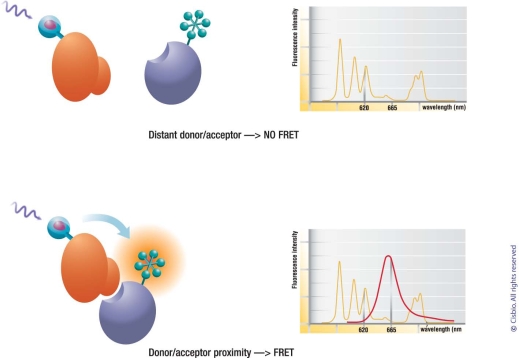
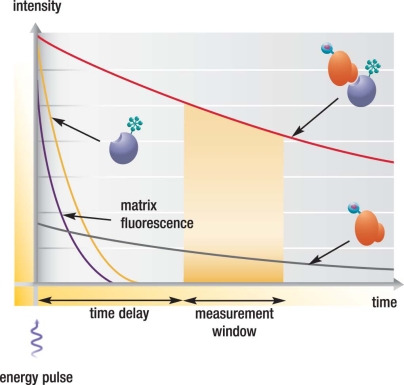
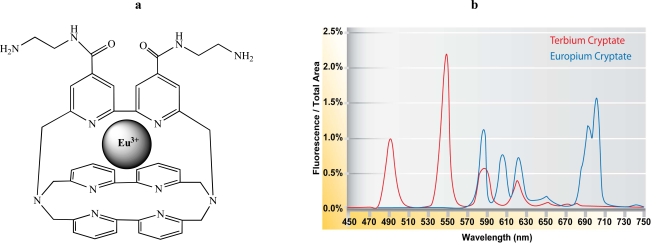
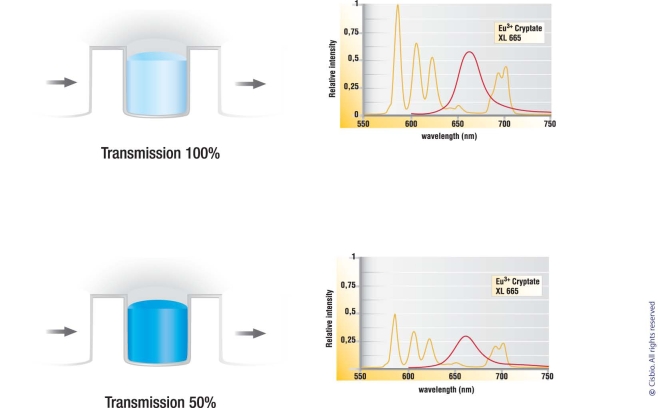
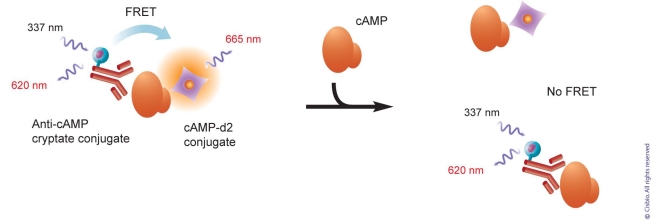
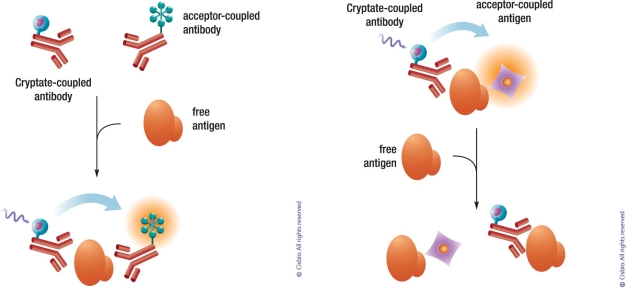
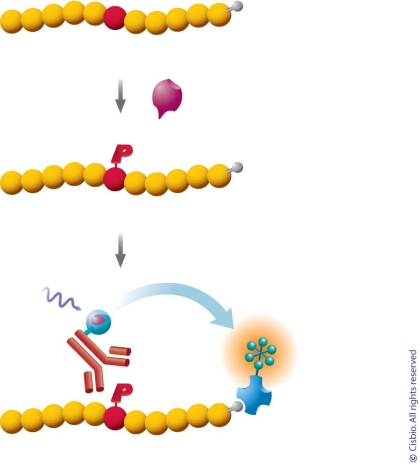
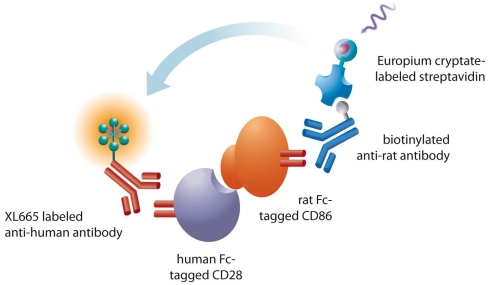
HTRF (Homogeneous Time Resolved Fluorescence) is the most frequently used generic assay technology to measure analytes in a homogenous format, which is the ideal platform used for drug target studies in high-throughput screening (HTS). This technology combines fluorescence resonance energy transfer technology (FRET) with time-resolved measurement (TR). In TR-FRET assays, a signal is generated through fluorescent resonance energy transfer between a donor and an acceptor molecule when in close proximity to each other. Buffer and media interference is dramatically reduced by dual-wavelength detection, and the final signal is proportional to the extent of product formation. The HTRF assay is usually sensitive and robust that can be miniaturized into the 384 and 1536-well plate formats. This assay technology has been applied to many antibody-based assays including GPCR signaling (cAMP and IP-One), kinases, cytokines and biomarkers, bioprocess (antibody and protein production), as well as the assays for protein-protein, proteinpeptide, and protein-DNA/RNA interactions.Since its introduction to the drug-screening world over ten years ago, researchers have used HTRF to expedite the study of GPCRs, kinases, new biomarkers, protein-protein interactions, and other targets of interest. HTRF has also been utilized as an alternative method for bioprocess monitoring. The first-generation HTRF technology, which uses Europium cryptate as a fluorescence donor to monitor reactions between biomolecules, was extended in 2008 through the introduction of a second-generation donor, Terbium cryptate (Tb), enhancing screening performance. Terbium cryptate possesses different photophysical properties compared to Europium, including increased quantum yield and a higher molar extinction coefficient. In addition to being compatible with the same acceptor fluorophors used with Europium, it can serve as a donor fluorophore to green-emitting fluors because it has multiple emission peaks including one at 490 nm. Moreover, all Terbium HTRF assays can be read on the same HTRF-compatible instruments as Europium HTRF assays.Overall, HTRF is a highly sensitive, robust technology for the detection of molecular interactions in vitro and is widely used for primary and secondary screening phases of drug development. This review addresses the general principles of HTRF and its current applications in drug discovery.
Overview
The claims and statistics of this paper haven’t been checked yet.
Run the check — free, no account needed. It reads the open-access text and checks the sources it cites.
Integrity signals
Registry
Cites
Statistics
Figures
Verification
Claims the paper makes
The claims and statistics of this paper haven’t been checked yet.
Run the check — free, no account needed. It reads the open-access text and checks the sources it cites.
Self-check
Percentages, sums and reported differences re-computed from the paper’s own numbers.
The self-check needs the paper’s full text.
Citations
Cites
Blume-Jensen, P., & Hunter, T. (2001) · Nature · doi:10.1038/35077225 · Cited by 3,738
PROTEIN SERINE/THREONINE KINASES
Edelman, A. M., Blumenthal, D., & Krebs, E. G. (1987) · Annual Review of Biochemistry · doi:10.1146/annurev.bi.56.070187.003031 · Cited by 1,435
SIGNALLING BY RECEPTOR TYROSINE KINASES
Fantl, W. J., Johnson, D. E., & Williams, L. T. (1993) · Annual Review of Biochemistry · doi:10.1146/annurev.biochem.62.1.453 · Cited by 1,118
Ciruela, F., Casadó, V., Rodrigues, R. J., Luján, R., Burgueño, J., Canals, M., Borycz, J., Rebola, N., Goldberg, S. R., Mallol, J., et al. (2006) · Journal of Neuroscience · doi:10.1523/jneurosci.3574-05.2006 · Cited by 591
Principles and Biophysical Applications of Lanthanide-Based Probes
Selvin, P. R. (2002) · Annual Review of Biophysics and Biomolecular Structure · doi:10.1146/annurev.biophys.31.101101.140927 · Cited by 549
Maurel, D., Comps‐Agrar, L., Brock, C., Rives, M., Bourrier, E., Ayoub, M. A., Bazin, H., Tinel, N., Durroux, T., Prézeau, L., et al. (2008) · Nature Methods · doi:10.1038/nmeth.1213 · Cited by 500
Rare earth cryptates and homogeneous fluoroimmunoassays with human sera
Mathis, G. (1993) · Clinical Chemistry · doi:10.1093/clinchem/39.9.1953 · Cited by 393
Mathis, G. (1995) · Clinical Chemistry · doi:10.1093/clinchem/41.9.1391 · Cited by 339
Levoye, A., Dam, J., Ayoub, M. A., Guillaume, J., Couturier, C., Delagrange, P., & Jockers, R. (2006) · The EMBO Journal · doi:10.1038/sj.emboj.7601193 · Cited by 335
Dopamine D2 receptors form higher order oligomers at physiological expression levels
Guo, W. X., Urizar, E., Králíková, M., Mobarec, J. C., Shi, L., Filizola, M., & Javitch, J. A. (2008) · The EMBO Journal · doi:10.1038/emboj.2008.153 · Cited by 334
Research works printed but not linked: 1
- [23]Amoravain M Lyotard S Jaga D Lebreton ML Servent F Bomer U Introduction of a new HTRF acceptor, d2: Development of a complete GPCR platform for a Gs, Gi and Gq screening SBS 2005 11th Annual Conference Geneva
Cited by
Sorted by citations
Items 101–200 of 522
Kumar, V., Lakshman, P. K. C., Prasad, T. K., Manjunath, K., Bairy, S. G., Vasu, A. S., Ganavi, B., Jasti, S., & Kamariah, N. (2023) · Heliyon · doi:10.1016/j.heliyon.2023.e23864 · Cited by 42
Banerjee, M., Hatial, I., Keegan, B. M., & Blagg, B. S. J. (2020) · Pharmacology & Therapeutics · doi:10.1016/j.pharmthera.2020.107747 · Cited by 39
Cooperativity between the orthosteric and allosteric ligand binding sites of RORγt
de Vries, R. M. J. M., Meijer, F. A., Doveston, R. G., Leijten-van de Gevel, I. A., & Brunsveld, L. (2021) · Proceedings of the National Academy of Sciences · doi:10.1073/pnas.2021287118 · Cited by 38
Quantitative assessment of oligomeric amyloid β peptide binding to α7 nicotinic receptor
Cecon, E., Dam, J., Luka, M., Gautier, C., Chollet, A., Delagrange, P., Danober, L., & Jockers, R. (2019) · British Journal of Pharmacology · doi:10.1111/bph.14688 · Cited by 38
Discovery of a Bicyclic Peptidyl Pan-Ras Inhibitor
Buyanova, M. Y., Cai, S., Cooper, J. K., Rhodes, C. A., Salim, H., Sahni, A., Upadhyaya, P., Yang, R., Sarkar, A., Li, N., et al. (2021) · Journal of Medicinal Chemistry · doi:10.1021/acs.jmedchem.1c01130 · Cited by 40
One-Atom Substitution Enables Direct and Continuous Monitoring of Histone Deacylase Activity
Zessin, M., Kutil, Z., Meleshin, M., Nováková, Z., Ghazy, E., Kalbas, D., Marek, M., Romier, C., Sippl, W., Bařinka, C., et al. (2019) · Biochemistry · doi:10.1021/acs.biochem.9b00786 · Cited by 38
Cheow, L. F., Viswanathan, R., Chin, C.-S., Jennifer, N., Jones, R. C., Guccione, E., Quake, S. R., & Burkholder, W. F. (2014) · Analytical Chemistry · doi:10.1021/ac502605f · Cited by 37
The structure-function relationship of oncogenic LMTK3
Ditsiou, A., Cilibrasi, C., Simigdala, N., Papakyriakou, A., Milton‐Harris, L., Vella, V., Nettleship, J. E., Lo, J. H., Soni, S., Smbatyan, G., et al. (2020) · Science Advances · doi:10.1126/sciadv.abc3099 · Cited by 36
Yu, V. L., Fisch, T., Long, A. M., Tang, J. H., Lee, J. H., Hierl, M., Chen, H., Yakowec, P. S., Schwandner, R., & Emkey, R. (2011) · SLAS DISCOVERY · doi:10.1177/1087057111418228 · Cited by 36
Han, Y., Gao, Y., Tian, H., Wang, D., Guo, N., Zhang, X., Chen, S., & Wang, H. (2018) · Analytical Biochemistry · doi:10.1016/j.ab.2018.02.003 · Cited by 35
Small-Molecule Inhibitors of the m7G-RNA Writer METTL1
Nai, F., Flores-Espinoza, M. P., Invernizzi, A., Vargas-Rosales, P. A., Bobiļeva, O., Herok, M., & Caflisch, A. (2023) · ACS Bio & Med Chem Au · doi:10.1021/acsbiomedchemau.3c00030 · Cited by 34
Lin, W., & Chen, T. (2017) · Advances in protein chemistry and structural biology · doi:10.1016/bs.apcsb.2017.06.001 · Cited by 34
Miller, T. W., Amason, J., Garcin, E. D., Lamy, L., Dranchak, P. K., MacArthur, R., Braisted, J. C., Rubin, J. S., Burgess, T. L., Farrell, C. L., et al. (2019) · PLoS ONE · doi:10.1371/journal.pone.0218897 · Cited by 35
Cecon, E., Fernandois, D., Renault, N., Coêlho, C. F. F., Wenzel, J., Bedart, C., Izabelle, C., Gallet, S., Poder, S. L., Klonjkowski, B., et al. (2022) · Cellular and Molecular Life Sciences · doi:10.1007/s00018-022-04390-3 · Cited by 34
Du, Y., Fu, R. W., Lou, B., Zhao, J., Qui, M., Khuri, F. R., & Fu, H. (2013) · Assay and Drug Development Technologies · doi:10.1089/adt.2013.507 · Cited by 34
Identification of raloxifene as a novel CB2 inverse agonist
Kumar, P., & Song, Z.-H. (2013) · Biochemical and Biophysical Research Communications · doi:10.1016/j.bbrc.2013.04.040 · Cited by 34
Uncovering specificity of endogenous TAU aggregation in a human iPSC-neuron TAU seeding model
Manos, J. D., Preiss, C. N., Venkat, N., Tamm, J., Reinhardt, P., Kwon, T., Wu, J., Winter, A. D., Jahn, T. R., Yanamandra, K., et al. (2022) · iScience · doi:10.1016/j.isci.2021.103658 · Cited by 36
Salaün, C., Takizawa, H., Galindo, A., Munro, K. R., McLellan, J. A., Sugimoto, I., Okino, T., Tomkinson, N. C. O., & Chamberlain, L. H. (2022) · Journal of Biological Chemistry · doi:10.1016/j.jbc.2022.102469 · Cited by 33
Development of a Rapid Insulin Assay by Homogenous Time-Resolved Fluorescence
Farino, Z. J., Morgenstern, T. J., Vallaghe, J., Gregor, N., Donthamsetti, P., Harris, P. E., Pierre, N., Freyberg, R. J., Charrier‐Savournin, F., Javitch, J. A., et al. (2016) · PLoS ONE · doi:10.1371/journal.pone.0148684 · Cited by 33
Development of a high-throughput TR-FRET screening assay for LAG-3/FGL1 interaction
Abdel‐Rahman, S. A., Zhang, L., & Gabr, M. T. (2023) · SLAS DISCOVERY · doi:10.1016/j.slasd.2023.04.003 · Cited by 31
Schwalm, M. P., Saxena, K., Müller, S., & Knapp, S. (2024) · Nature Protocols · doi:10.1038/s41596-024-00979-z · Cited by 33
Schulze, J., Moosmayer, D., Weiske, J., Fernández‐Montalván, A. E., Herbst, C., Jung, M., Haendler, B., & Bader, B. (2014) · SLAS DISCOVERY · doi:10.1177/1087057114552398 · Cited by 30
Ito, H., Terai, T., Hanaoka, K., Ueno, T., Komatsu, T., Nagano, T., & Urano, Y. (2015) · Chemical Communications · doi:10.1039/c5cc01613d · Cited by 29
Biophysical Detection of Diversity and Bias in GPCR Function
Jaeger, W. C., Armstrong, S. P., Hill, S. J., & Pfleger, K. D. G. (2014) · Frontiers in Endocrinology · doi:10.3389/fendo.2014.00026 · Cited by 30
Chai, S. C., Lin, W., Li, Y., & Chen, T. (2019) · Drug Discovery Today · doi:10.1016/j.drudis.2019.01.021 · Cited by 29
Gul, S., & Gribbon, P. M. (2010) · Expert Opinion on Drug Discovery · doi:10.1517/17460441.2010.495748 · Cited by 29
Two High Throughput Screen Assays for Measurement of TNF-α in THP-1 Cells
Leister, K. P., Huang, R., Goodwin, B. L., Chen, A., Austin, C. P., & Xia, M. (2011) · Current Chemical Genomics · doi:10.2174/1875397301105010021 · Cited by 29
Pohl, O., Chollet, A., Kim, S. H., Riaposova, L., Spézia, F., Gervais, F., Guillaume, P., Lluel, P., Méen, M., Lemaux, F., et al. (2018) · Journal of Pharmacology and Experimental Therapeutics · doi:10.1124/jpet.118.247668 · Cited by 29
Fenyi, A., Duyckaerts, C. J., Bousset, L., Braak, H., Tredici, K. D., Melki, R., & on behalf of the Brainbank Neuro-CEB Neuropathology Network (2021) · Cells · doi:10.3390/cells10010139 · Cited by 31
Importance of a crystalline water network in docking-based virtual screening: a case study of BRD4
Zhong, H., Wang, Z., Wang, X., Liu, H., Li, D., Liu, H., Yao, X., & Hou, T. (2019) · Physical Chemistry Chemical Physics · doi:10.1039/c9cp04290c · Cited by 28
Wortmann, L., Bräuer, N., Holton, S. J., Irlbacher, H., Weiske, J., Lechner, C., Meier, R., Karén, J., Sioberg, C., Pütter, V., et al. (2021) · Journal of Medicinal Chemistry · doi:10.1021/acs.jmedchem.1c01245 · Cited by 28
Ciliary and extraciliary Gpr161 pools repress hedgehog signaling in a tissue-specific manner
Hwang, S., Somatilaka, B. N., White, K., & Mukhopadhyay, S. (2021) · eLife · doi:10.7554/elife.67121 · Cited by 30
Breaking Bad Proteins—Discovery Approaches and the Road to Clinic for Degraders
Bouvier, C., Lawrence, R., Cavallo, F., Xolalpa, W., Jordan, A. M., Hjerpe, R., & Rodríguez, M. S. (2024) · Cells · doi:10.3390/cells13070578 · Cited by 28
Kiris, E., Kota, K. P., Burnett, J. C., Soloveva, V., Kane, C. D., & Bavari, S. (2014) · Expert Review of Molecular Diagnostics · doi:10.1586/14737159.2014.867808 · Cited by 27
Jackson, E., Heidl, M., Imfeld, D., Meeus, L., Schütz, R., & Campiche, R. (2019) · International Journal of Molecular Sciences · doi:10.3390/ijms20246143 · Cited by 27
Landles, C., Milton, R. E., Jean, A., McLarnon, S., McAteer, S. J., Taxy, B. A., Osborne, G. F., Zhang, C., Duan, W., Howland, D., et al. (2021) · Brain Communications · doi:10.1093/braincomms/fcaa231 · Cited by 28
Negrini, M., Tomasello, G., Davidsson, M., Fenyi, A., Adant, C., Hauser, S., Espa, E., Gubinelli, F., Manfredsson, F. P., Melki, R., et al. (2022) · Journal of Parkinson s Disease · doi:10.3233/jpd-212555 · Cited by 27
Göricke, F., Vu, V., Smith, L., Scheib, U., Böhm, R., Akkılıç, N., Wohlfahrt, G., Weiske, J., Bömer, U., Brzezinka, K., et al. (2023) · Journal of Medicinal Chemistry · doi:10.1021/acs.jmedchem.2c01933 · Cited by 30
Receptor oligomerization: from early evidence to current understanding in class B GPCRs
Ng, S., Lee, L. T. O., & Chow, B. (2013) · Frontiers in Endocrinology · doi:10.3389/fendo.2012.00175 · Cited by 26
Lee, S., Abed, D. A., Beamer, L. J., & Hu, L. (2020) · SLAS DISCOVERY · doi:10.1177/2472555220935816 · Cited by 25
Jin, J., Hu, J., Zhou, W., Wang, X., Xiao, Q., Xue, N., Yin, D., & Chen, X. (2014) · Biochemical Pharmacology · doi:10.1016/j.bcp.2014.04.010 · Cited by 25
CANDLES, an assay for monitoring GPCR induced cAMP generation in cell cultures
Trehan, A., Rotgers, E., Coffey, E. T., Huhtaniemi, I. T., & Rivero‐Müller, A. (2014) · Cell Communication and Signaling · doi:10.1186/preaccept-2584811211316350 · Cited by 25
11β-hydroxysteroid dehydrogenase inhibition as a new potential therapeutic target for alcohol abuse
Sanna, P. P., Kawamura, T., Chen, J., Koob, G. F., Roberts, A. J., Vendruscolo, L. F., & Repunte‐Canonigo, V. (2016) · Translational Psychiatry · doi:10.1038/tp.2016.13 · Cited by 25
Cooley, R., Kara, N., Hui, N. S., Tart, J., Roustan, C., George, R., Hancock, D. C., Binkowski, B. F., Wood, K. V., Ismail, M., et al. (2020) · Wellcome Open Research · doi:10.12688/wellcomeopenres.15675.1 · Cited by 25
Vauthier, V., Derviaux, C., Douayry, N., Roux, T., Trinquet, E., Jockers, R., & Dam, J. (2013) · Analytical Biochemistry · doi:10.1016/j.ab.2012.12.013 · Cited by 27
Stöckmann, H., Todorović, V., Richardson, P. L., Marin, V. L., Scott, V., Gerstein, C., Lake, M. R., Wang, L., Sadhukhan, R., & Vasudevan, A. (2017) · Journal of the American Chemical Society · doi:10.1021/jacs.7b09359 · Cited by 24
Discovery and evaluation of cytisine N-isoflavones as novel EGFR/HER2 dual inhibitors
Wang, Y., Yin, X., Chen, L., Yin, Z., & Zuo, Z. (2022) · Bioorganic Chemistry · doi:10.1016/j.bioorg.2022.105868 · Cited by 25
Karpenko, J., Margathe, J., Rodriguez, T., Pflimlin, E., Dupuis, E., Hibert, M., Durroux, T., & Bonnet, D. (2015) · Journal of Medicinal Chemistry · doi:10.1021/jm501395b · Cited by 26
Wortmann, L., Lindenthal, B., Muhn, P., Walter, A., Nubbemeyer, R., Heldmann, D., Sobek, L., Morandi, F., Schrey, A. K., Moosmayer, D., et al. (2019) · Journal of Medicinal Chemistry · doi:10.1021/acs.jmedchem.9b01382 · Cited by 23
Psychedelic-like Properties of Quipazine and Its Structural Analogues in Mice
Revenga, M. D. L. F., Shah, U. H., Nassehi, N., Jaster, A. M., Hemanth, P., Sierra, S., Dukat, M., & González‐Maeso, J. (2021) · ACS Chemical Neuroscience · doi:10.1021/acschemneuro.0c00291 · Cited by 23
Rajapakse, H. E., & Miller, L. W. (2012) · Methods in enzymology on CD-ROM/Methods in enzymology · doi:10.1016/b978-0-12-388448-0.00025-5 · Cited by 22
Donnier‐Maréchal, M., Carato, P., Larchanché, P.-E., Ravez, S., Boulahjar, R., Barczyk, A., Oxombre, B., Vermersch, P., & Melnyk, P. (2017) · European Journal of Medicinal Chemistry · doi:10.1016/j.ejmech.2017.07.014 · Cited by 22
Miniaturized Immunoassays: Moving Beyond The Microplate
Verch, T., & Bakhtiar, R. (2012) · Bioanalysis · doi:10.4155/bio.11.301 · Cited by 22
Kopra, K., & Härmä, H. (2015) · New Biotechnology · doi:10.1016/j.nbt.2015.02.007 · Cited by 25
REV, A BRET-Based Sensor of ERK Activity
Xu, C., Peter, M., Bouquier, N., Ollendorff, V., Villamil, I., Liu, J., Fagni, L., & Perroy, J. (2013) · Frontiers in Endocrinology · doi:10.3389/fendo.2013.00095 · Cited by 22
Einhorn, L., & Krapfenbauer, K. (2015) · The EPMA Journal · doi:10.1186/s13167-015-0046-y · Cited by 22
Femtomole-Scale High-Throughput Screening of Protein Ligands with Droplet-Based Thermal Shift Assay
Liu, W.-W., Zhu, Y., & Fang, Q. (2017) · Analytical Chemistry · doi:10.1021/acs.analchem.7b00899 · Cited by 22
Biphenyl Acid Derivatives as APJ Receptor Agonists
Su, S., Clarke, A., Han, Y. M., Chao, H. J., Bostwick, J. S., Schumacher, W., Wang, T., Yan, M., Hsu, M.-Y., Simmons, E. M., et al. (2019) · Journal of Medicinal Chemistry · doi:10.1021/acs.jmedchem.9b01513 · Cited by 22
Ayoub, M. A., Trebaux, J., Vallaghe, J., Charrier‐Savournin, F., Alhosaini, K. A., Moya, A. G., Pin, J., Pfleger, K. D. G., & Trinquet, E. (2014) · Frontiers in Endocrinology · doi:10.3389/fendo.2014.00094 · Cited by 22
Microscale thermophoresis (MST) and spectral shift (SpS) in drug discovery
Nowak, J. S., Czarna, A., Grudnik, P., Grygier, P., Pustelny, K., Langer, A., & Dubin, G. (2024) · TrAC Trends in Analytical Chemistry · doi:10.1016/j.trac.2024.117716 · Cited by 22
Kasari, M., Padrik, P., Vaasa, A., Saar, K., Leppik, K., Soplepmann, J., & Uri, A. (2012) · Analytical Biochemistry · doi:10.1016/j.ab.2011.12.048 · Cited by 21
Synthesis and Evaluation of Biphenyl-1,2,3-Triazol-Benzonitrile Derivatives as PD-1/PD-L1 Inhibitors
Narva, S., Xiong, X., Ma, X., Tanaka, Y., Wu, Y., & Zhang, W. (2020) · ACS Omega · doi:10.1021/acsomega.0c02916 · Cited by 21
Design, Synthesis, and Biological Evaluation of Axitinib Derivatives
Wei, N., Liang, J., Peng, S., Sun, Q., Dai, Q., & Dong, M. (2018) · Molecules · doi:10.3390/molecules23040747 · Cited by 21
Puhl, A. C., Stashko, M. A., Wang, H., Hardy, P. B., Tyagi, V., Li, B., Wang, X., Kireev, D., Jessen, H. J., Frye, S. V., et al. (2018) · SLAS DISCOVERY · doi:10.1177/2472555218775323 · Cited by 21
Amyloid Beta Peptide Is an Endogenous Negative Allosteric Modulator of Leptin Receptor
Cecon, E., Lhomme, T., Maurice, T., Luka, M., Chen, M., Silva, A. J., Wauman, J., Zabeau, L., Tavernier, J. H., Prévot, V., et al. (2020) · Neuroendocrinology · doi:10.1159/000508105 · Cited by 20
Screening assays for tyrosine kinase inhibitors: A review
Gao, J., Jian, J., Jiang, Z., & Schepdael, A. V. (2022) · Journal of Pharmaceutical and Biomedical Analysis · doi:10.1016/j.jpba.2022.115166 · Cited by 20
Deslandes, S., Galaup, C., Poole, R. A., Mestre-Voegtlé, B., Soldevila, S., Leygue, N., Bazin, H., Lamarque, L., & Picard, C. (2012) · Organic & Biomolecular Chemistry · doi:10.1039/c2ob26311d · Cited by 20
The Impact of Variable Selection Coverage on Detection of Ligands from a DNA-Encoded Library Screen
McCarthy, K. A., Franklin, G. J., Lancia, D. R., Olbrot, M., Pardo, E., O’Connell, J. C., & Kollmann, C. S. (2020) · SLAS DISCOVERY · doi:10.1177/2472555220908240 · Cited by 20
Chen, F., Yang, L., Zhai, L.-Y., Huang, Y., Chen, F., Duan, W., & Yang, J. W. (2020) · Chemical Biology & Drug Design · doi:10.1111/cbdd.13740 · Cited by 20
Cho, E. J., & Dalby, K. N. (2021) · SLAS DISCOVERY · doi:10.1177/24725552211036056 · Cited by 20
Development and application of PI3K assays for novel drug discovery
Yanamandra, M., Mitra, S., & Giri, A. (2014) · Expert Opinion on Drug Discovery · doi:10.1517/17460441.2015.997205 · Cited by 20
Wu, X., Zhang, Q., Guo, Y., Zhang, H., Guo, X., You, Q., & Wang, L. (2022) · Antioxidants · doi:10.3390/antiox11040619 · Cited by 20
Romano, L. E. L., Aw, W. Y., Hixson, K. M., Novoselova, T. V., Havener, T. M., Howell, S., Taylor‐Blake, B., Hall, C. L., Xing, L., Beri, J., et al. (2022) · Cell Reports · doi:10.1016/j.celrep.2022.111580 · Cited by 19
Application of Fluorescence- and Bioluminescence-Based Biosensors in Cancer Drug Discovery
Kelly, T., & Yang, X. (2024) · Biosensors · doi:10.3390/bios14120570 · Cited by 21
Mezna, M., Wong, A. C., Ainger, M., Scott, R. W., Hammonds, T. R., & Olson, M. F. (2011) · SLAS DISCOVERY · doi:10.1177/1087057111430529 · Cited by 19
Dheekollu, J., Wiedmer, A., Sentana‐Lledo, D., Cassel, J. A., Messick, T. E., & Lieberman, P. M. (2016) · Journal of Virology · doi:10.1128/jvi.00239-16 · Cited by 19
Small‐Molecule Inhibition of the UNC119–Cargo Interaction
Mejuch, T., Garivet, G., Hofer, W., Kaiser, N., Fansa, E. K., Ehrt, C., Koch, O., Baumann, M., Ziegler, S., Wittinghofer, A., et al. (2017) · Angewandte Chemie International Edition · doi:10.1002/anie.201701905 · Cited by 20
Exploring nondegrading molecular glues for protein–protein interactions
Yu, S., Zhou, L., Yang, J., Zhang, J., & Lu, W. (2025) · Trends in Biochemical Sciences · doi:10.1016/j.tibs.2025.07.005 · Cited by 18
Discovery of Novel BRD4 Ligand Scaffolds by Automated Navigation of the Fragment Chemical Space
Piticchio, S. G., Martínez‐Cartró, M., Scaffidi, S., Rachman, M. M., Rodríguez‐Arévalo, S., Sánchez‐Arfelis, A., Escolano, C., Picaud, S., Krojer, T. J., Filippakopoulos, P., et al. (2021) · Journal of Medicinal Chemistry · doi:10.1021/acs.jmedchem.1c01108 · Cited by 18
Rapid Homogenous Time-Resolved Fluorescence (HTRF) Immunoassay for Anthrax Detection
Cohen, N., Mechaly, A., Mazor, O., Fisher, M., & Zahavy, E. (2014) · Journal of Fluorescence · doi:10.1007/s10895-014-1354-7 · Cited by 18
Orthosteric and Allosteric Dual Targeting of the Nuclear Receptor RORγt with a Bitopic Ligand
Meijer, F. A., Oerlemans, G. J. M., & Brunsveld, L. (2021) · ACS Chemical Biology · doi:10.1021/acschembio.0c00941 · Cited by 18
Discovery of novel aromatase inhibitors using a homogeneous time-resolved fluorescence assay
Ji, J., Lao, K., Hu, J., Pang, T., Jiang, Z., Yuan, H., Miao, J., Chen, X., Ning, S.-S., Xiang, H., et al. (2014) · Acta Pharmacologica Sinica · doi:10.1038/aps.2014.53 · Cited by 18
Scaffold-hopping for molecular glues targeting the 14-3-3/ERα complex
Konstantinidou, M., Zingiridis, M., Pennings, M. A. M., Fragkiadakis, M., Virta, J. M., Revalde, J. L., Visser, E. J., Ottmann, C., Brunsveld, L., Neochoritis, C. G., et al. (2025) · Nature Communications · doi:10.1038/s41467-025-61176-4 · Cited by 17
Lingam, V. S. P. R., Dahale, D. H., Rathi, V. E., Shingote, Y. B., Thakur, R. R., Mindhe, A. S., Kummari, S., Khairatkar-Joshi, N., Bajpai, M., Shah, D., et al. (2015) · Journal of Medicinal Chemistry · doi:10.1021/acs.jmedchem.5b01240 · Cited by 17
Tallet, E., Fernandez, I., Zhang, C., Salsac, M., Gregor, N., Ayoub, M. A., Pin, J., Trinquet, E., & Goffin, V. (2011) · Frontiers in Endocrinology · doi:10.3389/fendo.2011.00029 · Cited by 17
Conley, J. M., Meyer, J. M., Nuss, A. B., Doyle, T. B., Savinov, S. N., Hill, C. A., & Watts, V. J. (2014) · Journal of Pharmacology and Experimental Therapeutics · doi:10.1124/jpet.114.219717 · Cited by 17
Noncellular screening for the discovery of protein–protein interaction modulators
Kieffer, C., Jourdan, J., Jouanne, M., & Voisin‐Chiret, A. S. (2020) · Drug Discovery Today · doi:10.1016/j.drudis.2020.07.012 · Cited by 19
Meijer, F. A., Saris, A., Doveston, R. G., Oerlemans, G. J. M., de Vries, R. M. J. M., Somsen, B. A., Unger, A., Klebl, B., Ottmann, C., Cossar, P. J., et al. (2021) · Journal of Medicinal Chemistry · doi:10.1021/acs.jmedchem.1c00475 · Cited by 17
Wesley, N. A., Skrajna, A., Simmons, H. C., Budziszewski, G. R., Azzam, D. N., Cesmat, A. P., & McGinty, R. K. (2022) · Protein Science · doi:10.1002/pro.4339 · Cited by 17
Screening and profiling assays for HDACs and sirtuins
Howitz, K. T. (2015) · Drug Discovery Today Technologies · doi:10.1016/j.ddtec.2015.10.008 · Cited by 17
Delshadi, S., Fratzl, M., Ramel, O., Bigotte, P., Kauffmann, P., Kirk, D., Massé, V., Brenier‐Pinchart, M., Fricker‐Hidalgo, H., Pelloux, H., et al. (2023) · Lab on a Chip · doi:10.1039/d2lc00926a · Cited by 16
Microtiter plate quantification of mutant and wild-type huntingtin normalized to cell count
Weiss, A., Grueninger, S., Abramowski, D., Giorgio, F. P. D., Moscovitch‐Lopatin, M., Rosas, H. D., Hersch, S. M., & Paganetti, P. (2010) · Analytical Biochemistry · doi:10.1016/j.ab.2010.11.044 · Cited by 16
Adachi, R., Asano, Y., Ogawa, K., Oonishi, M., Tanaka, Y., & Kawamoto, T. (2016) · Biochemical and Biophysical Research Communications · doi:10.1016/j.bbrc.2016.12.182 · Cited by 16
Discovery and SAR of aryl hydroxy pyrimidinones as potent small molecule agonists of the GPCR APJ
Myers, M. C., Bilder, D. M., Cavallaro, C. L., Chao, H. J., Su, S., Burford, N. T., Nayeem, A., Wang, T., Yan, M., Langish, R. A., et al. (2020) · Bioorganic & Medicinal Chemistry Letters · doi:10.1016/j.bmcl.2020.126955 · Cited by 16
SARS-COV-2 spike binding to ACE2 in living cells monitored by TR-FRET
Cecon, E., Burridge, M., Cao, L., Carter, L. P., Ravichandran, R., Dam, J., & Jockers, R. (2021) · Cell chemical biology · doi:10.1016/j.chembiol.2021.06.008 · Cited by 17
Present and Future Approaches to Screening of G-Protein-Coupled Receptors
Lundstrom, K. H. (2013) · Future Medicinal Chemistry · doi:10.4155/fmc.13.9 · Cited by 16
Resonance Energy Transfer-Based Approaches to Study GPCRs
Ayoub, M. A. (2015) · Methods in cell biology · doi:10.1016/bs.mcb.2015.10.008 · Cited by 19
Zhou, H., Peng, X., Hou, T., Zhao, N., Qiu, M., Zhang, X., & Liang, X. (2019) · Journal of Ethnopharmacology · doi:10.1016/j.jep.2019.112218 · Cited by 16
Chemical Synthesis of TFF3 Reveals Novel Mechanistic Insights and a Gut-Stable Metabolite
Emídio, N. B., Meli, R., Tran, H. N. T., Baik, H., Morisset‐Lopez, S., Elliott, A. G., Blaskovich, M. A. T., Spiller, S., Beck‐Sickinger, A. G., Schroeder, C. I., et al. (2021) · Journal of Medicinal Chemistry · doi:10.1021/acs.jmedchem.1c00767 · Cited by 16
Kharel, S., Gautam, A. S., Dickescheid, A., & Loo, S. C. J. (2018) · Pharmaceutical Research · doi:10.1007/s11095-018-2461-y · Cited by 15
Metadata
- Authors
- Degorce, F.
- Venue
- Current Chemical Genomics
- Publisher
- Bentham Science Publishers Ltd.
- Published
- 2009-03-17
- Volume
- 3
- Issue
- 1
- Pages
- 22-32
- ISSN
- 1875-3973 (ISSN-L)
- PMC
- PMC2802762
- OpenAlex
- W2073113196
- Cited by
- 501
- References
- 74
- Citations by year
- 2026: 29 · 2025: 31 · 2024: 35 · 2023: 37 · 2022: 31 · 2021: 53 · 2020: 35 · 2019: 29 · 2018: 34 · 2017: 28 · 2016: 23 · 2015: 25 · 2014: 39 · 2013: 28 · 2012: 26
- FWCI
- 5.90
- Type
- journal article
- Language
- en
- Open access
- diamond
- doi.org
- Licence
- cc-by
- Locations
- Current Chemical Genomics (publishedVersion, cc-by)
- PubMed Central (publishedVersion, cc-by-nc)
- PubMed (publishedVersion)
- Topics
- Life Sciences › Biochemistry, Genetics and Molecular Biology › Molecular Biology › Advanced Biosensing Techniques and Applications
- Life Sciences › Biochemistry, Genetics and Molecular Biology › Biophysics › Advanced Fluorescence Microscopy Techniques
- Life Sciences › Biochemistry, Genetics and Molecular Biology › Molecular Biology › Receptor Mechanisms and Signaling
- Keywords
- homogeneous time-resolved fluorescence, time-resolved fluorescence resonance energy transfer, drug discovery, high-throughput screening, fluorescence resonance energy transfer, europium cryptate, G protein-coupled receptor signaling, kinase activity assay, protein-protein interaction, bioprocess monitoring, antibody-based assays, biomarkers
About these checks
Registry, retraction, Cites and statistics results are computed, not judged, with one exception: a printed reference that no index lists is read once by a model before it counts as a citation error. Claims are extracted by a model and kept only when their quote appears verbatim in the text; each cited source is then checked, with a model’s help, for whether it says what the claim relies on. Those verdicts can be wrong — read the claim’s quote and the cited source before relying on one.
Statistics and arithmetic are recomputed, not judged.
Confidence bands are shown only for fields calibrated on our annotated test set. None is calibrated yet, so no band is shown.
What counts as a claim ›How we measure confidence ›How we check this ›
Are you an author, or do you see a problem with this page? Request a review
