

mHealth Solutions for Perinatal Mental Health: Scoping Review and Appraisal Following the mHealth Index and Navigation Database Framework
Open accessPublished version of a preprint
The DOI matches its Crossref record; 84 of the 84 references it cites were found in a registry or an index.
Abstract
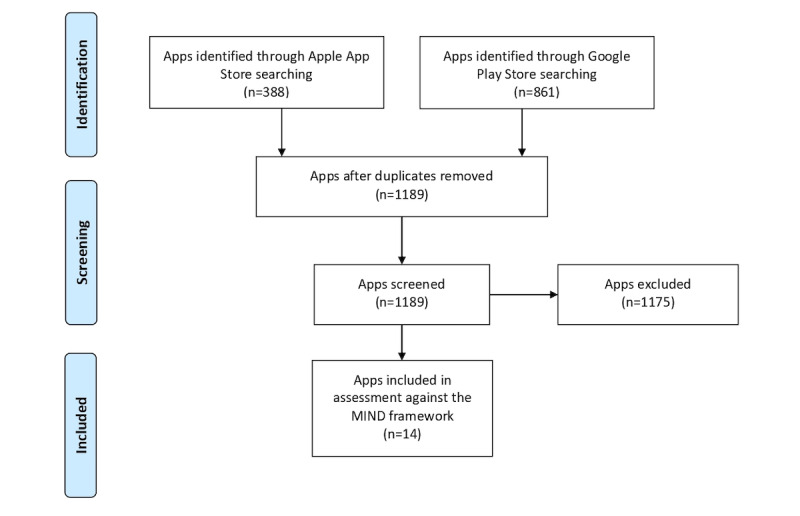
BACKGROUND: The ever-increasing pressure on health care systems has resulted in the underrecognition of perinatal mental disorders. Digital mental health tools such as apps could provide an option for accessible perinatal mental health screening and assessment. However, there is a lack of information regarding the availability and features of perinatal app options. OBJECTIVE: This study aims to evaluate the current state of diagnostic and screening apps for perinatal mental health available on the Google Play Store (Android) and Apple App Store (iOS) and to review their features following the mHealth Index and Navigation Database framework. METHODS: Following a scoping review approach, the Apple App Store and Google Play Store were systematically searched to identify perinatal mental health assessment apps. A total of 14 apps that met the inclusion criteria were downloaded and reviewed in a standardized manner using the mHealth Index and Navigation Database framework. The framework comprised 107 questions, allowing for a comprehensive assessment of app origin, functionality, engagement features, security, and clinical use. RESULTS: Most apps were developed by for-profit companies (n=10), followed by private individuals (n=2) and trusted health care companies (n=2). Out of the 14 apps, 3 were available only on Android devices, 4 were available only on iOS devices, and 7 were available on both platforms. Approximately one-third of the apps (n=5) had been updated within the last 180 days. A total of 12 apps offered the Edinburgh Postnatal Depression Scale in its original version or in rephrased versions. Engagement, input, and output features included reminder notifications, connections to therapists, and free writing features. A total of 6 apps offered psychoeducational information and references. Privacy policies were available for 11 of the 14 apps, with a median Flesch-Kincaid reading grade level of 12.3. One app claimed to be compliant with the Health Insurance Portability and Accountability Act standards and 2 apps claimed to be compliant with General Data Protection Regulation. Of the apps that could be accessed in full (n=10), all appeared to fulfill the claims stated in their description. Only 1 app referenced a relevant peer-reviewed study. All the apps provided a warning for use, highlighting that the mental health assessment result should not be interpreted as a diagnosis or as a substitute for medical care. Only 3 apps allowed users to export or email their mental health test results. CONCLUSIONS: These results indicate that there are opportunities to improve perinatal mental health assessment apps. To this end, we recommend focusing on the development and validation of more comprehensive assessment tools, ensuring data protection and safety features are adequate for the intended app use, and improving data sharing features between users and health care professionals for timely support.
Overview
The claims and statistics of this paper haven’t been checked yet.
Free: it reads the open-access text and checks the first 5 claims that cite a source we can check. Create a free account to check every claim.
Integrity signals
Registry
Cites
Statistics
Figures
Verification
Claims the paper makes
The claims and statistics of this paper haven’t been checked yet.
Free: it reads the open-access text and checks the first 5 claims that cite a source we can check. Create a free account to check every claim.
Claims other papers make about this one
Each is checked against this paper’s own text: does it say what the citing paper says it does?
The cited source says what the claim attributes to it.
In the citing paper
“Internet-based interventions could alleviate some pressure put on in-person health care services and overcome barriers to help-seeking, providing an alternative or complementary option for widespread perinatal mental health care provision (Spadaro et al., 2022).”
From App-based intervention for reducing depressive symptoms in postpartum women: Protocol for a feasibility randomized controlled trial (2023) · cites this paper as Spadaro et al., 2022
Self-check
Percentages, sums and reported differences re-computed from the paper’s own numbers.
The self-check needs the paper’s full text.
Citations
Cites
Preferred Reporting Items for Systematic Reviews and Meta-Analyses: the PRISMA statement
Moher, D., Liberati, A., Tetzlaff, J., Altman, D. G., & for the PRISMA Group (2009) · BMJ · doi:10.1136/bmj.b2535 · Cited by 83,823
Preferred Reporting Items for Systematic Reviews and Meta-Analyses: The PRISMA Statement
Moher, D., Liberati, A., Tetzlaff, J., Altman, D. G., & The PRISMA Group (2009) · PLoS Medicine · doi:10.1371/journal.pmed.1000097 · Cited by 64,042
PRISMA Extension for Scoping Reviews (PRISMA-ScR): Checklist and Explanation
Tricco, A. C., Lillie, E., Zarin, W., O'Brien, K. K., Colquhoun, H., Levac, D., Moher, D., Peters, M. D. J., Horsley, T., Weeks, L., et al. (2018) · Annals of Internal Medicine · doi:10.7326/m18-0850 · Cited by 43,565 · cited 1×
“We reported the review following the PRISMA-ScR (Preferred Reporting Items for Systematic Reviews and Meta-Analyses extension for Scoping Reviews) guidelines (Multimedia Appendix 1) [40].”
MethodA Brief Measure for Assessing Generalized Anxiety Disorder: The GAD-7
Spitzer, R. L., Kroenke, K., Williams, J. B. W., & Löwe, B. (2006) · Archives of Internal Medicine · doi:10.1001/archinte.166.10.1092 · Cited by 31,765 · cited 1×
“In addition to the EPDS, 1 app included the Patient Health Questionnaire–8-item scale [45], the Generalized Anxiety Disorder 7-item scale [46], the Insomnia Severity Index [47,48], the Perceived Stress Index [49], and questions about PTSD from the Mini-International Neuropsychiatric Interview [50] with attribution to…”
MethodDetection of Postnatal Depression: Development of the 10-item Edinburgh Postnatal Depression Scale
Cox, J. L., Holden, J. M., & Sagovsky, R. (1987) · British Journal of Psychiatry · doi:10.1192/bjp.150.6.782 · Cited by 14,183
(1998) · PubMed · Cited by 10,216
Validation of the Insomnia Severity Index as an outcome measure for insomnia research
Bastien, C. (2001) · Sleep Medicine · doi:10.1016/s1389-9457(00)00065-4 · Cited by 8,067 · cited 2×
“In addition to the EPDS, 1 app included the Patient Health Questionnaire–8-item scale [45], the Generalized Anxiety Disorder 7-item scale [46], the Insomnia Severity Index [47,48], the Perceived Stress Index [49], and questions about PTSD from the Mini-International Neuropsychiatric Interview [50] with attribution to…”
MethodFlesch, R. (1948) · Journal of Applied Psychology · doi:10.1037/h0057532 · Cited by 5,391 · cited 1×
“Reading level of the privacy policies of apps was calculated using an automatic text readability checker [41], as indicated in the MIND framework, resulting in a Flesh-Kincaid grade level [42], indicating a readability score corresponding to the US education grade level required for the reader to understand the text.”
MethodThe PHQ-8 as a measure of current depression in the general population
Kroenke, K., Strine, T. W., Spitzer, R. L., Williams, J. B. W., Berry, J. T., & Mokdad, A. H. (2009) · Journal of Affective Disorders · doi:10.1016/j.jad.2008.06.026 · Cited by 5,121 · cited 1×
“In addition to the EPDS, 1 app included the Patient Health Questionnaire–8-item scale [45], the Generalized Anxiety Disorder 7-item scale [46], the Insomnia Severity Index [47,48], the Perceived Stress Index [49], and questions about PTSD from the Mini-International Neuropsychiatric Interview [50]…”
MethodMorin, C. M., Belleville, G., Bélanger, L., & Ivers, H. (2011) · Sleep · doi:10.1093/sleep/34.5.601 · Cited by 4,620 · cited 2×
“In addition to the EPDS, 1 app included the Patient Health Questionnaire–8-item scale [45], the Generalized Anxiety Disorder 7-item scale [46], the Insomnia Severity Index [47,48], the Perceived Stress Index [49], and questions about PTSD from the Mini-International Neuropsychiatric Interview [50] with attribution to…”
MethodPerinatal mental health: a review of progress and challenges
Howard, L. M., & Khalifeh, H. (2020) · World Psychiatry · doi:10.1002/wps.20769 · Cited by 1,118
Firth, J., Torous, J., Nicholas, J., Carney, R., Pratap, A., Rosenbaum, S., & Sarris, J. (2017) · World Psychiatry · doi:10.1002/wps.20472 · Cited by 1,097
Shorey, S., Chee, C. Y. I., Ng, E. D., Chan, Y. H., Tam, W. W. S., & Chong, Y. S. (2018) · Journal of Psychiatric Research · doi:10.1016/j.jpsychires.2018.08.001 · Cited by 1,055 · cited 1×
“Recent systematic reviews have reported a prevalence of 17% for postnatal depression [1] and 15% to 20% and 10% for antenatal and postnatal anxiety disorders [2,3], respectively.”
BackgroundElevated depression and anxiety symptoms among pregnant individuals during the COVID-19 pandemic
Lebel, C., MacKinnon, A., Bagshawe, M., Tomfohr-Madsen, L., & Giesbrecht, G. (2020) · Journal of Affective Disorders · doi:10.1016/j.jad.2020.07.126 · Cited by 1,017 · cited 1×
“During the COVID-19 pandemic, the increase in mental health concerns in the perinatal population has urged health care systems to expand care modalities [27,57].”
BackgroundGlobal burden of preterm birth
Walani, S. R. (2020) · International Journal of Gynecology & Obstetrics · doi:10.1002/ijgo.13195 · Cited by 1,000 · cited 1×
“[5].”
Torous, J., Jän Myrick, K., Rauseo-Ricupero, N., & Firth, J. (2020) · JMIR Mental Health · doi:10.2196/18848 · Cited by 946 · cited 1×
“As a result, telemedicine services have been widely and successfully adopted in everyday perinatal care and mental health care [28-30] paving the way for the uptake of other digital health innovations such as apps.”
BackgroundLevis, B., Negeri, Z., Sun, Y., Benedetti, A., & Thombs, B. D. (2020) · BMJ · doi:10.1136/bmj.m4022 · Cited by 922
Bipolar disorder, affective psychosis, and schizophrenia in pregnancy and the post-partum period
Jones, I., Chandra, P. S., Dazzan, P., & Howard, L. M. (2014) · The Lancet · doi:10.1016/s0140-6736(14)61278-2 · Cited by 644 · cited 1×
“In some individuals, postpartum psychosis can also be the first manifestation of bipolar disorder [9,10].”
BackgroundFawcett, E. J., Fairbrother, N., Cox, M. L., White, I. R., & Fawcett, J. M. (2019) · The Journal of Clinical Psychiatry · doi:10.4088/jcp.18r12527 · Cited by 609 · cited 1×
“Recent systematic reviews have reported a prevalence of 17% for postnatal depression [1] and 15% to 20% and 10% for antenatal and postnatal anxiety disorders [2,3], respectively.”
BackgroundPrevalence of paternal depression in pregnancy and the postpartum: an updated meta-analysis
Cameron, E. E., Sedov, I. D., & Tomfohr-Madsen, L. M. (2016) · Journal of Affective Disorders · doi:10.1016/j.jad.2016.07.044 · Cited by 586
Wesseloo, R., Kamperman, A. M., Munk-Olsen, T., Pop, V. J. M., Kushner, S. A., & Bergink, V. (2016) · American Journal of Psychiatry · doi:10.1176/appi.ajp.2015.15010124 · Cited by 469 · cited 1×
“Critically, pregnancy can be a triggering event; 10% to 20% of pregnant individuals with bipolar disorder experience a relapse during or after pregnancy, often culminating in a severe mental illness episode (ie, postpartum psychosis and mania) requiring hospitalization [6-8].”
BackgroundStandalone smartphone apps for mental health—a systematic review and meta-analysis
Weisel, K. K., Fuhrmann, L. M., Berking, M., Baumeister, H., Cuijpers, P., & Ebert, D. D. (2019) · npj Digital Medicine · doi:10.1038/s41746-019-0188-8 · Cited by 447
Internet Use in Pregnancy Informs Women’s Decision Making: A Web‐Based Survey
Lagan, B. M., Sinclair, M., & George Kernohan, W. (2010) · Birth · doi:10.1111/j.1523-536x.2010.00390.x · Cited by 443 · cited 1×
“tools as a source of health information during pregnancy and to enhance their understanding and involvement in pregnancy-related decision-making [61].”
BackgroundHewitt, P. L., Flett, G. L., & Mosher, S. W. (1992) · Journal of Psychopathology and Behavioral Assessment · doi:10.1007/bf00962631 · Cited by 437 · cited 1×
“…the Patient Health Questionnaire–8-item scale [45], the Generalized Anxiety Disorder 7-item scale [46], the Insomnia Severity Index [47,48], the Perceived Stress Index [49], and questions about PTSD from the Mini-International Neuropsychiatric Interview [50] with attribution to original sources.”
MethodChandrashekar, P. (2018) · mHealth · doi:10.21037/mhealth.2018.03.02 · Cited by 359
Sambrook Smith, M., Lawrence, V., Sadler, E., & Easter, A. (2019) · BMJ Open · doi:10.1136/bmjopen-2018-024803 · Cited by 338 · cited 1×
“…of an array of individual-level and organizational-level barriers, including negative attitudes and stigma regarding diagnosis; a lack of understanding of perinatal mental health disorders among pregnant individuals, their partners, and health care professionals; and fear of consequences [20].”
BackgroundPoon, L. C., Yang, H., Kapur, A., Melamed, N., Dao, B., Divakar, H., McIntyre, H. D., Kihara, A. B., Ayres‐de‐Campos, D., Ferrazzi, E. M., et al. (2020) · International Journal of Gynecology & Obstetrics · doi:10.1002/ijgo.13156 · Cited by 304 · cited 1×
“As a result, guidelines compiled for perinatal care during the pandemic recommended asking pregnant individuals about their mental health at every antenatal and postnatal appointment and encouraged the use of digital means to deliver support [58].”
BackgroundLuca, D. L., Margiotta, C., Staatz, C., Garlow, E., Christensen, A., & Zivin, K. (2020) · American Journal of Public Health · doi:10.2105/ajph.2020.305619 · Cited by 303 · cited 1×
“In the United States, it was projected that untreated perinatal mood and anxiety disorders costed US $14 billion for the 2017 birth cohort from conception to 5 years postpartum, with the average cost per affected mother–child averaging at US $31,800 [16].”
BackgroundBreastfeeding is negatively affected by prenatal depression and reduces postpartum depression
Figueiredo, B., Canário, C., & Field, T. (2014) · Psychological Medicine · doi:10.1017/s0033291713001530 · Cited by 298 · cited 1×
“Mental health disorders throughout the perinatal period have also been found to diminish mother–infant bonding [11], impair breast feeding [12,13], and, in some cases, predict poor outcomes in social-emotional and cognitive development of children [11].”
BackgroundLeach, L. S., Poyser, C., Cooklin, A. R., & Giallo, R. (2016) · Journal of Affective Disorders · doi:10.1016/j.jad.2015.09.063 · Cited by 259
The effects of paternal depression on child and adolescent outcomes: A systematic review
Sweeney, S., & MacBeth, A. (2016) · Journal of Affective Disorders · doi:10.1016/j.jad.2016.05.073 · Cited by 257
Anxiety scales used in pregnancy: systematic review
Sinesi, A., Maxwell, M., O'Carroll, R., & Cheyne, H. (2019) · BJPsych Open · doi:10.1192/bjo.2018.75 · Cited by 190 · cited 1×
“Systematic reviews of mental health screening tools [72-74] may be used to inform the development and assessment of digital questionnaires that aim to provide a more comprehensive screening.”
BackgroundHollis, C., Sampson, S., Simons, L., Davies, E. B., Churchill, R., Betton, V., Butler, D., Chapman, K., Easton, K., Gronlund, T. A., et al. (2018) · The Lancet Psychiatry · doi:10.1016/s2215-0366(18)30296-7 · Cited by 186 · cited 1×
“In fact, 1 of the top 10 research priorities recently identified by the James Lind Alliance Priority Setting Partnership for digital technology in mental health care is to identify the best methods to evaluate and endorse mental health apps [35].”
BackgroundDeriving a practical framework for the evaluation of health apps
Henson, P., David, G., Albright, K., & Torous, J. (2019) · The Lancet Digital Health · doi:10.1016/s2589-7500(19)30013-5 · Cited by 182 · cited 1×
“…in collaboration with the app evaluation model of the American Psychiatric Association (APA) [38], reflecting consensus from various stakeholders such as service users, social workers, psychiatrists, and data scientists to derive a ready-to-use resource for patients and clinicians alike [36,38,39].”
BackgroundMicali, N., Treasure, J., & Simonoff, E. (2007) · Journal of Psychosomatic Research · doi:10.1016/j.jpsychores.2007.05.003 · Cited by 177 · cited 1×
“Recent systematic reviews have reported a prevalence of 17% for postnatal depression [1] and 15% to 20% and 10% for antenatal and postnatal anxiety disorders [2,3], respectively.”
BackgroundFathers, fathering and child psychopathology
Barker, B., Iles, J. E., & Ramchandani, P. G. (2017) · Current Opinion in Psychology · doi:10.1016/j.copsyc.2017.02.015 · Cited by 175
Postpartum bonding: the impact of maternal depression and adult attachment style
Nonnenmacher, N., Noe, D., Ehrenthal, J. C., & Reck, C. (2016) · Archives of Women s Mental Health · doi:10.1007/s00737-016-0648-y · Cited by 157 · cited 1×
“Mental health disorders throughout the perinatal period have also been found to diminish mother–infant bonding [11], impair breast feeding [12,13], and, in some cases, predict poor outcomes in social-emotional and cognitive development of children [11] .”
BackgroundChallenges in Assessing Mobile Health App Quality
Grundy, Q. H., Wang, Z., & Bero, L. A. (2016) · American Journal of Preventive Medicine · doi:10.1016/j.amepre.2016.07.009 · Cited by 154 · cited 1×
“Unlike electronic journal databases, app stores are not designed for systematic search and export of data [69].”
BackgroundPrenatal alcohol exposure and offspring mental health: A systematic review
Easey, K., Dyer, M. L., Timpson, N. J., & Munafo, M. R. (2019) · Drug and Alcohol Dependence · doi:10.1016/j.drugalcdep.2019.01.007 · Cited by 146
Actionable health app evaluation: translating expert frameworks into objective metrics
Lagan, S., Aquino, P., Emerson, M. R., Fortuna, K., Walker, R., & Torous, J. (2020) · npj Digital Medicine · doi:10.1038/s41746-020-00312-4 · Cited by 144 · cited 10×
“The included apps were then analyzed and scored against the MIND framework [36].”
BackgroundMethodResultInfluentialAktar, E., Qu, J., Lawrence, P. J., Tollenaar, M. S., Elzinga, B. M., & Bögels, S. M. (2019) · Frontiers in Psychiatry · doi:10.3389/fpsyt.2019.00391 · Cited by 140
Barriers to addressing perinatal mental health issues in midwifery settings
Bayrampour, H., Hapsari, A. P., & Pavlovic, J. (2018) · Midwifery · doi:10.1016/j.midw.2017.12.020 · Cited by 131 · cited 1×
“Other challenges include cultural and language factors, resource fragmentation, and poor policy implementation [21].”
BackgroundImpact of Maternal Anxiety on Breastfeeding Outcomes: A Systematic Review
Hoff, C. E., Movva, N., Rosen Vollmar, A. K., & Pérez-Escamilla, R. (2019) · Advances in Nutrition · doi:10.1093/advances/nmy132 · Cited by 122 · cited 1×
“Mental health disorders throughout the perinatal period have also been found to diminish mother–infant bonding [11], impair breast feeding [12,13], and, in some cases, predict poor outcomes in social-emotional and cognitive development of children [11] .”
BackgroundMobile Health for Perinatal Depression and Anxiety: Scoping Review
Hussain-Shamsy, N., Shah, A., Vigod, S. N., Zaheer, J., & Seto, E. (2020) · Journal of Medical Internet Research · doi:10.2196/17011 · Cited by 119 · cited 1×
“…have highlighted that new mothers and those with postnatal depression are interested in using health apps [23], and recent studies have highlighted a growing research effort in the implementation of mHealth tools for psychoeducation and prevention of perinatal mental health concerns [24-26].”
BackgroundPritchett, R., Kemp, J., Wilson, P., Minnis, H., Bryce, G., & Gillberg, C. (2010) · Family Practice · doi:10.1093/fampra/cmq080 · Cited by 109 · cited 1×
“Systematic reviews of mental health screening tools [72-74] may be used to inform the development and assessment of digital questionnaires that aim to provide a more comprehensive screening.”
BackgroundEvaluating evaluation frameworks: a scoping review of frameworks for assessing health apps
Lagan, S., Sandler, L., & Torous, J. (2021) · BMJ Open · doi:10.1136/bmjopen-2020-047001 · Cited by 108 · cited 7×
“One reviewer (BS) transferred the MIND framework questions from the supplementary materials in Lagan et al into Microsoft Excel spreadsheets for data extraction and assessment of app features.”
BackgroundMethodInfluentialPowell, A. C., Torous, J., Chan, S., Raynor, G. S., Shwarts, E., Shanahan, M., & Landman, A. B. (2016) · JMIR mHealth and uHealth · doi:10.2196/mhealth.5176 · Cited by 101
Osma, J., Barrera, A. Z., & Ramphos, E. (2016) · Cyberpsychology, Behavior, and Social Networking · doi:10.1089/cyber.2015.0549 · Cited by 88 · cited 1×
“…perinatal mental health, recent studies have highlighted that new mothers and those with postnatal depression are interested in using health apps [23], and recent studies have highlighted a growing research effort in the implementation of mHealth tools for psychoeducation and prevention of…”
BackgroundPerinatal depression care pathway for obstetric settings
Byatt, N., Xu, W., Levin, L. L., & Moore Simas, T. A. (2019) · International Review of Psychiatry · doi:10.1080/09540261.2018.1534725 · Cited by 79 · cited 1×
“To date, access to mental health care is restricted to only a small proportion of pregnant individuals in need of mental health support [56].”
Background(2015) · Wiley eBooks · doi:10.1002/9781118509722 · Cited by 77
Ford, E., Shakespeare, J., Elias, F., & Ayers, S. (2017) · Family Practice · doi:10.1093/fampra/cmw101 · Cited by 73 · cited 1×
“The ever-increasing pressure on health care systems and lack of time and resources have resulted in a staggering underrecognition of postnatal depression and other perinatal disorders [17,18], with approximately 50% of cases of postnatal depression being undiagnosed [19].”
BackgroundMamluk, L., Jones, T., Ijaz, S., Edwards, H. B., Savović, J., Leach, V., Moore, T. H. M., von Hinke, S., Lewis, S. J., Donovan, J. L., et al. (2021) · International Journal of Epidemiology · doi:10.1093/ije/dyz272 · Cited by 65
Hewitt, C., & Gilbody, S. (2009) · BJOG: An International Journal of Obstetrics & Gynaecology · doi:10.1111/j.1471-0528.2009.02148.x · Cited by 62 · cited 1×
“The ever-increasing pressure on health care systems and lack of time and resources have resulted in a staggering underrecognition of postnatal depression and other perinatal disorders [17,18], with approximately 50% of cases of postnatal depression being undiagnosed [19].”
BackgroundSprenger, M., Mettler, T., & Osma, J. (2017) · PLOS ONE · doi:10.1371/journal.pone.0180867 · Cited by 61 · cited 2×
“In the field of perinatal mental health, recent studies have highlighted that new mothers and those with postnatal depression are interested in using health apps [23], and recent studies have highlighted a growing research effort in the implementation of mHealth tools for psychoeducation and prevention of perinatal me…”
BackgroundPerinatal depression screening: Let's not throw the baby out with the bath water!
Chaudron, L. H., & Wisner, K. L. (2014) · Journal of Psychosomatic Research · doi:10.1016/j.jpsychores.2014.03.011 · Cited by 57 · cited 1×
“Early mental health assessment strategies hold promise in supporting pregnant individuals and new mothers, but strategies vary widely among countries, with screening recommendations being subject to debates [52-54] and systematic reviews attempting to collect evidence to inform policy makers [55].”
BackgroundHow Kaiser Permanente Created a Mental Health and Wellness Digital Ecosystem
Mordecai, D., Histon, T., Neuwirth, E., Heisler, W. S., Kraft, A., Bang, Y., Franchino, K., Taillac, C., & Nixon, J. P. (2021) · NEJM Catalyst · doi:10.1056/cat.20.0295 · Cited by 56 · cited 1×
“Telemedicine has been the main digital tool used by health care professionals transitioning to remote care models, but apps have also started to be featured in mental health programs offered by health care providers and universities [59,60].”
MethodHamel, C., Lang, E., Morissette, K., Beck, A., Stevens, A., Skidmore, B., Colquhoun, H., LeBlanc, J., Moore, A., Riva, J. J., et al. (2019) · Systematic Reviews · doi:10.1186/s13643-018-0930-3 · Cited by 55
Predictors of severe relapse in pregnant women with psychotic or bipolar disorders
Taylor, C. L., Broadbent, M. T. M., Khondoker, M. R., Stewart, R. J., & Howard, L. M. (2018) · Journal of Psychiatric Research · doi:10.1016/j.jpsychires.2018.06.019 · Cited by 52 · cited 1×
“Critically, pregnancy can be a triggering event; 10% to 20% of pregnant individuals with bipolar disorder experience a relapse during or after pregnancy, often culminating in a severe mental illness episode (ie, postpartum psychosis and mania) requiring hospitalization [6-8].”
BackgroundStevens, A. W. M. M., Goossens, P. J. J., Knoppert-van der Klein, E. A. M., Draisma, S., Honig, A., & Kupka, R. W. (2019) · Journal of Affective Disorders · doi:10.1016/j.jad.2019.02.018 · Cited by 52 · cited 1×
“Critically, pregnancy can be a triggering event; 10% to 20% of pregnant individuals with bipolar disorder experience a relapse during or after pregnancy, often culminating in a severe mental illness episode (ie, postpartum psychosis and mania) requiring hospitalization [6-8].”
BackgroundThombs, B. D., Saadat, N., Riehm, K. E., Karter, J. M., Vaswani, A., Andrews, B. K., Simons, P., & Cosgrove, L. (2017) · BMC Medicine · doi:10.1186/s12916-017-0903-8 · Cited by 51
Fellmeth, G., Harrison, S., Opondo, C., Nair, M., Kurinczuk, J. J., & Alderdice, F. (2021) · BMC Psychiatry · doi:10.1186/s12888-021-03190-6 · Cited by 51 · cited 1×
“Thus, the reliability of screening tools in a setting or population different from that in which the tool was developed cannot be guaranteed [71].”
BackgroundSmartphone Apps for College Mental Health: A Concern for Privacy and Quality of Current Offerings
Melcher, J., & Torous, J. (2020) · Psychiatric Services · doi:10.1176/appi.ps.202000098 · Cited by 50 · cited 1×
“Telemedicine has been the main digital tool used by health care professionals transitioning to remote care models, but apps have also started to be featured in mental health programs offered by health care providers and universities [59,60].”
MethodThe Crisis of Perinatal Mental Health in the Age of Covid-19
Osborne, L. M., Kimmel, M., & Surkan, P. J. (2021) · Maternal and Child Health Journal · doi:10.1007/s10995-020-03114-y · Cited by 48 · cited 2×
“During the COVID-19 pandemic, the increase in mental health concerns in the perinatal population has urged health care systems to expand care modalities [27,57].”
BackgroundReadability of Privacy Policies
Krumay, B., & Klar, J. (2020) · Lecture notes in computer science · doi:10.1007/978-3-030-49669-2_22 · Cited by 40 · cited 1×
“…regulations (eg, Health Insurance Portability and Accountability Act and General Data Protection Regulation) has rarely been mentioned, and with a median Flesch-Kincaid reading grade level of 12.3, privacy policies were often above the suggested readability grade level (9-10) for the public [67].”
BackgroundInfluentialFeldman, N., Back, D., Boland, R., & Torous, J. (2021) · Archives of Women's Mental Health · doi:10.1007/s00737-021-01138-z · Cited by 39 · cited 2×
“A similar prevalence of apps targeting physical appearance and fitness was also reported by a recent systematic review specific to mHealth interventions for peripartum mood disorders [64].”
BackgroundMartin-Key, N. A., Spadaro, B., Schei, T. S., & Bahn, S. (2021) · Journal of Medical Internet Research · doi:10.2196/27132 · Cited by 37 · cited 3×
“In the field of perinatal mental health, recent studies have highlighted that new mothers and those with postnatal depression are interested in using health apps [23], and recent studies have highlighted a growing research effort in the implementation of mHealth tools for psychoeducation and prevention of perinatal me…”
BackgroundSelf-citationFamily and Partner Psychopathology and the Risk of Postpartum Mental Disorders
Munk-Olsen, T., & Laursen, T. M. (2007) · The Journal of Clinical Psychiatry · doi:10.4088/jcp.v68n1217 · Cited by 35
Maternal Mental Health MATTERS
Kimmel, M. (2020) · North Carolina Medical Journal · doi:10.18043/ncm.81.1.45 · Cited by 35 · cited 1×
“As a result, telemedicine services have been widely and successfully adopted in everyday perinatal care and mental health care [28-30] paving the way for the uptake of other digital health innovations such as apps.”
BackgroundReal-World Technology Use Among People With Mental Illnesses: Qualitative Study
Carpenter-Song, E., Noel, V. A., Acquilano, S. C., & Drake, R. E. (2018) · JMIR Mental Health · doi:10.2196/10652 · Cited by 34 · cited 1×
“Importantly, there still exists a large gap between interest in mental health digital tools [25] and a comprehensive understanding of the scientific integrity, clinical validity, and features of digital assessment tools for mental health [31-34].”
BackgroundGavin, N. I., Meltzer‐Brody, S., Glover, V., & Gaynes, B. N. (2015) · Identifying Perinatal Depression and Anxiety · doi:10.1002/9781118509722.ch1 · Cited by 33 · cited 1×
“The ever-increasing pressure on health care systems and lack of time and resources have resulted in a staggering underrecognition of postnatal depression and other perinatal disorders [17,18], with approximately 50% of cases of postnatal depression being undiagnosed [19].”
BackgroundIssues in reporting of systematic review methods in health app-focused reviews: A scoping review
Grainger, R., Devan, H., Sangelaji, B., & Hay‐Smith, J. (2020) · Health Informatics Journal · doi:10.1177/1460458220952917 · Cited by 33 · cited 2×
“Thus, it is challenging to replicate the search strategy reliably [70].”
BackgroundToward a use case based classification of mobile health applications
Yasini, M., & Guillaume, M. (2015) · Studies in health technology and informatics · doi:10.3233/978-1-61499-512-8-175 · Cited by 27 · cited 1×
“Importantly, there still exists a large gap between interest in mental health digital tools [25] and a comprehensive understanding of the scientific integrity, clinical validity, and features of digital assessment tools for mental health [31-34].”
BackgroundYapp, E., Howard, L. M., Kadicheeni, M., Telesia, L., Milgrom, J., & Trevillion, K. (2019) · Midwifery · doi:10.1016/j.midw.2019.03.021 · Cited by 27
Childbirth and prevention of bipolar disorder: an opportunity for change
Sharma, V., Bergink, V., Berk, M., Chandra, P. S., Munk‐Olsen, T., Viguera, A. C., & Yatham, L. N. (2019) · The Lancet Psychiatry · doi:10.1016/s2215-0366(19)30092-6 · Cited by 25 · cited 1×
“In some individuals, postpartum psychosis can also be the first manifestation of bipolar disorder [9,10].”
BackgroundEpidemiology of Gestational and Pregestational Diabetes Mellitus
Egan, A. M., & Dunne, F. (2019) · Frontiers in diabetes · doi:10.1159/000480161 · Cited by 23
Highet, N. J., Gamble, J. A., & Creedy, D. K. (2018) · Primary Health Care Research & Development · doi:10.1017/s1463423618000336 · Cited by 22 · cited 1×
“Recent literature shows that proprietary digital tools options exist and are offered by perinatal care providers [68], and there is also a disconnect between commercially available apps and academically available apps for perinatal mental health, which have been reviewed elsewhere [64].”
BackgroundKingston, D. E., Biringer, A. B., van Zanten, S. V., Giallo, R., McDonald, S. D., MacQUEEN, G. M., Vermeyden, L., & Austin, M. (2017) · JMIR Mental Health · doi:10.2196/mental.6888 · Cited by 15
Bailin, A., & Grafstein, A. J. (2016) · Palgrave Macmillan UK eBooks · doi:10.1057/9781137388773_2 · Cited by 14
Use of the VeedaMom Electronic App as a Pregnancy Treatment Companion
Dyurich, A., & Oliver, M. (2020) · Journal of Feminist Family Therapy · doi:10.1080/08952833.2020.1793562 · Cited by 12 · cited 1×
“One app referenced a relevant study conducted to test the app [51], where the usability of the app as a screening and management tool for perinatal depression was explored by gathering feedback from women in interviews.”
BackgroundThe long gestation of screening programmes for perinatal depressive disorders
Gemmill, A. W. (2014) · Journal of Psychosomatic Research · doi:10.1016/j.jpsychores.2014.06.017 · Cited by 11 · cited 1×
“Early mental health assessment strategies hold promise in supporting pregnant individuals and new mothers, but strategies vary widely among countries, with screening recommendations being subject to debates [52-54] and systematic reviews attempting to collect evidence to inform policy makers [55].”
BackgroundScreening for perinatal anxiety
Mazzoni, S., Bott, N. L., & Hoffman, M. C. (2021) · American Journal of Obstetrics and Gynecology · doi:10.1016/j.ajog.2021.03.004 · Cited by 11 · cited 1×
“The EPDS can be used to screen for depression and anxiety [65].”
MethodAnxiety Disorders Comorbid with Depression
Stein, D. J., & Hollander, E. (2001) · CRC Press eBooks · doi:10.4324/9780203215210 · Cited by 10
Baby statistics: there is an App for that!
Chaudhry, B. M. (2016) · mHealth · doi:10.21037/mhealth.2016.05.03 · Cited by 7
(2021) · The MIT Press eBooks · doi:10.7551/mitpress/14056.003.0011 · Cited by 1
Research works printed but not linked: 1
- Anderson J Michalak E Lam R Depression in primary care: tools for screening, diagnosis, and measuring response to treatment BC Med J 2002 44 8 415 9
Cited by
Ur Rehman, M., Shafique, A., Azhar, Q.-U.-A., Jamal, S. S., Gheraibia, Y., & Usman, A. B. (2024) · Engineering Applications of Artificial Intelligence · doi:10.1016/j.engappai.2024.108047 · Cited by 73
Whitworth, K., Donnellan-Fernandez, R. E., & Fleet, J. (2023) · Women and Birth · doi:10.1016/j.wombi.2023.08.008 · Cited by 35
Lazarevic, N., Lecoq, M., Bœhm, C., & Caillaud, C. (2023) · International Journal of Environmental Research and Public Health · doi:10.3390/ijerph20021012 · Cited by 30
Exploring how informed mental health app selection may impact user engagement and satisfaction
Kopka, M., Camacho, E., Kwon, S., & Torous, J. B. (2023) · PLOS Digital Health · doi:10.1371/journal.pdig.0000219 · Cited by 31
Mobile health applications for self-management in chronic lung disease: a systematic review
Quach, S., Michaelchuk, W. W., Benoit, A., Oliveira, A., Packham, T., Goldstein, R. S., & Brooks, D. (2023) · Network Modeling Analysis in Health Informatics and Bioinformatics · doi:10.1007/s13721-023-00419-0 · Cited by 29
“Of all the available app evaluation tools that exist, the MIND framework demonstrated in this review and in the mental health space (Spadaro et al. 2022), that its extensive comprehensiveness can likely ensure all potential domains of app quality are accounted for (Lagan et al. 2020, 2021).”
Method
Metadata
- Authors
- Spadaro, B., Martin-Key, N. A., Funnell, E., & Bahn, S.
- Affiliations
- University of Cambridge (GB)
- Corresponding author
- Bahn, Sabine
- Venue
- JMIR mhealth and uhealth
- Publisher
- JMIR Publications Inc.
- Published
- 2022-01-17
- Volume
- 10
- Issue
- 1
- Pages
- e30724
- ISSN
- 2291-5222 (ISSN-L)
- PMC
- PMC8804959
- OpenAlex
- W3216104880
- Cited by
- 34
- References
- 84
- Citations by year
- 2026: 6 · 2025: 8 · 2024: 8 · 2023: 12
- FWCI
- 0.80
- Type
- journal article
- Language
- en
- Open access
- gold
- doi.org
- Licence
- cc-by
- Locations
- JMIR mhealth and uhealth (publishedVersion, cc-by)
- PubMed Central (publishedVersion, cc-by)
- PubMed (publishedVersion)
- DOAJ (DOAJ: Directory of Open Access Journals) (acceptedVersion)
- Funders
- Stanley Medical Research Institute (07R-1888)
- Topics
- Social Sciences › Psychology › Applied Psychology › Digital Mental Health Interventions
- Health Sciences › Medicine › Public Health, Environmental and Occupational Health › Maternal Mental Health During Pregnancy and Postpartum
- Health Sciences › Health Professions › General Health Professions › Mobile Health and mHealth Applications
- Keywords
- perinatal mental health, mobile health apps, perinatal depression screening, Edinburgh Postnatal Depression Scale, digital mental health tools, privacy policies, data protection compliance, psychoeducation
- MeSH terms
- Delivery of Health Care, Humans, Mental Health, Databases, Factual, Telemedicine, Mobile Applications
About these checks
Registry, retraction, Cites and statistics results are computed, not judged, with one exception: a printed reference that no index lists is read once by a model before it counts as a citation error. Claims are extracted by a model and kept only when their quote appears verbatim in the text; each cited source is then checked, with a model’s help, for whether it says what the claim relies on. Those verdicts can be wrong — read the claim’s quote and the cited source before relying on one.
Statistics and arithmetic are recomputed, not judged.
Confidence bands are shown only for fields calibrated on our annotated test set. None is calibrated yet, so no band is shown.
What counts as a claim ›How we measure confidence ›How we check this ›
Are you an author, or do you see a problem with this page? Request a review
Data sources
Bibliographic data: Semantic Scholar, OpenAlex, Crossref.
Contains information from the Semantic Scholar Academic Graph Datasets, made available under the ODC Attribution License (ODC-BY 1.0).
Semantic Scholar’s data is described in: Kinney, R., et al. (2023). The Semantic Scholar Open Data Platform. arXiv:2301.10140.
