

The DOI matches its Crossref record; 40 of the 40 references it cites were found in a registry or an index.
Automated Text Messaging as an Adjunct to Cognitive Behavioral Therapy for Depression: A Clinical Trial
Open accessAbstract
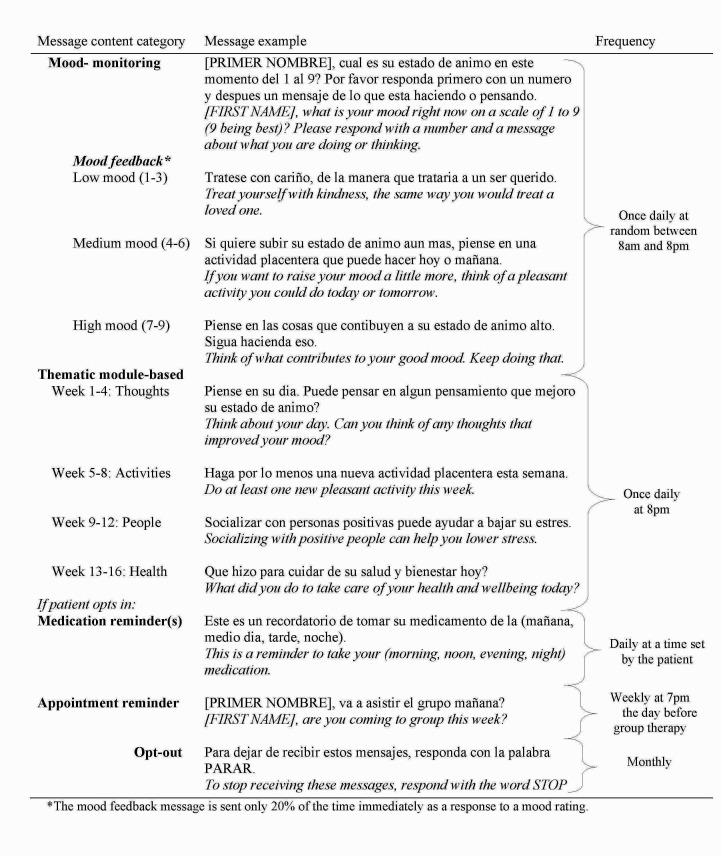
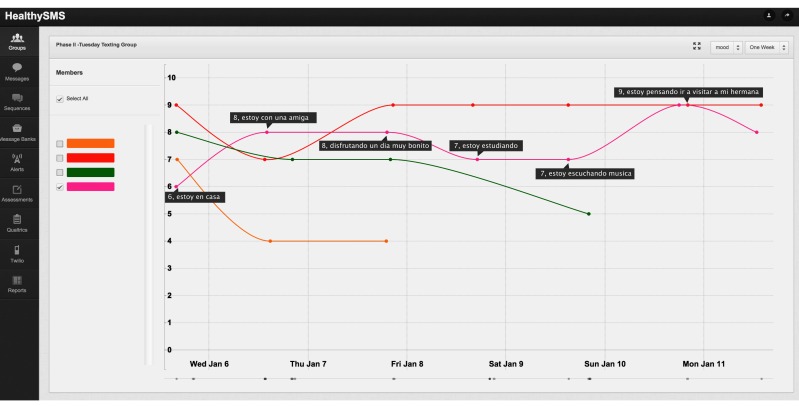
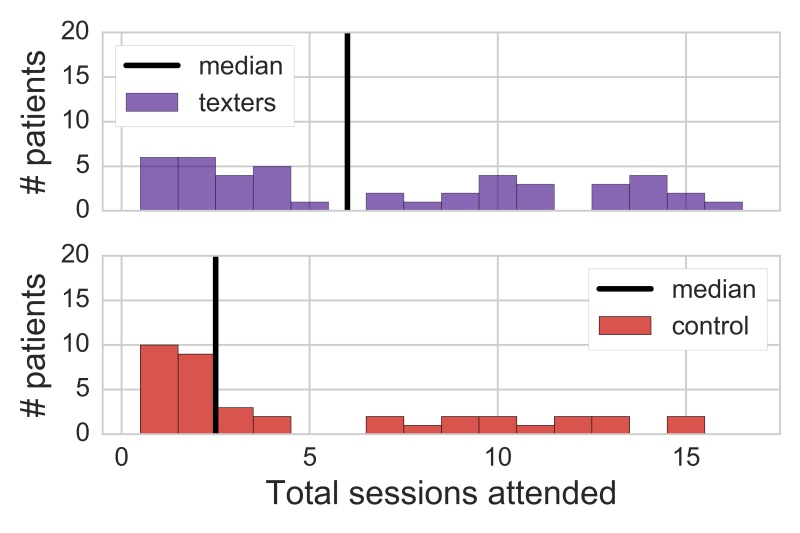
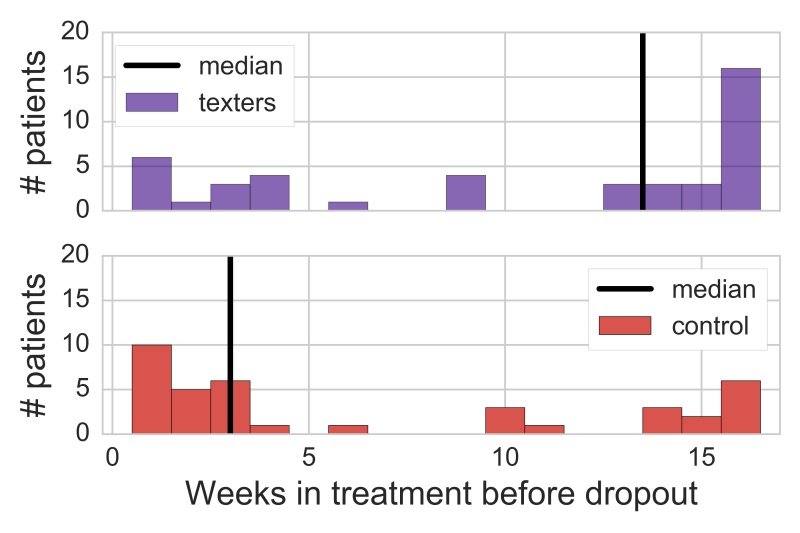
BACKGROUND: Cognitive Behavioral Therapy (CBT) for depression is efficacious, but effectiveness is limited when implemented in low-income settings due to engagement difficulties including nonadherence with skill-building homework and early discontinuation of treatment. Automated messaging can be used in clinical settings to increase dosage of depression treatment and encourage sustained engagement with psychotherapy. OBJECTIVES: The aim of this study was to test whether a text messaging adjunct (mood monitoring text messages, treatment-related text messages, and a clinician dashboard to display patient data) increases engagement and improves clinical outcomes in a group CBT treatment for depression. Specifically, we aim to assess whether the text messaging adjunct led to an increase in group therapy sessions attended, an increase in duration of therapy attended, and reductions in Patient Health Questionnaire-9 item (PHQ-9) symptoms compared with the control condition of standard group CBT in a sample of low-income Spanish speaking Latino patients. METHODS: Patients in an outpatient behavioral health clinic were assigned to standard group CBT for depression (control condition; n=40) or the same treatment with the addition of a text messaging adjunct (n=45). The adjunct consisted of a daily mood monitoring message, a daily message reiterating the theme of that week's content, and medication and appointment reminders. Mood data and qualitative responses were sent to a Web-based platform (HealthySMS) for review by the therapist and displayed in session as a tool for teaching CBT skills. RESULTS: Intent-to-treat analyses on therapy attendance during 16 sessions of weekly therapy found that patients assigned to the text messaging adjunct stayed in therapy significantly longer (median of 13.5 weeks before dropping out) than patients assigned to the control condition (median of 3 weeks before dropping out; Wilcoxon-Mann-Whitney z=-2.21, P=.03). Patients assigned to the text messaging adjunct also generally attended more sessions (median=6 sessions) during this period than patients assigned to the control condition (median =2.5 sessions), but the effect was not significant (Wilcoxon-Mann-Whitney z=-1.65, P=.10). Both patients assigned to the text messaging adjunct (B=-.29, 95% CI -0.38 to -0.19, z=-5.80, P<.001) and patients assigned to the control conditions (B=-.20, 95% CI -0.32 to -0.07, z=-3.12, P=.002) experienced significant decreases in depressive symptom severity over the course of treatment; however, the conditions did not significantly differ in their degree of symptom reduction. CONCLUSIONS: This study provides support for automated text messaging as a tool to sustain engagement in CBT for depression over time. There were no differences in depression outcomes between conditions, but this may be influenced by low follow-up rates of patients who dropped out of treatment.
Overview
The claims and statistics of this paper haven’t been checked yet.
Run the check — free, no account needed. It reads the open-access text and checks the sources it cites.
Integrity signals
Registry
Cites
Statistics
Figures
Verification
Claims the paper makes
The claims and statistics of this paper haven’t been checked yet.
Run the check — free, no account needed. It reads the open-access text and checks the sources it cites.
Claims other papers make about this one
Each is checked against this paper’s own text: does it say what the citing paper says it does?
The source backs part of the claim, not all of it — or backs it for a different population, condition or comparison.
In the citing paper
“The feasibility of this approach is supported by previous studies showing that receiving simple text messaging reminders increases attendance to face-to-face treatment sessions among POC [54,55].”
From App-Based Mindfulness Meditation for People of Color Who Experience Race-Related Stress: Protocol for a Randomized Controlled Trial (2022) · cites this paper as [54]
Experimental — accuracy not yet measuredThe source backs part of the claim, not all of it — or backs it for a different population, condition or comparison.
In the citing paper
“Text messaging reminders have proven effective in increasing treatment adherence among POC community samples [54-56,63], including those in app-based mindfulness meditation studies [49].”
From App-Based Mindfulness Meditation for People of Color Who Experience Race-Related Stress: Protocol for a Randomized Controlled Trial (2022) · cites this paper as [54]
Experimental — accuracy not yet measured
Self-check
Percentages, sums and reported differences re-computed from the paper’s own numbers.
The self-check needs the paper’s full text.
Citations
Cites
The PHQ-9: A New Depression Diagnostic and Severity Measure
Kroenke, K., & Spitzer, R. L. (2002) · Psychiatric Annals · doi:10.3928/0048-5713-20020901-06 · Cited by 5,898 · cited 14×
“5 | e148 | p.8http://www.jmir.org/2017/5/e148/ (page number not for citation purposes) XSL•FO RenderX ePHQ-9: Patient Health Questionnaire-9 item. fPreferred method of contact refers to the question “In general, if someone needs to reach you, do you prefer that they call or that they text you?” gQuestion asked only to…”
MethodInfluentialNonparametrics: Statistical Methods Based on Ranks.
Beaver, R. J., & Lehmann, E. L. (1976) · Biometrics · doi:10.2307/2529529 · Cited by 2,067
Monitoring Depression Treatment Outcomes With the Patient Health Questionnaire-9
L??we, B., Un??tzer, J., Callahan, C. M., Perkins, A. J., & Kroenke, K. (2004) · Medical Care · doi:10.1097/00005650-200412000-00006 · Cited by 1,354
Mohr, D. C., Cuijpers, P., & Lehman, K. (2011) · Journal of Medical Internet Research · doi:10.2196/jmir.1602 · Cited by 1,097
Cuijpers, P., Berking, M., Andersson, G., Quigley, L., Kleiboer, A., & Dobson, K. S. (2013) · The Canadian Journal of Psychiatry · doi:10.1177/070674371305800702 · Cited by 1,066
Disparity in Depression Treatment Among Racial and Ethnic Minority Populations in the United States
Alegría, M., Chatterji, P., Wells, K., Cao, Z., Chen, C.-N., Takeuchi, D., Jackson, J., & Meng, X.-L. (2008) · Psychiatric Services · doi:10.1176/ps.2008.59.11.1264 · Cited by 993
Healthcare via Cell Phones: A Systematic Review
Krishna, S., Boren, S. A., & Balas, E. A. (2009) · Telemedicine and e-Health · doi:10.1089/tmj.2008.0099 · Cited by 882
Saeb, S., Zhang, M., Karr, C. J., Schueller, S. M., Corden, M. E., Kording, K. P., & Mohr, D. C. (2015) · Journal of Medical Internet Research · doi:10.2196/jmir.4273 · Cited by 782
Huang, F. Y., Chung, H., Kroenke, K., Delucchi, K., & Spitzer, R. L. (2006) · Journal of General Internal Medicine · doi:10.1111/j.1525-1497.2006.00409.x · Cited by 688
Efficacy of text messaging-based interventions for health promotion: A meta-analysis
Head, K. J., Noar, S. M., Iannarino, N. T., & Harrington, N. G. (2013) · Social Science & Medicine · doi:10.1016/j.socscimed.2013.08.003 · Cited by 647
Treating Depression in Predominantly Low-Income Young Minority Women
Miranda, J. M., Chung, J. Y., Green, B. L., KRUPNICK, J. L., Siddique, J., Revicki, D. A., & Belin, T. (2003) · JAMA · doi:10.1001/jama.290.1.57 · Cited by 531
Meta-analysis of homework effects in cognitive and behavioral therapy: A replication and extension.
Kazantzis, N., Whittington, C., & Dattilio, F. (2010) · Clinical Psychology: Science and Practice · doi:10.1111/j.1468-2850.2010.01204.x · Cited by 398
Treatment of Depression Among Impoverished Primary Care Patients From Ethnic Minority Groups
Miranda, J. M., Azocar, F., Organista, K. C., Dwyer, E. V., & Areane, P. (2003) · Psychiatric Services · doi:10.1176/appi.ps.54.2.219 · Cited by 343
Berrouiguet, S., Baca-García, E., Brandt, S., Walter, M., & Courtet, P. (2016) · Journal of Medical Internet Research · doi:10.2196/jmir.5066 · Cited by 332
Lambert, M. J., Harmon, C., Slade, K., Whipple, J. L., & Hawkins, E. J. (2004) · Journal of Clinical Psychology · doi:10.1002/jclp.20113 · Cited by 326
The Relationship Between Homework Compliance and Therapy Outcomes: An Updated Meta-Analysis
Mausbach, B. T., Moore, R., Roesch, S., Cardenas, V., & Patterson, T. L. (2010) · Cognitive Therapy and Research · doi:10.1007/s10608-010-9297-z · Cited by 309
Kazantzis, N., Whittington, C., Zelencich, L., Kyrios, M., Norton, P. J., & Hofmann, S. G. (2016) · Behavior Therapy · doi:10.1016/j.beth.2016.05.002 · Cited by 280
Burlingame, G. M., McClendon, D. T., & Alonso, J. (2011) · Psychotherapy · doi:10.1037/a0022063 · Cited by 259
mHealth - an Ultimate Platform to Serve the Unserved
Akter, S., & RAY, P. K. (2010) · Yearbook of Medical Informatics · doi:10.1055/s-0038-1638697 · Cited by 242
Baker, T. B., Gustafson, D. H., & Shah, D. (2014) · Journal of Medical Internet Research · doi:10.2196/jmir.2925 · Cited by 221
Mohr, D. C., Schueller, S. M., Riley, W. T., Brown, C. H., Cuijpers, P., Duan, N., Kwasny, M. J., Stiles-Shields, C., & Cheung, K. (2015) · Journal of Medical Internet Research · doi:10.2196/jmir.4391 · Cited by 216
Strategies for Reducing Patient-Initiated Premature Termination of Psychotherapy
Ogrodniczuk, J. S., Joyce, A. S., & Piper, W. E. (2005) · Harvard Review of Psychiatry · doi:10.1080/10673220590956429 · Cited by 197
SMS text messaging improves outpatient attendance
Downer, S. R., Meara, J. G., Costa, A. C. D., & Sethuraman, K. (2006) · Australian Health Review · doi:10.1071/ah060389 · Cited by 189
Muñoz, R. F., & Mendelson, T. (2005) · Journal of Consulting and Clinical Psychology · doi:10.1037/0022-006x.73.5.790 · Cited by 185
Agyapong, V. I. O., Ahern, S., McLoughlin, D. M., & Farren, C. K. (2012) · Journal of Affective Disorders · doi:10.1016/j.jad.2012.02.040 · Cited by 167
Organista, K. C., Muñoz, R. F., & Gonzalez, G. M. (1994) · Cognitive Therapy and Research · doi:10.1007/bf02357778 · Cited by 160
Aguilera, A., & Muñoz, R. F. (2011) · Professional Psychology: Research and Practice · doi:10.1037/a0025499 · Cited by 159
Self-citationHans, E., & Hiller, W. (2013) · Clinical Psychology Review · doi:10.1016/j.cpr.2013.07.003 · Cited by 158 · cited 1×
“Given this literature, research exploring more effective methods of improving attendance of psychotherapy and sustaining engagement with treatment is needed, especially within low income, ethnic minority populations where the problem of nonattendance and dropout is particularly pronounced [7].”
BackgroundBurlingame, G. M., McClendon, D. T., & Yang, C. (2019) · Oxford University Press eBooks · doi:10.1093/med-psych/9780190843953.003.0006 · Cited by 150
Neimeyer, R. A., Kazantzis, N., Kassler, D. M., Baker, K. D., & Fletcher, R. (2008) · Cognitive Behaviour Therapy · doi:10.1080/16506070801981240 · Cited by 113
Using self-monitoring: implementation of collaborative empiricism in cognitive-behavioral therapy
Cohen, J. S., Edmunds, J. M., Brodman, D. M., Benjamin, C. L., & Kendall, P. C. (2013) · Cognitive and Behavioral Practice · doi:10.1016/j.cbpra.2012.06.002 · Cited by 93
Daily mood ratings via text message as a proxy for clinic based depression assessment
Aguilera, A., Schueller, S. M., & Leykin, Y. (2015) · Journal of Affective Disorders · doi:10.1016/j.jad.2015.01.033 · Cited by 74
Self-citationBroom, M. A., Ladley, A., Rhyne, E. A., & Halloran, D. R. (2015) · JMIR Mental Health · doi:10.2196/mental.4074 · Cited by 68
Aguilera, A., & Berridge, C. (2014) · JMIR mHealth and uHealth · doi:10.2196/mhealth.3660 · Cited by 62
Self-citationTranslational Research at Community Health Centers
Rosal, M. C., White, M. J., Borg, A., Scavron, J., Candib, L. M., Ockene, I. S., & Magner, R. (2010) · The Science of Diabetes Self-Management and Care · doi:10.1177/0145721710380146 · Cited by 46
Walsh, S., Golden, E., & Priebe, S. (2016) · BMJ Open · doi:10.1136/bmjopen-2015-008362 · Cited by 42
Does Cognitive Therapy Have an Enduring Effect?
Hollon, S. D. (2003) · Cognitive Therapy and Research · doi:10.1023/a:1022538713914 · Cited by 41
Using SMS Reminders in Psychology Clinics: A Cautionary Tale
Clough, B. A., & Casey, L. M. (2014) · Behavioural and Cognitive Psychotherapy · doi:10.1017/s1352465813001173 · Cited by 34
Furber, G., Jones, G. M., Healey, D. F., & Bidargaddi, N. P. (2014) · Journal of Medical Internet Research · doi:10.2196/jmir.3096 · Cited by 29
Mobile Phone–Based Mood Ratings Prospectively Predict Psychotherapy Attendance
Bruehlman-Senecal, E., Aguilera, A., & Schueller, S. M. (2017) · Behavior Therapy · doi:10.1016/j.beth.2017.01.002 · Cited by 20
Self-citation
Research works printed but not linked: 3
- 10.1176/appi.ps.59.11.1264 · DOI · Paper page
- Beck, AT, 1979, Cognitive Therapy of Depression: A Personal Reflection
- Akter, S, 2010, Yearb Med Inform, 94
Cited by
Sorted by citations
Use of Digital Mental Health for Marginalized and Underserved Populations
Schueller, S. M., Hunter, J. F., Figueroa, C., & Aguilera, A. (2019) · Current Treatment Options in Psychiatry · doi:10.1007/s40501-019-00181-z · Cited by 268
Self-citationUsing text message reminders in health care services: A narrative literature review
Schwebel, F. J., & Larimer, M. E. (2018) · Internet Interventions · doi:10.1016/j.invent.2018.06.002 · Cited by 238
Pocket Skills: A Conversational Mobile Web App To Support Dialectical Behavioral Therapy
Schroeder, J., Wilkes, C., Rowan, K., Toledo, A., Paradiso, A., Czerwinski, M., Mark, G., & Linehan, M. M. (2018) · Proceedings of the 2018 CHI Conference on Human Factors in Computing Systems · doi:10.1145/3173574.3173972 · Cited by 175
“For example, automated text messages helped people enrolled in CBT stay in therapy for longer than those that did not get messages [3].”
BackgroundDigital privacy in mental healthcare: current issues and recommendations for technology use
Lustgarten, S. D., Garrison, Y. L., Sinnard, M. T., & Flynn, A. W. P. (2020) · Current Opinion in Psychology · doi:10.1016/j.copsyc.2020.03.012 · Cited by 198
“Mental health providers should inform clients about the potential limits of confidentiality in email use [12], along with the risks, benefits, and people who may have access to them. supplementation [15], and delivering interventions [16,17].”
Ramos, G., & Chavira, D. A. (2022) · Cognitive and Behavioral Practice · doi:10.1016/j.cbpra.2019.10.004 · Cited by 143
Metadata
- Authors
- Aguilera, A., Bruehlman-Senecal, E., Demasi, O., & Avila, P.
- Affiliations
- University of California, Berkeley (US)
- Venue
- Journal of Medical Internet Research
- Publisher
- JMIR Publications Inc.
- Published
- 2017-05-08
- Volume
- 19
- Issue
- 5
- Pages
- e148
- ISSN
- 1438-8871 (ISSN-L)
- PMC
- PMC5440738
- OpenAlex
- W2612408532
- Cited by
- 122
- References
- 40
- Citations by year
- 2026: 5 · 2025: 14 · 2024: 12 · 2023: 9 · 2022: 22 · 2021: 20 · 2020: 12 · 2019: 16 · 2018: 9 · 2017: 3
- FWCI
- 12.52
- Type
- journal article
- Language
- en
- Open access
- gold
- doi.org
- Licence
- cc-by
- Locations
- Journal of Medical Internet Research (publishedVersion, cc-by)
- Europe PMC (PubMed Central) (publishedVersion, cc-by)
- PubMed Central (publishedVersion, cc-by)
- PubMed (publishedVersion)
- eScholarship (California Digital Library) (submittedVersion)
- Funders
- National Institute of Mental Health (K23MH094442)
- Topics
- Social Sciences › Psychology › Applied Psychology › Digital Mental Health Interventions
- Health Sciences › Health Professions › General Health Professions › Mobile Health and mHealth Applications
- Social Sciences › Psychology › Clinical Psychology › Psychotherapy Techniques and Applications
- Keywords
- depression, cognitive behavioral therapy, text messaging, mobile health, mood tracking, treatment engagement, medication adherence, group therapy, low-income patients, clinician dashboard, PHQ-9, school dropout prevention, homework adherence
- MeSH terms
- Depression, Female, Humans, Male, Middle Aged, Cognitive Behavioral Therapy, Telemedicine, Text Messaging
About these checks
Registry, retraction, Cites and statistics results are computed, not judged, with one exception: a printed reference that no index lists is read once by a model before it counts as a citation error. Claims are extracted by a model and kept only when their quote appears verbatim in the text; each cited source is then checked, with a model’s help, for whether it says what the claim relies on. Those verdicts can be wrong — read the claim’s quote and the cited source before relying on one.
Statistics and arithmetic are recomputed, not judged.
Confidence bands are shown only for fields calibrated on our annotated test set. None is calibrated yet, so no band is shown.
What counts as a claim ›How we measure confidence ›How we check this ›
Are you an author, or do you see a problem with this page? Request a review
