

The DOI matches its Crossref record; 21 of the 28 references it cites were found in a registry or an index.
Prevalence of Pre-Diabetes and Its Association With Clustering of Cardiometabolic Risk Factors and Hyperinsulinemia Among U.S. Adolescents
Open accessAbstract
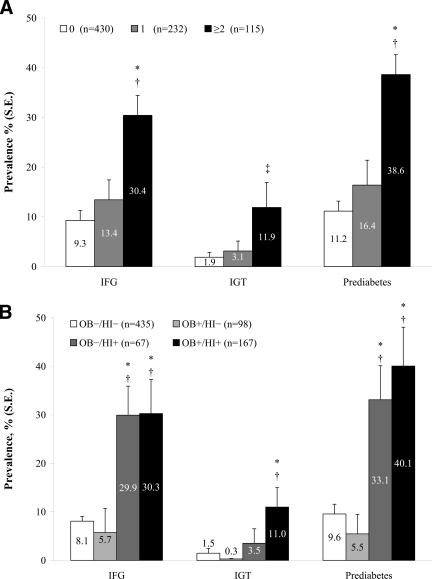
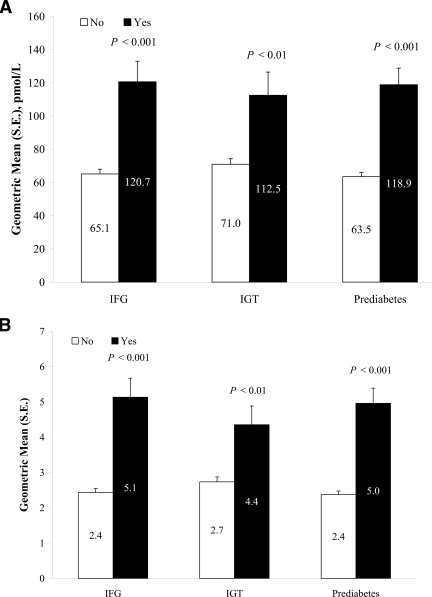
OBJECTIVE—Impaired fasting glucose (IFG) and/or impaired glucose tolerance (IGT) are considered to constitute “pre-diabetes.” We estimated the prevalence of IFG, IGT, and pre-diabetes among U.S. adolescents using data from a nationally representative sample. RESEARCH DESIGN AND METHODS—We analyzed data from participants aged 12–19 years in the National Health and Nutrition Examination Survey 2005–2006. We used fasting plasma glucose and 2-h glucose during an oral glucose tolerance test to assess the prevalence of IFG, IGT, and pre-diabetes and used the log-binomial model to estimate the prevalence ratios (PRs) and 95% CIs. RESULTS—The unadjusted prevalences of IFG, IGT, and pre-diabetes were 13.1, 3.4, and 16.1%, respectively. Boys had a 2.4-fold higher prevalence of pre-diabetes than girls (95% CI 1.3–4.3). Non-Hispanic blacks had a lower rate than non-Hispanic whites (PR 0.6, 95% CI 0.4–0.9). Adolescents aged 16–19 years had a lower rate than those aged 12–15 years (0.6, 0.4–0.9). Overweight adolescents had a 2.6-fold higher rate than those with normal weight (1.3–5.1). Adolescents with two or more cardiometabolic risk factors had a 2.7-fold higher rate than those with none (1.5–4.8). Adolescents with hyperinsulinemia had a fourfold higher prevalence (2.2–7.4) than those without. Neither overweight nor number of cardiometabolic risk factors was significantly associated with pre-diabetes after adjustment for hyperinsulinemia. CONCLUSIONS—Pre-diabetes was highly prevalent among adolescents. Hyperinsulinemia was independently associated with pre-diabetes and may account for the association of overweight and clustering of cardiometabolic risk factors with pre-diabetes.
Overview
The claims and statistics of this paper haven’t been checked yet.
Run the check — free, no account needed. It reads the open-access text and checks the sources it cites.
Integrity signals
Registry
Cites
Statistics
Figures
Verification
Claims the paper makes
The claims and statistics of this paper haven’t been checked yet.
Run the check — free, no account needed. It reads the open-access text and checks the sources it cites.
Claims other papers make about this one
Each is checked against this paper’s own text: does it say what the citing paper says it does?
In the citing paper
“The number of youth with elevated fasting blood sugar increased 87% from 1999–2000 to 2005–2006”
From Lack of Exercise Is a Major Cause of Chronic Diseases (2012) · cites this paper as [318]
Self-check
Percentages, sums and reported differences re-computed from the paper’s own numbers.
The self-check needs the paper’s full text.
Citations
Cites
Matthews, D. R., Hosker, J. P., Rudenski, A. S., Naylor, B. A., Treacher, D. F., & Turner, R. C. (1985) · Diabetologia · doi:10.1007/bf00280883 · Cited by 31,502
Diagnosis and Classification of Diabetes Mellitus
American Diabetes Association (2010) · Diabetes Care · doi:10.2337/dc11-s062 · Cited by 14,094
Role of Insulin Resistance in Human Disease
Reaven, G. M. (1988) · Diabetes · doi:10.2337/diab.37.12.1595 · Cited by 12,154
The metabolic syndrome—a new worldwide definition
Alberti, K. G. M., Zimmet, P., & Shaw, J. (2005) · The Lancet · doi:10.1016/s0140-6736(05)67402-8 · Cited by 9,352 · cited 10×
“Prevalence of Pre-Diabetes and Its Association With Clustering of Cardiometabolic Risk Factors and Hyperinsulinemia Among U.S. Adolescents National Health and Nutrition Examination Survey 2005–2006 CHAOYANG LI, MD, PHD1 EARL S. FORD, MD, MPH1”
BackgroundMethodInfluentialBanting lecture 1988. Role of insulin resistance in human disease.
Reaven, G. (1988) · Diabetes · doi:10.2337/diabetes.37.12.1595 · Cited by 3,801 · cited 1×
“It has been proposed that insulin resistance is a major underlying cause of type 2 diabetes (21), and intramyocellular and intra-abdominal lipid accumulation is highly associated with the development of insulin resistance (22).”
BackgroundPrevalence of impaired glucose tolerance among children and adolescents with marked obesity
Sinha, R., Fisch, G., Teague, B., Tamborlane, W. V., Banyas, B., Allen, K., Savoye, M., Rieger, V., Taksali, S., Barbetta, G., et al. (2002) · New England Journal of Medicine · doi:10.1056/nejmoa012578 · Cited by 1,709 · cited 3×
“As previous studies have shown (5,6), we found that adolescents with prediabetes had significantly higher fasting insulin levels than those without prediabetes.”
BackgroundResultGillies, C. L., Abrams, K. R., Lambert, P. C., Cooper, N. J., Sutton, A. J., Hsu, R. T., & Khunti, K. (2007) · BMJ · doi:10.1136/bmj.39063.689375.55 · Cited by 1,171 · cited 1×
“Because pre-diabetes is an intermediate stage in the development of type 2 diabetes and has been shown to be reversible through pharmacological and lifestyle interventions (20), Table 2—Unadjusted and adjusted prevalence ratios for pre-diabetes among nondiabetic U.”
BackgroundBarr, E. L. M., Zimmet, P. Z., Welborn, T. A., Jolley, D., Magliano, D. J., Dunstan, D. W., Cameron, A. J., Dwyer, T., Taylor, H. R., Tonkin, A. M., et al. (2007) · Circulation · doi:10.1161/circulationaha.106.685628 · Cited by 719 · cited 1×
“Individuals with impaired fasting glucose (IFG) and/or impaired glucose tolerance (IGT) are at increased risk for diabetes and cardiovascular-related death (1,2).”
BackgroundRecent Trends in Waist Circumference and Waist-Height Ratio Among US Children and Adolescents
Li, C., Ford, E. S., Mokdad, A. H., & Cook, S. R. (2006) · PEDIATRICS · doi:10.1542/peds.2006-1062 · Cited by 501 · cited 1×
“Rapid increases in the prevalence of central obesity (19) among adolescents may be a factor in the increased prevalence of IFG.”
BackgroundSelf-citationWeiss, R., Dufour, S., Taksali, S. E., Tamborlane, W. V., Petersen, K. F., Bonadonna, R. C., Boselli, L., Barbetta, G., Allen, K., Rife, F., et al. (2003) · The Lancet · doi:10.1016/s0140-6736(03)14364-4 · Cited by 501 · cited 1×
“It has been proposed that insulin resistance is a major underlying cause of type 2 diabetes (21), and intramyocellular and intra-abdominal lipid accumulation is highly associated with the development of insulin resistance (22).”
Background
Research works printed but not linked: 2
- Zimmet P, Alberti G, Kaufman F, Tajima N, Silink M, Arslanian S, Wong G, Bennett P, Shaw J, Caprio S: The metabolic syndrome in children and adolescents. Lancet 369:2059–2061, 2007 · DOI
- Li C, Ford ES, McGuire LC, Mokdad AH, Little RR, Reaven GM: Trends in hyperinsulinemia among nondiabetic adults in the U.S. Diabetes Care 29:2396–2402, 2006 · DOI
Cited by
Sorted by citations
Lack of Exercise Is a Major Cause of Chronic Diseases
Booth, F. W., Roberts, C. K., & Laye, M. J. (2012) · Comprehensive Physiology · doi:10.1002/cphy.c110025 · Cited by 2,575
The worldwide epidemiology of type 2 diabetes mellitus—present and future perspectives
Chen, L., Magliano, D. J., & Zimmet, P. Z. (2012) · Nature Reviews Endocrinology · doi:10.1038/nrendo.2011.183 · Cited by 2,227
“1% in 2005–2006, among US adolescents aged 12–19 years”
BackgroundWater, hydration, and health: Nutrition Reviews©, Vol. 68, No. 8
Popkin, B. M., D'Anci, K. E., & Rosenberg, I. H. (2010) · Nutrition Reviews · doi:10.1111/j.1753-4887.2010.00304.x · Cited by 1,175
Frieden, T. (2015) · Apple Academic Press eBooks · doi:10.1201/b18227-17
“According to the 2005–2006 NHANES, 16% (overall) of persons aged 12–19 years and 30% of obese persons aged 12–19 years had prediabetes, a condition in which blood glucose levels indicate a high risk for development of diabetes (26,34).”
Prediabetes and Cardiovascular Disease
Brannick, B., & Dagogo-Jack, S. (2018) · Endocrinology and Metabolism Clinics of North America · doi:10.1016/j.ecl.2017.10.001 · Cited by 293
Preventing Obesity and Eating Disorders in Adolescents
Golden, N. H., Schneider, M., & Wood, C. (2016) · Pediatrics · doi:10.1542/peds.2016-1649 · Cited by 264
Austin, S. B., Nelson, L. A., Birkett, M. A., Calzo, J. P., & Everett, B. G. (2012) · American Journal of Public Health · doi:10.2105/ajph.2012.301150 · Cited by 218
Franckle, R., Adler, R., & Davison, K. (2014) · Preventing Chronic Disease · doi:10.5888/pcd11.130355 · Cited by 230
“Similarly, in a 5-year longitudinal study conducted in southeast Texas, children generally lost weight during the school year and gained weight during the summer (18).”
Adipose Tissue as a Site of Toxin Accumulation
Jackson, E., Shoemaker, R., Larian, N., & Cassis, L. A. (2017) · Comprehensive physiology · doi:10.1002/cphy.c160038 · Cited by 226
Dakhale, G., Chaudhari, H. V., & Shrivastava, M. (2011) · Advances in Pharmacological Sciences · doi:10.1155/2011/195271 · Cited by 163
Bhowmik, B., Siddiquee, T., Mujumder, A., Afsana, F., Ahmed, T., Mdala, I., Moreira, N. C. D. V., Khan, A. K. A., Hussain, A., Holmboe‐Ottesen, G., et al. (2018) · International Journal of Environmental Research and Public Health · doi:10.3390/ijerph15091944 · Cited by 169
Whiting, S., Buoncristiano, M., Gelius, P., Abu-Omar, K., Pattison, M., Hyska, J., Duleva, V., Musić Milanović, S., Zamrazilová, H., Hejgaard, T., et al. (2021) · Obesity Facts · doi:10.1159/000511263 · Cited by 154
Slining, M. M., & Popkin, B. M. (2013) · Pediatric Obesity · doi:10.1111/j.2047-6310.2013.00156.x · Cited by 135
Cumulative childhood adversity and adult cardiometabolic disease: A meta-analysis.
Jakubowski, K., Cundiff, J. M., & Matthews, K. A. (2018) · Health Psychology · doi:10.1037/hea0000637 · Cited by 171
Metabolic diseases and associated complications: sex and gender matter
Kautzky‐Willer, A., & Handisurya, A. (2009) · European Journal of Clinical Investigation · doi:10.1111/j.1365-2362.2009.02161.x · Cited by 138
Reicks, M., Banna, J. C., Cluskey, M., Gunther, C., Hongu, N., Richards, R., Topham, G. L., & Wong, S. (2015) · Nutrients · doi:10.3390/nu7105431 · Cited by 138
The changing face of diabetes in youth: lessons learned from studies of type 2 diabetes
Hannon, T. S., & Arslanian, S. A. (2015) · Annals of the New York Academy of Sciences · doi:10.1111/nyas.12939 · Cited by 137
The epidemiology and aetiology of obesity: A global challenge
Selassie, M., & Sinha, A. C. (2011) · Best practice & research. Clinical anaesthesiology · doi:10.1016/j.bpa.2011.01.002 · Cited by 125
From Pre-Diabetes to Type 2 Diabetes in Obese Youth
Bacha, F. F., Lee, S., Gungor, N., & Arslanian, S. A. (2010) · Diabetes Care · doi:10.2337/dc10-0004 · Cited by 146
Effects of Childhood Asthma on the Development of Obesity among School‐aged Children
Chen, Z.-H., Salam, M., Alderete, T., Habre, R., Bastain, T., Berhane, K., & Gilliland, F. (2017) · American Journal of Respiratory and Critical Care Medicine · doi:10.1164/rccm.201608-1691oc · Cited by 125
Insulin resistance and oxidative marker in women with PCOS
Bannigida, D., Nayak, B. S., & Vijayaraghavan, R. (2018) · Archives of Physiology and Biochemistry · doi:10.1080/13813455.2018.1499120 · Cited by 122
Rollo, M. E., Aguiar, E. J., Williams, R. L., Wynne, K., Kriss, M., Callister, R., & Collins, C. E. (2016) · Diabetes, Metabolic Syndrome and Obesity: Targets and Therapy · doi:10.2147/dmso.s95247 · Cited by 107
Canadian Task Force on Preventive Health Care (2015) · Canadian Medical Association Journal · doi:10.1503/cmaj.141285 · Cited by 126
Allafi, A., Al-Haifi, A. R., Al-Fayez, M. A., Al-Athari, B., Al-Ajmi, F. A., Al-Hazzaa, H., Musaiger, A., & Ahmed, F. (2013) · Public Health Nutrition · doi:10.1017/s1368980013002218 · Cited by 107
Kim, J. Y., Michaliszyn, S. F., Nasr, A., Lee, S., Tfayli, H. M., Hannon, T. S., Hughan, K. S., Bacha, F. F., & Arslanian, S. A. (2016) · Diabetes Care · doi:10.2337/dc16-0352 · Cited by 108
“Tanner stage (III/IV/V) 9 (14)/7 (10)/50 (76) 3 (7)/5 (13)/32 (80) NS BMI (kg/m(2)) 36.”
BackgroundSaksono, H., Ranade, A., Kamarthi, G., Castaneda‐Sceppa, C., Hoffman, J. A., Wirth, C., & Parker, A. G. (2015) · ACM Conference on Computer Supported Cooperative Work (CSCW) · doi:10.1145/2675133.2675159 · Cited by 96
Newbern, D., Balikcioglu, P. G., Balikcioglu, M., Bain, J. R., Muehlbauer, M. J., Stevens, R., Ilkayeva, O., Dolinsky, D. H., Armstrong, S., Irizarry, K. A., et al. (2014) · The Journal of Clinical Endocrinology & Metabolism · doi:10.1210/jc.2014-2080 · Cited by 112
Lee, J. M., Wu, E.-L., Tarini, B. A., Herman, W. H., & Yoon, E. Y. (2010) · The Journal of Pediatrics · doi:10.1016/j.jpeds.2010.11.026 · Cited by 95
Lower bone mass in prepubertal overweight children with prediabetes
Pollock, N. K., Bernard, P. J., Wenger, K., Misra, S., Gower, B. A., Allison, J. D., Zhu, H., & Davis, C. L. (2010) · Journal of Bone and Mineral Research · doi:10.1002/jbmr.184 · Cited by 91
“Recently, it was reported that 16% of the US pediatric population have diagnosed prediabetes.((15)) Since animal work suggests that impaired glucose tolerance in the presence of high adiposity may negatively influence bone development,((16,17)) it is possible that discrepancies in the pediatric bone-fat studies may ha…”
BackgroundPFAS exposure and overweight/obesity among children in a nationally representative sample
Geiger, S. D., Yao, P., Vaughn, M. G., & Qian, Z. (2021) · Chemosphere · doi:10.1016/j.chemosphere.2020.128852 · Cited by 100
McCormack, L., & Meendering, J. (2016) · Journal of the Academy of Nutrition and Dietetics · doi:10.1016/j.jand.2015.10.024 · Cited by 83
Al-Rubeaan, K. A. (2015) · Journal of Epidemiology & Community Health · doi:10.1136/jech-2015-205710 · Cited by 92
Childhood predictors of adult type 2 diabetes at 9- and 26-year follow-ups.
Morrison, J., Glueck, C., Horn, P., & Wang, P. (2010) · Archives of Pediatrics & Adolescent Medicine · doi:10.1001/archpediatrics.2009.228 · Cited by 77
Milanović, S. M., Buoncristiano, M., Križan, H., Rathmes, G., Williams, J., Hyska, J., Duleva, V., Zamrazilová, H., Hejgaard, T., Jørgensen, M., et al. (2021) · Obesity Reviews · doi:10.1111/obr.13209 · Cited by 76
Treatment of clinical insulin resistance in children: a systematic review
Quinn, S. M., Baur, L. A., Garnett, S. P., & Cowell, C. T. (2009) · Obesity Reviews · doi:10.1111/j.1467-789x.2009.00697.x · Cited by 45
“Despite the low detection rate of type 2 diabetes in obese children and adolescents who are screened, there is a high prevalence of insulin resistance and pre-diabetes (4).”
BackgroundEvaluation of Nonfasting Tests to Screen for Childhood and Adolescent Dysglycemia
Lee, J. M., Gebremariam, A., Wu, E., LaRose, J., & Gurney, J. G. (2011) · Diabetes Care · doi:10.2337/dc11-0827 · Cited by 68
“There is also increasing interest in screening for prediabetes in the pediatric population (5,6), given its increasing prevalence (7) and the documented link between prediabetes in childhood and development of diabetes in young adulthood (8).”
BackgroundSant, K. E., Jacobs, H. M., Borofski, K. A., Moss, J. B., & Timme‐Laragy, A. R. (2016) · Environmental Pollution · doi:10.1016/j.envpol.2016.10.057 · Cited by 81
“Incidence of diabetes and metabolic syndrome, especially among children, has been rapidly increasing in the United States, presenting an emerging public health and economic crisis (D’Adamo and Caprio, 2011; Dabelea et al., 2014; Li et al., 2009; Silverstein et al., 2005).”
BackgroundArslanian, S. A., Kim, J. Y., Nasr, A., Bacha, F. F., Tfayli, H. M., Lee, S., & Toledo, F. G. S. (2017) · Pediatric Diabetes · doi:10.1111/pedi.12562 · Cited by 82
Henderson, M., Benedetti, A., Barnett, T. A., Mathieu, M.-E., Deladoëy, J., & Gray‐Donald, K. (2016) · Archives of Pediatrics and Adolescent Medicine · doi:10.1001/jamapediatrics.2015.3909 · Cited by 83
Age-related differences in glycaemic control in diabetes
Selvin, E., & Parrinello, C. M. (2013) · Diabetologia · doi:10.1007/s00125-013-3078-7 · Cited by 75
“An additional sobering trend is the growing prevalence of pre-diabetes in youth [28–30].”
BackgroundGrøntved, A., Ried-Larsen, M., Ekelund, U., Froberg, K., Brage, S., & Andersen, L. (2013) · Diabetes Care · doi:10.2337/dc12-2252 · Cited by 68
Diet quality and physical activity in relation to childhood obesity
An, R. (2017) · International Journal of Adolescent Medicine and Health · doi:10.1515/ijamh-2015-0045 · Cited by 67
Yajnik, C. S., Katre, P. A., Joshi, S. M., Kumaran, K., Bhat, D., Lubree, H., MEMANE, N. S., Kinare, A. S., Pandit, A. N., Bhave, S. A., et al. (2015) · Diabetologia · doi:10.1007/s00125-015-3602-z · Cited by 62
Insulin signaling and life span
Avogaro, A., de Kreutzenberg, S. V., & Fadini, G. P. (2009) · Pflügers Archiv - European Journal of Physiology · doi:10.1007/s00424-009-0721-8 · Cited by 66
“Insulin resistance is highly prevalent among adolescents as well: In these subjects, hyperinsulinemia is independently associated with pre-diabetes and may account for the association of overweight and clustering of cardiometabolic risk factors with pre-diabetes [ 76 ].”
BackgroundKelley, G. A., Kelley, K. S., & Pate, R. R. (2019) · BMJ Open · doi:10.1136/bmjopen-2019-031220 · Cited by 80
Isasi, C. R., Carnethon, M. R., Ayala, G. X., Arredondo, E. M., Bangdiwala, S. I., Daviglus, M. L., Delamater, A. M., Eckfeldt, J. H., Perreira, K. M., Himes, J. H., et al. (2013) · Annals of Epidemiology · doi:10.1016/j.annepidem.2013.08.008 · Cited by 67
“Latino boys are reported to be at high risk of obesity and cardiometabolic risk [2,6,7,32,33].”
Sex Differences in Cardiometabolic Risk Factors among Hispanic/Latino Youth
Isasi, C. R., Parrinello, C. M., Ayala, G. X., Delamater, A. M., Perreira, K. M., Daviglus, M. L., Elder, J. P., Marchante, A. N., Bangdiwala, S. I., Horn, L. V., et al. (2016) · The Journal of Pediatrics · doi:10.1016/j.jpeds.2016.05.037 · Cited by 69
“Sex disparities in cardiometabolic risk factors have been described by others (7, 24, 26, 27) although few studies include Hispanic/Latino children in adequate numbers to examine results by sex.”
BackgroundForestell, C., & Mennella, J. (2012) · Appetite · doi:10.1016/j.appet.2012.03.005 · Cited by 62
Geffner, M., Patel, K., Miller, T., Hazra, R., Silió, M., Dyke, R. V., Borkowsky, W., Worrell, C., Dimeglio, L., & Jacobson, D. L. (2011) · Hormone Research in Paediatrics · doi:10.1159/000332957 · Cited by 62
Hodges, S., Teague, A., Dasari, P. S., & Short, K. R. (2018) · Pediatric Diabetes · doi:10.1111/pedi.12549 · Cited by 61
Nguyen, Q. M., Srinivasan, S. R., Xu, J.-H., Chen, W., Kieltyka, L., & Berenson, G. S. (2009) · Diabetes Care · doi:10.2337/dc09-1635 · Cited by 102
Tfayli, H., Lee, S., & Arslanian, S. (2010) · Diabetes Care · doi:10.2337/dc09-2292 · Cited by 57
“1%) (23), our current findings bear important public health implications for the 4,381,711 U.”
BackgroundResultNutrition and Chronic Conditions
Ojo, O. (2019) · Nutrients · doi:10.3390/nu11020459 · Cited by 71
Global prevalence of prediabetes in children and adolescents: A systematic review and meta‐analysis
Han, C., Song, Q., Ren, Y., Chen, X., Jiang, X., & Hu, D. (2022) · Journal of Diabetes · doi:10.1111/1753-0407.13291 · Cited by 61
Thota, P., Pérez-López, F. R., Benites-Zapata, V. A., Pasupuleti, V., & Hernández, A. V. (2017) · Gynecological Endocrinology · doi:10.1080/09513590.2016.1273897 · Cited by 60
“In youth, insulin resistance may be associated with normal fasting blood glucose because of the pancreatic compensatory hyperinsulinaemia [47].”
BackgroundCatenacci, V. A., Hill, J. O., & Wyatt, H. R. (2009) · Clinics in Chest Medicine · doi:10.1016/j.ccm.2009.05.001 · Cited by 202
School-Based Health Center Intervention Improves Body Mass Index in Overweight and Obese Adolescents
Kong, A., Sussman, A., Yahne, C., Skipper, B., Burge, M., & Davis, S. (2013) · Journal of Obesity · doi:10.1155/2013/575016 · Cited by 53
“The components of metabolic syndrome are typically described as a clustering of cardiometabolic risk factors that includes central adiposity, elevated blood pressure, dyslipidemia, and impaired glucose metabolism [4–6].”
BackgroundChildhood and adolescent obesity and long‐term cognitive consequences during aging
Wang, J., Freire, D., Knable, L. A., Zhao, W., Gong, B., Mazzola, P., Ho, L., Levine, S., & Pasinetti, G. M. (2014) · The Journal of Comparative Neurology · doi:10.1002/cne.23708 · Cited by 55
“Similarly, childhood/adolescent obesity is commonly accompanied by insulin resistance, a condition that is associated with an increased risk of developing type 2 diabetes (Li et al., 2009).”
BackgroundFeasibility and Preliminary Outcomes of a Scalable, Community-based Treatment of Childhood Obesity
Foster, G., Sundal, D., McDermott, C., Jelalian, E., Lent, M., & Vojta, D. (2012) · Pediatrics · doi:10.1542/peds.2012-0344 · Cited by 52
Reflective Informatics Through Family Storytelling: Self-discovering Physical Activity Predictors
Saksono, H., & Parker, A. G. (2017) · Proceedings of the 2017 CHI Conference on Human Factors in Computing Systems · doi:10.1145/3025453.3025651 · Cited by 51
“Childhood obesity can pose serious health risks such as diabetes [32] and cardiovascular disease [18].”
BackgroundMetformin Use in Children and Adolescents with Prediabetes
Khokhar, A., Umpaichitra, V., Chin, V. L., & Perez-Colon, S. (2017) · Pediatric Clinics of North America · doi:10.1016/j.pcl.2017.08.010 · Cited by 54
Kelley, G. A., Kelley, K. S., & Pate, R. R. (2016) · Journal of Evidence-Based Medicine · doi:10.1111/jebm.12228 · Cited by 58
“Bias was assessed across six domains: (1) random sequence generation, (2) allocation concealment, (3) blinding of participants and personnel, (4) blinding of outcome assessment, (5) incomplete outcome data, (6) selective reporting and (7) whether or not participants were exercising regularly, as defined by the origina…”
InfluentialSacco, J., Lillico, H., Chen, E., & Hobin, E. (2017) · Perspectives in Public Health · doi:10.1177/1757913916658498 · Cited by 51
Yackobovitch‐Gavan, M., Wolf Linhard, D., Nagelberg, N., Poraz, I., Shalitin, S., Phillip, M., & Meyerovitch, J. (2018) · Pediatric Obesity · doi:10.1111/ijpo.12263 · Cited by 50
Evaluation and Treatment of Prediabetes in Youth
Magge, S. N., Silverstein, J. H., Elder, D. A., Nadeau, K. J., & Hannon, T. S. (2020) · The Journal of Pediatrics · doi:10.1016/j.jpeds.2019.12.061 · Cited by 59
Morris, H., Skouteris, H., Edwards, S., & Rutherford, L. (2014) · Early Child Development and Care · doi:10.1080/03004430.2014.991723 · Cited by 45
Estimation of Risk Ratios in Cohort Studies With Common Outcomes: A Bayesian Approach
Chu, H.-T., & Cole, S. R. (2010) · Epidemiology · doi:10.1097/ede.0b013e3181f2012b · Cited by 50
Maternal Exposure to Synthetic Chemicals and Obesity in the Offspring: Recent Findings
Liu, Y., & Peterson, K. E. (2015) · Current Environmental Health Reports · doi:10.1007/s40572-015-0068-6 · Cited by 50
A novel marker for prediabetic conditions: Uric acid-to-HDL cholesterol ratio
Balci, S. B., Tel, B. A. A., Duman, T., Ozkul, F. N., & Aktas, G. (2023) · Bratislava Medical Journal · doi:10.4149/bll_2023_130 · Cited by 46
Javed, F., Ahmed, H., Mehmood, A., Bain, C., & Romanos, G. (2014) · Clinical Oral Investigations · doi:10.1007/s00784-014-1185-6 · Cited by 46
“It is known that a family history of diabetes is a significant risk factor of prediabetes [40, 41].”
BackgroundTurchiano, M., Nguyen, C., Fierman, A., Lifshitz, M., & Convit, A. (2013) · Journal of Environmental and Public Health · doi:10.1155/2013/256151 · Cited by 46
“glucose tolerance, metabolic syndrome, and type 2 diabetes [1, 2].”
BackgroundWu, E.-L., Kazzi, N. G., & Lee, J. M. (2013) · JAMA pediatrics · doi:10.1001/jamapediatrics.2013.419 · Cited by 46
“02% prevalence of diabetes based on national estimates.(11,15,17) We assumed 100% adherence to the screening strategies, including the initial and confirmatory screens.”
Hauger, H., Laursen, R. P., Ritz, C., Mølgaard, C., Lind, M. V., & Damsgaard, C. T. (2020) · European Journal of Nutrition · doi:10.1007/s00394-019-02150-x · Cited by 56
A Review of the Treatment of Type 2 Diabetes in Children
Onge, E. S., Miller, S. A., Motycka, C., & DeBerry, A. (2015) · The Journal of Pediatric Pharmacology and Therapeutics · doi:10.5863/1551-6776-20.1.4 · Cited by 44
Turchiano, M., Sweat, V., Fierman, A. H., & Convit, A. J. (2012) · Archives of Pediatrics and Adolescent Medicine · doi:10.1001/archpediatrics.2012.1263 · Cited by 43
“As a result, elevated fasting insulin levels are more common than IFG levels in adolescent populations.(18) Some researchers have used oral or intravenous glucose tolerance tests to identify impaired glucose tolerance and to define MetS.”
BackgroundType 1 Diabetes - Complications, Pathogenesis, and Alternative Treatments
Liu, C.-P. (2011) · doi:10.5772/1540 · Cited by 43
Teló, G. H., Cureau, F. V., Szklo, M., Bloch, K. V., & Schaan, B. D. (2019) · Pediatric Diabetes · doi:10.1111/pedi.12828 · Cited by 64
Cesarean section and the risk of overweight in grade 6 children
Wang, L., Alamian, A., Southerland, J. L., Wang, K.-S., Anderson, J. L., & Stevens, M. (2013) · European Journal of Pediatrics · doi:10.1007/s00431-013-2043-2 · Cited by 40
Prediabetes in Adolescents: Prevalence, Management and Diabetes Prevention Strategies
Esquivel-Zuniga, R., & DeBoer, M. D. (2021) · Diabetes Metabolic Syndrome and Obesity · doi:10.2147/dmso.s284401 · Cited by 49
Implementation of parental feeding practices: does parenting style matter?
Kiefner-Burmeister, A., Hoffmann, D. A., Zbur, S., & Musher-Eizenman, D. (2016) · Public Health Nutrition · doi:10.1017/s1368980016000446 · Cited by 39
Behavioral Contributions to the Pathogenesis of Type 2 Diabetes
Spruijt‐Metz, D., O’Reilly, G. A., Cook, L. T., Page, K. A., & Quinn, C. C. (2014) · Current Diabetes Reports · doi:10.1007/s11892-014-0475-3 · Cited by 51
Trajcevski, K., O'Neill, H., Wang, D. C., Thomas, M. M., Al‐Sajee, D., Steinberg, G., Ceddia, R., & Hawke, T. (2013) · PLoS ONE · doi:10.1371/journal.pone.0071747 · Cited by 39
Fernández-Luque, L., Singh, M., Ofli, F., Mejova, Y., Weber, I. G., Aupetit, M. J. M., Jreige, S. K., Elmagarmid, A. K., Srivastava, J., & Ahmedna, M. (2017) · BMC Medical Informatics and Decision Making · doi:10.1186/s12911-017-0432-6 · Cited by 34
Pathophysiological role of enhanced bone marrow adipogenesis in diabetic complications
Piccinin, M. A., & Khan, Z. A. (2014) · Adipocyte · doi:10.4161/adip.32215 · Cited by 39
“A hyperinsulinemic state is frequently observed in the development of type 2 diabetes as pancreatic production of insulin surges in an attempt to counteract the ever-increasing resistance of peripheral tissues.(102,103) Hyperinsulinemia may be capable of inducing the adipogenesis of cells within the marrow stem cell n…”
BackgroundPredicting youth diabetes risk using NHANES data and machine learning
Vangeepuram, N., Liu, B., Chiu, P.-H., Wang, L., & Pandey, G. S. (2021) · Scientific Reports · doi:10.1038/s41598-021-90406-0 · Cited by 41
Morrison, J., Glueck, C., Umar, M., Daniels, S., Dolan, L., & Wang, P. (2011) · Metabolism: Clinical and Experimental · doi:10.1016/j.metabol.2009.12.013 · Cited by 35
“Neither overweight nor number of cardiometabolic risk factors was significantly associated with prediabetes after adjustment for hyperinsulinemia [31].”
BackgroundResultInfluentialHigher dietary total antioxidant capacity is inversely related to prediabetes: A case-control study.
Sotoudeh, G., Abshirini, M., Bagheri, F., Siassi, F., Koohdani, F., & Aslany, Z. (2018) · Nutrition (Burbank, Los Angeles County, Calif.) · doi:10.1016/j.nut.2017.08.005 · Cited by 34
Food Away from Home and Childhood Obesity
Mancino, L., Todd, J. E., Guthrie, J., & Lin, B. (2014) · Current Obesity Reports · doi:10.1007/s13679-014-0121-z · Cited by 34
Metabolic Basis of Ethnic Differences in Diabetes Risk in Overweight and Obese Youth
Alderete, T. L., Toledo‐Corral, C. M., & Goran, M. I. (2014) · Current Diabetes Reports · doi:10.1007/s11892-013-0455-z · Cited by 41
Avilés-Santa, L. M., Colón‐Ramos, U., Lindberg, N. M., Mattei, J., Pasquel, F. J., & Pérez, C. M. (2017) · Frontiers in Endocrinology · doi:10.3389/fendo.2017.00298 · Cited by 38
“%) who participated in the 1988–2010 NHANES cycles (96).”
InfluentialBrar, P., Mengwall, L., Franklin, B., & Fierman, A. (2014) · La Clinica pediatrica · doi:10.1177/0009922814528571 · Cited by 33
Bahathig, A. A., Saad, H. A., Yusop, N. B. M., Shukri, N. H. M., & El-Din, M. M. E. (2021) · International Journal of Environmental Research and Public Health · doi:10.3390/ijerph18168461 · Cited by 32
Child-directed and nutrition-focused marketing cues on food packaging: links to nutritional content
Lapierre, M. A., Brown, A. M., Houtzer, H. V., & Thomas, T. J. (2016) · Public Health Nutrition · doi:10.1017/s1368980016002317 · Cited by 32
Fowler, S. P., Puppala, S., Arya, R., Chittoor, G., Farook, V. S., Schneider, J. L., Resendez, R. G., Upadhayay, R. P., VandeBerg, J. F., Hunt, K. J., et al. (2013) · Human Genetics · doi:10.1007/s00439-013-1315-2 · Cited by 36
“The high rate of prediabetes in this and other studies (Abdul-Ghani and DeFronzo 2009; Li et al. 2009) strongly suggests that—by screening high-risk children for insulin resistance—lifestyle and/or pharmacologic interventions could be initiated during the closing window of”
BackgroundPhysical activity pattern and its relationship with overweight and obesity in saudi children
Aliss, E. M., Sutaih, R. H., Kamfar, H., Alagha, A. E., & Marzouki, Z. M. (2020) · International Journal of Pediatrics and Adolescent Medicine · doi:10.1016/j.ijpam.2020.03.007 · Cited by 30
Rhee, S. Y., Woo, J., Chon, S., Hwang, Y., Oh, S., Ahn, K. J., Chung, H. Y., Kim, S. W., Kim, J., & Kim, Y. S. (2010) · Diabetes Research and Clinical Practice · doi:10.1016/j.diabres.2010.05.002 · Cited by 25
Guertin, C., Barbeau, K., & Pelletier, L. (2018) · Journal of Health Psychology · doi:10.1177/1359105318781943 · Cited by 29
Kloppenborg, J. T., Fonvig, C., Nielsen, T. R. H., Mollerup, P., Bøjsøe, C., Pedersen, O., Johannesen, J., Hansen, T., & Holm, J. (2018) · Pediatric Diabetes · doi:10.1111/pedi.12604 · Cited by 28
“However, several studies have demonstrated that the prevalence of IFG and IGT in the same pediatric population have little concordance and varies with ethnicity and degree of obesity.(48,49) In addition, evaluation of fasting and OGTT-derived surrogates for insulin sensitivity against the hyperinsulinemic-euglycemic c…”
BackgroundProbiotics in Adolescent Prediabetes: A Pilot RCT on Glycemic Control and Intestinal Bacteriome
Stefanaki, C., Michos, A. G., Mastorakos, G. P., Mantzou, A., Landis, G., Zosi, P., & Bacopoulou, F. (2019) · Journal of Clinical Medicine · doi:10.3390/jcm8101743 · Cited by 28
1H-MRS Measured Ectopic Fat in Liver and Muscle in Danish Lean and Obese Children and Adolescents
Fonvig, C., Chabanova, E., Andersson, E., Ohrt, J. D., Pedersen, O., Hansen, T., Thomsen, H., & Holm, J. (2015) · PLoS ONE · doi:10.1371/journal.pone.0135018 · Cited by 27
Metadata
- Authors
- Li, C., Ford, E. S., Zhao, G., & Mokdad, A. H.
- Affiliations
- Centers for Disease Control and Prevention (US)
- University of Washington (US)
- Corresponding author
- Li, Chaoyang
- Venue
- Diabetes Care
- Publisher
- American Diabetes Association
- Published
- 2009-02-01
- Volume
- 32
- Issue
- 2
- Pages
- 342-347
- ISSN
- 0149-5992 (ISSN-L)
- 1935-5548
- PMC
- PMC2628705
- OpenAlex
- W1978039317
- Cited by
- 340
- References
- 28
- Citations by year
- 2026: 5 · 2025: 6 · 2024: 8 · 2023: 8 · 2022: 8 · 2021: 13 · 2020: 13 · 2019: 13 · 2018: 18 · 2017: 27 · 2016: 47 · 2015: 46 · 2014: 31 · 2013: 28 · 2012: 25
- FWCI
- 10.64
- Type
- journal article
- Language
- en
- Open access
- hybrid
- doi.org
- Licence
- cc-by-nc-nd
- Locations
- Diabetes Care (publishedVersion, cc-by-nc-nd)
- PubMed Central (publishedVersion, cc-by-nc-nd)
- PubMed (publishedVersion)
- Topics
- Health Sciences › Medicine › Endocrinology, Diabetes and Metabolism › Diabetes, Cardiovascular Risks, and Lipoproteins
- Health Sciences › Medicine › Public Health, Environmental and Occupational Health › Obesity, Physical Activity, Diet
- Health Sciences › Medicine › Endocrinology, Diabetes and Metabolism › Diabetes Management and Research
- Keywords
- prediabetes, adolescents, impaired fasting glucose, impaired glucose tolerance, hyperinsulinemia, cardiometabolic risk factors, risk factor clustering, overweight, prevalence, sex differences, racial differences, fasting blood glucose, oral glucose tolerance test
- MeSH terms
- Adolescent, Blood Glucose, Child, Fasting, Female, Heart Diseases, Humans, Hyperinsulinism, Interviews as Topic, Life Style, Male, Metabolic Diseases, Nutrition Surveys, Prediabetic State, Risk Factors, Sex Characteristics, United States, Prevalence, Glucose Intolerance, Racial Groups, Young Adult
About these checks
Registry, retraction, Cites and statistics results are computed, not judged, with one exception: a printed reference that no index lists is read once by a model before it counts as a citation error. Claims are extracted by a model and kept only when their quote appears verbatim in the text; each cited source is then checked, with a model’s help, for whether it says what the claim relies on. Those verdicts can be wrong — read the claim’s quote and the cited source before relying on one.
Statistics and arithmetic are recomputed, not judged.
Confidence bands are shown only for fields calibrated on our annotated test set. None is calibrated yet, so no band is shown.
What counts as a claim ›How we measure confidence ›How we check this ›
Are you an author, or do you see a problem with this page? Request a review
