

First Use of Model Predictive Control in Outpatient Wearable Artificial Pancreas
Open accessThe DOI matches its Crossref record; 13 of the 13 references it cites were found in a registry or an index.
Abstract
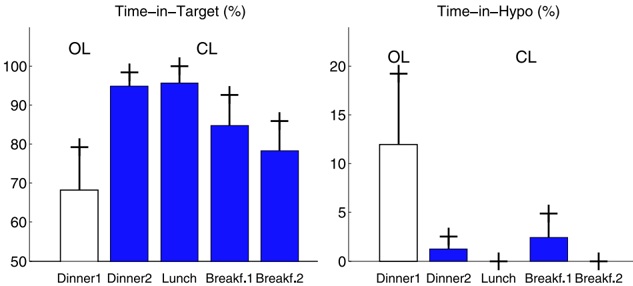
OBJECTIVE: Inpatient studies suggest that model predictive control (MPC) is one of the most promising algorithms for artificial pancreas (AP). So far, outpatient trials have used hypo/hyperglycemia-mitigation or medical-expert systems. In this study, we report the first wearable AP outpatient study based on MPC and investigate specifically its ability to control postprandial glucose, one of the major challenges in glucose control. RESEARCH DESIGN AND METHODS: A new modular MPC algorithm has been designed focusing on meal control. Six type 1 diabetes mellitus patients underwent 42-h experiments: sensor-augmented pump therapy in the first 14 h (open-loop) and closed-loop in the remaining 28 h. RESULTS: MPC showed satisfactory dinner control versus open-loop: time-in-target (70-180 mg/dL) 94.83 vs. 68.2% and time-in-hypo 1.25 vs. 11.9%. Overnight control was also satisfactory: time-in-target 89.4 vs. 85.0% and time-in-hypo: 0.00 vs. 8.19%. CONCLUSIONS: This outpatient study confirms inpatient evidence of suitability of MPC-based strategies for AP. These encouraging results pave the way to randomized crossover outpatient studies.
Overview
The claims and statistics of this paper haven’t been checked yet.
Free: it reads the open-access text and checks the first 5 claims that cite a source we can check. Create a free account to check every claim.
Integrity signals
Registry
Cites
Statistics
Figures
Verification
Claims the paper makes
The claims and statistics of this paper haven’t been checked yet.
Free: it reads the open-access text and checks the first 5 claims that cite a source we can check. Create a free account to check every claim.
Self-check
Percentages, sums and reported differences re-computed from the paper’s own numbers.
The self-check needs the paper’s full text.
Citations
Cites
Artificial Pancreas: Past, Present, Future
Cobelli, C., Renard, E., & Kovatchev, B. (2011) · Diabetes · doi:10.2337/db11-0654 · Cited by 600
Self-citationNocturnal Glucose Control with an Artificial Pancreas at a Diabetes Camp
Phillip, M., Battelino, T., Atlas, E., Kordonouri, O., Bratina, N., Miller, S., Biester, T., Avbelj Stefanija, M., Muller, I., Nimri, R., et al. (2013) · New England Journal of Medicine · doi:10.1056/nejmoa1206881 · Cited by 435 · cited 1×
“Three successful outpatient studies with an AP have recently been reported, using either a heuristic algorithm (hypo/hyperglycemia-mitigation system) (2,3) or a medical-based expert system (4).”
MethodModel Predictive Control of Type 1 Diabetes: An in Silico Trial
Magni, L., Raimondo, D. M., Bossi, L., Dalla Man, C., De Nicolao, G., Kovatchev, B., & Cobelli, C. (2007) · Journal of Diabetes Science and Technology · doi:10.1177/193229680700100603 · Cited by 317 · cited 1×
“(9), used in an inpatient study, as described in Breton et al.”
MethodSelf-citationFully Integrated Artificial Pancreas in Type 1 Diabetes
Breton, M., Farret, A., Bruttomesso, D., Anderson, S., Magni, L., Patek, S., Dalla Man, C., Place, J., Demartini, S., Del Favero, S., et al. (2012) · Diabetes · doi:10.2337/db11-1445 · Cited by 315
Self-citationKovatchev, B. P., Cox, D. J., Gonder-Frederick, L. A., Young-Hyman, D., Schlundt, D., & Clarke, W. (1998) · Diabetes Care · doi:10.2337/diacare.21.11.1870 · Cited by 310
Self-citationModular Closed-Loop Control of Diabetes
Patek, S. D., Magni, L., Dassau, E., Hughes-Karvetski, C., Toffanin, C., De Nicolao, G., Del Favero, S., Breton, M., Man, C. D., Renard, E., et al. (2012) · IEEE Transactions on Biomedical Engineering · doi:10.1109/tbme.2012.2192930 · Cited by 180
Self-citationFeasibility of Outpatient Fully Integrated Closed-Loop Control
Kovatchev, B. P., Renard, E., Cobelli, C., Zisser, H. C., Keith-Hynes, P., Anderson, S. M., Brown, S. A., Chernavvsky, D. R., Breton, M. D., Farret, A., et al. (2013) · Diabetes Care · doi:10.2337/dc12-1965 · Cited by 177 · cited 2×
“Three successful outpatient studies with an AP have recently been reported, using either a heuristic algorithm (hypo/hyperglycemia-mitigation system) (2,3) or a medical-based expert system (4).”
BackgroundMethodSelf-citationMPC based Artificial Pancreas: Strategies for individualization and meal compensation
Soru, P., Nicolao, G. D., Toffanin, C., Man, C. D., Cobelli, C., & Magni, L. (2012) · Annual Reviews in Control · doi:10.1016/j.arcontrol.2012.03.009 · Cited by 130
Self-citationPilot Studies of Wearable Outpatient Artificial Pancreas in Type 1 Diabetes
Cobelli, C., Renard, E., Kovatchev, B. P., Keith-Hynes, P., Ben Brahim, N., Place, J., Del Favero, S., Breton, M., Farret, A., Bruttomesso, D., et al. (2012) · Diabetes Care · doi:10.2337/dc12-0660 · Cited by 120 · cited 1×
“Three successful outpatient studies with an AP have recently been reported, using either a heuristic algorithm (hypo/hyperglycemia-mitigation system) (2,3) or a medical-based expert system (4).”
MethodSelf-citationDiAs User Interface: A Patient-Centric Interface for Mobile Artificial Pancreas Systems
Keith-Hynes, P., Guerlain, S., Mize, B., Hughes-Karvetski, C., Khan, M., McElwee-Malloy, M., & Kovatchev, B. P. (2013) · Journal of Diabetes Science and Technology · doi:10.1177/193229681300700602 · Cited by 85
Self-citation
Cited by
Weisman, A., Bai, J.-W., Cardinez, M., Kramer, C. K., & Perkins, B. A. (2017) · The Lancet Diabetes & Endocrinology · doi:10.1016/s2213-8587(17)30167-5 · Cited by 463
In silico clinical trials: how computer simulation will transform the biomedical industry
Viceconti, M., Henney, A., & Morley-Fletcher, E. (2016) · International Journal of Clinical Trials · doi:10.18203/2349-3259.ijct20161408 · Cited by 289
A review of personalized blood glucose prediction strategies for T1DM patients
Oviedo, S., Vehí, J., Calm, R., & Armengol, J. (2017) · International Journal for Numerical Methods in Biomedical Engineering · doi:10.1002/cnm.2833 · Cited by 279
Coming of age: the artificial pancreas for type 1 diabetes
Thabit, H., & Hovorka, R. (2016) · Diabetologia · doi:10.1007/s00125-016-4022-4 · Cited by 223
Kropff, J., Del Favero, S., Place, J., Toffanin, C., Visentin, R., Monaro, M., Messori, M., Di Palma, F., Lanzola, G., Farret, A., et al. (2015) · The Lancet Diabetes & Endocrinology · doi:10.1016/s2213-8587(15)00335-6 · Cited by 201
Self-citationISPAD Clinical Practice Consensus Guidelines 2018: diabetes technologies
Sherr, J. L., Tauschmann, M., Battelino, T., de Bock, M., Forlenza, G., Roman, R., Hood, K. K., & Maahs, D. M. (2018) · Pediatric Diabetes · doi:10.1111/pedi.12731 · Cited by 197
Prendin, F., Pavan, J., Cappon, G., Del Favero, S., Sparacino, G., & Facchinetti, A. (2023) · Scientific Reports · doi:10.1038/s41598-023-44155-x · Cited by 159
Toward a Run-to-Run Adaptive Artificial Pancreas: In Silico Results
Toffanin, C., Visentin, R., Messori, M., Palma, F. D., Magni, L., & Cobelli, C. (2018) · IEEE Transactions on Biomedical Engineering · doi:10.1109/tbme.2017.2652062 · Cited by 107
Self-citationCurrent Advances of Artificial Pancreas Systems: A Comprehensive Review of the Clinical Evidence
Moon, S. J., Jung, I., & Park, C.-Y. (2021) · Diabetes & Metabolism Journal · doi:10.4093/dmj.2021.0177 · Cited by 98
“Previously, HCL studies from another group had used the Omnipod pump (Insulet) [23,89], but the Insulet group began research using its own control algorithm in the late 2010s.”
MethodFractional calculus in pharmacokinetics
Sopasakis, P., Sarimveis, H., Macheras, P., & Dokoumetzidis, A. (2017) · Journal of Pharmacokinetics and Pharmacodynamics · doi:10.1007/s10928-017-9547-8 · Cited by 119
“However, applications of closed-loop policies extend beyond hospitals, such as in the case of glucose control in diabetes [80].”
BackgroundRealizing a Closed-Loop (Artificial Pancreas) System for the Treatment of Type 1 Diabetes
Lal, R. A., Ekhlaspour, L., Hood, K., & Buckingham, B. (2019) · Endocrine Reviews · doi:10.1210/er.2018-00174 · Cited by 95
Parimbelli, E., Bottalico, B., Losiouk, E., Tomasi, M., Santosuosso, A., Lanzola, G., Quaglini, S., & Bellazzi, R. (2018) · International Journal of Medical Informatics · doi:10.1016/j.ijmedinf.2018.01.012 · Cited by 110
Self-citationRenard, E., Farret, A., Kropff, J., Bruttomesso, D., Messori, M., Place, J., Visentin, R., Calore, R., Toffanin, C., Di Palma, F., et al. (2016) · Diabetes Care · doi:10.2337/dc16-0008 · Cited by 104
Self-citationThe Artificial Pancreas in 2016: A Digital Treatment Ecosystem for Diabetes
Kovatchev, B., Tamborlane, W. V., Cefalu, W. T., & Cobelli, C. (2016) · Diabetes Care · doi:10.2337/dc16-0824 · Cited by 95
Self-citationDel Favero, S., Place, J., Kropff, J., Messori, M., Keith‐Hynes, P., Visentin, R., Monaro, M., Galasso, S., Boscari, F., Toffanin, C., et al. (2015) · Diabetes, Obesity and Metabolism · doi:10.1111/dom.12440 · Cited by 90
Self-citationAutomated closed-loop control of diabetes: the artificial pancreas
Kovatchev, B. (2018) · Bioelectronic Medicine · doi:10.1186/s42234-018-0015-6 · Cited by 80
“…(Kudva et al. 2014; Schiavon et al. 2014) to reports on predictive LGS (Beck et al. 2014), overnight AP at home (Hovorka et al. 2014), feasibility of the AP in type 2 diabetes (Kumareswaran et al. 2014), and around-the-clock outpatient AP with a portable AP system (Del Favero et al. 2014).”
Self-citationModel Free iPID Control for Glycemia Regulation of Type-1 Diabetes
MohammadRidha, T., Ahmed, M. A., Chaillous, L., Krempf, M., Guilhem, I., Poirier, J.-Y., & Moog, C. H. (2017) · IEEE Transactions on Biomedical Engineering · doi:10.1109/tbme.2017.2698036 · Cited by 87
Closed-Loop System in the Management of Diabetes: Past, Present, and Future
Shah, V. N., Shoskes, A., Tawfik, B., & Garg, S. K. (2014) · Diabetes Technology & Therapeutics · doi:10.1089/dia.2014.0193 · Cited by 86
“9%) during the day with satisfactory overnight control.(67) Exercise-induced hypoglycemia is a challenge in control-torange CL.”
Mathematical Modelling of Endocrine Systems
Zavala, E., Wedgwood, K. C. A., Voliotis, M., Tabak, J., Spiga, F., Lightman, S. L., & Tsaneva-Atanasova, K. (2019) · Trends in Endocrinology & Metabolism · doi:10.1016/j.tem.2019.01.008 · Cited by 81
Intelligent automated drug administration and therapy: future of healthcare
Sharma, R., Singh, D., Gaur, P., & Joshi, D. (2021) · Drug Delivery and Translational Research · doi:10.1007/s13346-020-00876-4 · Cited by 80
Model predictive control with integral action for artificial pancreas
Incremona, G. P., Messori, M., Toffanin, C., Cobelli, C., & Magni, L. (2018) · Control Engineering Practice · doi:10.1016/j.conengprac.2018.05.006 · Cited by 75
Self-citationModel individualization for artificial pancreas
Messori, M., Toffanin, C., Favero, S. D., Nicolao, G. D., Cobelli, C., & Magni, L. (2016) · Computer Methods and Programs in Biomedicine · doi:10.1016/j.cmpb.2016.06.006 · Cited by 74
Self-citationMOSQUERA-LOPEZ, C. M., Wilson, L. M., Youssef, J. E., Hilts, W. W., LEITSCHUH, J. A., Branigan, D. L., Gabo, V. B., Eom, J. H., Castle, J. R., & Jacobs, P. G. (2023) · npj Digital Medicine · doi:10.1038/s41746-023-00783-1 · Cited by 73
The bioartificial pancreas (BAP): Biological, chemical and engineering challenges
Iacovacci, V., Ricotti, L., Menciassi, A., & Dario, P. (2015) · Biochemical Pharmacology · doi:10.1016/j.bcp.2015.08.107 · Cited by 72
Rossetti, P., Quirós, C., Moscardó, V., Comas, A., Giménez, M., Ampudia‐Blasco, F. J., Vargas, F. M. L., Montaser, E., Conget, I., Bondía, J., et al. (2017) · Diabetes Technology & Therapeutics · doi:10.1089/dia.2016.0443 · Cited by 59
“3 Other less-ambitious approaches in which meals are announced to the system (meal announcement, semi CL) giving full prandial bolus, 4,5 or at least a percentage (priming boluses), leaving the rest to the CL controller 6 have been evaluated.”
Zisser, H., Renard, E., Kovatchev, B., Cobelli, C., Avogaro, A., Nimri, R., Magni, L., Buckingham, B. A., Chase, H. P., Doyle, F. J., et al. (2014) · Diabetes Technology & Therapeutics · doi:10.1089/dia.2014.0066 · Cited by 48
Self-citation“Learning” Can Improve the Blood Glucose Control Performance for Type 1 Diabetes Mellitus
Wang, Y., Zhang, J., Zeng, F., Wang, N., Chen, X., Zhang, B., Zhao, D. B., Yang, W., & Cobelli, C. (2017) · Diabetes Technology & Therapeutics · doi:10.1089/dia.2016.0328 · Cited by 56
Self-citationRemote Blood Glucose Monitoring in mHealth Scenarios: A Review
Lanzola, G., Losiouk, E., Favero, S. D., Facchinetti, A., Galderisi, A., Quaglini, S., Magni, L., & Cobelli, C. (2016) · Sensors · doi:10.3390/s16121983 · Cited by 55
“This first study proved that the AP was safe in a controlled environment, and thus we moved our research towards testing in less controlled environments, more closely resembling real-life [42,43].”
BackgroundSelf-citationModel-based falsification of an artificial pancreas control system
Sankaranarayanan, S., Kumar, S. A., Cameron, F. M., Bequette, B. W., Fainekos, G., & Maahs, D. M. (2017) · ACM SIGBED Review · doi:10.1145/3076125.3076128 · Cited by 55
Hybrid Closed-Loop Insulin Delivery in Type 1 Diabetes During Supervised Outpatient Conditions
Grosman, B., Ilany, J., Roy, A., Kurtz, N., Wu, D., Parikh, N., Voskanyan, G., Konvalina, N., Mylonas, C., Gottlieb, R., et al. (2016) · Journal of Diabetes Science and Technology · doi:10.1177/1932296816631568 · Cited by 48
“studies.(8-14) The CGM to insulin feedback titration algorithm generally implements either modifications of the proportional-integral-derivative (PID)(15) controller, the model predictive controller (MPC)(16) or fuzzy-logic(17) control.”
MethodReinforcement Learning Models and Algorithms for Diabetes Management
Yau, K. A., Chong, Y.-W., Fan, X., Wu, C., Saleem, Y., & Lim, P.-C. (2023) · IEEE Access · doi:10.1109/access.2023.3259425 · Cited by 51
“Closed-loop control systems have been found to be inadequate in keeping blood glucose levels within the normal range after eating [31], [32], [33], [34], [35].”
BackgroundMulticenter Closed-Loop/Hybrid Meal Bolus Insulin Delivery with Type 1 Diabetes
Chase, H. P., Doyle, F. J., Zisser, H., Renard, É., Nimri, R., Cobelli, C., Buckingham, B. A., Maahs, D. M., Anderson, S. M., Magni, L., et al. (2014) · Diabetes Technology & Therapeutics · doi:10.1089/dia.2014.0050 · Cited by 47
Self-citationA Review of Safety and Hazards Associated With the Artificial Pancreas
Ramkissoon, C. M., Aufderheide, B., Bequette, B. W., & Vehí, J. (2017) · IEEE Reviews in Biomedical Engineering · doi:10.1109/rbme.2017.2749038 · Cited by 47
“It is reported that in free living clinical trials, CL operation is not used for more than 88% of the time [226].”
BackgroundHanaire, H. P., Franc, S., Borot, S., Penfornis, A., Benhamou, P., Schaepelynck, P., Renard, É., Guerci, B., Jeandidier, N., Simon, C., et al. (2019) · Diabetes Obesity and Metabolism · doi:10.1111/dom.13898 · Cited by 46
“1 mmol/L reduction observed by others.(22,39-42) HANAIRE ET AL.”
BackgroundControl Engineering Methods for Blood Glucose Levels Regulation
Tašić, J., Takács, M., & Kovács, L. (2022) · Acta Polytechnica Hungarica · doi:10.12700/aph.19.7.2022.7.7 · Cited by 44
In Silico Closed-Loop Control Validation Studies for Optimal Insulin Delivery in Type 1 Diabetes
Zavitsanou, S., Mantalaris, A., Georgiadis, M. C., & Pistikopoulos, E. N. (2015) · IEEE Transactions on Biomedical Engineering · doi:10.1109/tbme.2015.2427991 · Cited by 41
Towards a Verified Artificial Pancreas: Challenges and Solutions for Runtime Verification
Cameron, F., Fainekos, G., Maahs, D. M., & Sankaranarayanan, S. (2015) · Lecture notes in computer science · doi:10.1007/978-3-319-23820-3_1 · Cited by 39
“4 Hybrid Closed Loop [35,34,33] Closed loop insulin delivery with manual bolus 5 Fully Autoamted Closed Loop [7,8,9,15,44,38,19] #4 with all manual meal boluses eliminated”
MethodPaula, M. D., Ávila, L. O., & Martínez, E. (2015) · Applied Soft Computing · doi:10.1016/j.asoc.2015.06.041 · Cited by 38
Aiello, E. M., Jaloli, M., & Cescon, M. (2023) · Control Engineering Practice · doi:10.1016/j.conengprac.2023.105810 · Cited by 37
Robust PBPK/PD-Based Model Predictive Control of Blood Glucose
Schaller, S., Lippert, J., Schaupp, L. A., Pieber, T. R., Schuppert, A., & Eißing, T. (2015) · IEEE Transactions on Biomedical Engineering · doi:10.1109/tbme.2015.2497273 · Cited by 36
“These lag times are better addressed using predictive control solutions, and model predictive control (MPC) is the most widely used among these [21]–[27].”
BackgroundThe Artificial Pancreas: Are We There Yet?
Cefalu, W. T., & Tamborlane, W. V. (2014) · Diabetes Care · doi:10.2337/dc14-0491 · Cited by 31
Embedded Model Predictive Control for a Wearable Artificial Pancreas
Chakrabarty, A., Healey, E., Shi, D., Zavitsanou, S., Doyle, F. J., & Dassau, E. (2019) · IEEE Transactions on Control Systems Technology · doi:10.1109/tcst.2019.2939122 · Cited by 31
“Successful outpatient, closed-loop control trials were demonstrated in [6]–[9] using a control algorithm deployed from a dedicated smartphone working in conjunction with an insulin pump and CGM.”
MethodMaterials and System Design for Self‐Decision Bioelectronic Systems
Zeng, Q., Liu, H., Zhang, Y., Zheng, Y., Ding, X., Zhu, M., Shi, G., Wang, Y., Haick, H., & Zhang, M. (2026) · Advanced Materials · doi:10.1002/adma.202521164 · Cited by 33
On-line policy learning and adaptation for real-time personalization of an artificial pancreas
Paula, M. D., Acosta, G. G., & Martínez, E. (2014) · Expert Systems with Applications · doi:10.1016/j.eswa.2014.10.038 · Cited by 30
“In Favero et al. (2014), a modular MPC algo-rithm has been developed based on a meal-informed MPC strategy and it was first used in an outpatient wearable AP.”
MethodA review on control-relevant glucose–insulin dynamics models and regulation strategies
Bhonsle, S., & Saxena, S. (2019) · Proceedings of the Institution of Mechanical Engineers Part I Journal of Systems and Control Engineering · doi:10.1177/0959651819870328 · Cited by 28
Improved postprandial glucose control with a customized Model Predictive Controller
Messori, M., Ellis, M. J., Cobelli, C., Christofides, P. D., & Magni, L. (2015) · Proceedings of the ... American Control Conference/Proceedings of the American Control Conference · doi:10.1109/acc.2015.7172136 · Cited by 28
Self-citationSemiglobal Sampled-Data Dynamic Output Feedback Controller for the Glucose–Insulin System
Ferdinando, M. D., Pepe, P., Palumbo, P. J., Panunzi, S., & Gaetano, A. D. (2018) · IEEE Transactions on Control Systems Technology · doi:10.1109/tcst.2018.2881662 · Cited by 26
“MPC for AP (see [16], [17], [22]–[24], [36], [38]), its great advantage is that it naturally copes with the intrinsic clini-”
BackgroundThe International Diabetes Closed-Loop Study: Testing Artificial Pancreas Component Interoperability
Anderson, S. M., Dassau, E., Raghinaru, D., Lum, J. W., Brown, S. A., Pinsker, J. E., Church, M. M., Levy, C. J., Lam, D. W.-H., Kudva, Y. C., et al. (2019) · Diabetes Technology & Therapeutics · doi:10.1089/dia.2018.0308 · Cited by 26
“The algorithm adjusted insulin delivery every 5 min and used several modules to keep the patients’ glucose level in safe range: (1) model-based metabolic state estimator that calculated the patient’s current and predicted state, including current/predicted glucose and insulin-on-board; (2) a safety supervision module…”
MethodSelf-citationA Variable Reference Trajectory for Model-Free Glycemia Regulation
MohammadRidha, T., Moog, C. H., Delaleau, E., Fliess, M., & Join, C. (2015) · Society for Industrial and Applied Mathematics eBooks · doi:10.1137/1.9781611974072.9 · Cited by 25
Quantized sampled-data static output feedback control of the glucose–insulin system
Ferdinando, M. D., Pepe, P., Gennaro, S. D., Borri, A., & Palumbo, P. J. (2021) · Control Engineering Practice · doi:10.1016/j.conengprac.2021.104828 · Cited by 25
A Novel, Stable, Aqueous Glucagon Formulation Using Ferulic Acid as an Excipient
Bakhtiani, P. A., Caputo, N., Castle, J. R., Youssef, J. E., Carroll, J. M., David, L. L., Roberts, C. T., & Ward, W. K. (2014) · Journal of Diabetes Science and Technology · doi:10.1177/1932296814552476 · Cited by 24
Blood glucose concentration control for type 1 diabetic patients: a multiple‐model strategy
Batmani, Y., & Khodakaramzadeh, S. (2019) · IET Systems Biology · doi:10.1049/iet-syb.2018.5049 · Cited by 23
Messori, M., Cobelli, C., & Magni, L. (2015) · IFAC-PapersOnLine · doi:10.1016/j.ifacol.2015.09.148 · Cited by 20
“…works have addressed the model individualization based on the CR clinical parameter (Messori et al., 2015), on nonparametric identification (Del Favero et al., 2014), on low-order linear models identification (Soru et al., 2012), and the use of these techniques in in-vivo experiments is…”
BackgroundMethodInfluentialSelf-citationARX model for interstitial glucose prediction during and after physical activities
Ugalde, H. M. R., Garnotel, M., Doron, M., Jallon, P., Charpentier, G., Franc, S., Huneker, E., Simon, C., & Bonnet, S. (2019) · Control Engineering Practice · doi:10.1016/j.conengprac.2019.07.013 · Cited by 20
Boiroux, D., Hagdrup, M., Mahmoudi, Z., Poulsen, N. K., Madsen, H., & Jørgensen, J. B. (2016) · European Control Conference (ECC) · doi:10.1109/ecc.2016.7810604 · Cited by 19
“A linear MPC may adjust the basal insulin infusion rate, and a nonlinear bolus calculator can administer the prandial bolus [37], [38].”
BackgroundGui, H., & Liu, J. (2018) · arXiv (Cornell University) · doi:10.48550/arxiv.1802.01747 · Cited by 20
“[140] developed a new modular MPC algorithm focusing on meal control as the rapid rise of post-meal glucose is difficult to avert due to the inherent delays in subcutaneous insulin absorption and action, which showed satisfactory dinner control versus open-loop.”
BackgroundThe artificial pancreas: a digital-age treatment for diabetes
Cobelli, C., Renard, É., & Kovatchev, B. P. (2014) · The Lancet Diabetes & Endocrinology · doi:10.1016/s2213-8587(14)70126-3 · Cited by 18
Self-citationModels, Devices, Properties, and Verification of Artificial Pancreas Systems
Kushner, T., Bequette, B. W., Cameron, F. M., Forlenza, G. P., Maahs, D. M., & Sankaranarayanan, S. (2019) · Computational biology · doi:10.1007/978-3-030-17297-8_4 · Cited by 19
Bally, L., Thabit, H., Tauschmann, M., Allen, J. M., Hartnell, S., Wilinska, M. E., Exall, J., Huegel, V., Sibayan, J., Borgman, S. K., et al. (2017) · BMJ Open · doi:10.1136/bmjopen-2017-016738 · Cited by 17
Pavan, J., Salvagnin, D., Facchinetti, A., Sparacino, G., & Favero, S. D. (2022) · IEEE Transactions on Control Systems Technology · doi:10.1109/tcst.2022.3195072 · Cited by 17
Diabetes Technology: Monitoring, Analytics, and Optimal Control
Kovatchev, B. P. (2018) · Cold Spring Harbor Perspectives in Medicine · doi:10.1101/cshperspect.a034389 · Cited by 17
“…and Tamborlane 2014) and seven papers on topics ranging from physiology and engineering (Kudva et al. 2014; Schiavon et al. 2014) to reports on the feasibility of AP in type 2 diabetes (Kumareswaran et al. 2014), overnight and 24/7 outpatient AP with a portable system (Del Favero et al. 2014).”
BackgroundSelf-citationModel-Free Adaptive Integral Backstepping Control for PMSM Drive Systems
Li, H., Li, X., Chen, Z., Mao, J., & Huang, J. (2019) · Journal of Power Electronics · doi:10.6113/jpe.2019.19.5.1193 · Cited by 16
Artificial Pancreas Project at Cambridge 2013
Hovorka, R. (2015) · Diabetic Medicine · doi:10.1111/dme.12766 · Cited by 16
Designing an artificial pancreas architecture: the AP@home experience
Lanzola, G., Toffanin, C., Palma, F. D., Favero, S. D., Magni, L., & Bellazzi, R. (2014) · Medical & Biological Engineering & Computing · doi:10.1007/s11517-014-1231-1 · Cited by 15
Self-citationSaiti, K., Macaš, M., Štechová, K., Piťhová, P., & Lhotská, L. (2017) · Lecture notes in computer science · doi:10.1007/978-3-319-64265-9_6 · Cited by 15
Nonlinear Model Predictive Control and Artificial Pancreas Technologies
Boiroux, D., & Jørgensen, J. B. (2018) · IEEE Conference on Decision and Control (CDC) · doi:10.1109/cdc.2018.8619521 · Cited by 15
Automated Insulin Delivery—The Light at the End of the Tunnel
Turksoy, K., Frantz, N., Quinn, L., Dumin, M., Kilkus, J. M., Hibner, B. A., Çınar, A., & Littlejohn, E. (2017) · The Journal of Pediatrics · doi:10.1016/j.jpeds.2017.02.055 · Cited by 14
Favero, S. D., Facchinetti, A., Sparacino, G., & Cobelli, C. (2015) · Diabetes Technology & Therapeutics · doi:10.1089/dia.2014.0230 · Cited by 14
Self-citationSperling, M. A., Wolfsdorf, J. I., Menon, R. K., Tamborlane, W. V., Maahs, D. M., Battelino, T., & Phillip, M. (2021) · Elsevier eBooks · doi:10.1016/b978-0-323-62520-3.00021-x · Cited by 14
Blood Glucose Prediction from Nutrition Analytics in Type 1 Diabetes: A Review
Lubasinski, N., Thabit, H., Nutter, P. W., & Harper, S. (2024) · Nutrients · doi:10.3390/nu16142214 · Cited by 12
Digital therapeutics as an emerging new therapy for diabetes mellitus: potentials and concerns
Li, S., Tao, J., Tang, J., Chu, Y., & Wu, H. (2024) · Endocrine Connections · doi:10.1530/ec-24-0219 · Cited by 11
“Additionally, a recent outpatient study of a wearable AP, utilizing a meal-informed model predictive control system, has demonstrated its ability to reduce postprandial glycemic excursions (23 ).”
BackgroundDeployment of modular MPC for type 1 diabetes control: the Italian experience 2008–2016
Favero, S. D., Toffanin, C., Magni, L., & Cobelli, C. (2019) · Elsevier eBooks · doi:10.1016/b978-0-12-815655-1.00016-8 · Cited by 11
Self-citationArtificial pancreas systems: experiences from concept to commercialisation
Rodríguez-Sarmiento, D. L., Vargas, F. M. L., & Maira, G. (2022) · Expert Review of Medical Devices · doi:10.1080/17434440.2022.2150546 · Cited by 11
“the effectiveness of postprandial control by including three meals per day [83,84].”
BackgroundA Robust Control solution for Glycaemia Regulation of Type-1 Diabetes Mellitus
Cassany, L., Gucik‐Derigny, D., Cieslak, J., Henry, D., Franco, R., de Loza, A. F., Ríos, H., Olçomendy, L., Pirog, A., Bornat, Y., et al. (2021) · European Control Conference (ECC) · doi:10.23919/ecc54610.2021.9654888 · Cited by 11
Zahedifar, R., & Khalaji, A. K. (2022) · Scientific Reports · doi:10.1038/s41598-022-16535-2 · Cited by 11
Recent Advances in Insulin Therapy for Diabetes
Ahmad, A. (2014) · International Journal of Diabetes and Clinical Research · doi:10.23937/2377-3634/1410006 · Cited by 11
“This ‘smart’ system suffers less lag periods and extreme blood glucose fluctuations [5,37,38].”
BackgroundAng, K. H., & Sherr, J. L. (2017) · Expert Opinion on Drug Delivery · doi:10.1080/17425247.2017.1360862 · Cited by 11
Physiological models for artificial pancreas development
VISENTIN, R., Schiavon, M., Basu, R., Basu, A., Man, C. D., & Cobelli, C. (2019) · Elsevier eBooks · doi:10.1016/b978-0-12-815655-1.00015-6 · Cited by 11
Self-citationA Robust H∞ Control Approach for Blood Glucose Regulation in Type-1 Diabetes
Cassany, L., Gucik‐Derigny, D., Cieslak, J., Henry, D., Franco, R., de Loza, A. F., Ríos, H., Olçomendy, L., Pirog, A., Bornat, Y., et al. (2021) · IFAC-PapersOnLine · doi:10.1016/j.ifacol.2021.10.299 · Cited by 10
Sensitivity of the Predictive Hypoglycemia Minimizer System to the Algorithm Aggressiveness Factor
Finan, D. A., Dassau, E., Breton, M. D., Patek, S. D., McCann, T. W., Kovatchev, B. P., Doyle, F. J., Levy, B. L., & Venugopalan, R. (2015) · Journal of Diabetes Science and Technology · doi:10.1177/1932296815593292 · Cited by 9
Self-citationOptimal Harvesting Effort for Nonlinear Predictive Control Model for a Single Species Fishery
Bounkhel, M., & Tadj, L. (2015) · Mathematical Problems in Engineering · doi:10.1155/2015/367593 · Cited by 8
“[16] report the first wearable artificial pancreas outpatient study based on MPC and investigate specifically its ability to control postprandial glucose, one of the major challenges in glucose control.”
BackgroundModel Predictive Control of glucose concentration based on Signal Temporal Logic specifications
Cairoli, F., Fenu, G., Pellegrino, F. A., & Salvato, E. (2019) · International Conference on Control, Decision and Information Technologies (CoDIT) · doi:10.1109/codit.2019.8820492 · Cited by 8
“This problem is introduced and addressed using a PID controller in [1], where authors define a dangerous state of glucose when its values are not included in the range [4, 16].”
BackgroundMethodReview of Algorithms for Improving Control of Blood Glucose Levels
Tasic, J., Eigner, G., & Kovács, L. (2020) · IEEE International Symposium on Intelligent Systems and Informatics (SISY) · doi:10.1109/sisy50555.2020.9217090 · Cited by 7
“(MPC) method have been tested in clinical studies and have shown to be able to stabilize BG levels [7]–[9].”
MethodMessori, M., Toffanin, C., Favero, S. D., Nicolao, G. D., Cobelli, C., & Magni, L. (2015) · IFAC-PapersOnLine · doi:10.1016/j.ifacol.2015.10.143 · Cited by 6
“This NP approach has proved to be more effective in this application than standard identification techniques (PEM, Prediction Error Methods), Del Favero et al. (2011).”
MethodInfluentialSelf-citationAutomated optimal glycaemic control using a physiology based pharmacokinetic, pharmacodynamic model
Schaller, S., Schuppert, A., & Mitsos, A. (2015) · RWTH Publications (RWTH Aachen) · Cited by 6
Status of Diabetes Care: “It Just Doesn’t Get Any Better . . . or Does It?”
Cefalu, W. T., Boulton, A. J. M., Tamborlane, W. V., Moses, R. G., LeRoith, D., Greene, E. L., Hu, F. B., Bakris, G. L., Wylie‐Rosett, J., Rosenstock, J., et al. (2014) · Diabetes Care · doi:10.2337/dc14-1073 · Cited by 5
Freckmann, G., Pleus, S., Link, M., & Haug, C. (2015) · Lecture notes in bioengineering · doi:10.1007/978-3-319-25913-0_2 · Cited by 5
“Current CGM systems seem sufficiently accurate to allow for adequate glucose prediction with currently available prediction models [8, 19, 21, 22, 27].”
BackgroundTian, Y., Wang, H., Wu, Q., Hu, M., & Christov, N. D. (2019) · Information Technology And Control · doi:10.5755/j01.itc.48.4.24541 · Cited by 5
“Various control strategies for artificial pancreas are designed: classical model-based techniques [10, 20, 32], model based predictive controller [5, 8, 9, 30, 31], and model independent based control, such as PID [7, 26, 29] and data-driven based model-free control [4, 14, 27, 46].”
MethodFox, L. A., Balkman, E., Englert, K., Hossain, J., & Mauras, N. (2016) · Pediatric Diabetes · doi:10.1111/pedi.12404 · Cited by 4
Selma, B., Selma, B., Abouaïssa, H., Chouraqui, S., Kadem, H., Mehdeb, D., & Elaffifi, M. (2024) · Iran Journal of Computer Science · doi:10.1007/s42044-023-00170-9 · Cited by 3
Model free control based nonlinear integral-backstepping control for blood glucose regulation
Wu, Q., Wang, H., & Tian, Y. (2017) · IEEE Data Driven Control and Learning Systems Conference (DDCLS) · doi:10.1109/ddcls.2017.8068051 · Cited by 3
A new feedback predictive control approach for processes with time delay in the manipulated variable
Rollins, D. K., & Mei, Y. (2018) · Chemical Engineering Research and Design · doi:10.1016/j.cherd.2018.06.018 · Cited by 2
Further results on "non individualized" closed–loop for T1DM patients
Henry, D., Cieslak, J., Gucik‐Derigny, D., de Loza, A. F., & Ríos, H. (2023) · IEEE Conference on Control Technology and Applications (CCTA) · doi:10.1109/ccta54093.2023.10252795 · Cited by 1
Quantized nonlinear model predictive control for a building
Pčolka, M., Žáčeková, E., Robinett, R. D., Čelikovský, S., & Šebek, M. (2015) · The proceedings of the IEEE Conference on Control Applications/The proceedings of the ... IEEE Conference on Control Applications · doi:10.1109/cca.2015.7320653 · Cited by 1
“Increasing popularity can be witnessed not only amongst academicians but also in the community of process control engineers [1], [2], [3], [4].”
BackgroundFuture Drug Treatments for Type 1 Diabetes
Sherr, J. L., Cengiz, E., Name, M. A. V., WEINZIMER, S. A., & Tamborlane, W. V. (2016) · Wiley eBooks · doi:10.1002/9781118924853.ch66 · Cited by 1
Liquid Metal Enabled Wearable Electronics
Liu, J., & Yi, L. (2018) · Springer series in biomaterials science and engineering · doi:10.1007/978-981-10-5607-9_14 · Cited by 1
Mathematical Modeling of the Endocrine System
Bulgakova, S. V., Romanchuk, N., & Treneva, E. V. (2022) · Bulletin of Science and Practice · doi:10.33619/2414-2948/76/16 · Cited by 1
Glycaemic control in pregnancies complicated by type 1 diabetes
Stewart, Z. A. (2018) · Apollo (University of Cambridge) · doi:10.17863/cam.23269 · Cited by 1
From In- to Out-patient Artificial Pancreas Studies: Results And New Developments
Favero, S. D., Magni, L., Kovatchev, B. P., & Cobelli, C. (2014) · IFAC Proceedings Volumes · doi:10.3182/20140824-6-za-1003.02514
Self-citationFormal verification of Artificial Pancreas
Kumar, S. A. (2016) · CU Scholar (University of Colorado Boulder)
Metadata
- Authors
- Del Favero, S., Bruttomesso, D., Di Palma, F., Lanzola, G., Visentin, R., Filippi, A., Scotton, R., Toffanin, C., Messori, M., Scarpellini, S., Keith-Hynes, P., Kovatchev, B. P., DeVries, J. H., Renard, E., Magni, L., Avogaro, A., Cobelli, C., & on behalf of the AP@home Consortium
- Affiliations
- Department of Information Engineering, University of Padova, Padova, Italy
- University of Padua (IT)
- Department of Civil Engineering and Architecture, University of Pavia, Pavia, Italy
- University of Pavia (IT)
- Amsterdam UMC Location University of Amsterdam (NL)
- University of Virginia (US)
- Department of Endocrinology, Diabetes, and Nutrition, Montpellier University Hospital, Montpellier, France
- Corresponding author
- Cobelli, Claudio
- ORCID
- Venue
- Diabetes Care
- Publisher
- American Diabetes Association
- Published
- 2014-04-10
- Volume
- 37
- Issue
- 5
- Pages
- 1212-1215
- ISSN
- 0149-5992 (ISSN-L)
- 1935-5548
- OpenAlex
- W2025988694
- Cited by
- 103
- References
- 13
- Citations by year
- 2026: 1 · 2024: 4 · 2023: 5 · 2022: 5 · 2021: 6 · 2020: 3 · 2019: 15 · 2018: 10 · 2017: 14 · 2016: 11 · 2015: 18 · 2014: 11
- FWCI
- 14.48
- Type
- journal article
- Language
- en
- Open access
- hybrid
- doi.org
- Licence
- cc-by-nc-nd
- Locations
- Diabetes Care (publishedVersion, cc-by-nc-nd)
- PubMed (publishedVersion)
- Data Archiving and Networked Services (DANS) (submittedVersion)
- Pure Amsterdam UMC (submittedVersion)
- Padua Research Archive (University of Padova) (submittedVersion)
- INFM-OAR (INFN Catania) (submittedVersion, other-oa)
- Topics
- Health Sciences › Medicine › Endocrinology, Diabetes and Metabolism › Diabetes Management and Research
- Physical Sciences › Engineering › Control and Systems Engineering › Advanced Control Systems Optimization
- Health Sciences › Medicine › Endocrinology, Diabetes and Metabolism › Diabetes Management and Education
- Keywords
- model predictive control, artificial pancreas, type 1 diabetes, postprandial glucose control, sensor-augmented pump therapy, time in target, hypoglycemia
- MeSH terms
- Adult, Algorithms, Blood Glucose, Diabetes Mellitus, Type 1, Female, Humans, Hyperglycemia, Hypoglycemia, Hypoglycemic Agents, Insulin, Insulin Infusion Systems, Male, Treatment Outcome, Pancreas, Artificial, Postprandial Period
About these checks
Registry, retraction, Cites and statistics results are computed, not judged, with one exception: a printed reference that no index lists is read once by a model before it counts as a citation error. Claims are extracted by a model and kept only when their quote appears verbatim in the text; each cited source is then checked, with a model’s help, for whether it says what the claim relies on. Those verdicts can be wrong — read the claim’s quote and the cited source before relying on one.
Statistics and arithmetic are recomputed, not judged.
Confidence bands are shown only for fields calibrated on our annotated test set. None is calibrated yet, so no band is shown.
What counts as a claim ›How we measure confidence ›How we check this ›
Are you an author, or do you see a problem with this page? Request a review
Data sources
Bibliographic data: Semantic Scholar, OpenAlex, Crossref.
Contains information from the Semantic Scholar Academic Graph Datasets, made available under the ODC Attribution License (ODC-BY 1.0).
Semantic Scholar’s data is described in: Kinney, R., et al. (2023). The Semantic Scholar Open Data Platform. arXiv:2301.10140.
