

The effects of low-load vs. high-load resistance training on muscle fiber hypertrophy: a meta-analysis.
Open accessThe DOI matches its Crossref record; 27 of the 27 references it cites were found in a registry or an index; 4 of the 17 sources its claims cite were checked for support.
Abstract
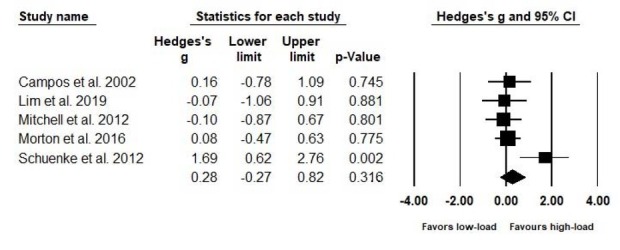
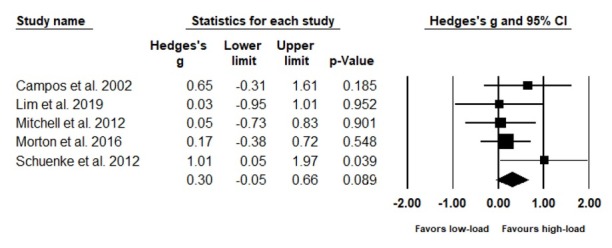
The aim of this meta-analysis was to explore the effects of low-load vs. high-load resistance training on type I and type II muscle fiber hypertrophy. Searches for studies were performed through ten databases. Studies were included if they: (a) compared the effects of low-load vs. high-load resistance training (performed to momentary muscular failure); and, (b) assessed muscle fiber hypertrophy. A random-effects meta-analysis was performed to analyze the data. Ten study groups were included in the analysis. In the meta-analysis for the effects of low-load vs. high-load resistance training on type I muscle fiber hypertrophy, there was no significant difference between the training conditions (standardized mean difference: 0.28; 95% confidence interval: –0.27, 0.82; p = 0.316; I 2 = 18%; 95% prediction interval: –0.71, 1.28). In the meta-analysis for the effects of low-load vs. high-load resistance training on type II muscle fiber hypertrophy, there was no significant difference between the training conditions (standardized mean difference: 0.30; 95% confidence interval: –0.05, 0.66; p = 0.089; I 2 = 0%; 95% prediction interval: –0.28, 0.88). In this meta-analysis, there were no significant differences between low-load and high-load resistance training on hypertrophy of type I or type II muscle fibers. The 95% confidence and prediction intervals were very wide, suggesting that the true effect in the population and the effect reported in a future study conducted on this topic could be in different directions and anywhere from trivial to very large. Therefore, there is a clear need for future research on this topic.
Overview
CoChat Summary
TL;DR
This meta-analysis found no significant differences between low-load and high-load resistance training performed to momentary muscular failure for type I or type II muscle fiber hypertrophy. However, the confidence and prediction intervals were wide, so the paper concludes there is insufficient data to determine whether either load is superior.
Key findings
- Type I muscle fiber hypertrophy: low-load vs. high-load showed no significant difference (SMD: 0.28; 95% CI: –0.27, 0.82; p = 0.316; I² = 18%; 95% prediction interval: –0.71, 1.28).
- Type II muscle fiber hypertrophy: low-load vs. high-load showed no significant difference (SMD: 0.30; 95% CI: –0.05, 0.66; p = 0.089; I² = 0%; 95% prediction interval: –0.28, 0.88).
- In the type II analysis, the pooled SMD favored high-loads but was not statistically significant; after excluding Schuenke et al. (2012), the pooled estimate was reduced to 0.20 (95% CI: –0.18, 0.57; p = 0.310).
- Methodological quality scores ranged from 19 to 25 on the Downs and Black checklist; four studies were rated good quality and one moderate quality.
Methods
- Systematic search of ten databases, plus secondary searches, conducted on February 1st, 2020; inclusion required English-language human studies comparing low-load (≤60% 1RM) vs. high-load (>60% 1RM) resistance training performed to momentary muscular failure and assessing muscle fiber hypertrophy.
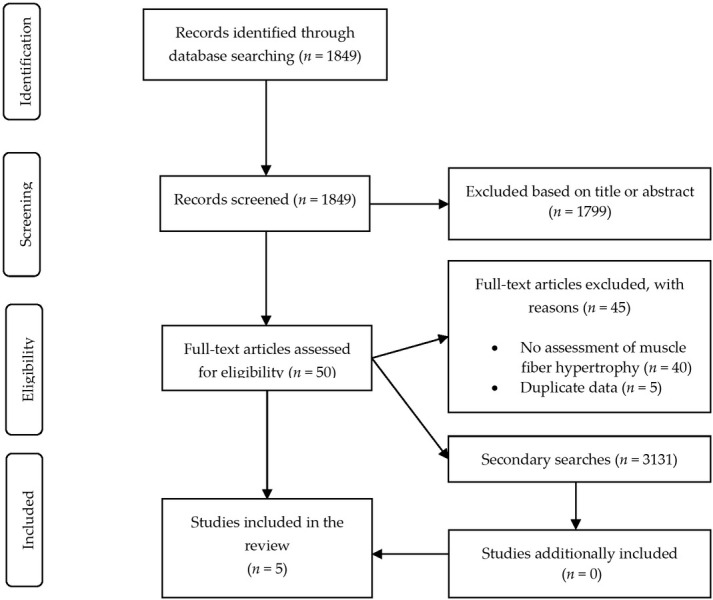
- Five studies with 10 study groups were included, with a pooled total of 120 participants; samples ranged from 14 to 49 participants (median: 17), training programs lasted 6 to 12 weeks, and all muscle biopsies were taken from the quadriceps.
- Random-effects meta-analyses used standardized mean differences (Hedges’s g) separately for type I and type II fiber cross-sectional area, with 95% CIs, I² heterogeneity, and 95% prediction intervals; analyses used Comprehensive Meta-analysis software version 2.
Limitations
- The paper states that the 95% confidence and prediction intervals were very wide, suggesting the true population effect and future study effects could range from trivial to very large and in different directions.
- The paper states that all biopsy samples came from the quadriceps femoris, so results cannot necessarily be generalized to upper-body musculature.
- The paper states that adherence was reported in only one study (Morton et al., 2016), and notes that one included study used females while all others used males, with sensitivity analysis suggesting possible sex differences; evident from the text, the meta-analysis is based on only five studies/10 study groups, mostly untrained males, with short 6–12 week training durations.
Model-written summary. Check it against the paper before relying on it.
Integrity signals
Registry
Cites
Statistics
Figures
Verification
Claims the paper makes
4 Valid · 0 Not valid · 13 Not checked · 22 Own results and interpretations
The sources with a verdict support this claim; the rest weren’t checked yet, have no full text we could read, or their verdicts aren’t rated yet.
In the paper
“However, recent research has established that both low-load and high-load resistance training may produce similar muscle hypertrophy at the whole muscle level when the training is performed to momentary muscular failure (Schoenfeld et al., 2017; Schoenfeld et al., 2020).”
§ The Effects of Low-Load Vs. High-Load Resistance Training on Muscle Fiber Hypertrophy: A Meta-Analysis > Introduction
What the sources say
- Not checked — no full text of the sourcecites Schoenfeld et al., 2017 matched to “Strength and hypertrophy adaptations between low- vs. high-load resistance training: a systematic review and meta-analysis.” (2017) source
- Supportedcites Schoenfeld et al., 2020 matched to “Do the anatomical and physiological properties of a muscle determine its adaptive response to different loading protocols?” (2020) source
The Discussion reports similar muscle-thickness increases with heavy and light loads in all three triceps surae muscles (9.2% and 10.7%, respectively). It also states that participants were pushed to momentary muscle failure on each set, supporting the claim's condition. (LLM, conf=0.92)
hedgedstates a possible cause- Asserted: passes — The authors put it forward as true.
- Checkable: passes — It can be checked against evidence.
- Load-bearing: passes — The paper’s conclusions depend on it.
- Based: passes — The paper gives a reason why it holds.
Every source the paper cites for this claim was checked and supports it.
In the paper
“However, it also needs to be mentioned that adherence to the training programs was reported only in one study (Morton et al., 2016).”
§ The Effects of Low-Load Vs. High-Load Resistance Training on Muscle Fiber Hypertrophy: A Meta-Analysis > Discussion
What the sources say
- Supportedcites Morton et al., 2016 matched to “Neither load nor systemic hormones determine resistance training-mediated hypertrophy or strength gains in resistance-trained young men” (2016) source
The Methods (Experimental design) report session attendance of 97 ± 2% in the high-repetition group and 96 ± 2% in the low-repetition group. This confirms that Morton et al. reported training attendance; “only in one study” is the citing authors’ comparison across their included studies, not a finding attributed to Morton et al. (LLM, conf=0.92)
plain- Asserted: passes — The authors put it forward as true.
- Checkable: passes — It can be checked against evidence.
- Load-bearing: passes — The paper’s conclusions depend on it.
- Based: passes — The paper gives a reason why it holds.
- Supported
Every source the paper cites for this claim was checked and supports it.
In the paper
“Even though it might be tempting to conclude that these results indicate that muscle fiber hypertrophy is not resistance training load-dependent, non-significant test results are generally not indicative of the absence of a true effect in the population (Lakens, 2017).”
§ The Effects of Low-Load Vs. High-Load Resistance Training on Muscle Fiber Hypertrophy: A Meta-Analysis > Discussion
What the sources say
- Supportedcites Lakens, 2017 matched to “Equivalence Tests: A Practical Primer for t Tests, Correlations, and Meta-Analyses” (2017) source
The passage labeled Abstract states that a nonsignificant result does not permit the conclusion that there is no effect: the test may have lacked power to detect a true effect. The Discussion likewise describes treating nonsignificant p values as evidence of no effect as a common misinterpretation. (LLM, conf=0.94)
plain- Asserted: passes — The authors put it forward as true.
- Checkable: passes — It can be checked against evidence.
- Load-bearing: passes — The paper’s conclusions depend on it.
- Based: passes — The paper gives a reason why it holds.
- Supported
A result the paper reports from its own data — it cites no other source for it, so there is none to check. The quote shows it is in the paper.
In the paper
“The 95% prediction intervals ranged from –0.71 to 1.28.”
§ The Effects of Low-Load Vs. High-Load Resistance Training on Muscle Fiber Hypertrophy: A Meta-Analysis > Results > Meta-analysis results
plain- Asserted: passes — The authors put it forward as true.
- Checkable: passes — It can be checked against evidence.
- Load-bearing: unclear — It is unclear whether the paper’s conclusions depend on it.
- Based: passes — The paper gives a reason why it holds.
None of the sources cited for this claim have been checked yet.
In the paper
“In all studies, muscle biopsy samples were taken from the quadriceps muscle.”
- Also stated in: § Discussion · plain
“Specifically, all studies collected muscle biopsy samples from the quadriceps femoris muscle group, which is the most common location because of its mixed fiber type composition, trainability, and accessibility (Staron et al., 2000).”
§ The Effects of Low-Load Vs. High-Load Resistance Training on Muscle Fiber Hypertrophy: A Meta-Analysis > Results > Search results and study characteristics
plain- Asserted: passes — The authors put it forward as true.
- Checkable: passes — It can be checked against evidence.
- Load-bearing: passes — The paper’s conclusions depend on it.
- Based: passes — The paper gives a reason why it holds.
- Also stated in: § Discussion · plain
14 more claims
Create a free account to see all 39 claims and every source verdict.
- Probably not a substantial claim. 12
- It may state two separate claims as one. 12
- The quote only partly states this claim. 1
Claims other papers make about this one
Each is checked against this paper’s own text: does it say what the citing paper says it does?
The cited source says what the claim attributes to it.
In the citing paper
“While the effects favored high-load training for type II muscle fiber CSA, they were not statistically significant (effect size: 0.30; 95% confidence interval: −0.05, 0.66; p = 0.089), possibly because only five studies were included in the analysis.”
From Loading recommendations for muscle strength, hypertrophy, and local endurance: a re-examination of the repetition continuum. (2021) · cites this paper as [76]
The cited source says what the claim attributes to it.
In the citing paper
“The analysis found no significant difference between low-load vs. high-load for type I muscle fiber CSA.”
From Loading recommendations for muscle strength, hypertrophy, and local endurance: a re-examination of the repetition continuum. (2021) · cites this paper as [76]
The cited source says what the claim attributes to it.
In the citing paper
“A recent meta-analysis included studies that performed muscle biopsies and compared the effects of low-load vs. high-load on type I and type II muscle fiber CSA with training carried out to muscular failure [76].”
From Loading recommendations for muscle strength, hypertrophy, and local endurance: a re-examination of the repetition continuum. (2021) · cites this paper as [76]
In the citing paper
“RT did not influence hypertrophy performed with low (1 d/wk) versus high (>5 d/wk) frequency when total volume was equated; low (30% 1RM) to high (100% 1RM) loads; contractions to muscle failure/fatigue; blood flow restriction; varying loads during repetitions; fast (0.5 s) versus slow (8 s) repetitions; power training techniques; periodization (linear, undulating, and nonperiodized); or exercise”
Self-check
Percentages, sums and reported differences re-computed from the paper’s own numbers.
Each contradiction between two passages listed here was confirmed by an independent check.
Rated minor: it would not touch a result — a value no result rests on, a p-value that stays on the same side of the significance level, or a conflict that is clerical, resolved elsewhere in the paper, or outside its own findings.
In the paper
§ The Effects of Low-Load Vs. High-Load Resistance Training on Muscle Fiber Hypertrophy: A Meta-Analysis > Methods > Methodological quality
“The methodological quality of included studies was assessed using the Downs and Black (2000) checklist.”
§ The Effects of Low-Load Vs. High-Load Resistance Training on Muscle Fiber Hypertrophy: A Meta-Analysis > References
“Downs SH Black N The feasibility of creating a checklist for the assessment of the methodological quality both of randomised and non-randomised studies of health care interventions J Epidemiol Commun Health 1998”
Rated minor: it would not touch a result — a value no result rests on, a p-value that stays on the same side of the significance level, or a conflict that is clerical, resolved elsewhere in the paper, or outside its own findings.
In the paper
§ The Effects of Low-Load Vs. High-Load Resistance Training on Muscle Fiber Hypertrophy: A Meta-Analysis > Results > Search results and study characteristics
“Study samples ranged from 14 to 49 participants (median: 17 participants).”
§ The Effects of Low-Load Vs. High-Load Resistance Training on Muscle Fiber Hypertrophy: A Meta-Analysis > Results > Search results and study characteristics
“Mitchell et al. (2012) | 12 young untrained men”
Citations
Cites
Borenstein, M., Hedges, L. V., Higgins, J. P. T., & Rothstein, H. R. (2009) · doi:10.1002/9780470743386 · Cited by 14,225 · cited 2×
“In a narrative review, there is no statistical mechanism for assessing the dispersion in effect size from study to study (Borenstein et al., 2009).”
BackgroundBorenstein, M., Hedges, L. V., Higgins, J. P. T., & Rothstein, H. R. (2021) · doi:10.1002/9781119558378 · Cited by 9,799
Downs, S. H., & Black, N. (1998) · Journal of Epidemiology and Community Health · doi:10.1136/jech.52.6.377 · Cited by 8,252
Progression Models in Resistance Training for Healthy Adults
(2009) · Medicine & Science in Sports & Exercise · doi:10.1249/mss.0b013e3181915670 · Cited by 4,332 · cited 2×
“In a narrative review, there is no statistical mechanism for assessing the dispersion in effect size from study to study (Borenstein et al., 2009).”
BackgroundEquivalence Tests: A Practical Primer for t Tests, Correlations, and Meta-Analyses
Lakens, D. (2017) · Social Psychological and Personality Science · doi:10.1177/1948550617697177 · Cited by 3,001 · cited 1×
“Even though it might be tempting to conclude that these results indicate that muscle fiber hypertrophy is not resistance training load-dependent, non-significant test results are generally not indicative of the absence of a true effect in the population (Lakens, 2017).”
Progression Models in Resistance Training for Healthy Adults
(2002) · Medicine and Science in Sports and Exercise · doi:10.1097/00005768-200202000-00027 · Cited by 2,979
FUNCTIONAL SIGNIFICANCE OF CELL SIZE IN SPINAL MOTONEURONS
Henneman, E., Somjen, G., & Carpenter, D. O. (1965) · Journal of Neurophysiology · doi:10.1152/jn.1965.28.3.560 · Cited by 2,294 · cited 1×
“According to Henneman's size principle, motor units are recruited in an orderly fashion (Henneman et al., 1965).”
Folland, J. P., & Williams, A. G. (2007) · Sports Medicine · doi:10.2165/00007256-200737020-00004 · Cited by 1,347 · cited 1×
“In contrast, high-load training is suggested to predominantly impact type II muscle fiber hypertrophy (Folland and Williams, 2007).”
BackgroundCampos, G., Luecke, T., Wendeln, H., Toma, K., Hagerman, F., Murray, T., Ragg, K., Ratamess, N., Kraemer, W., & Staron, R. (2002) · European Journal of Applied Physiology · doi:10.1007/s00421-002-0681-6 · Cited by 1,066 · cited 1×
“Of this number of search results, a total of 50 full-text papers were read, and five studies (Campos et al., 2002; Lim et al., 2019; Mitchell et al., 2012; Morton et al., 2016; Schuenke et al., 2012), with a total of 10 study groups were included in the review.”
BackgroundSchoenfeld, B. J., Grgic, J., Ogborn, D., & Krieger, J. W. (2017) · Journal of Strength and Conditioning Research · doi:10.1519/jsc.0000000000002200 · Cited by 851 · cited 3×
“However, recent research has established that both low-load and high-load resistance training may produce similar muscle hypertrophy at the whole muscle level when the training is performed to momentary muscular failure (Schoenfeld et al., 2017; Schoenfeld et al., 2020).”
Background
Cited by
Schoenfeld, B. J., Grgic, J., Van Every, D. W., & Plotkin, D. L. (2021) · Sports · doi:10.3390/sports9020032 · Cited by 334
“high-load on type I and type II muscle fiber CSA with training carried out to muscular failure [76].”
BackgroundEgan, B., & Sharples, A. P. (2023) · Physiological Reviews · doi:10.1152/physrev.00054.2021 · Cited by 278
Currier, B. S., Mcleod, J. C., Banfield, L., Beyene, J., Welton, N. J., D'Souza, A. C., Keogh, J. A. J., Lin, L., Coletta, G., Yang, A., et al. (2023) · British Journal of Sports Medicine · doi:10.1136/bjsports-2023-106807 · Cited by 179
“The lack of importance of load for hypertrophy is supported by other analyses, 16 17 35 62 but performing RT to momentary muscular failure (fatigue) has been posited as a key component for RT-induced hypertrophy with lower loads.”
Mcleod, J. C., Currier, B. S., Lowisz, C. V., & Phillips, S. M. (2024) · Journal of Sport and Health Science · doi:10.1016/j.jshs.2023.06.005 · Cited by 176
Coratella, G. (2022) · Sports Medicine - Open · doi:10.1186/s40798-022-00492-1 · Cited by 91
Resistance training variables for optimization of muscle hypertrophy: an umbrella review.
Bernárdez-Vázquez, R., Raya-González, J., Castillo, D., & Beato, M. (2022) · Frontiers in Sports and Active Living · doi:10.3389/fspor.2022.949021 · Cited by 67
“…between volume (Krieger, 2010; Schoenfeld et al., 2017a), frequency (Schoenfeld et al., 2019a), intensity (Schoenfeld et al., 2016a, 2017c; Grgic, 2020), contraction type (Roig et al., 2009; Schoenfeld et al., 2017b), repetition duration (Schoenfeld et al., 2015), exercises order (Nunes…”
BackgroundMethodInfluentialLacio, M., Vieira, J. G., Trybulski, R., Campos, Y., Santana, D., Filho, J. E., Novaes, J., Vianna, J., & Wilk, M. (2021) · International Journal of Environmental Research and Public Health · doi:10.3390/ijerph182111237 · Cited by 55
“Furthermore, a recent meta-analysis found no significant differences between low- and high-load resistance training on type I or type II muscle fiber hypertrophy [27].”
BackgroundCURRIER, B. S., D’SOUZA, A. C., SINGH, M. A. F., LOWISZ, C. V., RAWSON, E. S., SCHOENFELD, B. J., SMITH-RYAN, A. E., STEEN, J. P., THOMAS, G. A., TRIPLETT, N. T., et al. (2026) · Medicine & Science in Sports & Exercise · doi:10.1249/mss.0000000000003897 · Cited by 105
WIRTH, K. J., Keiner, M., Fuhrmann, S., Nimmerichter, A., & Haff, G. G. (2022) · International Journal of Environmental Research and Public Health · doi:10.3390/ijerph19095369 · Cited by 91
Wang, H., Chen, Y., Cheng, L., Cai, Y., Li, W., & Ni, G. (2021) · Arthritis Care & Research · doi:10.1002/acr.24787 · Cited by 42
“Studies were considered for inclusion if 1) subjects were diagnosed with knee OA or were at risk of knee OA; 2) the study allowed comparisons between BFRT and HLRT (≥60% 1 repetition maximum [RM]) or LLRT (<60% 1RM) or walking to waitlisting, placebo, or another intervention without blood flow restriction (BFR) (31);…”
BackgroundHaugen, M. E., Vårvik, F. T., Larsen, S., Haugen, A. S., van den Tillaar, R., & Bjørnsen, T. (2023) · BMC Sports Science, Medicine and Rehabilitation · doi:10.1186/s13102-023-00713-4 · Cited by 32
“This paper in combination with summary on range of motion [60–62], resting intervals [64, 65], exercise order [31], volume [66], intensity as proximity to failure [67] and different loading schemes [22, 68] and frequency [69], could provide great insight to the literature as a whole.”
BackgroundCan muscle typology explain the inter‐individual variability in resistance training adaptations?
Vossel, K. V., Hardeel, J., de Casteele, F. V., der Stede, T. V., Weyns, A., Boone, J., Blemker, S. S., Lievens, E., & Derave, W. (2023) · The Journal of Physiology · doi:10.1113/jp284442 · Cited by 37
Schoenfeld, B. J., Ogborn, D. I., Piñero, A., Burke, R., Coleman, M., & Rolnick, N. D. (2023) · Journal of Functional Morphology and Kinesiology · doi:10.3390/jfmk8020051 · Cited by 29
“However, although some evidence does suggest a preferential hypertrophic effect on type I fibers with LL training [9], research on the topic is limited, and a recent meta-analysis of the available literature indicated similar increases in type I hypertrophy when compared to HL training [10].”
ResultLin, T., Chueh, T., & Hung, T. (2023) · Sports Medicine - Open · doi:10.1186/s40798-023-00640-1 · Cited by 19
Bays, H. E., Gonsahn-Bollie, S., Younglove, C., & Wharton, S. (2022) · Obesity Pillars · doi:10.1016/j.obpill.2022.100044 · Cited by 24
Intentionally Slow Concentric Velocity Resistance Exercise and Strength Adaptations: A Meta-Analysis
Hermes, M. J., & Fry, A. C. (2023) · The Journal of Strength and Conditioning Research · doi:10.1519/jsc.0000000000004490 · Cited by 18
Sterczala, A. J., Rodriguez‐Ortiz, N., Feigel, E. D., Krajewski, K. T., Martin, B. J., Sekel, N. M., Lovalekar, M. T., Kargl, C. K., Koltun, K. J., van Eck, C. F., et al. (2024) · Physiological Reports · doi:10.14814/phy2.15953 · Cited by 13
“Recent meta-analyses have demonstrated that resistance training intensity is the key determinant of strength adaptations (Carvalho et al., 2022; Currier et al., 2023; Grgic, 2020), whereas muscle hypertrophy is highly dependent on resistance training volume (Currier et al., 2023).”
BackgroundPatel, H., Le, K. D. R., Wang, A. J., & Tay, S. B. P. (2025) · Frontiers in Rehabilitation Sciences · doi:10.3389/fresc.2025.1481233 · Cited by 9
Zhao, Z., Ma, Z., Wu, C., Zheng, X., Liu, T., Deng, N., & Zhou, K. (2025) · Frontiers in Physiology · doi:10.3389/fphys.2025.1672353 · Cited by 10
“The effectiveness of CT is attributed to several mechanisms, including myosin light chain phosphorylation, increased calcium sensitivity, heightened neural drive, and greater recruitment of type II muscle fibers (Grgic, 2020; Xenofondos et al., 2010).”
Wutzke, M. L. S., Zazula, M. F., Peretti, A. L., Marin, E., Gomes, J. C., de Carvalho, A. R., Beu, C. C. L., Brancalhão, R. M. C., Ribeiro, L. D. F. C., & Bertolini, G. R. F. (2024) · Physiology International · doi:10.1556/2060.2024.00404 · Cited by 4
Judd, K., Morales, C., White, M., Wilkie, K., Faller, J. M., & Ives, S. J. (2023) · International journal of exercise science · doi:10.70252/ypgd4396 · Cited by 3
“This results in an increase in muscle cross sectional area as well as an increase in the amount of force the muscle can produce (18, 31).”
BackgroundPERSENTASE LEMAK TUBUH ATLET BELADIRI PUTRI PESERTA SELEKSI PRA PON
Samodra, Y. T. J., Wati, I. D. P., Gustian, U., Gandasari, M. F., Yosika, G. F., & Sofyan, D. (2023) · Journal of SPORT (Sport Physical Education Organization Recreation and Training) · doi:10.37058/sport.v7i1.6562 · Cited by 2
Judd, K., Morales, C., White, M., Wilkie, K., Faller, J. M., & Ives, S. J. (2023) · Preprints.org · doi:10.20944/preprints202304.0987.v1 · Cited by 2
An Ergogenic Medical Education: Building Curricula to Optimize Performance and Decrease Burnout
Moen, J. (2021) · Cureus · doi:10.7759/cureus.17855 · Cited by 1
“One of the most frequented paths to accomplish this is through the use of back squats or leg extensions [7,8]; both of which, significantly activate the quadriceps and increase the cross-sectional area of the muscles [8,9].”
BackgroundPapst, R. R., Ribeiro, A. S., & Polito, M. D. (2024) · Science & Sports · doi:10.1016/j.scispo.2023.07.003 · Cited by 2
Wijono, W., Fajar, M. K., Jatmiko, T., Purnomo, M., Wiriawan, O., Pramono, B. A., Mustar, Y. S., Kusuma, I. D. M. A. W., Kurnaz, M., Widohardhono, R., et al. (2025) · Pedagogy of Physical Culture and Sports · doi:10.15561/26649837.2025.0101 · Cited by 2
“In contrast, weight training in this study did not increase VO2max, as it primarily focused on changes in muscle size [40, 41, 42].”
Subagio, I., Samudra, F. E., Pranoto, A., Kartiko, D. C., Wiriawan, O., Suyoko, A., Primanata, D., & Orhan, B. E. (2025) · Physical Education Theory and Methodology · doi:10.17309/tmfv.2025.2.21 · Cited by 2
“Conversely, LLHR leverages metabolic stress to stimulate hypertrophy by activating the Akt/mTOR signaling pathway, promoting protein synthesis, and engaging both type I and type II muscle fibers when performed to failure (Grgic, 2020; McIntosh et al., 2023).”
Latihan beban sirkuit intensitas maksimal terhadap hipertrofi lengan dan paha
Wati, I. D. P., & Jaenudin, M. A. (2021) · Multilateral Jurnal Pendidikan Jasmani dan Olahraga · doi:10.20527/multilateral.v20i2.10618 · Cited by 2
“Latihan beban rendah dan beban tinggi ternyata terhadap hipertrofi otot hasilnya tidak jauh berbeda (Grgic, 2020), pernyataan ini dikemukakan atas dasar review hasil hasil penelitian.”
BackgroundEffects of blood flow restriction training in patients with knee osteoarthritis: A meta- analysisPreprint
Li, C., Wen, H.-B., Zhang, X., Ma, C., & Zhao, X.-J. (2023) · Research Square · doi:10.21203/rs.3.rs-3624321/v1
Змінні параметри оздоровчих тренувань силової спрямованості
Korotych, V. (2024) · Physical education sport and health culture in modern society · doi:10.29038/2220-7481-2024-04-46-54 · Cited by 1
Lin, T.-Y., Chueh, T.-Y., & Hung, T.-M. (2024) · Figshare · doi:10.6084/m9.figshare.26648538
Lin, T.-Y., Chueh, T.-Y., & Hung, T.-M. (2023) · Figshare · doi:10.6084/m9.figshare.24715454
Lin, T.-Y., Chueh, T.-Y., & Hung, T.-M. (2024) · Figshare · doi:10.6084/m9.figshare.24715567
Lin, T.-Y., Chueh, T.-Y., & Hung, T.-M. (2024) · Figshare · doi:10.6084/m9.figshare.26648529
Lin, T.-Y., Chueh, T.-Y., & Hung, T.-M. (2024) · Figshare · doi:10.6084/m9.figshare.26648532
Lin, T.-Y., Chueh, T.-Y., & Hung, T.-M. (2024) · Figshare · doi:10.6084/m9.figshare.26648535
Lin, T.-Y., Chueh, T.-Y., & Hung, T.-M. (2024) · Figshare · doi:10.6084/m9.figshare.26648526
Effects of Specific Time-Efficient Warm-Up on One-Repetition Maximum Squat Performance
Madarsa, N. I., Shalan, N. A. A. M., Nadzalan, A. M., & Mohamad, N. I. (2025) · Lecture notes in bioengineering · doi:10.1007/978-981-96-8757-2_16
Bello, M. L., Arent, S. M., Gillen, Z. M., & Smith, J. W. (2025) · Journal of Functional Morphology and Kinesiology · doi:10.3390/jfmk11010017
“Meta-analyses suggest that, when volume is equated and sets are performed near failure, hypertrophy occurs across a broad loading spectrum, although a majority of this work has involved untrained participants where the novelty of training elicits rapid growth regardless of load [7,8].”
Training Practices Among Spanish Natural Elite Bodybuilders in the Pre-Contest Phase
Baz-Valle, E., Martínez-Gómez, S., Gené‐Morales, J., Jiménez‐Martínez, P., Alix‐Fages, C., & Santos‐Concejero, J. (2026) · Sports · doi:10.3390/sports14010020
“Repetition range is inherently linked to load, and current evidence suggests no significant differences in hypertrophy outcomes [40] or in fiber-type–specific hypertrophy [41], if sets are performed to or near failure.”
Do Flywheel Exercises Provide Eccentric-Overload Training?
Spudić, D., & Nosaka, K. (2026) · Sports Medicine - Open · doi:10.1186/s40798-025-00974-y · Cited by 6
“Drawing parallels with traditional resistance exercise [58, 59], it could be speculated that higher FW inertias might be more beneficial for improving maximal strength and hypertrophy due to the greater mechanical stimulus [60], while lower FW inertias might be more effective for enhancing peak…”
Zhang, Q., Hooren, B. V., Girard, O., Trowell, D. A., Jiang, S., Zeng, W., Chen, S., Zhang, Q., & Li, F. (2026) · iScience · doi:10.1016/j.isci.2026.115232
“Strength training can lead to fiber hypertrophy, including in type I fibers, 23 which are primarily recruited during submaximal running.”
Morin, J.-P., Parent, A.-A. A., & Tremblay, M. (2026) · International Journal of Sports Science & Coaching · doi:10.1177/17479541261436950
“47 48 – 50 A similar outcome was found in a 6-week study conducted on 14 untrained men by Heffernan et al., 51 and training volume is a key factor in muscle gains.”
de Oliveira, G. M., Paulo, L. R., Lourenço, B. M., Magalhães, F. D. C., & Oliveira, V. C. (2026) · European Spine Journal · doi:10.1007/s00586-026-09901-5 · Cited by 1
Instability resistance training in collegiate basketball: a multitheoretical experimental study
Li, H., Li, X., Gao, W., & Jeong, H.-C. (2026) · Frontiers in Sports and Active Living · doi:10.3389/fspor.2026.1827231
Metadata
- Authors
- Grgic, J.
- Affiliations
- Institute for Health and Sport (IHES) , Victoria University , Melbourne , Australia
- Venue
- Journal of Human Kinetics
- Publisher
- Termedia Sp. z.o.o.
- Published
- 2020-08-31
- Volume
- 74
- Issue
- 1
- Pages
- 51-58
- ISSN
- 1640-5544 (ISSN-L)
- 1899-7562
- PMC
- PMC7706639
- OpenAlex
- W3114064374
- Cited by
- 45
- References
- 27
- Citations by year
- 2026: 6 · 2025: 6 · 2024: 10 · 2023: 12 · 2022: 5 · 2021: 6
- FWCI
- 1.13
- Type
- journal article
- Language
- en
- Open access
- diamond
- doi.org
- Locations
- Journal of Human Kinetics (publishedVersion, cc-by)
- PubMed Central (publishedVersion, cc-by-nc-nd)
- PubMed (publishedVersion)
- Victoria University Research Repository (Victoria University) (submittedVersion, cc-by-nc-nd)
- Topics
- Health Sciences › Medicine › Orthopedics and Sports Medicine › Sports Performance and Training
- Health Sciences › Medicine › Physiology (medical) › Cardiovascular and exercise physiology
- Health Sciences › Nursing › Nutrition and Dietetics › Muscle metabolism and nutrition
- Keywords
- resistance training, low-load training, high-load training, muscle fiber hypertrophy, type I muscle fibers, fast-twitch muscle, muscle hypertrophy
About these checks
Registry, retraction, Cites and statistics results are computed, not judged, with one exception: a printed reference that no index lists is read once by a model before it counts as a citation error. Claims are extracted by a model and kept only when their quote appears verbatim in the text; each cited source is then checked, with a model’s help, for whether it says what the claim relies on. Those verdicts can be wrong — read the claim’s quote and the cited source before relying on one.
The claim verdicts this report counts are experimental: their accuracy is not yet measured.
A language model drew the claims from the paper on 2026-11-02, under version 3 of the claim definition (model deepseek-v4.1-flash, prompt extract-v3).
A second model labelled each claim on 2026-11-02 (model jev-1.13-20260917, definition revision gold-guideline-v0.2).
Cited sources are checked with a language model’s help (gpt-6-sol).
Statistics and arithmetic are recomputed, not judged.
Confidence bands are shown only for fields calibrated on our annotated test set. None is calibrated yet, so no band is shown.
What counts as a claim ›How we measure confidence ›How we check this ›
Are you an author, or do you see a problem with this page? Request a review
Data sources
Bibliographic data: Semantic Scholar, OpenAlex, Crossref.
Contains information from the Semantic Scholar Academic Graph Datasets, made available under the ODC Attribution License (ODC-BY 1.0).
Semantic Scholar’s data is described in: Kinney, R., et al. (2023). The Semantic Scholar Open Data Platform. arXiv:2301.10140.
