

Pathways to Student Motivation: A Meta-Analysis of Antecedents of Autonomous and Controlled Motivations
Open accessThe DOI matches its Crossref record; 79 of the 80 references it cites were found in a registry or an index; 6 of the 38 sources its claims cite were checked for support.
Abstract
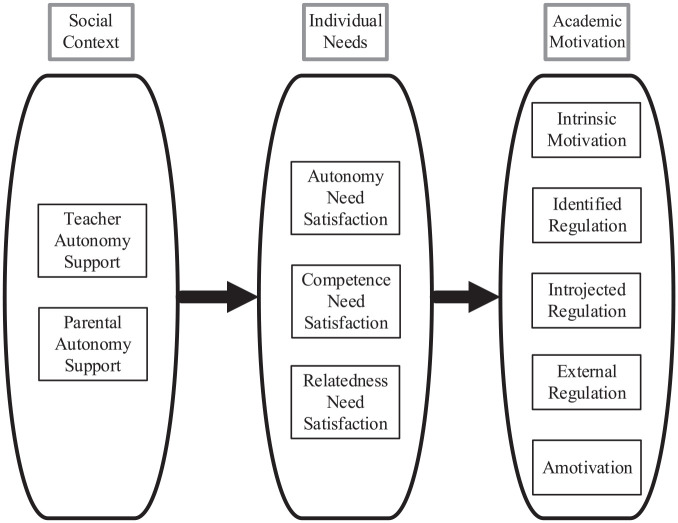
Students’ self-determined motivation (acting out of interest, curiosity, and abiding values) is associated with higher academic well-being, persistence, and achievement. Self-determination theory posits that self-determined motivation is dependent on the satisfaction of three psychological needs (relatedness, competence, and autonomy), which are in turn facilitated through need-supportive behaviors from notable others. In this meta-analysis, conducted over 144 studies and more than 79,000 students, we sought to overview pathways to student motivation in order to verify (1) how do psychological needs rank in the strength of their prediction of self-determined motivation and (2) which autonomy-support providers (parents or teachers) are the most relevant for psychological need satisfaction in students and self-determined motivation. Results show that teacher autonomy support predicts students’ need satisfaction and self-determined motivation more strongly than parental autonomy support. In addition, competence is the most positive predictor of self-determined motivation, followed by autonomy and then by relatedness.
Overview
CoChat Summary
TL;DR
This meta-analysis of 144 samples and 79,079 students tested self-determination theory pathways from teacher and parent autonomy support to psychological need satisfaction and student motivation. Teacher autonomy support was a stronger predictor than parental autonomy support, and competence was the strongest need predictor of self-determined motivation, followed by autonomy and relatedness.
Key findings
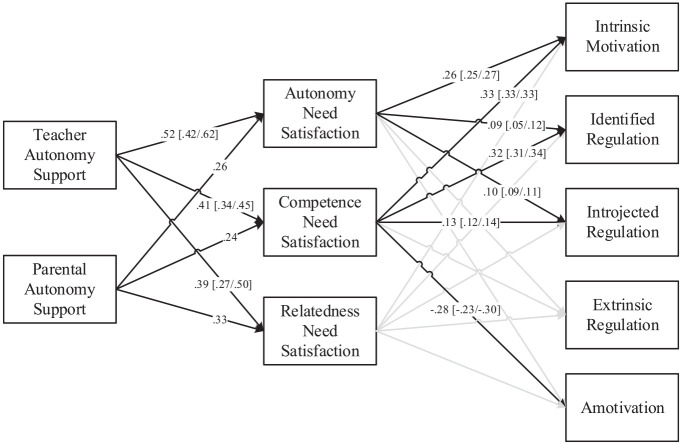
- Teacher autonomy support generally predicted need satisfaction and self-determined motivation more strongly than parental autonomy support. In the model including both sources, direct paths from parental autonomy support to motivation types were close to null; parental support showed only indirect prediction for identified and intrinsic motivation (βindirect = .13 and .16, respectively).
- Competence was the strongest positive predictor of self-determined motivation. Relative weight analysis showed competence accounted for 42.33% of unique variance in intrinsic motivation (R² = .38), 44.38% in identified regulation (R² = .30), and 46.90% in amotivation (R² = .15); autonomy followed, then relatedness. MASEM results similarly showed competence as the strongest predictor of amotivation (β = −.23 to −.30), identified regulation (β = .31 to .34), and intrinsic motivation (β = .33).
- Teacher autonomy support predicted autonomy (β = .42 to .62), competence (β = .34 to .45), and relatedness (β = .27 to .50). It also predicted amotivation (β = −.12 to −.18), identified regulation (β = .18 to .19 direct; βindirect = .17 to .24), and intrinsic motivation (β = .07 to .13 direct; βindirect = .24 to .32).
- External regulation was not predicted by needs or autonomy support (R² = .004 in relative weight analysis; R² = .01 in MASEM), and introjected regulation showed only minor associations (R² = .06 to .07).
Methods
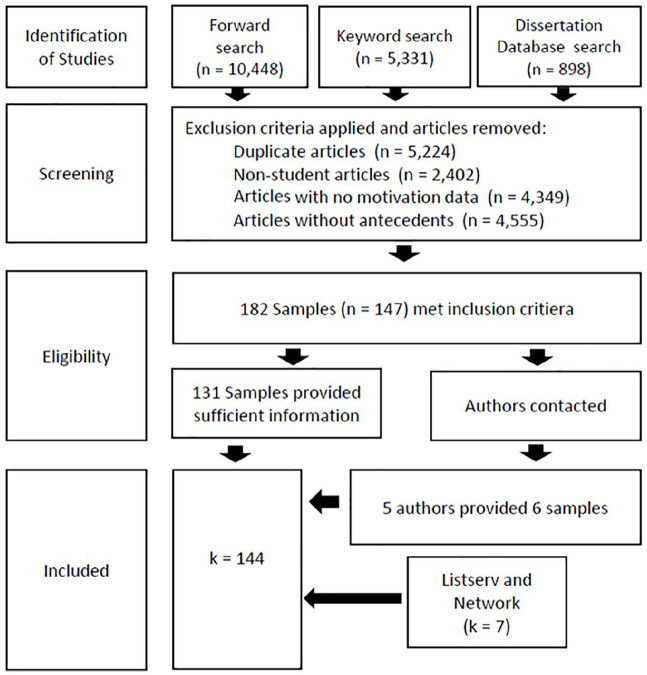
- Meta-analysis of 144 samples (98 published, 47 unpublished, as reported) with 79,079 participants, 1,718 correlation coefficients, mean age 16.55 years, and 45.46% male on average. Inclusion required students from primary school to university, at least one correlation between a motivation type and need satisfaction or autonomy support, and validated motivation scales.
- Literature search used forward citation searches, EBSCO/PsycINFO, ProQuest Dissertations and Theses Global, and mailing-list calls for unpublished data; gray literature was included. About 10% of data were double-coded (Cohen’s κ = .95).
- Analyses used random-effects models with robust variance estimation, reliability corrections, relative weight analysis, and weighted-covariance generalized least squares meta-analytic structural equation modeling with multiple imputation or pairwise deletion. Moderators included age, gender, educational context, scale used, and publication status/bias.
Limitations
- The paper states that the meta-analysis is based on correlations, limiting causal conclusions; future work should use longitudinal, experience-sampling, and quasi-experimental designs.
- The paper notes few studies on parental autonomy support and peer autonomy support, with peer autonomy support excluded from main analyses. Teacher/parent control, competence support, relatedness support, and need frustration variables were also too limited for inclusion.
- The paper reports possible publication bias, especially for teacher autonomy support: trim-and-fill and Egger’s test suggested missing studies for introjected, identified, and intrinsic motivation, with corrected estimates potentially closer to .09, .29, and .29 versus observed .17, .44, and .48. Evident from the text, many correlations showed high heterogeneity (I² often above 75%), and parental autonomy support analyses relied on small numbers of samples (e.g., k = 6 for amotivation, k = 12 for intrinsic motivation).
Model-written summary. Check it against the paper before relying on it.
Integrity signals
Registry
Cites
Statistics
Figures
Verification
Claims the paper makes
5 Valid · 1 Not valid · 23 Not checked · 86 Own results and interpretations
The cited sources support only part of this claim — read each source’s verdict below.
In the paper
“This finding also aligns with meta-analyses from other contexts which consistently find relatedness to be a positive antecedent of motivation types with smaller effect sizes compared with needs for autonomy and competence (Ng et al., 2012; Van den Broeck et al., 2016; Vasconcellos et al., 2020).”
§ Pathways to Student Motivation: A Meta-Analysis of Antecedents of Autonomous and Controlled Motivations > Discussion > The Role of Relatedness
What the sources say
- Not matchedcites Ng et al., 2012
This doesn’t read as a citation we can look up.
- Partly supportedcites Van den Broeck et al., 2016 matched to “A Review of Self-Determination Theory’s Basic Psychological Needs at Work” (2016) sourceExperimental — accuracy not yet measured
The meta-analysis reports positive associations between relatedness satisfaction and identified and intrinsic motivation (Relations Between Needs and Outcome Variables, p. 18). But the claim overstates their consistency across motivation types: external motivation is negatively associated with relatedness, and the comparison is not uniformly smaller than competence—for example, the reported intrinsic-motivation association is .39 for relatedness versus .35 for competence (p. 25). (LLM, conf=0.88)
- Not checked — no full text of the sourcecites Vasconcellos et al., 2020 matched to “Self-determination theory applied to physical education: A systematic review and meta-analysis.” (2020) source
plainstates an association- Asserted: passes — The authors put it forward as true.
- Checkable: passes — It can be checked against evidence.
- Load-bearing: unclear — It is unclear whether the paper’s conclusions depend on it.
- Based: passes — The paper gives a reason why it holds.
- Not matched
The cited sources that could be checked couldn’t confirm or dispute this claim.
In the paper
“the AMS shows eerily positive associations between external regulation and antecedents”
§ Pathways to Student Motivation: A Meta-Analysis of Antecedents of Autonomous and Controlled Motivations > Discussion > Moderating Influences
What the sources say
- Could not verifycites Howard et al., 2017 matched to “Testing a continuum structure of self-determined motivation: A meta-analysis.” (2017) sourceExperimental — accuracy not yet measured
The Results (section headed “Insert Table 2 here”; page unavailable) report an unexpectedly high correlation between identified and external regulation in AMS data, but identified regulation is not described as an antecedent. The Limitations section (page unavailable) says incorporating antecedent variables is a task for future research. A search for antecedents found no AMS-specific association between external regulation and antecedents. (LLM, conf=0.78)
plainstates an association- Asserted: passes — The authors put it forward as true.
- Checkable: passes — It can be checked against evidence.
- Load-bearing: unclear — It is unclear whether the paper’s conclusions depend on it.
- Based: passes — The paper gives a reason why it holds.
- Could not verify
The cited sources support only part of this claim — read each source’s verdict below.
In the paper
“This was also the case for need frustration variables (Vansteenkiste & Ryan, 2013).”
§ Pathways to Student Motivation: A Meta-Analysis of Antecedents of Autonomous and Controlled Motivations > Discussion > Limitations and Conclusion
What the sources say
- Partly supportedcites Vansteenkiste & Ryan, 2013 matched to “On psychological growth and vulnerability: Basic psychological need satisfaction and need frustration as a unifying principle.” (2013) sourceExperimental — accuracy not yet measured
The Ill-being section (page not supplied) says most studies assessed need satisfaction, while assessments of need frustration appeared in more recent research. This supports a comparatively smaller body of research on need frustration, but the paper does not say that this restricted the citing authors’ ability to include those variables in their analysis. (LLM, conf=0.83)
plainstates a cause- Asserted: passes — The authors put it forward as true.
- Checkable: passes — It can be checked against evidence.
- Load-bearing: passes — The paper’s conclusions depend on it.
- Based: passes — The paper gives a reason why it holds.
- Rests on an assumption not shown here.
- Partly supported
A result the paper reports from its own data — it cites no other source for it, so there is none to check. The quote shows it is in the paper.
In the paper
“First, it appeared that associations between autonomy support from parents and amotivation, identified regulation and intrinsic motivation diminished as students grew older.”
§ Pathways to Student Motivation: A Meta-Analysis of Antecedents of Autonomous and Controlled Motivations > Results
hedgedstates an association- Asserted: passes — The authors put it forward as true.
- Checkable: passes — It can be checked against evidence.
- Load-bearing: passes — The paper’s conclusions depend on it.
- Based: passes — The paper gives a reason why it holds.
A result the paper reports from its own data — it cites no other source for it, so there is none to check. The quote shows it is in the paper.
In the paper
“Regarding education context (i.e., classroom education vs. physical education), the correlations between amotivation and both autonomy and relatedness is substantially more negative in the classroom samples as compared to the physical education samples.”
§ Pathways to Student Motivation: A Meta-Analysis of Antecedents of Autonomous and Controlled Motivations > Results
plainstates an association- Asserted: passes — The authors put it forward as true.
- Checkable: passes — It can be checked against evidence.
- Load-bearing: unclear — It is unclear whether the paper’s conclusions depend on it.
- Based: passes — The paper gives a reason why it holds.
66 more claims
Create a free account to see all 115 claims and to verify the 3 references still open.
- Probably not a substantial claim. 12
- It may state two separate claims as one. 38
Claims other papers make about this one
Each is checked against this paper’s own text: does it say what the citing paper says it does?
The source backs part of the claim, not all of it — or backs it for a different population, condition or comparison.
In the citing paper
“Autonomy support and structure are both beneficial for students (Bureau et al., 2022;Hornstra et al., 2021;Howard et al., 2021;Mammadov & Schroeder, 2023) and teacher outcomes (Cheon et al., 2014;Ryan et al., 2022;Slemp et al., 2020).”
From Blending Teacher Autonomy Support and Provision of Structure in the Classroom for Optimal Motivation: A Systematic Review and Meta-Analysis (2025) · cites this paper as Bureau et al., 2022
Experimental — accuracy not yet measuredThe source backs part of the claim, not all of it — or backs it for a different population, condition or comparison.
In the citing paper
“Autonomy support and structure are both beneficial for students (Bureau et al., 2022;Hornstra et al., 2021;Howard et al., 2021;Mammadov & Schroeder, 2023) and teacher outcomes (Cheon et al., 2014;Ryan et al., 2022;Slemp et al., 2020).”
From Blending Teacher Autonomy Support and Provision of Structure in the Classroom for Optimal Motivation: A Systematic Review and Meta-Analysis (2025) · cites this paper as Bureau et al., 2022
Experimental — accuracy not yet measuredThe cited source says what the claim attributes to it.
In the citing paper
“Strong empirical evidence demonstrates the benefits of teachers' support of students' psychological needs for students' motivation (Bureau et al., 2022;Eakman et al., 2019;Filak & Sheldon, 2008;Vasconcellos et al., 2020), well-being (Ferguson et al., 2011;Stanley et al., 2021;Wang et al., 2021a, b), effort (Hardré & Sullivan, 2008;Hein et al., 2018), and engagement (Chen, 2005;Klem & Connell, 2004”
From Blending Teacher Autonomy Support and Provision of Structure in the Classroom for Optimal Motivation: A Systematic Review and Meta-Analysis (2025) · cites this paper as Bureau et al., 2022
Self-check
Percentages, sums and reported differences re-computed from the paper’s own numbers.
Each contradiction between two passages listed here was confirmed by an independent check.
Rated major: it would touch a result — a value a result rests on, reported and recomputed p-values on opposite sides of the significance level, two passages that conflict with no sign which is right, or a cited work retracted before this paper was published.
In the paper
§ Pathways to Student Motivation: A Meta-Analysis of Antecedents of Autonomous and Controlled Motivations > Results
“The need for relatedness was also found to demonstrate similar patterns (in the same ordering: ρ = −.38, −.02, .23, .53, and .58, respectively, k = 29, 45, 45, 44, 56)”
§ Pathways to Student Motivation: A Meta-Analysis of Antecedents of Autonomous and Controlled Motivations > Results
“| Amotivation | 29 | 13,885 | −.30 | −.38 | −.23 | .04 | .04 | 95.04 | | External | 45 | 20,175 | .01 | −.05 | .07 | .03 | .06 | 96.29 | | Introjected | 45 | 20,175 | .21 | .15 | .26 | .03 | .04 | 94.37 | | Identified | 44 | 20,338 | .44 | .39 | .49 | .02 | .02 | 91.73 | | Intrinsic | 56 | 27,209 | .44 | .39 | .48 | .02 | .03 | 93.15 |”
Rated minor: it would not touch a result — a value no result rests on, a p-value that stays on the same side of the significance level, or a conflict that is clerical, resolved elsewhere in the paper, or outside its own findings.
In the paper
§ Pathways to Student Motivation: A Meta-Analysis of Antecedents of Autonomous and Controlled Motivations > Results
“amotivation (β = −.12 to −.18; βindirect = −.10 to .14)”
§ Pathways to Student Motivation: A Meta-Analysis of Antecedents of Autonomous and Controlled Motivations > Results
“| 2 MI—No parent AS | Amotivation | .16 | −.18 (−.14) | — | .01 | −.23 | −.08 |”
Rated minor: it would not touch a result — a value no result rests on, a p-value that stays on the same side of the significance level, or a conflict that is clerical, resolved elsewhere in the paper, or outside its own findings.
In the paper
§ Pathways to Student Motivation: A Meta-Analysis of Antecedents of Autonomous and Controlled Motivations > Results
“Furthermore, correlations between autonomy and motivation types were all significantly different from each other as indicated by non-overlapping confidence intervals (Cumming & Finch, 2005).”
§ Pathways to Student Motivation: A Meta-Analysis of Antecedents of Autonomous and Controlled Motivations > Results
“| Identified | 42 | 18,395 | .48 | .41 | .56 | .04 | .04 | 94.50 | | Intrinsic | 52 | 23,759 | .57 | .50 | .63 | .03 | .04 | 94.88 |”
Rated minor: it would not touch a result — a value no result rests on, a p-value that stays on the same side of the significance level, or a conflict that is clerical, resolved elsewhere in the paper, or outside its own findings.
In the paper
§ Pathways to Student Motivation: A Meta-Analysis of Antecedents of Autonomous and Controlled Motivations > Results
“Confidence intervals of associations between competence and the various motivation types did not overlap, indicating significant differences throughout.”
§ Pathways to Student Motivation: A Meta-Analysis of Antecedents of Autonomous and Controlled Motivations > Results
“| Identified | 57 | 34,705 | .53 | .47 | .58 | .03 | .03 | 94.61 | | Intrinsic | 69 | 40,789 | .58 | .53 | .63 | .02 | .03 | 94.05 |”
Citations
Cites
Measuring inconsistency in meta-analyses
Higgins, J. P. T., Thompson, S. G., Deeks, J. J., & Altman, D. G. (2003) · BMJ · doi:10.1136/bmj.327.7414.557 · Cited by 63,139 · cited 3×
“An I2 score greater than 75% indicates a high likelihood of unaccounted moderating factors, whereas a score lower than 25% indicates a relatively low likelihood of meaningful moderating factors (Higgins et al., 2003).”
BackgroundInfluentialBias in meta-analysis detected by a simple, graphical test
Egger, M., Smith, G. D., Schneider, M., & Minder, C. (1997) · BMJ · doi:10.1136/bmj.315.7109.629 · Cited by 56,722 · cited 1×
“Egger’s test of the intercept was also applied (Egger et al., 1997).”
MethodRyan, R. M., & Deci, E. L. (2000) · American Psychologist · doi:10.1037//0003-066x.55.1.68 · Cited by 54,599 · cited 1×
“The specified needs are those of autonomy, competence, and relatedness (Ryan & Deci, 2000).”
BackgroundThe need to belong: Desire for interpersonal attachments as a fundamental human motivation.
Baumeister, R. F., & Leary, M. R. (1995) · Psychological Bulletin · doi:10.1037//0033-2909.117.3.497 · Cited by 23,245 · cited 1×
“Students experiencing relatedness feel connected with important others in their school (e.g., teachers, friends; Baumeister & Leary, 1995; Chen et al., 2015).”
BackgroundInterrater reliability: The kappa statistic
McHugh, M. L. (2012) · Biochemia Medica · doi:10.11613/bm.2012.031 · Cited by 19,877 · cited 1×
“Interrater agreement was very high (Cohen’s κ = .95; McHugh, 2012), and disagreements were discussed by the second and third authors.”
BackgroundBorenstein, M., Hedges, L. V., Higgins, J. P. T., & Rothstein, H. R. (2009) · doi:10.1002/9780470743386 · Cited by 14,225
mice: Multivariate Imputation by Chained Equations in R
Buuren, S. V., & Groothuis-Oudshoorn, K. (2011) · Journal of Statistical Software · doi:10.18637/jss.v045.i03 · Cited by 13,870
Hattie, J., & Timperley, H. (2007) · Review of Educational Research · doi:10.3102/003465430298487 · Cited by 12,905
(2008) · Cited by 6,939
Research works printed but not linked: 1
- Vallerand R. J. Ratelle C. (2002). Intrinsic and extrinsic motivation: A hierarchical model. In Deci E. L. Ryan R. M. (Eds.), Handbook of self-determination research (pp. 37– 63). University of Rochester Press.
Cited by
Ahmadi, A., Noetel, M., Parker, P., Ryan, R. M., Ntoumanis, N., Reeve, J., Beauchamp, M., Dicke, T., Yeung, A., Ahmadi, M., et al. (2023) · Journal of Educational Psychology · doi:10.1037/edu0000783 · Cited by 476
Theories of Motivation in Education: an Integrative Framework
Urhahne, D., & Wijnia, L. (2023) · Educational Psychology Review · doi:10.1007/s10648-023-09767-9 · Cited by 292
Al‐Hoorie, A. H., Oga-Baldwin, W. L. Q., Hiver, P. V., & Vitta, J. P. (2022) · Language Teaching Research · doi:10.1177/13621688221102686 · Cited by 169
“Studies involving these instruments and constructs in general education consistently demonstrate the power of this theory to predict positive motivational outcomes across contexts and samples (Bureau et al., 2022).”
Howard, J. L., Slemp, G. R., & Wang, X. (2025) · Personality and Social Psychology Bulletin · doi:10.1177/01461672231225364 · Cited by 114
Self-citationSelf-Determination Theory and Workplace Outcomes: A Conceptual Review and Future Research Directions
McAnally, K., & Hagger, M. S. (2024) · Behavioral Sciences · doi:10.3390/bs14060428 · Cited by 296
“…theory has been widely applied to predict the forms of motivation adopted and behavioral, affective, psychological, and interpersonal outcomes in multiple behaviors, populations, and contexts, including educational, social, health, and, importantly, occupational and workplace contexts [23,24,44].”
BackgroundQiao, S., Yeung, S. S., Zainuddin, Z., Ng, D. T. K., & Chu, S. K. W. (2023) · British Journal of Educational Technology · doi:10.1111/bjet.13249 · Cited by 86
A meta-analytic review of the relationships between autonomy support and positive learning outcomes
Mammadov, S., & Schroeder, K. (2023) · Contemporary Educational Psychology · doi:10.1016/j.cedpsych.2023.102235 · Cited by 154
Zhou, S. A., Hiver, P. V., & Al‐Hoorie, A. H. (2023) · Language Teaching Research · doi:10.1177/13621688231158789 · Cited by 101
“Furthermore, systematic reviews and meta-analyses have shown that whether students’ psychological needs are satisfied or frustrated is a function of the level of teachers’ autonomy support vs. control in their classroom practice (Bureau et al., 2022).”
InfluentialBasileo, L. D., Otto, B., Lyons, M. E., Vannini, N., & Toth, M. D. (2024) · Frontiers in Education · doi:10.3389/feduc.2024.1385442 · Cited by 195
Patzak, A., & Zhang, X. (2025) · Educational Psychology Review · doi:10.1007/s10648-025-09994-2 · Cited by 52
“For example, teacher autonomy support and provision of structure are associated with increased student motivation (Bureau et al., 2022; Eakman et al., 2019; Filak & Sheldon, 2008; Vasconcellos et al., 2020), student well-being (Ferguson et al., 2011; Stanley et al., 2021; Wang et al., 2021a, b),…”
InfluentialChoosing to learn: The importance of student autonomy in higher education
Cullen, S., & Oppenheimer, D. M. (2024) · Science Advances · doi:10.1126/sciadv.ado6759 · Cited by 83
Reeve, J., & Cheon, S. H. (2024) · Teaching and Teacher Education · doi:10.1016/j.tate.2024.104702 · Cited by 95
The AI Motivation Scale (AIMS): a self-determination theory perspective
Li, J., King, R. B., Chai, C. S., Zhai, X., & Lee, V. W. Y. (2025) · Journal of Research on Technology in Education · doi:10.1080/15391523.2025.2478424 · Cited by 79
“SDT has a strong theoretical and empirical basis (Bureau et al., 2022; Howard et al., 2021) and is one of the most robust theoretical frameworks for understanding motivation.”
Modeling Intra- and Inter-individual Changes in L2 Classroom Engagement
Zhou, S. A., Hiver, P. V., & Zheng, Y. (2022) · Applied Linguistics · doi:10.1093/applin/amac065 · Cited by 45
Zhou, L., Yabing, G., Hu, J., Tu, X., & Zhang, X. (2022) · Frontiers in Psychology · doi:10.3389/fpsyg.2022.949495 · Cited by 51
“Research has indicated that integrated regulation and intrinsic motivation share conceptual properties, which cause difficulties to differentiate between these two motivation subtypes (Vasconcellos et al., 2020; Bureau et al., 2022).”
BackgroundPhD students’ motivation profiles: A self-determination theory perspective
Litalien, D., Tóth‐Király, I., Guay, F., & Morin, A. J. S. (2024) · Contemporary Educational Psychology · doi:10.1016/j.cedpsych.2024.102279 · Cited by 62
Self-citationMendoza, N. B., Yan, Z., & King, R. B. (2022) · European Journal of Psychology of Education · doi:10.1007/s10212-022-00620-1 · Cited by 40
The academic and social-emotional flourishing framework
Collie, R. J., & Martin, A. J. (2024) · Learning and Individual Differences · doi:10.1016/j.lindif.2024.102523 · Cited by 41
Cai, Q., Chen, W., Wang, M., & Di, K. (2025) · Environment Development and Sustainability · doi:10.1007/s10668-024-05923-5 · Cited by 61
“Particularly among university students, autonomy helps to form internally driven behavioral standards, making them more likely to engage in behaviors consistent with their values (Bureau et al., 2022).”
Hornstra, L., Mathijssen, A. C. S., Denissen, J. J. A., & Bakx, A. (2023) · Learning and Individual Differences · doi:10.1016/j.lindif.2023.102345 · Cited by 25
Goodwin, J., Behan, L., & O’Brien, N. (2021) · Journal of Child and Adolescent Mental Health · doi:10.2989/17280583.2023.2229876 · Cited by 40
Held, T., & Mejeh, M. (2024) · Heliyon · doi:10.1016/j.heliyon.2024.e29526 · Cited by 84
“The importance of autonomy in learning is also reflected by Deci and Ryan ’ s (2002) self-determination theory (SDT), which assumes that the fulfillment of three basic psychological needs (autonomy, competence, relatedness) is critical to perceiving a behavior as self-determined [35 – 38].”
Kim, H.-I. (2024) · Humanities and Social Sciences Communications · doi:10.1057/s41599-024-03783-y · Cited by 39
“Noels et al. (2000) found that PP is correlated with intrinsic motivation, a more self-determined type of motivation, which is in line with a meta-analysis study by Bureau et al. (2022).”
Jankauskienė, R., Urmanavicius, D., & Bacevičienė, M. (2022) · Behavioral Sciences · doi:10.3390/bs12090314 · Cited by 41
“Competence satisfaction is the most strongly associated with students’ autonomous motivation for PE [17], suggesting that a sense of efficacy and physical competence in physical education is associated with more willing participation in PE [8].”
BackgroundHaw, J. Y., & King, R. B. (2023) · Social Psychology of Education · doi:10.1007/s11218-023-09790-2 · Cited by 33
“Consequently, much of the research on SDT has focused on the positive influence of need-supportive teaching practices on students’ autonomous motivation and student learning outcomes (Bureau et al., 2021; Froiland et al., 2016; Stroet et al., 2013, 2015).”
BackgroundNguyen, U., Russo‐Tait, T., Riegle‐Crumb, C., & Doerr, K. (2022) · Science Education · doi:10.1002/sce.21748 · Cited by 28
Wang, M., & Hu, J. (2022) · Frontiers in Psychology · doi:10.3389/fpsyg.2022.959461 · Cited by 35
Earl, S. R., Taylor, I. M., Meijen, C., & Passfield, L. (2022) · Learning and Individual Differences · doi:10.1016/j.lindif.2022.102248 · Cited by 30
Ashford, M., Cope, E., Abraham, A., & Poolton, J. (2022) · Physical Education and Sport Pedagogy · doi:10.1080/17408989.2022.2153822 · Cited by 32
Alrabai, F., & Alamer, A. (2024) · Language Teaching Research · doi:10.1177/13621688241278625 · Cited by 39
“…a positive influence of teacher motivational practice in the language class was not limited to enhanced L2 motivation demonstrated by L2 learners (Bureau et al., 2022; Moskovsky et al., 2013) but also increased levels of academic L2 achievement (Alamer & Alrabai, 2023; Alrabai, 2016, 2022a; Wang…”
Li, J., Zhang, J., Chai, C. S., Lee, V. W. Y., Zhai, X., Wang, X., & King, R. B. (2025) · npj Science of Learning · doi:10.1038/s41539-025-00339-w · Cited by 41
“Still, some other researchers asserted competence need satisfaction surpassed autonomy and relatedness satisfaction as the strongest precursor of motivation 23,39 .”
InfluentialEmpirical testing of an alternative modeling of the self-determination continuum
Bureau, J. S., Guay, F., Plamondon, A., Ratelle, C. F., Howard, J. L., & Gilbert, W. (2022) · Motivation and Emotion · doi:10.1007/s11031-022-09976-9 · Cited by 29
“Recent meta-analyses have provided support for the relevance of estimating various types of motivation (Bureau et al., 2021), both regarding unique predictive patterns of outcomes from the various motivation types as well as in terms of predictable ordering of their prediction strength along the…”
BackgroundSelf-citationMotivational profiles of EFL learners: A person-centered approach to uncovering gender differences
Li, J., King, R. B., & Wang, C. (2023) · Language Teaching Research · doi:10.1177/13621688231213030 · Cited by 27
“…hypothesis 3 and is consistent with the theoretical proposition of the SDT and in line with previous variable-centered research which reported the significant contributions of basic psychological needs on motivation in EFL learning (e.g. Alamer, 2022; Bureau et al., 2022; Shirvan & Alamer, 2022).”
El‐Sayed, M. M., Taha, S. M., Elhay, E. S. A., & Hawash, M. M. (2024) · BMC Nursing · doi:10.1186/s12912-023-01671-5 · Cited by 40
“On the other hand, extrinsic motivation is fueled by external rewards, such as grades, recognition, or avoidance of punishment [5, 6].”
BackgroundLiu, C., Lin, Y., Lo, F.-Y., Chang, C., & Lin, H. (2024) · Education and Information Technologies · doi:10.1007/s10639-024-13068-1 · Cited by 35
“The result is consistent with the findings of prior studies (Bureau et al., 2022; Fig.”
Student perceptions of feedback and self-regulated language learning: A mixed-methods investigation
Nakata, Y., Oga-Baldwin, W. L. Q., & Tsuda, A. (2025) · System · doi:10.1016/j.system.2025.103654 · Cited by 34
“Both synthetic reviews of feedback (Nassaji, 2016) and meta-analytic perspectives on motivation (Bureau et al., 2022) highlight the importance of learner-centered approaches to instruction for promoting sustainable, self-regulatory motives.”
Guo, Q., Wang, X., Gao, Z., Gao, J., Lin, X., & Samsudin, S. (2025) · PLoS ONE · doi:10.1371/journal.pone.0331876 · Cited by 48
“By satisfying these needs, students are more likely to transform external tasks or behavioral demands into autonomous motivation rooted in personal values, thereby demonstrating sustained learning behaviors [34].”
Li, L., & Zeng, D. (2025) · BMC Psychology · doi:10.1186/s40359-025-02685-1 · Cited by 45
“In summary, extensive research has consistently shown that autonomous support enhances students’ behavioural, cognitive, emotional, and social engagement in physical education settings [37, 53, 54].”
Chiu, T. K. F., Bali, S., Tondeur, J., Howard, S. K., & Chan, K. K. H. (2026) · European Journal of Teacher Education · doi:10.1080/02619768.2026.2621848 · Cited by 34
Bloem, J., Flunger, B., Stroet, K., & Hornstra, L. (2023) · Social Psychology of Education · doi:10.1007/s11218-023-09831-w · Cited by 27
Henderson, A. A., & Jeong, S. S. (2023) · European Journal of Work and Organizational Psychology · doi:10.1080/1359432x.2023.2276535 · Cited by 33
“…differentiated between the three psychological needs (e.g., Busque-Carrier et al., 2021; Decuypere et al., 2022; Niemiec et al., 2022; Olafsen et al., 2018; Williams et al., 2014), or have not examined the specific directional path between components (e.g., Bureau et al., 2022; Roche & Haar, 2013).”
BackgroundInfluentialSelf‐Determination Theory and Workplace Outcomes: A Meta‐Analysis
Hagger, M. S., & McAnally, K. (2026) · Stress and Health · doi:10.1002/smi.70151 · Cited by 42
“The theory has been widely applied to predict intention, behaviour, and adaptive outcomes (e.g., well‐being, optimal functioning, satisfaction) in multiple contexts and for a range of behaviours (Bureau et al. 2021; Ng et al. 2012).”
Zhu, G., & Burrow, A. L. (2022) · Current Psychology · doi:10.1007/s12144-021-02412-0 · Cited by 19
Kang, X., Hu, D., Wu, Y., & Luo, J. (2025) · BMC Psychology · doi:10.1186/s40359-025-02573-8 · Cited by 26
Dimitropoulou, P., Filippatou, D., Gkoutzourela, S., Γρίβα, Α., Pachiti, I., & Michaelides, M. P. (2025) · Behavioral Sciences · doi:10.3390/bs15040503 · Cited by 42
“This approach empowers students to take ownership of their learning, making education both enjoyable and effective (Bureau et al., 2022; H. Jang et al., 2016; Reeve & Cheon, 2021; Ryan & Deci, 2020; Taylor et al., 2014).”
Han, C., & Huang, J.-H. (2022) · International Journal of Learning Teaching and Educational Research · doi:10.26803/ijlter.21.7.14 · Cited by 20
“LM in this study refers to the self-determined motivation that college students spontaneously generate toward learning activities in the classroom, which represents several variations of intrinsic motivation to amotivation (Bureau et al., 2022; Deci & Ryan, 2000).”
BackgroundResultNazir, S., Khadim, S., Asadullah, M. A., & Syed, N. (2023) · Evidence-based HRM a Global Forum for Empirical Scholarship · doi:10.1108/ebhrm-05-2022-0130 · Cited by 25
Ramos‐Vera, C., Ayala-Laguna, E., & Serpa-Barrientos, A. (2023) · Estudios sobre Educación · doi:10.15581/004.45.001 · Cited by 44
Herchenroeder, L., Kracke-Bock, J., Rentia, S., & Dodge, T. L. (2024) · Substance Use & Misuse · doi:10.1080/10826084.2024.2352622 · Cited by 23
“In particular, much research has focused on the benefits (i.e., enhanced persistence, depth of processing) of autonomy-supportive environments compared to more controlling settings (Bureau et al., 2022; Vansteenkiste et al., 2004).”
BackgroundHofverberg, A., Winberg, M., Palmberg, B., Andersson, C., & Palm, T. (2022) · Frontiers in Psychology · doi:10.3389/fpsyg.2022.829958 · Cited by 25
Yan, J., Zhang, T., Zhou, X., & Li, H. (2025) · BMC Public Health · doi:10.1186/s12889-025-21587-w · Cited by 21
Shan, H., & Jeong, H.-C. (2025) · Behavioral Sciences · doi:10.3390/bs15060802 · Cited by 19
“Tailoring tasks to skill levels and providing encouragement are key (Bureau et al., 2022; Vallerand, 1997).”
Student behavior patterns in vocational education big data based on clustering algorithm
Jin, J. (2025) · Discover Artificial Intelligence · doi:10.1007/s44163-025-00433-3 · Cited by 16
“In the era of big data, the amount and complexity of student behaviour data are increasing, and analytical methods must have higher flexibility and processing capabilities [9, 10].”
Paumier, D., & Chanal, J. P. (2022) · Frontiers in Psychology · doi:10.3389/fpsyg.2022.987582 · Cited by 19
“Finally, a meta-analysis (Bureau et al., 2022), carried out at the two levels of hierarchy, showed that autonomy support from teacher was positively related to intrinsic motivation, identified, and introjected regulations, and negatively to external regulation.”
BackgroundEffects of formative assessment on intrinsic motivation in primary school mathematics instruction
Aust, L., Schütze, B., Hochweber, J., & Souvignier, E. (2023) · European Journal of Psychology of Education · doi:10.1007/s10212-023-00768-4 · Cited by 41
“A recently published meta-analysis (Bureau et al., 2022) shows that competence is the strongest positive predictor of self-determined motivation.”
Soe, H. Y., Zhang, D., Fu, D., & Cui, Y. (2025) · Social Psychology of Education · doi:10.1007/s11218-024-09970-8 · Cited by 31
“In addition, the recent meta-analysis shows that the need for autonomy is the most effective in pre - dicting in intrinsic motivation, but less in predicting in other types of motivation (Bureau et al., 2022).”
InfluentialGreen, C. D., Thornton, K., Fredrick, J. W., Wiggs, K. K., Smith, Z. R., Langberg, J. M., & Becker, S. P. (2023) · School Mental Health · doi:10.1007/s12310-023-09606-w · Cited by 16
“Self-determination theory (SDT; Deci & Ryan, 1985, 2022) is one of the most prominent theories of motivation with a robust literature of its reliability and predictive validity across a range of outcomes (Bureau et al., 2022; Howard et al., 2021; Vasconcel-los et al., 2020).”
BackgroundDistinct trajectories of EFL motivation: A self-determination theory perspective
Li, J., King, R. B., & Lee, V. W. Y. (2024) · System · doi:10.1016/j.system.2024.103441 · Cited by 24
Muth, J., & Lüftenegger, M. (2024) · Sustainability · doi:10.3390/su16031337 · Cited by 19
Lau, S. C. L., Connor, L. T., & Baum, C. M. (2022) · Archives of Physical Medicine and Rehabilitation · doi:10.1016/j.apmr.2022.07.011 · Cited by 15
Tamayo, J. P. M., Rocchi, M., St-Denis, B., Bonneville, L., & Beaudry, S. G. (2023) · Addictive Behaviors · doi:10.1016/j.addbeh.2023.107842 · Cited by 18
Greeven, S. J., Medellin, A. M., Watkins, J. M., Coble, C. J., Brunnemer, J. E., Solá, P. A. F., Dutta, S., Hobson, J. M., Evanovich, J. M., Kercher, V. M. M., et al. (2023) · Frontiers in Public Health · doi:10.3389/fpubh.2023.1290567 · Cited by 15
Zhao, C., & Huang, F. (2024) · Learning and Motivation · doi:10.1016/j.lmot.2024.101984 · Cited by 16
Oga-Baldwin, W. L. Q., & Ryan, R. M. (2025) · Studies in Second Language Learning and Teaching · doi:10.14746/ssllt.48236 · Cited by 22
Lang, V., & Šorgo, A. (2023) · Applied Sciences · doi:10.3390/app13063379 · Cited by 19
Future directions for self-determination theory: Introduction to the special issue
Howard, J. L., Bradshaw, E. L., & Ryan, R. M. (2025) · Motivation and Emotion · doi:10.1007/s11031-025-10160-y · Cited by 43
Self-citationSchweder, S., Hagenauer, G., Grahl, L., & Raufelder, D. (2025) · Teaching and Teacher Education · doi:10.1016/j.tate.2025.105001 · Cited by 18
Gilbert, W., Bureau, J. S., Diallo, A., Morin, A. J. S., & Guay, F. (2023) · British Journal of Educational Psychology · doi:10.1111/bjep.12626 · Cited by 13
Self-citationAladini, A. A., Mahmud, R., & Ali, A. A. H. (2024) · Language Testing in Asia · doi:10.1186/s40468-024-00334-9 · Cited by 25
Ratelle, C. F., Lascano, D. I. V., Guay, F., & Duchesne, S. (2023) · Learning and Individual Differences · doi:10.1016/j.lindif.2023.102357 · Cited by 19
Self-citationEngler, L., & Westphal, A. (2024) · European Journal of Psychology of Education · doi:10.1007/s10212-024-00842-5 · Cited by 24
“The existing longitudinal studies either do not explicitly examine TAS or have small sample sizes and cover only short periods (Bureau et al., 2022).”
InfluentialMartinek, D., Zumbach, J., & Carmignola, M. (2022) · Education Sciences · doi:10.3390/educsci12080510 · Cited by 17
“Perceived autonomy showed both proximal and distal effects towards all variables and was associated with higher levels of relatedness and competence, as well as increased vitality and contentment with school [80,81].”
BackgroundSwaryandini, G., Graham, J., Griffith, S., Grilo, V., Ruzzante, F., Zhang, X., Yeung, S. K., Mangiarulo, M., Basarkod, G., Ng, C., et al. (2025) · Nature Human Behaviour · doi:10.1038/s41562-025-02253-y · Cited by 19
“…other formats, suggesting evidence-based teaching strategies— such as interactivity 76,77 , management of cognitive load 78,79 , authentic assessments 80 and need-supportive learning environments 81,82 —remain Article https://doi.org/10.1038/s41562-025-02253-y relevant for teaching debiasing.”
InfluentialJonge, S. D., Opdecam, E., & Haerens, L. L. (2024) · Contemporary Educational Psychology · doi:10.1016/j.cedpsych.2024.102273 · Cited by 19
Bradt, L., Vermote, B., Zaman, B., Vansteenkiste, M., de Casteele, M. V., & Soenens, B. (2024) · Interacting with Computers · doi:10.1093/iwc/iwae020 · Cited by 14
Autonomous and controlled motivation in a flipped-classroom approach
Kwong, R., Kwok, M. L. J., & Wong, H. S.-M. (2024) · Asia Pacific Education Review · doi:10.1007/s12564-024-09983-0 · Cited by 16
“…2019); specifically, autonomous motivation was found to have a positive impact on academic performance (Liu et al., 2021; Manganelli et al., 2019), but little attention has been paid to the direct relationship between controlled motivation and academic performance (e.g., Bureau et al., 2021).”
Kikas, E., Puusepp, I., & Aus, K. (2024) · Learning and Individual Differences · doi:10.1016/j.lindif.2024.102520 · Cited by 14
Differentiated measurement of cognitive loads in computer programming
Quintero-Manes, R., & Vieira, C. (2024) · Journal of Computing in Higher Education · doi:10.1007/s12528-024-09411-7 · Cited by 21
“As highlighted by Bureau et al. (2022), self-efficacy plays a crucial role in motivating students to finish a task.”
Duchi, L., Wijnia, L., Loyens, S. M. M., & PAAS, F. G. W. C. (2024) · Learning and Individual Differences · doi:10.1016/j.lindif.2024.102608 · Cited by 16
Ju, E., Qi, H., Qu, G., Luo, Y., Li, Y., & You, X. (2025) · European Journal of Education · doi:10.1111/ejed.70012 · Cited by 13
Avcı, S., Özgenel, M., & Avcu, A. (2025) · Psychology in the Schools · doi:10.1002/pits.23527 · Cited by 13
Kristensen, S. M., Jørgensen, M., Meland, E., & Urke, H. B. (2023) · Psychology in the Schools · doi:10.1002/pits.22865 · Cited by 22
Lepinoy, A., Vanderlinde, R., & Bue, S. L. (2023) · Frontiers in Education · doi:10.3389/feduc.2023.1187251 · Cited by 19
Robinson, K. A., Zheng, Q., Shankar, S., Lee, S. Y., & Christiaans, E. (2023) · Contemporary Educational Psychology · doi:10.1016/j.cedpsych.2023.102254 · Cited by 10
Kristensen, S. M., & Jeno, L. M. (2024) · Social Psychology of Education · doi:10.1007/s11218-024-09923-1 · Cited by 16
“…is the most studied contextual support due to its cross-over effects to the other needs (i.e., competence and relatedness) and thus important to adolescent outcomes in its own right (Bureau et al., 2022; Okada, 2022), we recommend future studies include other contextual states in their analyses.”
Lin, J., & Zhan, M. (2024) · Current Psychology · doi:10.1007/s12144-024-06153-8 · Cited by 14
“Parents who are actively involved in their children's lives may provide support and encouragement for their children's autonomy, which strengthens the link between autonomy and well-being (Bureau et al., 2022).”
Renninger, D., Bachner, J., García‐Massó, X., Molina‐García, J., Reimers, A. K., Marzi, I., Beck, F., & Demetriou, Y. (2023) · Behavioral Sciences · doi:10.3390/bs13030272 · Cited by 11
Reymond, N. C., Großmann, N., & Fries, S. (2023) · Teaching and Teacher Education · doi:10.1016/j.tate.2023.104334 · Cited by 9
A Bayesian approach to students’ perceptions of teachers’ autonomy support
Flunger, B., Verdonschot, A., Zitzmann, S., Hornstra, L., & van Gog, T. (2024) · Learning and Instruction · doi:10.1016/j.learninstruc.2023.101873 · Cited by 12
Digital Entrepreneurship and Personal Resilience on New Business Models in the 21st Century
Halbusi, H. A. (2022) · Advances in logistics, operations, and management science book series · doi:10.4018/978-1-6684-4605-8.ch015 · Cited by 9
Motivation and growth in kanji proficiency: a longitudinal study using latent growth curve modeling
Tanaka, M. (2023) · IRAL - International Review of Applied Linguistics in Language Teaching · doi:10.1515/iral-2022-0210 · Cited by 12
A Conceptual Model of Learning Adaptability of Higher Vocational Students in China
Gao, Q., & Mohamad, M. B. (2024) · The Asia-Pacific Education Researcher · doi:10.1007/s40299-024-00921-7 · Cited by 18
“Positive reinforcement and guidance from family members regarding the significance of these elements can significantly impact students learning adaptation in a positive direction (Bureau et al., 2021).”
Paloș, R., Vîrgă, D., & Dediu, R. (2025) · Current Psychology · doi:10.1007/s12144-025-07990-x · Cited by 25
Krijgsman, C., Hornstra, L., Litalien, D., Haerens, L. L., Borghouts, L. B., & Mainhard, T. (2025) · Learning and Individual Differences · doi:10.1016/j.lindif.2025.102780 · Cited by 8
Yu, S., Assor, A., Yu, H., & Wang, Q. (2022) · Learning and Individual Differences · doi:10.1016/j.lindif.2022.102245 · Cited by 10
Girard, S., Guise, A.-A. D., Hogue, A.-M., & Desbıens, J.-F. (2023) · The Physical Educator · doi:10.18666/tpe-2023-v80-i6-11447 · Cited by 12
Jendli, A., & Albarakati, M. (2024) · International Journal of Learning Teaching and Educational Research · doi:10.26803/ijlter.23.3.7 · Cited by 21
Perceived parental expectations and their role in academic and psychosocial functioning
Liem, G. A. D., Wong, Z. Y., Chan, M. C. Y., Liu, W. C., Zainudin, N. I., Tan, S. H., Poon, K. K., Kang, T., & Ng, S. C. (2025) · International Journal of Behavioral Development · doi:10.1177/01650254251321444 · Cited by 15
“Bureau et al.’s (2022) recent meta-analysis also identified a sense of competence as the strongest predictor of self-determined motivation, surpassing autonomy and relatedness.”
Ma, X., Lee, S. J., & Hwang, J. (2025) · Nutrients · doi:10.3390/nu17122007 · Cited by 10
“First, motivation could be classified into autonomous and controlled motivation [52].”
Chen, Y., Terada, T., & Aguirre-Mendez, C. (2022) · Reading and Writing · doi:10.1007/s11145-022-10363-6 · Cited by 10
“This theory considers learning to be most productive when students monitor and regulate their learning process through personal goals, behaviors, and learning tasks (Bureau et al., 2022; Schunk & DiBenedetto, 2020).”
Background
Metadata
- Authors
- Bureau, J. S., Howard, J. L., Chong, J. X. Y., & Guay, F.
- Affiliations
- Université Laval (CA)
- Monash University (AU)
- Curtin University (AU)
- Corresponding author
- Bureau, Julien S.
- Venue
- Review of Educational Research
- Published
- 2021-09-11
- Volume
- 92
- Issue
- 1
- Pages
- 46-72
- ISSN
- 0034-6543 (ISSN-L)
- 1935-1046
- PMC
- PMC8935530
- OpenAlex
- W3201580913
- Cited by
- 414
- References
- 80
- Citations by year
- 2026: 162 · 2025: 103 · 2024: 70 · 2023: 47 · 2022: 31 · 2021: 1
- FWCI
- 5.84
- Type
- journal article
- Language
- en
- Open access
- hybrid
- doi.org
- Licence
- Locations
- Review of Educational Research (publishedVersion, cc-by-nc)
- PubMed Central (publishedVersion, cc-by)
- PubMed (publishedVersion)
- Monash University Research Portal (Monash University) (submittedVersion, cc-by-nc)
- Funders
- Social Sciences and Humanities Research Council of Canada
- Fonds de Recherche du Québec-Société et Culture
- Topics
- Social Sciences › Psychology › Social Psychology › Motivation and Self-Concept in Sports
- Social Sciences › Psychology › Developmental and Educational Psychology › Education, Achievement, and Giftedness
- Social Sciences › Psychology › Developmental and Educational Psychology › Innovative Teaching and Learning Methods
- Keywords
- autonomous motivation, controlled motivation, self-determination theory, psychological need satisfaction, autonomy, competence, relatedness, teacher autonomy support, parental autonomy support, student motivation
About these checks
Registry, retraction, Cites and statistics results are computed, not judged, with one exception: a printed reference that no index lists is read once by a model before it counts as a citation error. Claims are extracted by a model and kept only when their quote appears verbatim in the text; each cited source is then checked, with a model’s help, for whether it says what the claim relies on. Those verdicts can be wrong — read the claim’s quote and the cited source before relying on one.
The claim verdicts this report counts are experimental: their accuracy is not yet measured.
A language model drew the claims from the paper on 2026-10-07, under version 3 of the claim definition (model deepseek-v4.1-flash, prompt extract-v3).
A second model labelled each claim on 2026-10-07 (model jev-1.13-20260917, definition revision gold-guideline-v0.2).
Cited sources are checked with a language model’s help (gpt-6-sol).
Statistics and arithmetic are recomputed, not judged.
Confidence bands are shown only for fields calibrated on our annotated test set. None is calibrated yet, so no band is shown.
What counts as a claim ›How we measure confidence ›How we check this ›
Are you an author, or do you see a problem with this page? Request a review
Data sources
Bibliographic data: Semantic Scholar, OpenAlex, Crossref.
Contains information from the Semantic Scholar Academic Graph Datasets, made available under the ODC Attribution License (ODC-BY 1.0).
Semantic Scholar’s data is described in: Kinney, R., et al. (2023). The Semantic Scholar Open Data Platform. arXiv:2301.10140.
