

Pathways to Student Motivation: A Meta-Analysis of Antecedents of Autonomous and Controlled Motivations
Open accessThe DOI matches its Crossref record; 79 of the 80 references it cites were found in a registry or an index; 6 of the 38 sources its claims cite were checked for support.
Abstract
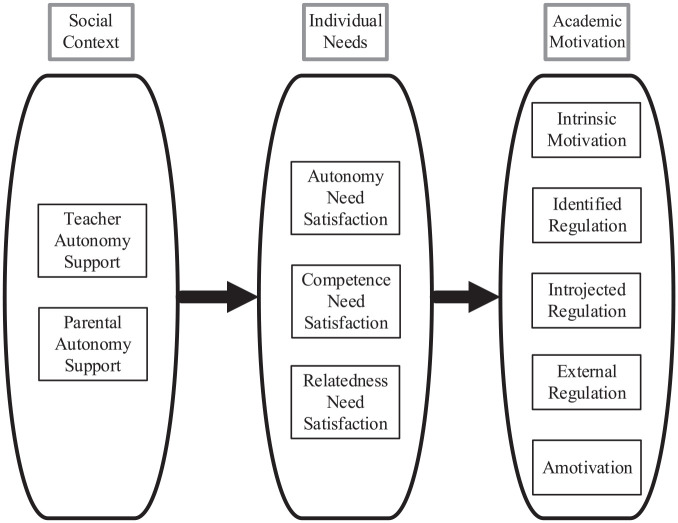
Students’ self-determined motivation (acting out of interest, curiosity, and abiding values) is associated with higher academic well-being, persistence, and achievement. Self-determination theory posits that self-determined motivation is dependent on the satisfaction of three psychological needs (relatedness, competence, and autonomy), which are in turn facilitated through need-supportive behaviors from notable others. In this meta-analysis, conducted over 144 studies and more than 79,000 students, we sought to overview pathways to student motivation in order to verify (1) how do psychological needs rank in the strength of their prediction of self-determined motivation and (2) which autonomy-support providers (parents or teachers) are the most relevant for psychological need satisfaction in students and self-determined motivation. Results show that teacher autonomy support predicts students’ need satisfaction and self-determined motivation more strongly than parental autonomy support. In addition, competence is the most positive predictor of self-determined motivation, followed by autonomy and then by relatedness.
Overview
CoChat Summary
TL;DR
This meta-analysis of 144 samples and 79,079 students tested self-determination theory pathways from teacher and parent autonomy support to psychological need satisfaction and student motivation. Teacher autonomy support was a stronger predictor than parental autonomy support, and competence was the strongest need predictor of self-determined motivation, followed by autonomy and relatedness.
Key findings
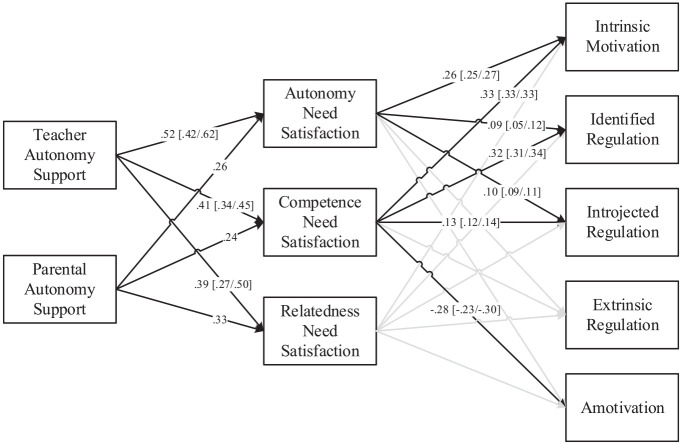
- Teacher autonomy support generally predicted need satisfaction and self-determined motivation more strongly than parental autonomy support. In the model including both sources, direct paths from parental autonomy support to motivation types were close to null; parental support showed only indirect prediction for identified and intrinsic motivation (βindirect = .13 and .16, respectively).
- Competence was the strongest positive predictor of self-determined motivation. Relative weight analysis showed competence accounted for 42.33% of unique variance in intrinsic motivation (R² = .38), 44.38% in identified regulation (R² = .30), and 46.90% in amotivation (R² = .15); autonomy followed, then relatedness. MASEM results similarly showed competence as the strongest predictor of amotivation (β = −.23 to −.30), identified regulation (β = .31 to .34), and intrinsic motivation (β = .33).
- Teacher autonomy support predicted autonomy (β = .42 to .62), competence (β = .34 to .45), and relatedness (β = .27 to .50). It also predicted amotivation (β = −.12 to −.18), identified regulation (β = .18 to .19 direct; βindirect = .17 to .24), and intrinsic motivation (β = .07 to .13 direct; βindirect = .24 to .32).
- External regulation was not predicted by needs or autonomy support (R² = .004 in relative weight analysis; R² = .01 in MASEM), and introjected regulation showed only minor associations (R² = .06 to .07).
Methods
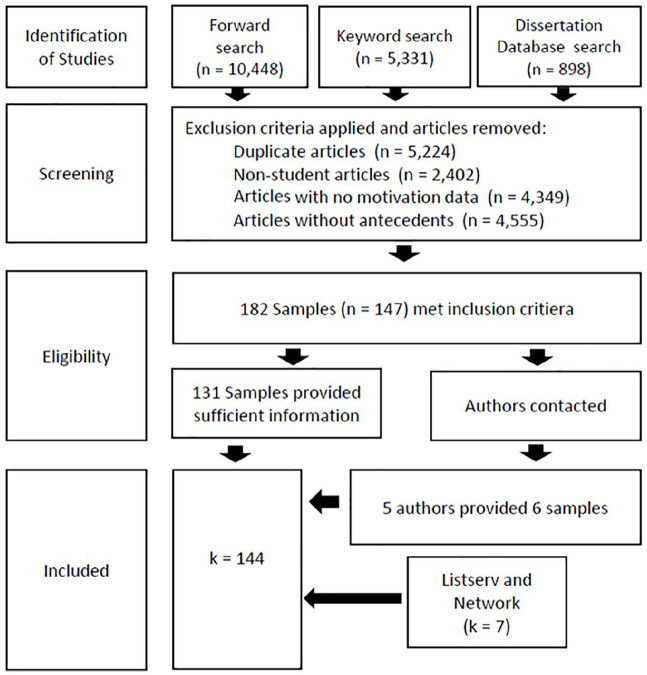
- Meta-analysis of 144 samples (98 published, 47 unpublished, as reported) with 79,079 participants, 1,718 correlation coefficients, mean age 16.55 years, and 45.46% male on average. Inclusion required students from primary school to university, at least one correlation between a motivation type and need satisfaction or autonomy support, and validated motivation scales.
- Literature search used forward citation searches, EBSCO/PsycINFO, ProQuest Dissertations and Theses Global, and mailing-list calls for unpublished data; gray literature was included. About 10% of data were double-coded (Cohen’s κ = .95).
- Analyses used random-effects models with robust variance estimation, reliability corrections, relative weight analysis, and weighted-covariance generalized least squares meta-analytic structural equation modeling with multiple imputation or pairwise deletion. Moderators included age, gender, educational context, scale used, and publication status/bias.
Limitations
- The paper states that the meta-analysis is based on correlations, limiting causal conclusions; future work should use longitudinal, experience-sampling, and quasi-experimental designs.
- The paper notes few studies on parental autonomy support and peer autonomy support, with peer autonomy support excluded from main analyses. Teacher/parent control, competence support, relatedness support, and need frustration variables were also too limited for inclusion.
- The paper reports possible publication bias, especially for teacher autonomy support: trim-and-fill and Egger’s test suggested missing studies for introjected, identified, and intrinsic motivation, with corrected estimates potentially closer to .09, .29, and .29 versus observed .17, .44, and .48. Evident from the text, many correlations showed high heterogeneity (I² often above 75%), and parental autonomy support analyses relied on small numbers of samples (e.g., k = 6 for amotivation, k = 12 for intrinsic motivation).
Model-written summary. Check it against the paper before relying on it.
Integrity signals
Registry
Cites
Statistics
Figures
Verification
Claims the paper makes
5 Valid · 1 Not valid · 23 Not checked · 86 Own results and interpretations
The cited sources support only part of this claim — read each source’s verdict below.
In the paper
“This finding also aligns with meta-analyses from other contexts which consistently find relatedness to be a positive antecedent of motivation types with smaller effect sizes compared with needs for autonomy and competence (Ng et al., 2012; Van den Broeck et al., 2016; Vasconcellos et al., 2020).”
§ Pathways to Student Motivation: A Meta-Analysis of Antecedents of Autonomous and Controlled Motivations > Discussion > The Role of Relatedness
What the sources say
- Not matchedcites Ng et al., 2012
This doesn’t read as a citation we can look up.
- Partly supportedcites Van den Broeck et al., 2016 matched to “A Review of Self-Determination Theory’s Basic Psychological Needs at Work” (2016) sourceExperimental — accuracy not yet measured
The meta-analysis reports positive associations between relatedness satisfaction and identified and intrinsic motivation (Relations Between Needs and Outcome Variables, p. 18). But the claim overstates their consistency across motivation types: external motivation is negatively associated with relatedness, and the comparison is not uniformly smaller than competence—for example, the reported intrinsic-motivation association is .39 for relatedness versus .35 for competence (p. 25). (LLM, conf=0.88)
- Not checked — no full text of the sourcecites Vasconcellos et al., 2020 matched to “Self-determination theory applied to physical education: A systematic review and meta-analysis.” (2020) source
plainstates an association- Asserted: passes — The authors put it forward as true.
- Checkable: passes — It can be checked against evidence.
- Load-bearing: unclear — It is unclear whether the paper’s conclusions depend on it.
- Based: passes — The paper gives a reason why it holds.
- Not matched
The cited sources that could be checked couldn’t confirm or dispute this claim.
In the paper
“the AMS shows eerily positive associations between external regulation and antecedents”
§ Pathways to Student Motivation: A Meta-Analysis of Antecedents of Autonomous and Controlled Motivations > Discussion > Moderating Influences
What the sources say
- Could not verifycites Howard et al., 2017 matched to “Testing a continuum structure of self-determined motivation: A meta-analysis.” (2017) sourceExperimental — accuracy not yet measured
The Results (section headed “Insert Table 2 here”; page unavailable) report an unexpectedly high correlation between identified and external regulation in AMS data, but identified regulation is not described as an antecedent. The Limitations section (page unavailable) says incorporating antecedent variables is a task for future research. A search for antecedents found no AMS-specific association between external regulation and antecedents. (LLM, conf=0.78)
plainstates an association- Asserted: passes — The authors put it forward as true.
- Checkable: passes — It can be checked against evidence.
- Load-bearing: unclear — It is unclear whether the paper’s conclusions depend on it.
- Based: passes — The paper gives a reason why it holds.
- Could not verify
The cited sources support only part of this claim — read each source’s verdict below.
In the paper
“This was also the case for need frustration variables (Vansteenkiste & Ryan, 2013).”
§ Pathways to Student Motivation: A Meta-Analysis of Antecedents of Autonomous and Controlled Motivations > Discussion > Limitations and Conclusion
What the sources say
- Partly supportedcites Vansteenkiste & Ryan, 2013 matched to “On psychological growth and vulnerability: Basic psychological need satisfaction and need frustration as a unifying principle.” (2013) sourceExperimental — accuracy not yet measured
The Ill-being section (page not supplied) says most studies assessed need satisfaction, while assessments of need frustration appeared in more recent research. This supports a comparatively smaller body of research on need frustration, but the paper does not say that this restricted the citing authors’ ability to include those variables in their analysis. (LLM, conf=0.83)
plainstates a cause- Asserted: passes — The authors put it forward as true.
- Checkable: passes — It can be checked against evidence.
- Load-bearing: passes — The paper’s conclusions depend on it.
- Based: passes — The paper gives a reason why it holds.
- Rests on an assumption not shown here.
- Partly supported
A result the paper reports from its own data — it cites no other source for it, so there is none to check. The quote shows it is in the paper.
In the paper
“First, it appeared that associations between autonomy support from parents and amotivation, identified regulation and intrinsic motivation diminished as students grew older.”
§ Pathways to Student Motivation: A Meta-Analysis of Antecedents of Autonomous and Controlled Motivations > Results
hedgedstates an association- Asserted: passes — The authors put it forward as true.
- Checkable: passes — It can be checked against evidence.
- Load-bearing: passes — The paper’s conclusions depend on it.
- Based: passes — The paper gives a reason why it holds.
A result the paper reports from its own data — it cites no other source for it, so there is none to check. The quote shows it is in the paper.
In the paper
“Regarding education context (i.e., classroom education vs. physical education), the correlations between amotivation and both autonomy and relatedness is substantially more negative in the classroom samples as compared to the physical education samples.”
§ Pathways to Student Motivation: A Meta-Analysis of Antecedents of Autonomous and Controlled Motivations > Results
plainstates an association- Asserted: passes — The authors put it forward as true.
- Checkable: passes — It can be checked against evidence.
- Load-bearing: unclear — It is unclear whether the paper’s conclusions depend on it.
- Based: passes — The paper gives a reason why it holds.
66 more claims
Create a free account to see all 115 claims and to verify the 4 references still open.
- Probably not a substantial claim. 12
- It may state two separate claims as one. 38
Claims other papers make about this one
Each is checked against this paper’s own text: does it say what the citing paper says it does?
The source backs part of the claim, not all of it — or backs it for a different population, condition or comparison.
In the citing paper
“Autonomy support and structure are both beneficial for students (Bureau et al., 2022;Hornstra et al., 2021;Howard et al., 2021;Mammadov & Schroeder, 2023) and teacher outcomes (Cheon et al., 2014;Ryan et al., 2022;Slemp et al., 2020).”
From Blending Teacher Autonomy Support and Provision of Structure in the Classroom for Optimal Motivation: A Systematic Review and Meta-Analysis (2025) · cites this paper as Bureau et al., 2022
Experimental — accuracy not yet measuredThe source backs part of the claim, not all of it — or backs it for a different population, condition or comparison.
In the citing paper
“Autonomy support and structure are both beneficial for students (Bureau et al., 2022;Hornstra et al., 2021;Howard et al., 2021;Mammadov & Schroeder, 2023) and teacher outcomes (Cheon et al., 2014;Ryan et al., 2022;Slemp et al., 2020).”
From Blending Teacher Autonomy Support and Provision of Structure in the Classroom for Optimal Motivation: A Systematic Review and Meta-Analysis (2025) · cites this paper as Bureau et al., 2022
Experimental — accuracy not yet measuredThe cited source says what the claim attributes to it.
In the citing paper
“Strong empirical evidence demonstrates the benefits of teachers' support of students' psychological needs for students' motivation (Bureau et al., 2022;Eakman et al., 2019;Filak & Sheldon, 2008;Vasconcellos et al., 2020), well-being (Ferguson et al., 2011;Stanley et al., 2021;Wang et al., 2021a, b), effort (Hardré & Sullivan, 2008;Hein et al., 2018), and engagement (Chen, 2005;Klem & Connell, 2004”
From Blending Teacher Autonomy Support and Provision of Structure in the Classroom for Optimal Motivation: A Systematic Review and Meta-Analysis (2025) · cites this paper as Bureau et al., 2022
Self-check
Percentages, sums and reported differences re-computed from the paper’s own numbers.
Each contradiction between two passages listed here was confirmed by an independent check.
Rated major: it would touch a result — a value a result rests on, reported and recomputed p-values on opposite sides of the significance level, two passages that conflict with no sign which is right, or a cited work retracted before this paper was published.
In the paper
§ Pathways to Student Motivation: A Meta-Analysis of Antecedents of Autonomous and Controlled Motivations > Results
“The need for relatedness was also found to demonstrate similar patterns (in the same ordering: ρ = −.38, −.02, .23, .53, and .58, respectively, k = 29, 45, 45, 44, 56)”
§ Pathways to Student Motivation: A Meta-Analysis of Antecedents of Autonomous and Controlled Motivations > Results
“| Amotivation | 29 | 13,885 | −.30 | −.38 | −.23 | .04 | .04 | 95.04 | | External | 45 | 20,175 | .01 | −.05 | .07 | .03 | .06 | 96.29 | | Introjected | 45 | 20,175 | .21 | .15 | .26 | .03 | .04 | 94.37 | | Identified | 44 | 20,338 | .44 | .39 | .49 | .02 | .02 | 91.73 | | Intrinsic | 56 | 27,209 | .44 | .39 | .48 | .02 | .03 | 93.15 |”
Rated minor: it would not touch a result — a value no result rests on, a p-value that stays on the same side of the significance level, or a conflict that is clerical, resolved elsewhere in the paper, or outside its own findings.
In the paper
§ Pathways to Student Motivation: A Meta-Analysis of Antecedents of Autonomous and Controlled Motivations > Results
“amotivation (β = −.12 to −.18; βindirect = −.10 to .14)”
§ Pathways to Student Motivation: A Meta-Analysis of Antecedents of Autonomous and Controlled Motivations > Results
“| 2 MI—No parent AS | Amotivation | .16 | −.18 (−.14) | — | .01 | −.23 | −.08 |”
Rated minor: it would not touch a result — a value no result rests on, a p-value that stays on the same side of the significance level, or a conflict that is clerical, resolved elsewhere in the paper, or outside its own findings.
In the paper
§ Pathways to Student Motivation: A Meta-Analysis of Antecedents of Autonomous and Controlled Motivations > Results
“Furthermore, correlations between autonomy and motivation types were all significantly different from each other as indicated by non-overlapping confidence intervals (Cumming & Finch, 2005).”
§ Pathways to Student Motivation: A Meta-Analysis of Antecedents of Autonomous and Controlled Motivations > Results
“| Identified | 42 | 18,395 | .48 | .41 | .56 | .04 | .04 | 94.50 | | Intrinsic | 52 | 23,759 | .57 | .50 | .63 | .03 | .04 | 94.88 |”
Rated minor: it would not touch a result — a value no result rests on, a p-value that stays on the same side of the significance level, or a conflict that is clerical, resolved elsewhere in the paper, or outside its own findings.
In the paper
§ Pathways to Student Motivation: A Meta-Analysis of Antecedents of Autonomous and Controlled Motivations > Results
“Confidence intervals of associations between competence and the various motivation types did not overlap, indicating significant differences throughout.”
§ Pathways to Student Motivation: A Meta-Analysis of Antecedents of Autonomous and Controlled Motivations > Results
“| Identified | 57 | 34,705 | .53 | .47 | .58 | .03 | .03 | 94.61 | | Intrinsic | 69 | 40,789 | .58 | .53 | .63 | .02 | .03 | 94.05 |”
Citations
Cites
Measuring inconsistency in meta-analyses
Higgins, J. P. T., Thompson, S. G., Deeks, J. J., & Altman, D. G. (2003) · BMJ · doi:10.1136/bmj.327.7414.557 · Cited by 63,139 · cited 3×
“An I2 score greater than 75% indicates a high likelihood of unaccounted moderating factors, whereas a score lower than 25% indicates a relatively low likelihood of meaningful moderating factors (Higgins et al., 2003).”
BackgroundInfluentialBias in meta-analysis detected by a simple, graphical test
Egger, M., Smith, G. D., Schneider, M., & Minder, C. (1997) · BMJ · doi:10.1136/bmj.315.7109.629 · Cited by 56,722 · cited 1×
“Egger’s test of the intercept was also applied (Egger et al., 1997).”
MethodRyan, R. M., & Deci, E. L. (2000) · American Psychologist · doi:10.1037//0003-066x.55.1.68 · Cited by 54,599 · cited 1×
“The specified needs are those of autonomy, competence, and relatedness (Ryan & Deci, 2000).”
BackgroundThe need to belong: Desire for interpersonal attachments as a fundamental human motivation.
Baumeister, R. F., & Leary, M. R. (1995) · Psychological Bulletin · doi:10.1037//0033-2909.117.3.497 · Cited by 23,245 · cited 1×
“Students experiencing relatedness feel connected with important others in their school (e.g., teachers, friends; Baumeister & Leary, 1995; Chen et al., 2015).”
BackgroundInterrater reliability: The kappa statistic
McHugh, M. L. (2012) · Biochemia Medica · doi:10.11613/bm.2012.031 · Cited by 19,877 · cited 1×
“Interrater agreement was very high (Cohen’s κ = .95; McHugh, 2012), and disagreements were discussed by the second and third authors.”
BackgroundBorenstein, M., Hedges, L. V., Higgins, J. P. T., & Rothstein, H. R. (2009) · doi:10.1002/9780470743386 · Cited by 14,225
mice: Multivariate Imputation by Chained Equations in R
Buuren, S. V., & Groothuis-Oudshoorn, K. (2011) · Journal of Statistical Software · doi:10.18637/jss.v045.i03 · Cited by 13,870
Hattie, J., & Timperley, H. (2007) · Review of Educational Research · doi:10.3102/003465430298487 · Cited by 12,905
(2008) · Cited by 6,939
Ryan, R. M., & Deci, E. L. (2020) · Contemporary Educational Psychology · doi:10.1016/j.cedpsych.2020.101860 · Cited by 6,037
-Handbook of Self-Determination Research by Edward L. Deci and Richard M. Ryan (Editors)
Paulson, D. S. (2002) · The Journal of mind and behavior · Cited by 5,171
Visible learning: a synthesis of over 800 meta‐analyses relating to achievement
Carter, M. (2009) · Educational Psychology · doi:10.1080/01443410903415150 · Cited by 4,581
Moral Identity and Developmental Theory
Lapsley, D. (2015) · Human Development · doi:10.1159/000435926 · Cited by 3,819
Perceived locus of causality and internalization: Examining reasons for acting in two domains.
Ryan, R. M., & Connell, J. P. (1989) · Journal of Personality and Social Psychology · doi:10.1037/0022-3514.57.5.749 · Cited by 3,311 · cited 1×
“Three validated scale “families” were identified: the Self-Regulation Questionnaire (SRQ, PLOC, ASRQ; Ryan & Connell, 1989), the Academic Motivation Scale (AMS; Vallerand et al., 1992), and the Behavioral Regulation Questionnaire (BREQ, BREQ-2, BREQ-2r, BRSQ; Mullan et al., 1997).”
MethodToward a hierarchical model of intrinsic and extrinsic motivation
Vallerand, R. J. (1997) · Advances in experimental social psychology · doi:10.1016/s0065-2601(08)60019-2 · Cited by 3,198 · cited 1×
“The degree to which students experience these types of motivation is expected to vary according to situational and environmental factors (Vallerand, 1997), making motivation a primary target for intervention.”
BackgroundHattie, J. (2008) · doi:10.4324/9780203887332 · Cited by 3,051
Pintrich, P. R. (2003) · Journal of Educational Psychology · doi:10.1037/0022-0663.95.4.667 · Cited by 3,047
A Nonparametric “Trim and Fill” Method of Accounting for Publication Bias in Meta-Analysis
Duval, S., & Tweedie, R. (2000) · Journal of the American Statistical Association · doi:10.1080/01621459.2000.10473905 · Cited by 2,955 · cited 2×
“Trim and Fill procedures were applied to examine the symmetry of observed effects and determine if studies were likely to be missing due to publication bias (Duval & Tweedie, 2000).”
BackgroundMethodThe Academic Motivation Scale: A Measure of Intrinsic, Extrinsic, and Amotivation in Education
Vallerand, R. J., Pelletier, L. G., Blais, M. R., Briere, N. M., Senecal, C., & Vallieres, E. F. (1992) · Educational and Psychological Measurement · doi:10.1177/0013164492052004025 · Cited by 2,870 · cited 4×
“The Academic Motivation Scale: A measure of intrinsic, extrinsic, and amotivation in education.”
BackgroundMethodInfluentialFacilitating Internalization: The Self‐Determination Theory Perspective
Deci, E. L., Eghrari, H., Patrick, B. C., & Leone, D. R. (1994) · Journal of Personality · doi:10.1111/j.1467-6494.1994.tb00797.x · Cited by 2,627 · cited 2×
“, because it is mandatory) to more self-determined (e.g., because they enjoy it; Deci et al., 1994; Ryan & Deci, 2017).”
BackgroundBasic psychological need satisfaction, need frustration, and need strength across four cultures
Chen, B., Vansteenkiste, M., Beyers, W., Boone, L., Deci, E. L., Van der Kaap-Deeder, J., Duriez, B., Lens, W., Matos, L., Mouratidis, A., et al. (2015) · Motivation and Emotion · doi:10.1007/s11031-014-9450-1 · Cited by 2,507 · cited 3×
“Students experiencing relatedness feel connected with important others in their school (e.g., teachers, friends; Baumeister & Leary, 1995; Chen et al., 2015).”
BackgroundVansteenkiste, M., & Ryan, R. M. (2013) · Journal of Psychotherapy Integration · doi:10.1037/a0032359 · Cited by 2,170 · cited 1×
“This was also the case for need frustration variables (Vansteenkiste & Ryan, 2013).”
BackgroundRobust variance estimation in meta‐regression with dependent effect size estimates
Hedges, L. V., Tipton, E., & Johnson, M. C. (2010) · Research Synthesis Methods · doi:10.1002/jrsm.5 · Cited by 2,086 · cited 1×
“Non-independent data were adjusted through robust variance estimator (Hedges et al., 2010).”
MethodSelf-Determination Theory Applied to Health Contexts: A Meta-Analysis
Ng, J. Y. Y., Ntoumanis, N., Thøgersen-Ntoumani, C., Deci, E. L., Ryan, R. M., Duda, J. L., & Williams, G. C. (2012) · Perspectives on Psychological Science · doi:10.1177/1745691612447309 · Cited by 1,959
Basic psychological need theory: Advancements, critical themes, and future directions
Vansteenkiste, M., Ryan, R. M., & Soenens, B. (2020) · Motivation and Emotion · doi:10.1007/s11031-019-09818-1 · Cited by 1,891 · cited 17×
“SDT asserts the importance of supportive interpersonal relationship (e.g., with teachers and parents) for fostering students’ need satisfaction (Chirkov & Ryan, 2001; Ryan & Deci, 2020).”
BackgroundInfluentialWhat teachers say and do to support students' autonomy during a learning activity.
Reeve, J., & Jang, H. (2006) · Journal of Educational Psychology · doi:10.1037/0022-0663.98.1.209 · Cited by 1,583 · cited 1×
“Autonomy-supportive behaviors promote students’ volitional functioning (Carpentier & Mageau, 2019; Reeve & Jang, 2006): these are empathy, providing information, and supporting active participation.”
BackgroundGuay, F., Vallerand, R. J., & Blanchard, C. (2000) · Motivation and Emotion · doi:10.1023/a:1005614228250 · Cited by 1,579 · cited 1×
“In addition, two other relevant validated scales were found: the Situational Motivation Scale (SIMS; Guay et al., 2000) and the Exercise Motivation Scale (EMS; Li, 1999).”
BackgroundSelf-citationA Review of Self-Determination Theory’s Basic Psychological Needs at Work
Van den Broeck, A., Ferris, D. L., Chang, C.-H., & Rosen, C. C. (2016) · Journal of Management · doi:10.1177/0149206316632058 · Cited by 1,465 · cited 3×
“This finding also aligns with meta-analyses from other contexts which consistently find relatedness to be a positive antecedent of motivation types with smaller effect sizes compared with needs for autonomy and competence (Ng et al., 2012; Van den Broeck et al., 2016; Vasconcellos et al., 2020).”
BackgroundResultInference by Eye: Confidence Intervals and How to Read Pictures of Data.
Cumming, G., & Finch, S. (2005) · American Psychologist · doi:10.1037/0003-066x.60.2.170 · Cited by 1,449 · cited 2×
“In these analyses, similar estimated effects and overlapping confidence interval would indicate that published and unpublished samples are similar (Cumming & Finch, 2005) and therefore do not present evidence for publication bias.”
BackgroundResultThe Power of Feedback Revisited: A Meta-Analysis of Educational Feedback Research
Wisniewski, B., Zierer, K., & Hattie, J. (2020) · Frontiers in Psychology · doi:10.3389/fpsyg.2019.03087 · Cited by 1,199 · cited 2×
“While this suggestion is speculative because Pathways to Student Motivation our findings do not focus on teacher feedback, it is well anchored in the field of motivation (Wisniewski et al., 2020).”
BackgroundStudent Motivation and Associated Outcomes: A Meta-Analysis From Self-Determination Theory
Howard, J. L., Bureau, J., Guay, F., Chong, J. X. Y., & Ryan, R. M. (2021) · Perspectives on Psychological Science · doi:10.1177/1745691620966789 · Cited by 1,001 · cited 8×
“A previous meta-analysis (Howard et al., 2021) has shown that intrinsic motivation, identified regulation, and amotivation were the motivation types with the strongest predictive power in their associations with student achievement, engagement, well-being, and self-evaluation outcomes.”
BackgroundResultInfluentialSelf-citationA Meta-analysis of the Effectiveness of Intervention Programs Designed to Support Autonomy
Su, Y.-L., & Reeve, J. (2011) · Educational Psychology Review · doi:10.1007/s10648-010-9142-7 · Cited by 924 · cited 1×
“…of age, school level, nationality, or gender, autonomy support predicts autonomous types of motivation, thereby providing support for existing interventions designed to increase student need satisfaction and motivation through autonomy-supportive practices (Su & Reeve, 2011; Vasquez et al., 2016).”
BackgroundHunter, J. E., & Schmidt, F. L. (2000) · International Journal of Selection and Assessment · doi:10.1111/1468-2389.00156 · Cited by 833 · cited 1×
“Meta-analytic calculations were conducted using the “robumeta” package within the R software (Fisher & Tipton, 2015), and random-effects models were applied throughout (Hunter & Schmidt, 2000).”
MethodSelf-determination theory applied to physical education: A systematic review and meta-analysis.
Vasconcellos, D., Parker, P. D., Hilland, T., Cinelli, R., Owen, K. B., Kapsal, N., Lee, J., Antczak, D., Ntoumanis, N., Ryan, R. M., et al. (2020) · Journal of Educational Psychology · doi:10.1037/edu0000420 · Cited by 811
Reeve, J., & Cheon, S. H. (2021) · Educational Psychologist · doi:10.1080/00461520.2020.1862657 · Cited by 766 · cited 3×
“…psychological needs, autonomy support from teachers has also been positively associated with self-determined types of motivation (intrinsic, identified) and negatively associated to motivation types closer to the nonself-determined pole (introjected, external, amotivation; Reeve & Cheon, 2021).”
BackgroundAutonomous, controlled, and amotivated types of academic motivation: A person-oriented analysis.
Ratelle, C. F., Guay, F., Vallerand, R. J., Larose, S., & Senécal, C. (2007) · Journal of Educational Psychology · doi:10.1037/0022-0663.99.4.734 · Cited by 754 · cited 1×
“Those context-differing results could also be due to a greater personal weight awarded to the need for autonomy as we age, a hypothesis that has been advanced in both the educational (Ratelle et al., 2007) and work contexts (Truxillo et al., 2012).”
BackgroundSelf-citationPelletier, L. G., Séguin-Lévesque, C., & Legault, L. (2002) · Journal of Educational Psychology · doi:10.1037/0022-0663.94.1.186 · Cited by 741
Chirkov, V. I., & Ryan, R. M. (2001) · Journal of Cross-Cultural Psychology · doi:10.1177/0022022101032005006 · Cited by 725 · cited 2×
“SDT asserts the importance of supportive interpersonal relationship (e.g., with teachers and parents) for fostering students’ need satisfaction (Chirkov & Ryan, 2001; Ryan & Deci, 2020).”
BackgroundNeed satisfaction and the self-regulation of learning
Deci, E. L., Ryan, R. M., & Williams, G. C. (1996) · Learning and Individual Differences · doi:10.1016/s1041-6080(96)90013-8 · Cited by 629 · cited 2×
“Previous research shows consistent support for need satisfaction at school being a paramount factor in predicting and understanding self-determined student motivation (Deci et al., 1996).”
BackgroundResultAelterman, N., Vansteenkiste, M., Haerens, L., Soenens, B., Fontaine, J. R. J., & Reeve, J. (2019) · Journal of Educational Psychology · doi:10.1037/edu0000293 · Cited by 614 · cited 1×
“In general, autonomy-supportive environments created by teachers and parents bring students to value and enjoy schoolwork, fostering self-determined school motivation types (Aelterman et al., 2019; Chirkov & Ryan, 2001).”
BackgroundMotivation Interventions in Education: A Meta-Analytic Review
Lazowski, R. A., & Hulleman, C. S. (2016) · Review of Educational Research · doi:10.3102/0034654315617832 · Cited by 607
Mullan, E., Markland, D., & Ingledew, D. K. (1997) · Personality and Individual Differences · doi:10.1016/s0191-8869(97)00107-4 · Cited by 553 · cited 2×
“, 1992), and the Behavioral Regulation Questionnaire (BREQ, BREQ-2, BREQ-2r, BRSQ; Mullan et al., 1997).”
MethodPerceptions of Teachers’ Communicative Style and Students’ Intrinsic and Extrinsic Motivation
Noels, K. A., Clément, R., & Pelletier, L. G. (1999) · The Modern Language Journal · doi:10.1111/0026-7902.00003 · Cited by 547 · cited 1×
“However, controlling behaviors from parents and teachers have not been identified as reliable predictors of students’ external regulation (Noels et al., 1999).”
BackgroundRWA web: A free, comprehensive, web-based, and user-friendly tool for relative weight analyses
Tonidandel, S., & LeBreton, J. M. (2015) · Journal of Business and Psychology · doi:10.1007/s10869-014-9351-z · Cited by 520 · cited 1×
“Relative weight analysis (RWA) was conducted with the R software package (Tonidandel & LeBreton, 2015).”
MethodVasquez, A. C., Patall, E. A., Fong, C. J., Corrigan, A. S., & Pine, L. (2016) · Educational Psychology Review · doi:10.1007/s10648-015-9329-z · Cited by 506 · cited 3×
“A meta-analysis on parental autonomy support and its relations to educational and psychosocial outcomes in children (Vasquez et al., 2016) has associated it with positive educational outcomes such as students’ achievement, perceived competence, positive attitudes toward school, and self-regulation.”
BackgroundTesting a continuum structure of self-determined motivation: A meta-analysis.
Howard, J. L., Gagné, M., & Bureau, J. S. (2017) · Psychological Bulletin · doi:10.1037/bul0000125 · Cited by 447 · cited 1×
“In the same vein, the AMS shows eerily positive associations between external regulation and antecedents, an abnormal phenomenon already stressed in previous research (see Howard et al., 2017, Figure 5).”
BackgroundSelf-citationMeta‐Analysis: A Structural Equation Modeling Approach
Cheung, M. W. ‐. (2015) · Wiley eBooks · doi:10.1002/9781118957813 · Cited by 420
Gray, D. L., Hope, E. C., & Matthews, J. S. (2018) · Educational Psychologist · doi:10.1080/00461520.2017.1421466 · Cited by 418 · cited 1×
“It is also possible that the cultural context moderates the importance of relatedness, as results have shown belongingness to school being particularly important for students of color (Gray et al., 2018).”
Cheon, S. H., Reeve, J., & Vansteenkiste, M. (2020) · Teaching and Teacher Education · doi:10.1016/j.tate.2019.103004 · Cited by 406 · cited 2×
“, 2020), and achievement (Cheon et al., 2020), as well as motivation for out-of-school activities (Hagger & Chatzisarantis, 2016).”
BackgroundThe effectiveness and relative importance of choice in the classroom.
Patall, E. A., Cooper, H., & Wynn, S. R. (2010) · Journal of Educational Psychology · doi:10.1037/a0019545 · Cited by 361 · cited 2×
“…part of the tested model (Figure 2) has previously been tested and some causal links verified (Froiland, 2011; Guay et al., 2016; Hausmann et al., 2009; Patall et al., 2010), the current study cannot speak definitively on the issue of causality as our results may be attributed to other variables.”
ResultSense of Belonging and Persistence in White and African American First-Year Students
Hausmann, L. R. M., Ye, F., Schofield, J. W., & Woods, R. L. (2009) · Research in Higher Education · doi:10.1007/s11162-009-9137-8 · Cited by 360 · cited 2×
“…even though each part of the tested model (Figure 2) has previously been tested and some causal links verified (Froiland, 2011; Guay et al., 2016; Hausmann et al., 2009; Patall et al., 2010), the current study cannot speak definitively on the issue of causality as our results may be attributed…”
ResultHagger, M. S., & Chatzisarantis, N. L. D. (2016) · Review of Educational Research · doi:10.3102/0034654315585005 · Cited by 306 · cited 1×
“For example, autonomy-supportive teaching increases classroom engagement (Cheon et al., 2019), initiative (Reeve et al., 2020), and achievement (Cheon et al., 2020), as well as motivation for out-of-school activities (Hagger & Chatzisarantis, 2016).”
BackgroundPerformance-Based Assessment and Educational Equity
Darling-Hammond, L. (1994) · Harvard Educational Review · doi:10.17763/haer.64.1.j57n353226536276 · Cited by 298 · cited 1×
“Rather, reforms from bottom-up helping teachers adapt their practice (Darling-Hammond, 1994) would allow the necessary margin needed to integrate autonomy-supportive teaching practices.”
BackgroundTruxillo, D. M., Cadiz, D. M., Rineer, J. R., Zaniboni, S., & Fraccaroli, F. (2012) · Organizational Psychology Review · doi:10.1177/2041386612454043 · Cited by 283 · cited 1×
“Those context-differing results could also be due to a greater personal weight awarded to the need for autonomy as we age, a hypothesis that has been advanced in both the educational (Ratelle et al., 2007) and work contexts (Truxillo et al., 2012).”
Backgroundrobumeta: An R-package for robust variance estimation in meta-analysis
Fisher, Z., & Tipton, E. (2015) · arXiv · doi:10.48550/arxiv.1503.02220 · Cited by 280 · cited 1×
“Meta-analytic calculations were conducted using the “robumeta” package within the R software (Fisher & Tipton, 2015), and random-effects models were applied throughout (Hunter & Schmidt, 2000).”
MethodA Meta-Analytic Review of the Relations Between Motivation and Reading Achievement for K–12 Students
Toste, J. R., Didion, L., Peng, P., Filderman, M. J., & McClelland, A. M. (2020) · Review of Educational Research · doi:10.3102/0034654320919352 · Cited by 269 · cited 1×
“Recent meta-analyses have demonstrated that motivation types related differently to a wide range of outcomes across education and physical education fields of research (Howard et al., 2020; Howard et al., 2021; Toste et al., 2020; Vasconcellos et al., 2020).”
BackgroundCheon, S. H., Reeve, J., Lee, Y., Ntoumanis, N., Gillet, N., Kim, B. R., & Song, Y.-G. (2019) · Journal of Educational Psychology · doi:10.1037/edu0000306 · Cited by 268 · cited 2×
“For example, autonomy-supportive teaching increases classroom engagement (Cheon et al., 2019), initiative (Reeve et al.”
BackgroundMeta-analytic structural equation modeling with moderating effects on SEM parameters.
Jak, S., & Cheung, M. W. L. (2020) · Psychological Methods · doi:10.1037/met0000245 · Cited by 262
Validation of the Perceived Parental Autonomy Support Scale (P-PASS).
Mageau, G. A., Ranger, F., Joussemet, M., Koestner, R., Moreau, E., & Forest, J. (2015) · Canadian Journal of Behavioural Science / Revue canadienne des sciences du comportement · doi:10.1037/a0039325 · Cited by 257 · cited 2×
“4 participation provide meaningful self-relevant decision-making opportunities, cultivating intrinsic motivation (Mageau et al., 2015; Reeve & Cheon, 2021).”
BackgroundScherrer, V., & Preckel, F. (2019) · Review of Educational Research · doi:10.3102/0034654318819127 · Cited by 251 · cited 1×
“This finding might be particularly important considering the general decline in school motivation that occurs as students progress from one grade to the next (Scherrer & Preckel, 2019).”
BackgroundThe exercise motivation scale: Its multifaceted structure and construct validity
Li, F. (1999) · Journal of Applied Sport Psychology · doi:10.1080/10413209908402953 · Cited by 202 · cited 2×
“, 2000) and the Exercise Motivation Scale (EMS; Li, 1999).”
BackgroundFroiland, J. M. (2011) · Child & Youth Care Forum · doi:10.1007/s10566-010-9126-2 · Cited by 189 · cited 2×
“Specifically, even though each part of the tested model (Figure 2) has previously been tested and some causal links verified (Froiland, 2011; Guay et al., 2016; Hausmann et al., 2009; Patall et al., 2010), the current study cannot speak definitively on the issue of causality as our results may be…”
ResultCheung, M. W. L., & Chan, W. (2009) · Structural Equation Modeling: A Multidisciplinary Journal · doi:10.1080/10705510802561295 · Cited by 147 · cited 2×
“The W-COV GLS method was also preferred over other techniques (TSSEM, OSMASEM; Cheung & Chan, 2009; Jak & Cheung, 2020) because of its ability to fit a structural model when there are multiple missing correlations (73.3% missing correlations in the present case; Jak & Cheung, 2018; Lv & Maeda, 2020).”
MethodInfluentialWarburton, V. E., Wang, J. C. K., Bartholomew, K. J., Tuff, R. L., & Bishop, K. C. M. (2020) · Motivation and Emotion · doi:10.1007/s11031-019-09798-2 · Cited by 136 · cited 1×
“Recent results in the field of physical education indicate that they are distinct from need satisfaction and contribute to the prediction of the controlled forms of motivation (Warburton et al., 2020).”
BackgroundAn autonomy-supportive intervention to develop students’ resilience by boosting agentic engagement
Reeve, J., Cheon, S. H., & Yu, T. H. (2020) · International Journal of Behavioral Development · doi:10.1177/0165025420911103 · Cited by 136 · cited 2×
“For example, autonomy-supportive teaching increases classroom engagement (Cheon et al., 2019), initiative (Reeve et al., 2020), and achievement (Cheon et al., 2020), as well as motivation for out-of-school activities (Hagger & Chatzisarantis, 2016).”
BackgroundZhou, L.-H., Ntoumanis, N., & Thøgersen-Ntoumani, C. (2019) · Contemporary Educational Psychology · doi:10.1016/j.cedpsych.2019.05.001 · Cited by 132 · cited 1×
“Other autonomy-supportive sources such as peers or school administration have also been examined in past research (Hang et al., 2015; Zhou et al., 2019), showing that they generally have an incremental positive effect on motivation and adjustment, but they have received less scholarly attention.”
Backgroundrobumeta: Robust Variance Meta-Regression
Fisher, Z., Tipton, E., & Zhipeng, H. (2014) · CRAN: Contributed Packages · doi:10.32614/cran.package.robumeta · Cited by 105
Guay, F., Ratelle, C., Larose, S., Vallerand, R. J., & Vitaro, F. (2013) · Contemporary Educational Psychology · doi:10.1016/j.cedpsych.2013.07.005 · Cited by 92 · cited 1×
“With regard to parental autonomy support, it has been linked positively to autonomous motivation, but to more controlled forms of motivation as well (Guay et al., 2013; Vasquez et al., 2016).”
BackgroundSelf-citationHilts, A., Part, R., & Bernacki, M. L. (2018) · Science Education · doi:10.1002/sce.21449 · Cited by 91 · cited 2×
“Even though relatedness remains a positive factor in explaining types of self-determined motivation, it seems that feelings of belongingness and meaningful connections at school may not be as important for student motivation as it could be for other facets of the student experience (e.g., intention to leave the progra…”
BackgroundTesting Self-Determination Theory via Nigerian and Indian adolescents
Sheldon, K. M., Abad, N., & Omoile, J. (2009) · International Journal of Behavioral Development · doi:10.1177/0165025409340095 · Cited by 79 · cited 2×
“Although need support can be directed toward the satisfaction of either autonomy, competence, or relatedness needs, the bulk of research on need support has focused on autonomy support as it has been found to be important for fostering not only autonomy need satisfaction but also competence and relatedness (Sheldon et…”
BackgroundThe tripartite model of intrinsic motivation in education: A 30‐year retrospective and meta‐analysis
Howard, J. L., Chong, J. X. Y., & Bureau, J. S. (2020) · Journal of Personality · doi:10.1111/jopy.12570 · Cited by 64 · cited 1×
“Recent meta-analyses have demonstrated that motivation types related differently to a wide range of outcomes across education and physical education fields of research (Howard et al., 2020; Howard et al., 2021; Toste et al., 2020; Vasconcellos et al., 2020).”
BackgroundSelf-citationGuay, F., Valois, P., Falardeau, É., & Lessard, V. (2016) · Learning and Individual Differences · doi:10.1016/j.lindif.2015.11.014 · Cited by 50 · cited 2×
“Specifically, even though each part of the tested model (Figure 2) has previously been tested and some causal links verified (Froiland, 2011; Guay et al., 2016; Hausmann et al., 2009; Patall et al., 2010), the current study cannot speak definitively on the issue of causality as our results may be…”
ResultSelf-citationAccounting for Missing Correlation Coefficients in Fixed-Effects MASEM
Jak, S., & Cheung, M. W.-L. (2018) · Multivariate Behavioral Research · doi:10.1080/00273171.2017.1375886 · Cited by 49 · cited 1×
“…W-COV GLS method was also preferred over other techniques (TSSEM, OSMASEM; Cheung & Chan, 2009; Jak & Cheung, 2020) because of its ability to fit a structural model when there are multiple missing correlations (73.3% missing correlations in the present case; Jak & Cheung, 2018; Lv & Maeda, 2020).”
MethodInfluentialAn evaluation of the integrative model for learning and motivation in the college classroom
Levesque-Bristol, C., Richards, K. A. R., Zissimopoulos, A., Wang, C., & Yu, S. (2022) · Current Psychology · doi:10.1007/s12144-020-00671-x · Cited by 28 · cited 1×
“The current results thus concur with recent studies positioning the need for competence as the central and most important need for students (Levesque-Bristol et al., 2020).”
ResultThe role of mothers in supporting adaptation in school: A psychological needs perspective.
Ratelle, C. F., Duchesne, S., Litalien, D., & Plamondon, A. (2021) · Journal of Educational Psychology · doi:10.1037/edu0000455 · Cited by 23 · cited 2×
“Additionally, the limited body of research addressing teacher and parental control, as well as other need-supportive behaviors (competence support and relatedness support; Ratelle et al., 2021) restricted our ability to implement these variables in the current analysis, even though they fall within the theoretical sco…”
BackgroundGuay, F., Gilbert, W., Falardeau, É., Bradet, R., & Boulet, J. (2020) · Contemporary Educational Psychology · doi:10.1016/j.cedpsych.2020.101922 · Cited by 23 · cited 2×
“Thus, even if professional development programs have demonstrated their usefulness in shaping teacher autonomy-supportive practices (Guay et al., 2020), we argue that further improvements are needed to create the conditions in which teachers possess the effective tool to bring change to their classroom.”
BackgroundSelf-citationHang, B. T. T., Kaur, A., & Patil, A. (2015) · International Journal of Quality Assurance in Engineering and Technology Education · doi:10.4018/ijqaete.2015040101 · Cited by 12 · cited 1×
“Other autonomy-supportive sources such as peers or school administration have also been examined in past research (Hang et al., 2015; Zhou et al., 2019), showing that they generally have an incremental positive effect on motivation and adjustment, but they have received less scholarly attention.”
BackgroundEvaluation of the Efficacy of Meta-Analytic Structural Equation Modeling with Missing Correlations
Lv, J., & Maeda, Y. (2019) · Structural Equation Modeling A Multidisciplinary Journal · doi:10.1080/10705511.2019.1646651 · Cited by 10 · cited 12×
“Accounting for missing correlation coefficients in fixed-effects MASEM.”
MethodInfluentialThe Role of Autonomy Support in the Development of Passion
Carpentier, J., & Mageau, G. A. (2019) · Passion for Work · doi:10.1093/oso/9780190648626.003.0007 · Cited by 6 · cited 1×
“Autonomy-supportive behaviors promote students’ volitional functioning (Carpentier & Mageau, 2019; Reeve & Jang, 2006): these are empathy, providing information, and supporting active participation.”
Background
Research works printed but not linked: 1
- Vallerand R. J. Ratelle C. (2002). Intrinsic and extrinsic motivation: A hierarchical model. In Deci E. L. Ryan R. M. (Eds.), Handbook of self-determination research (pp. 37– 63). University of Rochester Press.
Cited by
Ahmadi, A., Noetel, M., Parker, P., Ryan, R. M., Ntoumanis, N., Reeve, J., Beauchamp, M., Dicke, T., Yeung, A., Ahmadi, M., et al. (2023) · Journal of Educational Psychology · doi:10.1037/edu0000783 · Cited by 476
Theories of Motivation in Education: an Integrative Framework
Urhahne, D., & Wijnia, L. (2023) · Educational Psychology Review · doi:10.1007/s10648-023-09767-9 · Cited by 292
Al‐Hoorie, A. H., Oga-Baldwin, W. L. Q., Hiver, P. V., & Vitta, J. P. (2022) · Language Teaching Research · doi:10.1177/13621688221102686 · Cited by 169
“Studies involving these instruments and constructs in general education consistently demonstrate the power of this theory to predict positive motivational outcomes across contexts and samples (Bureau et al., 2022).”
Howard, J. L., Slemp, G. R., & Wang, X. (2025) · Personality and Social Psychology Bulletin · doi:10.1177/01461672231225364 · Cited by 114
Self-citationSelf-Determination Theory and Workplace Outcomes: A Conceptual Review and Future Research Directions
McAnally, K., & Hagger, M. S. (2024) · Behavioral Sciences · doi:10.3390/bs14060428 · Cited by 296
“…theory has been widely applied to predict the forms of motivation adopted and behavioral, affective, psychological, and interpersonal outcomes in multiple behaviors, populations, and contexts, including educational, social, health, and, importantly, occupational and workplace contexts [23,24,44].”
Background
Metadata
- Authors
- Bureau, J. S., Howard, J. L., Chong, J. X. Y., & Guay, F.
- Affiliations
- Université Laval (CA)
- Monash University (AU)
- Curtin University (AU)
- Corresponding author
- Bureau, Julien S.
- Venue
- Review of Educational Research
- Published
- 2021-09-11
- Volume
- 92
- Issue
- 1
- Pages
- 46-72
- ISSN
- 0034-6543 (ISSN-L)
- 1935-1046
- PMC
- PMC8935530
- OpenAlex
- W3201580913
- Cited by
- 414
- References
- 80
- Citations by year
- 2026: 162 · 2025: 103 · 2024: 70 · 2023: 47 · 2022: 31 · 2021: 1
- FWCI
- 5.84
- Type
- journal article
- Language
- en
- Open access
- hybrid
- doi.org
- Licence
- Locations
- Review of Educational Research (publishedVersion, cc-by-nc)
- PubMed Central (publishedVersion, cc-by)
- PubMed (publishedVersion)
- Monash University Research Portal (Monash University) (submittedVersion, cc-by-nc)
- Funders
- Social Sciences and Humanities Research Council of Canada
- Fonds de Recherche du Québec-Société et Culture
- Topics
- Social Sciences › Psychology › Social Psychology › Motivation and Self-Concept in Sports
- Social Sciences › Psychology › Developmental and Educational Psychology › Education, Achievement, and Giftedness
- Social Sciences › Psychology › Developmental and Educational Psychology › Innovative Teaching and Learning Methods
- Keywords
- autonomous motivation, controlled motivation, self-determination theory, psychological need satisfaction, autonomy, competence, relatedness, teacher autonomy support, parental autonomy support, student motivation
About these checks
Registry, retraction, Cites and statistics results are computed, not judged, with one exception: a printed reference that no index lists is read once by a model before it counts as a citation error. Claims are extracted by a model and kept only when their quote appears verbatim in the text; each cited source is then checked, with a model’s help, for whether it says what the claim relies on. Those verdicts can be wrong — read the claim’s quote and the cited source before relying on one.
The claim verdicts this report counts are experimental: their accuracy is not yet measured.
A language model drew the claims from the paper on 2026-10-07, under version 3 of the claim definition (model deepseek-v4.1-flash, prompt extract-v3).
A second model labelled each claim on 2026-10-07 (model jev-1.13-20260917, definition revision gold-guideline-v0.2).
Cited sources are checked with a language model’s help (gpt-6-sol).
Statistics and arithmetic are recomputed, not judged.
Confidence bands are shown only for fields calibrated on our annotated test set. None is calibrated yet, so no band is shown.
What counts as a claim ›How we measure confidence ›How we check this ›
Are you an author, or do you see a problem with this page? Request a review
Data sources
Bibliographic data: Semantic Scholar, OpenAlex, Crossref.
Contains information from the Semantic Scholar Academic Graph Datasets, made available under the ODC Attribution License (ODC-BY 1.0).
Semantic Scholar’s data is described in: Kinney, R., et al. (2023). The Semantic Scholar Open Data Platform. arXiv:2301.10140.
