

Pathways to Student Motivation: A Meta-Analysis of Antecedents of Autonomous and Controlled Motivations
Open accessThe DOI matches its Crossref record; 79 of the 80 references it cites were found in a registry or an index; 6 of the 38 sources its claims cite were checked for support.
Abstract
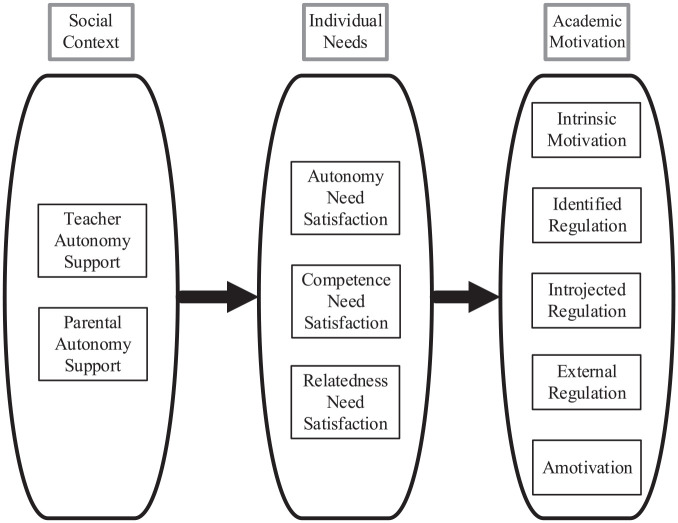
Students’ self-determined motivation (acting out of interest, curiosity, and abiding values) is associated with higher academic well-being, persistence, and achievement. Self-determination theory posits that self-determined motivation is dependent on the satisfaction of three psychological needs (relatedness, competence, and autonomy), which are in turn facilitated through need-supportive behaviors from notable others. In this meta-analysis, conducted over 144 studies and more than 79,000 students, we sought to overview pathways to student motivation in order to verify (1) how do psychological needs rank in the strength of their prediction of self-determined motivation and (2) which autonomy-support providers (parents or teachers) are the most relevant for psychological need satisfaction in students and self-determined motivation. Results show that teacher autonomy support predicts students’ need satisfaction and self-determined motivation more strongly than parental autonomy support. In addition, competence is the most positive predictor of self-determined motivation, followed by autonomy and then by relatedness.
Overview
CoChat Summary
TL;DR
This meta-analysis of 144 samples and 79,079 students tested self-determination theory pathways from teacher and parent autonomy support to psychological need satisfaction and student motivation. Teacher autonomy support was a stronger predictor than parental autonomy support, and competence was the strongest need predictor of self-determined motivation, followed by autonomy and relatedness.
Key findings
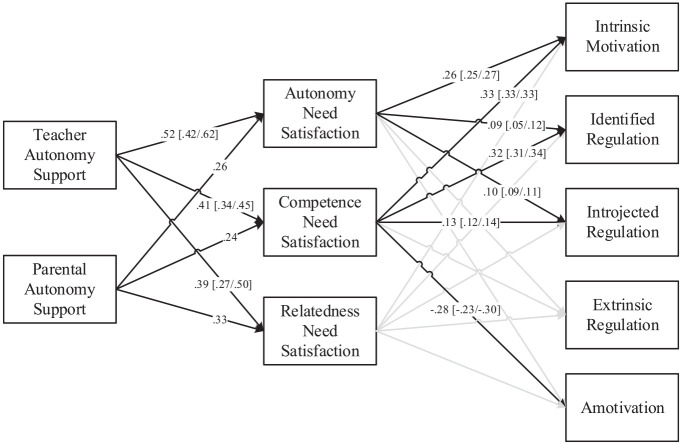
- Teacher autonomy support generally predicted need satisfaction and self-determined motivation more strongly than parental autonomy support. In the model including both sources, direct paths from parental autonomy support to motivation types were close to null; parental support showed only indirect prediction for identified and intrinsic motivation (βindirect = .13 and .16, respectively).
- Competence was the strongest positive predictor of self-determined motivation. Relative weight analysis showed competence accounted for 42.33% of unique variance in intrinsic motivation (R² = .38), 44.38% in identified regulation (R² = .30), and 46.90% in amotivation (R² = .15); autonomy followed, then relatedness. MASEM results similarly showed competence as the strongest predictor of amotivation (β = −.23 to −.30), identified regulation (β = .31 to .34), and intrinsic motivation (β = .33).
- Teacher autonomy support predicted autonomy (β = .42 to .62), competence (β = .34 to .45), and relatedness (β = .27 to .50). It also predicted amotivation (β = −.12 to −.18), identified regulation (β = .18 to .19 direct; βindirect = .17 to .24), and intrinsic motivation (β = .07 to .13 direct; βindirect = .24 to .32).
- External regulation was not predicted by needs or autonomy support (R² = .004 in relative weight analysis; R² = .01 in MASEM), and introjected regulation showed only minor associations (R² = .06 to .07).
Methods
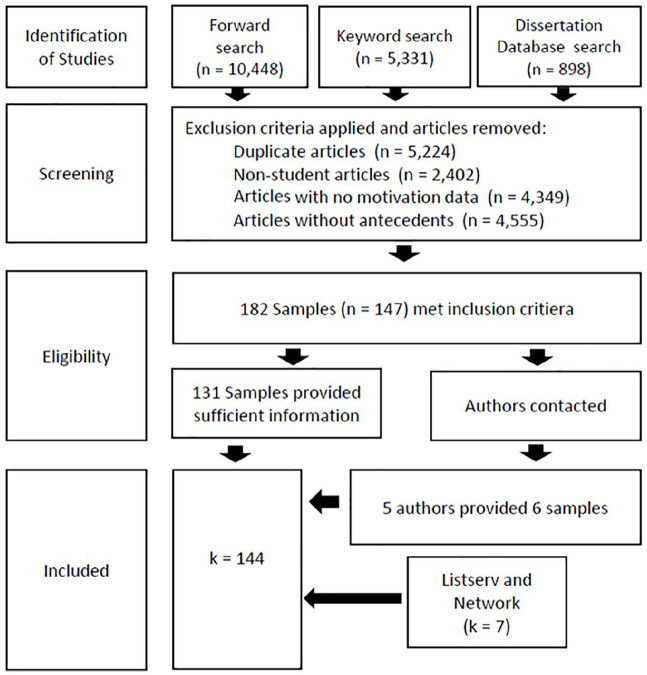
- Meta-analysis of 144 samples (98 published, 47 unpublished, as reported) with 79,079 participants, 1,718 correlation coefficients, mean age 16.55 years, and 45.46% male on average. Inclusion required students from primary school to university, at least one correlation between a motivation type and need satisfaction or autonomy support, and validated motivation scales.
- Literature search used forward citation searches, EBSCO/PsycINFO, ProQuest Dissertations and Theses Global, and mailing-list calls for unpublished data; gray literature was included. About 10% of data were double-coded (Cohen’s κ = .95).
- Analyses used random-effects models with robust variance estimation, reliability corrections, relative weight analysis, and weighted-covariance generalized least squares meta-analytic structural equation modeling with multiple imputation or pairwise deletion. Moderators included age, gender, educational context, scale used, and publication status/bias.
Limitations
- The paper states that the meta-analysis is based on correlations, limiting causal conclusions; future work should use longitudinal, experience-sampling, and quasi-experimental designs.
- The paper notes few studies on parental autonomy support and peer autonomy support, with peer autonomy support excluded from main analyses. Teacher/parent control, competence support, relatedness support, and need frustration variables were also too limited for inclusion.
- The paper reports possible publication bias, especially for teacher autonomy support: trim-and-fill and Egger’s test suggested missing studies for introjected, identified, and intrinsic motivation, with corrected estimates potentially closer to .09, .29, and .29 versus observed .17, .44, and .48. Evident from the text, many correlations showed high heterogeneity (I² often above 75%), and parental autonomy support analyses relied on small numbers of samples (e.g., k = 6 for amotivation, k = 12 for intrinsic motivation).
Model-written summary. Check it against the paper before relying on it.
Integrity signals
Registry
Cites
Statistics
Figures
Verification
Claims the paper makes
5 Valid · 1 Not valid · 23 Not checked · 86 Own results and interpretations
The cited sources support only part of this claim — read each source’s verdict below.
In the paper
“This finding also aligns with meta-analyses from other contexts which consistently find relatedness to be a positive antecedent of motivation types with smaller effect sizes compared with needs for autonomy and competence (Ng et al., 2012; Van den Broeck et al., 2016; Vasconcellos et al., 2020).”
§ Pathways to Student Motivation: A Meta-Analysis of Antecedents of Autonomous and Controlled Motivations > Discussion > The Role of Relatedness
What the sources say
- Not matchedcites Ng et al., 2012
This doesn’t read as a citation we can look up.
- Partly supportedcites Van den Broeck et al., 2016 matched to “A Review of Self-Determination Theory’s Basic Psychological Needs at Work” (2016) sourceExperimental — accuracy not yet measured
The meta-analysis reports positive associations between relatedness satisfaction and identified and intrinsic motivation (Relations Between Needs and Outcome Variables, p. 18). But the claim overstates their consistency across motivation types: external motivation is negatively associated with relatedness, and the comparison is not uniformly smaller than competence—for example, the reported intrinsic-motivation association is .39 for relatedness versus .35 for competence (p. 25). (LLM, conf=0.88)
- Not checked — no full text of the sourcecites Vasconcellos et al., 2020 matched to “Self-determination theory applied to physical education: A systematic review and meta-analysis.” (2020) source
plainstates an association- Asserted: passes — The authors put it forward as true.
- Checkable: passes — It can be checked against evidence.
- Load-bearing: unclear — It is unclear whether the paper’s conclusions depend on it.
- Based: passes — The paper gives a reason why it holds.
- Not matched
The cited sources that could be checked couldn’t confirm or dispute this claim.
In the paper
“the AMS shows eerily positive associations between external regulation and antecedents”
§ Pathways to Student Motivation: A Meta-Analysis of Antecedents of Autonomous and Controlled Motivations > Discussion > Moderating Influences
What the sources say
- Could not verifycites Howard et al., 2017 matched to “Testing a continuum structure of self-determined motivation: A meta-analysis.” (2017) sourceExperimental — accuracy not yet measured
The Results (section headed “Insert Table 2 here”; page unavailable) report an unexpectedly high correlation between identified and external regulation in AMS data, but identified regulation is not described as an antecedent. The Limitations section (page unavailable) says incorporating antecedent variables is a task for future research. A search for antecedents found no AMS-specific association between external regulation and antecedents. (LLM, conf=0.78)
plainstates an association- Asserted: passes — The authors put it forward as true.
- Checkable: passes — It can be checked against evidence.
- Load-bearing: unclear — It is unclear whether the paper’s conclusions depend on it.
- Based: passes — The paper gives a reason why it holds.
- Could not verify
The cited sources support only part of this claim — read each source’s verdict below.
In the paper
“This was also the case for need frustration variables (Vansteenkiste & Ryan, 2013).”
§ Pathways to Student Motivation: A Meta-Analysis of Antecedents of Autonomous and Controlled Motivations > Discussion > Limitations and Conclusion
What the sources say
- Partly supportedcites Vansteenkiste & Ryan, 2013 matched to “On psychological growth and vulnerability: Basic psychological need satisfaction and need frustration as a unifying principle.” (2013) sourceExperimental — accuracy not yet measured
The Ill-being section (page not supplied) says most studies assessed need satisfaction, while assessments of need frustration appeared in more recent research. This supports a comparatively smaller body of research on need frustration, but the paper does not say that this restricted the citing authors’ ability to include those variables in their analysis. (LLM, conf=0.83)
plainstates a cause- Asserted: passes — The authors put it forward as true.
- Checkable: passes — It can be checked against evidence.
- Load-bearing: passes — The paper’s conclusions depend on it.
- Based: passes — The paper gives a reason why it holds.
- Rests on an assumption not shown here.
- Partly supported
A result the paper reports from its own data — it cites no other source for it, so there is none to check. The quote shows it is in the paper.
In the paper
“First, it appeared that associations between autonomy support from parents and amotivation, identified regulation and intrinsic motivation diminished as students grew older.”
§ Pathways to Student Motivation: A Meta-Analysis of Antecedents of Autonomous and Controlled Motivations > Results
hedgedstates an association- Asserted: passes — The authors put it forward as true.
- Checkable: passes — It can be checked against evidence.
- Load-bearing: passes — The paper’s conclusions depend on it.
- Based: passes — The paper gives a reason why it holds.
A result the paper reports from its own data — it cites no other source for it, so there is none to check. The quote shows it is in the paper.
In the paper
“Regarding education context (i.e., classroom education vs. physical education), the correlations between amotivation and both autonomy and relatedness is substantially more negative in the classroom samples as compared to the physical education samples.”
§ Pathways to Student Motivation: A Meta-Analysis of Antecedents of Autonomous and Controlled Motivations > Results
plainstates an association- Asserted: passes — The authors put it forward as true.
- Checkable: passes — It can be checked against evidence.
- Load-bearing: unclear — It is unclear whether the paper’s conclusions depend on it.
- Based: passes — The paper gives a reason why it holds.
66 more claims
Create a free account to see all 115 claims and to verify the 4 references still open.
- Probably not a substantial claim. 12
- It may state two separate claims as one. 38
Claims other papers make about this one
Each is checked against this paper’s own text: does it say what the citing paper says it does?
The source backs part of the claim, not all of it — or backs it for a different population, condition or comparison.
In the citing paper
“Autonomy support and structure are both beneficial for students (Bureau et al., 2022;Hornstra et al., 2021;Howard et al., 2021;Mammadov & Schroeder, 2023) and teacher outcomes (Cheon et al., 2014;Ryan et al., 2022;Slemp et al., 2020).”
From Blending Teacher Autonomy Support and Provision of Structure in the Classroom for Optimal Motivation: A Systematic Review and Meta-Analysis (2025) · cites this paper as Bureau et al., 2022
Experimental — accuracy not yet measuredThe source backs part of the claim, not all of it — or backs it for a different population, condition or comparison.
In the citing paper
“Autonomy support and structure are both beneficial for students (Bureau et al., 2022;Hornstra et al., 2021;Howard et al., 2021;Mammadov & Schroeder, 2023) and teacher outcomes (Cheon et al., 2014;Ryan et al., 2022;Slemp et al., 2020).”
From Blending Teacher Autonomy Support and Provision of Structure in the Classroom for Optimal Motivation: A Systematic Review and Meta-Analysis (2025) · cites this paper as Bureau et al., 2022
Experimental — accuracy not yet measuredThe cited source says what the claim attributes to it.
In the citing paper
“Strong empirical evidence demonstrates the benefits of teachers' support of students' psychological needs for students' motivation (Bureau et al., 2022;Eakman et al., 2019;Filak & Sheldon, 2008;Vasconcellos et al., 2020), well-being (Ferguson et al., 2011;Stanley et al., 2021;Wang et al., 2021a, b), effort (Hardré & Sullivan, 2008;Hein et al., 2018), and engagement (Chen, 2005;Klem & Connell, 2004”
From Blending Teacher Autonomy Support and Provision of Structure in the Classroom for Optimal Motivation: A Systematic Review and Meta-Analysis (2025) · cites this paper as Bureau et al., 2022
Self-check
Percentages, sums and reported differences re-computed from the paper’s own numbers.
Each contradiction between two passages listed here was confirmed by an independent check.
Rated major: it would touch a result — a value a result rests on, reported and recomputed p-values on opposite sides of the significance level, two passages that conflict with no sign which is right, or a cited work retracted before this paper was published.
In the paper
§ Pathways to Student Motivation: A Meta-Analysis of Antecedents of Autonomous and Controlled Motivations > Results
“The need for relatedness was also found to demonstrate similar patterns (in the same ordering: ρ = −.38, −.02, .23, .53, and .58, respectively, k = 29, 45, 45, 44, 56)”
§ Pathways to Student Motivation: A Meta-Analysis of Antecedents of Autonomous and Controlled Motivations > Results
“| Amotivation | 29 | 13,885 | −.30 | −.38 | −.23 | .04 | .04 | 95.04 | | External | 45 | 20,175 | .01 | −.05 | .07 | .03 | .06 | 96.29 | | Introjected | 45 | 20,175 | .21 | .15 | .26 | .03 | .04 | 94.37 | | Identified | 44 | 20,338 | .44 | .39 | .49 | .02 | .02 | 91.73 | | Intrinsic | 56 | 27,209 | .44 | .39 | .48 | .02 | .03 | 93.15 |”
Rated minor: it would not touch a result — a value no result rests on, a p-value that stays on the same side of the significance level, or a conflict that is clerical, resolved elsewhere in the paper, or outside its own findings.
In the paper
§ Pathways to Student Motivation: A Meta-Analysis of Antecedents of Autonomous and Controlled Motivations > Results
“amotivation (β = −.12 to −.18; βindirect = −.10 to .14)”
§ Pathways to Student Motivation: A Meta-Analysis of Antecedents of Autonomous and Controlled Motivations > Results
“| 2 MI—No parent AS | Amotivation | .16 | −.18 (−.14) | — | .01 | −.23 | −.08 |”
Rated minor: it would not touch a result — a value no result rests on, a p-value that stays on the same side of the significance level, or a conflict that is clerical, resolved elsewhere in the paper, or outside its own findings.
In the paper
§ Pathways to Student Motivation: A Meta-Analysis of Antecedents of Autonomous and Controlled Motivations > Results
“Furthermore, correlations between autonomy and motivation types were all significantly different from each other as indicated by non-overlapping confidence intervals (Cumming & Finch, 2005).”
§ Pathways to Student Motivation: A Meta-Analysis of Antecedents of Autonomous and Controlled Motivations > Results
“| Identified | 42 | 18,395 | .48 | .41 | .56 | .04 | .04 | 94.50 | | Intrinsic | 52 | 23,759 | .57 | .50 | .63 | .03 | .04 | 94.88 |”
Rated minor: it would not touch a result — a value no result rests on, a p-value that stays on the same side of the significance level, or a conflict that is clerical, resolved elsewhere in the paper, or outside its own findings.
In the paper
§ Pathways to Student Motivation: A Meta-Analysis of Antecedents of Autonomous and Controlled Motivations > Results
“Confidence intervals of associations between competence and the various motivation types did not overlap, indicating significant differences throughout.”
§ Pathways to Student Motivation: A Meta-Analysis of Antecedents of Autonomous and Controlled Motivations > Results
“| Identified | 57 | 34,705 | .53 | .47 | .58 | .03 | .03 | 94.61 | | Intrinsic | 69 | 40,789 | .58 | .53 | .63 | .02 | .03 | 94.05 |”
Citations
Cites
Measuring inconsistency in meta-analyses
Higgins, J. P. T., Thompson, S. G., Deeks, J. J., & Altman, D. G. (2003) · BMJ · doi:10.1136/bmj.327.7414.557 · Cited by 63,139 · cited 3×
“An I2 score greater than 75% indicates a high likelihood of unaccounted moderating factors, whereas a score lower than 25% indicates a relatively low likelihood of meaningful moderating factors (Higgins et al., 2003).”
BackgroundInfluentialBias in meta-analysis detected by a simple, graphical test
Egger, M., Smith, G. D., Schneider, M., & Minder, C. (1997) · BMJ · doi:10.1136/bmj.315.7109.629 · Cited by 56,722 · cited 1×
“Egger’s test of the intercept was also applied (Egger et al., 1997).”
MethodRyan, R. M., & Deci, E. L. (2000) · American Psychologist · doi:10.1037//0003-066x.55.1.68 · Cited by 54,599 · cited 1×
“The specified needs are those of autonomy, competence, and relatedness (Ryan & Deci, 2000).”
BackgroundThe need to belong: Desire for interpersonal attachments as a fundamental human motivation.
Baumeister, R. F., & Leary, M. R. (1995) · Psychological Bulletin · doi:10.1037//0033-2909.117.3.497 · Cited by 23,245 · cited 1×
“Students experiencing relatedness feel connected with important others in their school (e.g., teachers, friends; Baumeister & Leary, 1995; Chen et al., 2015).”
BackgroundInterrater reliability: The kappa statistic
McHugh, M. L. (2012) · Biochemia Medica · doi:10.11613/bm.2012.031 · Cited by 19,877 · cited 1×
“Interrater agreement was very high (Cohen’s κ = .95; McHugh, 2012), and disagreements were discussed by the second and third authors.”
BackgroundBorenstein, M., Hedges, L. V., Higgins, J. P. T., & Rothstein, H. R. (2009) · doi:10.1002/9780470743386 · Cited by 14,225
mice: Multivariate Imputation by Chained Equations in R
Buuren, S. V., & Groothuis-Oudshoorn, K. (2011) · Journal of Statistical Software · doi:10.18637/jss.v045.i03 · Cited by 13,870
Hattie, J., & Timperley, H. (2007) · Review of Educational Research · doi:10.3102/003465430298487 · Cited by 12,905
(2008) · Cited by 6,939
Research works printed but not linked: 1
- Vallerand R. J. Ratelle C. (2002). Intrinsic and extrinsic motivation: A hierarchical model. In Deci E. L. Ryan R. M. (Eds.), Handbook of self-determination research (pp. 37– 63). University of Rochester Press.
Cited by
Items 101–200 of 397
Song, L., & Jo, S. J. (2023) · Frontiers in Psychology · doi:10.3389/fpsyg.2023.1228881 · Cited by 12
“This demonstrates that knowledge worker work motivation is not always characterized by high levels of autonomous motivation and low levels of controlled motivation (Bureau et al., 2022).”
BackgroundInfluentialGuay, F. (2022) · Educational Psychology Review · doi:10.1007/s10648-022-09711-3 · Cited by 12
Self-citationThe Interplay Between L2 Motivation and Proficiency in Predicting EFL Learners’ Pragmatic Engagement
Alsmari, N. A. (2023) · Journal of Language Teaching and Research · doi:10.17507/jltr.1406.22 · Cited by 5
“Ample research in general education has shown that autonomous and controlled motivations significantly contribute to academic success (Bureau et al., 2022; Mouratidis et al., 2021).”
BackgroundValidation of the German work-related basic need satisfaction scale (W-BNS-G)
Grünwald, K., den Broeck, A. V., Colledani, D., Lermer, E., Falvo, R., & Hudecek, M. F. C. (2024) · Current Psychology · doi:10.1007/s12144-024-06927-0 · Cited by 14
Essen, A. W. M., Smit, N., van de Pol, J., & Hornstra, L. (2025) · Social Psychology of Education · doi:10.1007/s11218-025-10045-5 · Cited by 7
“SDT posits that all people have three basic psychological needs: the need to experience volition in and a self-endorsement of activities they undertake (autonomy), to feel effective (competence), and to feel connected to those they care about (relatedness; Deci & Ryan, 1985).”
InfluentialWang, K., & Zhang, P. (2025) · Interactive Learning Environments · doi:10.1080/10494820.2025.2488991 · Cited by 9
“Specifically, student participation in the creation of curricula was reported to improve the intrinsic motivation of students, making learning more tailored to their individual aspirations (Bureau et al., 2022).”
Autonomy recruits neural support for interest and learning
Reeve, J., & Lee, W. (2025) · Motivation and Emotion · doi:10.1007/s11031-025-10119-z · Cited by 9
Peer Interactions During Computer‐Supported Collaborative Learning: A Self‐Determination Perspective
van Leeuwen, A., Hornstra, L., Janssen, J. J. H. M., & Leow, E. N. (2025) · Journal of Computer Assisted Learning · doi:10.1111/jcal.70044 · Cited by 7
Alharfi, A., & Alamer, A. (2025) · Studies in Second Language Learning and Teaching · doi:10.14746/ssllt.47709 · Cited by 16
Katebi, K., Ghaffarifar, S., Dehghani, G., & Pourabbas, A. (2024) · BMC Medical Education · doi:10.1186/s12909-024-05237-0 · Cited by 15
“Many interconnected factors, such as learner characteristics, curriculum quality, teacher attributes, educational environment, and learning tasks, influence learners’ interest and motivation [9].”
BackgroundChen, C., Doyle, J., Sonnert, G., & Sadler, P. M. (2024) · International Journal of Science Education · doi:10.1080/09500693.2024.2388880 · Cited by 12
“Yet, other scholars emphasise that, when the norms of the gender system are challenged, women will persist and prevail in traditionally male-dominated disciplines (Bureau et al., 2022; Risman, 2009).”
Chang, S.-H., Yao, K., Chen, Y., Chung, C.-Y., Huang, W.-L., & Ho, W. (2025) · Information · doi:10.3390/info16010050 · Cited by 12
So, J. C. H., Lo, N., Kwan, W. C. K., & Chan, K. C. (2025) · Educational communications and technology yearbook · doi:10.1007/978-981-96-2921-3_1 · Cited by 9
Denault, A., Litalien, D., Plamondon, A., Dupéré, V., Archambault, I., & Guay, F. (2022) · Journal of Applied Developmental Psychology · doi:10.1016/j.appdev.2022.101421 · Cited by 14
Self-citationSanjaya, I. N. S., Sitawati, A. A. R., Suciani, N. K., Putra, I. M. A., & Yudistira, C. G. P. (2022) · TEFLIN Journal - A publication on the teaching and learning of English · doi:10.15639/teflinjournal.v33i1/148-172 · Cited by 8
Flourishing as the central aim of education: Steps toward a consensus
Martela, F. (2024) · Theory and Research in Education · doi:10.1177/14778785241258857 · Cited by 18
“…trade-offs tend to be less pressing when we realize that autonomy-supportive and children’s need-affirming education also tends to yield better learning outcomes (Bureau et al., 2022; Howard et al., 2021), making student flourishing have ‘both intrinsic and instrumental value’ (Ryan et al., 2023).”
Jüttler, M., & Kärner, T. (2025) · Swiss Journal of Educational Research · doi:10.24452/sjer.47.1.6 · Cited by 6
“Für die Qualität der Hochschullehre wäre dieser Umstand in allen Belangen erstrebenswert (für einen Überblick über die positiven Effekte der intrinsischen Motivation auf den Lernprozess und -erfolg von Studierenden siehe u.a. Bureau et al., 2022; Gilbert et al., 2021; Howard et al., 2021).”
Students’ self-regulation of homework behavior: do autonomy support and effort matter?
Xu, J., Avcı, S., Özgenel, M., & Núñez, J. C. (2025) · Social Psychology of Education · doi:10.1007/s11218-025-10127-4 · Cited by 7
“Autonomy support is essential, as it plays a key role in promoting students’ intrinsic motivation, self-efficacy, engagement, effort, self-regulation, persistence, and academic performance (Bureau et al., 2022; Núñez & León, 2019; Ryan & Deci, 2020 ; Yang et al., 2025).”
Li, H., Yang, F., & Liu, J. (2026) · BMC Psychology · doi:10.1186/s40359-026-04204-2 · Cited by 13
“…applied in fields such as learning motivation, academic engagement, and educational technology use, with TM and emotional responses related to academic outcomes often regarded as important psychological components for understanding students’ behavioral choices in educational contexts [27–29].”
Sun, X. (2024) · Learning and Motivation · doi:10.1016/j.lmot.2024.102016 · Cited by 19
Salinas, E., Stancel‐Piątak, A., & Nicaise, I. (2022) · International Journal of Educational Research Open · doi:10.1016/j.ijedro.2022.100196 · Cited by 8
Soziale Eingebundenheit im individualisierten Unterricht: Eine Experience-Sampling Studie
Ohl, S., & Dumont, H. (2024) · Unterrichtswissenschaft · doi:10.1007/s42010-024-00204-6 · Cited by 7
“…des Bedürfnisses nach sozialer Eingebundenheit beitragen, wie ein wertschätzender und respektvoller Umgang der Lehrkraft mit den Schüler:innen und positive Interaktionen der Schüler:innen untereinander (Osterman 2000; Roorda et al. 2017; Allen et al. 2018; Ahmadi et al. 2022; Bureau et al. 2022).”
Liu, L., Li, F., Gu, X., & Jiao, R. (2024) · Psychology Research and Behavior Management · doi:10.2147/prbm.s472779 · Cited by 9
“41 In addition to global need satisfaction, leaders’ support only has unique positive effects on employees’ specific autonomy need satisfaction, 24 and colleagues’ support only has unique positive effects on employees’ specific relatedness need satisfaction.”
BackgroundPsychometrics of an Elo-based large-scale online learning system
Vermeiren, H., Kruis, J., Bolsinova, M. A., van der Maas, H. L. J., & Hofman, A. D. (2025) · Computers and Education Artificial Intelligence · doi:10.1016/j.caeai.2025.100376 · Cited by 10
Almathami, H. K. Y., Win, K. T., & Vlahu‐Gjorgievska, E. (2023) · Telemedicine Journal and e-Health · doi:10.1089/tmj.2022.0527 · Cited by 11
“85–87 Most participants reported that they could describe their health condition to the doctor with any communication mode within the application, which indicates that respondents have the required skills, abilities, and confidence to use it.”
Sezer, B., Riddell, H., Gucciardi, D. F., et al. (2023) · doi:10.31219/osf.io/v2g8a · Cited by 5
Abramson, L. L., & Schachter, E. P. (2024) · Education Sciences · doi:10.3390/educsci14111170 · Cited by 10
Guo, J., & Fu-hai, A. (2025) · Scientific Reports · doi:10.1038/s41598-025-95294-2 · Cited by 11
“This may stimulate students’ desire for self-directed exploration, prompting them to think deeply and naturally during the process of enjoying learning, and continuously pursue knowledge and deepen understanding 38 .”
Kärner, T. (2025) · Empirical research in vocational education and training · doi:10.1186/s40461-025-00183-7 · Cited by 6
Bureau, J. S., Gilbert, W., & Guay, F. (2025) · Learning and Individual Differences · doi:10.1016/j.lindif.2025.102839 · Cited by 4
Self-citationSun, J. L., Huang, X., Sun, X., Jiang, Q., Yang, C. K., Wei, W., Miao, W., & Gu, C. (2025) · Acta Psychologica · doi:10.1016/j.actpsy.2025.105130 · Cited by 19
Adam, M. S., Hamid, J. A., Khatibi, A., & Azam, S. M. F. (2025) · Discover Education · doi:10.1007/s44217-025-00612-5 · Cited by 11
“In warm classroom environments, students are more likely to feel satisfied with their needs for competence, autonomy and relatedness [34–36] and are motivated to learn [31, 37, 38].”
Zenger, L., Flunger, B., & van Gog, T. (2025) · Learning and Individual Differences · doi:10.1016/j.lindif.2025.102755 · Cited by 6
Germani, S., & Palombi, T. (2022) · Education and New Developments 2022 – Volume I · doi:10.36315/2022v1end096 · Cited by 13
“This can lead to various different educational outcomes, such as students’ autonomous self-regulation for learning, academic achievement and well-being at school (e.g.: Bureau et al., 2022; Reeve & Cheon, 2021; Ryan & Deci, 2020).”
BackgroundCloete, E., House, A., Velasquez, L. D., Calderon, M., Lopez, J., Rivera, R., Rivera, L., & Handley, L. (2022) · Journal of Community Psychology · doi:10.1002/jcop.22926 · Cited by 4
Yang, Y., Gong, S., Cao, Y., Qiu, Y., Xu, X., & Wang, Y. (2024) · Frontiers in Psychology · doi:10.3389/fpsyg.2024.1352337 · Cited by 6
“Furthermore, a meta-analysis study found that the teachers’ autonomous support positively predicted students’ need satisfaction (Bureau et al., 2022).”
BackgroundGuay, F., Racine, P., & Bradet, R. (2024) · Learning and Individual Differences · doi:10.1016/j.lindif.2024.102576 · Cited by 7
Self-citationValle, M. D., Valenzuela, J., Muñoz, C., Miranda-Ossandón, J., Vergaño-Salazar, J. G., & Precht, A. (2025) · Educación XX1 · doi:10.5944/educxx1.38203 · Cited by 14
Yoo, J., & Park, D. (2025) · Personality and Individual Differences · doi:10.1016/j.paid.2024.113035 · Cited by 8
Teaching to the test: Unraveling the consequences for student motivation
Muth, J., & Lüftenegger, M. (2025) · Learning and Individual Differences · doi:10.1016/j.lindif.2025.102707 · Cited by 10
Zhang, W., & Li, Y. (2023) · Oxford Review of Education · doi:10.1080/03054985.2023.2174092 · Cited by 8
Pelikan, E. R., Grützmacher, L., Hager, K., Holzer, J., Korlat, S., Mayerhofer, M., Schober, B., Spiel, C., & Lüftenegger, M. (2023) · Zeitschrift für Psychologie · doi:10.1027/2151-2604/a000531 · Cited by 12
Motivational Interviewing to Support the Goals of College Students
Blankenship, B. B. (2023) · Student Success · doi:10.5204/ssj.2931 · Cited by 21
“Measures of psychological needs are also more predictive of amotivation in young-adult students (Bureau et al., 2022), suggesting that if psychological needs are not satisfied, then the absence of motivation is predicted.”
BackgroundYan, J., Luo, N., He, M., Chen, Z., & Gao, R. (2024) · The Asia-Pacific Education Researcher · doi:10.1007/s40299-024-00910-w · Cited by 8
“While many studies have underscored the role of auton-omy-supportive teaching in improving student motivation (Bureau et al., 2022; Haerens et al., 2015; Reeve, 2006, 2016), our findings did not affirm the association between autonomy-supportive teaching and motivation.”
Burgueño, R., López-García, G. D., Extremera, A. B., & Granero‐Gallegos, A. (2024) · Studies In Educational Evaluation · doi:10.1016/j.stueduc.2024.101417 · Cited by 4
Teacher expectations: associations with need supportive teaching and students’ need satisfaction
Boer, I., Hornstra, L., van de Pol, J., & Bakx, A. W. E. A. (2025) · European Journal of Psychology of Education · doi:10.1007/s10212-025-00974-2 · Cited by 8
“…psychological needs to feel autonomous, competent, and related to others (i.e., need satisfaction), which, in turn, contributes to students’ motivation and engagement (Bureau et al., 2022; Howard et al., 2024), learning outcomes (Di Domenico & Ryan, 2017), but also well-being (Wang et al., 2021).”
Student voice in educational change: Approaches to enhancing motivation within the classroom
Strating, E., Vanlommel, K., & Vermeulen, M. (2025) · Review of Education · doi:10.1002/rev3.70082 · Cited by 11
Tarasov, S. V., Spasskaya, E. B., & Proekt, Y. L. (2025) · Высшее образование в России · doi:10.31992/0869-3617-2025-34-7-52-73 · Cited by 9
Why Do Children Want to Learn? The Role of Teaching Styles
Гордеева, Т. О., & Sychev, O. A. (2025) · Psychological Science and Education · doi:10.17759/pse.2025300501 · Cited by 3
Ti, Y., Yi, C., Chan, S., Wei, J., & Liu, Y. (2025) · Journal of Research on Adolescence · doi:10.1111/jora.70101 · Cited by 5
Maska, L. (2026) · Discover Psychology · doi:10.1007/s44202-026-00627-5 · Cited by 8
Liem, G. A. D. (2026) · Educational Psychology Review · doi:10.1007/s10648-026-10122-x · Cited by 4
“…indicates that autonomy-supportive environments—whether provided by parents, teachers, or peers—enhance students’ need satisfaction, autonomous motivation, and well-being, whereas controlling contexts undermine these outcomes across cultures (Bradshaw et al., 2025; Bureau et al., 2022).”
Participatory learning environments: student and teacher perspectives on classroom decision-making
Kärner, T., Jüttler, M., Bottling, M., & Weiß, J. K. (2026) · Learning Environments Research · doi:10.1007/s10984-026-09576-1 · Cited by 8
“The fulfillment of the basic need for autonomy, in turn, promotes the development of intrinsic motivation (Aelterman et al., 2019; Bureau et al., 2022; Deci & Vansteenkiste, 2004; Howard et al., 2024; Ryan & Deci, 2006; Vansteenkiste et al., 2008, 2023).”
Djekourmane, D., Zhang, W., Aziku, M., Wu, D., & Zhang, Y. Z. (2026) · Frontiers in Psychology · doi:10.3389/fpsyg.2026.1840049 · Cited by 3
“Consistent with SDT’s universalist premise (Ryan and Deci, 2000; Bureau et al., 2022), the finding that self-efficacy and autonomous motivation operate equivalently for male and female students across CHC contexts suggests that need-supportive learning environments, those that provide all students…”
Pathways to Need-Supportive Teaching: Teaching Mindsets and Motivation to Teach
Cilalı, B., Michou, A., & Daumiller, M. H. (2024) · The Asia-Pacific Education Researcher · doi:10.1007/s40299-024-00885-8 · Cited by 11
Testing self-supportive strategies to regulate autonomy and motivation
Flunger, B., Lilleholt, L., BOHM, R. M., Verdonschot, A., van Gog, T., & Zettler, I. (2024) · PLoS ONE · doi:10.1371/journal.pone.0311264 · Cited by 6
Kwala, A. F., Nat, M. C., & Oluwajana, D. I. (2024) · Journal of Computers in Education · doi:10.1007/s40692-024-00339-6 · Cited by 5
“The current findings, complementing the work of Ji et al. (2023) and Bureau et al. ( 2022 ), reinforce the notion that academically motivated students tend to avoid these distractions in favour of academic success.”
Moussaoui, O., Bouhout, N., & Mamnoun, S. (2025) · European Journal of Education · doi:10.1111/ejed.70093 · Cited by 4
Howard, J. L., & Slemp, G. R. (2025) · Motivation and Emotion · doi:10.1007/s11031-025-10132-2 · Cited by 10
Self-citationRamos, M., Herrera, R. D. S., Jáñez, Á., & Rosales, J. (2022) · Frontiers in Psychology · doi:10.3389/fpsyg.2022.980434 · Cited by 12
“In a recent meta-analysis (Bureau et al., 2021), this scale was considered to be one of themost reliable and valid scales for exploring the motivational continuum according to SDT.”
BackgroundMethodA qualitative examination into the school-related factors affecting teachers’ motivating styles
Liu, W. C., Kong, L. C., Wang, J., Kee, Y. H., Ng, B., Lam, K., & Reeve, J. (2025) · Asia Pacific Education Review · doi:10.1007/s12564-025-10047-0 · Cited by 6
“These positive motivation-related outcomes are often the result of adaptive motivational strategies used by teachers in the class-rooms (Bureau et al., 2022; Taylor & Ntoumanis, 2007).”
Intrinsic motivation and goals
Gottfried, A. E. (2022) · Elsevier eBooks · doi:10.1016/b978-0-323-91497-0.00022-9 · Cited by 10
Wartenberg, G., Aldrup, K., Grund, S., & Klusmann, U. (2026) · Review of Educational Research · doi:10.3102/00346543261455273 · Cited by 2
Jung, K. S. (2024) · The Asia-Pacific Education Researcher · doi:10.1007/s40299-024-00843-4 · Cited by 3
Matthes, J., Scherrer, V., & Preckel, F. (2025) · Child Development · doi:10.1111/cdev.14262 · Cited by 6
Lacoste, L. A., & Carreon, H. G. (2025) · Journal of Education Learning and Management · doi:10.69739/jelm.v2i2.864 · Cited by 6
Olsson, T., Thornberg, R., Forsberg, C., & Jungert, T. (2025) · Behavioral Sciences · doi:10.3390/bs15121656 · Cited by 2
Ghadban, E., Zouki, C.-J. E., Shuwiekh, H. A. M., Helmy, M. S., Naser, A. Y., Jebreen, K., Khatib, S. E., Malaeb, D. N., Obeïd, S., Fawaz, M. A., et al. (2025) · International Journal of Mental Health and Addiction · doi:10.1007/s11469-025-01577-0 · Cited by 4
“A recent scoping review shows that social media use can significantly frustrate basic needs such as autonomy and competence—core drivers of motivation in the Self-Determination Theory—thereby weakening students’ academic self-efficacy (Bureau et al., 2022; West et al., 2024).”
Teacher Influences On Student Engagement: Integrating the Classic, the Current, and the Cultural
Liem, G. A. D. (2025) · Emerald Group Publishing Limited eBooks · doi:10.1108/978-1-83708-556-920251018 · Cited by 3
Academic engagement and autonomous motivation: a study in South Ethiopia, secondary schools
Gebre, Z. A., Keery, Y. A., & Gemeda, T. T. (2025) · Cogent Education · doi:10.1080/2331186x.2025.2564256 · Cited by 7
The effects of note-taking methods on lasting learning: the role of motivation and cognitive load
Yıldırım, M. (2026) · Frontiers in Psychology · doi:10.3389/fpsyg.2025.1697151 · Cited by 7
“Taken together, these findings suggest that motivation not only affects the level of learning achieved but also the extent to which that learning is retained over time (Bureau et al., 2022; Duan et al., 2020; Endres and Eitel, 2024; Gruber et al., 2014; Howard et al., 2021).”
Li, C., Li, Y., Wu, C., Bailey, R. P., & Samsudin, N. (2026) · Frontiers in Sports and Active Living · doi:10.3389/fspor.2026.1748720 · Cited by 2
“It can be operationalized through low-risk demonstrations, stepwise error-correction, peer support, and tiered tasks, alongside progressive self-monitoring and reflection (40).”
LIU, W., & Zhao, S. (2026) · Frontiers in Psychology · doi:10.3389/fpsyg.2026.1851103 · Cited by 2
“SDT further suggests that the association between supportive contextual conditions and psychological functioning may operate not only directly but also through psychological need satisfaction and the quality of motivational regulation (Howard et al., 2021; Bureau et al., 2022).”
KSPU named after V.P. Astafyev (Krasnoyarsk, R., Shkerina, Т. А., Myshkovskaya, A. I., & KSPU named after V.P. Astafyev (Krasnoyarsk, R. (2022) · Вестник Красноярского государственного педагогического университета им. В.П. Астафьева · doi:10.25146/1995-0861-2022-61-3-348 · Cited by 3
Observing Parental Need Supporting Behaviors Toward Adolescents: Comparing Four Coding Strategies
Ratelle, C. F., Châteauvert, G. B., Bourret, M., & Duchesne, S. (2023) · Journal of Child and Family Studies · doi:10.1007/s10826-023-02726-6 · Cited by 2
“…connected youth experience positive development, as revealed by their deep learning, exploration, autonomous motivation, achievement, well-being, and adjustment (e.g., Bureau et al., 2021; Gillet et al., 2020; Ratelle et al. (2021); see Ratelle & Duchesne, 2014; Vansteenkiste et al., 2020).”
Mousavi, S. Z., Borhani, K., Gharibzadeh, S., & Bakouie, F. (2023) · Developmental Review · doi:10.1016/j.dr.2023.101116 · Cited by 3
Möltner, H., Pötter, N., Abel, S., Sülzenbrück, S., & Nevries, P. (2024) · Diagnostica · doi:10.1026/0012-1924/a000332 · Cited by 3
Development of the Basic Psychological Needs at School Scale
Гордеева, Т. О., & Sychev, O. A. (2024) · Experimental Psychology (Russia) · doi:10.17759/exppsy.2024170415 · Cited by 11
Liu, X., Yang, K., Hong, J., Xu, J., & Yang, D. (2025) · Social Psychology of Education · doi:10.1007/s11218-024-09983-3 · Cited by 6
“Teacher autonomy support drives students’ autonomous motivation (Bureau et al., 2022), necessitating a balance between teacher presence and student control (van Leeuwen & Janssen, 2019).”
Liem, G. A. D., Chan, M. C. Y., Senko, C., Lerdpornkulrat, T., & Poondej, C. (2025) · Motivation and Emotion · doi:10.1007/s11031-025-10144-y · Cited by 3
Testing the Effects of an Online Parenting Program Based on Self-Determination Theory
Duchesne, S., Ratelle, C. F., Larose, S., & Châteauvert, G. B. (2025) · Journal of Child and Family Studies · doi:10.1007/s10826-025-03170-4 · Cited by 3
“…confirmed the importance of psychological needs satisfac - tion in promoting optimal children’s school functioning, including autonomous motivation (Bureau et al., 2022; Gnambs & Hanfstingl, 2016; Howard et al., 2021; Kaplan, 2018), school adjustment (Charlot Colomès et al., 2021; Ratelle &…”
InfluentialThe Effect of Green HRM Practices on Green Competitive Advantage of the SME Sector of KSA
Mian, T. S. (2023) · Global Journal of Economic and Business · doi:10.31559/gjeb2023.13.3.6 · Cited by 2
Lessons in Readiness: Self-determination and student agency in careers, employability, and success
Employability, K. D. C. &., & Daubney, K. (2024) · doi:10.30688/janzssa.2024-1-04 · Cited by 3
“In Table 2, I have shown Ryan and Deci’s four levels and simplified definitions, with the highest level of self-determination at the top (adapted from Ryan and Deci, 2000; Bureau et al, 2021).”
BackgroundFinnish and Swedish riding school pupils' motivation towards participation in non-riding education
Nyberg, L., Linnavalli, T., Hartmann, E., & Kalland, M. (2023) · Frontiers in Sports and Active Living · doi:10.3389/fspor.2023.1232428 · Cited by 4
Tony, P. G. (2023) · Educational Research and Reviews · doi:10.5897/err2023.4372 · Cited by 1
Jarvis, A., & Mishra, P. K. (2023) · International Journal of Leadership in Education · doi:10.1080/13603124.2023.2295451 · Cited by 1
Cocreating innovative academia theory and practice to strengthen institutional positioning
Nayyar, V., & Mittal, A. (2024) · Information Discovery and Delivery · doi:10.1108/idd-07-2023-0080 · Cited by 2
Pereira, A. F. L., & Catalán, E. L. (2024) · Retos · doi:10.47197/retos.v59.104115 · Cited by 8
Puca, R. M., & Schüler, J. (2024) · Springer eBooks · doi:10.1007/978-3-662-68476-4_8 · Cited by 1
Peng, C., Zhou, D., Wu, J., Wang, X., & Jiang, G. (2024) · Environment Development and Sustainability · doi:10.1007/s10668-024-05664-5 · Cited by 2
“According to SDT, people are positive organisms, and this positivity motivates them to engage in activities that are of interest and beneficial to their personal development (Ahmadi et al., 2023; Bureau et al., 2022).”
The Impact of Transformational Leadership Dimensions on Teachers' Pedagogical Competence
Badar, M. (2025) · AL-TANZIM JURNAL MANAJEMEN PENDIDIKAN ISLAM · doi:10.33650/al-tanzim.v9i1.10696 · Cited by 1
“This study offers new insights related to the impact of inspirational motivation that is not in line with previous findings, where the majority of studies show a positive influence of this motivation (Beardsley et al., 2021; Bureau et al., 2022; Van den Broeck et al., 2021).”
Umemoto, T., & Inagaki, T. (2025) · International Journal of Educational Research · doi:10.1016/j.ijer.2025.102684 · Cited by 3
Factors’ learning motivation dynamics in training course: a study with students in Kazakhstan
Omarova, М. К., & Mirza, N. V. (2025) · Frontiers in Education · doi:10.3389/feduc.2025.1611184 · Cited by 2
Liu, M. (2025) · Entrepreneurship Education and Pedagogy · doi:10.1177/25151274251361369 · Cited by 2
“Together, these teaching approaches ful fi ll students ’ psychological needs and can thus invigorate their internal motivation and lead to higher success expectations (Al-Jubari et al., 2019; Bureau et al., 2022).”
Examining Motivation and Satisfaction among Students in Higher Education Contexts
Lubon, C. K., Pada, J., Pragados, F., & Barcelona, H. (2025) · Psychology and Education A Multidisciplinary Journal · doi:10.70838/pemj.430807 · Cited by 1
Homeroom Teachers and Their Role in Addressing Students' Needs
Raphaelli-Hirsch, R., Assor, A., Linchevski, I., Levit‐Binnun, N., & Mahfouz, J. (2025) · Psychology in the Schools · doi:10.1002/pits.70078 · Cited by 4
Providing choice enhances reading motivation
Bains, A., Spaulding, C., Ricketts, J., & Krishnan, S. (2025) · Quarterly Journal of Experimental Psychology · doi:10.1177/17470218251370916 · Cited by 10
“Previous studies have largely evaluated the effect of choice on reading by examining autonomy support (Bureau et al. 2022), or through examining motivation within a programme of activities, for example, CORI (Guthrie & Humenick, 2004; Guthrie, Wigfield, et al., 2004; Guthrie et al., 2007; Wigfield…”
Lyu, T., & Sun, Z. (2025) · International Conference on Distance Education and Learning (ICDEL) · doi:10.1109/icdel65868.2025.11193533 · Cited by 1
“Moreover, it is essential to acknowledge the relationship between motivation and the autonomy learners perceive in their use of technology[21] .”
Schenk, L., de Meijer, L. A. L., & Severiens, S. E. (2025) · Mentoring & Tutoring Partnership in Learning · doi:10.1080/13611267.2025.2575964 · Cited by 2
“Autonomous motivation generally leads to more positive outcomes compared to controlled motivation (Bureau et al., 2022; Jang et al., 2016).”
Metadata
- Authors
- Bureau, J. S., Howard, J. L., Chong, J. X. Y., & Guay, F.
- Affiliations
- Université Laval (CA)
- Monash University (AU)
- Curtin University (AU)
- Corresponding author
- Bureau, Julien S.
- Venue
- Review of Educational Research
- Published
- 2021-09-11
- Volume
- 92
- Issue
- 1
- Pages
- 46-72
- ISSN
- 0034-6543 (ISSN-L)
- 1935-1046
- PMC
- PMC8935530
- OpenAlex
- W3201580913
- Cited by
- 414
- References
- 80
- Citations by year
- 2026: 162 · 2025: 103 · 2024: 70 · 2023: 47 · 2022: 31 · 2021: 1
- FWCI
- 5.84
- Type
- journal article
- Language
- en
- Open access
- hybrid
- doi.org
- Licence
- Locations
- Review of Educational Research (publishedVersion, cc-by-nc)
- PubMed Central (publishedVersion, cc-by)
- PubMed (publishedVersion)
- Monash University Research Portal (Monash University) (submittedVersion, cc-by-nc)
- Funders
- Social Sciences and Humanities Research Council of Canada
- Fonds de Recherche du Québec-Société et Culture
- Topics
- Social Sciences › Psychology › Social Psychology › Motivation and Self-Concept in Sports
- Social Sciences › Psychology › Developmental and Educational Psychology › Education, Achievement, and Giftedness
- Social Sciences › Psychology › Developmental and Educational Psychology › Innovative Teaching and Learning Methods
- Keywords
- autonomous motivation, controlled motivation, self-determination theory, psychological need satisfaction, autonomy, competence, relatedness, teacher autonomy support, parental autonomy support, student motivation
About these checks
Registry, retraction, Cites and statistics results are computed, not judged, with one exception: a printed reference that no index lists is read once by a model before it counts as a citation error. Claims are extracted by a model and kept only when their quote appears verbatim in the text; each cited source is then checked, with a model’s help, for whether it says what the claim relies on. Those verdicts can be wrong — read the claim’s quote and the cited source before relying on one.
The claim verdicts this report counts are experimental: their accuracy is not yet measured.
A language model drew the claims from the paper on 2026-10-07, under version 3 of the claim definition (model deepseek-v4.1-flash, prompt extract-v3).
A second model labelled each claim on 2026-10-07 (model jev-1.13-20260917, definition revision gold-guideline-v0.2).
Cited sources are checked with a language model’s help (gpt-6-sol).
Statistics and arithmetic are recomputed, not judged.
Confidence bands are shown only for fields calibrated on our annotated test set. None is calibrated yet, so no band is shown.
What counts as a claim ›How we measure confidence ›How we check this ›
Are you an author, or do you see a problem with this page? Request a review
Data sources
Bibliographic data: Semantic Scholar, OpenAlex, Crossref.
Contains information from the Semantic Scholar Academic Graph Datasets, made available under the ODC Attribution License (ODC-BY 1.0).
Semantic Scholar’s data is described in: Kinney, R., et al. (2023). The Semantic Scholar Open Data Platform. arXiv:2301.10140.
