

The DOI matches its Crossref record; 89 of the 89 references it cites were found in a registry or an index.
On the role of corticotropin-releasing hormone receptors in anxiety and depression
Open accessAbstract
On the basis of extensive basic and clinical studies, corticotropin-releasing hormone (CRH) and its related family members are considered to play a pivotal role in stress-related disorders, such as anxiety and depression. CRH is regarded as the principal mediator in the brain of the stress response, as it mediates neuroendocrine, autonomic, and behavioral responses to stressful challenges. Recently, this neuropeptide family has expanded due to the discovery of two new members, urocortin II (also termed stresscopin-related peptide) and urocortin III (also termed stresscopin), which are selective agonists for the CRH receptor type 2. They show a discrete neuroanatomical localization and are involved in stress-coping responses, such as anxiolysis. Here, on the basis of recent developments, we suggest that CRH, the urocortins, and their receptors form a complex system in the brain, which is recruited during both the acute and the recovery phases of the stress response.
Overview
The claims and statistics of this paper haven’t been checked yet.
Run the check — free, no account needed. It reads the open-access text and checks the sources it cites.
Integrity signals
Registry
Cites
Statistics
Figures
Verification
Claims the paper makes
The claims and statistics of this paper haven’t been checked yet.
Run the check — free, no account needed. It reads the open-access text and checks the sources it cites.
Claims other papers make about this one
Each is checked against this paper’s own text: does it say what the citing paper says it does?
The cited source says what the claim attributes to it.
In the citing paper
“The neuropeptide corticotropin-releasing factor (CRF) mediates behavioral and endocrine responses to stress and acts on CRF type 1 (CRF1) and CRF type 2 (CRF2) receptors [168].”
From The Neurobiology of Love and Pair Bonding from Human and Animal Perspectives (2023) · cites this paper as [168]
Self-check
Percentages, sums and reported differences re-computed from the paper’s own numbers.
The self-check needs the paper’s full text.
Citations
Cites
Vale, W., Spiess, J., Rivier, C., & Rivier, J. (1981) · Science · doi:10.1126/science.6267699 · Cited by 3,965
Brain corticosteroid receptor balance in health and disease
de Kloet, E. R., Vreugdenhil, E., Oitzl, M. S., & Joëls, M. (1998) · Endocrine Reviews · doi:10.1210/edrv.19.3.0331 · Cited by 2,614 · cited 4×
“The cause for the aberrant—in most cases, hyperactive—HPA axis is presumably a hyperactive central CRH system (for review, see references 24, 30, and 69 to 71) and defunct brain and pituitary corticosteroid receptor systems.(66,72,73) Although it was more than a decade ago that a reduced CRH receptor density was found…”
BackgroundInfluentialTwo receptor systems for corticosterone in rat brain: Microdistribution and differential occupation
REUL, J. M. H. M., & KLOET, E. R. D. (1985) · Endocrinology · doi:10.1210/endo-117-6-2505 · Cited by 2,580 · cited 4×
“They can be distinguished in two types of glucocorticoid-binding receptors: the mineralocorticoid receptor (MR or type I) and the glucocorticoid receptor (GR or type II).(83) MRs are mainly localized in the hippocampus, whereas GRs have a widespread distribution in the CNS.”
BackgroundInfluentialThe Corticosteroid Receptor Hypothesis of Depression
Holsboer, F. (2000) · Neuropsychopharmacology · doi:10.1016/s0893-133x(00)00159-7 · Cited by 2,181
Hypothalamic integration: organization of the paraventricular and supraoptic nuclei
Swanson, L. W., & Sawchenko, P. E. (1983) · Annual Review of Neuroscience · doi:10.1146/annurev.ne.06.030183.001413 · Cited by 1,991
Swanson, L. W., Sawchenko, P. E., Rivier, J., & Vale, W. W. (2008) · Neuroendocrinology · doi:10.1159/000123454 · Cited by 1,953
Nemeroff, C. B., Widerlöv, E., Bissette, G., Walléus, H., Karlsson, I., Eklund, K., Kilts, C. D., Loosen, P. T., & Vale, W. (1984) · Science · doi:10.1126/science.6334362 · Cited by 1,485
Vaughan, J. M., Donaldson, C. J., Bittencourt, J. C., Perrin, M. H., Lewis, K., Sutton, S. W., Chan, R. K. W., Turnbull, A. V., Lovejoy, D. A., RIVIER, C. L., et al. (1995) · Nature · doi:10.1038/378287a0 · Cited by 1,479
Physiology and pharmacology of corticotropin-releasing factor.
Owens, M. J., & Nemeroff, C. B. (1991) · Pharmacological Reviews · doi:10.1016/s0031-6997(25)06673-6 · Cited by 1,147 · cited 1×
“CRH is highly implicated in the regulation of anxietyrelated behavior and is thought to play a pivotal role in anxiety and depressive disorders.(24,30,31) Several lines of evidence point to the participation of CRHR1 in the effects of CRH.”
BackgroundChalmers, D., Lovenberg, T. W., & Souza, E. D. (1995) · Journal of Neuroscience · doi:10.1523/jneurosci.15-10-06340.1995 · Cited by 925 · cited 3×
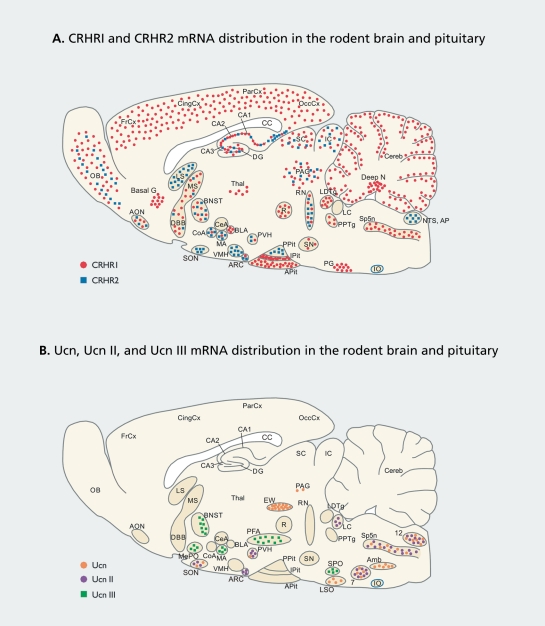
“The presented mRNA distribution is based on in situ hybridization studies.(12,14,16,20-23) The drawn sagittal sections are only 2D schematic representations and, therefore, cannot be neuroanatomically exact.”
BackgroundLewis, K., Li, C., Perrin, M. H., Blount, A., Kunitake, K., Donaldson, C., Vaughan, J., Reyes, T. M., Gulyas, J., Fischer, W., et al. (2001) · Proceedings of the National Academy of Sciences · doi:10.1073/pnas.121165198 · Cited by 925 · cited 8×
“In contrast to CRH and Ucn, neither Ucn II nor Ucn III bind to CRHBP.14 The murine Ucn II (mUcn II) gene encodes a 112–amino acid (aa) precursor containing a putative 38-aa mature peptide at the C terminus.16 Amino acid sequences in the coding region of mUcn II show 76%, 47%, 34%, and 42% homology with human urocortin…”
BackgroundInfluentialTimpl, P., Spanagel, R., Sillaber, I., Kresse, A., Reul, J. M. H. M., Stalla, G. K., Blanquet, V., Steckler, T., Holsboer, F., & Wurst, W. (1998) · Nature Genetics · doi:10.1038/520 · Cited by 919
Expression cloning of a human corticotropin-releasing-factor receptor.
Chen, R., Lewis, K. A., Perrin, M. H., & Vale, W. (1993) · Proceedings of the National Academy of Sciences · doi:10.1073/pnas.90.19.8967 · Cited by 919 · cited 2×
“CRHR1 binds both CRH and Ucn with high affinity, whereas CRHR2 shows a clear preference for Ucn (Table I).(10,11,14,15) The next question was whether a neuropeptide that selectively binds to CRHR2 exists in mammalian brain.”
BackgroundSmith, G. W., Aubry, J.-M., Dellu, F., Contarino, A., Bilezikjian, L. M., Gold, L. H., Chen, R., Marchuk, Y., Hauser, C., Bentley, C. A., et al. (1998) · Neuron · doi:10.1016/s0896-6273(00)80491-2 · Cited by 892 · cited 2×
“Second, CRHR1-deficient mice show decreased anxiety-related behavior.(32,33) Third, transgenic mice overexpressing CRH show increased anxiety-related behavior(34) (van Gaalen et al, unpublished data).”
BackgroundReyes, T. M., Lewis, K., Perrin, M. H., Kunitake, K. S., Vaughan, J., Arias, C. A., Hogenesch, J. B., Gulyas, J., Rivier, J., Vale, W. W., et al. (2001) · Proceedings of the National Academy of Sciences · doi:10.1073/pnas.051626398 · Cited by 887 · cited 9×
“The murine Ucn II (mUcn II) gene encodes a 112–amino acid (aa) precursor containing a putative 38-aa mature peptide at the C terminus.(16) Amino acid sequences in the coding region of mUcn II show 76%, 47%, 34%, and 42% homology with human urocortin-related peptide (URP [GenBank accession No.”
BackgroundInfluentialBale, T. L., Contarino, A., Smith, G. W., Chan, R. K. W., Gold, L. H., Sawchenko, P. E., Koob, G. F., Vale, W. W., & Lee, K. (2000) · Nature Genetics · doi:10.1038/74263 · Cited by 850 · cited 5×
“It is clear from these data that there is an array of changes in the HPA axis of CRHR2 mutant mice that may explain the different hormonal responses: (i) hypersensitivity of the corticotrophs to hypothalamic secretagogues; (ii) higher glucocorticoid levels cause ACTH levels to fall earlier due to higher negative feedb…”
BackgroundResultInfluentialLovenberg, T. W., Liaw, C. W., Grigoriadis, D. E., Clevenger, W., Chalmers, D. T., Souza, E. B. D., & Oltersdorf, T. (1995) · Proceedings of the National Academy of Sciences · doi:10.1073/pnas.92.3.836 · Cited by 846 · cited 1×
“CRHR1 binds both CRH and Ucn with high affinity, whereas CRHR2 shows a clear preference for Ucn (Table I).(10,11,14,15) The next question was whether a neuropeptide that selectively binds to CRHR2 exists in mammalian brain.”
BackgroundCrawley, J. N. (1999) · Brain Research · doi:10.1016/s0006-8993(98)01258-x · Cited by 772
Zobel, A. W., Nickel, T., Künzel, H. E., Ackl, N., Sonntag, A., Ising, M., & Holsboer, F. (2000) · Journal of Psychiatric Research · doi:10.1016/s0022-3956(00)00016-9 · Cited by 705
López, J. F., Chalmers, D. T., Little, K. Y., & Watson, S. J. (1998) · Biological Psychiatry · doi:10.1016/s0006-3223(97)00484-8 · Cited by 700 · cited 1×
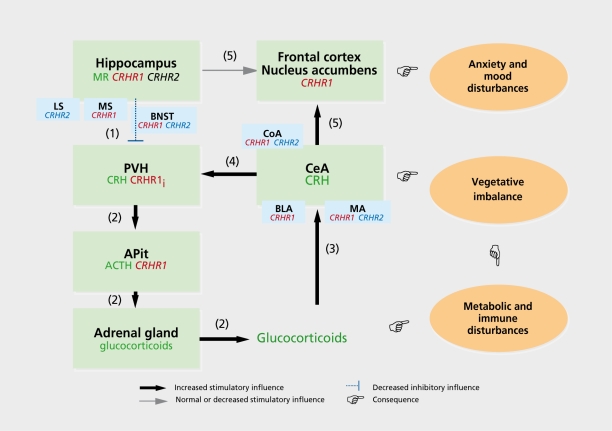
“In depressed patients and in a variety of animal models, a reduced expression of MR has indeed been found.(72,73,90) (2) Consequently, levels of CRH and coexpressed vasopressin will increase in these neurons (for a review, see references 65, 72, and 74) providing an enhanced drive on HPA activity, anterior pituitary (…”
BackgroundHolsboer, F. (1999) · Journal of Psychiatric Research · doi:10.1016/s0022-3956(98)90056-5 · Cited by 654 · cited 2×
“Patients suffering from major depression or pathological anxiety often show a dysregulated—mostly hyperactive—HPA axis which is associated with increased cerebrospinal fluid (CSF) levels of corticotropin-releasing hormone (CRH).(30,69,70) Apart from intrinsic HPA axis disturbances at the hypothalamic, pituitary, or ad…”
BackgroundHsu, S. Y., & Hsueh, A. J. W. (2001) · Nature Medicine · doi:10.1038/87936 · Cited by 651
Coste, S. C., Kesterson, R. A., Heldwein, K. A., Stevens, S. L., Heard, A. D., Hollis, J. H., Murray, S., Hill, J. K., Pantely, G. A., Hohimer, A. R., et al. (2000) · Nature Genetics · doi:10.1038/74255 · Cited by 588 · cited 6×
“It is clear from these data that there is an array of changes in the HPA axis of CRHR2 mutant mice that may explain the different hormonal responses: (i) hypersensitivity of the corticotrophs to hypothalamic secretagogues; (ii) higher glucocorticoid levels cause ACTH levels to fall earlier due to higher negative feedb…”
BackgroundResultInfluentialReduced Corticotropin Releasing Factor Binding Sites in the Frontal Cortex of Suicide Victims
Nemeroff, C. B. (1988) · Archives of General Psychiatry · doi:10.1001/archpsyc.1988.01800300075009 · Cited by 555
Unraveling the central nervous system pathways underlying responses to leptin
Elmquist, J. K., Maratos-Flier, E., Saper, C. B., & Flier, J. S. (1998) · Nature Neuroscience · doi:10.1038/2164 · Cited by 520
Potter, E., Sutton, S., Donaldson, C., Chen, R., Perrin, M., Lewis, K., Sawchenko, P. E., & Vale, W. (1994) · Proceedings of the National Academy of Sciences · doi:10.1073/pnas.91.19.8777 · Cited by 514
Bhatnagar, S., & Dallman, M. (1998) · Neuroscience · doi:10.1016/s0306-4522(97)00577-0 · Cited by 511 · cited 1×
“Apart from intrinsic HPA axis disturbances at the hypothalamic, pituitary, or adrenal level, the reason for the HPA hyperactivity may well derive from defunct processes in the hippocampus and central amygdaloid nucleus (CeA) known to provide direct and indirect efferent projections to the hypothalamic paraventricular…”
BackgroundDeletion of Crhr2 reveals an anxiolytic role for corticotropin-releasing hormone receptor-2
Kishimoto, T., Radulović, J., Radulović, M., Lin, C. R., Schrick, C., Hooshmand, F., Hermanson, O., Rosenfeld, M. G., & Spiess, J. (2000) · Nature Genetics · doi:10.1038/74271 · Cited by 502
Souza, E. B. D., Insel, T. R., Perrin, M. H., Rivier, J., Vale, W., & Kuhar, M. J. (1985) · Journal of Neuroscience · doi:10.1523/jneurosci.05-12-03189.1985 · Cited by 478 · cited 1×
“However, as pointed out by Bittencourt and Sawchenko,(21) a puzzling issue remains that neuronal activation (in terms of Fos expression) is found in nuclei known to be pertinent for eliciting the stress response (eg, the central nucleus of the amygdala, paraventricular nucleus, nucleus tractus solitarius (NTS), ventro…”
BackgroundStenzel‐Poore, M. P., Heinrichs, S. C., Rivest, S., Koob, G. F., & Vale, W. (1994) · Journal of Neuroscience · doi:10.1523/jneurosci.14-05-02579.1994 · Cited by 468
Sleep Research in Affective Illness: State of the Art Circa 1987
Reynolds, C. F., & Kupfer, D. J. (1987) · SLEEP · doi:10.1093/sleep/10.3.199 · Cited by 467
Lovenberg, T. W., Chalmers, D. T., Liu, C., & Souza, E. B. D. (1995) · Endocrinology · doi:10.1210/endo.136.9.7544278 · Cited by 457
Schulkin, J., W. Gold, P., & S. McEwen, B. (1998) · Psychoneuroendocrinology · doi:10.1016/s0306-4530(97)00099-1 · Cited by 423 · cited 1×
“hormones.(86) Thus, those depressed patients who hypersecrete glucocorticoids—at least in part due to defunct hippocampal inhibition of HPA activity (see above and Figure 4)— also have increased CRH synthesis in the central amygdaloid nucleus.”
BackgroundRadulovic, J., Rühmann, A., Liepold, T., & Spiess, J. (1999) · The Journal of Neuroscience · doi:10.1523/jneurosci.19-12-05016.1999 · Cited by 402 · cited 1×
“also observed 30 min after a 60-min immobilization trial, which was prevented by intraseptal, but not intradorsohippocampal, administration of antisauvagine-30 before the stress procedure.(55) Thus, acutely CRHR2-mediated signaling in the iLS results in anxiogenesis.”
BackgroundBittencourt, J. C., Vaughan, J. M., Arias, C., Rissman, R. A., Vale, W., & Sawchenko, P. E. (1999) · The Journal of Comparative Neurology · doi:10.1002/(sici)1096-9861(19991220)415:3 · Cited by 367
Zobel, A. W., Nickel, T., Sonntag, A., Uhr, M., Holsboer, F., & Ising, M. (2001) · Journal of Psychiatric Research · doi:10.1016/s0022-3956(01)00013-9 · Cited by 354 · cited 1×
“sion of the clinical symptomatology and a normalization of HPA regulation.(68) The cause for the aberrant—in most cases, hyperactive—HPA axis is presumably a hyperactive central CRH system (for review, see references 24, 30, and 69 to 71) and defunct brain and pituitary corticosteroid receptor systems.”
BackgroundHolsboer, F., von Bardeleben, U., Gerken, A., Stalla, G. K., & Müller, O. A. (1984) · New England Journal of Medicine · doi:10.1056/nejm198410253111718 · Cited by 348 · cited 1×
“This notion originates from cerebrospinal fluid (CSF) CRH measurements, CRH binding, and CRH challenge tests.(4,85) Comparison of a variety of studies on CSF CRH measurements revealed that this was not an equivocal finding in all studies, but seemed to depend on certain factors associated with depressive illness.”
Self-citationBittencourt, J. C., & Sawchenko, P. E. (2000) · Journal of Neuroscience · doi:10.1523/jneurosci.20-03-01142.2000 · Cited by 339
Corticotropin-releasing hormone receptor subtypes and emotion
Steckler, T., & Holsboer, F. (1999) · Biological Psychiatry · doi:10.1016/s0006-3223(99)00170-5 · Cited by 323 · cited 1×
“CRH is highly implicated in the regulation of anxietyrelated behavior and is thought to play a pivotal role in anxiety and depressive disorders.(24,30,31) Several lines of evidence point to the participation of CRHR1 in the effects of CRH.”
BackgroundEhlers, C. L., Reed, T. K., & Henriksen, S. J. (2008) · Neuroendocrinology · doi:10.1159/000124489 · Cited by 307
Holsboer, F., von Bardeleben, U., & Steiger, A. (2008) · Neuroendocrinology · doi:10.1159/000124986 · Cited by 255
Deak, T., Nguyen, K. T., Ehrlich, A. L., Watkins, L. R., Spencer, R. L., Maier, S. F., Licinio, J., Wong, M.-L., Chrousos, G. P., Webster, E., et al. (1999) · Endocrinology · doi:10.1210/endo.140.1.6415 · Cited by 242
Corticotropin-releasing factor CRF1, but not CRF2, receptors mediate anxiogenic-like behavior
Heinrichs, S. C., Lapsansky, J., Lovenberg, T. W., Souza, E. B. D., & Chalmers, D. T. (1997) · Regulatory Peptides · doi:10.1016/s0167-0115(97)01005-7 · Cited by 235
The brain mineralocorticoid receptor: greedy for ligand, mysterious in function
Reul, J. M. H. M., Gesing, A., Droste, S. K., Stec, I. S. M., Weber, A., Bachmann, C. G., Bilang‐Bleuel, A., Holsboer, F., & Linthorst, A. C. E. (2000) · European Journal of Pharmacology · doi:10.1016/s0014-2999(00)00677-4 · Cited by 230 · cited 10×
“Beside the CRH receptors, corticosteroid receptors are also key elements in the regulation of the HPA axis.(72,73) They can be distinguished in two types of glucocorticoid-binding receptors: the mineralocorticoid receptor (MR or type I) and the glucocorticoid receptor (GR or type II).”
BackgroundInfluentialHolsboer, F., von Bardeleben, U., Wiedemann, K., Müller, O. A., & Stalla, G. K. (1987) · Biological Psychiatry · doi:10.1016/0006-3223(87)90237-x · Cited by 221
Self-citationLiebsch, G., Landgraf, R., Gerstberger, R., Probst, J. C., Wotjak, C. T., Engelmann, M., Holsboer, F., & Montkowski, A. (1995) · Regulatory Peptides · doi:10.1016/0167-0115(95)00099-w · Cited by 220
Self-citationGratacòs, M., Nadal, M., Martín‐Santos, R., Pujana, M. Á., Gago, J., Peral, B., Armengol, L., Ponsa, I., Miró, R., Bulbena, A., et al. (2001) · Cell · doi:10.1016/s0092-8674(01)00447-0 · Cited by 216
Gesing, A., Bilang‐Bleuel, A., Droste, S. K., Linthorst, A. C. E., Holsboer, F., & Reul, J. M. H. M. (2001) · Journal of Neuroscience · doi:10.1523/jneurosci.21-13-04822.2001 · Cited by 211 · cited 2×
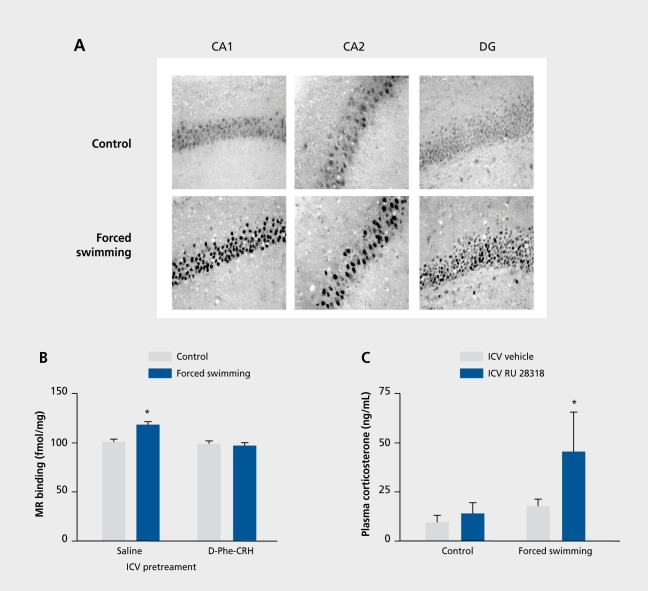
“Furthermore, we have postulated that, given the eminent role of the CRH-MR pathway in maintaining control of HPA axis activity poststress, in patients suffering from a stressrelated disorder, such as major depression, HPA hyperactivity may have developed due to desensitization of MR-inducibility by CRH or CRH-like neu…”
BackgroundCorticotropin-releasing hormone in depression and post-traumatic stress disorder
Kasckow, J. W., Baker, D. G., & Geracioti, T. D. (2001) · Peptides · doi:10.1016/s0196-9781(01)00399-0 · Cited by 203 · cited 1×
“Patients suffering from major depression or pathological anxiety often show a dysregulated—mostly hyperactive—HPA axis which is associated with increased cerebrospinal fluid (CSF) levels of corticotropin-releasing hormone (CRH).(30,69,70) Apart from intrinsic HPA axis disturbances at the hypothalamic, pituitary, or ad…”
BackgroundKeck, M. E., & Holsboer, F. (2001) · Peptides · doi:10.1016/s0196-9781(01)00398-9 · Cited by 198 · cited 1×
“Patients suffering from major depression or pathological anxiety often show a dysregulated—mostly hyperactive—HPA axis which is associated with increased cerebrospinal fluid (CSF) levels of corticotropin-releasing hormone (CRH).(30,69,70) Apart from intrinsic HPA axis disturbances at the hypothalamic, pituitary, or ad…”
BackgroundMakino, S., Schulkin, J. A., Smith, M. A., Pacák, K., Palkovits, M., & Gold, P. W. (1995) · Endocrinology · doi:10.1210/endo.136.10.7664672 · Cited by 193
Rivest, S., Laflamme, N., & Nappi, R. E. (1995) · Journal of Neuroscience · doi:10.1523/jneurosci.15-04-02680.1995 · Cited by 192
Liebsch, G., Landgraf, R., Engelmann, M., Lörscher, P., & Holsboer, F. (1999) · Journal of Psychiatric Research · doi:10.1016/s0022-3956(98)80047-2 · Cited by 190
Jan Born, A., Späth‐Schwalbe, E., SCHWAKENHOFER, H., Kern, W., & Fehm, H. L. (1989) · The Journal of Clinical Endocrinology & Metabolism · doi:10.1210/jcem-68-5-904 · Cited by 171
Linthorst, A. C. E., Flachskamm, C., Hopkins, S. J., Hoadley, M. E., Labeur, M. S., Holsboer, F., & Reul, J. M. H. M. (1997) · Journal of Neuroscience · doi:10.1523/jneurosci.17-11-04448.1997 · Cited by 162 · cited 1×
“Moreover, basic research studies have presented evidence that elevated central CRH levels are involved in the etiology of stress-related physiological and behavioral disorders.(6) In pharmacology, however, the discovery of two types of CRH-binding receptors (CRHR1 and CRHR2) and a nonreceptor CRH-binding protein (CRHB…”
BackgroundGilligan, P. J., Robertson, D. W., & Zaczek, R. C. (2000) · Journal of Medicinal Chemistry · doi:10.1021/jm990590f · Cited by 160
Glucocorticoids and depression
Steckler, T., Holsboer, F., & Reul, J. M. H. M. (1999) · Best Practice & Research Clinical Endocrinology & Metabolism · doi:10.1053/beem.1999.0046 · Cited by 160 · cited 1×
“Evidence has been accumulating that disturbances in the regulatory control of the HPA axis play a pivotal role in the etiology of major depression.(66,67) Moreover, studies on depressed patients have indicated that there appears to be a close correlation between a stable remisCRH receptor types 1 and 2 in anxiety and…”
BackgroundSelf-citationThe anxiolytic effect of the CRH1 receptor antagonist R121919 depends on innate emotionality in rats
Keck, M. E., Welt, T., Wigger, A., Renner, U., Engelmann, M., Holsboer, F., & Landgraf, R. (2001) · European Journal of Neuroscience · doi:10.1046/j.0953-816x.2000.01383.x · Cited by 154 · cited 1×
“However, it should be noted that, in many cases, the antagonists had no anxiolytic effect under nonstressed conditions in behavioral paradigms such as the light/dark box or elevated plus-maze, but did so after the animals had been preexposed to stress.(39,40,42) Thus, it seems that the antagonists need the release of…”
BackgroundBhatnagar, S., Viau, V., Chu, A., Soriano, L., Meijer, O. C., & Dallman, M. F. (2000) · Journal of Neuroscience · doi:10.1523/jneurosci.20-14-05564.2000 · Cited by 152 · cited 1×
“Such studies should also implement interactions of these neuropeptides with the classic neurotransmitters, which, for sake of clarity, were not depicted in the scheme, as were other, possibly participating, structures such as, for instance, the thalamic paraventricular nucleus which contains low-to-moderate CRHR1 leve…”
BackgroundOkuyama, S., Chaki, S., Kawashima, N., Suzuki, Y., Ogawa, S., Nakazato, A., Kumagai, T., Okubo, T., & Tomisawa, K. (1999) · Journal of Pharmacology and Experimental Therapeutics · doi:10.1016/s0022-3565(24)38220-5 · Cited by 152 · cited 1×
“However, it should be noted that, in many cases, the antagonists had no anxiolytic effect under nonstressed conditions in behavioral paradigms such as the light/dark box or elevated plus-maze, but did so after the animals had been preexposed to stress.(39,40,42) Thus, it seems that the antagonists need the release of…”
BackgroundLuo, X., Kiss, A., Makara, G. B., Lolait, S. J., & Aguilera, G. (1994) · Journal of Neuroendocrinology · doi:10.1111/j.1365-2826.1994.tb00636.x · Cited by 148
Androgen modulates N-methyl-D-aspartate-mediated depolarization in CA1 hippocampal pyramidal cells
Pouliot, W. A., Handa, R. J., & Beck, S. G. (1996) · Synapse · doi:10.1002/(sici)1098-2396(199605)23:1 · Cited by 128
Preil, J., Müller, M. B., Gesing, A., Reul, J. M. H. M., Sillaber, I., van Gaalen, M. M., Landgrebe, J., Holsboer, F., Stenzel‐Poore, M. P., & Wurst, W. (2001) · Endocrinology · doi:10.1210/endo.142.11.8507 · Cited by 126
Hiroi, N., Wong, M. L., Licinio, J., Park, C., Young, M., Gold, P. W., Chrousos, G. P., & Bornstein, S. R. (2001) · Molecular Psychiatry · doi:10.1038/sj.mp.4000908 · Cited by 124 · cited 1×
“In a recent study, investigators observed in pituitaries of suicide victims a shift in the ratio of CRHR1 (less)/CRHR2 (more) mRNA levels, but it was unclear whether the victims had a history of major depressive illness.(74) Studies on the role of CRHR1 and CRHR2 in HPA regulation have mainly been performed in rodents.”
BackgroundMolecular biology of the CRH receptors— in the mood
Dautzenberg, F. M., Kilpatrick, G. J., Hauger, R. L., & Moreau, J. (2001) · Peptides · doi:10.1016/s0196-9781(01)00388-6 · Cited by 123 · cited 1×
“CRHR1 binds both CRH and Ucn with high affinity, whereas CRHR2 shows a clear preference for Ucn (Table I).(10,11,14,15) The next question was whether a neuropeptide that selectively binds to CRHR2 exists in mammalian brain.”
BackgroundCorticotropin-releasing hormone receptor (type I) antisense targeting reduces anxiety
Skutella, T., Probst, J. C., Renner, U., Holsboer, F., & Behl, C. (1998) · Neuroscience · doi:10.1016/s0306-4522(97)00682-9 · Cited by 114
He, L., Gilligan, P. J., Zaczek, R. C., Fitzgerald, L. W., McElroy, J., Shen, H.-S. L., Saye, J. A., Kalin, N. H., Shelton, S. E., Christ, D. D., et al. (2000) · Journal of Medicinal Chemistry · doi:10.1021/jm9904351 · Cited by 111
ISOLATION AND AMINO ACID COMPOSITION OF SAUVAGINE
Montecucchi, P. C., Anastasi, A., Castiglione, R., & Erspamer, V. (1980) · International journal of peptide & protein research · doi:10.1111/j.1399-3011.1980.tb02952.x · Cited by 109
Müller, M. B., Landgraf, R., Preil, J., Sillaber, I., Kresse, A. E., Keck, M. E., Zimmermann, S., Holsboer, F., & Wurst, W. (2000) · Endocrinology · doi:10.1210/endo.141.11.7767 · Cited by 107
Mansi, J. A., Rivest, S., & Drolet, G. (1996) · Endocrinology · doi:10.1210/endo.137.11.8895325 · Cited by 107 · cited 1×
“In the PVH, only low levels of CRHR1 mRNA can be found, but levels are induced in response to stress(22,77-80) or ICV CRH administration.(81) This induction of CRHR1 mRNA may be implemented in the positive feedback action of CRH on paraventricular neurons, but the evidence needs to be further solidified.”
BackgroundRole of CRF receptor 1 in central CRF-induced stimulation of colonic propulsion in rats
Martı́nez, V., & Taché, Y. (2001) · Brain Research · doi:10.1016/s0006-8993(00)03277-7 · Cited by 98 · cited 1×
“Possibly, other stress recovery processes could also be impaired by the defunct CRHR2, including HPA regulation and autonomic processes.(17,51-53,93,94)”
BackgroundAmsterdam, J. D. (1987) · Archives of General Psychiatry · doi:10.1001/archpsyc.1987.01800210019003 · Cited by 97 · cited 1×
“This notion originates from cerebrospinal fluid (CSF) CRH measurements, CRH binding, and CRH challenge tests.(4,85) Comparison of a variety of studies on CSF CRH measurements revealed that this was not an equivocal finding in all studies, but seemed to depend on certain factors associated with depressive illness.”
Opp, M. R. (1995) · Advances in Neuroimmunology · doi:10.1016/0960-5428(95)00004-l · Cited by 96 · cited 2×
“Sleep disturbances are often seen after exposure to stress57,58 and are also commonly observed in major depressive disorders.59 The disturbances observed in depressed patients include a disinhibition of rapid eye movement (REM) sleep (encompassing reduced REM latency, reduced REM density, and prolonged first REM sleep…”
BackgroundMontecucchi, P. C., Anastasi, A., Castiglione, R., & Erspamer, V. (1980) · PubMed · Cited by 95
Peñalva, R. G., Flachskamm, C., Zimmermann, S., Wurst, W., Holsboer, F., Reul, J. M. H. M., & Linthorst, A. C. E. (2002) · Neuroscience · doi:10.1016/s0306-4522(01)00475-4 · Cited by 70 · cited 1×
“CRHR1-deficient mice are unable to mount a stress-induced HPA response in terms of circulating ACTH and corticosterone, whereas baseline ACTH levels are normal and baseline corticosterone levels virtually undetectable.(32,33,75,76) Thus, CRHR1 is crucial for stress-induced HPA responsiveness, but not for the baseline…”
BackgroundGONZALEZ, M. D. C., & Valatx, J. L. (1997) · Journal of Sleep Research · doi:10.1046/j.1365-2869.1997.00042.x · Cited by 66 · cited 1×
“Moreover, pretreatment with α-helical CRH(9-41) abolished the stress-induced increases in REM sleep in rats.(58) Recently performed basic and clinical studies using R121919 have provided further insight into the role of CRHR1 in sleep/electronencephalographic (EEG) regulation and sleep disturbances in depressed patien…”
ResultMouse models of altered CRH-binding protein expression
Seasholtz, A. F., Burrows, H. L., Karolyi, I. J., & Camper, S. A. (2001) · Peptides · doi:10.1016/s0196-9781(01)00387-4 · Cited by 65 · cited 2×
“The complexity is further increased by the presence of a binding protein, which presumably constrains the biological activity of CRH and Ucn.(19)”
BackgroundImaki, T., Katsumata, H., Miyata, M., Naruse, M., Imaki, J., & Minami, S. (2001) · Neuroendocrinology · doi:10.1159/000054646 · Cited by 64
The role of CRF receptor subtypes in stress-induced behavioural responses
Smagin, G. N., & Dunn, A. J. (2000) · European Journal of Pharmacology · doi:10.1016/s0014-2999(00)00553-7 · Cited by 58 · cited 1×
“However, it should be noted that, in many cases, the antagonists had no anxiolytic effect under nonstressed conditions in behavioral paradigms such as the light/dark box or elevated plus-maze, but did so after the animals had been preexposed to stress.(39,40,42) Thus, it seems that the antagonists need the release of…”
BackgroundAntalarmin blockade of corticotropin releasing hormone-induced hypertension in rats
Briscoe, R. J., Cabrera, C., Baird, T. J., Rice, K. C., & Woods, J. H. (2000) · Brain Research · doi:10.1016/s0006-8993(00)02742-6 · Cited by 46 · cited 1×
“Possibly, other stress recovery processes could also be impaired by the defunct CRHR2, including HPA regulation and autonomic processes.(17,51-53,93,94)”
BackgroundYu, A. W., Leung, C. B., Li, P. K. T., Lui, S., & Lai, K. N. (1998) · The International Journal of Artificial Organs · doi:10.1177/039139889802100612 · Cited by 32 · cited 1×
“Lancel et al, unpublished data).(63) This observation points to a role of CRHR1 in stress-induced changes in sleep.”
BackgroundUrotensin I - a novel CRF-like peptide in Catostomus commersoni urophysis.
Lederis, K. P., Vale, W., Rivier, J., Kl, M., McMaster, D., Kobayashi, Y., Suess, U., & Lawrence, J. (1982) · PubMed · Cited by 32
CRHR1 Antagonists as Novel Treatment Strategies
Holsboer, F. (2001) · CNS Spectrums · doi:10.1017/s1092852900002133 · Cited by 30
Neurophysiological effects of intracerebroventricular administration of urocortin
Slawecki, C. J., Somes, C., Rivier, J. E., & Ehlers, C. L. (1999) · Peptides · doi:10.1016/s0196-9781(98)00160-0 · Cited by 27 · cited 3×
“Recently, the effects of ICV administered urocortin on the EEG and on event-related potentials (ERPs) of awake rats was evaluated.65 It was observed that the neuropeptide enhances arousal, as determined by EEG, and modulates the speed of stimulus evaluation as measured by ERPs.65 Clearly, insight into the function of…”
BackgroundMethodInfluentialHsin, L., WEBSTER, E. L., Chrousos, G. P., Gold, P. W., Eckelman, W. C., Contoreggi, C. S., & Rice, K. C. (2000) · Bioorganic & Medicinal Chemistry Letters · doi:10.1016/s0960-894x(00)00071-8 · Cited by 25 · cited 1×
“Due to recent achievements in the development of nonpeptidergic CRHR1 ligands for single photon emission computed tomography (SPECT) and positron emission tomography (PET), in vivo monitoring of CRHR1 in the living brain may soon become possible.(49,50) In summary, there is robust evidence that CRHR1 is highly involve…”
BackgroundTian, X., Hsin, L., WEBSTER, E. L., Contoreggi, C. S., Chrousos, G. P., Gold, P. W., Habib, K. E., Ayala, A. R., Eckelman, W. C., Jacobson, A. E., et al. (2001) · Bioorganic & Medicinal Chemistry Letters · doi:10.1016/s0960-894x(00)00661-2 · Cited by 19
Brunner, B., Grützner, F., Yaspo, M., Ropers, H., Haaf, T., & Kalscheuer, V. M. (2000) · Chromosome Research · doi:10.1023/a:1009263504671 · Cited by 15
Hypothalamic Peptides in Human Brain Diseases
Swaab, D. F. (1999) · Trends in Endocrinology and Metabolism · doi:10.1016/s1043-2760(99)00158-7 · Cited by 6
Distribution of mRNAs encoding CRF receptors in brain and pituitary of rat and mouse
Van Pett, K., Viau, V., Bittencourt, J. C., Chan, R. K. W., Li, H.-Y., Arias, C., Prins, G. S., Perrin, M., Vale, W., & Sawchenko, P. E. (2000) · The Journal of Comparative Neurology · doi:10.1002/1096-9861(20001211)428:2
Research works printed but not linked: 11
- Holsboer F., 1984, N Engl J Med., 311, 1127
- Lederis K., 1982, Proc West Pharmacol Soc., 25, 223
- Owens MJ., 1991, Pharmacol Rev., 43, 425
- Okuyama S., 1999, J Pharmacol Exp Then., 289, 926
- Heinrichs SC., 2000, Soc Neurosci Abst., 26, 2149
- Fiorino DF., 2000, Soc Neurosci Abst., 26, 2265
- Valdez GR., 2001, Soc Neurosci Abst., 27.Abstract num
- Held K., 2001, J Psychiatr Res. in press
- Steckler T., 1999, Baillieres Clin Endocrinol Metab., 13, 107
- Davis M., 1992, The Amygdala. New York, NY: Wiley-Liss;, 255
- Gray TS., 1990, Corticotropin-releasing Factor: Basic and Clinical studies of a Neuropeptide. Boca Raton, Fia: CRC Press;, 53
Cited by
Sorted by citations
The neurobiology and control of anxious states
Millan, M. J. (2003) · Progress in Neurobiology · doi:10.1016/s0301-0082(03)00087-x · Cited by 978
Sex differences in anxiety and depression: Role of testosterone
McHenry, J. A., Carrier, N., Hull, E. M., & Kabbaj, M. (2013) · Frontiers in Neuroendocrinology · doi:10.1016/j.yfrne.2013.09.001 · Cited by 526
Pathophysiology of depression and mechanisms of treatment
Brigitta, B. (2002) · Dialogues in Clinical Neuroscience · doi:10.31887/dcns.2002.4.1/bbondy · Cited by 286
Pharmacological Treatment of Anxiety Disorders: The Role of the HPA Axis
Tafet, G. E., & Nemeroff, C. B. (2020) · Frontiers in Psychiatry · doi:10.3389/fpsyt.2020.00443 · Cited by 216
“These steroid hormones exert their effects through binding to mineralocorticoid receptors (MRs or type I) and glucocorticoid receptors (GRs or type II), constituting a hormone-receptor complex, which in turn may interact with specific DNA sequences located in the promoter region of target genes, termed glucocorticoid…”
BackgroundInfluentialSculpting the hippocampus from within: stress, spines, and CRH
Maras, P. M., & Baram, T. Z. (2012) · Trends in Neurosciences · doi:10.1016/j.tins.2012.01.005 · Cited by 183
“CRHR1 and CRHR2 differ in their distribution [37,43,44], as well as their role in mediating behavioral and endocrine responses to stress [45,46].”
Background
Metadata
- Authors
- Reul, J. M. H. M., & Holsboer, F.
- Affiliations
- Max Planck Institute of Psychiatry (DE)
- Corresponding author
- Reul, Johannes M. H. M.
- Venue
- Dialogues in Clinical Neuroscience
- Publisher
- Informa UK Limited
- Published
- 2002-03-31
- Volume
- 4
- Issue
- 1
- Pages
- 31-46
- ISSN
- 1294-8322 (ISSN-L)
- 1958-5969
- PMC
- PMC3181666
- OpenAlex
- W4294249858
- Cited by
- 103
- References
- 85
- Citations by year
- 2026: 3 · 2025: 8 · 2024: 16 · 2023: 8 · 2022: 5 · 2021: 8 · 2020: 5 · 2019: 9 · 2018: 8 · 2017: 6 · 2016: 4 · 2015: 7 · 2014: 5 · 2013: 3 · 2012: 6
- FWCI
- 0.28
- Type
- journal article
- Language
- en
- Open access
- diamond
- doi.org
- Licence
- Locations
- Dialogues in Clinical Neuroscience (publishedVersion, cc-by-nc-nd)
- Europe PMC (PubMed Central) (publishedVersion, cc-by-nc-nd)
- PubMed Central (publishedVersion, cc-by-nc-nd)
- PubMed (publishedVersion)
- Bristol Research (University of Bristol) (publishedVersion)
- PubMed
- Topics
- Life Sciences › Neuroscience › Behavioral Neuroscience › Stress Responses and Cortisol
- Life Sciences › Neuroscience › Cellular and Molecular Neuroscience › Neuropeptides and Animal Physiology
- Life Sciences › Neuroscience › Endocrine and Autonomic Systems › Neuroendocrine regulation and behavior
- Keywords
- corticotropin-releasing factor, CRH receptors, urocortin II, stress response, anxiety, depression, stress coping, anxiolysis, neuroendocrine stress response, neuropeptides
About these checks
Registry, retraction, Cites and statistics results are computed, not judged, with one exception: a printed reference that no index lists is read once by a model before it counts as a citation error. Claims are extracted by a model and kept only when their quote appears verbatim in the text; each cited source is then checked, with a model’s help, for whether it says what the claim relies on. Those verdicts can be wrong — read the claim’s quote and the cited source before relying on one.
Statistics and arithmetic are recomputed, not judged.
Confidence bands are shown only for fields calibrated on our annotated test set. None is calibrated yet, so no band is shown.
What counts as a claim ›How we measure confidence ›How we check this ›
Are you an author, or do you see a problem with this page? Request a review
