

The DOI matches its Crossref record; 72 of the 72 references it cites were found in a registry or an index.
Neuroimaging in anxiety disorders
Open accessAbstract
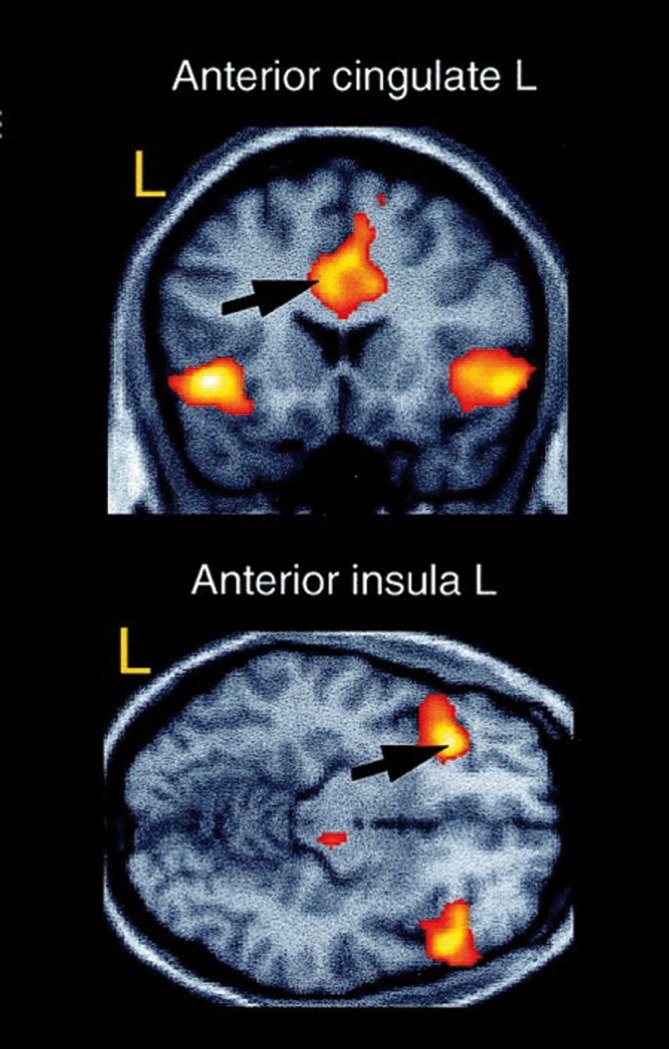
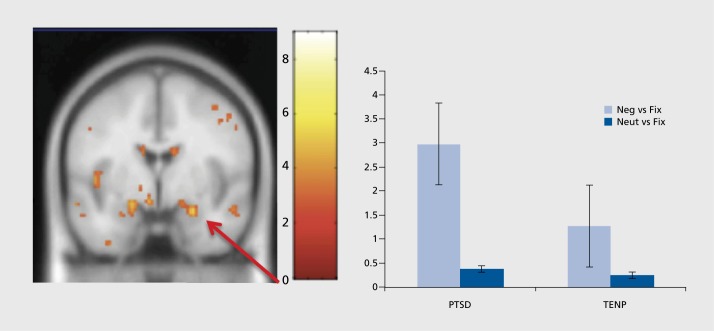
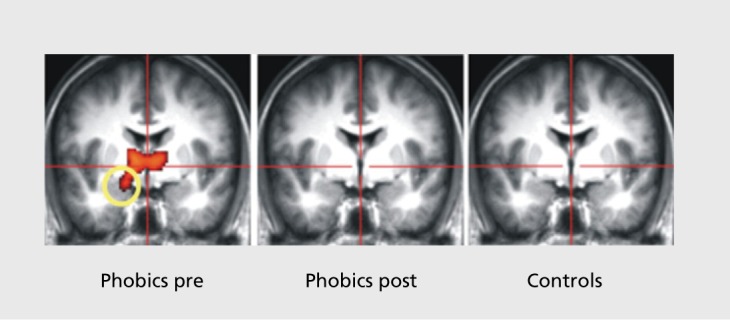
Over the last few years, neuroimaging techniques have contributed greatly to the identification of the structural and functional neuroanatomy of anxiety disorders. The amygdala seems to be a crucial structure for fear and anxiety, and has consistently been found to be activated in anxiety-provoking situations. Apart from the amygdala, the insula and anterior cinguiate cortex seem to be critical, and ail three have been referred to as the "fear network." In the present article, we review the main findings from three major lines of research. First, we examine human models of anxiety disorders, including fear conditioning studies and investigations of experimentally induced panic attacks. Then we turn to research in patients with anxiety disorders and take a dose look at post-traumatic stress disorder and obsessive-compulsive disorder. Finally, we review neuroimaging studies investigating neural correlates of successful treatment of anxiety, focusing on exposure-based therapy and several pharmacological treatment options, as well as combinations of both.
Overview
The claims and statistics of this paper haven’t been checked yet.
Run the check — free, no account needed. It reads the open-access text and checks the sources it cites.
Integrity signals
Registry
Cites
Statistics
Figures
Verification
Claims the paper makes
The claims and statistics of this paper haven’t been checked yet.
Run the check — free, no account needed. It reads the open-access text and checks the sources it cites.
Claims other papers make about this one
Each is checked against this paper’s own text: does it say what the citing paper says it does?
The cited source says what the claim attributes to it.
In the citing paper
“and occurs during anxiety symptom provocation (Holzschneider and Mulert, 2011).”
From Neuroimaging and psychophysiological investigation of the link between anxiety, enhanced affective reactivity and interoception in people with joint hypermobility (2014) · cites this paper as Holzschneider and Mulert, 2011
Self-check
Percentages, sums and reported differences re-computed from the paper’s own numbers.
The self-check needs the paper’s full text.
Citations
Cites
How do you feel? Interoception: The sense of the physiological condition of the body
Craig, A. D. (2002) · Nature Reviews Neuroscience · doi:10.1038/nrn894 · Cited by 6,006
Functional neuroanatomy of emotion: A meta-analysis of emotion activation studies in PET and fMRI
Phan, K. L., Wager, T., Taylor, S. F., & Liberzon, I. (2002) · NeuroImage · doi:10.1006/nimg.2002.1087 · Cited by 3,502
Neural systems supporting interoceptive awareness
Critchley, H. D., Wiens, S., Rotshtein, P., Öhman, A., & Dolan, R. J. (2004) · Nature Neuroscience · doi:10.1038/nn1176 · Cited by 3,406
Etkin, A., & Wager, T. D. (2007) · American Journal of Psychiatry · doi:10.1176/appi.ajp.2007.07030504 · Cited by 3,391 · cited 3×
“logical characteristics specific to each disorder.(4) However, the number of neuroimaging studies conducted on each anxiety disorder varies greatly.”
InfluentialStress, memory and the amygdala
Roozendaal, B., McEwen, B. S., & Chattarji, S. (2009) · Nature Reviews Neuroscience · doi:10.1038/nrn2651 · Cited by 1,760
Phelps, E. A., Delgado, M. R., Nearing, K. I., & LeDoux, J. E. (2004) · Neuron · doi:10.1016/j.neuron.2004.08.042 · Cited by 1,753
Oxytocin, vasopressin, and the neurogenetics of sociality
Donaldson, Z. R., & Young, L. J. (2008) · Science · doi:10.1126/science.1158668 · Cited by 1,645
Smaller hippocampal volume predicts pathologic vulnerability to psychological trauma
Gilbertson, M. W., Shenton, M. E., Ciszewski, A., Kasai, K., Lasko, N. B., Orr, S. P., & Pitman, R. K. (2002) · Nature Neuroscience · doi:10.1038/nn958 · Cited by 1,635
Goldin, P. R., & Gross, J. J. (2010) · Emotion · doi:10.1037/a0018441 · Cited by 1,242 · cited 1×
“For example, behavioral changes in patients with social anxiety disorder after mindfulnessbased stress reduction (MBSR) therapy seem to be reflected by distinct patterns of neural activity.(66) With regard to psychotherapy research, neuroimaging techniques offer the opportunity to monitor structural and functional neu…”
Amygdala, medial prefrontal cortex, and hippocampal function in PTSD
SHIN, L. M., RAUCH, S. L., & PITMAN, R. K. (2006) · Annals of the New York Academy of Sciences · doi:10.1196/annals.1364.007 · Cited by 1,203
Research works printed but not linked: 4
- American Psychiatric Association., 2000, Diagnostic and Statistical Manual of Mental Disorders. 4th ed. Text Revision. Washington, DC: American Psychiatric Association;
- Vermetten E., 2007, Psychopharmacol Bull., 40, 8
- Simon D., 2010, Psychophysiology., 47, 728
- Bryant RA., 2008, J Psychiatry Neurosci., 33, 142
Cited by
Sorted by citations
Ma, Z., Zhao, J., Li, Y., Chen, D., Wang, T., Zhang, Z., Chen, Z., Yu, Q., Jiang, J., Fan, F., et al. (2020) · Epidemiology and Psychiatric Sciences · doi:10.1017/s2045796020000931 · Cited by 437
Neuropathologic Correlates of Psychiatric Symptoms in Alzheimer’s Disease
Ehrenberg, A. J., Suemoto, C. K., Resende, E. D. P. F., Petersen, C., Leite, R. E. P., Rodriguez, R. D., Ferretti‐Rebustini, R. E. D. L., You, M. Y., Oh, J. Y., Nitríni, R., et al. (2018) · Journal of Alzheimer s Disease · doi:10.3233/jad-180688 · Cited by 233
Moylan, S., Jacka, F. N., Pasco, J. A., & Berk, M. (2013) · Brain and Behavior · doi:10.1002/brb3.137 · Cited by 186
Sex differences in mood disorders: Perspectives from humans and rodent models
Seney, M. L., & Sibille, E. (2014) · Biology of Sex Differences · doi:10.1186/s13293-014-0017-3 · Cited by 181
The vicious cycle of itch and anxiety
Sanders, K. M., & Akiyama, T. (2018) · Neuroscience & Biobehavioral Reviews · doi:10.1016/j.neubiorev.2018.01.009 · Cited by 187
Metadata
- Authors
- Holzschneider, K., & Mulert, C.
- Affiliations
- University Medical Center Hamburg-Eppendorf (DE)
- Corresponding author
- Mulert, Christoph
- ORCID
- Mulert, Christoph
- Venue
- Dialogues in Clinical Neuroscience
- Publisher
- Informa UK Limited
- Published
- 2011-12-31
- Volume
- 13
- Issue
- 4
- Pages
- 453-461
- ISSN
- 1294-8322 (ISSN-L)
- 1958-5969
- PMC
- PMC3263392
- OpenAlex
- W4298412747
- Cited by
- 146
- References
- 72
- Citations by year
- 2026: 2 · 2025: 8 · 2024: 7 · 2023: 13 · 2022: 9 · 2021: 12 · 2020: 7 · 2019: 8 · 2018: 6 · 2017: 10 · 2016: 14 · 2015: 14 · 2014: 14 · 2013: 12 · 2012: 9
- FWCI
- 14.43
- Type
- journal article
- Language
- en
- Open access
- diamond
- doi.org
- Licence
- Locations
- Dialogues in Clinical Neuroscience (publishedVersion, cc-by-nc-nd)
- PubMed Central (publishedVersion, cc-by-nc-nd)
- PubMed (publishedVersion)
- PubMed
- Topics
- Social Sciences › Psychology › Experimental and Cognitive Psychology › Anxiety, Depression, Psychometrics, Treatment, Cognitive Processes
- Life Sciences › Neuroscience › Cognitive Neuroscience › Memory and Neural Mechanisms
- Life Sciences › Neuroscience › Cognitive Neuroscience › Neural and Behavioral Psychology Studies
- Keywords
- anxiety disorders, amygdala, fear network, insula, anterior cingulate cortex, fear conditioning, panic attacks, post-traumatic stress disorder, obsessive-compulsive disorder, exposure therapy, pharmacological treatment of anxiety
- MeSH terms
- Amygdala, Anxiety Disorders, Humans, Magnetic Resonance Imaging, Tomography, Emission-Computed, Single-Photon, Positron-Emission Tomography
About these checks
Registry, retraction, Cites and statistics results are computed, not judged, with one exception: a printed reference that no index lists is read once by a model before it counts as a citation error. Claims are extracted by a model and kept only when their quote appears verbatim in the text; each cited source is then checked, with a model’s help, for whether it says what the claim relies on. Those verdicts can be wrong — read the claim’s quote and the cited source before relying on one.
Statistics and arithmetic are recomputed, not judged.
Confidence bands are shown only for fields calibrated on our annotated test set. None is calibrated yet, so no band is shown.
What counts as a claim ›How we measure confidence ›How we check this ›
Are you an author, or do you see a problem with this page? Request a review
