

The DOI matches its Crossref record; 72 of the 72 references it cites were found in a registry or an index.
Neuroimaging in anxiety disorders
Open accessAbstract
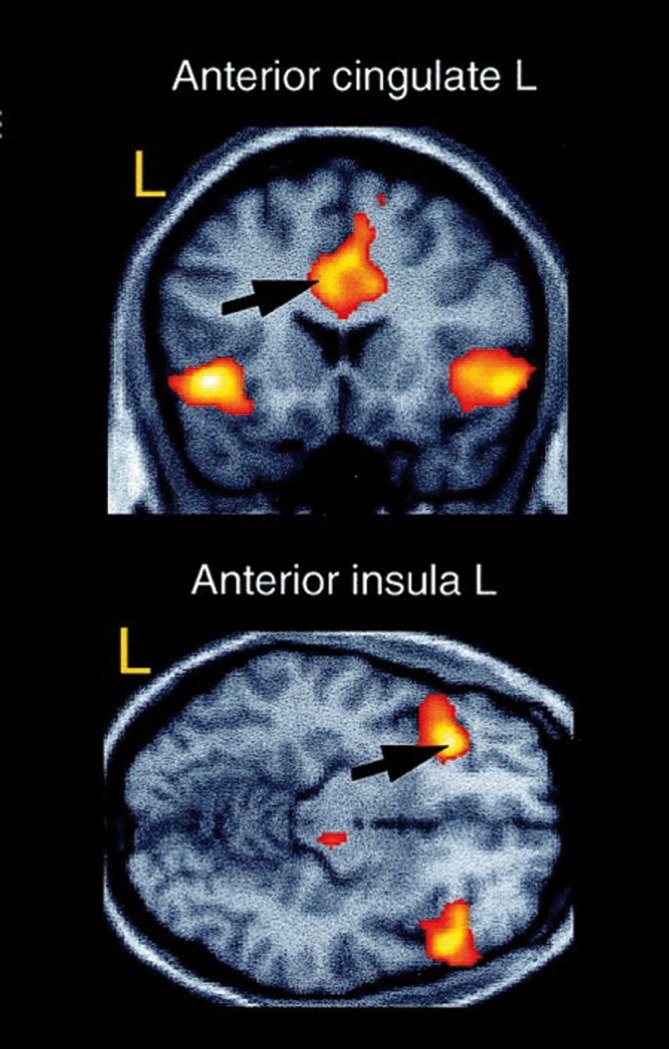
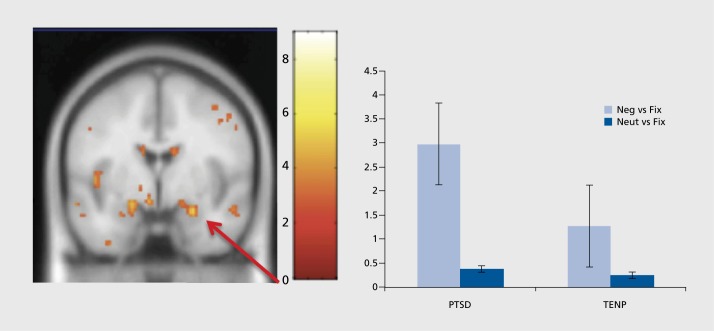
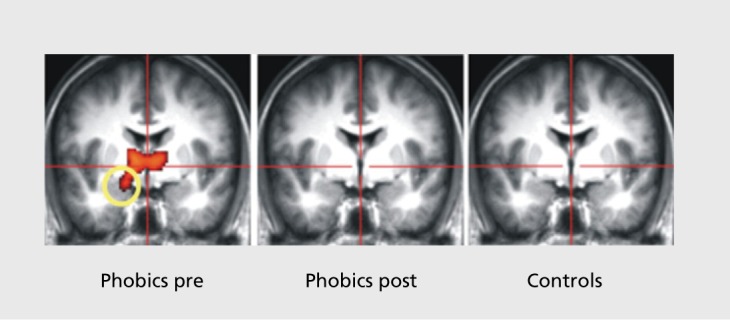
Over the last few years, neuroimaging techniques have contributed greatly to the identification of the structural and functional neuroanatomy of anxiety disorders. The amygdala seems to be a crucial structure for fear and anxiety, and has consistently been found to be activated in anxiety-provoking situations. Apart from the amygdala, the insula and anterior cinguiate cortex seem to be critical, and ail three have been referred to as the "fear network." In the present article, we review the main findings from three major lines of research. First, we examine human models of anxiety disorders, including fear conditioning studies and investigations of experimentally induced panic attacks. Then we turn to research in patients with anxiety disorders and take a dose look at post-traumatic stress disorder and obsessive-compulsive disorder. Finally, we review neuroimaging studies investigating neural correlates of successful treatment of anxiety, focusing on exposure-based therapy and several pharmacological treatment options, as well as combinations of both.
Overview
The claims and statistics of this paper haven’t been checked yet.
Run the check — free, no account needed. It reads the open-access text and checks the sources it cites.
Integrity signals
Registry
Cites
Statistics
Figures
Verification
Claims the paper makes
The claims and statistics of this paper haven’t been checked yet.
Run the check — free, no account needed. It reads the open-access text and checks the sources it cites.
Claims other papers make about this one
Each is checked against this paper’s own text: does it say what the citing paper says it does?
The cited source says what the claim attributes to it.
In the citing paper
“and occurs during anxiety symptom provocation (Holzschneider and Mulert, 2011).”
From Neuroimaging and psychophysiological investigation of the link between anxiety, enhanced affective reactivity and interoception in people with joint hypermobility (2014) · cites this paper as Holzschneider and Mulert, 2011
Self-check
Percentages, sums and reported differences re-computed from the paper’s own numbers.
The self-check needs the paper’s full text.
Citations
Cites
How do you feel? Interoception: The sense of the physiological condition of the body
Craig, A. D. (2002) · Nature Reviews Neuroscience · doi:10.1038/nrn894 · Cited by 6,006
Functional neuroanatomy of emotion: A meta-analysis of emotion activation studies in PET and fMRI
Phan, K. L., Wager, T., Taylor, S. F., & Liberzon, I. (2002) · NeuroImage · doi:10.1006/nimg.2002.1087 · Cited by 3,502
Neural systems supporting interoceptive awareness
Critchley, H. D., Wiens, S., Rotshtein, P., Öhman, A., & Dolan, R. J. (2004) · Nature Neuroscience · doi:10.1038/nn1176 · Cited by 3,406
Etkin, A., & Wager, T. D. (2007) · American Journal of Psychiatry · doi:10.1176/appi.ajp.2007.07030504 · Cited by 3,391 · cited 3×
“logical characteristics specific to each disorder.(4) However, the number of neuroimaging studies conducted on each anxiety disorder varies greatly.”
InfluentialStress, memory and the amygdala
Roozendaal, B., McEwen, B. S., & Chattarji, S. (2009) · Nature Reviews Neuroscience · doi:10.1038/nrn2651 · Cited by 1,760
Phelps, E. A., Delgado, M. R., Nearing, K. I., & LeDoux, J. E. (2004) · Neuron · doi:10.1016/j.neuron.2004.08.042 · Cited by 1,753
Oxytocin, vasopressin, and the neurogenetics of sociality
Donaldson, Z. R., & Young, L. J. (2008) · Science · doi:10.1126/science.1158668 · Cited by 1,645
Smaller hippocampal volume predicts pathologic vulnerability to psychological trauma
Gilbertson, M. W., Shenton, M. E., Ciszewski, A., Kasai, K., Lasko, N. B., Orr, S. P., & Pitman, R. K. (2002) · Nature Neuroscience · doi:10.1038/nn958 · Cited by 1,635
Goldin, P. R., & Gross, J. J. (2010) · Emotion · doi:10.1037/a0018441 · Cited by 1,242 · cited 1×
“For example, behavioral changes in patients with social anxiety disorder after mindfulnessbased stress reduction (MBSR) therapy seem to be reflected by distinct patterns of neural activity.(66) With regard to psychotherapy research, neuroimaging techniques offer the opportunity to monitor structural and functional neu…”
Amygdala, medial prefrontal cortex, and hippocampal function in PTSD
SHIN, L. M., RAUCH, S. L., & PITMAN, R. K. (2006) · Annals of the New York Academy of Sciences · doi:10.1196/annals.1364.007 · Cited by 1,203
Brain systems mediating aversive conditioning: an event-related fMRI study
Büchel, C., Morris, J., Dolan, R. J., & Friston, K. J. (1998) · Neuron · doi:10.1016/s0896-6273(00)80476-6 · Cited by 951
Quirk, G. J., Likhtik, E., Pelletier, J. G., & Paré, D. (2003) · The Journal of Neuroscience · doi:10.1523/jneurosci.23-25-08800.2003 · Cited by 927
What does the amygdala contribute to social cognition
Adolphs, R. (2010) · Annals of the New York Academy of Sciences · doi:10.1111/j.1749-6632.2010.05445.x · Cited by 836
Shin, L. M., Orr, S. P., Carson, M. A., Rauch, S. L., Macklin, M. L., Lasko, N. B., Peters, P. M., Metzger, L. J., Dougherty, D. D., Cannistraro, P. A., et al. (2004) · Archives of General Psychiatry · doi:10.1001/archpsyc.61.2.168 · Cited by 790
Bremner, J. D., Staib, L. H., Kaloupek, D. G., Southwick, S. M., Soufer, R., & Charney, D. S. (1999) · Biological Psychiatry · doi:10.1016/s0006-3223(98)00297-2 · Cited by 727
Emotional perception: Meta-analyses of face and natural scene processing
Sabatinelli, D., Fortune, E. E., Li, Q., Siddiqui, A. P., Krafft, C. E., Oliver, W. T., Beck, S., & Jeffries, J. (2010) · NeuroImage · doi:10.1016/j.neuroimage.2010.10.011 · Cited by 715
Functional magnetic resonance imaging of symptom provocation in obsessive-compulsive disorder
Breiter, H. C. (1996) · Archives of General Psychiatry · doi:10.1001/archpsyc.1996.01830070041008 · Cited by 626
Oxytocin Attenuates Amygdala Reactivity to Fear in Generalized Social Anxiety Disorder
Labuschagne, I., Phan, K. L., Wood, A., Angstadt, M., Chua, P., Heinrichs, M., Stout, J. C., & Nathan, P. J. (2010) · Neuropsychopharmacology · doi:10.1038/npp.2010.123 · Cited by 549 · cited 1×
“In patients with social anxiety disorder, oxytocin attenuated the heightened amygdala activation in response to fearful faces.(73) Hence, it appears to modulate the exaggerated amygdala activity during confrontation with social stimuli in pathological social anxiety.”
Human Fear Conditioning and Extinction in Neuroimaging: A Systematic Review
Sehlmeyer, C., Schöning, S., Zwitserlood, P., Pfleiderer, B., Kircher, T., Arolt, V., & Konrad, C. (2009) · PLoS ONE · doi:10.1371/journal.pone.0005865 · Cited by 543
Startle reactivity and anxiety disorders: aversive conditioning, context, and neurobiology
Grillon, C. (2002) · Biological Psychiatry · doi:10.1016/s0006-3223(02)01665-7 · Cited by 514
Efficacy of Cognitive Behavioral Therapy for Anxiety Disorders: A Review of Meta-Analytic Findings
Olatunji, B. O., Cisler, J. M., & Deacon, B. J. (2010) · Psychiatric Clinics of North America · doi:10.1016/j.psc.2010.04.002 · Cited by 483
Neuroimaging studies of amygdala function in anxiety disorders
RAUCH, S. L., SHIN, L. M., & WRIGHT, C. I. (2003) · Annals of the New York Academy of Sciences · doi:10.1111/j.1749-6632.2003.tb07096.x · Cited by 463
Sotres-Bayon, F., Cain, C. K., & LeDoux, J. E. (2006) · Biological Psychiatry · doi:10.1016/j.biopsych.2005.10.012 · Cited by 433
Oxytocin, vasopressin and sociality
CARTER, C., GRIPPO, A., POURNAJAFINAZARLOO, H., RUSCIO, M., & PORGES, S. (2008) · Progress in Brain Research · doi:10.1016/s0079-6123(08)00427-5 · Cited by 380
Structural and functional plasticity of the human brain in posttraumatic stress disorder
Bremner, J. D., Elzinga, B. M., Schmahl, C. G., & Vermetten, E. H. G. J. M. (2007) · Progress in brain research · doi:10.1016/s0079-6123(07)67012-5 · Cited by 379
Classical fear conditioning in functional neuroimaging
Büchel, C. (2000) · Current Opinion in Neurobiology · doi:10.1016/s0959-4388(00)00078-7 · Cited by 360
Morrison, S. E., & Salzman, C. D. (2010) · Current Opinion in Neurobiology · doi:10.1016/j.conb.2010.02.007 · Cited by 354
Gottfried, J. A., & Dolan, R. J. (2004) · Nature Neuroscience · doi:10.1038/nn1314 · Cited by 353
Enhanced Sensitivity to Cholecystokinin Tetrapeptide in Panic Disorder
Bradwejn, J. (1991) · Archives of General Psychiatry · doi:10.1001/archpsyc.1991.01810310021005 · Cited by 344
The Pharmacologic Treatment of Anxiety Disorders: A Review of Progress
Ravindran, L. N., & Stein, M. B. (2010) · The Journal of Clinical Psychiatry · doi:10.4088/jcp.10r06218blu · Cited by 317 · cited 1×
“Psychopharmacological first-line treatments of anxiety disorders include antidepressant treatment with selective serotonin reuptake inhibitors (SSRIs) or serotonin-norepinephrine reuptake inhibitors (SNRIs).(67) Positive effects of antidepressant medication can be demonstrated using neuroimaging techniques, too.”
Cholecystokinin-Tetrapeptide Induces Panic Attacks in Patients with Panic Disorder
Bradwejn, J., Koszycki, D., & Meterissian, G. B. (1990) · The Canadian Journal of Psychiatry · doi:10.1177/070674379003500115 · Cited by 293
Del-Ben, C. M., Deakin, J. F. W., Mckie, S., Delvai, N. A., Williams, S. R., Elliott, R., Dolan, M., & Anderson, I. M. (2005) · Neuropsychopharmacology · doi:10.1038/sj.npp.1300728 · Cited by 260
Hayes, J. P., LaBar, K. S., McCarthy, G., Selgrade, E. S., Nasser, J. D., Dolcos, F., & Morey, R. A. (2010) · Journal of Psychiatric Research · doi:10.1016/j.jpsychires.2010.10.007 · Cited by 190
Effects of citalopram on worry and brain activation in patients with generalized anxiety disorder
Hoehn‐Saric, R., Schlund, M. W., & Wong, S. H. (2004) · Psychiatry Research Neuroimaging · doi:10.1016/j.pscychresns.2004.02.003 · Cited by 167
Saxena, S., Gorbis, E., O’Neill, J., Baker, S. K., Mandelkern, M. A., Maidment, K. M., Chang, S. W., Salamon, N., Brody, A. L., Schwartz, J. M., et al. (2008) · Molecular Psychiatry · doi:10.1038/sj.mp.4002134 · Cited by 165
fMRI predictors of treatment outcome in pediatric anxiety disorders
McClure, E. B., Adler, A., Monk, C. S., Cameron, J., Smith, S., Nelson, E. E., Leibenluft, E., Ernst, M., & Pine, D. S. (2007) · Psychopharmacology · doi:10.1007/s00213-006-0542-9 · Cited by 165
Cingulate cortex: Its role in Pavlovian conditioning.
Buchanan, S. L., & Powell, D. A. (1982) · Journal of Comparative and Physiological Psychology · doi:10.1037/h0077925 · Cited by 164
Schienle, A., Schäfer, A., Stark, R. M., Walter, B., & Vaitl, D. (2005) · International Journal of Psychophysiology · doi:10.1016/j.ijpsycho.2004.12.013 · Cited by 160
Current status of brain imaging in anxiety disorders
Damsa, C., Kosel, M., & Moussally, J. (2009) · Current Opinion in Psychiatry · doi:10.1097/yco.0b013e328319bd10 · Cited by 160
Amygdala Hyperfunction in Phobic Fear Normalizes After Exposure
Goossens, L., Sunaert, S. G., Peeters, R. R., Griez, E. J. L., & Schruers, K. R. J. (2007) · Biological Psychiatry · doi:10.1016/j.biopsych.2007.04.024 · Cited by 146
Bryant, R. A., Felmingham, K. L., Whitford, T. J., Kemp, A. H., Hughes, G., Peduto, A. S., & Williams, L. M. (2008) · Journal of Psychiatry and Neuroscience · doi:10.1139/jpn.0816 · Cited by 142
Effects of behavior therapy on regional cerebral blood flow in obsessive–compulsive disorder
Nakatani, E. (2003) · Psychiatry Research Neuroimaging · doi:10.1016/s0925-4927(03)00069-6 · Cited by 140
Javanmard, M., Shlik, J., Kennedy, S. H., Vaccarino, F. J., Houle, S., & Bradwejn, J. (1999) · Biological Psychiatry · doi:10.1016/s0006-3223(98)00348-5 · Cited by 138
Brain Response to Visceral Aversive Conditioning: A Functional Magnetic Resonance Imaging Study
Yágüez, L., Coen, S. J., Gregory, L. J., Amaro, E., Altman, C., Brammer, M. J., Bullmore, E. T., Williams, S., & Aziz, Q. (2005) · Gastroenterology · doi:10.1053/j.gastro.2005.02.068 · Cited by 129
The Neural Correlates of Emotional Memory in Posttraumatic Stress Disorder
Brohawn, K. H., Offringa, R., Pfaff, D. L., Hughes, K. C., & Shin, L. M. (2010) · Biological Psychiatry · doi:10.1016/j.biopsych.2010.07.018 · Cited by 127
Kang, D. ‐., Kwon, J. S., Kim, J., Youn, T., Park, H., Kim, M. S., Lee, D. S., & Lee, M. C. (2003) · Acta Psychiatrica Scandinavica · doi:10.1034/j.1600-0447.2003.00070.x · Cited by 121
Jang, J. H., Kim, J., Jung, W. H., Choi, J., Jung, M. H., Lee, J., Choi, C., Kang, D., & Kwon, J. S. (2010) · Neuroscience Letters · doi:10.1016/j.neulet.2010.03.031 · Cited by 120
van den Heuvel, O. A., Veltman, D. J., Groenewegen, H. J., Dolan, R. J., Cath, D. C., Boellaard, R., Mesina, C. T., van Balkom, A. J. L. M., van Oppen, P., Witter, M. P., et al. (2004) · Psychiatry Research Neuroimaging · doi:10.1016/j.pscychresns.2004.06.007 · Cited by 116
Neuroimaging in obsessive–compulsive disorder
Kwon, J. S., Jang, J. H., Choi, J., & Kang, D. (2009) · Expert Review of Neurotherapeutics · doi:10.1586/14737175.9.2.255 · Cited by 115
Brain imaging in anxiety disorders
Bremner, J. D. (2004) · Expert Review of Neurotherapeutics · doi:10.1586/14737175.4.2.275 · Cited by 111
Functional Imaging of Mood and Anxiety Disorders
Deckersbach, T., Dougherty, D. D., & Rauch, S. L. (2006) · Journal of Neuroimaging · doi:10.1177/1051228405001474 · Cited by 111
Klucken, T., Kagerer, S., Schweckendiek, J., Tabbert, K., Vaitl, D., & Stark, R. M. (2008) · Neuroscience · doi:10.1016/j.neuroscience.2008.09.049 · Cited by 107
Neurocircuitry of anxiety disorders
KENT, J. M., & Rauch, S. L. (2003) · Current Psychiatry Reports · doi:10.1007/s11920-003-0055-8 · Cited by 106
Dickie, E. W., Brunet, A., Akerib, V., & Armony, J. L. (2011) · Neuropsychologia · doi:10.1016/j.neuropsychologia.2011.02.055 · Cited by 105
An fMRI investigation of memory encoding in PTSD: influence of symptom severity.
Dickie, E., Brunet, A., Akerib, V., & Armony, J. (2008) · Neuropsychologia · doi:10.1016/j.neuropsychologia.2008.01.007 · Cited by 103
Duration of posttraumatic stress disorder predicts hippocampal grey matter loss
Felmingham, K. L., Williams, L. M., Whitford, T. J., Falconer, E. M., Kemp, A. H., Peduto, A. J., & Bryant, R. A. (2009) · Neuroreport · doi:10.1097/wnr.0b013e3283300fbc · Cited by 99
Functional neuroanatomy of CCK‐4‐induced panic attacks in healthy volunteers
Eser, D., Leicht, G., Lutz, J., Wenninger, S., Kirsch, V., Schüle, C., Karch, S., Baghai, T. C., Pogarell, O. M., Born, C., et al. (2007) · Human Brain Mapping · doi:10.1002/hbm.20522 · Cited by 87
Self-citationWeaving the (neuronal) web: Fear learning in spider phobia
Schweckendiek, J., Klucken, T., Merz, C. J., Tabbert, K., Walter, B., Ambach, W., Vaitl, D., & Stark, R. M. (2010) · NeuroImage · doi:10.1016/j.neuroimage.2010.07.049 · Cited by 81
Grillon, C. (2009) · Biological Psychiatry · doi:10.1016/j.biopsych.2009.04.017 · Cited by 80
Schunck, T., Erb, G., Mathis, A., Gilles, C., Namer, I. J., Hodé, Y., Demaziere, A., Luthringer, R., & Macher, J. P. (2006) · NeuroImage · doi:10.1016/j.neuroimage.2006.01.035 · Cited by 63
Cholecystokinin and panic disorder: Past and future clinical research strategies
Bradwejn, J., & Koszycki, D. (2001) · Scandinavian Journal of Clinical and Laboratory Investigation · doi:10.1080/713783681 · Cited by 62
Pregabalin Influences Insula and Amygdala Activation During Anticipation of Emotional Images
Aupperle, R. L., Ravindran, L. N., Tankersley, D., Flagan, T., Stein, N. R., Simmons, A. N., Stein, M. B., & Paulus, M. P. (2011) · Neuropsychopharmacology · doi:10.1038/npp.2011.32 · Cited by 59
Freeman, J. H., Cuppernell, C., Flannery, K., & Gabriel, M. (1996) · Behavioural Brain Research · doi:10.1016/0166-4328(96)00027-7 · Cited by 49
Eser, D., Schüle, C., Baghai, T. C., Floesser, A., Krebs‐Brown, A., Enunwa, M., de la Motte, S., Engel, R. R., Kucher, K., & Rupprecht, R. (2007) · Psychopharmacology · doi:10.1007/s00213-007-0738-7 · Cited by 45
The role of neuroimaging for the diagnosis and treatment of anxiety disorders
Paulus, M. P. (2008) · Depression and Anxiety · doi:10.1002/da.20499 · Cited by 41
Zwanzger, P., Eser, D., Nothdurfter, C., Baghai, T. C., Möller, H.-J., Padberg, F., & Rupprecht, R. (2009) · Pharmacopsychiatry · doi:10.1055/s-0029-1241798 · Cited by 40
Imaging in posttraumatic stress disorder
Robinson, B. L., & Shergill, S. S. (2010) · Current Opinion in Psychiatry · doi:10.1097/yco.0b013e3283413519 · Cited by 36
An fMRI Study Examining Effects of Acute D-Cycloserine During Symptom Provocation in Spider Phobia
Aupperle, R. L., Hale, L. R., Chambers, R. J., Cain, S., Barth, F. X., Sharp, S., Denney, D. R., & Savage, C. R. (2009) · CNS Spectrums · doi:10.1017/s1092852900024044 · Cited by 24
Associations between personality traits and CCK-4-induced panic attacks in healthy volunteers
Tõru, I., Aluoja, A., Võhma, Ü., Raag, M., Vasar, V., Maron, E., & Shlik, J. (2010) · Psychiatry Research · doi:10.1016/j.psychres.2010.04.003 · Cited by 16
Glyoxalase-I mRNA expression and CCK-4 induced panic attacks
Eser, D., Uhr, M., Leicht, G., Asmus, M., Länger, A., Schüle, C., Baghai, T. C., Mulert, C., & Rupprecht, R. (2010) · Journal of Psychiatric Research · doi:10.1016/j.jpsychires.2010.05.008 · Cited by 13
Self-citationSchunck, T., Mathis, A., Erb, G., Namer, I. J., Hodé, Y., Demazières, A., & Luthringer, R. (2010) · Journal of Psychopharmacology · doi:10.1177/0269881110367449 · Cited by 12
Impact of state and trait anxiety on the panic response to CCK-4
Eser, D., Wenninger, S., Baghai, T. C., Schüle, C., & Rupprecht, R. (2008) · Journal of Neural Transmission · doi:10.1007/s00702-008-0047-2 · Cited by 11
Research works printed but not linked: 4
- American Psychiatric Association., 2000, Diagnostic and Statistical Manual of Mental Disorders. 4th ed. Text Revision. Washington, DC: American Psychiatric Association;
- Vermetten E., 2007, Psychopharmacol Bull., 40, 8
- Simon D., 2010, Psychophysiology., 47, 728
- Bryant RA., 2008, J Psychiatry Neurosci., 33, 142
Cited by
Sorted by citations
Ma, Z., Zhao, J., Li, Y., Chen, D., Wang, T., Zhang, Z., Chen, Z., Yu, Q., Jiang, J., Fan, F., et al. (2020) · Epidemiology and Psychiatric Sciences · doi:10.1017/s2045796020000931 · Cited by 437
Neuropathologic Correlates of Psychiatric Symptoms in Alzheimer’s Disease
Ehrenberg, A. J., Suemoto, C. K., Resende, E. D. P. F., Petersen, C., Leite, R. E. P., Rodriguez, R. D., Ferretti‐Rebustini, R. E. D. L., You, M. Y., Oh, J. Y., Nitríni, R., et al. (2018) · Journal of Alzheimer s Disease · doi:10.3233/jad-180688 · Cited by 233
Moylan, S., Jacka, F. N., Pasco, J. A., & Berk, M. (2013) · Brain and Behavior · doi:10.1002/brb3.137 · Cited by 186
Sex differences in mood disorders: Perspectives from humans and rodent models
Seney, M. L., & Sibille, E. (2014) · Biology of Sex Differences · doi:10.1186/s13293-014-0017-3 · Cited by 181
The vicious cycle of itch and anxiety
Sanders, K. M., & Akiyama, T. (2018) · Neuroscience & Biobehavioral Reviews · doi:10.1016/j.neubiorev.2018.01.009 · Cited by 187
Metadata
- Authors
- Holzschneider, K., & Mulert, C.
- Affiliations
- University Medical Center Hamburg-Eppendorf (DE)
- Corresponding author
- Mulert, Christoph
- ORCID
- Mulert, Christoph
- Venue
- Dialogues in Clinical Neuroscience
- Publisher
- Informa UK Limited
- Published
- 2011-12-31
- Volume
- 13
- Issue
- 4
- Pages
- 453-461
- ISSN
- 1294-8322 (ISSN-L)
- 1958-5969
- PMC
- PMC3263392
- OpenAlex
- W4298412747
- Cited by
- 146
- References
- 72
- Citations by year
- 2026: 2 · 2025: 8 · 2024: 7 · 2023: 13 · 2022: 9 · 2021: 12 · 2020: 7 · 2019: 8 · 2018: 6 · 2017: 10 · 2016: 14 · 2015: 14 · 2014: 14 · 2013: 12 · 2012: 9
- FWCI
- 14.43
- Type
- journal article
- Language
- en
- Open access
- diamond
- doi.org
- Licence
- Locations
- Dialogues in Clinical Neuroscience (publishedVersion, cc-by-nc-nd)
- PubMed Central (publishedVersion, cc-by-nc-nd)
- PubMed (publishedVersion)
- PubMed
- Topics
- Social Sciences › Psychology › Experimental and Cognitive Psychology › Anxiety, Depression, Psychometrics, Treatment, Cognitive Processes
- Life Sciences › Neuroscience › Cognitive Neuroscience › Memory and Neural Mechanisms
- Life Sciences › Neuroscience › Cognitive Neuroscience › Neural and Behavioral Psychology Studies
- Keywords
- anxiety disorders, amygdala, fear network, insula, anterior cingulate cortex, fear conditioning, panic attacks, post-traumatic stress disorder, obsessive-compulsive disorder, exposure therapy, pharmacological treatment of anxiety
- MeSH terms
- Amygdala, Anxiety Disorders, Humans, Magnetic Resonance Imaging, Tomography, Emission-Computed, Single-Photon, Positron-Emission Tomography
About these checks
Registry, retraction, Cites and statistics results are computed, not judged, with one exception: a printed reference that no index lists is read once by a model before it counts as a citation error. Claims are extracted by a model and kept only when their quote appears verbatim in the text; each cited source is then checked, with a model’s help, for whether it says what the claim relies on. Those verdicts can be wrong — read the claim’s quote and the cited source before relying on one.
Statistics and arithmetic are recomputed, not judged.
Confidence bands are shown only for fields calibrated on our annotated test set. None is calibrated yet, so no band is shown.
What counts as a claim ›How we measure confidence ›How we check this ›
Are you an author, or do you see a problem with this page? Request a review
