

The DOI matches its Crossref record; 86 of the 86 references it cites were found in a registry or an index.
The placenta and neurodevelopment: sex differences in prenatal vulnerability
Open accessAbstract
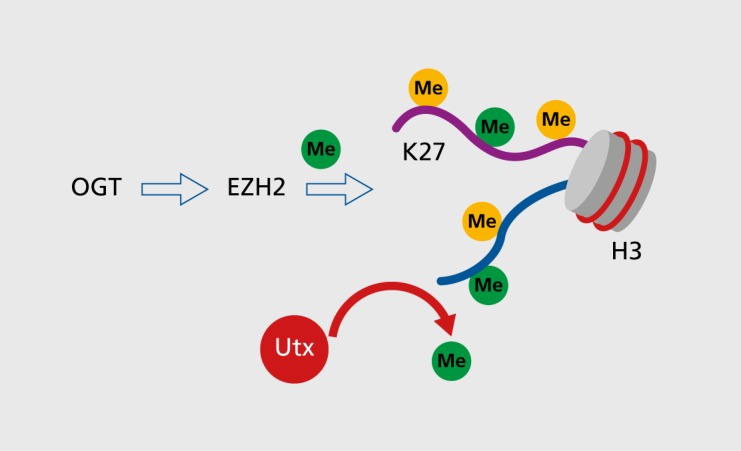
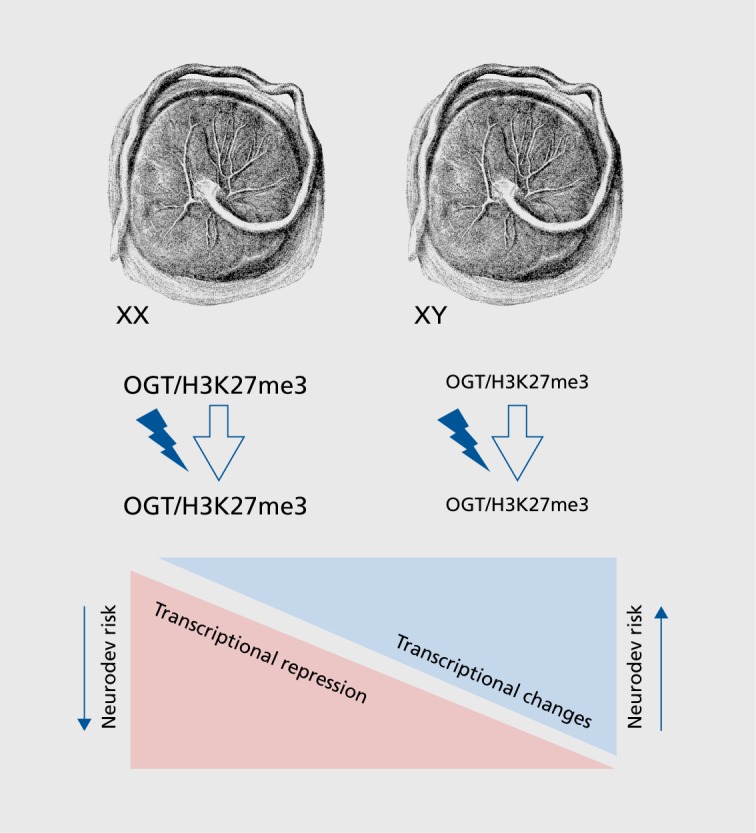
Prenatal insults, such as maternal stress, are associated with an increased neurodevelopmental disease risk and impact males significantly more than females, including increased rates of autism, mental retardation, stuttering, dyslexia, and attention deficit/hyperactivity disorder (ADHD). Sex differences in the placenta, which begin with sex chromosomes, are likely to produce sex-specific transplacental signals to the developing brain. Our studies and others have identified X-linked genes that are expressed at higher levels in the female placenta. Through a genome-wide screen after maternal stress in mice, we identified the X-linked gene O-linked N-acetylglucosamine transferase (OGT) and demonstrated its causality in neurodevelopmental programming producing a male-specific stress phenotype. Elucidating the sex-specific molecular mechanisms involved in transplacental signals that impact brain development is key to understanding the sex bias in neurodevelopmental disorders and is expected to yield novel insight into disease risk and resilience.
Overview
The claims and statistics of this paper haven’t been checked yet.
Run the check — free, no account needed. It reads the open-access text and checks the sources it cites.
Integrity signals
Registry
Cites
Statistics
Figures
Verification
Claims the paper makes
The claims and statistics of this paper haven’t been checked yet.
Run the check — free, no account needed. It reads the open-access text and checks the sources it cites.
Claims other papers make about this one
Each is checked against this paper’s own text: does it say what the citing paper says it does?
In the citing paper
“In many studies, male offspring appear to be the most strongly affected. Interestingly, they often present with what is known as a dysmasculinized phenotype (i.e., with behaviors and gene expression patterns most commonly seen in females) (Bale 2016).”
From Prenatal developmental origins of future psychopathology: mechanisms and pathways (2019) · cites this paper as Bale 2016
In the citing paper
“In one elegant model in mice based on the X-linked gene OGT (O-linked N-acetylglucosamine transferase), male placentas with typically lower levels of OGT are poised for epigenetic alterations that appear to produce robust transcriptional responses to maternal prenatal stress that result in increased stress sensitivity as adults (Bale 2016).”
From Prenatal developmental origins of future psychopathology: mechanisms and pathways (2019) · cites this paper as Bale 2016
Self-check
Percentages, sums and reported differences re-computed from the paper’s own numbers.
The self-check needs the paper’s full text.
Citations
Cites
Geschwind, N. (1985) · Archives of Neurology · doi:10.1001/archneur.1985.04060060019009 · Cited by 1,773
Geschwind, N. (1985) · Archives of Neurology · doi:10.1001/archneur.1985.04060050026008 · Cited by 1,452
Placental development: Lessons from mouse mutants
Rossant, J., & Cross, J. C. (2001) · Nature Reviews Genetics · doi:10.1038/35080570 · Cited by 1,299
Sex-Specific Programming of Offspring Emotionality after Stress Early in Pregnancy
Mueller, B. R., & Bale, T. L. (2008) · The Journal of Neuroscience · doi:10.1523/jneurosci.1424-08.2008 · Cited by 988
Self-citationEarly Life Programming and Neurodevelopmental Disorders
Bale, T. L., Baram, T. Z., Brown, A. S., Goldstein, J. M., Insel, T. R., McCarthy, M. M., Nemeroff, C. B., Reyes, T. M., Simerly, R. B., Susser, E. S., et al. (2010) · Biological Psychiatry · doi:10.1016/j.biopsych.2010.05.028 · Cited by 961
Self-citationOwens, P. C., Smith, R., Brinsmead, M. W., Hall, C., Foureur, M. J., Hurt, D., Lovelock, M., Chan, E.-C., Cubis, J., & Lewin, T. J. (1987) · Life Sciences · doi:10.1016/0024-3205(87)90603-5 · Cited by 958
Review: Sex and the human placenta: Mediating differential strategies of fetal growth and survival
Clifton, V. L. (2010) · Placenta · doi:10.1016/j.placenta.2009.11.010 · Cited by 868
Wadhwa, P. D., Sandman, C. A., Porto, M., Dunkel-Schetter, C., & Garite, T. J. (1993) · American Journal of Obstetrics and Gynecology · doi:10.1016/0002-9378(93)90016-c · Cited by 794
Why are autism spectrum conditions more prevalent in males?
Baron-Cohen, S., Lombardo, M. V., Auyeung, B., Ashwin, E., Chakrabarti, B., & Knickmeyer, R. (2011) · PLoS Biology · doi:10.1371/journal.pbio.1001081 · Cited by 754
Seckl, J. R., & Holmes, M. C. (2007) · Nature Clinical Practice Endocrinology & Metabolism · doi:10.1038/ncpendmet0515 · Cited by 754
Research works printed but not linked: 8
- Sandman CA., 2013, J Psychosom Res., 75, 327, 10.1016/j.jpsychores.2013.07.009 · DOI · Paper page
- Gabory A., 2013, Biol Sex Differ., 4, 5, 10.1186/2042-6410-4-5 · DOI · Paper page
- Howerton CL., 2014, Proc Natl Acad Sci U S A., 111, 9639, 10.1073/pnas.1401203111 · DOI
- Howerton CL., 2013, Proc Natl Acad Sci USA., 110, 5169, 10.1073/pnas.1300065110 · DOI
- Mao J., 2010, Proc Natl Acad Sci U S A., 107, 5557, 10.1073/pnas.1000440107 · DOI · Paper page
- Nugent BM., 2015, Front Neuroendocrinol., 39, 28, 10.1016/j.yfrne.2015.09.001 · DOI · Paper page
- Bronson SL., 2016, Neuropsychopharmacology., 41, 207, 10.1038/npp.2015.231 · DOI
- Nyirenda MJ., 1998, Int J Mol Med., 2, 607
Cited by
Sorted by citations
Items 201–250 of 250
Alex, A. M., Rasmussen, J. M., Tuulari, J. J., Sigurðardottir, J. N., Buß, C., Donald, K. A., Edwards, A. D., Entringer, S., Gilmore, J. H., Groenewold, N. A., et al. (2025) · medRxiv · doi:10.1101/2025.03.25.25324641
Galagudza, M. M., Uspensky, Y. P., Fominykh, Y. A., Butko, D. Y., & Komar, V. V. (2025) · Translational Medicine · doi:10.18705/2311-4495-2025-12-3-268-282
Structural brain differences in school-aged children who are HIV-exposed uninfected
Forster, E. A., Syed, B., Bowes, J., Young, J., Kapoor, C., Head, M., Lerch, J. P., Miller, E., Brophy, J. C., Bitnun, A., et al. (2025) · BMC Medicine · doi:10.1186/s12916-025-04332-3
“Prenatal adversity appears to produce more severe neurodevelopmental outcomes in males [98, 99], which comports with the number of sex-linked effects found in the current study.”
Komar, V. V., Galagudza, M. M., Успенский, Ю. П., & Насыров, Р. А. (2025) · University therapeutic journal · doi:10.56871/utj.2025.49.25.002
Longitudinal changes in late-life brain health after prenatal exposure to the Dutch famine
Boots, A., Schrantee, A., Padrela, B. E., Wiegersma, A. M., Damoiseaux, J. S., Mutsaerts, H. J. M. M., Lorenzini, L., Roseboom, T. J., & de Rooij, S. R. (2025) · NeuroImage · doi:10.1016/j.neuroimage.2025.121505
Unraveling Stuttering Through a Multi-Omics Lens
Marques, D. N. (2025) · Life · doi:10.3390/life15101630
“Stut-tering has likewise been mentioned to be related to exhibit sex-biased patterns [27].”
Takenouchi, Y., Hosomichi, J., Suzuki, T., Niisaka, M., Miyasaka, N., Morioka, C., Sugie, M., Hayata, M., Aida, J., Tamaoka, M., et al. (2025) · Children · doi:10.3390/children12121610
“This is consistent with previous human and animal studies showing that male offspring are more susceptible to hypoxia-related neurodevelopmental disruptions [61–67].”
Islam, M. R., Hanif, A., Wong, Y. T., Silk, T. J., & Craig, J. M. (2025) · Neuroscience & Biobehavioral Reviews · doi:10.1016/j.neubiorev.2025.106526
Inkster, A. M., Yuan, V., Konwar, C., Matthews, A., Brown, C. J., & Robinson, W. P. (2021) · Figshare · doi:10.6084/m9.figshare.14691937
Legault, L., Breton‐Larrivée, M., Langford‐Avelar, A., Lemieux, A., & McGraw, S. (2024) · Figshare · doi:10.6084/m9.figshare.24953284
Additional file 12 of Sex differences in early and term placenta are conserved in adult tissues
Olney, K. C., Plaisier, S. B., Phung, T. N., Silasi, M., Perley, L. E., O’Bryan, J., Ramirez, L., Kliman, H. J., & Wilson, M. A. (2024) · Figshare · doi:10.6084/m9.figshare.26556830
Additional file 6 of Sex differences in early and term placenta are conserved in adult tissues
Olney, K. C., Plaisier, S. B., Phung, T. N., Silasi, M., Perley, L. E., O’Bryan, J., Ramirez, L., Kliman, H. J., & Wilson, M. A. (2024) · Figshare · doi:10.6084/m9.figshare.26556812
Additional file 9 of Sex differences in early and term placenta are conserved in adult tissues
Olney, K. C., Plaisier, S. B., Phung, T. N., Silasi, M., Perley, L. E., O’Bryan, J., Ramirez, L., Kliman, H. J., & Wilson, M. A. (2024) · Figshare · doi:10.6084/m9.figshare.26556821
Liu, H., Liu, Y., Huang, K., Yan, S., Hao, J., Zhu, P., Tao, F., & Shao, S. (2021) · Figshare · doi:10.6084/m9.figshare.16907518
Additional file 4 of Sex differences in early and term placenta are conserved in adult tissues
Olney, K. C., Plaisier, S. B., Phung, T. N., Silasi, M., Perley, L. E., O’Bryan, J., Ramirez, L., Kliman, H. J., & Wilson, M. A. (2024) · Figshare · doi:10.6084/m9.figshare.26556806
Additional file 7 of Sex differences in early and term placenta are conserved in adult tissues
Olney, K. C., Plaisier, S. B., Phung, T. N., Silasi, M., Perley, L. E., O’Bryan, J., Ramirez, L., Kliman, H. J., & Wilson, M. A. (2024) · Figshare · doi:10.6084/m9.figshare.26556815
Liu, H., Liu, Y., Huang, K., Yan, S., Hao, J., Zhu, P., Tao, F., & Shao, S. (2021) · Figshare · doi:10.6084/m9.figshare.16907503
Additional file 8 of Sex differences in early and term placenta are conserved in adult tissues
Olney, K. C., Plaisier, S. B., Phung, T. N., Silasi, M., Perley, L. E., O’Bryan, J., Ramirez, L., Kliman, H. J., & Wilson, M. A. (2024) · Figshare · doi:10.6084/m9.figshare.26556818
Additional file 10 of Sex differences in early and term placenta are conserved in adult tissues
Olney, K. C., Plaisier, S. B., Phung, T. N., Silasi, M., Perley, L. E., O’Bryan, J., Ramirez, L., Kliman, H. J., & Wilson, M. A. (2024) · Figshare · doi:10.6084/m9.figshare.26556824
Additional file 11 of Sex differences in early and term placenta are conserved in adult tissues
Olney, K. C., Plaisier, S. B., Phung, T. N., Silasi, M., Perley, L. E., O’Bryan, J., Ramirez, L., Kliman, H. J., & Wilson, M. A. (2024) · Figshare · doi:10.6084/m9.figshare.26556827
Duffy, K. A., Sammel, M. D., Johnson, R. L., Kim, D. R., Wang, E. Y., Ewing, G., Hantsoo, L. V., Kornfield, S. L., Bale, T. L., & Epperson, C. N. (2023) · Figshare · doi:10.6084/m9.figshare.22613915
Self-citationAdditional file 3 of Sex differences in early and term placenta are conserved in adult tissues
Olney, K. C., Plaisier, S. B., Phung, T. N., Silasi, M., Perley, L. E., O’Bryan, J., Ramirez, L., Kliman, H. J., & Wilson, M. A. (2024) · Figshare · doi:10.6084/m9.figshare.26556803
Additional file 13 of Sex differences in early and term placenta are conserved in adult tissues
Olney, K. C., Plaisier, S. B., Phung, T. N., Silasi, M., Perley, L. E., O’Bryan, J., Ramirez, L., Kliman, H. J., & Wilson, M. A. (2024) · Figshare · doi:10.6084/m9.figshare.26556833
Legault, L., Breton‐Larrivée, M., Langford‐Avelar, A., Lemieux, A., & McGraw, S. (2024) · Figshare · doi:10.6084/m9.figshare.26663578
Liu, H., Liu, Y., Huang, K., Yan, S., Hao, J., Zhu, P., Tao, F., & Shao, S. (2021) · Figshare · doi:10.6084/m9.figshare.16907509
Liu, H., Liu, Y., Huang, K., Yan, S., Hao, J., Zhu, P., Tao, F., & Shao, S. (2021) · Figshare · doi:10.6084/m9.figshare.16907515
Additional file 1 of Sex differences in early and term placenta are conserved in adult tissues
Olney, K. C., Plaisier, S. B., Phung, T. N., Silasi, M., Perley, L. E., O’Bryan, J., Ramirez, L., Kliman, H. J., & Wilson, M. A. (2024) · Figshare · doi:10.6084/m9.figshare.26556797
Additional file 5 of Sex differences in early and term placenta are conserved in adult tissues
Olney, K. C., Plaisier, S. B., Phung, T. N., Silasi, M., Perley, L. E., O’Bryan, J., Ramirez, L., Kliman, H. J., & Wilson, M. A. (2024) · Figshare · doi:10.6084/m9.figshare.26556809
Additional file 2 of Sex differences in early and term placenta are conserved in adult tissues
Olney, K. C., Plaisier, S. B., Phung, T. N., Silasi, M., Perley, L. E., O’Bryan, J., Ramirez, L., Kliman, H. J., & Wilson, M. A. (2024) · Figshare · doi:10.6084/m9.figshare.26556800
Liu, H., Liu, Y., Huang, K., Yan, S., Hao, J., Zhu, P., Tao, F., & Shao, S. (2021) · Figshare · doi:10.6084/m9.figshare.16907506
Deegan, D. F., Calendo, G., Nigam, P., Naqvi, R. A., Arnold, A. P., & Engel, N. (2026) · bioRxiv (Cold Spring Harbor Laboratory) · doi:10.64898/2026.01.09.696197 · Cited by 1
“In humans, male fetuses exposed to adverse intrauterine conditions are more likely to present developmental disorders 50,51 and it has been hypothesized that this is due to slower maturation despite their growth rate advantage.”
Prasad, C. S., & Maheshwari, A. (2026) · Newborn · doi:10.5005/jp-journals-11002-0147 · Cited by 1
Osredkar, J., & Godnov, U. (2026) · Research Square · doi:10.21203/rs.3.rs-8333327/v1
Potential Link Between a Disruptive CAPN6 Variant and Neurodevelopmental Disorders
Calı̀, F., Treccarichi, S., Vinci, M., Avola, E., Musumeci, A., Ragalmuto, A., Costanza, C., Greco, D., Brancato, D., Federico, C., et al. (2026) · International Journal of Molecular Sciences · doi:10.3390/ijms27031140
“Placental issues or mutations in placental genes may impact fetal brain development, potentially increasing the risk of conditions like autism spectrum disorder (ASD) or intellectual disability (ID), highlighting the significance of a healthy placenta for optimal neurodevelopment [1–3].”
Let's consider sex contextualism within sex-aware preclinical pharmacological research
Franconi, F., Brancaleone, V., Campesi, I., Cattaneo, M. G., Fattore, L., Genazzani, A. A., Morgese, M. G., Rossi, A., & Trabace, L. (2026) · European Journal of Pharmacology · doi:10.1016/j.ejphar.2026.178804
Alex, A. M., Rasmussen, J. M., Tuulari, J. J., Sigurðardottir, J. N., Buß, C., Donald, K. A., Edwards, A. D., Entringer, S., Gilmore, J. H., Groenewold, N. A., et al. (2026) · BMC Medicine · doi:10.1186/s12916-026-04860-6
“…the current study was not designed to identify the biological mechanisms underlying these sex-specific effects, there is a rich body of evidence demonstrating that prenatal steroid hormone exposure drives sex-specific placental function [28] and epigenetic modification [29] in the developing brain.”
Díaz‐Pons, A., Castaño-Castaño, S., Martínez-Asensi, C., de la Foz, V. O., Parás, C., Yorca‐Ruiz, Á., Incera, S., & Ayesa‐Arriola, R. (2026) · Research Square · doi:10.21203/rs.3.rs-9651346/v1
Garnier, N., Molinet, M. S., Antonelli, M. C., Lobmaier, S., & Frasch, M. G. (2026) · Biology · doi:10.3390/biology15100749
“Sex steroid hormones, present even in fetal life, can modulate HPA axis and autonomic nervous system development differently in males and females [40].”
Sex-specific links between stress regulation in early life and anxiety in middle childhood
Galbally, M., Vukušić, S., Lewis, A. J., van IJzendoorn, M. H., van Rossum, E. F. C., Power, J., & de Kloet, E. R. (2026) · Psychoneuroendocrinology · doi:10.1016/j.psyneuen.2026.107921
Wright, C. J., Cox, J. H., Milosavljevic, S., Valafar, H., Frizzell, N., & Pocivavsek, A. (2026) · bioRxiv (Cold Spring Harbor Laboratory) · doi:10.64898/2026.06.24.734303 · Cited by 1
Paysserand, A., Belzeaux-R, R., Auzias, G., Antoine Lefrere, A., Cachia, A., Deruelle, P., Pizzagalli, F., & Deruelle, C. (2026) · Biological Psychiatry Global Open Science · doi:10.1016/j.bpsgos.2026.100789
“Boys also exhibited larger effect sizes, consistent with evidence of greater male vulnerability to both perinatal insults and neurodevelopmental disorders (53).”
Prenatal maternal distress and fetal heart rate: Examining sex-specific sensitivity
Zhou, A. M., Maylott, S. E., Molina, N. C., Neff, D., Conradt, E., & Crowell, S. E. (2026) · Journal of Affective Disorders · doi:10.1016/j.jad.2026.122330
Wu, C., Yu, Y., Liang, H., Wang, Z., Li, W., Li, Z., Ye, X., Ren, J., Wang, M., & Ma, L. (2026) · BMC Pregnancy and Childbirth · doi:10.1186/s12884-026-09695-w
“The underlying mechanisms may involve the neuroprotective effect of estrogen [37, 38], X-linked gene O-linked N-acetylglucosamine transferase (OGT)- mediated signaling in the placenta [39], and hormone-mediated DNA demethylation [40], although the specific mechanisms remain to be established.”
Fetal programming under hyperglycemic stress: the vascular system at risk
Xavier, F. E. (2026) · American Journal of Physiology-Heart and Circulatory Physiology · doi:10.1152/ajpheart.00390.2026
Bucaro, I., Palanza, P., & Ponzi, D. (2026) · Frontiers in Child and Adolescent Psychiatry · doi:10.3389/frcha.2026.1865057
“The foetal brain is particularly vulnerable to environmental insults capable of disrupting hormonal homeostasis (11, 35, 36).”
The long shadow of typhoons: Prenatal exposure and adult mental health
Huang, Y.-T., Liu, E. M., Liu, J., & Tseng, T.-Y. H. (2026) · Journal of Development Economics · doi:10.1016/j.jdeveco.2026.103904
Language development and pro-inflammatory IL-6/IL-10 imbalance in SARS-CoV-2-exposed pregnanciesPreprint
Díaz‐Pons, A., Castaño-Castaño, S., Martínez-Asensi, C., de la Foz, V. O., Parás, C., Yorca‐Ruiz, Á., Incera, S., & Ayesa‐Arriola, R. (2026) · Research Square · doi:10.21203/rs.3.rs-9651346/v2
Prenatal exposure to hypertensive disorders and adolescent brain white matter development
Rebello, V., Xia, Y., Talge, N. M., Ahmadi, H., Odegaard, A., Vieira, V. M., Gonzalez, M. R., Kan, E., Boden-Albala, B. M., & Uban, K. A. (2026) · Pediatric Research · doi:10.1038/s41390-026-05511-5
Babineau, V., Lee, S., Zhang, Z., Jiang, Z., Werner, E., Ginrich, J., Posner, J. E., Peterson, B. S., & Monk, C. (2026) · Research Square · doi:10.21203/rs.3.rs-10092045/v1
“30,40,41,47 Previous association studies between maternal history of childhood maltreatment or prenatal stress with alterations in fetal and newborn amygdala connectivity find no clear sex differences or do not test moderation by sex.”
Terada, S., Isumi, A., & Fujiwara, T. (2026) · Paediatric and Perinatal Epidemiology · doi:10.1111/ppe.70213
Metadata
- Authors
- Bale, T. L.
- Affiliations
- University of Pennsylvania (US)
- Corresponding author
- Bale, Tracy L.
- ORCID
- Bale, Tracy L.
- Venue
- Dialogues in Clinical Neuroscience
- Publisher
- Informa UK Limited
- Published
- 2016-12-31
- Volume
- 18
- Issue
- 4
- Pages
- 459-464
- ISSN
- 1294-8322 (ISSN-L)
- 1958-5969
- PMC
- PMC5286731
- OpenAlex
- W2988356887
- Cited by
- 236
- References
- 86
- Citations by year
- 2026: 23 · 2025: 29 · 2024: 23 · 2023: 35 · 2022: 30 · 2021: 32 · 2020: 20 · 2019: 17 · 2018: 20 · 2017: 7
- FWCI
- 11.85
- Type
- journal article
- Language
- en
- Open access
- diamond
- doi.org
- Licence
- Locations
- Dialogues in Clinical Neuroscience (publishedVersion, cc-by-nc-nd)
- PubMed Central (publishedVersion, cc-by-nc-nd)
- PubMed (publishedVersion)
- Funders
- National Institutes of Health (5r01mh091258-05)
- National Institute of Mental Health (P50MH099910, R37MH108286, R33MH104184, R01 MH-091258, R01MH087597)
- Topics
- Life Sciences › Biochemistry, Genetics and Molecular Biology › Genetics › Genetics and Neurodevelopmental Disorders
- Health Sciences › Medicine › Pediatrics, Perinatology and Child Health › Birth, Development, and Health
- Health Sciences › Medicine › Public Health, Environmental and Occupational Health › Maternal Mental Health During Pregnancy and Postpartum
- Keywords
- placenta, sex differences, brain development, prenatal stress, maternal stress, neurodevelopmental disorders, autism spectrum disorder, attention deficit hyperactivity disorder, X-linked genes, O-GlcNAc transferase, sex bias
- MeSH terms
- Animals, Female, Humans, Male, Placenta, Pregnancy, Prenatal Exposure Delayed Effects, Sex Characteristics, Stress, Physiological, Stress, Psychological, Neurodevelopmental Disorders
About these checks
Registry, retraction, Cites and statistics results are computed, not judged, with one exception: a printed reference that no index lists is read once by a model before it counts as a citation error. Claims are extracted by a model and kept only when their quote appears verbatim in the text; each cited source is then checked, with a model’s help, for whether it says what the claim relies on. Those verdicts can be wrong — read the claim’s quote and the cited source before relying on one.
Statistics and arithmetic are recomputed, not judged.
Confidence bands are shown only for fields calibrated on our annotated test set. None is calibrated yet, so no band is shown.
What counts as a claim ›How we measure confidence ›How we check this ›
Are you an author, or do you see a problem with this page? Request a review
