

Off-target effects in CRISPR/Cas9 gene editing
Open accessThe DOI matches its Crossref record; 106 of the 108 references it cites were found in a registry or an index; 151 of the 237 sources its claims cite were checked for support.
Abstract
Gene editing stands for the methods to precisely make changes to a specific nucleic acid sequence. With the recent development of the clustered regularly interspaced short palindromic repeats (CRISPR)/Cas9 system, gene editing has become efficient, convenient and programmable, leading to promising translational studies and clinical trials for both genetic and non-genetic diseases. A major concern in the applications of the CRISPR/Cas9 system is about its off-target effects, namely the deposition of unexpected, unwanted, or even adverse alterations to the genome. To date, many methods have been developed to nominate or detect the off-target sites of CRISPR/Cas9, which laid the basis for the successful upgrades of CRISPR/Cas9 derivatives with enhanced precision. In this review, we summarize these technological advancements and discuss about the current challenges in the management of off-target effects for future gene therapy.
Overview
CoChat Summary
TL;DR
This review summarizes methods for predicting and detecting CRISPR/Cas9 off-target effects and strategies for improving editing specificity. It emphasizes persistent trade-offs between accuracy and sensitivity and the difficulty of assessing off-target effects in vivo and in patients.
Key findings
- Off-target effects remain a major challenge for CRISPR/Cas9; Cas9 tolerates up to 3 mismatches between sgRNA and genomic DNA, and sgRNA-independent off-target effects also occur.
- In silico tools are convenient but biased toward sgRNA-dependent off-target effects and require experimental validation; examples include CasOT, Cas-OFFinder, FlashFry, Crisflash, MIT, CCTop, CROP-IT, CFD, DeepCRISPR, and Elevation.
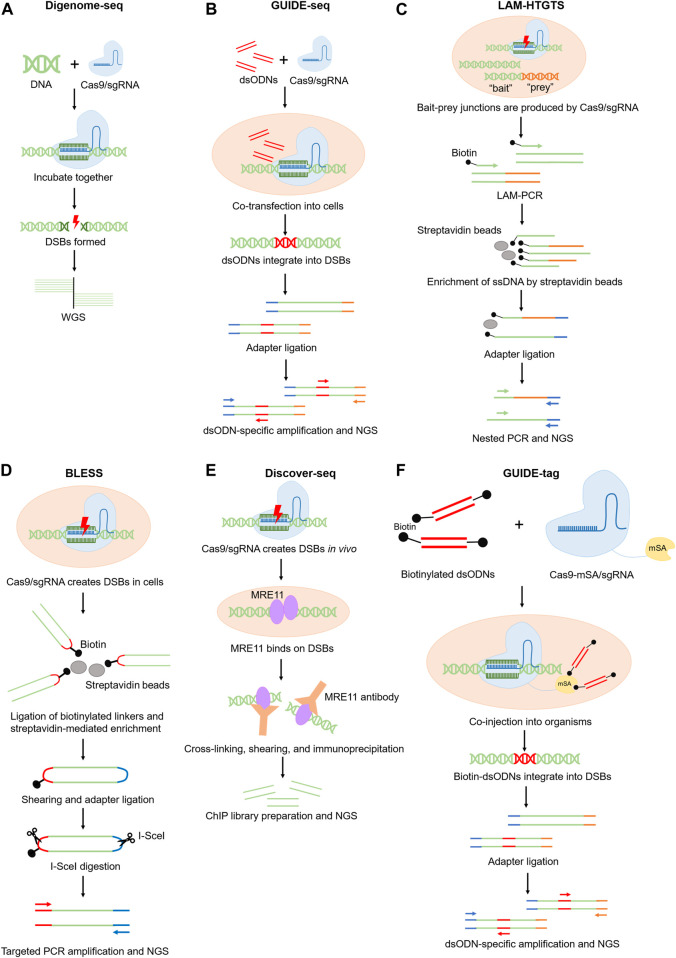
- Experimental detection methods vary widely: Digenome-seq detects indels at 0.1% frequency or lower but needs ∼400–500 million reads for the human genome; SITE-seq needs ∼0.62–2.46 million reads but only 10% of positive hits were validated by targeted sequencing; CIRCLE-seq needs ∼4–5 million reads but has a high false positive rate; GUIDE-seq detects indel frequencies as low as 0.03% but captures only 30%–50% of all DSBs.
- Specificity strategies include high-fidelity Cas9 variants (eSpCas9, SpCas9-HF1, hypaCas9, evoCas9), sgRNA length/chemical modification, DSB-independent base editors, and delivery methods such as RNP electroporation and LNPs; evoCas9, SpCas9-HF1, and eSpCas9 reduced off-target sites by 98.7%, 95.4%, and 94.1%, respectively, in one comparison.
Methods
- This is a narrative review, not a primary experimental study; no original sample, dataset, or systematic meta-analysis is described.
- It synthesizes in silico prediction tools, cell-free, cell culture-based, and in vivo off-target detection methods, plus strategies to reduce off-target effects.
- Main analysis is qualitative comparison of advantages and disadvantages, organized in Tables 1 and 2 and supported by cited literature.
Limitations
- The paper states that limitations remain in balancing accuracy versus sensitivity of off-target detection techniques, and that direct assessment of off-target effects in vivo and in patients is particularly challenging.
- It notes that in silico predictions are biased toward sgRNA-dependent off-target effects and need experimental validation, and that many experimental methods have limitations such as high cost, high sequencing coverage, low sensitivity, false positives, false negatives, or dependence on chromatin accessibility.
- Evident from the text: as a review, it provides no new experimental data, and it states there is currently no standardized approach to confirm the sensitivity of Discover-seq.
Model-written summary. Check it against the paper before relying on it.
Integrity signals
Registry
Cites
Statistics
Figures
Verification
Claims the paper makes
78 Valid · 10 Not valid · 21 Not checked · 25 Own results and interpretations
At least one cited source doesn’t support this claim or points to a different paper, and none confirmed it — see the verdicts below.
In the paper
“Similarly, the Elevation tool also includes DNA accessibility information to predict potential off-target sites (Listgarten et al., 2018).”
§ Off-target effects in CRISPR/Cas9 gene editing > 2 In silico prediction
What the sources say
- Disputedcites Listgarten et al., 2018 matched to “Prediction of off-target activities for the end-to-end design of CRISPR guide RNAs” (2018) sourceExperimental — accuracy not yet measured
The Results section, “Predicting with chromatin accessibility” (page not provided), says the authors tested DNase I accessibility features but decided not to include them in the final deployed Elevation model because the results were inconclusive. Thus, the paper says the tool does not include the information the claim attributes to it. (LLM, conf=0.93)
Checked by a reasoning model — may be wrong.
plain- Asserted: passes — The authors put it forward as true.
- Checkable: passes — It can be checked against evidence.
- Load-bearing: unclear — It is unclear whether the paper’s conclusions depend on it.
- Based: passes — The paper gives a reason why it holds.
- Disputed
Some cited sources support this claim and some don’t — read each source’s verdict below.
In the paper
“A primary limitation of GUIDE-seq is relevant to the low delivery efficiency of dsODNs into cells, which results in detection of only 30%–50% of all the DSBs (Tsai et al., 2015; Pan et al., 2022).”
§ Off-target effects in CRISPR/Cas9 gene editing > 3 Experimental detection > 3.2 Cell culture-based methods
What the sources say
- Disputedcites Tsai et al., 2015 matched to “GUIDE-seq enables genome-wide profiling of off-target cleavage by CRISPR-Cas nucleases” (2015) sourceExperimental — accuracy not yet measured
The Results (Overview of the GUIDE-Seq method; page unavailable) report robust dsODN integration, at rates two- to three-fold lower than indel frequencies at the tested sites—not detection of 30%–50% of all DSBs. The Discussion (page unavailable) describes dsODN integration as very efficient and reports detection of 38 of 40 previously identified off-target sites, contrary to the claimed primary limitation. (LLM, conf=0.87)
Checked by a reasoning model — may be wrong.
- Partly supportedcites Pan et al., 2022 matched to “Massively targeted evaluation of therapeutic CRISPR off-targets in cells” (2022) sourceExperimental — accuracy not yet measured
The Introduction (page unavailable) says GUIDE-seq relies on inserting double-stranded DNA at double-strand breaks, and the Results section on SURRO-seq validation likewise describes insertion of a double-stranded oligonucleotide. Neither passage says that delivery into cells is inefficient or that GUIDE-seq detects only 30%–50% of DSBs; searches for those terms found no such estimate in our copy. (LLM, conf=0.84)
plainstates a cause- Asserted: passes — The authors put it forward as true.
- Checkable: passes — It can be checked against evidence.
- Load-bearing: unclear — It is unclear whether the paper’s conclusions depend on it.
- Based: passes — The paper gives a reason why it holds.
- Disputed
At least one cited source doesn’t support this claim or points to a different paper, and none confirmed it — see the verdicts below.
In the paper
“| Delivery methods improvement | Application in cell culture [89–94] | RNP electroporation: Rapid transfection and turnover | Eliminate off-target effects |”
§ Off-target effects in CRISPR/Cas9 gene editing > 4 Strategies to reduce off-target effects > 4.1 Cas9 improvement
What the sources say
- Not checked — no full text of the sourcecites [89] Wang X. Wu Y. Yee J. K. (2021). Detection of CRISPR/Cas9-Generated off-target effect by integration-defective lentiviral vector. Methods Mol. Biol. 2162, 243– 260. 10.1007/978-1-0716-0687-2_14 32926387 source
- Disputedcites [90] Wienert B. Wyman S. K. Richardson C. D. Yeh C. D. Akcakaya P. Porritt M. J. (2019). Unbiased detection of CRISPR off-targets in vivo using DISCOVER-Seq. Science 364 (6437), 286– 289. 10.1126/science.aav9023 31000663 PMC6589096 sourceExperimental — accuracy not yet measured
The Introduction (page unavailable) reports editing patient-derived iPSCs with HiFi-Cas9 RNPs and detecting two off-targets with the wild-type guide. That contradicts the claim that RNP delivery eliminates off-target effects; the passage does not specify electroporation or rapid turnover. (LLM, conf=0.86)
Checked by a reasoning model — may be wrong.
- Not checked — no full text of the sourcecites [91] Willyard C. (2017). The epigenome editors: How tools such as CRISPR offer new details about epigenetics. Nat. Med. 23 (8), 900– 903. 10.1038/nm0817-900 28777784 source
- Could not verifycites [92] Witzigmann D. Kulkarni J. A. Leung J. Chen S. Cullis P. R. van der Meel R. (2020). Lipid nanoparticle technology for therapeutic gene regulation in the liver. Adv. Drug Deliv. Rev. 159, 344– 363. 10.1016/j.addr.2020.06.026 32622021 PMC7329694 sourceExperimental — accuracy not yet measured
The ‘mRNA for gene expression and genome editing’ section describes lipid-nanoparticle delivery of Cas9-encoding mRNA with sgRNA, including results in mice. Searches for RNP electroporation, rapid turnover, and off-target effects found no passage addressing whether electroporation in cell culture eliminates off-target effects. The available passages therefore do not verify the claim. (LLM, conf=0.74)
- Could not verifycites [93] Wu X. Scott D. A. Kriz A. J. Chiu A. C. Hsu P. D. Dadon D. B. (2014). Genome-wide binding of the CRISPR endonuclease Cas9 in mammalian cells. Nat. Biotechnol. 32 (7), 670– 676. 10.1038/nbt.2889 24752079 PMC4145672 sourceExperimental — accuracy not yet measured
The Online Methods (Cell culture) say transfections used Lipofectamine 2000, not RNP electroporation. The Results (One of 295 off-target sites is mutated above background) report an off-target mutation, but do not test whether RNP electroporation eliminates off-target effects. Searches for RNP electroporation and ribonucleoprotein delivery found no passage addressing that claim. (LLM, conf=0.76)
- Could not verifycites [94] Wu Y. Ren Q. Zhong Z. Liu G. Han Y. Bao Y. (2022). Genome-wide analyses of PAM-relaxed Cas9 genome editors reveal substantial off-target effects by ABE8e in rice. Plant Biotechnol. J. 20 (9), 1670– 1682. 10.1111/pbi.13838 35524459 PMC9398351 sourceExperimental — accuracy not yet measured
The Experimental procedures section describes Agrobacterium-mediated transformation of rice calli, not RNP electroporation in cell culture. The Results report off-target mutations from the rice editors studied, but do not test whether RNP electroporation eliminates them. Searches for RNP delivery and electroporation found no passage addressing that claim. (LLM, conf=0.77)
plainstates a cause- Asserted: passes — The authors put it forward as true.
- Checkable: passes — It can be checked against evidence.
- Load-bearing: unclear — It is unclear whether the paper’s conclusions depend on it.
- Based: passes — The paper gives a reason why it holds.
The cited sources support only part of this claim — read each source’s verdict below.
In the paper
“Cas-OFFinder is more widely applicated due to its high tolerance of sgRNA length, PAM types, and the number of mismatches or bulges (Bae et al., 2014).”
§ Off-target effects in CRISPR/Cas9 gene editing > 2 In silico prediction
What the sources say
- Partly supportedcites Bae et al., 2014 matched to “Cas-OFFinder: A fast and versatile algorithm that searches for potential off-target sites of Cas9 RNA-guided endonucleases” (2014) sourceExperimental — accuracy not yet measured
The Results and Discussion section reports searches using 20-bp and 24-bp guide-matching sequences and different PAMs; its conclusion says Cas-OFFinder does not limit the number of mismatched bases. The Methods section describes counting mismatches, but no passage establishes that the tool tolerates bulges. That part of the claim is unsupported by this copy. (LLM, conf=0.87)
plainstates a cause- Asserted: passes — The authors put it forward as true.
- Checkable: passes — It can be checked against evidence.
- Load-bearing: unclear — It is unclear whether the paper’s conclusions depend on it.
- Based: passes — The paper gives a reason why it holds.
- Partly supported
The cited sources support only part of this claim — read each source’s verdict below.
In the paper
“Although CRISPR/Cas systems exhibit tremendous potential in translational medicine, off-target effects remain a major challenge (Fu et al., 2013; Hsu et al., 2013; Pacesa et al., 2022).”
§ Off-target effects in CRISPR/Cas9 gene editing > 1 Introduction
What the sources say
- Not matchedcites Fu et al., 2013
This doesn’t read as a citation we can look up.
- Partly supportedcites Hsu et al., 2013 matched to “DNA targeting specificity of RNA-guided Cas9 nucleases” (2013) sourceExperimental — accuracy not yet measured
The paper’s Abstract (page unavailable) documents off-target editing in human cells and describes ways to minimize it, supporting the claim that off-target effects are a challenge for Cas9 genome editing. It does not specifically assess translational medicine or establish how major that challenge is in clinical use. (LLM, conf=0.81)
- Supportedcites Pacesa et al., 2022 matched to “Structural basis for Cas9 off-target activity” (2022) source
The Introduction says that off-target activity of SpCas9 and other Cas9 enzymes presents a safety concern for therapeutic applications. The Discussion also links improved off-target prediction to safer therapeutic use, supporting the cited background claim. (LLM, conf=0.91)
plain- Asserted: passes — The authors put it forward as true.
- Checkable: passes — It can be checked against evidence.
- Load-bearing: passes — The paper’s conclusions depend on it.
- Based: passes — The paper gives a reason why it holds.
- Not matched
82 more claims · 52 with their cited sources checked
Create a free account to see all 134 claims and to verify the 1 reference still open.
- Probably not a substantial claim. 20
- It may state two separate claims as one. 33
Claims other papers make about this one
Each is checked against this paper’s own text: does it say what the citing paper says it does?
The source backs part of the claim, not all of it — or backs it for a different population, condition or comparison.
In the citing paper
“Off-target effects are unintended genomic modifications occur when guide RNA (gRNA) binds to sequences similar to, but not identical with, the intended target, potentially resulting in undesirable DNA cleavage and mutations (Guo et al., 2023; Lopes and Prasad, 2024; Garrigues et al., 2023).”
From Emerging applications of gene editing technologies for the development of climate-resilient crops (2025) · cites this paper as Guo et al., 2023
Experimental — accuracy not yet measuredThe source backs part of the claim, not all of it — or backs it for a different population, condition or comparison.
In the citing paper
“For instance, recent studies have shown that Cas9 tolerates up to three mismatches between the gRNA and genomic DNA, which increases the chances of off-target effects in regions with higher GC content.”
From Hybrid Neural Networks for Off-Target Prediction in Gene Editing: Integrating Sequence and Biophysical Features (2025) · cites this paper as [2]
Experimental — accuracy not yet measuredThe source backs part of the claim, not all of it — or backs it for a different population, condition or comparison.
In the citing paper
“Although CRISPR/Cas9 introduces targeted mutations, it actually supports the maintenance of clonal fidelity by offering precise and controlled gene editing, unlike the random and widespread genetic alterations associated with somaclonal variation [178].”
From Somaclonal Variation and Clonal Fidelity in Commercial Micropropagation: Challenges and Perspectives (2025) · cites this paper as [178]
Experimental — accuracy not yet measured
Self-check
Percentages, sums and reported differences re-computed from the paper’s own numbers.
Each contradiction between two passages listed here was confirmed by an independent check.
Rated minor: it would not touch a result — a value no result rests on, a p-value that stays on the same side of the significance level, or a conflict that is clerical, resolved elsewhere in the paper, or outside its own findings.
In the paper
§ Off-target effects in CRISPR/Cas9 gene editing > 2 In silico prediction
“| In silico prediction | Alignment based models | CasOT [21] | Adjustable in PAM sequence and the mismatch number (at most 6) | Conveniently accessable via internet | Biased toward sgRNA-dependent off-target effects; results need experimental validation |”
§ Off-target effects in CRISPR/Cas9 gene editing > References
“95. Xiao A. Cheng Z. Kong L. Zhu Z. Lin S. Gao G. (2014). CasOT: A genome-wide cas9/gRNA off-target searching tool.”
Citations
Cites
A Programmable Dual-RNA–Guided DNA Endonuclease in Adaptive Bacterial Immunity
Jinek, M., Chylinski, K., Fonfara, I., Hauer, M., Doudna, J. A., & Charpentier, E. (2012) · Science · doi:10.1126/science.1225829 · Cited by 17,116 · cited 11×
“Cas-OFFinder is more widely applicated due to its high tolerance of sgRNA length, PAM types, and the number of mismatches or bulges (Bae et al., 2014).”
BackgroundInfluentialMultiplex Genome Engineering Using CRISPR/Cas Systems
Cong, L., Ran, F. A., Cox, D., Lin, S., Barretto, R., Habib, N., Hsu, P. D., Wu, X., Jiang, W., Marraffini, L. A., et al. (2013) · Science · doi:10.1126/science.1231143 · Cited by 15,339 · cited 11×
“Cas-OFFinder is more widely applicated due to its high tolerance of sgRNA length, PAM types, and the number of mismatches or bulges (Bae et al., 2014).”
BackgroundInfluentialProgrammable editing of a target base in genomic DNA without double-stranded DNA cleavage
Komor, A. C., Kim, Y. B., Packer, M. S., Zuris, J. A., & Liu, D. R. (2016) · Nature · doi:10.1038/nature17946 · Cited by 5,437 · cited 1×
“ABE catalyzes the editing from adenine to guanine and CBE converts cytosine to thymine (Komor et al., 2016; Gaudelli et al., 2017; Wu et al., 2022).”
BackgroundDNA targeting specificity of RNA-guided Cas9 nucleases
Hsu, P. D., Scott, D. A., Weinstein, J. A., Ran, F. A., Konermann, S., Agarwala, V., Li, Y., Fine, E. J., Wu, X., Shalem, O., et al. (2013) · Nature Biotechnology · doi:10.1038/nbt.2647 · Cited by 4,741 · cited 5×
“The off-target sites are often sgRNA-dependent, since Cas9 is known to tolerate up to 3 mismatches between sgRNA and genomic DNA (Fu et al., 2013; Hsu et al., 2013; Wang et al., 2016a).”
BackgroundInfluentialOptimized sgRNA design to maximize activity and minimize off-target effects of CRISPR-Cas9
Doench, J. G., Fusi, N., Sullender, M., Hegde, M., Vaimberg, E. W., Donovan, K. F., Smith, I., Tothova, Z., Wilen, C., Orchard, R., et al. (2016) · Nature Biotechnology · doi:10.1038/nbt.3437 · Cited by 4,637 · cited 2×
“The CFD algorithm is derived from a CRISPR/Cas9 genetic screen experiment that assessed the off-target effects of thousands of sgRNAs (Doench et al., 2016).”
BackgroundMethodProgrammable base editing of A•T to G•C in genomic DNA without DNA cleavage
Gaudelli, N. M., Komor, A. C., Rees, H. A., Packer, M. S., Badran, A. H., Bryson, D. I., & Liu, D. R. (2017) · Nature · doi:10.1038/nature24644 · Cited by 4,184 · cited 1×
“ABE catalyzes the editing from adenine to guanine and CBE converts cytosine to thymine (Komor et al., 2016; Gaudelli et al., 2017; Wu et al., 2022).”
BackgroundHigh-Frequency off-Target Mutagenesis Induced by CRISPR-Cas Nucleases in Human Cells
Fu, Y., Foden, J. A., Khayter, C., Maeder, M. L., Reyon, D., Joung, J. K., & Sander, J. D. (2013) · Nature Biotechnology · doi:10.1038/nbt.2623 · Cited by 3,292 · cited 2×
“The off-target sites are often sgRNA-dependent, since Cas9 is known to tolerate up to 3 mismatches between sgRNA and genomic DNA (Fu et al., 2013; Hsu et al., 2013; Wang et al., 2016a).”
BackgroundHigh-fidelity CRISPR-Cas9 nucleases with no detectable genome-wide off-target effects
Kleinstiver, B. P., Pattanayak, V., Prew, M. S., Tsai, S. Q., Nguyen, N. T., Zheng, Z., & Joung, J. K. (2016) · Nature · doi:10.1038/nature16526 · Cited by 2,673
Rationally engineered Cas9 nucleases with improved specificity
Slaymaker, I. M., Gao, L., Zetsche, B., Scott, D. A., Yan, W. X., & Zhang, F. (2016) · Science · doi:10.1126/science.aad5227 · Cited by 2,414 · cited 8×
“This idea led to the rational design of SpCas9 mutants such as enhanced SpCas9 (eSpCas9) and SpCas9-HF1 (HF1 for high-fidelity variant #1).”
BackgroundInfluentialBae, S., Park, J., & Kim, J.-S. (2014) · Bioinformatics · doi:10.1093/bioinformatics/btu048 · Cited by 2,339 · cited 1×
“Cas-OFFinder is more widely applicated due to its high tolerance of sgRNA length, PAM types, and the number of mismatches or bulges (Bae et al., 2014).”
Background
Cited by
Items 101–200 of 612
Viral and nonviral nanocarriers for in vivo CRISPR-based gene editing
Guo, Z., Zhu, A. T., Fang, R. H., & Zhang, L. (2024) · Nano Research · doi:10.1007/s12274-024-6748-5 · Cited by 18
Synthetic Biology-Based Approaches to Investigate Host–Pathogen Interactions
Banerjee, R. (2025) · SynBio · doi:10.3390/synbio3010004 · Cited by 17
“Additionally, off-target effects pose a significant risk, potentially leading to unintended genetic alterations that compromise the accuracy of experimental outcomes [98].”
Pan, Y., Yang, X., Zeng, Z., Liu, F., Luo, J. J., Shen, M., Zhou, W., Li, J., Jiang, G., Sun, L. J., et al. (2025) · Journal of Extracellular Vesicles · doi:10.1002/jev2.70130 · Cited by 17
Noormohamadi, H., Samarkhazan, H. S., Kargar, M., Maroufi, F., Servatian, N., & Davami, F. (2025) · Discover Oncology · doi:10.1007/s12672-025-03383-5 · Cited by 17
“…and reduce off-target effects, a variety of strategies have been established, including the application of high-fidelity Cas9 variants, which are specially engineered forms of the Cas9 enzyme. that have been modified to reduce off-target activity while maintaining on-target efficiency [31].”
Dziubańska-Kusibab, P. J., Nevedomskaya, E., & Haendler, B. (2024) · International Journal of Molecular Sciences · doi:10.3390/ijms25020705 · Cited by 16
“New developments to reduce such off-targets include utilization of improved Cas homologs, adjustments in sgRNA length and chemical changes, use of base editors, as well as advancements in the Cas9 and sgRNA administration route [90,167–169].”
BackgroundKruglova, N. A., & Shepelev, M. V. (2024) · Biomedicines · doi:10.3390/biomedicines12010119 · Cited by 18
“As this issue lies beyond the scope of our manuscript, we refer the readers to several recent reviews on this topic [67,68].”
BackgroundYang, Y., Zheng, Y., Zou, Q., Li, J., & Feng, H. (2024) · PLoS Computational Biology · doi:10.1371/journal.pcbi.1012340 · Cited by 17
Wang, L., Liu, J., Tang, J., Dang, Y., Sun, L., Liu, B., Li, H., He, X., Shuai, Q., Peng, Z., et al. (2024) · International Journal of Biological Macromolecules · doi:10.1016/j.ijbiomac.2024.135339 · Cited by 18
Marnis, H., & Syahputra, K. (2025) · Fish & Shellfish Immunology · doi:10.1016/j.fsi.2025.110220 · Cited by 17
Revolutionizing Implantation Studies: Uterine-Specific Models and Advanced Technologies
Li, S., & DeMayo, F. J. (2025) · Biomolecules · doi:10.3390/biom15030450 · Cited by 17
“However, the efficiency of CRISPR/Cas9 is not absolute; some cells may not undergo the intended genomic edits, and there is a potential risk of off-target effects [105].”
Engineering adeno-associated viral vectors for CRISPR/Cas based in vivo therapeutic genome editing
Moyo, B., Brown, L. B. C., Khondaker, I., & Bao, G. (2025) · Biomaterials · doi:10.1016/j.biomaterials.2025.123314 · Cited by 13
Chota, A., Abrahamse, H., & George, B. P. A. (2025) · Biomedicine & Pharmacotherapy · doi:10.1016/j.biopha.2025.118710 · Cited by 16
CRISPR-engineered microbiome: living therapeutics revolutionize blood cancer immunotherapy
Cheng, F., Samarkhazan, H. S., & Khazaei, Y. (2025) · npj Biofilms and Microbiomes · doi:10.1038/s41522-025-00882-9 · Cited by 18
“Futureworkmustincludestandardizedassays foroff-targetedits,quantitativeHGTmonitoring,and fi eld-scale environmental risk modeling to truly evaluate safety 35,100,101 .”
Bharti, N., Modi, U., Bhatia, D. D., & Solanki, R. (2026) · Nanoscale Advances · doi:10.1039/d5na00535c · Cited by 17
Challenges and Considerations of Preclinical Development for iPSC-Based Myogenic Cell Therapy
Sun, C., Serra, C., Kalicharan, B. H., Harding, J. S., & Rao, M. S. (2024) · Cells · doi:10.3390/cells13070596 · Cited by 16
“Any designed gRNA has the potential to hit off-target sites in the genome [92].”
BackgroundErdoğan, S. (2024) · Balkan Medical Journal · doi:10.4274/balkanmedj.galenos.2024.2024-080824 · Cited by 13
Advancing CRISPR-Based Solutions for COVID-19 Diagnosis and Therapeutics
Hadi, R., Poddar, A., Sonnaila, S., Bhavaraju, V. S. M., & Agrawal, S. (2024) · Cells · doi:10.3390/cells13211794 · Cited by 17
“Improving the design of gRNAs and optimizing the conditions for CRISPR activity is essential to minimize these off-target effects [41,85].”
BackgroundOpto-CRISPR: new prospects for gene editing and regulation
Huang, H.-C., Wu, L., Liu, K., & Ma, B. (2025) · Trends in biotechnology · doi:10.1016/j.tibtech.2025.06.018 · Cited by 19
Mkilima, T. (2025) · Microbial Pathogenesis · doi:10.1016/j.micpath.2025.107931 · Cited by 16
Avian Pathogenic Escherichia coli: Advances in Pathogenesis, Diagnosis, and Control
Kamal, O. M., Kneuper, H., Cogan, T. A., & Woodward, M. J. (2025) · Veterinary Sciences · doi:10.3390/vetsci13010019 · Cited by 19
“…could be mitigated by utilizing bioinformatics tools to design highly specific guide RNAs [456], modifying the guide RNA through extension or truncation [457], and using engineered Cas9 variants with improved fidelity, such as Streptococcus pyogenes Cas9 high-fidelity variant 1 [SpCas9-HF1] [458].”
Digitized Kinetic Analysis Enhances Genotyping Capacity of CRISPR-Based Biosensing
Park, J. S., Akarapipad, P., Chen, F., Shao, F., Mostafa, H. H., Hsieh, K., & Wang, T. (2024) · ACS Nano · doi:10.1021/acsnano.4c05312 · Cited by 13
Advances and Challenges in Gene Therapy for Inherited Retinal Dystrophies: A Comprehensive Review
Jain, R., & Daigavane, S. V. (2024) · Cureus · doi:10.7759/cureus.69895 · Cited by 24
Navigating gene editing in porcine embryos: Methods, challenges, and future perspectives
Hamze, J. G., Cambra, J. M., Navarro‐Serna, S., & Martinez-Serrano, C. A. (2025) · Genomics · doi:10.1016/j.ygeno.2025.111014 · Cited by 15
Gene Therapy for Hemoglobinopathies
Lidonnici, M. R., Scaramuzza, S., & Ferrari, G. (2023) · Human Gene Therapy · doi:10.1089/hum.2023.138 · Cited by 18
“124 Various methods for off-target effects detection have been developed so far, which are reviewed in Guo et al. 125 However, highly sensitive, unbiased, and precise assays are still a challenge for gene editing approaches.”
DeWeese, K., Molano, G., Calhoun, S., Lipzen, A., Jenkins, J., Williams, M. E., Plott, C., Talag, J., Grimwood, J., Jannink, J., et al. (2025) · Frontiers in Genetics · doi:10.3389/fgene.2025.1494480 · Cited by 14
“Additionally, genome engineering (e.g., CRISPR/Cas9 gene editing) relies on the construction of accurate genome assemblies for cultivated species to mitigate potential off-target genome modi fi cation (Guo et al., 2023).”
Breaking the fibrotic code: Nanotechnology-driven advances in renal fibrosis therapy
Liu, M., Li, X., Gao, Y., Wei, Z., Ma, J., Zhang, L., Zhang, X., Chen, K., & Liu, T. (2025) · Biomaterials · doi:10.1016/j.biomaterials.2025.123738 · Cited by 19
Shamsnajafabadi, H., Kaukonen, M. K., Bellingrath, J.-S., MacLaren, R. E., & Cehajic‐Kapetanovic, J. (2024) · Genes · doi:10.3390/genes15050625 · Cited by 11
“…editors with enhanced target specificity, optimizing efficient and localized delivery methods, and designing gRNAs with high specificity for the target site are some ways to minimize bystander effects and improve the safety and efficacy of base editing technologies for various applications [57,58].”
MethodEditing microbes to mitigate enteric methane emissions in livestock
Khan, F. A., Ali, A., Wu, D., Huang, C., Zulfiqar, H., Ali, M. F., Ahmed, B., Yousaf, M. R., Putri, E. M., Negara, W., et al. (2024) · World Journal of Microbiology and Biotechnology · doi:10.1007/s11274-024-04103-x · Cited by 20
“SpCas9 mutants such as paired SpCas9 nickases (Mali et al. 2013), dimeric dCas9 fokl nucleases (Tsai et al. 2014) and D1135E variants (Kleinstiver et al. 2015), DSB independent gene editing and improvements in delivery methods (Guo et al. 2023).”
Unravelling the advances of CRISPR-Cas9 as a precise antimicrobial therapy: A systematic review
de Souza, H. C. A., Panzenhagen, P., dos Santos, A. M. P., Portes, A. B., Fidelis, J., & Conte‐Júnior, C. A. (2025) · Journal of Global Antimicrobial Resistance · doi:10.1016/j.jgar.2025.02.002 · Cited by 14
Efficient nonviral integration of large transgenes into human T cells using Cas9-CLIPT
Tommasi, A. M., Cappabianca, D., Bugel, M., Gimse, K., Lund-Peterson, K., Shrestha, H., Arutyunov, D., Williams, J. A., Police, S. R., Indurthi, V. S. K., et al. (2025) · Molecular Therapy — Methods & Clinical Development · doi:10.1016/j.omtm.2025.101437 · Cited by 17
“46 To determine whether any off-target sites exist in Cas9-CLIPT TRAC -CAR T cells, we performed whole genome sequencing (WGS) (Figure 3A).”
Precise measurement of CRISPR genome editing outcomes through single-cell DNA sequencing
Kalter, N., Gulati, S., Rosenberg, M., Ayaz, Q., Nguyen, J., Wang, S., Schroeder, B., Li, C.-Y., & Hendel, A. (2025) · Molecular Therapy — Methods & Clinical Development · doi:10.1016/j.omtm.2025.101449 · Cited by 18
“22 27 To mitigate off-target genotoxicity, rigorous monitoring of off-target activity is essential for each therapeutically intended gRNA.”
Razalli, I. I., Abdullah‐Zawawi, M., Tamizi, A. A., Harun, S., Zainal‐Abidin, R., Jalal, M. I. A., Ullah, M. A., & Zainal, Z. (2025) · Planta · doi:10.1007/s00425-025-04666-5 · Cited by 12
“A critical aspect of conducting genome editing is ensuring that the tool precisely modifies the intended target site whilst avoiding unintended mutations elsewhere in the genome (Guo et al. 2023a).”
Shining light on CRISPR/Cas9 therapeutics for inherited retinal diseases
Geiger, A., Kennedy, J. G., Staker, L. G., Wensel, T. G., Casson, R. J., & Thomas, P. Q. (2025) · Progress in Retinal and Eye Research · doi:10.1016/j.preteyeres.2025.101376 · Cited by 11
Wu, F., He, W., Xiao, Y., Wu, Q., Zhang, Q., Zhang, T., Xu, L., & Pang, X. (2025) · Advanced Science · doi:10.1002/advs.202408397 · Cited by 17
Exploring CRISPR/Cas9 Gene Editing Applications for Enhancing Disease Resistance in Sugar Beet
Misra, V., Pandey, H., & Mall, A. K. (2023) · ACS Agricultural Science & Technology · doi:10.1021/acsagscitech.3c00193 · Cited by 14
Multiplex genome editing for climate-resilient woody plants
Sen, M. K., Mondal, S. K., Bharati, R., Severová, L., & Šrédl, K. (2025) · Frontiers in Forests and Global Change · doi:10.3389/ffgc.2025.1542459 · Cited by 12
Gene Editing Applications as Future Cardiovascular Therapies
Tadokoro, T., Olson, E. N., & Liu, N. (2025) · Annual Review of Genetics · doi:10.1146/annurev-genet-011725-094039 · Cited by 11
Gao, Z., Gao, Y., Wang, S., Li, X., Cao, W., Deng, W., Yao, L., Wei, X. C., Zhang, Z., Wang, S., et al. (2025) · Biosafety and Health · doi:10.1016/j.bsheal.2025.09.002 · Cited by 14
“Nevertheless, its use faces multiple challenges, including off-target effects that may cause unintended pathogenic consequences, variable editing ef fi ciency depending on cell type and repair pathway preference, and delivery systems that may elicit immune responses or nonspeci fi c toxicity [47,48].”
CRISPR–Cas systems against carbapenem resistance: from proof-of-concept to clinical translation
Tsolakidou, P. (2025) · Frontiers in Microbiology · doi:10.3389/fmicb.2025.1725247 · Cited by 12
Zhao, R., Wang, C., 李佳楣, Liao, Y., Huang, C., Hu, T., Zhang, H., & Zhang, W. (2026) · Molecular Biomedicine · doi:10.1186/s43556-026-00456-x · Cited by 18
“These include biological risks such as off-target activity and unintended genomic alterations, engineering limitations in delivery efficiency and tissue specificity, and broader clinical and regulatory challenges, including immunogenicity, long-term safety assessment, and ethical governance [120].”
Mbaraka, A., Meena, R. R., Menghani, E., & Verma, N. (2026) · Frontiers in Microbiology · doi:10.3389/fmicb.2026.1823476 · Cited by 16
“In addition to delivery challenges, off-target effects are a significant concern, as unintended cleavage of non-target genomic regions can disrupt beneficial microbiota or cause unpredictable genetic changes, especially in polymicrobial communities (Guo et al., 2023).”
Lu, Z., Zhang, L., Mu, Q., Liu, J., Chen, Y., Wang, H., Zhang, Y., Su, R., Wang, R., Wang, Z., et al. (2024) · Agriculture · doi:10.3390/agriculture14030487 · Cited by 18
“For example, the “GG20” technique of ggX20 sgRNAs containing two guanines makes sgRNAs more specific and can significantly reduce off-target effects [132] by using the CRISPR nickel enzyme to modify a nuclease domain of one of the DNA strands to reduce DNA damage and reduce off-target efficiency…”
MethodAdvances and challenges in gene therapy strategies for pediatric cancer: a comprehensive update
Moaveni, A. K., Amiri, M., Shademan, B., Farhadi, A., Behroozi, J., & Nourazarian, A. (2024) · Frontiers in Molecular Biosciences · doi:10.3389/fmolb.2024.1382190 · Cited by 14
Regenerative rehabilitation: a novel multidisciplinary field to maximize patient outcomes
Deng, C., Aldali, F., Luo, H., & Chen, H. (2024) · Medical Review · doi:10.1515/mr-2023-0060 · Cited by 14
Aydin, A., Yerlikaya, B. A., Yerlikaya, S., Yılmaz, N. N., & Kavas, M. (2025) · The Plant Genome · doi:10.1002/tpg2.20542 · Cited by 11
Borrajo, A. (2025) · Life · doi:10.3390/life15020276 · Cited by 26
“The structural properties of gRNAs significantly influence off-target effects, which not only reduce CRISPR-Cas9’s therapeutic precision but also compromise gene function studies [86].”
The role of tumor-derived exosomal LncRNA in tumor metastasis
Yu, Z., Fu, J., Mantareva, V. N., Blažević, I., Wu, Y., Wen, D., Battulga, T., Wang, Y.-Q., & Zhang, J. (2025) · Cancer Gene Therapy · doi:10.1038/s41417-024-00852-x · Cited by 11
Zheng, Y., Zou, Q., Li, J., & Yang, Y. (2025) · Genes · doi:10.3390/genes16040387 · Cited by 11
“Off-target detection methods for CRISPR-Cas9 are broadly categorized into biological experimental techniques and computational prediction approaches [13,14].”
Ciringione, A., & Rizzi, F. (2025) · International Journal of Molecular Sciences · doi:10.3390/ijms26104572 · Cited by 12
“However, a major concern in the applications of the CRISPR/Cas9 system is the off-target effects, although several in silico methods have been developed in the last decade to predict them [119].”
Vo, Q. D. (2025) · PLoS ONE · doi:10.1371/journal.pone.0325330 · Cited by 14
“The CRISPR-Cas9 system, for instance, can occasionally induce unintended double-strand breaks at genomic loci bearing partial sequence homology, potentially resulting in mosaic or undesirable mutations [138].”
Yoo, K. H., Szymura, S. J., Dong, Z., Kandel, A., Cha, S.-C., & Kwak, L. W. (2025) · Blood Advances · doi:10.1182/bloodadvances.2025017873 · Cited by 18
“43,44 Comprehensive off-target mapping (eg, genome-wide, unbiased identification of DSBs enabled by sequencing/circularization for high-throughput analysis of nucease genome-wide effects by sequencing) and high-fidelity nucleases are required before clinical application.”
Molecular mechanisms and genomic strategies for enhancing stress resilience in pepper crop
Ullah, I., Ullah, I., Zhang, H., Khan, M. R., Mateen, A., Pei, Y., Shakeel, A., Bhat, A. H., Fu, C., & Chen, R. (2025) · Scientia Horticulturae · doi:10.1016/j.scienta.2025.114403 · Cited by 11
Ye, Z., Wang, B., Wan, Z., & Guo, J. (2026) · Frontiers in Immunology · doi:10.3389/fimmu.2025.1710249 · Cited by 15
Ajay, A. K., Gasser, M., Hsiao, L., Böldicke, T. W., & Waaga-Gasser, A. M. (2024) · Antibodies · doi:10.3390/antib13010011 · Cited by 10
“Until now, intrabodies have demonstrated no off-target effects in contrast to siRNA [61,62] and CRISPR/Cas9 techniques [63].”
Zhang, J., Park, J.-Y., Kim, S.-W., Choi, Y., Cha, S.-Y., Jang, H., Wei, B., & Kang, M. (2024) · Vaccines · doi:10.3390/vaccines12030226 · Cited by 11
“Although gRNA design algorithms are under continual refinement, off-target activity can be unavoidable when the gRNA window is restricted to a narrow genomic location [28].”
BackgroundLi, X., Hu, H., Wang, H., Liu, J., Jiang, W., Zhou, F., & Zhang, J. (2025) · Materials Horizons · doi:10.1039/d4mh01158a · Cited by 15
Applications and advancements of CRISPR-Cas in the treatment of lung cancer
Pan, L., Ju, Y., Peng, F., & Luo, J. D. (2023) · Frontiers in Cell and Developmental Biology · doi:10.3389/fcell.2023.1295084 · Cited by 11
Directing RNA-modifying machineries towards endogenous RNAs: opportunities and challenges
Witzenberger, M., & Schwartz, S. (2024) · Trends in Genetics · doi:10.1016/j.tig.2024.01.001 · Cited by 10
Kim, K.-H., Kim, C. K., & Kim, W. (2023) · Scientia Horticulturae · doi:10.1016/j.scienta.2023.112714 · Cited by 9
Recent advances in genome engineering by CRISPR technology
Lee, Y., Oh, Y., & Lee, S. H. (2024) · BMB Reports · doi:10.5483/bmbrep.2023-0157 · Cited by 11
“Although the CRISPR system is currently one of the powerful gene editing tools, the CRISPR effectors recognize targets based on guide RNA; consequently, unintended off-target mutations in target-like off-target sequences remain a common challenge (9-14).”
BackgroundTargeted Gene Insertion: The Cutting Edge of CRISPR Drug Development with Hemophilia as a Highlight
Zhang, Z., Zhang, S., Wong, H. T., Li, D., & Feng, B. (2024) · BioDrugs · doi:10.1007/s40259-024-00654-5 · Cited by 11
“Extensive efforts have been dedicated to minimizing the risk of unintended targeting, including advancements in in silico prediction, restriction on Cas9 activity duration, and further engineering of Cas9 protein and sgRNA [105].”
Integrating CRISPR technology with exosomes: Revolutionizing gene delivery systems
Dara, M., Dianatpour, M., Azarpira, N., Tanideh, N., & Tanideh, R. (2024) · Biochemical and Biophysical Research Communications · doi:10.1016/j.bbrc.2024.151002 · Cited by 16
Genome editing in Latin America: research achievements and regulatory evolution
Hernández-Soto, A., & Gatica-Arias, A. (2024) · Plant Cell Tissue and Organ Culture (PCTOC) · doi:10.1007/s11240-024-02904-4 · Cited by 12
“Initial regulatory discussion around genome-editing adoption in human treatments highlights concerns about its precision (Guo et al. 2023).”
Tahakik, R., Deshmukh, A. G., Moharil, M. P., Jadhav, P. V., Kogade, V., More, K. D., & Shinde, V. P. (2024) · Bulletin of the National Research Centre/Bulletin of the National Research Center · doi:10.1186/s42269-024-01281-4 · Cited by 19
Developing a Versatile Arsenal: Novel Antimicrobials as Offensive Tools Against Pathogenic Bacteria
Ma, J., & Lu, Z. (2025) · Microorganisms · doi:10.3390/microorganisms13010172 · Cited by 8
Progress in skin gene therapy: From the inside and out
Osborn, M. J., Panda, S., Reineke, T. M., Tolar, J., & Nyström, A. (2025) · Molecular Therapy · doi:10.1016/j.ymthe.2025.03.017 · Cited by 9
Ismail, A., Khormi, M. A., Mawkili, W., Albaqami, A., Areshi, S. M., Aborasain, A. M., Hegazy, M. M., Amin, A. H., & Abo-Zaid, M. A. (2025) · Experimental Hematology · doi:10.1016/j.exphem.2025.104762 · Cited by 12
Current trends in gene therapy to treat inherited disorders of the brain
Matuszek, Ż., Brown, B. L., Yrigollen, C. M., Keiser, M. S., & Davidson, B. L. (2025) · Molecular Therapy · doi:10.1016/j.ymthe.2025.03.057 · Cited by 14
Retinoid dynamics in vision: from visual cycle biology to retina disease treatments
Swigris, J., Widjaja‐Adhi, M. A. K., & Golczak, M. (2025) · Pharmacology & Therapeutics · doi:10.1016/j.pharmthera.2025.108902 · Cited by 8
Ikhtiar, F., Jamal, A., & Bokhari, S. M. S. M. (2025) · Discover Oncology · doi:10.1007/s12672-025-03535-7 · Cited by 10
Pandya, K., & Kumar, D. (2025) · Ageing Research Reviews · doi:10.1016/j.arr.2025.102922 · Cited by 10
Nguyen, D. A. H., & Quang, M. T. (2025) · Molecular Biotechnology · doi:10.1007/s12033-025-01533-2 · Cited by 13
“Specificity improvements were achieved through structural modifications of the sgRNA architecture [156].”
Gene therapy approaches for GM1 gangliosidosis: Focus on animal and cellular studies
Hosseini, K., Fallahi, J., Tabei, K., & Razban, V. (2023) · Cell Biochemistry and Function · doi:10.1002/cbf.3887 · Cited by 8
“106,107 Among the disadvantages or limitations of using this vector, the following can be mentioned: very high off ‐ targets effects, 108 the necessity of the PAM sequence close to the 20 ‐ nucleotide sequence, 109 the toxicity of DNA damage, 110 the production of neutralizing antibodies by the…”
BackgroundSiow, K. M., Güngör, M., Wrona, D., Raimondi, F., Pastukhov, O., Tsapogas, P., Menzi, T., Schmitz, M., Kulcsár, P. I., Schwank, G., et al. (2024) · Molecular Therapy — Nucleic Acids · doi:10.1016/j.omtn.2024.102229 · Cited by 8
Gene therapy strategies for RAG1 deficiency: Challenges and breakthroughs
Gilioli, G., Lankester, A. C., de Kivit, S., Staal, F. J. T., & de Bruin, L. M. O. (2024) · Immunology Letters · doi:10.1016/j.imlet.2024.106931 · Cited by 9
Ding, Q., Cui, Z., Shi, Q., Zhang, Y., He, N., Guo, R., Tian, Y., Cao, S., Zhong, J., & Wang, H. (2025) · Transgenic Research · doi:10.1007/s11248-025-00435-y · Cited by 8
“Whole genome sequencing (WGS) is often used for off-target analysis and novel mutation screening in gene edited animals produced by the CRISPR system (Guo et al. 2023).”
Regulation of the Drosophila transcriptome by Pumilio and the CCR4-NOT deadenylase complex
Haugen, R. J., Barnier, C., Elrod, N. D., Luo, H., Jensen, M. K., Ji, P., Smibert, C. A., Lipshitz, H. D., Wagner, E. J., Freddolino, L., et al. (2024) · RNA · doi:10.1261/rna.079813.123 · Cited by 10
Mascarenhas, M. S., Nascimento, F. D. S., Rocha, A. D. J., Ferreira, M. D. S., Oliveira, W. D. D. S., Lino, L. S. M., Mendes, T. A. D. O., Ferreira, C. F., dos Santos-Serejo, J. A., & Amorim, É. P. (2024) · Current Issues in Molecular Biology · doi:10.3390/cimb46100659 · Cited by 9
“For epigenetics and chromatin organization experiments, off-target prediction by these in silico tools needs additional experimental validation [161].”
BackgroundMethodWattad, H., Molcho, J., Manor, R., Weil, S., Aflalo, E. D., Caspi, V. C., & Sagi, A. (2024) · International Journal of Molecular Sciences · doi:10.3390/ijms252312530 · Cited by 8
“Importantly, the prevention of off-target effects is a critical aspect of ensuring safety in CRISPR-based modifications [6,51,52] and should be an important consideration in any future manipulation.”
Diagnosis of Infectious Diseases by CRISPR/Cas System
Dara, M., Shafieipour, N., Saffar, M., Dianatpour, M., Tabei, S.-M.-B., & Dastgheib, S. M. M. (2025) · OBM Genetics · doi:10.21926/obm.genet.2502289 · Cited by 11
Davis, E., Ermi, A. G., & Sarkar, D. (2025) · Cancers · doi:10.3390/cancers17081375 · Cited by 7
“However, CRISPR/Cas9 is also subject to off-target effects, e.g., the Cas9 nuclease may introduce double-strand breaks at unplanned genomic locations [160].”
An NGS-based approach for precise and footprint-free CRISPR-based gene editing in human stem cells
Vandendriessche, B., Huyghebaert, J., Rossem, K. E. V., Cremers, T. C., Man, K. D., Sieliwończyk, E., Boen, H. M., Akdeniz, D., Rabaut, L., Schippers, J., et al. (2025) · Methods · doi:10.1016/j.ymeth.2025.05.004 · Cited by 7
Challenges in lentiviral vector production: retro-transduction of producer cell lines
Klimpel, M., Obert, C., Terrão, M. C., Singh, P., Wei, H., Chen, C., Gille, A., Wissing, S., & Laux, H. (2025) · Frontiers in Bioengineering and Biotechnology · doi:10.3389/fbioe.2025.1569298 · Cited by 8
“In addition, the widely used CRISPR-Cas9 technology harbors the risk of off-target effects, which could lead to unwanted or adverse effects to the cellular genome (Guo et al., 2023; Zhang et al., 2015).”
Biotechnological breakthroughs in rice disease management: an overview from transgenics to CRISPR
Ponnurangan, V., Namachivayam, R., Pradeep, R. K. M., et al. (2025) · Molecular Biology Reports · doi:10.1007/s11033-025-10701-1 · Cited by 7
CRISPR/Cas Technology for the Diagnosis of Animal Infectious Diseases
Meng, S., Zhao, Z. G., Huang, L., Peng, X., Chen, H., & Tang, X. (2025) · Microorganisms · doi:10.3390/microorganisms13092006 · Cited by 13
“The off-target effect is associated with the designed sgRNA, PAM, and Cas nuclease [139–142].”
Huang, M., Ewadi, A., Servatian, N., Noormohamadi, H., Aminov, Z., Muzammil, K., Esfahani, M. A., Abak, N., & Samarkhazan, H. S. (2025) · Critical Reviews in Oncology/Hematology · doi:10.1016/j.critrevonc.2025.104916 · Cited by 9
Advances in nucleic acid probe-based detection of gene point mutations: a review
Pu, X., & Wu, X. (2025) · Frontiers in Chemistry · doi:10.3389/fchem.2025.1672155 · Cited by 9
“The CRISPR/Cas9 system can also be used in conjunction with technologies such as Ampli fi ed Fragment Length Polymorphism Analysis (AFLPA) and Sanger sequencing for the enrichment of mutant sequences.”
InfluentialHypoimmune stem cells and islets: hype or a true breakthrough in diabetes treatment?
Shalaby, K. E., & Abdelalim, E. M. (2025) · Cellular & Molecular Biology Letters · doi:10.1186/s11658-025-00786-8 · Cited by 12
“Several predictive algorithms for gRNA design are available that can rank gRNAs specificity to avoid the use of gRNAs with high possibilities of off-target activity [48, 49, 206].”
InfluentialApplication of Gene Editing Technology in Livestock: Progress, Challenges, and Future Perspectives
Wang, J., Zhang, L., Pan, C., Lan, X., Xing, B., & Li, M. (2025) · Agriculture · doi:10.3390/agriculture15202155 · Cited by 14
“Compared to plasmid-based delivery, mRNA-based delivery via electroporation or lipid nanoparticles (LNPs) ensures transient Cas9 expression, thereby reducing the risk of genomic integration and enhancing editing precision [176].”
Assessing off-target effects in CRISPR/Cas9: challenges and strategies for precision DNA editing
Basit, A., Zhu, J., & Zheng, W. (2026) · Archives of Microbiology · doi:10.1007/s00203-025-04687-4 · Cited by 18
“This mismatch tolerance can lead to unintended DNA recognition and cleavage at off-target genomic loci (Guo et al. 2023).”
Liu, X., Quan, J., Li, Y., Wang, X., & Zhao, J. (2026) · Journal of Animal Science and Biotechnology/Journal of animal science and biotechnology · doi:10.1186/s40104-025-01328-0 · Cited by 10
“However, CRISPR-Cas9 is associated with off-target effects that can lead to unintended cleavage and disruption of non-target genes [142].”
Dörr, J., Gregor, L., Lacher, S. B., Öner, A., Sun, Y., Piseddu, I., Fertig, L., Spajic, S., Lesch, S., Michaelides, S., et al. (2026) · Nature Biomedical Engineering · doi:10.1038/s41551-025-01610-6 · Cited by 7
“As there are also gRNA-independent off-target effects 45 , we also performed genome analysis toolkit (GATK) variant calling in our samples.”
Gong, F., Xu, Y., Chen, J., Zhang, S., Dong, S., Healy, L., Seto, B. Y., Zhou, M., Lu, R. X. Z., Li, G., et al. (2026) · Nature Materials · doi:10.1038/s41563-026-02555-0 · Cited by 11
Tang, Q., Hu, Z., Zhao, J., Zhou, T., Tang, S., Wang, P., Xiao, R., Chen, Y., Wu, L., Zhou, M., et al. (2023) · International Journal of Molecular Sciences · doi:10.3390/ijms24109013 · Cited by 8
Lim, S. W., Na, D.-H., Lee, H., Fang, X., Cui, S., Shin, Y., Lee, K. I., Lee, J. Y., Yang, C. W., & Chung, B. H. (2023) · Cells · doi:10.3390/cells12182319 · Cited by 9
Shen, Z., Naveed, M., & Bao, J. (2024) · Wiley Interdisciplinary Reviews - RNA · doi:10.1002/wrna.1852 · Cited by 7
“However, the introduction of CRISPR/Cas9 components confounds the experiments and likely has a potential risk of off-target effects (C. Guo et al., 2023).”
BackgroundArshad, F., Yee, B. J., Ting, K. P., Janudin, A. A. S., bin Amir, M. N. A., & Ahmed, M. U. (2024) · Microchemical Journal · doi:10.1016/j.microc.2024.111826 · Cited by 11
Strategic base modifications refine RNA function and reduce CRISPR–Cas9 off-targets
Zhang, K., Shen, W. H., Zhao, Y., Xu, X., Liu, X., Qi, Q., Huang, S., Tian, T., & Zhou, X. (2025) · Nucleic Acids Research · doi:10.1093/nar/gkaf082 · Cited by 11
What did CRISPR-Cas9 accomplish in its first 10 years?
Khlidj, Y. (2023) · Biochemia Medica · doi:10.11613/bm.2023.030601 · Cited by 10
“The prediction of off-target activity is now possible through in silico tools and experimental methods (63).”
MethodCRISPR challenges in clinical developments
Khoshandam, M., Soltaninejad, H., Bhia, I., Goudarzi, M. T. H., & Hosseinkhani, S. (2024) · Progress in molecular biology and translational science · doi:10.1016/bs.pmbts.2024.08.001 · Cited by 11
Metadata
- Authors
- Guo, C., Ma, X., Gao, F., & Guo, Y.
- Affiliations
- Peking University (CN)
- Capital Medical University (CN)
- Corresponding author
- Gao, Fei
- Guo, Yuxuan
- Venue
- Frontiers in Bioengineering and Biotechnology
- Publisher
- Frontiers Media SA
- Published
- 2023-03-09
- Volume
- 11
- Pages
- 1143157-1143157
- ISSN
- 2296-4185 (ISSN-L)
- PMC
- PMC10034092
- OpenAlex
- W4323666400
- Cited by
- 704
- References
- 108
- Citations by year
- 2026: 225 · 2025: 290 · 2024: 154 · 2023: 35
- FWCI
- 17.24
- Type
- journal article
- Language
- en
- Open access
- gold
- doi.org
- Licence
- Locations
- Frontiers in Bioengineering and Biotechnology (publishedVersion, cc-by)
- PubMed Central (publishedVersion, cc-by)
- PubMed (publishedVersion)
- DOAJ (DOAJ: Directory of Open Access Journals) (submittedVersion, cc-by-sa)
- Funders
- National Natural Science Foundation of China (82100349, 82222006, 32100660, 82170367)
- Beijing Nova Program (Z211100002121003, 20220484205)
- Topics
- Life Sciences › Biochemistry, Genetics and Molecular Biology › Molecular Biology › CRISPR and Genetic Engineering
- Life Sciences › Biochemistry, Genetics and Molecular Biology › Molecular Biology › RNA regulation and disease
- Health Sciences › Medicine › Oncology › CAR-T cell therapy research
- Keywords
- CRISPR/Cas9, off-target effects, genome editing, gene therapy, Cas9 variants
About these checks
Registry, retraction, Cites and statistics results are computed, not judged, with one exception: a printed reference that no index lists is read once by a model before it counts as a citation error. Claims are extracted by a model and kept only when their quote appears verbatim in the text; each cited source is then checked, with a model’s help, for whether it says what the claim relies on. Those verdicts can be wrong — read the claim’s quote and the cited source before relying on one.
The claim verdicts this report counts are experimental: their accuracy is not yet measured.
A language model drew the claims from the paper on 2026-10-07, under version 3 of the claim definition (model deepseek-v4.1-flash, prompt extract-v3).
A second model labelled each claim on 2026-10-07 (model jev-1.13-20260917, definition revision gold-guideline-v0.2).
Cited sources are checked with a language model’s help (gpt-6-sol).
Statistics and arithmetic are recomputed, not judged.
Confidence bands are shown only for fields calibrated on our annotated test set. None is calibrated yet, so no band is shown.
What counts as a claim ›How we measure confidence ›How we check this ›
Are you an author, or do you see a problem with this page? Request a review
Data sources
Bibliographic data: Semantic Scholar, OpenAlex, Crossref.
Contains information from the Semantic Scholar Academic Graph Datasets, made available under the ODC Attribution License (ODC-BY 1.0).
Semantic Scholar’s data is described in: Kinney, R., et al. (2023). The Semantic Scholar Open Data Platform. arXiv:2301.10140.
