

Off-target effects in CRISPR/Cas9 gene editing
Open accessThe DOI matches its Crossref record; 106 of the 108 references it cites were found in a registry or an index; 151 of the 237 sources its claims cite were checked for support.
Abstract
Gene editing stands for the methods to precisely make changes to a specific nucleic acid sequence. With the recent development of the clustered regularly interspaced short palindromic repeats (CRISPR)/Cas9 system, gene editing has become efficient, convenient and programmable, leading to promising translational studies and clinical trials for both genetic and non-genetic diseases. A major concern in the applications of the CRISPR/Cas9 system is about its off-target effects, namely the deposition of unexpected, unwanted, or even adverse alterations to the genome. To date, many methods have been developed to nominate or detect the off-target sites of CRISPR/Cas9, which laid the basis for the successful upgrades of CRISPR/Cas9 derivatives with enhanced precision. In this review, we summarize these technological advancements and discuss about the current challenges in the management of off-target effects for future gene therapy.
Overview
CoChat Summary
TL;DR
This review summarizes methods for predicting and detecting CRISPR/Cas9 off-target effects and strategies for improving editing specificity. It emphasizes persistent trade-offs between accuracy and sensitivity and the difficulty of assessing off-target effects in vivo and in patients.
Key findings
- Off-target effects remain a major challenge for CRISPR/Cas9; Cas9 tolerates up to 3 mismatches between sgRNA and genomic DNA, and sgRNA-independent off-target effects also occur.
- In silico tools are convenient but biased toward sgRNA-dependent off-target effects and require experimental validation; examples include CasOT, Cas-OFFinder, FlashFry, Crisflash, MIT, CCTop, CROP-IT, CFD, DeepCRISPR, and Elevation.
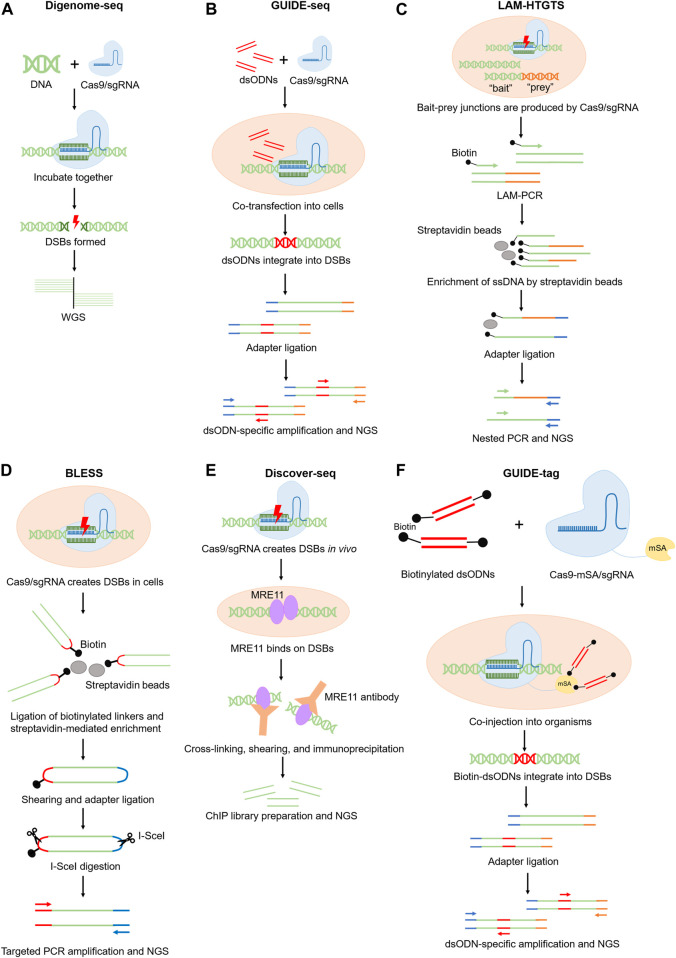
- Experimental detection methods vary widely: Digenome-seq detects indels at 0.1% frequency or lower but needs ∼400–500 million reads for the human genome; SITE-seq needs ∼0.62–2.46 million reads but only 10% of positive hits were validated by targeted sequencing; CIRCLE-seq needs ∼4–5 million reads but has a high false positive rate; GUIDE-seq detects indel frequencies as low as 0.03% but captures only 30%–50% of all DSBs.
- Specificity strategies include high-fidelity Cas9 variants (eSpCas9, SpCas9-HF1, hypaCas9, evoCas9), sgRNA length/chemical modification, DSB-independent base editors, and delivery methods such as RNP electroporation and LNPs; evoCas9, SpCas9-HF1, and eSpCas9 reduced off-target sites by 98.7%, 95.4%, and 94.1%, respectively, in one comparison.
Methods
- This is a narrative review, not a primary experimental study; no original sample, dataset, or systematic meta-analysis is described.
- It synthesizes in silico prediction tools, cell-free, cell culture-based, and in vivo off-target detection methods, plus strategies to reduce off-target effects.
- Main analysis is qualitative comparison of advantages and disadvantages, organized in Tables 1 and 2 and supported by cited literature.
Limitations
- The paper states that limitations remain in balancing accuracy versus sensitivity of off-target detection techniques, and that direct assessment of off-target effects in vivo and in patients is particularly challenging.
- It notes that in silico predictions are biased toward sgRNA-dependent off-target effects and need experimental validation, and that many experimental methods have limitations such as high cost, high sequencing coverage, low sensitivity, false positives, false negatives, or dependence on chromatin accessibility.
- Evident from the text: as a review, it provides no new experimental data, and it states there is currently no standardized approach to confirm the sensitivity of Discover-seq.
Model-written summary. Check it against the paper before relying on it.
Integrity signals
Registry
Cites
Statistics
Figures
Verification
Claims the paper makes
78 Valid · 10 Not valid · 21 Not checked · 25 Own results and interpretations
At least one cited source doesn’t support this claim or points to a different paper, and none confirmed it — see the verdicts below.
In the paper
“Similarly, the Elevation tool also includes DNA accessibility information to predict potential off-target sites (Listgarten et al., 2018).”
§ Off-target effects in CRISPR/Cas9 gene editing > 2 In silico prediction
What the sources say
- Disputedcites Listgarten et al., 2018 matched to “Prediction of off-target activities for the end-to-end design of CRISPR guide RNAs” (2018) sourceExperimental — accuracy not yet measured
The Results section, “Predicting with chromatin accessibility” (page not provided), says the authors tested DNase I accessibility features but decided not to include them in the final deployed Elevation model because the results were inconclusive. Thus, the paper says the tool does not include the information the claim attributes to it. (LLM, conf=0.93)
Checked by a reasoning model — may be wrong.
plain- Asserted: passes — The authors put it forward as true.
- Checkable: passes — It can be checked against evidence.
- Load-bearing: unclear — It is unclear whether the paper’s conclusions depend on it.
- Based: passes — The paper gives a reason why it holds.
- Disputed
Some cited sources support this claim and some don’t — read each source’s verdict below.
In the paper
“A primary limitation of GUIDE-seq is relevant to the low delivery efficiency of dsODNs into cells, which results in detection of only 30%–50% of all the DSBs (Tsai et al., 2015; Pan et al., 2022).”
§ Off-target effects in CRISPR/Cas9 gene editing > 3 Experimental detection > 3.2 Cell culture-based methods
What the sources say
- Disputedcites Tsai et al., 2015 matched to “GUIDE-seq enables genome-wide profiling of off-target cleavage by CRISPR-Cas nucleases” (2015) sourceExperimental — accuracy not yet measured
The Results (Overview of the GUIDE-Seq method; page unavailable) report robust dsODN integration, at rates two- to three-fold lower than indel frequencies at the tested sites—not detection of 30%–50% of all DSBs. The Discussion (page unavailable) describes dsODN integration as very efficient and reports detection of 38 of 40 previously identified off-target sites, contrary to the claimed primary limitation. (LLM, conf=0.87)
Checked by a reasoning model — may be wrong.
- Partly supportedcites Pan et al., 2022 matched to “Massively targeted evaluation of therapeutic CRISPR off-targets in cells” (2022) sourceExperimental — accuracy not yet measured
The Introduction (page unavailable) says GUIDE-seq relies on inserting double-stranded DNA at double-strand breaks, and the Results section on SURRO-seq validation likewise describes insertion of a double-stranded oligonucleotide. Neither passage says that delivery into cells is inefficient or that GUIDE-seq detects only 30%–50% of DSBs; searches for those terms found no such estimate in our copy. (LLM, conf=0.84)
plainstates a cause- Asserted: passes — The authors put it forward as true.
- Checkable: passes — It can be checked against evidence.
- Load-bearing: unclear — It is unclear whether the paper’s conclusions depend on it.
- Based: passes — The paper gives a reason why it holds.
- Disputed
At least one cited source doesn’t support this claim or points to a different paper, and none confirmed it — see the verdicts below.
In the paper
“| Delivery methods improvement | Application in cell culture [89–94] | RNP electroporation: Rapid transfection and turnover | Eliminate off-target effects |”
§ Off-target effects in CRISPR/Cas9 gene editing > 4 Strategies to reduce off-target effects > 4.1 Cas9 improvement
What the sources say
- Not checked — no full text of the sourcecites [89] Wang X. Wu Y. Yee J. K. (2021). Detection of CRISPR/Cas9-Generated off-target effect by integration-defective lentiviral vector. Methods Mol. Biol. 2162, 243– 260. 10.1007/978-1-0716-0687-2_14 32926387 source
- Disputedcites [90] Wienert B. Wyman S. K. Richardson C. D. Yeh C. D. Akcakaya P. Porritt M. J. (2019). Unbiased detection of CRISPR off-targets in vivo using DISCOVER-Seq. Science 364 (6437), 286– 289. 10.1126/science.aav9023 31000663 PMC6589096 sourceExperimental — accuracy not yet measured
The Introduction (page unavailable) reports editing patient-derived iPSCs with HiFi-Cas9 RNPs and detecting two off-targets with the wild-type guide. That contradicts the claim that RNP delivery eliminates off-target effects; the passage does not specify electroporation or rapid turnover. (LLM, conf=0.86)
Checked by a reasoning model — may be wrong.
- Not checked — no full text of the sourcecites [91] Willyard C. (2017). The epigenome editors: How tools such as CRISPR offer new details about epigenetics. Nat. Med. 23 (8), 900– 903. 10.1038/nm0817-900 28777784 source
- Could not verifycites [92] Witzigmann D. Kulkarni J. A. Leung J. Chen S. Cullis P. R. van der Meel R. (2020). Lipid nanoparticle technology for therapeutic gene regulation in the liver. Adv. Drug Deliv. Rev. 159, 344– 363. 10.1016/j.addr.2020.06.026 32622021 PMC7329694 sourceExperimental — accuracy not yet measured
The ‘mRNA for gene expression and genome editing’ section describes lipid-nanoparticle delivery of Cas9-encoding mRNA with sgRNA, including results in mice. Searches for RNP electroporation, rapid turnover, and off-target effects found no passage addressing whether electroporation in cell culture eliminates off-target effects. The available passages therefore do not verify the claim. (LLM, conf=0.74)
- Could not verifycites [93] Wu X. Scott D. A. Kriz A. J. Chiu A. C. Hsu P. D. Dadon D. B. (2014). Genome-wide binding of the CRISPR endonuclease Cas9 in mammalian cells. Nat. Biotechnol. 32 (7), 670– 676. 10.1038/nbt.2889 24752079 PMC4145672 sourceExperimental — accuracy not yet measured
The Online Methods (Cell culture) say transfections used Lipofectamine 2000, not RNP electroporation. The Results (One of 295 off-target sites is mutated above background) report an off-target mutation, but do not test whether RNP electroporation eliminates off-target effects. Searches for RNP electroporation and ribonucleoprotein delivery found no passage addressing that claim. (LLM, conf=0.76)
- Could not verifycites [94] Wu Y. Ren Q. Zhong Z. Liu G. Han Y. Bao Y. (2022). Genome-wide analyses of PAM-relaxed Cas9 genome editors reveal substantial off-target effects by ABE8e in rice. Plant Biotechnol. J. 20 (9), 1670– 1682. 10.1111/pbi.13838 35524459 PMC9398351 sourceExperimental — accuracy not yet measured
The Experimental procedures section describes Agrobacterium-mediated transformation of rice calli, not RNP electroporation in cell culture. The Results report off-target mutations from the rice editors studied, but do not test whether RNP electroporation eliminates them. Searches for RNP delivery and electroporation found no passage addressing that claim. (LLM, conf=0.77)
plainstates a cause- Asserted: passes — The authors put it forward as true.
- Checkable: passes — It can be checked against evidence.
- Load-bearing: unclear — It is unclear whether the paper’s conclusions depend on it.
- Based: passes — The paper gives a reason why it holds.
The cited sources support only part of this claim — read each source’s verdict below.
In the paper
“Cas-OFFinder is more widely applicated due to its high tolerance of sgRNA length, PAM types, and the number of mismatches or bulges (Bae et al., 2014).”
§ Off-target effects in CRISPR/Cas9 gene editing > 2 In silico prediction
What the sources say
- Partly supportedcites Bae et al., 2014 matched to “Cas-OFFinder: A fast and versatile algorithm that searches for potential off-target sites of Cas9 RNA-guided endonucleases” (2014) sourceExperimental — accuracy not yet measured
The Results and Discussion section reports searches using 20-bp and 24-bp guide-matching sequences and different PAMs; its conclusion says Cas-OFFinder does not limit the number of mismatched bases. The Methods section describes counting mismatches, but no passage establishes that the tool tolerates bulges. That part of the claim is unsupported by this copy. (LLM, conf=0.87)
plainstates a cause- Asserted: passes — The authors put it forward as true.
- Checkable: passes — It can be checked against evidence.
- Load-bearing: unclear — It is unclear whether the paper’s conclusions depend on it.
- Based: passes — The paper gives a reason why it holds.
- Partly supported
The cited sources support only part of this claim — read each source’s verdict below.
In the paper
“Although CRISPR/Cas systems exhibit tremendous potential in translational medicine, off-target effects remain a major challenge (Fu et al., 2013; Hsu et al., 2013; Pacesa et al., 2022).”
§ Off-target effects in CRISPR/Cas9 gene editing > 1 Introduction
What the sources say
- Not matchedcites Fu et al., 2013
This doesn’t read as a citation we can look up.
- Partly supportedcites Hsu et al., 2013 matched to “DNA targeting specificity of RNA-guided Cas9 nucleases” (2013) sourceExperimental — accuracy not yet measured
The paper’s Abstract (page unavailable) documents off-target editing in human cells and describes ways to minimize it, supporting the claim that off-target effects are a challenge for Cas9 genome editing. It does not specifically assess translational medicine or establish how major that challenge is in clinical use. (LLM, conf=0.81)
- Supportedcites Pacesa et al., 2022 matched to “Structural basis for Cas9 off-target activity” (2022) source
The Introduction says that off-target activity of SpCas9 and other Cas9 enzymes presents a safety concern for therapeutic applications. The Discussion also links improved off-target prediction to safer therapeutic use, supporting the cited background claim. (LLM, conf=0.91)
plain- Asserted: passes — The authors put it forward as true.
- Checkable: passes — It can be checked against evidence.
- Load-bearing: passes — The paper’s conclusions depend on it.
- Based: passes — The paper gives a reason why it holds.
- Not matched
82 more claims · 52 with their cited sources checked
Create a free account to see all 134 claims and to verify the 1 reference still open.
- Probably not a substantial claim. 20
- It may state two separate claims as one. 33
Claims other papers make about this one
Each is checked against this paper’s own text: does it say what the citing paper says it does?
The source backs part of the claim, not all of it — or backs it for a different population, condition or comparison.
In the citing paper
“Off-target effects are unintended genomic modifications occur when guide RNA (gRNA) binds to sequences similar to, but not identical with, the intended target, potentially resulting in undesirable DNA cleavage and mutations (Guo et al., 2023; Lopes and Prasad, 2024; Garrigues et al., 2023).”
From Emerging applications of gene editing technologies for the development of climate-resilient crops (2025) · cites this paper as Guo et al., 2023
Experimental — accuracy not yet measuredThe source backs part of the claim, not all of it — or backs it for a different population, condition or comparison.
In the citing paper
“For instance, recent studies have shown that Cas9 tolerates up to three mismatches between the gRNA and genomic DNA, which increases the chances of off-target effects in regions with higher GC content.”
From Hybrid Neural Networks for Off-Target Prediction in Gene Editing: Integrating Sequence and Biophysical Features (2025) · cites this paper as [2]
Experimental — accuracy not yet measuredThe source backs part of the claim, not all of it — or backs it for a different population, condition or comparison.
In the citing paper
“Although CRISPR/Cas9 introduces targeted mutations, it actually supports the maintenance of clonal fidelity by offering precise and controlled gene editing, unlike the random and widespread genetic alterations associated with somaclonal variation [178].”
From Somaclonal Variation and Clonal Fidelity in Commercial Micropropagation: Challenges and Perspectives (2025) · cites this paper as [178]
Experimental — accuracy not yet measured
Self-check
Percentages, sums and reported differences re-computed from the paper’s own numbers.
Each contradiction between two passages listed here was confirmed by an independent check.
Rated minor: it would not touch a result — a value no result rests on, a p-value that stays on the same side of the significance level, or a conflict that is clerical, resolved elsewhere in the paper, or outside its own findings.
In the paper
§ Off-target effects in CRISPR/Cas9 gene editing > 2 In silico prediction
“| In silico prediction | Alignment based models | CasOT [21] | Adjustable in PAM sequence and the mismatch number (at most 6) | Conveniently accessable via internet | Biased toward sgRNA-dependent off-target effects; results need experimental validation |”
§ Off-target effects in CRISPR/Cas9 gene editing > References
“95. Xiao A. Cheng Z. Kong L. Zhu Z. Lin S. Gao G. (2014). CasOT: A genome-wide cas9/gRNA off-target searching tool.”
Citations
Cites
A Programmable Dual-RNA–Guided DNA Endonuclease in Adaptive Bacterial Immunity
Jinek, M., Chylinski, K., Fonfara, I., Hauer, M., Doudna, J. A., & Charpentier, E. (2012) · Science · doi:10.1126/science.1225829 · Cited by 17,116 · cited 11×
“Cas-OFFinder is more widely applicated due to its high tolerance of sgRNA length, PAM types, and the number of mismatches or bulges (Bae et al., 2014).”
BackgroundInfluentialMultiplex Genome Engineering Using CRISPR/Cas Systems
Cong, L., Ran, F. A., Cox, D., Lin, S., Barretto, R., Habib, N., Hsu, P. D., Wu, X., Jiang, W., Marraffini, L. A., et al. (2013) · Science · doi:10.1126/science.1231143 · Cited by 15,339 · cited 11×
“Cas-OFFinder is more widely applicated due to its high tolerance of sgRNA length, PAM types, and the number of mismatches or bulges (Bae et al., 2014).”
BackgroundInfluentialProgrammable editing of a target base in genomic DNA without double-stranded DNA cleavage
Komor, A. C., Kim, Y. B., Packer, M. S., Zuris, J. A., & Liu, D. R. (2016) · Nature · doi:10.1038/nature17946 · Cited by 5,437 · cited 1×
“ABE catalyzes the editing from adenine to guanine and CBE converts cytosine to thymine (Komor et al., 2016; Gaudelli et al., 2017; Wu et al., 2022).”
BackgroundDNA targeting specificity of RNA-guided Cas9 nucleases
Hsu, P. D., Scott, D. A., Weinstein, J. A., Ran, F. A., Konermann, S., Agarwala, V., Li, Y., Fine, E. J., Wu, X., Shalem, O., et al. (2013) · Nature Biotechnology · doi:10.1038/nbt.2647 · Cited by 4,741 · cited 5×
“The off-target sites are often sgRNA-dependent, since Cas9 is known to tolerate up to 3 mismatches between sgRNA and genomic DNA (Fu et al., 2013; Hsu et al., 2013; Wang et al., 2016a).”
BackgroundInfluentialOptimized sgRNA design to maximize activity and minimize off-target effects of CRISPR-Cas9
Doench, J. G., Fusi, N., Sullender, M., Hegde, M., Vaimberg, E. W., Donovan, K. F., Smith, I., Tothova, Z., Wilen, C., Orchard, R., et al. (2016) · Nature Biotechnology · doi:10.1038/nbt.3437 · Cited by 4,637 · cited 2×
“The CFD algorithm is derived from a CRISPR/Cas9 genetic screen experiment that assessed the off-target effects of thousands of sgRNAs (Doench et al., 2016).”
BackgroundMethodProgrammable base editing of A•T to G•C in genomic DNA without DNA cleavage
Gaudelli, N. M., Komor, A. C., Rees, H. A., Packer, M. S., Badran, A. H., Bryson, D. I., & Liu, D. R. (2017) · Nature · doi:10.1038/nature24644 · Cited by 4,184 · cited 1×
“ABE catalyzes the editing from adenine to guanine and CBE converts cytosine to thymine (Komor et al., 2016; Gaudelli et al., 2017; Wu et al., 2022).”
BackgroundHigh-Frequency off-Target Mutagenesis Induced by CRISPR-Cas Nucleases in Human Cells
Fu, Y., Foden, J. A., Khayter, C., Maeder, M. L., Reyon, D., Joung, J. K., & Sander, J. D. (2013) · Nature Biotechnology · doi:10.1038/nbt.2623 · Cited by 3,292 · cited 2×
“The off-target sites are often sgRNA-dependent, since Cas9 is known to tolerate up to 3 mismatches between sgRNA and genomic DNA (Fu et al., 2013; Hsu et al., 2013; Wang et al., 2016a).”
BackgroundHigh-fidelity CRISPR-Cas9 nucleases with no detectable genome-wide off-target effects
Kleinstiver, B. P., Pattanayak, V., Prew, M. S., Tsai, S. Q., Nguyen, N. T., Zheng, Z., & Joung, J. K. (2016) · Nature · doi:10.1038/nature16526 · Cited by 2,673
Rationally engineered Cas9 nucleases with improved specificity
Slaymaker, I. M., Gao, L., Zetsche, B., Scott, D. A., Yan, W. X., & Zhang, F. (2016) · Science · doi:10.1126/science.aad5227 · Cited by 2,414 · cited 8×
“This idea led to the rational design of SpCas9 mutants such as enhanced SpCas9 (eSpCas9) and SpCas9-HF1 (HF1 for high-fidelity variant #1).”
BackgroundInfluentialBae, S., Park, J., & Kim, J.-S. (2014) · Bioinformatics · doi:10.1093/bioinformatics/btu048 · Cited by 2,339 · cited 1×
“Cas-OFFinder is more widely applicated due to its high tolerance of sgRNA length, PAM types, and the number of mismatches or bulges (Bae et al., 2014).”
Background
Cited by
Items 501–600 of 612
dHyperCas12a enables multiplexed CRISPRi screens
Melore, S., Amador, C. D. M., Hamilton, M. C., Gersbach, C. A., & Reddy, T. E. (2026) · Nature Communications · doi:10.1038/s41467-026-69090-z · Cited by 8
Unveiling FLNC variants: iPSC-derived myogenic cells as a model to study disease mechanisms
Daya, N., Schänzer, A., Hentschel, A., Kienitz, M., Sellung, D., Südkamp, N., Krause, K., Kinold, J. C., Volke, L., Schreiner, A., et al. (2026) · Skeletal Muscle · doi:10.1186/s13395-026-00418-5
“Beside failing to reach a functional maturity level that resembles the human muscle complexity, introducing patient specific mutations into these cell lines can have unintended genetic consequences as it may require significant resources [3].”
CRISPR/Cas9-knockout of the myostatin gene in common carp
Ruzina, M. N., Emelianova, O. R., Saveleva, S. Y., et al. (2026) · Trudy VNIRO · doi:10.36038/2307-3497-2025-202-95-102
An Outlook of CRISPR-Mediated Gene Editing in Wheat
Süzerer, V., Ünsal, S. G., & Tilkat, E. (2026) · Sustainability Sciences in Asia and Africa · doi:10.1007/978-981-95-6722-5_7
Limia, C. E. G., Steffey, V., Cheng, H. C., Machado, D., Hart, T., McHargue, M. C., Brizzee, C. O., & Crawford, J. (2026) · Biotechnology Progress · doi:10.1002/btpr.70113
“22 In this study, we evaluated Cas-CLOVER as a genome editing solution uniquely suited for industrial CLD applications to overcome these barriers.”
Qin, Y., Si, W., & Huang, C. (2026) · Plant Biotechnology Reports · doi:10.1007/s11816-025-01033-4 · Cited by 1
“…editors, and evidence-based validation across crops (El-Mounadi et al., 2020; Nepomuceno et al., 2020; Molla et al., 2021; Liu et al., 2022; Vu et al., 2022; Guo et al., 2023; Huang and Liu, 2023; Shi et al., 2023; Sretenovic et al., 2023; Tiwari et al., 2023; Vu et al., 2023; Fan et al., 2024).”
Joshi, D., Kshatri, P., Tiwari, A., Bhardwaj, U., & Patel, K. (2026) · Cell Biochemistry and Biophysics · doi:10.1007/s12013-026-02015-1 · Cited by 1
“Researchers are in the process of investigating this matter through continuous research and development efforts, but it may take a while to fully grasp the safety aspects and long-term consequences [131].”
Dağdelen, B., Arıkoğlu, H., Kaya, D. E., & Bozkurt, B. (2026) · International Journal of Molecular Sciences · doi:10.3390/ijms27052418
“Cas9-mediated DSB generation is a major source of undesired off-target effects [35].”
Past, Present and Future of Regenerative Gene Therapy for Ischemic Heart Failure
González, L. F., Bouwman, M., & Bakkers, J. (2026) · Journal of Cardiovascular Translational Research · doi:10.1007/s12265-025-10731-x
Tracking-seq: a universal off-target detection approach for CRISPR–Cas genome editing
Xu, R., Cong, T., Yuan, J., Chen, X., Li, Y., Lan, X., & Zhu, M. (2026) · Nature Protocols · doi:10.1038/s41596-025-01331-9 · Cited by 1
Yuan, G., Deng, S., Dai, Z., Hofstad, B. A., & Pomraning, K. (2026) · Microbial Cell Factories · doi:10.1186/s12934-026-02979-y · Cited by 4
“…the conventional CRISPR/ Cas9 approach relies on the introduction of DNA double-strand breaks (DSBs), which can result in undesired genomic instability, cellular toxicity, and off-target effects, particularly in organisms with less efficient DNA repair pathways such as filamentous fungi [7, 15].”
Goyal, S., & Vanita, V. (2026) · Elsevier eBooks · doi:10.1016/b978-0-443-43986-5.00042-4
Towards Stress-Resilient Canola via Genetic Engineering Approaches
Ahmed, A. I., Cantila, A. Y., & Chen, S. (2026) · Agronomy · doi:10.3390/agronomy16080769 · Cited by 1
Castro, V. D. (2024) · theses.fr (ABES) · doi:10.70675/21fe1180zedcez41e6z84f6z171e779c807e
Rôles de la modulation du statut immunitaire et de la radiosensibilité après radiothérapie
Rouichi, C. (2024) · theses.fr (ABES) · doi:10.70675/843917b6z8bbcz4e8bz8813z33141046a12a
Next-Generation Therapies for Genetic Diseases: The Synergy of CRISPR and Gene Therapy
Karwa, P. N., Kharul, A., Parekar, V., Labhade, S., Sakle, N. S., Bhole, R. P., & Kapare, H. S. (2026) · Biochemical Genetics · doi:10.1007/s10528-026-11378-2 · Cited by 1
Mitochondrial Fission and Fusion Disorders and Autophagy Abnormalities in Parkinson’s Disease
Liu, Y., Li, H., & Bai, J. (2026) · Neurochemical Research · doi:10.1007/s11064-026-04752-4
Gene Editing in Mungbean: Opportunities and Challenges
Bharathi, J. K., SELVAMANI, S., Paramasivam, S., & Wang, S. (2026) · Springer eBooks · doi:10.1007/978-981-95-7637-1_10 · Cited by 1
CRISPR Interference to Inhibit Oncogenes for Cancer Therapy
Guo, B. (2026) · International Journal of Molecular Sciences · doi:10.3390/ijms27083564 · Cited by 2
“The off-target effects do occur when dCas9 acts on untargeted genomic sites [80].”
Gene Editing for Haemophilia—The Next Frontier
Pinotti, M., Newby, G. A., Selvaraj, S. R., & Pipe, S. W. (2026) · Haemophilia · doi:10.1111/hae.70238 · Cited by 1
The molecular network in bacteria responsible for the mitigation of salinity stress
Alhan, G., Sindhu, M., Kumar, A., et al. (2026) · World Journal of Microbiology and Biotechnology · doi:10.1007/s11274-026-04932-y
“Comparative genomic analyses suggest that Annex III) (Guo et al. 2023 ; Khan et al. 2023).”
CRISPR Cas9 mediated genome editing to induce apoptosis a new strategy to tackle cancer
Hadri, S. H., Ahmad, F., Malik, A., Afzal, S., Ijaz, N., Farhat, M., & Fatima, A. (2026) · Nucleosides Nucleotides & Nucleic Acids · doi:10.1080/15257770.2026.2656460
Siwak, J. F., Connelly, J. P., & Pruett‐Miller, S. M. (2026) · Cells · doi:10.3390/cells15090768
“Another risk of genome editing is off-target cleavage [47].”
Ahamed, M. S., & Li, Y. (2026) · Elsevier eBooks · doi:10.1016/b978-0-12-819533-8.00010-5
Potentials and Challenges of CRISPR/Cas9 Technique for Salinity Stress Management
Saha, A., Banerjee, A., Mandal, K., & Upadhyaya, G. (2026) · Springer eBooks · doi:10.1007/978-3-032-24001-9_11
TGIF1-mediated corneal fibrosis inhibition: a gene-editing alternative to keratoplasty?
Habib, E., Saad, U., Aslam, N., et al. (2026) · Annals of Medicine and Surgery · doi:10.1097/ms9.0000000000004926
“In corneal applications, challenges include achieving uniform stromal penetration, avoiding immune activation, and ensuring long-term stability of edits [ 9 ] .”
CRISPR-Cas9 GENE EDITING: MECHANISMS, CLINICAL APPLICATIONS, AND FUTURE PERSPECTIVES
Porwolik, H., Porwolik, A., Szydłowski, R., Cyran, P., Bodera, M., & Kaźmierska, A. (2026) · International Journal of Innovative Technologies in Social Science · doi:10.31435/ijitss.2(50).2026.5074
Expanding the Microbial Genomic Landscape and Biotechnological Applications of CRISPR-Cas Systems
Singh, S., Tiwari, H., Singh, M., Gautam, V., Gautam, A., & Gautam, H. K. (2026) · Biology · doi:10.3390/biology15100748 · Cited by 2
“Such off-target activity can lead to undesired mutations, insertions, or other deletions at non-target sites, potentially disrupting essential genes, genome stability, or regulatory elements [102].”
Gene therapy for liver diseases: methods, challenges and opportunities
Yan, M., & Xiang, Q. (2026) · Journal of Nanobiotechnology · doi:10.1186/s12951-026-04518-8 · Cited by 1
“LNP-delivered Cas9 mRNA and sgRNAs are rapidly degraded in vivo (typically active for 1–2 weeks), thereby minimizing the risk of cumulative off-target mutations and insertional mutagenesis associated with persistent AAV-mediated transgene expression [89].”
Decoding the role of chromatin context in the off-target effects of CRISPR gene editing with EGOLD
Feng, H., Zheng, J., Li, N., Xie, L., & Zuo, E. (2026) · Cell Discovery · doi:10.1038/s41421-026-00889-2 · Cited by 1
“Similarly, sequence factors have been shown to in fl uence off-target effect rates 17,18 , whereas evidence supporting a relationship between the chromatin context and off-target activity of CRISPR/Cas9 and derivative gene editors is still lacking.”
Wang, L., Liu, C., Yang, J., Liu, X., Huai, R., Wang, X., Song, L., Li, Z., Wu, Q., & Gong, C. (2026) · ACS Nano · doi:10.1021/acsnano.5c18501
Suresh, N., Rathore, A., Singh, V., Dwivedi, S., & Bansal, A. (2026) · Journal of Biosafety and Biosecurity · doi:10.1016/j.jobb.2026.05.001
Lee, H., Lim, J.-S., Shepherd, S., et al. (2026) · IEEE Sensors Journal · doi:10.1109/jsen.2026.3693175
“Negative samples can also exhibit time-dependent background drift due to reporter behavior and nonspecific/off-target signal generation [17], [18], [19], [20], which complicates interpretation based on absolute intensity alone and reduces separation between negative and low-positive conditions.”
Manufacturing as biology: How T-cell processing shapes therapeutic outcomes
Przybylski, N., Zeng, Q., & Huang, X. (2026) · Advances in pharmacology · doi:10.1016/bs.apha.2026.05.005
Alternatives to Animal Testing and the Future of Preclinical Research
Parasuraman, S., Kamini, V., & Sam, A. T. (2026) · Springer eBooks · doi:10.1007/978-981-92-0038-2_14
CRISPR/Cas9 and the Legitimacy of Nontherapeutic Genetic Intervention
Alvarado, J. T., López-Soto, P., Wolf, A. J., & Santos, M. J. (2026) · New paradigms in healthcare · doi:10.1007/978-3-032-25294-4_3
Yang, X., Sang, R., Hutvágner, G., Hewitt, A. W., Li, D., Li, Y., & Deng, W. (2026) · Acta Biomaterialia · doi:10.1016/j.actbio.2026.05.044 · Cited by 1
CRISPR/Cas9 and gene editing approaches as a solution for chemoresistance
Kaur, G., Rani, P., Kaur, D., et al. (2026) · Elsevier eBooks · doi:10.1016/b978-0-443-45717-3.00003-9
Applications of CRISPR-Cas9 Gene Editing Technology in Food Allergy Therapy: A Comprehensive Review
Khalil, A. M. (2026) · Recent Progress in Science and Engineering · doi:10.21926/rpse.2602009
CRISPR-MBTF: a multi-branch transformer fusion framework for CRISPR-Cas9 off-target prediction
Jahangiri-Sisakht, A., Safari, L., & Alipanahi, R. (2026) · Briefings in Bioinformatics · doi:10.1093/bib/bbag216 · Cited by 1
“Predicting these off-target sites accurately remains challenging due to factors like sequence similarity, chromatin accessibility, and mismatch tolerance [ 4– 6].”
Gichana, Z. M., Manono, B. O., Omwenga, E. O., & Nyakeya, K. (2026) · Aquaculture Journal · doi:10.3390/aquacj6020021
“These advantages have accelerated applications in medicine, agriculture, and aquaculture biotechnology [56,57].”
CRISPR Cas9 revolutionizing genetic engineering and therapeutic applications
Durairaj, S., Durairaj, S., Sundar, K., & Raju, A. (2026) · Journal of Biotechnology · doi:10.1016/j.jbiotec.2026.06.012
Xu, J., Cheng, F., Fang, J., Cao, K., Li, G., Luo, W., Hu, D., Zhang, J., & Hu, Q. (2026) · Animals · doi:10.3390/ani16121874 · Cited by 1
CRISPR approaches: Modeling tumor-stroma interactions and their role in cancer progression
Raninga, B., & Gupta, P. S. (2026) · Gene Reports · doi:10.1016/j.genrep.2026.102569
Travers, P. M., Wang, Y., Yan, Y., Zou, J., Halder, N., Clift, K. E., Cai, X., Kruse, R. L., Kumbhari, V., Ji, B., et al. (2026) · Livers · doi:10.3390/livers6040055
“A major limitation of CRISPR approaches is that they are genome specific, and thus the target sites and off-target events should ideally be studied in the human genome [43].”
Trivedi, R., KOLAPKAR, A., Gupta, A., Rayeen, F., Pandey, P., Singh, A., Verma, M., Khan, F., & Uti, D. E. (2026) · Green Chemistry Letters and Reviews · doi:10.1080/17518253.2026.2691382
A streamlined approach for gene editing in non-obese diabetes (NOD) mice via CRISPR/Cas9
Cho, K. R., Lionakis, M. S., & Khillan, J. S. (2026) · Laboratory Animal Research · doi:10.1186/s42826-026-00281-x
“The gene modified animals for all the genes were bred for at least three generations to eliminate any potential off-site targets [36].”
Integrating AI-with CRISPR-based microbial gene editing: Scientific implications
Bhadwar, U., Ghosh, M., Pandey, A., & Singh, V. (2026) · Elsevier eBooks · doi:10.1016/b978-0-443-40362-0.00012-5
Terpenoid Biosynthesis in Diatoms
Soni, U., & Vinayak, V. (2026) · Reference series in phytochemistry · doi:10.1007/978-3-031-80866-1_10-1
Hassan, M., Mushtaq, W., Jiang, X., Rehman, A., Haq, I. U., Alshammari, S. O., Asseri, T. A. Y., Su, Q., & Wang, L. (2026) · Horticultural Plant Journal · doi:10.1016/j.hpj.2026.03.014 · Cited by 1
Fan, Q., Stevanie, S., Frielingsdorf, S., et al. (2026) · Microbial Cell Factories · doi:10.1186/s12934-026-03057-z
“Our observations are consistent with previous reports that genome editing can yield rare, unpredictable integration events [38, 73, 75].”
Gene Therapy and CRISPR-based Intervention in Sickle Cell Anemia
Dere, V. V., Patil, S. S., Kale, A. Y., & Otari, K. V. (2026) · Biosciences Biotechnology Research Asia · doi:10.13005/bbra/3515
Baruah, A., Wimmer, T., Stieger, K., & Ponnam, S. P. G. (2026) · Experimental Eye Research · doi:10.1016/j.exer.2026.111165
Samad, A. F. A., Abd-Aziz, N., Jamalis, J., Bakar, M. B., Samad, A. A., Ridzuan, R., Hashim, S. E., Wagiran, A., Panadi, M., & Razak, M. R. M. A. (2026) · Phytochemistry Reviews · doi:10.1007/s11101-026-10281-3 · Cited by 1
“Unlike conventional approaches that often rely on random integration of transgenes, CRISPR allows for exact modifications at predetermined genomic loci, thereby minimizing unintended disruptions to existing metabolic pathways (Guo et al. 2025, 2023).”
Gene editing of hematopoietic stem cells: applications and advances
Li, Q., Wang, H., He, Y., Hong, G., & Bao, G. (2026) · International Journal of Hematology · doi:10.1007/s12185-026-04251-w
“Several software platforms and online tools have been developed to predict the targeting efficiency and off-target effects of sgRNA, including DeepHF, DeepSpCas9, CRISPOR, COS-MID, CHOP-CHOP, CRISPRon/off, PE-Designer, and PnB-Designer [94].”
Wang, J., Zhang, J. F., Wu, Y., Deng, Y., Li, J., Du, G., Chen, J. S., & Liu, Y. (2026) · Systems Microbiology and Biomanufacturing · doi:10.1007/s43393-026-00522-z
“Protein engineering of Cas9 has been employed to reduce off-target activity (Pan and Zhang 2021; Panda and Ray 2022), while optimization of Cas9 and single-guide RNA (sgRNA) expression levels has been shown to improve editing efficiency (Guo et al. 2023).”
Dutt, A., Keithellakpam, A., Laskar, A., Kachari, A., Chikkaputtaiah, C., & Saikia, B. (2026) · Elsevier eBooks · doi:10.1016/b978-0-443-44994-9.00011-0
Kim, G.-W. D., Gu, D., Park, M., & Chi, S. W. (2026) · Bioinformatics · doi:10.1093/bioinformatics/btag568
“…prediction, including zero-shot inference, raise serious concerns due to spurious predicted negatives (mismatched sequences not detected in the experiments) in the training set (Guo et al. 2023), likely causing inferior performance even in these benchmarks that did not use predicted negatives.”
Patial, M., Bishnoi, S. K., Kashyap, P. L., et al. (2026) · Physiological and Molecular Plant Pathology · doi:10.1016/j.pmpp.2026.103434
Wu, J., Lu, Y., Han, J., Mu, B., Wu, X., Wu, X., Yu, Y., Li, H., & Ma, S. (2026) · Frontiers in Immunology · doi:10.3389/fimmu.2026.1883135
Hamidouche, T., More, N., Lee, T., Orr, M., Camus, A., Purmessur, D., Gullbrand, S. E., Chahine, N. O., Silverman, L. I., & Sheyn, D. (2026) · JOR Spine · doi:10.1002/jsp2.70207 · Cited by 1
“Similarly, synthetic gene circuits and genome engineering approaches introduce additional concerns regarding off-target effects, un-intended pathway activation, and long-term regulatory stability within mechanically active tissues [184, 188, 208].”
CRISPR-Cas9 gene editing approaches in colorectal cancer: Current progress and future prospects
Hassannia, M., & Amirifar, P. (2026) · Cancer Treatment and Research Communications · doi:10.1016/j.ctarc.2026.101341
Regulatory Framework for Gene-Edited Plants
Ayub, K., Rana, H., Ullah, Z., Abid, M., Ullah, Z., & Ali, A. (2026) · IGI Global eBooks · doi:10.4018/979-8-2600-3575-7.ch007
Huang, Y.-E., Mondal, P., Fan, H., & Zhang, K. (2026) · Methods in molecular biology · doi:10.1007/978-1-0716-5508-5_9
Zhang, Y., Yang, Y., Liu, Z., Li, Y., Xue, Y., Zhang, Z., Chen, G., Liu, J., He, M., Lu, T., et al. (2026) · Molecular Therapy · doi:10.1016/j.ymthe.2026.08.006 · Cited by 2
Self-citationPalabıyık, E. (2026) · Therapeutic Innovation & Regulatory Science · doi:10.1007/s43441-026-01033-8 · Cited by 1
Spatiotemporal precision in gene editing: Stimulus-responsive delivery of CRISPR-Cas RNPs
Murthy, M. K. (2026) · Journal of Drug Delivery Science and Technology · doi:10.1016/j.jddst.2026.108832 · Cited by 1
Advances in the development and delivery of nucleic acid-based therapeutics
Kurczewski, E., Mansurov, A., Sachar, C., & Guler, M. O. (2026) · Biomaterials Science · doi:10.1039/d6bm00738d
Diamantopoulos, M. A., Boti, M. A., Kanellopoulos, E., & Scorilas, A. (2026) · Cancers · doi:10.3390/cancers18162708
“Off-target effects also represent a critical safety concern, as unintended recognition of genomic sequences by sgRNAs can result in undesired genetic alterations, potentially disrupting tumor suppressor pathways or activating oncogenic programs [173].”
Advances in FGF/FGFR Signaling: Implications for Disease and Therapy
Song, M., Liu, X., Xiao, Y., Li, Y., & Zhao, H. (2026) · MedComm · doi:10.1002/mco2.70922
“Despite its considerable promise in preclinical research, off-target effects and in vivo delivery efficiency remain major obstacles to clinical translation [ 473 ].”
Zhou, M., Gauthier, M. L., Nabilsi, N. H., Murray, K. O., Morse, D. A., Efron, P. A., Riva, A., CONCANNON, P. J., Clanton, T. L., Brant, J. O., et al. (2026) · Methods in molecular biology · doi:10.1007/978-1-0716-5072-1_2
Chandrasekaran, S., Duraisamy, N., Jagadeesan, M., Palukuri, Y. K., & Selvan, S. T. (2026) · Nanomedicine Nanotechnology Biology and Medicine · doi:10.1016/j.nano.2026.103007
Abeydeera, N., Chin, J., Ruvalcaba, A., Amin, K., Nguyen, V. Q., Chang, J., Yin, K., Ernst, J. A., & Budzik, J. M. (2026) · bioRxiv (Cold Spring Harbor Laboratory) · doi:10.64898/2026.08.23.746595
AI-Enabled Genome Editing: From CRISPR Optimization to Predictive Therapeutics
Ogidi, O. I., Etele, P. O., Madock, O. J., & Shaikh, S. S. (2026) · Advances in computational intelligence and robotics book series · doi:10.4018/979-8-2600-0161-5.ch006
Engineered exosomes for CRISPR/Cas delivery to overcome oncogene-driven drug resistance
Uti, D. E. (2026) · Experimental Cell Research · doi:10.1016/j.yexcr.2026.115159
Artificial intelligence tools for predicting off-targets in plant genome editing
Silva, F. D. A., dos Santos, E. G. D., & Fontes, E. P. B. (2026) · Elsevier eBooks · doi:10.1016/b978-0-443-44079-3.00009-7
AI-Based Safety, Explainability, and Risk Assessment in Gene and Cell Therapies
Baskaran, R., Anandharaj, G., Sreeja, P. A., Selvaraj, D., & Kandimalla, R. (2026) · Advances in computational intelligence and robotics book series · doi:10.4018/979-8-2600-0161-5.ch013
Cellular Regenerative and Gene Therapy for Male Sexual Dysfunction: A Reality?
Truong, M. N., Alipour, H., & Taher, A. (2026) · Springer eBooks · doi:10.1007/978-3-032-29112-7_17
CRISPR/Cas9 technology in oncology: mechanisms, applications, and future perspectives
Абдурахманович, О. М., Karacheva, E. I., Arapieva, M. M., Ulyumdzhiev, K. S., Deiko, V. A., & Муллаянович, Б. И. (2026) · Сибирский научный медицинский журнал · doi:10.18699/ssmj20260403
Akhtar, M. S., & Amin, A. (2026) · Functional & Integrative Genomics · doi:10.1007/s10142-026-02026-4
“These off-target edits can lead to undesirable mutations, gene disruptions, or even tumorigenesis, raising significant safety concerns (Guo et al. 2023 ).”
Clustered Regularly Interspaced Palindromic Repeats (CRISPR) Applied to Gametes and Embryos
Ishanzadeh, M. C. S., & Wells, D. (2026) · Methods in molecular biology · doi:10.1007/978-1-0716-5292-3_24
Kaur, K., Chandel, S., & Singh, R. (2026) · Next Nanotechnology · doi:10.1016/j.nxnano.2026.100741
Gene therapies (2015–2025): determinants of translational success
Sackett, J., Jaber, S., Gangapur, P., Biernat, M., & Bao, S. (2026) · Biochemical Pharmacology · doi:10.1016/j.bcp.2026.118450
Navigating off-target effects in CRISPR-based genome editing for safer gene therapies
Bhardwaj, A. (2026) · Discover Genetics and Evolution · doi:10.1007/s00294-026-01339-y
Qu, Y., Wang, Y., Wang, Y., Tang, H., & Chen, Q. (2026) · Briefings in Bioinformatics · doi:10.1093/bib/bbag478
Clinical translation of CRISPR-Cas9 therapeutics in cancer and inherited genetic disorders
Bashir, K., Vasudev, P., Chhetri, V., Dubhashi, D. P., Teli, Y. G., Biswas, R., Ramaiah, S., & Anbarasu, A. (2026) · Frontiers in Genome Editing · doi:10.3389/fgeed.2026.1868779
Natanzi, A. S., Ahmadi, E., Shahraki, S., Koupaei, A. E., & Kashani, H. H. (2026) · Advanced Composites and Hybrid Materials · doi:10.1007/s42114-026-02049-2
Toward Genome-Aware Engineering of Pines: A Genome Architecture Perspective
Wei, H. (2026) · BioDesign Research · doi:10.1016/j.bidere.2026.100108
CRISPR-Cas9 engineering for high-level β-galactosidase production in Saccharomyces boulardii
Carvalho, J. P., Moreno, D. S., Costa, C. E., & Domingues, L. (2026) · Microbiological Research · doi:10.1016/j.micres.2026.128734
CRISPR/Cas9 in soybean research: a measured leap toward genetic refinement
Sahu, S., Rajendran, P., Ghumde, S. A., Prakash, D., Dixit, S., Pawar, D., Nagaraju, D., Vinutha, T., Adavi, S. B., Sivalingam, P. N., et al. (2026) · Frontiers in Genome Editing · doi:10.3389/fgeed.2026.1821910
“A critical challenge in designing CRISPR constructs is the potential occurrence of off-target cleavage events, wherein Cas9 introduces double-strand breaks at unintended genomic sites, leading to detrimental phenotypic consequences (Guo et al., 2023b).”
Gene therapy in Huntington’s disease (HD)
Tirgar, F., Hosseini, M., Alijanpour, S., Aghanoori, M.-R., Alijanpour, S., & Mahdavinataj, H. (2026) · Elsevier eBooks · doi:10.1016/b978-0-443-40467-2.00011-7
Ethical and regulatory aspects of gene therapy in neurodegenerative disorders
Shoari, A. (2026) · Elsevier eBooks · doi:10.1016/b978-0-443-40467-2.00007-5
Saadatpour, F. (2026) · Elsevier eBooks · doi:10.1016/b978-0-443-40467-2.00008-7
Technical limitations of CRISPR-Cas9 genome editing in bacteria: challenges and future directions
Shabbir, A. Q., Idrees, J., Khan, A. A., Alvi, I. A., Sana, S., Rehman, S. U., & Asif, M. (2026) · Archives of Microbiology · doi:10.1007/s00203-026-05182-0
“In the absence of repair, these cleavages will kill the cell; however, if repaired, they can leave an unintended mutation (Zheng et al. 2017; Guo et al. 2023).”
Current and emerging approaches to the treatment of amyotrophic lateral sclerosis
Shevchuk, D. V., Abramova, A. A., & Zakharova, M. N. (2026) · Neuromuscular Diseases · doi:10.17650/2222-8721-2026-16-1-36-49
Metadata
- Authors
- Guo, C., Ma, X., Gao, F., & Guo, Y.
- Affiliations
- Peking University (CN)
- Capital Medical University (CN)
- Corresponding author
- Gao, Fei
- Guo, Yuxuan
- Venue
- Frontiers in Bioengineering and Biotechnology
- Publisher
- Frontiers Media SA
- Published
- 2023-03-09
- Volume
- 11
- Pages
- 1143157-1143157
- ISSN
- 2296-4185 (ISSN-L)
- PMC
- PMC10034092
- OpenAlex
- W4323666400
- Cited by
- 704
- References
- 108
- Citations by year
- 2026: 225 · 2025: 290 · 2024: 154 · 2023: 35
- FWCI
- 17.24
- Type
- journal article
- Language
- en
- Open access
- gold
- doi.org
- Licence
- Locations
- Frontiers in Bioengineering and Biotechnology (publishedVersion, cc-by)
- PubMed Central (publishedVersion, cc-by)
- PubMed (publishedVersion)
- DOAJ (DOAJ: Directory of Open Access Journals) (submittedVersion, cc-by-sa)
- Funders
- National Natural Science Foundation of China (82100349, 82222006, 32100660, 82170367)
- Beijing Nova Program (Z211100002121003, 20220484205)
- Topics
- Life Sciences › Biochemistry, Genetics and Molecular Biology › Molecular Biology › CRISPR and Genetic Engineering
- Life Sciences › Biochemistry, Genetics and Molecular Biology › Molecular Biology › RNA regulation and disease
- Health Sciences › Medicine › Oncology › CAR-T cell therapy research
- Keywords
- CRISPR/Cas9, off-target effects, genome editing, gene therapy, Cas9 variants
About these checks
Registry, retraction, Cites and statistics results are computed, not judged, with one exception: a printed reference that no index lists is read once by a model before it counts as a citation error. Claims are extracted by a model and kept only when their quote appears verbatim in the text; each cited source is then checked, with a model’s help, for whether it says what the claim relies on. Those verdicts can be wrong — read the claim’s quote and the cited source before relying on one.
The claim verdicts this report counts are experimental: their accuracy is not yet measured.
A language model drew the claims from the paper on 2026-10-07, under version 3 of the claim definition (model deepseek-v4.1-flash, prompt extract-v3).
A second model labelled each claim on 2026-10-07 (model jev-1.13-20260917, definition revision gold-guideline-v0.2).
Cited sources are checked with a language model’s help (gpt-6-sol).
Statistics and arithmetic are recomputed, not judged.
Confidence bands are shown only for fields calibrated on our annotated test set. None is calibrated yet, so no band is shown.
What counts as a claim ›How we measure confidence ›How we check this ›
Are you an author, or do you see a problem with this page? Request a review
Data sources
Bibliographic data: Semantic Scholar, OpenAlex, Crossref.
Contains information from the Semantic Scholar Academic Graph Datasets, made available under the ODC Attribution License (ODC-BY 1.0).
Semantic Scholar’s data is described in: Kinney, R., et al. (2023). The Semantic Scholar Open Data Platform. arXiv:2301.10140.
