

Off-target effects in CRISPR/Cas9 gene editing
Open accessThe DOI matches its Crossref record; 106 of the 108 references it cites were found in a registry or an index; 151 of the 237 sources its claims cite were checked for support.
Abstract
Gene editing stands for the methods to precisely make changes to a specific nucleic acid sequence. With the recent development of the clustered regularly interspaced short palindromic repeats (CRISPR)/Cas9 system, gene editing has become efficient, convenient and programmable, leading to promising translational studies and clinical trials for both genetic and non-genetic diseases. A major concern in the applications of the CRISPR/Cas9 system is about its off-target effects, namely the deposition of unexpected, unwanted, or even adverse alterations to the genome. To date, many methods have been developed to nominate or detect the off-target sites of CRISPR/Cas9, which laid the basis for the successful upgrades of CRISPR/Cas9 derivatives with enhanced precision. In this review, we summarize these technological advancements and discuss about the current challenges in the management of off-target effects for future gene therapy.
Overview
CoChat Summary
TL;DR
This review summarizes methods for predicting and detecting CRISPR/Cas9 off-target effects and strategies for improving editing specificity. It emphasizes persistent trade-offs between accuracy and sensitivity and the difficulty of assessing off-target effects in vivo and in patients.
Key findings
- Off-target effects remain a major challenge for CRISPR/Cas9; Cas9 tolerates up to 3 mismatches between sgRNA and genomic DNA, and sgRNA-independent off-target effects also occur.
- In silico tools are convenient but biased toward sgRNA-dependent off-target effects and require experimental validation; examples include CasOT, Cas-OFFinder, FlashFry, Crisflash, MIT, CCTop, CROP-IT, CFD, DeepCRISPR, and Elevation.
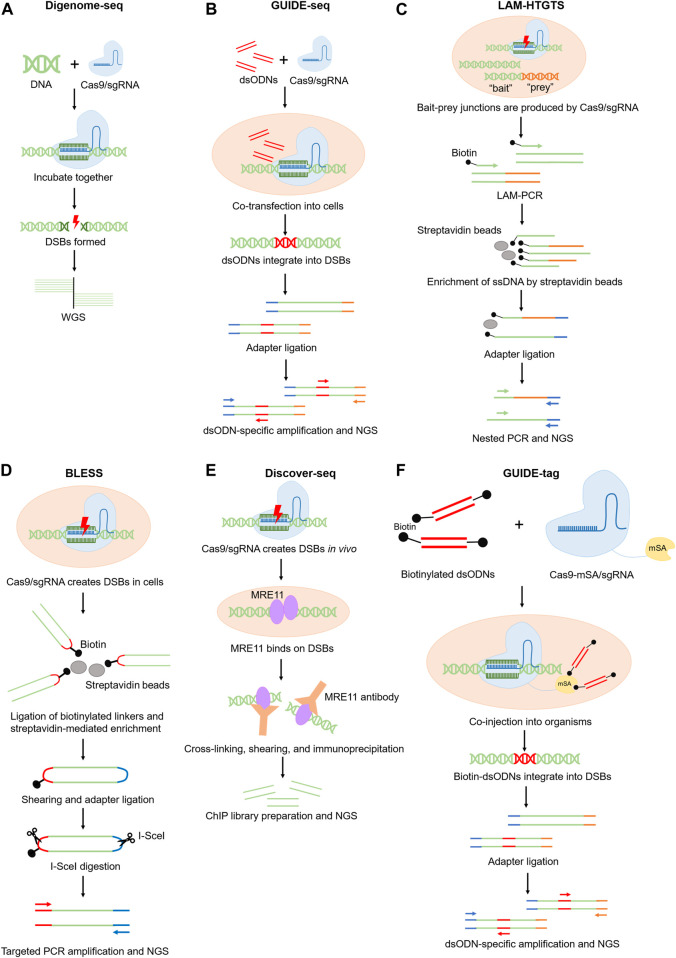
- Experimental detection methods vary widely: Digenome-seq detects indels at 0.1% frequency or lower but needs ∼400–500 million reads for the human genome; SITE-seq needs ∼0.62–2.46 million reads but only 10% of positive hits were validated by targeted sequencing; CIRCLE-seq needs ∼4–5 million reads but has a high false positive rate; GUIDE-seq detects indel frequencies as low as 0.03% but captures only 30%–50% of all DSBs.
- Specificity strategies include high-fidelity Cas9 variants (eSpCas9, SpCas9-HF1, hypaCas9, evoCas9), sgRNA length/chemical modification, DSB-independent base editors, and delivery methods such as RNP electroporation and LNPs; evoCas9, SpCas9-HF1, and eSpCas9 reduced off-target sites by 98.7%, 95.4%, and 94.1%, respectively, in one comparison.
Methods
- This is a narrative review, not a primary experimental study; no original sample, dataset, or systematic meta-analysis is described.
- It synthesizes in silico prediction tools, cell-free, cell culture-based, and in vivo off-target detection methods, plus strategies to reduce off-target effects.
- Main analysis is qualitative comparison of advantages and disadvantages, organized in Tables 1 and 2 and supported by cited literature.
Limitations
- The paper states that limitations remain in balancing accuracy versus sensitivity of off-target detection techniques, and that direct assessment of off-target effects in vivo and in patients is particularly challenging.
- It notes that in silico predictions are biased toward sgRNA-dependent off-target effects and need experimental validation, and that many experimental methods have limitations such as high cost, high sequencing coverage, low sensitivity, false positives, false negatives, or dependence on chromatin accessibility.
- Evident from the text: as a review, it provides no new experimental data, and it states there is currently no standardized approach to confirm the sensitivity of Discover-seq.
Model-written summary. Check it against the paper before relying on it.
Integrity signals
Registry
Cites
Statistics
Figures
Verification
Claims the paper makes
78 Valid · 10 Not valid · 21 Not checked · 25 Own results and interpretations
At least one cited source doesn’t support this claim or points to a different paper, and none confirmed it — see the verdicts below.
In the paper
“Similarly, the Elevation tool also includes DNA accessibility information to predict potential off-target sites (Listgarten et al., 2018).”
§ Off-target effects in CRISPR/Cas9 gene editing > 2 In silico prediction
What the sources say
- Disputedcites Listgarten et al., 2018 matched to “Prediction of off-target activities for the end-to-end design of CRISPR guide RNAs” (2018) sourceExperimental — accuracy not yet measured
The Results section, “Predicting with chromatin accessibility” (page not provided), says the authors tested DNase I accessibility features but decided not to include them in the final deployed Elevation model because the results were inconclusive. Thus, the paper says the tool does not include the information the claim attributes to it. (LLM, conf=0.93)
Checked by a reasoning model — may be wrong.
plain- Asserted: passes — The authors put it forward as true.
- Checkable: passes — It can be checked against evidence.
- Load-bearing: unclear — It is unclear whether the paper’s conclusions depend on it.
- Based: passes — The paper gives a reason why it holds.
- Disputed
Some cited sources support this claim and some don’t — read each source’s verdict below.
In the paper
“A primary limitation of GUIDE-seq is relevant to the low delivery efficiency of dsODNs into cells, which results in detection of only 30%–50% of all the DSBs (Tsai et al., 2015; Pan et al., 2022).”
§ Off-target effects in CRISPR/Cas9 gene editing > 3 Experimental detection > 3.2 Cell culture-based methods
What the sources say
- Disputedcites Tsai et al., 2015 matched to “GUIDE-seq enables genome-wide profiling of off-target cleavage by CRISPR-Cas nucleases” (2015) sourceExperimental — accuracy not yet measured
The Results (Overview of the GUIDE-Seq method; page unavailable) report robust dsODN integration, at rates two- to three-fold lower than indel frequencies at the tested sites—not detection of 30%–50% of all DSBs. The Discussion (page unavailable) describes dsODN integration as very efficient and reports detection of 38 of 40 previously identified off-target sites, contrary to the claimed primary limitation. (LLM, conf=0.87)
Checked by a reasoning model — may be wrong.
- Partly supportedcites Pan et al., 2022 matched to “Massively targeted evaluation of therapeutic CRISPR off-targets in cells” (2022) sourceExperimental — accuracy not yet measured
The Introduction (page unavailable) says GUIDE-seq relies on inserting double-stranded DNA at double-strand breaks, and the Results section on SURRO-seq validation likewise describes insertion of a double-stranded oligonucleotide. Neither passage says that delivery into cells is inefficient or that GUIDE-seq detects only 30%–50% of DSBs; searches for those terms found no such estimate in our copy. (LLM, conf=0.84)
plainstates a cause- Asserted: passes — The authors put it forward as true.
- Checkable: passes — It can be checked against evidence.
- Load-bearing: unclear — It is unclear whether the paper’s conclusions depend on it.
- Based: passes — The paper gives a reason why it holds.
- Disputed
At least one cited source doesn’t support this claim or points to a different paper, and none confirmed it — see the verdicts below.
In the paper
“| Delivery methods improvement | Application in cell culture [89–94] | RNP electroporation: Rapid transfection and turnover | Eliminate off-target effects |”
§ Off-target effects in CRISPR/Cas9 gene editing > 4 Strategies to reduce off-target effects > 4.1 Cas9 improvement
What the sources say
- Not checked — no full text of the sourcecites [89] Wang X. Wu Y. Yee J. K. (2021). Detection of CRISPR/Cas9-Generated off-target effect by integration-defective lentiviral vector. Methods Mol. Biol. 2162, 243– 260. 10.1007/978-1-0716-0687-2_14 32926387 source
- Disputedcites [90] Wienert B. Wyman S. K. Richardson C. D. Yeh C. D. Akcakaya P. Porritt M. J. (2019). Unbiased detection of CRISPR off-targets in vivo using DISCOVER-Seq. Science 364 (6437), 286– 289. 10.1126/science.aav9023 31000663 PMC6589096 sourceExperimental — accuracy not yet measured
The Introduction (page unavailable) reports editing patient-derived iPSCs with HiFi-Cas9 RNPs and detecting two off-targets with the wild-type guide. That contradicts the claim that RNP delivery eliminates off-target effects; the passage does not specify electroporation or rapid turnover. (LLM, conf=0.86)
Checked by a reasoning model — may be wrong.
- Not checked — no full text of the sourcecites [91] Willyard C. (2017). The epigenome editors: How tools such as CRISPR offer new details about epigenetics. Nat. Med. 23 (8), 900– 903. 10.1038/nm0817-900 28777784 source
- Could not verifycites [92] Witzigmann D. Kulkarni J. A. Leung J. Chen S. Cullis P. R. van der Meel R. (2020). Lipid nanoparticle technology for therapeutic gene regulation in the liver. Adv. Drug Deliv. Rev. 159, 344– 363. 10.1016/j.addr.2020.06.026 32622021 PMC7329694 sourceExperimental — accuracy not yet measured
The ‘mRNA for gene expression and genome editing’ section describes lipid-nanoparticle delivery of Cas9-encoding mRNA with sgRNA, including results in mice. Searches for RNP electroporation, rapid turnover, and off-target effects found no passage addressing whether electroporation in cell culture eliminates off-target effects. The available passages therefore do not verify the claim. (LLM, conf=0.74)
- Could not verifycites [93] Wu X. Scott D. A. Kriz A. J. Chiu A. C. Hsu P. D. Dadon D. B. (2014). Genome-wide binding of the CRISPR endonuclease Cas9 in mammalian cells. Nat. Biotechnol. 32 (7), 670– 676. 10.1038/nbt.2889 24752079 PMC4145672 sourceExperimental — accuracy not yet measured
The Online Methods (Cell culture) say transfections used Lipofectamine 2000, not RNP electroporation. The Results (One of 295 off-target sites is mutated above background) report an off-target mutation, but do not test whether RNP electroporation eliminates off-target effects. Searches for RNP electroporation and ribonucleoprotein delivery found no passage addressing that claim. (LLM, conf=0.76)
- Could not verifycites [94] Wu Y. Ren Q. Zhong Z. Liu G. Han Y. Bao Y. (2022). Genome-wide analyses of PAM-relaxed Cas9 genome editors reveal substantial off-target effects by ABE8e in rice. Plant Biotechnol. J. 20 (9), 1670– 1682. 10.1111/pbi.13838 35524459 PMC9398351 sourceExperimental — accuracy not yet measured
The Experimental procedures section describes Agrobacterium-mediated transformation of rice calli, not RNP electroporation in cell culture. The Results report off-target mutations from the rice editors studied, but do not test whether RNP electroporation eliminates them. Searches for RNP delivery and electroporation found no passage addressing that claim. (LLM, conf=0.77)
plainstates a cause- Asserted: passes — The authors put it forward as true.
- Checkable: passes — It can be checked against evidence.
- Load-bearing: unclear — It is unclear whether the paper’s conclusions depend on it.
- Based: passes — The paper gives a reason why it holds.
The cited sources support only part of this claim — read each source’s verdict below.
In the paper
“Cas-OFFinder is more widely applicated due to its high tolerance of sgRNA length, PAM types, and the number of mismatches or bulges (Bae et al., 2014).”
§ Off-target effects in CRISPR/Cas9 gene editing > 2 In silico prediction
What the sources say
- Partly supportedcites Bae et al., 2014 matched to “Cas-OFFinder: A fast and versatile algorithm that searches for potential off-target sites of Cas9 RNA-guided endonucleases” (2014) sourceExperimental — accuracy not yet measured
The Results and Discussion section reports searches using 20-bp and 24-bp guide-matching sequences and different PAMs; its conclusion says Cas-OFFinder does not limit the number of mismatched bases. The Methods section describes counting mismatches, but no passage establishes that the tool tolerates bulges. That part of the claim is unsupported by this copy. (LLM, conf=0.87)
plainstates a cause- Asserted: passes — The authors put it forward as true.
- Checkable: passes — It can be checked against evidence.
- Load-bearing: unclear — It is unclear whether the paper’s conclusions depend on it.
- Based: passes — The paper gives a reason why it holds.
- Partly supported
The cited sources support only part of this claim — read each source’s verdict below.
In the paper
“Although CRISPR/Cas systems exhibit tremendous potential in translational medicine, off-target effects remain a major challenge (Fu et al., 2013; Hsu et al., 2013; Pacesa et al., 2022).”
§ Off-target effects in CRISPR/Cas9 gene editing > 1 Introduction
What the sources say
- Not matchedcites Fu et al., 2013
This doesn’t read as a citation we can look up.
- Partly supportedcites Hsu et al., 2013 matched to “DNA targeting specificity of RNA-guided Cas9 nucleases” (2013) sourceExperimental — accuracy not yet measured
The paper’s Abstract (page unavailable) documents off-target editing in human cells and describes ways to minimize it, supporting the claim that off-target effects are a challenge for Cas9 genome editing. It does not specifically assess translational medicine or establish how major that challenge is in clinical use. (LLM, conf=0.81)
- Supportedcites Pacesa et al., 2022 matched to “Structural basis for Cas9 off-target activity” (2022) source
The Introduction says that off-target activity of SpCas9 and other Cas9 enzymes presents a safety concern for therapeutic applications. The Discussion also links improved off-target prediction to safer therapeutic use, supporting the cited background claim. (LLM, conf=0.91)
plain- Asserted: passes — The authors put it forward as true.
- Checkable: passes — It can be checked against evidence.
- Load-bearing: passes — The paper’s conclusions depend on it.
- Based: passes — The paper gives a reason why it holds.
- Not matched
82 more claims · 52 with their cited sources checked
Create a free account to see all 134 claims and to verify the 1 reference still open.
- Probably not a substantial claim. 20
- It may state two separate claims as one. 33
Claims other papers make about this one
Each is checked against this paper’s own text: does it say what the citing paper says it does?
The source backs part of the claim, not all of it — or backs it for a different population, condition or comparison.
In the citing paper
“Off-target effects are unintended genomic modifications occur when guide RNA (gRNA) binds to sequences similar to, but not identical with, the intended target, potentially resulting in undesirable DNA cleavage and mutations (Guo et al., 2023; Lopes and Prasad, 2024; Garrigues et al., 2023).”
From Emerging applications of gene editing technologies for the development of climate-resilient crops (2025) · cites this paper as Guo et al., 2023
Experimental — accuracy not yet measuredThe source backs part of the claim, not all of it — or backs it for a different population, condition or comparison.
In the citing paper
“For instance, recent studies have shown that Cas9 tolerates up to three mismatches between the gRNA and genomic DNA, which increases the chances of off-target effects in regions with higher GC content.”
From Hybrid Neural Networks for Off-Target Prediction in Gene Editing: Integrating Sequence and Biophysical Features (2025) · cites this paper as [2]
Experimental — accuracy not yet measuredThe source backs part of the claim, not all of it — or backs it for a different population, condition or comparison.
In the citing paper
“Although CRISPR/Cas9 introduces targeted mutations, it actually supports the maintenance of clonal fidelity by offering precise and controlled gene editing, unlike the random and widespread genetic alterations associated with somaclonal variation [178].”
From Somaclonal Variation and Clonal Fidelity in Commercial Micropropagation: Challenges and Perspectives (2025) · cites this paper as [178]
Experimental — accuracy not yet measured
Self-check
Percentages, sums and reported differences re-computed from the paper’s own numbers.
Each contradiction between two passages listed here was confirmed by an independent check.
Rated minor: it would not touch a result — a value no result rests on, a p-value that stays on the same side of the significance level, or a conflict that is clerical, resolved elsewhere in the paper, or outside its own findings.
In the paper
§ Off-target effects in CRISPR/Cas9 gene editing > 2 In silico prediction
“| In silico prediction | Alignment based models | CasOT [21] | Adjustable in PAM sequence and the mismatch number (at most 6) | Conveniently accessable via internet | Biased toward sgRNA-dependent off-target effects; results need experimental validation |”
§ Off-target effects in CRISPR/Cas9 gene editing > References
“95. Xiao A. Cheng Z. Kong L. Zhu Z. Lin S. Gao G. (2014). CasOT: A genome-wide cas9/gRNA off-target searching tool.”
Citations
Cites
A Programmable Dual-RNA–Guided DNA Endonuclease in Adaptive Bacterial Immunity
Jinek, M., Chylinski, K., Fonfara, I., Hauer, M., Doudna, J. A., & Charpentier, E. (2012) · Science · doi:10.1126/science.1225829 · Cited by 17,116 · cited 11×
“Cas-OFFinder is more widely applicated due to its high tolerance of sgRNA length, PAM types, and the number of mismatches or bulges (Bae et al., 2014).”
BackgroundInfluentialMultiplex Genome Engineering Using CRISPR/Cas Systems
Cong, L., Ran, F. A., Cox, D., Lin, S., Barretto, R., Habib, N., Hsu, P. D., Wu, X., Jiang, W., Marraffini, L. A., et al. (2013) · Science · doi:10.1126/science.1231143 · Cited by 15,339 · cited 11×
“Cas-OFFinder is more widely applicated due to its high tolerance of sgRNA length, PAM types, and the number of mismatches or bulges (Bae et al., 2014).”
BackgroundInfluentialProgrammable editing of a target base in genomic DNA without double-stranded DNA cleavage
Komor, A. C., Kim, Y. B., Packer, M. S., Zuris, J. A., & Liu, D. R. (2016) · Nature · doi:10.1038/nature17946 · Cited by 5,437 · cited 1×
“ABE catalyzes the editing from adenine to guanine and CBE converts cytosine to thymine (Komor et al., 2016; Gaudelli et al., 2017; Wu et al., 2022).”
BackgroundDNA targeting specificity of RNA-guided Cas9 nucleases
Hsu, P. D., Scott, D. A., Weinstein, J. A., Ran, F. A., Konermann, S., Agarwala, V., Li, Y., Fine, E. J., Wu, X., Shalem, O., et al. (2013) · Nature Biotechnology · doi:10.1038/nbt.2647 · Cited by 4,741 · cited 5×
“The off-target sites are often sgRNA-dependent, since Cas9 is known to tolerate up to 3 mismatches between sgRNA and genomic DNA (Fu et al., 2013; Hsu et al., 2013; Wang et al., 2016a).”
BackgroundInfluentialOptimized sgRNA design to maximize activity and minimize off-target effects of CRISPR-Cas9
Doench, J. G., Fusi, N., Sullender, M., Hegde, M., Vaimberg, E. W., Donovan, K. F., Smith, I., Tothova, Z., Wilen, C., Orchard, R., et al. (2016) · Nature Biotechnology · doi:10.1038/nbt.3437 · Cited by 4,637 · cited 2×
“The CFD algorithm is derived from a CRISPR/Cas9 genetic screen experiment that assessed the off-target effects of thousands of sgRNAs (Doench et al., 2016).”
BackgroundMethodProgrammable base editing of A•T to G•C in genomic DNA without DNA cleavage
Gaudelli, N. M., Komor, A. C., Rees, H. A., Packer, M. S., Badran, A. H., Bryson, D. I., & Liu, D. R. (2017) · Nature · doi:10.1038/nature24644 · Cited by 4,184 · cited 1×
“ABE catalyzes the editing from adenine to guanine and CBE converts cytosine to thymine (Komor et al., 2016; Gaudelli et al., 2017; Wu et al., 2022).”
BackgroundHigh-Frequency off-Target Mutagenesis Induced by CRISPR-Cas Nucleases in Human Cells
Fu, Y., Foden, J. A., Khayter, C., Maeder, M. L., Reyon, D., Joung, J. K., & Sander, J. D. (2013) · Nature Biotechnology · doi:10.1038/nbt.2623 · Cited by 3,292 · cited 2×
“The off-target sites are often sgRNA-dependent, since Cas9 is known to tolerate up to 3 mismatches between sgRNA and genomic DNA (Fu et al., 2013; Hsu et al., 2013; Wang et al., 2016a).”
BackgroundHigh-fidelity CRISPR-Cas9 nucleases with no detectable genome-wide off-target effects
Kleinstiver, B. P., Pattanayak, V., Prew, M. S., Tsai, S. Q., Nguyen, N. T., Zheng, Z., & Joung, J. K. (2016) · Nature · doi:10.1038/nature16526 · Cited by 2,673
Rationally engineered Cas9 nucleases with improved specificity
Slaymaker, I. M., Gao, L., Zetsche, B., Scott, D. A., Yan, W. X., & Zhang, F. (2016) · Science · doi:10.1126/science.aad5227 · Cited by 2,414 · cited 8×
“This idea led to the rational design of SpCas9 mutants such as enhanced SpCas9 (eSpCas9) and SpCas9-HF1 (HF1 for high-fidelity variant #1).”
BackgroundInfluentialBae, S., Park, J., & Kim, J.-S. (2014) · Bioinformatics · doi:10.1093/bioinformatics/btu048 · Cited by 2,339 · cited 1×
“Cas-OFFinder is more widely applicated due to its high tolerance of sgRNA length, PAM types, and the number of mismatches or bulges (Bae et al., 2014).”
Background
Cited by
Items 201–300 of 612
Targeting mitochondrial dynamics: A promising approach for intracerebral hemorrhage therapy
Liu, M., Li, B., Yin, Z., Yin, L., Luo, Y., Zeng, Q., Zhang, D., Wu, A., & Chen, L. (2024) · Life Sciences · doi:10.1016/j.lfs.2024.123317 · Cited by 11
Rapid and robust validation of pooled CRISPR knockout screens using CelFi
Loughran, A. J., Narina, S., Klein, J. D., Siwak, J. F., Connelly, J. P., & Pruett‐Miller, S. M. (2025) · Scientific Reports · doi:10.1038/s41598-025-96095-3 · Cited by 7
An Analysis of Monitoring Solutions for CAR T Cell Production
Shoshi, A., Xia, Y., Fieschi, A., Baumgarten, Y., Gaißler, A., Ackermann, T., Reimann, P., Mitschang, B., Weyrich, M., Bauernhansl, T., et al. (2025) · Healthcare Technology Letters · doi:10.1049/htl2.70012 · Cited by 8
“…such as digital PCR (ddPCR), next-generation sequencing (NGS), and karyotyping provide valuable tools for assessing genomic stability throughout the manufacturing process[95, 197, 198]. ddPCR,in particular, can quantifyvector copy numbers (VCN), enabling precise monitoring of genomic insertions.”
Application of CRISPR/Cas gene editing for infectious disease control in poultry
Gallala, M. (2025) · Open Life Sciences · doi:10.1515/biol-2025-1095 · Cited by 8
Jang, W., Im, M., Yoon, G., Roh, J., & Kim, W. (2025) · Cancer Cell International · doi:10.1186/s12935-025-03868-x · Cited by 8
“One major concern is the risk of off-target effects with CRISPR-Cas9-medi-ated H19 targeting, which may lead to unintended genetic modifications and genomic instability [92].”
Liang, F., Cui, S., Yang, J., He, Z., & Zhu, L. (2025) · Advanced Genetics · doi:10.1002/ggn2.202500010 · Cited by 10
Gene Therapy Approaches for Atherosclerosis Focusing on Targeting Lipid Metabolism and Inflammation
Bezsonov, E. E., Chernyi, N., Saruhanyan, M., Shimchenko, D., Bondar, N., Gavrilova, D., Baig, M. S., & Malogolovkin, A. S. (2025) · International Journal of Molecular Sciences · doi:10.3390/ijms26146950 · Cited by 11
“Besides, computational methods often omit sgRNA-independent off-target sites) [96], so deeper analysis is required.”
Emerging nano-vaccine technologies to overcome anti-microbial resistance
Choi, H., & Son, S. (2025) · Journal of Controlled Release · doi:10.1016/j.jconrel.2025.114076 · Cited by 9
Protective antigen–mediated delivery of an anti-CRISPR protein for precision genome editing
Vera, A. O., Truex, N. L., Sreekanth, V., Pentelute, B. L., Choudhary, A., & Raines, R. T. (2025) · Proceedings of the National Academy of Sciences · doi:10.1073/pnas.2426960122 · Cited by 9
“Cas9 technologies are used to treat genetic disorders ( 8 – 10 ), but their use is limited because they can cause unintended DNA modifications (i.e., off - target effects) ( 11 – 14 ), genetic mosaicism ( 15 ), chromosomal aberrations ( 16 , 17 ), immunogenicity ( 18 ), and genotoxicity ( 19 , 20 ).”
Chemical Modifications in Nucleic Acid Therapeutics
Lennox, K. A., Young, R. C., & Behlke, M. A. (2025) · Methods in molecular biology · doi:10.1007/978-1-0716-4742-4_3 · Cited by 9
Simoni, S., Fambrini, M., Pugliesi, C., & Rogo, U. (2025) · International Journal of Molecular Sciences · doi:10.3390/ijms26199294 · Cited by 8
“Using two Cas9n molecules targeting opposite DNA strands can create a double-strand break with increased specificity, reducing off-target effects [8].”
Sarac, B., Yücer, S., & Çiftçi, F. (2025) · Biosensors and Bioelectronics · doi:10.1016/j.bios.2025.118036 · Cited by 12
Rahman, M. A., Akter, S., Ashrafudoulla, M., Jung, S.-J., Rapak, M. T., & Ha, S. (2025) · Food Research International · doi:10.1016/j.foodres.2025.117803 · Cited by 10
CRISPR Genome Editing in Personalized Therapy for Oral and Maxillofacial Diseases: A Scoping Review
Dziedzic, A. M., Kubina, R., Skonieczna, M., Madej, M., Fiegler-Rudol, J., Abid, M. F., Nadhim, D., & Tanasiewicz, M. (2025) · Biomedicines · doi:10.3390/biomedicines13112745 · Cited by 9
“Recent studies have highlighted the potential of mesenchymal stem cells (MSCs) derived from human periapical cysts as a promising resource for regenerative applications in oral and maxillofacial medicine [84].”
Jank, L., Rios, E., Santos, M. F., Jauregui, R. N., Vigna, B. B. Z., Barrios, S. C. L., Acuña, C. A., Zilli, A. L., do Valle, C. B., Reyno, R., et al. (2025) · Critical Reviews in Plant Sciences · doi:10.1080/07352689.2025.2578983 · Cited by 8
Structural basis of supercoiling-induced CRISPR–Cas9 off-target activity
Smith, Q. M., Whittle, S., Aramayo, R. J., Rollins, D. E., Jalal, A. S. B., Egharevba, D. I., Morris, K. L., Pyne, A. L. B., & Rueda, D. (2026) · Nature · doi:10.1038/s41586-026-10255-7 · Cited by 11
Aggarwal, N., Rathore, M., Jan, F., Sharma, D., Kumar, S., Thudi, M., Jighly, A., Varshney, R. K., & Mir, R. R. (2026) · Theoretical and Applied Genetics · doi:10.1007/s00122-026-05293-8 · Cited by 10
“The two major challenges are editing efficiency and off-target consequences (Zhang et al. 2015a; Guo et al. 2023; Pena-Gutierrez et al. 2025).”
Zhang, B., & Cao, J. (2024) · Journal of Fungi · doi:10.3390/jof10010063 · Cited by 7
“Besides, with the extension of cultivation time after transformation, the persistence of Cas9-sgRNA complex might also lead to increased frequencies of off-target mutations [20,21].”
BackgroundCurrent neuroprotective therapies and future prospects for motor neuron disease
Evans, L. J., O’Brien, D., & Shaw, P. J. (2024) · International review of neurobiology · doi:10.1016/bs.irn.2024.04.003 · Cited by 5
Black, N., Banks, T. M., & Ventura, T. (2024) · Reviews in Aquaculture · doi:10.1111/raq.12951 · Cited by 7
CRISPR/Cas technology: fueling the future of Biofuel production with sugarcane
Ghane, A., Malhotra, P. K., Sanghera, G. S., Verma, S., Jamwal, N. S., Kashyap, L., & Wani, S. H. (2024) · Functional & Integrative Genomics · doi:10.1007/s10142-024-01487-9 · Cited by 8
“The off-target effects, where gene editing techniques like CRISPR may inadvert-ently affect non-target genes, necessitating ongoing efforts to enhance editing precision (Guo et al. 2023).”
Ye, M., Yao, M., Li, C., et al. (2023) · PeerJ · doi:10.7717/peerj.15771 · Cited by 6
Gene editing for allergen amelioration in plants – A review
Chakraborty, A., & Wylie, S. J. (2024) · Plant Gene · doi:10.1016/j.plgene.2024.100476 · Cited by 6
Ibrahim, L., Mohamed, R. H., Tolba, M. M., Radwan, S. M., Hamdy, N. Μ., & ElHefnawi, M. (2025) · Functional & Integrative Genomics · doi:10.1007/s10142-025-01630-0 · Cited by 10
“Additionally, a high-fidelity Cas9 variant (eSpCas9) was also utilized to further increase specificity (Guo et al. 2023; Javaid and Choi 2021).”
Kumar, A. V., Garg, V. K., & Buttar, H. S. (2025) · Elsevier eBooks · doi:10.1016/b978-0-443-22300-6.00044-9 · Cited by 14
Zhao, Y., Xu, J., Yang, K., & Bao, L. (2025) · Frontiers in Immunology · doi:10.3389/fimmu.2025.1645718 · Cited by 5
“First, off-target effects are a signi fi cant concern, especially given the widespread expression of GABA receptors and enzymes in both tumor and non-tumor tissues (68).”
Shu, J., Xie, X., Wang, S., Du, Z., Huang, P. Y., Chen, Y., & He, Z. (2025) · Frontiers in Cell and Developmental Biology · doi:10.3389/fcell.2025.1595897 · Cited by 7
“Despite advancements in CRISPR/Cas9 technology aimed at minimizing off-target effects, including the development of high-fidelity Cas9 variants and enhanced sgRNA designs, the total eradication of off-target effects remains a significant challenge (Guo et al., 2023).”
How Close Are We to Achieving Durable and Efficacious Gene Therapy for Hemophilia A and B?
Sosnowska‐Sienkiewicz, P., & Januszkiewicz‐Lewandowska, D. (2025) · Genes · doi:10.3390/genes16101200 · Cited by 5
“Prolonged Cas9 expression can also cause genotoxicity, meaning it can damage DNA and potentially lead to mutations or other genomic instability [23,24].”
Bucheeri, S., Alcibahy, Y., Bucheeri, Y., Bucheeri, S., Alhermi, A., & Butler, A. E. (2025) · Cells · doi:10.3390/cells14221769 · Cited by 8
“Genome-wide off-target detection methods such as GUIDE-seq, CIRCLE-seq, and Digenome-seq remain essential for preclinical validation [210,211].”
Guarding the genome: strategies for off-target detection and minimization in CRISPR/Cas9 system
Lotfi, M., Yazdi, Z. F., Hashemi, M. R., Abbaszadegan, M. R., & Sharif, S. (2025) · Expert Review of Molecular Diagnostics · doi:10.1080/14737159.2025.2581677 · Cited by 8
“These tools facilitate high-resolution mapping of CRISPR-induced modifications, offering valuable insights into off-target activity [45].”
InfluentialChoi, M. Y., Li, C., Choi, J., & Choi, J. (2025) · Chemical Communications · doi:10.1039/d5cc05016b · Cited by 5
Nanocarrier-mediated CRISPR-Cas delivery: a novel approach against antibiotic-resistant superbugs
Almufarriji, F. M. (2026) · Saudi Pharmaceutical Journal · doi:10.1007/s44446-026-00064-4 · Cited by 6
“Despite the potential in translational medicine, CC system-associated off-target effect is a major challenge and these effects are observed when Cas9 acts on not-directed genomic regions and generates cleavages that might result in adverse events (Guo et al. 2023; Kanazhevskaya et al. 2025).”
Dong, A., Samarkhazan, H. S., & Tavakoli, F. (2026) · Cancer Cell International · doi:10.1186/s12935-026-04219-0 · Cited by 9
“While the Next-gen toolbox offers powerful new capabilities, several shared limitations require attention during preclinical development and clinical translation [56, 57].”
Chakraborty, C., Bhattacharya, M., Das, A., Agoramoorthy, G., & Lee, S.-S. (2026) · Molecular Therapy — Nucleic Acids · doi:10.1016/j.omtn.2026.102859 · Cited by 12
“131,133,134 Similarly, different types of nanocarrier-based delivery might help to reduce off-target delivery in the CRISPR gene, such as gold-based nanoparticles, DNA nanoparticles, cationic LNPs (lipid manoparticles), and lipid complexes.”
The emerging impact of CRISPR and gene editing on global crop improvement
Mansi, M., & Danai, P. (2026) · Transgenic Research · doi:10.1007/s11248-026-00484-x · Cited by 14
“To ensure accurate genetic changes and minimise off-target effects, great specificity is now necessary (Guo et al. 2023).”
Cell sources and engineering strategies for cultured meat production: a critical comparative review
Domagała, D., Partyńska, A., Data, K., Chmielewski, P. P., Niebora, J., Kulus, M., Kulus, J., Bryja, A., Bukowska, D., Antosik, P., et al. (2026) · Frontiers in Nutrition · doi:10.3389/fnut.2026.1791530 · Cited by 6
Adibzadeh, S., Amiri, S., Barkhordari, F., Mowla, S. J., Bayat, H., Ghanbari, S., Faghihi, F., & Davami, F. (2024) · Applied Microbiology and Biotechnology · doi:10.1007/s00253-024-13266-4 · Cited by 6
“Despite the fact that the CRIS-PITCh method used for creating the CHO-K1 cell platform is associated with relatively low knock-in efficiency and high off-target effects (Guo et al. 2023; .”
MethodWang, G., Wang, Y., Wu, Y., Dong, S., Zhao, H., Deng, H., Chen, Y., Song, W., Wang, R., & Ma, C. (2024) · Bioresource Technology · doi:10.1016/j.biortech.2024.131359 · Cited by 4
Luo, X., Liang, R., Liang, L., Tang, A., Hou, S., Ding, J., Li, Z., & Tang, X. (2024) · Frontiers in Immunology · doi:10.3389/fimmu.2024.1445387 · Cited by 8
Padaru, M., Shetty, P., Kini, A., & Bhat, R. (2025) · World Academy of Sciences Journal · doi:10.3892/wasj.2025.349 · Cited by 5
“One of the key concerns in translating CRISPR to clinical dentistry is the potential for off‑target mutations, where unintended genetic modifications could impact non‑cariogenic bacteria or host genes (55).”
Orlova, N. A., Sinegubova, M. V., Kolesov, D., Khodak, Y. A., Tatarskiy, V. V., & Vorobiev, I. I. (2025) · Cells · doi:10.3390/cells14100692 · Cited by 7
“Many studies have been devoted to the methods of reducing the number of off-target effects of Cas9, as well as to the methods of detecting such events in the genome [17].”
A Decade of Genome Editing: Comparative Review of ZFN, TALEN, and CRISPR/Cas9
Kumar, R., Bargoti, T., Sengar, S., Singh, D., & Nain, V. (2025) · doi:10.38124/ijisrt/25apr2221 · Cited by 5
Wongborisuth, C., Innachai, P., Saisawang, C., Tubsuwan, A., Jearawiriyapaisarn, N., Kaewprommal, P., Piriyapongsa, J., Chiangjong, W., Anurathapan, U., Songdej, D., et al. (2025) · Scientific Reports · doi:10.1038/s41598-025-10791-8 · Cited by 7
“The 2 −∆∆Ct method 46 was used to analyze the relative fold change.”
Foster, A. J., Johnstone, E., Saunders, A., Colic, E., Lassel, N., & Holmes, J. E. (2023) · Journal of Fungi · doi:10.3390/jof9060673 · Cited by 5
Moshref, M., Lo, J. H.-H., McKay, A. S., Camperi, J., Schroer, J., Ueno, N., Wang, S., Gulati, S., Tarighat, S. S., Durinck, S., et al. (2024) · Frontiers in Bioengineering and Biotechnology · doi:10.3389/fbioe.2024.1417070 · Cited by 5
“There is a possibility that Cas9 also acts on off-target sites in the genome, which may lead to adverse outcomes (Guo et al., 2023).”
BackgroundSosnovtseva, A. O., Demidova, N. A., Рафаиловна, К. Р., Kovalev, M. A., Aa, K., Starodubova, E. S., Latanova, A. A., & Karpov, D. S. (2024) · International Journal of Molecular Sciences · doi:10.3390/ijms252212346 · Cited by 6
Nagy, M. A., Price, S., Wang, K., Gill, S., Ren, E., Jayne, L., Pajak, V., Deighan, S., Liu, B., Lü, X., et al. (2024) · Proceedings of the National Academy of Sciences · doi:10.1073/pnas.2418024121 · Cited by 7
Lobo, S., Barbosa‐Matos, R., Dória, S., Pedro, A. M., Brito, A., Ferreira, D. A., & Oliveíra, C. (2025) · Biology Methods and Protocols · doi:10.1093/biomethods/bpaf018 · Cited by 4
“%) presented three mismatches, significantly impairing the recognition of these regions by the sgRNA [29–31].”
A bibliometric analysis of gene editing and amyotrophic lateral sclerosis (from 2004 to 2024)
Wan, H., Qian, W., Wei, B., Tian, K., Chen, Z., Zhang, J., & Chen, F. (2024) · Frontiers in Neuroscience · doi:10.3389/fnins.2024.1499025 · Cited by 4
“…of data to support the long-term efficacy and safety of genetic modification, and unpredictable accidents still occur after CRISPR-Cas9 editing, such as off-targeting (Guo et al., 2023), unintended genetic changes (Pyenson et al., 2017), etc., affecting the health and stability of normal cells.”
Zhang, H., Wan, Z., Li, X., Wang, B., Guan, J., Li, Y., Jin, X., Ma, X., & Liu, G. (2025) · Stem Cell Research & Therapy · doi:10.1186/s13287-025-04630-w · Cited by 4
Self-citationCRISPR-Based genome editing in pulses: current approaches, challenges, and future prospects
Kumari, S., Keshari, A. K., Singh, S. K., Pandey, S., & Singh, A. K. (2025) · Plant Molecular Biology · doi:10.1007/s11103-025-01655-w · Cited by 5
“Gene editing with CRISPR/Cas9 carries the risk of off-target consequences or unintended modifications in the genome (Dubey et al., 2022; Guo et al., 2023 ). gRNA is essential for regulating the efficacy and specificity of gene editing.”
Circular RNAs: emerging regulators of oxaliplatin response and resistance in cancer therapy
Tajik, Z., & Ghafouri‐Fard, S. (2025) · Medical Oncology · doi:10.1007/s12032-025-03171-9 · Cited by 4
“This non-specific targeting has been documented for both ASO-mediated knockdown [49] and CRISPR-based gene editing systems [50].”
Genome Editing Enhanced Abiotic Stress Tolerance in Cereal Crops
Lal, S. K., Khatoon, G., Kumar, A., Kumar, K., Kumar, R., Pan, X., Kumar, S., Bhadana, V. P., Pandey, A., Kumar, M., et al. (2025) · Functional & Integrative Genomics · doi:10.1007/s10142-025-01791-y · Cited by 6
“…is measured experimentally by Cell-free methods, Cell culture-based, In vivo detection methods utilizing different tools such as Digenome-seq, DIG-seq, Extru-seq, SITE-seq, CIRCLE-seq, WGS, ChIP– Seq, IDLVs, GUIDE–Seq, LAM-HTGTS, BLESS, BLISS, Discover-seq, and GUIDE-tag (Guo et al. 2023).”
CRISPR–Cas3-based editing for targeted deletions in a mouse model of transthyretin amyloidosis
Ishida, S., Sato, Y., Chosa, K., Ezawa, E., Yamauchi, Y., Oyama, M., Kozuka‐Hata, H., Ito, R., Sato, R., Maeki, M., et al. (2026) · Nature Biotechnology · doi:10.1038/s41587-025-02949-6 · Cited by 7
Pediaditakis, I., Tsakali, S., Lemieux, M. R., Brennan, M., Robinson, W. H., Papapetropoulos, S., & Papapetropoulos, A. (2026) · Pharmacological Reviews · doi:10.1016/j.pharmr.2026.100118 · Cited by 10
In vivo CAR-T therapy: from molecular design to precision delivery
Li, H., Wen, W., Zhao, X., & Liang, G. (2026) · Journal of Nanobiotechnology · doi:10.1186/s12951-026-04232-5 · Cited by 7
Al-Mughalles, A. S., Ma, J., Ma, H., Zhang, C., Xiao, H., Ma, X., Zhang, Q., Jia, C., Han, H., Ding, B., et al. (2026) · Cell Communication and Signaling · doi:10.1186/s12964-026-02997-8 · Cited by 5
Self-citationInduced proximity labeling and editing for epigenetic research
Zhou, C., Wagner, S. A., & Liang, F. (2024) · Cell chemical biology · doi:10.1016/j.chembiol.2024.05.005 · Cited by 6
How Helpful May Be a CRISPR/Cas-Based System for Food Traceability?
Farinati, S., Devillars, A., Gabelli, G., Vannozzi, A., Scariolo, F., Palumbo, F., & Barcaccia, G. (2024) · Foods · doi:10.3390/foods13213397 · Cited by 4
“…represents a clear favorable point of the entire technology, despite these computational methods being usually insufficiently considering the complex intranuclear context (i.e., chromatin organization states); thus, off-target prediction by in silico tools needs further validations [32,33].”
BackgroundAdvancements in brain organoid models for neurodegenerative disease research
Park, S., & Park, J. (2024) · Organoid · doi:10.51335/organoid.2024.4.e12 · Cited by 5
“Nevertheless, it is crucial to address potential challenges, including off-target effects, to ensure accuracy and utility [50].”
Ajayi, G. O., Ma, A., Modarai, S., Opdenaker, L. M., & Sims‐Mourtada, J. (2025) · International Journal of Molecular Sciences · doi:10.3390/ijms26052303 · Cited by 6
The potential of advanced crop breeding technologies for sustainable food security
Bacha, S. A. S., Kiran, S., Cui, F., Elboughdiri, N. A., Ahmad, Z., & Sun, W. (2025) · International Journal of Biological Macromolecules · doi:10.1016/j.ijbiomac.2025.143025 · Cited by 9
Integrating CRISPR/Cas technology with clinical trials: Principles, progress and challenges
Yang, P., Khoshandam, M., Bhia, I., Raji, S., Soltaninejad, H., Hosseinkhani, S., Sani, M., Hamidieh, A. A., & Sheykhhasan, M. (2025) · Asian Journal of Pharmaceutical Sciences · doi:10.1016/j.ajps.2025.101068 · Cited by 10
“CRISPR/Cas9 screening is an effective method for discovering and confirming possible off-target locations [ 202 ].”
CRISPR-Cas9-Loaded Lipid Nanoparticles: A Promising Strategy for Targeted Gene Editing and Therapy
Ebrahimi-Khezrabad, S., Aghdasia, M., Zare‐Zardini, H., Eslami, H., & Eskandari, F. (2025) · BioNanoScience · doi:10.1007/s12668-025-02094-z · Cited by 6
“Implementing rigorous genome-wide off-target site detection methods (both computational prediction and experimental validation) during preclinical development [58, 59].”
A platform to deliver single and bi-specific Cas9/guide RNA to perturb genes in vitro and in vivo
Li, Y., Chien, S., Huang, R., Herrmann, A., Zhao, Q., Li, P.-C., Zhang, C., Martincuks, A., Santiago, N. L., Zong, K., et al. (2024) · Molecular Therapy · doi:10.1016/j.ymthe.2024.07.025 · Cited by 9
Gasdermin E as a potential target and biomarker for CRISPR-Cas9-based cancer therapy
Tarin, M., & Saljooghi, A. S. (2025) · Biochemical Pharmacology · doi:10.1016/j.bcp.2025.116961 · Cited by 5
Deletion of AhR attenuates fear memory leaving other types of memory intact
Sun, N., Wang, H., Wang, X.-Y., Yu, Q., Han, J., Huang, Y. Y., & Zhou, W. (2023) · Behavioural Brain Research · doi:10.1016/j.bbr.2023.114505 · Cited by 5
Mondal, R., Brahmbhatt, N., Sandhu, S. K., Shah, H., Vashi, M., Gandhi, S. K., & Patel, P. (2023) · Cureus · doi:10.7759/cureus.50031 · Cited by 4
“With the recent progress in research regarding genome editing based on the CRISPR/Cas9 system, some concerns have come up [30,31].”
BackgroundDevelopment and assessment of cutting-edge biotechnologies
Hu, X., Xu, B., Chen, M., Li, K., Xiao, Y., Liang, S., Zhang, C., Ma, H., & Song, H. (2024) · Journal of Biosafety and Biosecurity · doi:10.1016/j.jobb.2024.03.001 · Cited by 7
CHOPOFF: symbolic alignments enable fast and sensitive CRISPR off-target detectionPreprint
Labun, K., Rio, O., Tjeldnes, H., Świrski, M. I., Komisarczuk, A. Z., Haapaniemi, E. M., & Valen, E. (2025) · bioRxiv (Cold Spring Harbor Laboratory) · doi:10.1101/2025.01.06.603201 · Cited by 8
“During our analysis we made some notable observations listed below.”
CRISPR-Cas9 knockout of the β-lactoglobulin gene in dairy animals: A review
Hadri, S. H., Tariq, A., Asif, S., Abid, S., Jabeen, M., Azam, A., & Tanzeem, S. (2025) · Food and Humanity · doi:10.1016/j.foohum.2025.100642 · Cited by 7
Ghosh, S., Blind, J. E., Fowler, A. M., Parsons, S., Nelson, K. L., & Campbell, K. (2025) · Applied Biosafety · doi:10.1089/apb.2024.0057 · Cited by 3
Modi, N., Guo, J. Z., Lee, R., Greenstein, A., & Lee, R. (2025) · International Journal of Molecular Sciences · doi:10.3390/ijms26125643 · Cited by 5
“Although recent advances in CRISPR-based technologies have enabled locus-specific DNAm or epigenome editing in mammalian systems [11–13], these methods may have limited clinical applicability due to their immunogenicity [14–16] and off-targeting [17,18].”
Off-target interactions in the CRISPR-Cas9 Machinery: mechanisms and outcomes
Kanazhevskaya, L. Y., Zhdanova, P. V., Chernonosov, A. А., & Koval, V. V. (2025) · Biochemistry and Biophysics Reports · doi:10.1016/j.bbrep.2025.102134 · Cited by 11
“[71]).”
Sun, J., Liu, K., Yao, S., Zhang, H., Wang, J., Wang, Y., Tian, R., Xi, Z., Tian, S., Wang, P., et al. (2025) · Molecular Therapy · doi:10.1016/j.ymthe.2025.09.009 · Cited by 4
Ethical, societal issues, and future challenges of plant CRISPR technologies
Prakash, A., Mandal, S., Ranjan, S., Sood, N., Singh, R. B., Kumar, S., & Kumari, N. (2025) · Elsevier eBooks · doi:10.1016/b978-0-443-43920-9.00013-0 · Cited by 4
Genetic therapies for neurological diseases
Rahim, A. A., Kurian, M. A., Zhou, H., Ferguson, R., Tabrizi, S. J., Lignani, G., Aquilina, K., & Waddington, S. N. (2025) · Pharmacological Reviews · doi:10.1016/j.pharmr.2025.100093 · Cited by 5
“343 By integrating computational predictions with experimental validation, researchers can better understand and mitigate the risk of off-target effects, ultimately improving the precision and reliability of gene editing technologies.”
Nanoparticulate delivery and targeting of RNA to the brain
Gupta, A., Ramanathan, R., Raulji, C. M., & Mahato, R. I. (2025) · Biochimica et Biophysica Acta (BBA) - Reviews on Cancer · doi:10.1016/j.bbcan.2025.189480 · Cited by 6
Singh, S., Chaudhary, R., & Tiwari, S. (2025) · Plant Cell Reports · doi:10.1007/s00299-025-03654-z · Cited by 4
“Off-targeting effects represent one of the major challenges for efficient CRISPR/Cas-mediated genome editing (Sturme et al. 2022; Guo et al. 2023; Peña-Gutiérrez et al. 2024).”
Raoufinia, R., Alyari, G., Nia, A. T., Abbaszadegan, M. R., Mahmoudi, A., Shafaeibajestan, S., Saburi, E., Tavakol‐Afshari, J., Hassani, M., Jamali, F., et al. (2025) · Stem Cell Research & Therapy · doi:10.1186/s13287-025-04781-w · Cited by 4
“Ethical and social issues are paramount, particularly when it comes to germline editing, since changes made to embryonic or reproductive cells can be inherited by future generations, leading to unpredictable genetic and societal consequences [186–189].”
Tıwarı, R., Jahnavi, P., Singh, G., Dey, P., Mehta, F. F., Choudhury, T., Kamal, Y. T., Bhandari, A. K., & Sharma, P. (2025) · Journal of Biomaterials Science Polymer Edition · doi:10.1080/09205063.2025.2591372 · Cited by 3
Off-target RNA editing hotspots caused by base editors
Eidelman, M., Cohen‐Fultheim, R., Eisenberg, E., & Levanon, E. Y. (2025) · Molecular Therapy · doi:10.1016/j.ymthe.2025.12.043 · Cited by 3
Akoijam, N., & Joshi, S. R. (2025) · Scientific Reports · doi:10.1038/s41598-025-30386-7 · Cited by 6
“…are multiple challenges that arise while using this technology e.g. off-target effects due to inefficient delivery of the CRISPR components, possible shrinking of genetic pool with consistent use of this technology which could lead to plant cultivars being susceptible to pests and diseases 49 .”
Ahmed, A., Molfetta, D. D., Iaconisi, G. N., Caponio, A., Singh, A., Bibi, A., Dolce, V., Palmieri, L., Coppola, V., & Fiermonte, G. (2026) · Cells · doi:10.3390/cells15010081 · Cited by 10
“Off-target mutations could lead to involuntary consequences, including insertional mutagenesis or interruption of essential genes [57,58].”
Shah, W., Hussain, M., Serwat, A., Bilal, M., Raza, Y., Mansoor, A., & Faraz, A. (2026) · Clinica Chimica Acta · doi:10.1016/j.cca.2026.120875 · Cited by 5
Epigenetic editing to advance CAR T cell therapy
Horvathova, L., Rots, M. G., & Wiersma, V. R. (2026) · Clinical Epigenetics · doi:10.1186/s13148-026-02085-1 · Cited by 5
“Moreover, chromatin accessibility and local genomic contexts can influence the activity of effector domains, leading to variable editing efficiency across different loci [112–114].”
Pandey, H., Sharma, A., Misra, V., Mall, A. K., & Ceasar, S. A. (2026) · Physiology and Molecular Biology of Plants · doi:10.1007/s12298-026-01706-6 · Cited by 5
CRISPR-driven strategies to disrupt methicillin-resistant Staphylococcus aureus biofilms: a review
Nuevo, J. J. M., Fortaleza, J. A. G., Cabuhat, K. S. P., Ong, C. J. N., Jalova, A. C., Mortel, F. A., & Bacalzo, G. D. (2026) · Frontiers in Cellular and Infection Microbiology · doi:10.3389/fcimb.2026.1784529 · Cited by 4
Beyond sex determination: the Y chromosome in male cancers
Abdel-Hafiz, H. A., Hoelzen, L., & Theodorescu, D. (2026) · Nature reviews. Cancer · doi:10.1038/s41568-026-00935-x · Cited by 8
“CRISPR–Cas9 approaches can introduce off-target edits, incomplete LOY or unintended genomic alterations, complicating causal interpretation 146–148 .”
Engineering TGMS in rice through CRISPR/Cas9-mediated genome editing
Shanthinie, A., Varanavasiappan, S., Kumar, K. K., et al. (2024) · Cereal Research Communications · doi:10.1007/s42976-024-00587-3 · Cited by 3
“Protein translation was normal until the protospacer region in these mutants, and therefore, the HxHxDH motif was unmodified, resulting in Off-target activity is a major concern for CRISPR technology, as it can lead to undesirable results and limit its applicability (Guo et al. 2023).”
New vectors and optimal conditions for allelic exchange in hypervirulent Klebsiella pneumoniae
Allen, M. E. V., Chandrashekarappa, D. G., Bina, X. R., & Bina, J. E. (2024) · Journal of Microbiological Methods · doi:10.1016/j.mimet.2024.107070 · Cited by 3
Nagendran, P., Murugesan, G., & Natarajan, J. (2025) · Medicine Advances · doi:10.1002/med4.70016 · Cited by 4
“Despite its revolutionary potential, CRISPR/Cas9 technology faces significant challenges, particularly with respect to off‐ target effects, and on‐target precision [5].”
Mechanisms of biliary stricture and novel therapeutic strategies
Peng, B., Zhang, J., & Xiang, Y. (2025) · Frontiers in Medicine · doi:10.3389/fmed.2025.1609461 · Cited by 6
Kumar, S. R., He, K. K., Lokanathan, Y., Gaurav, A., Yusoff, K., Macedo, M. F., & Bhassu, S. (2025) · Frontiers in Immunology · doi:10.3389/fimmu.2025.1654117 · Cited by 4
“However, the optimisation of MSCs for speci fi c therapeutic outcomes presents numerous challenges, including off-target effects in gene editing, predicting cell behaviour, and personalising treatments (78, 133).”
InfluentialHyCas9-12aGEP: an efficient genome editing platform for Corynebacterium glutamicum
Zhang, F., Wang, J., Li, C.-L., & Zhang, W.-G. (2024) · Frontiers in Bioengineering and Biotechnology · doi:10.3389/fbioe.2024.1327172 · Cited by 3
CRISPR/Cas9-mediated knockout strategies for enhancing immunotherapy in breast cancer
Xu, C. (2024) · Naunyn-Schmiedeberg s Archives of Pharmacology · doi:10.1007/s00210-024-03208-2 · Cited by 5
“…in gene editing and its wide-ranging applications in various fields (Wang et al. 2022; Zhou et al. 2023; Vermersch et al. 2020; Tabas-sum et al. 2023; Salsman and Dellaire 2017; Reint et al. 2021; Lu et al. 2024; Janik et al. 2020; Han et al. 2022; Guo et al. 2023; Bahariah et al. 2023).”
Innovative Platforms in Regenerative Medicine: Bridging Research and Clinical Solutions
Jalali, S. N., Fathi, Z., & Mohebbi, S. (2025) · Jentashapir Journal of Cellular and Molecular Biology · doi:10.5812/jjcmb-158285 · Cited by 4
Promising strategies for accelerating the eradication of avian leukosis in China
Li, T., Li, J., Wang, Z., Wu, J., Ma, L., Wang, S., Wan, Z., Xie, Q., Shao, H., Qin, A., et al. (2025) · Animals and zoonoses. · doi:10.1016/j.azn.2025.03.003 · Cited by 3
Kumar, N. (2025) · Therapeutic Innovation & Regulatory Science · doi:10.1007/s43441-025-00807-w · Cited by 5
“The GG20 strategy, which replaces the 5’ end of standard GX19 sgRNAs with two guanines (ggX20), further enhances guide RNA specificity [ 98].”
Off-target detection of CRISPR-Cas9 nuclease in vitro with CROFT-Seq
Toliusis, P., Grybauskas, A., Šinkūnas, T., Karvelis, T., Sasnauskas, G., & Zaremba, M. (2026) · Synthetic Biology · doi:10.1093/synbio/ysag006 · Cited by 2
“However, these methods have several limitations, including low sensitivity, dependence on cell transfection efficiency, chromatin accessibility, cell type, and other factors [19].”
Metadata
- Authors
- Guo, C., Ma, X., Gao, F., & Guo, Y.
- Affiliations
- Peking University (CN)
- Capital Medical University (CN)
- Corresponding author
- Gao, Fei
- Guo, Yuxuan
- Venue
- Frontiers in Bioengineering and Biotechnology
- Publisher
- Frontiers Media SA
- Published
- 2023-03-09
- Volume
- 11
- Pages
- 1143157-1143157
- ISSN
- 2296-4185 (ISSN-L)
- PMC
- PMC10034092
- OpenAlex
- W4323666400
- Cited by
- 704
- References
- 108
- Citations by year
- 2026: 225 · 2025: 290 · 2024: 154 · 2023: 35
- FWCI
- 17.24
- Type
- journal article
- Language
- en
- Open access
- gold
- doi.org
- Licence
- Locations
- Frontiers in Bioengineering and Biotechnology (publishedVersion, cc-by)
- PubMed Central (publishedVersion, cc-by)
- PubMed (publishedVersion)
- DOAJ (DOAJ: Directory of Open Access Journals) (submittedVersion, cc-by-sa)
- Funders
- National Natural Science Foundation of China (82100349, 82222006, 32100660, 82170367)
- Beijing Nova Program (Z211100002121003, 20220484205)
- Topics
- Life Sciences › Biochemistry, Genetics and Molecular Biology › Molecular Biology › CRISPR and Genetic Engineering
- Life Sciences › Biochemistry, Genetics and Molecular Biology › Molecular Biology › RNA regulation and disease
- Health Sciences › Medicine › Oncology › CAR-T cell therapy research
- Keywords
- CRISPR/Cas9, off-target effects, genome editing, gene therapy, Cas9 variants
About these checks
Registry, retraction, Cites and statistics results are computed, not judged, with one exception: a printed reference that no index lists is read once by a model before it counts as a citation error. Claims are extracted by a model and kept only when their quote appears verbatim in the text; each cited source is then checked, with a model’s help, for whether it says what the claim relies on. Those verdicts can be wrong — read the claim’s quote and the cited source before relying on one.
The claim verdicts this report counts are experimental: their accuracy is not yet measured.
A language model drew the claims from the paper on 2026-10-07, under version 3 of the claim definition (model deepseek-v4.1-flash, prompt extract-v3).
A second model labelled each claim on 2026-10-07 (model jev-1.13-20260917, definition revision gold-guideline-v0.2).
Cited sources are checked with a language model’s help (gpt-6-sol).
Statistics and arithmetic are recomputed, not judged.
Confidence bands are shown only for fields calibrated on our annotated test set. None is calibrated yet, so no band is shown.
What counts as a claim ›How we measure confidence ›How we check this ›
Are you an author, or do you see a problem with this page? Request a review
Data sources
Bibliographic data: Semantic Scholar, OpenAlex, Crossref.
Contains information from the Semantic Scholar Academic Graph Datasets, made available under the ODC Attribution License (ODC-BY 1.0).
Semantic Scholar’s data is described in: Kinney, R., et al. (2023). The Semantic Scholar Open Data Platform. arXiv:2301.10140.
