

Off-target effects in CRISPR/Cas9 gene editing
Open accessThe DOI matches its Crossref record; 106 of the 108 references it cites were found in a registry or an index; 151 of the 237 sources its claims cite were checked for support.
Abstract
Gene editing stands for the methods to precisely make changes to a specific nucleic acid sequence. With the recent development of the clustered regularly interspaced short palindromic repeats (CRISPR)/Cas9 system, gene editing has become efficient, convenient and programmable, leading to promising translational studies and clinical trials for both genetic and non-genetic diseases. A major concern in the applications of the CRISPR/Cas9 system is about its off-target effects, namely the deposition of unexpected, unwanted, or even adverse alterations to the genome. To date, many methods have been developed to nominate or detect the off-target sites of CRISPR/Cas9, which laid the basis for the successful upgrades of CRISPR/Cas9 derivatives with enhanced precision. In this review, we summarize these technological advancements and discuss about the current challenges in the management of off-target effects for future gene therapy.
Overview
CoChat Summary
TL;DR
This review summarizes methods for predicting and detecting CRISPR/Cas9 off-target effects and strategies for improving editing specificity. It emphasizes persistent trade-offs between accuracy and sensitivity and the difficulty of assessing off-target effects in vivo and in patients.
Key findings
- Off-target effects remain a major challenge for CRISPR/Cas9; Cas9 tolerates up to 3 mismatches between sgRNA and genomic DNA, and sgRNA-independent off-target effects also occur.
- In silico tools are convenient but biased toward sgRNA-dependent off-target effects and require experimental validation; examples include CasOT, Cas-OFFinder, FlashFry, Crisflash, MIT, CCTop, CROP-IT, CFD, DeepCRISPR, and Elevation.
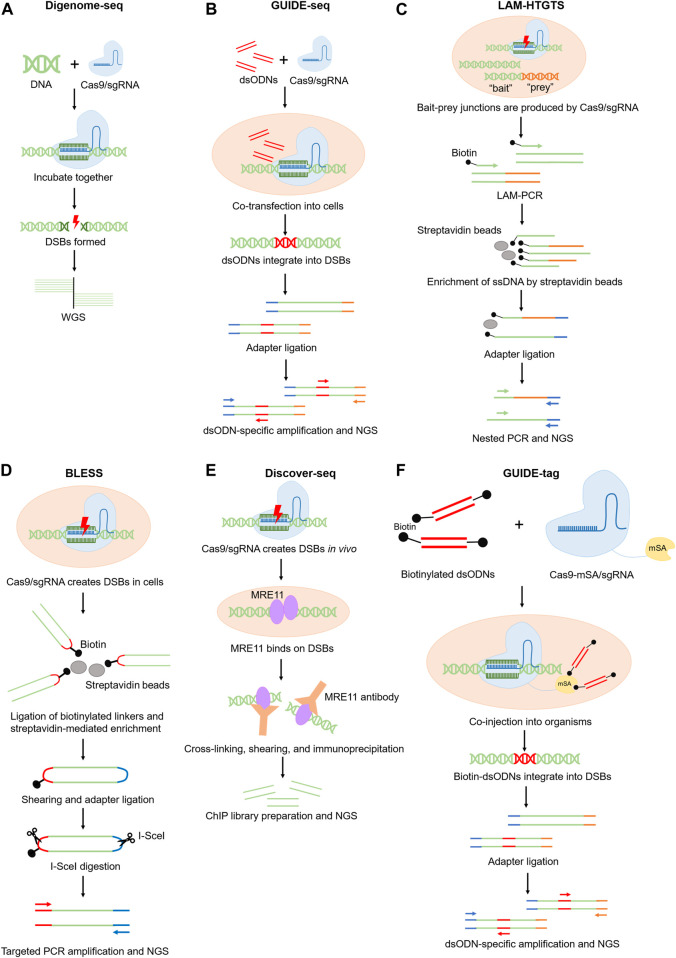
- Experimental detection methods vary widely: Digenome-seq detects indels at 0.1% frequency or lower but needs ∼400–500 million reads for the human genome; SITE-seq needs ∼0.62–2.46 million reads but only 10% of positive hits were validated by targeted sequencing; CIRCLE-seq needs ∼4–5 million reads but has a high false positive rate; GUIDE-seq detects indel frequencies as low as 0.03% but captures only 30%–50% of all DSBs.
- Specificity strategies include high-fidelity Cas9 variants (eSpCas9, SpCas9-HF1, hypaCas9, evoCas9), sgRNA length/chemical modification, DSB-independent base editors, and delivery methods such as RNP electroporation and LNPs; evoCas9, SpCas9-HF1, and eSpCas9 reduced off-target sites by 98.7%, 95.4%, and 94.1%, respectively, in one comparison.
Methods
- This is a narrative review, not a primary experimental study; no original sample, dataset, or systematic meta-analysis is described.
- It synthesizes in silico prediction tools, cell-free, cell culture-based, and in vivo off-target detection methods, plus strategies to reduce off-target effects.
- Main analysis is qualitative comparison of advantages and disadvantages, organized in Tables 1 and 2 and supported by cited literature.
Limitations
- The paper states that limitations remain in balancing accuracy versus sensitivity of off-target detection techniques, and that direct assessment of off-target effects in vivo and in patients is particularly challenging.
- It notes that in silico predictions are biased toward sgRNA-dependent off-target effects and need experimental validation, and that many experimental methods have limitations such as high cost, high sequencing coverage, low sensitivity, false positives, false negatives, or dependence on chromatin accessibility.
- Evident from the text: as a review, it provides no new experimental data, and it states there is currently no standardized approach to confirm the sensitivity of Discover-seq.
Model-written summary. Check it against the paper before relying on it.
Integrity signals
Registry
Cites
Statistics
Figures
Verification
Claims the paper makes
78 Valid · 10 Not valid · 21 Not checked · 25 Own results and interpretations
At least one cited source doesn’t support this claim or points to a different paper, and none confirmed it — see the verdicts below.
In the paper
“Similarly, the Elevation tool also includes DNA accessibility information to predict potential off-target sites (Listgarten et al., 2018).”
§ Off-target effects in CRISPR/Cas9 gene editing > 2 In silico prediction
What the sources say
- Disputedcites Listgarten et al., 2018 matched to “Prediction of off-target activities for the end-to-end design of CRISPR guide RNAs” (2018) sourceExperimental — accuracy not yet measured
The Results section, “Predicting with chromatin accessibility” (page not provided), says the authors tested DNase I accessibility features but decided not to include them in the final deployed Elevation model because the results were inconclusive. Thus, the paper says the tool does not include the information the claim attributes to it. (LLM, conf=0.93)
Checked by a reasoning model — may be wrong.
plain- Asserted: passes — The authors put it forward as true.
- Checkable: passes — It can be checked against evidence.
- Load-bearing: unclear — It is unclear whether the paper’s conclusions depend on it.
- Based: passes — The paper gives a reason why it holds.
- Disputed
Some cited sources support this claim and some don’t — read each source’s verdict below.
In the paper
“A primary limitation of GUIDE-seq is relevant to the low delivery efficiency of dsODNs into cells, which results in detection of only 30%–50% of all the DSBs (Tsai et al., 2015; Pan et al., 2022).”
§ Off-target effects in CRISPR/Cas9 gene editing > 3 Experimental detection > 3.2 Cell culture-based methods
What the sources say
- Disputedcites Tsai et al., 2015 matched to “GUIDE-seq enables genome-wide profiling of off-target cleavage by CRISPR-Cas nucleases” (2015) sourceExperimental — accuracy not yet measured
The Results (Overview of the GUIDE-Seq method; page unavailable) report robust dsODN integration, at rates two- to three-fold lower than indel frequencies at the tested sites—not detection of 30%–50% of all DSBs. The Discussion (page unavailable) describes dsODN integration as very efficient and reports detection of 38 of 40 previously identified off-target sites, contrary to the claimed primary limitation. (LLM, conf=0.87)
Checked by a reasoning model — may be wrong.
- Partly supportedcites Pan et al., 2022 matched to “Massively targeted evaluation of therapeutic CRISPR off-targets in cells” (2022) sourceExperimental — accuracy not yet measured
The Introduction (page unavailable) says GUIDE-seq relies on inserting double-stranded DNA at double-strand breaks, and the Results section on SURRO-seq validation likewise describes insertion of a double-stranded oligonucleotide. Neither passage says that delivery into cells is inefficient or that GUIDE-seq detects only 30%–50% of DSBs; searches for those terms found no such estimate in our copy. (LLM, conf=0.84)
plainstates a cause- Asserted: passes — The authors put it forward as true.
- Checkable: passes — It can be checked against evidence.
- Load-bearing: unclear — It is unclear whether the paper’s conclusions depend on it.
- Based: passes — The paper gives a reason why it holds.
- Disputed
At least one cited source doesn’t support this claim or points to a different paper, and none confirmed it — see the verdicts below.
In the paper
“| Delivery methods improvement | Application in cell culture [89–94] | RNP electroporation: Rapid transfection and turnover | Eliminate off-target effects |”
§ Off-target effects in CRISPR/Cas9 gene editing > 4 Strategies to reduce off-target effects > 4.1 Cas9 improvement
What the sources say
- Not checked — no full text of the sourcecites [89] Wang X. Wu Y. Yee J. K. (2021). Detection of CRISPR/Cas9-Generated off-target effect by integration-defective lentiviral vector. Methods Mol. Biol. 2162, 243– 260. 10.1007/978-1-0716-0687-2_14 32926387 source
- Disputedcites [90] Wienert B. Wyman S. K. Richardson C. D. Yeh C. D. Akcakaya P. Porritt M. J. (2019). Unbiased detection of CRISPR off-targets in vivo using DISCOVER-Seq. Science 364 (6437), 286– 289. 10.1126/science.aav9023 31000663 PMC6589096 sourceExperimental — accuracy not yet measured
The Introduction (page unavailable) reports editing patient-derived iPSCs with HiFi-Cas9 RNPs and detecting two off-targets with the wild-type guide. That contradicts the claim that RNP delivery eliminates off-target effects; the passage does not specify electroporation or rapid turnover. (LLM, conf=0.86)
Checked by a reasoning model — may be wrong.
- Not checked — no full text of the sourcecites [91] Willyard C. (2017). The epigenome editors: How tools such as CRISPR offer new details about epigenetics. Nat. Med. 23 (8), 900– 903. 10.1038/nm0817-900 28777784 source
- Could not verifycites [92] Witzigmann D. Kulkarni J. A. Leung J. Chen S. Cullis P. R. van der Meel R. (2020). Lipid nanoparticle technology for therapeutic gene regulation in the liver. Adv. Drug Deliv. Rev. 159, 344– 363. 10.1016/j.addr.2020.06.026 32622021 PMC7329694 sourceExperimental — accuracy not yet measured
The ‘mRNA for gene expression and genome editing’ section describes lipid-nanoparticle delivery of Cas9-encoding mRNA with sgRNA, including results in mice. Searches for RNP electroporation, rapid turnover, and off-target effects found no passage addressing whether electroporation in cell culture eliminates off-target effects. The available passages therefore do not verify the claim. (LLM, conf=0.74)
- Could not verifycites [93] Wu X. Scott D. A. Kriz A. J. Chiu A. C. Hsu P. D. Dadon D. B. (2014). Genome-wide binding of the CRISPR endonuclease Cas9 in mammalian cells. Nat. Biotechnol. 32 (7), 670– 676. 10.1038/nbt.2889 24752079 PMC4145672 sourceExperimental — accuracy not yet measured
The Online Methods (Cell culture) say transfections used Lipofectamine 2000, not RNP electroporation. The Results (One of 295 off-target sites is mutated above background) report an off-target mutation, but do not test whether RNP electroporation eliminates off-target effects. Searches for RNP electroporation and ribonucleoprotein delivery found no passage addressing that claim. (LLM, conf=0.76)
- Could not verifycites [94] Wu Y. Ren Q. Zhong Z. Liu G. Han Y. Bao Y. (2022). Genome-wide analyses of PAM-relaxed Cas9 genome editors reveal substantial off-target effects by ABE8e in rice. Plant Biotechnol. J. 20 (9), 1670– 1682. 10.1111/pbi.13838 35524459 PMC9398351 sourceExperimental — accuracy not yet measured
The Experimental procedures section describes Agrobacterium-mediated transformation of rice calli, not RNP electroporation in cell culture. The Results report off-target mutations from the rice editors studied, but do not test whether RNP electroporation eliminates them. Searches for RNP delivery and electroporation found no passage addressing that claim. (LLM, conf=0.77)
plainstates a cause- Asserted: passes — The authors put it forward as true.
- Checkable: passes — It can be checked against evidence.
- Load-bearing: unclear — It is unclear whether the paper’s conclusions depend on it.
- Based: passes — The paper gives a reason why it holds.
The cited sources support only part of this claim — read each source’s verdict below.
In the paper
“Cas-OFFinder is more widely applicated due to its high tolerance of sgRNA length, PAM types, and the number of mismatches or bulges (Bae et al., 2014).”
§ Off-target effects in CRISPR/Cas9 gene editing > 2 In silico prediction
What the sources say
- Partly supportedcites Bae et al., 2014 matched to “Cas-OFFinder: A fast and versatile algorithm that searches for potential off-target sites of Cas9 RNA-guided endonucleases” (2014) sourceExperimental — accuracy not yet measured
The Results and Discussion section reports searches using 20-bp and 24-bp guide-matching sequences and different PAMs; its conclusion says Cas-OFFinder does not limit the number of mismatched bases. The Methods section describes counting mismatches, but no passage establishes that the tool tolerates bulges. That part of the claim is unsupported by this copy. (LLM, conf=0.87)
plainstates a cause- Asserted: passes — The authors put it forward as true.
- Checkable: passes — It can be checked against evidence.
- Load-bearing: unclear — It is unclear whether the paper’s conclusions depend on it.
- Based: passes — The paper gives a reason why it holds.
- Partly supported
The cited sources support only part of this claim — read each source’s verdict below.
In the paper
“Although CRISPR/Cas systems exhibit tremendous potential in translational medicine, off-target effects remain a major challenge (Fu et al., 2013; Hsu et al., 2013; Pacesa et al., 2022).”
§ Off-target effects in CRISPR/Cas9 gene editing > 1 Introduction
What the sources say
- Not matchedcites Fu et al., 2013
This doesn’t read as a citation we can look up.
- Partly supportedcites Hsu et al., 2013 matched to “DNA targeting specificity of RNA-guided Cas9 nucleases” (2013) sourceExperimental — accuracy not yet measured
The paper’s Abstract (page unavailable) documents off-target editing in human cells and describes ways to minimize it, supporting the claim that off-target effects are a challenge for Cas9 genome editing. It does not specifically assess translational medicine or establish how major that challenge is in clinical use. (LLM, conf=0.81)
- Supportedcites Pacesa et al., 2022 matched to “Structural basis for Cas9 off-target activity” (2022) source
The Introduction says that off-target activity of SpCas9 and other Cas9 enzymes presents a safety concern for therapeutic applications. The Discussion also links improved off-target prediction to safer therapeutic use, supporting the cited background claim. (LLM, conf=0.91)
plain- Asserted: passes — The authors put it forward as true.
- Checkable: passes — It can be checked against evidence.
- Load-bearing: passes — The paper’s conclusions depend on it.
- Based: passes — The paper gives a reason why it holds.
- Not matched
82 more claims · 52 with their cited sources checked
Create a free account to see all 134 claims and to verify the 1 reference still open.
- Probably not a substantial claim. 20
- It may state two separate claims as one. 33
Claims other papers make about this one
Each is checked against this paper’s own text: does it say what the citing paper says it does?
The source backs part of the claim, not all of it — or backs it for a different population, condition or comparison.
In the citing paper
“Off-target effects are unintended genomic modifications occur when guide RNA (gRNA) binds to sequences similar to, but not identical with, the intended target, potentially resulting in undesirable DNA cleavage and mutations (Guo et al., 2023; Lopes and Prasad, 2024; Garrigues et al., 2023).”
From Emerging applications of gene editing technologies for the development of climate-resilient crops (2025) · cites this paper as Guo et al., 2023
Experimental — accuracy not yet measuredThe source backs part of the claim, not all of it — or backs it for a different population, condition or comparison.
In the citing paper
“For instance, recent studies have shown that Cas9 tolerates up to three mismatches between the gRNA and genomic DNA, which increases the chances of off-target effects in regions with higher GC content.”
From Hybrid Neural Networks for Off-Target Prediction in Gene Editing: Integrating Sequence and Biophysical Features (2025) · cites this paper as [2]
Experimental — accuracy not yet measuredThe source backs part of the claim, not all of it — or backs it for a different population, condition or comparison.
In the citing paper
“Although CRISPR/Cas9 introduces targeted mutations, it actually supports the maintenance of clonal fidelity by offering precise and controlled gene editing, unlike the random and widespread genetic alterations associated with somaclonal variation [178].”
From Somaclonal Variation and Clonal Fidelity in Commercial Micropropagation: Challenges and Perspectives (2025) · cites this paper as [178]
Experimental — accuracy not yet measured
Self-check
Percentages, sums and reported differences re-computed from the paper’s own numbers.
Each contradiction between two passages listed here was confirmed by an independent check.
Rated minor: it would not touch a result — a value no result rests on, a p-value that stays on the same side of the significance level, or a conflict that is clerical, resolved elsewhere in the paper, or outside its own findings.
In the paper
§ Off-target effects in CRISPR/Cas9 gene editing > 2 In silico prediction
“| In silico prediction | Alignment based models | CasOT [21] | Adjustable in PAM sequence and the mismatch number (at most 6) | Conveniently accessable via internet | Biased toward sgRNA-dependent off-target effects; results need experimental validation |”
§ Off-target effects in CRISPR/Cas9 gene editing > References
“95. Xiao A. Cheng Z. Kong L. Zhu Z. Lin S. Gao G. (2014). CasOT: A genome-wide cas9/gRNA off-target searching tool.”
Citations
Cites
A Programmable Dual-RNA–Guided DNA Endonuclease in Adaptive Bacterial Immunity
Jinek, M., Chylinski, K., Fonfara, I., Hauer, M., Doudna, J. A., & Charpentier, E. (2012) · Science · doi:10.1126/science.1225829 · Cited by 17,116 · cited 11×
“Cas-OFFinder is more widely applicated due to its high tolerance of sgRNA length, PAM types, and the number of mismatches or bulges (Bae et al., 2014).”
BackgroundInfluentialMultiplex Genome Engineering Using CRISPR/Cas Systems
Cong, L., Ran, F. A., Cox, D., Lin, S., Barretto, R., Habib, N., Hsu, P. D., Wu, X., Jiang, W., Marraffini, L. A., et al. (2013) · Science · doi:10.1126/science.1231143 · Cited by 15,339 · cited 11×
“Cas-OFFinder is more widely applicated due to its high tolerance of sgRNA length, PAM types, and the number of mismatches or bulges (Bae et al., 2014).”
BackgroundInfluentialProgrammable editing of a target base in genomic DNA without double-stranded DNA cleavage
Komor, A. C., Kim, Y. B., Packer, M. S., Zuris, J. A., & Liu, D. R. (2016) · Nature · doi:10.1038/nature17946 · Cited by 5,437 · cited 1×
“ABE catalyzes the editing from adenine to guanine and CBE converts cytosine to thymine (Komor et al., 2016; Gaudelli et al., 2017; Wu et al., 2022).”
BackgroundDNA targeting specificity of RNA-guided Cas9 nucleases
Hsu, P. D., Scott, D. A., Weinstein, J. A., Ran, F. A., Konermann, S., Agarwala, V., Li, Y., Fine, E. J., Wu, X., Shalem, O., et al. (2013) · Nature Biotechnology · doi:10.1038/nbt.2647 · Cited by 4,741 · cited 5×
“The off-target sites are often sgRNA-dependent, since Cas9 is known to tolerate up to 3 mismatches between sgRNA and genomic DNA (Fu et al., 2013; Hsu et al., 2013; Wang et al., 2016a).”
BackgroundInfluentialOptimized sgRNA design to maximize activity and minimize off-target effects of CRISPR-Cas9
Doench, J. G., Fusi, N., Sullender, M., Hegde, M., Vaimberg, E. W., Donovan, K. F., Smith, I., Tothova, Z., Wilen, C., Orchard, R., et al. (2016) · Nature Biotechnology · doi:10.1038/nbt.3437 · Cited by 4,637 · cited 2×
“The CFD algorithm is derived from a CRISPR/Cas9 genetic screen experiment that assessed the off-target effects of thousands of sgRNAs (Doench et al., 2016).”
BackgroundMethodProgrammable base editing of A•T to G•C in genomic DNA without DNA cleavage
Gaudelli, N. M., Komor, A. C., Rees, H. A., Packer, M. S., Badran, A. H., Bryson, D. I., & Liu, D. R. (2017) · Nature · doi:10.1038/nature24644 · Cited by 4,184 · cited 1×
“ABE catalyzes the editing from adenine to guanine and CBE converts cytosine to thymine (Komor et al., 2016; Gaudelli et al., 2017; Wu et al., 2022).”
BackgroundHigh-Frequency off-Target Mutagenesis Induced by CRISPR-Cas Nucleases in Human Cells
Fu, Y., Foden, J. A., Khayter, C., Maeder, M. L., Reyon, D., Joung, J. K., & Sander, J. D. (2013) · Nature Biotechnology · doi:10.1038/nbt.2623 · Cited by 3,292 · cited 2×
“The off-target sites are often sgRNA-dependent, since Cas9 is known to tolerate up to 3 mismatches between sgRNA and genomic DNA (Fu et al., 2013; Hsu et al., 2013; Wang et al., 2016a).”
BackgroundHigh-fidelity CRISPR-Cas9 nucleases with no detectable genome-wide off-target effects
Kleinstiver, B. P., Pattanayak, V., Prew, M. S., Tsai, S. Q., Nguyen, N. T., Zheng, Z., & Joung, J. K. (2016) · Nature · doi:10.1038/nature16526 · Cited by 2,673
Rationally engineered Cas9 nucleases with improved specificity
Slaymaker, I. M., Gao, L., Zetsche, B., Scott, D. A., Yan, W. X., & Zhang, F. (2016) · Science · doi:10.1126/science.aad5227 · Cited by 2,414 · cited 8×
“This idea led to the rational design of SpCas9 mutants such as enhanced SpCas9 (eSpCas9) and SpCas9-HF1 (HF1 for high-fidelity variant #1).”
BackgroundInfluentialBae, S., Park, J., & Kim, J.-S. (2014) · Bioinformatics · doi:10.1093/bioinformatics/btu048 · Cited by 2,339 · cited 1×
“Cas-OFFinder is more widely applicated due to its high tolerance of sgRNA length, PAM types, and the number of mismatches or bulges (Bae et al., 2014).”
Background
Cited by
Lu, P., Ruan, D., Huang, M., Tian, M., Zhu, K., Gan, Z., & Xiao, Z. (2024) · Signal Transduction and Targeted Therapy · doi:10.1038/s41392-024-01852-x · Cited by 667
Recent advances of CRISPR-based genome editing for enhancing staple crops
Chen, F., Chen, L., Yan, Z., Xu, J., Feng, L., He, N., Guo, M., Zhao, J., Chen, Z., Chen, H., et al. (2024) · Frontiers in Plant Science · doi:10.3389/fpls.2024.1478398 · Cited by 179
“High-fi delity Cas9 variants, such as eSpCas9, SpCas9-HF1 and FrCas9, have been engineered to enhance precision by reducing nonspeci fi c DNA interactions (Guo et al., 2023; He et al., 2024).”
BackgroundAljabali, A. A. A., El‐Tanani, M., & Tambuwala, M. M. (2024) · Journal of Drug Delivery Science and Technology · doi:10.1016/j.jddst.2024.105338 · Cited by 232
Dias, J., García, J., Agliardi, G., & Roddie, C. (2024) · Molecular Therapy — Methods & Clinical Development · doi:10.1016/j.omtm.2024.101250 · Cited by 138
Recent advancements in reducing the off-target effect of CRISPR/Cas9 genome editing
Asmamaw Mengstie, M., Teshome Azezew, M., Asmamaw Dejenie, T., Teshome, A. A., Tadele Admasu, F., Behaile Teklemariam, A., Tilahun Mulu, A., Mekonnen Agidew, M., Adugna, D. G., Geremew, H., et al. (2024) · Biologics: Targets and Therapy · doi:10.2147/btt.s429411 · Cited by 91
“14 Studies have also shown that chemical modifications at particular locations in the guide sequences can significantly increase the specificity and flexibility of CRISPR-Cas systems for the precise editing of genes.”
BackgroundBiomaterials-mediated CRISPR/Cas9 delivery: recent challenges and opportunities in gene therapy
Dubey, A. K., & Mostafavi, E. (2023) · Frontiers in Chemistry · doi:10.3389/fchem.2023.1259435 · Cited by 103
“CRISPR/Cas9 gene editing has the potential to cause off-target effects, which are unexpected changes in the genome (Zhang et al., 2015; Dubey et al., 2022; Guo et al., 2023).”
BackgroundLopes, R., & Prasad, M. K. (2024) · Frontiers in Bioengineering and Biotechnology · doi:10.3389/fbioe.2023.1339189 · Cited by 82
“For detailed descriptions and comparisons of the different methods, we invite the reader to refer to Table 2 and some recent reviews (Kim et al., 2019; Atkins et al., 2021; Guo et al., 2023).”
MethodSoltanmohammadi, F., Gharehbaba, A. M., Zangi, A. R., Adibkia, K., & Javadzadeh, Y. (2024) · Biomedicine & Pharmacotherapy · doi:10.1016/j.biopha.2024.117248 · Cited by 95
Aparicio, C., Acebal, C., & González‐Vallinas, M. (2023) · Experimental Hematology and Oncology · doi:10.1186/s40164-023-00435-w · Cited by 92
“…modified products have to go through a process of high regulation and quality controls to check for off-target effects and genetic rearrangements because gene editing tools may act on untargeted genomic sites and create cleavages that potentially produce adverse safety consequences [109].”
BackgroundAhmar, S., Hensel, G., & Gruszka, D. (2023) · Biotechnology Advances · doi:10.1016/j.biotechadv.2023.108248 · Cited by 84
CRISPR Variants for Gene Editing in Plants: Biosafety Risks and Future Directions
Movahedi, A., Dargiri, S. A., Li, H., Zhuge, Q., & Sun, W. (2023) · International Journal of Molecular Sciences · doi:10.3390/ijms242216241 · Cited by 93
Hamdan, M. F., & Tan, B. C. (2024) · Horticultural Plant Journal · doi:10.1016/j.hpj.2024.02.012 · Cited by 102
Advancing CRISPR genome editing into gene therapy clinical trials: progress and future prospects
Cetin, B., Erendor, F., Ekşi, Y. E., Şanlioğlu, A. D., & Şanlıoğlu, S. (2025) · Expert Reviews in Molecular Medicine · doi:10.1017/erm.2025.10 · Cited by 95
Evolution of CRISPR/Cas Systems for Precise Genome Editing
Hryhorowicz, M., Lipiński, D., & Zeyland, J. (2023) · International Journal of Molecular Sciences · doi:10.3390/ijms241814233 · Cited by 80
“The unintentional cleavages in similar target sequences are generated because Cas9 accepts up to three sgRNA/gDNA mismatches [76].”
State of the art CRISPR-based strategies for cancer diagnostics and treatment
Carlo, E. D., & Sorrentino, C. (2024) · Biomarker Research · doi:10.1186/s40364-024-00701-x · Cited by 79
CRISPR–Cas9 delivery strategies for the modulation of immune and non-immune cells
Alsaiari, S. K., Eshaghi, B., Du, B., Kanelli, M., Li, G., Wu, X., Zhang, L., Chaddah, M., Lau, A., Yang, X., et al. (2024) · Nature Reviews Materials · doi:10.1038/s41578-024-00725-7 · Cited by 70
“…gene editing activity with minimal off-target effects and no genomic integration; nevertheless, the large size of the complex requires a delivery vector with sufficient cargo capacity, it is the costliest of the cargo formats to produce, and it may need to be optimized for specific cell types 8,9 .”
CRISPR/Cas9 Technology for Enhancing Desirable Traits of Fish Species in Aquaculture
Zhu, M., Sumana, S. L., Muhammad, A. M., Falayi, O. C., Shui, Y., Zhang, C., Zhu, J. X., & Su, S. (2024) · International Journal of Molecular Sciences · doi:10.3390/ijms25179299 · Cited by 77
“These systems ensure more effective delivery of CRISPR/Cas9 components to target cells while minimizing exposure to off-target sites [62,63].”
BackgroundNanocarrier‐Based Systems for Targeted Delivery: Current Challenges and Future Directions
Xu, Z., Xie, Y., Chen, W., & Deng, W. (2025) · MedComm · doi:10.1002/mco2.70337 · Cited by 88
“However, this technology may have unintended off-target and cytotoxic effects, especially when administered systemically [161, 162].”
Nanoparticle-Based Delivery Strategies for Combating Drug Resistance in Cancer Therapeutics
Park, S., Lu, G., Zheng, Y., Davison, E. K., & Li, Y. (2025) · Cancers · doi:10.3390/cancers17162628 · Cited by 69
“This highlights the need for the development of ultra-high-fidelity nuclease variants and application of rigorous gRNA design pipelines to keep unwanted edits to a minimum [236].”
Somaclonal Variation and Clonal Fidelity in Commercial Micropropagation: Challenges and Perspectives
Majumder, S., Igamberdiev, A. U., & Debnath, S. C. (2025) · Agronomy · doi:10.3390/agronomy15061489 · Cited by 46
Mably, J. D., & Wang, D. (2023) · Nature Reviews Cardiology · doi:10.1038/s41569-023-00952-5 · Cited by 46
Recent Therapeutic Gene Editing Applications to Genetic Disorders
Deneault, É. (2024) · Current Issues in Molecular Biology · doi:10.3390/cimb46050255 · Cited by 64
“A comprehensive overview of the advantages, disadvantages, and complementarity of different methods for off-target detection in gene editing is available [20,147,148].”
MethodEmerging applications of gene editing technologies for the development of climate-resilient crops
Chavhan, R. L., Jaybhaye, S. G., Hinge, V. R., Deshmukh, A. S., Shaikh, U. S., Jadhav, P. K., Kadam, U. S., & Hong, J. C. (2025) · Frontiers in Genome Editing · doi:10.3389/fgeed.2025.1524767 · Cited by 55
“Off-target effects are unintended genomic modi fi cations occur when guide RNA (gRNA) binds to sequences similar to, but not identical with, the intended target, potentially resulting in undesirable DNA cleavage and mutations (Guo et al., 2023; Lopes and Prasad, 2024; Garrigues et al., 2023).”
Focused ultrasound gene delivery for the treatment of neurological disorders
Kofoed, R. H., & Aubert, I. (2024) · Trends in Molecular Medicine · doi:10.1016/j.molmed.2023.12.006 · Cited by 46
CRISPRoffT: comprehensive database of CRISPR/Cas off-targets
Wang, G., Liu, X., Wang, A., Wen, J., Kim, P., Song, Q., Liu, X., & Zhou, X. (2024) · Nucleic Acids Research · doi:10.1093/nar/gkae1025 · Cited by 44
Srivastav, A. K., Mishra, M. K., Lillard, J. W., & Singh, R. (2025) · Pharmaceutics · doi:10.3390/pharmaceutics17050555 · Cited by 66
“AI is crucial in optimizing CRISPR interventions by enhancing gRNA design, predicting off-target effects, and improving repair pathway outcomes [34].”
Unlocking Fungal Potential: The CRISPR-Cas System as a Strategy for Secondary Metabolite Discovery
Leal, K., Rojas, E., Madariaga-Troncoso, D., Contreras, M. J., Núñez-Montero, K., Barrientos, L., Gómez-Espinoza, O., & Iturrieta‐González, I. (2024) · Journal of Fungi · doi:10.3390/jof10110748 · Cited by 45
Al-Ouqaili, M. T. S., Ahmad, A., Jwair, N. A., & Al-Marzooq, F. I. (2025) · Frontiers in Cellular and Infection Microbiology · doi:10.3389/fcimb.2025.1588446 · Cited by 55
Recent applications, future perspectives, and limitations of the CRISPR-Cas system
Park, S.-J., Lee, G. E., Cho, S. M., & Choi, E.-H. (2025) · Molecular Therapy — Nucleic Acids · doi:10.1016/j.omtn.2025.102634 · Cited by 48
“68,69 Many of these approaches, while potent, may cause undesired genome-wide perturbations or increase the risk of chromosomal rearrangements due to excessive end resection or prolonged repair activity.”
Patel, J., Roy, H., Chintamaneni, P. K., Patel, R., & Bohara, R. A. (2025) · ACS Biomaterials Science & Engineering · doi:10.1021/acsbiomaterials.5c00004 · Cited by 47
Photosynthesis: Genetic Strategies Adopted to Gain Higher Efficiency
Khan, N., Choi, S., Lee, C.-H., Qu, M., & Jeon, J. (2024) · International Journal of Molecular Sciences · doi:10.3390/ijms25168933 · Cited by 39
“Furthermore, the off-target effects of gene-editing tools such as CRISPR-Cas9 have not been explored well, which may lead to cleavages at unintended sites and produce adverse side effects [16,17], particularly in plants where the genome is not well characterized [18].”
BackgroundMerlin, J. P. J., & Abrahamse, H. (2024) · Biomedicine & Pharmacotherapy · doi:10.1016/j.biopha.2024.117516 · Cited by 40
Xiang, G., Yin, B., Heidari, B. S., Youssef, G., Gosecka, M., Gosecki, M., Torres, F. G., Wong, S. H. D., & Dodda, J. M. (2025) · Advanced Science · doi:10.1002/advs.202512037 · Cited by 45
Mesenchymal Stromal Cells for Aging Cartilage Regeneration: A Review
Wu, K.-C., Chang, Y.-H., Ding, D.-C., & Lin, S.-Z. (2024) · International Journal of Molecular Sciences · doi:10.3390/ijms252312911 · Cited by 33
“CRISPR/Cas9 gene editing has shown promise for treating diseases, but off-target effects remain a significant concern [154,155].”
CRISPR for companion diagnostics in low-resource settings
Qian, X., Xu, Q., Lyon, C. J., & Hu, Y. (2024) · Lab on a Chip · doi:10.1039/d4lc00340c · Cited by 40
mRNA vaccine platforms: linking infectious disease prevention and cancer immunotherapy
Haghmorad, D., Eslami, M., Orooji, N., Halabitska, I., Kamyshna, I. I., Kamyshnyi, O., & Oksenych, V. (2025) · Frontiers in Bioengineering and Biotechnology · doi:10.3389/fbioe.2025.1547025 · Cited by 46
“This precision reduces the risk of off-target effects and enhances the ef fi cacy of the treatment (Guo et al., 2023).”
CRISPR/Cas9: a powerful tool in colorectal cancer research
Hu, Y., Liu, L., Jiang, Q., Fang, W., Chen, Y., Hong, Y., & Zhai, X. (2023) · Journal of Experimental & Clinical Cancer Research · doi:10.1186/s13046-023-02901-z · Cited by 41
“…modification (spCas9-HF1, espCas9, HypaCas9, HiFiCas9, HeFspCas9); Directional screening (evoCas9, XCas9, SinperCas9) (those two Cas9 engineering and sgRNA modification methods have been summarized, for review see [124, 130], we add another or new researches in this review); Introducing regulation.”
BackgroundRecent advances in the application of CRISPR/Cas-based gene editing technology in Filamentous Fungi
Li, X.-H., Lu, H., Yao, J.-B., Zhang, C., Shi, T., & Huang, H. (2025) · Biotechnology Advances · doi:10.1016/j.biotechadv.2025.108561 · Cited by 37
Dobránszki, J., Vassileva, V., Agius, D., Moschou, P. N., Gallusci, P., Berger, M. M. J., Farkas, D., Basso, M. F., & Martinelli, F. (2025) · Journal of Integrative Plant Biology · doi:10.1111/jipb.13953 · Cited by 43
Li, J., Kong, D., Ke, Y., Zeng, W., & Miki, D. (2024) · BMC Biology · doi:10.1186/s12915-024-01810-7 · Cited by 38
“The main cause of off-targeting by the CRISPR/Cas sys-tem is thought to be the massive amount of Cas protein and sgRNA in the cell [41].”
BackgroundNext generation therapeutics for retinal neurodegenerative diseases
Appell, M. B., Pejavar, J., Pasupathy, A., Rompicharla, S. V. K., Abbasi, S., Malmberg, K., Kolodziejski, P., & Ensign, L. M. (2024) · Journal of Controlled Release · doi:10.1016/j.jconrel.2024.01.063 · Cited by 34
Recent advances in engineering fast-growing cyanobacterial species for enhanced CO2 fixation
Kim, D. S., Moreno-Cabezuelo, J. Á., Schulz, E. N., Lea‐Smith, D. J., & Sagaram, U. S. (2024) · Frontiers in Climate · doi:10.3389/fclim.2024.1412232 · Cited by 34
Advances in application of CRISPR-Cas13a system
Zhang, Y., Li, S., Li, R., Qiu, X., Fan, T., Wang, B., Zhang, B., & Zhang, L. (2024) · Frontiers in Cellular and Infection Microbiology · doi:10.3389/fcimb.2024.1291557 · Cited by 39
“These disadvantages greatly limit the clinical application of CRISPR/Cas9 technology (Guo et al., 2023).”
BackgroundAdvances in nucleic acid-targeted therapies for cardiovascular disease prevention
Makhmudova, U., Steinhagen‐Thiessen, E., Volpe, M., & Landmesser, U. (2024) · Cardiovascular Research · doi:10.1093/cvr/cvae136 · Cited by 35
Progress and challenges in CRISPR/Cas applications in microalgae
Tran, Q., Le, T. T., Choi, D., Cho, D., Yun, J., Choi, H. I., Kim, H.-S., & Lee, Y. J. (2025) · The Journal of Microbiology · doi:10.71150/jm.2501028 · Cited by 41
“A longer PAM sequence can reduce potential off-target sites in the genome, thereby enhancing the accuracy of CRISPR-based gene editing (Guo et al., 2023).”
JAK/STAT signaling pathway affects CCR5 expression in human CD4 + T cells
Wang, L., Yükselten, Y., Nuwagaba, J., & Sutton, R. E. (2024) · Science Advances · doi:10.1126/sciadv.adl0368 · Cited by 37
“Although all sorted cells had been transfected, the editing efficiency varied because of possible CRISPR off-target effects ( 49 ).”
BackgroundRecent Advances and Prospects of Nucleic Acid Therapeutics for Anti-Cancer Therapy
Lee, M., Lee, M.-J., Song, Y., Kim, S., & Park, N. (2024) · Molecules · doi:10.3390/molecules29194737 · Cited by 35
“…and discussions and debates surrounding them are still In addition to gene editing, gene silencing can be induced by suppressing the transcription of target genes through an inactive Cas9 (dCas9) lacking endonuclease activity due to the D10A and H840A mutations [173,174]. ongoing [183– 185].”
BackgroundZebrafishology, study design guidelines for rigorous and reproducible data using zebrafish
Bedell, V. M., Dubey, P., Lee, H. B., Bailey, D. S., Anderson, J. L., Jamieson-Lucy, A., Xiao, R., Leonard, E. V., Falk, M. J., Pack, M. A., et al. (2025) · Communications Biology · doi:10.1038/s42003-025-07496-z · Cited by 40
Gene therapy for Parkinson's disease: trials and technical advances
Winston, G. M., Kharas, N., Svenningsson, P., Jha, A., & Kaplitt, M. G. (2025) · The Lancet Neurology · doi:10.1016/s1474-4422(25)00125-5 · Cited by 33
Tang, S., Chen, X., Tong, X., & Zhu, L. (2025) · International Journal of Medical Sciences · doi:10.7150/ijms.112724 · Cited by 34
“…slowly dividing or non-dividing cells [60]; iii) Enhancing sgRNA design through the incorporation of modified nucleotides or chemical alterations [61] to improve binding stability and specificity [62], as demonstrated in human primary T cells and CD34 + progenitor and hematopoietic stem cells [63].”
Karpov, D. S., Sosnovtseva, A. O., Pylina, S. V., Bastrich, A., Petrova, D. A., Kovalev, M. A., Shuvalova, A. I., Константиновна, Е. А., & Mokrysheva, N. G. (2023) · International Journal of Molecular Sciences · doi:10.3390/ijms242417320 · Cited by 35
“In addition, the number of off-target Cas9 binding sites is much larger than the number of off-target sites it can efficiently cut [177,254], so the number of undesirable changes in expression outside of target genes and genome fragments is potentially larger.”
BackgroundMethodRecent Advances in Tomato Gene Editing
Larriba, E., Yaroshko, О. M., & Pérez‐Pérez, J. M. (2024) · International Journal of Molecular Sciences · doi:10.3390/ijms25052606 · Cited by 33
Linthout, S. V., Stellos, K., Giacca, M., Bertero, E., Cannata, A. N., Carrier, L., García‐Pavía, P., Ghigo, A., González, A., Haugaa, K. H., et al. (2024) · European Journal of Heart Failure · doi:10.1002/ejhf.3516 · Cited by 34
Gene Therapies in Clinical Development to Treat Retinal Disorders
McClements, M. E., Elsayed, M. E. A. A., Major, L., de la Cámara, C. M.-F., & MacLaren, R. E. (2024) · Molecular Diagnosis & Therapy · doi:10.1007/s40291-024-00722-0 · Cited by 31
“Some of these are extremely comprehensive with deep learning capabilities and account for numerous factors including epigenetic features, mismatch position within the sgRNA and mismatch-PAM site distance [75–77].”
BackgroundEngineering Useful Microbial Species for Pharmaceutical Applications
САДАНОВ, А. К., Baimakhanova, B. B., Orasymbet, S., Ратникова, И. А., TURLYBAYEVA⃰, Z. Z., Baimakhanova, G. B., Amitova, A. A., Omirbekova, A. A., Aitkaliyeva, G., Kossalbayev, B. D., et al. (2025) · Microorganisms · doi:10.3390/microorganisms13030599 · Cited by 38
“…insulin, therapeutic enzymes [51,52] AI and CRISPR integration Automating genome editing to accelerate new drug development [53] Despite its high specificity, the CRISPR-Cas9 system can induce off-target mutations due to sequence mismatches, chromatin accessibility, and DNA repair mechanisms [54].”
Clinical translation of human iPSC technologies: advances, safety concerns, and future directions
Dhaiban, S., Chandran, S., Noshi, M., & Sajini, A. A. (2025) · Frontiers in Cell and Developmental Biology · doi:10.3389/fcell.2025.1627149 · Cited by 62
“Although iPSCs are not used for germline editing, the He Jiankui case, involving the birth of gene-edited children, highlighted the need for strict ethical oversight in clinical gene editing (Greely, 2019; Guo et al., 2023).”
Șerban, M., Toader, C., & Covache-Busuioc, R.-A. (2025) · International Journal of Molecular Sciences · doi:10.3390/ijms26199409 · Cited by 39
Programmable genome engineering and gene modifications for plant biodesign
Liu, J., Zhang, R., Chai, N., Su, L., Zheng, Z., Liu, T., Guo, Z., Ma, Y., Xie, Y., Xie, X., et al. (2025) · Plant Communications · doi:10.1016/j.xplc.2025.101427 · Cited by 31
“Tools such as CasOT (Xiao et al., 2014), Cas-OFFinder (Bae et al., 2014), and FlashFry (McKenna and Shendure, 2018) support the prediction of off-target sites (Guo et al., 2023).”
Drought Stress Amelioration Attributes of Plant-Associated Microbiome on Agricultural Plants
Agunbiade, V. F., & Babalola, O. O. (2024) · Bioinformatics and Biology Insights · doi:10.1177/11779322241233442 · Cited by 25
“163 There is an ongoing need for responsible and transparent governance to ensure that these technologies are used ethically and for the benefit of society.”
BackgroundBoosting CAR-T cell therapy with CRISPR technology
Yan, L., Gao, S., Wang, X., Zhou, X., Limsakul, P., & Wu, Y. (2024) · hLife · doi:10.1016/j.hlife.2024.06.002 · Cited by 25
Methods and applications of genome-wide profiling of DNA damage and rare mutations
Pfeifer, G. P., & Jin, S. (2024) · Nature Reviews Genetics · doi:10.1038/s41576-024-00748-4 · Cited by 30
“Of note, there are several techniques for mapping DNA strand breaks induced by CRISPR nucleases, which are not described here in detail but have been reviewed recently elsewhere 25,26 .”
Recent advances in designing synthetic plant regulatory modules
Nayak, N., Mehrotra, S., Karamchandani, A. N., Santelia, D., & Mehrotra, R. C. (2025) · Frontiers in Plant Science · doi:10.3389/fpls.2025.1567659 · Cited by 26
Garg, P., Singhal, G., Pareek, S., Kulkarni, P., Horne, D., Nath, A., Salgia, R., & Singhal, S. S. (2024) · Biochimica et Biophysica Acta (BBA) - Reviews on Cancer · doi:10.1016/j.bbcan.2024.189233 · Cited by 45
LMNA-related cardiomyopathy: From molecular pathology to cardiac gene therapy
Wang, Z., Wu, J., Lv, Z., Liang, P., Li, Q., Li, Y., & Guo, Y. (2025) · Journal of Advanced Research · doi:10.1016/j.jare.2025.01.001 · Cited by 32
“CRISPR/Cas-induced DNA damages increase the risk of off-target editing and other side effects [197].”
Self-citationSafety Assessment of Stem Cell-Based Therapies: Current Standards and Advancing Frameworks
Leonov, G. E., Grinchevskaya, L. R., Makhnach, O. V., Samburova, M. V., Goldshtein, D. V., & Salikhova, D. I. (2025) · Cells · doi:10.3390/cells14211660 · Cited by 32
Oncolytic viral therapy for gliomas: Advances in the mechanisms and approaches to delivery
Romanishin, A. O., Vasilev, A., Khasanshin, E., Evtekhov, A., Pusynin, E., Rubina, K., Kakotkin, V., Agapov, M., & Semina, E. (2024) · Virology · doi:10.1016/j.virol.2024.110033 · Cited by 26
Molecular mechanisms underlying the regulation of tumour suppressor genes in lung cancer
Jy, L., Bhandare, R. R., Boddu, S. H. S., SHAIK, A. B., Saktivel, L. P., Gupta, G., Negi, P., Barakat, M. M., Singh, S. K., Dua, K., et al. (2024) · Biomedicine & Pharmacotherapy · doi:10.1016/j.biopha.2024.116275 · Cited by 27
AAV-based CRISPR-Cas9 genome editing: Challenges and engineering opportunities
Kabadi, A. M., Mejía‐Guerra, M. K., Graef, J. D., Khan, S. Z., Walton, E. M., Wang, X., Gersbach, C. A., & Potter, R. A. (2023) · Current Opinion in Biomedical Engineering · doi:10.1016/j.cobme.2023.100517 · Cited by 29
Taharabaru, T., Kihara, T., Obata, A., Onodera, R., Wen, Y., Li, J., Motoyama, K., & Higashi, T. (2023) · Carbohydrate Polymers · doi:10.1016/j.carbpol.2023.121443 · Cited by 22
Advances in gene and cellular therapeutic approaches for Huntington’s disease
Piao, X., Li, D., Liu, H., Guo, Q., & Yu, Y. (2024) · Protein & Cell · doi:10.1093/procel/pwae042 · Cited by 24
Gene and RNA Editing: Revolutionary Approaches to Treating Diseases
Li, J., Huang, J., Liao, Y., Hu, T., Wang, C., Zhang, W., & Huang, C. (2025) · MedComm · doi:10.1002/mco2.70389 · Cited by 31
“However, the CRISPR–Cas system still faces significant challenges: delivery efficiency is hindered by the blood–brain barrier, viral vectors pose immunogenicity, and payload limitations, and issues such as off-target effects and long-term safety concerns remain unresolved [67–70].”
Gene-Editing and RNA Interference in Treating Hepatitis B: A Review
Kasianchuk, N., Dobrowolska, K., Harkava, S., Bretcan, A., Zarębska‐Michaluk, D., Jaroszewicz, J., Flisiak, R., & Rzymski, P. (2023) · Viruses · doi:10.3390/v15122395 · Cited by 27
“The potential for un-foreseen genetic alterations due to base editing, even at low rates, underscores the need for thorough safety assessments [131].”
BackgroundEngineering CRISPR/Cas9 therapeutics for cancer precision medicine
Sharma, A. K., & Giri, A. K. (2024) · Frontiers in Genetics · doi:10.3389/fgene.2024.1309175 · Cited by 26
“However, strategies have been developed that showed better bioinformatics tools, modi fi ed Cas9 nickases, and anti-CRISPR proteins cause less off-target effect using CRISPR/ Cas9 protein (Guo et al., 2023).”
BackgroundAdvancements of gene therapy in cancer treatment: A comprehensive review
Abas, M. D. M., Asri, M. F. M., Yusafawi, N. A. S., Rosman, N. A. Z., Baharuddin, N. A. Z., Taher, M., Darnis, D. S., & Khotib, J. (2024) · Pathology - Research and Practice · doi:10.1016/j.prp.2024.155509 · Cited by 27
Applications of Gene Editing and Nanotechnology in Stem Cell-Based Therapies for Human Diseases
Bolideei, M., Barzigar, R., Gahrouei, R. B., Mohebbi, E., Haider, K. H., Paul, S., Paul, M. K., & Mehran, M. J. (2025) · Stem Cell Reviews and Reports · doi:10.1007/s12015-025-10857-0 · Cited by 28
“Accuracy and efficiency remain major challenges, particularly in non-dividing cells, where homology-directed repair (HDR) is inherently inefficient, often resulting in undesired insertions and deletions due to reliance on non-homologous end joining (NHEJ) [ 144].”
Non-coding RNAs, a double-edged sword in breast cancer prognosis
Solaimani, M., Hosseinzadeh, S., & Abasi, M. (2025) · Cancer Cell International · doi:10.1186/s12935-025-03679-0 · Cited by 21
“This can be due to the untargeted function of Cas9, which cleaves DNA sites other than the intended regions [312].”
CRISPR-based genetic tools for the study of host-microbe interactions
Galindo, M. E., & Lai, Y. (2025) · Infection and Immunity · doi:10.1128/iai.00510-24 · Cited by 20
Mafe, A. N., Sharifi‐Rad, J., Călina, D. C., Ogunyemi, A. J., & Abiola, O. T. (2025) · Food Frontiers · doi:10.1002/fft2.70205 · Cited by 36
Quorum sensing in bacteria: insights into communication and inhibition strategies—a review
Das, A., Biswas, R., Najiar, R., Thatharaju, P., Biswas, S., & Mohan, U. (2026) · Archives of Microbiology · doi:10.1007/s00203-025-04610-x · Cited by 29
“…of these limitations, CRISPR-mediated QS modulation-particularly approaches such as CRISPRi should be considered as high-precision research tools for dissecting quorum signaling networks and develop anti-virulence strategies, rather than as imminent therapeutic interventions (Guo et al. 2023).”
CRISPR in Targeted Therapy and Adoptive T Cell Immunotherapy for Hepatocellular Carcinoma
Palaz, F., Özsöz, M., Zarrinpar, A., & Şahin, İ. (2024) · Journal of Hepatocellular Carcinoma · doi:10.2147/jhc.s456683 · Cited by 23
“103 Furthermore, the long-term safety and efficacy of these therapies need to be rigorously evaluated through extended follow-up in clinical trials to monitor for potential delayed adverse effects and ensure sustained therapeutic benefits.”
BackgroundThe application of CRISPR/Cas9–based genome-wide screening to disease research
Chen, X., Zheng, M., Lin, S., Huang, M., Chen, S., & Chen, S. (2024) · Molecular and Cellular Probes · doi:10.1016/j.mcp.2024.102004 · Cited by 25
Weiß, L., Zeh, N., Maier, M., Lakatos, D., Otte, K., & Fischer, S. (2025) · Trends in biotechnology · doi:10.1016/j.tibtech.2025.04.016 · Cited by 19
CAR-iNKT cells: redefining the frontiers of cellular immunotherapy
Niedzielska, M., Chalmers, A., Popis, M. C., Altman-Sharoni, E., Addis, S., Beulen, R., Rudqvist, N.-P., Chantzoura, E., Purbhoo, M. A., Chand, D. S., et al. (2025) · Frontiers in Immunology · doi:10.3389/fimmu.2025.1625426 · Cited by 28
“Furthermore, the extensive gene editing required raises regulatory concerns regarding potential off-target effects and chromosomal abnormalities (107 – 109). iNKT cells circumvent these fundamental limitations, requiring no genetic manipulation to prevent GvHD alloreactivity and persistence has so…”
Yang, D., Rusch, L. M., Widney, K. A., Morgenthaler, A. B., & Copley, S. D. (2024) · Proceedings of the National Academy of Sciences · doi:10.1073/pnas.2316834121 · Cited by 19
Emerging trends in virus and virus-like particle gene therapy delivery to the brain
Mandalawatta, H. P. P., Rajendra, K. C., Fairfax, K. A., & Hewitt, A. W. (2024) · Molecular Therapy — Nucleic Acids · doi:10.1016/j.omtn.2024.102280 · Cited by 22
Lou, X., Zhou, Q., Dong, Z., Bai, L., Su, J., & Yue, H. (2025) · Journal of Orthopaedic Translation · doi:10.1016/j.jot.2025.07.010 · Cited by 17
“A major concern is the potential introduction of off-target mutations or DNA damage, which may compromise organoid stability and functionality [160].”
Peptide nucleic acids: Recent advancements and future opportunities in biomedical applications
Sannigrahi, A., De, N., Bhunia, D., & Bhadra, J. (2025) · Bioorganic Chemistry · doi:10.1016/j.bioorg.2025.108146 · Cited by 21
Li, M., Zhou, S., Zhang, S., Xie, X., Nie, J., Wang, Q., Ma, L., Cheng, Y., & Luo, J. (2025) · Journal of Nanobiotechnology · doi:10.1186/s12951-025-03523-7 · Cited by 20
“However, a significant challenge associated with CRISPR/Cas9 is its propensity for cleaving regions of the genome that are similar to the intended target site, a phenomenon referred to as ‘off-target editing’ [8].”
Yashooa, R. K., Nabi, A. Q., Smail, S. W., Azeez, S. S., Nooh, W. A., Mustafa, S. A., Al-Farha, A. A.-B., Capitanio, N., & Shekha, M. S. (2026) · Frontiers in Neurology · doi:10.3389/fneur.2025.1737468 · Cited by 26
Application of CRISPR/Cas9 Technology in Rice Germplasm Innovation and Genetic Improvement
Chen, J., Miao, Z., Kong, D., Zhang, A., Wang, F., Liu, G., Yu, X., Luo, L., & Liu, Y. (2024) · Genes · doi:10.3390/genes15111492 · Cited by 19
Molaei, Z., Jabbarpour, Z., Omidkhoda, A., & Ahmadbeigi, N. (2024) · Stem Cell Research & Therapy · doi:10.1186/s13287-024-03848-4 · Cited by 23
“Off-target effects are particularly problematic in complex organisms with extensive genomes, such as humans, who are more likely to experience these unintended mutations than organisms with simpler genetic makeups [16].”
BackgroundAmoah, P., Mahamane, A.-R. O., Byiringiro, M. H., Mahula, N. J., Manneh, N., Oluwasegun, Y. R., Assfaw, A. T., Mukiti, H. M., Garba, A. D., Chiemeke, F. K., et al. (2024) · GM crops & food · doi:10.1080/21645698.2024.2411767 · Cited by 22
“195 The CRISPR/Cas9 is preferred over ZFNs and TALENs due to its cost-effectiveness and has brought about a significant transformation within the biotechnology field 196,197 .”
BackgroundRNA diagnostics and therapeutics: a comprehensive review
Saju, A. F., Mukundan, A., Divyashree, M., Hariharapura, R. C., & Rao, A. M. (2025) · RNA Biology · doi:10.1080/15476286.2024.2449277 · Cited by 18
“However, even this technique faces the delivery limitations and probability of off-target effects [57,58].”
Epigenetic networks coordinate DNA methylation across the genome
Wagner, W. (2025) · Molecular Therapy · doi:10.1016/j.ymthe.2025.06.037 · Cited by 22
“150,151 Such off-target sites are observed across the entire genome.”
Kumar, U., Dwivedi, D., & Das, U. (2025) · Biotechnology Journal · doi:10.1002/biot.70148 · Cited by 23
“Validation of top predicted off-target sites (by amplicon sequencing or targeted capture) remains recommended, and transient delivery methods like Cas9 RNPs further reduce risk by shortening the editing window [174, 175].”
Hisam, N. S. M., & Wong, K.-H. (2024) · Antioxidants · doi:10.3390/antiox13030375 · Cited by 18
“However, off-target effects of CRISPR/Cas9 may result in untargeted genomic sites [181].”
BackgroundCRISPR/Cas system-mediated transgene-free or DNA-free genome editing in plants
Cai, R., Chai, N., Zhang, J., Tan, J., Liu, Y., Zhu, Q., & Zeng, D. (2025) · Theoretical and Applied Genetics · doi:10.1007/s00122-025-04990-0 · Cited by 21
“These off-target effects primarily originate from sgRNA-dependent and sgRNA-independent sources (Guo et al. 2023) (Fig.”
Precision gene editing: The power of CRISPR-Cas in modern genetics
Joo, J. H., Lee, S., & Kim, K. P. (2025) · Molecular Therapy — Nucleic Acids · doi:10.1016/j.omtn.2025.102733 · Cited by 25
“85 To address this issue, the development of advanced genome editing tools with improved specificity is essential to enhance the precision and safety of CRISPR-based therapeutics.”
Emerging and potential use of CRISPR in human liver disease
Adlat, S., Vázquez-Salgado, A. M., Lee, M., Yin, D., & Wangensteen, K. J. (2025) · Hepatology · doi:10.1097/hep.0000000000000578 · Cited by 21
CRISPR/Cas9 as a Mutagenic Factor
Shumega, A. R., Pavlov, Y. I., Chirinskaite, A. V., Rubel, A. A., Inge-Vechtomov, S. G., & Stepchenkova, E. I. (2024) · International Journal of Molecular Sciences · doi:10.3390/ijms25020823 · Cited by 18
Metadata
- Authors
- Guo, C., Ma, X., Gao, F., & Guo, Y.
- Affiliations
- Peking University (CN)
- Capital Medical University (CN)
- Corresponding author
- Gao, Fei
- Guo, Yuxuan
- Venue
- Frontiers in Bioengineering and Biotechnology
- Publisher
- Frontiers Media SA
- Published
- 2023-03-09
- Volume
- 11
- Pages
- 1143157-1143157
- ISSN
- 2296-4185 (ISSN-L)
- PMC
- PMC10034092
- OpenAlex
- W4323666400
- Cited by
- 704
- References
- 108
- Citations by year
- 2026: 225 · 2025: 290 · 2024: 154 · 2023: 35
- FWCI
- 17.24
- Type
- journal article
- Language
- en
- Open access
- gold
- doi.org
- Licence
- Locations
- Frontiers in Bioengineering and Biotechnology (publishedVersion, cc-by)
- PubMed Central (publishedVersion, cc-by)
- PubMed (publishedVersion)
- DOAJ (DOAJ: Directory of Open Access Journals) (submittedVersion, cc-by-sa)
- Funders
- National Natural Science Foundation of China (82100349, 82222006, 32100660, 82170367)
- Beijing Nova Program (Z211100002121003, 20220484205)
- Topics
- Life Sciences › Biochemistry, Genetics and Molecular Biology › Molecular Biology › CRISPR and Genetic Engineering
- Life Sciences › Biochemistry, Genetics and Molecular Biology › Molecular Biology › RNA regulation and disease
- Health Sciences › Medicine › Oncology › CAR-T cell therapy research
- Keywords
- CRISPR/Cas9, off-target effects, genome editing, gene therapy, Cas9 variants
About these checks
Registry, retraction, Cites and statistics results are computed, not judged, with one exception: a printed reference that no index lists is read once by a model before it counts as a citation error. Claims are extracted by a model and kept only when their quote appears verbatim in the text; each cited source is then checked, with a model’s help, for whether it says what the claim relies on. Those verdicts can be wrong — read the claim’s quote and the cited source before relying on one.
The claim verdicts this report counts are experimental: their accuracy is not yet measured.
A language model drew the claims from the paper on 2026-10-07, under version 3 of the claim definition (model deepseek-v4.1-flash, prompt extract-v3).
A second model labelled each claim on 2026-10-07 (model jev-1.13-20260917, definition revision gold-guideline-v0.2).
Cited sources are checked with a language model’s help (gpt-6-sol).
Statistics and arithmetic are recomputed, not judged.
Confidence bands are shown only for fields calibrated on our annotated test set. None is calibrated yet, so no band is shown.
What counts as a claim ›How we measure confidence ›How we check this ›
Are you an author, or do you see a problem with this page? Request a review
Data sources
Bibliographic data: Semantic Scholar, OpenAlex, Crossref.
Contains information from the Semantic Scholar Academic Graph Datasets, made available under the ODC Attribution License (ODC-BY 1.0).
Semantic Scholar’s data is described in: Kinney, R., et al. (2023). The Semantic Scholar Open Data Platform. arXiv:2301.10140.
