

The DOI matches its Crossref record; 162 of the 163 references it cites were found in a registry or an index.
The Role of Ciliate Protozoa in the Rumen
Open accessAbstract
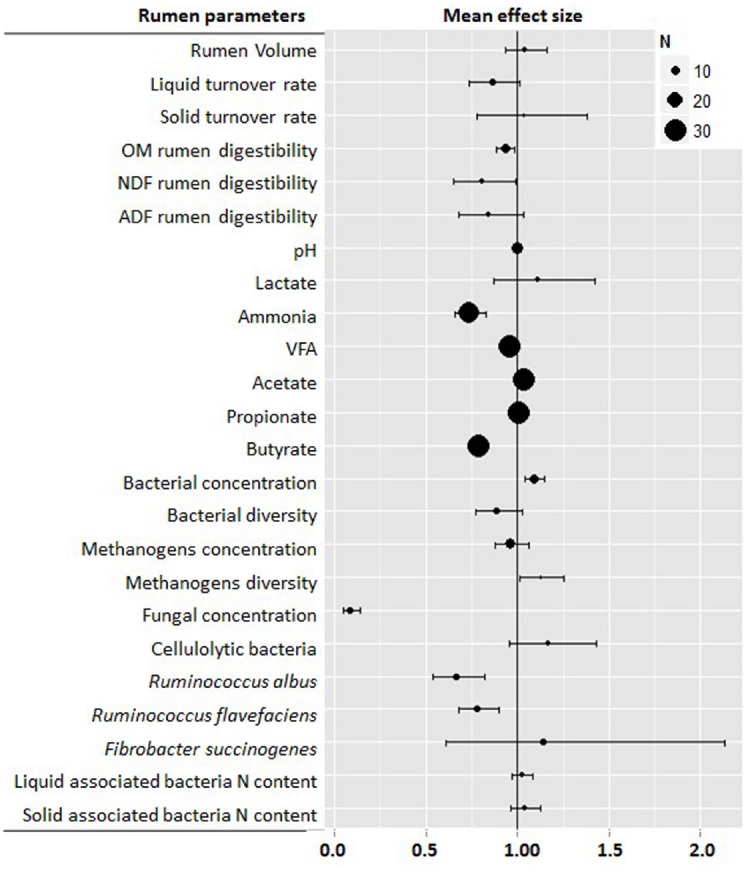
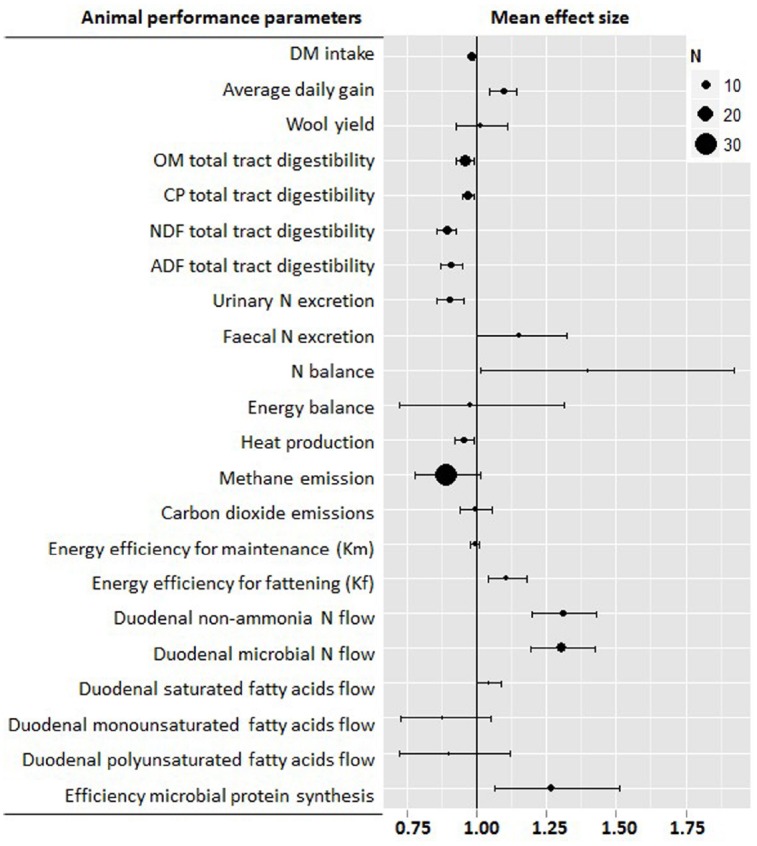
First described in 1843, Rumen protozoa with their striking appearance were assumed to be important for the welfare of their host. However, despite contributing up to 50% of the bio-mass in the rumen, the role of protozoa in rumen microbial ecosystem remains unclear. Phylogenetic analysis of 18S rDNA libraries generated from the rumen of cattle, sheep, and goats has revealed an unexpected diversity of ciliated protozoa although variation in gene copy number between species makes it difficult to obtain absolute quantification. Despite repeated attempts it has proven impossible to maintain rumen protozoa in axenic culture. Thus it has been difficult to establish conclusively a role of ciliate protozoa in rumen fiber degradation. The development of techniques to clone and express ciliate genes in λ phage, together with bioinformatic indices to confirm the ciliate origin of the genes has allowed the isolation and characterization of fibrolytic genes from rumen protozoa. Elimination of the ciliate protozoa increases microbial protein supply by up to 30% and reduces methane production by up to 11%. Our recent findings suggest that holotrich protozoa play a disproportionate role in supporting methanogenesis whilst the small Entodinium are responsible for much of the bacterial protein turnover. As yet no method to control protozoa in the rumen that is safe and practically applicable has been developed, however a range of plant extract capable of controlling if not completely eliminating rumen protozoa have been described.
Overview
The claims and statistics of this paper haven’t been checked yet.
Run the check — free, no account needed. It reads the open-access text and checks the sources it cites.
Integrity signals
Registry
Cites
Statistics
Figures
Verification
Claims the paper makes
The claims and statistics of this paper haven’t been checked yet.
Run the check — free, no account needed. It reads the open-access text and checks the sources it cites.
Claims other papers make about this one
Each is checked against this paper’s own text: does it say what the citing paper says it does?
The source backs part of the claim, not all of it — or backs it for a different population, condition or comparison.
In the citing paper
“Rumen bacteria play a dominant role in fiber digestion, although anaerobic fungi and protozoa have been reported to contribute to lignocellulose breakdown by attacking lignocellulosic material differently (60, 64) and discharging different enzyme complexes (101).”
From Phytogenic Additives Can Modulate Rumen Microbiome to Mediate Fermentation Kinetics and Methanogenesis Through Exploiting Diet–Microbe Interaction (2020) · cites this paper as [64]
Experimental — accuracy not yet measuredIn the citing paper
“protozoa have been linked to methanogenesis as defaunation reduces methane output by approximately 11% (Hegarty, 1999; Morgavi et al., 2010; Newbold et al., 2015).”
From Addressing global ruminant agricultural challenges through understanding the rumen microbiome: past, present, and future (2018) · cites this paper as Newbold et al., 2015
In the citing paper
“Based on their analysis, Newbold and colleagues found evidence that the removal of protozoa from the rumen caused a decrease in organic matter degradation, especially of neutral and acid detergent fiber.”
From Addressing global ruminant agricultural challenges through understanding the rumen microbiome: past, present, and future (2018) · cites this paper as Newbold et al., 2015
Self-check
Percentages, sums and reported differences re-computed from the paper’s own numbers.
The self-check needs the paper’s full text.
Citations
Cites
Meta-analysis in clinical trials
DerSimonian, R., & Laird, N. (1986) · Controlled Clinical Trials · doi:10.1016/0197-2456(86)90046-2 · Cited by 39,552
Conducting Meta-Analyses in R with the metafor Package
Viechtbauer, W. (2010) · Journal of Statistical Software · doi:10.18637/jss.v036.i03 · Cited by 20,464
Predictive functional profiling of microbial communities using 16S rRNA marker gene sequences
Langille, M. G. I., Zaneveld, J., Caporaso, J. G., McDonald, D., Knights, D., Reyes, J. A., Clemente, J. C., Burkepile, D. E., Vega Thurber, R. L., Knight, R., et al. (2013) · Nature Biotechnology · doi:10.1038/nbt.2676 · Cited by 9,116
Determination of microbial diversity in environmental samples: pitfalls of PCR-based rRNA analysis
von Wintzingerode, F., Göbel, U. B., & Stackebrandt, E. S. (1997) · FEMS Microbiology Reviews · doi:10.1111/j.1574-6976.1997.tb00351.x · Cited by 2,085
Hristov, A. N., Oh, J., Firkins, J. L., Dijkstra, J., Kebreab, E., Waghorn, G. C., Makkar, H. P. S., Adesogan, A. T., Yang, W. Z., Lee, C., et al. (2013) · Journal of Animal Science · doi:10.2527/jas.2013-6583 · Cited by 1,086
Amaral‐Zettler, L., McCliment, E. A., Ducklow, H. W., & Huse, S. M. (2009) · PLoS ONE · doi:10.1371/journal.pone.0006372 · Cited by 1,078
Methane mitigation in ruminants: from microbe to the farm scale
Martin, C., Morgavi, D., & Doreau, M. (2009) · animal · doi:10.1017/s1751731109990620 · Cited by 938
The evolution of molecular markers — just a matter of fashion?
Schlötterer, C. (2003) · Nature Reviews Genetics · doi:10.1038/nrg1249 · Cited by 927
Microbial ecosystem and methanogenesis in ruminants
Morgavi, D. P., Forano, E., Martin, C., & Newbold, C. J. (2010) · animal · doi:10.1017/s1751731110000546 · Cited by 694
Self-citationMapping of picoeucaryotes in marine ecosystems with quantitative PCR of the 18S rRNA gene
Zhu, F., Massana, R., Not, F., Marie, D., & Vaulot, D. (2004) · FEMS Microbiology Ecology · doi:10.1016/j.femsec.2004.10.006 · Cited by 643
Research works printed but not linked: 11
- Dehority, 1993, Laboratory Manual for Classification and Morphology of Ruminal Ciliate Protozoa
- Dogiel, 1927, Monographie der familie Ophryoscolecidae, Arch. Protistenkunde, 59, 1
- Frumholtz, 1991, Manipulation of the Rumen Fermentation and its Effect on Digestive Physiology
- Gruby, 1843, Recherches sur des animalcules se développant en grand nombre dans l’estomac et dans les intestins, pendant la digestion des animaux herbivores et carnivores, Compt. Rend. Acad. Sci., 17, 1304
- Kofoid, 1930, Ciliates from Bos indicus Linn. I. The genus Entodinium. Stein, Univ. Calif. Publ. Zool., 33, 471
- Kofoid, 1932, Ciliates from Bos indicus Linn II. A revision of Diplodinium Schuberg, Univ. Calif. Publ. Zool., 37, 53
- Kofoid, 1933, Ciliates from Bos indicus Linn III. Epidinium Crawley. Epiplastron gen. nov., and Ophryoscolex Stein, Univ. Calif. Publ. Zool., 39, 1
- Latteur, 1968, Revision systematique de la Famille des Ophryoscolescidae Stein, 1858: sous-famille Entodiniinae Lubinsky, 1957. Genre Entodinium Stein, 1858, Ann. Soc. R. Zool. de Belgique, 98, 1
- Latteur, 1969, Revision systematique de la famille des Ophryoscolecidae Stein, 1858: sous-famille Entodiniinae Lubinsky, 1957. Genre Entodinium Stein, 1958, Ann. Soc. R. Zool. de Belgique, 99, 3
- Latteur, 1970, Revision Systematique de la Famille des Ophryoscolecidae Stein, 1858: sous-famille des Diplodiniinae Lubinsky, 1957. Genre Diplodinium (Schuberg, 1888) sensu novo, Ann. Soc. R. Zool. de Belgique, 100, 275
- Ramos-Morales, 2014, “In vitro effect of the combination of Ivy fruit refined extract and a glucosidase inhibitor on rumen fermentation and protozoa activity,”, p 116
Cited by
Sorted by citations
The rumen microbiome: balancing food security and environmental impacts
Mizrahi, I., Wallace, R. J., & Moraïs, S. (2021) · Nature Reviews Microbiology · doi:10.1038/s41579-021-00543-6 · Cited by 490
Huws, S. A., Creevey, C. J., Oyama, L. B., Mizrahi, I., Denman, S. E., Popova, M., Muñoz-Tamayo, R., Forano, E., Waters, S. M., Hess, M., et al. (2018) · Frontiers in Microbiology · doi:10.3389/fmicb.2018.02161 · Cited by 487
“In addition to their capacity to degrade fiber, protozoa have been linked to methanogenesis as defaunation reduces methane output by approximately 11% (Hegarty, 1999; Morgavi et al., 2010; Newbold et al., 2015).”
BackgroundMethodInfluentialSelf-citationMatthews, C., Crispie, F., Lewis, E., Reid, M., O’Toole, P. W., & Cotter, P. D. (2018) · Gut Microbes · doi:10.1080/19490976.2018.1505176 · Cited by 511
“This method has been used to remove protozoa from the rumen to investigate the role they play in rumen function.(32,47) suggested that protozoa-associated methanogens (methanogens sequestered within rumen protozoa) which account for approximately 37% of methanogenesis in ruminants,(48) may be the most active methanoge…”
MethodVasta, V., Daghio, M., Cappucci, A., Buccioni, A., Serra, A., Viti, C., & Mele, M. L. (2019) · Journal of Dairy Science · doi:10.3168/jds.2018-14985 · Cited by 455
A heritable subset of the core rumen microbiome dictates dairy cow productivity and emissions
Wallace, R. J., Sasson, G., Garnsworthy, P. C., Tapio, I., Gregson, E., Bani, P., Huhtanen, P., Bayat, A. R., Strozzi, F., Biscarini, F., et al. (2019) · Science Advances · doi:10.1126/sciadv.aav8391 · Cited by 410
“Their community abundance and composition across ruminants are much more variable than bacteria, indeed, protozoa may be absent in some animals without detrimental effect to the host (4, 7).”
Metadata
- Authors
- Newbold, C. J., de la Fuente, G., Belanche, A., Ramos-Morales, E., & McEwan, N. R.
- Affiliations
- Aberystwyth University (GB)
- Corresponding author
- Newbold, Charles J.
- Venue
- Frontiers in Microbiology
- Publisher
- Frontiers Media SA
- Published
- 2015-11-26
- Volume
- 6
- Pages
- 1313-1313
- ISSN
- 1664-302X (ISSN-L)
- PMC
- PMC4659874
- OpenAlex
- W2177858583
- Cited by
- 637
- References
- 163
- Citations by year
- 2026: 70 · 2025: 67 · 2024: 71 · 2023: 84 · 2022: 81 · 2021: 65 · 2020: 63 · 2019: 46 · 2018: 45 · 2017: 36 · 2016: 8 · 2015: 1
- FWCI
- 5.26
- Type
- journal article
- Language
- en
- Open access
- gold
- doi.org
- Licence
- cc-by
- Locations
- Frontiers in Microbiology (publishedVersion, cc-by)
- PubMed Central (publishedVersion, cc-by)
- PubMed (publishedVersion)
- LA Referencia (Red Federada de Repositorios Institucionales de Publicaciones Científicas) (publishedVersion, cc-by)
- RECERCAT (Consorci de Serveis Universitaris de Catalunya) (publishedVersion, cc-by)
- UdL Open Repository (University of Lleida) (publishedVersion, cc-by)
- Open Access Institutional Repository at Robert Gordon University (Robert Gordon University) (publishedVersion, cc-by)
- LA Referencia (Red Federada de Repositorios Institucionales de Publicaciones Científicas) (submittedVersion, cc-by)
- DOAJ (DOAJ: Directory of Open Access Journals) (submittedVersion, cc-by-sa)
- Open Access Institutional Repository at Robert Gordon University (Robert Gordon University) (submittedVersion, cc-by)
- Funders
- Biotechnology and Biological Sciences Research Council (BB/J0013/1)
- Topics
- Life Sciences › Agricultural and Biological Sciences › Animal Science and Zoology › Ruminant Nutrition and Digestive Physiology
- Physical Sciences › Energy › Renewable Energy, Sustainability and the Environment › Anaerobic Digestion and Biogas Production
- Life Sciences › Agricultural and Biological Sciences › Animal Science and Zoology › Animal Nutrition and Physiology
- Keywords
- rumen ciliate protozoa, rumen microbiota, 18S rDNA phylogeny, Entodinium, methanogenesis, methane mitigation, microbial protein supply, plant extracts, cattle, sheep, goats
About these checks
Registry, retraction, Cites and statistics results are computed, not judged, with one exception: a printed reference that no index lists is read once by a model before it counts as a citation error. Claims are extracted by a model and kept only when their quote appears verbatim in the text; each cited source is then checked, with a model’s help, for whether it says what the claim relies on. Those verdicts can be wrong — read the claim’s quote and the cited source before relying on one.
Statistics and arithmetic are recomputed, not judged.
Confidence bands are shown only for fields calibrated on our annotated test set. None is calibrated yet, so no band is shown.
What counts as a claim ›How we measure confidence ›How we check this ›
Are you an author, or do you see a problem with this page? Request a review
