

The DOI matches its Crossref record; 77 of the 77 references it cites were found in a registry or an index.
Molecular diagnostics of neurodegenerative disorders
Open accessAbstract
Molecular diagnostics provide a powerful method to detect and diagnose various neurological diseases such as Alzheimer's and Parkinson's disease. The confirmation of such diagnosis allows early detection and subsequent medical counseling that help specific patients to undergo clinically important drug trials. This provides a medical pathway to have better insight of neurogenesis and eventual cure of the neurodegenerative diseases. In this short review, we present recent advances in molecular diagnostics especially biomarkers and imaging spectroscopy for neurological diseases. We describe advances made in Alzheimer's disease (AD), Parkinson's disease (PD), Amyotrophic lateral sclerosis (ALS) and Huntington's disease (HD), and finally present a perspective on the future directions to provide a framework for further developments and refinements of molecular diagnostics to combat neurodegenerative disorders.
Overview
The claims and statistics of this paper haven’t been checked yet.
Run the check — free, no account needed. It reads the open-access text and checks the sources it cites.
Integrity signals
Registry
Cites
Statistics
Figures
Verification
Claims the paper makes
The claims and statistics of this paper haven’t been checked yet.
Run the check — free, no account needed. It reads the open-access text and checks the sources it cites.
Claims other papers make about this one
Each is checked against this paper’s own text: does it say what the citing paper says it does?
In the citing paper
“Diagnosis of neurodegenerative diseases is usually based on subjective cognitive tests in combination with neuroimaging [131–133], but the current techniques are not able to successfully diagnose these diseases in their earlier stages, when the pathology is already present but does not cause symptoms yet.”
From Brain-Derived Neurotrophic Factor in Brain Disorders: Focus on Neuroinflammation (2019) · cites this paper as [132]
Self-check
Percentages, sums and reported differences re-computed from the paper’s own numbers.
The self-check needs the paper’s full text.
Citations
Cites
The Amyloid Hypothesis of Alzheimer’s Disease: Progress and Problems on the Road to Therapeutics
Hardy, J., & Selkoe, D. J. (2002) · Science · doi:10.1126/science.1072994 · Cited by 13,864 · cited 1×
“Proteases that are involved in the breakdown of APP, are α-, β-, and γ- secretases (Hardy and Selkoe, 2002; Rachakonda et al., 2004).”
BackgroundAmyloid oligomers exacerbate tau pathology in a mouse model of tauopathy
Selenica, M.-L. B., Brownlow, M., Jimenez, J. P., Lee, D. C., Pena, G., Dickey, C. A., Gordon, M. N., & Morgan, D. (2013) · Neurodegenerative Diseases · doi:10.1159/000337230 · Cited by 10,359
DeJesus-Hernandez, M., Mackenzie, I. R., Boeve, B. F., Boxer, A. L., Baker, M., Rutherford, N. J., Nicholson, A. M., Finch, N. A., Flynn, H., Adamson, J., et al. (2011) · Neuron · doi:10.1016/j.neuron.2011.09.011 · Cited by 4,936
Hereditary Early-Onset Parkinson's Disease Caused by Mutations in PINK1
Valente, E. M., Abou-Sleiman, P. M., Caputo, V., Muqit, M. M. K., Harvey, K., Gispert, S., Ali, Z., Del Turco, D., Bentivoglio, A. R., Healy, D. G., et al. (2004) · Science · doi:10.1126/science.1096284 · Cited by 3,481 · cited 1×
“This finding provided additional evidence that PINK1 mutations are associated with PARK6 (Valente et al., 2004).”
BackgroundMutations in the DJ-1 Gene Associated with Autosomal Recessive Early-Onset Parkinsonism
Bonifati, V., Rizzu, P., van Baren, M. J., Schaap, O., Breedveld, G. J., Krieger, E., Dekker, M. C. J., Squitieri, F., Ibáñez, P., Joosse, M., et al. (2003) · Science · doi:10.1126/science.1077209 · Cited by 2,854
The ubiquitin pathway in Parkinson's disease
Leroy, E., Boyer, R., Auburger, G. W. J., Leube, B., Ulm, G., Mezey, É., Harta, G., Brownstein, M., Jonnalagada, S., Chernova, T., et al. (1998) · Nature · doi:10.1038/26652 · Cited by 1,599
Alzheimer’s disease β-amyloid peptides are released in association with exosomes
Rajendran, L., Honsho, M., Zahn, T. R., Keller, P., Geiger, K. D., Verkade, P., & Simons, K. (2006) · Proceedings of the National Academy of Sciences · doi:10.1073/pnas.0603838103 · Cited by 1,343 · cited 1×
“It has been reported that exosomal amyloid peptides accumulate in the brain plaques of AD patients (Rajendran et al., 2006) and tau phosphorylated at Thr-181, an established biomarker for AD, is present at elevated levels in exosomes isolated from cerebrospinal fluid specimens of AD patients with…”
BackgroundPlasma phospholipids identify antecedent memory impairment in older adults
Mapstone, M. E., Cheema, A. K., Fiandaca, M. S., Zhong, X., Mhyre, T. R., MacArthur, L. H., Hall, W. J., Fisher, S. G., Peterson, D. R., Haley, J. M., et al. (2014) · Nature Medicine · doi:10.1038/nm.3466 · Cited by 1,060
Review Article: Genetics of Alzheimer Disease
Bekris, L. M., Yu, C.-E., Bird, T. D., & Tsuang, D. W. (2010) · Journal of Geriatric Psychiatry and Neurology · doi:10.1177/0891988710383571 · Cited by 1,029 · cited 1×
“In addition to the mutations mentioned above, which can cause AD, the E4 allele of the ApoE is associated with the sporadic forms of AD (Bekris et al., 2010).”
BackgroundSaman, S., Kim, W., Raya, M., Visnick, Y., Miro, S., Saman, S., Jackson, B., McKee, A. C., Alvarez, V. E., Lee, N. C. Y., et al. (2012) · Journal of Biological Chemistry · doi:10.1074/jbc.m111.277061 · Cited by 985
Lysosomal dysfunction increases exosome-mediated alpha-synuclein release and transmission
Alvarez‐Erviti, L., Seow, Y., Schapira, A. H. V., Gardiner, C., Sargent, I. L., Wood, M. J. A., & Cooper, J. A. D. (2011) · Neurobiology of Disease · doi:10.1016/j.nbd.2011.01.029 · Cited by 762 · cited 1×
“Studies have also shown release of α-synuclein in exosomes in an in vitro model system of PD (Alvarez-Erviti et al., 2011).”
BackgroundSunderland, T., Linker, G., Mirza, N., Putnam, K. T., Friedman, D. L., Kimmel, L. H., Bergeson, J., Manetti, G. J., Zimmermann, M., Tang, B., et al. (2003) · JAMA · doi:10.1001/jama.289.16.2094 · Cited by 656
Neuroinflammation in amyotrophic lateral sclerosis: role of glial activation in motor neuron disease
Philips, T., & Robberecht, W. (2011) · The Lancet Neurology · doi:10.1016/s1474-4422(11)70015-1 · Cited by 646
Lachenal, G. M., Pernet‐Gallay, K., Chivet, M., Hemming, F. J., Belly, A., Bodon, G., Blot, B., Haase, G., Goldberg, Y., & Sadoul, R. (2010) · Molecular and Cellular Neuroscience · doi:10.1016/j.mcn.2010.11.004 · Cited by 617
Mild cognitive impairment: prevalence, prognosis, aetiology, and treatment
DeCarli, C. S. (2002) · The Lancet Neurology · doi:10.1016/s1474-4422(03)00262-x · Cited by 586
Exosomes: Novel Biomarkers for Clinical Diagnosis
Jin, L., Li, J., Huang, B., Liu, J., Chen, X., Chen, X., Xu, Y., Huang, L., & Wang, X. (2015) · The Scientific World JOURNAL · doi:10.1155/2015/657086 · Cited by 574
Xi, Y., Nakajima, G., Gavin, E. J., Morris, C. G., Kudo, K., Hayashi, K., & Ju, J. (2007) · RNA · doi:10.1261/rna.642907 · Cited by 567
Genome-wide expression profiling of human blood reveals biomarkers for Huntington's disease
Borovečki, F., Lovrečić, L., Zhou, J., Jeong, H., Then, F., Rosas, H. D., Hersch, S. M., Hogarth, P., Bouzou, B., Jensen, R. V., et al. (2005) · Proceedings of the National Academy of Sciences · doi:10.1073/pnas.0504921102 · Cited by 417 · cited 1×
“Annexin A3 (ANXA3) and Cysteine-rich, transmembrane (TM) module (CYSTM) are two other potential biomarkers for HD (Borovecki et al., 2005; Venancio and Aravind, 2010).”
BackgroundAmyotrophic Lateral Sclerosis: A Focus on Disease Progression
Calvo, A. C., Manzano, R., de Mendonça, D. M. F., Muñoz, M. J., Zaragoza, P., & Osta, R. (2014) · BioMed Research International · doi:10.1155/2014/925101 · Cited by 404 · cited 1×
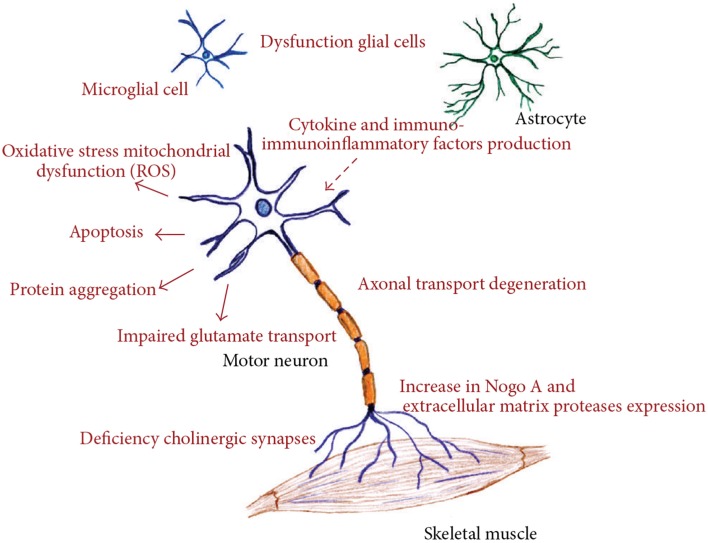
“…including all or just some of these like oxidative stress, endoplasmic reticulum stress, mitochondrial dysfunction, dysregulated endosomal trafficking, dysregulated transcription, and RNA processing, excitotoxicity, apoptosis, inflammation, and genetic susceptibility (Figure 1; Calvo et al., 2014).”
BackgroundBiomarkers of Parkinson’s disease: Present and future
Miller, D. B., & O’Callaghan, J. P. (2015) · Metabolism · doi:10.1016/j.metabol.2014.10.030 · Cited by 358
Increased oxidative damage to DNA in ALS patients
Bogdanov, M. B., Brown, R. H., Matson, W. R., Smart, R. J., Hayden, D. L., O’Donnell, H. C., Beal, M. F., & Cudkowicz, M. (2000) · Free Radical Biology and Medicine · doi:10.1016/s0891-5849(00)00349-x · Cited by 334 · cited 1×
“Increased amounts of 8-hydroxy-2′-deoxyguanosine (8OH2′dG in ALS patients, which is a product of the oxidative injury to DNA is also a good biomarker (Bogdanov et al., 2000).”
BackgroundWild, E. J., Boggio, R., Langbehn, D. R., Robertson, N., Salman, H., Miller, J. R. C., Zetterberg, H., Leavitt, B. R., Kuhn, R. R., Tabrizi, S. J., et al. (2015) · Journal of Clinical Investigation · doi:10.1172/jci80743 · Cited by 265
Clinical applications of neuropsychological assessment.
Harvey, P. D. (2012) · Dialogues in Clinical Neuroscience · doi:10.31887/dcns.2012.14.1/pharvey · Cited by 265
Identification of blood microRNAs associated to Parkinsońs disease
Margis, R., Margis, R., & Rieder, C. R. M. (2011) · Journal of Biotechnology · doi:10.1016/j.jbiotec.2011.01.023 · Cited by 263 · cited 1×
“A study using qRT-PCR suggested that in peripheral blood the expression levels of miR-1, miR-22-5p, and miR-29 allow to distinguish PD patients from healthy subjects, and also miR-162-3p, miR-26a-2-3p, and miR30a differentiate between treated and untreated patients (Margis et al., 2011).”
MethodChung, S., Sonntag, K., Andersson, T., Björklund, L. M., Park, J., Kim, D., Kang, U. J., Ole Isacson, A., & Kim, K. (2002) · European Journal of Neuroscience · doi:10.1046/j.1460-9568.2002.02255.x · Cited by 250 · cited 1×
“…Rock, Little Rock, AR, USA, 2Department of Electrical Engineering, Center for Nano Science and Technology, University of Notre Dame, Notre Dame, IN, USA Molecular diagnostics provide a powerful method to detect and diagnose various neurological diseases such as Alzheimer’s and Parkinson’s disease.”
MethodThe Evolution of Diagnosis in Early Parkinson Disease
Jankovic, J. J. (2000) · Archives of Neurology · doi:10.1001/archneur.57.3.369 · Cited by 233 · cited 1×
“These techniques could improve differential diagnosis of Parkinsonism, but cost-effectiveness remains a problem (Jankovic et al., 2000; Molochnikov et al., 2012).”
BackgroundChen, C., Wu, Y., Cheng, M., Liu, J., Lee, Y., Lee, P.-W., Soong, B., & Chiu, D. T.-Y. (2007) · Biochemical and Biophysical Research Communications · doi:10.1016/j.bbrc.2007.05.093 · Cited by 226 · cited 1×
“Decrease in glutathione peroxidase and copper–zinc superoxide dismutase was observed in erythrocytes from HD patients compared with controls (Chen et al., 2007).”
ResultDalrymple, A., Wild, E. J., Joubert, R., Sathasivam, K., Björkqvist, M., Petersén, Å., Jackson, G. S., Isaacs, J. D., Kristiansen, M., Bates, G. P., et al. (2007) · Journal of Proteome Research · doi:10.1021/pr0700753 · Cited by 223
Circulating miRNAs as Biomarkers for Neurodegenerative Disorders
Grasso, M., Piscopo, P., Confaloni, A., & Denti, M. (2014) · Molecules · doi:10.3390/molecules19056891 · Cited by 208
Plasma microRNA biomarkers for detection of mild cognitive impairment
Sheinerman, K. S., Tsivinsky, V. G., Crawford, F., Mullan, M. J., Abdullah, L., & Umansky, S. R. (2012) · Aging · doi:10.18632/aging.100486 · Cited by 188
Neuronal dark matter: the emerging role of microRNAs in neurodegeneration
Goodall, E. F., Heath, P. R., Bandmann, O., Kirby, J., & Shaw, P. J. (2013) · Frontiers in Cellular Neuroscience · doi:10.3389/fncel.2013.00178 · Cited by 187
Zhai, W., Jeong, H., Cui, L., Krainc, D., & Tjian, R. (2005) · Cell · doi:10.1016/j.cell.2005.10.030 · Cited by 179 · cited 1×
“Evidences suggest that gene repression mechanisms are also associated with HD and Zinc finger protein 238 (ZNF238) is a transcriptional repressor which is involved in brain development and myogenesis (Zhai et al., 2005).”
BackgroundIdentification of Epigenetically Altered Genes in Sporadic Amyotrophic Lateral Sclerosis
Figueroa‐Romero, C., Hur, J., Bender, D. E., Delaney, C. E., Cataldo, M. D., Smith, A. L., Yung, R. L., Ruden, D. M., Callaghan, B. C., & Feldman, E. L. (2012) · PLoS ONE · doi:10.1371/journal.pone.0052672 · Cited by 166
Development of biomarkers for Huntington's disease
Weir, D. W., Sturrock, A., & Leavitt, B. R. (2011) · The Lancet Neurology · doi:10.1016/s1474-4422(11)70070-9 · Cited by 162
Significant Linkage of Parkinson Disease to Chromosome 2q36-37
Pankratz, N., Nichols, W. C., Uniacke, S. K., Halter, C. A., Rudolph, A., Shults, C. W., Conneally, P. M., & Foroud, T. (2003) · The American Journal of Human Genetics · doi:10.1086/374383 · Cited by 161
Aziz, N. A., Anguelova, G. V., Marinus, J., Lammers, G. J., & Roos, R. A. C. (2010) · Parkinsonism & Related Disorders · doi:10.1016/j.parkreldis.2010.02.009 · Cited by 155 · cited 1×
“Prokineticin 2 (PROK2) has been proposed to have a role in the circadian rhythms alterations that have been shown to correlate with cognitive impairment in HD (Aziz et al., 2010).”
BackgroundAggregation and neurotoxicity of α-synuclein and related peptides
EI-Agnaf, O. M. A., & Irvine, G. B. (2002) · Biochemical Society Transactions · doi:10.1042/bst0300559 · Cited by 151
Soreq, L., Salomonis, N., Bronstein, M., Greenberg, D., Israel, Z. H., Bergman, H., & Soreq, H. (2013) · Frontiers in Molecular Neuroscience · doi:10.3389/fnmol.2013.00010 · Cited by 124
Biomarkers of neurodegenerative disorders: How good are they?
Rachakonda, V., Pan, T. H., & Le, W. D. (2004) · Cell Research · doi:10.1038/sj.cr.7290235 · Cited by 119 · cited 16×
“Hence, molecular biologists, biomedical, and medicine experts and biotechnologists are coming together to design and develop advanced diagnostic molecular markers that might allow very early-stage diagnosis of AD and the objective assessment of its responses to putative treatments (Rachakonda et al., 2004).”
BackgroundMethodInfluentialMeskó, B., Poliskal, S., Szegedi, A., Szekanecz, Z., Palatka, K., Papp, M., & Nagy, L. (2010) · BMC Medical Genomics · doi:10.1186/1755-8794-3-15 · Cited by 116
A molecular signature in blood identifies early Parkinson’s disease
Molochnikov, L., Rabey, J. M., Dobronevsky, E., Bonuccelli, U., Ceravolo, R., Frosini, D., Grünblatt, E., Riederer, P. F., Jacob, C., Aharon‐Peretz, J., et al. (2012) · Molecular Neurodegeneration · doi:10.1186/1750-1326-7-26 · Cited by 116
Berezovska, O., Ramdya, P. P., Skoch, J. M., Wolfe, M. S., Bacskai, B. J., & Hyman, B. T. (2003) · Journal of Neuroscience · doi:10.1523/jneurosci.23-11-04560.2003 · Cited by 108 · cited 1×
“An abnormal increase in the activity of APP can be due to any missense mutation on one of these presenilin genes resulting into more Aβ peptides (Berezovska et al., 2003).”
BackgroundStem cells in brain plasticity and repair
Peterson, D. (2002) · Current Opinion in Pharmacology · doi:10.1016/s1471-4892(01)00118-7 · Cited by 106
Hu, Y., Chopra, V., Chopra, R., Locascio, J. J., Liao, Z., Ding, H., Zheng, B., Matson, W. R., Ferrante, R. J., Rosas, H. D., et al. (2011) · Proceedings of the National Academy of Sciences · doi:10.1073/pnas.1104409108 · Cited by 102 · cited 1×
“Individuals with HD over expressed the gene, H2A histone family, member Y (H2AFY), in their blood (Hu et al., 2011).”
BackgroundRunne, H., Régulier, E., Kuhn, A., Zala, D., Gökçe, Ö., Perrin, V., Sick, B., Aebischer, P., Déglon, N., & Luthi‐Carter, R. (2008) · Journal of Neuroscience · doi:10.1523/jneurosci.3044-08.2008 · Cited by 94
A multicenter assessment of dopamine transporter imaging with DOPASCAN/SPECT in parkinsonism
Parkinson Study Group (2000) · Neurology · doi:10.1212/wnl.55.10.1540 · Cited by 94 · cited 1×
“Thus, the localization of striatal, preferentially putamen DAT concentration is considered a high sensitivity parameter for the detection of early phases of PD and best molecular diagnostic marker (Marek et al., 2000; Rachakonda et al., 2004; Shinto et al., 2014).”
BackgroundBiomarkers in the diagnosis and management of Alzheimer’s disease
Wurtman, R. J. (2014) · Metabolism · doi:10.1016/j.metabol.2014.10.034 · Cited by 89
Mastrokolias, A., Ariyürek, Y., Goeman, J. J., van Duijn, E., Roos, R. A. C., van der Mast, R. C., van Ommen, G. B., den Dunnen, J. T., Hoen, P. A. C. ’., & van Roon‐Mom, W. (2015) · European Journal of Human Genetics · doi:10.1038/ejhg.2014.281 · Cited by 86
Exosomes-associated neurodegeneration and progression of Parkinson's disease.
Russo, I., Bubacco, L., & Greggio, E. (2012) · Europe PMC (PubMed Central) · Cited by 85
Blood Biomarkers for Amyotrophic Lateral Sclerosis: Myth or Reality?
Robelin, L., & de Aguilar, J. G. (2014) · BioMed Research International · doi:10.1155/2014/525097 · Cited by 83 · cited 2×
“Therefore, the circulating levels of interleukin-6, tumor necrosis factor-α (TNFα), interferon-γ, monocyte chemo attractant protein-1 (MCP-1), and wide-range C-reactive protein (wrCRP) were found to be increased in ALS patients (Robelin and Gonzalez De Aguilar, 2014).”
BackgroundIncreased thirst and drinking in Huntington's disease and the R6/2 mouse
Wood, N. I., Goodman, A. O. G., van der Burg, J. M. M., Gazeau, V., Brundin, P., Björkqvist, M., Petersén, Å., Tabrizi, S. J., Barker, R. A., & Morton, A. J. (2008) · Brain Research Bulletin · doi:10.1016/j.brainresbull.2007.12.007 · Cited by 83
Clinical features and neuroimaging of PARK7‐linked parkinsonism
Dekker, M. C. J., Bonifati, V., Swieten, J. C. V., Leenders, N., Galjaard, R. H., Snijders, P. J. L. M., Horstink, M. W. I. M., Heutink, P., Oostra, B. A., & van Duijn, C. M. (2003) · Movement Disorders · doi:10.1002/mds.10422 · Cited by 74 · cited 1×
“Slow progression of symptoms with sustained response to levodopa treatment is the clinical characteristics of DJ-1 Parkinsonism (Dekker et al., 2003).”
BackgroundElectrodiagnosis in Persons With Amyotrophic Lateral Sclerosis
Joyce, N. C., & Carter, G. T. (2013) · PM&R · doi:10.1016/j.pmrj.2013.03.020 · Cited by 71
Four Decades of Neurodegenerative Disease Research: How Far We Have Come!
Young, A. B. (2009) · Journal of Neuroscience · doi:10.1523/jneurosci.3767-09.2009 · Cited by 68
Martin, L. J., & Wong, M. (2013) · Neurotherapeutics · doi:10.1007/s13311-013-0205-6 · Cited by 68
Using iPS Cells toward the Understanding of Parkinson’s Disease
Torrent, R., Rigotti, F., Dell’Era, P., Memo, M., Raya, Á., & Consiglio, A. (2015) · Journal of Clinical Medicine · doi:10.3390/jcm4040548 · Cited by 65
Advances in the detection of Alzheimer's disease—use of cerebrospinal fluid biomarkers
Sjögren, M. J. C., Andreasen, N., & Blennow, K. (2003) · Clinica Chimica Acta · doi:10.1016/s0009-8981(03)00121-9 · Cited by 65
Positron emission tomography neuroimaging in Parkinson's disease.
Loane, C., & Politis, M. (2011) · PubMed · Cited by 63
Magnetic Resonance Spectroscopy: An In Vivo Molecular Imaging Biomarker for Parkinson’s Disease?
Ciurleo, R., Lorenzo, G. D., Bramanti, P., & Marino, S. (2014) · BioMed Research International · doi:10.1155/2014/519816 · Cited by 60 · cited 2×
“…gene mutations SOD1 SOD1 gene mutation Glutathione C9orf72 gene mutation 8OH2′dG FUS gene mutation Cytokines TARDBP gene mutations Huntington’s Disease (HD) HTT gene mutations Growth hormones Cytokines mGLUR2 SOD1 Glutathione 8OH2′dG and irreversible neuronal damage (Ciurleo et al., 2014).”
BackgroundCYSTM, a novel cysteine-rich transmembrane module with a role in stress tolerance across eukaryotes
Venâncio, T. M., & Aravind, L. (2009) · Bioinformatics · doi:10.1093/bioinformatics/btp647 · Cited by 59
A longitudinal study of magnetic resonance spectroscopy Huntington's disease biomarkers
Sturrock, A., Laule, C., Wyper, K., MILNER, R. A., Decolongon, J., Santos, R. D., Coleman, A., Carter, K., Creighton, S., Bechtel, N., et al. (2015) · Movement Disorders · doi:10.1002/mds.26118 · Cited by 57
Cova, E., Bongioanni, P., Cereda, C., Metelli, M. R., Salvaneschi, L., Bernuzzi, S., Guareschi, S., Rossi, B., & Ceroni, M. (2010) · Neurochemistry International · doi:10.1016/j.neuint.2010.02.004 · Cited by 56
In vivo amyloid imaging in Alzheimer?s disease
Sair, H. I., Doraiswamy, P. M., & Petrella, J. R. (2004) · Neuroradiology · doi:10.1007/s00234-003-1034-9 · Cited by 50
Gasser, T., Bressman, S., Dürr, A., Higgins, J., Klockgether, T., & Myers, R. H. (2003) · Movement Disorders · doi:10.1002/mds.10338 · Cited by 42 · cited 1×
“The role of miRNAs in the pathogenesis of neurodegeneration was investigated to gain insights into the possibilities and challenges of using these small RNA molecules as a signature for neurodegenerative conditions (Grasso et al., 2014).”
BackgroundLongitudinal Metabolite Changes in Huntington's Disease During Disease Onset
van den Bogaard, S. J. A., Dumas, E. M., Teeuwisse, W. M., Kan, H. E., WEBB, A. G., van Buchem, M. A., Roos, R. A. C., & van der Grond, J. (2014) · Journal of Huntington s Disease · doi:10.3233/jhd-140117 · Cited by 37
Tissingh, G., Bergmans, P., Booij, J., Winogrodzka, A., Stoof, J. C., Wolters, E. C., & van Royen, E. A. (1997) · European Journal of Nuclear Medicine and Molecular Imaging · doi:10.1007/bf01254252 · Cited by 35 · cited 1×
“Several imaging techniques have been employed for the diagnosis of PD, for example, PET with [18F]-Dopa tracer (Loane and Politis, 2011) and single photon emission tomography (SPECT) with [123I]-β-CIT (Tissingh et al., 1997).”
MethodReduced expression of metabotropic glutamate receptor 2mRNA in T cells of ALS patients
Poulopoulou, C., Davaki, P., Koliaraki, V., Kolovou, D., Markakis, I. A., & Vassilopoulos, D. (2005) · Annals of Neurology · doi:10.1002/ana.20675 · Cited by 34
Gene expression changes in blood as a putative biomarker for Huntington's disease
Lovrečić, L., Kastrin, A., Kobal, J., Pirtošek, Z., Krainc, D., & Peterlin, B. (2009) · Movement Disorders · doi:10.1002/mds.22477 · Cited by 30
Members of the task force on molecular diagnosis of neurologic disorders: T. Gasser, G. M. D. (2001) · European Journal of Neurology · doi:10.1046/j.1468-1331.2001.00228.x · Cited by 21
known, I. T. G. C. A. N. D. I., Usually, D. M. D. C. B. P. B. M. A. O. D. F. T. A. I. I. R., type, E. W. A. K. T. H. M. I. T. P. D. W. B. A. F. D. W. H. B. E. F. P. B. L. B. P. D. O. I., electrophoresis, T. M. W. T. B. D. E. D. B. G., gene, D. B. R. E. O. B. D. S. I. A. G. I. V. L. (. W. M. T. 3. E. A. N. U. A. M. A. S. T. T. E., cases, D. M. A. C. B. V. C. A. T.-C. I. T., Gené, R., CADASIL, W. M. M. B. C. E. G. I., & gene)., W. 7. O. M. A. F. I. E. 3. A. 4. O. T. N. (2001) · European Journal of Neurology · doi:10.1046/j.1468-1331.2001.00226.x · Cited by 21
Reticulons as Markers of Neurological Diseases: Focus on Amyotrophic Lateral Sclerosis
Fergani, A., Dupuis, L., Jokic, N., Larmet, Y., de Tapia, M., René, F., Loeffler, J., & de Aguilar, J. G. (2005) · Neurodegenerative Diseases · doi:10.1159/000089624 · Cited by 17
Posner, H. B., Cano, S., Carrillo, M. C., Selnes, O. A., Stern, Y., Thomas, R. G., Zajicek, J., Hobart, J. C., & Initiative, A. D. N. (2013) · Alzheimer s & Dementia · doi:10.1016/j.jalz.2012.10.008 · Cited by 13
Shinto, A., Antony, J., Kamaleshwaran, K. K., Vijayan, K., Selvan, A., Korde, A. G., Kameswaran, M., & Samuel, G. (2014) · World Journal of Nuclear Medicine · doi:10.4103/1450-1147.144818 · Cited by 12
Biofluid-based microRNA Biomarkers for Parkinsons Disease: an Overview and Update
Shinde, S., Mukhopadhyay, S., Mohsen, G. M., & Khoo, S. K. (2015) · AIMS Medical Science · doi:10.3934/medsci.2015.1.15 · Cited by 12
Le corps de Lewy, marqueur abusif de la maladie de Parkinson ?
Duyckaerts, C. J., & Hauw, J. (2003) · Bulletin de l Académie Nationale de Médecine · doi:10.1016/s0001-4079(19)34049-x · Cited by 7
Advances in Diagnostics for Neurodegenerative Disorders
Bokde, A. L. W., Meaney, J. F. M., Sheehy, N. P., Reilly, R. B., Abrahams, S., & Doherty, C. P. (2011) · Springer eBooks · doi:10.1007/978-1-84996-011-3_2 · Cited by 3
Wehling, M. (2015) · Elsevier eBooks · doi:10.1016/b978-0-12-800687-0.00014-1 · Cited by 3
Research works printed but not linked: 1
- Duyckaerts, 2003, Lewy bodies, a misleading marker for Parkinson's disease?, Bull. Acad. Natl. Med., 187, 277
Cited by
Sorted by citations
Brain-Derived Neurotrophic Factor in Brain Disorders: Focus on Neuroinflammation
Lima Giacobbo, B., Doorduin, J., Klein, H. C., Dierckx, R. A. J. O., Bromberg, E., & de Vries, E. F. J. (2019) · Molecular Neurobiology · doi:10.1007/s12035-018-1283-6 · Cited by 750
Epidemiology of amyotrophic lateral sclerosis: an update of recent literature
Longinetti, E., & Fang, F. (2019) · Current Opinion in Neurology · doi:10.1097/wco.0000000000000730 · Cited by 620
Brain lipidomics: From functional landscape to clinical significance
Yoon, J. H., Seo, Y., Jo, Y. S., Lee, S., Cho, E., Cazenave-Gassiot, A., Shin, Y.-S., Moon, M. H., An, H. J., Wenk, M. R., et al. (2022) · Science Advances · doi:10.1126/sciadv.adc9317 · Cited by 324
Potential neuroprotective properties of epigallocatechin-3-gallate (EGCG)
Singh, N. A., Mandal, A. K. A., & Khan, Z. A. (2015) · Nutrition Journal · doi:10.1186/s12937-016-0179-4 · Cited by 324
“Neuropathologically, the hallmarks of PD include misfolding and aggregation of α-synuclein protein, damage and loss of dopamine (DA) neurons in the substantia nigra pars compacta (SN) along with oxidative stress caused due to mitochondrial dysfunction [63].”
BackgroundSheinerman, K. S., Toledo, J. B., Tsivinsky, V. G., Irwin, D., Grossman, M., Weintraub, D., Hurtig, H. I., Chen-Plotkin, A., Wolk, D. A., McCluskey, L. F., et al. (2017) · Alzheimer's Research & Therapy · doi:10.1186/s13195-017-0316-0 · Cited by 154
Metadata
- Authors
- Agrawal, M., & Biswas, A.
- Affiliations
- University of Arkansas at Little Rock (US)
- University of Notre Dame (US)
- Corresponding author
- Agrawal, Megha
- Venue
- Frontiers in Molecular Biosciences
- Publisher
- Frontiers Media SA
- Published
- 2015-09-22
- Volume
- 2
- Pages
- 54-54
- ISSN
- 2296-889X (ISSN-L)
- PMC
- PMC4585189
- OpenAlex
- W1811596609
- Cited by
- 164
- References
- 77
- Citations by year
- 2026: 6 · 2025: 10 · 2024: 18 · 2023: 24 · 2022: 31 · 2021: 13 · 2020: 17 · 2019: 11 · 2018: 15 · 2017: 7 · 2016: 10 · 2015: 2
- FWCI
- 1.39
- Type
- journal article
- Language
- en
- Open access
- gold
- doi.org
- Licence
- cc-by
- Locations
- Frontiers in Molecular Biosciences (publishedVersion, cc-by)
- Europe PMC (PubMed Central) (publishedVersion, cc-by)
- PubMed Central (publishedVersion, cc-by)
- PubMed (publishedVersion)
- DOAJ (DOAJ: Directory of Open Access Journals) (submittedVersion, cc-by-sa)
- Topics
- Life Sciences › Neuroscience › Cellular and Molecular Neuroscience › Alzheimer's disease research and treatments
- Health Sciences › Medicine › Psychiatry and Mental health › Dementia and Cognitive Impairment Research
- Health Sciences › Medicine › Clinical Neurology › Amyotrophic Lateral Sclerosis Research
- Keywords
- molecular diagnosis, neurodegenerative diseases, Alzheimer's disease, Parkinson's disease, amyotrophic lateral sclerosis, Huntington's disease, biomarkers, hyperspectral imaging, early diagnosis, neurogenesis
About these checks
Registry, retraction, Cites and statistics results are computed, not judged, with one exception: a printed reference that no index lists is read once by a model before it counts as a citation error. Claims are extracted by a model and kept only when their quote appears verbatim in the text; each cited source is then checked, with a model’s help, for whether it says what the claim relies on. Those verdicts can be wrong — read the claim’s quote and the cited source before relying on one.
Statistics and arithmetic are recomputed, not judged.
Confidence bands are shown only for fields calibrated on our annotated test set. None is calibrated yet, so no band is shown.
What counts as a claim ›How we measure confidence ›How we check this ›
Are you an author, or do you see a problem with this page? Request a review
