

The DOI matches its Crossref record; 86 of the 89 references it cites were found in a registry or an index.
CYFIP family proteins between autism and intellectual disability: links with Fragile X syndrome
Open accessAbstract
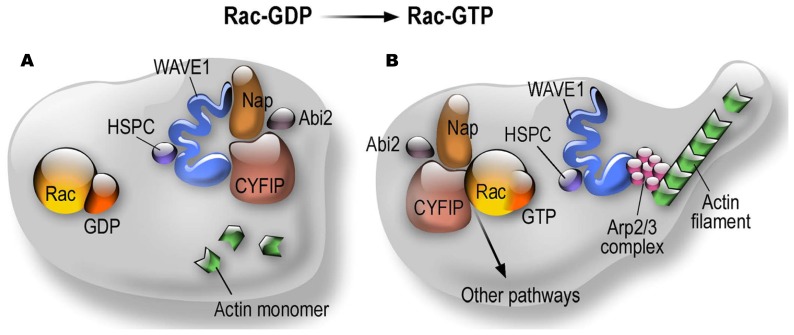
Intellectual disability (ID) and autism spectrum disorders (ASDs) have in common alterations in some brain circuits and brain abnormalities, such as synaptic transmission and dendritic spines morphology. Recent studies have indicated a differential expression for specific categories of genes as a cause for both types of disease, while an increasing number of genes is recognized to produce both disorders. An example is the Fragile X mental retardation gene 1 (FMR1), whose silencing causes the Fragile X syndrome, the most common form of ID and autism, also characterized by physical hallmarks. Fragile X mental retardation protein (FMRP), the protein encoded by FMR1, is an RNA-binding protein with an important role in translational control. Among the interactors of FMRP, CYFIP1/2 (cytoplasmic FMRP interacting protein) proteins are good candidates for ID and autism, on the bases of their genetic implication and functional properties, even if the precise functional significance of the CYFIP/FMRP interaction is not understood yet. CYFIP1 and CYFIP2 represent a link between Rac1, the WAVE (WAS protein family member) complex and FMRP, favoring the cross talk between actin polymerization and translational control.
Overview
The claims and statistics of this paper haven’t been checked yet.
Run the check — free, no account needed. It reads the open-access text and checks the sources it cites.
Integrity signals
Registry
Cites
Statistics
Figures
Verification
Claims the paper makes
The claims and statistics of this paper haven’t been checked yet.
Run the check — free, no account needed. It reads the open-access text and checks the sources it cites.
Claims other papers make about this one
Each is checked against this paper’s own text: does it say what the citing paper says it does?
The source backs part of the claim, not all of it — or backs it for a different population, condition or comparison.
In the citing paper
“Indeed, it is reported that reduction of Cyfip1 or fly Hspc300 affects the level of the other components of the WRC (Kunda et al., 2003; Schenck et al., 2004; Abekhoukh and Bardoni, 2014; Gautier et al., 2011; Qurashi et al., 2007; De Rubeis et al., 2013).”
From New insights into the regulatory function of CYFIP1 in the context of WAVE- and FMRP-containing complexes (2017) · cites this paper as Abekhoukh and Bardoni, 2014
Experimental — accuracy not yet measuredThe source backs part of the claim, not all of it — or backs it for a different population, condition or comparison.
In the citing paper
“while it is known that CYFIP1 interacts with many proteins (Rac, WRC members and membrane components) that are not known partners of FMRP (Abekhoukh and Bardoni, 2014).”
From New insights into the regulatory function of CYFIP1 in the context of WAVE- and FMRP-containing complexes (2017) · cites this paper as Abekhoukh and Bardoni, 2014
Experimental — accuracy not yet measuredThe cited source says what the claim attributes to it.
In the citing paper
“CYFIP1 and CYFIP2 are members of a family of proteins interacting with the Fragile X mental retardation protein (FMRP, encoded by FMR1) in mammals, as well as in the fly (Abekhoukh and Bardoni, 2014; Schenck et al., 2001, 2003).”
From New insights into the regulatory function of CYFIP1 in the context of WAVE- and FMRP-containing complexes (2017) · cites this paper as Abekhoukh and Bardoni, 2014
The cited source says what the claim attributes to it.
In the citing paper
“Owing to their high level of homology, CYFIP1 and CYFIP2 have been often considered as having the same function (Abekhoukh and Bardoni, 2014).”
From New insights into the regulatory function of CYFIP1 in the context of WAVE- and FMRP-containing complexes (2017) · cites this paper as Abekhoukh and Bardoni, 2014
The cited source says what the claim attributes to it.
In the citing paper
“These conclusions are consistent with the fact that FMRP is, indeed, not only involved in translation regulation (Maurin et al., 2014) and CYFIP1 is a component of complexes that do not contain FMRP (Abekhoukh and Bardoni, 2014; Chen et al., 2014).”
From New insights into the regulatory function of CYFIP1 in the context of WAVE- and FMRP-containing complexes (2017) · cites this paper as Abekhoukh and Bardoni, 2014
Self-check
Percentages, sums and reported differences re-computed from the paper’s own numbers.
The self-check needs the paper’s full text.
Citations
Cites
FMRP Stalls Ribosomal Translocation on mRNAs Linked to Synaptic Function and Autism
Darnell, J. C., Van Driesche, S. J., Zhang, C., Hung, K. Y. S., Mele, A., Fraser, C. E., Stone, E. F., Chen, C., Fak, J. J., Chi, S. W., et al. (2011) · Cell · doi:10.1016/j.cell.2011.06.013 · Cited by 2,072
Large recurrent microdeletions associated with schizophrenia.
GROUP, Stefansson, H., Rujescu, D., Cichon, S., Pietiläinen, O. P. H., Ingason, A., Steinberg, S., Fossdal, R., Sigurdsson, E., Sigmundsson, T., et al. (2008) · Nature · doi:10.1038/nature07229 · Cited by 1,745
De novo mutations in schizophrenia implicate synaptic networks
Fromer, M., Pocklington, A. J., Kavanagh, D. H., Williams, H. J., Dwyer, S., Gormley, P., Georgieva, L., Rees, E., Palta, P., Ruderfer, D. M., et al. (2014) · Nature · doi:10.1038/nature12929 · Cited by 1,617
A polygenic burden of rare disruptive mutations in schizophrenia
Purcell, S. M., Moran, J. L., Fromer, M., Ruderfer, D., Solovieff, N., Roussos, P., O’Dushlaine, C., Chambert, K., Bergen, S. E., Kähler, A., et al. (2014) · Nature · doi:10.1038/nature12975 · Cited by 1,385
Altered synaptic plasticity in a mouse model of fragile X mental retardation
Huber, K. M., Gallagher, S. M., Warren, S. T., & Bear, M. F. (2002) · Proceedings of the National Academy of Sciences · doi:10.1073/pnas.122205699 · Cited by 1,349
Brown, V., Jin, P., Ceman, S., Darnell, J. C., O'Donnell, W. T., Tenenbaum, S. A., Jin, X., Feng, Y., Wilkinson, K. D., Keene, J. D., et al. (2001) · Cell · doi:10.1016/s0092-8674(01)00568-2 · Cited by 1,109
Abnormal dendritic spines in fragile X knockout mice: Maturation and pruning deficits
Comery, T. A., Harris, J. B., Willems, P. J., Oostra, B. A., Irwin, S. A., Weiler, I. J., & Greenough, W. T. (1997) · Proceedings of the National Academy of Sciences · doi:10.1073/pnas.94.10.5401 · Cited by 1,046
Willsey, A. J., Sanders, S. J., Li, M., Dong, S., Tebbenkamp, A. T., Muhle, R. A., Reilly, S. K., Lin, L., Fertuzinhos, S., Miller, J. A., et al. (2013) · Cell · doi:10.1016/j.cell.2013.10.020 · Cited by 934
Mechanism of regulation of WAVE1-induced actin nucleation by Rac1 and Nck
Eden, S., Rohatgi, R., Podtelejnikov, A. V., Mann, M., & Kirschner, M. W. (2002) · Nature · doi:10.1038/nature00859 · Cited by 835
Gilman, S. R., Iossifov, I., Levy, D., Ronemus, M., Wigler, M., & Vitkup, D. (2011) · Neuron · doi:10.1016/j.neuron.2011.05.021 · Cited by 701
Research works printed but not linked: 3
- Bardoni, 2000, Fmr1 gene and fragile X syndrome., Am. J. Med. Genet., 97, 153, 10.1002/1096-8628(200022)97:2153::AID-AJMG73.0.CO;2-M · DOI
- Cassidy, 2000, Prader-Willi and Angelman syndromes: sister imprinted disorders., Am. J. Med. Genet., 97, 136, 10.1002/1096-8628(200022)97:2136::AID-AJMG53.0.CO;2-V · DOI
- Spranger, 2000, Interstitial deletion of 5q33.3q35.1 in a girl with mild mental retardation., Am. J. Med. Genet., 93, 107, 10.1002/1096-8628(20000717)93:2107::AID-AJMG53.0.CO;2-8 · DOI
Cited by
Sorted by citations
Glutamate Synapses in Human Cognitive Disorders
Volk, L. J., Chiu, S., Sharma, K., & Huganir, R. L. (2015) · Annual Review of Neuroscience · doi:10.1146/annurev-neuro-071714-033821 · Cited by 256
Global treadmilling coordinates actin turnover and controls the size of actin networks
Carlier, M., & Shekhar, S. (2017) · Nature Reviews Molecular Cell Biology · doi:10.1038/nrm.2016.172 · Cited by 148
Co-regulation of mRNA translation by TDP-43 and Fragile X Syndrome protein FMRP
Majumder, P., Chu, J.-F., Chatterjee, B., Swamy, K. B. S., & Shen, C.-K. J. (2016) · Acta Neuropathologica · doi:10.1007/s00401-016-1603-8 · Cited by 100
Reduced protein synthesis in schizophrenia patient-derived olfactory cells
English, J. A., Fan, Y., Föcking, M., Lopez, L. M., Hryniewiecka, M., Wynne, K. J., Dicker, P., Matigian, N., Cagney, G., Mackay‐Sim, A., et al. (2015) · Translational Psychiatry · doi:10.1038/tp.2015.119 · Cited by 97
Novel West syndrome candidate genes in a Chinese cohort
Peng, J., Wang, Y., He, F., Chen, C., Wu, L., Yang, L., Ma, Y., Zhang, W., Shi, Z., Chen, C., et al. (2018) · CNS Neuroscience & Therapeutics · doi:10.1111/cns.12860 · Cited by 86
De novo hotspot variants in CYFIP2 cause early‐onset epileptic encephalopathy
Nakashima, M., Kato, M., Aoto, K., Shiina, M., Belal, H., Mukaida, S., Kumada, S., Sato, A., Zerem, A., Lerman‐Sagie, T., et al. (2018) · Annals of Neurology · doi:10.1002/ana.25208 · Cited by 80
Cytoplasmic FMR1-Interacting Protein 2 Is a Major Genetic Factor Underlying Binge Eating
Kirkpatrick, S. L., Goldberg, L. R., Yazdani, N., Babbs, R. K., Wu, J., Reed, E. R., Jenkins, D. F., Bolgioni, A. F., Landaverde, K. I., Luttik, K. P., et al. (2017) · Biological Psychiatry · doi:10.1016/j.biopsych.2016.10.021 · Cited by 71
Study, D. D. D. (., Zweier, M., Begemann, A., McWalter, K., Cho, M. T., Abela, L., Banka, S., Behring, B., Berger, A., Brown, C. W., et al. (2019) · European Journal of Human Genetics · doi:10.1038/s41431-018-0331-z · Cited by 71
Han, K., Chen, H., Gennarino, V. A., Richman, R., Lu, H.-C., & Zoghbi, H. Y. (2015) · Human Molecular Genetics · doi:10.1093/hmg/ddu595 · Cited by 72
Vogel Ciernia, A., Careaga, M., LaSalle, J. M., & Ashwood, P. (2018) · Glia · doi:10.1002/glia.23261 · Cited by 69
Cioni, J.-M., Wong, H. H., Bressan, D., Kodama, L., Harris, W. A., & Holt, C. E. (2018) · Neuron · doi:10.1016/j.neuron.2018.01.027 · Cited by 67
Tiwari, S. S., Mizuno, K., Ghosh, A., Aziz, W., Troakes, C., Daoud, J., Golash, V., Noble, W., Hortobágyi, T., & Giese, K. P. (2016) · Brain · doi:10.1093/brain/aww205 · Cited by 65
Dendritic spine actin cytoskeleton in autism spectrum disorder
Joensuu, M., Lanoue, V., & Hotulainen, P. (2018) · Progress in Neuro-Psychopharmacology and Biological Psychiatry · doi:10.1016/j.pnpbp.2017.08.023 · Cited by 65
Abekhoukh, S., Sahin, H. B., Grossi, M., Zongaro, S., Maurin, T., Madrigal, I., Kazue-Sugioka, D., Raas-Rothschild, A., Doulazmi, M., Carrera, P., et al. (2017) · Disease Models & Mechanisms · doi:10.1242/dmm.025809 · Cited by 59
“CYFIP1 and CYFIP2 are members of a family of proteins interacting with the Fragile X mental retardation protein (FMRP, encoded by FMR1 ) in mammals, as well as in the fly (Abekhoukh and Bardoni, 2014; Schenck et al., 2001, 2003).”
InfluentialSelf-citationDong, T., He, J., Wang, S., Wang, L., Cheng, Y., & Zhong, Y. (2016) · Proceedings of the National Academy of Sciences · doi:10.1073/pnas.1602152113 · Cited by 62
A Cyfip2-Dependent Excitatory Interneuron Pathway Establishes the Innate Startle Threshold
Marsden, K. C., Jain, R. A., Wolman, M. A., Echeverry, F. A., Nelson, J. C., Hayer, K. E., Miltenberg, B., Pereda, A. E., & Granato, M. (2018) · Cell Reports · doi:10.1016/j.celrep.2018.03.095 · Cited by 48
Bonaccorso, C. M., Spatuzza, M., Di Marco, B., Gloria, A., Barrancotto, G., Cupo, A., Musumeci, S. A., D'Antoni, S., Bardoni, B., & Catania, M. V. (2015) · International Journal of Developmental Neuroscience · doi:10.1016/j.ijdevneu.2015.02.004 · Cited by 52
Self-citationCopy Number Variants in Alzheimer’s Disease
Cuccaro, D., Marco, E. V. D., Cittadella, R., & Cavallaro, S. (2016) · Journal of Alzheimer s Disease · doi:10.3233/jad-160469 · Cited by 51
Fragile X-related protein family: a double-edged sword in neurodevelopmental disorders and cancer
Majumder, M., Johnson, R. H., & Palanisamy, V. (2020) · Critical Reviews in Biochemistry and Molecular Biology · doi:10.1080/10409238.2020.1810621 · Cited by 50
Lo, L. H.-Y., & Lai, K. (2020) · Molecular Autism · doi:10.1186/s13229-020-00349-y · Cited by 47
Substrain- and sex-dependent differences in stroke vulnerability in C57BL/6 mice
Zhao, L., Mulligan, M. K., & Nowak, T. S. (2017) · Journal of Cerebral Blood Flow & Metabolism · doi:10.1177/0271678x17746174 · Cited by 48
Zhang, Y., Lee, Y., & Han, K. (2019) · BMB Reports · doi:10.5483/bmbrep.2019.52.5.097 · Cited by 43
Gerosa, L., Francolini, M., Bassani, S., & Passafaro, M. (2018) · Developmental Neurobiology · doi:10.1002/dneu.22654 · Cited by 44
Liaci, C., Camera, M., Caslini, G., Rando, S., Contino, S., Romano, V., & Merlo, G. R. (2021) · International Journal of Molecular Sciences · doi:10.3390/ijms22116167 · Cited by 40
The Search for an Effective Therapy to Treat Fragile X Syndrome: Dream or Reality?
Castagnola, S., Bardoni, B., & Maurin, T. (2017) · Frontiers in Synaptic Neuroscience · doi:10.3389/fnsyn.2017.00015 · Cited by 42
Self-citationJi, Z., Ren, W., Wang, H., Gao, W. D., & Yuan, B. (2022) · Frontiers in Oncology · doi:10.3389/fonc.2022.919083 · Cited by 38
Childhood-Onset Schizophrenia: Insights from Induced Pluripotent Stem Cells
Hoffmann, A., Ziller, M. J., & Spengler, D. (2018) · International Journal of Molecular Sciences · doi:10.3390/ijms19123829 · Cited by 30
Stress granules: Guardians of cellular health and triggers of disease
Desai, M., Gulati, K., Agrawal, M., Ghumra, S., & Sahoo, P. K. (2025) · Neural Regeneration Research · doi:10.4103/nrr.nrr-d-24-01196 · Cited by 30
Shen, W., Jin, L., Zhu, A., Lin, Y., Pan, G., Zhou, S., Cheng, J., Zhang, J., Tu, F., Liu, C., et al. (2021) · Life Sciences · doi:10.1016/j.lfs.2021.119033 · Cited by 29
Gokhale, A., Hartwig, C. L., Freeman, A. A. H., Das, R., Zlatic, S. A., Vistein, R., Burch, A. M., Carrot, G., Lewis, A. F., Nelms, S., et al. (2016) · Journal of Neuroscience · doi:10.1523/jneurosci.1321-16.2016 · Cited by 29
Differential cell-type-expression of CYFIP1 and CYFIP2 in the adult mouse hippocampus
Zhang, Y., Kang, H. R., & Han, K. (2019) · Animal Cells and Systems · doi:10.1080/19768354.2019.1696406 · Cited by 29
Belur, N. R., Bustos, B. I., Lubbe, S. J., & Mazzulli, J. R. (2024) · Neuron · doi:10.1016/j.neuron.2024.05.003 · Cited by 28
New Insights Into the Role of Cav2 Protein Family in Calcium Flux Deregulation in Fmr1-KO Neurons
Castagnola, S., Delhaye, S., Folci, A., Paquet, A. C., Brau, F., Duprat, F., Jarjat, M., Grossi, M., Béal, M., Martin, S., et al. (2018) · Frontiers in Molecular Neuroscience · doi:10.3389/fnmol.2018.00342 · Cited by 30
Self-citationFeuge, J., Scharkowski, F., Michaelsen‐Preusse, K., & Körte, M. (2019) · Cerebral Cortex · doi:10.1093/cercor/bhz059 · Cited by 28
FMRP and CYFIP1 at the Synapse and Their Role in Psychiatric Vulnerability
Clifton, N. E., Thomas, K. L., Wilkinson, L. S., Hall, J., & Trent, S. (2020) · Complex Psychiatry · doi:10.1159/000506858 · Cited by 28
Lee, Y., Zhang, Y., Kang, H., Bang, G., Kim, Y., Kang, H. R., Ma, R., Jin, C., Kim, J. Y., & Han, K. (2020) · Biochemical and Biophysical Research Communications · doi:10.1016/j.bbrc.2020.05.221 · Cited by 28
Molecular Dissection of Neurodevelopmental Disorder-Causing Mutations in CYFIP2
Schaks, M., Reinke, M., Witke, W., & Rottner, K. (2020) · Cells · doi:10.3390/cells9061355 · Cited by 25
Lee, Y., Kim, D., Ryu, J. R., Zhang, Y., Kim, S., Kim, Y., Lee, B., Sun, W., & Han, K. (2017) · Neuroreport · doi:10.1097/wnr.0000000000000838 · Cited by 28
Handling FMRP and its molecular partners: Structural insights into Fragile X Syndrome
D’Annessa, I., Cicconardi, F., & Marino, D. D. (2018) · Progress in Biophysics and Molecular Biology · doi:10.1016/j.pbiomolbio.2018.07.001 · Cited by 31
Babbs, R. K., Beierle, J. A., Ruan, Q. T., Kelliher, J. C., Chen, M. M., Feng, A. X., Kirkpatrick, S. L., Benitez, F. A., Rodriguez, F. A., Pierre, J. J., et al. (2019) · G3 Genes|Genomes|Genetics · doi:10.1534/g3.119.400470 · Cited by 26
Targeted pharmacological treatment of autism spectrum disorders: fragile X and Rett syndromes
Wang, H., Pati, S. B. B., Pozzo‐Miller, L. D., & Doering, L. C. (2015) · Frontiers in Cellular Neuroscience · doi:10.3389/fncel.2015.00055 · Cited by 28
Fragile X Mental Retardation Protein: To Be or Not to Be a Translational Enhancer
Maurin, T., & Bardoni, B. (2018) · Frontiers in Molecular Biosciences · doi:10.3389/fmolb.2018.00113 · Cited by 28
Self-citationLocal Protein Translation and RNA Processing of Synaptic Proteins in Autism Spectrum Disorder
Joo, Y., & Benavides, D. R. (2021) · International Journal of Molecular Sciences · doi:10.3390/ijms22062811 · Cited by 28
Chaudhari, K., Gorla, M., Chang, C., Kania, A., & Bashaw, G. J. (2021) · eLife · doi:10.7554/elife.64474 · Cited by 27
Zhang, Y., Kang, H., Lee, Y., Kim, Y., Lee, B., Kim, J. Y., Jin, C., Kim, S., Kim, H., & Han, K. (2019) · Frontiers in Molecular Neuroscience · doi:10.3389/fnmol.2018.00482 · Cited by 26
Reduced Complexity Cross Design for Behavioral Genetics
Bryant, C. D., Ferris, M. T., De Villena, F. P. M., Damaj, M. I., Kumar, V., & Mulligan, M. K. (2018) · Molecular-Genetic and Statistical Techniques for Behavioral and Neural Research · doi:10.1016/b978-0-12-804078-2.00008-8 · Cited by 24
Transcriptomic landscape of early hair follicle and epidermal development
Sulic, A., Roy, R. D., Papagno, V., Lan, Q., Saikkonen, R., Jernvall, J., Thesleff, I., & Mikkola, M. L. (2023) · Cell Reports · doi:10.1016/j.celrep.2023.112643 · Cited by 24
Fragile X mental retardation protein: from autism to neurodegenerative disease
Wang, H. (2015) · Frontiers in Cellular Neuroscience · doi:10.3389/fncel.2015.00043 · Cited by 26
Haploinsufficiency of Cyfip2 Causes Lithium‐Responsive Prefrontal Dysfunction
Lee, S., Zhang, Y., Park, J.-A., Kim, B., Kim, Y., Lee, S., Kim, G. H., Huh, Y. H., Lee, B., Kim, Y., et al. (2020) · Annals of Neurology · doi:10.1002/ana.25827 · Cited by 21
Bonini, D., Filippini, A., Via, L. L., Fiorentini, C., Fumagalli, F., Colombi, M., & Barbon, A. (2015) · RNA Biology · doi:10.1080/15476286.2015.1008365 · Cited by 21
Jacobs, S. A., Cheng, C., & Doering, L. C. (2016) · Neuroscience · doi:10.1016/j.neuroscience.2016.03.011 · Cited by 25
Zhang, Y., Hyae, R. K., Lee, S.-H., Kim, Y., Ma, R., Jin, C., Lim, J.-E., Kim, S., Kang, Y., Kang, H., et al. (2020) · Frontiers in Molecular Neuroscience · doi:10.3389/fnmol.2020.574947 · Cited by 19
Chaya, T., Ishikane, H., Varner, L. R., Sugita, Y., Maeda, Y., Tsutsumi, R., Motooka, D., Okuzaki, D., & Furukawa, T. (2021) · Human Molecular Genetics · doi:10.1093/hmg/ddab268 · Cited by 19
Zhong, M., Liao, S., Li, T., Wu, P., Wang, Y., Wu, F., Li, X., Hong, S., Yan, L., & Jiang, L. (2019) · Medicine · doi:10.1097/md.0000000000017749 · Cited by 19
Tong, J., Meng, X., Lv, Q., Yuan, H., Li, W., Xiao, W., & Zhang, X. (2021) · International Journal of General Medicine · doi:10.2147/ijgm.s335713 · Cited by 18
Modifying PCDH19 levels affects cortical interneuron migration
Pancho, A., Mitsogiannis, M. D., Aerts, T., Vecchia, M. D., Ebert, L. K., Geenen, L., Noterdaeme, L., Vanlaer, R., Stulens, A., Hulpiau, P., et al. (2022) · Frontiers in Neuroscience · doi:10.3389/fnins.2022.887478 · Cited by 19
Kähne, T., Richter, S., Kolodziej, A., Smalla, K., Pielot, R., Engler, A., Ohl, F. W., Dieterich, D. C., Seidenbecher, C. I., Tischmeyer, W., et al. (2016) · Journal of Neurochemistry · doi:10.1111/jnc.13636 · Cited by 16
Persistent Cyfip1 Expression Is Required to Maintain the Adult Subventricular Zone Neurogenic Niche
Habela, C. W., Yoon, K.-J., Kim, N.-S., Taga, A., Bell, K., Bergles, D. E., Maragakis, N. J., Ming, G.-L., & Song, H. (2020) · The Journal of Neuroscience · doi:10.1523/jneurosci.2249-19.2020 · Cited by 16
Biembengut, Í. V., Silva, I. L. Z., de Souza, T. D. A. C. B., & Shigunov, P. (2021) · Molecular Biology Reports · doi:10.1007/s11033-021-06585-6 · Cited by 16
NCK-associated protein 1 regulates metastasis and is a novel prognostic marker for colorectal cancer
Kwon, M. R., Lee, J. H., Park, J. H., Park, S. S., Ju, E. J., Ko, E. J., Shin, S. H., Son, G. W., Lee, H. W., Kim, Y. J., et al. (2023) · Cell Death Discovery · doi:10.1038/s41420-023-01303-6 · Cited by 16
SWIP mediates retromer‐independent membrane recruitment of the WASH complex
Dostál, V., Humhalová, T., Beránková, P., Pácalt, O., & Libusová, L. (2023) · Traffic · doi:10.1111/tra.12884 · Cited by 16
Medyanik, A. D., Anisimova, P. E., Kustova, A. O., Tarabykin, V. S., & Kondakova, E. V. (2025) · Biomolecules · doi:10.3390/biom15010133 · Cited by 17
Rare copy number variations affecting the synaptic gene DMXL2 in neurodevelopmental disorders
Costain, G., Walker, S., Argiropoulos, B., Baribeau, D. A., Bassett, A. S., Boot, E., Devriendt, K., Kellam, B., Marshall, C. R., Prasad, A., et al. (2019) · Journal of Neurodevelopmental Disorders · doi:10.1186/s11689-019-9263-3 · Cited by 19
Gombalová, Z. T., Košuth, J., Matiašová, A. A., Zrubáková, J., Žežula, I., Giallongo, T., Giulio, A. M. D., Carelli, S., Tomašková, L., Daxnerová, Z., et al. (2020) · The Journal of Comparative Neurology · doi:10.1002/cne.24909 · Cited by 17
Cytoplasmic FMRP interacting protein 1/2 (CYFIP1/2) expression analysis in autism
Noroozi, R., Omrani, M. D., Sayad, A., Taheri, M. N., & Ghafouri‐Fard, S. (2018) · Metabolic Brain Disease · doi:10.1007/s11011-018-0249-8 · Cited by 15
Maloney, S. E., Rieger, M. A., Al‐Hasani, R., Bruchas, M. R., Wozniak, D. F., & Dougherty, J. D. (2019) · Genes Brain & Behavior · doi:10.1111/gbb.12593 · Cited by 14
Roles of Rac1-Dependent Intrinsic Forgetting in Memory-Related Brain Disorders: Demon or Angel
Wang, W., Wang, Z., Cao, J., Dong, Y., & Chen, Y. (2023) · International Journal of Molecular Sciences · doi:10.3390/ijms241310736 · Cited by 14
Kim, G. H., Zhang, Y., Kang, H. R., Lee, S.-H., Shin, J., Lee, C. H., Kang, H., Ma, R., Jin, C., Kim, Y., et al. (2020) · Molecular Brain · doi:10.1186/s13041-020-00668-4 · Cited by 14
Ma, R., Pang, K., Kang, H., Zhang, Y., Bang, G., Park, S., Hwang, E., Ryu, J. R., Kwon, Y., Kang, H. R., et al. (2022) · Journal of Neurochemistry · doi:10.1111/jnc.15622 · Cited by 14
Autism spectrum disorders: emerging mechanisms and mechanism-based treatment
Wang, H., & Doering, L. C. (2015) · Frontiers in Cellular Neuroscience · doi:10.3389/fncel.2015.00183 · Cited by 15
The molecular basis of the Fragile X syndrome
Smail, H. O. (2023) · Journal of Experimental and Molecular Biology · doi:10.47743/jemb-2023-80 · Cited by 13
Axonal and presynaptic FMRP: Localization, signal, and functional implications
Wang, X., Sela‐Donenfeld, D., & Wang, Y. (2023) · Hearing Research · doi:10.1016/j.heares.2023.108720 · Cited by 13
In Silico Analysis of FMR1 Gene Missense SNPs
Tekcan, A. (2016) · Cell Biochemistry and Biophysics · doi:10.1007/s12013-016-0722-0 · Cited by 13
CYFIP1 coordinate with RNMT to induce osteosarcoma cuproptosis via AURKAIP1 m7G modification
Lin, Z., Wu, Z., He, Y., Li, X., & Luo, W. (2025) · Molecular Medicine · doi:10.1186/s10020-025-01127-3 · Cited by 10
Fu, Y., Wang, J., Hu, Z., Gou, Y., Li, Y., & Jiang, Q. (2023) · Journal of Oncology · doi:10.1155/2023/9645038 · Cited by 10
Paul, A. S., Corbett, C. B., Peluzzo, A. M., Kelemen, S. E., Okune, R., Haines, D. S., Preston, K. J., Eguchi, S., & Autieri, M. V. (2023) · Cell Reports · doi:10.1016/j.celrep.2023.112381 · Cited by 13
Aishworiya, R., Tak, Y., Ponzini, M., Biag, H., Salcedo-Arellano, M., Kim, K., Tassone, F., Schneider, A., Thurman, A., Abbeduto, L., et al. (2023) · International Journal of Developmental Neuroscience · doi:10.1002/jdn.10299 · Cited by 7
Budimirovic, D. B., & Duy, P. Q. (2015) · Engrami · doi:10.5937/engrami1504005b · Cited by 9
Impact of C57BL/6 substrain on sex-dependent differences in mouse stroke models
Nowak, T. S., & Mulligan, M. K. (2018) · Neurochemistry International · doi:10.1016/j.neuint.2018.11.011 · Cited by 10
Zhang, Y., Kang, H. R., Jun, Y., Kang, H., Bang, G., Ma, R., Ju, S., Yoon, D. E., Kim, Y., Kim, K., et al. (2024) · Human Molecular Genetics · doi:10.1093/hmg/ddae107 · Cited by 7
Ma, R., Kim, U. S., Chung, Y., Kang, H. R., Zhang, Y., & Han, K. (2024) · Brain and Development · doi:10.1016/j.braindev.2024.104302 · Cited by 8
Ma, R., Zhang, Y., Li, H., Kang, H. R., Kim, Y., & Han, K. (2023) · Animal Cells and Systems · doi:10.1080/19768354.2023.2192263 · Cited by 7
Intercorrelation of Molecular Biomarkers and Clinical Phenotype Measures in Fragile X Syndrome
Aishworiya, R., Chi, M., Zafarullah, M., Mendoza‐Morales, G., Ponzini, M. D., Kim, K., Biag, H. M. B., Thurman, A. J., Abbeduto, L., Hessl, D. R., et al. (2023) · Cells · doi:10.3390/cells12141920 · Cited by 7
Wegiel, J., Brown, W. T., Fauci, G. L., Adayev, T., Kascsak, R. J., Kascsak, R., Flory, M. J., Kaczmarski, W., Kuchna, I., Nowicki, K., et al. (2018) · Autism Research · doi:10.1002/aur.2003 · Cited by 7
Different dysregulations of CYFIP1 and CYFIP2 in distinct types of dementia
Peng, X., Wellard, N., Ghosh, A., Troakes, C., & Giese, K. P. (2024) · Brain Research Bulletin · doi:10.1016/j.brainresbull.2023.110849 · Cited by 6
Kim, I. B., Kim, M.-H., Jung, S., Kim, W. K., Lee, J., Ju, Y. S., Webster, M. J., Kim, J. H., Kim, J., Kim, H. J., et al. (2024) · Experimental & Molecular Medicine · doi:10.1038/s12276-024-01284-1 · Cited by 5
Vera-Montecinos, A., Rodríguez‐Mias, R. A., Vila, È., Villén, J., & Ramos, B. (2023) · Frontiers in Pharmacology · doi:10.3389/fphar.2023.1003557 · Cited by 6
Genome-wide association study of genetic markers of coat color patterns in Sumatran native cattle
Hartati, H., Putra, W. P. B., Handiwirawan, E., Ramon, E., Firison, J., Zubir, Z., Suretno, N. D., Mariyono, M., Yusriani, Y., Robba, D. K., et al. (2024) · Veterinary World · doi:10.14202/vetworld.2024.2537-2543 · Cited by 7
Kim, Y., Ma, R., Zhang, Y., Kang, H. R., Kim, U. S., & Han, K. (2024) · Animal Cells and Systems · doi:10.1080/19768354.2024.2360740 · Cited by 4
Prader-Willi syndrome: Genetics, clinical symptoms, and model systems
Saade, M., Rike, W. A., Sharma, O., Abu-Akel, A. M., & Stern, S. (2025) · Genomic psychiatry : · doi:10.61373/gp025i.0044 · Cited by 3
Cannabidiol Successful Therapy for Developmental and Epileptic Encephalopathy Related to CYFIP2
de Góes, F. V., Ramos, J. T. M. D. A., Fontana, R. D. S., Serao, C. L. C., Kok, F., & Horovitz, D. D. G. (2022) · The Open Neurology Journal · doi:10.2174/1874205x-v16-e2203290 · Cited by 4
NeuroArray, A Custom CGH Microarray to Decipher Copy Number Variants in Alzheimer’s Disease
Cuccaro, D., Guarnaccia, M., Iemmolo, R., D’Agata, V., & Cavallaro, S. (2018) · Current Genomics · doi:10.2174/1389202919666180122141425 · Cited by 3
Defects in Rho GTPase Signaling to the Spine Actin Cytoskeleton in FMR1 Knockout Mice
Lauterborn, J. C., & Gall, C. M. (2017) · Elsevier eBooks · doi:10.1016/b978-0-12-804461-2.00014-7 · Cited by 2
Deslauriers, J. C., Ghotkar, R. P., Russ, L. A., Jarman, J. A., Martin, R. M., Tippett, R. G., Sumathipala, S. H., Burton, D. F., Cole, D., & Marsden, K. C. (2023) · bioRxiv (Cold Spring Harbor Laboratory) · doi:10.1101/2023.12.22.573054 · Cited by 3
Sun, M.-C., Zuo, F., Wang, Y.-Z., Ren, X.-L., Lu, H.-S., Zheng, M.-B., Zhang, H., Liu, H., Lu, C.-C., Shen, C.-W., et al. (2026) · Acta Pharmacologica Sinica · doi:10.1038/s41401-026-01793-x · Cited by 3
Wiskott–Aldrich syndrome protein family, linking cellular signaling to the actin cytoskeleton
Noor, W. N. I. W. M., & Suetsugu, S. (2022) · Elsevier eBooks · doi:10.1016/b978-0-323-89911-6.00016-9 · Cited by 1
Biswal, S. R., Singh, M., Dwibedy, S. L. L., Kumari, S., Muthuswamy, S., Kumar, A., & Kumar, S. (2023) · Functional & Integrative Genomics · doi:10.1007/s10142-023-01105-0 · Cited by 1
Khlebodarova, T. M. (2021) · Vavilov Journal of Genetics and Breeding · doi:10.18699/vj21.011
Association between the rs8028440 polymorphism of CYFIP 1 gene in autism patients
Almanghadim, H. G., Assefi, M., Masoumi, S., Vakili, P., Shams, Z., Moradkhani, A., Khaniani, M. S., & Derakhshan, S. M. (2021) · Biomedical and Translational Science · doi:10.33425/2768-4911.1011
Dendritic arbor dynamics and stability in health and disease
Mlostek, M., Zeng, J., Urbańska, M., & Jaworski, J. (2023) · Acta Neurobiologiae Experimentalis · doi:10.55782/ane-2023-2456
Metadata
- Authors
- Abekhoukh, S., & Bardoni, B.
- Affiliations
- Centre National de la Recherche Scientifique (FR)
- Corresponding author
- Bardoni, Barbara
- Venue
- Frontiers in Cellular Neuroscience
- Publisher
- Frontiers Media SA
- Published
- 2014-03-27
- Volume
- 8
- Pages
- 81-81
- ISSN
- 1662-5102 (ISSN-L)
- PMC
- PMC3973919
- OpenAlex
- W2123421954
- Cited by
- 110
- References
- 89
- Citations by year
- 2026: 1 · 2025: 6 · 2024: 9 · 2023: 16 · 2022: 5 · 2021: 11 · 2020: 12 · 2019: 10 · 2018: 14 · 2017: 8 · 2016: 9 · 2015: 8 · 2014: 1
- FWCI
- 1.15
- Type
- journal article
- Language
- en
- Open access
- gold
- doi.org
- Licence
- cc-by
- Locations
- Frontiers in Cellular Neuroscience (publishedVersion, cc-by)
- Europe PMC (PubMed Central) (publishedVersion, cc-by)
- PubMed Central (publishedVersion, cc-by)
- PubMed (publishedVersion)
- DOAJ (DOAJ: Directory of Open Access Journals) (submittedVersion, cc-by-sa)
- Funders
- Agence Nationale de la Recherche (ANR-11-LABX-0028)
- Institut National de la Santé et de la Recherche Médicale (ANR-11-LABX-0028-01)
- Fondation ARC pour la Recherche sur le Cancer (#ANR-11-LABX-0028-01)
- Centre National de la Recherche Scientifique (ANR-11-LABX-0028-01)
- Topics
- Life Sciences › Biochemistry, Genetics and Molecular Biology › Genetics › Genetics and Neurodevelopmental Disorders
- Life Sciences › Neuroscience › Cognitive Neuroscience › Autism Spectrum Disorder Research
- Life Sciences › Neuroscience › Cellular and Molecular Neuroscience › Neuroscience and Neuropharmacology Research
- Keywords
- CYFIP1, CYFIP2, FMRP, FMR1 gene, fragile X syndrome, autism spectrum disorder, intellectual disability, translational regulation, actin polymerization, WAVE complex, Rac1, synaptic transmission, dendritic spines
About these checks
Registry, retraction, Cites and statistics results are computed, not judged, with one exception: a printed reference that no index lists is read once by a model before it counts as a citation error. Claims are extracted by a model and kept only when their quote appears verbatim in the text; each cited source is then checked, with a model’s help, for whether it says what the claim relies on. Those verdicts can be wrong — read the claim’s quote and the cited source before relying on one.
Statistics and arithmetic are recomputed, not judged.
Confidence bands are shown only for fields calibrated on our annotated test set. None is calibrated yet, so no band is shown.
What counts as a claim ›How we measure confidence ›How we check this ›
Are you an author, or do you see a problem with this page? Request a review
