

The DOI matches its Crossref record; 159 of the 159 references it cites were found in a registry or an index.
The Temperature Dependence of Sleep
Open accessAbstract
Mammals have evolved a range of behavioural and neurological mechanisms that coordinate cycles of thermoregulation and sleep. Whether diurnal or nocturnal, sleep onset and a reduction in core temperature occur together. Non-rapid eye movement (NREM) sleep episodes are also accompanied by core and brain cooling. Thermoregulatory behaviours, like nest building and curling up, accompany this circadian temperature decline in preparation for sleeping. This could be a matter of simply comfort as animals seek warmth to compensate for lower temperatures. However, in both humans and other mammals, direct skin warming can shorten sleep-latency and promote NREM sleep. We discuss the evidence that body cooling and sleep are more fundamentally connected and that thermoregulatory behaviours, prior to sleep, form warm microclimates that accelerate NREM directly through neuronal circuits. Paradoxically, this warmth might also induce vasodilation and body cooling. In this way, warmth seeking and nesting behaviour might enhance the circadian cycle by activating specific circuits that link NREM initiation to body cooling. We suggest that these circuits explain why NREM onset is most likely when core temperature is at its steepest rate of decline and why transitions to NREM are accompanied by a decrease in brain temperature. This connection may have implications for energy homeostasis and the function of sleep.
Overview
The claims and statistics of this paper haven’t been checked yet.
Run the check — free, no account needed. It reads the open-access text and checks the sources it cites.
Integrity signals
Registry
Cites
Statistics
Figures
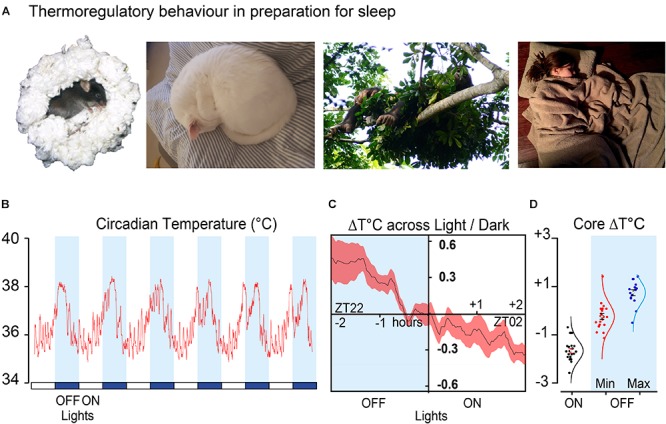
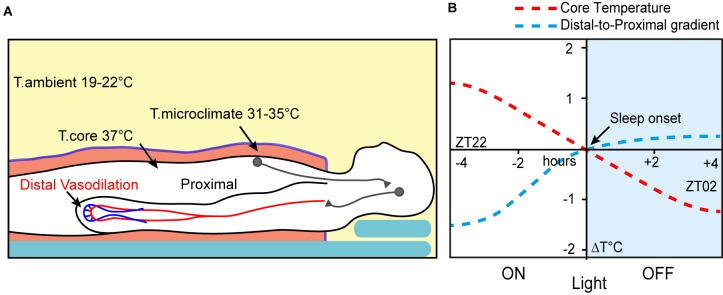
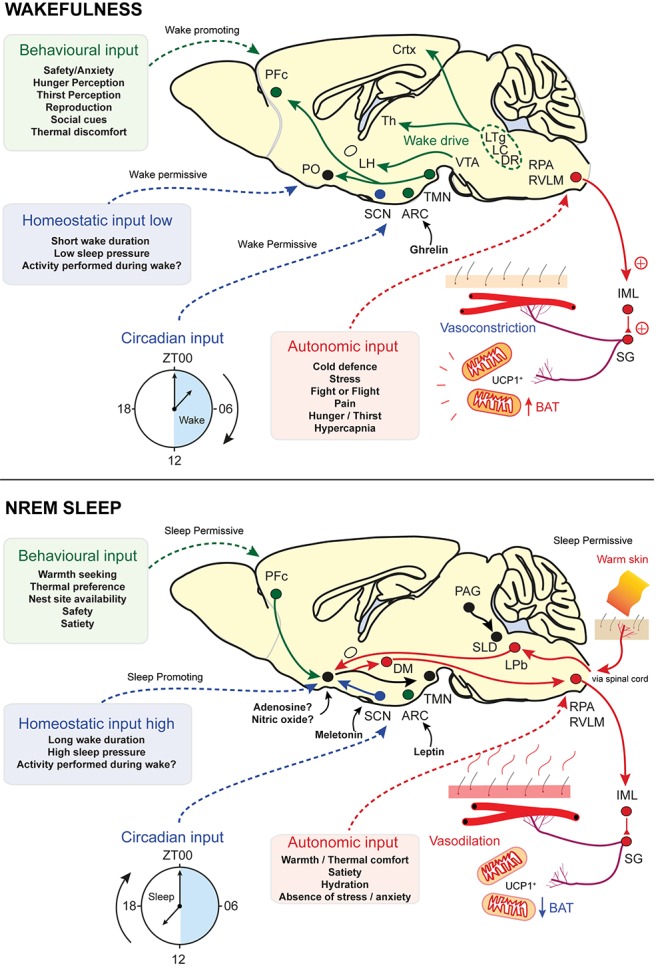
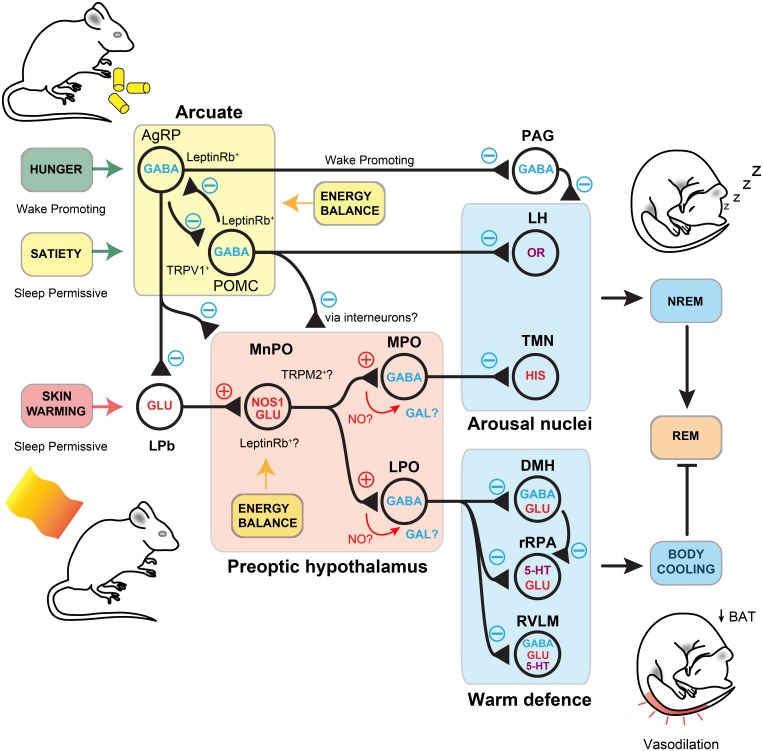
Verification
Claims the paper makes
The claims and statistics of this paper haven’t been checked yet.
Run the check — free, no account needed. It reads the open-access text and checks the sources it cites.
Claims other papers make about this one
Each is checked against this paper’s own text: does it say what the citing paper says it does?
The check wasn’t confident either way, so it gives no verdict — never disputed.
In the citing paper
“Similarly, features of sleep-wake time series can directly capture insomnia-like patterns in sleep related to DM6,34,43,44.”
From Sleep and temperature data from wearable devices support noninvasive detection of diabetes mellitus in a large-scale, retrospective analysis (2026) · cites this paper as [34]
Experimental — accuracy not yet measuredThe check wasn’t confident either way, so it gives no verdict — never disputed.
In the citing paper
“Within a night, the complexity of the distal body temperature time series has been related to the autonomic nervous system’s (ANS) health during sleep6,34.”
From Sleep and temperature data from wearable devices support noninvasive detection of diabetes mellitus in a large-scale, retrospective analysis (2026) · cites this paper as [34]
Experimental — accuracy not yet measuredThe check wasn’t confident either way, so it gives no verdict — never disputed.
In the citing paper
“Studies suggest associations between DMN connectivity and subsequent sleep quality as measured by polysomnography, with greater DMNcortical connectivity associated with be er sleep efficiency and total sleep time [37].”
From Pre-Sleep Anxiety: Mechanisms and Therapeutic Approaches in Clinical Practice. (2026) · cites this paper as [37]
Experimental — accuracy not yet measuredIn the citing paper
“As a practical example, a hot bath (inducing vasodilation) prior to, but not immediately before the sleep period, is known to help with its initiation [9,52].”
From Human thermal perception and time of day: A review (2021) · cites this paper as [9]
Self-check
Percentages, sums and reported differences re-computed from the paper’s own numbers.
The self-check needs the paper’s full text.
Citations
Cites
Brown Adipose Tissue: Function and Physiological Significance
CANNON, B., & NEDERGAARD, J. (2004) · Physiological Reviews · doi:10.1152/physrev.00015.2003 · Cited by 6,433 · cited 1×
“It decouples the electron transport chain from the ATP-synthase, facilitating heat production through proton gradient dissipation, without ATP production, and compensatory metabolism (Cannon and Nedergaard, 2004).”
Two-Process Model of Sleep Regulation
Binder, M. D., Hirokawa, N., & Windhorst, U. (2008) · Springer eBooks · doi:10.1007/978-3-540-29678-2_6166 · Cited by 3,900 · cited 3×
“According to current thinking, these are known as Process C and Process S, the circadian and the homeostatic input, respectively, and are part of the two-process model (Borbély, 1982).”
BackgroundLeptin activates anorexigenic POMC neurons through a neural network in the arcuate nucleus
Cowley, M. A., Smart, J. L., Rubinstein, M., Cerdán, M. G., Diano, S., Horvath, T. L., Cone, R. D., & Low, M. J. (2001) · Nature · doi:10.1038/35078085 · Cited by 2,356 · cited 1×
“POMC oppose the action of AgRP neurons and are activated by leptin (Cowley et al., 2001).”
BackgroundThe two‐process model of sleep regulation: a reappraisal
Borbély, A. A., Daan, S., Wirz‐Justice, A., & Deboer, T. (2016) · Journal of Sleep Research · doi:10.1111/jsr.12371 · Cited by 1,577 · cited 1×
“However, as we have seen, sleep onset is also gated by other inputs: ambient temperature, as well as levels of satiety, mating opportunities and the need to escape predators all determine the appropriate moment for NREM onset (Borbély, 1982; Borbély et al., 2016; EbanRothschild et al., 2017; Logan and McClung, 2019).”
BackgroundMolecular, spatial, and functional single-cell profiling of the hypothalamic preoptic region
Moffitt, J. R., Bambah-Mukku, D., Eichhorn, S. W., Vaughn, E., Shekhar, K., Perez, J. D., Rubinstein, N. D., Hao, J., Regev, A., Dulac, C., et al. (2018) · Science · doi:10.1126/science.aau5324 · Cited by 1,365
Mammalian Hibernation: Cellular and Molecular Responses to Depressed Metabolism and Low Temperature
Carey, H. V., Andrews, M. T., & Martin, S. L. (2003) · Physiological Reviews · doi:10.1152/physrev.00008.2003 · Cited by 1,145 · cited 4×
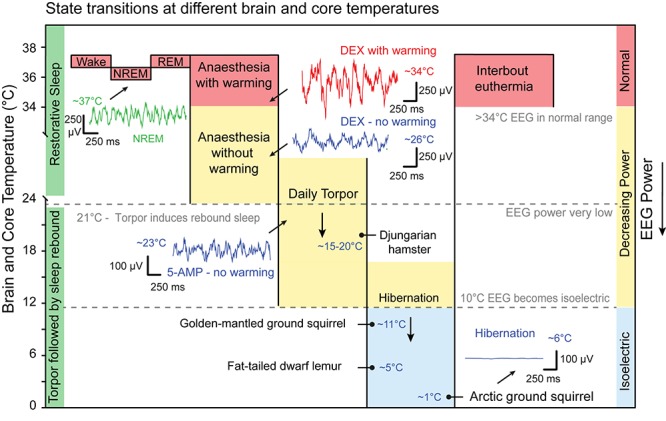
“These are periods of interbout euthermia (Boyer and Barnes, 1999; Carey et al., 2003).”
BackgroundInfluentialAssessing nest building in mice
Deacon, R. M. J. (2006) · Nature Protocols · doi:10.1038/nprot.2006.170 · Cited by 1,115 · cited 1×
“0 universal and the nesting mouse is adapted from Deacon (2006).”
BackgroundLeptin Differentially Regulates NPY and POMC Neurons Projecting to the Lateral Hypothalamic Area
Elias, C. F., Aschkenasi, C., Lee, C., Kelly, J., Ahima, R. S., Bjorbæk, C., Flier, J. S., Saper, C. B., & Elmquist, J. K. (1999) · Neuron · doi:10.1016/s0896-6273(01)80035-0 · Cited by 924 · cited 2×
“In rats, chronic total-sleep deprivation and selective REM deprivation, using the disk-overwater method for many days, leads to profound physiological effects and eventually death (Everson et al., 1989).”
BackgroundMethodDaily torpor and hibernation in birds and mammals
Ruf, T., & Geiser, F. (2014) · Biological reviews/Biological reviews of the Cambridge Philosophical Society · doi:10.1111/brv.12137 · Cited by 839 · cited 5×
“A range of mammals from ground squirrels to brown bears also use annual hibernation strategies for winter survival and reproduction (Carey et al., 2003; Ruf and Geiser, 2015).”
BackgroundInfluentialRegulation of Body Temperature by the Nervous System
Tan, C. L., & Knight, Z. A. (2018) · Neuron · doi:10.1016/j.neuron.2018.02.022 · Cited by 834 · cited 1×
“Neurons that receive afferent temperature information, but are not direct temperature ‘sensors’, have been distinguished by the term ‘warm-activated’ neurons (Tan and Knight, 2018).”
Background
Research works printed but not linked: 1
- Ma, 2019, Galanin neurons in the hypothalamus link sleep homeostasis, body temperature and actions of the alpha2 adrenergic agonist dexmedetomidine., bioRxiv, 10.1101/565747 · DOI
Cited by
Sorted by citations
Items 201–259 of 259
Connection of brain glymphatic system with circadian rhythmPreprint
Kholmanskiy, A. S. (2023) · bioRxiv (Cold Spring Harbor Laboratory) · doi:10.1101/2023.08.07.552123 · Cited by 2
Thermo- and photoreceptors of eyes as regulators of circadian rhythm and glymphatic systemPreprint
Kholmanskiy, A. S. (2023) · bioRxiv (Cold Spring Harbor Laboratory) · doi:10.1101/2023.09.15.557924 · Cited by 4
Minimal hepatic encephalopathy: clinical, neurophysiological, neuroimaging markers
Игоревна, К. П., Раскуражев, А. А., Николаевна, М. С., Lovchev, I. M., Новрузбеков, М. С., & Tanashyan, M. M. (2023) · Russian neurological Journal · doi:10.30629/2658-7947-2023-28-5-21-27
Analysis of the Relationship Between Temperature and Insomnia Based on Social Media Text
Shao, L., & Yu, G. (2024) · Communications in computer and information science · doi:10.1007/978-981-97-5803-6_19
Deglon, M., Africa, C., Soepnel, L. M., Kapwata, T., Aikins, A. D., Bedu-Addo, K., Howard, G., Lambert, E. V., Rae, D. E., Sibanda, M., et al. (2024) · Research Square · doi:10.21203/rs.3.rs-4788466/v1
Buaruk, S., Thanaviratananich, S., Treesuthacheep, P., & Deepaisarn, S. (2024) · Asia-Pacific Signal and Information Processing Association Annual Summit and Conference (APSIPA ASC) · doi:10.1109/apsipaasc63619.2025.10848967
Die 3 zentralen Säulen eines gesunden Schlafs
Dworak, M., & Steiner, A. (2025) · Springer eBooks · doi:10.1007/978-3-662-70386-1_4
Heller, H. C., & Someren, E. J. W. V. (2025) · doi:10.1093/med/9780197756782.003.0014
AbdulRafeh (2025) · Research Square · doi:10.21203/rs.3.rs-6605970/v1
How neuroscience nurses can improve the quality of sleep for patients on a neurosurgical ward
Guntrip, O. (2025) · British Journal of Neuroscience Nursing · doi:10.12968/bjnn.2024.0005
Interactions Between Sleep and Exercise Performance
Vlahoyiannis, A., Bogdanis, G. C., Nakamura, F. Y., Gantois, P., & Giannaki, C. D. (2025) · Springer eBooks · doi:10.1007/978-3-031-44270-4_14
Vandendoren, M., Landen, J. G., Rogers, J. F., Killmer, S., Alamiri, B., Pohlman, C., Tattersall, G. J., Bedford, N. L., & Nelson, A. C. (2025) · eLife · doi:10.7554/elife.108212
Effect of therapeutic hypothermia on post-stroke sleep disorders
Torshin, D. V., Shevelev, O. A., Krylov, V. A., Levin, M., & Petrova, M. V. (2025) · S S Korsakov Journal of Neurology and Psychiatry · doi:10.17116/jnevro202512512294
Natural Thermal Tracker for Core Body Temperature Application to Improve Personal Daily Life
Saisho, O., Takahashi, M., Tanaka, Y., Matsunaga, D., Inoue, T., & Tajima, T. (2025) · ACM International Joint Conference on Pervasive and Ubiquitous Computing (UbiComp) · doi:10.1145/3714394.3754400
“It plays a central role in regulating circadian rhythms [10], metabolic activity [11], and sleep patterns [8], and is closely linked to immune function [7], fertility [17], cognition [6], and cardiovascular health [1].”
The effects of bed cooling on sleep quality and sleep thermal comfort in overheated bedrooms
Bhadra, J., Beizaee, A., Hartescu, I., & Lomas, K. J. (2026) · Building and Environment · doi:10.1016/j.buildenv.2026.114213
Impact of home transcutaneous capnography on the assessment of patients with nocturnal hypoxemia
Valdes, C. M., Álvarez, R. F., Chamorro, L. A., Menendez, P. R., Ruiz-Álvarez, I., Suárez, I. F., Lopez, M. J., Cuesta, P. L., Guerassimova, I., Monge, G. L.-A., et al. (2026) · Respiratory Medicine · doi:10.1016/j.rmed.2026.108643
How distinct are sleep sites from active sites across habitat types in lizards?
Mohanty, N. P., Abinesh, A., Dhere, S., & Thaker, M. (2026) · Behavioral Ecology and Sociobiology · doi:10.1007/s00265-026-03693-w
“Sleep, as a physiological state, imposes restrictions on the required thermal-hydric conditions (e.g., core body temperature needs to drop to induce sleep in mammals; Harding et al. 2019).”
PHYSICAL ACTIVITY AS A NON-PHARMACOLOGICAL INTERVENTION FOR INSOMNIA
Barańska, O., Drożdżał, J., Chańko, M., Rędaszka, M., Wojczulis, T., Wojtkiewicz, A. M., & Kowalska, M. (2026) · International Journal of Innovative Technologies in Social Science · doi:10.31435/ijitss.1(49).2026.4599
Bullement, I., Cameron, L., & Greening, L. (2026) · International Journal of Equine Science · doi:10.64292/ijes.196
“When ambient temperatures rise during sleep, humans typically regulate by increasing their exposed surface area [ 13 ], which is not a strategy readily available to rugged horses, highlighting a lack of agency and the importance of appropriate rugging decisions.”
Goda, T., Lopez, O. M., Ramolete, R., Reinhard, N., Ulle, N., Fukuda, A., Umezaki, Y., Rizvi, K., Aikawa, M. G., Catiis, R., et al. (2026) · bioRxiv (Cold Spring Harbor Laboratory) · doi:10.64898/2026.02.19.706827
Wang, X., Ding, Y., Elmadhoun, O., Yuan, Y., Tong, Y., Cai, L., Ji, Q., Wang, Y., Li, F., & Geng, X. (2026) · Frontiers in Neurology · doi:10.3389/fneur.2026.1753102
“In both humans and other mammals, direct skin warming has been shown to shorten sleep latency, increase slow-wave-sleep (SWS), enhance Non-Rapid Eye Movement sleep (NREM) consolidation, and decrease Rapid Eye Movement sleep (REM) (21).”
Cai, S., Yang, W. Z., Xu, M., Chen, H., Zhou, L., Luo, T., Yu, S., Zhang, K., Wang, H., Yu, T., et al. (2026) · iScience · doi:10.1016/j.isci.2026.115542
“5,6 12 These lead us to propose that the thermoregulatory neurons may also be involved in modulating the general anesthesia state, while the mechanisms remain elusive.”
You Can Solve a Lot of Problems With a Good Night’s Sleep
Ross, H., Southee, R. A., Ament, M., Squires, A., Nag, A., Valencia, I., & Bowman, D. M. (2026) · IEEE Technology and Society Magazine · doi:10.1109/mts.2026.3668941
Sleep disconnection : EEG decoding of covert attention during different vigilance states
Koroma, M. (2020) · theses.fr (ABES) · doi:10.70675/9e1826a6z700bz489czbfafz1066a261c90b
Katano, H., Sugita, M., Tokuno, S., Nomura, Y., Nishino, N., Higuchi, M., Iwai, Y., Matsuki, Y., Deng, P., & Nishino, S. (2026) · Sensors · doi:10.3390/s26072247
Physiopathologie des comas isoélectriques : de l’EEG au neurone
Carton‐Leclercq, A. (2023) · theses.fr (ABES) · doi:10.70675/7e9150a6z8959z43baza4b4zcaf0222fc163
Burks, J. H., Hartogensis, W., Dilchert, S., Mason, A. E., & Smarr, B. L. (2026) · npj Digital Medicine · doi:10.1038/s41746-026-02633-2
“T in fl uencing MET — is primarily observed over circadian timescales 53 – 55 (hours) rather than minutes.”
Wang, C., Nitto, R., Ban, Y., Nakai, M., Shimizu, J., Ashikaga, T., & Warisawa, S. (2026) · Augmented Humans International Conference (AHs) · doi:10.1145/3795011.3797383
“While traditional AC systems rely on static setpoints, human thermoregulation is intrinsically non-stationary overnight: core body temperature (CBT) and metabolic rate follow a circadian-driven decline to facilitate rest [3].”
Kondracki, P., Rodziewicz, J., Daniszewski, W., Kretschmer, V., Sobolewska, E., Baranowska, M., & Markowski, D. (2026) · International Journal of Innovative Technologies in Social Science · doi:10.31435/ijitss.2(50).2026.5424
How Synaptic Plasticity Shapes Mental Health: The Role of Core Body Temperature
Grenno, G., Piarulli, A., Alfì, G., Caruso, V., Aquino, G., Lencioni, R. A., Palagini, L., & Gemignani, A. (2026) · Current Sleep Medicine Reports · doi:10.1007/s40675-026-00380-0
“In line with this, experimental enhancement of peripheral heat loss facilitates sleep onset and increases slow wave activity, whereas preventing heat dissipation delays sleep and reduces its depth [40, 96, 98, 99].”
InfluentialRousan, M. Y., Ghazzawi, H., Oweidat, K. A., & Al-Awamleh, R. (2026) · Frontiers in Nutrition · doi:10.3389/fnut.2026.1851443
A Small-Size Cross-Over Trial of Heating Pad Use during Winter on Sleep
Zhu, Z., Choi, J. E., Xu, X., Park, J., Kramer, T., Zhang, H., & Schiavon, S. (2026) · E3S Web of Conferences · doi:10.1051/e3sconf/202671605028
Sexsomnia - a detailed approach to evaluation
Shapiro, C. M., Yousef, P., Gojer, J., Hossain, N. K., & Kim, C. Y. (2026) · Frontiers in Sleep · doi:10.3389/frsle.2026.1847000
Tsang, T.-W., Yu, C., Li, L., & Zhang, C. (2026) · Building and Environment · doi:10.1016/j.buildenv.2026.114928
Lee, J.-W., Park, S. H., Lee, S., Choi, K., & Yang, H.-J. (2026) · Indoor Air · doi:10.1155/ina/2361260
Verhoef, V. T. R., Smolders, K. C. H. J., Peeters, G., Overeem, S., & de Kort, Y. A. W. (2026) · Chronobiology International · doi:10.1080/07420528.2026.2696432
“Additionally, research has highlighted a link between sleep quality or sleep-wake rhythm and skin temperature (Harding et al. 2019; Tai et al. 2023), and revealed a correlation between heat loss due to vasodilation (indexed by an increasing DPG) and sleep onset (Kräuchi et al. 2000), as described…”
Wild Tibetan macaques employ a social sleep strategy to balance sleep needs and ecological pressures
Yang, P., Chakravarty, P., Li, W., Song, Z., Wang, X., Crofoot, M. C., & Li, J. (2026) · Animal Behaviour · doi:10.1016/j.anbehav.2026.123659
Olfactory Training and Aromatherapy for Treating Depressive Symptomatology: A Scoping Review
Rostamvand, M., Billings, R., Shelton, H., Zeng, X., Phaowiriya, H., Egas, S., Harris, L. M., & Vance, D. E. (2026) · Journal of Holistic Nursing · doi:10.1177/08980101261466341
Torales, J. C., Barrios, I., O’Higgins, M. G., Caycho-Rodríguez, T., Ventriglio, A., & Castaldelli-Maia, J. M. (2026) · Biology · doi:10.3390/biology15141165 · Cited by 1
Stevenson, S., Hayes, Y., Suppiah, H. T., & Driller, M. W. (2026) · Temperature · doi:10.1080/23328940.2026.2703946
“Thermoregulation, the physiological mechanism for maintaining a stable core temperature, plays a fundamental role in sleep quality [3].”
InfluentialHasan, M. R., Umbach, D. M., Shi, M., Gu, C., Yeung, D., Talukder, A., Fan, Z., & Li, L. (2026) · Communications Health · doi:10.1038/s44528-026-00013-6
“While seasonal factors such as temperature, humidity, and light exposure are well-documented to affect sleep 3,13 – 24, 37 , the speci fi c ways in which AllPSGswereconductedatthesamelocation,withconsistentindoor environmentalsettings.”
Zhang, W., Chong, A., Zhang, H., Schiavon, S., & Miller, C. C. (2026) · Building and Environment · doi:10.1016/j.buildenv.2026.115100
Abouseif, N., & Papatzikis, E. (2026) · Progress in brain research · doi:10.1016/bs.pbr.2026.08.001
Thermal environment and light exposure shape sleep-associated metabolic and thermoregulatory rhythms
Gouwens, K. R., Nong, Y., Hill, B. G., & Nystoriak, M. A. (2026) · American Journal of Physiology-Regulatory, Integrative and Comparative Physiology · doi:10.1152/ajpregu.00061.2026
Night-Time Heat Stress, Ageing and Neurodegeneration - The Next HOT Topic
Kong, S. D., Tartarini, F., Mavros, Y., Schikowski, T., & Naismith, S. L. (2026) · Current Treatment Options in Neurology · doi:10.1007/s11940-026-00891-9
“More importantly, night-time heat stress undermines slow-wave sleep [71], the deepest sleep stage, essential for synaptic density, memory consolidation [78] and glymphatic clearance of neurotoxic proteins implicated in neurodegeneration (a mechanism characterised largely in animal models) [79, 80].”
The role of air quality and pollution in obstructive sleep apnea: insights from recent studies
Tùng, N. T., Tran, X. N., Chang, J.-H., & Chuang, H. (2026) · Expert Review of Respiratory Medicine · doi:10.1080/17476348.2026.2736322
Vandendoren, M., Landen, J. G., Rogers, J. F., Killmer, S., Alamiri, B., Pohlman, C., Tattersall, G. J., Bedford, N. L., & Nelson, A. C. (2026) · eLife · doi:10.7554/elife.108212.3
Thermosomnia: Consequences of rising temperatures and climate change for clinical sleep disorders
Fitton, J., Lovato, N., Reynolds, A. C., Pinilla, L., Ferguson, T., Toson, B., Adams, R., Eckert, D. J., & Lechat, B. (2026) · Sleep Medicine Reviews · doi:10.1016/j.smrv.2026.102382 · Cited by 1
Hernández, L. B., Crespo, C., Ibáñez, S. J., Timón, R., & Olcina, G. J. (2026) · Sports · doi:10.3390/sports14100426
“It had already been predicted that high temperatures during the Paris Games would hinder the drop in core body temperature necessary to initiate and consolidate deep sleep [30], a mechanism whose thermal dependence has been well established [31].”
Too Hot, Too Cold, or Just Right? The Effects of Temperature on Sleep
Gardner, J. R., & Hadjimarkou, M. M. (2026) · Frontiers for Young Minds · doi:10.3389/frym.2026.1649370
“As the temperature drops more and more, the hypothalamus senses this decline and the neurons responsible for sleep are activated to cause sleep [9].”
Billian, A., Sharp, A., & Belloc, C. (2026) · International Conference on Electrical, Robotics and Intelligent Systems (ELECRIS) · doi:10.1109/elecris70177.2026.11721774
“As “digital transformation” reshapes urban infrastructure, those without access to essential digital resources are being left further behind, deepening their exclusion from the very support systems designed to assist them [4].”
Blessing, E. (2026) · Alzheimer s & Dementia · doi:10.1002/alz.71847
“Thermal interventions including skin warming 52 and Tb increase causally alter sleep, 74,75 and sleep state strongly correlates with Tbr variation, 76–78 which fluctuates rapidly at sleep–wake transitions.”
Kaisin, O., Pochez, M., Vermeulen, C., & Culot, L. (2026) · Ecology and Evolution · doi:10.1002/ece3.74525
“Thermoregulation is a key factor influencing sleep ecology in primates and other homeothermic animals (Downs et al. 2015; Harding et al. 2019, 2020; Pozzi et al. 2022).”
Onik, G., Barański, K., & Suszyński, K. (2026) · Frontiers in Public Health · doi:10.3389/fpubh.2026.1947274
The sleep-wake circuit plays a role in temporal distortions.
Reggia, J. A., & Teymourlouei, A. (2026) · Consciousness and Cognition · doi:10.1016/j.concog.2026.104145
Romanello, M. B., Walawender, M., Israelsson, J., Hasan, M. M., Battaglia, F., Dutta, A., Hsu, S.-C., Orgen, P., Palmeiro-Silva, Y. K., Scamman, D., et al. (2026) · The Lancet · doi:10.1016/s0140-6736(26)01779-4 · Cited by 5
Metadata
- Authors
- Harding, E. C., Franks, N. P., & Wisden, W.
- Affiliations
- Imperial College London (GB)
- UK Dementia Research Institute (GB)
- Corresponding author
- Franks, Nicholas P.
- Wisden, William
- Venue
- Frontiers in Neuroscience
- Publisher
- Frontiers Media SA
- Published
- 2019-04-24
- Volume
- 13
- Pages
- 336-336
- ISSN
- 1662-453X (ISSN-L)
- PMC
- PMC6491889
- OpenAlex
- W2940903564
- Cited by
- 261
- References
- 159
- Citations by year
- 2026: 53 · 2025: 48 · 2024: 40 · 2023: 38 · 2022: 30 · 2021: 28 · 2020: 17 · 2019: 7
- FWCI
- 2.60
- Type
- journal article
- Language
- en
- Open access
- gold
- doi.org
- Licence
- Locations
- Frontiers in Neuroscience (publishedVersion, cc-by)
- Europe PMC (PubMed Central) (publishedVersion, cc-by)
- PubMed Central (publishedVersion, cc-by)
- PubMed (publishedVersion)
- DOAJ (DOAJ: Directory of Open Access Journals) (submittedVersion, cc-by-sa)
- Spiral (Imperial College London) (submittedVersion, other-oa)
- Funders
- Wellcome Trust
- Topics
- Life Sciences › Neuroscience › Cognitive Neuroscience › Sleep and Wakefulness Research
- Life Sciences › Neuroscience › Endocrine and Autonomic Systems › Circadian rhythm and melatonin
- Social Sciences › Psychology › Experimental and Cognitive Psychology › Sleep and related disorders
- Keywords
- sleep, thermoregulation, core body temperature, brain cooling, circadian rhythm, behavioral thermoregulation, nest building, skin warming, sleep latency, vasodilation, energy homeostasis, sleep function
About these checks
Registry, retraction, Cites and statistics results are computed, not judged, with one exception: a printed reference that no index lists is read once by a model before it counts as a citation error. Claims are extracted by a model and kept only when their quote appears verbatim in the text; each cited source is then checked, with a model’s help, for whether it says what the claim relies on. Those verdicts can be wrong — read the claim’s quote and the cited source before relying on one.
Statistics and arithmetic are recomputed, not judged.
Confidence bands are shown only for fields calibrated on our annotated test set. None is calibrated yet, so no band is shown.
What counts as a claim ›How we measure confidence ›How we check this ›
Are you an author, or do you see a problem with this page? Request a review
