

The DOI matches its Crossref record; 55 of the 58 references it cites were found in a registry or an index.
The importance of protesters' morals: moral obligation as a key variable to understand collective action
Open accessAbstract
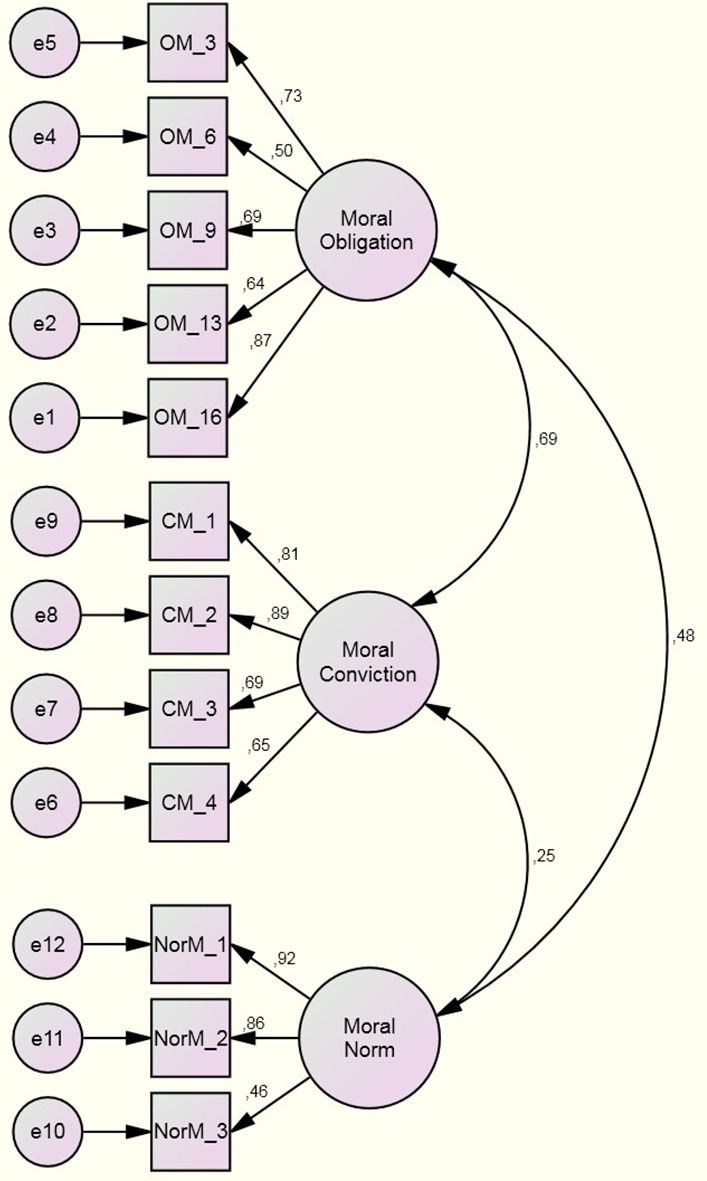
Collective action and protest have become a normalised political behaviour that in many cases defines the political agenda. The reasons why people take to the streets constitutes a central subject within the study of Social Psychology. In the literature, three precedents of protest that have been established as central to the study of this phenomenon are: injustice, efficacy and identity. But political action is also deeply related to moral values. This explains why in recent years some moral constructs have also been pointed out as predictors of collective action. Moral variables have been introduced into the literature with little consideration to how they relate to each other. Thus, work in this direction is needed. The general aim of this research is to differentiate moral obligation from moral norms and moral conviction, as well as to compare their ability to predict collective action. In order to do so, the research objectives are: a) conceptualise and operationalise moral obligation (Study 1, N= 171); b) test its predictive power for intention to participate in protests (Study 2, N= 622); and c) test moral obligation in a real context (Study 3, N= 407). Results are encouraging, showing not only that moral obligation is different to moral conviction and moral norm, but also that it is a more effective predictor working both for intention and real participation. This work therefore presents moral obligation as a key precedent of protest participation, prompting its future use as a variable that can enhance existing predictive models of collective action. Results regarding other variables are also discussed.
Overview
The claims and statistics of this paper haven’t been checked yet.
Run the check — free, no account needed. It reads the open-access text and checks the sources it cites.
Integrity signals
Registry
Cites
Statistics
Figures
Verification
Claims the paper makes
The claims and statistics of this paper haven’t been checked yet.
Run the check — free, no account needed. It reads the open-access text and checks the sources it cites.
Claims other papers make about this one
Each is checked against this paper’s own text: does it say what the citing paper says it does?
The source backs part of the claim, not all of it — or backs it for a different population, condition or comparison.
In the citing paper
“agreement with self-trascendence values, that could reinforce moral conviction supportive of collective action (Sabucedo et al., 2018; Agostini and van Zomeren, 2021)”
From Emotional processes, collective behavior, and social movements: A meta-analytic review of collective effervescence outcomes during collective gatherings and demonstrations (2022) · cites this paper as Sabucedo et al., 2018
Experimental — accuracy not yet measured
Self-check
Percentages, sums and reported differences re-computed from the paper’s own numbers.
The self-check needs the paper’s full text.
Citations
Cites
The theory of planned behavior
Ajzen, I. (1991) · Organizational Behavior and Human Decision Processes · doi:10.1016/0749-5978(91)90020-t · Cited by 90,587
A Theory of Cognitive Dissonance
Festinger, L. (1957) · doi:10.1515/9781503620766 · Cited by 24,241
A Theory of Cognitive Dissonance
Morvan, C., & O’Connor, A. (2017) · Macat Library eBooks · doi:10.4324/9781912282432 · Cited by 18,284 · cited 1×
“The theory of self-discrepancy (Higgins, 1987) posits, following the classical concept of cognitive dissonance (Festinger, 1957) that discrepancy between beliefs and actions produces psychological distress.”
BackgroundSelf-discrepancy: A theory relating self and affect.
Higgins, E. T. (1987) · Psychological Review · doi:10.1037/0033-295x.94.3.319 · Cited by 7,219 · cited 3×
“The theory of self-discrepancy (Higgins, 1987) posits, following the classical concept of cognitive dissonance (Festinger, 1957) that discrepancy between beliefs and actions produces psychological distress.”
BackgroundMethodImplicit social cognition: Attitudes, self-esteem, and stereotypes
Greenwald, A. G., & Banaji, M. R. (1995) · Psychological Review · doi:10.1037/0033-295x.102.1.4 · Cited by 6,682 · cited 1×
“This devaluation is not likely to happen however, as people will resort to cognitive strategies in order to reduce cognitive dissonance and self-discrepancy, such as looking for external causes for non-compliance (Greenwald and Banaji, 1995).”
BackgroundStatistical mediation analysis with a multicategorical independent variable
Hayes, A. F., & Preacher, K. J. (2014) · British Journal of Mathematical and Statistical Psychology · doi:10.1111/bmsp.12028 · Cited by 3,403 · cited 2×
“0; for additional information on the software, see (Hayes and Preacher, 2014)].”
BackgroundMethodInfluentialvan Zomeren, M., Postmes, T., & Spears, R. (2008) · Psychological Bulletin · doi:10.1037/0033-2909.134.4.504 · Cited by 2,714 · cited 5×
“…as a predictor of intention to participate in collective action along with the most used predictive variables in the literature, those of the SIMCA (van Zomeren et al., 2008; Study 2); and (3) to test moral obligation’s predictive power in the context of real participation in a demonstration.”
BackgroundMethodResultInfluentialSpencer, S. J., Zanna, M. P., & Fong, G. T. (2005) · Journal of Personality and Social Psychology · doi:10.1037/0022-3514.89.6.845 · Cited by 2,452 · cited 1×
“Despite this, it has to be noted that causal assumptions derived from mediational analysis should be addressed with caution (Spencer et al., 2005).”
BackgroundCross-Cultural Correlates of Life Satisfaction and Self-Esteem
Diener, E., & Diener, M. (1995) · Journal of Personality and Social Psychology · doi:10.1037/0022-3514.68.4.653 · Cited by 1,722
The Lucifer effect: understanding how good people turn evil
(2007) · Choice Reviews Online · doi:10.5860/choice.45-1153 · Cited by 1,558
Research works printed but not linked: 4
- Blackburn, 2008, Oxford Dictionary of Philosophyq.
- Gamson, 1992, Talking Politics.
- 2017, Población y Edad Media por nacionalidad y sexo.
- Zimbardo, 2007, The Lucifer Effect.
Cited by
Sorted by citations
The Psychology of Moral Conviction
Skitka, L. J., Hanson, B. E., Morgan, G. S., & Wisneski, D. C. (2020) · Annual Review of Psychology · doi:10.1146/annurev-psych-063020-030612 · Cited by 525
Agostini, M., & van Zomeren, M. (2021) · Psychological Bulletin · doi:10.1037/bul0000256 · Cited by 301
“…2007, 2012; Skitka, 2010) inspired scientific interest in moral motivations for collective action (e.g., Jost et al., 2017; Milesi & Alberici, 2018; Sabucedo et al., 2018; van Stekelenburg et al., 2009; van Stekelenburg & Klandermans, 2009), which includes motivations based in values, moral…”
BackgroundInfluentialvan Zomeren, M., Kutlaca, M., & Turner-Zwinkels, F. M. (2018) · European Review of Social Psychology · doi:10.1080/10463283.2018.1479347 · Cited by 282
Resistance in repressive contexts: A comprehensive test of psychological predictors.
Ayanian, A. H., Tausch, N., Acar, Y. G., Chayinska, M., Cheung, W.-Y., & Lukyanova, Y. (2021) · Journal of Personality and Social Psychology · doi:10.1037/pspi0000285 · Cited by 137
The Volatility of Collective Action: Theoretical Analysis and Empirical Data
Louis, W. R., Thomas, E. F., McGarty, C., Lizzio‐Wilson, M., Amiot, C. E., & Moghaddam, F. M. (2020) · Political Psychology · doi:10.1111/pops.12671 · Cited by 125
MOBILISE: A Higher‐Order Integration of Collective Action Research to Address Global Challenges
Thomas, E. F., Duncan, L. E., McGarty, C., Louis, W. R., & Smith, L. G. E. (2022) · Political Psychology · doi:10.1111/pops.12811 · Cited by 115
Molder, A. L., Lakind, A., Clemmons, Z. E., & Chen, K. (2021) · The International Journal of Press/Politics · doi:10.1177/19401612211055691 · Cited by 88
Pizarro, J. J., Zumeta, L. N., Bouchat, P., Włodarczyk, A., Rimé, B., Basabe, N., Amutio, A., & Páez, D. (2022) · Frontiers in Psychology · doi:10.3389/fpsyg.2022.974683 · Cited by 88
“, 2012), agreement with self-trascendence values, that could reinforce moral conviction supportive of collective action (Sabucedo et al., 2018; Agostini and van Zomeren, 2021) as well as moral, positive and self-transcendent emotions like hope, that gave motivational support to the previous factors (Agostini and van Z…”
BackgroundSia, S. K., & Alphonsa Jose, K. (2019) · Management of Environmental Quality An International Journal · doi:10.1108/meq-02-2019-0038 · Cited by 92
Pizarro, J. J., Basabe, N., Fernández, I., Carrera, P., Apodaca, P., Ging, C. I. M., Cusi, O., & Páez, D. (2021) · Frontiers in Psychology · doi:10.3389/fpsyg.2021.709859 · Cited by 87
Yang, L., & Ren, Y. (2020) · International Journal of Environmental Research and Public Health · doi:10.3390/ijerph17082731 · Cited by 69
Friends or foes? How activists and non-activists perceive and evaluate each other
Kutlaca, M., van Zomeren, M., & Epstude, K. (2020) · PLoS ONE · doi:10.1371/journal.pone.0230918 · Cited by 51
“, women), if they do not moralize the activists’ cause [26], because denying moral basis for action goes directly against what activists believe in [16, 17, 19].”
BackgroundInfluentialUysal, M. S., Saavedra, P., & Drury, J. (2024) · British Journal of Social Psychology · doi:10.1111/bjso.12735 · Cited by 52
van Zomeren, M. (2019) · Journal of Pacific Rim Psychology · doi:10.1017/prp.2019.7 · Cited by 48
Cornejo, M., Rocha, C. M., Castro, D., Varela, M., Manzi, J. M., González, R., Jiménez‐Moya, G., Carvacho, H., Álvarez, B., Valdenegro, D., et al. (2020) · British Journal of Social Psychology · doi:10.1111/bjso.12420 · Cited by 46
Cameselle, J. M. S., Dono, M., Grigoryev, D. S., Gómez-Román, C., & Álzate, M. (2019) · PLoS ONE · doi:10.1371/journal.pone.0218350 · Cited by 45
van Zomeren, M., D’Amore, C., Pauls, I. L., Shuman, E., & Leal, A. L. (2023) · Personality and Social Psychology Review · doi:10.1177/10888683231192120 · Cited by 45
“…studies showed positive correlations between specific moral motivations and collective actions such as social protest and political behavior (e.g., Sabucedo et al., 2018; van Zomeren et al., 2012). van Stekelenburg et al. (2009), for example, directly linked a moral motivation to express values…”
Backgroundda Costa, S., Páez, D., Martí-González, M., Díaz, V., & Bouchat, P. (2023) · Frontiers in Psychology · doi:10.3389/fpsyg.2023.1096877 · Cited by 40
“, 2017), and positive emotions such as hope and negative ones such as moral anger (Jasper, 2011) and moral obligation (Sabucedo et al., 2018).”
BackgroundInfluentialFernandes‐Jesus, M., Lima, M. L., & Cameselle, J. M. S. (2020) · Journal of Social and Political Psychology · doi:10.5964/jspp.v8i1.1116 · Cited by 39
“Secondly, measures of moral motivation should differentiate between moral obligation and moral convictions, as recent studies have shown (Sabucedo et al., 2018).”
BackgroundResultInfluentialAl-Rahamneh, N. M., & Bidin, Z. (2022) · Journal of risk and financial management · doi:10.3390/jrfm15090407 · Cited by 32
Burhan, Q.-U.-A., Khan, M. A., & Malik, M. F. (2023) · Business Process Management Journal · doi:10.1108/bpmj-08-2022-0384 · Cited by 40
Sloot, D., Kutlaca, M., Međugorac, V., & Carman, P. (2018) · Frontiers in Psychology · doi:10.3389/fpsyg.2018.01229 · Cited by 30
Uysal, M. S., Acar, Y. G., Sabucedo, J.-M., & Cakal, H. (2022) · Journal of Social and Political Psychology · doi:10.5964/jspp.7207 · Cited by 28
“This is in line with Sabucedo and colleagues’ work which shows that moral obligation appeared as the strongest predictor for both collective action intention (Vilas & Sabucedo, 2012) and actual protest behavior (Sabucedo et al., 2018).”
ResultVila-Tojo, S., Cameselle, J. M. S., Andrade, E., Gómez-Román, C., Álzate, M., & Pesqueira, G. S. (2022) · Water Research · doi:10.1016/j.watres.2022.118380 · Cited by 29
A warrant for violence? An analysis of Donald Trump's speech before the US Capitol attack
Ntontis, E., Jurstakova, K., Neville, F., Haslam, S. A., & Reicher, S. D. (2023) · British Journal of Social Psychology · doi:10.1111/bjso.12679 · Cited by 26
“This is something that has recently achieved considerable attention in the social movement literature as a key determinant of participation (Agostini & van Zomeren, 2021; Sabucedo et al., 2018).”
Moral framing and information virality in social movements: A case study of #HongKongPoliceBrutality
Wang, R., & Liu, W. (2021) · Communication Monographs · doi:10.1080/03637751.2021.1918735 · Cited by 30
Zlobina, A., & de León, M. C. D. (2022) · British Journal of Social Psychology · doi:10.1111/bjso.12539 · Cited by 23
Al-Rahamneh, N. M., Zobi, M. K. A., & Bidin, Z. (2023) · Cogent Business & Management · doi:10.1080/23311975.2023.2220478 · Cited by 19
“In regard to moral obligation, it can be understood as a sense of duty or responsibility to behave in ways that align with commonly accepted ethical principles or societal norms, while it is true that internal constraints can influence a person’s moral obligations, that is not often the only factor at work (Sabucedo e…”
BackgroundMartel, F. A., Buhrmester, M., Gómez, A., Vázquez, A., & Swann, W. B. (2021) · Frontiers in Psychology · doi:10.3389/fpsyg.2021.779120 · Cited by 19
“Moral convictions theoretically foster a principled obligation to act that, in turn, predicts intentions to enact actions that advance the cause (Sabucedo et al., 2018).”
BackgroundYoder, K. J., & Decety, J. (2022) · Cortex · doi:10.1016/j.cortex.2022.03.008 · Cited by 23
Mazzuca, S., Moscatelli, S., Menegatti, M., & Rubini, M. (2022) · Frontiers in Psychology · doi:10.3389/fpsyg.2022.999750 · Cited by 25
“Research on collective action has recently emphasized the role of moral conviction, namely a strong moral belief about an issue, as one of the most powerful motivators for engagement in collective actions (e.g., van Stekelenburg et al., 2009; Jost et al., 2017; Milesi and Alberici, 2018; Sabucedo et al., 2018).”
BackgroundPerceived national wealth increases support for structural climate policies
Klebl, C., & Jetten, J. (2023) · Journal of Environmental Psychology · doi:10.1016/j.jenvp.2023.102055 · Cited by 17
Emprendimiento social en jóvenes: análisis de su relación con otras formas de participación social
de León, M. C. D., Zlobina, A., & Pascual, A. S. (2021) · REVESCO Revista de Estudios Cooperativos · doi:10.5209/reve.75562 · Cited by 15
“Sabucedo et al. (2018) muestran que la obligación moral es el predictor más efectivo de la intención y la participación política real, y como se ha descrito previamente, también parece tener un papel importante en la predicción del emprendimiento social.”
BackgroundMoghaddam, F. M., & Hendricks, M. J. (2020) · Current Opinion in Psychology · doi:10.1016/j.copsyc.2020.02.004 · Cited by 16
Grigoryev, D. S., Gallyamova, A. A., Conway, L. G., Zubrod, A., Cameselle, J. M. S., Dono, M., Batkhina, A. A., & Boehnke, K. (2024) · Frontiers in Psychology · doi:10.3389/fpsyg.2024.1269552 · Cited by 14
“…(if the behavior is consistent with the obligation); (4) discomfort (in case the behavior does not correspond to the obligation); (5) sacrifice (Sabucedo et al., 2018), which are important aspects of the individual differences of the protesters, motivates them to participate in collective…”
BackgroundInfluentialPetkanopoulou, K., Chryssochoou, X., Zacharia, M., & Pavlopoulos, V. (2021) · Journal of Community & Applied Social Psychology · doi:10.1002/casp.2580 · Cited by 12
Thomas, E. F., Yip, L., & Lizzio‐Wilson, M. (2024) · Social and Personality Psychology Compass · doi:10.1111/spc3.12987 · Cited by 13
Schulte, M., Bamberg, S., & Rees, J. H. (2021) · European Psychologist · doi:10.1027/1016-9040/a000445 · Cited by 12
Stapnes, T., Carlquist, E., & Horst, C. (2020) · Peace and Conflict Journal of Peace Psychology · doi:10.1037/pac0000473 · Cited by 11
“The strongly felt responsibility to protest that participants described also speaks to research that has explored how moral feelings motivate collective action (Sabucedo et al., 2018; Vilas & Sabucedo, 2012).”
BackgroundInfluentialOkbagaber, T. B. (2022) · Journal of Public Affairs · doi:10.1002/pa.2840 · Cited by 13
Taheri, B., Banerji, D., Hosen, M., & Sharma, G. D. (2024) · International Journal of Hospitality Management · doi:10.1016/j.ijhm.2024.103961 · Cited by 10
LaCosse, J., Krusemark, D. R., Foltz, J., & Plant, E. A. (2021) · Group Processes & Intergroup Relations · doi:10.1177/13684302211048886 · Cited by 9
“Future research could also incorporate antiracist beliefs into current models of engagement in collective action (e.g., Jost et al., 2017; Sabucedo et al., 2018, 2019; van Zomeren et al., 2008).”
BackgroundReactance to Persuasive Messages Depends on Felt Obligation
Yang, S., & Kruschke, J. K. (2024) · Communication Research · doi:10.1177/00936502241253302 · Cited by 10
“We focused on obligation because it is widely accepted as a predictor of intention to engage in an action (Beck & Ajzen, 1991; Sabucedo et al., 2018).”
Al-Rahamneh, N. M., & Bidin, Z. (2022) · Universal Journal of Accounting and Finance · doi:10.13189/ujaf.2022.100206 · Cited by 9
“And it is usually defined as a “personal decision to participate in a specific collective action based on the belief that this is what should be done” [62].”
BackgroundInfluentialWang, L., & Zhao, Y. (2023) · Agriculture · doi:10.3390/agriculture13010216 · Cited by 9
Personal or Social? The Role of Fear of Missing Out in Poverty Alleviation Tourism
Wut, T.-M., Lee, D., & Wan, C. (2024) · The international journal of tourism research · doi:10.1002/jtr.2776 · Cited by 9
Vázquez, A., López‐Rodríguez, L., Gómez, Á., & Brambilla, M. (2020) · Group Processes & Intergroup Relations · doi:10.1177/1368430220963820 · Cited by 8
“, 2011) convictions and obligation (Sabucedo et al., 2018) motivate engagement in collective action.”
BackgroundDono, M., Ayanian, A. H., & Tausch, N. (2025) · Journal of Environmental Psychology · doi:10.1016/j.jenvp.2025.102697 · Cited by 7
Rincón‐Unigarro, C., da Costa, S., Cisneros-Rodríguez, M.-J., Díaz‐Fuentes, L., Giraldo-Castillo, N., Murcia-Infante, A., Páez, D., Vargas-López, M., & Vásquez-Velásquez, S. (2025) · Frontiers in Psychology · doi:10.3389/fpsyg.2025.1566499 · Cited by 8
Ayanian, A. H., Tausch, N., & Saab, R. (2024) · Oxford University Press eBooks · doi:10.1093/9780197687703.003.0002 · Cited by 8
Morality, justice, and collective climate action
Hornsey, M. J., Nylund, J. L., & Thai, M. (2025) · Current Opinion in Behavioral Sciences · doi:10.1016/j.cobeha.2025.101541 · Cited by 8
Co-radicalisation of Islamist and Nativist Extremists in Europe
Kaya, A., & Adam‐Troian, J. (2021) · Journal of Muslims in Europe · doi:10.1163/22117954-bja10034 · Cited by 8
Li, W., Dong, Y., & Tang, Y. (2024) · Current Psychology · doi:10.1007/s12144-023-05588-9 · Cited by 6
“Personal norms are also found to be an effective predictor working for behavioral intentions regarding collective actions (Sabucedo et al., 2018).”
Orihuela, M. Á. T., & Cueto, R. M. (2021) · Revista de Psicología · doi:10.18800/psico.202102.015 · Cited by 9
Yang, L., Rezitis, A. N., & Ren, Y. (2022) · Agriculture · doi:10.3390/agriculture12111847 · Cited by 5
Acting on Good Intentions? A Longitudinal Study of Prosocial Lending Intentions and Behaviours
Shneor, R., Baah-Peprah, P., Cox, J., & Nguyen, T. (2025) · Journal of Business Ethics · doi:10.1007/s10551-025-06065-y · Cited by 7
“Earlier research shows that moral obligation was found to mediate the effect of moral norm, which defines behaviours that are right and wrong, on intentions to participate in collective action (Sabucedo et al., 2018).”
Black Youth Rising: Understanding Motivations and Challenges in Young Adult Activism
Briggs, A. S. (2024) · Youth · doi:10.3390/youth4020043 · Cited by 8
Saab, R., Ayanian, A. H., Adra, A., & Badaan, V. (2024) · Oxford University Press eBooks · doi:10.1093/9780197687703.003.0003 · Cited by 6
Ståhl, T., & Turner, J. (2021) · PLoS ONE · doi:10.1371/journal.pone.0258228 · Cited by 6
Sport identification, moral perceptions and collective action: A study with young football players
Cocco, V. M., Bisagno, E., Cadamuro, A., Rubichi, S., Stathi, S., & Vezzali, L. (2023) · Journal of Community & Applied Social Psychology · doi:10.1002/casp.2715 · Cited by 5
Vila-Tojo, S., Sabucedo, J.-M., Andrade, E., & Gómez-Román, C. (2023) · Resources Conservation and Recycling · doi:10.1016/j.resconrec.2023.107386 · Cited by 5
Resistance from generation to generation: The Saturday Mothers in Istanbul
Orhan, K. A. Y. A., Acar, Y. G., Ağar, C. C., & Neville, F. (2024) · Journal of Community & Applied Social Psychology · doi:10.1002/casp.2843 · Cited by 6
Dono, M., Álzate, M., Barreto, I., Hur, D. U., & Cameselle, J. M. S. (2022) · International Journal of Social Psychology Revista de Psicología Social · doi:10.1080/02134748.2022.2083292 · Cited by 5
The Politics of Intergroup Attitudes
(2022) · Cambridge University Press eBooks · doi:10.1017/9781108779104.012 · Cited by 5
Recycled water acceptance: Data from two Spanish regions with opposite levels of scarcity
Vila-Tojo, S., Sabucedo, J.-M., Andrade, E., Gómez-Román, C., Álzate, M., & Pesqueira, G. S. (2022) · Data in Brief · doi:10.1016/j.dib.2022.108402 · Cited by 5
Employee flourishing and moral obligation in extreme conditions
Zoogah, B. D., Degbey, W. Y., Asiedu-Appiah, F., Ogbonnaya, C. N., & Laker, B. (2025) · Journal of Vocational Behavior · doi:10.1016/j.jvb.2025.104171 · Cited by 10
Eklöf, B., Vestergren, S., Wennerhag, M., & Klöckner, C. (2025) · Social Movement Studies · doi:10.1080/14742837.2025.2562878 · Cited by 9
Pham, M. D., Chaney, K. E., & Garr‐Schultz, A. (2025) · Personality and Social Psychology Review · doi:10.1177/10888683251392766 · Cited by 5
“Furthermore, research has shown that perception of injustice was associated with greater moral obligation, or a motivational force to engage in activism to comply with one’s own values and principles (Sabucedo et al., 2018).”
How Do People Morally Judge Corruption? A Comparison Between the Netherlands and Indonesia
Aurelia, M. Z., van Prooijen, J., & Lange, P. A. M. V. (2024) · European Journal of Social Psychology · doi:10.1002/ejsp.3130 · Cited by 6
Identity, Collective Action and Inaction: The Role of Self‐Esteem and Psychological Benefits
Shultziner, D. (2025) · Journal for the Theory of Social Behaviour · doi:10.1111/jtsb.12440 · Cited by 5
Acción colectiva en el 8 de marzo, prueba empírica de tres modelos teóricos
Sosa, A. Z., Lena, M. M.-L., & Cabrero, B. G. (2022) · Psicología Iberoamericana · doi:10.48102/pi.v30i1.416 · Cited by 5
“Este último modelo fue el que mostró mejor ajuste a los datos recabados y al mismo tiempo explicó más la varianza de la participación en acciones colectiva, seguido por el propuesto por Sabucedo et al. (2018) y por último el del encapsulamiento (omas et al., 2012).”
BackgroundInfluentialEntrepreneurial intentions and perceived advantages by eastern students
Ali, S., Alshiqi, S., Ferasso, M., Sahiti, A., & Bekteshi, X. (2023) · International Journal of ADVANCED AND APPLIED SCIENCES · doi:10.21833/ijaas.2023.04.008 · Cited by 4
Luthfiana, D. N., Andika, A., Najmudin, M., & Nugroho, J. P. (2023) · Dinasti International Journal of Economics Finance & Accounting · doi:10.38035/dijefa.v4i3.1872 · Cited by 4
“Moral obligation refers to an individual's internal motivation to engage in ethical norms of behavior, primarily influencing human behavior through internal constraints (Sabucedo et al., 2018).”
BackgroundInfluentialWnuk, A., Oleksy, T., Gambin, M., Woźniak‐Prus, M., Łyś, A. E., & Holas, P. (2023) · Social Science & Medicine · doi:10.1016/j.socscimed.2023.116225 · Cited by 3
The Moral Obligation Toward Adopt Halal Practices
Hamid, A., Hirnissa, M. T., & Gani, N. A. (2024) · International Journal of Religion · doi:10.61707/zj8gn149 · Cited by 4
“Thus, it serves as a potent motivator for ethical behaviour, guiding individuals to uphold moral principles and fulfil their obligations even in challenging ethical scenarios (Sabucedo et al., 2018).”
BackgroundMethodYou, L., & Jin, J. (2024) · Social Responsibility Journal · doi:10.1108/srj-03-2024-0141 · Cited by 3
Cyberactivism, Facebook self-efficacy and collective action among peruvian students
Ruiz-Dodobara, F. G., Mayaute, L. M. E., & Angeletti, A. A. (2021) · Iberian Conference on Information Systems and Technologies (CISTI) · doi:10.23919/cisti52073.2021.9476355 · Cited by 3
“2021 16th Iberian Conference on Information Systems and Technologies (CISTI) 23 – 26 June 2021, Chaves, Portugal ISBN: 978-989-54659-1-0 conceptualizan la eficacia como eficacia grupal [30][31], la que implica la creencia personal que mediante el esfuerzo compartido un grupo puede alcanzar metas comunes [45].”
BackgroundGómez, J. D. V., Cano, S. R., Ospina, S., Muriel, S. R., & Ramírez, M. A. (2023) · Investigación & Desarrollo · doi:10.14482/indes.31.01.495.123 · Cited by 3
Hypocrisy judgements are affected by target attitude strength and attitude moralization
Vaughan‐Johnston, T. I. (2023) · European Journal of Social Psychology · doi:10.1002/ejsp.3018 · Cited by 3
An Intervention for Increasing Intention to Post Online Customer Reviews
Yang, S., & Kruschke, J. K. (2024) · Journal of Interactive Marketing · doi:10.1177/10949968241228198 · Cited by 3
“We adapted and expanded questions from established scales of moral obligation (Metzger and Smetana 2009; Sabucedo et al. 2018).”
A model of sustainable entrepreneurial behavior
Javed, M. K., Tahir, M., Ahmad, J., Wasaya, A., Ahmed, A. U., Orangzab, Chani, M. I., & Ahmed, M. (2024) · Tourism and Hospitality Research · doi:10.1177/14673584241263029 · Cited by 3
“To measure moral obligation towards SE, a fi ve-item scale was adapted from Sabucedo et al. (2018).”
Predicting Collective Action in a Secessionist Context: Different Motives for Two Opposed Stances
Dono, M., Álzate, M., & Cameselle, J. M. S. (2021) · Frontiers in Psychology · doi:10.3389/fpsyg.2021.700530 · Cited by 3
Judgments of Responsibility for Inequality: A Framework and Review
Lewry, C., & Lombrozo, T. (2026) · Perspectives on Psychological Science · doi:10.1177/17456916251393206 · Cited by 2
“Although people typically act because they believe their actions will make a difference (Hines et al., 1987; Sabucedo et al., 2018; van Zomeren et al., 2012; Zimmerman & Rappaport, 1988), this cannot account for collective-action cases in which each individual contribution makes little or no…”
The Consequences of Moral Conviction in Politics
Hanson, B. E., Wisneski, D. C., & Morgan, G. S. (2022) · Cambridge University Press eBooks · doi:10.1017/9781108779104.021 · Cited by 2
Sosa, A. Z., & Lena, M. M.-L. (2022) · Revista Digital Internacional de Psicología y Ciencia Social · doi:10.22402/j.rdipycs.unam.e.8.01.2022.419 · Cited by 2
Gómez-Román, C., Vila-Tojo, S., Orge, A., & Sabucedo, J.-M. (2024) · PsyEcology Bilingual Journal of Environmental Psychology · doi:10.1177/21711976241280512 · Cited by 2
“Moral obligation would act as that motivational impulse to behave in a manner consistent with our identity and value system (Sabucedo et al., 2018).”
InfluentialAcción colectiva en contra de la violencia hacia las mujeres, un análisis de redes bayesianas
Sosa, A. Z., & Lena, M. M.-L. (2021) · Psicología Iberoamericana · doi:10.48102/pi.v29i2.350 · Cited by 2
“En este sentido, algunos autores (Sabucedo et al., 2018) han propuesto el constructo de obligación moral para explicar cómo las personas deciden participar en acciones colectivas aun cuando consideran que determinada acción no tendrá ningún tipo de éxito, pues la motivación a comportarse con base…”
BackgroundInfluentialSosyal Psikoloji Perspektifinden Kolektif Eylemlere Katılmanın Belirleyicileri Üzerine Bir Derleme
Özkan, Z., Ünver, H., Kızık, B., Eraslan, E. G., & Çakal, H. (2022) · Nesne Psikoloji Dergisi · doi:10.7816/nesne-10-24-10 · Cited by 3
Díez, S. S., & Zlobina, A. (2021) · Journal of Theoretical Social Psychology · doi:10.1002/jts5.117 · Cited by 1
Adjudicating Climate Protest as a Tool of Modern Republicanism
Kuznetsov, D. (2025) · Jus Cogens · doi:10.1007/s42439-024-00097-0 · Cited by 1
“68 (Sabucedo et al. 2018).”
van Zomeren, M. (2025) · doi:10.1093/9780197782347.001.0001 · Cited by 1
Barros, L. S. G., Pizzutti, C., de Mello, N. S. B., de Almeida, M. I. S., Isabella, G., & Baptista, P. D. P. (2025) · Journal of Business Research · doi:10.1016/j.jbusres.2025.115913 · Cited by 1
Mishra, K., & Dutta, D. (2026) · IGI Global eBooks · doi:10.4018/979-8-3373-3997-9.ch010 · Cited by 1
Wang, J., Liu, C., Paerhati, T., Wang, Z., Zhang, X., & Ku, Y. (2026) · Computers in Human Behavior · doi:10.1016/j.chb.2026.108991 · Cited by 1
Pourquoi les convictions morales facilitent le dogmatisme, l’intolérance et la violence
Decety, J. (2023) · L Évolution Psychiatrique · doi:10.1016/j.evopsy.2023.11.001 · Cited by 3
The Alliance Theory: A Strategic Model of Moral Judgments?
Bocian, K. (2023) · Psychological Inquiry · doi:10.1080/1047840x.2023.2274405 · Cited by 1
“Research shows that moral convictions are linked to activism behavior (Sabucedo et al. 2018), voting (Morgan, Skitka, and Wisneski 2010) and political engagement (Skitka and Bauman 2008).”
BackgroundYonita, R. S., & Halimatusyadiah, H. (2024) · EKOMBIS REVIEW Jurnal Ilmiah Ekonomi dan Bisnis · doi:10.37676/ekombis.v12i1.5143 · Cited by 1
“Moral obligation refers to an individual's internal motivation to engage in norms of ethical behavior, which primarily impact human behavior through internal restrictions (Sabucedo, Dono, Alzate, & Seoane, 2018).”
BackgroundAcar, Y. G., Çoşkan, C., Önal, E. S., & Reicher, S. D. (2024) · British Journal of Social Psychology · doi:10.1111/bjso.12774 · Cited by 1
Franc, R., Pavlović, T., Soler-i-Martí, R., & Maglić, M. (2023) · International Journal of Social Psychology Revista de Psicología Social · doi:10.1080/02134748.2023.2229174 · Cited by 1
The Exchange Rate Volatility During Political Protests: Event Study and the Case of Belarus
Rudy, K. (2023) · International Journal of Economics and Finance · doi:10.5539/ijef.v15n9p37 · Cited by 1
Metadata
- Authors
- Sabucedo, J.-M., Dono, M., Alzate, M., & Seoane, G.
- Affiliations
- Universidade de Santiago de Compostela (ES)
- Corresponding author
- Dono, Marcos
- ORCID
- Dono, Marcos
- Venue
- Frontiers in Psychology
- Publisher
- Frontiers Media SA
- Published
- 2018-03-27
- Volume
- 9
- Pages
- 418-418
- ISSN
- 1664-1078 (ISSN-L)
- PMC
- PMC5881521
- OpenAlex
- W2795179140
- Cited by
- 149
- References
- 58
- Citations by year
- 2026: 21 · 2025: 31 · 2024: 24 · 2023: 20 · 2022: 19 · 2021: 17 · 2020: 12 · 2019: 3 · 2018: 2
- FWCI
- 19.34
- Type
- journal article
- Language
- en
- Open access
- gold
- doi.org
- Locations
- Frontiers in Psychology (publishedVersion, cc-by)
- PubMed Central (publishedVersion, cc-by)
- PubMed (publishedVersion)
- LA Referencia (Red Federada de Repositorios Institucionales de Publicaciones Científicas) (publishedVersion, other-oa)
- DOAJ (DOAJ: Directory of Open Access Journals) (submittedVersion, cc-by-sa)
- Hispana (submittedVersion, cc-by-sa)
- Repositorio institucional da Universidade de Santiago de Compostela (University of Santiago de Compostela) (submittedVersion, cc-by-sa)
- Funders
- Ministerio de Economía y Competitividad (BDNS (Identif.): 316231, PSI2015-66608- P)
- Consellería de Cultura, Educación e Ordenación Universitaria, Xunta de Galicia (2016-PG055)
- Topics
- Social Sciences › Sociology and Political Science › Social and Intergroup Psychology
- Life Sciences › Neuroscience › Cognitive Neuroscience › Psychology of Moral and Emotional Judgment
- Social Sciences › Political Science and International Relations › Electoral Systems and Political Participation
- Keywords
- moral obligation, collective action, protest participation, moral conviction, moral norms, moral values, injustice, perceived efficacy, political identity
About these checks
Registry, retraction, Cites and statistics results are computed, not judged, with one exception: a printed reference that no index lists is read once by a model before it counts as a citation error. Claims are extracted by a model and kept only when their quote appears verbatim in the text; each cited source is then checked, with a model’s help, for whether it says what the claim relies on. Those verdicts can be wrong — read the claim’s quote and the cited source before relying on one.
Statistics and arithmetic are recomputed, not judged.
Confidence bands are shown only for fields calibrated on our annotated test set. None is calibrated yet, so no band is shown.
What counts as a claim ›How we measure confidence ›How we check this ›
Are you an author, or do you see a problem with this page? Request a review
