

The DOI matches its Crossref record; 40 of the 40 references it cites were found in a registry or an index.
Tweens' Wishful Identification and Parasocial Relationships With YouTubers
Abstract
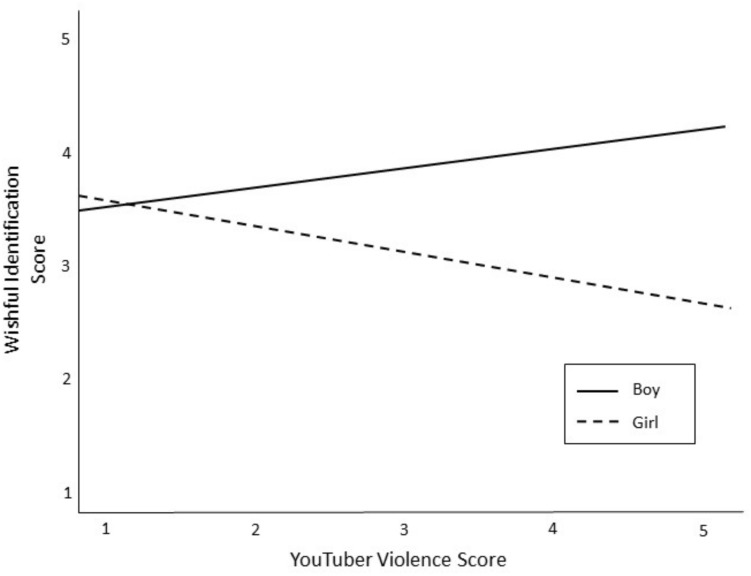
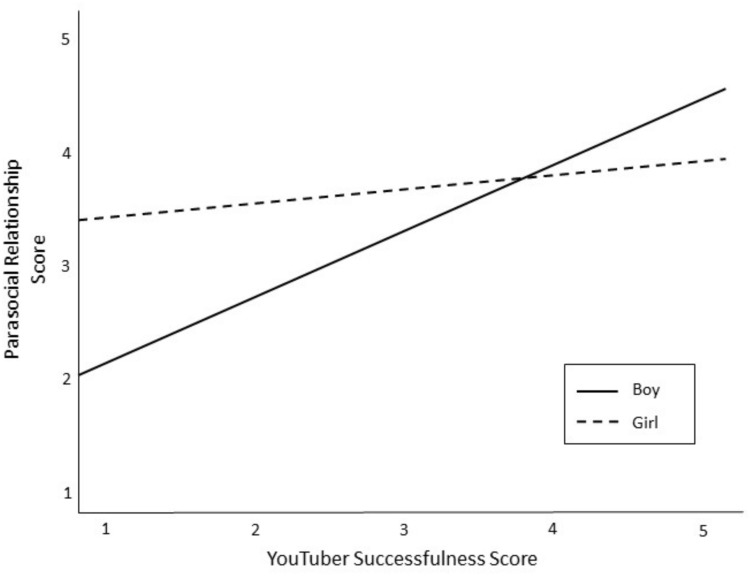
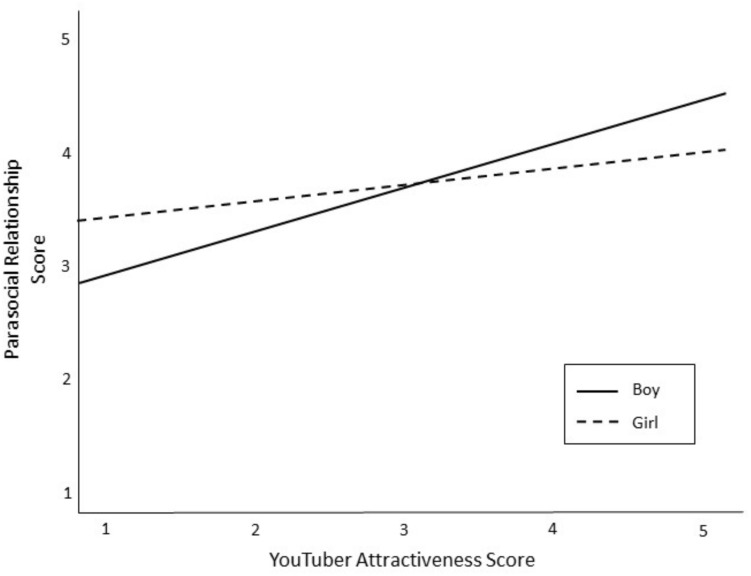
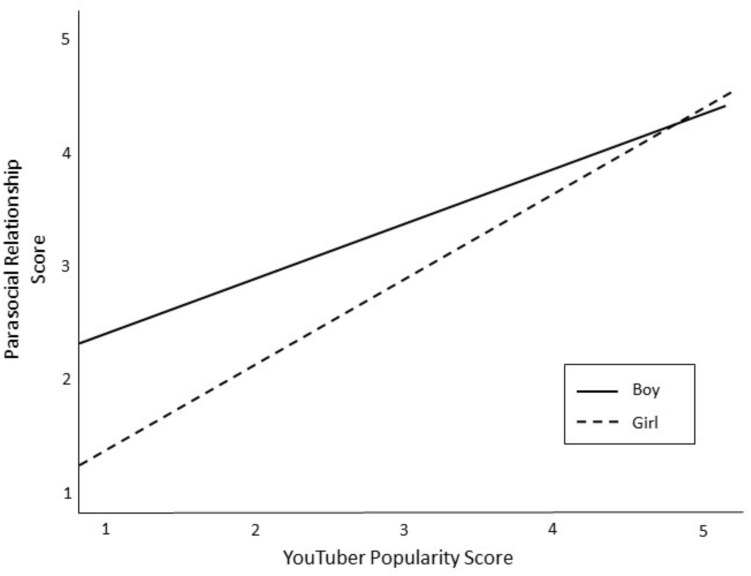
Children between the ages of 9 and 12 - commonly called tweens - are one of the fastest growing audiences for YouTube content. The current study explores how tweens are watching YouTube and the nature of their parasocial relationships and wishful identification with their favorite YouTube personalities. Results show that tweens identified gender-congruent YouTubers as their favorite. Moreover, tweens perceived male and female YouTubers to have different attributes. For instance, male YouTubers were rated as more violent than female YouTubers, and female YouTubers were rated as more attractive and popular than male YouTubers. Gender also played a role in attachment patterns. Tween boys' wishful identification was predicted by YouTubers who were violent and funny and their parasocial relationships were predicted by YouTubers who were funny, successful, and attractive. Meanwhile, tween girls' wishful identification was predicted by YouTubers' who were funny, and their parasocial relationships were predicted by YouTubers' who were funny and popular. Results are discussed in terms of gender socialization theory.
Overview
The claims and statistics of this paper haven’t been checked yet.
Run the check — free, no account needed. It reads the open-access text and checks the sources it cites.
Integrity signals
Registry
Cites
Statistics
Figures
Verification
Claims the paper makes
The claims and statistics of this paper haven’t been checked yet.
Run the check — free, no account needed. It reads the open-access text and checks the sources it cites.
Claims other papers make about this one
Each is checked against this paper’s own text: does it say what the citing paper says it does?
The source backs part of the claim, not all of it — or backs it for a different population, condition or comparison.
In the citing paper
“Developmental work shows that teens often turn to media figures or digital agents during identity formation and while seeking belonging, which makes them more susceptible to intense one-sided attachments [48, 126].”
From Understanding Teen Overreliance on AI Companion Chatbots Through Self-Reported Reddit Narratives (2026) · cites this paper as [126]
Experimental — accuracy not yet measured
Self-check
Percentages, sums and reported differences re-computed from the paper’s own numbers.
The self-check needs the paper’s full text.
Citations
Cites
Kytle, J., & Bandura, A. (1978) · Contemporary Sociology · doi:10.2307/2065952 · Cited by 25,422
Mass Communication and Para-Social Interaction
Horton, D., & Richard Wohl, R. (1956) · Psychiatry · doi:10.1080/00332747.1956.11023049 · Cited by 4,380
Gender schema theory: A cognitive account of sex typing.
Bem, S. L. (1981) · Psychological Review · doi:10.1037/0033-295x.88.4.354 · Cited by 3,861
Social Cognitive Theory of Mass Communication
Bandura, A. (2001) · Media Psychology · doi:10.1207/s1532785xmep0303_03 · Cited by 3,386
Defining Identification: A Theoretical Look at the Identification of Audiences With Media Characters
Cohen, J. (2001) · Mass Communication and Society · doi:10.1207/s15327825mcs0403_01 · Cited by 1,928 · cited 1×
“WI moves beyond merely liking a character – it is the psychological attachment between a viewer and a character that leads to imagining the self as being the character (Cohen, 2001).”
BackgroundParasocial Interaction: A Review of the Literature and a Model for Future Research
Giles, D. C. (2002) · Media Psychology · doi:10.1207/s1532785xmep0403_04 · Cited by 1,245
To See and Be Seen: Celebrity Practice on Twitter
Marwick, A., & boyd, D. (2011) · Convergence: The International Journal of Research into New Media Technologies · doi:10.1177/1354856510394539 · Cited by 1,179
Huesmann, L. R., Moise, J. F., Podolski, C.-L., & Eron, L. D. (2003) · Developmental Psychology · doi:10.1037//0012-1649.39.2.201 · Cited by 991
The common sense census: media use by tweens and teens
Rideout, V. (2015) · Cited by 901
Chung, S., & Cho, H. (2017) · Psychology & Marketing · doi:10.1002/mar.21001 · Cited by 809
Hoffner, C., & Buchanan, M. (2005) · Media Psychology · doi:10.1207/s1532785xmep0704_2 · Cited by 671
Funk, J. B., Baldacci, H. B., Pasold, T., & Baumgardner, J. (2004) · Journal of Adolescence · doi:10.1016/j.adolescence.2003.10.005 · Cited by 531
Identifying and Explaining the Relationship Between Parental Mediation and Children's Aggression
NATHANSON, A. I. (1999) · Communication Research · doi:10.1177/009365099026002002 · Cited by 522
Children's wishful identification and parasocial interaction with favorite television characters
Hoffner, C. (1996) · Journal of Broadcasting & Electronic Media · doi:10.1080/08838159609364360 · Cited by 520
THE DEVELOPMENT OF A MEASURE OF PERCEIVED HOMOPHILY IN INTERPERSONAL COMMUNICATION
MCCROSKEY, J. C., RICHMOND, V. P., & DALY, J. A. (1975) · Human Communication Research · doi:10.1111/j.1468-2958.1975.tb00281.x · Cited by 496
Konijn, E. A., Nije Bijvank, M., & Bushman, B. J. (2007) · Developmental Psychology · doi:10.1037/0012-1649.43.4.1038 · Cited by 372
Kim, J., & Song, H. (2016) · Computers in Human Behavior · doi:10.1016/j.chb.2016.03.083 · Cited by 355
When Good Friends Say Goodbye: A Parasocial Breakup Study
Eyal, K., & Cohen, J. (2006) · Journal of Broadcasting & Electronic Media · doi:10.1207/s15506878jobem5003_9 · Cited by 249
Turner, J. R. (1993) · Communication Quarterly · doi:10.1080/01463379309369904 · Cited by 233
Identifying with Television Characters
von Feilitzen, C., & Linné, O. (1975) · Journal of Communication · doi:10.1111/j.1460-2466.1975.tb00638.x · Cited by 199
Ward, L. M. (2004) · Developmental Psychology · doi:10.1037/0012-1649.40.2.284 · Cited by 183
Does interpersonal attraction to thin media personalities promote eating disorders?
Harrison, K. (1997) · Journal of Broadcasting & Electronic Media · doi:10.1080/08838159709364422 · Cited by 163
Research priorities for gender nonconforming/transgender youth
Olson-Kennedy, J., Cohen‐Kettenis, P. T., Kreukels, B. P. C., Meyer‐Bahlburg, H. F. L., Garofalo, R., Meyer, W. J., & Rosenthal, S. M. (2016) · Current Opinion in Endocrinology Diabetes and Obesity · doi:10.1097/med.0000000000000236 · Cited by 157
Gender Identity and Stereotyping in Early and Middle Childhood
Halim, M. L., & Ruble, D. N. (2009) · Springer eBooks · doi:10.1007/978-1-4419-1465-1_24 · Cited by 156
The 'WeTube' in YouTube – creating an online community through video sharing
Rotman, D., & Preece, J. (2010) · International Journal of Web Based Communities · doi:10.1504/ijwbc.2010.033755 · Cited by 148
Are funny people popular? An examination of humor orientation, loneliness, and social attraction
Wanzer, M. B., Booth‐Butterfield, M., & Booth‐Butterfield, S. (1996) · Communication Quarterly · doi:10.1080/01463379609369999 · Cited by 136
Folkvord, F., Bevelander, K. E., Rozendaal, E., & Hermans, R. C. J. (2019) · Young Consumers Insight and Ideas for Responsible Marketers · doi:10.1108/yc-12-2018-0896 · Cited by 135
Gender and Social‐Cognitive Development
Leaper, C. (2015) · Wiley eBooks · doi:10.1002/9781118963418.childpsy219 · Cited by 117
A Model and Measure of US Parents' Perceptions of Young Children's Parasocial Relationships
Bond, B. J., & Calvert, S. L. (2014) · Journal of Children and Media · doi:10.1080/17482798.2014.890948 · Cited by 110
Gola, A. A. H., Richards, M. N., Lauricella, A. R., & Calvert, S. L. (2013) · Media Psychology · doi:10.1080/15213269.2013.783774 · Cited by 95
Martínez, C., & Olsson, T. (2018) · Journal of Children and Media · doi:10.1080/17482798.2018.1517656 · Cited by 92
Bond, B. J., & Drogos, K. L. (2014) · Media Psychology · doi:10.1080/15213269.2013.872039 · Cited by 80
Self-citationCHILDREN'S PERCEPTIONS OF TELEVISION CHARACTERS
Reeves, B. B., & Greenberg, B. S. (1977) · Human Communication Research · doi:10.1111/j.1468-2958.1977.tb00510.x · Cited by 78
Humor as Camouflage of Televised Violence
Potter, W. J., & Warren, R. (1998) · Journal of Communication · doi:10.1093/joc/48.2.40 · Cited by 78
Rosaen, S. F., & Dibble, J. L. (2008) · Communication Research Reports · doi:10.1080/08824090802021806 · Cited by 74
Ramasubramanian, S., & Kornfield, S. (2012) · Journal of International and Intercultural Communication · doi:10.1080/17513057.2012.679291 · Cited by 66
Gender Differences in Adolescents’ Wishful Identification With Scientist Characters on Television
Steinke, J., Applegate, B. E., Lapinski, M. K., Ryan, L., & Long, M. (2011) · Science Communication · doi:10.1177/1075547011410250 · Cited by 59
CONTENT PATTERNS AND EFFECTS SURROUNDING SEX-ROLE STEREOTYPING ON TELEVISION AND FILM
Smith, S. L., & Granados, A. (2009) · Routledge eBooks · doi:10.4324/9780203877111-23 · Cited by 33
Lonial, S. C., & Auken, S. V. (1986) · Journal of Advertising · doi:10.1080/00913367.1986.10673032 · Cited by 31
Preschoolers Attraction to Media Characters
Wilson, B. J., & Drogos, K. L. (2007) · Cited by 9
Self-citation
Research works printed but not linked: 10
- Calvert, 2014, Children’s parasocial relationships, Media and the Well-Being of Children and Adolescents, 187
- Cohen, 2009, Mediated relationships and media effects: parasocial interaction and identification, The SAGE Handbook of Media Processes and Effects, 223
- Dwyer, 2018, YouTube Limits Relationship with Logan Paul After His Video Depicting Dead Body. NPR.
- 2019, LEGO Group Kicks Off Global Program to Inspire the Next Generation of Space Explorers as NASA Celebrates 50 Years of Moon Landing.
- Levine, 2009, Effects of Media on Eating Disorders and Body Image. In Media Effects., 506
- 2019, Children and Parents: Media Use and Attitudes Report 2018.
- Pierson, 2016, My Kids Don’t Have a YouTube Channel - But They Pretend They Do. Los Angeles Times.
- Rideout, 2019, The Common Sense Census: Media use by Tweens and Teens, 2019.
- Smith, 2018, Many Turn to YouTube for Children’s Content, News, How-To Lessons.
- Spangler, 2019, YouTube Now Has 2 Billion Monthly Users, Who Watch 250 Million Hours On TV Screens Daily.
Cited by
Understanding Teen Overreliance on AI Companion Chatbots Through Self-Reported Reddit Narratives
Namvarpour, M. (., Brofsky, B., Medina, J. Y., Akter, M., & Razi, A. (2026) · Proceedings of the 2026 CHI Conference on Human Factors in Computing Systems · doi:10.1145/3772318.3790597 · Cited by 24
Metadata
- Authors
- Tolbert, A. N., & Drogos, K. L.
- Venue
- Frontiers in Psychology
- Publisher
- Frontiers Media SA
- Published
- 2019-12-17
- Volume
- 10
- ISSN
- 1664-1078
- PMC
- PMC6928007
- Cited by
- 102
- References
- 40
About these checks
Registry, retraction, Cites and statistics results are computed, not judged, with one exception: a printed reference that no index lists is read once by a model before it counts as a citation error. Claims are extracted by a model and kept only when their quote appears verbatim in the text; each cited source is then checked, with a model’s help, for whether it says what the claim relies on. Those verdicts can be wrong — read the claim’s quote and the cited source before relying on one.
Statistics and arithmetic are recomputed, not judged.
Confidence bands are shown only for fields calibrated on our annotated test set. None is calibrated yet, so no band is shown.
What counts as a claim ›How we measure confidence ›How we check this ›
Are you an author, or do you see a problem with this page? Request a review
Data sources
Bibliographic data: Semantic Scholar, OpenAlex, Crossref.
Contains information from the Semantic Scholar Academic Graph Datasets, made available under the ODC Attribution License (ODC-BY 1.0).
Semantic Scholar’s data is described in: Kinney, R., et al. (2023). The Semantic Scholar Open Data Platform. arXiv:2301.10140.
