

Which outcome variables are associated with psychological inflexibility/flexibility for chronic pain patients? A three level meta-analysis
Open accessThe DOI matches its Crossref record; 91 of the 91 references it cites were found in a registry or an index.
Abstract
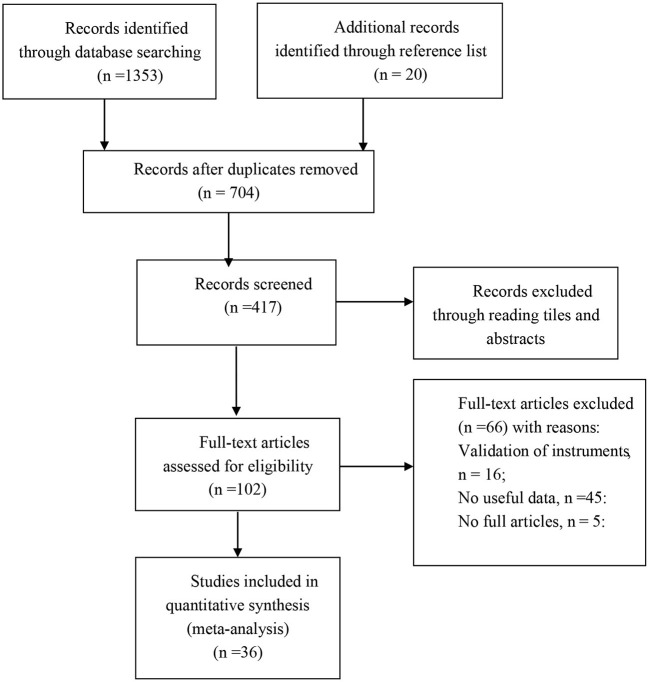
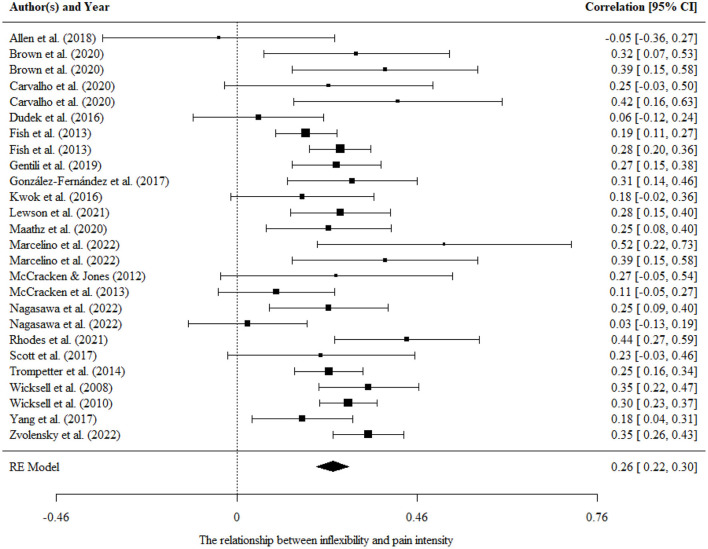
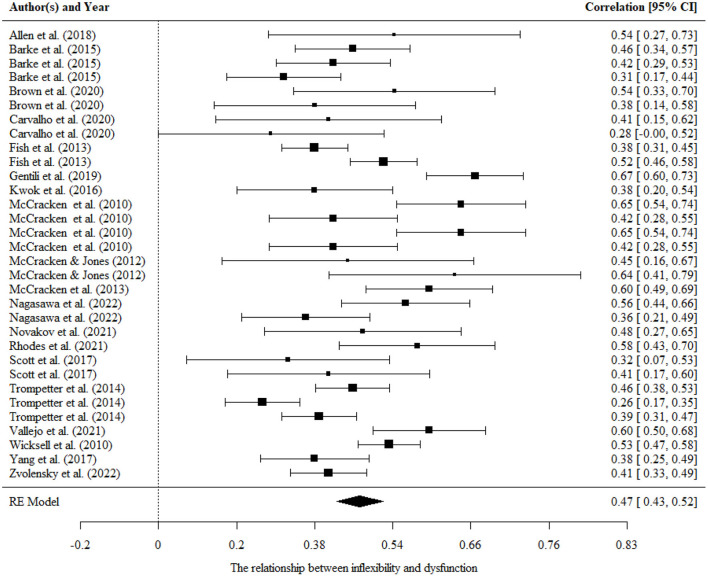
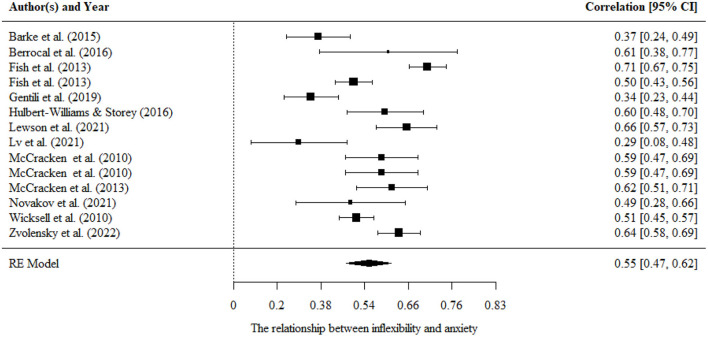
The psychological flexibility model can be seen as a basis for an integrated and progressive psychological approach to chronic pain management. Some researchers suggest that psychological flexibility and inflexibility represent distinct processes and constructs. This meta-analysis is the first to provide a summary estimate of the overall effect size for the relationship between psychological (in)flexibility and common outcomes among chronic pain patients. The research protocol was registered in the International Prospective Register of Systematic Reviews (PROSPERO, https://www.crd.york.ac.uk/PROSPERO/), registration number CRD42021285705. Four databases were searched (PsycINFO; PubMed; Web of Science, CINAHL) along with reference lists. Thirty-six cross-sectional studies were included (7,779 participants). Meta-analyses (random effects model) indicated a significant medium negative association between psychological flexibility and pain intensity or functional impairment. The present study also indicated a significant small to medium association between psychological inflexibility and pain intensity, a nearly large association between psychological inflexibility and functional impairment as well as the quality of life, and a large association between psychological inflexibility and anxiety/depression. Due to the limited number of included studies, the relationship between risk behavior and psychological inflexibility may not be significant. Types of countries and instruments measuring psychological inflexibility may explain part of the heterogeneity. These findings may carry significant implications for chronic pain patients regarding the potential relationship between psychological inflexibility or flexibility and these outcomes. It may consequently form the basis for more robust testing of causal and manipulable relationships. Systematic review registration: https://www.crd.york.ac.uk/PROSPERO/, identifier: CRD42021285705.
Overview
The claims and statistics of this paper haven’t been checked yet.
Free: it reads the open-access text and checks the first 5 claims that cite a source we can check. Create a free account to check every claim.
Integrity signals
Registry
Cites
Statistics
Figures
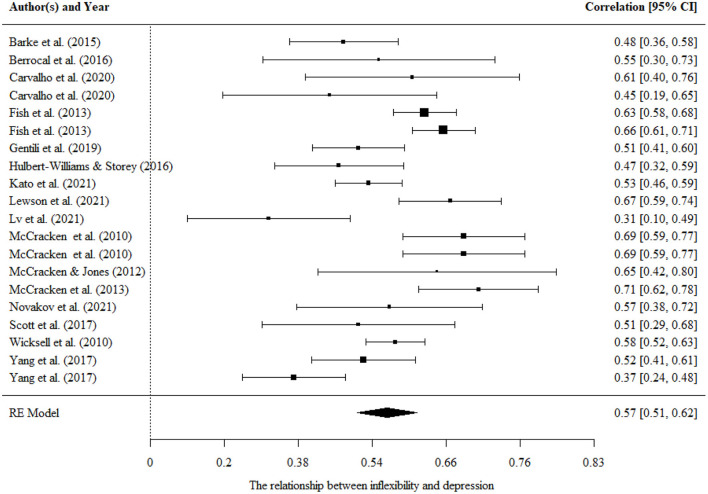
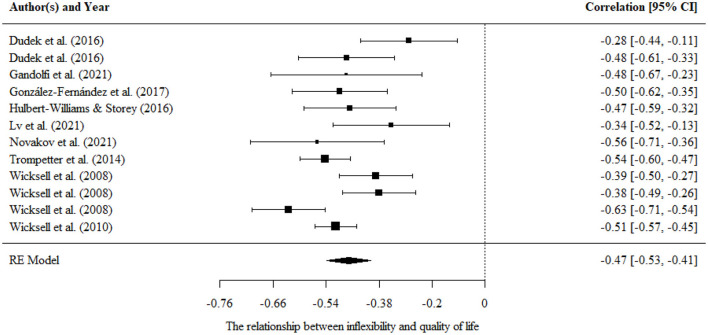
Verification
Claims the paper makes
The claims and statistics of this paper haven’t been checked yet.
Free: it reads the open-access text and checks the first 5 claims that cite a source we can check. Create a free account to check every claim.
Claims other papers make about this one
Each is checked against this paper’s own text: does it say what the citing paper says it does?
The source backs part of the claim, not all of it — or backs it for a different population, condition or comparison.
In the citing paper
“Existing meta-analyses suggest that psychological flexibility is positively related to individuals' mental health and adaptive behaviors and negatively related to individuals' negative emotional affect and problematic behaviors (37–39).”
From Psychological mechanism of acceptance and commitment therapy and rational emotive behavior therapy for treating hoarding: Evidence from randomized controlled trials (2023) · cites this paper as [39]
Experimental — accuracy not yet measured
Self-check
Percentages, sums and reported differences re-computed from the paper’s own numbers.
The self-check needs the paper’s full text.
Citations
Cites
R: A Language and Environment for Statistical Computing
R Core Team (2025) · doi:10.32614/r.manuals · Cited by 352,181
Conducting Meta-Analyses in R with the metafor Package
Viechtbauer, W. (2010) · Journal of Statistical Software · doi:10.18637/jss.v036.i03 · Cited by 20,464 · cited 2×
“2 (R Core Team, 2016) with the packages metafor and meta (Viechtbauer, 2010).”
MethodInfluentialDuval, S., & Tweedie, R. (2000) · Biometrics · doi:10.1111/j.0006-341x.2000.00455.x · Cited by 14,099 · cited 1×
“If publication bias were to be found, trim and fill analyses were performed to provide an adjusted average effect size (Duval and Tweedie, 2000) to correct.”
Method(2000) · Cited by 9,198
Acceptance and commitment therapy: model, processes and outcomes
Hayes, S. C., Luoma, J. B., Bond, F. W., Masuda, A., & Lillis, J. (2006) · Behaviour Research and Therapy · doi:10.1016/j.brat.2005.06.006 · Cited by 6,587 · cited 2×
“In contrast, the opposite six dimensions constitute psychological inflexibility: lack of present moment awareness, lack of contact with values, inaction, self-as-content, fusion, and experiential avoidance (Hayes et al., 2006; Ding and Zheng, 2022).”
BackgroundThe PRISMA 2020 statement: An updated guideline for reporting systematic reviews
Page, M. J., McKenzie, J. E., Bossuyt, P. M., Boutron, I., Hoffmann, T. C., Mulrow, C. D., Shamseer, L., Tetzlaff, J. M., Akl, E. A., Brennan, S. E., et al. (2021) · Journal of Clinical Epidemiology · doi:10.1016/j.jclinepi.2021.03.001 · Cited by 4,265 · cited 1×
“The meta-analysis was reported following the Preferred Reporting Items for Systematic Reviews and Meta-analyses (PRISMA) statement (Page et al., 2021).”
MethodBond, F. W., Hayes, S. C., Baer, R. A., Carpenter, K. M., Guenole, N., Orcutt, H. K., Waltz, T., & Zettle, R. D. (2011) · Behavior Therapy · doi:10.1016/j.beth.2011.03.007 · Cited by 3,950 · cited 14×
“Inflexibility AAQ-II Depression HADS-Depression 0.63 44.07 79.54 535 Inflexibility AAQ-II Anxiety HADS-anxiety 0.71 45.07 Inflexibility AAQ-II Dysfunction BPI-functional impairment 0.38 47.07 Inflexibility AAQ-II Pain intensity BPI 0.19 47.07 Inflexibility PIPS Depression HADS-Depression 0.66 44.07 Inflexibility PIPS…”
InfluentialDoing Meta-Analysis with R: A Hands-On Guide
Harrer, M., Cuijpers, P., Furukawa, T. A., & Ebert, D. D. (2021) · doi:10.1201/9781003107347 · Cited by 1,850 · cited 2×
“There was no significant difference between the two-level and three-level models, so we used the results of the twolevel model according to Occam’s razor (Harrer et al., 2021).”
MethodCheung, M. W.-L. (2014) · Psychological Methods · doi:10.1037/a0032968 · Cited by 1,342 · cited 2×
“This model can explore three sources of variance: sampling variance of the observed effect sizes (Level 1), the variance between effect sizes from the same study (Level 2), and variance between studies (Cheung, 2014; Ding and Zheng, 2022).”
BackgroundMethodFitting three-level meta-analytic models in R: A step-by-step tutorial
Assink, M., & Wibbelink, C. J. M. (2016) · The Quantitative Methods for Psychology · doi:10.20982/tqmp.12.3.p154 · Cited by 1,330 · cited 2×
“In addition, heterogeneity was also tested using the 75% rule (Assink and Carlijn, 2016), which contends that heterogeneity can be considered substantial if <75% of the overall variance can be attributed to level 1.”
BackgroundMethodMeta-analysis of psychological interventions for chronic low back pain
Hoffman, B. M., Papas, R. K., Chatkoff, D. K., & Kerns, R. D. (2007) · Health Psychology · doi:10.1037/0278-6133.26.1.1 · Cited by 844
Impact of psychological factors in the experience of pain
Linton, S. J., & Shaw, W. S. (2011) · Physical Therapy · doi:10.2522/ptj.20100330 · Cited by 819
(2016) · doi:10.3389/fpsyg · Cited by 801
Acceptance and Commitment Therapy as a Unified Model of Behavior Change
Hayes, S. C., Pistorello, J., & Levin, M. E. (2012) · The Counseling Psychologist · doi:10.1177/0011000012460836 · Cited by 718 · cited 1×
“Moreover, psychological flexibility is a malleable factor which is amenable to change through ACT (Hayes et al., 2012).”
BackgroundAcceptance and Commitment Therapy (ACT) for Chronic Pain: A Systematic Review and Meta-Analyses
Hughes, L. S., Clark, J., Colclough, J. A., Dale, E., & McMillan, D. (2017) · The Clinical Journal of Pain · doi:10.1097/ajp.0000000000000425 · Cited by 611 · cited 1×
“, no alternative intervention or treatment as usual) in terms of functioning, pain intensity, depression, and anxiety (Hughes et al., 2017; Trindade et al., 2021).”
BackgroundRolffs, J. L., Rogge, R. D., & Wilson, K. G. (2018) · Assessment · doi:10.1177/1073191116645905 · Cited by 504 · cited 1×
“Besides, some meta-analytic results suggested that the individual dimensions of flexibility and inflexibility might represent distinct (yet related) processes and constructs (Rolffs et al., 2018; Daks and Rogge, 2020).”
ResultFrancis, A. W., Dawson, D. L., & Golijani-Moghaddam, N. (2016) · Journal of Contextual Behavioral Science · doi:10.1016/j.jcbs.2016.05.003 · Cited by 496
Levin, M. E., Hildebrandt, M. J., Lillis, J., & Hayes, S. C. (2012) · Behavior Therapy · doi:10.1016/j.beth.2012.05.003 · Cited by 471
McCracken, L. M., & Morley, S. (2014) · The Journal of Pain · doi:10.1016/j.jpain.2013.10.014 · Cited by 464 · cited 2×
“The psychological flexibility model can be seen as a basis for an integrated and progressive psychological approach to chronic pain management (McCracken and Morley, 2014).”
Backgroundde Jong, K., Conijn, J. M., Gallagher, R. A. V., Reshetnikova, A. S., Heij, M., & Lutz, M. C. (2021) · Clinical Psychology Review · doi:10.1016/j.cpr.2021.102002 · Cited by 417 · cited 2×
“We included sampling variance as a moderator and re-estimated the three-level model, and the significant effect of sampling variance was considered as an indicator of publication bias (Kim et al., 2021).”
MethodCherry, K. M., Hoeven, E. V., Patterson, T. S., & Lumley, M. N. (2021) · Clinical Psychology Review · doi:10.1016/j.cpr.2021.101973 · Cited by 267
Understanding pain catastrophizing: Putting pieces together
Petrini, L., & Arendt-Nielsen, L. (2020) · Frontiers in Psychology · doi:10.3389/fpsyg.2020.603420 · Cited by 259
Kashdan, T. B., Disabato, D. J., Goodman, F. R., Doorley, J. D., & McKnight, P. E. (2020) · Psychological Assessment · doi:10.1037/pas0000834 · Cited by 240 · cited 1×
“, 2011) is more appropriate for measuring psychological inflexibility (Kashdan et al., 2020), while some studies use this to measure alternative constructs such as “psychological acceptance” or “experiential avoidance.”
BackgroundSchütze, R., Rees, C., Smith, A., Slater, H., Campbell, J. M., & O'Sullivan, P. (2018) · The Journal of Pain · doi:10.1016/j.jpain.2017.09.010 · Cited by 231
General psychological acceptance and chronic pain: There is more to accept than the pain itself
McCracken, L. M., & Zhao‐O'Brien, J. (2010) · European Journal of Pain · doi:10.1016/j.ejpain.2009.03.004 · Cited by 203
Chronic Pain, Stress, and the Dynamics of Affective Differentiation
Davis, M. C., Zautra, A. J., & Smith, B. W. (2004) · Journal of Personality · doi:10.1111/j.1467-6494.2004.00293.x · Cited by 200 · cited 1×
“Furthermore, individuals in a state of psychological distress experience more intense pain, leading to a reciprocal reinforcement between psychological distress and pain (Davis et al., 2004; Goldbart et al., 2020).”
BackgroundDaks, J. S., Peltz, J. S., & Rogge, R. D. (2020) · Journal of Contextual Behavioral Science · doi:10.1016/j.jcbs.2020.08.003 · Cited by 197 · cited 1×
“The opposite is psychological inflexibility which could be dysfunctional, ultimately contributing to and exacerbating psychopathology (Hayes et al., 2006; Daks et al., 2020; Fang and Ding, 2020).”
BackgroundWicksell, R. K., Renöfält, J., Olsson, G. L., Bond, F. W., & Melin, L. (2008) · European Journal of Pain · doi:10.1016/j.ejpain.2007.08.003 · Cited by 193 · cited 2×
“In chronic pain, psychological inflexibility is considered to be an important determinant of mood swings and ineffective living (Wicksell et al., 2008).”
BackgroundStockton, D., Kellett, S., Berrios, R., Sirois, F., Wilkinson, N., & Miles, G. (2019) · Behavioural and Cognitive Psychotherapy · doi:10.1017/s1352465818000553 · Cited by 193 · cited 1×
“, smoking cessation and risk medication-related behaviors) (Stockton et al., 2019).”
BackgroundMcCracken, L. M., & Velleman, S. C. (2010) · Pain · doi:10.1016/j.pain.2009.10.034 · Cited by 191 · cited 1×
“The previous study of patients with chronic pain has supported the role of the various components of psychological flexibility in their wellbeing and daily functioning (McCracken and Velleman, 2010), such as acceptance (Varallo et al.”
BackgroundCulture's Effects on Pain Assessment and Management
Narayan, M. C. (2010) · AJN, American Journal of Nursing · doi:10.1097/01.naj.0000370157.33223.6d · Cited by 176 · cited 1×
“This may be related to underlying cultural differences: stoicism is seen as a positive quality in Eastern cultures, whereas the inability to tolerate pain is seen as a sign of weakness (Narayan, 2010; Thong et al., 2017).”
BackgroundWicksell, R. K., Lekander, M., Sorjonen, K., & Olsson, G. L. (2010) · European Journal of Pain · doi:10.1016/j.ejpain.2009.11.015 · Cited by 176
A prospective analysis of acceptance of pain and values-based action in patients with chronic pain.
McCracken, L. M., & Vowles, K. E. (2008) · Health Psychology · doi:10.1037/0278-6133.27.2.215 · Cited by 168 · cited 1×
“, 2021, 2022), defusion, present moment, self-as-content (Nigol and Di Benedetto, 2020), committed action, and values (McCracken and Vowles, 2008).”
Chiang, J. J., Lam, P. H., Chen, E., & Miller, G. E. (2022) · Psychological Bulletin · doi:10.1037/bul0000351 · Cited by 152 · cited 1×
“Outliers were defined as deviations greater than three standard deviations from the mean (Chiang et al., 2022).”
BackgroundPsychological Flexibility as a Resilience Factor in Individuals with Chronic Pain
Gentili, C., Rickardsson, J., Zetterqvist, V., Simons, L. E., Lekander, M., & Wicksell, R. K. (2019) · Frontiers in Psychology · doi:10.3389/fpsyg.2019.02016 · Cited by 148
The Sickness Impact Profile as a Tool to Evaluate Functional Outcome in Trauma Patients
JURKOVICH, G. J., Mock, C., MacKenzie, E. J., Burgess, A. R., Cushing, B. M., deLateur, B. J., McAndrew, M. P., Morris, J. A., & Swiontkowski, M. F. (1995) · doi:10.1097/00005373-199510000-00001 · Cited by 146 · cited 1×
“, “physical disability” and “psychosocial disability” as subscales of functioning (Jurkovich et al., 1995).”
BackgroundTrindade, I. A., Guiomar, R., Carvalho, S. A., Duarte, J., Lapa, T., Menezes, P., Nogueira, M. R., Patrão, B., Pinto-Gouveia, J., & Castilho, P. (2021) · The Journal of Pain · doi:10.1016/j.jpain.2021.04.003 · Cited by 117 · cited 1×
“, no alternative intervention or treatment as usual) in terms of functioning, pain intensity, depression, and anxiety (Hughes et al., 2017; Trindade et al., 2021).”
BackgroundTrompetter, H. R., Bohlmeijer, E. T., Fox, J.-P., & Schreurs, K. M. G. (2015) · Behaviour Research and Therapy · doi:10.1016/j.brat.2015.09.001 · Cited by 112
Self-criticism and psychotherapy outcome: A systematic review and meta-analysis
Löw, C. A., Schauenburg, H., & Dinger, U. (2020) · Clinical Psychology Review · doi:10.1016/j.cpr.2019.101808 · Cited by 111
Quality of life in women with lipoedema: a contextual behavioral approach
Dudek, J. E., Białaszek, W., & Ostaszewski, P. (2016) · Quality of Life Research · doi:10.1007/s11136-015-1080-x · Cited by 108
McCracken, L. M., Barker, E., & Chilcot, J. (2014) · Journal of Behavioral Medicine · doi:10.1007/s10865-014-9570-9 · Cited by 103
Daks, J. S., & Rogge, R. D. (2020) · Journal of Contextual Behavioral Science · doi:10.1016/j.jcbs.2020.09.010 · Cited by 101 · cited 1×
“Besides, some meta-analytic results suggested that the individual dimensions of flexibility and inflexibility might represent distinct (yet related) processes and constructs (Rolffs et al., 2018; Daks and Rogge, 2020).”
ResultMcCracken, L. M., Williams, J. L., & Tang, N. K. Y. (2011) · Pain Medicine · doi:10.1111/j.1526-4637.2011.01115.x · Cited by 96
McCracken, L. M., Gutiérrez-Martínez, O., & Smyth, C. (2013) · Health Psychology · doi:10.1037/a0028093 · Cited by 87
Fang, S., & Ding, D. (2020) · Journal of Contextual Behavioral Science · doi:10.1016/j.jcbs.2020.04.005 · Cited by 81 · cited 1×
“The opposite is psychological inflexibility which could be dysfunctional, ultimately contributing to and exacerbating psychopathology (Hayes et al., 2006; Daks et al., 2020; Fang and Ding, 2020).”
BackgroundSelf-citationLiu, H., Li, T. W., Liang, L., & Hou, W. K. (2021) · Clinical Psychology Review · doi:10.1016/j.cpr.2021.102069 · Cited by 81
Brooks, J., Iwanaga, K., Chiu, C.-Y., Cotton, B. P., Deiches, J., Morrison, B., Moser, E., & Chan, F. (2017) · Psychology Health & Medicine · doi:10.1080/13548506.2017.1282161 · Cited by 74
Fish, R. A., Hogan, M. J., Morrison, T. G., Stewart, I., & McGuire, B. E. (2013) · The Journal of Pain · doi:10.1016/j.jpain.2012.11.004 · Cited by 73
McCracken, L. M., & Jones, R. (2012) · Pain Medicine · doi:10.1111/j.1526-4637.2012.01407.x · Cited by 63
Turk, D. C., & Burwinkle, T. M. (2005) · Professional Psychology: Research and Practice · doi:10.1037/0735-7028.36.6.602 · Cited by 57 · cited 1×
“, disability compensation, loss of productivity, sleep problems, and increased healthcare utilization) are also common (Turk and Burwinkle, 2005).”
BackgroundEmotional state and psychological flexibility in breast cancer survivors
González-Fernández, S., Fernández-Rodríguez, C., Mota-Alonso, M. J., García-Teijido, P., Pedrosa, I., & Pérez-Álvarez, M. (2017) · European Journal of Oncology Nursing · doi:10.1016/j.ejon.2017.08.006 · Cited by 57
Hulbert-Williams, N. J., & Storey, L. (2016) · Supportive Care in Cancer · doi:10.1007/s00520-015-3050-9 · Cited by 56
Dubey, N., Podder, P., & Pandey, D. (2020) · Frontiers in Psychology · doi:10.3389/fpsyg.2020.589365 · Cited by 56
Åkerblom, S., Perrin, S., Rivano Fischer, M., & McCracken, L. M. (2021) · Journal of Behavioral Medicine · doi:10.1007/s10865-020-00168-9 · Cited by 52 · cited 2×
“However, some studies suggest that global psychological flexibility may work better as a predictor of treatment outcome than measures of various components from the psychological flexibility model (Gilpin et al., 2019; Åkerblom et al., 2021).”
BackgroundThong, I. S. K., Tan, G., Lee, T. Y. C., & Jensen, M. P. (2016) · Pain Medicine · doi:10.1093/pm/pnw237 · Cited by 51
Gandolfi, M., Donisi, V., Battista, S., Picelli, A., Valè, N., Del Piccolo, L., & Smania, N. (2021) · International Journal of Environmental Research and Public Health · doi:10.3390/ijerph18063089 · Cited by 48
Varallo, G., Scarpina, F., Giusti, E. M., Suso-Ribera, C., Cattivelli, R., Guerrini Usubini, A., Capodaglio, P., & Castelnuovo, G. (2021) · Journal of Personalized Medicine · doi:10.3390/jpm11080810 · Cited by 48
Scott, W., Daly, A., Yu, L., & McCracken, L. M. (2017) · Pain Medicine · doi:10.1093/pm/pnw073 · Cited by 44
Si, H., Wang, C., Jin, Y., Tian, X., Qiao, X., Liu, N., & Dong, L. (2019) · Pain Management Nursing · doi:10.1016/j.pmn.2019.01.006 · Cited by 43 · cited 1×
“Chronic pain is one of the most common health conditions worldwide in the general population (Brooks et al., 2017; Si et al., 2019; Rhodes et al., 2021) and is a source of distress and disability that affects all aspects of a patient’s life.”
BackgroundGarner, E. V., & Golijani-Moghaddam, N. (2021) · Journal of Contextual Behavioral Science · doi:10.1016/j.jcbs.2021.06.007 · Cited by 41
Varallo, G., Suso‐Ribera, C., Ghiggia, A., Veneruso, M., Cattivelli, R., Usubini, A. G., Franceschini, C., Musetti, A., Plazzi, G., Fontana, J. M., et al. (2022) · Journal of Pain Research · doi:10.2147/jpr.s370718 · Cited by 41
Simpson, P. A., Mars, T., & Esteves, J. E. (2017) · International Journal of Osteopathic Medicine · doi:10.1016/j.ijosm.2017.03.001 · Cited by 38
Barke, A., Riecke, J., Rief, W., & Glombiewski, J. A. (2015) · BMC Musculoskeletal Disorders · doi:10.1186/s12891-015-0641-z · Cited by 37
Le modèle de la flexibilité psychologique : une approche nouvelle de la santé mentale
Dionne, F., Ngô, T.-L., & Blais, M.-C. (2014) · Santé mentale au Québec · doi:10.7202/1023992ar · Cited by 36 · cited 1×
“ACT targets psychological flexibility, which is the primary determinant of mental health and effective action (Dionne et al., 2013).”
BackgroundGilpin, H. R., Stahl, D. R., & McCracken, L. M. (2019) · European Journal of Pain · doi:10.1002/ejp.1310 · Cited by 36 · cited 2×
“However, some studies suggest that global psychological flexibility may work better as a predictor of treatment outcome than measures of various components from the psychological flexibility model (Gilpin et al., 2019; Åkerblom et al., 2021).”
BackgroundTrompetter, H. R., Bohlmeijer, E. T., van Baalen, B., Kleen, M., Köke, A., Reneman, M., & Schreurs, K. M. G. (2014) · European Journal of Psychological Assessment · doi:10.1027/1015-5759/a000191 · Cited by 35
Allen, T. M., Struemph, K. L., Toledo‐Tamula, M. A., Wolters, P. L., Baldwin, A. M., Widemann, B. C., & Martin, S. C. (2018) · Pain Practice · doi:10.1111/papr.12695 · Cited by 33 · cited 1×
“For example, one study (Allen et al., 2018) showed that the correlation coefficient of psychological flexibility and pain severity was not significant, while in another study, the effect size tended to be large (Vallejo et al.”
ResultPsychological flexibility and fear of recurrence in prostate cancer
Sevier‐Guy, L., Ferreira, N. B., Somerville, C. L., & Gillanders, D. T. (2021) · European Journal of Cancer Care · doi:10.1111/ecc.13483 · Cited by 32
On the contribution of psychological flexibility to predict adjustment to breast cancer
Berrocal Montiel, C., Rivas Moya, T., Venditti, F., & Bernini, O. (2016) · Psicothema · doi:10.7334/psicothema2015.271 · Cited by 28
Novakov, I. (2021) · Psychology, Health & Medicine · doi:10.1080/13548506.2020.1842896 · Cited by 28 · cited 1×
“…PIPS-avoidance Pain intensity PVAS 0.25 Inflexibility PIPS-fusion Dysfunction PDAS 0.36 Inflexibility PIPS-fusion Pain intensity PVAS 0.03 Novakov (2021) Serbia Inflexibility AAQ-II Depression DASS-21 (Depression) 0.57 58.36 100 64 Inflexibility AAQ-II Anxiety DASS-21 (Anxiety)…”
BackgroundInfluentialLewson, A. B., Johns, S. A., Krueger, E., Chinh, K., Kidwell, K. M., & Mosher, C. E. (2021) · Supportive Care in Cancer · doi:10.1007/s00520-020-05854-7 · Cited by 27
The “self” in pain: The role of psychological inflexibility in chronic pain adjustment
Kwok, S. S. W., Chan, E. C. C., Chen, P. P., & Lo, B. C. Y. (2016) · Journal of Behavioral Medicine · doi:10.1007/s10865-016-9750-x · Cited by 24
Effects of Coping Flexibility in Young Women on Depressive Symptoms during Chronic Pain
Kato, T., Kadota, M., & Shimoda, S. (2019) · Behavioral Medicine · doi:10.1080/08964289.2019.1708250 · Cited by 24
Lv, J., Wu, X., Hongyun, Y., & Cui, X. (2021) · Gland Surgery · doi:10.21037/gs-21-424 · Cited by 22
Ding, D., & Zheng, M. (2022) · Frontiers in Psychiatry · doi:10.3389/fpsyt.2022.893150 · Cited by 22 · cited 3×
“If the measurement was used only in one effect size, it would be coded as “other” to reduce the number of dummy variables (Ding and Zheng, 2022).”
BackgroundMethodSelf-citationBrown, S. L., Roush, J. F., Marshall, A. J., Jones, C., & Key, C. (2020) · International Journal of Behavioral Medicine · doi:10.1007/s12529-019-09838-8 · Cited by 21
The relationship between mindfulness facets, depression, pain severity and pain interference
Nigol, S. H., & Di Benedetto, M. (2020) · Psychology, Health & Medicine · doi:10.1080/13548506.2019.1619786 · Cited by 20
Hayes, S., Hogan, M., Dowd, H., Doherty, E., O'Higgins, S., Nic Gabhainn, S., MacNeela, P., Murphy, A. W., Kropmans, T., O'Neill, C., et al. (2014) · BMJ Open · doi:10.1136/bmjopen-2014-005092 · Cited by 19
Koppert, T. Y., Jacobs, J. W. G., Lumley, M. A., & Geenen, R. (2021) · Journal of Psychosomatic Research · doi:10.1016/j.jpsychores.2021.110655 · Cited by 19
Esteve, R., Marcos, E., Reyes-Pérez, Á., López-Martínez, A. E., & Ramírez-Maestre, C. (2021) · International Journal of Environmental Research and Public Health · doi:10.3390/ijerph18063054 · Cited by 17 · cited 2×
“Chronic pain entails economic costs higher than other diseases, such as heart disease, diabetes, and cancer (Esteve et al., 2021).”
BackgroundCarvalho, S. A., Pinto‐Gouveia, J., Gillanders, D. T., Lapa, T. A. S. C., Valentim, A., Santos, E., Paciência, J., & Castilho, P. (2020) · Scandinavian Journal of Pain · doi:10.1515/sjpain-2020-0082 · Cited by 17
Rhodes, A., Marks, D., Block-Lerner, J., & Lomauro, T. (2021) · Journal of Clinical Psychology in Medical Settings · doi:10.1007/s10880-020-09729-1 · Cited by 13 · cited 6×
“For the person with chronic pain, pain intensity has been the primary target for pain measurement (Rhodes et al., 2021).”
BackgroundInfluentialYang, S.-Y., McCracken, L. M., & Moss-Morris, R. E. (2016) · Pain Medicine · doi:10.1093/pm/pnw175 · Cited by 12
Goldbart, A., Bodner, E., & Shrira, A. (2020) · Psychology and Health · doi:10.1080/08870446.2020.1841766 · Cited by 12 · cited 3×
“For example, chronic physical pain is linked to various psychological distress, such as anxiety, stress, and depression (Goldbart et al., 2020; Esteve et al., 2021).”
BackgroundMethodPsychological Flexibility Is Key for Reducing the Severity and Impact of Fibromyalgia
Vallejo, M. Á., Vallejo-Slocker, L., Offenbächer, M., Hirsch, J. K., Toussaint, L. L., Kohls, N., Sirois, F. M., & Rivera, J. (2021) · International Journal of Environmental Research and Public Health · doi:10.3390/ijerph18147300 · Cited by 12 · cited 1×
“, 2018) showed that the correlation coefficient of psychological flexibility and pain severity was not significant, while in another study, the effect size tended to be large (Vallejo et al., 2021).”
ResultZvolensky, M. J., Smit, T., Rogers, A. H., Matoska, C. T., Garey, L., Viana, A. G., Lemaire, C. M., Nizio, P., Garza, M. J., Mayorga, N. A., et al. (2022) · Journal of Behavioral Medicine · doi:10.1007/s10865-022-00325-2 · Cited by 12
Maathz, P., Flink, I. K., Engman, L., & Ekdahl, J. (2020) · Pain Medicine · doi:10.1093/pm/pnaa042 · Cited by 11 · cited 2×
“, visiting friends, working, or playing sports) (Maathz et al., 2020; Rhodes et al., 2021).”
BackgroundMarcelino, V., Paço, M., Dias, A., Almeida, V., Rocha, J., Azevedo, R. M. S., Alves‐Ferreira, M., Lemos, C., & Pinho, T. (2022) · International Journal of Environmental Research and Public Health · doi:10.3390/ijerph19137974 · Cited by 5
Nagasawa, Y., Shibata, A., Ishii, K., & Oka, K. (2022) · Pain Management · doi:10.2217/pmt-2022-0011 · Cited by 3
Cary, M. A., Brittain, D. R., & Gyurcsik, N. C. (2017) · Psychology and Health · doi:10.1080/08870446.2017.1300258 · Cited by 2
Yotnuengnit, P., Boonyapaisancharoen, P., Jamin, N., Schulte-Göcking, H., Azad, S. C., Kraft, E., Piravej, K., & Leukert, J. (2021) · Journal of Back and Musculoskeletal Rehabilitation · doi:10.3233/bmr-210029 · Cited by 2
Research works printed but not linked: 1
- Higgins J. Thomas J. Chandler J. Cumpston M. Li T. Page M.. (2022). Cochrane Handbook for Systematic Reviews of Interventions version 6.3. Cochrane. Available online at: www.training.cochrane.org/handbook (accessed October 12, 2022).
Cited by
Psychological Flexibility, Chronic Pain, and Health
McCracken, L. M. (2024) · Annual Review of Psychology · doi:10.1146/annurev-psych-020223-124335 · Cited by 69
Fang, S., Ding, D., Ji, P., Huang, M., & Hu, K. (2022) · International Journal of Environmental Research and Public Health · doi:10.3390/ijerph192416519 · Cited by 33
“Our method took advantage of the ACT approach [50], as it specifically includes the cognitive defusion intervention, with special sessions to improve participants’ psychological flexibility (see below).”
MethodSelf-citationRajkumar, R. (2023) · Frontiers in Pain Research · doi:10.3389/fpain.2023.1189432 · Cited by 22
“The cognitive styles of individuals with these pain disorders also appear to differ from those of healthy controls in certain key aspects, such as reduced flexibility (37) and exaggerated ideas or beliefs regarding the causes or likely consequences of their pain (38).”
BackgroundFang, S., Ding, D., Zhang, R., & Huang, M. (2023) · Frontiers in Public Health · doi:10.3389/fpubh.2023.1084467 · Cited by 25
“Therefore, enhancing psychological flexibility is a primary mechanism by which evidencebased psychotherapies produce adaptive behavioral change and related outcomes (39, 109, 110).”
BackgroundSelf-citationOutlining a novel psychometric model of mental flexibility and affect dynamics
Borghesi, F., Chirico, A., & Cipresso, P. (2023) · Frontiers in Psychology · doi:10.3389/fpsyg.2023.1183316 · Cited by 18
Metadata
- Authors
- Fang, S., & Ding, D.
- Affiliations
- Anhui Normal University (CN)
- Corresponding author
- Fang, Shuanghu
- Venue
- Frontiers in Psychology
- Publisher
- Frontiers Media SA
- Published
- 2022-12-06
- Volume
- 13
- Pages
- 1069748-1069748
- ISSN
- 1664-1078 (ISSN-L)
- PMC
- PMC9767366
- OpenAlex
- W4311633706
- Cited by
- 34
- References
- 91
- Citations by year
- 2026: 5 · 2025: 12 · 2024: 8 · 2023: 8 · 2022: 1
- FWCI
- 1.21
- Type
- journal article
- Language
- en
- Open access
- gold
- doi.org
- Licence
- Locations
- Frontiers in Psychology (publishedVersion, cc-by)
- PubMed Central (publishedVersion, cc-by)
- PubMed (publishedVersion)
- DOAJ (DOAJ: Directory of Open Access Journals) (submittedVersion, cc-by-sa)
- Funders
- Anhui Provincial Department of Education
- Jilin Office of Philosophy and Social Science
- Topics
- Social Sciences › Psychology › Clinical Psychology › Mindfulness and Compassion Interventions
- Health Sciences › Health Professions › Physical Therapy, Sports Therapy and Rehabilitation › Musculoskeletal pain and rehabilitation
- Health Sciences › Medicine › Pediatrics, Perinatology and Child Health › Pediatric Pain Management Techniques
- Keywords
- psychological flexibility, psychological inflexibility, chronic pain, pain intensity, functional disability, quality of life, anxiety, depression, risk-taking, outcome variables
About these checks
Registry, retraction, Cites and statistics results are computed, not judged, with one exception: a printed reference that no index lists is read once by a model before it counts as a citation error. Claims are extracted by a model and kept only when their quote appears verbatim in the text; each cited source is then checked, with a model’s help, for whether it says what the claim relies on. Those verdicts can be wrong — read the claim’s quote and the cited source before relying on one.
Statistics and arithmetic are recomputed, not judged.
Confidence bands are shown only for fields calibrated on our annotated test set. None is calibrated yet, so no band is shown.
What counts as a claim ›How we measure confidence ›How we check this ›
Are you an author, or do you see a problem with this page? Request a review
Data sources
Bibliographic data: Semantic Scholar, OpenAlex, Crossref.
Contains information from the Semantic Scholar Academic Graph Datasets, made available under the ODC Attribution License (ODC-BY 1.0).
Semantic Scholar’s data is described in: Kinney, R., et al. (2023). The Semantic Scholar Open Data Platform. arXiv:2301.10140.
