

A Review of Biofilm Formation of Staphylococcus aureus and Its Regulation Mechanism
Open accessThe DOI matches its Crossref record; 186 of the 186 references it cites were found in a registry or an index; none of the 216 sources its claims cite is checked for support yet.
Abstract
Bacteria can form biofilms in natural and clinical environments on both biotic and abiotic surfaces. The bacterial aggregates embedded in biofilms are formed by their own produced extracellular matrix. Staphylococcus aureus (S. aureus) is one of the most common pathogens of biofilm infections. The formation of biofilm can protect bacteria from being attacked by the host immune system and antibiotics and thus bacteria can be persistent against external challenges. Therefore, clinical treatments for biofilm infections are currently encountering difficulty. To address this critical challenge, a new and effective treatment method needs to be developed. A comprehensive understanding of bacterial biofilm formation and regulation mechanisms may provide meaningful insights against antibiotic resistance due to bacterial biofilms. In this review, we discuss an overview of S. aureus biofilms including the formation process, structural and functional properties of biofilm matrix, and the mechanism regulating biofilm formation.
Overview
CoChat Summary
TL;DR
This narrative review summarizes the formation process, matrix components, and regulatory mechanisms of *Staphylococcus aureus* biofilms. It emphasizes that biofilms protect *S. aureus* from host immunity and antibiotics and that understanding their regulation may inform anti-biofilm strategies.
Key findings
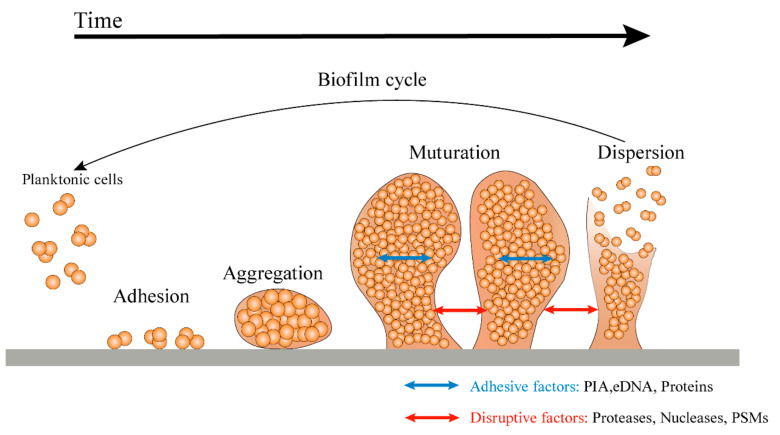
- *S. aureus* biofilm development is described in four stages—adhesion, aggregation, maturation, and dispersion—and the review states that more than 80% of chronic infections are mediated by bacterial biofilms.
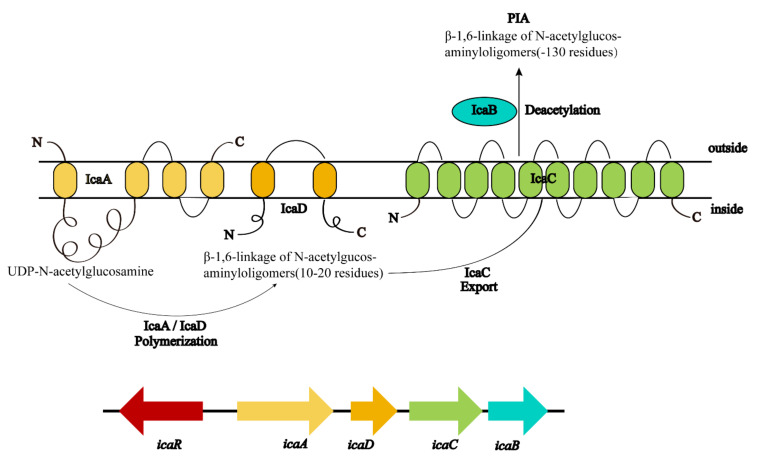
- Biofilm matrix formation involves PIA/PNAG via the *icaADBC* operon, protein-dependent adhesins such as Bap, FnBPs, ClfA/B, SasG, SasC, SdrC/D/E, and CAN, and eDNA regulated by *cidA* and *lrgAB*; Bap contains 2276 amino acids, and PIA oligomers produced by *icaAD* reach a maximum length of 20 residues unless *icaC* is co-expressed.
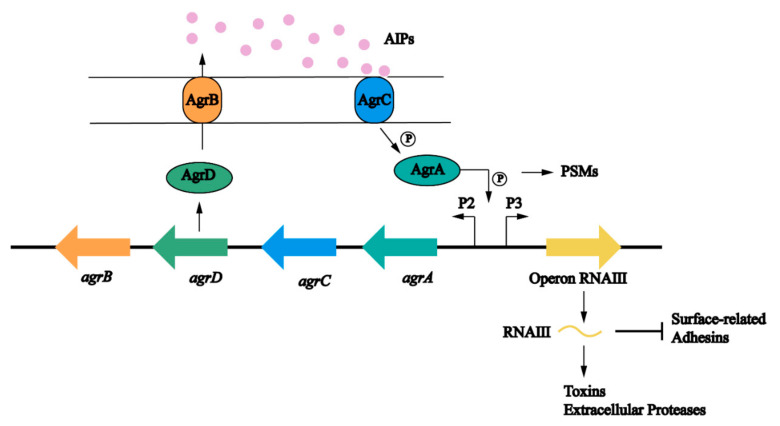
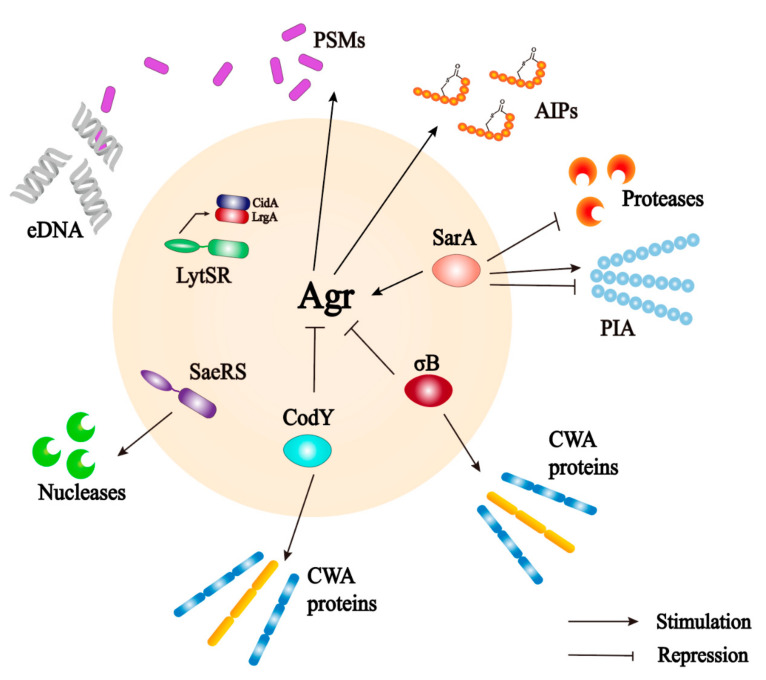
- Regulation is multi-layered: the Agr quorum-sensing system upregulates RNAIII and PSMs and promotes biofilm dispersion, while LuxS/AI-2 reduces PIA; SarA, σB, CodY, ica repressors (IcaR, TcaR, Rob), two-component systems (SrrAB, SaeRS, LytSR, ArlRS), c-di-AMP, and sRNAs also modulate biofilm formation.
- Clinically, biofilms protect bacteria from the immune system and antibiotics, often requiring long-term high-dose antibiotic therapy and increasing risks of antibiotic resistance and drug toxicity.
Methods
- Design: narrative review of *S. aureus* biofilm formation and regulation; no primary experimental data are presented.
- Data or sample: not stated in the paper; the review synthesizes previously published literature rather than analyzing a new sample.
- Main analysis: thematic synthesis of the biofilm life cycle, matrix components, and regulatory systems, including quorum sensing, global regulators, two-component systems, second messengers, and sRNAs.
Limitations
- The paper states that researchers have not yet understood the synergy between different regulatory networks, that biofilm regulation is dynamic across growth times and environments, and that little is known about whether in vivo regulation matches in vitro regulation.
- The paper states that results from reference strains may differ from clinical isolates and that mixed-species biofilms with other bacteria and/or fungi are important but not included in the review’s scope.
- Evident from the text: no systematic search strategy, inclusion criteria, or quantitative synthesis is described; as a narrative review, it does not provide primary experimental validation.
Model-written summary. Check it against the paper before relying on it.
Integrity signals
Registry
Cites
Statistics
Figures
Verification
Claims the paper makes
0 Valid · 1 Not valid · 183 Not checked · 5 Own results and interpretations
None of the sources cited for this claim have been checked yet.
In the paper
“The product of the icaC gene is a transmembrane protein that mediates the transfer of the newly synthesized PIA to the cell surface [46].”
§ A Review of Biofilm Formation of Staphylococcus aureus and Its Regulation Mechanism > 3. Biofilm Formation Mechanism > 3.1. Polysaccharide Intercellular Adhesion(PIA)-Dependent Mechanism
What the sources say
- Not checked yetcites [46] Atkin K.E. MacDonald S.J. Brentnall A.S. Potts J.R. Thomas G.H. A different path: Revealing the function of staphylococcal proteins in biofilm formation FEBS Lett. 2014 588 1869 1872 10.1016/j.febslet.2014.04.002 24735724 source
Checked before — its earlier verdict is held back until a new check runs.
plainstates a cause- Asserted: passes — The authors put it forward as true.
- Checkable: passes — It can be checked against evidence.
- Load-bearing: unclear — It is unclear whether the paper’s conclusions depend on it.
- Based: passes — The paper gives a reason why it holds.
- Not checked yet
None of the sources cited for this claim have been checked yet.
In the paper
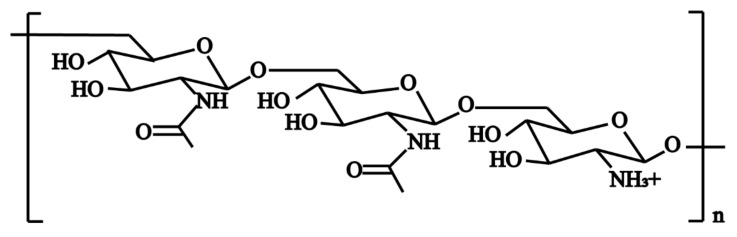
“Among the polymeric molecules involved in ECM, polysaccharide intercellular adhesion (PIA) (also known as poly-N-acetylglucosamine; PNAG) is an important factor in S. aureus biofilm formation [41].”
§ A Review of Biofilm Formation of Staphylococcus aureus and Its Regulation Mechanism > 3. Biofilm Formation Mechanism > 3.1. Polysaccharide Intercellular Adhesion(PIA)-Dependent Mechanism
What the sources say
- Not checked yetcites [41] Nguyen H.T. Nguyen T.H. Otto M. The staphylococcal exopolysaccharide PIA—Biosynthesis and role in biofilm formation, colonization, and infection Comput. Struct. Biotechnol. J. 2020 18 3324 3334 10.1016/j.csbj.2020.10.027 33240473 PMC7674160 source
Checked before — its earlier verdict is held back until a new check runs.
plainstates an association- Asserted: passes — The authors put it forward as true.
- Checkable: passes — It can be checked against evidence.
- Load-bearing: passes — The paper’s conclusions depend on it.
- Based: passes — The paper gives a reason why it holds.
- Not checked yet
None of the sources cited for this claim have been checked yet.
In the paper
“During the aggregation stage, bacteria regulate biofilm formation by sensing environmental signals that trigger regulatory networks and intracellular signal molecules.”
§ A Review of Biofilm Formation of Staphylococcus aureus and Its Regulation Mechanism > 2. Biofilm Formation Process
What the sources say
- Not checked yetcites [25] Mangwani N. Kumari S. Das S. Bacterial biofilms and quorum sensing: Fidelity in bioremediation technology Biotechnology and Genetic Engineering Reviews Mayes S. Harding S.E. Biotechnology & Genetic Engineering Reviews Taylor & Francis Ltd. Abingdon, UK 2016 Volume 32 43 73 27320224 source
Checked before — its earlier verdict is held back until a new check runs.
plainstates a cause- Asserted: passes — The authors put it forward as true.
- Checkable: passes — It can be checked against evidence.
- Load-bearing: unclear — It is unclear whether the paper’s conclusions depend on it.
- Based: passes — The paper gives a reason why it holds.
- Not checked yet
In the paper
“During the growth and development of biofilm, surfactant phenol-soluble modulins (PSMs) are a key effector molecule for the dispersion and transmission of S. aureus biofilms [35].”
§ A Review of Biofilm Formation of Staphylococcus aureus and Its Regulation Mechanism > 2. Biofilm Formation Process
What the sources say
- Not checked — no full text of the sourcecites [35] Periasamy S. Joo H.-S. Duong A.C. Bach T.-H.L. Tan V.Y. Chatterjee S.S. Cheung G.Y.C. Otto M. How Staphylococcus aureus biofilms develop their characteristic structure Proc. Natl. Acad. Sci. USA 2012 109 1281 1286 10.1073/pnas.1115006109 22232686 PMC3268330 source
plainstates a cause- Asserted: passes — The authors put it forward as true.
- Checkable: passes — It can be checked against evidence.
- Load-bearing: unclear — It is unclear whether the paper’s conclusions depend on it.
- Based: passes — The paper gives a reason why it holds.
None of the sources cited for this claim have been checked yet.
In the paper
“In S. aureus, α-PSM1 and α-PSM4 peptides are the main amyloid proteins involved in the α-PSMs fibril production [39].”
§ A Review of Biofilm Formation of Staphylococcus aureus and Its Regulation Mechanism > 2. Biofilm Formation Process
What the sources say
- Not checked yetcites [39] Marinelli P. Pallares I. Navarro S. Ventura S. Dissecting the contribution of Staphylococcus aureus α-phenol-soluble modulins to biofilm amyloid structure Sci. Rep. 2016 6 34552 10.1038/srep34552 27708403 PMC5052566 source
Checked before — its earlier verdict is held back until a new check runs.
plainstates an association- Asserted: passes — The authors put it forward as true.
- Checkable: passes — It can be checked against evidence.
- Load-bearing: unclear — It is unclear whether the paper’s conclusions depend on it.
- Based: passes — The paper gives a reason why it holds.
- Not checked yet
82 more claims
Create a free account to see all 189 claims and to verify the 215 references still open.
- It may state two separate claims as one. 95
- Probably not a substantial claim. 10
Claims other papers make about this one
Each is checked against this paper’s own text: does it say what the citing paper says it does?
In the citing paper
“Furthermore, its ability to form robust biofilms on medical devices and prosthetic implants enhances persistence by shielding bacteria from antimicrobial agents and host defenses, driving chronic and recurrent infections [6].”
From Staphylococcus aureus: A Review of the Pathogenesis and Virulence Mechanisms (2025) · cites this paper as [6]
In the citing paper
“Biofilm-forming strains are 3–5 times more likely to persist in the throat, complicating eradication efforts [6].”
From Staphylococcus aureus: A Review of the Pathogenesis and Virulence Mechanisms (2025) · cites this paper as [6]
In the citing paper
“Regarding pathogenesis, the attachment of S. aureus to the tissues of the host through MSCRAMMs facilitates the formation of biofilms, a critical factor in chronic infections [6,85].”
From Staphylococcus aureus: A Review of the Pathogenesis and Virulence Mechanisms (2025) · cites this paper as [6]
In the citing paper
“In numerous Gram-positive bacteria, such as S. aureus, biofilm dispersal is governed by the Agr QS system, which monitors bacterial cell density.”
From Biofilm Resilience: Molecular Mechanisms Driving Antibiotic Resistance in Clinical Contexts (2025) · cites this paper as [90]
In the citing paper
“These diminutive, amphipathic peptides exhibit cytotoxic properties and facilitate the disintegration of the biofilm matrix, hence enhancing the liberation of bacteria from the biofilm into the surrounding milieu [90,91].”
From Biofilm Resilience: Molecular Mechanisms Driving Antibiotic Resistance in Clinical Contexts (2025) · cites this paper as [90]
1 more claim about this paper
Create a free account to see every claim other papers make about this one.
Self-check
Percentages, sums and reported differences re-computed from the paper’s own numbers.
Each contradiction between two passages listed here was confirmed by an independent check.
Rated minor: it would not touch a result — a value no result rests on, a p-value that stays on the same side of the significance level, or a conflict that is clerical, resolved elsewhere in the paper, or outside its own findings.
In the paper
§ A Review of Biofilm Formation of Staphylococcus aureus and Its Regulation Mechanism > 4. Regulation Mechanism of Biofilm Formation > 4.2. The Global Response Regulator
“in the icaR deletion mutant, the transcript level of icaA gene was extremely low and the amount of biofilm formation was low”
§ A Review of Biofilm Formation of Staphylococcus aureus and Its Regulation Mechanism > 4. Regulation Mechanism of Biofilm Formation > 4.3. ica Operon
“IcaR is a DNA-binding protein that negatively regulates icaADBC expression by binding to the upstream region of the icaA start codon [127].”
Citations
Cites
Bacterial biofilms: from the Natural environment to infectious diseases
Hall-Stoodley, L., Costerton, J. W., & Stoodley, P. (2004) · Nature Reviews Microbiology · doi:10.1038/nrmicro821 · Cited by 7,143
Staphylococcus aureus Infections
Lowy, F. D. (1998) · New England Journal of Medicine · doi:10.1056/nejm199808203390806 · Cited by 6,005
Biofilm formation as microbial development
O'Toole, G., Kaplan, H. B., & Kolter, R. (2000) · Annual Review of Microbiology · doi:10.1146/annurev.micro.54.1.49 · Cited by 3,571
Molecular mechanisms of biofilm-based antibiotic resistance and tolerance in pathogenic bacteria
Hall, C. W., & Mah, T.-F. (2017) · FEMS Microbiology Reviews · doi:10.1093/femsre/fux010 · Cited by 2,031
Bacterial biofilm and associated infections
Jamal, M., Ahmad, W., Andleeb, S., Jalil, F., Imran, M., Nawaz, M. A., Hussain, T., Ali, M., Rafiq, M., & Kamil, M. A. (2018) · Journal of the Chinese Medical Association · doi:10.1016/j.jcma.2017.07.012 · Cited by 1,642
Principles of c-di-GMP signalling in bacteria
Hengge, R. (2009) · Nature Reviews Microbiology · doi:10.1038/nrmicro2109 · Cited by 1,578
Biofilm Matrixome: Extracellular Components in Structured Microbial Communities
Karygianni, L., Ren, Z., Koo, H., & Thurnheer, T. (2020) · Trends in Microbiology · doi:10.1016/j.tim.2020.03.016 · Cited by 1,487
Mechanisms of antibiotic resistance in bacterial biofilms
Stewart, P. S. (2002) · International Journal of Medical Microbiology · doi:10.1078/1438-4221-00196 · Cited by 1,385
Bacterial biofilm formation on implantable devices and approaches to its treatment and prevention
Khatoon, Z., McTiernan, C. D., Suuronen, E. J., Mah, T.-F., & Alarcon, E. I. (2018) · Heliyon · doi:10.1016/j.heliyon.2018.e01067 · Cited by 1,187
Regulation by Small RNAs in Bacteria: Expanding Frontiers
Storz, G., Vogel, J., & Wassarman, K. M. (2011) · Molecular Cell · doi:10.1016/j.molcel.2011.08.022 · Cited by 1,177
Cited by
Biofilm Resilience: Molecular Mechanisms Driving Antibiotic Resistance in Clinical Contexts
Almatroudi, A. (2025) · Biology · doi:10.3390/biology14020165 · Cited by 303
“Increased or decreased temperatures may induce stress in microbial cells, promoting biofilm formation as a defensive mechanism against thermal stressors.”
Staphylococcus aureus: A Review of the Pathogenesis and Virulence Mechanisms
Touaitia, R., Mairi, A., Ibrahim, N. A., Basher, N. S., Idres, T., & Touati, A. (2025) · Antibiotics · doi:10.3390/antibiotics14050470 · Cited by 273
“Biofilm-forming strains are 3–5 times more likely to persist in the throat, complicating eradication efforts [6].”
Kaushik, A., Kest, H., Sood, M., Steussy, B., Thieman, C., & Gupta, S. (2024) · Pathogens · doi:10.3390/pathogens13010076 · Cited by 199
Wu, X., Wang, H., Xiong, J., Yang, G.-X., Hu, J.-F., Zhu, Q., & Chen, Z. (2024) · Biofilm · doi:10.1016/j.bioflm.2023.100175 · Cited by 145
Biofilm formation in food industries: Challenges and control strategies for food safety
Elafify, M., Liao, X., Feng, J., Ahn, J., & Ding, T. (2024) · Food Research International · doi:10.1016/j.foodres.2024.114650 · Cited by 94
D’Souza, F., Dinesh, S., & Sharma, S. (2024) · Archives of Microbiology · doi:10.1007/s00203-023-03802-7 · Cited by 83
Biofilm and Antimicrobial Resistance: Mechanisms, Implications, and Emerging Solutions
Singh, B., Dahiya, M., Kumar, V., Ayyagari, A., Chaudhari, D. N., & Ahire, J. J. (2025) · Microbiology Research · doi:10.3390/microbiolres16080183 · Cited by 91
Wang, Q., Liu, C., An, J., Liu, J., Wang, Y., & Cai, Y. (2025) · Frontiers in Endocrinology · doi:10.3389/fendo.2025.1657928 · Cited by 103
A genetic regulatory see-saw of biofilm and virulence in MRSA pathogenesis
Patel, H., & Rawat, S. (2023) · Frontiers in Microbiology · doi:10.3389/fmicb.2023.1204428 · Cited by 83
Farrukh, M., Munawar, A., Nawaz, Z., Hussain, N., Hafeez, A. B., & Szweda, P. (2025) · Food Science and Biotechnology · doi:10.1007/s10068-024-01767-x · Cited by 85
Kashi, M., Noei, M., Chegini, Z., & Shariati, A. (2024) · Frontiers in Pharmacology · doi:10.3389/fphar.2024.1491363 · Cited by 76
Dhlamini, K. S., Selepe, C. T., Ramalapa, B., Tshweu, L. L., & Ray, S. S. (2024) · Macromolecular Materials and Engineering · doi:10.1002/mame.202400018 · Cited by 72
Song, M., Tang, Q., Ding, Y., Tan, P., Zhang, Y., Wang, T., Zhou, C., Xu, S., Lyu, M., Bai, Y., et al. (2024) · Journal of Animal Science and Biotechnology/Journal of animal science and biotechnology · doi:10.1186/s40104-024-01007-6 · Cited by 78
Brandquist, N. D., & Kielian, T. (2025) · npj Biofilms and Microbiomes · doi:10.1038/s41522-025-00782-y · Cited by 63
Wang, D., Wang, L., Liu, Q., & Zhao, Y. (2025) · Animals and Zoonoses · doi:10.1016/j.azn.2024.11.003 · Cited by 57
Anti-Biofilm Strategies: A Focused Review on Innovative Approaches
Iaconis, A., Plano, L. M. D., Caccamo, A., Franco, D., & Conoci, S. (2024) · Microorganisms · doi:10.3390/microorganisms12040639 · Cited by 52
Escaping the ESKAPE pathogens: A review on antibiofilm potential of nanoparticles
Sarkar, S., Roy, A., Mitra, R., Kundu, S., Banerjee, P., Chowdhury, A. A., & Ghosh, S. (2024) · Microbial Pathogenesis · doi:10.1016/j.micpath.2024.106842 · Cited by 44
Haldhar, R., Raorane, C. J., Bachhar, V., Katin, K. P., Berdimurodov, E. T., Shazly, G. A., & Kim, S. (2025) · Sustainable materials and technologies · doi:10.1016/j.susmat.2025.e01378 · Cited by 69
Touati, A., Ibrahim, N. A., & Idres, T. (2025) · Pathogens · doi:10.3390/pathogens14040386 · Cited by 45
Vadakkan, K., Sathishkumar, K., Urumbil, S. K., Ponnenkunnathu, S. G., Ngangbam, A. K., & Nongmaithem, B. D. (2024) · Bioorganic Chemistry · doi:10.1016/j.bioorg.2024.107465 · Cited by 35
Peng, Q., Tang, X., Dong, W., Zhi, Z., Zhong, T., Lin, S., Ye, J., Qian, X., Fu, C., & Yuan, W. (2023) · RSC Advances · doi:10.1039/d3ra02711b · Cited by 37
Self-citationAsokan, S., Pandey, R. K., Jalil, M. A., Alhussen, S. K. A., Yousif, S. I. A., Abbas, R. K., Vijayan, S., Rajeswary, D., Jacob, T., & Atiyah, M. M. (2026) · The Microbe · doi:10.1016/j.microb.2026.100712 · Cited by 39
Single-atom nanozymes for antibacterial applications
Zhang, S., Ruan, W., & Guan, J. (2024) · Food Chemistry · doi:10.1016/j.foodchem.2024.140094 · Cited by 32
Chen, Y., Wu, X., Xu, C., Huang, J., Zhang, L., Qiu, P., Zheng, D., Chen, W., & Zhang, S. (2025) · International Journal of Molecular Medicine · doi:10.3892/ijmm.2025.5614 · Cited by 37
Crosstalk involving two-component systems in Staphylococcus aureus signaling networks
Ali, L., & Aziz, M. H. A. (2024) · Journal of Bacteriology · doi:10.1128/jb.00418-23 · Cited by 32
Lerdsittikul, V., Apiratwarrasakul, S., Atithep, T., Withatanung, P., Indrawattana, N., Pumirat, P., Chaiwattanarungruengpaisan, S., & Thongdee, M. (2024) · Scientific Reports · doi:10.1038/s41598-024-59903-w · Cited by 32
Chen, Y., Lin, Y., Liu, Z., Zhang, Y., Hu, Z., Ai, M., Shen, Y., Lian, D., Wang, C., Liu, X., et al. (2025) · Materials Today Bio · doi:10.1016/j.mtbio.2025.101856 · Cited by 44
The Pathogenicity Mechanisms of Staphylococcus aureus
Młynarczyk-Bonikowska, B., & Rudnicka, L. (2025) · International Journal of Molecular Sciences · doi:10.3390/ijms262411803 · Cited by 29
Xu, Z., Li, Y., Xue, L., Xu, A., Yu, G., Soteyome, T., Yuan, L., Li, X., & Liu, J. (2025) · Food Research International · doi:10.1016/j.foodres.2025.116386 · Cited by 28
Thacharodi, A., Hassan, S., Ahmed, T., Acharya, G., Blacknell, N.-M. G., Singh, P., Pal, S., Saraswathi, A., Kosuru, B. R., Sofi, M. A., et al. (2025) · iScience · doi:10.1016/j.isci.2025.114376 · Cited by 34
Chew, C. H., Yeo, C. C., Hamzah, A. M. C., Al-Trad, E. I., Jones, S. U., Chua, K. H., & Puah, S. M. (2023) · Diagnostics · doi:10.3390/diagnostics13061050 · Cited by 31
Zamudio-Chávez, L., Suesca, E., López, G.-D., Carazzone, C., Manrique-Moreno, M., & Leidy, C. (2023) · International Journal of Molecular Sciences · doi:10.3390/ijms241914906 · Cited by 27
Yu, J., Han, W., Xu, Y., Shen, L., Zhao, H., Zhang, J., Xiao, Y., Guo, Y., & Yu, F. (2024) · BMC Microbiology · doi:10.1186/s12866-024-03380-8 · Cited by 32
Ravaioli, S., Donno, A. D., Bottau, G., Campoccia, D., Maso, A., Dolzani, P., Balaji, P., Pegreffi, F., Daglia, M., & Arciola, C. R. (2024) · Antibiotics · doi:10.3390/antibiotics13100972 · Cited by 24
Staphylococcus aureus: Antimicrobial resistance, quorum sensing, and antibiofilm approaches
Ong, C. J. N., Elesho, O. E., Bramwell, B. B., Cabuhat, K. S. P., Bacalzo, G. D., Nuevo, J. J. M., & Fortaleza, J. A. G. (2025) · European Journal of Microbiology and Immunology · doi:10.1556/1886.2025.00050 · Cited by 24
Antimicrobial Biomaterials Based on Physical and Physicochemical Action
Nowotnick, A. G., Xi, Z., Jin, Z., Khalatbarizamanpoor, S., Brauer, D. S., Löffler, B., & Jandt, K. D. (2024) · Advanced Healthcare Materials · doi:10.1002/adhm.202402001 · Cited by 28
Aniba, R., Dihmane, A., Raqraq, H., Ressmi, A., Nayme, K., Timinouni, M., Berrougui, H., Khalil, A., & Barguigua, A. (2023) · The Microbe · doi:10.1016/j.microb.2023.100029 · Cited by 29
Staphylococcus aureus Biofilm-Associated Infections: Have We Found a Clinically Relevant Target?
Beenken, K. E., & Smeltzer, M. S. (2025) · Microorganisms · doi:10.3390/microorganisms13040852 · Cited by 26
Chieffi, D., Fanelli, F., & Fusco, V. (2023) · Frontiers in Food Science and Technology · doi:10.3389/frfst.2023.1165871 · Cited by 22
Alisaac, A. (2025) · PLoS ONE · doi:10.1371/journal.pone.0325830 · Cited by 24
Biofilm-dispersal patterns in ESKAPE pathogens
Sahu, A., Jain, S. V., Junghare, M., Mishra, A., & Ruhal, R. (2025) · Archives of Microbiology · doi:10.1007/s00203-025-04394-0 · Cited by 20
Beshiru, A., Igbinosa, I. H., Akinnibosun, O., Ogofure, A. G., Dunkwu-Okafor, A., Uwhuba, K. E., & Igbinosa, E. O. (2024) · Scientific Reports · doi:10.1038/s41598-024-63963-3 · Cited by 19
Zhang, M., Wang, Y., Miao, C., Lin, S., Zheng, Y., Lin, X., Wang, Y., Lin, X., Zhu, X., & Weng, S. (2025) · Acta Biomaterialia · doi:10.1016/j.actbio.2025.05.032 · Cited by 18
Silva, A. T. F., Gonçalves, J. L., Dantas, S. T. A., Rall, V. L. M., de Oliveira, P. R. F., dos Santos, M. V., Peixoto, R. D. M., & Mota, R. A. (2023) · Antibiotics · doi:10.3390/antibiotics12091353 · Cited by 18
Mahendrarajan, V., Lazarus, H. P. S., & Easwaran, N. (2024) · Heliyon · doi:10.1016/j.heliyon.2024.e31898 · Cited by 19
Unraveling the efficacy of verbascoside in thwarting MRSA pathogenicity by targeting sortase A
Li, X., Hou, Y., Zou, H., Wang, Y., Xu, Y., Wang, L., Wang, B., Yan, M., & Leng, X. (2024) · Applied Microbiology and Biotechnology · doi:10.1007/s00253-024-13202-6 · Cited by 17
Enterococcus faecalis Biofilm: A Clinical and Environmental Hazard
Sadanandan, B., & Yogendraiah, K. M. (2025) · doi:10.3390/msf2025035005 · Cited by 28
Sekar, A., Malick, F. B., Deepak, S., Inverardi, N., Murugesan, D., Muratoglu, O. K., & Oral, E. (2025) · npj Biofilms and Microbiomes · doi:10.1038/s41522-025-00754-2 · Cited by 16
Abdalla, T. H., Ibrahim, A. G., El‐Abbady, S. A., Nassar, E., Hamed, A. A., & Aboelnaga, A. (2025) · International Journal of Biological Macromolecules · doi:10.1016/j.ijbiomac.2025.140327 · Cited by 15
Revolutionizing Antimicrobial Therapies Through Biofilm-Targeted Nanomedicine
Singh, R. (2025) · Current Pharmaceutical Research · doi:10.63785/cpr.2025.1.1.7897 · Cited by 16
Teo, M. Z. Y., Loo, H. L., Goh, B. H., & Chuah, L. (2025) · Drug Delivery and Translational Research · doi:10.1007/s13346-025-01924-7 · Cited by 16
Antibiofilm effects of punicalagin against Staphylococcus aureus in vitro
Xu, Y., Guo, W., Luo, D., Li, P., Xiang, J., Chen, J., Xia, X., & Xie, Q. (2023) · Frontiers in Microbiology · doi:10.3389/fmicb.2023.1175912 · Cited by 15
Novel antimicrobial strategies for diabetic foot infections: addressing challenges and resistance
Alenazi, F., & Khan, M. S. (2025) · Acta Diabetologica · doi:10.1007/s00592-024-02438-3 · Cited by 17
Roh, S., Jang, S. Y., Jung, Y., Lee, K., & Yoo, J. H. (2025) · Advanced Healthcare Materials · doi:10.1002/adhm.202402565 · Cited by 15
Humeniuk, N., Zelena, L. B., Vrynchanu, N. O., Ishchenko, L., Бухтіарова, Т. А., Korotkij, Y., & Vazhnichaya, E. M. (2023) · Medicine in Drug Discovery · doi:10.1016/j.medidd.2023.100155 · Cited by 16
Veerabathiran, A., Subramania, A. K., Saikia, M., Manikandamaharaj, T. S., Rajendra, S. P., Duraisamy, R., & Angaiah, S. (2025) · Scientific Reports · doi:10.1038/s41598-025-97859-7 · Cited by 13
Saleh, R. M., & Hassan, O. M. (2024) · BioNanoScience · doi:10.1007/s12668-024-01573-z · Cited by 14
Alibegli, M., Bay, A., Fazelnejad, A., Ghezelghaye, P. N., Soghondicolaei, H. J., & Goli, H. R. (2025) · BMC Microbiology · doi:10.1186/s12866-025-04018-z · Cited by 16
Biofilm–microplastic interactions in food safety: mechanisms, risks, and control strategies
Rahman, M. A., Akter, S., Ashrafudoulla, M., Chowdhury, M. A. H., Yoon, H. J., & Ha, S. (2025) · Critical Reviews in Food Science and Nutrition · doi:10.1080/10408398.2025.2517825 · Cited by 17
Francis, D., Hari, G. V., Subash, A. K., Bhairaddy, A., & Joy, A. (2023) · Advances in protein chemistry and structural biology · doi:10.1016/bs.apcsb.2023.08.002 · Cited by 14
Efficacy of a New Alcohol-Free Organic Acid-Based Hand Sanitizer against Foodborne Pathogens
Bayer, G., Shayganpour, A., & Bayer, I. S. (2023) · Toxics · doi:10.3390/toxics11110938 · Cited by 13
Passerini, M., Petri, F., & Suh, G. A. (2024) · Pathogens · doi:10.3390/pathogens13050424 · Cited by 12
Kilani, A. M., Alabi, E. D., & Adeleke, O. E. (2024) · BMC Infectious Diseases · doi:10.1186/s12879-024-10171-z · Cited by 12
Qu, Q., Huang, X., Zhu, Z., Wang, J., Zhao, M., Cui, W., Zheng, Y., Liu, Y., Chen, X., Zhang, Z., et al. (2025) · Phytomedicine · doi:10.1016/j.phymed.2025.156428 · Cited by 12
Calcium phosphate-based anti-infective bone cements: recent trends and future perspectives
Liu, X., Wang, C., Wang, H., Wang, G., Zhang, Y., & Zhang, Y. (2025) · Frontiers in Pharmacology · doi:10.3389/fphar.2025.1522225 · Cited by 19
Global changes in Staphylococcus aureus virulence and metabolism during colonization of healthy skin
Enroth, T. J., Severn, M. M., Costa, F. G., Bovee, A. R., Wilkening, R. V., Nguyen, D. T., Langouët-Astrié, C. J., & Horswill, A. R. (2025) · Infection and Immunity · doi:10.1128/iai.00028-25 · Cited by 12
Kanthenga, H. T., Banicod, R. J. S., Ntege, W., Njiru, M. N., Javaid, A., Tabassum, N., Kim, Y., & Khan, F. (2025) · Research in Microbiology · doi:10.1016/j.resmic.2025.104296 · Cited by 15
Broad-spectrum antimicrobial activity and in vivo efficacy of SK1260 against bacterial pathogens
Kavela, S., Kakkerla, S., & Thupurani, M. K. (2025) · Frontiers in Microbiology · doi:10.3389/fmicb.2025.1553693 · Cited by 13
Suran, S., Kamyar, N., Huang, K., Foroutan, F., Pillai, P. B., Liu, X., Vaughan, J., Wilson, D., Day, P. J., & Nair, R. R. (2024) · Small · doi:10.1002/smll.202304850 · Cited by 13
Combating multidrug-resistant (MDR) Staphylococcus aureus infection using terpene and its derivative
Salikin, N. H., Keong, L. C., Azemin, W.-A., Philip, N., Yusuf, N., Daud, S. A., & Rashid, S. A. (2024) · World Journal of Microbiology and Biotechnology · doi:10.1007/s11274-024-04190-w · Cited by 13
Zeng, T., Wang, Y., Zhu, Q., Xi, H., Liu, M., Liu, P., Bai, Y., Yuan, L., Zhao, R., Sheng, Y.-Y., et al. (2025) · Microbiology Spectrum · doi:10.1128/spectrum.01521-25 · Cited by 12
Precision meat preservation via intelligent non-migratory antimicrobial packaging
Zhang, J., Teymouri, Z., Zhou, L., Zhou, M., Zhi, Z., Júnior, C. D. S., & Wu, H. (2025) · Trends in Food Science & Technology · doi:10.1016/j.tifs.2025.105426 · Cited by 11
Sim, M., Boya, B. R., Kim, Y., Lee, J., & Lee, J. (2025) · Microbial Biotechnology · doi:10.1111/1751-7915.70280 · Cited by 11
Microplastics as Trojan horses: Vectors of pathogens, pollutants, and antimicrobial resistance genes
Saeed, G., Afzal, A., Nimra, A., Ahmad, Z., Rehman, A., Maqsood, K., Jan, T., Ahmad, M. I., Karim, N., Jeon, B.-H., et al. (2026) · Environmental Research · doi:10.1016/j.envres.2026.124365 · Cited by 13
Kim, S.-Y., Kim, M., & Kim, T. (2023) · Microorganisms · doi:10.3390/microorganisms11102376 · Cited by 11
The bacillithiol pathway is required for biofilm formation in Staphylococcus aureus
Gulati, M., Thomas, J. M., Ennis, C. L., Hernday, A. D., Rawat, M., & Nobile, C. J. (2024) · Microbial Pathogenesis · doi:10.1016/j.micpath.2024.106657 · Cited by 11
Shi, N., Wang, Z., Shi, Y.-Z., Jiang, L., Zhu, Y.-Y., He, X.-C., Zhou, Z.-S., Wei, M.-Z., Zhao, Y., & Luo, X. (2024) · European Journal of Medicinal Chemistry · doi:10.1016/j.ejmech.2024.116714 · Cited by 11
Kang, Y. R., Park, J. W., Chung, D. R., Kang, M., Ko, J., Huh, K., Cho, S. Y., Kang, C., & Peck, K. R. (2025) · Pathogens · doi:10.3390/pathogens14050404 · Cited by 10
Lin, S., Yu, G., Zhang, L., Liao, X., Jiang, G., & Liu, L. (2025) · RSC Advances · doi:10.1039/d5ra03098f · Cited by 10
Das, C., Rathore, R., & Singh, V. K. (2025) · Scientific Reports · doi:10.1038/s41598-025-13369-6 · Cited by 12
Jotic, A. D., Cirkovic, I. B., Božić, D. D., Vujović, K. S., Milovanovic, J. P., Folic, M. M., Trivic, A. S., Čvorović, L., & Radivojevic, N. (2025) · Microorganisms · doi:10.3390/microorganisms13092050 · Cited by 10
Virus Enhanced Microrobots for Biofilm Eradication
Jyoti, Arya, S. S., Xia, P., & Pumera, M. (2025) · Advanced Materials · doi:10.1002/adma.202508299 · Cited by 13
Clarifying the Dual Role of Staphylococcus spp. in Cheese Production
Ribeiro, A. C., Alves, D. T., Campos, G. Z., da Costa, T. G., Franco, B. D. G. D. M., de Almeida, F. A., & Pinto, U. M. (2025) · Foods · doi:10.3390/foods14223823 · Cited by 9
Berberine Interferes with the Molecular Landscape of Biofilm-Driven Pathogenicity
Duda-Madej, A., Bazan, H., Łabaz, J. P., & Viscardi, S. (2026) · Pathogens · doi:10.3390/pathogens15020194 · Cited by 9
Kim, J., Kim, Y., Park, B.-I., Choi, N., & Kim, K. (2023) · Molecules · doi:10.3390/molecules29010037 · Cited by 10
Diclofenac sodium effectively inhibits the biofilm formation of Staphylococcus epidermidis
Xi, H., Luo, Z., Liu, M., Chen, Q., Zhu, Q., Yuan, L., Sheng, Y.-Y., & Zhao, R. (2024) · Archives of Microbiology · doi:10.1007/s00203-024-04020-5 · Cited by 9
Manandhar, S., Karn, D., Shrestha, M. R., Shakya, J., & Singh, A. (2025) · BMC Infectious Diseases · doi:10.1186/s12879-025-10943-1 · Cited by 9
A Review – Extracellular polymeric substance in marine biofilm: synthesis, regulation and inhibition
Selvam, S., Inbakandan, D., Kumar, R., Chandrasekar, A., Sivakumar, M., Clements, C., & Thirumurugan, N. K. (2025) · Biologia · doi:10.1007/s11756-025-02033-z · Cited by 9
Heckmann, N. D., Culler, M. W., Atallah, L. M., Mont, M. A., Lieberman, J. R., & Parvizi, J. (2025) · The Journal of Arthroplasty · doi:10.1016/j.arth.2025.10.033 · Cited by 9
Hnini, R., Silva, E., Pinho, L., Najimi, M., & Thompson, G. (2024) · Revista Brasileira de Zootecnia · doi:10.37496/rbz5320230024 · Cited by 9
Mishra, A. H., Mohan, S., Gutti, P., Krishna, S., Sundaraman, S., Chakraborti, S., Jaiswal, A. K., Raj, N. A. N., & Mishra, D. (2024) · ACS Applied Bio Materials · doi:10.1021/acsabm.4c00013 · Cited by 9
Aghmiyuni, Z. F., Ahmadi, M. H., & Saderi, H. (2024) · Heliyon · doi:10.1016/j.heliyon.2024.e40524 · Cited by 8
Naccari, C., Ginestra, G., Micale, N., Palma, E., Galletta, B., Costa, R., Vadalà, R., Nostro, A., & Cristani, M. (2025) · Molecules · doi:10.3390/molecules30030438 · Cited by 8
Kumar, S. A. S., Kesavan, P., Jothipandiyan, S., Swaroop, S., & Nithyanand, P. (2025) · Microbial Pathogenesis · doi:10.1016/j.micpath.2025.107481 · Cited by 9
Zwe, Y. H., Mohan, R., Lim, S. J., Lai, W. C., Sim, K. H., Leyau, Y. L., Lew, K., Chua, J. M. C., Aung, K. T., Chng, K. R., et al. (2025) · International Journal of Food Microbiology · doi:10.1016/j.ijfoodmicro.2025.111213 · Cited by 8
Leesombun, A., Sungpradit, S., Bangphoomi, N., Thongjuy, O., Wechusdorn, J., Riengvirodkij, S., Wannawong, J., & Boonmasawai, S. (2023) · Pharmaceuticals · doi:10.3390/ph16050741 · Cited by 10
Hegazy, E. A., & El‐Antrawy, M. A. (2025) · Scientific Reports · doi:10.1038/s41598-025-90599-8 · Cited by 7
Functional and comparative genomic characterization of biofilm formation in Staphylococcus aureus
Rudolph, E., Li, S., Aguilar-Sanjuan, B., Ko, S., Raikwar, P. S., Kobras, C. M., Bettoni, S., Sheppard, S. K., & Laabei, M. (2025) · Biofilm · doi:10.1016/j.bioflm.2025.100341 · Cited by 7
Srivastava, A., Verma, N., Gupta, R., & Agarwal, V. C. (2026) · Archives of Microbiology · doi:10.1007/s00203-026-04871-0 · Cited by 8
Hao, L., Zhou, J., Han, Y., He, C., Shu, W., Song, H., & Liu, Q. (2024) · Applied Microbiology and Biotechnology · doi:10.1007/s00253-024-13268-2 · Cited by 7
Metadata
- Authors
- Peng, Q., Tang, X., Dong, W., Sun, N., & Yuan, W.
- Affiliations
- Guangzhou Medical University (CN)
- Guangzhou First People's Hospital (CN)
- Corresponding author
- Sun, Ning
- Yuan, Wenchang
- Venue
- Antibiotics
- Publisher
- MDPI AG
- Published
- 2022-12-22
- Volume
- 12
- Issue
- 1
- Pages
- 12
- ISSN
- 2079-6382 (ISSN-L)
- PMC
- PMC9854888
- OpenAlex
- W4312186359
- Semantic Scholar
- 22fe4e210b0310d487397e69a459bed97b74ee07
- Cited by
- 440
- References
- 186
- Citations by year
- 2026: 157 · 2025: 161 · 2024: 95 · 2023: 27
- FWCI
- 7.01
- Type
- journal article
- Language
- en
- Open access
- gold
- doi.org
- Licence
- Locations
- Antibiotics (publishedVersion, cc-by)
- PubMed (publishedVersion)
- PubMed Central (publishedVersion, cc-by)
- DOAJ (DOAJ: Directory of Open Access Journals) (submittedVersion)
- Funders
- National Natural Science Foundation of China (81703333, 2020A1515011326, 2021A1515011360, 202102080469, 2020A010015, C2021077)
- Natural Science Foundation of Guangdong Province (81703333, 2020A1515011326, 2021A1515011360, 202102080469, 2020A010015, C2021077)
- Guangzhou Science and Technology Project (81703333, 2020A1515011326, 2021A1515011360, 202102080469, 2020A010015, C2021077)
- Guangzhou Health Science and Technology Project (81703333, 2020A1515011326, 2021A1515011360, 202102080469, 2020A010015, C2021077)
- Medical Scientific Research Foundation of Guangdong Province (81703333, 2020A1515011326, 2021A1515011360, 202102080469, 2020A010015, C2021077)
- Topics
- Life Sciences › Biochemistry, Genetics and Molecular Biology › Molecular Biology › Bacterial biofilms and quorum sensing
- Health Sciences › Medicine › Infectious Diseases › Antimicrobial Resistance in Staphylococcus
- Life Sciences › Biochemistry, Genetics and Molecular Biology › Molecular Biology › Biochemical and Structural Characterization
- Keywords
- Staphylococcus aureus, biofilm formation, biofilm regulation, extracellular matrix, antibiotic resistance, biofilm-associated infections, host immune evasion, biofilm treatment
About these checks
Registry, retraction, Cites and statistics results are computed, not judged, with one exception: a printed reference that no index lists is read once by a model before it counts as a citation error. Claims are extracted by a model and kept only when their quote appears verbatim in the text; each cited source is then checked, with a model’s help, for whether it says what the claim relies on. Those verdicts can be wrong — read the claim’s quote and the cited source before relying on one.
A language model drew the claims from the paper on 2026-11-15, under version 3 of the claim definition (model deepseek-v4.1-flash, prompt extract-v3).
A second model labelled each claim on 2026-11-15 (model jev-1.13-20260917, definition revision gold-guideline-v0.2).
Statistics and arithmetic are recomputed, not judged.
Confidence bands are shown only for fields calibrated on our annotated test set. None is calibrated yet, so no band is shown.
What counts as a claim ›How we measure confidence ›How we check this ›
Are you an author, or do you see a problem with this page? Request a review
Data sources
Bibliographic data: Semantic Scholar, OpenAlex, Crossref.
Contains information from the Semantic Scholar Academic Graph Datasets, made available under the ODC Attribution License (ODC-BY 1.0).
Semantic Scholar’s data is described in: Kinney, R., et al. (2023). The Semantic Scholar Open Data Platform. arXiv:2301.10140.
