

A Review of Biofilm Formation of Staphylococcus aureus and Its Regulation Mechanism
Open accessThe DOI matches its Crossref record; 186 of the 186 references it cites were found in a registry or an index; none of the 216 sources its claims cite is checked for support yet.
Abstract
Bacteria can form biofilms in natural and clinical environments on both biotic and abiotic surfaces. The bacterial aggregates embedded in biofilms are formed by their own produced extracellular matrix. Staphylococcus aureus (S. aureus) is one of the most common pathogens of biofilm infections. The formation of biofilm can protect bacteria from being attacked by the host immune system and antibiotics and thus bacteria can be persistent against external challenges. Therefore, clinical treatments for biofilm infections are currently encountering difficulty. To address this critical challenge, a new and effective treatment method needs to be developed. A comprehensive understanding of bacterial biofilm formation and regulation mechanisms may provide meaningful insights against antibiotic resistance due to bacterial biofilms. In this review, we discuss an overview of S. aureus biofilms including the formation process, structural and functional properties of biofilm matrix, and the mechanism regulating biofilm formation.
Overview
CoChat Summary
TL;DR
This narrative review summarizes the formation process, matrix components, and regulatory mechanisms of *Staphylococcus aureus* biofilms. It emphasizes that biofilms protect *S. aureus* from host immunity and antibiotics and that understanding their regulation may inform anti-biofilm strategies.
Key findings
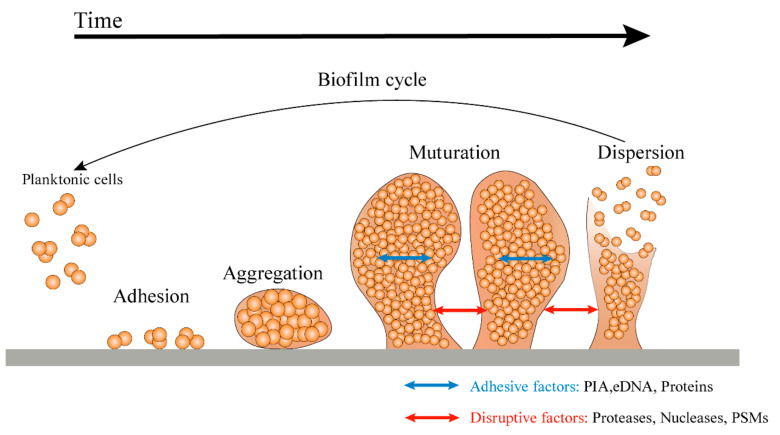
- *S. aureus* biofilm development is described in four stages—adhesion, aggregation, maturation, and dispersion—and the review states that more than 80% of chronic infections are mediated by bacterial biofilms.
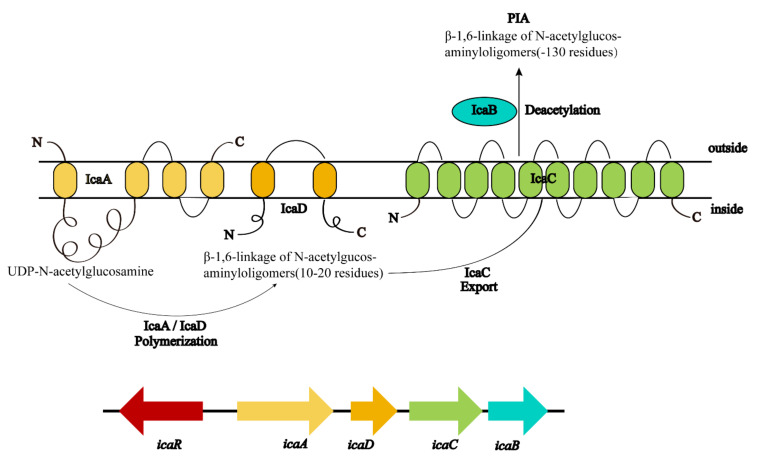
- Biofilm matrix formation involves PIA/PNAG via the *icaADBC* operon, protein-dependent adhesins such as Bap, FnBPs, ClfA/B, SasG, SasC, SdrC/D/E, and CAN, and eDNA regulated by *cidA* and *lrgAB*; Bap contains 2276 amino acids, and PIA oligomers produced by *icaAD* reach a maximum length of 20 residues unless *icaC* is co-expressed.
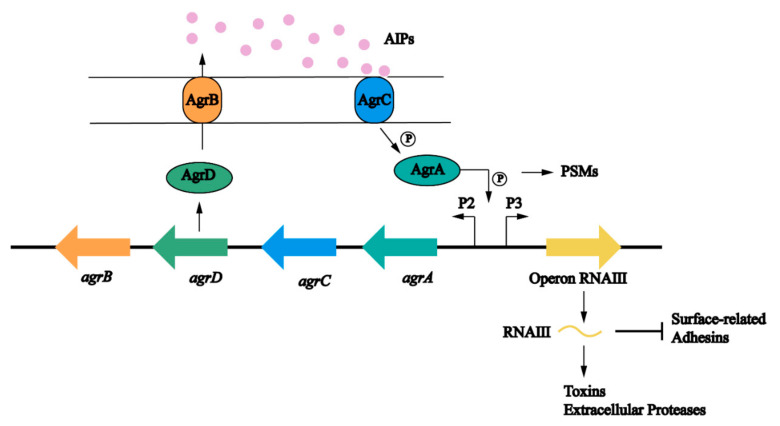
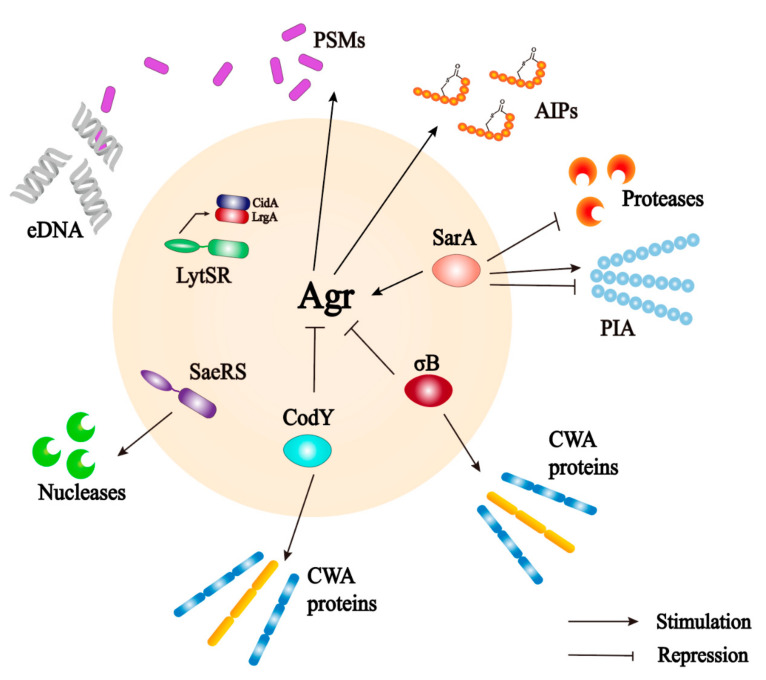
- Regulation is multi-layered: the Agr quorum-sensing system upregulates RNAIII and PSMs and promotes biofilm dispersion, while LuxS/AI-2 reduces PIA; SarA, σB, CodY, ica repressors (IcaR, TcaR, Rob), two-component systems (SrrAB, SaeRS, LytSR, ArlRS), c-di-AMP, and sRNAs also modulate biofilm formation.
- Clinically, biofilms protect bacteria from the immune system and antibiotics, often requiring long-term high-dose antibiotic therapy and increasing risks of antibiotic resistance and drug toxicity.
Methods
- Design: narrative review of *S. aureus* biofilm formation and regulation; no primary experimental data are presented.
- Data or sample: not stated in the paper; the review synthesizes previously published literature rather than analyzing a new sample.
- Main analysis: thematic synthesis of the biofilm life cycle, matrix components, and regulatory systems, including quorum sensing, global regulators, two-component systems, second messengers, and sRNAs.
Limitations
- The paper states that researchers have not yet understood the synergy between different regulatory networks, that biofilm regulation is dynamic across growth times and environments, and that little is known about whether in vivo regulation matches in vitro regulation.
- The paper states that results from reference strains may differ from clinical isolates and that mixed-species biofilms with other bacteria and/or fungi are important but not included in the review’s scope.
- Evident from the text: no systematic search strategy, inclusion criteria, or quantitative synthesis is described; as a narrative review, it does not provide primary experimental validation.
Model-written summary. Check it against the paper before relying on it.
Integrity signals
Registry
Cites
Statistics
Figures
Verification
Claims the paper makes
0 Valid · 1 Not valid · 183 Not checked · 5 Own results and interpretations
None of the sources cited for this claim have been checked yet.
In the paper
“The product of the icaC gene is a transmembrane protein that mediates the transfer of the newly synthesized PIA to the cell surface [46].”
§ A Review of Biofilm Formation of Staphylococcus aureus and Its Regulation Mechanism > 3. Biofilm Formation Mechanism > 3.1. Polysaccharide Intercellular Adhesion(PIA)-Dependent Mechanism
What the sources say
- Not checked yetcites [46] Atkin K.E. MacDonald S.J. Brentnall A.S. Potts J.R. Thomas G.H. A different path: Revealing the function of staphylococcal proteins in biofilm formation FEBS Lett. 2014 588 1869 1872 10.1016/j.febslet.2014.04.002 24735724 source
Checked before — its earlier verdict is held back until a new check runs.
plainstates a cause- Asserted: passes — The authors put it forward as true.
- Checkable: passes — It can be checked against evidence.
- Load-bearing: unclear — It is unclear whether the paper’s conclusions depend on it.
- Based: passes — The paper gives a reason why it holds.
- Not checked yet
In the paper
“Among the polymeric molecules involved in ECM, polysaccharide intercellular adhesion (PIA) (also known as poly-N-acetylglucosamine; PNAG) is an important factor in S. aureus biofilm formation [41].”
§ A Review of Biofilm Formation of Staphylococcus aureus and Its Regulation Mechanism > 3. Biofilm Formation Mechanism > 3.1. Polysaccharide Intercellular Adhesion(PIA)-Dependent Mechanism
What the sources say
- Check pendingcites [41] Nguyen H.T. Nguyen T.H. Otto M. The staphylococcal exopolysaccharide PIA—Biosynthesis and role in biofilm formation, colonization, and infection Comput. Struct. Biotechnol. J. 2020 18 3324 3334 10.1016/j.csbj.2020.10.027 33240473 PMC7674160 source
plainstates an association- Asserted: passes — The authors put it forward as true.
- Checkable: passes — It can be checked against evidence.
- Load-bearing: passes — The paper’s conclusions depend on it.
- Based: passes — The paper gives a reason why it holds.
In the paper
“During the aggregation stage, bacteria regulate biofilm formation by sensing environmental signals that trigger regulatory networks and intracellular signal molecules.”
§ A Review of Biofilm Formation of Staphylococcus aureus and Its Regulation Mechanism > 2. Biofilm Formation Process
What the sources say
- Check pendingcites [25] Mangwani N. Kumari S. Das S. Bacterial biofilms and quorum sensing: Fidelity in bioremediation technology Biotechnology and Genetic Engineering Reviews Mayes S. Harding S.E. Biotechnology & Genetic Engineering Reviews Taylor & Francis Ltd. Abingdon, UK 2016 Volume 32 43 73 27320224 source
plainstates a cause- Asserted: passes — The authors put it forward as true.
- Checkable: passes — It can be checked against evidence.
- Load-bearing: unclear — It is unclear whether the paper’s conclusions depend on it.
- Based: passes — The paper gives a reason why it holds.
A check of a cited source is scheduled, or we don’t hold its full text yet; the claim is checked once it runs.
In the paper
“During the growth and development of biofilm, surfactant phenol-soluble modulins (PSMs) are a key effector molecule for the dispersion and transmission of S. aureus biofilms [35].”
§ A Review of Biofilm Formation of Staphylococcus aureus and Its Regulation Mechanism > 2. Biofilm Formation Process
What the sources say
- Not checked yetcites [35] Periasamy S. Joo H.-S. Duong A.C. Bach T.-H.L. Tan V.Y. Chatterjee S.S. Cheung G.Y.C. Otto M. How Staphylococcus aureus biofilms develop their characteristic structure Proc. Natl. Acad. Sci. USA 2012 109 1281 1286 10.1073/pnas.1115006109 22232686 PMC3268330 source
A check is scheduled.
plainstates a cause- Asserted: passes — The authors put it forward as true.
- Checkable: passes — It can be checked against evidence.
- Load-bearing: unclear — It is unclear whether the paper’s conclusions depend on it.
- Based: passes — The paper gives a reason why it holds.
- Not checked yet
In the paper
“In S. aureus, α-PSM1 and α-PSM4 peptides are the main amyloid proteins involved in the α-PSMs fibril production [39].”
§ A Review of Biofilm Formation of Staphylococcus aureus and Its Regulation Mechanism > 2. Biofilm Formation Process
What the sources say
- Check pendingcites [39] Marinelli P. Pallares I. Navarro S. Ventura S. Dissecting the contribution of Staphylococcus aureus α-phenol-soluble modulins to biofilm amyloid structure Sci. Rep. 2016 6 34552 10.1038/srep34552 27708403 PMC5052566 source
plainstates an association- Asserted: passes — The authors put it forward as true.
- Checkable: passes — It can be checked against evidence.
- Load-bearing: unclear — It is unclear whether the paper’s conclusions depend on it.
- Based: passes — The paper gives a reason why it holds.
82 more claims
Create a free account to see all 189 claims and to verify the 216 references still open.
- It may state two separate claims as one. 95
- Probably not a substantial claim. 10
Claims other papers make about this one
Each is checked against this paper’s own text: does it say what the citing paper says it does?
In the citing paper
“Furthermore, its ability to form robust biofilms on medical devices and prosthetic implants enhances persistence by shielding bacteria from antimicrobial agents and host defenses, driving chronic and recurrent infections [6].”
From Staphylococcus aureus: A Review of the Pathogenesis and Virulence Mechanisms (2025) · cites this paper as [6]
In the citing paper
“Biofilm-forming strains are 3–5 times more likely to persist in the throat, complicating eradication efforts [6].”
From Staphylococcus aureus: A Review of the Pathogenesis and Virulence Mechanisms (2025) · cites this paper as [6]
In the citing paper
“Regarding pathogenesis, the attachment of S. aureus to the tissues of the host through MSCRAMMs facilitates the formation of biofilms, a critical factor in chronic infections [6,85].”
From Staphylococcus aureus: A Review of the Pathogenesis and Virulence Mechanisms (2025) · cites this paper as [6]
In the citing paper
“In numerous Gram-positive bacteria, such as S. aureus, biofilm dispersal is governed by the Agr QS system, which monitors bacterial cell density.”
From Biofilm Resilience: Molecular Mechanisms Driving Antibiotic Resistance in Clinical Contexts (2025) · cites this paper as [90]
In the citing paper
“These diminutive, amphipathic peptides exhibit cytotoxic properties and facilitate the disintegration of the biofilm matrix, hence enhancing the liberation of bacteria from the biofilm into the surrounding milieu [90,91].”
From Biofilm Resilience: Molecular Mechanisms Driving Antibiotic Resistance in Clinical Contexts (2025) · cites this paper as [90]
1 more claim about this paper
Create a free account to see every claim other papers make about this one.
Self-check
Percentages, sums and reported differences re-computed from the paper’s own numbers.
Each contradiction between two passages listed here was confirmed by an independent check.
Rated minor: it would not touch a result — a value no result rests on, a p-value that stays on the same side of the significance level, or a conflict that is clerical, resolved elsewhere in the paper, or outside its own findings.
In the paper
§ A Review of Biofilm Formation of Staphylococcus aureus and Its Regulation Mechanism > 4. Regulation Mechanism of Biofilm Formation > 4.2. The Global Response Regulator
“in the icaR deletion mutant, the transcript level of icaA gene was extremely low and the amount of biofilm formation was low”
§ A Review of Biofilm Formation of Staphylococcus aureus and Its Regulation Mechanism > 4. Regulation Mechanism of Biofilm Formation > 4.3. ica Operon
“IcaR is a DNA-binding protein that negatively regulates icaADBC expression by binding to the upstream region of the icaA start codon [127].”
Citations
Cites
Bacterial biofilms: from the Natural environment to infectious diseases
Hall-Stoodley, L., Costerton, J. W., & Stoodley, P. (2004) · Nature Reviews Microbiology · doi:10.1038/nrmicro821 · Cited by 7,143
Staphylococcus aureus Infections
Lowy, F. D. (1998) · New England Journal of Medicine · doi:10.1056/nejm199808203390806 · Cited by 6,005
Biofilm formation as microbial development
O'Toole, G., Kaplan, H. B., & Kolter, R. (2000) · Annual Review of Microbiology · doi:10.1146/annurev.micro.54.1.49 · Cited by 3,571
Molecular mechanisms of biofilm-based antibiotic resistance and tolerance in pathogenic bacteria
Hall, C. W., & Mah, T.-F. (2017) · FEMS Microbiology Reviews · doi:10.1093/femsre/fux010 · Cited by 2,031
Bacterial biofilm and associated infections
Jamal, M., Ahmad, W., Andleeb, S., Jalil, F., Imran, M., Nawaz, M. A., Hussain, T., Ali, M., Rafiq, M., & Kamil, M. A. (2018) · Journal of the Chinese Medical Association · doi:10.1016/j.jcma.2017.07.012 · Cited by 1,642
Principles of c-di-GMP signalling in bacteria
Hengge, R. (2009) · Nature Reviews Microbiology · doi:10.1038/nrmicro2109 · Cited by 1,578
Biofilm Matrixome: Extracellular Components in Structured Microbial Communities
Karygianni, L., Ren, Z., Koo, H., & Thurnheer, T. (2020) · Trends in Microbiology · doi:10.1016/j.tim.2020.03.016 · Cited by 1,487
Mechanisms of antibiotic resistance in bacterial biofilms
Stewart, P. S. (2002) · International Journal of Medical Microbiology · doi:10.1078/1438-4221-00196 · Cited by 1,385
Bacterial biofilm formation on implantable devices and approaches to its treatment and prevention
Khatoon, Z., McTiernan, C. D., Suuronen, E. J., Mah, T.-F., & Alarcon, E. I. (2018) · Heliyon · doi:10.1016/j.heliyon.2018.e01067 · Cited by 1,187
Regulation by Small RNAs in Bacteria: Expanding Frontiers
Storz, G., Vogel, J., & Wassarman, K. M. (2011) · Molecular Cell · doi:10.1016/j.molcel.2011.08.022 · Cited by 1,177
Sociomicrobiology: the connections between quorum sensing and biofilms
Parsek, M. R., & Greenberg, E. P. (2005) · Trends in Microbiology · doi:10.1016/j.tim.2004.11.007 · Cited by 1,174
Cramton, S. E., Gerke, C., Schnell, N. F., Nichols, W. W., & Götz, F. (1999) · Infection and Immunity · doi:10.1128/iai.67.10.5427-5433.1999 · Cited by 1,124
Bacterial Biofilm and its Role in the Pathogenesis of Disease
Vestby, L. K., Grønseth, T., Simm, R., & Nesse, L. L. (2020) · Antibiotics · doi:10.3390/antibiotics9020059 · Cited by 1,105
Cyclic di-GMP: second messenger extraordinaire
Jenal, U., Reinders, A., & Lori, C. (2017) · Nature Reviews Microbiology · doi:10.1038/nrmicro.2016.190 · Cited by 1,039
The LuxS family of bacterial autoinducers: biosynthesis of a novel quorum‐sensing signal molecule
Schauder, S., Shokat, K., Surette, M. G., & Bassler, B. L. (2001) · Molecular Microbiology · doi:10.1046/j.1365-2958.2001.02532.x · Cited by 1,035
agr-Mediated Dispersal of Staphylococcus aureus Biofilms
Boles, B. R., & Horswill, A. R. (2008) · PLoS Pathogens · doi:10.1371/journal.ppat.1000052 · Cited by 963
Quorum Sensing in Staphylococci
Novick, R. P., & Geisinger, E. (2008) · Annual Review of Genetics · doi:10.1146/annurev.genet.42.110807.091640 · Cited by 958
Biofilm Dispersal: Mechanisms, Clinical Implications, and Potential Therapeutic Uses
Kaplan, J. B. (2010) · Journal of Dental Research · doi:10.1177/0022034509359403 · Cited by 949 · cited 1×
“The second messenger, cyclic diguanylic acid (c-di-GMP), is synthesized by two molecules of GTP by the diguanylate cyclases (DGCs) and degraded by the c-di-GMP phosphodiesterases (PDEs) [167], which is the main regulator of the conversion between free movement and biofilm of Gram-negative bacteria [168].”
BackgroundMack, D., Fischer, W., Krokotsch, A., Leopold, K., Hartmann, R., Egge, H., & Laufs, R. (1996) · Journal of Bacteriology · doi:10.1128/jb.178.1.175-183.1996 · Cited by 885 · cited 1×
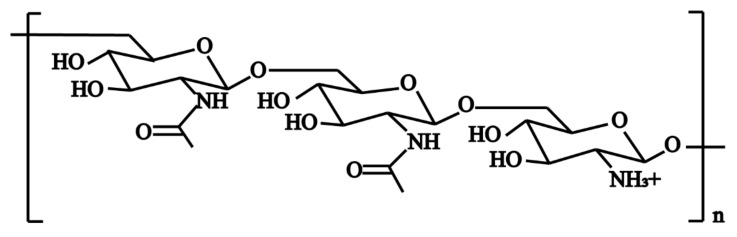
“PIA has a cationic property (Figure 2) and plays an important role in the adhesion and aggregation stage [42].”
BackgroundOtto, M. (2008) · Current Topics in Microbiology and Immunology · doi:10.1007/978-3-540-75418-3_10 · Cited by 865
Bacterial Interference Caused by Autoinducing Peptide Variants
Ji, G., Beavis, R., & Novick, R. P. (1997) · Science · doi:10.1126/science.276.5321.2027 · Cited by 817
Costerton, J. (1999) · International Journal of Antimicrobial Agents · doi:10.1016/s0924-8579(99)00018-7 · Cited by 727
Staphylococcus aureus biofilms: recent developments in biofilm dispersal
Lister, J. L., & Horswill, A. R. (2014) · Frontiers in Cellular and Infection Microbiology · doi:10.3389/fcimb.2014.00178 · Cited by 706
Staphylococcal Biofilm Development: Structure, Regulation, and Treatment Strategies
Schilcher, K., & Horswill, A. R. (2020) · Microbiology and Molecular Biology Reviews · doi:10.1128/mmbr.00026-19 · Cited by 706
Rice, K. C., Mann, E. E., Endres, J. L., Weiss, E. C., Cassat, J. E., Smeltzer, M. S., & Bayles, K. W. (2007) · Proceedings of the National Academy of Sciences · doi:10.1073/pnas.0610226104 · Cited by 673
Dunman, P. M., Murphy, E., Haney, S., Palacios, D., Tucker-Kellogg, G., Wu, S., Brown, E. L., Zagursky, R. J., Shlaes, D., & Projan, S. J. (2001) · Journal of Bacteriology · doi:10.1128/jb.183.24.7341-7353.2001 · Cited by 648
How Staphylococcus aureus biofilms develop their characteristic structure
Periasamy, S., Joo, H.-S., Duong, A. C., Bach, T.-H. L., Tan, V. Y., Chatterjee, S. S., Cheung, G. Y. C., & Otto, M. (2012) · Proceedings of the National Academy of Sciences · doi:10.1073/pnas.1115006109 · Cited by 640
O'Gara, J. P. (2007) · FEMS Microbiology Letters · doi:10.1111/j.1574-6968.2007.00688.x · Cited by 621
Otto, M. (2013) · Annual Review of Medicine · doi:10.1146/annurev-med-042711-140023 · Cited by 606
Quorum Sensing in Staphylococcus aureus Biofilms
Yarwood, J. M., Bartels, D. J., Volper, E. M., & Greenberg, E. P. (2004) · Journal of Bacteriology · doi:10.1128/jb.186.6.1838-1850.2004 · Cited by 597
Queck, S. Y., Jameson-Lee, M., Villaruz, A. E., Bach, T.-H. L., Khan, B. A., Sturdevant, D. E., Ricklefs, S. M., Li, M., & Otto, M. (2008) · Molecular Cell · doi:10.1016/j.molcel.2008.08.005 · Cited by 595
Vuong, C., Kocianova, S., Voyich, J. M., Yao, Y., Fischer, E. R., DeLeo, F. R., & Otto, M. (2004) · Journal of Biological Chemistry · doi:10.1074/jbc.m411374200 · Cited by 592
Staphylococcus aureus biofilm: a complex developmental organism
Moormeier, D. E., & Bayles, K. W. (2017) · Molecular Microbiology · doi:10.1111/mmi.13634 · Cited by 556
Rasamiravaka, T., Labtani, Q., Duez, P., & El Jaziri, M. (2015) · BioMed Research International · doi:10.1155/2015/759348 · Cited by 546
Modulation of eDNA Release and Degradation Affects Staphylococcus aureus Biofilm Maturation
Mann, E. E., Rice, K. C., Boles, B. R., Endres, J. L., Ranjit, D., Chandramohan, L., Tsang, L. H., Smeltzer, M. S., Horswill, A. R., & Bayles, K. W. (2009) · PLoS ONE · doi:10.1371/journal.pone.0005822 · Cited by 509
O'Neill, E., Pozzi, C., Houston, P., Humphreys, H., Robinson, D. A., Loughman, A., Foster, T. J., & O'Gara, J. P. (2008) · Journal of Bacteriology · doi:10.1128/jb.00167-08 · Cited by 496
Biofilm, pathogenesis and prevention—a journey to break the wall: a review
Gupta, P., Sarkar, S., Das, B., Bhattacharjee, S., & Tribedi, P. (2016) · Archives of Microbiology · doi:10.1007/s00203-015-1148-6 · Cited by 493 · cited 1×
“Mature biofilms have diverse and unique metabolic structures that enable them to resist harmful environmental factors and stress drivers [30].”
BackgroundQuorum-sensing regulation in staphylococci—an overview
Le, K. Y., & Otto, M. (2015) · Frontiers in Microbiology · doi:10.3389/fmicb.2015.01174 · Cited by 490
Gerke, C., Kraft, A., Süßmuth, R., Schweitzer, O., & Götz, F. (1998) · Journal of Biological Chemistry · doi:10.1074/jbc.273.29.18586 · Cited by 484
Corrigan, R. M., Abbott, J. C., Burhenne, H., Kaever, V., & Gründling, A. (2011) · PLoS Pathogens · doi:10.1371/journal.ppat.1002217 · Cited by 463
Extracellular polymeric substances, a key element in understanding biofilm phenotype
Di Martino, P., & Groupe Biofilm et Comportement Microbien aux Interfaces, L. E.-E. (2018) · AIMS Microbiology · doi:10.3934/microbiol.2018.2.274 · Cited by 456
SarA and not σB is essential for biofilm development by Staphylococcus aureus
Valle, J., Toledo‐Arana, A., Berasain, C., Ghigo, J., Amorena, B., Penadés, J. R., & Lasa, I. (2003) · Molecular Microbiology · doi:10.1046/j.1365-2958.2003.03493.x · Cited by 442
Antimicrobial peptides and their interaction with biofilms of medically relevant bacteria
Batoni, G., Maisetta, G., & Esin, S. (2016) · Biochimica et Biophysica Acta (BBA) - Biomembranes · doi:10.1016/j.bbamem.2015.10.013 · Cited by 401
Developing natural products as potential anti-biofilm agents
Lu, L., Hu, W., Tian, Z., Yuan, D., Yi, G., Zhou, Y., Cheng, Q., Zhu, J., & Li, M. (2019) · Chinese Medicine · doi:10.1186/s13020-019-0232-2 · Cited by 387
Functional Amyloids Composed of Phenol Soluble Modulins Stabilize Staphylococcus aureus Biofilms
Schwartz, K., Syed, A. K., Stephenson, R. E., Rickard, A. H., & Boles, B. R. (2012) · PLoS Pathogens · doi:10.1371/journal.ppat.1002744 · Cited by 375
Phenol-soluble modulins – critical determinants of staphylococcal virulence
Cheung, G. Y. C., Joo, H.-S., Chatterjee, S. S., & Otto, M. (2014) · FEMS Microbiology Reviews · doi:10.1111/1574-6976.12057 · Cited by 369
Role of Biofilm-Associated Protein Bap in the Pathogenesis of Bovine Staphylococcus aureus
Cucarella, C., Tormo, M. A., Úbeda, C., Trotonda, M. P., Monzón, M., Peris, C., Amorena, B., Lasa, I., & Penadés, J. R. (2004) · Infection and Immunity · doi:10.1128/iai.72.4.2177-2185.2004 · Cited by 369
Molecular control of bacterial death and lysis
Rice, K. C., & Bayles, K. W. (2008) · Microbiology and Molecular Biology Reviews · doi:10.1128/mmbr.00030-07 · Cited by 362 · cited 2×
“Holin is encoded by cidABC operon, CidA oligomerizes and forms pores in the cytoplasmic membrane, leading to membrane depolarization, activation of murine protein hydrolase activity, and cell lysis [151,152].”
BackgroundO'Neill, E., Pozzi, C., Houston, P., Smyth, D., Humphreys, H., Robinson, D. A., & O'Gara, J. P. (2007) · Journal of Clinical Microbiology · doi:10.1128/jcm.02280-06 · Cited by 349
The role of Staphylococcus aureus surface protein SasG in adherence and biofilm formation
Corrigan, R. M., Rigby, D., Handley, P., & Foster, T. J. (2007) · Microbiology · doi:10.1099/mic.0.2007/006676-0 · Cited by 341
Staphylococcus aureus Biofilm: Morphology, Genetics, Pathogenesis and Treatment Strategies
Idrees, M., Sawant, S., Karodia, N., & Rahman, A. (2021) · International Journal of Environmental Research and Public Health · doi:10.3390/ijerph18147602 · Cited by 335
Role of extracellular DNA in initial bacterial adhesion and surface aggregation
Das, T., Sharma, P. K., Busscher, H. J., van der Mei, H. C., & Krom, B. P. (2010) · Applied and Environmental Microbiology · doi:10.1128/aem.03119-09 · Cited by 326 · cited 1×
“eDNA also introduces favorable acid-base interactions to enhance adhesion and surface aggregation [75].”
BackgroundKullik, I., Giachino, P., & Fuchs, T. (1998) · Journal of Bacteriology · doi:10.1128/jb.180.18.4814-4820.1998 · Cited by 324
Conlon, K. M., Humphreys, H., & O'Gara, J. P. (2002) · Journal of Bacteriology · doi:10.1128/jb.184.16.4400-4408.2002 · Cited by 319
c-di-GMP and its Effects on Biofilm Formation and Dispersion: a Pseudomonas Aeruginosa Review
Ha, D.-G., & O'Toole, G. A. (2015) · Microbiology Spectrum · doi:10.1128/microbiolspec.mb-0003-2014 · Cited by 306
Staphylococcal biofilm disassembly
Boles, B. R., & Horswill, A. R. (2011) · Trends in Microbiology · doi:10.1016/j.tim.2011.06.004 · Cited by 276
Fournier, B., & Hooper, D. C. (2000) · Journal of Bacteriology · doi:10.1128/jb.182.14.3955-3964.2000 · Cited by 257
Chien, Y.-T., Manna, A. C., Projan, S. J., & Cheung, A. L. (1999) · Journal of Biological Chemistry · doi:10.1074/jbc.274.52.37169 · Cited by 254
Rachid, S., Ohlsen, K., Wallner, U., Hacker, J., Hecker, M., & Ziebuhr, W. (2000) · Journal of Bacteriology · doi:10.1128/jb.182.23.6824-6826.2000 · Cited by 250
The SaeRS Two‐Component System of Staphylococcus aureus
Liu, Q., Yeo, W., & Bae, T. (2016) · Genes · doi:10.3390/genes7100081 · Cited by 248
Extracellular DNA Acidifies Biofilms and Induces Aminoglycoside Resistance in Pseudomonas aeruginosa
Wilton, M., Charron-Mazenod, L., Moore, R., & Lewenza, S. (2016) · Antimicrobial Agents and Chemotherapy · doi:10.1128/aac.01650-15 · Cited by 246
The Staphylococcus aureus lrgAB Operon Modulates Murein Hydrolase Activity and Penicillin Tolerance
Groicher, K. H., Firek, B. A., Fujimoto, D. F., & Bayles, K. W. (2000) · Journal of Bacteriology · doi:10.1128/jb.182.7.1794-1801.2000 · Cited by 243
Nguyen, H. T. T., Nguyen, T. H., & Otto, M. (2020) · Computational and Structural Biotechnology Journal · doi:10.1016/j.csbj.2020.10.027 · Cited by 242
Xu, L., Li, H., Vuong, C., Vadyvaloo, V., Wang, J., Yao, Y., Otto, M., & Gao, Q. (2006) · Infection and Immunity · doi:10.1128/iai.74.1.488-496.2006 · Cited by 236
Influence of a Functional sigB Operon on the Global Regulators sar and agr in Staphylococcus aureus
Bischoff, M., Entenza, J. M., & Giachino, P. (2001) · Journal of Bacteriology · doi:10.1128/jb.183.17.5171-5179.2001 · Cited by 235
Guilhen, C., Forestier, C., & Balestrino, D. (2017) · Molecular Microbiology · doi:10.1111/mmi.13698 · Cited by 228
Corrigan, R. M., Miajlovic, H., & Foster, T. J. (2009) · BMC Microbiology · doi:10.1186/1471-2180-9-22 · Cited by 226 · cited 1×
“aureus adhesion to exfoliated nasal epithelial cells [63] and human keratinforming cells in vitro [64].”
BackgroundDirect Targets of CodY in Staphylococcus aureus
Majerczyk, C. D., Dunman, P. M., Luong, T. T., Lee, C. Y., Sadykov, M. R., Somerville, G. A., Bodi, K., & Sonenshein, A. L. (2010) · Journal of Bacteriology · doi:10.1128/jb.00220-10 · Cited by 221
Fatty acids as antibiofilm and antivirulence agents.
Kumar, P., Lee, J.-H., Beyenal, H., & Lee, J. (2020) · Trends in Microbiology · doi:10.1016/j.tim.2020.03.014 · Cited by 216
Sionov, R. V., & Steinberg, D. (2022) · Microorganisms · doi:10.3390/microorganisms10061239 · Cited by 214
Extracellular DNA (eDNA). A Major Ubiquitous Element of the Bacterial Biofilm Architecture
Campoccia, D., Montanaro, L., & Arciola, C. R. (2021) · International Journal of Molecular Sciences · doi:10.3390/ijms22169100 · Cited by 203
Vandana, & Das, S. (2022) · Carbohydrate Polymers · doi:10.1016/j.carbpol.2022.119536 · Cited by 199 · cited 1×
“The dispersion step is the final stage of the biofilm life cycle and the beginning of another life cycle [34].”
BackgroundStaphylococcus aureus CodY Negatively Regulates Virulence Gene Expression
Majerczyk, C. D., Sadykov, M. R., Luong, T. T., Lee, C., Somerville, G. A., & Sonenshein, A. L. (2008) · Journal of Bacteriology · doi:10.1128/jb.01545-07 · Cited by 197
Pragman, A. A., Yarwood, J. M., Tripp, T. J., & Schlievert, P. M. (2004) · Journal of Bacteriology · doi:10.1128/jb.186.8.2430-2438.2004 · Cited by 192
Taglialegna, A., Navarro, S., Ventura, S., Garnett, J. A., Matthews, S., Penades, J. R., Lasa, I., & Valle, J. (2016) · PLOS Pathogens · doi:10.1371/journal.ppat.1005711 · Cited by 189
The collagen-binding protein of Streptococcus mutans is involved in haemorrhagic stroke
Nakano, K., Hokamura, K., Taniguchi, N., Wada, K., Kudo, C., Nomura, R., Kojima, A., Naka, S., Muranaka, Y., Thura, M., et al. (2011) · Nature Communications · doi:10.1038/ncomms1491 · Cited by 188
Kinkel, T. L., Roux, C. M., Dunman, P. M., & Fang, F. C. (2013) · mBio · doi:10.1128/mbio.00696-13 · Cited by 179
Jefferson, K. K., Pier, D. B., Goldmann, D. A., & Pier, G. B. (2004) · Journal of Bacteriology · doi:10.1128/jb.186.8.2449-2456.2004 · Cited by 176
Park, M. K., Myers, R. A. M., & Marzella, L. (1992) · Clinical Infectious Diseases · doi:10.1093/clinids/14.3.720 · Cited by 172
Zinc-dependent mechanical properties of Staphylococcus aureus biofilm-forming surface protein SasG
Formosa-Dague, C., Speziale, P., Foster, T. J., Geoghegan, J. A., & Dufrêne, Y. F. (2016) · Proceedings of the National Academy of Sciences · doi:10.1073/pnas.1519265113 · Cited by 171
Rice, K. C., Firek, B. A., Nelson, J. B., Yang, S.-J., Patton, T. G., & Bayles, K. W. (2003) · Journal of Bacteriology · doi:10.1128/jb.185.8.2635-2643.2003 · Cited by 170
Herman-Bausier, P., Labate, C., Towell, A. M., Derclaye, S., Geoghegan, J. A., & Dufrêne, Y. F. (2018) · Proceedings of the National Academy of Sciences · doi:10.1073/pnas.1718104115 · Cited by 169
Colonization of medical devices by staphylococci
Zheng, Y., He, L., Asiamah, T. K., & Otto, M. (2018) · Environmental Microbiology · doi:10.1111/1462-2920.14129 · Cited by 168
Crosby, H. A., Schlievert, P. M., Merriman, J. A., King, J. M., Salgado-Pabón, W., & Horswill, A. R. (2016) · PLOS Pathogens · doi:10.1371/journal.ppat.1005604 · Cited by 165
Xiong, Y. Q., Willard, J., Yeaman, M. R., Cheung, A. L., & Bayer, A. S. (2006) · The Journal of Infectious Diseases · doi:10.1086/508210 · Cited by 162
Novel approaches to combat bacterial biofilms
Beloin, C., Renard, S., Ghigo, J.-M., & Lebeaux, D. (2014) · Current Opinion in Pharmacology · doi:10.1016/j.coph.2014.09.005 · Cited by 160
New frontiers for anti-biofilm drug development
Ribeiro, S. M., Felício, M. R., Boas, E. V., Gonçalves, S., Costa, F. F., Samy, R. P., Santos, N. C., & Franco, O. L. (2016) · Pharmacology & Therapeutics · doi:10.1016/j.pharmthera.2016.02.006 · Cited by 155
Liang, X., Yu, C., Sun, J., Liu, H., Landwehr, C., Holmes, D., & Ji, Y. (2006) · Infection and Immunity · doi:10.1128/iai.00322-06 · Cited by 152
Staphylococcus aureus CidA and LrgA Proteins Exhibit Holin-Like Properties
Ranjit, D. K., Endres, J. L., & Bayles, K. W. (2011) · Journal of Bacteriology · doi:10.1128/jb.01545-10 · Cited by 149
Singh, K. V., Nallapareddy, S. R., Sillanpää, J., & Murray, B. E. (2010) · PLoS Pathogens · doi:10.1371/journal.ppat.1000716 · Cited by 148
Yu, D., Zhao, L., Xue, T., & Sun, B. (2012) · BMC Microbiology · doi:10.1186/1471-2180-12-288 · Cited by 143
Romilly, C., Lays, C., Tomasini, A., Caldelari, I., Benito, Y., Hammann, P., Geissmann, T., Boisset, S., Romby, P., & Vandenesch, F. (2014) · PLoS Pathogens · doi:10.1371/journal.ppat.1003979 · Cited by 143
Pietrocola, G., Campoccia, D., Motta, C., Montanaro, L., Arciola, C. R., & Speziale, P. (2022) · International Journal of Molecular Sciences · doi:10.3390/ijms23115958 · Cited by 141
Doroshenko, N., Tseng, B. S., Howlin, R. P., Deacon, J., Wharton, J. A., Thurner, P. J., Gilmore, B. F., Parsek, M. R., & Stoodley, P. (2014) · Antimicrobial Agents and Chemotherapy · doi:10.1128/aac.03132-14 · Cited by 140
Bacterial biofilms and quorum sensing: Fidelity in bioremediation technology
Mangwani, N., Kumari, S., & Das, S. (2016) · Biotechnology and Genetic Engineering Reviews · doi:10.1080/02648725.2016.1196554 · Cited by 138
Kang, M., Ko, Y.-P., Liang, X., Ross, C. L., Liu, Q., Murray, B. E., & Höök, M. (2013) · Journal of Biological Chemistry · doi:10.1074/jbc.m113.454462 · Cited by 137
The Staphylococcus aureus LytSR Two-Component Regulatory System Affects Biofilm Formation
Sharma-Kuinkel, B. K., Mann, E. E., Ahn, J.-S., Kuechenmeister, L. J., Dunman, P. M., & Bayles, K. W. (2009) · Journal of Bacteriology · doi:10.1128/jb.00348-09 · Cited by 133
McCourt, J., O'Halloran, D. P., McCarthy, H., O'Gara, J. P., & Geoghegan, J. A. (2014) · FEMS Microbiology Letters · doi:10.1111/1574-6968.12424 · Cited by 132
Mashruwala, A. A., Guchte, A. V. D., & Boyd, J. M. (2017) · eLife · doi:10.7554/elife.23845 · Cited by 130
Herman-Bausier, P., El-Kirat-Chatel, S., Foster, T. J., Geoghegan, J. A., & Dufrêne, Y. F. (2015) · mBio · doi:10.1128/mbio.00413-15 · Cited by 127
Coordinated Regulation by AgrA, SarA, and SarR To Control agr Expression in Staphylococcus aureus
Reyes, D., Andrey, D. O., Monod, A., Kelley, W. L., Zhang, G., & Cheung, A. L. (2011) · Journal of Bacteriology · doi:10.1128/jb.05436-11 · Cited by 126
Schroeder, K., Jularic, M., Horsburgh, S. M., Hirschhausen, N., Neumann, C., Bertling, A., Schulte, A., Foster, S., Kehrel, B. E., Peters, G., et al. (2009) · PLoS ONE · doi:10.1371/journal.pone.0007567 · Cited by 125
Isolation and Characterization of Biofilm Formation-Defective Mutants of Staphylococcus aureus
Tu Quoc, P. H., Genevaux, P., Pajunen, M., Savilahti, H., Georgopoulos, C., Schrenzel, J., & Kelley, W. L. (2007) · Infection and Immunity · doi:10.1128/iai.01143-06 · Cited by 125
Staphylococcus aureus Nuclease Is an SaeRS-Dependent Virulence Factor
Olson, M. E., Nygaard, T. K., Ackermann, L., Watkins, R. L., Zurek, O. W., Pallister, K. B., Griffith, S., Kiedrowski, M. R., Flack, C. E., Kavanaugh, J. S., et al. (2013) · Infection and Immunity · doi:10.1128/iai.01242-12 · Cited by 125
Hyaluronan Modulation Impacts Staphylococcus aureus Biofilm Infection
Ibberson, C. B., Parlet, C. P., Kwiecinski, J. M., Crosby, H. A., Meyerholz, D. K., & Horswill, A. R. (2016) · Infection and Immunity · doi:10.1128/iai.01418-15 · Cited by 122
Molecular Interactions between Two Global Regulators, sar and agr, in Staphylococcus aureus
Chien, Y.-T., & Cheung, A. L. (1998) · Journal of Biological Chemistry · doi:10.1074/jbc.273.5.2645 · Cited by 120
Guo, H., Tong, Y., Cheng, J., Abbas, Z., Li, Z., Wang, J., Zhou, Y., Si, D., & Zhang, R. (2022) · International Journal of Molecular Sciences · doi:10.3390/ijms23031241 · Cited by 120
DeFrancesco, A. S., Masloboeva, N., Syed, A. K., DeLoughery, A., Bradshaw, N., Li, G.-W., Gilmore, M. S., Walker, S., & Losick, R. (2017) · Proceedings of the National Academy of Sciences · doi:10.1073/pnas.1704544114 · Cited by 116
Jefferson, K. K., Cramton, S. E., Götz, F., & Pier, G. B. (2003) · Molecular Microbiology · doi:10.1046/j.1365-2958.2003.03482.x · Cited by 115
Ulrich, M., Bastian, M., Cramton, S. E., Ziegler, K., Pragman, A. A., Bragonzi, A., Memmi, G., Wolz, C., Schlievert, P. M., Cheung, A., et al. (2007) · Molecular Microbiology · doi:10.1111/j.1365-2958.2007.05863.x · Cited by 114
The CodY pleiotropic repressor controls virulence in gram-positive pathogens
Stenz, L., Francois, P., Whiteson, K., Wolz, C., Linder, P., & Schrenzel, J. (2011) · FEMS Immunology & Medical Microbiology · doi:10.1111/j.1574-695x.2011.00812.x · Cited by 112
Zielinska, A. K., Beenken, K. E., Mrak, L. N., Spencer, H. J., Post, G. R., Skinner, R. A., Tackett, A. J., Horswill, A. R., & Smeltzer, M. S. (2012) · Molecular Microbiology · doi:10.1111/mmi.12048 · Cited by 111
Patti, J. M., Boles, J. O., & Hook, M. (1993) · Biochemistry · doi:10.1021/bi00093a021 · Cited by 111
Molecular determinants of staphylococcal biofilm dispersal and structuring
Le, K. Y., Dastgheyb, S., Ho, T. V., & Otto, M. (2014) · Frontiers in Cellular and Infection Microbiology · doi:10.3389/fcimb.2014.00167 · Cited by 106
Myrtenol Attenuates MRSA Biofilm and Virulence by Suppressing sarA Expression Dynamism
Selvaraj, A., Jayasree, T., Valliammai, A., & Pandian, S. K. (2019) · Frontiers in Microbiology · doi:10.3389/fmicb.2019.02027 · Cited by 106
MgrA Represses Biofilm Formation in Staphylococcus aureus
Trotonda, M. P., Tamber, S., Memmi, G., & Cheung, A. L. (2008) · Infection and Immunity · doi:10.1128/iai.00735-08 · Cited by 103
Waters, N. R., Samuels, D. J., Behera, R. K., Livny, J., Rhee, K. Y., Sadykov, M. R., & Brinsmade, S. R. (2016) · Molecular Microbiology · doi:10.1111/mmi.13404 · Cited by 102
Calcium Inhibits Bap-Dependent Multicellular Behavior in Staphylococcus aureus
Arrizubieta, M. J., Toledo-Arana, A., Amorena, B., Penadés, J. R., & Lasa, I. (2004) · Journal of Bacteriology · doi:10.1128/jb.186.22.7490-7498.2004 · Cited by 101
Ma, R., Qiu, S., Jiang, Q., Sun, H., Xue, T., Cai, G., & Sun, B. (2017) · International Journal of Medical Microbiology · doi:10.1016/j.ijmm.2017.03.003 · Cited by 101
Roux, A., Todd, D. A., Velázquez, J. V., Cech, N. B., & Sonenshein, A. L. (2014) · Journal of Bacteriology · doi:10.1128/jb.00128-13 · Cited by 100
Moormeier, D. E., Endres, J. L., Mann, E. E., Sadykov, M. R., Horswill, A. R., Rice, K. C., Fey, P. D., & Bayles, K. W. (2013) · Applied and Environmental Microbiology · doi:10.1128/aem.00395-13 · Cited by 99
Molecular interactions and inhibition of the staphylococcal biofilm-forming protein SdrC
Feuillie, C., Formosa-Dague, C., Hays, L. M. C., Vervaeck, O., Derclaye, S., Brennan, M. P., Foster, T. J., Geoghegan, J. A., & Dufrêne, Y. F. (2017) · Proceedings of the National Academy of Sciences · doi:10.1073/pnas.1616805114 · Cited by 99
Loughran, A. J., Atwood, D. N., Anthony, A. C., Harik, N. S., Spencer, H. J., Beenken, K. E., & Smeltzer, M. S. (2014) · MicrobiologyOpen · doi:10.1002/mbo3.214 · Cited by 90
Jeong, D., Cho, H., Jones, M. B., Shatzkes, K., Sun, F., Ji, Q., Liu, Q., Peterson, S. N., He, C., & Bae, T. (2012) · Molecular Microbiology · doi:10.1111/j.1365-2958.2012.08198.x · Cited by 90
Structural study of TcaR and its complexes with multiple antibiotics from Staphylococcus epidermidis
Chang, Y.-M., Jeng, W.-Y., Ko, T.-P., Yeh, Y.-J., Chen, C. K.-M., & Wang, A. H.-J. (2010) · Proceedings of the National Academy of Sciences · doi:10.1073/pnas.0913302107 · Cited by 89
Mrak, L. N., Zielinska, A. K., Beenken, K. E., Mrak, I. N., Atwood, D. N., Griffin, L. M., Lee, C. Y., & Smeltzer, M. S. (2012) · PLoS ONE · doi:10.1371/journal.pone.0038453 · Cited by 89
Askarian, F., Ajayi, C., Hanssen, A.-M., van Sorge, N. M., Pettersen, I., Diep, D. B., Sollid, J. U. E., & Johannessen, M. (2016) · Scientific Reports · doi:10.1038/srep22134 · Cited by 89
Tiwari, N., López-Redondo, M., Miguel-Romero, L., Kulhankova, K., Cahill, M. P., Tran, P. M., Kinney, K. J., Kilgore, S. H., Al-Tameemi, H., Herfst, C. A., et al. (2020) · Proceedings of the National Academy of Sciences · doi:10.1073/pnas.1921307117 · Cited by 88
Rot is a key regulator of S taphylococcus aureus biofilm formation
Mootz, J. M., Benson, M. A., Heim, C. E., Crosby, H. A., Kavanaugh, J. S., Dunman, P. M., Kielian, T., Torres, V. J., & Horswill, A. R. (2015) · Molecular Microbiology · doi:10.1111/mmi.12943 · Cited by 86
Staphylococcus aureus clumping factor B mediates biofilm formation in the absence of calcium
Abraham, N. M., & Jefferson, K. K. (2012) · Microbiology · doi:10.1099/mic.0.057018-0 · Cited by 84
Marinelli, P., Pallares, I., Navarro, S., & Ventura, S. (2016) · Scientific Reports · doi:10.1038/srep34552 · Cited by 83
Sabat, A., Melles, D. C., Martirosian, G., Grundmann, H., van Belkum, A., & Hryniewicz, W. (2006) · Journal of Clinical Microbiology · doi:10.1128/jcm.44.3.1135-1138.2006 · Cited by 82
Wolz, C., Goerke, C., Landmann, R., Zimmerli, W., & Fluckiger, U. (2002) · Infection and Immunity · doi:10.1128/iai.70.6.2758-2762.2002 · Cited by 80
Emerging interactions between matrix components during biofilm development
Payne, D. E., & Boles, B. R. (2016) · Current Genetics · doi:10.1007/s00294-015-0527-5 · Cited by 79
Entenza, J.-M., Moreillon, P., Senn, M. M., Kormanec, J., Dunman, P. M., Berger-Bächi, B., Projan, S., & Bischoff, M. (2005) · Infection and Immunity · doi:10.1128/iai.73.2.990-998.2005 · Cited by 78
Le, K. Y., Villaruz, A. E., Zheng, Y., He, L., Fisher, E. L., Nguyen, T. H., Ho, T. V., Yeh, A. J., Joo, H.-S., Cheung, G. Y. C., et al. (2019) · Journal of Molecular Biology · doi:10.1016/j.jmb.2019.03.030 · Cited by 77
Phase Variation of Poly-N-Acetylglucosamine Expression in Staphylococcus aureus
Brooks, J. L., & Jefferson, K. K. (2014) · PLoS Pathogens · doi:10.1371/journal.ppat.1004292 · Cited by 76
Yang, S., Dunman, P. M., Projan, S. J., & Bayles, K. W. (2006) · Molecular Microbiology · doi:10.1111/j.1365-2958.2006.05105.x · Cited by 74
Balamurugan, P., Praveen Krishna, V., Bharath, D., Lavanya, R., Vairaprakash, P., & Adline Princy, S. (2017) · Frontiers in Microbiology · doi:10.3389/fmicb.2017.01290 · Cited by 72
Cho, H., Jeong, D.-W., Liu, Q., Yeo, W.-S., Vogl, T., Skaar, E. P., Chazin, W. J., & Bae, T. (2015) · PLOS Pathogens · doi:10.1371/journal.ppat.1005026 · Cited by 70
SaeRS-Dependent Inhibition of Biofilm Formation in Staphylococcus aureus Newman
Cue, D., Junecko, J. M., Lei, M. G., Blevins, J. S., Smeltzer, M. S., & Lee, C. Y. (2015) · PLOS ONE · doi:10.1371/journal.pone.0123027 · Cited by 70
Mashruwala, A. A., Gries, C. M., Scherr, T. D., Kielian, T., & Boyd, J. M. (2017) · Infection and Immunity · doi:10.1128/iai.00157-17 · Cited by 61
Sedarat, Z., & Taylor-Robinson, A. W. (2022) · Pathogens · doi:10.3390/pathogens11040388 · Cited by 60
Novel aspects of RNA regulation in Staphylococcus aureus
Fechter, P., Caldelari, I., Lioliou, E., & Romby, P. (2014) · FEBS Letters · doi:10.1016/j.febslet.2014.05.037 · Cited by 59
You, Y., Xue, T., Cao, L., Zhao, L., Sun, H., & Sun, B. (2014) · International Journal of Medical Microbiology · doi:10.1016/j.ijmm.2014.04.003 · Cited by 58
Schwartbeck, B., Birtel, J., Treffon, J., Langhanki, L., Mellmann, A., Kale, D., Kahl, J., Hirschhausen, N., Neumann, C., Lee, J. C., et al. (2016) · PLOS Pathogens · doi:10.1371/journal.ppat.1006024 · Cited by 58
SarA of Staphylococcus aureus Binds to the sarA Promoter To Regulate Gene Expression
Cheung, A. L., Nishina, K., & Manna, A. C. (2008) · Journal of Bacteriology · doi:10.1128/jb.01826-07 · Cited by 56
Comparative impact of diverse regulatory loci on Staphylococcus aureus biofilm formation
Atwood, D. N., Loughran, A. J., Courtney, A. P., Anthony, A. C., Meeker, D. G., Spencer, H. J., Gupta, R. K., Lee, C. Y., Beenken, K. E., & Smeltzer, M. S. (2015) · MicrobiologyOpen · doi:10.1002/mbo3.250 · Cited by 55
Zhang, Y., Wu, M., Hang, T., Wang, C., Yang, Y., Pan, W., Zang, J., Zhang, M., & Zhang, X. (2017) · Biochemical Journal · doi:10.1042/bcj20170085 · Cited by 54
Serine-Aspartate Repeat Protein D Increases Staphylococcus aureus Virulence and Survival in Blood
Askarian, F., Uchiyama, S., Valderrama, J. A., Ajayi, C., Sollid, J. U. E., van Sorge, N. M., Nizet, V., van Strijp, J. A. G., & Johannessen, M. (2017) · Infection and Immunity · doi:10.1128/iai.00559-16 · Cited by 53
The Challenging World of Biofilm Physiology
Donné, J., & Dewilde, S. (2015) · Advances in microbial physiology/Advances in Microbial Physiology · doi:10.1016/bs.ampbs.2015.09.003 · Cited by 52
Li, L., Li, Y., Zhu, F., Cheung, A. L., Wang, G., Bai, G., Proctor, R. A., Yeaman, M. R., Bayer, A. S., & Xiong, Y. Q. (2021) · mBio · doi:10.1128/mbio.02081-21 · Cited by 52
Lee, J., Zilm, P. S., & Kidd, S. P. (2020) · Frontiers in Microbiology · doi:10.3389/fmicb.2020.00321 · Cited by 51
A different path: Revealing the function of staphylococcal proteins in biofilm formation
Atkin, K. E., MacDonald, S. J., Brentnall, A. S., Potts, J. R., & Thomas, G. H. (2014) · FEBS Letters · doi:10.1016/j.febslet.2014.04.002 · Cited by 50
Mlynek, K. D., Bulock, L. L., Stone, C. J., Curran, L. J., Sadykov, M. R., Bayles, K. W., & Brinsmade, S. R. (2020) · Journal of Bacteriology · doi:10.1128/jb.00593-19 · Cited by 50
Xue, T., Ni, J., Shang, F., Chen, X., & Zhang, M. (2015) · Microbes and Infection · doi:10.1016/j.micinf.2015.01.003 · Cited by 48
Jiang, Q., Jin, Z., & Sun, B. (2018) · Applied and Environmental Microbiology · doi:10.1128/aem.01008-18 · Cited by 46
Desgranges, E., Marzi, S., Moreau, K., Romby, P., & Caldelari, I. (2019) · Microbiology Spectrum · doi:10.1128/microbiolspec.gpp3-0038-2018 · Cited by 46
Lehman, M. K., Bose, J. L., Sharma‐Kuinkel, B. K., Moormeier, D. E., Endres, J. L., Sadykov, M. R., Biswas, I., & Bayles, K. W. (2015) · Molecular Microbiology · doi:10.1111/mmi.12902 · Cited by 45
Manna, A. C., Kim, S., Cengher, L., Corvaglia, A., Leo, S., Francois, P., & Cheung, A. L. (2018) · Infection and Immunity · doi:10.1128/iai.00635-17 · Cited by 45
Burgui, S., Gil, C., Solano, C., Lasa, I., & Valle, J. (2018) · Frontiers in Microbiology · doi:10.3389/fmicb.2018.00342 · Cited by 45
Anti-biofilm activity of garlic extract loaded nanoparticles
Girish, V. M., Liang, H., Aguilan, J. T., Nosanchuk, J. D., Friedman, J. M., & Nacharaju, P. (2019) · Nanomedicine: Nanotechnology, Biology and Medicine · doi:10.1016/j.nano.2019.04.012 · Cited by 45
Kim, S., Reyes, D., Beaume, M., Francois, P., & Cheung, A. (2014) · Infection and Immunity · doi:10.1128/iai.02002-14 · Cited by 41
Nutritional regulation of the Sae two-component system by CodY in Staphylococcus aureus
Mlynek, K. D., Sause, W. E., Moormeier, D. E., Sadykov, M. R., Hill, K. R., Torres, V. J., Bayles, K. W., & Brinsmade, S. R. (2018) · Journal of Bacteriology · doi:10.1128/jb.00012-18 · Cited by 41 · cited 1×
“In addition, CodY regulates the sae locus in a Rot-dependent and Rot-independent manner [125].”
BackgroundCue, D., Lei, M. G., & Lee, C. Y. (2013) · Journal of Bacteriology · doi:10.1128/jb.00012-13 · Cited by 40
Valle, J., Echeverz, M., & Lasa, I. (2019) · Journal of Bacteriology · doi:10.1128/jb.00098-19 · Cited by 40
Transcriptional Regulation of icaADBC by both IcaR and TcaR in Staphylococcus epidermidis
Hoang, T.-M., Zhou, C., Lindgren, J. K., Galac, M. R., Corey, B., Endres, J. E., Olson, M. E., & Fey, P. D. (2019) · Journal of Bacteriology · doi:10.1128/jb.00524-18 · Cited by 40
SrrAB Modulates Staphylococcus aureus Cell Death through Regulation of cidABC Transcription
Windham, I. H., Chaudhari, S. S., Bose, J. L., Thomas, V. C., & Bayles, K. W. (2016) · Journal of Bacteriology · doi:10.1128/jb.00954-15 · Cited by 39
Yu, L., Hisatsune, J., Hayashi, I., Tatsukawa, N., Sato’o, Y., Mizumachi, E., Kato, F., Hirakawa, H., Pier, G. B., & Sugai, M. (2017) · mBio · doi:10.1128/mbio.02282-16 · Cited by 39
Staphylococcus aureus Strain-Dependent Biofilm Formation in Bone-Like Environment
Lamret, F., Varin-Simon, J., Velard, F., Terryn, C., Mongaret, C., Colin, M., Gangloff, S. C., & Reffuveille, F. (2021) · Frontiers in Microbiology · doi:10.3389/fmicb.2021.714994 · Cited by 37
Fujimoto, D. F., Brunskill, E. W., & Bayles, K. W. (2000) · Journal of Bacteriology · doi:10.1128/jb.182.17.4822-4828.2000 · Cited by 35
Rom, J. S., Atwood, D. N., Beenken, K. E., Meeker, D. G., Loughran, A. J., Spencer, H. J., Lantz, T. L., & Smeltzer, M. S. (2017) · Virulence · doi:10.1080/21505594.2017.1373926 · Cited by 35
Truncated Autoinducing Peptides as Antagonists of Staphylococcus lugdunensis Quorum Sensing
Gordon, C. P., Olson, S. D., Lister, J. L., Kavanaugh, J. S., & Horswill, A. R. (2016) · Journal of Medicinal Chemistry · doi:10.1021/acs.jmedchem.6b00727 · Cited by 34
Quorum-sensing systems in staphylococci as therapeutic targets
Harraghy, N., Kerdudou, S., & Herrmann, M. (2007) · Analytical and Bioanalytical Chemistry · doi:10.1007/s00216-006-0860-0 · Cited by 33
Kathirvel, M., Buchad, H., & Nair, M. (2016) · Medical Microbiology and Immunology · doi:10.1007/s00430-016-0467-9 · Cited by 33
GdpS contributes to Staphylococcus aureus biofilm formation by regulation of eDNA release
Fischer, A., Kambara, K., Meyer, H., Stenz, L., Bonetti, E.-J., Girard, M., Lalk, M., Francois, P., & Schrenzel, J. (2014) · International Journal of Medical Microbiology · doi:10.1016/j.ijmm.2013.10.010 · Cited by 31
Influence of Small RNAs on Biofilm Formation Process in Bacteria
Ghaz-Jahanian, M. A., Khodaparastan, F., Berenjian, A., & Jafarizadeh-Malmiri, H. (2013) · Molecular Biotechnology · doi:10.1007/s12033-013-9700-6 · Cited by 31
Extracellular DNA Provides Structural Integrity to a Micrococcus luteus Biofilm
Blakeman, J. T., Morales-García, A. L., Mukherjee, J., Gori, K., Hayward, A. S., Lant, N. J., & Geoghegan, M. (2019) · Langmuir · doi:10.1021/acs.langmuir.9b00297 · Cited by 29
Singh, K. V., Nallapareddy, S. R., Sillanpää, J., & Murray, B. E. (2010) · PLoS Pathogens · doi:10.1371/annotation/1ccae8f8-d274-4ff8-a295-815037ce9cc6 · Cited by 26
Manna, A. C., Leo, S., Girel, S., González-Ruiz, V., Rudaz, S., Francois, P., & Cheung, A. L. (2022) · Scientific Reports · doi:10.1038/s41598-022-18815-3 · Cited by 25
The second messenger c-di-AMP mediates bacterial exopolysaccharide biosynthesis: A review
Xiong, Z.-Q., Fan, Y.-Z., Song, X., Liu, X.-X., Xia, Y.-J., & Ai, L.-Z. (2020) · Molecular Biology Reports · doi:10.1007/s11033-020-05930-5 · Cited by 21
The microbial adhesive arsenal deciphered by atomic force microscopy
Beaussart, A., Feuillie, C., & El‐Kirat‐Chatel, S. (2020) · Nanoscale · doi:10.1039/d0nr07492f · Cited by 18
Wittekind, M. A., Frey, A., Bonsall, A. E., Briaud, P., Keogh, R. A., Wiemels, R. E., Shaw, L. N., & Carroll, R. K. (2022) · Molecular Microbiology · doi:10.1111/mmi.14901 · Cited by 18
Marques, V. F., Santos, H. A., Santos, T. H., Melo, D. A., Coelho, S. M. O., Coelho, I. S., & Souza, M. M. S. (2021) · Pesquisa Veterinária Brasileira · doi:10.1590/1678-5150-pvb-6645 · Cited by 10
Investigating Extracellular DNA Release in Staphylococcus xylosus Biofilm In Vitro
Leroy, S., Lebert, I., Andant, C., Micheau, P., & Talon, R. (2021) · Microorganisms · doi:10.3390/microorganisms9112192 · Cited by 10
Patel, N., & Nair, M. (2021) · Journal of Microbiology · doi:10.1007/s12275-021-1205-6 · Cited by 7
Cited by
Biofilm Resilience: Molecular Mechanisms Driving Antibiotic Resistance in Clinical Contexts
Almatroudi, A. (2025) · Biology · doi:10.3390/biology14020165 · Cited by 303
“Increased or decreased temperatures may induce stress in microbial cells, promoting biofilm formation as a defensive mechanism against thermal stressors.”
Staphylococcus aureus: A Review of the Pathogenesis and Virulence Mechanisms
Touaitia, R., Mairi, A., Ibrahim, N. A., Basher, N. S., Idres, T., & Touati, A. (2025) · Antibiotics · doi:10.3390/antibiotics14050470 · Cited by 273
“Biofilm-forming strains are 3–5 times more likely to persist in the throat, complicating eradication efforts [6].”
Kaushik, A., Kest, H., Sood, M., Steussy, B., Thieman, C., & Gupta, S. (2024) · Pathogens · doi:10.3390/pathogens13010076 · Cited by 199
Wu, X., Wang, H., Xiong, J., Yang, G.-X., Hu, J.-F., Zhu, Q., & Chen, Z. (2024) · Biofilm · doi:10.1016/j.bioflm.2023.100175 · Cited by 145
Biofilm formation in food industries: Challenges and control strategies for food safety
Elafify, M., Liao, X., Feng, J., Ahn, J., & Ding, T. (2024) · Food Research International · doi:10.1016/j.foodres.2024.114650 · Cited by 94
Metadata
- Authors
- Peng, Q., Tang, X., Dong, W., Sun, N., & Yuan, W.
- Affiliations
- Guangzhou Medical University (CN)
- Guangzhou First People's Hospital (CN)
- Corresponding author
- Sun, Ning
- Yuan, Wenchang
- Venue
- Antibiotics
- Publisher
- MDPI AG
- Published
- 2022-12-22
- Volume
- 12
- Issue
- 1
- Pages
- 12
- ISSN
- 2079-6382 (ISSN-L)
- PMC
- PMC9854888
- OpenAlex
- W4312186359
- Semantic Scholar
- 22fe4e210b0310d487397e69a459bed97b74ee07
- Cited by
- 440
- References
- 186
- Citations by year
- 2026: 157 · 2025: 161 · 2024: 95 · 2023: 27
- FWCI
- 7.01
- Type
- journal article
- Language
- en
- Open access
- gold
- doi.org
- Licence
- Locations
- Antibiotics (publishedVersion, cc-by)
- PubMed (publishedVersion)
- PubMed Central (publishedVersion, cc-by)
- DOAJ (DOAJ: Directory of Open Access Journals) (submittedVersion)
- Funders
- National Natural Science Foundation of China (81703333, 2020A1515011326, 2021A1515011360, 202102080469, 2020A010015, C2021077)
- Natural Science Foundation of Guangdong Province (81703333, 2020A1515011326, 2021A1515011360, 202102080469, 2020A010015, C2021077)
- Guangzhou Science and Technology Project (81703333, 2020A1515011326, 2021A1515011360, 202102080469, 2020A010015, C2021077)
- Guangzhou Health Science and Technology Project (81703333, 2020A1515011326, 2021A1515011360, 202102080469, 2020A010015, C2021077)
- Medical Scientific Research Foundation of Guangdong Province (81703333, 2020A1515011326, 2021A1515011360, 202102080469, 2020A010015, C2021077)
- Topics
- Life Sciences › Biochemistry, Genetics and Molecular Biology › Molecular Biology › Bacterial biofilms and quorum sensing
- Health Sciences › Medicine › Infectious Diseases › Antimicrobial Resistance in Staphylococcus
- Life Sciences › Biochemistry, Genetics and Molecular Biology › Molecular Biology › Biochemical and Structural Characterization
- Keywords
- Staphylococcus aureus, biofilm formation, biofilm regulation, extracellular matrix, antibiotic resistance, biofilm-associated infections, host immune evasion, biofilm treatment
About these checks
Registry, retraction, Cites and statistics results are computed, not judged, with one exception: a printed reference that no index lists is read once by a model before it counts as a citation error. Claims are extracted by a model and kept only when their quote appears verbatim in the text; each cited source is then checked, with a model’s help, for whether it says what the claim relies on. Those verdicts can be wrong — read the claim’s quote and the cited source before relying on one.
A language model drew the claims from the paper on 2026-11-15, under version 3 of the claim definition (model deepseek-v4.1-flash, prompt extract-v3).
A second model labelled each claim on 2026-11-15 (model jev-1.13-20260917, definition revision gold-guideline-v0.2).
Statistics and arithmetic are recomputed, not judged.
Confidence bands are shown only for fields calibrated on our annotated test set. None is calibrated yet, so no band is shown.
What counts as a claim ›How we measure confidence ›How we check this ›
Are you an author, or do you see a problem with this page? Request a review
Data sources
Bibliographic data: Semantic Scholar, OpenAlex, Crossref.
Contains information from the Semantic Scholar Academic Graph Datasets, made available under the ODC Attribution License (ODC-BY 1.0).
Semantic Scholar’s data is described in: Kinney, R., et al. (2023). The Semantic Scholar Open Data Platform. arXiv:2301.10140.
