

Clinical Features of Parkinson’s Disease: The Evolution of Critical Symptoms
Open accessThe DOI matches its Crossref record; 88 of the 89 references it cites were found in a registry or an index.
Abstract
Parkinson’s disease (PD) is a multi-attribute neurodegenerative disorder combining motor and nonmotor symptoms without well-defined diagnostic clinical markers. The presence of primary motor features (bradykinesia, rest tremor, rigidity and loss of postural reflexes) are the most characteristic signs of PD that are also utilized to identify patients in current clinical practice. The successful implementation of levodopa treatment revealed that nonmotor features are the main contributors of patient disability in PD, and their occurrence might be earlier than motor symptoms during disease progression. Targeted detection of prodromal PD symptoms can open up new possibilities in the identification of PD patients and provide potential patient populations for developing novel neuroprotective therapies. In this review, the evolution of critical features in PD diagnosis is described with special attention to nonmotor symptoms and their possible detection.
Overview
The claims and statistics of this paper haven’t been checked yet.
Free: it reads the open-access text and checks the first 5 claims that cite a source we can check. Create a free account to check every claim.
Integrity signals
Registry
Cites
Statistics
Figures
Verification
Claims the paper makes
The claims and statistics of this paper haven’t been checked yet.
Free: it reads the open-access text and checks the first 5 claims that cite a source we can check. Create a free account to check every claim.
Self-check
Percentages, sums and reported differences re-computed from the paper’s own numbers.
The self-check needs the paper’s full text.
Citations
Cites
Parkinsonism: onset, progression, and mortality
Hoehn, M. M., & Yahr, M. D. (1967) · Neurology · doi:10.1212/wnl.17.5.427 · Cited by 12,107 · cited 1×
“The first attempt to describe PD onset and progression was provided by Hoehn and Yahr in 1967 [66].”
BackgroundStaging of brain pathology related to sporadic Parkinson’s disease
Braak, H., Tredici, K. D., Rüb, U., de Vos, R. A. I., Jansen Steur, E. N. H., & Braak, E. (2003) · Neurobiology of Aging · doi:10.1016/s0197-4580(02)00065-9 · Cited by 10,777 · cited 2×
“In terms of clinical diagnosis, NMS have crucial importance, as Lewy body pathology and α-synuclein deposition is found to be originating from the olfactory bulb and lower brain stem, spreading to the midbrain and cortical regions [49] and potentially appearing earlier than motor symptoms during the progression of the…”
BackgroundMDS clinical diagnostic criteria for Parkinson’s disease
Postuma, R. B., Berg, D., Stern, M., Poewe, W., Olanow, C. W., Oertel, W., Obeso, J., Marek, K., Litvan, I., Lang, A. E., et al. (2015) · Movement Disorders · doi:10.1002/mds.26424 · Cited by 7,653
Kalia, L. V., & Lang, A. E. (2015) · The Lancet · doi:10.1016/s0140-6736(14)61393-3 · Cited by 6,184
Parkinson's disease: clinical features and diagnosis
Jankovic, J. (2008) · Journal of Neurology, Neurosurgery & Psychiatry · doi:10.1136/jnnp.2007.131045 · Cited by 5,720
Poewe, W., Seppi, K., Tanner, C. M., Halliday, G. M., Brundin, P., Volkmann, J., Schrag, A.-E., & Lang, A. E. (2017) · Nature Reviews Disease Primers · doi:10.1038/nrdp.2017.13 · Cited by 5,415
Overdependence on degraded gist memory in Alzheimer's disease.
Gallo, D. A., Shahid, K. R., Olson, M. A., Solomon, T. M., Schacter, D. L., & Budson, A. E. (2006) · Neuropsychology · doi:10.1037/0894-4105.20.6.625 · Cited by 4,732
The relevance of the Lewy body to the pathogenesis of idiopathic Parkinson's disease.
Gibb, W. R., & Lees, A. J. (1988) · Journal of Neurology, Neurosurgery & Psychiatry · doi:10.1136/jnnp.51.6.745 · Cited by 3,481
Diagnostic Criteria for Parkinson Disease
Gelb, D. J., Oliver, E., & Gilman, S. (1999) · Archives of Neurology · doi:10.1001/archneur.56.1.33 · Cited by 2,822
Hummel, T., Sekinger, B., Wolf, S. R., Pauli, E., & Kobal, G. (1997) · Chemical Senses · doi:10.1093/chemse/22.1.39 · Cited by 2,501
Research works printed but not linked: 1
- Schwab R.S. Projection technique for evaluating surgery in Parkinson’s disease Proceedings of the Third Symposium on Parkinson’s Disease Edinburgh, Scotland 20–22 May 1968 152 157
Cited by
The Gut–Brain Axis and Its Relation to Parkinson’s Disease: A Review
Klann, E. M., Dissanayake, U., Gurrala, A., Farrer, M., Shukla, A. W., Ramirez-Zamora, A., Mai, V., & Vedam-Mai, V. (2022) · Frontiers in Aging Neuroscience · doi:10.3389/fnagi.2021.782082 · Cited by 182
“, 1997, 1998; Trojanowski and Lee, 1998), and ultimately the onset of several cardinal motor and non-motor features of PD including dementia, gastrointestinal (GI) dysfunction, tremor, postural instability, bradykinesia, and rigidity (Váradi, 2020).”
BackgroundDentamaro, V., Impedovo, D., Musti, L., Pirlo, G., & Taurisano, P. (2024) · Scientific Reports · doi:10.1038/s41598-024-70165-4 · Cited by 116
“These include loss of smell, constipation, depression, anxiety, REM sleep behaviour disorder, and visual dysfunctions can occur years before the first diagnosis 18,19 in the so called prodromal phase.”
InfluentialCalderón-Garcidueñas, L., González-Maciel, A., Reynoso-Robles, R., Hammond, J., Kulesza, R., Lachmann, I., Torres-Jardón, R., Mukherjee, P. S., & Maher, B. A. (2020) · Environmental Research · doi:10.1016/j.envres.2020.110139 · Cited by 96
Rapid Eye Movement Sleep Behavior Disorder and Neurodegenerative Diseases: An Update
Zhang, F., Niu, L., Liu, X., Liu, Y., Li, S., Yu, H., & Le, W. (2020) · Aging and disease · doi:10.14336/ad.2019.0324 · Cited by 94
Mahbub, N. U., Islam, M. M., Hong, S., & Chung, H. (2024) · Frontiers in Cellular and Infection Microbiology · doi:10.3389/fcimb.2024.1348279 · Cited by 97
“The underlying cause of Parkinson ’ s disease (PD) motor symptoms, such as tremors, bradykinesia, stiffness, and postural instability, is a dopamine de fi cit (DeMaagd and Philip, 2015; Varadi, 2020).”
BackgroundAmin, R., Quispe, C., Docea, A. O., Ydyrys, A., Kulbayeva, M., Durna Daştan, S., Calina, D., & Sharifi-Rad, J. (2022) · Neurochemistry International · doi:10.1016/j.neuint.2022.105376 · Cited by 74
Olesen, M. A., Villavicencio-Tejo, F., & Quintanilla, R. A. (2022) · Translational Neurodegeneration · doi:10.1186/s40035-022-00308-y · Cited by 89
“The clinical symptoms of PD include bradykinesia, tremor, rigidity, and postural and gait instability, disabling the person as the disease progresses [110].”
BackgroundAlpha-Synuclein Contribution to Neuronal and Glial Damage in Parkinson’s Disease
Saramowicz, K., Siwecka, N., Galita, G., Kucharska-Lusina, A., Rozpędek‐Kamińska, W., & Majsterek, I. (2023) · International Journal of Molecular Sciences · doi:10.3390/ijms25010360 · Cited by 88
Radad, K., Moldzio, R., Krewenka, C., Kranner, B., & Rausch, W. (2023) · Exploration of Neuroprotective Therapy · doi:10.37349/ent.2023.00036 · Cited by 87
Reyes, J. F., Ekmark-Léwen, S., Perdiki, M., Klingstedt, T., Hoffmann, A., Wiechec, E., Nilsson, P., Nilsson, K. P. R., Alafuzoff, I., Ingelsson, M., et al. (2021) · Acta Neuropathologica Communications · doi:10.1186/s40478-021-01136-3 · Cited by 59
“While the clinical manifestations of MSA and DLB are highly variable among patients [2], PD is typically characterized by a progressive decline of motor and non-motor functions which correlate with disease progression [3, 4].”
BackgroundGan, Y., Ma, L., Zhang, Y., You, J., Guo, Y. X., He, Y., Wang, L., He, X.-Y., Li, Y., Dong, Q., et al. (2025) · Nature Aging · doi:10.1038/s43587-025-00818-0 · Cited by 81
Are We What We Eat? Impact of Diet on the Gut–Brain Axis in Parkinson’s Disease
Alfonsetti, M., Castelli, V., & d’Angelo, M. (2022) · Nutrients · doi:10.3390/nu14020380 · Cited by 56
“Rather, secondary motor signs include dysarthria, glabellar reflexes, dysphagia, sialorrhea, micrographia, festination, shuffling gait, hypomimia and dystonia [7].”
BackgroundSaravanan, S., Ramkumar, K., Narasimhan, K., Subramaniyaswamy, V., Kotecha, K. V., & Abraham, A. (2023) · IEEE Access · doi:10.1109/access.2023.3291406 · Cited by 72
“Digital techniques predominantly depend on the model’s accuracy, so it is crucial to execute deep learning-based algorithms to achieve better accuracy for PD detection and accelerate the diagnosis process to improve the patient’s quality of life [11], [12].”
Parkinson’s Disease: Bridging Gaps, Building Biomarkers, and Reimagining Clinical Translation
Tanaka, M. (2025) · Cells · doi:10.3390/cells14151161 · Cited by 56
Parkinson’s Disease: Bridging Gaps, Building Biomarkers, and Reimagining Clinical Translation
Tanaka, M. (2025) · doi:10.20944/preprints202506.2099.v2 · Cited by 57
Behl, T., Madaan, P., Sehgal, A., Singh, S., Sharma, N., Bhatia, S., Al‐Harrasi, A., Chigurupati, S., Alrashdi, I., & BUNGAU, S. G. (2021) · International Journal of Molecular Sciences · doi:10.3390/ijms221810161 · Cited by 63
Magistrelli, L., Contaldi, E., & Comi, C. (2021) · Life · doi:10.3390/life11080804 · Cited by 70
Neurodegenerative Diseases: Can Caffeine Be a Powerful Ally to Weaken Neuroinflammation?
Ruggiero, M., Calvello, R., Porro, C., Messina, G., Cianciulli, A., & Panaro, M. A. (2022) · International Journal of Molecular Sciences · doi:10.3390/ijms232112958 · Cited by 64
Alrouji, M., Al-Kuraishy, H. M., Al-Gareeb, A. I., Saad, H. M., & Batiha, G. E.-S. (2023) · Inflammopharmacology · doi:10.1007/s10787-023-01192-2 · Cited by 47
“The fundamental clinical features of PD are motor symptoms including bradykinesia, postural instability, resting tremor and rigidity (Váradi 2020).”
BackgroundMagistrelli, L., Ferrari, M., Furgiuele, A., Milner, A. V., Contaldi, E., Comi, C., Cosentino, M., & Marino, F. (2021) · International Journal of Molecular Sciences · doi:10.3390/ijms22073781 · Cited by 50
Lisco, G., Tullio, A. D., Iovino, M., Disoteo, O., Guastamacchia, E., Giagulli, V. A., & Triggiani, V. (2023) · Biomedicines · doi:10.3390/biomedicines11112993 · Cited by 55
Cornelli, U., Casella, C., Belcaro, G. V., Cesarone, M. R., Marucci, S., Rondanelli, M., Recchia, M., & Zanoni, G. (2025) · Microplastics · doi:10.3390/microplastics4040093 · Cited by 53
Role of RNA Oxidation in Neurodegenerative Diseases
Liu, Z., Chen, X., Li, Z., Ye, W., Ding, H., Li, P., & Aung, L. H. H. (2020) · International Journal of Molecular Sciences · doi:10.3390/ijms21145022 · Cited by 45
Sleep disorders cause Parkinson's disease or the reverse is true: Good GABA good night
Al-Kuraishy, H. M., Al-Gareeb, A. I., Albuhadily, A. K., Elewa, Y. H. A., AL-Farga, A. M., Aqlan, F. M., Zahran, M. H., & Batiha, G. E. (2024) · CNS Neuroscience & Therapeutics · doi:10.1111/cns.14521 · Cited by 41
“27 Motor symptoms are developed when more than 70% of DNs in the SNpc are lost.”
BackgroundNavita, N., Mittal, P., Sharma, Y. K., Kumar, A. B., Simaiya, S., Lilhore, U. K., & Kumar, V. (2025) · Scientific Reports · doi:10.1038/s41598-024-83357-9 · Cited by 47
Mehrabani, S., Khorvash, F., Heidari, Z., Ebrahimi, M. T., & Amani, R. (2022) · Journal of Functional Foods · doi:10.1016/j.jff.2022.105397 · Cited by 43
Schreiner, T. G., Menéndez‐González, M., Schreiner, O. D., & Ciobanu, R. C. (2025) · Biomedicines · doi:10.3390/biomedicines13092167 · Cited by 39
“Clinically, PD is characterized by motor symptoms, including tremors, bradykinesia, rigidity, and postural instability, as well as non-motor symptoms such as cognitive impairment, depression, and autonomic dysfunctions, which significantly impact the patient’s quality of life [5].”
Emerging Role of Plant-Based Bioactive Compounds as Therapeutics in Parkinson’s Disease
Kumari, N., Anand, S., Shah, K., Chauhan, N. S., Sethiya, N. K., & Singhal, M. (2023) · Molecules · doi:10.3390/molecules28227588 · Cited by 44
“PD is defined as a neurodegenerative disorder showcasing different types of patho-physiological symptoms owing to A9 dopaminergic (DA) neuron loss in the SNpc selectively and formation of an intracellular aggregate called a Lewy body [12,24].”
BackgroundInfluentialSerum-Based Lipid Panels for Diagnosis of Idiopathic Parkinson’s Disease
Dahabiyeh, L. A., Nimer, R. M., rashed, M. M., Wells, J. D., & Fiehn, O. (2023) · Metabolites · doi:10.3390/metabo13090990 · Cited by 38
Transcranial magnetic stimulation in animal models of neurodegeneration
Uzair, M., Abualait, T., Arshad, M., Yoo, W.-K., Mir, A., Bunyan, R. F., & Bashir, S. (2021) · Neural Regeneration Research · doi:10.4103/1673-5374.317962 · Cited by 38
“PD is the second most common neurologic disorder after AD and the most complex progressive movement disorder of aging, i.e., it mainly affects the older adult population (Váradi, 2020).”
BackgroundEvolving Landscape of Parkinson’s Disease Research: Challenges and Perspectives
Tenchov, R., Sasso, J. M., & Zhou, Q. A. (2025) · ACS Omega · doi:10.1021/acsomega.4c09114 · Cited by 45
T‐type calcium channels as therapeutic targets in essential tremor and Parkinson's disease
Matthews, L. G., Puryear, C. B., Correia, S. S., Srinivasan, S. R., Belfort, G. M., Pan, M., & Kuo, S. (2023) · Annals of Clinical and Translational Neurology · doi:10.1002/acn3.51735 · Cited by 32
The Irony of Iron: The Element with Diverse Influence on Neurodegenerative Diseases
Lee, S., & Kovács, G. G. (2024) · International Journal of Molecular Sciences · doi:10.3390/ijms25084269 · Cited by 33
Dahabiyeh, L. A., Nimer, R. M., Wells, J. D., Abu-rish, E. Y., & Fiehn, O. (2024) · Heliyon · doi:10.1016/j.heliyon.2024.e30452 · Cited by 31
“Pathological features include motor (e.g. bradykinesia, muscular rigidity, resting tremor) and nonmotor (e.g. sleep disorders, depression, and cognitive changes) symptoms that substantially impact patients ’ mobility, cognition and behavior over a period of 15 – 20 years [4,5].”
BackgroundFrom Brain to Muscle: The Role of Muscle Tissue in Neurodegenerative Disorders
Duranti, E., & Villa, C. (2024) · Biology · doi:10.3390/biology13090719 · Cited by 34
“…leading to muscle weakness and progressive paralysis [3,4]; Alzheimer’s disease (AD), characterized by progressive memory loss and cognitive decline [5,6]; and Parkinson’s disease (PD), known for motor symptoms such as tremors and muscle stiffness due to the loss of dopaminergic neurons [7].”
BackgroundChelliah, S. S., Bhuvanendran, S., Magalingam, K. B., Kamarudin, M. N. A., & Radhakrishnan, A. K. (2021) · Ageing Research Reviews · doi:10.1016/j.arr.2021.101514 · Cited by 27
Behl, T., Madaan, P., Sehgal, A., Singh, S., Anwer, M. K., Makeen, H. A., Albratty, M., Mohan, S., & BUNGAU, S. G. (2022) · International Journal of Molecular Sciences · doi:10.3390/ijms23020678 · Cited by 28
Torghabeh, F. A., Modaresnia, Y., & Hosseini, S. A. (2024) · Medicine in Novel Technology and Devices · doi:10.1016/j.medntd.2024.100297 · Cited by 28
Unnisa, A., Dua, K., & Kamal, M. A. (2022) · Current Neuropharmacology · doi:10.2174/1570159x20666220327212414 · Cited by 26
Calprotectin in Parkinsonian disease: Anticipation and dedication
Al-Kuraishy, H. M., Al-Gareeb, A. I., Zaidalkilani, A. T., Alexiou, A. T., Papadakis, M., Bahaa, M. M., AL-Faraga, A., & Batiha, G. E. (2023) · Ageing Research Reviews · doi:10.1016/j.arr.2023.102143 · Cited by 27
Novel strategies in Parkinson’s disease treatment: a review
Mitchell, C. L., & Kurouski, D. (2024) · Frontiers in Molecular Neuroscience · doi:10.3389/fnmol.2024.1431079 · Cited by 30
“…pathways results in multiple physical symptoms of PD such as bradykinesia, postural tremors and rest tremors, muscle rigidity, and postural instability (Varadi, 2020), as well as the psychiatric symptoms of PD such as depression, mood swings, anxiety, psychosis, and apathy (Han et al., 2018).”
BackgroundChen, J., Gao, X., Zheng, C., Zhang, C., Li, P., He, K., Liu, G., Huang, X., Liu, J., Xie, Y., et al. (2023) · Toxicology Letters · doi:10.1016/j.toxlet.2023.09.004 · Cited by 23
Vastegani, S. M., Khoshnam, S. E., Ghafouri, S., Bakhtiari, N., Farbood, Y., & Sarkaki, A. (2023) · PLoS ONE · doi:10.1371/journal.pone.0294612 · Cited by 22
A novel integrative multimodal classifier to enhance the diagnosis of Parkinson’s disease
Zhou, X., Parisi, L., Huang, W., Zhang, Y., Huang, X., Youseffi, M., Javid, F. A., & Ma, R. (2025) · Briefings in Bioinformatics · doi:10.1093/bib/bbaf088 · Cited by 22
“Parkinson’s disease (PD) is the second most prevalent neurodegenerative disorder after Alzheimer’s disease (AD), characterized primarily by motor symptoms such as bradykinesia, hand tremor, freezing gait, muscle stiffness, and balance impairments [1, 2].”
Lu, Y., Gao, X., Yang, N., Mohammed, S. A. D., Fu, J., Wang, T., Wang, C., Yuan, C., Lu, F., & Liu, S. (2023) · Heliyon · doi:10.1016/j.heliyon.2023.e18045 · Cited by 18
“Patients with PD often have movement disorders such as resting tremors, myotonia, abnormal walking, and delayed mobility [2].”
BackgroundPark, J.-E., Leem, Y., Park, J., Kim, S., & Kim, H.-S. (2023) · Antioxidants · doi:10.3390/antiox12111999 · Cited by 26
Khafajah, Y., Shaheen, M., Natour, D. E., Merheb, M. M., Matar, R., & Borjac, J. (2024) · Nanotheranostics · doi:10.7150/ntno.95863 · Cited by 20
“The bradykinesia, rest tremors, stiffness, and postural symptoms are most distinctive with PD [3].”
Coffee, antioxidants, and brain inflammation
Rai, S. P., Ansari, A. H., Singh, D., & Singh, S. (2024) · Progress in brain research · doi:10.1016/bs.pbr.2024.06.005 · Cited by 20
Association between β2-Adrenoreceptor Medications and Risk of Parkinson’s Disease: A Meta-Analysis
Chen, C.-L., Wang, S., Chen, T.-C., & Chuang, C. (2021) · Medicina · doi:10.3390/medicina57101006 · Cited by 15
Graph Neural Networks for Parkinson’s Disease Monitoring and Alerting
Zafeiropoulos, N., Bitilis, P., Tsekouras, G. E., & Kotis, K. (2023) · Sensors · doi:10.3390/s23218936 · Cited by 28
“In [19], the authors highlight the diagnostic challenges in identifying PD due to the absence of well-defined clinical markers, emphasizing the importance of nonmotor symptoms as significant contributors to patient disability and suggesting their occurrence even before the motor symptoms.”
BackgroundYKL-40 and the Cellular Metabolic Profile in Parkinson’s Disease
Gevezova, M., Kazakova, M., Trenova, A. G., & Sarafian, V. S. (2023) · International Journal of Molecular Sciences · doi:10.3390/ijms242216297 · Cited by 17
“It is the second most common neuropathological condition after Alzheimer’s disease, associated with significant disability and poor quality of life [2].”
BackgroundReview on computational methods for the detection and classification of Parkinson's Disease
Singh, K., Khare, M., Khare, A., & Kohli, N. (2025) · Computers in Biology and Medicine · doi:10.1016/j.compbiomed.2025.109767 · Cited by 16
Investigating the Shared Genetic Etiology Between Parkinson’s Disease and Depression
Reyes‐Pérez, P., García‐Marín, L. M., Aman, A. M., Antar, T., Flores‐Ocampo, V., Mitchell, B. L., Medina-Rivera, A., & Rentería, M. E. (2024) · Journal of Parkinson s Disease · doi:10.3233/jpd-230176 · Cited by 13
“It is characterized by a range of motor symptoms, such as bradykinesia, tremor, and rigidity [2, 3], as well as non-motor symptoms [4], such as loss of sense of smell, drooling, gastrointestinal problems, and mood disorders, including anxiety and depression [5].”
Zhou, H., Li, F., Lin, Z., Meng, L., Chen, D., Zhang, Q., & Niu, L. (2024) · Research · doi:10.34133/research.0516 · Cited by 18
“In addition, as the disease advances, these motor-related symptoms become increasingly pronounced [ 6 ].”
BackgroundBarnish, M. S., Reynolds, S. E., & Nelson-Horne, R. V. (2025) · BMJ Open · doi:10.1136/bmjopen-2024-089920 · Cited by 12
Lee, C., Menozzi, E., Chau, K., & Schapira, A. H. V. (2021) · Journal of Neurochemistry · doi:10.1111/jnc.15524 · Cited by 12
“…features involve motor symptoms such as bradykinesia, rigidity, tremor and posture and gait impairments, and non- motor symptoms encompassing autonomic dysfunction, cognitive and behavioural changes, olfactory dysfunction, sleep disturbances and fatigue (Schapira et al., 2017; Varadi, 2020).”
BackgroundExamining the Toxicity of α-Synuclein in Neurodegenerative Disorders
Shan, F. Y., Fung, K., Zieneldien, T., Kim, J., Cao, C., & Huang, J. H. (2021) · Life · doi:10.3390/life11111126 · Cited by 13
Navigating new horizons: Prospects of NET-targeted radiopharmaceuticals in precision medicine
Higuchi, T., Chen, X., & Werner, R. A. (2024) · Theranostics · doi:10.7150/thno.96743 · Cited by 13
A smart glove to evaluate Parkinson's disease by flexible piezoelectric and inertial sensors
Fazio, R. D., Del-Valle-Soto, C., Mastronardi, V., Vittorio, M. D., & Visconti, P. (2024) · Sensors International · doi:10.1016/j.sintl.2024.100324 · Cited by 17
Exploring the Association between Cathepsin B and Parkinson’s Disease
Lu, C., Cai, X., Zhi, S., Wen, X., Shen, J., Ercoli, T., Simula, E. R., Masala, C., Sechi, L. A., & Solla, P. (2024) · Brain Sciences · doi:10.3390/brainsci14050482 · Cited by 10
An update on novel and emerging therapeutic targets in Parkinson’s disease
Sawant, R., & Godad, A. P. (2024) · Metabolic Brain Disease · doi:10.1007/s11011-024-01390-z · Cited by 10
“It is distinguished by motor symptoms such as tremors, bradykinesia, and postural instability (Váradi 2020).”
Potashman, M. H., Haas, J. S., Pandit, A. A., Stafkey-Mailey, D., Coric, V., Singer, W., & L’Italien, G. J. (2024) · Parkinsonism & Related Disorders · doi:10.1016/j.parkreldis.2024.107194 · Cited by 12
Sezen, S., Karadayı, M., Yeşilyurt, F., Burul, F., Gülşahin, Y., Özkaraca, M., Okkay, U., & Güllüce, M. (2024) · NeuroToxicology · doi:10.1016/j.neuro.2024.11.005 · Cited by 11
Classification of Subjects with Parkinson’s Disease using Finger Tapping Dataset
Asanza, V., Sánchez-Pozo, N. N., Lorente-Leyva, L. L., Peluffo-Ordóñez, D. H., Loayza, F. R., & Peláez, E. (2021) · IFAC-PapersOnLine · doi:10.1016/j.ifacol.2021.10.285 · Cited by 15
Gokuladhas, S., Fadason, T., Farrow, S. L., Cooper, A. A., & O'Sullivan, J. M. (2024) · npj Parkinson's Disease · doi:10.1038/s41531-024-00638-w · Cited by 12
“Parkinson ’ s disease (PD) is clinically heterogeneous in nature, exhibiting a wide range of motor and non-motor symptoms that progress over time and differ between individuals 1 .”
Yuan, H., Liu, S., Liu, J., Lin, H., Yang, C., Cai, X., Zeng, L., & Li, S. (2021) · Mathematical Problems in Engineering · doi:10.1155/2021/5669932 · Cited by 10
Konitsiotis, S., Alexoudi, A., Zikos, P., Sidiropoulos, C., Tagaris, G. A., Xiromerisiou, G., Tsamis, K. I., Kostikis, N., Kanellos, F. S., Ntanis, A., et al. (2024) · Frontiers in Neurology · doi:10.3389/fneur.2024.1415970 · Cited by 9
“However, prolonged use of medication leads to significant motor complications, such as limited mobility during the “OFF” period, wearing-off and end-of-dose phenomena, necessitating further treatment modifications (8).”
BackgroundEmerging Role of Mesenchymal Stromal Cell and Exosome Therapies in Treating Cognitive Impairment
Tew, V. K., Barathan, M., Nordin, F., Law, J. X., & Ng, M. H. (2025) · Pharmaceutics · doi:10.3390/pharmaceutics17030284 · Cited by 9
“PD is the second most common neurodegenerative disorder after AD, known for its progressive motor symptoms like tremors, rigidity, bradykinesia, and postural instability, but as it progresses, many patients also develop cognitive impairments [63].”
Shyamala, K., & Navamani, T. M. (2025) · Scientific Reports · doi:10.1038/s41598-025-04807-6 · Cited by 16
Xiang, J.-Z., Wang, Q.-Y., Fang, Z., Esquivel, J. A., Li, X.-Y., & Xu, X.-Q. (2026) · Frontiers in Physiology · doi:10.3389/fphys.2025.1737585 · Cited by 15
“The substantial performance degradation following removal of statistical features (6 percentage point accuracy reduction) aligns with clinical understanding of PD motor symptoms (Váradi, 2020).”
Sridhar, S. K., Robb, J. D., Gupta, R., Cheong, S., Kuang, R., & Samadani, U. (2024) · Frontiers in Neurology · doi:10.3389/fneur.2024.1347200 · Cited by 14
“PD which is thought to arise in the substantia nigra and basal ganglia, is characterized by its motor symptoms including gait impairment (19).”
BackgroundSpectrum of Non-Motor Symptoms in Parkinson’s Disease — a Review
Rizvi, S. Z. H., Palimar, V., Gupta, C., & Andrade, L. S. (2024) · Annals of Clinical and Experimental Neurology · doi:10.17816/acen.1001 · Cited by 10
Kwon, D.-Y., Kwon, Y.-R., Ko, J., & Kim, J.-W. (2023) · Technology and Health Care · doi:10.3233/thc-236045 · Cited by 8
“Resting tremor is one of the most representative manifestation of Parkinson’s disease (PD) [1] and is”
BackgroundElwan, A. H., El-Masry, S. M., Habib, D. A., & Zewail, M. (2024) · Journal of Drug Delivery Science and Technology · doi:10.1016/j.jddst.2024.106292 · Cited by 9
Olfactory Dysfunction: An early indicator of parkinson's disease
Chowdhury, D., Das, A., Mishra, M., Jayashree, Das, A., & Bodakhe, S. H. (2025) · Brain Disorders · doi:10.1016/j.dscb.2025.100209 · Cited by 10
Automated Early Prediction of Parkinson’s Disease Based on Artificial Intelligent Techniques
Bakry, S. A., & Mahmoud, N. M. (2025) · Arabian Journal for Science and Engineering · doi:10.1007/s13369-025-10358-9 · Cited by 7
Senolytics: Opening avenues in drug discovery to find novel therapeutics for Parkinson’s Disease
Kakoty, V., Chandran, S. K., Gulati, M., Goh, B. H., Dua, K., & Singh, S. K. (2023) · Drug Discovery Today · doi:10.1016/j.drudis.2023.103582 · Cited by 8
Integrating fNIRS and machine learning: shedding light on Parkinson's disease detection
Guevara, E., Solana-Lavalle, G., & Rosas-Romero, R. (2024) · EXCLI journal · doi:10.17179/excli2024-7151 · Cited by 7
Perez-Abshana, L. P., Mendivil‐Perez, M., Jiménez-Del-Río, M., & Velez‐Pardo, C. (2024) · International Journal of Molecular Sciences · doi:10.3390/ijms25179220 · Cited by 7
“…disorder mainly characterized by the following four cardinal motor alterations: rest tremor, bradykinesia, rigidity, and loss of postural reflexes [5] caused by the selective deterioration of dopaminergic (DAergic) neurons from the pars compacta of the substantia nigra [6] and the presence of…”
BackgroundInfluentialCarissimo, C., Ferrigno, L., Golluccio, G., Marino, A., & Cerro, G. (2022) · IEEE International Symposium on Medical Measurements and Applications (MeMeA) · doi:10.1109/memea54994.2022.9856546 · Cited by 9
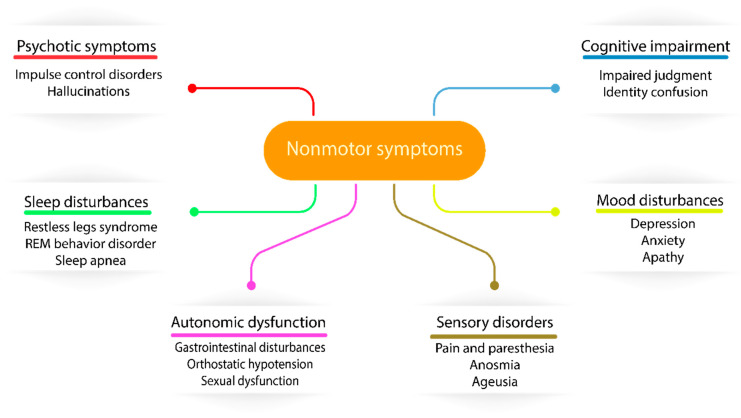
“PD is characterized by motor symptoms such as: a)tremor, b) bradykinesia, c) rigidity, d) Freezing Of Gait and e)dyskinesia and non motor symptoms like a cognitive impairment, mood disturbances, sensory disorders [7].”
BackgroundPerspectives on the urological care in Parkinson’s disease patients
Moussa, M. A., Chakra, M. A., Papatsoris, A., Dellis, A., Dabboucy, B., Peyromaure, M., Delongchamps, N. B., Bailly, H., & Duquesne, I. (2022) · Archivio Italiano di Urologia e Andrologia · doi:10.4081/aiua.2022.1.107 · Cited by 8
“…rest tremor, rigidity, and loss of postural reflexes are the most commonly identified motor symptoms of PD, although other clinical features can also be identified during disease progressions, such as bulbar dysfunction, neuro-ophthalmological abnormalities, and respiratory disturbances (36).”
Wal, P., Verma, N., Saxena, B., Singh, D., Wal, A., Ved, A., Rai, A. K., & Sahani, V. (2024) · The Natural Products Journal · doi:10.2174/0122103155270841231122100242 · Cited by 9
Perez-Abshana, L. P., Mendivil‐Perez, M., Velez‐Pardo, C., & Jiménez-Del-Río, M. (2025) · NeuroMolecular Medicine · doi:10.1007/s12017-025-08864-y · Cited by 6
“…(PD) is a chronic and progressive neurodegenerative disorder mainly characterized by resting tremor, bradykinesia, rigidity, and loss of postural reflexes (Váradi, 2020) caused by the deterioration of dopaminergic (DAergic) neurons from the pars compacta of the substantia nigra (Forno, 1996).”
Shan, W. P., Yan, S. L., Guo, Y., Yang, H. J., Wang, J. C., & Xiang, J. (2025) · Frontiers in Aging Neuroscience · doi:10.3389/fnagi.2025.1630003 · Cited by 7
“PD patients typically have resting tremor, muscle rigidity, bradykinesia, and postural and balance problems (Váradi, 2020; Öksüz et al., 2022).”
Ramirez, S. P., Hernandez, I., Dorado, Z. N., Loyola, C. D., Roberson, D. A., & Joddar, B. (2024) · ACS Omega · doi:10.1021/acsomega.4c03952 · Cited by 9
“35 Several pathological mechanisms contribute to the degeneration of DA neurons in PD, including alpha-synuclein aggregation, mitochondrial dysfunction, and oxidative stress.”
BackgroundHallbeck, M., Ekmark‐Lewén, S., Kahle, P. J., Ingelsson, M., & Reyes, J. F. (2024) · iScience · doi:10.1016/j.isci.2024.111448 · Cited by 7
An optimized Parkinson's disorder identification through evolutionary fast learning network
Ayoub, B., & Taleb, N. (2021) · International Journal of Intelligent Computing and Cybernetics · doi:10.1108/ijicc-07-2021-0138 · Cited by 6
Sharma, K., Shanbhog, M., & Singh, K. (2025) · Asian Journal of Psychiatry · doi:10.1016/j.ajp.2025.104537 · Cited by 5
The Possible Impact of Montelukast in Parkinson’s Disease: A Substantial Contribution
Turkistani, A. A., Al-Kuraishy, H. M., Al-Gareeb, A. I., Eliwa, D., Alexiou, A., Alnoaman, H., Papadakis, M., & Batiha, G. E. (2026) · Journal of Geriatric Psychiatry and Neurology · doi:10.1177/08919887251409836 · Cited by 6
“31 It is usually stated that around 50% reduction is when motor symptoms manifest.”
Symptomatology and Clinical Features of Parkinson's Disease
Khiat, A. E., El‐Mansoury, B., Ali, D. A., Koutbi, M. E., Kaoutar, K., Hamdan, Y. A., Houate, B. E., Tamegart, L., Smimih, K., Hakam, A., et al. (2023) · Advances in medical diagnosis, treatment, and care (AMDTC) book series · doi:10.4018/978-1-6684-5156-4.ch002 · Cited by 7
Savall, A. S. P., de Mello, J. D., Fidélis, E. M., Bortolotto, V. C., Dahleh, M. M. M., Guerra, G. P., Prigol, M., Puntel, R. L., Boldori, J. R., Denardin, C. C., et al. (2025) · Brain Sciences · doi:10.3390/brainsci15010041 · Cited by 7
Basal ganglia connectivity and network asymmetry in Parkinson’s disease: A resting-state fMRI study
Liu, Y., Cheng, Y., Chen, T., Wang, J., He, J., Yan, F., & Yan, L. (2025) · Brain Research · doi:10.1016/j.brainres.2025.149576 · Cited by 6
Lapshina, K. V., Abramova, Y. Y., Guzeev, M. A., & Ekimova, I. V. (2022) · Journal of Evolutionary Biochemistry and Physiology · doi:10.1134/s0022093022060308 · Cited by 5
Teppang, K. L., Zhao, Q., & Yang, J. (2023) · Frontiers in Chemistry · doi:10.3389/fchem.2023.1343118 · Cited by 5
“AD is a progressive disease continuum that affects cognition, function, and behavior, while PD is a multi-attribute disorder that combines motor and nonmotor symptoms (Váradi, 2020; Porsteinsson et al., 2021).”
BackgroundPereira, L. G., Rodrigues, P., Viero, F. T., Kudsi, S. Q., Frare, J. M., Rech, C. T., Graiczicki, G., & Trevisan, G. (2024) · Ageing Research Reviews · doi:10.1016/j.arr.2024.102374 · Cited by 7
Surface engineered multimodal magnetic nanoparticles for neurodegenerative diseases
Vardikar, A., Das, U., Mandal, S., Mandlik, S. K., Bari, D. B., Gholap, A. D., Pardeshi, C. V., & Rajput, A. (2024) · Elsevier eBooks · doi:10.1016/b978-0-443-23841-3.00007-8 · Cited by 12
Panda, S. P., Singh, V., Kumar, S., Chaitanya, M., Singh, M., Shanmugam, R., Shakya, P. K., Tatiparthi, R., Thapliyal, S., Chaubey, K. K., et al. (2025) · International Journal of Biological Macromolecules · doi:10.1016/j.ijbiomac.2025.146878 · Cited by 8
Corrêa, É. D. M. S., Christofoletti, G., & de Souza, A. S. (2024) · International Journal of Molecular Sciences · doi:10.3390/ijms25105191 · Cited by 4
Neuroprotective Effect of Abscisic Acid on MPTP‐Induced Parkinson's Disease in Mice
Yang, Z., Liu, T., Kong, X., & Wei, J. (2025) · Molecular Nutrition & Food Research · doi:10.1002/mnfr.70111 · Cited by 6
Dysphonia-based Parkinson's Detection using Deep Learning and Ensemble Techniques
Vegesna, S. A. V., Ginnegolla, S. T., Yeruva, R. R., Arimanda, V. R., & Boda, S. (2023) · International Conference on Advanced Computing and Communication Systems (ICACCS) · doi:10.1109/icaccs57279.2023.10112746 · Cited by 5
“Non-motor symptoms include disturbances in sleep, neuropsychological and autonomic dysfunction, cognitive impairment and depression [7][8][9].”
Background
Metadata
- Authors
- Váradi, C.
- Affiliations
- University of Miskolc (HU)
- Corresponding author
- Váradi, Csaba
- ORCID
- Váradi, Csaba
- Venue
- Biology
- Publisher
- MDPI AG
- Published
- 2020-05-19
- Volume
- 9
- Issue
- 5
- Pages
- 103
- ISSN
- 2079-7737 (ISSN-L)
- PMC
- PMC7285080
- OpenAlex
- W3026274149
- Cited by
- 196
- References
- 89
- Citations by year
- 2026: 38 · 2025: 42 · 2024: 49 · 2023: 34 · 2022: 13 · 2021: 17 · 2020: 3
- FWCI
- 1.89
- Type
- journal article
- Language
- en
- Open access
- gold
- dx.doi.org
- Licence
- Locations
- Biology (publishedVersion, cc-by)
- PubMed Central (publishedVersion, cc-by)
- PubMed (publishedVersion)
- DOAJ (DOAJ: Directory of Open Access Journals) (submittedVersion, cc-by-sa)
- Funders
- European Regional Development Fund (GINOP-2.3.4-15-2016-00004)
- Topics
- Health Sciences › Medicine › Clinical Neurology › Parkinson's Disease Mechanisms and Treatments
- Health Sciences › Medicine › Psychiatry and Mental health › Dementia and Cognitive Impairment Research
- Health Sciences › Medicine › Clinical Neurology › Deep Brain Stimulation and Movement Disorders
- Keywords
- Parkinson's disease, motor symptoms, non-motor symptoms, prodromal Parkinson's disease, bradykinesia, resting tremor, rigidity, postural reflexes, levodopa therapy, disease progression, neurodegeneration, neuroprotective therapy, diagnosis
About these checks
Registry, retraction, Cites and statistics results are computed, not judged, with one exception: a printed reference that no index lists is read once by a model before it counts as a citation error. Claims are extracted by a model and kept only when their quote appears verbatim in the text; each cited source is then checked, with a model’s help, for whether it says what the claim relies on. Those verdicts can be wrong — read the claim’s quote and the cited source before relying on one.
Statistics and arithmetic are recomputed, not judged.
Confidence bands are shown only for fields calibrated on our annotated test set. None is calibrated yet, so no band is shown.
What counts as a claim ›How we measure confidence ›How we check this ›
Are you an author, or do you see a problem with this page? Request a review
Data sources
Bibliographic data: Semantic Scholar, OpenAlex, Crossref.
Contains information from the Semantic Scholar Academic Graph Datasets, made available under the ODC Attribution License (ODC-BY 1.0).
Semantic Scholar’s data is described in: Kinney, R., et al. (2023). The Semantic Scholar Open Data Platform. arXiv:2301.10140.
