

Grape Pomace for Topical Application: Green NaDES Sustainable Extraction, Skin Permeation Studies, Antioxidant and Anti-Inflammatory Activities Characterization in 3D Human Keratinocytes
Open accessThe DOI matches its Crossref record; 34 of the 34 references it cites were found in a registry or an index.
Abstract
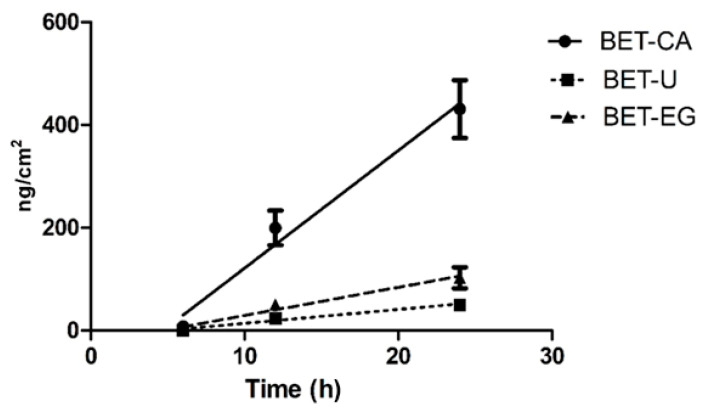
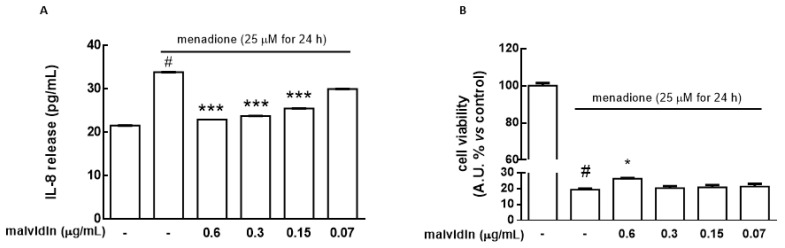
Food waste is a global problem due to its environmental and economic impact, so there is great demand for the exploitation of new functional applications. The winemaking process leads to an incomplete extraction of high-value compounds, leaving the pomace still rich in polyphenols. This study was aimed at optimising and validating sustainable routes toward the extraction and further valorisation of these polyphenols, particularly for cosmeceutical applications. New formulations based on red grape pomace polyphenols and natural deep eutectic solvents (NaDESs) were here investigated, namely betaine combined with citric acid (BET-CA), urea (BET-U) and ethylene glycol (BET-EG), in which DESs were used both as extracting and carrying agents for polyphenols. The flavonoid profile determined by HPLC-MS/MS analysis showed similar malvidin content (51–56 μg mL−1) in the DES combinations, while BET-CA gave the best permeation performance in Franz cells, so it was further investigated in 3D human keratinocytes (HaCat spheroids) injured with the pro-oxidant agent menadione. BET-CA treatment showed good intracellular antioxidant activity (IC50 0.15 ± 0.02 μg mL−1 in malvidin content) and significantly decreased (p < 0.001) the release of the pro-inflammatory cytokine IL-8, improving cell viability. Thus, BET-CA formulation is worthy of investigation for potential use as a cosmetic ingredient to reduce oxidative stress and inflammation, which are causes of skin aging.
Overview
The claims and statistics of this paper haven’t been checked yet.
Free: it reads the open-access text and checks the first 5 claims that cite a source we can check. Create a free account to check every claim.
Integrity signals
Registry
Cites
Statistics
Figures
Verification
Claims the paper makes
The claims and statistics of this paper haven’t been checked yet.
Free: it reads the open-access text and checks the first 5 claims that cite a source we can check. Create a free account to check every claim.
Claims other papers make about this one
Each is checked against this paper’s own text: does it say what the citing paper says it does?
The cited source says what the claim attributes to it.
In the citing paper
“Preliminary findings indicate that extracts prepared using NaDESs can enhance the bioavailability of molecules in topical products [86].”
From Innovative Approaches to an Eco-Friendly Cosmetic Industry: A Review of Sustainable Ingredients (2024) · cites this paper as [86]
Self-check
Percentages, sums and reported differences re-computed from the paper’s own numbers.
The self-check needs the paper’s full text.
Citations
Cites
Normal keratinization in a spontaneously immortalized aneuploid human keratinocyte cell line.
Boukamp, P., Petrussevska, R. T., Breitkreutz, D., Hornung, J., Markham, A., & Fusenig, N. E. (1988) · The Journal of cell biology · doi:10.1083/jcb.106.3.761 · Cited by 4,170 · cited 1×
“Keratinocytes play a major role in the structural and barrier functions of the epidermis [7], so they have been regarded as a prime choice for non-animal skin toxicity assessment to evaluate grape pomace bioactivity [8,9].”
BackgroundLee, J., Durst, R. W., Wrolstad, R. E., Collaborators:, Eisele, T., Giusti, M. M., Hach�, J., Hofsommer, H., Koswig, S., Krueger, D. A., et al. (2005) · Journal of AOAC INTERNATIONAL · doi:10.1093/jaoac/88.5.1269 · Cited by 3,012 · cited 1×
“Anthocyanins are extremely unstable and their degradation during processing is influenced by several factors, including pH [17] and light [18], so the extraction process is crucial in maintaining the stability of these compounds.”
BackgroundKurutas, E. B. (2015) · Nutrition Journal · doi:10.1186/s12937-016-0186-5 · Cited by 2,152
A critical review of methods for characterisation of polyphenolic compounds in fruits and vegetables
Ignat, I., Volf, I., & Popa, V. I. (2011) · Food Chemistry · doi:10.1016/j.foodchem.2010.12.026 · Cited by 1,469 · cited 1×
“The conventional extraction of polyphenols uses volatile, toxic and flammable organic solvents and usually mixtures of solvents in a multiple-step process, which can be time-consuming and expose the operator and the overall plant to different levels of risk [19].”
BackgroundBy-products of plant food processing as a source of functional compounds—Recent developments
Schieber, A., Stintzing, F. C., & Carle, R. (2001) · Trends in Food Science & Technology · doi:10.1016/s0924-2244(02)00012-2 · Cited by 1,334 · cited 1×
“During winemaking, only a minor part of the grape’s phytochemicals are extracted into the wine, so grape pomace, representing about 20%wt of the processed grapes, is enriched in high-value compounds, such as polyphenols [3].”
BackgroundRuesgas-Ramón, M., Figueroa-Espinoza, M. C., & Durand, E. (2017) · Journal of Agricultural and Food Chemistry · doi:10.1021/acs.jafc.7b01054 · Cited by 790 · cited 1×
“NaDESs are playing an increasingly relevant role in the field of the extraction of polar molecules (like polyphenols) from natural matrices [5]; however, the use of NaDESs as polyphenols carriers, incorporating NaDESs into bioactive formulations, is a relatively new concept [6].”
BackgroundPassive skin penetration enhancement and its quantification in vitro
Moser, K. (2001) · European Journal of Pharmaceutics and Biopharmaceutics · doi:10.1016/s0939-6411(01)00166-7 · Cited by 553 · cited 1×
“Their skin penetration can be enhanced by a proper formulation that constitutes a complex of the excipients and vehicles used, allowing the partition in the lipid domain of the skin structure [27].”
BackgroundSafety assessment on polyethylene glycols (PEGs) and their derivatives as used in cosmetic products
Fruijtier-Pölloth, C. (2005) · Toxicology · doi:10.1016/j.tox.2005.06.001 · Cited by 407 · cited 1×
“The single components were chosen based on their skin compatibility, being allowed by the European Union for cosmetic products or regularly used as active materials in cosmetic products: betaine is allowed as an antistatic/viscosity controlling agent [22], urea is allowed as an antistatic/humectant/skin conditioning a…”
BackgroundPanuwet, P., Hunter, R. E., D'Souza, P. E., Chen, X., Radford, S. A., Cohen, J. R., Marder, M. E., Kartavenka, K., Ryan, P. B., & Barr, D. B. (2016) · Critical Reviews in Analytical Chemistry · doi:10.1080/10408347.2014.980775 · Cited by 394 · cited 1×
“In all the studies, matrix effect values were negligible, always being below 10% [24].”
BackgroundCytokines and the Skin Barrier
Hänel, K., Cornelissen, C., Lüscher, B., & Baron, J. (2013) · International Journal of Molecular Sciences · doi:10.3390/ijms14046720 · Cited by 305 · cited 1×
“Keratinocytes play a major role in the structural and barrier functions of the epidermis [7], so they have been regarded as a prime choice for non-animal skin toxicity assessment to evaluate grape pomace bioactivity [8,9].”
BackgroundFaggian, M., Sut, S., Perissutti, B., Baldan, V., Grabnar, I., & Dall’Acqua, S. (2016) · Molecules · doi:10.3390/molecules21111531 · Cited by 237
1,4-Naphthoquinones: From Oxidative Damage to Cellular and Inter-Cellular Signaling
Klotz, L.-O., Hou, X., & Jacob, C. (2014) · Molecules · doi:10.3390/molecules190914902 · Cited by 229 · cited 6×
“Lactate dehydrogenase (LDH) release from HaCaT spheroids was monitored by collecting aliquots of the medium using a standard spectrophotometric method [14].”
MethodInfluentialYe, S., Hananya, N., Green, O., Chen, H., Zhao, A. Q., Shen, J., Shabat, D., & Yang, D. (2020) · Angewandte Chemie International Edition · doi:10.1002/anie.202005429 · Cited by 185 · cited 1×
“The selectivity against H2O2 is due to the salicylaldehyde (the sensing moiety) in the aromatic ring of the aryl-adamantylidene−dioxetane CL probe [31]; indeed, upon reaction with H2O2, the salicylaldehyde is oxidized to a catechol, followed by a subsequent ether cleavage to unmask the phenoxy-dioxetane, which further…”
BackgroundTopical and Transdermal Drug Delivery: Principles and Practice
(2011) · Wiley eBooks · doi:10.1002/9781118140505 · Cited by 174 · cited 1×
“In order to exert their biological effects, they must be released from the developed topical formulations on the skin surface, overcome the barrier function of the stratum corneum (SC) and penetrate into the epidermis and dermis [25].”
BackgroundCytotoxicity profiling of deep eutectic solvents to human skin cells
Macário, I. P. E., Oliveira, H., Menezes, A. C., Ventura, S. P. M., Pereira, J. L., Gonçalves, A. M. M., Coutinho, J. A. P., & Gonçalves, F. J. M. (2019) · Scientific Reports · doi:10.1038/s41598-019-39910-y · Cited by 168 · cited 1×
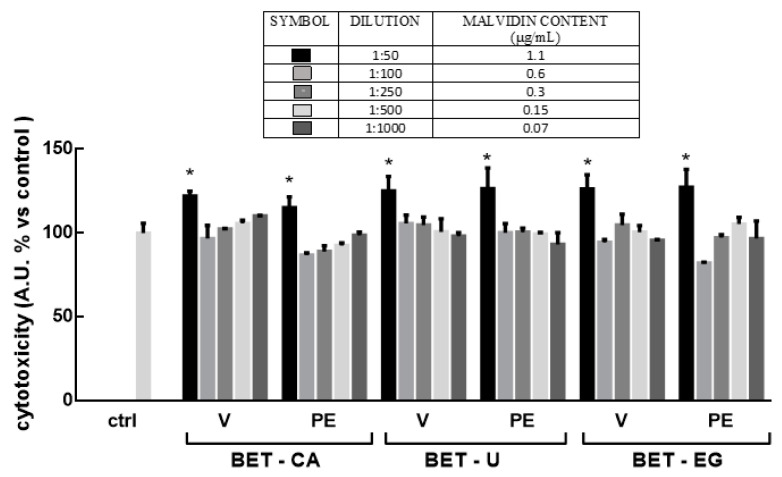
“These data are in line with previous results obtained in 2D HaCat [30], showing good biocompatibility for the tested cells.”
ResultAntoniolli, A., Fontana, A. R., Piccoli, P., & Bottini, R. (2015) · Food Chemistry · doi:10.1016/j.foodchem.2015.01.082 · Cited by 167
Benvenutti, L., Sanchez-Camargo, A. D. P., Zielinski, A. A. F., & Ferreira, S. R. S. (2020) · Journal of Molecular Liquids · doi:10.1016/j.molliq.2020.113761 · Cited by 162 · cited 1×
“This relatively new approach makes it possible to exploit the peculiarities of these new solvents, which are non-volatile and biocompatible, thus creating novel NaDES-based materials and at the same time improving the bioavailability, diffusion and transport of polyphenols, as well as maintaining their stability [21].”
BackgroundEffect of temperature and pH on stability of anthocyanin obtained from blueberry
Liu, Y., Liu, Y., Cui, T., Liu, M., Pan, Y., & Lv, Z. (2018) · Journal of Food Measurement & Characterization · doi:10.1007/s11694-018-9789-1 · Cited by 160 · cited 1×
“Since anthocyanins are more stable at low pH (acidic conditions) [29], we hypothesized that the BET-CA formulation preserved the stability of this molecule.”
BackgroundReady-to-use green polyphenolic extracts from food by-products
Panić, M., Stojković, M. R., Kraljić, K., Škevin, D., Redovniković, I. R., Srček, V. G., & Radošević, K. (2019) · Food Chemistry · doi:10.1016/j.foodchem.2019.01.061 · Cited by 159 · cited 1×
“Since several reports have shown that the NaDES extraction method makes it possible to obtain an higher content of polyphenolics from food by-products than classical extraction with EtOH, H2O or a mixture of both as a solvent [4,11], in this work, grape pomace polyphenols were only extracted through selected environme…”
MethodPomarici, E., Corsi, A., Mazzarino, S., & Sardone, R. (2021) · Italian Economic Journal · doi:10.1007/s40797-021-00144-5 · Cited by 124 · cited 1×
“Italy is a traditional wine-producing country and one of the world’s leading wine producers, ranked first for volume of exports and second after France for value [2].”
BackgroundHaCaT Cell Line as a Model System for Vitamin D3 Metabolism in Human Skin
Lehmann, B. (1997) · Journal of Investigative Dermatology · doi:10.1111/1523-1747.ep12285640 · Cited by 98 · cited 1×
“Keratinocytes play a major role in the structural and barrier functions of the epidermis [7], so they have been regarded as a prime choice for non-animal skin toxicity assessment to evaluate grape pomace bioactivity [8,9].”
BackgroundImpact of preformulation on drug development
Bharate, S. S., & Vishwakarma, R. A. (2013) · Expert Opinion on Drug Delivery · doi:10.1517/17425247.2013.783563 · Cited by 84 · cited 1×
“From the therapeutic point of view, the bioavailability is a crucial parameter allowing their biological effects [26].”
BackgroundComparison of Ionic Liquids and Chemical Permeation Enhancers for Transdermal Drug Delivery
Qi, Q. M., Duffy, M., Curreri, A. M., Balkaran, J. P. R., Tanner, E. E. L., & Mitragotri, S. (2020) · Advanced Functional Materials · doi:10.1002/adfm.202004257 · Cited by 80 · cited 1×
“NaDESs have recently been proposed as an excellent platform to enable transdermal delivery of various therapeutics, including proteins and siRNA, with a higher capacity for skin permeation and lower tendency to induce skin irritation compared to conventional chemical permeation enhancer (CPE) molecules [20].”
BackgroundIn vitro skin three-dimensional models and their applications
Klicks, J., von Molitor, E., Ertongur-Fauth, T., Rudolf, R., & Hafner, M. (2017) · Journal of Cellular Biotechnology · doi:10.3233/jcb-179004 · Cited by 66 · cited 4×
“[10], to evaluate the suitable and safe concentrations of NaDES formulations and their biological activities.”
BackgroundInfluentialMohamadzadeh, M., Miiller, M., Hultsch, T., Enk, A., Saloga, J., & Knop, J. (1994) · Experimental Dermatology · doi:10.1111/j.1600-0625.1994.tb00292.x · Cited by 60 · cited 1×
“ROS production derived from exposure to environmental and toxic chemicals, along with UV irradiation, induce keratinocytes to release a wide array of mediators, such as interleukin (IL)-8, -6, -1β and tumor necrosis factor α (TNFα) [33,34].”
BackgroundKlicks, J., Maßlo, C., Kluth, A., Rudolf, R., & Hafner, M. (2019) · BMC Cancer · doi:10.1186/s12885-019-5606-4 · Cited by 60 · cited 1×
“The medium culture was the same as 2D HaCaT cells and it was changed every day before experiments to obtain the spheroids’ morphology [12].”
BackgroundHubner, A., Sobreira, F., Vetore Neto, A., Pinto, C. A. S. D. O., Dario, M. F., Díaz, I. E. C., Lourenço, F. R., Rosado, C., Baby, A. R., & Bacchi, E. M. (2019) · Antioxidants · doi:10.3390/antiox8110530 · Cited by 60
Interactions of natural deep eutectic solvents (NADES) with artificial and natural membranes
Nystedt, H. L., Grønlien, K. G., & Tønnesen, H. H. (2021) · Journal of Molecular Liquids · doi:10.1016/j.molliq.2021.115452 · Cited by 55 · cited 1×
“NaDESs show promise as drug carriers in dermal formulations or formulations for local administration in the oral cavity due to their low toxicity, tunability and biodegradability, as well as their solubilizing and stabilizing properties [28].”
BackgroundHübner, A. A., Sarruf, F. D., Oliveira, C. A., Neto, A. V., Fischer, D. C. H., Kato, E. T. M., Lourenço, F. R., Baby, A. R., & Bacchi, E. M. (2020) · Pharmaceutics · doi:10.3390/pharmaceutics12121148 · Cited by 46
Samorì, C., Mazzei, L., Ciurli, S., Cravotto, G., Grillo, G., Guidi, E., Pasteris, A., Tabasso, S., & Galletti, P. (2019) · ACS Sustainable Chemistry & Engineering · doi:10.1021/acssuschemeng.9b03493 · Cited by 39
Self-citationLight sensitivity of elderberry extract. quantum yields for photodegradation in aqueous solution
Carlsen, C. U., & Stapelfeldt, H. (1997) · Food Chemistry · doi:10.1016/s0308-8146(96)00356-1 · Cited by 34 · cited 1×
“Anthocyanins are extremely unstable and their degradation during processing is influenced by several factors, including pH [17] and light [18], so the extraction process is crucial in maintaining the stability of these compounds.”
BackgroundCalabria, D., Guardigli, M., Mirasoli, M., Punzo, A., Porru, E., Zangheri, M., Simoni, P., Pagnotta, E., Ugolini, L., Lazzeri, L., et al. (2020) · Analytical Biochemistry · doi:10.1016/j.ab.2020.113760 · Cited by 30 · cited 5×
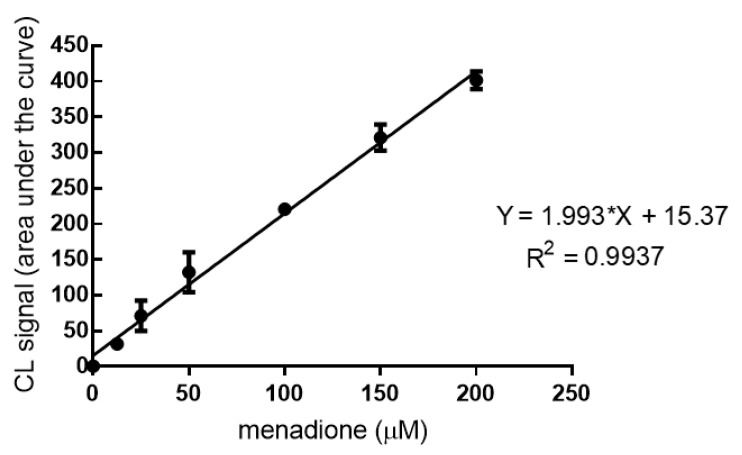
“After this incubation, 50 μL of standard solutions of menadione were dispensed to induce intracellular H2O2 production (final concentration range 5–200 μM) and the CL signal was monitored for 40 min using a LuminoskanTM Ascent luminometric plate reader [13].”
BackgroundMethodSelf-citationPark, K., Lee, J., Cho, H.-C., Cho, S.-Y., & Cho, J.-W. (2010) · Oncology Letters · doi:10.3892/ol_00000051 · Cited by 28 · cited 2×
“ROS production derived from exposure to environmental and toxic chemicals, along with UV irradiation, induce keratinocytes to release a wide array of mediators, such as interleukin (IL)-8, -6, -1β and tumor necrosis factor α (TNFα) [33,34].”
BackgroundCaliceti, C., Capriotti, A. L., Calabria, D., Bonvicini, F., Chiozzi, R. Z., Montone, C. M., Piovesana, S., Zangheri, M., Mirasoli, M., Simoni, P., et al. (2019) · Oxidative Medicine and Cellular Longevity · doi:10.1155/2019/1046504 · Cited by 26 · cited 2×
“The medium derived from HaCaT spheroids, treated for 24 h with different concentrations of NaDES extracts (range in content of malvidin: 0.05–1.1 µg mL−1), was collected and the increase in absorbance between the treatment after 24 h and the control was monitored at 37 ◦C using an Allsheng FlexA-200 Microplate Reader.”
MethodSelf-citation
Cited by
Natural Deep Eutectic Solvents (NaDES): Green Solvents for Pharmaceutical Applications and Beyond
Chevé-Kools, E., Choi, Y. H., Roullier, C., Ruprich-Robert, G., Grougnet, R., Chapeland-Leclerc, F., & Hollmann, F. (2025) · Green Chemistry · doi:10.1039/d4gc06386d · Cited by 156
Mir‐Cerdà, A., Núñez, Ó., Granados, M., Sentellas, S., & Saurina, J. (2023) · TrAC Trends in Analytical Chemistry · doi:10.1016/j.trac.2023.116994 · Cited by 171
Karastergiou, A., Gancel, A., Jourdes, M., & Teissèdre, P. (2024) · Antioxidants · doi:10.3390/antiox13091131 · Cited by 164
“A more detailed discussion on the spectrophotometric methods for estimating phenolic compounds and antioxidant capacity can be found in Section 6.1.”
InfluentialInnovative Approaches to an Eco-Friendly Cosmetic Industry: A Review of Sustainable Ingredients
Sasounian, R., Martinez, R. M., Lopes, A. M., Giarolla, J., Rosado, C., Magalhães, W. V., Velasco, M. V. R., & Baby, A. R. (2024) · Clean Technologies · doi:10.3390/cleantechnol6010011 · Cited by 96
“…of this, several Preliminary findings indicate that extracts prepared using NaDESs can enhance the bioavailability of molecules in topical products [86]. interesting formulations and/or passed through development by beauty brands, such as Pelegrims, by-products Therefore, the extraction methods…”
BackgroundZhou, M., Fakayode, O. A., & Li, H. (2023) · Molecules · doi:10.3390/molecules28196852 · Cited by 104
“Based on the beneficial impact on keratinocyte growth, it is highly suggested that the polyphenol-rich NADESs extract can be readily used in the cos etic industry [21,22].”
Metadata
- Authors
- Punzo, A., Porru, E., Silla, A., Simoni, P., Galletti, P., Roda, A., Tagliavini, E., Samorì, C., & Caliceti, C.
- Affiliations
- University of Bologna (IT)
- Istituto Nazionale Biostrutture e Biosistemi (IT)
- Corresponding author
- Caliceti, Cristiana
- ORCID
- Venue
- Biomolecules
- Publisher
- MDPI AG
- Published
- 2021-08-10
- Volume
- 11
- Issue
- 8
- Pages
- 1181
- ISSN
- 2218-273X (ISSN-L)
- PMC
- PMC8393215
- OpenAlex
- W3191298339
- Cited by
- 58
- References
- 34
- Citations by year
- 2026: 10 · 2025: 17 · 2024: 19 · 2023: 7 · 2022: 5
- FWCI
- 4.23
- Type
- journal article
- Language
- en
- Open access
- gold
- doi.org
- Licence
- Locations
- Biomolecules (publishedVersion, cc-by)
- PubMed Central (publishedVersion, cc-by)
- PubMed (publishedVersion)
- Archivio istituzionale della ricerca (Alma Mater Studiorum Università di Bologna) (submittedVersion, cc-by)
- DOAJ (DOAJ: Directory of Open Access Journals) (submittedVersion, cc-by-sa)
- Funders
- PROGRAMMA OPERATIVO REGIONALE – FONDO EUROPEO DI SVILUPPO REGIONALE 2014-2020 (POR FESR 2014-2020) - Regione Emilia- Romagna (CUP F72I16000010009)
- Topics
- Health Sciences › Medicine › Biochemistry (medical) › Phytochemicals and Antioxidant Activities
- Life Sciences › Pharmacology, Toxicology and Pharmaceutics › Pharmaceutical Science › Advancements in Transdermal Drug Delivery
- Physical Sciences › Chemistry › Physical and Theoretical Chemistry › Ionic liquids properties and applications
- Keywords
- grape pomace, natural deep eutectic solvents, betaine, citric acid, polyphenols, malvidin, skin permeation, oxidative stress, anti-inflammatory activity, interleukin-8, food waste valorization, cosmeceuticals, skin aging
- MeSH terms
- HaCaT Cells, Anti-Inflammatory Agents, Antioxidants, Cosmetics, Humans, Plant Extracts, Refuse Disposal, Oxidative Stress, Vitis, Polyphenols
About these checks
Registry, retraction, Cites and statistics results are computed, not judged, with one exception: a printed reference that no index lists is read once by a model before it counts as a citation error. Claims are extracted by a model and kept only when their quote appears verbatim in the text; each cited source is then checked, with a model’s help, for whether it says what the claim relies on. Those verdicts can be wrong — read the claim’s quote and the cited source before relying on one.
Statistics and arithmetic are recomputed, not judged.
Confidence bands are shown only for fields calibrated on our annotated test set. None is calibrated yet, so no band is shown.
What counts as a claim ›How we measure confidence ›How we check this ›
Are you an author, or do you see a problem with this page? Request a review
Data sources
Bibliographic data: Semantic Scholar, OpenAlex, Crossref.
Contains information from the Semantic Scholar Academic Graph Datasets, made available under the ODC Attribution License (ODC-BY 1.0).
Semantic Scholar’s data is described in: Kinney, R., et al. (2023). The Semantic Scholar Open Data Platform. arXiv:2301.10140.
