

Sex: A Significant Risk Factor for Neurodevelopmental and Neurodegenerative Disorders
Open accessThe DOI matches its Crossref record; 336 of the 336 references it cites were found in a registry or an index.
Abstract
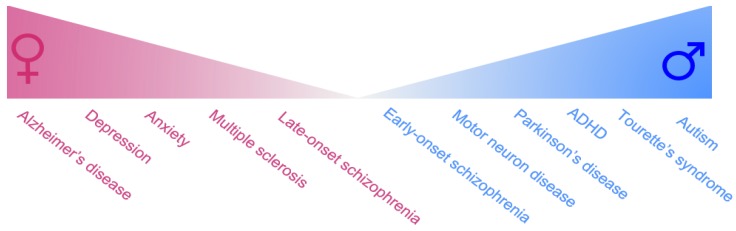
Males and females sometimes significantly differ in their propensity to develop neurological disorders. Females suffer more from mood disorders such as depression and anxiety, whereas males are more susceptible to deficits in the dopamine system including Parkinson’s disease (PD), attention-deficit hyperactivity disorder (ADHD) and autism. Despite this, biological sex is rarely considered when making treatment decisions in neurological disorders. A better understanding of the molecular mechanism(s) underlying sex differences in the healthy and diseased brain will help to devise diagnostic and therapeutic strategies optimal for each sex. Thus, the aim of this review is to discuss the available evidence on sex differences in neuropsychiatric and neurodegenerative disorders regarding prevalence, progression, symptoms and response to therapy. We also discuss the sex-related factors such as gonadal sex hormones and sex chromosome genes and how these might help to explain some of the clinically observed sex differences in these disorders. In particular, we highlight the emerging role of the Y-chromosome gene, SRY, in the male brain and its potential role as a male-specific risk factor for disorders such as PD, autism, and ADHD in many individuals.
Overview
The claims and statistics of this paper haven’t been checked yet.
Free: it reads the open-access text and checks the first 5 claims that cite a source we can check. Create a free account to check every claim.
Integrity signals
Registry
Cites
Statistics
Figures
Verification
Claims the paper makes
The claims and statistics of this paper haven’t been checked yet.
Free: it reads the open-access text and checks the first 5 claims that cite a source we can check. Create a free account to check every claim.
Claims other papers make about this one
Each is checked against this paper’s own text: does it say what the citing paper says it does?
In the citing paper
“Preliminary findings indicate that, compared with neurotypical children, male children with Tourette syndrome have alterations in cortical and callosal thickness and basal ganglia volume; these alterations were not observed in female children with Tourette syndrome149,216.”
From Sex and gender in neurodevelopmental conditions (2023) · cites this paper as [216]
Self-check
Percentages, sums and reported differences re-computed from the paper’s own numbers.
The self-check needs the paper’s full text.
Citations
Cites
Neuropathological stageing of Alzheimer-related changes.
Braak, H., & Braak, E. (1991) · Acta Neuropathologica · doi:10.1007/bf00308809 · Cited by 16,123 · cited 1×
“The propagation of neuropathological changes in AD is highly characterized, beginning in the entorhinal cortex, before spreading to the hippocampus, basal forebrain, temporal and parietal lobes, and eventually the neocortex [85,86].”
BackgroundUbiquitinated TDP-43 in Frontotemporal Lobar Degeneration and Amyotrophic Lateral Sclerosis
Neumann, M., Sampathu, D. M., Kwong, L. K., Truax, A. C., Micsenyi, M. C., Chou, T. T., Bruce, J., Schuck, T., Grossman, M., Clark, C. M., et al. (2006) · Science · doi:10.1126/science.1134108 · Cited by 6,576
Kalia, L. V., & Lang, A. E. (2015) · The Lancet · doi:10.1016/s0140-6736(14)61393-3 · Cited by 6,184
Baio, J., Wiggins, L., Christensen, D. L., Maenner, M. J., Daniels, J., Warren, Z., Kurzius-Spencer, M., Zahorodny, W., Robinson, C., Rosenberg, et al. (2018) · MMWR. Surveillance Summaries · doi:10.15585/mmwr.ss6706a1 · Cited by 6,078
Dauer, W., & Przedborski, S. (2003) · Neuron · doi:10.1016/s0896-6273(03)00568-3 · Cited by 5,469 · cited 1×
“Motor symptoms of PD are associated with the loss of midbrain dopamine neurons [191].”
BackgroundGlenner, G. G., & Wong, C. W. (1984) · Biochemical and Biophysical Research Communications · doi:10.1016/s0006-291x(84)80190-4 · Cited by 5,404
The worldwide prevalence of ADHD: a systematic review and metaregression analysis
Polanczyk, G., de Lima, M. S., Horta, B. L., Biederman, J., & Rohde, L. A. (2007) · American Journal of Psychiatry · doi:10.1176/ajp.2007.164.6.942 · Cited by 5,346 · cited 1×
“Attention-deficit hyperactivity disorder (ADHD) is the most commonly diagnosed psychiatric disorder in children, affecting approximately 5% of children worldwide, particularly boys [145].”
BackgroundGlobal mortality, disability, and the contribution of risk factors: Global Burden of Disease Study
Murray, C. J., & Lopez, A. D. (1997) · The Lancet · doi:10.1016/s0140-6736(96)07495-8 · Cited by 4,492 · cited 1×
“Depression is a leading cause of suicide [49] characterized by symptoms of depressed mood, lack of drive, anhedonia, changes in appetite, sleep disturbances, feelings of guilt and concentration problems [50–52].”
BackgroundEpidemiology of Parkinson's disease
de Lau, L. M., & Breteler, M. M. (2006) · The Lancet Neurology · doi:10.1016/s1474-4422(06)70471-9 · Cited by 4,110
Gene Action in the X-chromosome of the Mouse (Mus musculus L.)
LYON, M. F. (1961) · Nature · doi:10.1038/190372a0 · Cited by 3,978 · cited 6×
“X-Linked Dosage Effects As females have two X chromosomes, one of the copies of the X chromosome present in females is inactivated in process known as X-inactivation [283], equalizing the gene products of sex chromosomes between the sexes.”
BackgroundInfluential
Cited by
Items 101–200 of 209
Reed, C., Cortese, S., Larsson, H., Galéra, C., Cotton, J., & Brandt, V. C. (2023) · Journal of the American Academy of Child & Adolescent Psychiatry · doi:10.1016/j.jaac.2023.06.016 · Cited by 11
Moëne, O. L., Ramírez‐Rentería, M. L., & Ågmo, A. (2020) · Journal of Neuroendocrinology · doi:10.1111/jne.12902 · Cited by 14
Expression of Dopamine-Related Genes in Four Human Brain Regions
Stanfill, A. G., & Cao, X. (2020) · Brain Sciences · doi:10.3390/brainsci10080567 · Cited by 15
de Assis, D. R., Szabó, A., Osete, J. R., Puppo, F., O’Connell, K. S., Akkouh, I. A., Hughes, T., Frei, E., Andreassen, O. A., & Djurovic, S. (2021) · Cells · doi:10.3390/cells10020209 · Cited by 12
Gu, X., Lin, M. M.-W., Xia, Y., Cheng, X., Pan, H., Cai, M., Jiang, M., & Yao, D. (2026) · Biomedicines · doi:10.3390/biomedicines14030636 · Cited by 10
“In addition, sex differences play a significant role in neurodegeneration [27,28].”
Sex correction improves the accuracy of clinical dopamine transporter imaging
Honkanen, E. A., Noponen, T., Hirvilammi, R., Lindholm, K., Parkkola, R. K., Joutsa, J., Varrone, A., & Kaasinen, V. (2021) · EJNMMI Research · doi:10.1186/s13550-021-00825-3 · Cited by 10
Kiris, E. (2021) · Advances in experimental medicine and biology · doi:10.1007/5584_2021_683 · Cited by 10
Rodek, P., Kowalczyk, M., Kowalski, J., Owczarek, A. J., Choręza, P. S., & Kucia, K. A. (2022) · Journal of Clinical Medicine · doi:10.3390/jcm11195914 · Cited by 10
Kumperščak, H. G., Krgović, D., Radobuljac, M. D., Senica, N., Zagorac, A., & Vokač, N. K. (2021) · Frontiers in Psychiatry · doi:10.3389/fpsyt.2020.606372 · Cited by 10
Kim, H., & Lee, H. (2024) · Ewha Medical Journal · doi:10.12771/emj.2024.e16 · Cited by 11
Gonadal hormone abnormalities in young patients with first-episode schizophrenia
Hu, Q., Wang, J., Liang, J., Xiu, M., Zhang, S., & Wu, F. (2024) · The International Journal of Neuropsychopharmacology · doi:10.1093/ijnp/pyae063 · Cited by 9
Song, S., Xie, H., Wang, Q., Sun, X., Xu, J., Chen, R., Zhu, Y., Jiang, L., & Ding, X. (2025) · Nature Communications · doi:10.1038/s41467-025-59457-z · Cited by 8
Association between intracytoplasmic sperm injection and neurodevelopmental outcomes among offspring
Wang, C., Chang, T., Chuang, N.-C., Au, H., Chen, C., & Tseng, S. (2021) · PLoS ONE · doi:10.1371/journal.pone.0257268 · Cited by 8
Sex-Specific Impacts of Prenatal Stress
Barrett, E. S., & Lessing, J. (2021) · Springer eBooks · doi:10.1007/978-3-030-60159-1_10 · Cited by 8
Sex and gender differences in OCD: A scoping review and a two subtypes hypothesisPreprint
Zandt, M. A. V., Olfson, E., Stahnke, B., Taylor, S., Wise, A., Williams, C., Bloch, M. H., Pittenger, C., & Pushkarskaya, H. (2025) · medRxiv · doi:10.1101/2025.02.08.25321933 · Cited by 11
Vandewouw, M. M., Pang, E. W., Lai, M., Kelley, E. A., Ayub, M., Lerch, J. P., Taylor, M. J., & Anagnostou, E. A. (2023) · iScience · doi:10.1016/j.isci.2023.106384 · Cited by 7
Sex Differences in Epilepsies: A Narrative Review
Asadi‐Pooya, A. A., Alkhaldi, M., Damabi, N. M., & Fazelian, K. (2024) · Archives of Epilepsy · doi:10.4274/archepilepsy.2024.24124 · Cited by 7
“13 Sex chromosome gene expression is sexually dimorphic in the brain in a region-specific and cell type-specific manner.”
Wagnon, I. M., Jabur, L. J., Niedermayer, G., Münch, G. W., Karl, T., Chesworth, R., & Gyengési, E. (2023) · Frontiers in Neuroscience · doi:10.3389/fnins.2023.1267818 · Cited by 6
Palacios‐Garrán, R., Amoretti, S., Serra‐Navarro, M., Torrent, C., Garriga, M., Fares‐Otero, N. E., Sagué‐Vilavella, M., Madero, S., Forte, M. F., Montejo, L., et al. (2024) · Journal of Affective Disorders · doi:10.1016/j.jad.2024.10.002 · Cited by 6
Effect of Methanol Extract of Polygonum minus on Neuropathic Pain and Cognitive Dysfunction in Rats
Christapher, P. V., Muthuraman, A., Zhang, L. S., Jordon, K. S. Y., & Jonathan, K. H. H. (2021) · International journal of Nutrition Pharmacology Neurological Diseases · doi:10.4103/ijnpnd.ijnpnd_109_20 · Cited by 6
Jung, D. H., Lee, H. J., Choi, Y. W., Shin, H. K., & Choi, B. T. (2023) · Biomedicine & Pharmacotherapy · doi:10.1016/j.biopha.2023.114352 · Cited by 6
Franklin, M., Armoskus, C., Taniguchi, S., Moder, C., Trang, K., Santacruz, M., Milla, A., & Tsai, H. (2019) · International Journal of Developmental Neuroscience · doi:10.1016/j.ijdevneu.2019.07.011 · Cited by 6
“Besides normal neural functions, sex or gender diferences are also noted in the prevalence and symptomatology of many neurological diseases and mental illnesses, such as Alzheimer’s disease, autism, depression, and schizophrenia (Bao and Swaab, 2010; Pinares-Garcia et al., 2018).”
BackgroundBon, G. M., Walther, J., Comasco, E., Derntl, B., & Kaufmann, T. (2025) · Communications Biology · doi:10.1038/s42003-025-08866-3 · Cited by 5
“We captured sex differences in limbic and non-limbic structures using machine learning models trained in cross-sectional brain imaging data of 1132 youths, yielding limbic and non-limbic estimates of brain sex.”
Sian‐Hülsmann, J., Knudsen, L. V., Sheldrick, A. J., Riederer, P., & Michel, T. (2026) · Journal of Neural Transmission · doi:10.1007/s00702-025-03078-9 · Cited by 5
Robust but independent sex differences in human brain function, structure, and behavior
Liu, S., Mahony, B. W., Whitman, E. T., Gotts, S. J., Moraczewski, D., Thomas, A., Martin, A. D., & Raznahan, A. (2026) · Nature Communications · doi:10.1038/s41467-026-73262-2 · Cited by 6
Moraga‐Amaro, R., Moreno, Ó., Llop, J., Bankstahl, M., & Bankstahl, J. P. (2025) · Frontiers in Molecular Neuroscience · doi:10.3389/fnmol.2025.1488261 · Cited by 5
Demirsoy, İ. (2025) · Balkan Medical Journal · doi:10.4274/balkanmedj.galenos.2025.2025-2-93 · Cited by 5
“The exact mechanisms behind these sex-specific effects are not yet fully understood but may involve hormonal, genetic, or environmental factors 33 that differently affect tau pathology and its impact on cognition.”
Genetic and Epigenetic Sexual Dimorphism of Brain Cells during Aging
Shirokova, O. M., Zaborskaya, O., Pchelin, P. V., Kozliaeva, E. V., Pershin, V. I., & Mukhina, I. V. (2023) · Brain Sciences · doi:10.3390/brainsci13020195 · Cited by 5
Luca, R. D., Bonanno, M., Morini, E., Marra, A., Arcadi, F. A., Quartarone, A., & Calabrò, R. S. (2023) · Medicina · doi:10.3390/medicina59050845 · Cited by 7
Sex differences and postoperative cognitive dysfunction: Unveiling biological mechanisms
Bonfante, S., Mathias, K., Petronilho, T., Viana, R., Machado, R. S., Barichello, T., & Petronilho, F. C. (2025) · Psychoneuroendocrinology · doi:10.1016/j.psyneuen.2025.107524 · Cited by 4
Yao, J., Feng, G., Shao, G., Wang, Z., Mendizabal, A., Telesca, D., Fang, K., Ibragimova, L., Shoaib, J., Morrison, M. A., et al. (2025) · Movement Disorders · doi:10.1002/mds.70064 · Cited by 4
Wang, C., Wang, Y., & Xu, Q.-H. (2025) · Molecular Diversity · doi:10.1007/s11030-024-11090-6 · Cited by 4
“Previous clinical studies have indicated that PD is more prevalent and severe in men than in women, with men generally experiencing an earlier onset [50, 51].”
Profiles of developmental disorder and associations with gestational age
Pettinger, K. J., Blower, S. L., Boyle, E. M., Hewitt, C. E., & Fraser, L. (2025) · Archives of Disease in Childhood · doi:10.1136/archdischild-2024-327962 · Cited by 4
“ADHD, hyperactivity, impulsivity and inattention, including attention deficit hyperactivity disorder; ASD, autism spectrum disorder; CP, cerebral palsy; DD, developmental delay; EDU, education problem; FEEDING, feeding problems; GEN, general developmental disorder; HI, hearing impairment; ID, intellectual disability;…”
InfluentialBurton, B. K., Andersen, K. K., Greve, A. N., Hemager, N., Spang, K. S., Ellersgaard, D., Christiani, C. J., Gantriis, D. L., Gregersen, M., Søndergaard, A., et al. (2022) · Psychological Medicine · doi:10.1017/s0033291722000265 · Cited by 4
The Y Chromosome Takes the Field to Modify BMPR2 Expression
Frump, A. L., & Lahm, T. (2018) · American Journal of Respiratory and Critical Care Medicine · doi:10.1164/rccm.201809-1682ed · Cited by 4
Weinmar, F., Kogler, L., Rehbein, E., Morawetz, C., Poromaa, I. S., Skalkidou, A., & Derntl, B. (2025) · Imaging Neuroscience · doi:10.1162/imag_a_00529 · Cited by 3
Hu, S., Zhou, C., Zhang, Y., Li, L., & Yu, X. (2025) · International Journal of Molecular Sciences · doi:10.3390/ijms26104760 · Cited by 3
“…sex difference and some variable control (set up additional groups like a sensitization-only group, challenge-only group, and passive systemic group) when we established the food allergy mice model, which might further influence the findings in behavioral changes or mechanism exploration [86,87].”
Singh, P. P., Tanwar, V., Xiang, Y., Najera, L. E., Austad, S. N., & Kapahi, P. (2026) · Cell · doi:10.1016/j.cell.2026.07.013 · Cited by 3
Linking SOX3, SRY, and disorders of neurodevelopment
Tahira, A. C., de Toledo, V. H. C., Feltrin, A. S., Barbosa, A. D. L., Euclydes, V. L. V., Maschietto, M. C., & Brentani, H. (2021) · Elsevier eBooks · doi:10.1016/b978-0-12-817986-4.00013-4 · Cited by 3
The Effect of the Tau Protein on D. melanogaster Lifespan Depends on GSK3 Expression and Sex
Veselkina, E. R., Trostnikov, M. V., Roshina, N. V., & PASYUKOVA, E. G. (2023) · International Journal of Molecular Sciences · doi:10.3390/ijms24032166 · Cited by 3
Chaumeil, J., & Morey, C. (2024) · médecine/sciences · doi:10.1051/medsci/2024179 · Cited by 3
Integrating AYUSH Therapies for the Management of Neurodegenerative Disorders
Prakash, K. A., Nagmoti, D. S., Borkar, M. S., Pannalal, H. K., Dhokchawle, B. V., & Bandaru, N. (2025) · Journal of Natural Remedies · doi:10.18311/jnr/2025/48564 · Cited by 4
Lee, F. Y., Larimore, J. L., Faúndez, V., Dell’Angelica, E. C., & Ghiani, C. A. (2020) · Journal of Neuroscience Research · doi:10.1002/jnr.24620 · Cited by 3
Truong, P. H., Crouch, P. J., Hilton, J. B. W., McLean, C., Cappai, R., & Ciccotosto, G. D. (2021) · Cellular and Molecular Life Sciences · doi:10.1007/s00018-021-03924-5 · Cited by 3
Chelucci, E., Scarfò, G., Piccarducci, R., Rizza, A., Fusi, J., Epifani, F., Carpi, S., Polini, B., Betti, L., Costa, B., et al. (2024) · Journal of Molecular Neuroscience · doi:10.1007/s12031-024-02278-4 · Cited by 3
“…NDs affect both women and men, the female gender is considered a risk factor for dementia development, showing a twofold greater risk at later ages (Pinares-Garcia et al. 2018; Rahman et al. 2019), faster progression of brain atrophy (1–2.5% per year) (Ardekani et al. 2016; Hua et al. 2010), and…”
BackgroundInfluentialOverview of CNS Organization and Development
Brown, R. E. (2023) · Springer eBooks · doi:10.1007/978-3-031-20792-1_1 · Cited by 3
Sex Stratified Treatment of Neurological Disorders: Challenges and Perspectives
Nalvarte, I. (2020) · Brain Sciences · doi:10.3390/brainsci10020103 · Cited by 3
“As Pinares‐Garcia and colleagues point out [3], although gender‐specific medicine is slowly getting recognition, challenges still exist when it comes to its full clinical implementation.”
BackgroundRavishankar, S., Ekambaram, B., Boopathy, N., Sakthivel, S. R., & Christan, M. (2025) · The Journal of Steroid Biochemistry and Molecular Biology · doi:10.1016/j.jsbmb.2025.106908 · Cited by 2
Genetic and environmental regulators of Kcc2/KCC2 gene expression
Yeo, M., & Liedtke, W. (2020) · Elsevier eBooks · doi:10.1016/b978-0-12-815318-5.00013-3 · Cited by 2
Kristjansson, D., Lee, Y., Page, C. M., Gjessing, H. K., Magnus, M. C., Jugessur, A., Lyle, R., & Håberg, S. E. (2024) · Scientific Reports · doi:10.1038/s41598-024-73845-3 · Cited by 2
Hall, M. B., Lemanski, E. A., & Schwarz, J. M. (2025) · Biomolecules · doi:10.3390/biom15030347 · Cited by 2
“Furthermore, since males are more likely than females to be diagnosed with NDDs [43], we also hypothesized that these developmental delays may be more evident in male than female offspring.”
Penson, A., Bucur, I. G., Walraven, I., Grootenhuis, M. A., Maurice‐Stam, H., der Loo, M. V. D. H., van der Pal, H. J. H., de Vries, A. C. H., Bresters, D., van den Heuvel‐Eibrink, M. M., et al. (2025) · Journal of Cancer Survivorship · doi:10.1007/s11764-024-01738-5 · Cited by 2
“Furthermore, sex differences have been associated with (risk factors for) other outcomes as well, e.g., neurological and cardiovascular [48, 49].”
Böttger, L., Bontempi, D., Trofimova, O., Beyeler, M. J., Bors, S., Iuliani, I., Quintas, I., Presby, D. M., Bergin, C., Beyeler, M., et al. (2026) · Communications Biology · doi:10.1101/2025.07.16.665150 · Cited by 2
Zhang, Y., Chen, J., Li, Y., Zhang, L., Chen, Y., Wang, J., Xu, X., Luo, X., & Wang, H. (2025) · Pediatric Allergy and Immunology · doi:10.1111/pai.70249 · Cited by 1
Espinosa‐Oliva, A. M., Vázquez‐Carretero, M. D., Ruiz, R., Roca-Ceballos, M. A., García-Miranda, P., Peral, M. J., Soto, M. S., Herrera, A. J., Venero, J. L., & de Pablos, R. M. (2026) · Frontiers in Immunology · doi:10.3389/fimmu.2025.1637548 · Cited by 1
Arun, N., Frederick, N. M., Tavares, G. A., Vicchiarelli, A., Swaminathan, D., Powers, J., Davalos, D., Bergmann, C. C., & Louveau, A. (2026) · Journal of Neuroinflammation · doi:10.1186/s12974-026-04046-0 · Cited by 1
Zanca, F., Caporusso, E., Giordano, G. M., & Galderisi, S. (2022) · Oxford University Press eBooks · doi:10.1093/med/9780198861478.003.0023 · Cited by 1
Sex Differences in Huntington’s Disease: Considerations for Clinical Care and Research Trials
Rocha, N. P., Teixeira, A. L., & Furr-Stimming, E. E. (2023) · Contemporary clinical neuroscience · doi:10.1007/978-3-031-32815-2_19 · Cited by 1
Manabe, S., Ochi, S., Kikkawa, T., Naher, S., Saeki, M., Yamada, K., Kosako, H., Kishi, Y., Sawasaki, T., & Osumi, N. (2025) · bioRxiv (Cold Spring Harbor Laboratory) · doi:10.1101/2025.10.19.683266 · Cited by 1
Adolescent Educational Assessment
Spinner, S., Vaccaro, B. G., & Rudolph, B. D. (2019) · Elsevier eBooks · doi:10.1016/b978-0-323-66130-0.00008-9
Neuropeptide cocaine- and amphetamine-regulated transcript usage in Parkinson's disease
Mao, P., & Mao, Y. V. (2020) · Elsevier eBooks · doi:10.1016/b978-0-12-815946-0.00039-9
Welch, B., Heck, D. E., & Kim, H. D. (2020) · GSC Biological and Pharmaceutical Sciences · doi:10.30574/gscbps.2020.12.2.0226
“Interestingly enough, being male is also considered a genetic risk factor for developing PD [11].”
BackgroundComparação de redes de regulação gênica da placenta em resposta à exposição ao estresse entre sexos
Barbosa, A. D. L. (2020) · Digital Library of Theses and Dissertations (Universidade de São Paulo) · doi:10.11606/t.95.2020.tde-09122020-200928
Maternal DHA Impact on Child Neurodevelopment
Duttaroy, A. K. (2021) · MDPI eBooks · doi:10.3390/books978-3-0365-1615-8
Age and Sex Differentially Affect Structural Networks in Parkinson's DiseasePreprint
Chen, Z., Wu, B., Li, G., Zhou, L., Zhang, L., & Liu, J. (2021) · SSRN Electronic Journal · doi:10.2139/ssrn.3901768
Implications of sex-specific differences on clinical studies of human health
Piñero, J., Quevenco, F., Furlong, L. I., & Güney, E. (2022) · Elsevier eBooks · doi:10.1016/b978-0-12-821392-6.00011-x
Diferenças sexuais nas redes de regulação gênica durante o período fetal do neurodesenvolvimento
de Toledo, V. H. C. (2022) · Digital Library of Theses and Dissertations (Universidade de São Paulo) · doi:10.11606/d.5.2022.tde-01022023-092430
Role of Gender and Neurodevelopmental Disabilities
Greydanus, D. E., Patel, D. R., & Merrick, J. (2023) · Springer eBooks · doi:10.1007/978-3-031-20792-1_41
Cezar, L. C. (2022) · Digital Library of Theses and Dissertations (Universidade de São Paulo) · doi:10.11606/t.10.2022.tde-20012023-112002
محمد, ت. م. ف. (2023) · Mağallaẗ Al-Qirā'aẗ wa Al-Maʿrifaẗ/Mağallaẗ Al-Qirā'aẗ wa Al-Maʿrifaẗ · doi:10.21608/mrk.2023.317222
Rurak, G. M. (2023) · Carleton University's Institutional Repository (MacOdrum Library, Carleton University) · doi:10.22215/etd/2023-15750
Garg, P., Jamal, F., & Srivastava, P. (2024) · Bioinformatics and Biology Insights · doi:10.1177/11779322231224665
“43 In the case of glycerol kinase deficiency (GKD), glycerol accumulates in the bloodstream and can lead to an infantile or juvenile form of GKD.”
BackgroundSex differences in brain aging
Goyal, M. S., Gordon, B. A., & Resnick, S. M. (2024) · Elsevier eBooks · doi:10.1016/b978-0-12-820480-1.00090-5 · Cited by 1
Brain Health of Women Beyond Middle Age: Hormonal and Non-hormonal Perspectives
Bhandari, A., Sharma, A., & Singh, H. (2024) · Healthy ageing and longevity · doi:10.1007/978-3-031-68513-2_20
Biological Sex Determines Differences in Gene Expression During Replicative Aging of Glia in Vitro
Shirokova, O. M., Vasilchikov, P. I., Kozliaeva, E. V., Александровна, К. С., & Mukhina, I. V. (2024) · International Conference Neurotechnologies and Neurointerfaces (CNN) · doi:10.1109/cnn63506.2024.10705843
“Despite the fact that the differences in prevalence of major diseases between men and women have been well-studied [2, 3], their explanation from a molecular biology perspective is currently poorly represented in the literature.”
BackgroundSex Differences: Cultural Considerations
Pérez, Y. G. C., & Araúz, G. L. M. (2025) · Springer eBooks · doi:10.1007/978-3-031-08956-5_257-1
van Hoorn, J. F., Gemert, S. L. B., Schoemaker, M. M., Stuive, I., van der Sluis, C. K., & Hadders‐Algra, M. (2025) · Acta Paediatrica · doi:10.1111/apa.70050
“Complex interactions between hormonal, genetic, and environmental factors were contributing to the higher prevalence in boys [21, 22].”
Schuurmans, I. M. E., Mordelt, A., & de Witte, L. D. (2025) · Handbook of clinical neurology · doi:10.1016/b978-0-443-19104-6.00011-5 · Cited by 1
Linking climate change to self-harm: A global study of over 200 countries from 1990 to 2020
Ni, D., Hickie, I. B., Howden, M. S., & Nanan, R. K. H. (2026) · F1000Research · doi:10.1101/2025.08.04.25332918
“These prominent differences might stem from biological differences between gender over the lifespan such as neurodevelopmental and/or hormonal determinants 33-35 , as well as socioeconomic and cultural factors like livelihood and mood management 36-39 .”
Sex-specific disease association and genetic architecture of retinal vascular traitsPreprint
Bergmann, S., Böttger, L., Bontempi, D., Trofimova, O., Beyeler, M. J., Bors, S., Iuliani, I., Quintas, I., & Presby, D. M. (2025) · Research Square · doi:10.21203/rs.3.rs-7472272/v1 · Cited by 3
McCaffrey, T. A., St. Laurent, G., Shtokalo, D., Антонец, Д., Vyatkin, Y., Jones, D., Battison, E., & Nigg, J. T. (2020) · Figshare · doi:10.6084/m9.figshare.13161006
Bon, G. M., Kraft, D., Comasco, E., Derntl, B., & Kaufmann, T. (2024) · Figshare · doi:10.6084/m9.figshare.26721249
Hall, M. B. (2024) · Library, Museums and Press - UDSpace (University of Delaware) · doi:10.58088/at11-n282
McCaffrey, T. A., St. Laurent, G., Shtokalo, D., Антонец, Д., Vyatkin, Y., Jones, D., Battison, E., & Nigg, J. T. (2020) · Figshare · doi:10.6084/m9.figshare.13160997
McCaffrey, T. A., St. Laurent, G., Shtokalo, D., Антонец, Д., Vyatkin, Y., Jones, D., Battison, E., & Nigg, J. T. (2020) · Figshare · doi:10.6084/m9.figshare.13161003
Bon, G. M., Kraft, D., Comasco, E., Derntl, B., & Kaufmann, T. (2024) · Figshare · doi:10.6084/m9.figshare.26721252
Pękała, M. (2024) · RCIN (Digital Repository of the Scientifics Institutes) (Institute of Archaeology and Ethnology of the Polish Academy of Sciences)
Pottmeier, P. (2023) · Uppsala University Publications (Uppsala University)
Capdevila, M. L. (2024) · Tesis Doctorals en Xarxa (Consorci de Serveis Universitaris de Catalunya) · Cited by 2
Sex-Specific Insights in Neuroscience: From Brain Structure to Mental Health Interventions
Kim, H., & Lee, H. (2026) · Springer eBooks · doi:10.1007/978-981-95-2070-1_4
Tieu, T. (2025) · ResearchWorks at the University of Washington (University of Washington)
Modeling Sex Differences and Neurodegeneration in Repetitive Traumatic Brain Injury Using DrosophilaPreprint
Katchur, N. J., Yeager, J., Schneper, L. M., Savas, H. G., & Notterman, D. A. (2026) · bioRxiv (Cold Spring Harbor Laboratory) · doi:10.64898/2026.02.27.708626
“TBI exposure lowers the age for cognitive decline onset, (3) and several studies suggest that biological sex is a significant risk factor for neurodegeneration (4–6).”
Rehel, S. (2019) · theses.fr (ABES) · doi:10.70675/b600c245z51b5z41bbz9b4cze94f8bfd6a4a · Cited by 2
Gauthier, K. (2021) · theses.fr (ABES) · doi:10.70675/e93bfacdzd348z45e6zac53zf9c5f7e715bf
Régulation et conséquences fonctionnelles de la SUMOylation à la synapse
Pronot, M. (2021) · theses.fr (ABES) · doi:10.70675/0cc383a3zd601z46d1zb306z458f667d5df9
Targeting Estrogen Receptors: A Molecular Approach to Combat Neurodegenerative Diseases
Ghosh, D., & Karati, D. (2026) · Neurology and Clinical Neuroscience · doi:10.1002/ncn3.70103
ADHD and physical health: comorbidity and risk factors
Reed, C. (2026) · ePrints Soton (University of Southampton) · doi:10.5258/soton/pg/t167
Duodenal microbiome profiles exhibit sex-specific differences
Rashid, M. A., Leite, G., Barlow, G. M., Hosseini, A., Brimberry, D., Flor, D., Parodi, G., Sanchez, M., Rivera, I., Trujillo, A., et al. (2026) · iScience · doi:10.1016/j.isci.2026.116679
“…and men—auto-immune disorders are far more prevalent in women than in men, 17 as is Alzheimer’s disease, 18 whereas neurodevelopmental conditions such as autism spectrum disorders (ASDs) and attention deficit hyperactivity disorder (ADHD) are more prevalent in men, 19 as is Parkinson’s disease.”
Metadata
- Authors
- Pinares-Garcia, P., Stratikopoulos, M., Zagato, A., Loke, H., & Lee, J.
- Affiliations
- Hudson Institute of Medical Research (AU)
- Deakin University (AU)
- Corresponding author
- Lee, Joohyung
- Venue
- Brain Sciences
- Publisher
- MDPI AG
- Published
- 2018-08-13
- Volume
- 8
- Issue
- 8
- Pages
- 154
- ISSN
- 2076-3425 (ISSN-L)
- PMC
- PMC6120011
- OpenAlex
- W2887447243
- Cited by
- 200
- References
- 336
- Citations by year
- 2026: 17 · 2025: 25 · 2024: 25 · 2023: 28 · 2022: 22 · 2021: 32 · 2020: 27 · 2019: 20 · 2018: 4
- FWCI
- 3.77
- Type
- journal article
- Language
- en
- Open access
- gold
- dx.doi.org
- Licence
- Locations
- Brain Sciences (publishedVersion, cc-by)
- Europe PMC (PubMed Central) (publishedVersion, cc-by)
- PubMed Central (publishedVersion, cc-by)
- PubMed (publishedVersion)
- Monash University Research Portal (Monash University) (submittedVersion, other-oa)
- DOAJ (DOAJ: Directory of Open Access Journals) (submittedVersion, cc-by-sa)
- Funders
- State Government of Victoria
- Topics
- Health Sciences › Medicine › Public Health, Environmental and Occupational Health › Sex and Gender in Healthcare
- Health Sciences › Medicine › Endocrinology, Diabetes and Metabolism › Sexual Differentiation and Disorders
- Life Sciences › Biochemistry, Genetics and Molecular Biology › Genetics › Genetic and Clinical Aspects of Sex Determination and Chromosomal Abnormalities
- Keywords
- sex differences, neurodevelopmental disorders, neurodegenerative diseases, Parkinson's disease, attention deficit hyperactivity disorder, autism spectrum disorder, depression, anxiety, dopaminergic system, sex hormones, sex chromosome genes, SRY gene, male brain, treatment response, sex-specific treatment
About these checks
Registry, retraction, Cites and statistics results are computed, not judged, with one exception: a printed reference that no index lists is read once by a model before it counts as a citation error. Claims are extracted by a model and kept only when their quote appears verbatim in the text; each cited source is then checked, with a model’s help, for whether it says what the claim relies on. Those verdicts can be wrong — read the claim’s quote and the cited source before relying on one.
Statistics and arithmetic are recomputed, not judged.
Confidence bands are shown only for fields calibrated on our annotated test set. None is calibrated yet, so no band is shown.
What counts as a claim ›How we measure confidence ›How we check this ›
Are you an author, or do you see a problem with this page? Request a review
Data sources
Bibliographic data: Semantic Scholar, OpenAlex, Crossref.
Contains information from the Semantic Scholar Academic Graph Datasets, made available under the ODC Attribution License (ODC-BY 1.0).
Semantic Scholar’s data is described in: Kinney, R., et al. (2023). The Semantic Scholar Open Data Platform. arXiv:2301.10140.
