

Sex: A Significant Risk Factor for Neurodevelopmental and Neurodegenerative Disorders
Open accessThe DOI matches its Crossref record; 336 of the 336 references it cites were found in a registry or an index.
Abstract
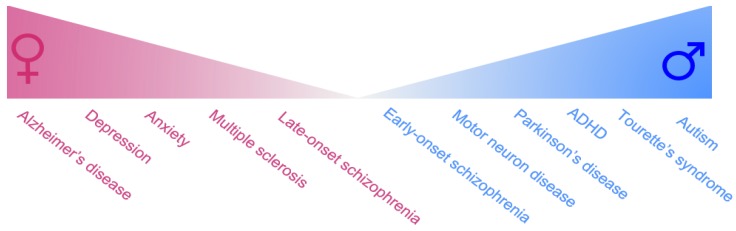
Males and females sometimes significantly differ in their propensity to develop neurological disorders. Females suffer more from mood disorders such as depression and anxiety, whereas males are more susceptible to deficits in the dopamine system including Parkinson’s disease (PD), attention-deficit hyperactivity disorder (ADHD) and autism. Despite this, biological sex is rarely considered when making treatment decisions in neurological disorders. A better understanding of the molecular mechanism(s) underlying sex differences in the healthy and diseased brain will help to devise diagnostic and therapeutic strategies optimal for each sex. Thus, the aim of this review is to discuss the available evidence on sex differences in neuropsychiatric and neurodegenerative disorders regarding prevalence, progression, symptoms and response to therapy. We also discuss the sex-related factors such as gonadal sex hormones and sex chromosome genes and how these might help to explain some of the clinically observed sex differences in these disorders. In particular, we highlight the emerging role of the Y-chromosome gene, SRY, in the male brain and its potential role as a male-specific risk factor for disorders such as PD, autism, and ADHD in many individuals.
Overview
The claims and statistics of this paper haven’t been checked yet.
Free: it reads the open-access text and checks the first 5 claims that cite a source we can check. Create a free account to check every claim.
Integrity signals
Registry
Cites
Statistics
Figures
Verification
Claims the paper makes
The claims and statistics of this paper haven’t been checked yet.
Free: it reads the open-access text and checks the first 5 claims that cite a source we can check. Create a free account to check every claim.
Claims other papers make about this one
Each is checked against this paper’s own text: does it say what the citing paper says it does?
In the citing paper
“Preliminary findings indicate that, compared with neurotypical children, male children with Tourette syndrome have alterations in cortical and callosal thickness and basal ganglia volume; these alterations were not observed in female children with Tourette syndrome149,216.”
From Sex and gender in neurodevelopmental conditions (2023) · cites this paper as [216]
Self-check
Percentages, sums and reported differences re-computed from the paper’s own numbers.
The self-check needs the paper’s full text.
Citations
Cites
Neuropathological stageing of Alzheimer-related changes.
Braak, H., & Braak, E. (1991) · Acta Neuropathologica · doi:10.1007/bf00308809 · Cited by 16,123 · cited 1×
“The propagation of neuropathological changes in AD is highly characterized, beginning in the entorhinal cortex, before spreading to the hippocampus, basal forebrain, temporal and parietal lobes, and eventually the neocortex [85,86].”
BackgroundUbiquitinated TDP-43 in Frontotemporal Lobar Degeneration and Amyotrophic Lateral Sclerosis
Neumann, M., Sampathu, D. M., Kwong, L. K., Truax, A. C., Micsenyi, M. C., Chou, T. T., Bruce, J., Schuck, T., Grossman, M., Clark, C. M., et al. (2006) · Science · doi:10.1126/science.1134108 · Cited by 6,576
Kalia, L. V., & Lang, A. E. (2015) · The Lancet · doi:10.1016/s0140-6736(14)61393-3 · Cited by 6,184
Baio, J., Wiggins, L., Christensen, D. L., Maenner, M. J., Daniels, J., Warren, Z., Kurzius-Spencer, M., Zahorodny, W., Robinson, C., Rosenberg, et al. (2018) · MMWR. Surveillance Summaries · doi:10.15585/mmwr.ss6706a1 · Cited by 6,078
Dauer, W., & Przedborski, S. (2003) · Neuron · doi:10.1016/s0896-6273(03)00568-3 · Cited by 5,469 · cited 1×
“Motor symptoms of PD are associated with the loss of midbrain dopamine neurons [191].”
BackgroundGlenner, G. G., & Wong, C. W. (1984) · Biochemical and Biophysical Research Communications · doi:10.1016/s0006-291x(84)80190-4 · Cited by 5,404
The worldwide prevalence of ADHD: a systematic review and metaregression analysis
Polanczyk, G., de Lima, M. S., Horta, B. L., Biederman, J., & Rohde, L. A. (2007) · American Journal of Psychiatry · doi:10.1176/ajp.2007.164.6.942 · Cited by 5,346 · cited 1×
“Attention-deficit hyperactivity disorder (ADHD) is the most commonly diagnosed psychiatric disorder in children, affecting approximately 5% of children worldwide, particularly boys [145].”
BackgroundGlobal mortality, disability, and the contribution of risk factors: Global Burden of Disease Study
Murray, C. J., & Lopez, A. D. (1997) · The Lancet · doi:10.1016/s0140-6736(96)07495-8 · Cited by 4,492 · cited 1×
“Depression is a leading cause of suicide [49] characterized by symptoms of depressed mood, lack of drive, anhedonia, changes in appetite, sleep disturbances, feelings of guilt and concentration problems [50–52].”
BackgroundEpidemiology of Parkinson's disease
de Lau, L. M., & Breteler, M. M. (2006) · The Lancet Neurology · doi:10.1016/s1474-4422(06)70471-9 · Cited by 4,110
Gene Action in the X-chromosome of the Mouse (Mus musculus L.)
LYON, M. F. (1961) · Nature · doi:10.1038/190372a0 · Cited by 3,978 · cited 6×
“X-Linked Dosage Effects As females have two X chromosomes, one of the copies of the X chromosome present in females is inactivated in process known as X-inactivation [283], equalizing the gene products of sex chromosomes between the sexes.”
BackgroundInfluential
Cited by
Sex and gender in neurodevelopmental conditions
Bölte, S., Neufeld, J., Marschik, P. B., Williams, Z. J., Gallagher, L., & Lai, M.-C. (2023) · Nature Reviews Neurology · doi:10.1038/s41582-023-00774-6 · Cited by 249
Gogos, A., Ney, L. J., Seymour, N., Van Rheenen, T. E., & Felmingham, K. L. (2019) · British Journal of Pharmacology · doi:10.1111/bph.14584 · Cited by 189
“Steroids have potent and widespread effects in the brain, and the role of gonadal hormones has been of particular interest (Gogos et al., 2015; Pinares‐Garcia et al., 2018).”
BackgroundGade, M., Comfort, N., & Re, D. B. (2021) · Environmental Research · doi:10.1016/j.envres.2021.111558 · Cited by 175
Shaping of the Female Human Brain by Sex Hormones: A Review
Rehbein, E., Hornung, J., Sundström Poromaa, I., & Derntl, B. (2021) · Neuroendocrinology · doi:10.1159/000507083 · Cited by 157
Sex differences matter: Males and females are equal but not the same
Szadvári, I., Ostatníková, D., & Durdiaková, J. (2022) · Physiology & Behavior · doi:10.1016/j.physbeh.2022.114038 · Cited by 172
Estrogen receptors and the aging brain
Maioli, S., Leander, K., Nilsson, P., & Nalvarte, I. (2021) · Essays in Biochemistry · doi:10.1042/ebc20200162 · Cited by 156
Bhargava, A., Arnold, A. P., Bangasser, D. A., Denton, K. M., Gupta, A., Hilliard Krause, L. M., Mayer, E. A., McCarthy, M., Miller, W. L., Raznahan, A., et al. (2021) · Endocrine Reviews · doi:10.1210/endrev/bnaa034 · Cited by 130
“In psychiatric and other neurological diseases, there are notable sex differences that point to different underlying neurobiological mechanisms in men vs women (219-221).”
BackgroundHall, M. B., Willis, D. E., Rodriguez, E. L., & Schwarz, J. M. (2023) · Frontiers in Neuroscience · doi:10.3389/fnins.2023.1135559 · Cited by 134
“Males are, on average, twice as likely than females to be diagnosed with developmental disorders, including ADHD, ASD, schizophrenia, and general learning disabilities (Polyak et al., 2015; Pinares-Garcia et al., 2018).”
BackgroundGender Specific Differences in Disease Susceptibility: The Role of Epigenetics
Migliore, L., Nicolì, V., & Stoccoro, A. (2021) · Biomedicines · doi:10.3390/biomedicines9060652 · Cited by 133
The Effect of Caffeine on the Risk and Progression of Parkinson’s Disease: A Meta-Analysis
Hong, C. T., Chan, L., & Bai, C.-H. (2020) · Nutrients · doi:10.3390/nu12061860 · Cited by 113
Sex differences in developmental patterns of neocortical astroglia: A mouse translatome database
Rurak, G. M., Simard, S., Andrade, M. F., Lacoste, B., Charih, F., Geel, A. V., Stead, J. D. H., Woodside, B. C., Green, J. R., Coppola, G., et al. (2022) · Cell Reports · doi:10.1016/j.celrep.2022.110310 · Cited by 102
Age‐related hearing loss: Why we need to think about sex as a biological variable
Nolan, L. S. (2020) · Journal of Neuroscience Research · doi:10.1002/jnr.24647 · Cited by 99
Unraveling the complexity of human brain: Structure, function in healthy and disease states
Sultana, O. F., Bandaru, M., Islam, M. A., & Reddy, P. H. (2024) · Ageing Research Reviews · doi:10.1016/j.arr.2024.102414 · Cited by 106
Sex Differences in the Gut-Brain Axis: Implications for Mental Health
Holingue, C., Budavari, A. C., Rodriguez, K. M., Zisman, C. R., Windheim, G., & Fallin, M. D. (2020) · Current Psychiatry Reports · doi:10.1007/s11920-020-01202-y · Cited by 85
Syme, K., & Hagen, E. H. (2019) · American Journal of Physical Anthropology · doi:10.1002/ajpa.23965 · Cited by 92
Pillerová, M., Borbélyová, V., Hodosy, J., RILJAK, V., Renczés, E., Frick, K. M., & Tóthová, Ľ. (2021) · Frontiers in Neuroendocrinology · doi:10.1016/j.yfrne.2021.100926 · Cited by 86
“Moreover, SSHs are also implicated in the development of the neurodevelopmental, neurodegenerative, and affective disorders (Crowley, 2017; McHenry et al., 2014; Morrell et al., 2005; Pinares-Garcia et al., 2018; Vadakkadath Meethal & Atwood, 2005).”
BackgroundGender differences in adolescent sleep neurophysiology: a high-density sleep EEG study
Markovic, A., Kaess, M., & Tarokh, L. (2020) · Scientific Reports · doi:10.1038/s41598-020-72802-0 · Cited by 78
Steller, J. G., Alberts, J. R., & Ronca, A. E. (2018) · International Journal of Molecular Sciences · doi:10.3390/ijms19123729 · Cited by 74
Neuro-consequences of the spaceflight environment
Mhatre, S. D., Iyer, J. S., Puukila, S., Paul, A. M., Tahimic, C. G. T., Rubinstein, L., Lowe, M. G., Alwood, J. S., Sowa, M. B., Bhattacharya, S., et al. (2021) · Neuroscience & Biobehavioral Reviews · doi:10.1016/j.neubiorev.2021.09.055 · Cited by 69
Sex Differences in Tryptophan Metabolism: A Systematic Review Focused on Neuropsychiatric Disorders
Pais, M., Martins, J., Castelo-Branco, M. S., & Gonçalves, J. (2023) · International Journal of Molecular Sciences · doi:10.3390/ijms24066010 · Cited by 63
Cullity, E. R., Madsen, H. B., Perry, C. J., & Kim, J. H. (2019) · Journal of Comparative Neurology · doi:10.1002/cne.24574 · Cited by 59
Conversational Agents in Therapeutic Interventions for Neurodevelopmental Disorders: A Survey
Catania, F., Spitale, M., & Garzotto, F. (2023) · ACM Computing Surveys · doi:10.1145/3564269 · Cited by 67
“The main reason is that females and males significantly differ in their probability to develop neurodevelopmental disorders [63].”
BackgroundRole of estrogen in sex differences in memory, emotion and neuropsychiatric disorders
Iqbal, J., Huang, G.-D., Xue, Y.-X., Yang, M., & Jia, X. (2024) · Molecular Biology Reports · doi:10.1007/s11033-024-09374-z · Cited by 59
“The incidence and susceptibility of ADHD are two times higher in men than in women [144], and caused deficits in the dopamine system [145].”
Sex differences in patients with Tourette syndrome
Baizabal-Carvallo, J. F., & Jankovic, J. (2023) · CNS Spectrums · doi:10.1017/s1092852922000074 · Cited by 49
“The clinical manifestations of ADHD have been related to decreased function of dopamine and norepinephrine in fronto-striatal circuits.(39) The dynamic changes in the density of dopaminergic receptors may also play a role in the clinical expression of ADHD; explaining its diverse prevalence at different ages.”
BackgroundRecommendations for a Better Understanding of Sex and Gender in the Neuroscience of Mental Health
Wierenga, L. M., Ruigrok, A. N. V., Aksnes, E. R., Barth, C., Beck, D., Burke, S., Crestol, A., van Drunen, L., Ferrara, M., Galea, L. A. M., et al. (2023) · Biological Psychiatry Global Open Science · doi:10.1016/j.bpsgos.2023.100283 · Cited by 54
Sanchis‐Segura, C., Aguirre, N., Cruz-Gómez, Á. J., Félix, S., & Forn, C. (2022) · NeuroImage · doi:10.1016/j.neuroimage.2022.119343 · Cited by 58
Prieto, M., Folci, A., Poupon, G., Schiavi, S., Buzzelli, V., Pronot, M., François, U., Pousinha, P. A., Lattuada, N., Abélanet, S., et al. (2021) · Nature Communications · doi:10.1038/s41467-021-21820-1 · Cited by 48
Sex representation in neurodegenerative and psychiatric disorders' preclinical and clinical studies
DuMont, M., Agostinis, A., Singh, K., Swan, E., Buttle, Y., & Tropea, D. (2023) · Neurobiology of Disease · doi:10.1016/j.nbd.2023.106214 · Cited by 48
“Parkinson’s Disease: sex-dependent presentation and response to treatment PD is recognized as the second most common neurological disease in the world, affecting 2% of people over the age of 65 and 5% of people over 85 (Pinares-Garcia et al., 2018; Tenkorang et al., 2018).”
BackgroundInfluentialSex-Specific Differences in Redox Homeostasis in Brain Norm and Disease
Ruszkiewicz, J. A., Miranda‐Vizuete, A., Tinkov, A. A., Геннадиевна, С. М., Skalny, A. V., Tsatsakis, A. M., & Aschner, M. (2019) · Journal of Molecular Neuroscience · doi:10.1007/s12031-018-1241-9 · Cited by 49
Symptoms of mental disorders and oral contraception use: A systematic review and meta-analysis
Kraft, M. Z., Rojczyk, P., Weiß, T., Derntl, B., Kikinis, Z., Croy, I., & Heller, C. (2023) · Frontiers in Neuroendocrinology · doi:10.1016/j.yfrne.2023.101111 · Cited by 49
The sex-specific interaction of the microbiome in neurodegenerative diseases
Cox, L. M., Abou-El-Hassan, H., Maghzi, A. H., Vincentini, J., & Weiner, H. L. (2019) · Brain Research · doi:10.1016/j.brainres.2019.146385 · Cited by 42
Do we need sex-oriented clinical practice guidelines for the treatment of schizophrenia?
Fernando, P., Sommer, I. E., & Hasan, A. (2020) · Current Opinion in Psychiatry · doi:10.1097/yco.0000000000000597 · Cited by 49
“Genetic differences encompass the protective effects of estrogen on brain health and cognition as well as the postulated higher dopamine activity in men [13].”
BackgroundRinat, S., Izadi‐Najafabadi, S., & Zwicker, J. G. (2020) · NeuroImage Clinical · doi:10.1016/j.nicl.2020.102309 · Cited by 49
“[1-4] DCD is 2 to 7 times more common in males compared to females,[5-6] as in many other neurodevelopmental disorders.[7-8] Children with DCD tend to have lower academic achievement, as well as reduced participation in self-care, social, and leisure activities.”
Sexual Disorders and Quality of Life in Parkinson's Disease
Malcher, C. M. S. R., de Oliveira, K. R. D. S. G., Caldato, M. C. F., Santos‐Lobato, B. L., Pedroso, J. D. S., & Scanavino, M. D. T. (2021) · Sexual Medicine · doi:10.1016/j.esxm.2020.10.008 · Cited by 51
“Such differences in response to medication between people and gender are probably controlled by the machinery of the dopamine genes.(11)”
BackgroundDaneshzad, E., Heshmati, J., Basirat, V., Keshavarz, S. A., Qorbani, M., Larijani, B. A., Bellissimo, N., & Azadbakht, L. (2022) · Frontiers in Nutrition · doi:10.3389/fnut.2022.775543 · Cited by 44
“Also, it is well established that sex steroid hormones impact mental health status and mood through neuroprotective and neurodevelopmental processes (47).”
BackgroundThe effect of aged microglia on synaptic impairment and its relevance in neurodegenerative diseases
Triviño, J. J., & von Bernhardi, R. (2021) · Neurochemistry International · doi:10.1016/j.neuint.2021.104982 · Cited by 43
Moëne, O. L., Stavarache, M. A., Ogawa, S., Musatov, S. A., & Ågmo, A. (2019) · Behavioural Brain Research · doi:10.1016/j.bbr.2019.03.045 · Cited by 47
“Perhaps this could have some bearing on the issue of human sex differences in the prevalence of anxiety, depression and some other neuropsychiatric disorders [38,39].”
Long-Term Neurodevelopmental Outcomes in Children with Biliary Atresia
Rodijk, L. H., den Heijer, A. E., Hulscher, J. B. F., Alizadeh, B. Z., de Kleine, R. H. J., Verkade, H. J., & Bruggink, J. L. M. (2019) · The Journal of Pediatrics · doi:10.1016/j.jpeds.2019.10.054 · Cited by 39
From means to meaning in the study of sex/gender differences and similarities
Sanchis‐Segura, C., & Wilcox, R. R. (2024) · Frontiers in Neuroendocrinology · doi:10.1016/j.yfrne.2024.101133 · Cited by 40
“…contribute to individual variability in physiology and behavior, and a S/G-biased prevalence, manifestation, and progression for many somatic, psychiatric, and neurological diseases and disorders has been reported (Altemus et al., 2014; Mauvais-Jarvis et al., 2020; Pinares-Garcia et al., 2018).”
Cory‐Slechta, D. A., Sobolewski, M., & Oberdörster, G. (2020) · Atmosphere · doi:10.3390/atmos11101098 · Cited by 41
Pallier, P. N., Ferrara, M., Romagnolo, F., Ferretti, M. T., Soreq, H., & Cerase, A. (2022) · Progress in Neurobiology · doi:10.1016/j.pneurobio.2022.102353 · Cited by 38
Genetics in the ADHD Clinic: How Can Genetic Testing Support the Current Clinical Practice?
Balogh, L., Pulay, A. J., & Réthelyi, J. (2022) · Frontiers in Psychology · doi:10.3389/fpsyg.2022.751041 · Cited by 37
Age and sex differentially shape brain networks in Parkinson's disease
Chen, Z., Wu, B., Li, G., Zhou, L., Zhang, L., & Liu, J. (2023) · CNS Neuroscience & Therapeutics · doi:10.1111/cns.14149 · Cited by 38
Update on Sexual Dimorphism in Brain Structure–Function Interrelationships: A Literature Review
Pallayová, M., Brandeburová, A., & Tokarova, D. (2019) · Applied Psychophysiology and Biofeedback · doi:10.1007/s10484-019-09443-1 · Cited by 36
Cao, G., Meng, G., Zhu, L., Zhu, J., Dong, N., Zhou, X., Zhang, S., & Zhang, Y. (2021) · Behavioral and Brain Functions · doi:10.1186/s12993-021-00175-z · Cited by 34
“The incidence of depression is obviously sex-dependent [4, 5].”
BackgroundThe Hypothalamic-Pituitary-Gonadal Axis in Men with Schizophrenia
Matuszewska, A., Kowalski, K., Jawień, P., Tomkalski, T., Gaweł-Dąbrowska, D., Merwid‐Ląd, A., Szeląg, E., Błaszczak, K., Wiatrak, B., Danielewski, M., et al. (2023) · International Journal of Molecular Sciences · doi:10.3390/ijms24076492 · Cited by 40
Sex Difference in Spinal Muscular Atrophy Patients – are Males More Vulnerable?
Sun, J., Harrington, M. A., Porter, B., & on behalf of the TREAT-NMD Global Registry Network for SMA (2023) · Journal of Neuromuscular Diseases · doi:10.3233/jnd-230011 · Cited by 35
“A better understanding of the mechanisms leading to these sex difference could help develop more targeted therapies with better outcomes in diseases where sex differences are prominent [46].”
BackgroundSolarz, A., Majcher‐Maślanka, I., & Chocyk, A. (2021) · Developmental Neurobiology · doi:10.1002/dneu.22846 · Cited by 33
“Mental and neurodegenerative diseases are known to exhibit sex differences in prevalence and clinical presentation (Pinares-Garcia et al., 2018).”
BackgroundKhandelwal, S., Kondal, D., Chaudhry, M., Patil, K., Swamy, M. K., Metgud, D., Jogalekar, S., Kamate, M., Divan, G., Gupta, R., et al. (2020) · Nutrients · doi:10.3390/nu12103041 · Cited by 33
Sex- and region-biased depletion of microglia/macrophages attenuates CLN1 disease in mice
Berve, K., West, B. L., Martini, R., & Groh, J. (2020) · Journal of Neuroinflammation · doi:10.1186/s12974-020-01996-x · Cited by 32
“These findings are getting more attention recently because of the well-documented sex-related susceptibility to psychiatric and neurological diseases, in which neuroinflammation is a common denominator [39, 40, 59].”
BackgroundRen, X., Hinchie, A., Swomley, A., Powell, D. K., & Butterfield, D. A. (2019) · Free Radical Biology and Medicine · doi:10.1016/j.freeradbiomed.2019.08.008 · Cited by 29
“The second most common age-related neurodegenerative disease is Parkinson disease (PD), with about 10 million people in the world diagnosed with this disorder [1].”
BackgroundGuarnieri, L., Bosco, F., Leo, A., Citraro, R., Palma, E., Sarro, G. D., & Mollace, V. (2024) · Ageing Research Reviews · doi:10.1016/j.arr.2024.102210 · Cited by 31
Anjom-Shoae, J., Sadeghi, O., Keshteli, A. H., Afshar, H., Esmaillzadeh, A., & Adibi, P. (2020) · European Journal of Nutrition · doi:10.1007/s00394-020-02197-1 · Cited by 31
Sex and gender difference in cognitive and behavioral studies in developmental age: An introduction
Riva, D. (2021) · Journal of Neuroscience Research · doi:10.1002/jnr.24970 · Cited by 31
Negrey, J. D., Frye, B. M., Johnson, C. S. C., Kim, J., Barcus, R. A., Lockhart, S. N., Whitlow, C. T., Sutphen, C. L., Chiou, K. L., Snyder‐Mackler, N., et al. (2024) · Brain Behavior and Immunity · doi:10.1016/j.bbi.2024.04.016 · Cited by 31
Estradiol administration modulates neural emotion regulation
Rehbein, E., Kogler, L., Hornung, J., Morawetz, C., Bayer, J., Krylova, M., Poromaa, I. S., & Derntl, B. (2021) · Psychoneuroendocrinology · doi:10.1016/j.psyneuen.2021.105425 · Cited by 28
Models of attention-deficit hyperactivity disorder
Killeen, P. R. (2019) · Behavioural Processes · doi:10.1016/j.beproc.2019.01.001 · Cited by 29
Zayats, T., & Neale, B. M. (2019) · F1000Research · doi:10.12688/f1000research.18959.2 · Cited by 28
Trojsi, F., Nardo, F. D., Caiazzo, G., Siciliano, M., D’Alvano, G., Passaniti, C., Russo, A., Bonavita, S., Cirillo, M., Esposito, F., et al. (2021) · Journal of Neural Transmission · doi:10.1007/s00702-021-02413-0 · Cited by 26
Myhre, O., Zimmer, K. E., Hudecova, A. M., Hansen, K. E. A., Khezri, A., Berntsen, H. F., Berg, V., Lyche, J. L., Mandal, S., Duale, N., et al. (2021) · Chemosphere · doi:10.1016/j.chemosphere.2021.130123 · Cited by 25
Rurak, G. M., Woodside, B. C., Aguilar‐Valles, A., & Salmaso, N. (2020) · Frontiers in Neuroendocrinology · doi:10.1016/j.yfrne.2020.100897 · Cited by 24
Longo, S., Caporali, C., Pisoni, C., Borghesi, A., Perotti, G., Tritto, G., Olivieri, I., Piana, R. L., Tonduti, D., Decio, A., et al. (2021) · Scientific Reports · doi:10.1038/s41598-021-95864-0 · Cited by 29
Bordt, E. A., Moya, H., Jo, Y. C., Ravichandran, C. T., Bankowski, I. M., Ceasrine, A. M., McDougle, C. J., Carlezon, W. A., & Bilbo, S. D. (2022) · Brain Behavior and Immunity · doi:10.1016/j.bbi.2023.11.010 · Cited by 26
Sex differences of brain and their implications for personalized therapy
Rezzani, R., Franco, C., & Rodella, L. F. (2019) · Pharmacological Research · doi:10.1016/j.phrs.2019.01.030 · Cited by 24
Smith, N. A., Germundson, D. L., Gao, P., Hur, J., Floden, A. M., & Nagamoto‐Combs, K. (2021) · Brain Behavior and Immunity · doi:10.1016/j.bbi.2021.03.002 · Cited by 23
Sex-specific developmental gene expression atlas unveils dimorphic gene networks in C. elegans
Haque, R., Peedikayil‐Kurien, S., Setty, H., Salzberg, Y., Stelzer, G., Litvak, E., Gingold, H., Rechavi, O., & Oren‐Suissa, M. (2024) · Nature Communications · doi:10.1038/s41467-024-48369-z · Cited by 25
McCaffrey, T. A., Laurent, G. S., Shtokalo, D. N., Антонец, Д., Vyatkin, Y. V., Jones, D. R., Battison, E., & Nigg, J. T. (2020) · BMC Medical Genomics · doi:10.1186/s12920-020-00808-8 · Cited by 25
“The strong 68 linkage of ADHD with male gender has raised potential connections to steroid hormones, but it 69 is difficult to exclude sex-linked genetic elements, and/or cultural perceptions related to the 70 diagnosis of ADHD [7].”
Finnegan, L. K., Chadderton, N., Kenna, P. F., Palfi, A., Carty, M., Bowie, A., Millington‐Ward, S., & Farrar, G. J. (2022) · International Journal of Molecular Sciences · doi:10.3390/ijms23031606 · Cited by 22
Kim, H., Park, J., Ahn, S., & Lee, H. (2024) · Scientific Reports · doi:10.1038/s41598-024-77018-0 · Cited by 24
Rasile, M., Lauranzano, E., Faggiani, E., Ravanelli, M. M., Colombo, F., Mirabella, F., Corradini, I., Malosio, M. L., Borreca, A., Focchi, E., et al. (2022) · The EMBO Journal · doi:10.15252/embj.2022111192 · Cited by 22
Kim, D. H. J., Iosif, A., Ramirez-Celis, A., Ashwood, P., Ames, J., Lyall, K., Berger, K. P., Croen, L., & de Water, J. V. (2023) · Brain Behavior and Immunity · doi:10.1016/j.bbi.2023.05.002 · Cited by 23
“Biological sex is a critical factor that modulates the immune response both organically and temporally, as certain immune responses are predominantly displayed during particular developmental time points under the influence of endocrine, genetic, and environmental factors (Werling and Geschwind, 2013; Klein and Flanag…”
Salari-Moghaddam, A., Keshteli, A. H., Afshar, H., Esmaillzadeh, A., & Adibi, P. (2019) · Nutritional Neuroscience · doi:10.1080/1028415x.2019.1621044 · Cited by 22
Evolutionary and biomedical implications of sex differences in the primate brain transcriptome
DeCasien, A. R., Chiou, K. L., Testard, C., Mercer, A., Valle, J. E. N.-D., Bauman, S. E., González, O., Stock, M. K., Ruiz-Lambides, A. V., Martínez, M. I., et al. (2024) · Cell Genomics · doi:10.1016/j.xgen.2024.100589 · Cited by 20
Qin, Y., Tian, Y., Han, H., Liu, L., Ge, X., Xue, H., Wang, T., Zhou, L., Liang, R., & Yu, H. (2019) · Psychiatry Research · doi:10.1016/j.psychres.2019.05.027 · Cited by 19
Peng, D., Zheng, W., Liu, L., Jiang, W.-B., Li, Z., Lu, Y., & Lu, B. (2023) · Journal of Neural Engineering · doi:10.1088/1741-2552/ad085a · Cited by 21
Hormonal Contraception and the Brain: Examining Cognition and Psychiatric Disorders
Laird, S., Ney, L. J., Felmingham, K. L., & Gogos, A. (2019) · Current Psychiatry Research and Reviews · doi:10.2174/1573400515666190521113841 · Cited by 22
Kelly, R. S., Lee‐Sarwar, K. A., Chen, Y., Laranjo, N., Fichorova, R. N., Chu, S. H., Prince, N., Lasky-Su, J. A., Weiss, S. T., & Litonjua, A. A. (2022) · International Journal of Molecular Sciences · doi:10.3390/ijms232315249 · Cited by 20
Rashid, F., Khan, K. M., Saiprakash, S., Ahmed, G., Sultana, R., Parvez, F., Islam, Z., & Rahaman, M. S. (2025) · Journal of Clinical Medicine · doi:10.3390/jcm14113776 · Cited by 19
Corredor, K., Duran, J. M., Herrera-Isaza, L., Forero, S., Quintanilla, J. P., Gomez, A., Martínez, G. S., & Cárdenas, F. P. (2022) · Frontiers in Physiology · doi:10.3389/fphys.2022.837661 · Cited by 20
“It is also important to note that in despite of the well documented sex differences in prevalence, and etiology of the pathologies, as well as response to treatment in both humans (Palanza, 2001; Thibaut, 2016; Pinares-Garcia et al., 2018; Green et al., 2019) and animals (Anker and Carroll, 2011; Keeley et al.”
BackgroundBlanken, M. A. J. T., Oudega, M. L., Almeida, O. P., Schouws, S. N. T. M., Orhan, M., Beunders, A. J. M., Klumpers, U. M. H., Sonnenberg, C., Blumberg, H. P., Eyler, L. T., et al. (2023) · American Journal of Geriatric Psychiatry · doi:10.1016/j.jagp.2023.10.008 · Cited by 19
Genetically engineered mouse models of FK506‐binding protein 5
Gebru, N. T., Hill, S. E., & Blair, L. J. (2023) · Journal of Cellular Biochemistry · doi:10.1002/jcb.30374 · Cited by 17
“111 115 The HPA axis is modulated by sex ‐ specific steroids such as progesterone and estradiol (both reported to interact with FKBP51 and GR) and this has been highlighted as a possible explanation for the higher vulnerability to anxiety in females 116 and biological mechanism for these changes.”
Anderson, E. M., Loke, S., Wrucke, B., Engelhardt, A., Demis, S., O’Reilly, K., Hess, E., Wickman, K., & Hearing, M. C. (2021) · Neuropsychopharmacology · doi:10.1038/s41386-021-01063-w · Cited by 16
Le Duc, D., Horn, S., Jamra, R. A., Schaper, J., Wieczorek, D., & Redler, S. (2020) · European Journal of Medical Genetics · doi:10.1016/j.ejmg.2019.04.006 · Cited by 16
Hendriks, M., Vinke, S., & Georgiev, D. (2024) · Frontiers in Neurology · doi:10.3389/fneur.2023.1257781 · Cited by 17
“When looking specifically into genes, it seems that there are differences in the expression and functioning of dopaminergic and substantia nigra genes between genders, which could contribute to gender differences in PD presentation and response to treatment (80, 81).”
BackgroundRen, X., & Butterfield, D. A. (2020) · Free Radical Biology and Medicine · doi:10.1016/j.freeradbiomed.2020.12.004 · Cited by 16
Challenges of the heterogeneous nutrition response: interpreting the group mean
Drew, J. E. (2019) · Proceedings of The Nutrition Society · doi:10.1017/s002966511900096x · Cited by 15
González-Madrid, E., Rangel-Ramírez, M. A., Opazo, M. C., Méndez, L., Böhmwald, K., Bueno, S. M., González, P. A., Kalergis, A. M., & Riedel, C. A. (2024) · Frontiers in Endocrinology · doi:10.3389/fendo.2024.1381180 · Cited by 18
Estrogen receptor beta and neural development
Nalvarte, I., Varshney, M., Inzunza, J., & Gustafsson, J.-Α. (2021) · Vitamins and hormones · doi:10.1016/bs.vh.2021.02.007 · Cited by 14
Linking Puberty and the Gut Microbiome to the Pathogenesis of Neurodegenerative Disorders
Esposito, P., & Ismail, N. (2022) · Microorganisms · doi:10.3390/microorganisms10112163 · Cited by 14
Sabião, T. D. S., de Oliveira, F. C., Bressan, J., Pimenta, A. M., Hermsdorff, H. H. M., de Oliveira, F. L. P., Mendonça, R. D. D., & Carraro, J. C. C. (2023) · Journal of Affective Disorders · doi:10.1016/j.jad.2023.11.012 · Cited by 14
Santa‐Marina, L., Lertxundi, N., Andiarena, A., Irizar, A., Sunyer, J., Molinuevo, A., Llop, S., Júlvez, J., Beneíto, A., Ibarluzea, J. M., et al. (2020) · International Journal of Environmental Research and Public Health · doi:10.3390/ijerph17217704 · Cited by 15
Sowers, M. L., Re, J. D., Wadsworth, P. A., Shavkunov, A. S., Lichti, C. F., Zhang, K., & Laezza, F. (2019) · Proteomes · doi:10.3390/proteomes7010005 · Cited by 15
Brain sex classification in the limbic system as female-specific phenotype for depression
Bon, G. M., Kraft, D., Comasco, E., Derntl, B., & Kaufmann, T. (2023) · Biology of Sex Differences · doi:10.1016/j.nsa.2023.103357 · Cited by 13
Sex and mental health are related to subcortical brain microstructure
Pecheva, D., Smith, D. M. Y., Casey, B. J., Woodward, L. J., Dale, A. M., Filippi, C. G., & Watts, R. (2024) · Proceedings of the National Academy of Sciences · doi:10.1073/pnas.2403212121 · Cited by 13
Psychiatric disorders: neurodevelopmental disorders, neurodegenerative disorders, or both?
Thibaut, F. (2018) · Dialogues in Clinical Neuroscience · doi:10.31887/dcns.2018.20.4/fthibaut · Cited by 13
Early establishment and life course stability of sex biases in the human brain transcriptome
Benoit‐Pilven, C., Asteljoki, J. V., Leinonen, J. T., Karjalainen, J. M., Daly, M. J., & Tukiainen, T. (2025) · Cell Genomics · doi:10.1016/j.xgen.2025.100890 · Cited by 14
A deep joint-learning proteomics model for diagnosis of six conditions associated with dementia
An, L., Binette, A. P., Hristovska, I., Vilkaite, G., Xiao, Y., Zendehdel, R., Dong, Z., Smets, B., Saloner, R., Tasaki, S., et al. (2026) · Nature Medicine · doi:10.1038/s41591-026-04303-y · Cited by 12
Wolf, D. C., Sanon, N. T., Cunha, A. O. S., Chen, J., Shaker, T., Elhassan, A.-R., do Nascimento, A. S. F., Cristo, G. D., & Weil, A. G. (2022) · Scientific Reports · doi:10.1038/s41598-022-06769-5 · Cited by 13
The Relationship Between Linoleic Acid Intake and Psychological Disorders in Adults
Mohammadi, S., Keshteli, A. H., Saneei, P., Afshar, H., Esmaillzadeh, A., & Adibi, P. (2022) · Frontiers in Nutrition · doi:10.3389/fnut.2022.841282 · Cited by 12
Murayama, M. A., Arimitsu, N. N., Shimizu, J., Fujiwara, N., Takai, K., Ikeda, Y., Okada, Y., Hirotsu, C., Takada, E., Tomoko, S., et al. (2021) · EXPERIMENTAL ANIMALS · doi:10.1538/expanim.21-0009 · Cited by 11
“Sex difference is a risk factor for neurodegenerative disorders [19].”
Background
Metadata
- Authors
- Pinares-Garcia, P., Stratikopoulos, M., Zagato, A., Loke, H., & Lee, J.
- Affiliations
- Hudson Institute of Medical Research (AU)
- Deakin University (AU)
- Corresponding author
- Lee, Joohyung
- Venue
- Brain Sciences
- Publisher
- MDPI AG
- Published
- 2018-08-13
- Volume
- 8
- Issue
- 8
- Pages
- 154
- ISSN
- 2076-3425 (ISSN-L)
- PMC
- PMC6120011
- OpenAlex
- W2887447243
- Cited by
- 200
- References
- 336
- Citations by year
- 2026: 17 · 2025: 25 · 2024: 25 · 2023: 28 · 2022: 22 · 2021: 32 · 2020: 27 · 2019: 20 · 2018: 4
- FWCI
- 3.77
- Type
- journal article
- Language
- en
- Open access
- gold
- dx.doi.org
- Licence
- Locations
- Brain Sciences (publishedVersion, cc-by)
- Europe PMC (PubMed Central) (publishedVersion, cc-by)
- PubMed Central (publishedVersion, cc-by)
- PubMed (publishedVersion)
- Monash University Research Portal (Monash University) (submittedVersion, other-oa)
- DOAJ (DOAJ: Directory of Open Access Journals) (submittedVersion, cc-by-sa)
- Funders
- State Government of Victoria
- Topics
- Health Sciences › Medicine › Public Health, Environmental and Occupational Health › Sex and Gender in Healthcare
- Health Sciences › Medicine › Endocrinology, Diabetes and Metabolism › Sexual Differentiation and Disorders
- Life Sciences › Biochemistry, Genetics and Molecular Biology › Genetics › Genetic and Clinical Aspects of Sex Determination and Chromosomal Abnormalities
- Keywords
- sex differences, neurodevelopmental disorders, neurodegenerative diseases, Parkinson's disease, attention deficit hyperactivity disorder, autism spectrum disorder, depression, anxiety, dopaminergic system, sex hormones, sex chromosome genes, SRY gene, male brain, treatment response, sex-specific treatment
About these checks
Registry, retraction, Cites and statistics results are computed, not judged, with one exception: a printed reference that no index lists is read once by a model before it counts as a citation error. Claims are extracted by a model and kept only when their quote appears verbatim in the text; each cited source is then checked, with a model’s help, for whether it says what the claim relies on. Those verdicts can be wrong — read the claim’s quote and the cited source before relying on one.
Statistics and arithmetic are recomputed, not judged.
Confidence bands are shown only for fields calibrated on our annotated test set. None is calibrated yet, so no band is shown.
What counts as a claim ›How we measure confidence ›How we check this ›
Are you an author, or do you see a problem with this page? Request a review
Data sources
Bibliographic data: Semantic Scholar, OpenAlex, Crossref.
Contains information from the Semantic Scholar Academic Graph Datasets, made available under the ODC Attribution License (ODC-BY 1.0).
Semantic Scholar’s data is described in: Kinney, R., et al. (2023). The Semantic Scholar Open Data Platform. arXiv:2301.10140.
