

The DOI matches its Crossref record; 111 of the 112 references it cites were found in a registry or an index.
Micelles Structure Development as a Strategy to Improve Smart Cancer Therapy
Open accessAbstract
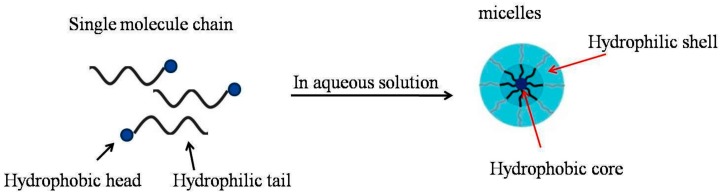
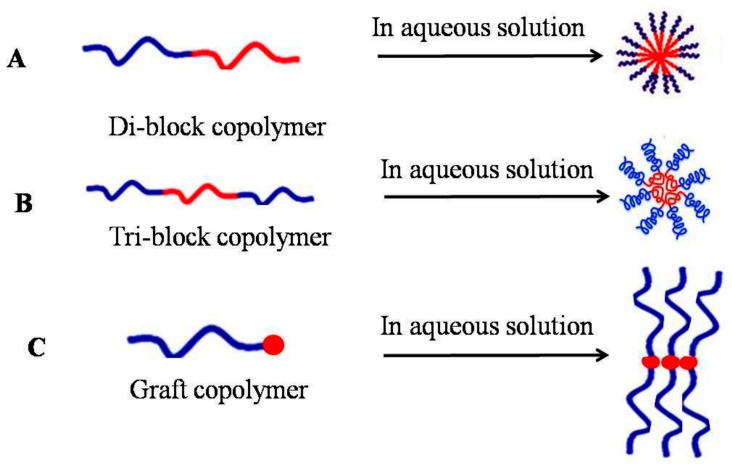
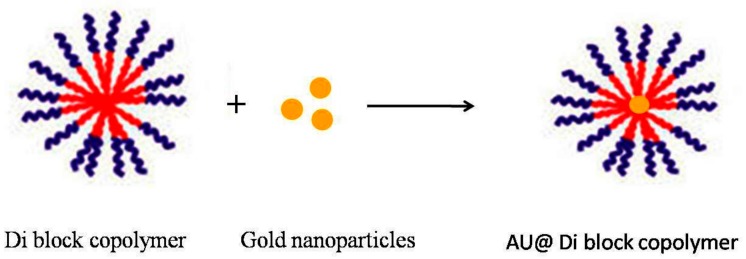
Micelles as colloidal suspension have attracted considerable attention due to their potential use for both cancer diagnosis and therapy. These structures have proven their ability to deliver poorly water-soluble anticancer drugs, improve drug stability, and have good penetration and site-specificity, leading to enhance therapeutic efficacy. Micelles are composed of hydrophobic and hydrophilic components assembled into nanosized spherical, ellipsoid, cylindrical, or unilamellar structures. For their simple formation, they are widely studied, either by using opposite polymers attachment consisting of two or more block copolymers, or by using fatty acid molecules that can modify themselves in a rounded shape. Recently, hybrid and responsive stimuli nanomicelles are formed either by integration with metal nanoparticles such as silver, gold, iron oxide nanoparticles inside micelles or by a combination of lipids and polymers into single composite. Herein, through this special issue, an updated overview of micelles development and their application for cancer therapy will be discussed.
Overview
The claims and statistics of this paper haven’t been checked yet.
Run the check — free, no account needed. It reads the open-access text and checks the sources it cites.
Integrity signals
Registry
Cites
Statistics
Figures
Verification
Claims the paper makes
The claims and statistics of this paper haven’t been checked yet.
Run the check — free, no account needed. It reads the open-access text and checks the sources it cites.
Claims other papers make about this one
Each is checked against this paper’s own text: does it say what the citing paper says it does?
The source backs part of the claim, not all of it — or backs it for a different population, condition or comparison.
In the citing paper
“SAXS experiments are extensively applied to investigate the structure of polymeric micelles in solution, empty or loaded with drugs, providing detailed description of their size, shape and inner architecture on the 1-100 nm length-scale [191,192].”
From Polymeric micelles in drug delivery: An insight of the techniques for their characterization and assessment in biorelevant conditions (2021) · cites this paper as [192]
Experimental — accuracy not yet measured
Self-check
Percentages, sums and reported differences re-computed from the paper’s own numbers.
The self-check needs the paper’s full text.
Citations
Cites
In Vivo Imaging of Quantum Dots Encapsulated in Phospholipid Micelles
Dubertret, B., Skourides, P., Norris, D. J., Noireaux, V., Brivanlou, A. H., & Libchaber, A. (2002) · Science · doi:10.1126/science.1077194 · Cited by 3,019
Surfactants and Interfacial Phenomena
Rosen, M. J., & Kunjappu, J. T. (2012) · Wiley eBooks · doi:10.1002/9781118228920 · Cited by 2,539
Nanomedicine: current status and future prospects
Moghimi, S. M., Hunter, A. C., & Murray, J. C. (2005) · The FASEB Journal · doi:10.1096/fj.04-2747rev · Cited by 2,029
Micellar Nanocarriers: Pharmaceutical Perspectives
Torchilin, V. P. (2006) · Pharmaceutical Research · doi:10.1007/s11095-006-9132-0 · Cited by 1,910
Block copolymer micelles: preparation, characterization and application in drug delivery
Gaucher, G., Dufresne, M.-H., Sant, V. P., Kang, N., Maysinger, D., & Leroux, J.-C. (2005) · Journal of Controlled Release · doi:10.1016/j.jconrel.2005.09.034 · Cited by 1,498
Nitroxide-mediated polymerization
Nicolas, J., Guillaneuf, Y., Lefay, C., Bertin, D., Gigmes, D., & Charleux, B. (2013) · Progress in Polymer Science · doi:10.1016/j.progpolymsci.2012.06.002 · Cited by 1,380
Polymeric micelles—A new generation of colloidal drug carriers
Jones, M.-C., & Leroux, J.-C. (1999) · European Journal of Pharmaceutics and Biopharmaceutics · doi:10.1016/s0939-6411(99)00039-9 · Cited by 1,256
Fleige, E., Quadir, M., & Haag, R. (2012) · Advanced Drug Delivery Reviews · doi:10.1016/j.addr.2012.01.020 · Cited by 1,124
Amphiphilic block copolymers for drug delivery
Adams, M. L., Lavasanifar, A., & Kwon, G. S. (2003) · Journal of Pharmaceutical Sciences · doi:10.1002/jps.10397 · Cited by 1,078
Nishiyama, N., & Kataoka, K. (2006) · Pharmacology & Therapeutics · doi:10.1016/j.pharmthera.2006.05.006 · Cited by 1,064
Research works printed but not linked: 2
- Alexandridis, P., and Lindman, B. (2000). Micelles of amphilphilic block copolymers as vehicles for drug delivery. Amphiphilic Block Copolymers: Self-Assembly and Applications, Elsevier.
- Duncan, 1983, Kopeček, Polymers containing enzymatically degradable bonds, 7. Design of oligopeptide side-chains in poly[n-(2-hydroxypropyl)methacrylamide] copolymers to promote efficient degradation by lysosomal-enzymes, Macromol. Chem. Macromol. Chem. Phys., 184, 1997
Cited by
Sorted by citations
Ghezzi, M., Pescina, S., Padula, C., Santi, P., Del Favero, E., Cantù, L., & Nicoli, S. (2021) · Journal of Controlled Release · doi:10.1016/j.jconrel.2021.02.031 · Cited by 1,135
A Review of Polymeric Micelles and Their Applications
Perumal, S., Atchudan, R., & Lee, W. (2022) · Polymers · doi:10.3390/polym14122510 · Cited by 410
Mazumdar, S., Chitkara, D., & Mittal, A. (2021) · Acta Pharmaceutica Sinica B · doi:10.1016/j.apsb.2021.02.019 · Cited by 308
Nanotechnology-based delivery of CRISPR/Cas9 for cancer treatment
Xu, X., Liu, C., Wang, Y., Koivisto, O., Zhou, J., Shu, Y., & Zhang, H. (2021) · Advanced Drug Delivery Reviews · doi:10.1016/j.addr.2021.113891 · Cited by 300
Kumari, L., Choudhari, Y., Patel, P., Gupta, G. D., Singh, D., Rosenholm, J. M., Bansal, K. K., & Kurmi, B. D. (2023) · Life · doi:10.3390/life13051099 · Cited by 277
Metadata
- Authors
- Hanafy, N., El-Kemary, M., & Leporatti, S.
- Affiliations
- Kafrelsheikh University (EG)
- Istituto di Nanotecnologia (IT)
- Corresponding author
- Leporatti, Stefano
- Venue
- Cancers
- Publisher
- MDPI AG
- Published
- 2018-07-20
- Volume
- 10
- Issue
- 7
- Pages
- 238
- ISSN
- 2072-6694 (ISSN-L)
- PMC
- PMC6071246
- OpenAlex
- W2884808176
- Cited by
- 287
- References
- 112
- Citations by year
- 2026: 15 · 2025: 31 · 2024: 60 · 2023: 37 · 2022: 52 · 2021: 45 · 2020: 32 · 2019: 12 · 2018: 3
- FWCI
- 1.54
- Type
- journal article
- Language
- en
- Open access
- gold
- dx.doi.org
- Licence
- Locations
- Cancers (publishedVersion, cc-by)
- Europe PMC (PubMed Central) (publishedVersion, cc-by)
- PubMed Central (publishedVersion, cc-by)
- PubMed (publishedVersion)
- DOAJ (DOAJ: Directory of Open Access Journals) (submittedVersion, cc-by-sa)
- Funders
- Research Executive Agency (PITN-GA-2012-316549 (IT LIVER))
- Topics
- Physical Sciences › Materials Science › Biomaterials › Nanoparticle-Based Drug Delivery
- Physical Sciences › Chemistry › Physical and Theoretical Chemistry › Surfactants and Colloidal Systems
- Physical Sciences › Engineering › Biomedical Engineering › Nanoplatforms for cancer theranostics
- Keywords
- micelles, cancer therapy, drug delivery, block copolymers, self-assembly, metal nanoparticles, drug stability, local drug delivery
About these checks
Registry, retraction, Cites and statistics results are computed, not judged, with one exception: a printed reference that no index lists is read once by a model before it counts as a citation error. Claims are extracted by a model and kept only when their quote appears verbatim in the text; each cited source is then checked, with a model’s help, for whether it says what the claim relies on. Those verdicts can be wrong — read the claim’s quote and the cited source before relying on one.
Statistics and arithmetic are recomputed, not judged.
Confidence bands are shown only for fields calibrated on our annotated test set. None is calibrated yet, so no band is shown.
What counts as a claim ›How we measure confidence ›How we check this ›
Are you an author, or do you see a problem with this page? Request a review
