

The DOI matches its Crossref record; 123 of the 125 references it cites were found in a registry or an index; none of the 84 sources its claims cite is checked for support yet.
Senescence and Cancer: A Review of Clinical Implications of Senescence and Senotherapies
Open accessAbstract
Cellular senescence is a key component of human aging that can be induced by a range of stimuli, including DNA damage, cellular stress, telomere shortening, and the activation of oncogenes. Senescence is generally regarded as a tumour suppressive process, both by preventing cancer cell proliferation and suppressing malignant progression from pre-malignant to malignant disease. It may also be a key effector mechanism of many types of anticancer therapies, such as chemotherapy, radiotherapy, and endocrine therapies, both directly and via bioactive molecules released by senescent cells that may stimulate an immune response. However, senescence may contribute to reduced patient resilience to cancer therapies and may provide a pathway for disease recurrence after cancer therapy. A new group of drugs, senotherapies, (drugs which interact with senescent cells to interfere with their pro-aging impacts by either selectively destroying senescent cells (senolytic drugs) or inhibiting their function (senostatic drugs)) are under active investigation to determine whether they can enhance the efficacy of cancer therapies and improve resilience to cancer treatments. Senolytic drugs include quercetin, navitoclax, and fisetin and preclinical and early phase clinical data are emerging of their potential role in cancer treatments, although none are yet in routine use clinically. This article provides a review of these issues.
Overview
AI snapshot
Written from the paper’s full text.
TL;DR
This narrative review summarizes how cellular senescence is both tumour-suppressive and potentially tumour-promoting, and how therapy-induced senescence may affect cancer treatment response, recurrence, and patient resilience. It reviews emerging senotherapies—senolytics and senostatics—as potential adjuncts to cancer therapy, noting that none are yet in routine clinical use.
Key findings
- Senescence is generally tumour suppressive by preventing proliferation and blocking progression from premalignant to malignant disease, but chronic senescent cells release SASP factors that may promote tumour recurrence, progression, inflammation, and fibrosis.
- Therapy-induced senescence is common: in breast cancer treated with neoadjuvant CAF chemotherapy, 41% of tumours stained by senescence markers versus 10% of untreated cases; Adriamycin treatment for 5 days induced 60% of breast cancer cells to become senescent.
- Senotherapies include senolytics (e.g., quercetin, navitoclax, fisetin) and senostatics (e.g., metformin); preclinical and early-phase data suggest potential to enhance cancer therapy and reduce frailty, but none are in routine clinical use.
- Navitoclax is limited by toxicity, especially thrombocytopenia; dasatinib plus quercetin reduces senescent cells in models and improved physical dysfunction and lifespan in aged mice; fisetin is roughly twice as potent as quercetin, with an average daily dietary intake of 0.4 mg and a phase 2 trial using 20 mg/kg orally for 2 days.
Methods
- Design: narrative review of the clinical implications of senescence and senotherapies in cancer.
- Data/sample: published literature on senescence biology, cancer prognosis, chemotherapy, radiotherapy, hormonal therapy, surgery, frailty, and senotherapies, including preclinical mouse models and human cancer studies; no primary patient cohort is reported.
- Main analysis: narrative synthesis with summary tables; no systematic search strategy, meta-analysis, or formal quality appraisal is described.
Limitations
- Stated: the interactions between senescence and cancer are “complex and poorly understood,” and more research is needed to clarify them.
- Stated: variation in SASP composition means findings may not be extrapolated to other cancers or treatment types; no senotherapies are yet approved for clinical use, and there are no published studies of senotherapies on acute wound healing.
- Evident: as a narrative review, it does not describe a systematic literature search or formal evidence grading, and many cited data are preclinical, small, or early-phase.
Model-written summary. Check it against the paper before relying on it.
Integrity signals
Registry
Cites
Statistics
Figures
Verification
Claims the paper makes
56 Not checked yet · 24 No basis given · 9 Own interpretation
In the paper
“This has been shown to suppress the progression of malignancy in hepatocytes in a mouse model [34].”
§ Senescence and Cancer: A Review of Clinical Implications of Senescence and Senotherapies > 5. Role of Senescence in the Development of Cancer
What the sources say
- Not checked yetcites [34] Kang, 2011, Senescence surveillance of pre-malignant hepatocytes limits liver cancer development, Nature source
plaindirect- Asserted: passes — The authors put it forward as true.
- Checkable: passes — It can be checked against evidence.
- Load-bearing: unclear — It is unclear whether the paper’s conclusions depend on it.
- Based: passes — The paper gives a reason why it holds.
In the paper
“This was shown in a study where telomere shortening in peripheral blood T cells, was linked to the development of cancer [37].”
§ Senescence and Cancer: A Review of Clinical Implications of Senescence and Senotherapies > 5. Role of Senescence in the Development of Cancer
What the sources say
- Not checked yetcites [37] Falci, 2013, Immune senescence and cancer in elderly patients: Results from an exploratory study, Exp. Gerontol. source
plaincorrelational- Asserted: passes — The authors put it forward as true.
- Checkable: passes — It can be checked against evidence.
- Load-bearing: unclear — It is unclear whether the paper’s conclusions depend on it.
- Based: passes — The paper gives a reason why it holds.
In the paper
“The treatment of breast cancer cells with Adriamycin for 5 days induces 60% of cells to become senescent [61].”
§ Senescence and Cancer: A Review of Clinical Implications of Senescence and Senotherapies > 7. Role of Senescence in Cancer Treatment Response > Chemotherapy
What the sources say
- Not checked yetcites [61] You, R., Dai, J., Zhang, P., Barding, G.A., and Raftery, D. (2018). Dynamic Metabolic Response to Adriamycin-Induced Senescence in Breast Cancer Cells. Metabolites, 8. source
plaindirect- Asserted: passes — The authors put it forward as true.
- Checkable: passes — It can be checked against evidence.
- Load-bearing: unclear — It is unclear whether the paper’s conclusions depend on it.
- Based: passes — The paper gives a reason why it holds.
In the paper
“Another study of a range of cancer types, including breast, lymphoma, colon, sarcoma and lung, found that senescence markers were linked to better prognosis [29].”
§ Senescence and Cancer: A Review of Clinical Implications of Senescence and Senotherapies > 6. Role of Senescence as a Prognostic Marker for Cancer
What the sources say
- Not checked yetcites [29] Althubiti, 2014, Characterization of novel markers of senescence and their prognostic potential in cancer, Cell Death Dis. source
plaincorrelational- Asserted: passes — The authors put it forward as true.
- Checkable: passes — It can be checked against evidence.
- Load-bearing: passes — The paper’s conclusions depend on it.
- Based: passes — The paper gives a reason why it holds.
None of the sources cited for this claim have been checked yet.
In the paper
“Colon and endometrial cancers have also been studied, as well as senescence markers linked to improved prognosis [44,45].”
§ Senescence and Cancer: A Review of Clinical Implications of Senescence and Senotherapies > 6. Role of Senescence as a Prognostic Marker for Cancer
What the sources say
- Not checked yetcites [44] Jung, 2001, The invasion front of human colorectal adenocarcinomas shows co-localization of nuclear beta-catenin, cyclin D1, and p16INK4A and is a region of low proliferation, Am. J. Pathol. source
- Not checked yetcites [45] Horree, 2007, The invasive front in endometrial carcinoma: Higher proliferation and associated derailment of cell cycle regulators, Hum. Pathol. source
plaincorrelational- Asserted: passes — The authors put it forward as true.
- Checkable: passes — It can be checked against evidence.
- Load-bearing: unclear — It is unclear whether the paper’s conclusions depend on it.
- Based: passes — The paper gives a reason why it holds.
In the paper
“In a mouse model, lymphomas induced by the myc oncogene responded to cyclophosphamide by undergoing senescence mediated by p16INK4A and p53 [57].”
§ Senescence and Cancer: A Review of Clinical Implications of Senescence and Senotherapies > 7. Role of Senescence in Cancer Treatment Response > Chemotherapy
What the sources say
- Not checked yetcites [57] Schmitt, 2002, A senescence program controlled by p53 and p16INK4a contributes to the outcome of cancer therapy, Cell source
plaindirect- Asserted: passes — The authors put it forward as true.
- Checkable: passes — It can be checked against evidence.
- Load-bearing: unclear — It is unclear whether the paper’s conclusions depend on it.
- Based: passes — The paper gives a reason why it holds.
In the paper
“Another study of breast cancer demonstrated that the increased expressions of senescence markers p14ARF and p16INK4a were associated with increased risk of disease recurrence and poor survival outcomes [43].”
§ Senescence and Cancer: A Review of Clinical Implications of Senescence and Senotherapies > 6. Role of Senescence as a Prognostic Marker for Cancer
What the sources say
- Not checked yetcites [43] Pare, 2016, Increased expression of senescence markers p14(ARF) and p16(INK4a) in breast cancer is associated with an increased risk of disease recurrence and poor survival outcome, Histopathology source
boostedcorrelational- Asserted: passes — The authors put it forward as true.
- Checkable: passes — It can be checked against evidence.
- Load-bearing: unclear — It is unclear whether the paper’s conclusions depend on it.
- Based: passes — The paper gives a reason why it holds.
The paper states this without a source or data behind it here, so there is nothing to check it against. The quote shows it is in the paper.
In the paper
“preclinical and early phase clinical data are emerging of their potential role in cancer treatments”
§ Senescence and Cancer: A Review of Clinical Implications of Senescence and Senotherapies > Abstract
plainconditional- Asserted: passes — The authors put it forward as true.
- Checkable: passes — It can be checked against evidence.
- Load-bearing: passes — The paper’s conclusions depend on it.
- Based: passes — The paper gives a reason why it holds.
In the paper
“Senescence is increasingly recognized as a heterogeneous group of cell states, depending on the type, degree, and duration of stimuli that triggered it [11].”
§ Senescence and Cancer: A Review of Clinical Implications of Senescence and Senotherapies > 2. Biological Changes of Aging and Senescence
What the sources say
- Not checked yetcites [11] Salama, 2014, Cellular senescence and its effector programs, Genes Dev. source
plaincorrelational- Asserted: passes — The authors put it forward as true.
- Checkable: passes — It can be checked against evidence.
- Load-bearing: unclear — It is unclear whether the paper’s conclusions depend on it.
- Based: passes — The paper gives a reason why it holds.
None of the sources cited for this claim have been checked yet.
In the paper
“and may provide a pathway for disease recurrence after cancer therapy.”
§ Senescence and Cancer: A Review of Clinical Implications of Senescence and Senotherapies > Abstract
What the sources say
- Not checked yetcites [20] Saleh, 2019, Tumor Cell Escape from Therapy-Induced Senescence as a Model of Disease Recurrence after Dormancy, Cancer Res. source
- Not checked yetcites [21] Bharadwaj, 2020, Senescence in polyploid giant cancer cells: A road that leads to chemoresistance, Cytokine Growth Factor Rev. source
- Not checked yetcites [22] Lee, 2019, The dynamic nature of senescence in cancer, Nat. Cell Biol. source
hedgedconditional- Asserted: passes — The authors put it forward as true.
- Checkable: passes — It can be checked against evidence.
- Load-bearing: passes — The paper’s conclusions depend on it.
- Based: passes — The paper gives a reason why it holds.
- It may state two separate claims as one. 38
- Probably not a substantial claim. 12
None of the sources cited for this claim have been checked yet.
In the paper
“Studies have demonstrated high levels of senescence in premalignant lesions and lower levels in invasive disease, suggesting a role for senescence in blocking malignant progression [2,31,32].”
§ Senescence and Cancer: A Review of Clinical Implications of Senescence and Senotherapies > 5. Role of Senescence in the Development of Cancer
What the sources say
- Not checked yetcites [2] Collado, 2005, Tumour biology: Senescence in premalignant tumours, Nature source
- Not checked yetcites [31] Chen, 2005, Crucial role of p53-dependent cellular senescence in suppression of Pten-deficient tumorigenesis, Nature source
- Not checked yetcites [32] Michaloglou, 2005, BRAFE600-associated senescence-like cell cycle arrest of human naevi, Nature source
boostedconditional- Asserted: passes — The authors put it forward as true.
- Checkable: passes — It can be checked against evidence.
- Load-bearing: passes — The paper’s conclusions depend on it.
- Based: passes — The paper gives a reason why it holds.
It may state two separate claims as one.
In the paper
“In breast cancer cases treated with neoadjuvant chemotherapy, 41% of tumours were stained by senescence markers compared to only 10% of untreated cases, showing that senescence is induced by CAF (cyclophosphamide, Adriamycin, and fluorouracil) chemotherapy [53].”
§ Senescence and Cancer: A Review of Clinical Implications of Senescence and Senotherapies > 7. Role of Senescence in Cancer Treatment Response > Chemotherapy
What the sources say
- Not checked yetcites [53] Okorokov, 2002, DNA damage is able to induce senescence in tumor cells in vitro and in vivo, Cancer Res.
plaindirect- Asserted: passes — The authors put it forward as true.
- Checkable: passes — It can be checked against evidence.
- Load-bearing: passes — The paper’s conclusions depend on it.
- Based: passes — The paper gives a reason why it holds.
It may state two separate claims as one.
In the paper
“In breast cancer, p16 levels correlate with breast cancer subtype, proliferative status, and prognosis [42].”
§ Senescence and Cancer: A Review of Clinical Implications of Senescence and Senotherapies > 6. Role of Senescence as a Prognostic Marker for Cancer
What the sources say
- Not checked yetcites [42] Shin, 2015, Expression of p16 and pRB in invasive breast cancer, Int. J. Clin. Exp. Pathol.
plaincorrelational- Asserted: passes — The authors put it forward as true.
- Checkable: passes — It can be checked against evidence.
- Load-bearing: passes — The paper’s conclusions depend on it.
- Based: passes — The paper gives a reason why it holds.
It may state two separate claims as one.
The paper states this without a source or data behind it here, so there is nothing to check it against. The quote shows it is in the paper.
In the paper
“although none are yet in routine use clinically.”
§ Senescence and Cancer: A Review of Clinical Implications of Senescence and Senotherapies > Abstract
plain- Asserted: passes — The authors put it forward as true.
- Checkable: passes — It can be checked against evidence.
- Load-bearing: passes — The paper’s conclusions depend on it.
- Based: passes — The paper gives a reason why it holds.
Probably not a substantial claim.
In the paper
“Acute senescence is a short-term process, often triggered to limit an inflammatory response or physiological process, such as wound healing or embryological development [12].”
§ Senescence and Cancer: A Review of Clinical Implications of Senescence and Senotherapies > 2. Biological Changes of Aging and Senescence
What the sources say
- Not checked yetcites [12] Davaapil, 2017, Conserved and novel functions of programmed cellular senescence during vertebrate development, Development
plainconditional- Asserted: passes — The authors put it forward as true.
- Checkable: passes — It can be checked against evidence.
- Load-bearing: fails — The paper’s conclusions may not depend on it.
- Based: passes — The paper gives a reason why it holds.
Probably not a substantial claim. The paper’s conclusions may not depend on it.
In the paper
“Senescence is generally regarded as a tumour suppressive process, both by preventing cancer cell proliferation and suppressing malignant progression from pre-malignant to malignant disease.”
§ Senescence and Cancer: A Review of Clinical Implications of Senescence and Senotherapies > Abstract
What the sources say
- Not checked yetcites [18] Campisi, 2005, Senescent cells, tumor suppression, and organismal aging: Good citizens, bad neighbors, Cell source
plaindirect- Asserted: passes — The authors put it forward as true.
- Checkable: passes — It can be checked against evidence.
- Load-bearing: passes — The paper’s conclusions depend on it.
- Based: passes — The paper gives a reason why it holds.
It may state two separate claims as one.
None of the sources cited for this claim have been checked yet.
In the paper
“Chronic senescence is triggered by feedback loops when the senescent stimulus is prolonged, and may cause diseases such as atherosclerosis, arthritis, neurodegenerative disease, and diabetes [13] as well as effecting classical age-related decline in tissue function [14].”
§ Senescence and Cancer: A Review of Clinical Implications of Senescence and Senotherapies > 2. Biological Changes of Aging and Senescence
What the sources say
hedgedconditional- Asserted: passes — The authors put it forward as true.
- Checkable: passes — It can be checked against evidence.
- Load-bearing: unclear — It is unclear whether the paper’s conclusions depend on it.
- Based: passes — The paper gives a reason why it holds.
It may state two separate claims as one.
None of the sources cited for this claim have been checked yet.
In the paper
“Aging is integral to the causation of many cancers and also impacts on treatment response, prognosis, treatment allocation, and treatment tolerance.”
§ Senescence and Cancer: A Review of Clinical Implications of Senescence and Senotherapies > 1. An Aging Population and Cancer
What the sources say
plaindirect- Asserted: passes — The authors put it forward as true.
- Checkable: passes — It can be checked against evidence.
- Load-bearing: passes — The paper’s conclusions depend on it.
- Based: passes — The paper gives a reason why it holds.
It may state two separate claims as one.
The paper states this without a source or data behind it here, so there is nothing to check it against. The quote shows it is in the paper.
In the paper
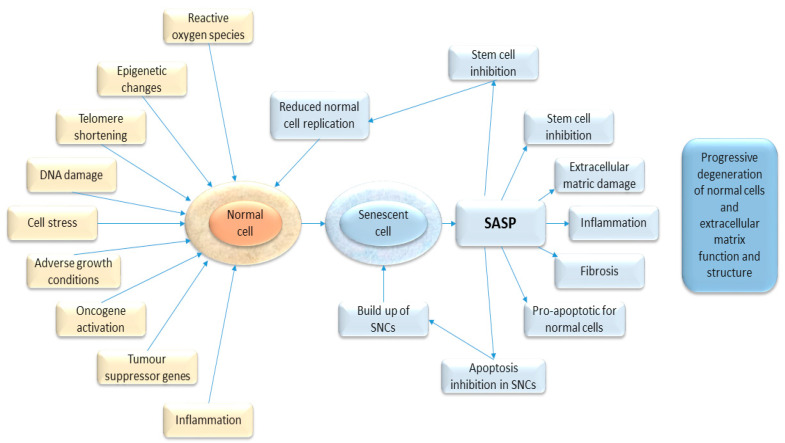
“Senescent cells release a complex, cell type-specific, mixture of bioactive molecules (senescence-associated secretory phenotype or SASP), which impacts on the adjacent cells and extracellular matrix and contributes to age-related tissue degeneration.”
§ Senescence and Cancer: A Review of Clinical Implications of Senescence and Senotherapies > 2. Biological Changes of Aging and Senescence
plaindirect- Asserted: passes — The authors put it forward as true.
- Checkable: passes — It can be checked against evidence.
- Load-bearing: unclear — It is unclear whether the paper’s conclusions depend on it.
- Based: passes — The paper gives a reason why it holds.
It may state two separate claims as one.
In the paper
“Senescent cells are rare in the tissues of young organisms but become more common as tissues age, especially in adipose tissue, muscle, and skin [10].”
§ Senescence and Cancer: A Review of Clinical Implications of Senescence and Senotherapies > 2. Biological Changes of Aging and Senescence
What the sources say
- Not checked yetcites [10] Tchkonia, 2010, Fat tissue, aging, and cellular senescence, Aging Cell source
plaincorrelational- Asserted: passes — The authors put it forward as true.
- Checkable: passes — It can be checked against evidence.
- Load-bearing: unclear — It is unclear whether the paper’s conclusions depend on it.
- Based: passes — The paper gives a reason why it holds.
It may state two separate claims as one.
The paper states this without a source or data behind it here, so there is nothing to check it against. The quote shows it is in the paper.
In the paper
“A range of factors may trigger senescence, including cell stressors, such as reactive oxygen species, DNA damage due to aging, radiation, and genotoxic substances (including many chemotherapy agents), age-related telomere shortening, adverse growth conditions, tumour suppressor gene activation, and oncogene activity.”
§ Senescence and Cancer: A Review of Clinical Implications of Senescence and Senotherapies > 3. Regulatory Pathway of Senescence
hedgedconditional- Asserted: passes — The authors put it forward as true.
- Checkable: passes — It can be checked against evidence.
- Load-bearing: fails — The paper’s conclusions may not depend on it.
- Based: passes — The paper gives a reason why it holds.
Probably not a substantial claim. The paper’s conclusions may not depend on it.
In the paper
“Cells have a finite ability to replicate (the Hayflick Limit [26]) and once this limit is reached, they lose the ability to divide but remain alive and metabolically active as senescent cells.”
§ Senescence and Cancer: A Review of Clinical Implications of Senescence and Senotherapies > 3. Regulatory Pathway of Senescence > 3.1. Replicative Senescence
What the sources say
- Not checked yetcites [26] Hayflick, 1961, The serial cultivation of human diploid cell strains, Exp. Cell Res. source
plaindirect- Asserted: passes — The authors put it forward as true.
- Checkable: passes — It can be checked against evidence.
- Load-bearing: unclear — It is unclear whether the paper’s conclusions depend on it.
- Based: passes — The paper gives a reason why it holds.
It may state two separate claims as one.
The paper states this without a source or data behind it here, so there is nothing to check it against. The quote shows it is in the paper.
In the paper
“Again, if this DNA damage cannot be repaired, the cell may die (usually via apoptosis) or enter senescence via the p53/cyclin E/CDK2/RB signaling pathway. Whether a cell undergoes apoptosis or senescence depends on the degree of damage, and whether it is repairable.”
§ Senescence and Cancer: A Review of Clinical Implications of Senescence and Senotherapies > 3. Regulatory Pathway of Senescence > 3.1. Replicative Senescence
hedgedconditional- Asserted: passes — The authors put it forward as true.
- Checkable: passes — It can be checked against evidence.
- Load-bearing: unclear — It is unclear whether the paper’s conclusions depend on it.
- Based: passes — The paper gives a reason why it holds.
It may state two separate claims as one.
The paper states this without a source or data behind it here, so there is nothing to check it against. The quote shows it is in the paper.
In the paper
“As telomere shortening is irreversible in normal cells and cannot be repaired, it triggers senescence rather than temporary proliferative arrest.”
§ Senescence and Cancer: A Review of Clinical Implications of Senescence and Senotherapies > 3. Regulatory Pathway of Senescence > 3.1. Replicative Senescence
plaindirect- Asserted: passes — The authors put it forward as true.
- Checkable: passes — It can be checked against evidence.
- Load-bearing: unclear — It is unclear whether the paper’s conclusions depend on it.
- Based: passes — The paper gives a reason why it holds.
It may state two separate claims as one.
The paper states this without a source or data behind it here, so there is nothing to check it against. The quote shows it is in the paper.
In the paper
“Once again, mild stimulation induces senescence whereas severe stimulation induces cell death.”
§ Senescence and Cancer: A Review of Clinical Implications of Senescence and Senotherapies > 3. Regulatory Pathway of Senescence > 3.2. Oncogene-Induced Senescence
plaindirect- Asserted: passes — The authors put it forward as true.
- Checkable: passes — It can be checked against evidence.
- Load-bearing: fails — The paper’s conclusions may not depend on it.
- Based: fails — The paper may give no reason why it holds.
Probably not a substantial claim. The paper’s conclusions may not depend on it. The paper may give no reason why it holds. It may state two separate claims as one.
The paper states this without a source or data behind it here, so there is nothing to check it against. The quote shows it is in the paper.
In the paper
“Some oncogenes, such as the BRAF oncogene (which is commonly mutated in melanoma), may trigger senescence acting via mitochondrial pyruvate kinase metabolism to regulate cell cycle progression.”
§ Senescence and Cancer: A Review of Clinical Implications of Senescence and Senotherapies > 3. Regulatory Pathway of Senescence > 3.3. Stress-Induced Senescence
hedgedconditional- Asserted: passes — The authors put it forward as true.
- Checkable: passes — It can be checked against evidence.
- Load-bearing: fails — The paper’s conclusions may not depend on it.
- Based: fails — The paper may give no reason why it holds.
Probably not a substantial claim. The paper’s conclusions may not depend on it. The paper may give no reason why it holds.
The paper states this without a source or data behind it here, so there is nothing to check it against. The quote shows it is in the paper.
In the paper
“Whereas acute senescence is largely beneficial in the regulation of transient injury or stress, if a cell experiences prolonged non-lethal stress, a chronic senescent state is entered where the continued production of SASP perpetuates cellular and extracellular matrix damage and results in the acquisition of an aging or disease linked phenotype.”
§ Senescence and Cancer: A Review of Clinical Implications of Senescence and Senotherapies > 4. Senescence-Associated Secretory Phenotype, SASP
plaindirect- Asserted: passes — The authors put it forward as true.
- Checkable: passes — It can be checked against evidence.
- Load-bearing: passes — The paper’s conclusions depend on it.
- Based: passes — The paper gives a reason why it holds.
It may state two separate claims as one.
The paper states this without a source or data behind it here, so there is nothing to check it against. The quote shows it is in the paper.
In the paper
“The precise content of the SASP released by a senescent cell may vary according to the host tissue and the degree and type of senescent stimulus.”
§ Senescence and Cancer: A Review of Clinical Implications of Senescence and Senotherapies > 4. Senescence-Associated Secretory Phenotype, SASP
hedgedconditional- Asserted: passes — The authors put it forward as true.
- Checkable: passes — It can be checked against evidence.
- Load-bearing: fails — The paper’s conclusions may not depend on it.
- Based: fails — The paper may give no reason why it holds.
Probably not a substantial claim. The paper’s conclusions may not depend on it. The paper may give no reason why it holds.
The paper states this without a source or data behind it here, so there is nothing to check it against. The quote shows it is in the paper.
In the paper
“The same pathway is triggered by non-lethal DNA damage, which again activates the DDR. DNA damage accumulates progressively with age but also occurs in the majority of cancers, where a key initiation event is often the loss of function of critical DNA repair pathways via loss of function of tumour suppressor genes.”
§ Senescence and Cancer: A Review of Clinical Implications of Senescence and Senotherapies > 3. Regulatory Pathway of Senescence > 3.1. Replicative Senescence
plaindirect- Asserted: passes — The authors put it forward as true.
- Checkable: passes — It can be checked against evidence.
- Load-bearing: passes — The paper’s conclusions depend on it.
- Based: passes — The paper gives a reason why it holds.
It may state two separate claims as one.
None of the sources cited for this claim have been checked yet.
In the paper
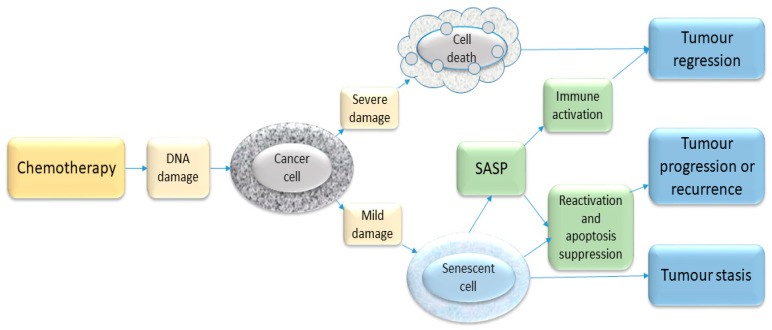
“There are also potential interactions with cancer therapies, in particular, radiotherapy and chemotherapy, which may trigger either cell death at high doses or senescence at non-lethal doses.”
§ Senescence and Cancer: A Review of Clinical Implications of Senescence and Senotherapies > 2. Biological Changes of Aging and Senescence
What the sources say
- Not checked yetcites [20] Saleh, 2019, Tumor Cell Escape from Therapy-Induced Senescence as a Model of Disease Recurrence after Dormancy, Cancer Res. source
- Not checked yetcites [21] Bharadwaj, 2020, Senescence in polyploid giant cancer cells: A road that leads to chemoresistance, Cytokine Growth Factor Rev. source
- Not checked yetcites [22] Lee, 2019, The dynamic nature of senescence in cancer, Nat. Cell Biol. source
hedgedconditional- Asserted: passes — The authors put it forward as true.
- Checkable: passes — It can be checked against evidence.
- Load-bearing: passes — The paper’s conclusions depend on it.
- Based: passes — The paper gives a reason why it holds.
It may state two separate claims as one.
The paper states this without a source or data behind it here, so there is nothing to check it against. The quote shows it is in the paper.
In the paper
“For example, the p53 and BRCA genes are key tumour suppressor genes that are mutated and lose function at an early stage in the process of cancer development.”
§ Senescence and Cancer: A Review of Clinical Implications of Senescence and Senotherapies > 3. Regulatory Pathway of Senescence > 3.1. Replicative Senescence
plaindirect- Asserted: passes — The authors put it forward as true.
- Checkable: passes — It can be checked against evidence.
- Load-bearing: fails — The paper’s conclusions may not depend on it.
- Based: fails — The paper may give no reason why it holds.
Probably not a substantial claim. The paper’s conclusions may not depend on it. The paper may give no reason why it holds. It may state two separate claims as one.
None of the sources cited for this claim have been checked yet.
In the paper
“In contrast there is also evidence that stromal cell senescence may have a tumour promoting effect in some models—this may be because of the proangiogenic influence of some components of SASP, such as vascular endothelial growth factor (VEGF) or the impact of senescent fibroblasts on adjacent tumour cells [17,36].”
§ Senescence and Cancer: A Review of Clinical Implications of Senescence and Senotherapies > 5. Role of Senescence in the Development of Cancer
What the sources say
- Not checked yetcites [17] Coppe, 2006, Secretion of vascular endothelial growth factor by primary human fibroblasts at senescence, J. Biol. Chem. source
- Not checked yetcites [36] Bavik, 2006, The gene expression program of prostate fibroblast senescence modulates neoplastic epithelial cell proliferation through paracrine mechanisms, Cancer Res. source
hedgedconditional- Asserted: passes — The authors put it forward as true.
- Checkable: passes — It can be checked against evidence.
- Load-bearing: unclear — It is unclear whether the paper’s conclusions depend on it.
- Based: passes — The paper gives a reason why it holds.
It may state two separate claims as one.
None of the sources cited for this claim have been checked yet.
In the paper
“In turn, senescence may impact on these same pathways via positive or negative feedback loops as well as other intracellular pathways and extracellular processes, such as the immune modulation, inflammation [16], regulation, and maintenance of the extracellular matrix, and angiogenesis [17].”
§ Senescence and Cancer: A Review of Clinical Implications of Senescence and Senotherapies > 2. Biological Changes of Aging and Senescence
What the sources say
hedgedconditional- Asserted: passes — The authors put it forward as true.
- Checkable: passes — It can be checked against evidence.
- Load-bearing: unclear — It is unclear whether the paper’s conclusions depend on it.
- Based: passes — The paper gives a reason why it holds.
It may state two separate claims as one.
None of the sources cited for this claim have been checked yet.
In the paper
“No one marker alone is sufficient to identify senescence and most researchers use a panel of biomarkers, such as senescence-associated β-galactosidase, p21, and p16INK4A, as well as a number of other biomarkers, such as heterochromatin and proliferation markers (Table 1) combined [24] with a marker of cellular proliferation (Ki-67, for instance).”
§ Senescence and Cancer: A Review of Clinical Implications of Senescence and Senotherapies > 2. Biological Changes of Aging and Senescence
What the sources say
plain- Asserted: passes — The authors put it forward as true.
- Checkable: passes — It can be checked against evidence.
- Load-bearing: unclear — It is unclear whether the paper’s conclusions depend on it.
- Based: passes — The paper gives a reason why it holds.
It may state two separate claims as one.
In the paper
“There is also evidence that “immune senescence”, associated with the aging of the immune system in older age may contribute to the failure of immune surveillance and contribute to cancer development in older people.”
§ Senescence and Cancer: A Review of Clinical Implications of Senescence and Senotherapies > 5. Role of Senescence in the Development of Cancer
What the sources say
- Not checked yetcites [37] Falci, 2013, Immune senescence and cancer in elderly patients: Results from an exploratory study, Exp. Gerontol. source
hedgedconditional- Asserted: passes — The authors put it forward as true.
- Checkable: passes — It can be checked against evidence.
- Load-bearing: unclear — It is unclear whether the paper’s conclusions depend on it.
- Based: passes — The paper gives a reason why it holds.
It may state two separate claims as one.
The paper states this without a source or data behind it here, so there is nothing to check it against. The quote shows it is in the paper.
In the paper
“The SASP of a particular senescent cell type may have a tumour suppressive function and trigger immune activation or promote tumour growth and inflammation depending on the host tissue.”
§ Senescence and Cancer: A Review of Clinical Implications of Senescence and Senotherapies > 4. Senescence-Associated Secretory Phenotype, SASP
hedgedconditional- Asserted: passes — The authors put it forward as true.
- Checkable: passes — It can be checked against evidence.
- Load-bearing: passes — The paper’s conclusions depend on it.
- Based: passes — The paper gives a reason why it holds.
It may state two separate claims as one.
The paper states this without a source or data behind it here, so there is nothing to check it against. The quote shows it is in the paper.
In the paper
“Senescent cells release SASP factors that damage nearby non-senescent cells and the extracellular matrix, triggering inflammation, fibrosis, and apoptosis of adjacent healthy cells, but the senescent cells themselves are resistant to these effects and accumulate, thus generating more SASP factors.”
§ Senescence and Cancer: A Review of Clinical Implications of Senescence and Senotherapies > 4. Senescence-Associated Secretory Phenotype, SASP
plaindirect- Asserted: passes — The authors put it forward as true.
- Checkable: passes — It can be checked against evidence.
- Load-bearing: passes — The paper’s conclusions depend on it.
- Based: passes — The paper gives a reason why it holds.
It may state two separate claims as one.
The paper states this without a source or data behind it here, so there is nothing to check it against. The quote shows it is in the paper.
In the paper
“Several key pathways into senescence have been described: replicative senescence, oncogene-induced senescence, stress-induced senescence, and therapy-induced senescence.”
§ Senescence and Cancer: A Review of Clinical Implications of Senescence and Senotherapies > 3. Regulatory Pathway of Senescence
plain- Asserted: passes — The authors put it forward as true.
- Checkable: passes — It can be checked against evidence.
- Load-bearing: fails — The paper’s conclusions may not depend on it.
- Based: passes — The paper gives a reason why it holds.
Probably not a substantial claim. The paper’s conclusions may not depend on it.
In the paper
“It has been proposed that, whilst senescence itself is largely tumour suppressive [18], the SASP of chronically senescent cells may promote tumour recurrence or progression [19].”
§ Senescence and Cancer: A Review of Clinical Implications of Senescence and Senotherapies > 2. Biological Changes of Aging and Senescence
What the sources say
- Not checked yetcites [19] Campisi, 2011, Cellular senescence: A link between cancer and age-related degenerative disease?, Semin. Cancer Biol.
hedgedconditional- Asserted: passes — The authors put it forward as true.
- Checkable: passes — It can be checked against evidence.
- Load-bearing: passes — The paper’s conclusions depend on it.
- Based: passes — The paper gives a reason why it holds.
Probably not a substantial claim.
The paper states this without a source or data behind it here, so there is nothing to check it against. The quote shows it is in the paper.
In the paper
“The SASP is a melange of over 100 molecules, including inflammatory cytokines, growth factors, and proteases.”
§ Senescence and Cancer: A Review of Clinical Implications of Senescence and Senotherapies > 4. Senescence-Associated Secretory Phenotype, SASP
plain- Asserted: passes — The authors put it forward as true.
- Checkable: passes — It can be checked against evidence.
- Load-bearing: fails — The paper’s conclusions may not depend on it.
- Based: fails — The paper may give no reason why it holds.
Probably not a substantial claim. The paper’s conclusions may not depend on it. The paper may give no reason why it holds.
The paper states this without a source or data behind it here, so there is nothing to check it against. The quote shows it is in the paper.
In the paper
“Another regulatory pathway for senescence activation is via the p16 inhibitor of kinase 4(INK4), a regulatory protein that inhibits CDK4/6 and cyclin 2 and so blocks cell cycle progression via the RB protein. This pathway may be stimulated by the loss of tumour suppressor function, oncogene activation, epigenetic changes (DNA methylation, for example, which may alter gene expression), or damage to”
§ Senescence and Cancer: A Review of Clinical Implications of Senescence and Senotherapies > 3. Regulatory Pathway of Senescence > 3.2. Oncogene-Induced Senescence
hedgedconditional- Asserted: passes — The authors put it forward as true.
- Checkable: passes — It can be checked against evidence.
- Load-bearing: unclear — It is unclear whether the paper’s conclusions depend on it.
- Based: passes — The paper gives a reason why it holds.
It may state two separate claims as one.
In the paper
“Consequently, senescence induced by some cancer therapies may be harmful and promote tumour growth.”
§ Senescence and Cancer: A Review of Clinical Implications of Senescence and Senotherapies > 7. Role of Senescence in Cancer Treatment Response > Chemotherapy
What the sources say
- Not checked yetcites [55] Basisty, N., Kale, A., Jeon, O.H., Kuehnemann, C., Payne, T., Rao, C., Holtz, A., Shah, S., Sharma, V., and Ferrucci, L. (2020). A proteomic atlas of senescence-associated secretomes for aging biomarker development. PLoS Biol., 18. source
hedgedconditional- Asserted: passes — The authors put it forward as true.
- Checkable: passes — It can be checked against evidence.
- Load-bearing: passes — The paper’s conclusions depend on it.
- Based: passes — The paper gives a reason why it holds.
It may state two separate claims as one.
The paper states this without a source or data behind it here, so there is nothing to check it against. The quote shows it is in the paper.
In the paper
“Cyclophosphamide causes DNA cross linking, which again may trigger a DDR.”
§ Senescence and Cancer: A Review of Clinical Implications of Senescence and Senotherapies > 7. Role of Senescence in Cancer Treatment Response > Chemotherapy
hedgedconditional- Asserted: passes — The authors put it forward as true.
- Checkable: passes — It can be checked against evidence.
- Load-bearing: unclear — It is unclear whether the paper’s conclusions depend on it.
- Based: passes — The paper gives a reason why it holds.
It may state two separate claims as one.
A conclusion the paper draws from its own results — it cites no other source for it, so there is none to check. The quote shows it is in the paper.
In the paper
“senescence is a complex process closely related to cell cycle regulatory processes and is integral to human aging and the genesis of many human diseases.”
§ Senescence and Cancer: A Review of Clinical Implications of Senescence and Senotherapies > 14. Conclusions
plaincorrelational- Asserted: passes — The authors put it forward as true.
- Checkable: passes — It can be checked against evidence.
- Load-bearing: passes — The paper’s conclusions depend on it.
- Based: passes — The paper gives a reason why it holds.
Probably not a substantial claim. It may state two separate claims as one.
In the paper
“the diabetic drug, metformin has senostatic properties and reduces the stimulatory effect of SASP intermediates on prostate cancer cells [123]”
§ Senescence and Cancer: A Review of Clinical Implications of Senescence and Senotherapies > 12. Senotherapies > 12.4. Metformin
What the sources say
- Not checked yetcites [123] Moiseeva, 2013, Metformin inhibits the senescence-associated secretory phenotype by interfering with IKK/NF-kappaB activation, Aging Cell source
plaindirect- Asserted: passes — The authors put it forward as true.
- Checkable: passes — It can be checked against evidence.
- Load-bearing: unclear — It is unclear whether the paper’s conclusions depend on it.
- Based: passes — The paper gives a reason why it holds.
It may state two separate claims as one.
In the paper
“They are also present in cancer and in premalignant lesions and have been evaluated as prognostic markers [41].”
§ Senescence and Cancer: A Review of Clinical Implications of Senescence and Senotherapies > 6. Role of Senescence as a Prognostic Marker for Cancer
What the sources say
- Not checked yetcites [41] Pare, R., Soon, P.S., Shah, A., and Lee, C.S. (2019). Differential expression of senescence tumour markers and its implications on survival outcomes of breast cancer patients. PLoS ONE, 14. source
plaincorrelational- Asserted: passes — The authors put it forward as true.
- Checkable: passes — It can be checked against evidence.
- Load-bearing: passes — The paper’s conclusions depend on it.
- Based: passes — The paper gives a reason why it holds.
It may state two separate claims as one.
A conclusion the paper draws from its own results — it cites no other source for it, so there is none to check. The quote shows it is in the paper.
In the paper
“Conversely, it may be a route to tumour resistance and recurrence if the senescent cells reacquire the ability to proliferate when they may become more stem-cell like or via the proinflammatory and apoptosis inhibitory effects of the SASP.”
§ Senescence and Cancer: A Review of Clinical Implications of Senescence and Senotherapies > 14. Conclusions
hedgedconditional- Asserted: passes — The authors put it forward as true.
- Checkable: passes — It can be checked against evidence.
- Load-bearing: passes — The paper’s conclusions depend on it.
- Based: passes — The paper gives a reason why it holds.
It may state two separate claims as one.
In the paper
“Moderate chemotherapy doses are more likely to cause senescence and higher doses more likely to cause cell death [54].”
§ Senescence and Cancer: A Review of Clinical Implications of Senescence and Senotherapies > 7. Role of Senescence in Cancer Treatment Response > Chemotherapy
What the sources say
- Not checked yetcites [54] Roninson, 2003, Tumor cell senescence in cancer treatment, Cancer Res.
hedgeddirect- Asserted: passes — The authors put it forward as true.
- Checkable: passes — It can be checked against evidence.
- Load-bearing: unclear — It is unclear whether the paper’s conclusions depend on it.
- Based: passes — The paper gives a reason why it holds.
It may state two separate claims as one.
In the paper
“For example, doxorubicin prevents the resealing of the DNA double helix by inhibiting topoisomerase 2, which triggers a DDR and thereby may cause senescence [54].”
§ Senescence and Cancer: A Review of Clinical Implications of Senescence and Senotherapies > 7. Role of Senescence in Cancer Treatment Response > Chemotherapy
What the sources say
- Not checked yetcites [54] Roninson, 2003, Tumor cell senescence in cancer treatment, Cancer Res.
hedgedconditional- Asserted: passes — The authors put it forward as true.
- Checkable: passes — It can be checked against evidence.
- Load-bearing: unclear — It is unclear whether the paper’s conclusions depend on it.
- Based: passes — The paper gives a reason why it holds.
It may state two separate claims as one.
The paper states this without a source or data behind it here, so there is nothing to check it against. The quote shows it is in the paper.
In the paper
“Others, such as vinca alkaloids and taxanes, work by causing damage to the mitotic spindle during mitosis, resulting in cell death.”
§ Senescence and Cancer: A Review of Clinical Implications of Senescence and Senotherapies > 7. Role of Senescence in Cancer Treatment Response > Chemotherapy
plaindirect- Asserted: passes — The authors put it forward as true.
- Checkable: passes — It can be checked against evidence.
- Load-bearing: fails — The paper’s conclusions may not depend on it.
- Based: passes — The paper gives a reason why it holds.
Probably not a substantial claim. The paper’s conclusions may not depend on it.
A conclusion the paper draws from its own results — it cites no other source for it, so there is none to check. The quote shows it is in the paper.
In the paper
“There is another way in which senolytics may impact on cancer outcomes—by enhancing resilience and reducing frailty.”
§ Senescence and Cancer: A Review of Clinical Implications of Senescence and Senotherapies > 13. Impact of Frailty on Cancer Treatment and Outcomes
hedgedconditional- Asserted: passes — The authors put it forward as true.
- Checkable: passes — It can be checked against evidence.
- Load-bearing: passes — The paper’s conclusions depend on it.
- Based: passes — The paper gives a reason why it holds.
It may state two separate claims as one.
- Rests on an assumption: Long-term survivors of cancer have increased rates of frailty and reduced longevity.
- Rests on an assumption: Some of the increased frailty and reduced longevity in long-term cancer survivors is due to direct and indirect induction of senescent cells by cancer therapies (chemotherapy and radiotherapy).
- Rests on an assumption: Treatments such as surgery and chemotherapy have a significant negative impact on physical function, with studies showing an increase in measures of frailty after treatment, which may never recover back to baseline levels.
- Rests on an assumption: This loss of function is one of the reasons that older patients require longer hospital admission after surgery and sometimes require social care support in the longer term after surgery.
- Rests on an assumption: Physical dysfunction is a major burden on both the NHS and social care resources and is a research priority for the UK government.
In the paper
“Many types of chemotherapy cause DNA damage (DNA strand breaks or cross linking), which can, if severe, cause cell death via the DNA damage response, or they may trigger a non-lethal DDR, leading to acute or chronic senescence, depending on the extent and duration of the stimulus [52].”
§ Senescence and Cancer: A Review of Clinical Implications of Senescence and Senotherapies > 7. Role of Senescence in Cancer Treatment Response > Chemotherapy
What the sources say
- Not checked yetcites [52] 2014, The role of senescent cells in ageing, Nature source
plainconditional- Asserted: passes — The authors put it forward as true.
- Checkable: passes — It can be checked against evidence.
- Load-bearing: passes — The paper’s conclusions depend on it.
- Based: passes — The paper gives a reason why it holds.
It may state two separate claims as one.
In the paper
“In terms of clinical trials, this 100 mg dose has been used in a colorectal cancer chemotherapy study and has been shown to reduce inflammatory markers, although numbers were small and no clinical cancer end points were assessed [121].”
§ Senescence and Cancer: A Review of Clinical Implications of Senescence and Senotherapies > 12. Senotherapies > 12.3. Fisetin
What the sources say
- Not checked yetcites [121] Alizadeh, 2018, Effect of fisetin supplementation on inflammatory factors and matrix metalloproteinase enzymes in colorectal cancer patients, Food Funct. source
plaindirect- Asserted: passes — The authors put it forward as true.
- Checkable: passes — It can be checked against evidence.
- Load-bearing: unclear — It is unclear whether the paper’s conclusions depend on it.
- Based: passes — The paper gives a reason why it holds.
It may state two separate claims as one.
None of the sources cited for this claim have been checked yet.
In the paper
“Senescence is also an important mechanism of efficacy in the treatment of breast cancer with PARP inhibitors [59] and many typical chemotherapy agents used to treat breast cancer, such as epirubicin and cyclophosphamide [60].”
§ Senescence and Cancer: A Review of Clinical Implications of Senescence and Senotherapies > 7. Role of Senescence in Cancer Treatment Response > Chemotherapy
What the sources say
- Not checked yetcites [59] Fleury, 2019, Exploiting interconnected synthetic lethal interactions between PARP inhibition and cancer cell reversible senescence, Nat. Commun. source
- Not checked yetcites [60] Munoz, D.P., Yannone, S.M., Daemen, A., Sun, Y., Vakar-Lopez, F., Kawahara, M., Freund, A.M., Rodier, F., Wu, J.D., and Desprez, P.Y. (2019). Targetable mechanisms driving immunoevasion of persistent senescent cells link chemotherapy-resistant cancer to aging. JCI Insight, 5. source
plaindirect- Asserted: passes — The authors put it forward as true.
- Checkable: passes — It can be checked against evidence.
- Load-bearing: passes — The paper’s conclusions depend on it.
- Based: passes — The paper gives a reason why it holds.
It may state two separate claims as one.
The paper states this without a source or data behind it here, so there is nothing to check it against. The quote shows it is in the paper.
In the paper
“Chemotherapy may cause cell death, often by apoptosis, resulting clinically in tumour regression. It may also cause cellular senescence, leading clinically to tumour stasis (growth arrest) (Figure 2).”
§ Senescence and Cancer: A Review of Clinical Implications of Senescence and Senotherapies > 7. Role of Senescence in Cancer Treatment Response > Chemotherapy
hedgedconditional- Asserted: passes — The authors put it forward as true.
- Checkable: passes — It can be checked against evidence.
- Load-bearing: passes — The paper’s conclusions depend on it.
- Based: passes — The paper gives a reason why it holds.
It may state two separate claims as one.
A conclusion the paper draws from its own results — it cites no other source for it, so there is none to check. The quote shows it is in the paper.
In the paper
“Senotherapies may become a valuable adjunct to cancer therapies both by direct destruction of the chemotherapy-induced senescent cell population within a tumour and by the inhibition of the proinflammatory SASP, which may enhance treatment tolerance by the patient.”
§ Senescence and Cancer: A Review of Clinical Implications of Senescence and Senotherapies > 14. Conclusions
hedgedconditional- Asserted: passes — The authors put it forward as true.
- Checkable: passes — It can be checked against evidence.
- Load-bearing: passes — The paper’s conclusions depend on it.
- Based: passes — The paper gives a reason why it holds.
It may state two separate claims as one.
A conclusion the paper draws from its own results — it cites no other source for it, so there is none to check. The quote shows it is in the paper.
In the paper
“It is thought to be a tumour suppressive process, inhibiting both the formation of cancer by blocking transition from premalignant to malignant disease and preventing damaged cells from proliferating after suffering DNA damage or cellular stress, which is one of the key events promoting cancer development.”
§ Senescence and Cancer: A Review of Clinical Implications of Senescence and Senotherapies > 14. Conclusions
hedgedconditional- Asserted: passes — The authors put it forward as true.
- Checkable: passes — It can be checked against evidence.
- Load-bearing: passes — The paper’s conclusions depend on it.
- Based: unclear — It is unclear why the paper says it holds.
It may state two separate claims as one.
The paper relies on this without support.
Findings from mouse models of senescence and senotherapy are informative for human cancer treatment.
“This principle was elegantly demonstrated in a mouse model, where the implantation of senescent cells into young mice induced physical dysfunction, which spread beyond the injected senescent cells and reduced lifespan.”
“In a separate study, again in a mouse model, the elimination of senescent cells by the use of dasatinib and quercetin, reduced the impact of radiotherapy, improved cardiac function and exercise tolerance and increased life expectancy [90].”
The paper relies on this without support.
Senescence biomarkers used in human studies reliably identify senescent cells in tumours.
“The detection of senescence is complicated, as many of the molecules involved in senescence signalling are also oncogenes or tumour suppressors that may be up or down regulated as part of the carcinogenic process.”
“The assessment of combinations of markers is therefore required in addition to a marker of proliferation, such as Ki67.”
The paper relies on this without support.
Long-term survivors of cancer have increased rates of frailty and reduced longevity.
“It is already recognised that long-term survivors of cancer have increased rates of frailty and reduced longevity”
The paper relies on this without support.
Some of the increased frailty and reduced longevity in long-term cancer survivors is due to direct and indirect induction of senescent cells by cancer therapies (chemotherapy and radiotherapy).
“some of which are thought to be due to the direct and indirect induction of senescent cells by cancer therapies (chemotherapy and radiotherapy).”
The paper relies on this without support.
Treatments such as surgery and chemotherapy have a significant negative impact on physical function, with studies showing an increase in measures of frailty after treatment, which may never recover back to baseline levels.
“It is well recognized that treatments such as surgery and chemotherapy have a significant negative impact on physical function, with studies showing an increase in measures of frailty after treatment, which may never recover back to baseline levels.”
The paper relies on this without support.
This loss of function is one of the reasons that older patients require longer hospital admission after surgery and sometimes require social care support in the longer term after surgery.
“This loss of function is one of the reasons that older patients require longer hospital admission after surgery and sometimes require social care support in the longer term after surgery.”
The paper relies on this without support.
Physical dysfunction is a major burden on both the NHS and social care resources and is a research priority for the UK government.
“This physical dysfunction is therefore a major burden on both the NHS and social care resources and is a research priority for the UK government.”
Claims other papers make about this one
Each is checked against this paper’s own text: does it say what the citing paper says it does?
The source backs part of the claim, not all of it — or backs it for a different population, condition or comparison.
In the citing paper
“Cellular senescence is a process marked by the permanent halt of cell division and has significant implications in cancer biology, particularly in relation to MM.”
From Mesenchymal stromal cells in bone marrow niche of patients with multiple myeloma: a double-edged sword (2025) · cites this paper as [251]
Experimental — accuracy not yet measuredThe cited source says what the claim attributes to it.
In the citing paper
“While this mechanism acts as a powerful tumor suppressor by stopping damaged or stressed cells from multiplying uncontrollably and potentially developing mutations that lead to cancer, it can also paradoxically promote cancer progression in specific situations.”
From Mesenchymal stromal cells in bone marrow niche of patients with multiple myeloma: a double-edged sword (2025) · cites this paper as [251]
The cited source says what the claim attributes to it.
In the citing paper
“Senescent cells, even though they do not proliferate, continue to be metabolically active and can impact their surroundings by releasing various inflammatory cytokines, growth factors, and proteases.”
From Mesenchymal stromal cells in bone marrow niche of patients with multiple myeloma: a double-edged sword (2025) · cites this paper as [251]
The cited source says what the claim attributes to it.
In the citing paper
“Despite its tumor-suppressive role, senescence can also facilitate cancer progression through the senescence-associated secretory phenotype (SASP).”
From Mesenchymal stromal cells in bone marrow niche of patients with multiple myeloma: a double-edged sword (2025) · cites this paper as [251]
In the citing paper
“Persistent senescent cells are known to exert detrimental long-term effects on organ function and can promote tumorigenesis33,96,112,177,178.”
From COVID-19 and cellular senescence (2023) · cites this paper as [178]
Citations
Cites
Hallmarks of Cancer: The Next Generation
Hanahan, D., & Weinberg, R. A. (2011) · Cell · doi:10.1016/j.cell.2011.02.013 · Cited by 66,590 · cited 1×
“Aging interacts with cancer in a range of ways: some of the molecular pathways and causes of aging [6] and the pathways and causes of cancer [7] overlap significantly.”
BackgroundLópez-Otín, C., Blasco, M. A., Partridge, L., Serrano, M., & Kroemer, G. (2013) · Cell · doi:10.1016/j.cell.2013.05.039 · Cited by 14,982 · cited 1×
“Aging is a complex process involving multiple factors, including genetic and epigenetic alterations to DNA, cellular damage from reactive oxygen species (ROS) produced by incomplete aerobic metabolism, age-dependent decline in mitochondrial function, stem cell exhaustion, and telomere shortening [6,8].”
BackgroundThe serial cultivation of human diploid cell strains
Hayflick, L., & Moorhead, P. S. (1961) · Experimental Cell Research · doi:10.1016/0014-4827(61)90192-6 · Cited by 8,508 · cited 2×
“Cells have a finite ability to replicate (the Hayflick Limit [26]) and once this limit is reached, they lose the ability to divide but remain alive and metabolically active as senescent cells.”
BackgroundFactors affecting wound healing
Guo, S., & DiPietro, L. A. (2010) · Journal of Dental Research · doi:10.1177/0022034509359125 · Cited by 5,792 · cited 1×
“Wound healing is impaired in older organisms [82] for a variety of reasons and it is known that the skin is an area where senescent cells accumulate with age.”
BackgroundOncogenic ras provokes premature cell senescence associated with accumulation of p53 and p16INK4a
Serrano, M., Lin, A. W., McCurrach, M. E., Beach, D., & Lowe, S. W. (1997) · Cell · doi:10.1016/s0092-8674(00)81902-9 · Cited by 5,218
Chronic Inflammation (Inflammaging) and Its Potential Contribution to Age-Associated Diseases
Franceschi, C., & Campisi, J. (2014) · The Journals of Gerontology Series A: Biological Sciences and Medical Sciences · doi:10.1093/gerona/glu057 · Cited by 3,891 · cited 1×
“Biomarkers of frailty are generally linked to the presence of chronic low grade inflammation [88] and a range of inflammatory markers have been studied and correlate with poor treatment outcomes across a range of diseases [89].”
BackgroundCellular Senescence: Defining a Path Forward
Gorgoulis, V., Adams, P. D., Alimonti, A., Bennett, D. C., Bischof, O., Bishop, C., Campisi, J., Collado, M., Evangelou, K., Ferbeyre, G., et al. (2019) · Cell · doi:10.1016/j.cell.2019.10.005 · Cited by 3,225 · cited 2×
“Consequently, there is great academic interest in senescence, and researchers have developed reliable methods to identify these cells in tissue sections [23].”
BackgroundMethodBroken Limits to Life Expectancy
Oeppen, J., & Vaupel, J. W. (2002) · Science · doi:10.1126/science.1069675 · Cited by 2,819 · cited 1×
“In the western world, life-expectancy has doubled in the past 200 years and, whilst most of the early gains were in childhood longevity, in the past 70 years the majority of gains have been in older people [1,2].”
The role of senescent cells in ageing
van Deursen, J. M. (2014) · Nature · doi:10.1038/nature13193 · Cited by 2,623
The Achilles' heel of senescent cells: from transcriptome to senolytic drugs
Zhu, Y., Tchkonia, T., Pirtskhalava, T., Gower, A. C., Ding, H., Giorgadze, N., Palmer, A. K., Ikeno, Y., Hubbard, G. B., Lenburg, M., et al. (2015) · Aging Cell · doi:10.1111/acel.12344 · Cited by 2,584 · cited 3×
“It reduces levels of senescent cells in a range of in vitro models and in mouse in vivo models [14,90].”
BackgroundSelf-citation
Cited by
Sorted by citations
Items 201–235 of 235
The Hallmarks of Ovarian Cancer: Actionable Genetics, Targetable Pathways, and Predictive Biomarkers
Bairi, K. E., Jarroudi, O. A., & Afqir, S. (2021) · Springer eBooks · doi:10.1007/978-981-16-1873-4_3
Role of Polyphenols in Preventing Prostate Cancer Cell Growth by Calcium Channel Blockers: A Review
Arshad, S., Parveen, S., Kanwal, S., & Rashid, R. (2021) · Scientific Inquiry and Review · doi:10.32350/sir.54.01
Elimination of Senescent Cells by Polyphenols and Flavonoids
Harald, A. K. (2021) · Handbook of Oxidative Stress in Cancer: Therapeutic Aspects · doi:10.1007/978-981-16-1247-3_1-1
Perveen, S., Kanwal, S., Rashid, R., & Arshad, S. (2021) · Scientific Inquiry and Review · doi:10.32350/sir/54.01
“9 School of Science Volume 5 Issue 4, December 2021 chemotherapy[57].”
BackgroundDiverse breast adipose stromal cell biology in women at high risk for developing breast cancerPreprint
Taskindoust, M., Stukes, B., Nelson, V. M., Charles, M. G. K., Santiago, L., Xie, T., Marks, J. R., Hwang, E. S., Hollenbeck, S. T., & Bachelder, R. E. (2022) · Research Square · doi:10.21203/rs.3.rs-1382870/v1
Nicolas, A. M. (2022) · Publication Server of Goethe University Frankfurt am Main (Goethe University Frankfurt) · doi:10.21248/gups.68107
Preclinical evaluation of senescence-based strategies to improve cancer therapy
Estepa‐Fernández, A. (2022) · RiuNet (Universitat Politècnica de València) · doi:10.4995/thesis/10251/188845
Elimination of Senescent Cells by Polyphenols and Flavonoids
Harald, A. K. (2022) · Handbook of Oxidative Stress in Cancer: Therapeutic Aspects · doi:10.1007/978-981-16-5422-0_1
Senotherapy as a Novel Therapeutic Method in Cancer Treatment: With a Focus on Head and Neck Cancer
Ziaei, H., & Harada, H. (2023) · Interdisciplinary cancer research · doi:10.1007/16833_2022_118
Properties of cancer stem cells
Wojcierowski, J., Olszewska-Bożek, K., Kolobius, E., Wojcierowska-Litwin, M., & Zmorzyński, S. (2022) · Diagnostyka Laboratoryjna · doi:10.5604/01.3001.0016.1866
Therapy induced tumor cell senescence: mechanisms and ways to overcome
Zamkova, M. A., Александровна, П. Н., Tatarskiy, V. V., & Shtil, A. A. (2023) · Biochemistry (Moscow) · doi:10.31857/s0320972523010049
Senolytics and Their Effects on Various Diseases
Oruç, K. D., & Mutlu, A. G. (2024) · Turkish Journal of Health Science and Life · doi:10.56150/tjhsl.1345120
Lazebnik, T., & Friedman, A. (2025) · Journal of Theoretical Biology · doi:10.1016/j.jtbi.2025.112069
Yang, J., Wang, F., Huang, S., Feng, T., Xiong, K., Chen, Y., & Chao, H. (2025) · Angewandte Chemie · doi:10.1002/ange.202505689
Zikpi, K. E., Motto, A. E., Atchou, K., Kougblenou, K. R. A., Lawson-Evi, P., & Eklu‐Gadegbeku, K. (2025) · Laboratory Animal Research · doi:10.1186/s42826-025-00242-w
Geropharmacology and gastrointestinal surgery
Orhan, A., & Demiryas, S. (2025) · Advances in pharmacology · doi:10.1016/bs.apha.2025.04.001
Radiosensitivity and Its Contributing Biologic Factors
Fadavi, P., Houshyari, M., & Taghizadeh‐Hesary, F. (2025) · Springer eBooks · doi:10.1007/978-3-031-95724-6_3
The current report on drug development focuses on “The new dimension” of cancer hallmarks
Ucche, S., Larasati, Y. A., Maharani, D., Widyardhita, M. H., Widayanti, W. R., & Hermawan, A. (2025) · Gene · doi:10.1016/j.gene.2025.149750
Romaniello, D., Gelfo, V., Pagano, F., Ferlizza, E., Sgarzi, M., Mazzeschi, M., Morselli, A., Miano, C., D’Uva, G., & Lauriola, M. (2022) · Figshare · doi:10.6084/m9.figshare.19297937
Romaniello, D., Gelfo, V., Pagano, F., Ferlizza, E., Sgarzi, M., Mazzeschi, M., Morselli, A., Miano, C., D’Uva, G., & Lauriola, M. (2022) · Figshare · doi:10.6084/m9.figshare.19297931
Romaniello, D., Gelfo, V., Pagano, F., Ferlizza, E., Sgarzi, M., Mazzeschi, M., Morselli, A., Miano, C., D’Uva, G., & Lauriola, M. (2022) · Figshare · doi:10.6084/m9.figshare.19297928
Nanoencapsulated senotherapeutic compounds targeting connexin-43 for enhanced wound healing
Mateos, M. R.-C., García-Fernández, J., Saraiva, S., Grimaudo, M. A., Alijas, S., Escudero, A., Varela-Eirín, M., Cano, J. P., Nebril, B. A., Barrio, L. C., et al. (2025) · iScience · doi:10.1016/j.isci.2025.114547
“7,8 13 Indeed, chronic senescence has been implicated in non-healing human ulcers induced by radiation 13 and in diabetic murine slow-healing wounds.”
Castillo, R. L., Jofré‐Saldía, E., Cáceres-Vergara, D., Renard, G. M., & Figueroa, E. G. (2026) · Biomedicines · doi:10.3390/biomedicines14040875
Abdullah, H., Um, I. H., Stewart, G. D., Jeong, C. W., Kwak, C., Moon, K. C., Laird, A., Frangou, E., Eisen, T. G., Meade, A. M., et al. (2026) · Cancer Research Communications · doi:10.1158/2767-9764.crc-25-0805
“…assessed by evaluating cellular morphology, such as increased cell size as well as through molecular markers, including P21 and P16, which indicate cell-cycle arrest; MCM2, which marks active proliferation; and Lamin B1, whose loss is associated with cell-cycle exit and nuclear remodeling (9).”
Enikeev, D. A., Degtyaryova, E. A., Gergaia, A. T., Dolnikova, M. V., Teterina, V. A., Ismailov, A. I., Atoyan, M. A., Shevchenko, A. A., Nerukh, A. S., Sudakova, E. A., et al. (2026) · Russian Journal of Oncology · doi:10.17816/onco706031
Robinson, Z. R., Fong, S. C., Choi, D. Y., Siopack, S., Bolanos-Campos, A., Morshedian, N., Utke, E., Kanda, M., Kato, C., Conboy, M. J., et al. (2026) · Aging · doi:10.18632/aging.206399
“This enhanced senescence promotes metastasis, immune evasion, and drug resistance among the remaining cancer cells [10].”
Paul, B. M., Kannan, G., Arunachalam, K., & Thangaraj, P. (2026) · Inflammopharmacology · doi:10.1007/s10787-026-02346-8
“Consequently, quercetin functions as both a senolytic and a secondary senomorphic regulator (Bienti-nesi et al. 2022 ; Gurău et al. 2018; Wyld et al. 2020; Xia et al. 2024; Yang et al. 2022).”
Molecular and epigenetic landscapes of immunosenescence in biological aging: A narrative review
Mittal, R., Saavedra, D., Mittal, M., Jaramillo, C., & Hirani, K. (2026) · Aging advances. · doi:10.4103/agingadv.agingadv-d-25-00038
Verswyvel, J., Domen, A., Zaryouh, H., Waele, J. D., Wuyts, M., Hermans, C., Lambrechts, H. A. J., Siozopoulou, V., Hoz, E. C. D. L., Janssens, A., et al. (2026) · Research Square · doi:10.21203/rs.3.rs-10535379/v1
Liu, W., Wu, W., Chen, S., Chen, K., & Li, X. (2026) · Cells · doi:10.3390/cells15171589
“In contrast, the age distribution was not markedly skewed towards older patients in Cluster 3, suggesting that the prognostic differences among the clusters were not simply attributable to chronological age, but may instead reflect distinct senescence-related biological states (Figure 2D) [36–39].”
Identifying the Primary Driver of Rising Cancer Incidence—A Path to Prevention
Gao, J. (2026) · International Journal of Environmental Research and Public Health · doi:10.3390/ijerph23091228
““Senescence is generally regarded as a tumor suppressive process, both by preventing cancer cell proliferation and suppressing malignant progression from pre-malignant to malignant disease” [89].”
BCLXL blockade rewires cell fate to overcome PARP inhibitor resistance in ovarian cancer
Venkatachalam, A., Strathman, A. R., Hou, X., Correia, C., Meng, X. W., McGehee, C. D., Balczewski, E. A., Duffield, L. N., Rossman, O. K., Wong, C., et al. (2026) · Signal Transduction and Targeted Therapy · doi:10.1038/s41392-026-02870-7
“18,19 22 While cellular mechanisms driving senescence are regulated at multiple levels, emerging evidence highlights critical roles for p16 INK4A (CDKN2A) and NF-κ B in determining ovarian cancer outcomes.”
Belcastro, E., Fanelli, G. N., Schiavone, M. B., Cocco, F., Cateni, C., Naccarato, A. G., Scatena, C., & Schini‐Kerth, V. B. (2026) · Frontiers in Cardiovascular Medicine · doi:10.3389/fcvm.2026.1951892
“In BC, TIS may initially exert beneficial antitumor effects by establishing a stable cell-cycle arrest that limits the proliferative capacity of damaged tumor cells, thereby restricting clonal expansion and tumor progression (16, 45).”
Schmid-Siegel, M., Nagelreiter, F., Gonskikh, Y., Bosch, A., López-Galisteo, R., Tav, K., Heissenberger, C., Liendl-Xu, L., Tessier, A., Marcato, F., et al. (2026) · Research Square · doi:10.21203/rs.3.rs-11241215/v1
Zhao, S., Lin, Z., Chen, Y., Li, L., & He, Y. (2026) · The FASEB Journal · doi:10.1096/fj.202603669r
“On the other hand, when senescent cells accumulate without timely clearance, they can promote tumor initiation, invasion, progression, and metastasis [7].”
Metadata
- Authors
- Wyld, L., Bellantuono, I., Tchkonia, T., Morgan, J., Turner, O., Foss, F., George, J., Danson, S., & Kirkland, J. L.
- Affiliations
- University of Sheffield (GB)
- Robert and Arlene Kogod Center on Aging, Mayo Clinic, Rochester, MN 55905, USA
- Sheffield Teaching Hospitals NHS Foundation Trust (GB)
- Mayo Clinic (US)
- Corresponding author
- Wyld, Lynda
- Venue
- Cancers
- Publisher
- MDPI AG
- Published
- 2020-07-31
- Volume
- 12
- Issue
- 8
- Pages
- 2134
- ISSN
- 2072-6694 (ISSN-L)
- PMC
- PMC7464619
- OpenAlex
- W3046779484
- Semantic Scholar
- 010a7d02a72c6c678a15cb839c87ff57292b93d4
- Cited by
- 235
- References
- 125
- Citations by year
- 2026: 21 · 2025: 35 · 2024: 42 · 2023: 44 · 2022: 57 · 2021: 29 · 2020: 7
- FWCI
- 4.37
- Type
- journal article
- Language
- en
- Open access
- gold
- doi.org
- Licence
- Locations
- Cancers (publishedVersion, cc-by)
- PubMed Central (publishedVersion, cc-by)
- PubMed (publishedVersion)
- White Rose Research Online (University of Leeds, The University of Sheffield, University of York) (acceptedVersion)
- DOAJ (DOAJ: Directory of Open Access Journals) (submittedVersion, cc-by-sa)
- Funders
- National Institute for Health and Care Research (CL-2018-04-002)
- National Institute on Aging (P01AG062413)
- Topics
- Life Sciences › Biochemistry, Genetics and Molecular Biology › Cell Biology › Telomeres, Telomerase, and Senescence
- Life Sciences › Biochemistry, Genetics and Molecular Biology › Aging › Genetics, Aging, and Longevity in Model Organisms
- Health Sciences › Medicine › Geriatrics and Gerontology › Sirtuins and Resveratrol in Medicine
- Keywords
- cellular senescence, senotherapy, senolytics, cancer therapy resistance, tumor suppression, telomere shortening, DNA damage, oncogene activation, tumor recurrence, quercetin, navitoclax, fisetin
About these checks
Registry, retraction, Cites and statistics results are computed, not judged, with one exception: a printed reference that no index lists is read once by a model before it counts as a citation error. Claims are extracted by a model and kept only when their quote appears verbatim in the text; each cited source is then checked, with a model’s help, for whether it says what the claim relies on. Those verdicts can be wrong — read the claim’s quote and the cited source before relying on one.
A language model drew the claims from the paper on 2026-10-06, under version 3 of the claim definition (model deepseek-v4.1-flash, prompt extract-v3).
A second model labelled each claim on 2026-10-06 (model jev-1.13-20260917, definition revision gold-guideline-v0.2).
Statistics and arithmetic are recomputed, not judged.
Confidence bands are shown only for fields calibrated on our annotated test set. None is calibrated yet, so no band is shown.
What counts as a claim ›How we measure confidence ›How we check this ›
Are you an author, or do you see a problem with this page? Request a review
