

The DOI matches its Crossref record; 188 of the 199 references it cites were found in a registry or an index.
The Role of Macrophages in Cancer Development and Therapy
Open accessAbstract
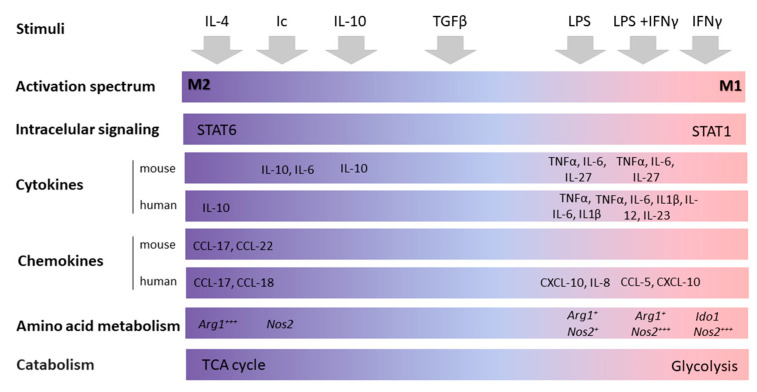
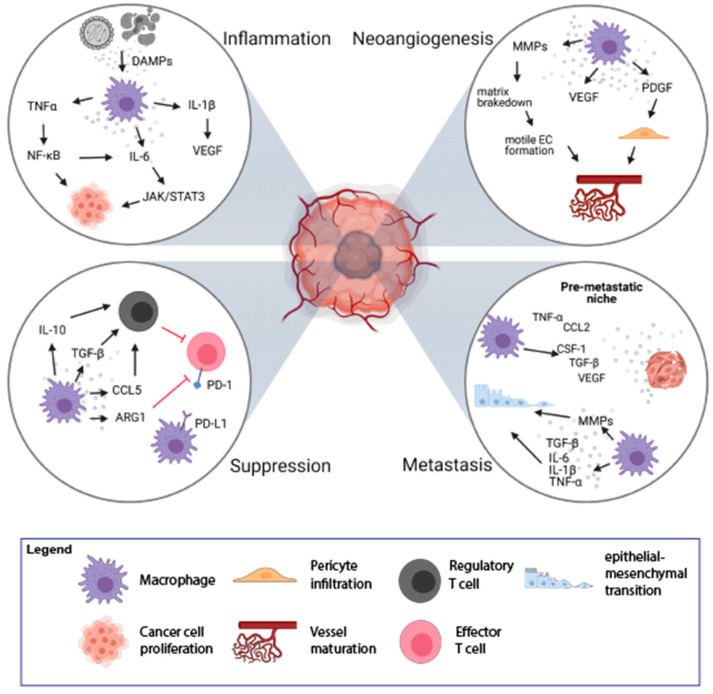
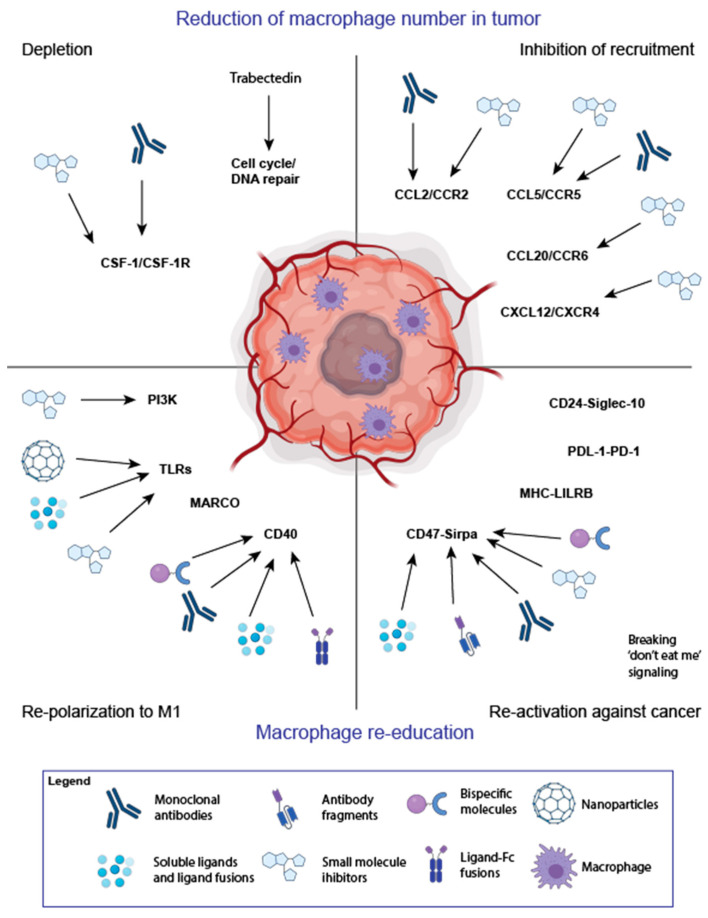
Macrophages are critical mediators of tissue homeostasis and influence various aspects of immunity. Tumor-associated macrophages are one of the main cellular components of the tumor microenvironment. Depending on their activation status, macrophages can exert a dual influence on tumorigenesis by either antagonizing the cytotoxic activity of immune cells or, less frequently, by enhancing antitumor responses. In most situations, TAMs suppress T cell recruitment and function or regulate other aspects of tumor immunity. The importance of TAMs targeting in cancer therapy is derived from the strong association between the high infiltration of TAMs in the tumor tissue with poor patient prognosis. Several macrophage-targeting approaches in anticancer therapy are developed, including TAM depletion, inhibition of new TAM differentiation, or re-education of TAM activation for cancer cell phagocytosis. In this review, we will describe the role of TAMs in tumor development, including such aspects as protumorigenic inflammation, immune suppression, neoangiogenesis, and enhancement of tissue invasion and distant metastasis. Furthermore, we will discuss therapeutic approaches that aim to deplete TAMs or, on the contrary, re-educate TAMs for cancer cell phagocytosis and antitumor immunity.
Overview
The claims and statistics of this paper haven’t been checked yet.
Run the check — free, no account needed. It reads the open-access text and checks the sources it cites.
Integrity signals
Registry
Cites
Statistics
Figures
Verification
Claims the paper makes
The claims and statistics of this paper haven’t been checked yet.
Run the check — free, no account needed. It reads the open-access text and checks the sources it cites.
Claims other papers make about this one
Each is checked against this paper’s own text: does it say what the citing paper says it does?
The source backs part of the claim, not all of it — or backs it for a different population, condition or comparison.
In the citing paper
“Tumor-derived cues generally favor M2 polarization, resulting in the secretion of cytokines such as IL-4, IL-6, IL-1β, and TNFα. These cytokines support tumor growth by enhancing cellular proliferation, remodeling the ECM, and inhibiting effector T-cell responses. Thus, TAMs serve as both immunological suppressors and facilitators of malignant progression [70,71].”
From Modeling Tumor Microenvironment Complexity In Vitro: Spheroids as Physiologically Relevant Tumor Models and Strategies for Their Analysis (2025) · cites this paper as [70]
Experimental — accuracy not yet measured
Self-check
Percentages, sums and reported differences re-computed from the paper’s own numbers.
The self-check needs the paper’s full text.
Citations
Cites
Coussens, L. M., & Werb, Z. (2002) · Nature · doi:10.1038/nature01322 · Cited by 15,111
Immunity, Inflammation, and Cancer
Grivennikov, S. I., Greten, F. R., & Karin, M. (2010) · Cell · doi:10.1016/j.cell.2010.01.025 · Cited by 10,755
Myeloid-derived-suppressor cells as regulators of the immune system
Gabrilovich, D. I., & Nagaraj, S. (2009) · Nature Reviews Immunology · doi:10.1038/nri2506 · Cited by 6,753
Macrophage activation and polarization: nomenclature and experimental guidelines
Murray, P. J., Allen, J. E., Biswas, S. K., Fisher, E. A., Gilroy, D. W., Goerdt, S., Gordon, S., Hamilton, J. A., Ivashkiv, L. B., Lawrence, T., et al. (2014) · Immunity · doi:10.1016/j.immuni.2014.06.008 · Cited by 6,337
Toll-like receptors: critical proteins linking innate and acquired immunity
Akira, S., Takeda, K., & Kaisho, T. (2001) · Nature Immunology · doi:10.1038/90609 · Cited by 4,777
Tumor-Associated Macrophages: From Mechanisms to Therapy
Noy, R., & Pollard, J. W. (2014) · Immunity · doi:10.1016/j.immuni.2014.06.010 · Cited by 4,089
Macrophage plasticity and interaction with lymphocyte subsets: cancer as a paradigm
Biswas, S. K., & Mantovani, A. (2010) · Nature Immunology · doi:10.1038/ni.1937 · Cited by 3,840
Inflammation and cancer: triggers, mechanisms, and consequences
Greten, F. R., & Grivennikov, S. I. (2019) · Immunity · doi:10.1016/j.immuni.2019.06.025 · Cited by 3,806
CSF-1R inhibition alters macrophage polarization and blocks glioma progression
Pyonteck, S. M., Akkari, L., Schuhmacher, A. J., Bowman, R. L., Sevenich, L., Quail, D. F., Olson, O. C., Quick, M. L., Huse, J. T., Teijeiro, V., et al. (2013) · Nature Medicine · doi:10.1038/nm.3337 · Cited by 2,463
The tumor microenvironment and its role in promoting tumor growth
Whiteside, T. L. (2008) · Oncogene · doi:10.1038/onc.2008.271 · Cited by 2,376
Research works printed but not linked: 1
- Yue, 2010, NIH Public Access, Bone, 23, 1
Cited by
Sorted by citations
Items 201–300 of 332
Macrophage-Based Therapeutic Strategies in Hematologic Malignancies
Khalili, S., Zeinali, F., Fard, A. M., Taha, S. R., Naghibi, A. F., Bagheri, K., Zadeh, M. S., Eslami, Y., Fattah, K., Asadimanesh, N., et al. (2023) · Cancers · doi:10.3390/cancers15143722 · Cited by 6
Hu, Q., Wu, G., Ma, H., Zhang, J., & Yang, Z. (2023) · Cellular Signalling · doi:10.1016/j.cellsig.2023.110871 · Cited by 6
Rath, S., Jema, J. P., Kamali, K., Mallick, S., Pradhan, J., Chainy, G. B. N., Nayak, D., Kaushik, S., & Dandapat, J. (2024) · Scientific Reports · doi:10.1038/s41598-024-51319-w · Cited by 5
RetractedBZW1 is a prognostic and immunological biomarker in pancreatic adenocarcinoma
luo, A., Qiao, N., Hu, K., Xu, H., Xie, M., Jiang, Y., & Hu, J. (2024) · Medicine · doi:10.1097/md.0000000000037092 · Cited by 5
Immune Evasion in Cancer Is Regulated by Tumor-Asociated Macrophages (TAMs): Targeting TAMs
Jung, M., & Bonavida, B. (2024) · Critical Reviews™ in Oncogenesis · doi:10.1615/critrevoncog.2024053096 · Cited by 5
The Proteomic Landscape of Monocytes in Response to Colorectal Cancer Cells
Wang, Y., Zhang, L., Xu, J., & Ma, J. (2024) · Journal of Proteome Research · doi:10.1021/acs.jproteome.4c00400 · Cited by 5
Guo, R., & Wang, P. (2024) · Breast Cancer · doi:10.1007/s12282-024-01654-7 · Cited by 5
Ma, H., Zhang, B., Chen, M., Song, Z., & Zhao, Y. (2025) · Frontiers in Immunology · doi:10.3389/fimmu.2025.1657383 · Cited by 4
Shao, C., Qiao, S., Meng, Y., He, T., Cui, L., & He, J. (2025) · The FASEB Journal · doi:10.1096/fj.202500974r · Cited by 4
Pro-Inflammatory Macrophage Phenotype Skewing Induced by Tumor Treating Fields (TTFields)
Kan, T., Barsheshet, Y., Khalil, T. H., Brant, B., Voloshin, T., Ben‐Meir, K., Rosen, S. Z., Giladi, M., Weinberg, U., & Palti, Y. (2025) · International Journal of Molecular Sciences · doi:10.3390/ijms262412086 · Cited by 4
Madesh, S., Murugan, R., Sau, A., Selvaraj, J., Swaroop, A. K., Rajagopal, R., Kumaradoss, K. M., & Arockiaraj, J. (2025) · Journal of Biochemical and Molecular Toxicology · doi:10.1002/jbt.70239 · Cited by 4
Ghasemian-Irani, M., Babaei, S., & Kazemi, T. (2025) · Cell Cycle · doi:10.1080/15384101.2025.2583289 · Cited by 8
Zaalberg, A., Lacoste, A., Minnee, E., Mayayo‐Peralta, I., Schuurman, K. G., Gregoricchio, S., van Schaik, T., Hoekman, L., Li, D., Corey, E., et al. (2026) · Oncogene · doi:10.1038/s41388-026-03912-8 · Cited by 4
Dalai, P., Shah, D., Shah, J., Soni, K., Mohanty, A., Thanki, K., Dave, H. V., & Agrawal-Rajput, R. (2024) · Cellular Signalling · doi:10.1016/j.cellsig.2024.111507 · Cited by 4
How to Use Macrophages Against Cancer
Kuźnicki, J., Janicka, N., Bialynicka‐Birula, B., Kuźnicki, W., Chorążyczewska, H., Deszcz, I., & Kulbacka, J. (2024) · Cells · doi:10.3390/cells13231948 · Cited by 4
de Santis, J. O., de Sousa, G. R., Queiróz, R. G. D. P., Cândido, M. F., Almeida, F. B. D. R., Rezende, C. P., Ruy, P. D. C., Arini, G. S., Coyle, B., Wade, P., et al. (2025) · Human Cell · doi:10.1007/s13577-025-01181-3 · Cited by 4
Lam, R. C. T., Hui, C. W. C., Wong, C. H., Lo, K. W., Tsang, A. C. M., Hui, E. P., Chan, A. T. �., & Ma, B. B. Y. (2023) · Investigational New Drugs · doi:10.1007/s10637-023-01384-1 · Cited by 4
Analysis of the Gene Networks and Pathways Correlated with Tissue Differentiation in Prostate Cancer
Filippi, A., Aurelian, J., & Mocanu, M. (2024) · International Journal of Molecular Sciences · doi:10.3390/ijms25073626 · Cited by 4
Edible domestic animal blood products for biomedical and disease treatment applications
Cao, Z., Khan, I. M., Niu, X., Hu, Y., Duan, Z., Fang, Q., Wang, Z., & Yang, J. (2025) · Current Research in Biotechnology · doi:10.1016/j.crbiot.2025.100308 · Cited by 3
Liu, Y., Zhang, B., Meng, Z., Lei, L., Song, Y., Lan, J., Li, B., Ouyang, C., Yuan, S., Liu, P., et al. (2025) · Molecular Biology of the Cell · doi:10.1091/mbc.e25-05-0265 · Cited by 3
Rab1A-Mediated Exosomal Sorting of miR-200c Enhances Breast Cancer Lung Metastasis
Liu, Y., Tang, J., Qiu, X., Teng, L. A., Sriwastva, M. K., Han, X., Li, Z., Liu, M., Liu, S., Da, D., et al. (2023) · Breast Cancer Targets and Therapy · doi:10.2147/bctt.s400974 · Cited by 3
RetractedGATA4 downregulation enhances CCL20-mediated immunosuppression in hepatocellular carcinoma
Nasir, N. J. M., Chuah, S., Shuen, T. W. H., Prawira, A., Ba, R., Lim, M. C., Chua, J. Y. H., Nguyen, P. H. D., Lim, C. J., Wasser, M., et al. (2024) · Hepatology Communications · doi:10.1097/hc9.0000000000000508 · Cited by 3
Dendritic cell activation by iron oxide nanoparticles depends on the extracellular environment
Song, M., Ivkov, R., & Korangath, P. C. (2024) · Nanoscale Advances · doi:10.1039/d4na00561a · Cited by 3
Salloom, R. J., Sahtout, D. Z., Ahmad, I. M., & Abdalla, M. Y. (2025) · Translational Oncology · doi:10.1016/j.tranon.2025.102339 · Cited by 3
Wang, J., Katsaros, D., Wang, Z., Ma, L., Casetta, E., Fei, P., Denti, P., Grimaudo, I., Chen, S., Deng, Y., et al. (2025) · Breast Cancer Research and Treatment · doi:10.1007/s10549-025-07682-x · Cited by 3
Serrano-Quintero, A., Sequeda-Juárez, A., Pérez-Hernández, C. A., Sosa-Delgado, S. M., Méndez-Tenorio, A., & Ramón‐Gallegos, E. (2022) · Photodiagnosis and Photodynamic Therapy · doi:10.1016/j.pdpdt.2022.103174 · Cited by 3
The Double-Edged Sword of Erythrocytes in Health and Disease via Their Adhesiveness
Asaro, R. J., Profumo, E., Buttari, B., & Cabrales, P. (2023) · International Journal of Molecular Sciences · doi:10.3390/ijms241210382 · Cited by 3
The latest techniques for inducing macrophage differentiation
Lee, K., Choi, Y., Kim, N., Lee, H., & Choi, J. H. (2024) · Biotechnology and Bioprocess Engineering · doi:10.1007/s12257-024-00091-9 · Cited by 4
An Epic Advancement in Targeting Macrophages for Cancer Therapy Approach
Lu, X., Qiuxia, F., Rui-e, L., Wang, D., Muluh, T. A., & Zhang, Y. (2024) · Current Drug Delivery · doi:10.2174/0115672018299798240403062508 · Cited by 3
Zhang, X., Liu, T., Hao, Y., Guo, H., & Li, B. (2024) · Heliyon · doi:10.1016/j.heliyon.2024.e36616 · Cited by 3
Three-dimensional silk fibroin scaffolded co-culture of human neuroblastoma and innate immune cells
Mistretta, K. S., & Coburn, J. M. (2024) · Experimental Cell Research · doi:10.1016/j.yexcr.2024.114289 · Cited by 3
Thielman, N. R. J., Funes, V., Davuluri, S., Ibanez, H. E., Sun, W., Fu, J. L., Li, K., Muth, S. T., Pan, X., Fujiwara, K., et al. (2023) · bioRxiv (Cold Spring Harbor Laboratory) · doi:10.1101/2023.10.24.563862 · Cited by 3
Segal, J. E., Cronk, J. C., Ball, B., Forbes, G. E., Jackett, K. N., Li, K. P., Osorno, A. M., Montalvan, E. S. A., Browne, A., Lake, J. A., et al. (2025) · Cold Spring Harbor Perspectives in Medicine · doi:10.1101/cshperspect.a041609 · Cited by 3
Schöning, J., Rösner, L., Depke, D. A., Hüwel, S., Kukhar, A., Schäfers, M. A., & Rentmeister, A. (2025) · Bioconjugate Chemistry · doi:10.1021/acs.bioconjchem.4c00364 · Cited by 2
Prieto‐Domínguez, N., Goel, P., Ojo, O. A., Moretto, K., Holtzhausen, A., Humphryes, A., Zhou, X., Kuznetsova, V., Dempsey, F., Pittman, K., et al. (2025) · Cancer Immunology Research · doi:10.1158/2326-6066.cir-24-0335 · Cited by 2
Engineered macrophages as versatile platforms for targeted cancer immunotherapy
Mujahid, K., Aslam, M. A., Nam, J., & Choi, J. U. (2025) · Journal of Pharmaceutical Investigation · doi:10.1007/s40005-025-00754-6 · Cited by 2
Nanobiotechnology-enabled strategies for molecular and cellular imaging of lymph nodes
Dai, H., Biggs, H., Li, Y., Wen, J., Qiao, R., & Xu, C. (2025) · Nano Research · doi:10.26599/nr.2025.94908163 · Cited by 2
Qu, Q., Ma, Y., Huang, C., Fa, B., Liu, Z., Li, Y., Yang, S., & Xiao, Z. (2025) · Cancer Gene Therapy · doi:10.1038/s41417-025-00991-9 · Cited by 2
A bacterial toxin as a novel anti-cancer drug modulating the tumor-microenvironment
Li, L., Evain, P., Phillips, M. T., Chiloeches, M. L., Bergonzini, A., Frisan, T., Wai, S. N., & Erttmann, S. F. (2025) · Cell Death and Disease · doi:10.1038/s41419-025-08219-2 · Cited by 2
Gou, J., Jia, T., Song, S., He, J., & Zhao, D. (2025) · Molecular and Cellular Biochemistry · doi:10.1007/s11010-025-05432-7 · Cited by 2
Li, W., Meng, X., Xie, F., Jia, W., Yao, J., & Wang, P. (2025) · Cancer Nanotechnology · doi:10.1186/s12645-025-00357-8 · Cited by 2
Cheng, X. I., Dong, J., Jain, P., Qin, S., Miao, Y., Liu, K., Theja, M. L. V., Butch, C. J., Wang, Y., & Lane, L. A. (2025) · Small · doi:10.1002/smll.202510436 · Cited by 4
Perioperative Immunomodulation and Cancer Recurrence
Villa, J. F., Ramirez, M. F., Anderson, J. L., Sikora, A. G., Sharma, J., & Cata, J. P. (2026) · International Anesthesiology Clinics · doi:10.1097/aia.0000000000000509 · Cited by 2
AllergoOncology in Review: Harnessing Allergy in the Field of Oncology to Improve Patient Outcomes
Zydron, J., Balaji, A., Chauhan, J., Alder, J., Chen, X., Wiegman, A. M. F., Poli, A., Jackow, J., Cheeseman, J., Spencer, D. I. R., et al. (2026) · Clinical & Experimental Allergy · doi:10.1111/cea.70234 · Cited by 2
Li, J., Zhang, J., Ke, J., Ren, Z., & Feng, C. (2026) · PLoS ONE · doi:10.1371/journal.pone.0344478 · Cited by 3
Topham, B., Hock, B. D., Wiggins, G. A. R., Ashby, L. V., Magon, N. J., Phillips, E., Symonds, E. K. C., Danielson, K., & Currie, M. J. (2026) · Frontiers in Immunology · doi:10.3389/fimmu.2026.1825431 · Cited by 3
Famta, P., Shah, S., Jain, N., Shahrukh, S., Singh, S. B., & Srivastava, S. (2022) · Medical Hypotheses · doi:10.1016/j.mehy.2022.110981 · Cited by 2
Neuroimmune Crosstalk in the Tumor Microenvironment
Krishnan, A. (2022) · Springer eBooks · doi:10.1007/978-3-030-80962-1_92-1 · Cited by 3
The Role of Macrophages in Cancer Immunity
Yang, W., Liu, W., Hu, N., & Li, C. (2022) · Springer eBooks · doi:10.1007/978-3-030-80962-1_19-1 · Cited by 2
Tumor-Associated Macrophages in Colorectal Cancer
Amălinei, C., Costin, C. A., Grigoraş, A., Chifu, M.-B., & Pricope, D. L. (2024) · Interdisciplinary cancer research · doi:10.1007/16833_2024_238 · Cited by 2
Lin, J., Zuo, L., Yang, B., Yang, R., Zhang, S., Zhang, Z., & Tian, Y. (2024) · Inflammatory Bowel Diseases · doi:10.1093/ibd/izae129 · Cited by 2
Singai, C., Pitchakarn, P., Taya, S., Wongpoomchai, R., & Wongnoppavich, A. (2024) · Foods · doi:10.3390/foods13223645 · Cited by 2
The Role of Innate Priming in Modifying Tumor-associated Macrophage Phenotype
Topham, B., Hock, B. D., Phillips, E., Wiggins, G. A. R., & Currie, M. J. (2024) · Frontiers in Bioscience-Landmark · doi:10.31083/j.fbl2912418 · Cited by 3
Implication of TRPM8, CD47, and CDK4 expressions in hepatocellular carcinoma progression
Hemida, A. S., & Tantawy, M. S. (2025) · Journal of Immunoassay and Immunochemistry · doi:10.1080/15321819.2025.2464718 · Cited by 2
Rothe, R., Golle, T., Hachkar, B., Hörz, T., Pablik, J., Rupp, L., Dietsche, I., Kruppa, C., Fitze, G., Schmitz, M., et al. (2025) · Cancers · doi:10.3390/cancers17081303 · Cited by 2
Enzyme‐Activatable Chemokine Conjugates for In Vivo Targeting of Tumor‐Associated Macrophages
Barth, N. D., van Dalen, F. J., Karmakar, U., Bertolini, M., Mendive‐Tapia, L., Kitamura, T., Verdoes, M., & Vendrell, M. (2022) · Angewandte Chemie · doi:10.1002/ange.202207508 · Cited by 2
ENDEAVORING THE ROLE OF OBESITY IN EXTRACELLULAR MATRIX DEGRADATION LEADING TO METASTASIS
Jain, A., & Roy, P. (2024) · Journal of Biological Systems · doi:10.1142/s0218339024500153 · Cited by 2
Tamuli, B., Sharma, S., Patkar, M., & Biswas, S. (2024) · Cancer Reports · doi:10.1002/cnr2.2066 · Cited by 2
Ali, W. M., Jacobs, D., Zhen, S., Diamond, A. M., & Kajdacsy‐Balla, A. (2022) · Archives of Biochemistry and Biophysics · doi:10.1016/j.abb.2022.109470 · Cited by 1
Xu, H., Du, W., Jing, X., Xie, J., & Li, P. (2024) · Biotechnology and Applied Biochemistry · doi:10.1002/bab.2579 · Cited by 1
Lv, M., Wu, S., Zhang, Z., Zhang, Z., & Wan, J. (2024) · Heliyon · doi:10.1016/j.heliyon.2024.e32045 · Cited by 1
Macrophage subtypes inhibit breast cancer proliferation in culture
Varady, S. R. S., Greiner, D., & Roh‐Johnson, M. (2024) · Molecular Biology of the Cell · doi:10.1091/mbc.e24-06-0241 · Cited by 1
Rashad, A. A., Elshafie, M. F., Mangoura, S. A., & Akool, E. (2025) · Discover Oncology · doi:10.1007/s12672-025-02766-y · Cited by 1
Targeting Innate Immunity: A New Door to Cancer Therapy
Chowdhury, U., & Khadilkar, R. J. (2025) · Springer eBooks · doi:10.1007/978-981-96-7336-0_11 · Cited by 1
Macrophage-T Cell Physical Interaction Modulates IFN-γ Secretion
Adebowale, K., Khan, Z. M., Michaud, D. E., Bibbey, M. G., Shaha, S., Guerriero, J. L., & Mitragotri, S. (2025) · ACS Applied Materials & Interfaces · doi:10.1021/acsami.5c05333 · Cited by 1
Zhang, T., Matsunaga, A., Lu, X., Fang, H., Chatterjee, N., Alimadadi, A., Mori, S. F., Fang, X., Wang, G., Shi, H., et al. (2025) · Cells · doi:10.3390/cells14191533 · Cited by 1
Sarilla, J., Mathakala, V., & Palempalli, U. M. D. (2025) · Anti-Cancer Agents in Medicinal Chemistry · doi:10.2174/0118715206413187250923055621 · Cited by 1
Yang, X., Song, Y., Sun, Q., Han, F., & Zhuang, X. (2025) · Journal of Biochemical and Molecular Toxicology · doi:10.1002/jbt.70587 · Cited by 2
Xiao, Q., Zhang, Y., Chen, Z., Liu, X., Yu, W., Wang, T., & Chu, L. (2025) · Infectious Agents and Cancer · doi:10.1186/s13027-025-00720-9 · Cited by 1
Turhan, A., Büyükbayram, M. E., Hannarici, Z., Çağlar, A. A., Bilici, M., & Tekin, S. B. (2025) · Diagnostics · doi:10.3390/diagnostics15243158 · Cited by 1
Pan, F., Yang, M., Zhang, S., Zhang, W., Chen, Y., Hong, H., Tian, Y., Li, R., Weng, H., Chen, Z., et al. (2025) · International Journal of Biological Macromolecules · doi:10.1016/j.ijbiomac.2025.149492 · Cited by 1
Lin, Z., Cui, Y., Wang, J., Yu, Y., & Tan, C. (2026) · Foods · doi:10.3390/foods15030463 · Cited by 1
Moni, S. S., Qadri, M. M., Moshi, J. M., Hawsawi, Y. M., Alotaibi, S., Riadi, Y., Halawi, H. A. A., Sultan, M. H., Salawi, A., Kameli, N., et al. (2026) · Nanomedicine · doi:10.1080/17435889.2026.2634996 · Cited by 1
Jiang, Y., Guo, Y., Han, L., Wang, S., Wang, F., Zhao, Y., Wang, J., Han, J., Liu, M., Liu, Z., et al. (2026) · Cellular Oncology · doi:10.1007/s13402-026-01179-5 · Cited by 1
Single-Cell Transcriptomics Reveals Immune Modulation by Telmisartan in Colorectal Cancer
Li, J., Yang, D., Wang, X., Ju, R., Chen, S., Zhao, J., Xu, J., Chen, J., Ye, J., Xu, B., et al. (2026) · Cells · doi:10.3390/cells15080729 · Cited by 2
Characteristics and prognosis of skin cancer arising from burn scars: a systematic review
Alhadlaq, A., Kereet, I. M., Kamel, B., Jahangir, K., Hamam, N. G., Shehab, M. A., Alamin, M. H., Osman, A. S. A., Rechid, S., Ali, M. A., et al. (2026) · Journal of Plastic Surgery and Hand Surgery · doi:10.2340/jphs.v61.45793 · Cited by 1
Chitambar, C. R., Zoss, C. J., Al-Gizawiy, M. M., Schmainda, K. M., & Connelly, J. M. (2026) · Pharmacological Reviews · doi:10.1016/j.pharmr.2026.100138 · Cited by 2
Stem cells as an essential mediator of the exercise–tumorigenesis link
Zhuang, X., Wong, E. S. W., Tammela, T., & Jones, L. W. (2026) · Nature reviews. Cancer · doi:10.1038/s41568-026-00933-z · Cited by 2
Miao, C., & Fei, Q. (2026) · Cancer Medicine · doi:10.1002/cam4.72106 · Cited by 1
Mendoza, M. S., Fernández-López, B. E., Lemini, C., Carlos‐Reyes, Á., & Prado-Garcı́a, H. (2022) · Interdisciplinary cancer research · doi:10.1007/16833_2022_48 · Cited by 1
Introduction to the Tumor Microenvironment
Witz, I. P., & Izraely, S. (2022) · Royal Society of Chemistry eBooks · doi:10.1039/9781839166013-00011 · Cited by 1
Adoptive Cell Transfer for Solid Tumors
Ghobadinezhad, F., Izadi, Z., Ebrahimi, M., & Rezaei, N. (2023) · Interdisciplinary cancer research · doi:10.1007/16833_2022_105 · Cited by 1
Analysis of Antibody Induction by Macrophages Treated Ex Vivo with Human Proteins in Mice
Nurtleu, M., Adish, Z., Муканов, К. К., Tursunov, K., Ramankulov, Y. M., & Mukantayev, K. (2023) · Reports of Biochemistry and Molecular Biology · doi:10.52547/rbmb.11.4.694 · Cited by 1
Diseases and Disorders Associated with Immune System
Shimpi, P. H., Pillewan, S. R., & Nikam, V. S. (2023) · BENTHAM SCIENCE PUBLISHERS eBooks · doi:10.2174/9789815123258123010005 · Cited by 1
Ben-Mordechai, T., Lawrence, Y. R., Symon, Z., Shimoni-Sebag, A., & Amit, U. (2023) · Cancers · doi:10.3390/cancers15225472 · Cited by 1
Erin, N. (2024) · Elsevier eBooks · doi:10.1016/b978-0-443-18653-0.00027-7 · Cited by 1
Vikal, A., Maurya, R., Dubey, A., Bisht, A., Vashishat, A., Khare, S., Patel, P., & Kurmi, B. D. (2024) · Springer eBooks · doi:10.1007/978-981-97-4970-6_19 · Cited by 1
Jafari, Z., Javadirad, S.-M., & Rouholamini, S. E. Y. (2025) · Scientific Reports · doi:10.1038/s41598-025-10452-w · Cited by 1
Temporal genomic analysis of melanoma rejection identifies regulators of tumor immune evasionPreprint
Shvefel, S. C., Pai, J. A., Cao, Y., Pal, L. R., Levy, R., Yao, W., Cheng, K., Zemanek, M. J., Bartok, O., Weller, C., et al. (2023) · bioRxiv (Cold Spring Harbor Laboratory) · doi:10.1101/2023.11.29.569032 · Cited by 1
Naei, V. Y., Tubelleza, R., Monkman, J. H., Sadeghirad, H., Donovan, M. L., Blick, T., Wicher, A. Z., Bodbin, S. E., Stad, R. K., Basu, S., et al. (2024) · Research Square · doi:10.21203/rs.3.rs-5398442/v2 · Cited by 1
Analysis of the Correlation between Immunogenomic Phenotype and Patient Outcomes in Prostate Cancer
LI, H., TENG, J., & He, C. (2022) · International Conference on Bioinformatics and Biomedical Technology (ICBBT) · doi:10.1145/3543377.3543404
Hooda-Nehra, A., Smith, T. L., Ferrer, A. I., Staquicini, F. I., Arap, W., Pasqualini, R., & Rameshwar, P. (2022) · IntechOpen eBooks · doi:10.5772/intechopen.105654
Prognosis and Immune Correlation Analysis of m1A/m5C/m6A/m7G Regulated Genes in Gastric CancerPreprint
Chen, X., Wang, A., Luo, T., & Yu, M. (2023) · Research Square · doi:10.21203/rs.3.rs-2721702/v1
ADSC-EVs modulate primary human macrophages to an anti-inflammatory phenotype in vitroPreprint
Symonds, E. K. C., Black, B., Brown, A., Meredith, I., Currie, M. J., Hally, K. E., & Danielson, K. (2023) · bioRxiv (Cold Spring Harbor Laboratory) · doi:10.1101/2023.05.11.540448
Nervous System Interactions with Nonimmune Elements in Cancer Microenvironment: A Missing Piece?
Çifcibaşı, K., Reyes, C. M., Istvánffy, R., & Demir, İ. E. (2023) · Springer eBooks · doi:10.1007/978-3-031-32429-1_8
Dalai, P., Shah, D., Soni, K., Shah, J., Desai, C., Thanki, K., & Agrawal-Rajput, R. (2024) · Research Square · doi:10.21203/rs.3.rs-3977928/v1
Luo, Y., Sanchez-Garavito, E. J., Brooks, M., Gadd, M. E., Qie, Y., Navas, M. J. U., Hundal, T., Li, S., Otamendi-Lopez, A., Jones, V. K., et al. (2024) · bioRxiv (Cold Spring Harbor Laboratory) · doi:10.1101/2024.03.25.586653
Jou, E. (2024) · Progress in molecular biology and translational science · doi:10.1016/bs.pmbts.2024.03.036
Mistry, M., Shah, H., & Vora, H. (2024) · International Journal of Science and Research Archive · doi:10.30574/ijsra.2024.12.1.0688
Metadata
- Authors
- Cendrowicz, E., Sas, Z., Bremer, E., & Rygiel, T. P.
- Affiliations
- University Medical Center Groningen (NL)
- Medical University of Warsaw (PL)
- Corresponding author
- Rygiel, Tomasz P.
- Venue
- Cancers
- Publisher
- MDPI AG
- Published
- 2021-04-18
- Volume
- 13
- Issue
- 8
- Pages
- 1946
- ISSN
- 2072-6694 (ISSN-L)
- PMC
- PMC8073377
- OpenAlex
- W3156547118
- Cited by
- 332
- References
- 199
- Citations by year
- 2026: 33 · 2025: 68 · 2024: 106 · 2023: 72 · 2022: 42 · 2021: 11
- FWCI
- 5.91
- Type
- journal article
- Language
- en
- Open access
- gold
- doi.org
- Licence
- Locations
- Cancers (publishedVersion, cc-by)
- PubMed Central (publishedVersion, cc-by)
- PubMed (publishedVersion)
- University of Groningen research database (University of Groningen / Centre for Information Technology) (publishedVersion, cc-by)
- DOAJ (DOAJ: Directory of Open Access Journals) (submittedVersion, cc-by-sa)
- University of Groningen research database (University of Groningen / Centre for Information Technology) (submittedVersion, cc-by)
- Funders
- Fundacja na rzecz Nauki Polskiej (TEAM TECH/2016-1/8)
- Topics
- Life Sciences › Immunology and Microbiology › Immunology › Immune cells in cancer
- Life Sciences › Immunology and Microbiology › Immunology › Phagocytosis and Immune Regulation
- Life Sciences › Biochemistry, Genetics and Molecular Biology › Cancer Research › Cancer, Stress, Anesthesia, and Immune Response
- Keywords
- tumor-associated macrophages, tumor microenvironment, TAM depletion, TAM reprogramming, tumor immunosuppression, neoangiogenesis, metastasis, antitumor immunity, T cell recruitment
About these checks
Registry, retraction, Cites and statistics results are computed, not judged, with one exception: a printed reference that no index lists is read once by a model before it counts as a citation error. Claims are extracted by a model and kept only when their quote appears verbatim in the text; each cited source is then checked, with a model’s help, for whether it says what the claim relies on. Those verdicts can be wrong — read the claim’s quote and the cited source before relying on one.
Statistics and arithmetic are recomputed, not judged.
Confidence bands are shown only for fields calibrated on our annotated test set. None is calibrated yet, so no band is shown.
What counts as a claim ›How we measure confidence ›How we check this ›
Are you an author, or do you see a problem with this page? Request a review
