

The Therapeutic Landscape for KRAS-Mutated Colorectal Cancers
Open accessThe DOI matches its Crossref record; 91 of the 91 references it cites were found in a registry or an index.
Abstract
Colorectal cancer is one of the world’s most prevalent and lethal cancers. Mutations of the KRAS gene occur in ~40% of metastatic colorectal cancers. While this cohort has historically been difficult to manage, the last few years have shown exponential growth in the development of selective inhibitors targeting KRAS mutations. Their foremost mechanism of action utilizes the Switch II binding pocket and Cys12 residue of GDP-bound KRAS proteins in G12C mutants, confining them to their inactive state. Sotorasib and Adagrasib, both FDA-approved for the treatment of non-small cell lung cancer (NSCLC), have been pivotal in paving the way for KRAS G12C inhibitors in the clinical setting. Other KRAS inhibitors in development include a multi-targeting KRAS-mutant drug and a G12D mutant drug. Treatment resistance remains an issue with combination treatment regimens including indirect pathway inhibition and immunotherapy providing possible ways to combat this. While KRAS-mutant selective therapy has come a long way, more work is required to make this an effective and viable option for patients with colorectal cancer.
Overview
The claims and statistics of this paper haven’t been checked yet.
Free: it reads the open-access text and checks the first 5 claims that cite a source we can check. Create a free account to check every claim.
Integrity signals
Registry
Cites
Statistics
Figures
Verification
Claims the paper makes
The claims and statistics of this paper haven’t been checked yet.
Free: it reads the open-access text and checks the first 5 claims that cite a source we can check. Create a free account to check every claim.
Claims other papers make about this one
Each is checked against this paper’s own text: does it say what the citing paper says it does?
The cited source says what the claim attributes to it.
In the citing paper
“There are additional drugs currently in development for targeting G12C, G12V, or other mutations (e.g., G12D), as well as non-selective, multi-KRAS mutant inhibitors (active against G12C, G12D, G12V, and G12X) [121].”
From Mechanisms and Strategies to Overcome Drug Resistance in Colorectal Cancer (2025) · cites this paper as [121]
The cited source says what the claim attributes to it.
In the citing paper
“Clinical trials for MRTX-1133 against KRAS G12D solid tumors are ongoing [58].”
From KRAS: Biology, Inhibition, and Mechanisms of Inhibitor Resistance (2024) · cites this paper as [58]
Self-check
Percentages, sums and reported differences re-computed from the paper’s own numbers.
The self-check needs the paper’s full text.
Citations
Cites
PD-1 Blockade in Tumors with Mismatch-Repair Deficiency
Le, D. T., Uram, J. N., Wang, H., Bartlett, B. R., Kemberling, H., Eyring, A. D., Skora, A. D., Luber, B. S., Azad, N. S., Laheru, D., et al. (2015) · New England Journal of Medicine · doi:10.1056/nejmoa1500596 · Cited by 9,377
Mismatch repair deficiency predicts response of solid tumors to PD-1 blockade
Le, D. T., Durham, J. N., Smith, K. N., Wang, H., Bartlett, B. R., Aulakh, L. K., Lu, S., Kemberling, H., Wilt, C., Luber, B. S., et al. (2017) · Science · doi:10.1126/science.aan6733 · Cited by 6,645
The consensus molecular subtypes of colorectal cancer
Guinney, J., Dienstmann, R., Wang, X., de Reyniès, A., Schlicker, A., Soneson, C., Marisa, L., Roepman, P., Nyamundanda, G., Angelino, P., et al. (2015) · Nature Medicine · doi:10.1038/nm.3967 · Cited by 5,170 · cited 1×
“Molecularly diverse subtypes influence prognosis and response to therapy [1,2].”
BackgroundK-ras Mutations and Benefit from Cetuximab in Advanced Colorectal Cancer
Karapetis, C. S., Khambata-Ford, S., Jonker, D. J., O'Callaghan, C. J., Tu, D., Tebbutt, N. C., Simes, R. J., Chalchal, H., Shapiro, J. D., Robitaille, S., et al. (2008) · New England Journal of Medicine · doi:10.1056/nejmoa0804385 · Cited by 3,622 · cited 1×
“The targeting of KRAS has been extensively investigated since its discovery as an oncogene, and more earnestly after the discovery that KRAS-mutant cancers are resistant to anti-EGFR therapy [19,20].”
BackgroundK-Ras(G12C) inhibitors allosterically control GTP affinity and effector interactions
Ostrem, J. M., Peters, U., Sos, M. L., Wells, J. A., & Shokat, K. M. (2013) · Nature · doi:10.1038/nature12796 · Cited by 2,557 · cited 2×
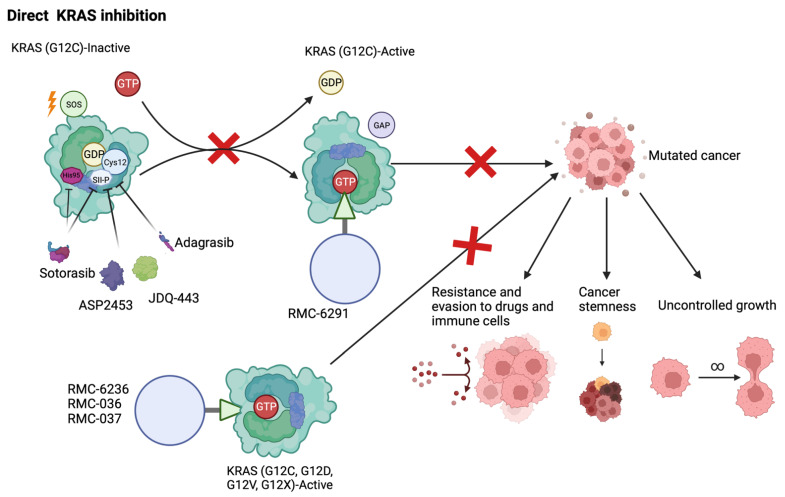
“The first generation KRAS inhibitors selectively targeted G12C mutants by binding the Switch II pocket (SII-P) (Figure 2) [27].”
BackgroundThe Clinical KRAS(G12C) Inhibitor AMG 510 Drives Anti-Tumour Immunity
Canon, J., Rex, K., Saiki, A. Y., Mohr, C., Cooke, K., Bagal, D., Gaida, K., Holt, T., Knutson, C. G., Koppada, N., et al. (2019) · Nature · doi:10.1038/s41586-019-1694-1 · Cited by 2,277 · cited 9×
“Tested in vivo, ARS-1620 induced significant tumor growth inhibition and regression selectively with KRAS G12C-mutated xenografts with no response in G12V-mutated xenografts.”
BackgroundMethodInfluentialImmunotherapy in colorectal cancer: Rationale, challenges and potential
Ganesh, K., Stadler, Z. K., Cercek, A., Mendelsohn, R. B., Shia, J., Segal, N. H., & Diaz, L. A. (2019) · Nature Reviews Gastroenterology & Hepatology · doi:10.1038/s41575-019-0126-x · Cited by 1,954 · cited 8×
“The benefit is seen in this subtype because of the increased tumor mutational burden in these dMMR cancers that create more neoantigens that can better activate the immune system and induce lymphocyte tumor infiltration [107].”
BackgroundInfluentialEmergence of KRAS mutations and acquired resistance to anti-EGFR therapy in colorectal cancer
Misale, S., Yaeger, R., Hobor, S., Scala, E., Janakiraman, M., Liska, D., Valtorta, E., Schiavo, R., Buscarino, M., Siravegna, G., et al. (2012) · Nature · doi:10.1038/nature11156 · Cited by 1,889 · cited 1×
“The targeting of KRAS has been extensively investigated since its discovery as an oncogene, and more earnestly after the discovery that KRAS-mutant cancers are resistant to anti-EGFR therapy [19,20].”
BackgroundSotorasib for Lung Cancers with KRAS p.G12C Mutation
Skoulidis, F., Li, B. T., Dy, G. K., Price, T. J., Falchook, G. S., Wolf, J., Italiano, A., Schuler, M., Borghaei, H., Barlesi, F., et al. (2021) · New England Journal of Medicine · doi:10.1056/nejmoa2103695 · Cited by 1,849 · cited 1×
“Sotorasib was the first selective inhibitor of G12C-mutant KRAS to reach Phase I and Phase II clinicals trials, demonstrating anti-tumor activity, with tolerable toxicity and safety parameters [35,36].”
BackgroundKRAS G12C Inhibition with Sotorasib in Advanced Solid Tumors
Hong, D. S., Fakih, M. G., Strickler, J. H., Desai, J., Durm, G. A., Shapiro, G. I., Falchook, G. S., Price, T. J., Sacher, A., Denlinger, C. S., et al. (2020) · New England Journal of Medicine · doi:10.1056/nejmoa1917239 · Cited by 1,733
ERK/MAPK signalling pathway and tumorigenesis (Review)
Guo, Y., Pan, W., Liu, S., Shen, Z., Xu, Y., & Hu, L. (2020) · Experimental and Therapeutic Medicine · doi:10.3892/etm.2020.8454 · Cited by 1,475 · cited 1×
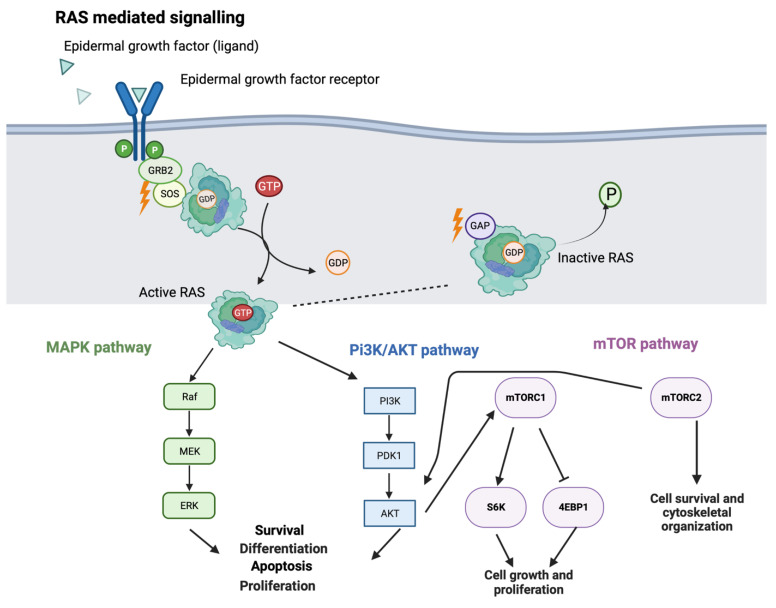
“The MAPK pathway regulates cellular survival, proliferation, apoptosis and differentiation [4].”
BackgroundT-Cell Transfer Therapy Targeting Mutant KRAS in Cancer
Tran, E., Robbins, P. F., Lu, Y.-C., Prickett, T. D., Gartner, J. J., Jia, L., Pasetto, A., Zheng, Z., Ray, S., Groh, E. M., et al. (2016) · New England Journal of Medicine · doi:10.1056/nejmoa1609279 · Cited by 1,368
Hallin, J., Engstrom, L. D., Hargis, L., Calinisan, A., Aranda, R., Briere, D. M., Sudhakar, N., Bowcut, V., Baer, B. R., Ballard, J. A., et al. (2020) · Cancer Discovery · doi:10.1158/2159-8290.cd-19-1167 · Cited by 1,304 · cited 19×
“Adagrasib was found to be sufficiently tolerated and induced a roughly 50% partial response in NSCLC (8/15) and colorectal cancer (1/2) patients.”
BackgroundMethodInfluentialAcquired Resistance to KRAS G12C Inhibition in Cancer
Awad, M. M., Liu, S., Rybkin, I. I., Arbour, K. C., Dilly, J., Zhu, V. W., Johnson, M. L., Heist, R. S., Patil, T., Riely, G. J., et al. (2021) · New England Journal of Medicine · doi:10.1056/nejmoa2105281 · Cited by 1,247 · cited 1×
“The mechanisms of resistance include acquisition of mutations in the binding pockets targeted by the drugs, secondary activating mutations in KRAS, pathogenic mutations in other members of the MAPK pathway, and oncogenic gene rearrangements/fusions and amplification of the KRAS G12C allele or the MET gene [50,51].”
BackgroundTargeting KRAS mutant cancers with a covalent G12C-specific inhibitor
Janes, M. R., Zhang, J., Li, L.-S., Hansen, R., Peters, U., Guo, X., Chen, Y., Babbar, A., Firdaus, S. J., Darjania, L., et al. (2018) · Cell · doi:10.1016/j.cell.2018.01.006 · Cited by 1,172 · cited 2×
“While promising, the translation of ARS-853 into the clinic was unsuccessful due to unsatisfactory plasma levels and a short half-life [30].”
BackgroundMilburn, M. V., Tong, L., deVos, A. M., Brünger, A., Yamaizumi, Z., Nishimura, S., & Kim, S.-H. (1990) · Science · doi:10.1126/science.2406906 · Cited by 1,059 · cited 2×
“Mutations including the substitution of glycine at codon 12 into aspartate (G12D), cysteine (G12C) and valine (G12V) directly impede the intrinsic GTPase activity of RAS, while the substitution of threonine at codon 20 to alanine (T20A) prevents GAP recognition [6].”
BackgroundLe, D. T., Kim, T. W., Van Cutsem, E., Geva, R., Jäger, D., Hara, H., Burge, M., O’Neil, B., Kavan, P., Yoshino, T., et al. (2020) · Journal of Clinical Oncology · doi:10.1200/jco.19.02107 · Cited by 1,005 · cited 1×
“in the setting of MSI [111], and as was demonstrated in the Keynote-164 trial, KRAS-mutated MSI cancers confer a lower objective response compared to KRAS-wildtype cancers [110].”
ResultSelf-citationRAS isoforms and mutations in cancer at a glance
Hobbs, G. A., Der, C. J., & Rossman, K. L. (2016) · Journal of Cell Science · doi:10.1242/jcs.182873 · Cited by 973 · cited 2×
“vated protein kinase (MAPK) pathway [3].”
BackgroundDiaz, L. A., Shiu, K.-K., Kim, T.-W., Jensen, B. V., Jensen, L. H., Punt, C., Smith, D., Garcia-Carbonero, R., Benavides, M., Gibbs, P., et al. (2022) · The Lancet Oncology · doi:10.1016/s1470-2045(22)00197-8 · Cited by 945
Vitamin C selectively kills KRAS and BRAF mutant colorectal cancer cells by targeting GAPDH
Yun, J., Mullarky, E., Lu, C., Bosch, K. N., Kavalier, A., Rivera, K., Roper, J., Chio, I. I. C., Giannopoulou, E. G., Rago, C., et al. (2015) · Science · doi:10.1126/science.aaa5004 · Cited by 913 · cited 6×
“A separate group had found that Vitamin C in lower concentrations (100uM-3mM) is oxidized into dehydroascorbate, which depletes important proteins that maintain intracellular ROS [99].”
BackgroundInfluentialBiochemical and Structural Analysis of Common Cancer-Associated KRAS Mutations
Hunter, J. C., Manandhar, A., Carrasco, M. A., Gurbani, D., Gondi, S., & Westover, K. D. (2015) · Molecular Cancer Research · doi:10.1158/1541-7786.mcr-15-0203 · Cited by 786 · cited 1×
“The G12D, G12V and G13D mutations have less effect, and G12C has minimal effect on GTPase activity [8].”
BackgroundIdentification of MRTX1133, a Noncovalent, Potent, and Selective KRAS G12D Inhibitor
Wang, X., Allen, S., Blake, J. F., Bowcut, V., Briere, D. M., Calinisan, A., Dahlke, J. R., Fell, J. B., Fischer, J. P., Gunn, R. J., et al. (2022) · Journal of Medicinal Chemistry · doi:10.1021/acs.jmedchem.1c01688 · Cited by 769 · cited 1×
“MRTX1133 is another inhibitor that has been developed and published quite recently by Mirati Therapeutics, the developer of Adagrasib [49].”
BackgroundDiscovery of a Covalent Inhibitor of KRAS G12C (AMG 510) for the Treatment of Solid Tumors
Lanman, B. A., Allen, J. R., Allen, J. G., Amegadzie, A. K., Ashton, K. S., Booker, S. K., Chen, J. J., Chen, N., Frohn, M. J., Goodman, G., et al. (2020) · Journal of Medicinal Chemistry · doi:10.1021/acs.jmedchem.9b01180 · Cited by 765 · cited 1×
“Particularly, the addition of a benzene ring allowed additional binding to His95, Tyr96 and Glu99 residues, which formed a pocket proximal to the SII-P region of the protein (Figure 2) [33,34].”
BackgroundSelective inhibition of oncogenic KRAS output with small molecules targeting the inactive state
Patricelli, M. P., Janes, M. R., Li, L.-S., Hansen, R., Peters, U., Kessler, L. V., Chen, Y., Kucharski, J. M., Feng, J., Ely, T., et al. (2016) · Cancer Discovery · doi:10.1158/2159-8290.cd-15-1105 · Cited by 759 · cited 2×
“inhibit both MAPK and PI3K pathway signaling [28].”
BackgroundAllele-specific inhibitors inactivate mutant KRAS G12C by a trapping mechanism
Lito, P., Solomon, M., Li, L.-S., Hansen, R., & Rosen, N. (2016) · Science · doi:10.1126/science.aad6204 · Cited by 691 · cited 2×
“into GDP, allowing mutant KRAS proteins to revert to their inactive form [29].”
BackgroundTanaka, N., Lin, J. J., Li, C., Ryan, M. B., Zhang, J., Kiedrowski, L. A., Michel, A. G., Syed, M. U., Fella, K. A., Sakhi, M., et al. (2021) · Cancer Discovery · doi:10.1158/2159-8290.cd-21-0365 · Cited by 527 · cited 1×
“In particular, the activating mutation of the RAF can occur directly downstream of RAS [51,52].”
BackgroundPI3K Pathway Activation Mediates Resistance to MEK Inhibitors in KRAS Mutant Cancers
Wee, S., Jagani, Z., Xiang, K. X., Loo, A., Dorsch, M., Yao, Y.-M., Sellers, W. R., Lengauer, C., & Stegmeier, F. (2009) · Cancer Research · doi:10.1158/0008-5472.can-08-4765 · Cited by 455 · cited 2×
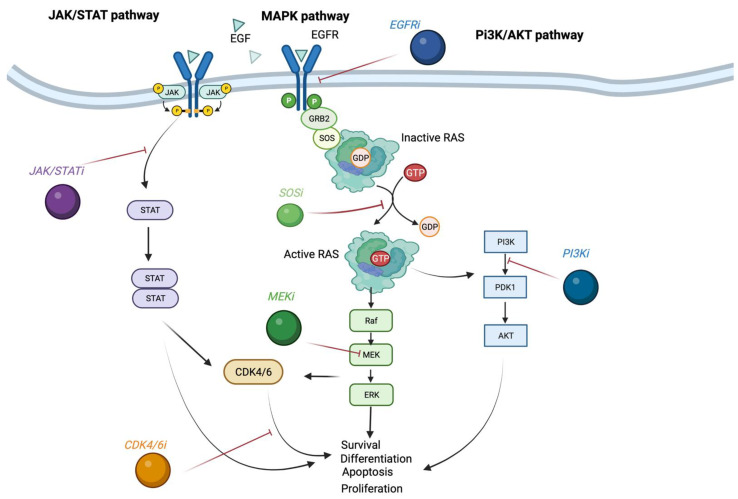
“By combining inhibition of MEK with PI3K inhibition, the resistance is overcome and results in cell death in vitro and tumor growth regression in vivo [75].”
BackgroundMethodHofmann, M. H., Gmachl, M., Ramharter, J., Savarese, F., Gerlach, D., Marszalek, J. R., Sanderson, M. P., Kessler, D., Trapani, F., Arnhof, H., et al. (2021) · Cancer Discovery · doi:10.1158/2159-8290.cd-20-0142 · Cited by 444 · cited 4×
“In vivo, Bi-3406 induces significant tumor growth regression and MAPK inhibition in a range of colorectal, lung, and pancreatic xenograft models without toxicity [93].”
BackgroundInfluentialColorectal cancer tumour markers and biomarkers: Recent therapeutic advances
Lech, G. (2016) · World Journal of Gastroenterology · doi:10.3748/wjg.v22.i5.1745 · Cited by 419 · cited 1×
“That is because KRAS mutation confers an intrinsic resistance to this therapy as it leads to constitutive MAPK activation, which is downstream of the EGFR receptor [17].”
BackgroundChen, P., Li, X., Zhang, R., Liu, S., Xiang, Y., Zhang, M., Chen, X., Pan, T., Yan, L., Feng, J., et al. (2020) · Theranostics · doi:10.7150/thno.44705 · Cited by 403
Modest, D. P., Ricard, I., Heinemann, V., Hegewisch-Becker, S., Schmiegel, W., Porschen, R., Stintzing, S., Graeven, U., Arnold, D., von Weikersthal, L. F., et al. (2016) · Annals of Oncology · doi:10.1093/annonc/mdw261 · Cited by 351
FDA Approval Summary: Sotorasib for KRAS G12C -Mutated Metastatic NSCLC
Nakajima, E. C., Drezner, N., Li, X., Mishra-Kalyani, P. S., Liu, Y., Zhao, H., Bi, Y., Liu, J., Rahman, A., Wearne, E., et al. (2022) · Clinical Cancer Research · doi:10.1158/1078-0432.ccr-21-3074 · Cited by 333 · cited 1×
“Sotorasib was developed by Amgen and approved by the FDA in 2021 for the treatment of KRAS-G12C-mutant non-small cell lung cancer [31,32].”
MethodOu, S.-H. I., Jänne, P. A., Leal, T. A., Rybkin, I. I., Sabari, J. K., Barve, M. A., Bazhenova, L., Johnson, M. L., Velastegui, K. L., Cilliers, C., et al. (2022) · Journal of Clinical Oncology · doi:10.1200/jco.21.02752 · Cited by 322
The metabolic landscape of RAS-driven cancers from biology to therapy
Mukhopadhyay, S., Vander Heiden, M. G., & McCormick, F. (2021) · Nature Cancer · doi:10.1038/s43018-021-00184-x · Cited by 315 · cited 1×
“Alongside increased energy demands is the need for amino acids as building blocks for the increased biosynthesis (particularly protein synthesis) needed for cancer [97,98].”
BackgroundCrystal structure of human KRAS G12C covalently bound to a phthalazine inhibitor: 6pgo
Mohr, C. (2019) · Worldwide Protein Data Bank · doi:10.2210/pdb6pgo/pdb · Cited by 314
Yang, J., Mo, J., Dai, J., Ye, C., Cen, W., Zheng, X., Jiang, L., & Ye, L. (2021) · Cell Death & Disease · doi:10.1038/s41419-021-04367-3 · Cited by 300 · cited 1×
“RASselective lethal 3 (RSL3) was also found to induce ferroptosis in KRAS-mutant cells, which is also enhanced by Cetuximab to increase killing [95].”
BackgroundMEK inhibitors for the treatment of non-small cell lung cancer
Han, J., Liu, Y., Yang, S., Wu, X., Li, H., & Wang, Q. (2021) · Journal of Hematology & Oncology · doi:10.1186/s13045-020-01025-7 · Cited by 290 · cited 13×
“Adagrasib was found to be sufficiently tolerated and induced a roughly 50% partial response in NSCLC (8/15) and colorectal cancer (1/2) patients.”
BackgroundInfluentialThe amino acid transporter SLC7A5 is required for efficient growth of KRAS-mutant colorectal cancer
Najumudeen, A. K., Ceteci, F., Fey, S. K., Hamm, G., Steven, R. T., Hall, H., Nikula, C. J., Dexter, A., Murta, T., Race, A. M., et al. (2021) · Nature Genetics · doi:10.1038/s41588-020-00753-3 · Cited by 289 · cited 1×
“SLC7A1 plays a more complex role; acting as an antiporter, it can exchange intracellular glutamine for other amino acids to feed biosynthesis of proteins and fatty acids [102].”
BackgroundNguyen, A., Burack, W. R., Stock, J. L., Kortum, R., Chaika, O. V., Afkarian, M., Muller, W. J., Murphy, K. M., Morrison, D. K., Lewis, R. E., et al. (2002) · Molecular and Cellular Biology · doi:10.1128/mcb.22.9.3035-3045.2002 · Cited by 268 · cited 1×
“KSR1 was found to act as a scaffolding protein that can bypass KRAS and continue signaling despite inhibition of KRAS G12C [53,54].”
BackgroundLiu, C., Liu, R., Wang, B., Lian, J., Yao, Y., Sun, H., Zhang, C., Fang, L., Guan, X., Shi, J., et al. (2021) · Journal for ImmunoTherapy of Cancer · doi:10.1136/jitc-2020-001895 · Cited by 257
Imamura, Y., Morikawa, T., Liao, X., Lochhead, P., Kuchiba, A., Yamauchi, M., Qian, Z. R., Nishihara, R., Meyerhardt, J. A., Haigis, K. M., et al. (2012) · Clinical Cancer Research · doi:10.1158/1078-0432.ccr-11-3210 · Cited by 249 · cited 1×
“In the metastatic setting, one study (n = 392 patients) found that G12C and G12V mutations were both independent markers of worse overall survival (OS), while another study (n = 1262 patients) observed this relationship only with the G12C mutation [14,15].”
BackgroundMetabolic networks in mutant KRAS-driven tumours: tissue specificities and the microenvironment
Kerk, S. A., Papagiannakopoulos, T., Shah, Y. M., & Lyssiotis, C. A. (2021) · Nature Reviews Cancer · doi:10.1038/s41568-021-00375-9 · Cited by 237 · cited 1×
“Alongside increased energy demands is the need for amino acids as building blocks for the increased biosynthesis (particularly protein synthesis) needed for cancer [97,98].”
BackgroundDosset, M., Vargas, T. R., Lagrange, A., Boidot, R., Végran, F., Roussey, A., Chalmin, F., Dondaine, L., Paul, C., Marie-Joseph, E. L., et al. (2018) · OncoImmunology · doi:10.1080/2162402x.2018.1433981 · Cited by 210
Andre, T., Amonkar, M., Norquist, J. M., Shiu, K.-K., Kim, T. W., Jensen, B. V., Jensen, L. H., Punt, C. J. A., Smith, D., Garcia-Carbonero, R., et al. (2021) · The Lancet Oncology · doi:10.1016/s1470-2045(21)00064-4 · Cited by 209 · cited 1×
“Furthermore, the Phase III Keynote-177 trial reported that while Pembrolizumab did not significantly increase OS and PFS in late stage MSI/dMMR colorectal cancers, it was better tolerated [112,113].”
BackgroundMigliardi, G., Sassi, F., Torti, D., Galimi, F., Zanella, E. R., Buscarino, M., Ribero, D., Muratore, A., Massucco, P., Pisacane, A., et al. (2012) · Clinical Cancer Research · doi:10.1158/1078-0432.ccr-11-2683 · Cited by 191 · cited 1×
“Furthermore, introducing EGFR inhibition to the MEK and PI3K combination increased in vivo efficacy in a patientderived xenograft model [76].”
BackgroundMEK inhibitors activate Wnt signalling and induce stem cell plasticity in colorectal cancer
Zhan, T., Ambrosi, G., Wandmacher, A. M., Rauscher, B., Betge, J., Rindtorff, N., Häussler, R. S., Hinsenkamp, I., Bamberg, L., Hessling, B., et al. (2019) · Nature Communications · doi:10.1038/s41467-019-09898-0 · Cited by 189 · cited 1×
“Furthermore, it was discovered that MEK inhibitors can have an unintended secondary effect of activating the WNT pathway, another driver of colorectal tumorigenesis [73].”
BackgroundWong, C. C., Xu, J., Bian, X., Wu, J.-L., Kang, W., Qian, Y., Li, W., Chen, H., Gou, H., Liu, D., et al. (2020) · Gastroenterology · doi:10.1053/j.gastro.2020.08.016 · Cited by 179
Casak, S. J., Marcus, L., Fashoyin-Aje, L., Mushti, S. L., Cheng, J., Shen, Y.-L., Pierce, W. F., Her, L., Goldberg, K. B., Theoret, M. R., et al. (2021) · Clinical Cancer Research · doi:10.1158/1078-0432.ccr-21-0557 · Cited by 179
Tsilimigras, D. I., Ntanasis-Stathopoulos, I., Bagante, F., Moris, D., Cloyd, J., Spartalis, E., & Pawlik, T. M. (2018) · Surgical Oncology · doi:10.1016/j.suronc.2018.05.012 · Cited by 177
Tannir, N. M., Agarwal, N., Porta, C., Lawrence, N. J., Motzer, R. J., McGregor, B. A., Lee, R. J., Jain, R., Davis, N. B., Appleman, L. J., et al. (2022) · JAMA Oncology · doi:10.1001/jamaoncol.2022.3511 · Cited by 168 · cited 1×
“However, in a Phase II trial, it failed to showed efficacy in combination with Cabozatinib, a tyrosine kinase inhibitor [104,105].”
BackgroundJones, R. P., Sutton, P. A., Evans, J. P., Clifford, R., McAvoy, A., Lewis, J., Rousseau, A., Mountford, R., McWhirter, D., & Malik, H. Z. (2017) · British Journal of Cancer · doi:10.1038/bjc.2017.37 · Cited by 166 · cited 1×
“In the metastatic setting, one study (n = 392 patients) found that G12C and G12V mutations were both independent markers of worse overall survival (OS), while another study (n = 1262 patients) observed this relationship only with the G12C mutation [14,15].”
BackgroundShang, S., Yang, Y.-W., Chen, F., Yu, L., Shen, S.-H., Li, K., Cui, B., Lv, X.-X., Zhang, C., Yang, C., et al. (2022) · Science Translational Medicine · doi:10.1126/scitranslmed.abf0992 · Cited by 157
Weiss, A., Lorthiois, E., Barys, L., Beyer, K. S., Bomio-Confaglia, C., Burks, H., Chen, X., Cui, X., de Kanter, R., Dharmarajan, L., et al. (2022) · Cancer Discovery · doi:10.1158/2159-8290.cd-22-0158 · Cited by 150 · cited 8×
“Cancers 2023, 15, 2375 19 of 25 Both Adagrasib and Sotorasib have performed favorably in the clinic.”
InfluentialBalmanno, K., Chell, S. D., Gillings, A. S., Hayat, S., & Cook, S. J. (2009) · International Journal of Cancer · doi:10.1002/ijc.24604 · Cited by 143 · cited 1×
“Another mechanism for resistance to MEK inhibition is the activation of the PI3K pathway [74,75].”
BackgroundLimagne, E., Thibaudin, M., Nuttin, L., Spill, A., Derangère, V., Fumet, J.-D., Amellal, N., Peranzoni, E., Cattan, V., & Ghiringhelli, F. (2019) · Cancer Immunology Research · doi:10.1158/2326-6066.cir-19-0228 · Cited by 142
Do, K., Speranza, G., Bishop, R., Khin, S., Rubinstein, L., Kinders, R. J., Datiles, M., Eugeni, M., Lam, M. H., Doyle, L. A., et al. (2015) · Investigational New Drugs · doi:10.1007/s10637-015-0212-z · Cited by 132
Toubaji, A., Achtar, M. S., Provenzano, M., Herrin, V. E., Behrens, R. J., Hamilton, M., Bernstein, S. A., Venzon, D. J., Gause, B. L., Marincola, F. M., et al. (2008) · Cancer Immunology Immunotherapy · doi:10.1007/s00262-008-0477-6 · Cited by 131
Lee, M. S., Helms, T. L., Feng, N., Gay, J., Chang, Q. E., Tian, F., Wu, J. Y., Toniatti, C., Heffernan, T. P., Powis, G., et al. (2016) · Oncotarget · doi:10.18632/oncotarget.9153 · Cited by 123
Chen, J., Hou, S., Liang, Q. D., He, W., Li, R., Wang, H., Zhu, Y., Zhang, B., Chen, L., Dai, X., et al. (2022) · ACS Nano · doi:10.1021/acsnano.1c09318 · Cited by 117
KRAS is vulnerable to reversible switch-II pocket engagement in cells
Vasta, J. D., Peacock, D. M., Zheng, Q., Walker, J. A., Zhang, Z., Zimprich, C. A., Thomas, M. R., Beck, M. T., Binkowski, B. F., Corona, C. R., et al. (2022) · Nature Chemical Biology · doi:10.1038/s41589-022-00985-w · Cited by 115 · cited 1×
“A recent publication discovered a potentially new avenue for KRAS inhibition through non-covalent, reversible binding of the SII-P region [48].”
BackgroundVan Schaeybroeck, S., Kalimutho, M., Dunne, P. D., Carson, R., Allen, W., Jithesh, P. V., Redmond, K. L., Sasazuki, T., Shirasawa, S., Blayney, J., et al. (2014) · Cell Reports · doi:10.1016/j.celrep.2014.05.032 · Cited by 106
Mutant KRAS, chromosomal instability and prognosis in colorectal cancer
Castagnola, P., & Giaretti, W. (2005) · Biochimica et Biophysica Acta (BBA) - Reviews on Cancer · doi:10.1016/j.bbcan.2005.06.003 · Cited by 99 · cited 1×
“Previously, studies have conflicted in regard to the impact of KRAS mutation on prognosis in colorectal cancer [9].”
ResultWainberg, Z. A., Alsina, M., Soares, H. P., Braña, I., Britten, C. D., Del Conte, G., Ezeh, P., Houk, B., Kern, K. A., Leong, S., et al. (2017) · Targeted Oncology · doi:10.1007/s11523-017-0530-5 · Cited by 98
Pek, M., Yatim, S. M. J. M., Chen, Y., Li, J., Gong, M., Jiang, X., Zhang, F., Zheng, J., Wu, X., & Yu, Q. (2017) · Oncogene · doi:10.1038/onc.2017.120 · Cited by 86
Bardia, A., Gounder, M., Rodon, J., Janku, F., Lolkema, M. P., Stephenson, J. J., Bedard, P. L., Schuler, M., Sessa, C., LoRusso, P., et al. (2020) · The Oncologist · doi:10.1634/theoncologist.2019-0297 · Cited by 85
Vitamin C uncouples the Warburg metabolic switch in KRAS mutant colon cancer
Aguilera, O., Muñoz-Sagastibelza, M., Torrejón, B., Borrero-Palacios, A., del Puerto-Nevado, L., Martínez-Useros, J., Rodriguez-Remirez, M., Zazo, S., García, E., Fraga, M., et al. (2016) · Oncotarget · doi:10.18632/oncotarget.10087 · Cited by 84 · cited 1×
“Furthermore, by inhibiting the transcription of expression of key proteins in glucose metabolism, PTB1, PKM2, and GLUT1, glucose uptake is dampened and leads to cell death [96].”
BackgroundTargeting Krasg12c‐mutant cancer with a mutation‐specific inhibitor
Christensen, J. G., Olson, P., Briere, T., Wiel, C., & Bergo, M. O. (2020) · Journal of Internal Medicine · doi:10.1111/joim.13057 · Cited by 76 · cited 3×
“(GDP) bound to RAS for a guanosine triphosphate (GTP) [5].”
BackgroundInfluentialMeric‐Bernstam, F., Tannir, N. M., Iliopoulos, O., Lee, R. J., Telli, M. L., Fan, A. C., DeMichele, A. M., Haas, N. B., Patel, M. R., Harding, J. J., et al. (2022) · Clinical Cancer Research · doi:10.1158/1078-0432.ccr-21-2972 · Cited by 71
Yu, C., Luo, D., Yu, J., Zhang, M., Zheng, X., Xu, G., Wang, J., Wang, H., Xu, Y., Jiang, K., et al. (2022) · Oncogene · doi:10.1038/s41388-021-02077-w · Cited by 70
Mathur, D., Root, A. R., Bugaj‐Gaweda, B., Bisulco, S., Tan, X., Fang, W., Kearney, J. C., Lucas, J., Guffroy, M., Golas, J., et al. (2020) · Clinical Cancer Research · doi:10.1158/1078-0432.ccr-19-3275 · Cited by 70
Kandasamy, P., Zlobec, I., Nydegger, D. T., Pujol‐Giménez, J., Bhardwaj, R., Shirasawa, S., Tsunoda, T., & Hediger, M. A. (2021) · Molecular Oncology · doi:10.1002/1878-0261.12999 · Cited by 66 · cited 1×
“A way KRAS mutations are able to support this is through the upregulation of amino acid transporters, including SLC7A5, SLC38A2, and SLC1A5 through the YAP1 transcriptional coactivator, which import amino acids such as glutamine into the cell [101].”
BackgroundCancer vaccines: Targeting KRAS-driven cancers
Zhang, Y., Ma, J., Zhang, H.-X., Jiang, Y., & Luo, W. (2020) · Expert Review of Vaccines · doi:10.1080/14760584.2020.1733420 · Cited by 63
Research progress on KRAS mutations in colorectal cancer
Cefalì, M., Epistolio, S., Palmarocchi, M. C., Frattini, M., & Dosso, S. D. (2021) · Journal of Cancer Metastasis and Treatment · doi:10.20517/2394-4722.2021.61 · Cited by 63
Hayama, T., Hashiguchi, Y., Okamoto, K., Okada, Y., Ono, K., Shimada, R., Ozawa, T., Toyoda, T., Tsuchiya, T., Iinuma, H., et al. (2019) · International Journal of Colorectal Disease · doi:10.1007/s00384-019-03344-9 · Cited by 62 · cited 1×
“A study of 200 patients with Stage I-III colorectal cancer found that the G12V and G12C mutations are associated with worse recurrence free survival [13].”
BackgroundWang, F., He, M.-M., Xiao, J., Zhang, Y.-Q., Yuan, X.-L., Fang, W.-J., Zhang, Y., Wang, W., Hu, X.-H., Ma, Z.-G., et al. (2022) · Clinical Cancer Research · doi:10.1158/1078-0432.ccr-22-0655 · Cited by 61 · cited 1×
“In a Phase III study, 442 metastatic patients were treated with either FOLFOX with or without Bevacizumab (Control) or with high dose Vitamin C in combination with FOLFOX with or without Bevacizumab (Experiment) [100].”
MethodWang, J., Martin-Romano, P., Cassier, P., Johnson, M., Haura, E., Lenox, L., Guo, Y., Bandyopadhyay, N., Russell, M., Shearin, E., et al. (2022) · The Oncologist · doi:10.1093/oncolo/oyab080 · Cited by 60
Resistance to KRASG12C Inhibitors in Non-Small Cell Lung Cancer
Blaquier, J. B., Cardona, A. F., & Recondo, G. (2021) · Frontiers in Oncology · doi:10.3389/fonc.2021.787585 · Cited by 57 · cited 2×
“In particular, the activating mutation of the RAF can occur directly downstream of RAS [51,52].”
BackgroundArend, R. C., Davis, A. M., Chimiczewski, P., O’Malley, D. M., Provencher, D. M., Vergote, I. B., Ghamande, S. A., & Birrer, M. J. (2019) · Gynecologic Oncology · doi:10.1016/j.ygyno.2019.12.002 · Cited by 55
Fennell, L., Dumenil, T., Wockner, L., Hartel, G., Nones, K., Bond, C., Borowsky, J., Liu, C., McKeone, D., Bowdler, L., et al. (2019) · Cellular and Molecular Gastroenterology and Hepatology · doi:10.1016/j.jcmgh.2019.04.002 · Cited by 54 · cited 1×
“Molecularly diverse subtypes influence prognosis and response to therapy [1,2].”
BackgroundSelf-citationRamanathan, R. K., Von Hoff, D. D., Eskens, F., Blumenschein, G., Richards, D., Genvresse, I., Reschke, S., Granvil, C., Skubala, A., Peña, C., et al. (2020) · Targeted Oncology · doi:10.1007/s11523-020-00714-0 · Cited by 51
Global impact of KRAS mutation patterns in FOLFOX treated metastatic colorectal cancer
Zocche, D. M., Ramirez, C., Fontao, F. M., Costa, L. D., & Redal, M. A. (2015) · Frontiers in Genetics · doi:10.3389/fgene.2015.00116 · Cited by 50 · cited 2×
“Particularly, the G12D mutation correlated with worse PFS while the G12S mutation correlated with worse OS [18].”
BackgroundGoldberg, R. M., Montagut, C., Wainberg, Z. A., Ronga, P., Audhuy, F., Taieb, J., Stintzing, S., Siena, S., & Santini, D. (2018) · ESMO Open · doi:10.1136/esmoopen-2018-000353 · Cited by 50 · cited 1×
“Cetuximab is a current standard of care therapy that targets the EGFR receptor to competitively inhibit the MAPK pathway [16].”
BackgroundKSR induces RAS‐independent MAPK pathway activation and modulates the efficacy of KRAS inhibitors
Paniagua, G., Jacob, H. K. C., Brehey, O., García‐Alonso, S., Lechuga, C. G., Pons, T., Musteanu, M., Guerra, C., Drosten, M., & Barbacid, M. (2022) · Molecular Oncology · doi:10.1002/1878-0261.13213 · Cited by 34 · cited 1×
“KSR1 was found to act as a scaffolding protein that can bypass KRAS and continue signaling despite inhibition of KRAS G12C [53,54].”
BackgroundShapiro, G. I., LoRusso, P. M., Cho, D. C., Musib, L. C., Yan, Y., Wongchenko, M. J., Chang, I., Patel, P. H., Chan, I. T., Bohorquez, S. M. S., et al. (2020) · Investigational New Drugs · doi:10.1007/s10637-020-00975-6 · Cited by 32
Shin, D. H., Kim, S. H., Choi, M., Bae, Y., Han, C., Choi, B. K., Kim, S. S., & Han, J. (2021) · Oncogene · doi:10.1038/s41388-021-02097-6 · Cited by 29 · cited 2×
“Mechanistically, it was found that this worked through the PI3K/mTOR pathway rather than the JAK/STAT pathway, in both the previously mentioned lung cancer model and a breast cancer model (although not KRAS-mutant) [83,84].”
BackgroundEl-Sayes, N., Vito, A., Salem, O., Workenhe, S. T., Wan, Y., & Mossman, K. L. (2022) · International Journal of Molecular Sciences · doi:10.3390/ijms23031754 · Cited by 26
Nakayama, A., Nagashima, T., Nishizono, Y., Kuramoto, K., Mori, K., Homboh, K., Yuri, M., & Shimazaki, M. (2021) · British Journal of Cancer · doi:10.1038/s41416-021-01629-x · Cited by 25 · cited 3×
“In an experiment comparing ASP2453 with Adagrasib in vivo, ASP2453 treatment reached near complete tumor regression at a dose >3 fold lower than the dose for Adagrasib in a subcutaneous xenograft model of MIA PaCa-2 [37,39].”
BackgroundMethodResultADAM17-siRNA inhibits MCF-7 breast cancer through EGFR-PI3K-AKT activation
Meng, X., Hu, B., Hossain, M. M., Chen, G., Sun, Y., & Zhang, X. (2016) · International Journal of Oncology · doi:10.3892/ijo.2016.3536 · Cited by 25
Hwang, B.-J., Tsao, L.-C., Acharya, C. R., Trotter, T. N., Agarwal, P., Wei, J.-P., Wang, T., Yang, X., Lei, G., Osada, T., et al. (2022) · Journal for ImmunoTherapy of Cancer · doi:10.1136/jitc-2021-003721 · Cited by 21
Age-Dependent Prognostic Value of KRAS Mutation in Metastatic Colorectal Cancer
Özer, M., Goksu, S. Y., Sanford, N. N., Ahn, C. W., Beg, M. S., & Kazmi, S. M. A. (2021) · Future Oncology · doi:10.2217/fon-2021-0650 · Cited by 17
Kamphues, C., Kadowaki, S., Amini, N., van den Berg, I., Wang, J., Andreatos, N., Sakamoto, Y., Ogura, T., Kakuta, M., Pikouli, A., et al. (2020) · Journal of Surgical Oncology · doi:10.1002/jso.26352 · Cited by 16 · cited 7×
“Research efforts are focused on reversing the immunosuppressive microenvironment of non-MSI cancers to enhance response to immunotherapy (summarized in Table 3).”
ResultInfluential
Cited by
Mechanisms and Strategies to Overcome Drug Resistance in Colorectal Cancer
Haynes, J., & Manogaran, P. (2025) · International Journal of Molecular Sciences · doi:10.3390/ijms26051988 · Cited by 82
“There are additional drugs currently in development for targeting G12C, G12V, or other mutations (e.g., G12D), as well as non-selective, multi-KRAS mutant inhibitors (active against G12C, G12D, G12V, and G12X) [121].”
Selection of Nucleotide-Encoded Mass Libraries of Macrocyclic Peptides for Inaccessible Drug Targets
Colas, K., Bindl, D., & Suga, H. (2024) · Chemical Reviews · doi:10.1021/acs.chemrev.4c00422 · Cited by 81
Comprehensive analysis of oncogenic determinants across tumor types via multi-omics integration
Ubaid, S., Kushwaha, R., Kashif, M., & Singh, V. K. (2025) · Cancer Genetics · doi:10.1016/j.cancergen.2025.08.010 · Cited by 86
KRAS: Biology, Inhibition, and Mechanisms of Inhibitor Resistance
Ash, L. J., Busia-Bourdain, O., Okpattah, D., Kamel, A., Liberchuk, A., & Wolfe, A. L. (2024) · Current Oncology · doi:10.3390/curroncol31040150 · Cited by 68
“Furthermore, the Shokat lab identified electrophiles with the potential for developing G12R-selective inhibitors [60].”
BackgroundTargeting KRAS mutations: orchestrating cancer evolution and therapeutic challenges
Choucair, K., Imtiaz, H., Uddin, M. H., Nagasaka, M., Al-Hallak, M. N., Philip, P. A., El-Rayes, B., Pasche, B., & Azmi, A. S. (2025) · Signal Transduction and Targeted Therapy · doi:10.1038/s41392-025-02473-8 · Cited by 83
Metadata
- Authors
- Tria, S. M., Burge, M. E., & Whitehall, V. L. J.
- Affiliations
- QIMR Berghofer Medical Research Institute (AU)
- The University of Queensland (AU)
- Queensland Health (AU)
- Corresponding author
- Tria, Simon Manuel
- Whitehall, Vicki L. J.
- Venue
- Cancers
- Publisher
- MDPI AG
- Published
- 2023-04-19
- Volume
- 15
- Issue
- 8
- Pages
- 2375
- ISSN
- 2072-6694 (ISSN-L)
- PMC
- PMC10136970
- OpenAlex
- W4366549009
- Cited by
- 38
- References
- 91
- Citations by year
- 2026: 8 · 2025: 18 · 2024: 10 · 2023: 2
- FWCI
- 1.23
- Type
- journal article
- Language
- en
- Open access
- gold
- doi.org
- Licence
- Locations
- Cancers (publishedVersion, cc-by)
- PubMed Central (publishedVersion, cc-by)
- PubMed (publishedVersion)
- Funders
- Tour de Cure (RSP-248-18/19)
- Garry Whyte Sea Angel PAF (RSP-248-18/19)
- Topics
- Health Sciences › Medicine › Oncology › Colorectal Cancer Treatments and Studies
- Life Sciences › Biochemistry, Genetics and Molecular Biology › Molecular Biology › Protein Kinase Regulation and GTPase Signaling
- Life Sciences › Biochemistry, Genetics and Molecular Biology › Molecular Biology › Protein Tyrosine Phosphatases
- Keywords
- KRAS mutation, metastatic colorectal cancer, KRAS G12C inhibitors, sotorasib, adagrasib, KRAS G12D, immunotherapy, treatment resistance, combination therapy
About these checks
Registry, retraction, Cites and statistics results are computed, not judged, with one exception: a printed reference that no index lists is read once by a model before it counts as a citation error. Claims are extracted by a model and kept only when their quote appears verbatim in the text; each cited source is then checked, with a model’s help, for whether it says what the claim relies on. Those verdicts can be wrong — read the claim’s quote and the cited source before relying on one.
Statistics and arithmetic are recomputed, not judged.
Confidence bands are shown only for fields calibrated on our annotated test set. None is calibrated yet, so no band is shown.
What counts as a claim ›How we measure confidence ›How we check this ›
Are you an author, or do you see a problem with this page? Request a review
Data sources
Bibliographic data: Semantic Scholar, OpenAlex, Crossref.
Contains information from the Semantic Scholar Academic Graph Datasets, made available under the ODC Attribution License (ODC-BY 1.0).
Semantic Scholar’s data is described in: Kinney, R., et al. (2023). The Semantic Scholar Open Data Platform. arXiv:2301.10140.
