

The DOI matches its Crossref record; 7 of the 7 references it cites were found in a registry or an index.
Insulin-like Growth Factor-1 and IGF Binding Proteins Predict All-Cause Mortality and Morbidity in Older Adults
Abstract
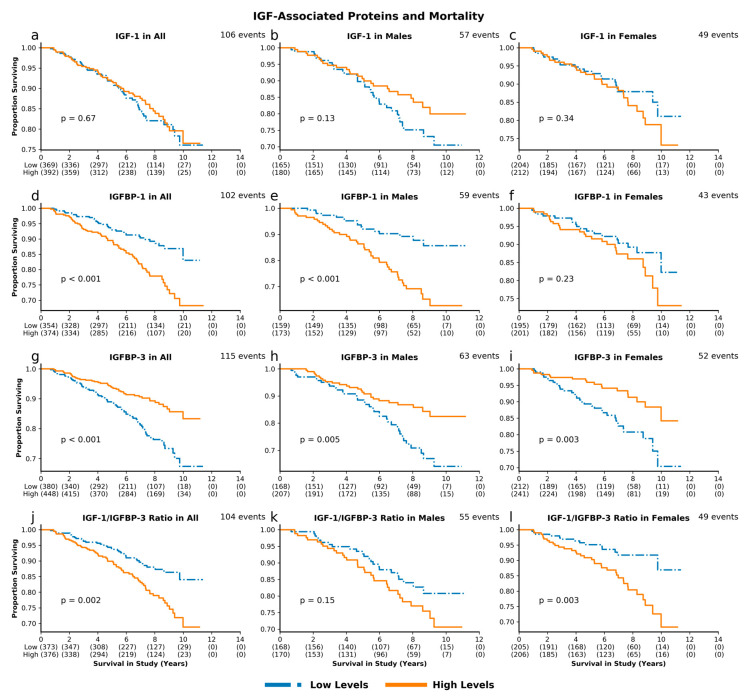
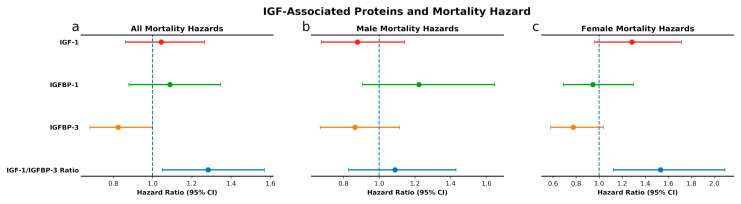
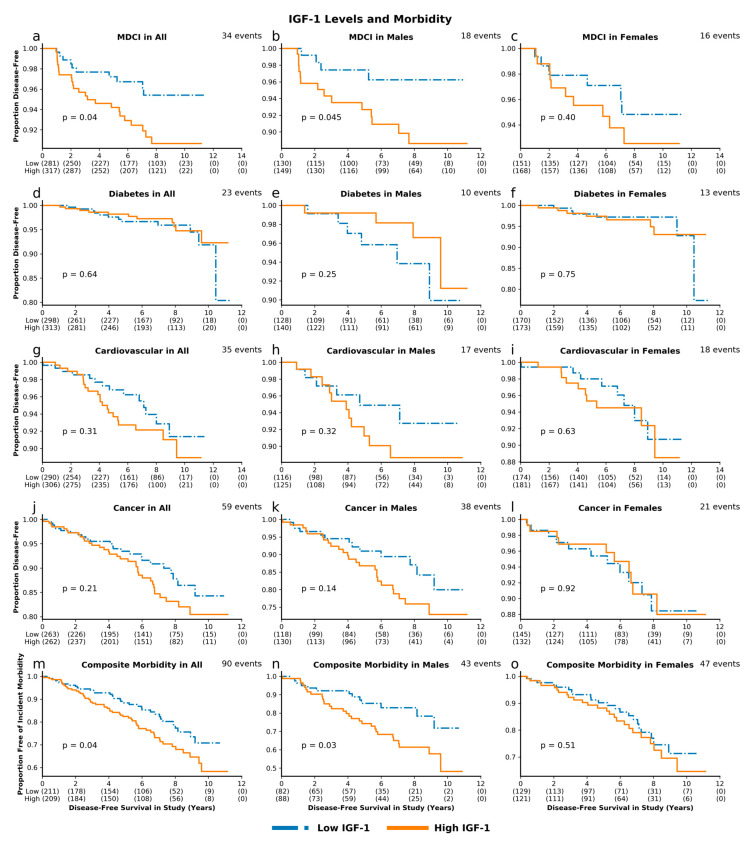
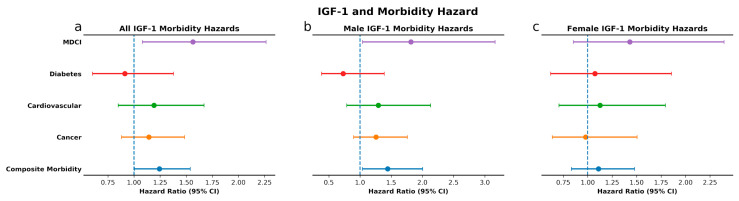
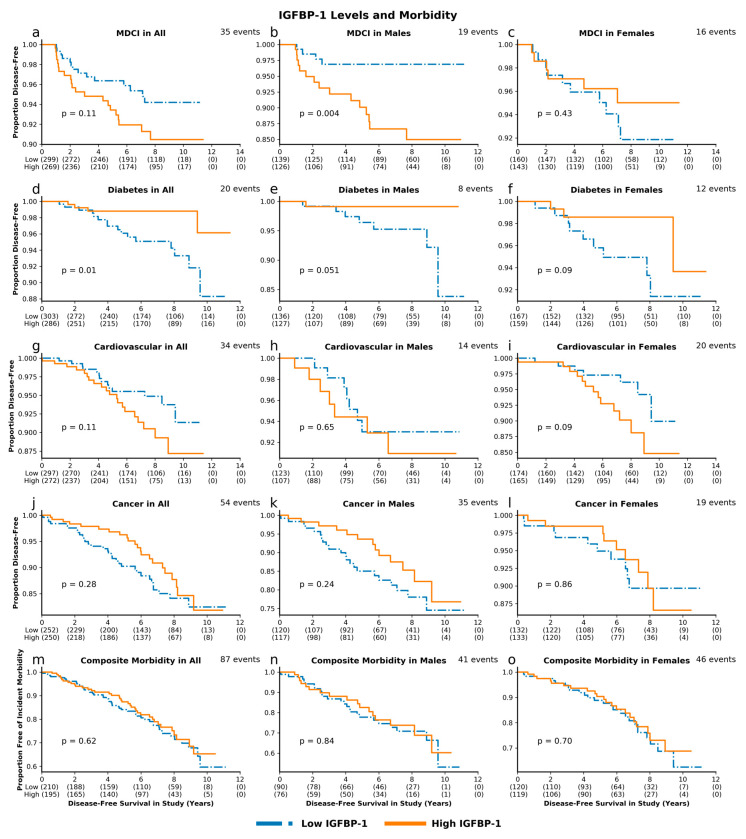
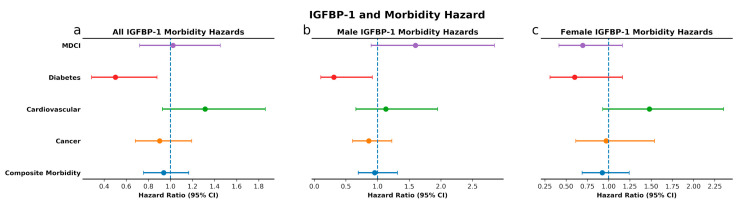
While the growth hormone/insulin-like growth factor-1 (GH/IGF-1) pathway plays essential roles in growth and development, diminished signaling via this pathway in model organisms extends lifespan and health-span. In humans, circulating IGF-1 and IGF-binding proteins 3 and 1 (IGFBP-3 and 1), surrogate measures of GH/IGF-1 system activity, have not been consistently associated with morbidity and mortality. In a prospective cohort of independently-living older adults (n = 840, mean age 76.1 ± 6.8 years, 54.5% female, median follow-up 6.9 years), we evaluated the age- and sex-adjusted hazards for all-cause mortality and incident age-related diseases, including cardiovascular disease, diabetes, cancer, and multiple-domain cognitive impairment (MDCI), as predicted by baseline total serum IGF-1, IGF-1/IGFBP-3 molar ratio, IGFBP-3, and IGFBP-1 levels. All-cause mortality was positively associated with IGF-1/IGFBP-3 molar ratio (HR 1.28, 95% CI 1.05–1.57) and negatively with IGFBP-3 (HR 0.82, 95% CI 0.680–0.998). High serum IGF-1 predicted greater risk for MDCI (HR 1.56, 95% CI 1.08–2.26) and composite incident morbidity (HR 1.242, 95% CI 1.004–1.538), whereas high IGFBP-1 predicted lower risk for diabetes (HR 0.50, 95% CI 0.29–0.88). In conclusion, higher IGF-1 levels and bioavailability predicted mortality and morbidity risk, supporting the hypothesis that diminished GH/IGF-1 signaling may contribute to human longevity and health-span.
Overview
The claims and statistics of this paper haven’t been checked yet.
Run the check — free, no account needed. It reads the open-access text and checks the sources it cites.
Integrity signals
Registry
Cites
Statistics
Figures
Verification
Claims the paper makes
The claims and statistics of this paper haven’t been checked yet.
Run the check — free, no account needed. It reads the open-access text and checks the sources it cites.
Claims other papers make about this one
Each is checked against this paper’s own text: does it say what the citing paper says it does?
The source backs part of the claim, not all of it — or backs it for a different population, condition or comparison.
In the citing paper
“In favor for this conjecture, in elderly women (≥95 years), as well as in a mixed population of older adults (mean age 76 years), low IGF1 levels correlate with a low probability of cognitive impairment and death 143 .”
From Hallmarks of aging: An expanding universe (2023) · cites this paper as [143]
Experimental — accuracy not yet measured
Self-check
Percentages, sums and reported differences re-computed from the paper’s own numbers.
The self-check needs the paper’s full text.
Citations
Cites
IGF-1 receptor regulates lifespan and resistance to oxidative stress in mice
Holzenberger, M., Dupont, J., Ducos, B., Leneuve, P., Géloën, A., Even, P. C., Cervera, P., & Le Bouc, Y. (2003) · Nature · doi:10.1038/nature01298 · Cited by 2,109
The Critical Role of Metabolic Pathways in Aging
Barzilai, N., Huffman, D. M., Muzumdar, R. H., & Bartke, A. (2012) · Diabetes · doi:10.2337/db11-1300 · Cited by 803
Self-citationFunctionally significant insulin-like growth factor I receptor mutations in centenarians
Suh, Y., Atzmon, G., Cho, M.-O., Hwang, D., Liu, B., Leahy, D. J., Barzilai, N., & Cohen, P. (2008) · Proceedings of the National Academy of Sciences · doi:10.1073/pnas.0705467105 · Cited by 703
Self-citationSelman, C., Lingard, S., Choudhury, A. I., Batterham, R. L., Claret, M., Clements, M., Ramadani, F., Okkenhaug, K., Schuster, E., Blanc, E., et al. (2008) · The FASEB Journal · doi:10.1096/fj.07-9261com · Cited by 532
Laughlin, G. A., Barrett-Connor, E., Criqui, M. H., & Kritz-Silverstein, D. (2004) · The Journal of Clinical Endocrinology & Metabolism · doi:10.1210/jc.2003-030967 · Cited by 374 · cited 2×
“This was particularly relevant for the interpretation of IGFBP-1 levels, which normally fluctuate in relation to prandial status; yet, not all prior studies have been able to establish these conditions [39].”
BackgroundResultInsulin-Like Growth Factor 2 in Development and Disease: A Mini-Review
Bergman, D., Halje, M., Nordin, M., & Engström, W. (2013) · Gerontology · doi:10.1159/000343995 · Cited by 260
Insulin-like growth factors and subsequent risk of mortality in the United States
Saydah, S., Graubard, B., Ballard-Barbash, R., & Berrigan, D. (2007) · American Journal of Epidemiology · doi:10.1093/aje/kwm124 · Cited by 71
Research works printed but not linked: 89
- Goldman, 2016, Preparing for an Aging World: Engaging Biogerontologists, Geriatricians, and the Society, J. Gerontol. A Biol. Sci. Med. Sci., 71, 435, 10.1093/gerona/glv164 · DOI
- Guarente, 2000, Genetic pathways that regulate ageing in model organisms, Nature, 408, 255, 10.1038/35041700 · DOI
- Sonntag, 2012, Diverse roles of growth hormone and insulin-like growth factor-1 in mammalian aging: Progress and controversies, J. Gerontol. A Biol. Sci. Med. Sci., 67, 587, 10.1093/gerona/gls115 · DOI
- Kenyon, 1993, A C. elegans mutant that lives twice as long as wild type, Nature, 366, 461, 10.1038/366461a0 · DOI · Paper page
- Broughton, 2005, Longer lifespan, altered metabolism, and stress resistance in Drosophila from ablation of cells making insulin-like ligands, Proc. Natl. Acad. Sci. USA, 102, 3105, 10.1073/pnas.0405775102 · DOI · Paper page
- Borg, 1996, Dwarf mice and the ageing process, Nature, 384, 33, 10.1038/384033a0 · DOI
- Ikeno, 2003, Delayed occurrence of fatal neoplastic diseases in ames dwarf mice: Correlation to extended longevity, J. Gerontol. A Biol. Sci. Med. Sci., 58, 291, 10.1093/gerona/58.4.B291 · DOI
- Flurkey, 2001, Lifespan extension and delayed immune and collagen aging in mutant mice with defects in growth hormone production, Proc. Natl. Acad. Sci. USA, 98, 6736, 10.1073/pnas.111158898 · DOI · Paper page
- Coschigano, 2000, Assessment of growth parameters and life span of GHR/BP gene-disrupted mice, Endocrinology, 141, 2608, 10.1210/endo.141.7.7586 · DOI · Paper page
- Kinney, 2001, Evidence that Ames dwarf mice age differently from their normal siblings in behavioral and learning and memory parameters, Horm. Behav., 39, 277, 10.1006/hbeh.2001.1654 · DOI
- Ikeno, 2009, Reduced incidence and delayed occurrence of fatal neoplastic diseases in growth hormone receptor/binding protein knockout mice, J. Gerontol. A Biol. Sci. Med. Sci., 64, 522, 10.1093/gerona/glp017 · DOI
- Spadaro, 2016, Growth Hormone Receptor Deficiency Protects against Age-Related NLRP3 Inflammasome Activation and Immune Senescence, Cell Rep., 14, 1571, 10.1016/j.celrep.2016.01.044 · DOI
- Wolf, 1993, Effects of long-term elevated serum levels of growth hormone on life expectancy of mice: Lessons from transgenic animal models, Mech. Ageing Dev., 68, 71, 10.1016/0047-6374(93)90141-D · DOI
- Bartke, 2002, Consequences of growth hormone (GH) overexpression and GH resistance, Neuropeptides, 36, 201, 10.1054/npep.2002.0889 · DOI
- Balasubramanian, 2011, Growth hormone receptor deficiency is associated with a major reduction in pro-aging signaling, cancer, and diabetes in humans, Sci. Transl. Med., 3, 70ra13
- Colao, 2004, Systemic complications of acromegaly: Epidemiology, pathogenesis, and management, Endocr. Rev., 25, 102, 10.1210/er.2002-0022 · DOI
- Dal, 2018, Cancer Incidence in Patients With Acromegaly: A Cohort Study and Meta-Analysis of the Literature, J. Clin. Endocrinol. Metab., 103, 2182, 10.1210/jc.2017-02457 · DOI
- Dekkers, 2008, Mortality in acromegaly: A metaanalysis, J. Clin. Endocrinol. Metab., 93, 61, 10.1210/jc.2007-1191 · DOI
- Friedrich, 2014, Age- and Sex-Specific Reference Intervals Across Life Span for Insulin-Like Growth Factor Binding Protein 3 (IGFBP-3) and the IGF-I to IGFBP-3 Ratio Measured by New Automated Chemiluminescence Assays, J. Clin. Endocrinol. Metab., 99, 1675, 10.1210/jc.2013-3060 · DOI
- Milman, 2014, Low insulin-like growth factor-1 level predicts survival in humans with exceptional longevity, Aging Cell, 13, 769, 10.1111/acel.12213 · DOI
- Rozing, 2015, Association analysis of insulin-like growth factor-1 axis parameters with survival and functional status in nonagenarians of the Leiden Longevity Study, Aging (Albany Ny), 7, 956
- Schutte, 2016, Attenuated IGF-1 predicts all-cause and cardiovascular mortality in a Black population: A five-year prospective study, Eur. J. Prev. Cardiol., 23, 1690, 10.1177/2047487316661436 · DOI
- Bourron, 2015, Impact of age-adjusted insulin-like growth factor 1 on major cardiovascular events after acute myocardial infarction: Results from the fast-MI registry, J. Clin. Endocrinol. Metab., 100, 1879, 10.1210/jc.2014-3968 · DOI
- Kaplan, 2008, Total insulinlike growth factor 1 and insulinlike growth factor binding protein levels, functional status, and mortality in older adults, J. Am. Geriatr Soc., 56, 652, 10.1111/j.1532-5415.2007.01637.x · DOI
- Juul, 2002, Low serum insulin-like growth factor I is associated with increased risk of ischemic heart disease: A population-based case-control study, Circulation, 106, 939, 10.1161/01.CIR.0000027563.44593.CC · DOI · Paper page
- Saber, 2017, Serum Insulin-Like Growth Factor 1 and the Risk of Ischemic Stroke: The Framingham Study, Stroke A J. Cereb. Circ., 48, 1760, 10.1161/STROKEAHA.116.016563 · DOI
- Renehan, 2004, Insulin-like growth factor (IGF)-I, IGF binding protein-3, and cancer risk: Systematic review and meta-regression analysis, Lancet, 363, 1346, 10.1016/S0140-6736(04)16044-3 · DOI · Paper page
- Kaplan, 2007, Association of total insulin-like growth factor-I, insulin-like growth factor binding protein-1 (IGFBP-1), and IGFBP-3 levels with incident coronary events and ischemic stroke, J. Clin. Endocrinol. Metab., 92, 1319, 10.1210/jc.2006-1631 · DOI
- Ross, 1991, Critically ill patients have high basal growth hormone levels with attenuated oscillatory activity associated with low levels of insulin-like growth factor-I, Clin. Endocrinol., 35, 47, 10.1111/j.1365-2265.1991.tb03495.x · DOI
- Juul, 2003, Serum levels of insulin-like growth factor I and its binding proteins in health and disease, Growth Horm. Igf. Res., 13, 113, 10.1016/S1096-6374(03)00038-8 · DOI
- Friedrich, 2009, Mortality and serum insulin-like growth factor (IGF)-I and IGF binding protein 3 concentrations, J. Clin. Endocrinol. Metab., 94, 1732, 10.1210/jc.2008-2138 · DOI
- Feldman, 2009, Unraveling insulin-like growth factor binding protein-3 actions in human disease, Endocr. Rev., 30, 417, 10.1210/er.2008-0028 · DOI
- Allard, 2018, IGF-Binding Proteins: Why Do They Exist and Why Are There So Many?, Front. Endocrinol. (Lausanne), 9, 117, 10.3389/fendo.2018.00117 · DOI
- Faix, 2013, Principles and pitfalls of free hormone measurements, Best Pract. Res. Clin. Endocrinol. Metab., 27, 631, 10.1016/j.beem.2013.06.007 · DOI
- Yeap, 2011, Associations of IGF1 and IGFBPs 1 and 3 with all-cause and cardiovascular mortality in older men: The Health In Men Study, Eur. J. Endocrinol. Eur. Fed. Endocr. Soc., 164, 715, 10.1530/EJE-11-0059 · DOI
- Gubbi, 2017, Effect of Exceptional Parental Longevity and Lifestyle Factors on Prevalence of Cardiovascular Disease in Offspring, Am. J. Cardiol., 120, 2170, 10.1016/j.amjcard.2017.08.040 · DOI
- Perice, 2016, Lower circulating insulin-like growth factor-I is associated with better cognition in females with exceptional longevity without compromise to muscle mass and function, Aging (Albany Ny), 8, 2414, 10.18632/aging.101063 · DOI
- The UniProt Consortium (2019). UniProt: A worldwide hub of protein knowledge. Nucleic Acids Res., 47, D506–D515. · DOI · Paper page
- Rinderknecht, 1978, The amino acid sequence of human insulin-like growth factor I and its structural homology with proinsulin, J. Biol. Chem., 253, 2769, 10.1016/S0021-9258(17)40889-1 · DOI
- Johnson, 2014, CDC National Health Report: Leading causes of morbidity and mortality and associated behavioral risk and protective factors--United States, 2005–2013, MMWR Suppl., 63, 3
- Tabert, 2006, Neuropsychological prediction of conversion to Alzheimer disease in patients with mild cognitive impairment, Arch. Gen. Psychiatry, 63, 916, 10.1001/archpsyc.63.8.916 · DOI
- Jak, 2009, Quantification of five neuropsychological approaches to defining mild cognitive impairment, Am. J. Geriatr. Psychiatry, 17, 368, 10.1097/JGP.0b013e31819431d5 · DOI · Paper page
- MacNee, 2014, Ageing and the border between health and disease, Eur. Respir. J., 44, 1332, 10.1183/09031936.00134014 · DOI
- Andreassen, 2009, IGF1 as predictor of all cause mortality and cardiovascular disease in an elderly population, Eur. J. Endocrinol. Eur. Fed. Endocr. Soc., 160, 25, 10.1530/EJE-08-0452 · DOI
- Bartke, 2017, GH and ageing: Pitfalls and new insights, Best Pract. Res. Clin. Endocrinol. Metab., 31, 113, 10.1016/j.beem.2017.02.005 · DOI
- Beekman, 2005, Reduced insulin/IGF-1 signalling and human longevity, Aging Cell, 4, 79, 10.1111/j.1474-9728.2005.00148.x · DOI
- Pawlikowska, 2009, Association of common genetic variation in the insulin/IGF1 signaling pathway with human longevity, Aging Cell, 8, 460, 10.1111/j.1474-9726.2009.00493.x · DOI
- Burgers, 2011, Meta-analysis and dose-response metaregression: Circulating insulin-like growth factor I (IGF-I) and mortality, J. Clin. Endocrinol. Metab., 96, 2912, 10.1210/jc.2011-1377 · DOI
- Yamamoto, 1991, Effects of aging and sex on plasma insulin-like growth factor I (IGF-I) levels in normal adults, Acta Endocrinol., 124, 497
- Gubbi, 2018, 40 YEARS of IGF1: IGF1: The Jekyll and Hyde of the aging brain, J. Mol. Endocrinol., 61, T171, 10.1530/JME-18-0093 · DOI
- 2009, Insulinlike growth factor-1, insulinlike growth factor binding protein-1, and cognitive function in older men and women, J. Am. Geriatr. Soc., 57, 1441, 10.1111/j.1532-5415.2009.02343.x · DOI
- Wennberg, 2018, The association between peripheral total IGF-1, IGFBP-3, and IGF-1/IGFBP-3 and functional and cognitive outcomes in the Mayo Clinic Study of Aging, Neurobiol. Aging., 66, 68, 10.1016/j.neurobiolaging.2017.11.017 · DOI
- Tumati, S., Burger, H., Martens, S., van der Schouw, Y.T., and Aleman, A. (2016). Association between Cognition and Serum Insulin-Like Growth Factor-1 in Middle-Aged & Older Men: An 8 Year Follow-Up Study. PLoS ONE, 11. · DOI
- Okereke, 2007, Plasma IGF-I levels and cognitive performance in older women, Neurobiol. Aging, 28, 135, 10.1016/j.neurobiolaging.2005.10.012 · DOI
- Liang, 2007, IGF-1 stimulates de novo fatty acid biosynthesis by Schwann cells during myelination, Glia, 55, 632, 10.1002/glia.20496 · DOI
- Defterali, 2016, IGF-I: A Key Growth Factor that Regulates Neurogenesis and Synaptogenesis from Embryonic to Adult Stages of the Brain, Front. Neurosci., 10, 52
- Gontier, 2015, Blocking IGF Signaling in Adult Neurons Alleviates Alzheimer’s Disease Pathology through Amyloid-beta Clearance, J. Neurosci., 35, 11500, 10.1523/JNEUROSCI.0343-15.2015 · DOI
- Sevigny, 2008, Growth hormone secretagogue MK-677: No clinical effect on AD progression in a randomized trial, Neurology, 71, 1702, 10.1212/01.wnl.0000335163.88054.e7 · DOI
- Friedlander, 2001, One year of insulin-like growth factor I treatment does not affect bone density, body composition, or psychological measures in postmenopausal women, J. Clin. Endocrinol. Metab., 86, 1496
- Schedlich, 2000, Nuclear import of insulin-like growth factor-binding protein-3 and -5 is mediated by the importin beta subunit, J. Biol. Chem., 275, 23462, 10.1074/jbc.M002208200 · DOI
- Schedlich, 2004, Insulin-like growth factor binding protein-3 prevents retinoid receptor heterodimerization: Implications for retinoic acid-sensitivity in human breast cancer cells, Biochem. Biophys. Res. Commun., 314, 83, 10.1016/j.bbrc.2003.12.049 · DOI
- Huang, 2003, Cellular growth inhibition by IGFBP-3 and TGF-beta1 requires LRP-1, FASEB J., 17, 2068, 10.1096/fj.03-0256com · DOI
- Cohen, 1993, Transfection of the human insulin-like growth factor binding protein-3 gene into Balb/c fibroblasts inhibits cellular growth, Mol. Endocrinol., 7, 380
- Valentinis, 1995, The human insulin-like growth factor (IGF) binding protein-3 inhibits the growth of fibroblasts with a targeted disruption of the IGF-I receptor gene, Mol. Endocrinol., 9, 361
- Martin, 2003, Insulin-like growth factor-binding protein-3 potentiates epidermal growth factor action in MCF-10A mammary epithelial cells. Involvement of p44/42 and p38 mitogen-activated protein kinases, J. Biol. Chem., 278, 2969, 10.1074/jbc.M210739200 · DOI
- Lofqvist, 2007, IGFBP3 suppresses retinopathy through suppression of oxygen-induced vessel loss and promotion of vascular regrowth, Proc. Natl. Acad. Sci. USA, 104, 10589, 10.1073/pnas.0702031104 · DOI
- Rajpathak, 2012, Insulin-like growth factor axis and risk of type 2 diabetes in women, Diabetes, 61, 2248, 10.2337/db11-1488 · DOI
- Petersson, 2009, Low levels of insulin-like growth-factor-binding protein-1 (IGFBP-1) are prospectively associated with the incidence of type 2 diabetes and impaired glucose tolerance (IGT): The Soderakra Cardiovascular Risk Factor Study, Diabetes Metab., 35, 198, 10.1016/j.diabet.2008.11.003 · DOI
- Lewitt, 2008, Insulin-like growth factor-binding protein-1 in the prediction and development of type 2 diabetes in middle-aged Swedish men, Diabetologia, 51, 1135, 10.1007/s00125-008-1016-x · DOI
- Suikkari, 1988, Insulin regulates the serum levels of low molecular weight insulin-like growth factor-binding protein, J. Clin. Endocrinol. Metab., 66, 266, 10.1210/jcem-66-2-266 · DOI
- Snyder, 1990, Insulin-dependent regulation of insulin-like growth factor-binding protein-1, J. Clin. Endocrinol. Metab., 71, 1632, 10.1210/jcem-71-6-1632 · DOI
- Clemmons, 2018, Role of IGF-binding proteins in regulating IGF responses to changes in metabolism, J. Mol. Endocrinol., 61, T139, 10.1530/JME-18-0016 · DOI
- Siddals, 2002, IGF-binding protein-1 inhibits IGF effects on adipocyte function: Implications for insulin-like actions at the adipocyte, J. Endocrinol., 174, 289, 10.1677/joe.0.1740289 · DOI
- Rajkumar, 1999, Impaired adipogenesis in insulin-like growth factor binding protein-1 transgenic mice, J. Endocrinol., 162, 457, 10.1677/joe.0.1620457 · DOI
- Haywood, 2017, Insulin-Like Growth Factor Binding Protein 1 Could Improve Glucose Regulation and Insulin Sensitivity Through Its RGD Domain, Diabetes, 66, 287, 10.2337/db16-0997 · DOI
- Wheatcroft, 2009, IGF-dependent and IGF-independent actions of IGF-binding protein-1 and -2: Implications for metabolic homeostasis, Trends Endocrinol. Metab., 20, 153, 10.1016/j.tem.2009.01.002 · DOI
- Heald, 2001, Close relation of fasting insulin-like growth factor binding protein-1 (IGFBP-1) with glucose tolerance and cardiovascular risk in two populations, Diabetologia, 44, 333, 10.1007/s001250051623 · DOI
- Unden, 2005, Gender differences in the relation of insulin-like growth factor binding protein-1 to cardiovascular risk factors: A population-based study, Clin. Endocrinol., 63, 94, 10.1111/j.1365-2265.2005.02306.x · DOI
- Span, 2001, Gender differences in rhGH-induced changes in body composition in GH-deficient adults, J. Clin. Endocrinol. Metab., 86, 4161, 10.1210/jcem.86.9.7815 · DOI
- Frystyk, 2004, Free insulin-like growth factors -- measurements and relationships to growth hormone secretion and glucose homeostasis, Growth Horm. IGF Res., 14, 337, 10.1016/j.ghir.2004.06.001 · DOI
- Drogan, 2016, Insulin-Like Growth Factor 1 and Insulin-Like Growth Factor-Binding Protein 3 in Relation to the Risk of Type 2 Diabetes Mellitus: Results From the EPIC-Potsdam Study, Am. J. Epidemiol., 183, 553, 10.1093/aje/kwv188 · DOI
- Somers, 2009, IGF-I/IGFBP-3 ratio: A mechanistic insight into the metabolic syndrome, Clin. Sci., 116, 507, 10.1042/CS20080382 · DOI
- Gao, 2012, Serum IGF1, IGF2 and IGFBP3 and risk of advanced colorectal adenoma, Int. J. Cancer, 131, E105, 10.1002/ijc.26438 · DOI
- Marzullo, 2001, Usefulness of different biochemical markers of the insulin-like growth factor (IGF) family in diagnosing growth hormone excess and deficiency in adults, J. Clin. Endocrinol. Metab., 86, 3001
- Soubry, 2012, Increase in circulating levels of IGF-1 and IGF-1/IGFBP-3 molar ratio over a decade is associated with colorectal adenomatous polyps, Int. J. Cancer, 131, 512, 10.1002/ijc.26393 · DOI
- Cheng, 2010, Loss of imprinting and marked gene elevation are 2 forms of aberrant IGF2 expression in colorectal cancer, Int. J. Cancer, 127, 568, 10.1002/ijc.25086 · DOI
- Mao, 2018, Late-life targeting of the IGF-1 receptor improves healthspan and lifespan in female mice, Nat. Commun., 9, 2394, 10.1038/s41467-018-04805-5 · DOI · Paper page
- Kopchick, 2006, Growth hormone receptor antagonists, Neuroendocrinology, 83, 264, 10.1159/000095537 · DOI
- Douglas, 2020, Teprotumumab for the Treatment of Active Thyroid Eye Disease, N. Engl. J. Med., 382, 341, 10.1056/NEJMoa1910434 · DOI
Cited by
Sorted by citations
Hallmarks of aging: An expanding universe
López-Otín, C., Blasco, M. A., Partridge, L., Serrano, M., & Kroemer, G. (2023) · Cell · doi:10.1016/j.cell.2022.11.001 · Cited by 6,549
Insulin-Like Growth Factor 1 (IGF-1) Signaling in Glucose Metabolism in Colorectal Cancer
Kasprzak, A. (2021) · International Journal of Molecular Sciences · doi:10.3390/ijms22126434 · Cited by 248
Metadata
- Authors
- Zhang, W. B., Aleksic, S., Gao, T., Weiss, E. F., Demetriou, E., Verghese, J., Holtzer, R., Barzilai, N., & Milman, S.
- Affiliations
- Department of Medicine, Division of Endocrinology, Institute for Aging Research, Albert Einstein College of Medicine, Bronx, NY 10461, USA
- Department of Neurology, Albert Einstein College of Medicine, Bronx, NY 10461, USA
- Ferkauf Graduate School of Psychology, Yeshiva University, New York, NY 10033, USA
- Venue
- Cells
- Publisher
- MDPI AG
- Published
- 2020-06-01
- Volume
- 9
- Issue
- 6
- Pages
- 1368
- ISSN
- 2073-4409
- PMC
- PMC7349399
- Cited by
- 64
- References
- 7
- Language
- en
- Funders
- National Institute on Aging (K23AG051148, R01AG061155, P30AG038072, R01AG057909, R01AG044829-01A1, R01AG050448, T32AG023475-18)
- National Institute of Neurological Disorders and Stroke (2R37NS43209, 1UG3NS105565–01, R01NS109023)
- National Center for Advancing Translational Sciences (Einstein/Montefiore CTSA UL1TR002556)
About these checks
Registry, retraction, Cites and statistics results are computed, not judged, with one exception: a printed reference that no index lists is read once by a model before it counts as a citation error. Claims are extracted by a model and kept only when their quote appears verbatim in the text; each cited source is then checked, with a model’s help, for whether it says what the claim relies on. Those verdicts can be wrong — read the claim’s quote and the cited source before relying on one.
Statistics and arithmetic are recomputed, not judged.
Confidence bands are shown only for fields calibrated on our annotated test set. None is calibrated yet, so no band is shown.
What counts as a claim ›How we measure confidence ›How we check this ›
Are you an author, or do you see a problem with this page? Request a review
