

Clinical Efficacy of Psychotherapeutic Interventions for Post-Traumatic Stress Disorder in Children and Adolescents: A Systematic Review and Analysis.
Open accessThe DOI matches its Crossref record; 88 of the 90 references it cites were found in a registry or an index; 33 of the 73 sources its claims cite were checked for support.
Abstract
Background: This systematic review aggregates research on psychotherapeutic interventions for Post-Traumatic Stress Disorder (PTSD) in children and adolescents. PTSD in this demographic presents differently from adults, necessitating tailored therapeutic approaches. In children and adolescents, PTSD arises from exposure to severe danger, interpersonal violence, or abuse, leading to significant behavioral and emotional disturbances that jeopardize long-term development. The review focuses on describing PTSD within two age groups, children (6 to 12 years) and adolescents (12 to 18 years), while evaluating the effectiveness of various clinical interventions aimed at this condition. Methods: Utilizing the PRISMA guidelines, this review systematically examines studies that assess clinical interventions for PTSD in the younger population. Results: Key symptoms of PTSD in children and adolescents include avoidance, overstimulation, flashbacks, depression, and anxiety. The review identifies several effective treatments, including Cognitive Behavioral Therapy (CBT), Trauma-Focused CBT (TF-CBT), Eye Movement Desensitization and Reprocessing (EMDR), Systemic Therapy, Play Therapy, Exposure Therapy, Relaxation Techniques, and Psychodynamic Psychotherapy. Particularly, TF-CBT is highlighted as the most effective and commonly used method in treating childhood and adolescent PTSD, as supported by most of the studies reviewed. Conclusions: A significant outcome of this study is the short-term effectiveness of CBT in reducing PTSD symptoms in children and adolescents. The findings underline the importance of psychotherapeutic interventions and mark a substantial advancement in understanding PTSD in young populations. It is crucial for practitioners to integrate various psychotherapeutic strategies into their practice to improve patient outcomes and treatment efficacy.
Overview
CoChat Summary
## TL;DR
This systematic review synthesizes English-language studies published from 2016 to 2023 on psychotherapeutic treatments for PTSD in children and adolescents, and concludes that CBT—especially TF-CBT—has the strongest support, with EMDR and some other approaches also showing benefit. The paper emphasizes that treatment effects depend on age, developmental stage, trauma type, and parental involvement, and that interventions should be individualized and culturally sensitive.
## Key findings
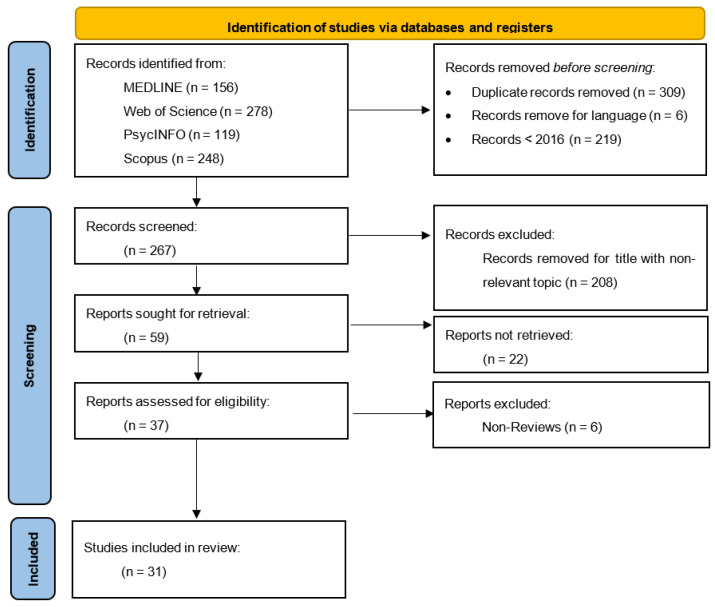
- Out of 801 bibliometric sources, the authors included 31 sources in the review.
- The review identifies several effective treatments for pediatric PTSD, including CBT, TF-CBT, EMDR, systemic therapy, play therapy, exposure therapy, relaxation techniques, and psychodynamic psychotherapy; TF-CBT is highlighted as the most effective and commonly used approach.
- In the results section, the authors state that TF-CBT is the most efficacious intervention in multiple studies and meta-analyses, while EMDR showed beneficial effects on PTSD, depression, and anxiety, though some controlled-study effects were only minor to moderate.
- For PE-A, both PE-A and supportive counseling improved PTSD and depression, but PE-A maintained gains through the 12-month follow-up; for RRFT, the study reported greater reductions in substance use at 12 and 18 months, with PTSD symptoms reduced in both RRFT and TAU groups over 3, 6, 12, and 18 months.
- The review reports a TF-CBT study in which only 1 out of 16 participants still met diagnostic criteria after treatment.
## Methods
- Systematic review conducted according to PRISMA guidelines, focusing on English-language articles, studies, meta-analyses, and reviews published from 2016 to 2023.
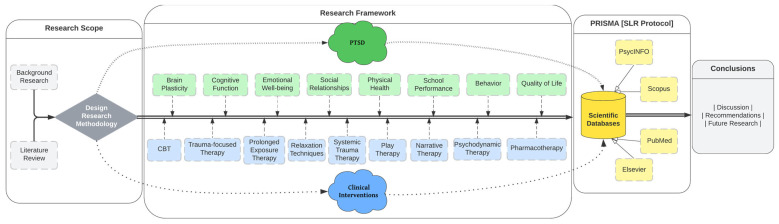
- Searches were run in Scopus, PsycINFO, PubMed, Web of Science, and also Elsevier, using Boolean logic and terms related to PTSD and clinical interventions; the review prioritized quantitative research, empirical studies, and RCTs.
- Inclusion centered on youth samples, with an intended age range of about 5 to 17 years; studies were evaluated using DSM-5 or ICD-11 PTSD criteria when applicable, and the paper synthesized findings qualitatively and quantitatively across included interventions.
## Limitations
- The paper states that it has not adequately addressed cultural and geographical factors, does not mention assessing publication bias, and notes variability in intervention effectiveness across the included studies.
- It also states that the literature is limited by scarcity and often low quality of empirical studies, small samples, and a lack of measurement of spontaneous remission.
- Evident from the text: the review covers a broad mix of interventions, trauma types, and age ranges, which the authors note can create heterogeneity and make direct comparison difficult.
Model-written summary. Check it against the paper before relying on it.
Integrity signals
Registry
Cites
Statistics
Figures
Verification
Claims the paper makes
27 Valid · 5 Not valid · 27 Not checked · 44 Own results and interpretations
Every source the paper cites for this claim was checked and supports it.
In the paper
“Despite the availability of evidence-based psychotherapeutic interventions for the treatment of PTSD in children and adolescents, there are still limitations to their effective implementation [11].”
§ Clinical Efficacy of Psychotherapeutic Interventions for Post-Traumatic Stress Disorder in Children and Adolescents: A Systematic Review and Analysis > 1. Introduction
What the sources say
- Supportedcites [11] Pfeiffer E. Ormhaug S.M. Tutus D. Holt T. Rosner R. Larsen T.W. Jensen T.K. Does the therapist matter? Therapist characteristics and their relation to outcome in trauma-focused cognitive behavioral therapy for children and adolescents Eur. J. Psychotraumatol. 2020 11 1 9 10.1080/20008198.2020.1776048 PMC7473296 33029318 source
The Introduction (page unavailable) identifies TF-CBT as a recommended, effective treatment for children and adolescents with PTSD, while noting that a significant proportion do not respond sufficiently. The Discussion’s Clinical implications section (page unavailable) identifies an implementation limitation: exposure therapy is still not widely accepted or used by practitioners, and further dissemination and training are needed. (LLM, conf=0.88)
plain- Asserted: passes — The authors put it forward as true.
- Checkable: passes — It can be checked against evidence.
- Load-bearing: passes — The paper’s conclusions depend on it.
- Based: passes — The paper gives a reason why it holds.
- Supported
The cited sources support only part of this claim — read each source’s verdict below.
In the paper
“These studies collectively showcase the positive impacts of integrating parental involvement into therapy for children and adolescents with PTSD, highlighting its potential to enhance the efficacy of psychotherapeutic interventions.”
§ Clinical Efficacy of Psychotherapeutic Interventions for Post-Traumatic Stress Disorder in Children and Adolescents: A Systematic Review and Analysis > 5. Discussion > 5.2. Research Question 2 [RQ2]
What the sources say
- Not checked — no full text of the sourcecites [37] Shi X. Zhou Y. Geng F. Li Y. Zhou J. Lei B. Chen S. Chen X. Fan F. Posttraumatic stress disorder symptoms in parents and adolescents after the Wenchuan earthquake: A longitudinal actor-partner interdependence model J. Affect. Disord. 2018 226 301 306 10.1016/j.jad.2017.10.011 29028591 source
- Not checked — no full text of the sourcecites [50] Ferrajão P.C. The role of parental emotional validation and invalidation on children’s clinical symptoms: A study with children exposed to intimate partner violence J. Fam. Trauma Child Custody Child Dev. 2020 17 4 20 10.1080/15379418.2020.1731399 source
- Partly supportedcites [51] Russotti J. Herd T. Handley E.D. Toth S.L. Noll J.G. Patterns of Mother, Father, and Peer Attachment Quality as Moderators of Child Maltreatment Risk for Depression and PTSD Symptoms in Adolescent Females J. Interpers. Violence 2023 38 6888 6914 10.1177/08862605221138654 36695104 PMC10050148 sourceExperimental — accuracy not yet measured
The Discussion’s clinical and policy implications section reports that attachment-based family therapy can reduce adolescent depression by strengthening attachment bonds. It does not report that parental involvement improves PTSD treatment outcomes, and this study did not test a therapy intervention. Page numbers were not available in our copy. (LLM, conf=0.82)
hedgedstates a cause- Asserted: passes — The authors put it forward as true.
- Checkable: passes — It can be checked against evidence.
- Load-bearing: passes — The paper’s conclusions depend on it.
- Based: passes — The paper gives a reason why it holds.
The cited sources support only part of this claim — read each source’s verdict below.
In the paper
“A situation may not be particularly violent, threatening, or traumatizing to adults, but it can still cause significant trauma to children, such as when they are disoriented in a crowd of strangers or when they are sexually touched [16,19,20,21].”
§ Clinical Efficacy of Psychotherapeutic Interventions for Post-Traumatic Stress Disorder in Children and Adolescents: A Systematic Review and Analysis > 2. Literature Review > 2.2. Navigating the Complexity: Diagnosing PTSD in Children and Adolescents
What the sources say
- Not checked — no full text of the sourcecites [16] Wilmshurst K. An integrated existential framework for trauma theory Can. Soc. Work Rev. 2021 37 131 147 10.7202/1075115ar source
- Not matchedcites [19] Theodore L.A. Kratochwill T.R. Sanetti L.M.H. Collier-Meek M.A. Reeves M.A.L. Fernandez B.S. Jimerson S.R. Brown J.A. Renshaw T.L. O’brennan L.M. Handbook of Evidence-Based Interventions for Children and Adolescents Springer Publishing Company New York, NY, USA 2016 325 338
We searched by its title and found no matching paper.
- Partly supportedcites [20] Leigh E. Yule W. Smith P. Measurement Issues: Measurement of posttraumatic stress disorder in children and young people—Lessons from research and practice Child Adolesc. Ment. Health 2015 21 124 135 10.1111/camh.12124 32680369 sourceExperimental — accuracy not yet measured
The Introduction says that potentially traumatic events, including sexual abuse, can lead to persistent mental health problems in children and adolescents. The Parent-report measures section also reports elevated symptom scores after adverse events such as divorce. Neither passage compares children's reactions with adults' reactions or mentions being disoriented in a crowd of strangers. (LLM, conf=0.83)
- Not checked — no full text of the sourcecites [21] Danzi B.A. La Greca A.M. Treating Children and adolescents with posttraumatic stress disorder: Moderators of treatment response J. Clin. Child Adolesc. Psychol. 2020 50 510 516 10.1080/15374416.2020.1823849 33047981 source
plainstates a possible cause- Asserted: passes — The authors put it forward as true.
- Checkable: passes — It can be checked against evidence.
- Load-bearing: unclear — It is unclear whether the paper’s conclusions depend on it.
- Based: passes — The paper gives a reason why it holds.
The cited sources support only part of this claim — read each source’s verdict below.
In the paper
“researchers in the studies [49,52] highlight the sustained improvements in PTSD and depression symptoms with Prolonged Exposure Therapy for Adolescents (PE-A) up to 12 months post-treatment.”
§ Clinical Efficacy of Psychotherapeutic Interventions for Post-Traumatic Stress Disorder in Children and Adolescents: A Systematic Review and Analysis > 5. Discussion > 5.4. Research Question 4 [RQ4] [RQ4] investigates the long-term effects and sustainability of psychotherapeutic interventions on PTSD symptoms in children and adolescents, with several studies contributing valuable insights. Researchers in the study [41], demonstrate the enduring benefits of TF-CBT, showing sustained symptom relief and improved psychosocial functioning over extended periods. Researchers in the study [42] find that narrative exposure therapy (NET) provides long-lasting benefits, reducing PTSD symptoms and psychological distress while enhancing resilience in multiply traumatized youth. Also, researchers in the studies [49,52] highlight the sustained improvements in PTSD and depression symptoms with Prolonged Exposure Therapy for Adolescents (PE-A) up to 12 months post-treatment. Researchers in the study [30] discuss the sustained benefits of a targeted preventive intervention in reducing PTSD symptom severity over time, particularly emphasizing early intervention for young children. Furthermore, researchers in the study [29] affirm the sustainable long-term benefits of TF-CBT in significantly reducing PTSD symptoms compared to control treatments. Two studies [31,39] emphasize the importance of sustaining improvements in PTSD symptoms over time through interventions like TF-CBT and Cognitive Behavioral Intervention for Trauma in Schools (CBITS). Also, researchers in the study [36] provide insights into the sustainable benefits and cost-effectiveness of Cognitive Therapy for PTSD (CT-PTSD) in children and adolescents. Together, these studies underscore the enduring effects of various psychotherapeutic interventions in reducing PTSD symptoms and enhancing overall psychological resilience and functioning in affected youth, highlighting the importance of selecting therapies that contribute to long-term well-being.
What the sources say
- Partly supportedcites [49] Rossouw J. Yadin E. Alexander D. Seedat S. Prolonged exposure therapy and supportive counselling for post-traumatic stress disorder in adolescents: Task-shifting randomised controlled trial Br. J. Psychiatry 2018 213 587 594 10.1192/bjp.2018.130 29991358 sourceExperimental — accuracy not yet measured
The Follow-up phase reports that improvements in PTSD and depression symptoms in the PE-A group were maintained at 3 and 6 months post-treatment. It does not report a 12-month follow-up, so this source does not support the claimed duration. (LLM, conf=0.90)
- Supportedcites [52] Rossouw J. Yadin E. Alexander D. Mbanga I. Jacobs T. Seedat S. A pilot and feasibility randomised controlled study of Prolonged Exposure Treatment and supportive counselling for post-traumatic stress disorder in adolescents: A third world, task-shifting, community-based sample Trials 2016 17 548 10.1186/s13063-016-1677-6 27855699 PMC5114829 source
The Abstract Results state that adolescents receiving PE-A maintained their improvements in both PTSD and depression symptoms at the 12-month post-treatment assessment. The Results table also shows both symptom measures remained well below baseline at 12 months. (LLM, conf=0.94)
plainstates a cause- Asserted: passes — The authors put it forward as true.
- Checkable: passes — It can be checked against evidence.
- Load-bearing: passes — The paper’s conclusions depend on it.
- Based: passes — The paper gives a reason why it holds.
- Partly supported
The cited sources that could be checked couldn’t confirm or dispute this claim.
In the paper
“A study [46] found that prolonged exposure (PE-A) was more effective than supportive counseling in mitigating symptoms of PTSD in adolescents.”
- Also stated in: § 4.4. Specialized Interventions (PE-A, RRFT, and Systemic Therapy) · plain
“PE-A resulted in a considerably more significant decrease in PTSD symptoms and a greater likelihood of attaining remission in comparison to supportive counseling.”
§ Clinical Efficacy of Psychotherapeutic Interventions for Post-Traumatic Stress Disorder in Children and Adolescents: A Systematic Review and Analysis > 4. Results > 4.4. Specialized Interventions (PE-A, RRFT, and Systemic Therapy)
What the sources say
- Could not verifycites [46] Roque-Lopez S. Llanez-Anaya E. Álvarez-López M.J. Everts M. Fernández D. Davidson R.J. Kaliman P. Mental health benefits of a 1-week intensive multimodal group program for adolescents with multiple adverse childhood experiences Child Abus. Negl. 2021 122 105349 10.1016/j.chiabu.2021.105349 PMC8627589 34628152 sourceExperimental — accuracy not yet measured
The Discussion reports reduced PTSD symptoms after an intensive multimodal group program, and the Introduction identifies EMDR as one component. Searches for prolonged exposure (PE-A) and supportive counseling found no passage comparing those treatments, so our copy does not establish the attributed finding. (LLM, conf=0.77)
plainstates a cause- Asserted: passes — The authors put it forward as true.
- Checkable: passes — It can be checked against evidence.
- Load-bearing: passes — The paper’s conclusions depend on it.
- Based: passes — The paper gives a reason why it holds.
- Also stated in: § 4.4. Specialized Interventions (PE-A, RRFT, and Systemic Therapy) · plain
37 more claims · 7 with their cited sources checked
Create a free account to see all 103 claims and to verify the 2 references still open.
- It may state two separate claims as one. 37
- The quote only partly states this claim. 2
- Probably not a substantial claim. 30
Citations
Cites
Updating guidance for reporting systematic reviews: development of the PRISMA 2020 statement
Page, M. J., McKenzie, J. E., Bossuyt, P. M., Boutron, I., Hoffmann, T. C., Mulrow, C. D., Shamseer, L., Tetzlaff, J. M., & Moher, D. (2021) · Journal of Clinical Epidemiology · doi:10.1016/j.jclinepi.2021.02.003 · Cited by 3,490
How important are the common factors in psychotherapy? An update
Wampold, B. E. (2015) · World Psychiatry · doi:10.1002/wps.20238 · Cited by 1,728 · cited 1×
“It also imperative to explore the “ what and why it works ” in each intervention and analyze, for each psychotherapeutic treatment, the specific factors that contribute to the therapeutic effect [53,54].”
BackgroundPost-Traumatic Stress Disorder
Shalev, A., Liberzon, I., & Marmar, C. (2017) · New England Journal of Medicine · doi:10.1056/nejmra1612499 · Cited by 780 · cited 1×
“It is classified under the category of Disorders Induced by Trauma and Stressors [1–3].”
BackgroundEvidence-Based Psychosocial Treatments for Children and Adolescents Exposed to Traumatic Events
Silverman, W. K., Ortiz, C. D., Viswesvaran, C., Burns, B. J., Kolko, D. J., Putnam, F. W., & Amaya-Jackson, L. (2008) · Journal of Clinical Child & Adolescent Psychology · doi:10.1080/15374410701818293 · Cited by 666
Children of Chowchilla: A Study of Psychic Trauma
Terr, L. C. (1979) · The Psychoanalytic Study of the Child · doi:10.1080/00797308.1979.11823018 · Cited by 383 · cited 1×
“According to an increasingly number of findings [14,15] and research on kidnapped and held hostage children indicated that these age groups could also develop PTSD following a traumatic event.”
BackgroundDorsey, S., McLaughlin, K. A., Kerns, S. E. U., Harrison, J. P., Lambert, H. K., Briggs, E. C., Revillion Cox, J., & Amaya-Jackson, L. (2017) · Journal of Clinical Child & Adolescent Psychology · doi:10.1080/15374416.2016.1220309 · Cited by 296 · cited 1×
“A study [25] identifies several shared characteristics among the practical approaches that were identified: psycho-education on the frequency, effects, and management of trauma; instruction in regulating emotions and employing problem-solving techniques; exposure to simulated or real-life…”
BackgroundCognitive behavioral therapy for the treatment of post-traumatic stress disorder: A review
Kar, N. (2011) · Neuropsychiatric Disease and Treatment · doi:10.2147/ndt.s10389 · Cited by 266 · cited 1×
“Consistent with the literature, CBT is a safe and productive intervention for acute and chronic PTSD in children, adolescents, and adults [67].”
BackgroundTurrini, G., Purgato, M., Acarturk, C., Anttila, M., Au, T., Ballette, F., Bird, M., Carswell, K., Churchill, R., Cuijpers, P., et al. (2019) · Epidemiology and Psychiatric Sciences · doi:10.1017/s2045796019000027 · Cited by 258 · cited 4×
“Researchers in the study [40] analyzed various interventions, including TF-CBT, and highlighted its effectiveness compared to other therapies like EMDR and play therapy across different age groups.”
BackgroundMethodInfluentialMorina, N., Koerssen, R., & Pollet, T. V. (2016) · Clinical Psychology Review · doi:10.1016/j.cpr.2016.05.006 · Cited by 256 · cited 4×
“According to the meta-analysis conducted by [23], TF-CBT emerged as the most efficacious intervention, exhibiting a substantial effect size compared to the absence of any treatment.”
BackgroundMethodResultInfluentialTheberath, M., Bauer, D., Chen, W., Salinas, M., Mohabbat, A. B., Yang, J., Chon, T. Y., Bauer, B. A., & Wahner-Roedler, D. L. (2022) · SAGE Open Medicine · doi:10.1177/20503121221086712 · Cited by 244 · cited 1×
“Furthermore, the COVID-19 pandemic has exerted a substantial influence on the mental well-being of children and adolescents, with specific subgroups being especially susceptible to the psychological consequences of the pandemic [55].”
Background
Research works printed but not linked: 1
- Theodore L.A. Kratochwill T.R. Sanetti L.M.H. Collier-Meek M.A. Reeves M.A.L. Fernandez B.S. Jimerson S.R. Brown J.A. Renshaw T.L. O’brennan L.M. Handbook of Evidence-Based Interventions for Children and Adolescents Springer Publishing Company New York, NY, USA 2016 325 338
Cited by
Gkintoni, E., & Νικολάου, Γ. (2024) · International Journal of Environmental Research and Public Health · doi:10.3390/ijerph21081110 · Cited by 43
“The results highlight that culturally adjusted CBT works feasibly and effectively and is well accepted across different populations and settings [90].”
BackgroundSelf-citationGkintoni, E., Κουρκούτας, Η., Vassilopoulos, S. P., & Mousi, M. (2024) · Journal of Clinical Medicine · doi:10.3390/jcm13144084 · Cited by 38
“Another Brazilian study found that three generations with AN—grandmother, mother, and daughter—transmitted sexuality inhibitions and shame, highlighting strong family-system effects [122].”
BackgroundSelf-citationSupporting Children’s Mental Health Needs in Disasters
Hoffmann, J. A., Pergjika, A., Burkhart, K. M., Gable, C. J., Foster, A. A., Saidinejad, M., Covington, T., Edemba, D., Mullins, S., Schreiber, M. D., et al. (2024) · PEDIATRICS · doi:10.1542/peds.2024-068076 · Cited by 14
Heliades, G. P., Gkintoni, E., Panas, G., Halkiopoulos, C., & Boutsinas, B. (2025) · Springer proceedings in business and economics · doi:10.1007/978-3-031-78471-2_38 · Cited by 20
Self-citationMarini, A., Farmakopoulou, I., Dritsas, I., & Gkintoni, E. (2024) · Healthcare · doi:10.3390/healthcare12151515 · Cited by 13
“Additionally, other researchers [7] have suggested that ACEs could cause permanent damage to the developing brain and alter the function of the immune and neuroendocrine systems, putting young people at high risk for developing chronic physical and mental disorders [8].”
BackgroundSelf-citationKotsakis, A., Avraam, D., Malliarou, M. M., Soteriades, E. S., Halkiopoulos, C., Galanakis, M., & Sfakianakis, M. (2025) · Healthcare · doi:10.3390/healthcare13161980 · Cited by 3
“…risks arise from inadequate planning, organization, and management of work, as well as from an unhealthy social context of the workplace environment, and may lead to negative physical, psychological, and social outcomes for employees, such as work stress, burnout and/or depression [7–9].”
Gkintoni, E., & Nikolaou, G. (2025) · European Journal of Investigation in Health Psychology and Education · doi:10.3390/ejihpe16010002 · Cited by 5
Self-citationAlkærsig, M., Banzon, T., Roest, J. J., Elklit, A., Stein, A. R., Vang, M. L., & Løkkegaard, S. S. (2026) · Clinical Psychology Review · doi:10.1016/j.cpr.2026.102725 · Cited by 5
Sperandini, V., Montanaro, F. A. M., Rose, P. D., Alfieri, P., & Vicari, S. (2024) · Research in Developmental Disabilities · doi:10.1016/j.ridd.2024.104860 · Cited by 5
Kotsakis, A., Avraam, D., Malliarou, M. M., Halkiopoulos, C., Galanakis, M., & Sfakianakis, M. (2024) · Preprints.org · doi:10.20944/preprints202407.1849.v1 · Cited by 2
Complex war trauma in an adolescent: diagnosis and rehabilitation (clinical case)
Kabantseva, A. V., Панченко, О. А., Tsapro, N. P., & Serdyuk, I. A. (2025) · CHILD`S HEALTH · doi:10.22141/2224-0551.20.6.2025.1897 · Cited by 1
Proposed Framework for the Psychological Treatment of Munchausen by Proxy Survivors
Sanders, M. J., & Bursch, B. (2026) · Journal of Clinical Psychology in Medical Settings · doi:10.1007/s10880-026-10128-1 · Cited by 1
“Trauma-Focused empirically tested treatment approaches which can be implemented to directly process traumatic experiences or support trauma processing depending on the survivor’s age, developmental ability, and circumstance (Gkintoni et al., 2024).”
Wiśniewska-Szeplewicz, D., Stanisławska–Kubiak, M., Andrusiewicz, M., Katolyk, H. V., Stanisławska, M., Malak, R. E., & Mojs, E. H. (2026) · International Journal of Social Psychiatry · doi:10.1177/00207640261433234 · Cited by 1
“Given the identified importance in terms of age, social environment, and coping mechanisms, schools could be a crucial platform for intervention (Gkintoni et al., 2024).”
“Efficacy and challenges of group-based TF-CBT for youth PTSD recovery”
Mardes, S., Ramadhani, E., Putri, R. D., et al. (2024) · General Hospital Psychiatry · doi:10.1016/j.genhosppsych.2024.12.005 · Cited by 1
Kotsakis, A., Avraam, D., Malliarou, M. M., Soteriades, E. S., Halkiopoulos, C., Galanakis, M., & Sfakianakis, M. (2024) · Research Square · doi:10.21203/rs.3.rs-4888710/v1 · Cited by 1
Kotsakis, A., Avraam, D., Malliarou, M. M., Halkiopoulos, C., Galanakis, M., Sfakianakis, M., & Soteriades, E. S. (2024) · Preprints.org · doi:10.20944/preprints202407.1849.v2 · Cited by 1
Kotsakis, A., Avraam, D., Malliarou, M. M., Halkiopoulos, C., Galanakis, M., Sfakianakis, M., & Soteriades, E. S. (2024) · Preprints.org · doi:10.20944/preprints202407.1849.v3 · Cited by 1
Alvarez‐Segura, M., Butjosa, A., Navarro, M. A., Jiménez, E. M. O., Richart, T., Rose, P. D., Sperandini, V., & Lacasa, F. (2025) · Academia Mental Health and Well-Being · doi:10.20935/mhealthwellb7698
Adolescent Brain Development Under Stress and Trauma: Evidence-Based Treatments
Pappas, I., Yu, T. L. T., Liu, O., & Srinivasan, N. (2025) · Berkeley Pharma Tech Journal of Medicine · doi:10.52243/bptjm.v5i1.73 · Cited by 1
Uy, D., Rivera, K. J., Dimarucut, A. L., & Uy, G. L. (2025) · World Leisure Journal · doi:10.1080/16078055.2025.2556719 · Cited by 1
Mtati, C. N., Sorsdahl, K. R., & van der Westhuizen, C. (2025) · BMJ Open · doi:10.1136/bmjopen-2025-104280
Kabrel, M., & Aru, J. (2025) · Perspectives on Psychological Science · doi:10.1177/17456916251378430 · Cited by 2
Misitano, A., Geddo, F., Oppo, A., Barbieri, A., Righi, E., Caffo, E., & Forresi, B. (2025) · European Journal of Investigation in Health Psychology and Education · doi:10.3390/ejihpe15110225 · Cited by 1
“Children and adolescents may display PTSD symptoms differently from adults, depending upon the developmental stages, the level of cognitive and emotional maturity, previous psychological vulnerabilities and social support (Bastien et al., 2020; Gkintoni et al., 2024; Helpman et al., 2015).”
Berghs, M., Henquet, C., Vissers, C., & van Hooren, S. (2025) · Children and Youth Services Review · doi:10.1016/j.childyouth.2025.108733 · Cited by 2
Wahid, A., Nirwana, H., Hariko, R., Fikri, M. F. M., Choiri, M. F., Putri, K. Y., & Fazria, N. (2025) · Counsenesia Indonesian Journal Of Guidance and Counseling · doi:10.36728/cijgc.v6i2.5880
“…et al., 2021), Systemic Therapy (Watkins et al., 2018), Play Therapy, Eye Movement Desensitization and Reprocessing (Meinhausen et al., 2025), Exposure Therapy (Huang et al., 2022; McLean et al., 2022), Relaxation Techniques, Narrative and Psychodynamic Psychotherapy (Gkintoni et al., 2024).”
Center for youth CEZAM—place for healing and recovery
Pejovic-Milovancevic, M. M., Parojčić, A., Bogdanovic, J., & Milovancevic, Z. (2026) · International Review of Psychiatry · doi:10.1080/09540261.2026.2616380
Lenz, A. S., & Hollenbaugh, K. M. H. (2026) · Journal of Counseling & Development · doi:10.1002/jcad.70022 · Cited by 4
Permatasari, D. P., Windarwati, H. D., & Lestari, R. (2026) · Indigenous: Jurnal Ilmiah Psikologi · doi:10.23917/indigenous.v11i1.13778
Mukherjee, S., Govindula, A., Nampoothiri, M., Arora, D. S., & Mudgal, J. (2026) · Biochemical and Biophysical Research Communications · doi:10.1016/j.bbrc.2026.153557 · Cited by 1
Feasibility and Acceptability of the Primary Care Intervention for PTSD-Youth
Chodzen, G., Bowers, G., Moodliar, R., & Ng, L. C. (2026) · Journal of Primary Care & Community Health · doi:10.1177/21501319261434719
“24,25 Given these developmental considerations and the significant challenges school-aged children face in obtaining appropriate outpatient trauma-focused mental health care, our research team adapted PCIP to be suitable for delivery to this younger age group.”
Corcelles, M. X. B., Schuengel, C., Smit, M. J., & Moeyaert, M. (2026) · Trauma Violence & Abuse · doi:10.1177/15248380261455829
Ji, R., Li, J., He, Q., Yin, J., & Qu, Z. (2026) · Trauma Violence & Abuse · doi:10.1177/15248380261467491
Bakır, V., & Dilmaç, B. (2026) · Journal of Children s Services · doi:10.1108/jcs-02-2026-0007
Meoon, I., Khlaisuk, A., Nansunanon, S., & Dhippayom, T. (2026) · European Journal of Psychotraumatology · doi:10.1080/20008066.2026.2731855
Metadata
- Authors
- Gkintoni, E., Kourkoutas, E., Yotsidi, V., Stavrou, P. D., & Prinianaki, D.
- Affiliations
- General University Hospital of Patras (GR)
- Department of Primary Education, Research Center for the Humanities, Social and Education Sciences, University of Crete, 74100 Rethymno, Greece
- Panteion University (GR)
- National and Kapodistrian University of Athens (GR)
- University of Crete (GR)
- Corresponding author
- Gkintoni, Evgenia
- Venue
- Children
- Publisher
- MDPI AG
- Published
- 2024-05-11
- Volume
- 11
- Issue
- 5
- Pages
- 579
- ISSN
- 2227-9067 (ISSN-L)
- PMC
- PMC11119036
- OpenAlex
- W4396888485
- Semantic Scholar
- edf8474b18c4d0e33450d40f84c82da076c70a0a
- Cited by
- 37
- References
- 90
- Citations by year
- 2026: 14 · 2025: 13 · 2024: 10
- FWCI
- 3.26
- Type
- journal article
- Language
- en
- Open access
- gold
- doi.org
- Licence
- Locations
- Children (publishedVersion, cc-by)
- PubMed Central (publishedVersion, cc-by)
- PubMed (publishedVersion)
- DOAJ (DOAJ: Directory of Open Access Journals) (submittedVersion, cc-by-sa)
- Topics
- Social Sciences › Psychology › Clinical Psychology › Posttraumatic Stress Disorder Research
- Social Sciences › Psychology › Clinical Psychology › Child Therapy and Development
- Social Sciences › Psychology › Clinical Psychology › Child Abuse and Trauma
- Keywords
- post-traumatic stress disorder, adolescents, psychotherapeutic interventions, trauma-focused cognitive behavioral therapy, cognitive behavioral therapy, EMDR, exposure therapy, play therapy, psychodynamic psychotherapy, systemic therapy, relaxation techniques, treatment efficacy, childhood trauma, interpersonal violence, abuse
About these checks
Registry, retraction, Cites and statistics results are computed, not judged, with one exception: a printed reference that no index lists is read once by a model before it counts as a citation error. Claims are extracted by a model and kept only when their quote appears verbatim in the text; each cited source is then checked, with a model’s help, for whether it says what the claim relies on. Those verdicts can be wrong — read the claim’s quote and the cited source before relying on one.
The claim verdicts this report counts are experimental: their accuracy is not yet measured.
A language model drew the claims from the paper on 2026-10-11, under version 3 of the claim definition (model deepseek-v4.1-flash, prompt extract-v3).
A second model labelled each claim on 2026-10-11 (model jev-1.13-20260917, definition revision gold-guideline-v0.2).
Cited sources are checked with a language model’s help (gpt-6-sol).
Statistics and arithmetic are recomputed, not judged.
Confidence bands are shown only for fields calibrated on our annotated test set. None is calibrated yet, so no band is shown.
What counts as a claim ›How we measure confidence ›How we check this ›
Are you an author, or do you see a problem with this page? Request a review
Data sources
Bibliographic data: Semantic Scholar, OpenAlex, Crossref.
Contains information from the Semantic Scholar Academic Graph Datasets, made available under the ODC Attribution License (ODC-BY 1.0).
Semantic Scholar’s data is described in: Kinney, R., et al. (2023). The Semantic Scholar Open Data Platform. arXiv:2301.10140.
