

The Impact of COVID-19 School Closure on Child and Adolescent Health: A Rapid Systematic Review
Open accessThe DOI matches its Crossref record; 51 of the 51 references it cites were found in a registry or an index.
Abstract
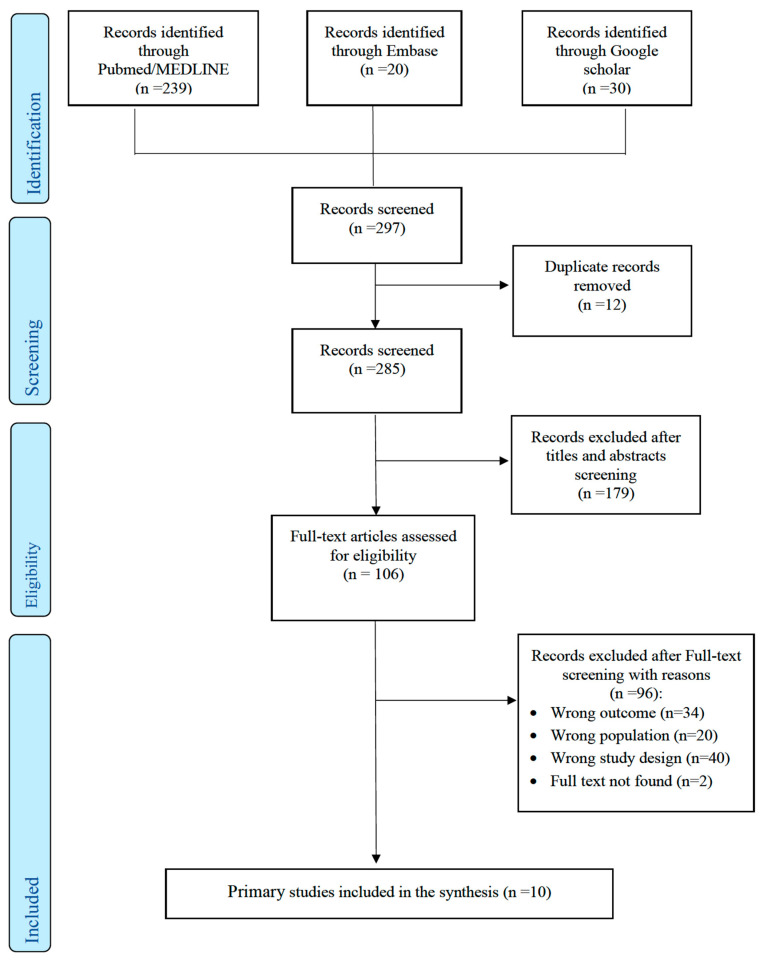
School closures during pandemics raise important concerns for children and adolescents. Our aim is synthesizing available data on the impact of school closure during the coronavirus disease 2019 (COVID-19) pandemic on child and adolescent health globally. We conducted a rapid systematic review by searching PubMed, Embase, and Google Scholar for any study published between January and September 2020. We included a total of ten primary studies. COVID-19-related school closure was associated with a significant decline in the number of hospital admissions and pediatric emergency department visits. However, a number of children and adolescents lost access to school-based healthcare services, special services for children with disabilities, and nutrition programs. A greater risk of widening educational disparities due to lack of support and resources for remote learning were also reported among poorer families and children with disabilities. School closure also contributed to increased anxiety and loneliness in young people and child stress, sadness, frustration, indiscipline, and hyperactivity. The longer the duration of school closure and reduction of daily physical activity, the higher was the predicted increase of Body Mass Index and childhood obesity prevalence. There is a need to identify children and adolescents at higher risk of learning and mental health impairments and support them during school closures.
Overview
The claims and statistics of this paper haven’t been checked yet.
Free: it reads the open-access text and checks the first 5 claims that cite a source we can check. Create a free account to check every claim.
Integrity signals
Registry
Cites
Statistics
Figures
Verification
Claims the paper makes
The claims and statistics of this paper haven’t been checked yet.
Free: it reads the open-access text and checks the first 5 claims that cite a source we can check. Create a free account to check every claim.
Claims other papers make about this one
Each is checked against this paper’s own text: does it say what the citing paper says it does?
The source backs part of the claim, not all of it — or backs it for a different population, condition or comparison.
In the citing paper
“Similarly, also an increase in Body Mass Index and overweight was reported.”
From Digital Media Use and Adolescents' Mental Health During the Covid-19 Pandemic: A Systematic Review and Meta-Analysis (2022) · cites this paper as [11]
Experimental — accuracy not yet measuredThe source backs part of the claim, not all of it — or backs it for a different population, condition or comparison.
In the citing paper
“Indeed, researchers have noted that underrepresented youth populations were disproportionately impacted by the pandemic [24].”
From Loneliness and Well-Being in Children and Adolescents during the COVID-19 Pandemic: A Systematic Review (2023) · cites this paper as [24]
Experimental — accuracy not yet measuredThe source backs part of the claim, not all of it — or backs it for a different population, condition or comparison.
In the citing paper
“Systematic reviews of studies from early in the pandemic also found similar results of pandemic impacts on child and adolescent depression and anxiety symptoms [22,23,24].”
From Loneliness and Well-Being in Children and Adolescents during the COVID-19 Pandemic: A Systematic Review (2023) · cites this paper as [24]
Experimental — accuracy not yet measuredIn the citing paper
“According to a review of ten studies (11), school closure contributed to anxiety, loneliness, stress, depressive symptoms, frustration in young people, together with higher indiscipline and hyperactive conduct.”
From Digital Media Use and Adolescents' Mental Health During the Covid-19 Pandemic: A Systematic Review and Meta-Analysis (2022) · cites this paper as [11]
Self-check
Percentages, sums and reported differences re-computed from the paper’s own numbers.
The self-check needs the paper’s full text.
Citations
Cites
1 retracted
Burden of influenza in healthy children and their households
Principi, N., Esposito, S., Gasparini, R., Marchisio, P., & Crovari, P. (2004) · Archives of Disease in Childhood · doi:10.1136/adc.2003.045401 · Cited by 111
RetractedHow will country-based mitigation measures influence the course of the COVID-19 epidemic?
Anderson, R. M., Heesterbeek, H., Klinkenberg, D., & Hollingsworth, T. D. (2020) · The Lancet · doi:10.1016/s0140-6736(20)30567-5 · Cited by 3,648 · cited 1×
“However, available data for COVID-19 indicates that children (less than 18 years of age) and adolescents (10–19 years) are less susceptible to it than older adults [5], do not appear to significantly drive transmission [6], are a small fraction of the total COVID-19 cases, and have reduced vulnerability to complicatio…”
MethodGalea, S., Merchant, R. M., & Lurie, N. (2020) · JAMA Internal Medicine · doi:10.1001/jamainternmed.2020.1562 · Cited by 2,089 · cited 1×
“Previously, large-scale disasters, whether traumatic, natural, or environmental, were linked to an increase in depression, substance use disorder, and a broad range of other mental and behavioral disorders in children and adolescents [44,45].”
BackgroundMental health effects of school closures during COVID-19
Lee, J. (2020) · The Lancet Child & Adolescent Health · doi:10.1016/s2352-4642(20)30109-7 · Cited by 1,882
Post-traumatic stress disorder following disasters: a systematic review
Neria, Y., Nandi, A., & Galea, S. (2008) · Psychological Medicine · doi:10.1017/s0033291707001353 · Cited by 1,429 · cited 1×
“Previously, large-scale disasters, whether traumatic, natural, or environmental, were linked to an increase in depression, substance use disorder, and a broad range of other mental and behavioral disorders in children and adolescents [44,45].”
BackgroundChanges in contact patterns shape the dynamics of the COVID-19 outbreak in China
Zhang, J., Litvinova, M., Liang, Y., Wang, Y., Wang, W., Zhao, S., Wu, Q., Merler, S., Viboud, C., Vespignani, A., et al. (2020) · Science · doi:10.1126/science.abb8001 · Cited by 1,107
Courtemanche, C., Garuccio, J., Le, A., Pinkston, J., & Yelowitz, A. (2020) · Health Affairs · doi:10.1377/hlthaff.2020.00608 · Cited by 773 · cited 1×
“The advantage of COVID-19 school closure has been questioned globally—some studies show no evidence that school closure may influence the transmission of COVID19 [48] and interrupt transmission by itself; however, there is some indication that peak incidence of the infection can be reduced [5].”
BackgroundHandbook of Child Well-Being: Theories, Methods and Policies in Global Perspective
(2014) · Springer eBooks · doi:10.1007/978-90-481-9063-8 · Cited by 472
Impact Of Sars-Cov-2 And Its Reverberation In Global Higher Education And Mental Health
Araújo, F. J. D. O., de Lima, L. S. A., Cidade, P. I. M., Nobre, C. B., & Neto, M. L. R. (2020) · Psychiatry Research · doi:10.1016/j.psychres.2020.112977 · Cited by 444
Advocating for Children During the COVID-19 School Closures
Masonbrink, A. R., & Hurley, E. (2020) · Pediatrics · doi:10.1542/peds.2020-1440 · Cited by 423 · cited 3×
“Retrieved qualitative data identified that remote learning presents a challenge for all families and those in poorer households are at a greater disadvantage (lack of support due to parents’ limited availability or resources, lack of access to reliable internet, digital disparities, and lack of access to computer tech…”
Background
Cited by
Items 101–200 of 315
de Casteele, M. V., Waterschoot, J., Anthierens, S., DeSmet, A., Galand, B., Goossens, H., Morbée, S., & Vansteenkiste, M. (2022) · Social Science & Medicine · doi:10.1016/j.socscimed.2022.115295 · Cited by 8
Pudpong, N., Julchoo, S., Sinam, P., Uansri, S., Kunpeuk, W., & Suphanchaimat, R. (2022) · International Journal of Environmental Research and Public Health · doi:10.3390/ijerph192215001 · Cited by 4
A Data-Driven Context-Aware Health Inference System for Children during School Closures
Jiang, Z., Lin, L., Zhang, X., Luan, J., Zhao, R., Chen, L., Lam, J., Yip, K. M., So, H., Wong, W. H. S., et al. (2023) · Proceedings of the ACM on Interactive Mobile Wearable and Ubiquitous Technologies · doi:10.1145/3580800 · Cited by 7
“However, schools are important facilities for educating children and supporting their physical and social activities, so school closures would inevitably affect children’s physical and mental health [13].”
BackgroundInfluentialA Study into Learning Losses of Preschool Children in Covid-19 Pandemic
Kurupınar, A., & KANMAZ, T. (2023) · Journal of Qualitative Research in Education · doi:10.14689/enad.35.1569 · Cited by 8
Lyzwinski, L. N., McDonald, S., Zwicker, J. D., & Tough, S. (2024) · JMIR Pediatrics and Parenting · doi:10.2196/55100 · Cited by 10
School-age child neurodevelopment following antenatal Zika virus exposure
Mulkey, S. B., Andringa-Seed, R., Corn, E., Williams, M. E., Arroyave‐Wessel, M., Podolsky, R. H., Peyton, C., Msall, M. E., Curé, C., & Berl, M. M. (2025) · Pediatric Research · doi:10.1038/s41390-025-03981-7 · Cited by 8
“17 Our study captured these historical effects as a part of developmental evaluations conducted between 2021 and 2023 in control cohorts of healthy, typically developing children who were different ages at the height of pandemic-related lockdown.”
Jang, Y., Cho, H.-M., Mok, Y. E., Chi, S., Han, C., Yi, H.-S., & Lee, M. (2023) · Journal of korean Academy of Child and Adolescent Psychiatry · doi:10.5765/jkacap.220036 · Cited by 7
Xu, F., & Huang, L. J. (2022) · Frontiers in Psychiatry · doi:10.3389/fpsyt.2021.767189 · Cited by 7
The impact of the COVID-19 pandemic on childhood obesity rates, by Health Board area, in Wales, UK
Beynon, C., & Davies, L. L. (2024) · Journal of Public Health · doi:10.1093/pubmed/fdae011 · Cited by 6
Guo, M. M., Koh, K. T., & Wang, X. Z. (2024) · Journal of Exercise Science & Fitness · doi:10.1016/j.jesf.2024.04.002 · Cited by 7
“42 Finally, our study shows that the impact of the pandemic on RST was more significant among primary school students compared to middle and high school students.”
BackgroundAfetlere Dirençli ve Sürdürülebilir Kentler için Ekolojik Planlama ve Tasarım
Duymuş, H., Çabuk, S. N., & Çabuk, A. (2024) · Özgür Yayınları eBooks · doi:10.58830/ozgur.pub455.c1947 · Cited by 6
Güler, R., Kublay, G., & Kılıç, H. F. (2023) · Health Education Journal · doi:10.1177/00178969221146429 · Cited by 6
“Temporary school closures have had negative consequences for children, including stress, depression, anxiety, disillusion and hyperactivity (Chaabane et al., 2021).”
BackgroundParents and teachers’ compensatory strategies during COVID-19 school closures: A scoping review
Gioannis, E. D., Ballarino, G., & Cartagini, D. (2023) · International Review of Education · doi:10.1007/s11159-023-10011-3 · Cited by 9
“Due to this restriction, we excluded the large body of literature concerning the negative impact of the COVID-19 pandemic on pupils’ mental health, as opposed to their learning outcomes (Cachón-Zagalaz et al. 2020; Chaabane et al. 2021; Elharake et al. 2022).”
BackgroundCOVID-19 vaccine refusal as unfair free-riding
Kelsall, J. (2024) · Medicine Health Care and Philosophy · doi:10.1007/s11019-023-10188-2 · Cited by 7
“This resulted in defects in childhood and adolescent education, social, linguistic, mental, and even physical development (Chaabane et al. 2021; Viner et al. 2021); poorer social care for vulnerable people, be it elderly people in nursing homes resulting in negative mental health outcomes (Jones et…”
BackgroundBiese, M., Sydänmaanlakka, A., Holm, M. E., Häsä, J., & Hannula, M. S. (2024) · Educational Psychology · doi:10.1080/01443410.2024.2306277 · Cited by 6
“The transition from contact to distance learning was rapid in many countries (Chaabane et al., 2021; Pregowska et al., 2021).”
BackgroundEffect of Face Mask on Lowering COVID ‐19 Incidence in School Settings: A Systematic Review
Viera, L. (2024) · Journal of School Health · doi:10.1111/josh.13483 · Cited by 6
Manzano-Felipe, M. Á., Cruz‐Cobo, C., Bernal-Jiménez, M. Á., & Santi-Cano, M. J. (2024) · Journal of research in nursing · doi:10.1177/17449871241236393 · Cited by 6
“Although we might have expected a greater improvement in the app group, it should be noted that the final period of the study coincided with COVID-19 confinement which, as has been published, influenced the dietary patterns of people of all ages (Chaabane et al., 2021; Ruiz-Roso et al., 2020).”
A Health Justice Response to School Discipline and PolicingPreprint
González, T., Etow, A., & Vega, C. D. L. (2021) · SSRN Electronic Journal · doi:10.2139/ssrn.3919216 · Cited by 6
Bhatt, N. S., Meyer, C. L., Mau, L., Broglie, L. A., Devine, S. M., Choi, S. W., Auletta, J. J., & Phelan, R. (2021) · Transplantation and Cellular Therapy · doi:10.1016/j.jtct.2021.09.007 · Cited by 6
McCredie, K., Hokke, S., Leach, L., & Cooklin, A. (2024) · Family Relations · doi:10.1111/fare.13098 · Cited by 5
Okuyama, J., Izumi, S., Funakoshi, S., Seto, S., Sasaki, H., Ito, K., Imamura, F., Willgerodt, M. A., & Fukuda, Y. (2022) · Humanities and Social Sciences Communications · doi:10.1057/s41599-022-01330-1 · Cited by 5
“And under COVID-19 pandemic, there are the previous studies by White et al. (2021), Chaabane et al. (2021), Ventura et al. (2021), Skotnicka et al. (2021), Messiah et al. (2021), Umano et al. (2021), Maltoni et al. (2021), Swierad et al. (2021), Grabia et al. (2021), Neshteruk et al. (2021), Das et…”
ResultQuality of the Opportunities for Preschoolers’ Physical Activity in Portuguese Kindergartens
Moreira, M., Veiga, G., Lopes, F., Hales, D. P., & Cordovil, R. (2023) · Education Sciences · doi:10.3390/educsci13080830 · Cited by 5
Skalidou, S., Anestis, A., Skalidis, E. I., Kontaxi, O., Kyrezi, A., Konstantinou, P., & Papadimitriou, K. (2023) · Healthcare · doi:10.3390/healthcare11182493 · Cited by 6
“Consequently, daily screen time increased, while PA, such as exercise [3], significantly decreased [4].”
Inequities in dietary intake and eating behaviours among adolescents in Canada
Patte, K. A., Duncan, M. J., Amores, A., Belita, E., Kocsis, R., Riazi, N. A., Laxer, R. E., & Leatherdale, S. T. (2024) · Canadian Journal of Public Health · doi:10.17269/s41997-024-00854-0 · Cited by 6
“A systematic review found that children living in low-income households were experiencing the negative nutritional ramifications of the lockdowns at higher levels due to lack of access to school programs they relied on for daily meals prior to the pandemic (Chaabane et al., 2021).”
BackgroundFactors contributing to learning losses among primary school children: a scoping review
Pek, L. S., Nadarajan, N.-T. M., Khusni, H. K., Mee, R. W. M., Ismail, M. R., Adha, N. S. Q. S., & Arma, A. E. S. A. J. (2024) · Journal of Education and Learning (EduLearn) · doi:10.11591/edulearn.v18i3.21305 · Cited by 5
Woodson, L. L., Saldivar, A. G., Brown, H. E., Magrath, P. A., de Mayolo, N. A., Pettygrove, S. D., Farland, L. V., Madhivanan, P., & Blas, M. M. (2024) · BMJ Global Health · doi:10.1136/bmjgh-2023-012391 · Cited by 8
Watson, M. F., & Patti, M. (2024) · Nursing Education Perspectives · doi:10.1097/01.nep.0000000000001281 · Cited by 5
Nøkleby, H., Langøien, L. J., Borge, T. C., & Johansen, T. B. (2024) · London Review of Education · doi:10.14324/lre.22.1.39 · Cited by 5
Osuna, F. Z., Quesada, C., Zapico, A. G., & González‐Gross, M. (2024) · Nutrients · doi:10.3390/nu16233993 · Cited by 6
“Notably, the duration of school closures has shown a significant association with an increase in BMI [9,10].”
Assist towards success: a project for inclusion (through) digital
Bruschi, B., Ricchiardi, P., & Torre, E. M. T. (2022) · Form re - Open Journal per la formazione in rete · doi:10.36253/form-12426 · Cited by 5
Priyashantha, A. K. H., Pratheesh, N., & Pretheeba, P. (2022) · AAOU Journal/AAOU journal · doi:10.1108/aaouj-05-2022-0073 · Cited by 5
Parental Perceptions Related to Co-Administration of Adolescent COVID-19 and Routine Vaccines
Gidengil, C. A., Parker, A. M., Gedlinske, A. M., Askelson, N. M., Petersen, C. A., Lindley, M. C., Woodworth, K. R., & Scherer, A. M. (2022) · Journal of Adolescent Health · doi:10.1016/j.jadohealth.2022.11.242 · Cited by 5
Popescu, O., & Leonte, N. (2023) · Sustainability · doi:10.3390/su15020926 · Cited by 5
Navigating Liminal Spaces in University-Community Engagement: Risky Collaboration in Times of Crisis
Porter, L. L., Beers, D. J., LeBlanc, J., Meza, D., & Koubek, E. (2023) · Journal of Community Engagement and Scholarship · doi:10.54656/jces.v15i2.537 · Cited by 5
“…youth, including inadequate access to technology for virtual learning, student disengagement and absenteeism, social isolation, food and housing insecurity, and elevated levels of child neglect and abuse (Chaabane et al., 2021; Huck & Zhang, 2021; Kovler et al., 2021; Masonbrink & Hurley, 2020).”
BackgroundKatz, C., Glucklich, T., Attrash-Najjar, A., Jacobson, M., Cohen, N., Varela, N., Filho, S. R. P., Bérubé, A., Chang, O. D., Collin‐Vézina, D., et al. (2023) · Child Abuse & Neglect · doi:10.1016/j.chiabu.2023.106347 · Cited by 5
Alah, M. A., Abdeen, S., Bougmiza, I. M., & Selim, N. A. A. (2024) · Journal of Public Health · doi:10.1093/pubmed/fdad287 · Cited by 5
Ma, C., Yue, M., & Zhu, X. (2024) · Journal of Multidisciplinary Healthcare · doi:10.2147/jmdh.s449880 · Cited by 5
Torres, I., Kloft, S., Kumar, M., Santosh, A., Pinto-Álvarez, M., & López‐Cevallos, D. F. (2024) · Health Education · doi:10.1108/he-01-2024-0006 · Cited by 6
Kassab, A., Hachem, C. E., Raad, G., Cordahi, C. C., & Richa, S. (2022) · Psychiatry Research · doi:10.1016/j.psychres.2022.114940 · Cited by 6
Adjustment to preschool after COVID-19 in Turkey: teachers’ perspectives
Saraç, S., Ogelman, H. G., & Kalaba-Yıldırım, Ö. (2023) · Early Years Journal of International Research and Development · doi:10.1080/09575146.2023.2169663 · Cited by 5
“…of technology, boredom, and a greater desire for stimulus (Wijaya, Bunga, and Kiling 2021), leading to depression, anxiety, and sleeping disorders (Chaabane et al. 2021; Clarke et al. 2021; Fraiman et al. 2021), as well as externalizing and internalizing problems (Alonso-Martínez et al. 2021;…”
BackgroundKreitz-Sandberg, S., Enderle, C., Isaksson, J., Fredriksson, U., & Backlund, Å. (2025) · Scandinavian Journal of Educational Research · doi:10.1080/00313831.2025.2558721 · Cited by 4
“The COVID-19 pandemic had a clear impact on school attendance (Chaabane et al., 2021; Ravens-Sieberer et al., 2022); and in this article, we have argued that these effects have become particularly evident since schools formally returned to regular, in-person teaching.”
Influential[PR]A.S.S.I. Apprendere serve, servire insegna: a project of Service Learning
Marca, A. L., & Martino, F. (2023) · Form re - Open Journal per la formazione in rete · doi:10.36253/form-14654 · Cited by 4
Damayanti, R., Sumantri, M. S., & Nurani, Y. (2024) · Frontiers in Education · doi:10.3389/feduc.2024.1329258 · Cited by 4
The Impact of COVID-19 on Children and Adolescents with Chronic Illness
Nearchou, F., & Flinn, C. (2024) · Advances in experimental medicine and biology · doi:10.1007/978-3-031-61939-7_22 · Cited by 4
Calidad de la atención educativa en pedagogía hospitalaria: percepción de usuarios y familias
Riera-Negre, L., Arriagada, P. C. D., & Gelabert, S. V. (2025) · Revista Colombiana de Educación · doi:10.17227/rce.num95-19157 · Cited by 4
“Los cambios en el proceso educativo a raíz de la pandemia y el confinamiento impusieron una serie de desafíos a los jóvenes con enfermedades y a sus familias, ya que son más vulnerables a las disparidades educativas (Chaabane et al ., 2021), exacerbadas por la COVID-19.”
Rojas, N. K., Martin, S., Cortina‐Borja, M., Shafran, R., Fox‐Smith, L., Stephenson, T. J., Ching, B. C. F., d’Oelsnitz, A., Norris, T., Xu, Y., et al. (2025) · Journal of Medical Internet Research · doi:10.2196/63634 · Cited by 5
“Our findings are in line with previous literature using different methods that saw COVID-19–related school closure as a contributing factor to the increased stress, frustration, anxiety, and loneliness experienced by children and young people [32].”
Bustamante, M. J., Solis, J. M., Tabera, C. M., Maraz, N., Gutiérrez, G. B. D. R., & Dipierri, J. E. (2024) · Journal of Biosocial Science · doi:10.1017/s0021932024000142 · Cited by 6
“…several previous studies that show that after the social confinement caused by the COVID-19 pandemic, the prevalence of malnutrition has changed (Chaabane et al. , 2021; Dunton et al. , 2020; Hu et al. , 2021; Lange et al. , 2021; Pietrobelli et al. , 2020; Wen et al. , 2021; Yang et al. ,…”
Young Children’s Social and Emotional Adjustment and Caregiver Stress During the COVID-19 Pandemic
Wahman, C. L., Rispoli, K. M., & White, A. N. (2024) · Early Childhood Education Journal · doi:10.1007/s10643-024-01721-w · Cited by 4
“Of note, educational disparities for children with disabilities were exacerbated due to service disruption during the pandemic (Chaabane et al., 2021) and likely increased gaps in children’s educational opportunities.”
Spadafora, N., Reid‐Westoby, C., & Janus, M. (2025) · Journal of Education · doi:10.1177/00220574251320091 · Cited by 4
“This fi nding is in line with other international research that highlights that students are falling behind after experiencing interrupted learning and a lack of social interactions (Chaabane et al., 2021; Grewenig et al., 2021; Hoffman & Miller, 2020).”
The Hidden Effects of Lockdown on Child Health: Evidence from Madrid’s ASOMAD Study
Portals-Riomao, A., Nehari, A., González‐Gross, M., Quesada, C., Gesteiro, E., & Zapico, A. G. (2025) · Sci · doi:10.3390/sci7010025 · Cited by 4
“Lockdown measures of COVID-19 further disrupted routines, limiting physical activity opportunities and increasing sedentary behaviours [41–44].”
Emotional wellbeing and coping among Latinx young adults in the time of COVID‐19
Wagner, K. M., Chatham, A. A., Prado, K. B., Walsdorf, A. A., Villatoro, A. P., García, D., de Snyder, N. S., & Valdez, C. R. (2022) · Journal of Community Psychology · doi:10.1002/jcop.22983 · Cited by 4
“…school, social, and extracurricular activities, have upset important developmental milestones for Latinx young adults, such as progressing through school, living independently, and developing more mature and intimate relationships (Chaabane et al., 2021; Goodwin et al., 2020; Meyer & Young, 2021).”
BackgroundWatson, J., Cumming, O., & Dreibelbis, R. (2023) · Global Health Science and Practice · doi:10.9745/ghsp-d-22-00231 · Cited by 7
Faucher, J., Khanafer, N. L., Chauliac, N., Essadek, A., Galia, P., Mamimoué, É., Leroux, M.-L., Pollet, M.-P., Imler-Weber, F., Gillet, Y., et al. (2023) · International Journal of Environmental Research and Public Health · doi:10.3390/ijerph20054667 · Cited by 4
Sharma, L., & Sharma, D. (2023) · Nutrition & Food Science · doi:10.1108/nfs-12-2022-0421 · Cited by 4
Al-Haifi, A. R., Bumaryoum, N. Y., Alawadhi, B., Alammar, F. A., Alkhalaf, B., & Al-Hazzaa, H. M. (2023) · Nutrients · doi:10.3390/nu15224773 · Cited by 5
“It is reasonable to hypothesize that these psychological challenges may have contributed to the changes observed in lifestyle, eating behaviors, and BMI, which are the focus of this research [6].”
BackgroundSforza, C. (2022) · Children · doi:10.3390/children9060851 · Cited by 4
Impact of covid-19 outbreak on the behavior of children and adolescents in the Kingdom of Bahrain
Awn, M. A., Mohroofi, A. D., Alsaqer, J. K., Aljowder, A. A., Mohroofi, A. D., & Alsuliti, M. A. (2023) · Medicine · doi:10.1097/md.0000000000035925 · Cited by 3
“[22,23] Moreover, we observed that a significantly high number of responding parents reported that their children seemed calmer, wiser, and more thoughtful during the pandemic, which is in line with previous reports.”
ResultKwak, D. S., & Park, J. (2024) · International Journal of Health Policy and Management · doi:10.34172/ijhpm.2024.8207 · Cited by 3
Influence of the COVID-19 pandemic on the incidence of eating disorders
Hurtado, M. M., Martín‐Rivada, Á., García, S. P., & Ramallo‐Fariña, Y. (2024) · Anales de Pediatría (English Edition) · doi:10.1016/j.anpede.2024.04.019 · Cited by 7
Kannan, P., Bhawra, J., Wright, K. D., & Katapally, T. R. (2025) · PLOS mental health. · doi:10.1371/journal.pmen.0000256 · Cited by 3
“This research highlights the profound impact of pandemics on the mental well-being of Indigenous youth emphasizing the need to explore effective strategies to promote positive mental health during pandemics, which aligns with other research findings [2,60,78–81].”
Burnout and moral distress among school nurses during the COVID-19 pandemic: a brief report
Best, N. C., Thomas, C. S., Pierre‐Louis, B. J., Wu, A. C.-L., Chang, A., Bevens, W., & Powell, S. B. (2026) · Frontiers in Public Health · doi:10.3389/fpubh.2025.1750354 · Cited by 4
“During the COVID-19 pandemic, students’ lives were significantly disrupted by school closures when they lost access to services for acute and chronic health conditions, behavioral health services, and reliable nutrition (8, 9).”
Freire, T., Santana, G., Vieira, A., & Barbosa, B. (2022) · International Journal of Environmental Research and Public Health · doi:10.3390/ijerph19052536 · Cited by 3
Katz, C., Attrash-Najjar, A., Varela, N., Maguire‐Jack, K., Chang, O. D., Fouché, A., Massarweh, N., Muñoz, P., Filho, S. R. P., Walker-Williams, H. J., et al. (2024) · Child Abuse & Neglect · doi:10.1016/j.chiabu.2024.106710 · Cited by 3
Hunt, X., McKenzie, J., Hameed, S., Khan, R. S., Luong-Anh, N., Ganle, J. K., Tetali, S., Huq, L., Shakespeare, T., IlkkursunI’m, Z., et al. (2024) · Oxford Development Studies · doi:10.1080/13600818.2024.2390410 · Cited by 3
Pitt, A., Amlôt, R., Heffernan, C., Rubin, G. J., & Smith, L. E. (2026) · Vaccine X · doi:10.1016/j.jvacx.2026.100785 · Cited by 3
Nagashima, Y., Inokuchi, M., Yasui, Y., Uchida, K., Tokumura, M., & Hasegawa, T. (2022) · Journal of Paediatrics and Child Health · doi:10.1111/jpc.16122 · Cited by 3
Masterson, E., Chung, S., Shen, R., Singh, B., Savoia, E., & Rajabiun, S. (2023) · Journal of Public Health Management and Practice · doi:10.1097/phh.0000000000001734 · Cited by 3
“The pandemic was associated with notable increases in students’ feelings of anxiety and loneliness, and restrictions on socializing led to decreased physical activity and a corresponding increase in childhood obesity.(4) Concerns abounded, not only about the effect of the pandemic on the physical health and social dev…”
BackgroundLee, S.-M., Seo, I.-H., Kim, S., & Kim, T.-H. (2023) · Journal of Men s Health · doi:10.22514/jomh.2023.027 · Cited by 3
“[ 17] agreed that school closures due to COVID-19 exerted detrimental effects on adolescent health.”
BackgroundGiallo, R., Fogarty, A., Gartland, D., Savopoulos, P., FitzPatrick, K. M., & Brown, S. (2023) · Journal of Child and Family Studies · doi:10.1007/s10826-023-02743-5 · Cited by 3
“Further, a systematic review of 10 studies into young people ’ s mental health speci fi cally during school closures during the pandemic in 2020 reported an increase in stress, anxiety, and loneliness in young people (Chaabane et al., 2021).”
Duncan, M. J., Belita, E., Amores, A., Riazi, N. A., Carsley, S., Vanderloo, L. M., Carson, V., Chaput, J., Faulkner, G., Leatherdale, S. T., et al. (2024) · BMC Nutrition · doi:10.1186/s40795-024-00831-3 · Cited by 3
“Schools play a particularly critical role in cultivating the health of children and adolescents, especially those low-income households and under-served areas [2, 3].”
BackgroundIntervención virtual para disminuir la agresión de los adolescentes durante la pandemia de COVID
Mesurado, B., Oñate, M. E., & Resett, S. A. (2024) · CES Psicología · doi:10.21615/cesp.7048 · Cited by 3
Liu, T., Hsiao, R. C.-J., Chou, W., & Yen, C. (2024) · Vaccines · doi:10.3390/vaccines12050450 · Cited by 3
Puntoni, M., Maglietta, G., Caminiti, C., Miniaci, A., Lanari, M., Caramelli, F., Marchetti, F., Fanti, A. D., Iughetti, L., Biasucci, G., et al. (2024) · Frontiers in Public Health · doi:10.3389/fpubh.2024.1439078 · Cited by 3
Ashok, S. S., Ramaswamy, S., Kulkarni, A., Singh, D., Quadros, D., Dzuvichu, K. J., Tikku, K., Rizvi, M., Kandula, P., Tank, P., et al. (2021) · Asian Journal of Psychiatry · doi:10.1016/j.ajp.2021.102831 · Cited by 3
“In addition to psychosocial disruptions and distress due to school closure (Chaabane et al., 2021), loss of access to critical community services and spaces, including school (and school-based healthcare services, nutrition programs), libraries, child healthcare services and critical resources for children with disabi…”
BackgroundHur mår våra barn och unga? Förändringar i barns och ungas hälsa över tid: en kunskapsöversikt
Hellström, L. (2023) · doi:10.24834/isbn.9789178773794 · Cited by 7
Castillo-Morales, K., Espinoza-Tapia, R., Portilla-Saavedra, D., & Moya-Vergara, R. (2025) · Societies · doi:10.3390/soc15010010 · Cited by 2
Yourell, J., Huberty, J., Hanley, T., & Salhi, L. (2025) · JMIR Formative Research · doi:10.2196/70818 · Cited by 2
“…through schools and communities, it may have resonated more with youth experiencing challenges related to school and physical health, particularly because the sample was collected during and shortly after the COVID-19 pandemic, when many youth faced ongoing school-related difficulties [19,20].”
The influence of teaching variables in the educational processes of students with rare diseases
Perales, R. G., Ruíz, A. P., García-Toledano, E., & García, M. I. M. (2023) · Frontiers in Psychology · doi:10.3389/fpsyg.2022.1046643 · Cited by 2
“These measures have become even more necessary in the face of the COVID-19 pandemic and its effects on society and schools (Chaabane et al., 2021; Lavidas et al., 2022).”
BackgroundBazzi, A., Sallman, Z. F., Greenwell, A. M., Manolis, A., Khanafer, R., & Haidar-El-Atrache, S. (2024) · Global Pediatric Health · doi:10.1177/2333794x231224999 · Cited by 2
“29 These negative effects of school closure on the physical, psychosocial and educational wellbeing of children should be considered when weighing the benefits of school closure on infection control.”
BackgroundKrüger, H., Kroneberg, C., & Kruse, H. (2024) · Journal of Social and Personal Relationships · doi:10.1177/02654075241268496 · Cited by 2
“Previous research suggests that these measures had strong adverse effects on children ’ s and adolescents ’ emotional well-being (for reviews, see Chaabane et al., 2021; Viner et al., 2022).”
Measure What Matters: Toward Multi-Sectoral Action to Improve Child and Youth Health and Well-being
Wright, V., Zwicker, J. D., Hagel, B. E., Roth, C. G., Boynton, H., Dimitropoulos, G., Exner-Cortens, D., Russell‐Mayhew, S., Schwartz, K. D., Tough, S., et al. (2024) · The School of Public Policy Publications · doi:10.55016/ojs/sppp.v17i1.78932 · Cited by 3
Tawankanjanachot, N., Melville, C. A., Truesdale, M., & Kidd, L. (2024) · BMC Nursing · doi:10.1186/s12912-024-02492-w · Cited by 2
Pediatrician’s role on patients with learning disabilities: a pilot study
Fernandes, V. A. B. (2024) · Revista Paulista de Pediatria · doi:10.1590/1984-0462/2025/43/2024106 · Cited by 2
Coronaviruses: Pandemic SARS-CoV-2
Cowling, B. J., & Wong, S. (2024) · Springer eBooks · doi:10.1007/978-1-4939-9544-8_68-1 · Cited by 2
Crepalde, P. A. F., de Ávila, M. A. G., Minharro, M. C. D. O., Castro, M. C. N. E., Teixeira, T. R. F., Filho, P. T. H., & Nilsson, S. (2025) · Frontiers in Public Health · doi:10.3389/fpubh.2025.1522105 · Cited by 2
Mulikaburt, T., Udplong, A., & Suratana, S. (2021) · Journal of Health Science and Alternative Medicine · doi:10.14456/jhsam.2021.9 · Cited by 2
de Moura, E. C., Cavalcante, F. V., de Oliveira, L. G., Barrêto, I. C. D. H. C., Fernandes, G. M., Frio, G. S., & Santos, L. M. P. (2022) · Saúde em Debate · doi:10.1590/0103-1104202213406 · Cited by 2
de Moura, E. C., Cavalcante, F. V., de Oliveira, L. G., Barrêto, I. C. D. H. C., Fernandes, G. M., Frio, G. S., & Santos, L. M. P. (2022) · Saúde em Debate · doi:10.1590/0103-1104202213406i · Cited by 2
Shamsah, A., Aburezq, M., Abdullah, Z., Khamissi, F., Almaateeq, B., AlAlban, F., Almashmoom, S., & Ziyab, A. H. (2022) · Frontiers in Child and Adolescent Psychiatry · doi:10.3389/frcha.2022.1034492 · Cited by 2
Lee, H., Rauktis, M. E., Mulzet, M., & Sgourakis, A. (2023) · Child and Adolescent Social Work Journal · doi:10.1007/s10560-023-00922-3 · Cited by 3
“…is evidence that school closures and the transition to remote learning place youth with disabilities and youth from families in poverty at greater risk of falling behind their peers because they have a lack of support and resources for remote learning (Chaabane et al., 2021; Fegert et al., 2020).”
O’Rourke, C., Wood, P., Macleod, K. A., Westwood, J., & Urquhart, D. S. (2023) · Journal of Asthma · doi:10.1080/02770903.2023.2228885 · Cited by 2
“…were also collected on sex, date of birth, deprivation indices [Scottish index of multiple deprivation (SIMD) decile where 1 is most deprived and 10 is least deprived], use of high dose inhaled steroid therapy (ICS) (>800 micrograms beclomethasone diproprionate equivalent per day (18)) and the…”
BackgroundScott, J. J., Vernon, L., & Metse, A. P. (2023) · Journal of School Health · doi:10.1111/josh.13369 · Cited by 2
Face-to-face classes during COVID-19: implementation of school health protocols
Sukaesih, N. S., Hudaya, A. P., Ningrum, D., Pramajati, H., Sopiah, P., & Lindayani, E. (2023) · Enfermería Global · doi:10.6018/eglobal.554501 · Cited by 2
Samel‐Kowalik, P., Jankowski, M., Tomaszewska, A., Sobeczek, K., Rakocy, K., Samolinski, B. K., Gujski, M., Pinkas, J., Vatsenko, A. I., & Raciborski, F. (2023) · Annals of Agricultural and Environmental Medicine · doi:10.26444/aaem/172887 · Cited by 3
“Data on the measles incidence between 2020 – 2022 may be misleading, as most of the epidemiological surveillance resources were targeted at COVID-19, and the number of contacts between children was limited due to the temporary closure of schools and restrictions on the work of kindergartens [32].”
BackgroundQuality of Life, Social Support, and Physical Activity of Overweight Adolescents
Suwarsi, & Baua, M. E. (2023) · Journal of Advanced Health Informatics Research · doi:10.59247/jahir.v1i2.32 · Cited by 2
Mata, C., Onofre, M., Papaioannou, A. G., & Martins, J. (2024) · Retos · doi:10.47197/retos.v57.104528 · Cited by 2
Development of parenting difficulties in infectious disease pandemic inventory
Tsai, C., Hsiao, R. C.-J., Lin, C., & Yen, C. (2024) · Pediatrics International · doi:10.1111/ped.15764 · Cited by 2
Birnie, I., & Kennedy, K. (2023) · Strathprints: The University of Strathclyde institutional repository (University of Strathclyde) · doi:10.26203/6rhw-pc47 · Cited by 2
Physical or Virtual? - A Qualitative Inquiry Into Youth Perception and Preference for Safe SpacesPreprint
Neo, P. H. M., Hayashi, M., Gan, S., & Lin, W. H. (2022) · Research Square · doi:10.21203/rs.3.rs-2083793/v1 · Cited by 2
Evaluating the overall efficacy of digital health interventions
Humayun, F., & Callins, K. R. (2024) · American Journal of Obstetrics and Gynecology · doi:10.1016/j.ajog.2024.02.285 · Cited by 2
Metadata
- Authors
- Chaabane, S., Doraiswamy, S., Chaabna, K., Mamtani, R., & Cheema, S.
- Affiliations
- Weill Cornell Medical College in Qatar (QA)
- Corresponding author
- Cheema, Sohaila
- Venue
- Children
- Publisher
- MDPI AG
- Published
- 2021-05-19
- Volume
- 8
- Issue
- 5
- Pages
- 415
- ISSN
- 2227-9067 (ISSN-L)
- PMC
- PMC8159143
- OpenAlex
- W3162095764
- Cited by
- 288
- References
- 49
- Citations by year
- 2026: 19 · 2025: 30 · 2024: 85 · 2023: 73 · 2022: 62 · 2021: 19
- FWCI
- 7.94
- Type
- journal article
- Language
- en
- Open access
- gold
- doi.org
- Licence
- Locations
- Children (publishedVersion, cc-by)
- PubMed Central (publishedVersion, cc-by)
- PubMed (publishedVersion)
- DOAJ (DOAJ: Directory of Open Access Journals) (submittedVersion, cc-by-sa)
- Funders
- Weill Cornell Medical College
- Weill Cornell Medicine - Qatar
- Topics
- Social Sciences › Psychology › Clinical Psychology › COVID-19 and Mental Health
- Social Sciences › Education › Education during COVID-19 pandemic
- Health Sciences › Medicine › Oncology › COVID-19 and healthcare impacts
- Keywords
- COVID-19 pandemic, school closures, child health, adolescent health, pediatric hospital admissions, emergency department visits, children with disabilities, nutrition programs, educational inequality, distance education, mental health, anxiety, loneliness, childhood obesity, physical activity, body mass index
About these checks
Registry, retraction, Cites and statistics results are computed, not judged, with one exception: a printed reference that no index lists is read once by a model before it counts as a citation error. Claims are extracted by a model and kept only when their quote appears verbatim in the text; each cited source is then checked, with a model’s help, for whether it says what the claim relies on. Those verdicts can be wrong — read the claim’s quote and the cited source before relying on one.
Statistics and arithmetic are recomputed, not judged.
Confidence bands are shown only for fields calibrated on our annotated test set. None is calibrated yet, so no band is shown.
What counts as a claim ›How we measure confidence ›How we check this ›
Are you an author, or do you see a problem with this page? Request a review
Data sources
Bibliographic data: Semantic Scholar, OpenAlex, Crossref.
Contains information from the Semantic Scholar Academic Graph Datasets, made available under the ODC Attribution License (ODC-BY 1.0).
Semantic Scholar’s data is described in: Kinney, R., et al. (2023). The Semantic Scholar Open Data Platform. arXiv:2301.10140.
