

The Impact of COVID-19 School Closure on Child and Adolescent Health: A Rapid Systematic Review
Open accessThe DOI matches its Crossref record; 51 of the 51 references it cites were found in a registry or an index.
Abstract
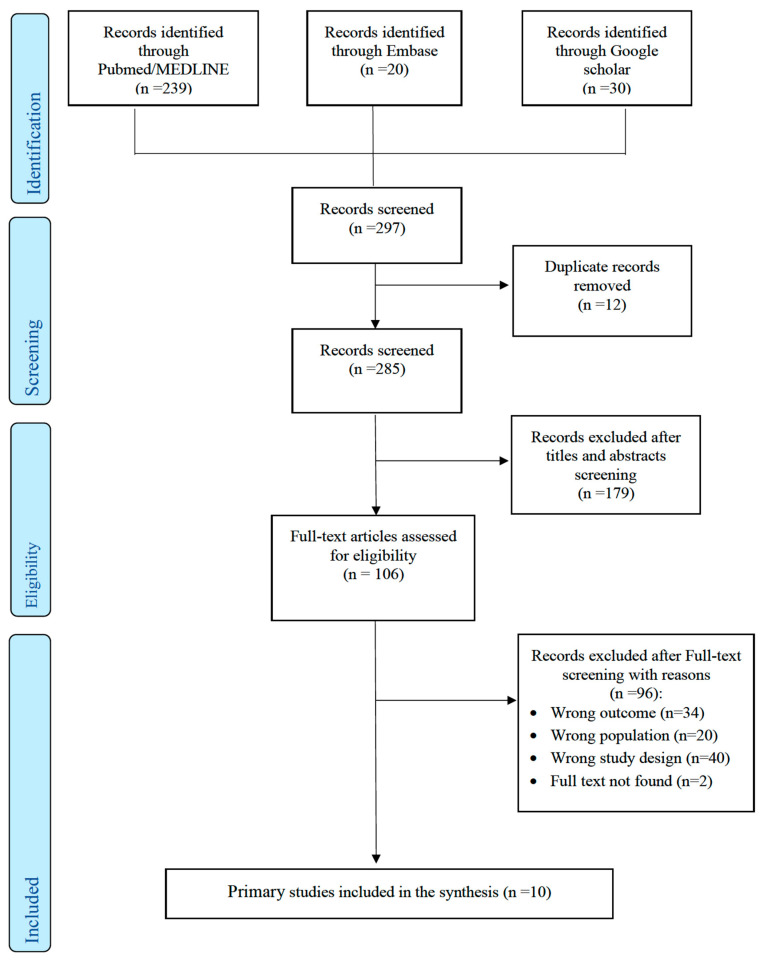
School closures during pandemics raise important concerns for children and adolescents. Our aim is synthesizing available data on the impact of school closure during the coronavirus disease 2019 (COVID-19) pandemic on child and adolescent health globally. We conducted a rapid systematic review by searching PubMed, Embase, and Google Scholar for any study published between January and September 2020. We included a total of ten primary studies. COVID-19-related school closure was associated with a significant decline in the number of hospital admissions and pediatric emergency department visits. However, a number of children and adolescents lost access to school-based healthcare services, special services for children with disabilities, and nutrition programs. A greater risk of widening educational disparities due to lack of support and resources for remote learning were also reported among poorer families and children with disabilities. School closure also contributed to increased anxiety and loneliness in young people and child stress, sadness, frustration, indiscipline, and hyperactivity. The longer the duration of school closure and reduction of daily physical activity, the higher was the predicted increase of Body Mass Index and childhood obesity prevalence. There is a need to identify children and adolescents at higher risk of learning and mental health impairments and support them during school closures.
Overview
The claims and statistics of this paper haven’t been checked yet.
Free: it reads the open-access text and checks the first 5 claims that cite a source we can check. Create a free account to check every claim.
Integrity signals
Registry
Cites
Statistics
Figures
Verification
Claims the paper makes
The claims and statistics of this paper haven’t been checked yet.
Free: it reads the open-access text and checks the first 5 claims that cite a source we can check. Create a free account to check every claim.
Claims other papers make about this one
Each is checked against this paper’s own text: does it say what the citing paper says it does?
The source backs part of the claim, not all of it — or backs it for a different population, condition or comparison.
In the citing paper
“Similarly, also an increase in Body Mass Index and overweight was reported.”
From Digital Media Use and Adolescents' Mental Health During the Covid-19 Pandemic: A Systematic Review and Meta-Analysis (2022) · cites this paper as [11]
Experimental — accuracy not yet measuredThe source backs part of the claim, not all of it — or backs it for a different population, condition or comparison.
In the citing paper
“Indeed, researchers have noted that underrepresented youth populations were disproportionately impacted by the pandemic [24].”
From Loneliness and Well-Being in Children and Adolescents during the COVID-19 Pandemic: A Systematic Review (2023) · cites this paper as [24]
Experimental — accuracy not yet measuredThe source backs part of the claim, not all of it — or backs it for a different population, condition or comparison.
In the citing paper
“Systematic reviews of studies from early in the pandemic also found similar results of pandemic impacts on child and adolescent depression and anxiety symptoms [22,23,24].”
From Loneliness and Well-Being in Children and Adolescents during the COVID-19 Pandemic: A Systematic Review (2023) · cites this paper as [24]
Experimental — accuracy not yet measuredIn the citing paper
“According to a review of ten studies (11), school closure contributed to anxiety, loneliness, stress, depressive symptoms, frustration in young people, together with higher indiscipline and hyperactive conduct.”
From Digital Media Use and Adolescents' Mental Health During the Covid-19 Pandemic: A Systematic Review and Meta-Analysis (2022) · cites this paper as [11]
Self-check
Percentages, sums and reported differences re-computed from the paper’s own numbers.
The self-check needs the paper’s full text.
Citations
Cites
1 retracted
Burden of influenza in healthy children and their households
Principi, N., Esposito, S., Gasparini, R., Marchisio, P., & Crovari, P. (2004) · Archives of Disease in Childhood · doi:10.1136/adc.2003.045401 · Cited by 111
RetractedHow will country-based mitigation measures influence the course of the COVID-19 epidemic?
Anderson, R. M., Heesterbeek, H., Klinkenberg, D., & Hollingsworth, T. D. (2020) · The Lancet · doi:10.1016/s0140-6736(20)30567-5 · Cited by 3,648 · cited 1×
“However, available data for COVID-19 indicates that children (less than 18 years of age) and adolescents (10–19 years) are less susceptible to it than older adults [5], do not appear to significantly drive transmission [6], are a small fraction of the total COVID-19 cases, and have reduced vulnerability to complicatio…”
MethodGalea, S., Merchant, R. M., & Lurie, N. (2020) · JAMA Internal Medicine · doi:10.1001/jamainternmed.2020.1562 · Cited by 2,089 · cited 1×
“Previously, large-scale disasters, whether traumatic, natural, or environmental, were linked to an increase in depression, substance use disorder, and a broad range of other mental and behavioral disorders in children and adolescents [44,45].”
BackgroundMental health effects of school closures during COVID-19
Lee, J. (2020) · The Lancet Child & Adolescent Health · doi:10.1016/s2352-4642(20)30109-7 · Cited by 1,882
Post-traumatic stress disorder following disasters: a systematic review
Neria, Y., Nandi, A., & Galea, S. (2008) · Psychological Medicine · doi:10.1017/s0033291707001353 · Cited by 1,429 · cited 1×
“Previously, large-scale disasters, whether traumatic, natural, or environmental, were linked to an increase in depression, substance use disorder, and a broad range of other mental and behavioral disorders in children and adolescents [44,45].”
BackgroundChanges in contact patterns shape the dynamics of the COVID-19 outbreak in China
Zhang, J., Litvinova, M., Liang, Y., Wang, Y., Wang, W., Zhao, S., Wu, Q., Merler, S., Viboud, C., Vespignani, A., et al. (2020) · Science · doi:10.1126/science.abb8001 · Cited by 1,107
Courtemanche, C., Garuccio, J., Le, A., Pinkston, J., & Yelowitz, A. (2020) · Health Affairs · doi:10.1377/hlthaff.2020.00608 · Cited by 773 · cited 1×
“The advantage of COVID-19 school closure has been questioned globally—some studies show no evidence that school closure may influence the transmission of COVID19 [48] and interrupt transmission by itself; however, there is some indication that peak incidence of the infection can be reduced [5].”
BackgroundHandbook of Child Well-Being: Theories, Methods and Policies in Global Perspective
(2014) · Springer eBooks · doi:10.1007/978-90-481-9063-8 · Cited by 472
Impact Of Sars-Cov-2 And Its Reverberation In Global Higher Education And Mental Health
Araújo, F. J. D. O., de Lima, L. S. A., Cidade, P. I. M., Nobre, C. B., & Neto, M. L. R. (2020) · Psychiatry Research · doi:10.1016/j.psychres.2020.112977 · Cited by 444
Advocating for Children During the COVID-19 School Closures
Masonbrink, A. R., & Hurley, E. (2020) · Pediatrics · doi:10.1542/peds.2020-1440 · Cited by 423 · cited 3×
“Retrieved qualitative data identified that remote learning presents a challenge for all families and those in poorer households are at a greater disadvantage (lack of support due to parents’ limited availability or resources, lack of access to reliable internet, digital disparities, and lack of access to computer tech…”
Background
Cited by
Items 201–300 of 315
A Critical Glance to Non-Pharmacological Management of Novel COVID-19 Infection
Saleem, A., Davis, M., Rafique, S., Meer, S., Qader, A., & Aslam, M. N. (2023) · Pakistan Journal of Health Sciences · doi:10.54393/pjhs.v4i11.821 · Cited by 2
Jency, P. J., Raja, D., Dhanalakshmi, R., Srividya, A., Azad, P. M., & Kumar, A. (2024) · Cureus · doi:10.7759/cureus.63164 · Cited by 1
Malaysia, U. K., Sakti, A. M. T., Mohamad, E. M. W., Malaysia, U. K., Humairah, A. E., Azlan, A. A., & Malaysia, U. K. (2024) · Jurnal Komunikasi Malaysian Journal of Communication · doi:10.17576/jkmjc-2024-4002-07 · Cited by 1
Afet Sonrası İyileştirmede Sosyal Boyutlar
Tezgider, G. (2024) · Özgür Yayınları eBooks · doi:10.58830/ozgur.pub455.c1948 · Cited by 1
Emergency department care experiences among youth with mental health concerns
Wells, L. K., Bartels, S. A., Nicholls, T., & Walker, M. (2024) · PLOS mental health. · doi:10.1371/journal.pmen.0000200 · Cited by 1
“The increasing prevalence of MH issues has been exacerbated by the COVID-19 pandemic, with youth experiencing worsening depression, anxiety, psychological stress, suicidal ideation, and decreased psychological wellbeing [3–5].”
Child Well‐Being and Family Quality of Life During the COVID‐19 Pandemic
Lategan, C., Newton, A. S., Thull‐Freedman, J. D., Xie, J., Winston, K., Wright, B. J., Stubbs, M., & Freedman, S. B. (2025) · Child Care Health and Development · doi:10.1111/cch.70063 · Cited by 1
“…may reflect the impact of public health prevention measures, anxiety over the loss of loved ones, economic uncertainty and disruptions to the normal school and extracurricular routines of children during the early phase of the pandemic (Chaabane et al. 2021; Singh et al. 2020; Viner et al. 2022).”
Weinfurter, M. T., de Campos, D. A., Camargo, C. E. S., Leite, M. S., & Gabriel, C. G. (2025) · Nutrition Reviews · doi:10.1093/nutrit/nuaf142 · Cited by 1
Yin, H., Han, Z., & Ho, H. C. (2025) · Journal of Adolescent Health · doi:10.1016/j.jadohealth.2025.07.022 · Cited by 1
Wippell, J. G. R., Haynie, D. L., & Riedman, D. (2026) · Social Science & Medicine · doi:10.1016/j.socscimed.2026.119049 · Cited by 2
Vastrad, P., Prasad, U. V., Kirte, R. C., Nagendraswamy, C., Barvaliya, M. J., Karun, K. M., & Roy, S. (2026) · Discover Public Health · doi:10.1186/s12982-026-01507-y · Cited by 1
“These patterns suggest vulnerabilities in supply chains, and reduced motivation or health-seeking behaviour during prolonged COVID-19 disruptions [8, 23].”
School Virus Infection Simulator for customizing school schedules during COVID-19
Takahashi, S., Kitazawa, M., & Yoshikawa, A. (2022) · Informatics in Medicine Unlocked · doi:10.1016/j.imu.2022.101084 · Cited by 4
“The closure due to COVID-19 also caused emotional damage to students, their families, and even school administrators [15–18].”
Jasdeep, S., Kenneth, A., Mageswaran, Hung, F. C. C., Matthew, T. D. A. P. T., Yie, N. S., Buvaneswaran, Safian, M. F. B., William, E. O. A. L. J., Tong, C. Y., et al. (2022) · Quest International Journal of Medical and Health Sciences · doi:10.5281/zenodo.5976161 · Cited by 1
Stressors for Youth during COVID-19: A Narrative Review
Field, T. M. (2022) · Journal of Psychiatry Research Reviews & Reports · doi:10.47363/jpsrr/2022(4)135 · Cited by 1
Fonseca, R. P., Guinle, V., Fiorioli, V., Dalfovo, N. P., Uebel, M. G. P., & Enéas, L. V. (2022) · Debates em Psiquiatria · doi:10.25118/2763-9037.2022.v12.416 · Cited by 6
Ayoub, K. H., Mukattash, T. L., Al‐Nabulsi, A. A., Khojah, H. M. J., Abu-Farha, R., Alzayani, S., El‐Dahiyat, F., Alefishat, E. A., Al‐Taie, A., Karout, S., et al. (2023) · Journal of Public Health and Development · doi:10.55131/jphd/2023/210316 · Cited by 1
Overcoming Isolation: Teenagers' Connectedness to Others During the COVID-19 Pandemic
Meltzer, G., Dinh, T., Campbell, N. M., Fothergill, A., & Gibb, C. (2023) · Children Youth and Environments · doi:10.1353/cye.2023.a915433 · Cited by 2
Alasiri, R., D, T. A. M., D, A. Z. M., & D, S. A. M. (2024) · American Journal of Human Psychology · doi:10.54536/ajhp.v2i1.2272 · Cited by 1
“On the other hand, a study carried out among Qatari children (Chaabane et al ., 2021) reported that the most common contributing factor to increased anxiety and loneliness among children was school closure.”
BackgroundMcQuillan, K., Yoshida‐Montezuma, Y., Jambon, M. M., Vanderloo, L. M., González, A., & Anderson, L. N. (2024) · PLoS ONE · doi:10.1371/journal.pone.0292934 · Cited by 2
Impact of COVID-19 on the Health of Migrant Children in the United States
Suleman, S., & Chamberlain, L. J. (2024) · Pediatric Clinics of North America · doi:10.1016/j.pcl.2024.01.019 · Cited by 1
Reisenhofer, C., & Gruber, A. R. (2024) · Verlag Julius Klinkhardt eBooks · doi:10.35468/6073-05 · Cited by 1
Schieber, E., Cottrell, L., Deveaux, L., Li, X., Taylor, M., Adderley, R., Marshall, S. P., Forbes, N., & Wang, B. (2024) · AIDS and Behavior · doi:10.1007/s10461-024-04345-8 · Cited by 1
“Further, school closures exacerbated socioeconomic inequalities [29].”
Afet Dirençliliğinde Dijital Dönüşüm: Sismik Dijital İkizlerin Rolü
Korkmaz, M., Zülfikar, A. C., & Demirkesen, S. (2024) · Özgür Yayınları eBooks · doi:10.58830/ozgur.pub455.c1943 · Cited by 1
Mental Health and (Online) Behaviors during the COVID-19 Pandemic in Spain: A Network-Based Approach
Macías, M. I. S., & Álvarez‐Gálvez, J. (2024) · Behavioral Sciences · doi:10.3390/bs14090735 · Cited by 1
“…the closure of educative institutions (i.e., schools, universities, and other academies) has accelerated the introduction of online teaching, even in those institutions based on face-to-face education, changing the way that people learn and interact with their classmates and teachers [17,18].”
BackgroundPalusak, C., Dart, L., Ciccia, A., Nagele, D. A., & Lundine, J. P. (2024) · Journal of Pediatric Rehabilitation Medicine · doi:10.3233/prm-230021 · Cited by 2
“Unruh and colleagues [16] reported that educators felt accommodations were challenging to implement remotely and remote learning impacted educator-student relationships making it more dif-fi cult to recommend or recognize a need for new or changing accommodations.”
(2024) · Frontiers research topics · doi:10.3389/978-2-8325-5842-3 · Cited by 1
Gamble, T., Wilkerson, C., Kim, C., Kingsley, K., & Sullivan, V. (2025) · Children · doi:10.3390/children12030357 · Cited by 1
Edwards, D. J., Carrier, J., Csontos, J. K., Gillen, E., Hendry, M., Cooper, A., Lewis, R., Gal, M., Law, B., & Edwards, A. (2022) · EdArXiv (OSF Preprints) · doi:10.35542/osf.io/34sbt · Cited by 1
UM OLHAR SOBRE A ANSIEDADE EM CRIANÇAS E ADOLESCENTES DURANTE A PANDEMIA COVID-19
Freitas, A. S., de Almeida, C. T., Carvalho, C. D. P., Souto, D. G., Vasconcelos, I. G., Brito, L. M., Araújo, L. D. A., Rocha, M. G. D., Fernandes, M. D. S., Godoi, N. T., et al. (2021) · Editora Pasteur eBooks · doi:10.29327/544304.2-30
Debnath, K. (2021) · Jundishapur Journal of Health Sciences · doi:10.5812/jjhs.119299
Obesidad, COVID-19 e hipertensión intracraneal idiopática en población pediátrica
Gianfranco Tomarelli, R., Alejandro Donoso, F., & Mario Vildoso, F. (2021) · Andes pediatrica · doi:10.32641/andespediatr.v92i6.4033
School Closing and Re-Opening Mental Health Problems for Youth: A Narrative Review
(2022) · International Journal of Psychological Research and Reviews · doi:10.28933/ijprr-2022-03-1005
Leisure Time, Physical Activity, and Psychological Well-Being among Adolescents during COVID-19
Amin, F. M., Lawend, J., Samra, O. M. A., & Abd-Elmageed, F. N. M. (2022) · Egyptian Journal of Health Care · doi:10.21608/ejhc.2022.260322
“Schools were closed, and planned activities or other societal and cultural events were strictly prohibited (Chaabane et al., 2021).”
BackgroundO REFLEXO DA PANDEMIA DA COVID-19 NA OBESIDADE INFANTIL: UM BREVE ESTUDO DE REVISÃO
Hegner, F. T. S. D. F. A. C. M. G. F. C. C. (2022) · Zenodo (CERN European Organization for Nuclear Research) · doi:10.5281/zenodo.7117800
Supporting the mental health of children and young people with learning disabilities during COVID-19
Wood, J., & Hartley-Smith, T. A. (2022) · Learning Disability Practice · doi:10.7748/ldp.2022.e2195
Al-Ghareeb, H. Y. (2022) · Acta Scientific Medical Sciences · doi:10.31080/asms.2022.06.1402
Zardkhane, S. A., & Makki, M. (2022) · Assessment and Research in Applied Counseling · doi:10.52547/jarac.4.3.66
Shahzad, K., & Ali, J. (2021) · Voyage Journal of Educational Studies · doi:10.58622/vjes.v2i2.14
How “Interactive” Are “Interactive Lectures” in a Post-Pandemic Context?
Curry, K., & Horn, S. E. (2023) · Advances in educational technologies and instructional design book series · doi:10.4018/978-1-6684-8296-4.ch008
Portilla-Saavedra, D., Moya-Vergara, R., Castillo-Morales, K., Espinoza-Tapia, R., & Bilbao, M. (2023) · Research Square · doi:10.21203/rs.3.rs-3179369/v1
D'Amore, R. M., Halpern, A. N., Reed, L. R., & Gorey, K. M. (2023) · International Journal of School Social Work · doi:10.4148/2161-4148.1100 · Cited by 2
“Review of Previous Reviews and Hypotheses We are aware of only one previous, centrally relevant review (Chaabane et al., 2021).”
BackgroundA Hybrid Study of Undergraduates’ Time Management Scenarios during the COVID-19 PandemicPreprint
Ren, Z., & Yang, Y. (2023) · Preprints.org · doi:10.20944/preprints202308.0910.v1
Social Inequality in Child Health and Development—Before and After the COVID-19 Pandemic
Weyers, S., & Rigó, M. (2023) · Integrated science · doi:10.1007/978-3-031-39378-5_9
Mata, C., Onofre, M., Papaioannou, A. G., & Martins, J. (2023) · Research Square · doi:10.21203/rs.3.rs-3660156/v1
Principais impactos causados pela pandemia de COVID-19 na saúde física e mental de crianças
Paula, N. M. G. D., Lima, A. P. D., dos Santos, C. A., Lima, G. D. O. M. F., Mendonça, M. P. D., Oliveira, M. L. C., & Lino, F. D. V. (2024) · Cuadernos de Educación y Desarrollo · doi:10.55905/cuadv16n2-ed.esp.075
Kikulwe, D., & Maiter, S. (2024) · International Journal of Child Youth and Family Studies · doi:10.18357/ijcyfs144202421720
“…areas, and those with immigrant or refugee status became more vulnerable to child maltreatment (Katz et al., 2022) because of increased poverty, social isolation due to home schooling, and a corresponding rise in mental health issues (Chaabane et al., 2021; Font et al., 2021; Marmor et al., 2021).”
BackgroundCOVID-19 Pandemic and Hospitalizations due to Abortion among 10- to 14-Year-Old Girls in Brazil
do Nascimentoa, M. I., Silva, T. G. R., Nascimento, V. J. D. A. M., Flores, L. P. O., & McBenedict, B. (2024) · Portuguese Journal of Public Health · doi:10.1159/000535227
Nakasujja, N., Alinaitwe, R., Nakigudde, J., Turiho, A. K., Birabwa‐Oketcho, H., & Musisi, S. (2024) · Cambridge Prisms Global Mental Health · doi:10.1017/gmh.2024.67
“Other studies have reported similar findings (Hoffman and Miller, 2020; Lee, 2020; Chaabane et al., 2021).”
ResultThe COVID-19 pandemic and stress related to schooling
Yang, X., & Chan, K. K.-Y. (2024) · Elsevier eBooks · doi:10.1016/b978-0-323-95648-2.00001-0 · Cited by 1
Psychosocial Stressors and Mental Health Concerns
Colvin, M. K., Reesman, J. L., & Glen, T. (2024) · Oxford University Press eBooks · doi:10.1093/9780197762660.003.0008
Afet Yönetiminde Öncü Stratejiler: Deprem Kayıp Tahmin Sistemlerindeki İlerlemeler
Kara, F. İ., & Fahjan, Y. (2024) · Özgür Yayınları eBooks · doi:10.58830/ozgur.pub455.c1949
Afet Sonrası Eğitim: Okulların Kapanmasının Etkileri ve Eğitimin Devamlılığının Sağlanması
Gökmenoğlu, T. (2024) · Özgür Yayınları eBooks · doi:10.58830/ozgur.pub455.c1945
Dirençlilik ve İklim Değişikliği
Marım, Z. Ş., & Kundak, S. (2024) · Özgür Yayınları eBooks · doi:10.58830/ozgur.pub455.c1946
Eryılmaz, M., & Halaç, E. (2024) · Özgür Yayınları eBooks · doi:10.58830/ozgur.pub455.c1950
Tehlikeler ve Afet Dirençli Kentler I
Tün, M., Korkmaz, M., Zulfikar, A. C., Demirkesen, S., Konukcu, B. E., Gökmenoğlu, T., Marım, Z. Ş., Kundak, S., Duymuş, H., Çabuk, S. N., et al. (2024) · Özgür Yayınları eBooks · doi:10.58830/ozgur.pub455
Kentsel Sürdürülebilirlik Mümkün Mü?
Konukcu, B. E. (2024) · Özgür Yayınları eBooks · doi:10.58830/ozgur.pub455.c1944
Değişen İklim Koşullarında Kentlerin ve Kentlilerin Dirençliliklerinin Sağlanması
Tuğaç, Ç. (2024) · Özgür Yayınları eBooks · doi:10.58830/ozgur.pub455.c1951
Changes in School-Age Children’s Well-being and School-Related Needs Post COVID-19 Pandemic
Spronz, R. G., Dudovitz, R., Thomas, K., Szilagyi, P. G., Vizueta, N., Vangala, S., & Kapteyn, A. (2024) · Clinical Pediatrics · doi:10.1177/00099228241273343
Rajmil, L., Ravens‐Sieberer, U., Badrick, E., Continente, X., Espelt, A., Geweniger, A., Goldfeld, S. R., Gunnlaugsson, G., Jörgensen, E., López, M. J., et al. (2024) · SSRN Electronic Journal · doi:10.2139/ssrn.5001465
Dowdy-Hazlett, T., Boel-Studt, S. M., & Collins, C. (2024) · Child and Adolescent Social Work Journal · doi:10.1007/s10560-024-00988-7
“These shifts impacted the educational progress (Chaabane et al., 2021) and emotional wellbeing of children in RGC (Liang et al., 2020; Nearchou et al., 2020) and overwhelmed RGC providers, who were still responsible for providing essential services (Carnevale & Hatak, 2020; Carvalho et al., 2022).”
Kwak, S.-H., & Ma, D. (2024) · INQUIRY The Journal of Health Care Organization Provision and Financing · doi:10.1177/00469580241302199 · Cited by 1
“18 Golberstein et al 19 argued that the social distancing measures implemented by the government significantly affected public health and widened health disparities by reducing the health-care access of adolescents who were ethnic minorities or had a low socioeconomic status.”
Bharwani, A. M., & Ladha, T. (2025) · Elsevier eBooks · doi:10.1016/b978-0-443-19170-1.00032-2
Wu, C.-F., Liu, T., Chang, Y., Hu, H., Chou, F., & Yen, C. (2025) · Pediatrics International · doi:10.1111/ped.15887
Glazzard, R., Thornbery, E., & Kenyon, C. (2025) · Clinical Psychology Forum · doi:10.53841/bpscpf.2025.1.384.13
Suwarsi, Lorica, J., & Hastuti, A. S. O. (2024) · Journal of Advanced Health Informatics Research · doi:10.59247/jahir.v1i3.39
“Incidents of feeling uncomfortable due to being fat occur due to the COVID-19 pandemic in Indonesian adolescents due to changes in diet, including snacking a lot and eating more ready-to-eat food [19].”
Pandemic Performance Measures of Resilience for Healthcare and Education in the Netherlands
Hadjisotiriou, S., Oreel, T. H., Marchau, V., Korzilius, H. P. L. M., Coenen, J., Nespeca, V., Rouwette, E. A. J. A., de Vasconcelos, V. V. L., Quax, R., Wertheim, H. F. L., et al. (2025) · The International Journal of Health Planning and Management · doi:10.1002/hpm.3943
Lalumera, E. (2025) · Sustainable development goals series · doi:10.1007/978-3-031-90414-1_2
Hebinck, M., Demers, M., Lemay, M., Rushton, P. W., Best, K. L., & Robert, M. T. (2025) · Discover Public Health · doi:10.1186/s12982-025-00707-2
“Similar to findings in other studies [11, 27, 28], school closures had a negative impact, as reported in both the survey and the interviews.”
아동 신체활동 증진 및 비만 예방을 위한 SMILE 건강증진 프로그램 개발 및 효과
김, 하., & 이, 지. (2025) · 한국체육학회지 · doi:10.23949/kjpe.2025.5.64.3.21
Erdoğan, B., Erçelik, Z. E., Yardımcı, F., & Altay, N. (2025) · Bandırma Onyedi Eylül Üniversitesi Sağlık Bilimleri ve Araştırmaları Dergisi · doi:10.46413/boneyusbad.1549863
Counterfactual evaluation of elementary and secondary school policies in the COVID-19 pandemic
Canfora, B., Escosio, R. A. S., Boldea, O., Nunes, A., & Rozhnova, G. (2026) · Nature Communications · doi:10.1038/s41467-026-73344-1 · Cited by 1
“School closures not only reduce transmission but also have adverse effects on learning,mentalhealth,andwell-beingofchildren 24,65 – 69 .”
da Silva, L. B., de Lima, A. A., Júnior, R. D. S. W., Feitosa, S. B., de Oliveira, R. R. L., Queiroz, D. D. R., Tenório, M. C. M., & Hardman, C. M. (2025) · Cuadernos de Educación y Desarrollo · doi:10.55905/cuadv17n8-084
Alenezi, S., Alarabi, M., Alyahya, A. S., Almadani, A. H., Almarshedi, A. A., Algazlan, M. S., Alnemary, F., Bashiri, F. A., Alkhawashki, S. H., Altuwariqi, M. H., et al. (2025) · Frontiers in Public Health · doi:10.3389/fpubh.2025.1564307
Harmancı, Ş. N., Hesapçıoğlu, S. T., Ayva, D. A., Kaygisiz, E., Kafalı, S., & Ceylan, M. F. (2025) · Türk tıp dergisi. · doi:10.70852/tmj.1762947
The impact of pandemic restrictions on mental health during COVID-19 in Germany
Hobelsberger, C. (2023) · Open access LMU (Ludwid Maxmilian's Universitat Munchen) · doi:10.5282/ubm/epub.107255
Additional file 1 of Resilience in adolescence during the COVID-19 crisis in Canada
Chin, J., Maio, J. D., Weeraratne, T., Kennedy, K. M., Oliver, L. K., Bouchard, M., Malhotra, D., Habashy, J., Ding, J., Bhopa, S., et al. (2024) · Figshare · doi:10.6084/m9.figshare.26594828
Birnie, I., & Kennedy, K. (2023) · Strathprints: The University of Strathclyde institutional repository (University of Strathclyde) · doi:10.26203/3wdf-tp75
Association of COVID-19 School Closures and Youth Mental Health: A Global Perspective
Jacqdom, L. (2025) · eScholarship@McGill (McGill) · doi:10.82308/38341
Duran Llata, A. M. (2023) · renati
Programa de educación emocional para la convivencia escolar en estudiantes de secundaria, Lambayeque
Marín, M. R. M. (2023) · LA Referencia (Red Federada de Repositorios Institucionales de Publicaciones Científicas)
Krüger, H. (2024) · Kölner Universitäts PublikationsServer (Universität zu Köln)
The role and importance of the classroom community in developing students’ resilience
Kalin, J. (2023) · Repository of the University of Ljubljana (University of Ljubljana)
Buck Dodson, R. E. (2023) · ThinkTech (Texas Tech University)
Barbas Rebollo, C. (2023) · Repository of Digital Objects for Teaching Research and Culture (University of Valencia)
Garcia-Blanc, N. (2023) · Repositori ObertUDL (University of Lleida)
Berbic, N. (2023) · VTechWorks (Virginia Tech)
de Souza, R. S. (2024) · LA Referencia (Red Federada de Repositorios Institucionales de Publicaciones Científicas)
Dias, C. D. L. L. (2025) · LA Referencia (Red Federada de Repositorios Institucionales de Publicaciones Científicas)
Rusch, A., Stilwell, S. M., Ammann, A., Choi, S. Y., & Smith, S. N. (2026) · School Mental Health · doi:10.1007/s12310-025-09838-y
“The COVID-19 pandemic and its resultant school building closures posed unprecedented challenges for school-based mental health care delivery (Chaabane et al., 2021 ; Pfeffer - baum, 2021).”
The effect of pre-school teachers’ levels of COVID-19 fear on attitudes towards the COVID 19 vaccine
BOLAT, E. Y., Koyuncu, M., & Yürük, B. (2025) · South African Journal of Education · doi:10.15700/saje.v45ns2a2452
“The possibility of the development of accidents in the school environment, the high incidence and spread of infectious diseases, and the provision of health education services at school make school health services important (Chaabane, Doraiswamy, Chaabna, Mamtani & Cheema, 2021).”
Mishra, A. K. (2026) · Architecture · doi:10.3390/architecture6010045 · Cited by 1
“The COVID-19 pandemic underscored the vulnerability of school environments to airborne transmission, triggering widespread closures with profound societal repercussions [4,5].”
ABA-based teacher training reduces emotional and behavioral problems in Brazilian children
de Souza, R. S., Cabral, P. M., Caravieri, C. K., Neder, M. C. S., & Teixeira, M. C. T. V. (2026) · Psicologia Reflexão e Crítica · doi:10.1186/s41155-026-00385-2
“The interruption of in-person classes was associated with an increase in EBP, increased screen exposure, irregular sleep patterns and a decrease in physical exercise (Almeida et al., 2022; Chaabane et al., 2021; Scarpellini et al., 2021).”
Herrera, C. D., Gómez, D. O., & Montserrat, C. (2026) · Frontiers in Education · doi:10.3389/feduc.2026.1778498
Vocabulario emocional y tristeza. Diferencias por curso y género en educación primaria y secundaria
Garcia-Blanc, N., García, C. M., Cortasa, M., Ros‐Morente, A., & Guiu, G. F. (2024) · Redalyc (Universidad Autónoma del Estado de México)
Suemune, K., Yamaguchi, H., Nishiyama, M., Kyono, Y., Kawamura, A., Oikawa, S., Imai, T., Murakami, S., Mishina, H., Nozu, K., et al. (2026) · Brain and Behavior · doi:10.1002/brb3.71434
“In addition, school closures have been associated with mental health problems in both children and parents (Kishida et al. 2021 ; Chaabane et al. 2021 ).”
Middle School Students and Nature Identity: A Potential Pathway to STEM Career Interest
Wheeler, L., Trundle, K. C., Hagevik, R., Parslow, M., & Vela, K. N. (2026) · School Science and Mathematics · doi:10.1111/ssm.70031
Löfstedt, P., Bilz, L., Bosáková, L., García‐Moya, I., Inchley, J., Paniagua, C. T., Jonsson, K. R., Šmigelskas, K., Ivanoska, K. S., & Augustine, L. (2026) · Research Connections · doi:10.1093/rescon/vmag066
From Ebola to H5N1: Strengthening the U.S. Special Pathogen Response System
Piccolo, A. J. L., MCGUIRE, E. L., Postelnicu, R., Jano, K., Leone, R., Jacobson, E., Vasa, A. M., Schwedhelm, M. M., & Mukherjee, V. (2026) · Epidemiologia · doi:10.3390/epidemiologia7030079
“Globally, while pediatric emergency room visits decreased, school closures have been associated with the lack of access to school-based healthcare, nutrition systems, and support in remote learning, as well as an increase in anxiety and loneliness and childhood obesity prevalence [35].”
Metadata
- Authors
- Chaabane, S., Doraiswamy, S., Chaabna, K., Mamtani, R., & Cheema, S.
- Affiliations
- Weill Cornell Medical College in Qatar (QA)
- Corresponding author
- Cheema, Sohaila
- Venue
- Children
- Publisher
- MDPI AG
- Published
- 2021-05-19
- Volume
- 8
- Issue
- 5
- Pages
- 415
- ISSN
- 2227-9067 (ISSN-L)
- PMC
- PMC8159143
- OpenAlex
- W3162095764
- Cited by
- 288
- References
- 49
- Citations by year
- 2026: 19 · 2025: 30 · 2024: 85 · 2023: 73 · 2022: 62 · 2021: 19
- FWCI
- 7.94
- Type
- journal article
- Language
- en
- Open access
- gold
- doi.org
- Licence
- Locations
- Children (publishedVersion, cc-by)
- PubMed Central (publishedVersion, cc-by)
- PubMed (publishedVersion)
- DOAJ (DOAJ: Directory of Open Access Journals) (submittedVersion, cc-by-sa)
- Funders
- Weill Cornell Medical College
- Weill Cornell Medicine - Qatar
- Topics
- Social Sciences › Psychology › Clinical Psychology › COVID-19 and Mental Health
- Social Sciences › Education › Education during COVID-19 pandemic
- Health Sciences › Medicine › Oncology › COVID-19 and healthcare impacts
- Keywords
- COVID-19 pandemic, school closures, child health, adolescent health, pediatric hospital admissions, emergency department visits, children with disabilities, nutrition programs, educational inequality, distance education, mental health, anxiety, loneliness, childhood obesity, physical activity, body mass index
About these checks
Registry, retraction, Cites and statistics results are computed, not judged, with one exception: a printed reference that no index lists is read once by a model before it counts as a citation error. Claims are extracted by a model and kept only when their quote appears verbatim in the text; each cited source is then checked, with a model’s help, for whether it says what the claim relies on. Those verdicts can be wrong — read the claim’s quote and the cited source before relying on one.
Statistics and arithmetic are recomputed, not judged.
Confidence bands are shown only for fields calibrated on our annotated test set. None is calibrated yet, so no band is shown.
What counts as a claim ›How we measure confidence ›How we check this ›
Are you an author, or do you see a problem with this page? Request a review
Data sources
Bibliographic data: Semantic Scholar, OpenAlex, Crossref.
Contains information from the Semantic Scholar Academic Graph Datasets, made available under the ODC Attribution License (ODC-BY 1.0).
Semantic Scholar’s data is described in: Kinney, R., et al. (2023). The Semantic Scholar Open Data Platform. arXiv:2301.10140.
